Smithills Hall
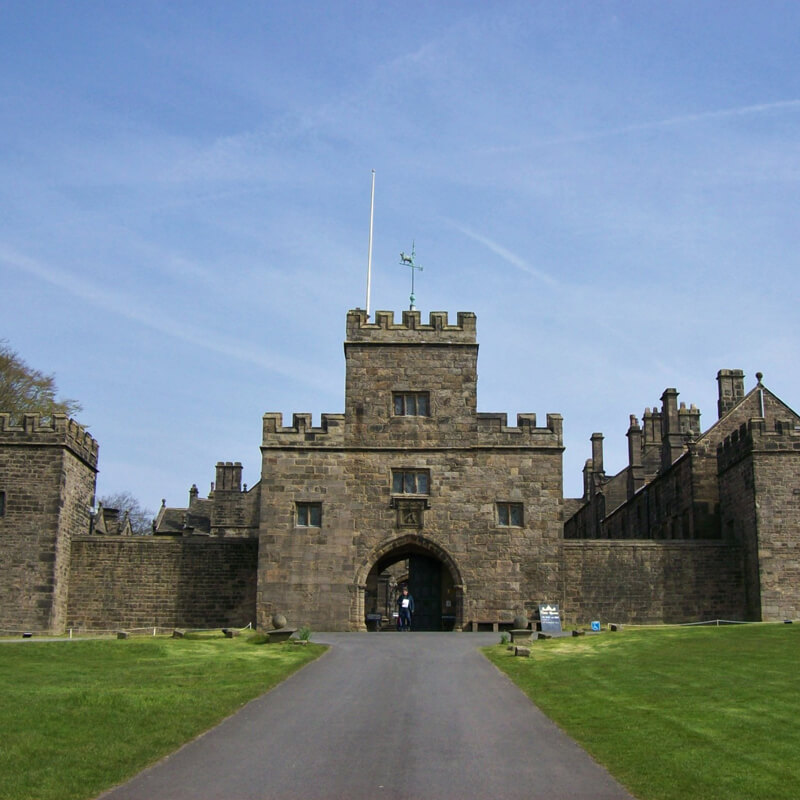
Standing on the slopes of the West Pennine Moors, just north-west of Bolton, Smithills Hall is one of north-west England’s finest surviving medieval manor houses. With a history spanning almost 700 years, the Grade I listed hall has evolved from a medieval hall house into a Tudor manor and Victorian country residence, while preserving remarkable interiors that tell the story of Lancashire’s wealthy families.
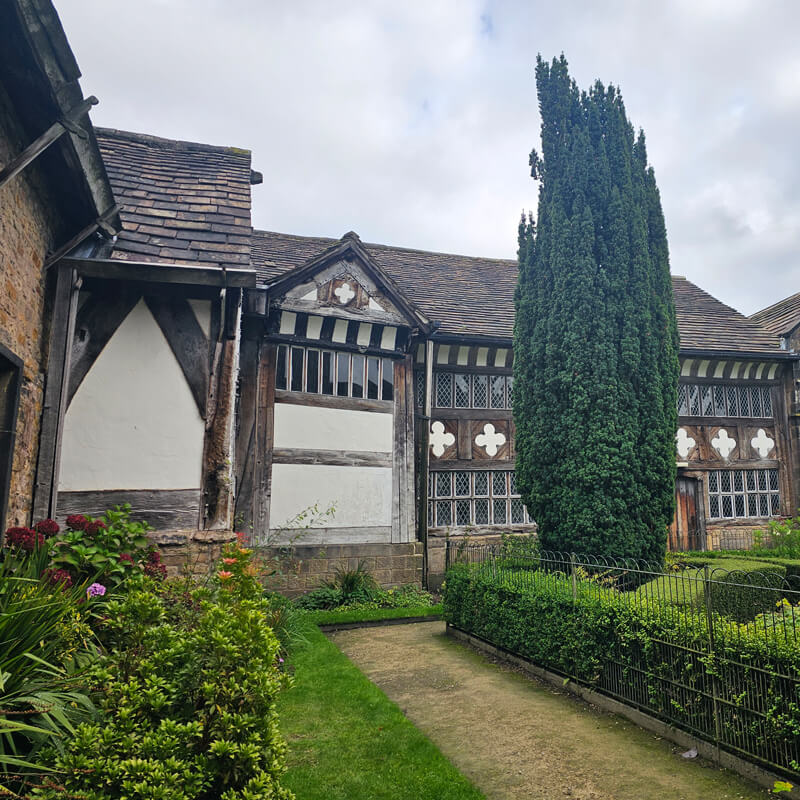
A Hall with Medieval Roots
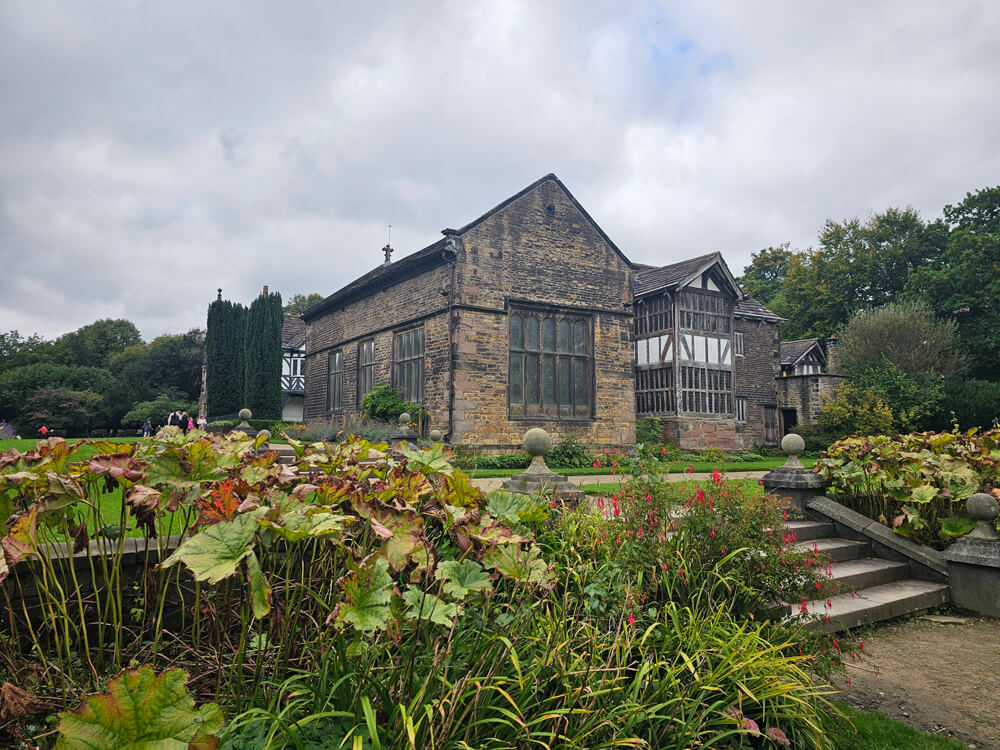
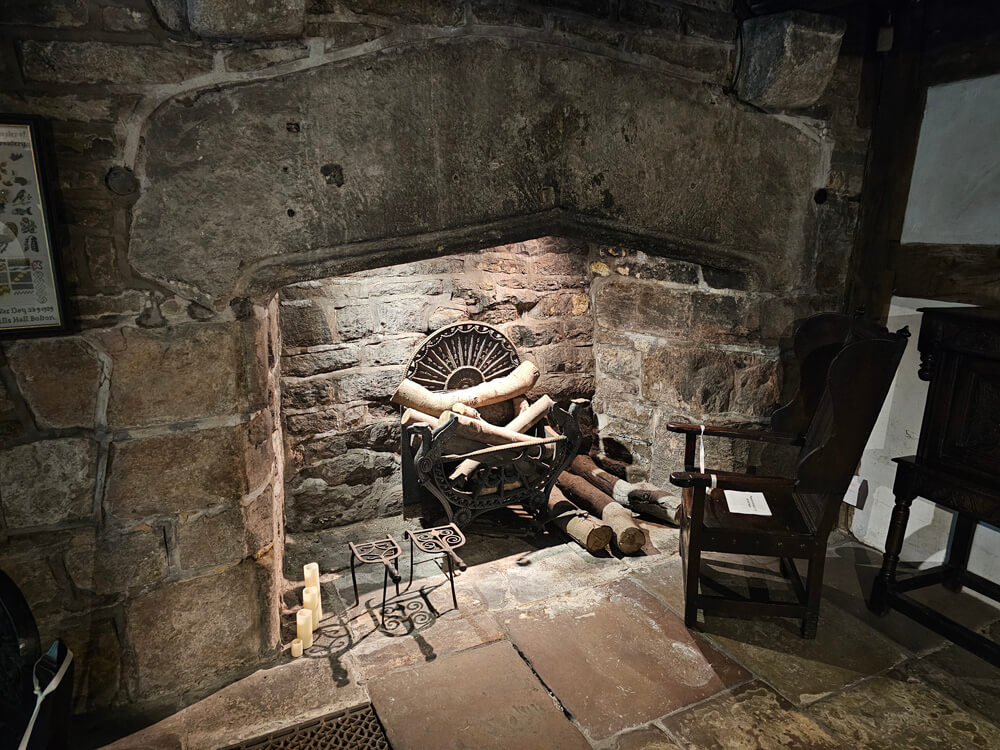
The name Smithills derives from the Old English words smeþe meaning smooth, and hyll, meaning hill, and was recorded as Smythell in 1322. The first written record of Smithills Hall dates to 1335, when William Radcliffe acquired the manor from the Hulton family, who had held it under the Knights Hospitaller. The earliest part of the present building, the magnificent Great Hall, was constructed in the early 14th century, forming the heart of a fortified manor that once stood within a moat.
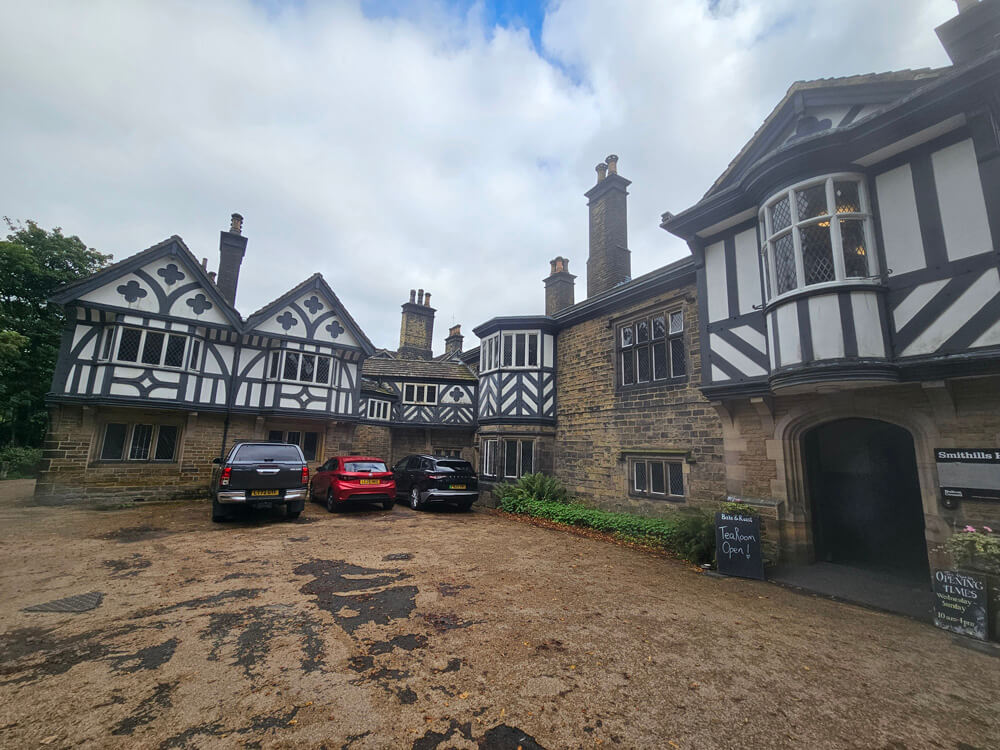
The Radcliffe family remained at Smithills until 1485, when the estate passed through marriage to the Barton family, prosperous sheep farmers who transformed the house during the Tudor period. Later owners included the Belasyse and Byrom families before the wealthy Ainsworth family, whose fortune came from Bolton’s textile industry, purchased the estate in 1801. In the 1870s, Richard Henry Ainsworth employed renowned architect George Devey to sympathetically enlarge and modernise the hall, adding Victorian comfort without erasing its medieval character.
Bolton Corporation bought the estate in 1938, and today Smithills Hall is preserved as a museum showcasing nearly seven centuries of history.
Architecture Across Seven Centuries
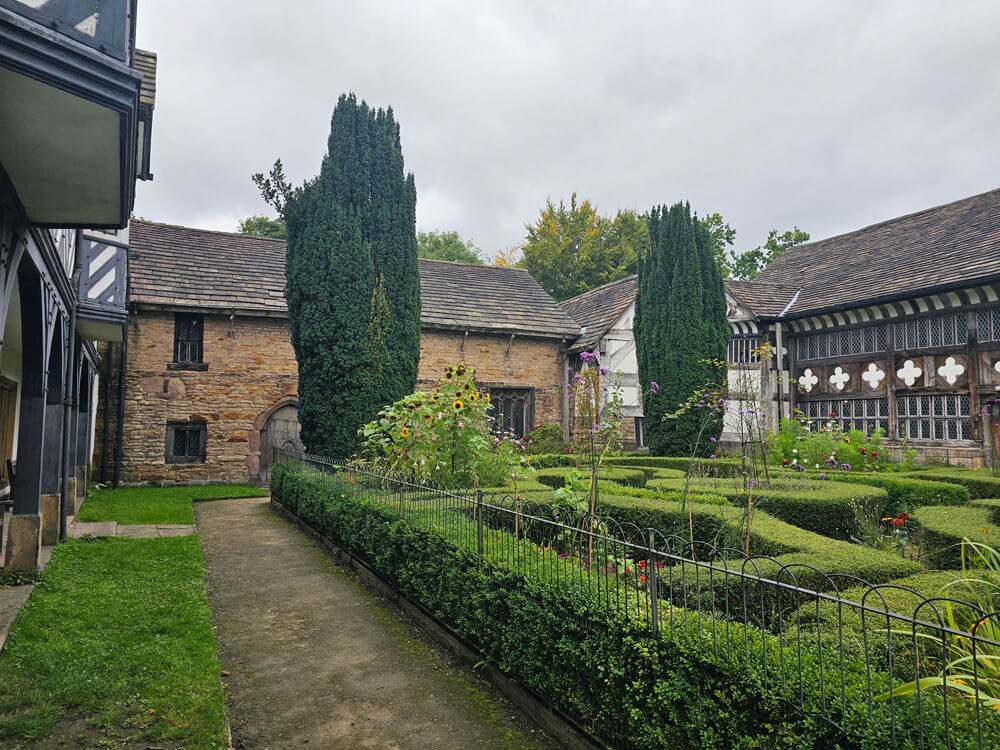
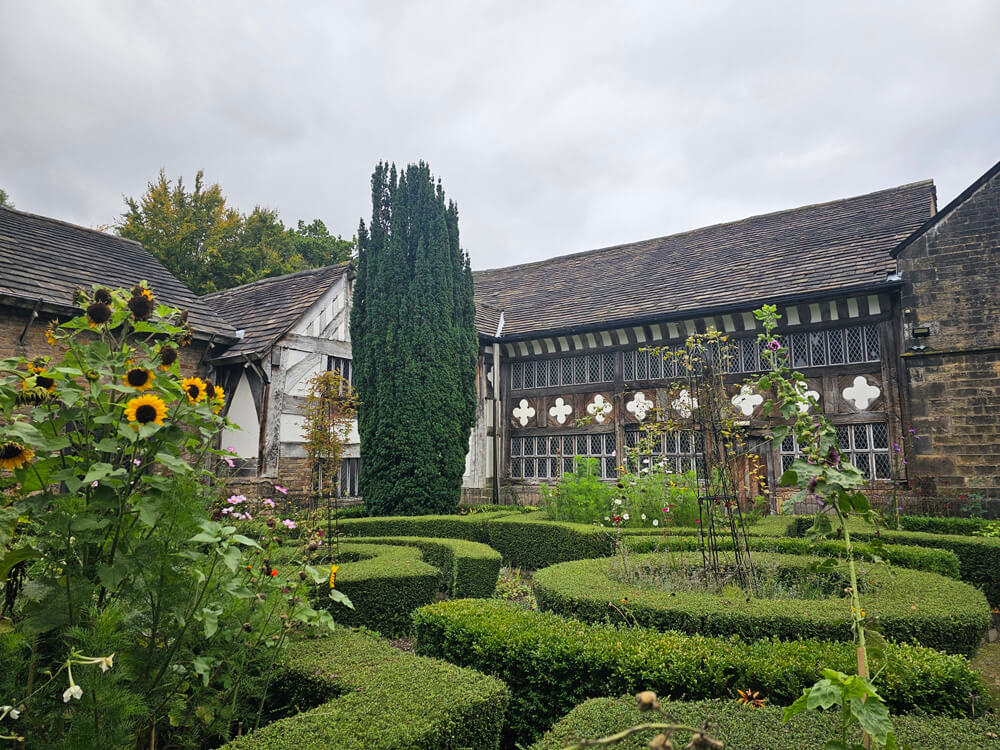
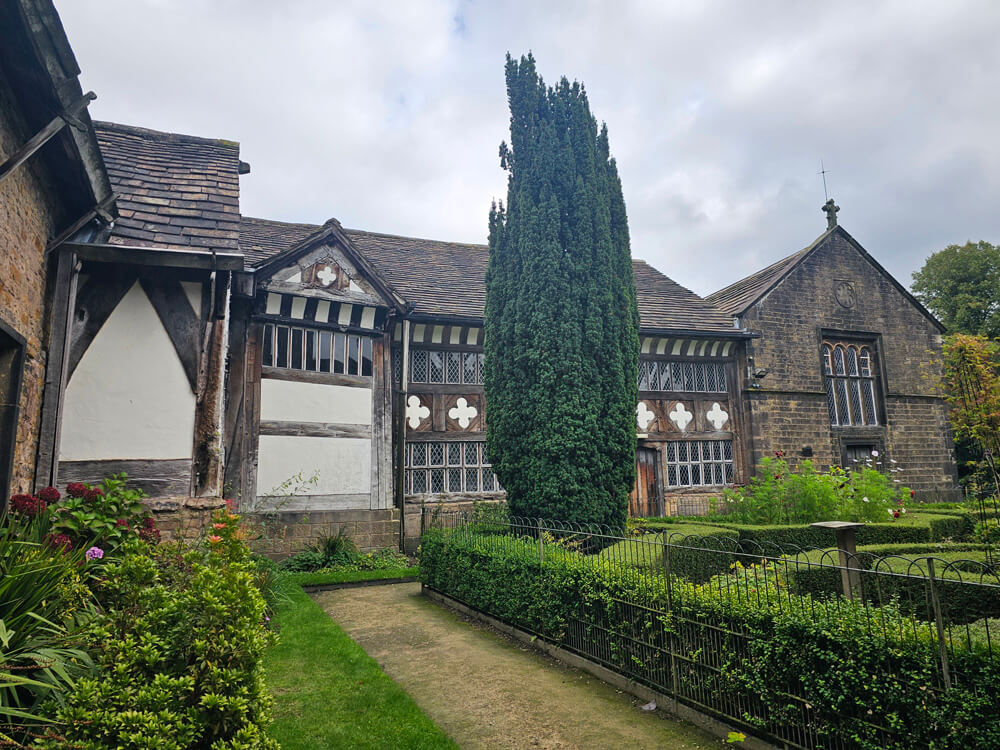
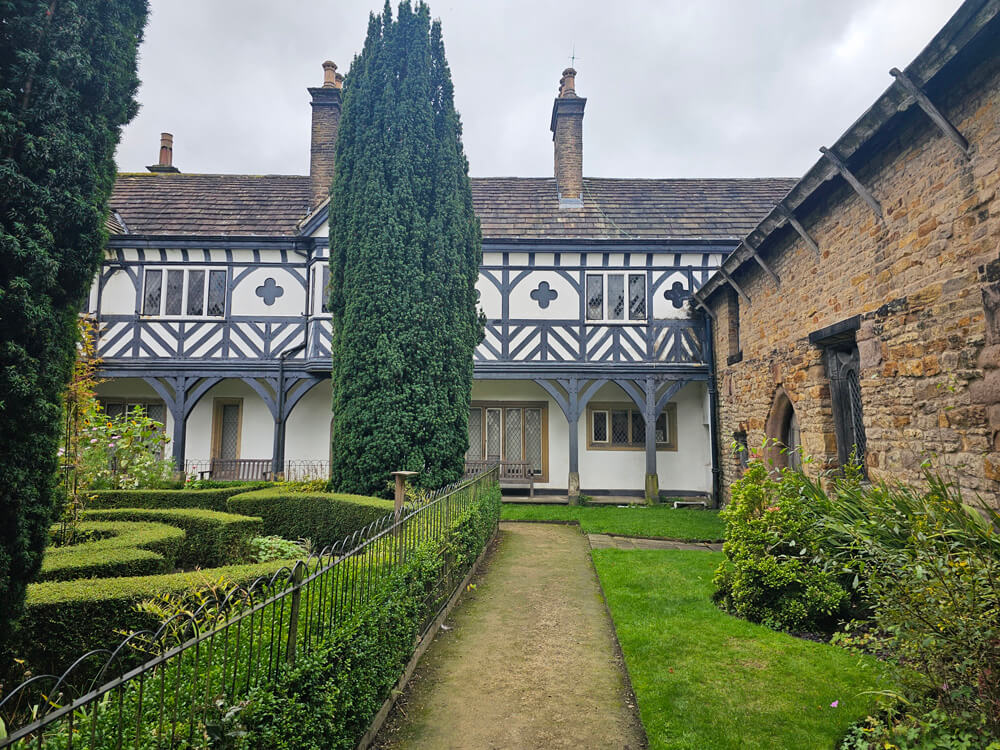
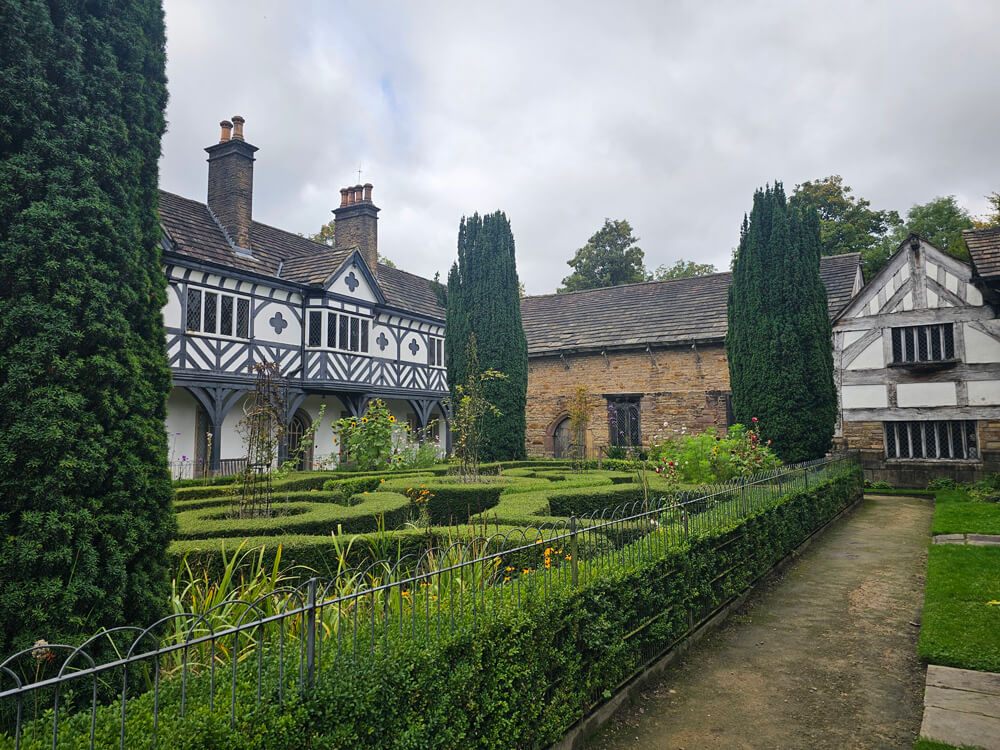
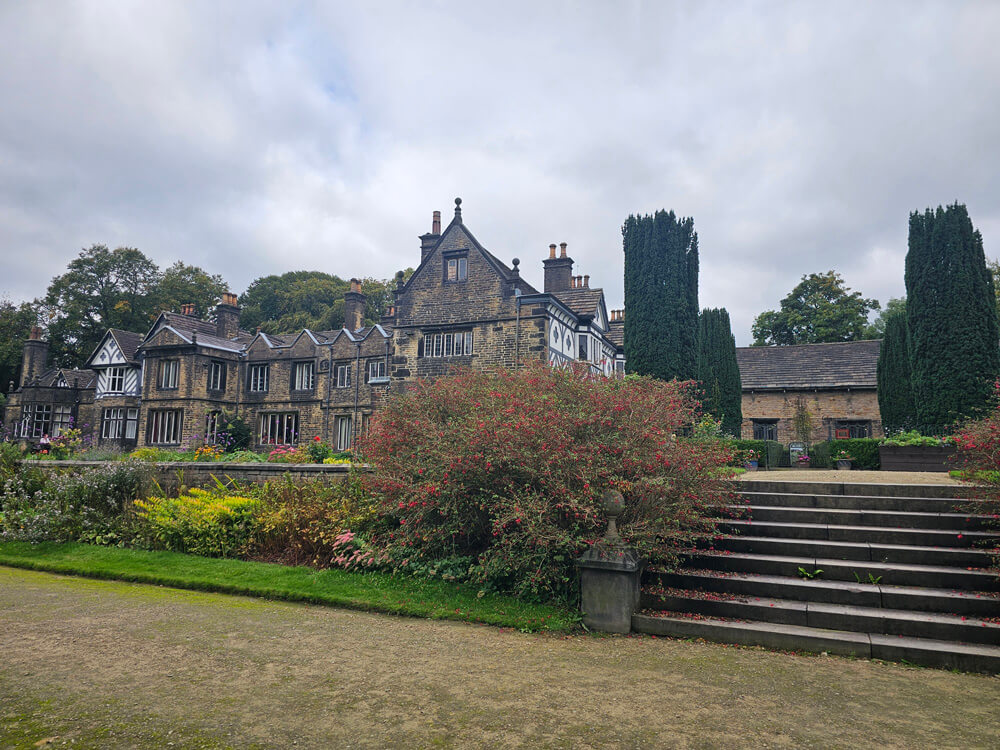
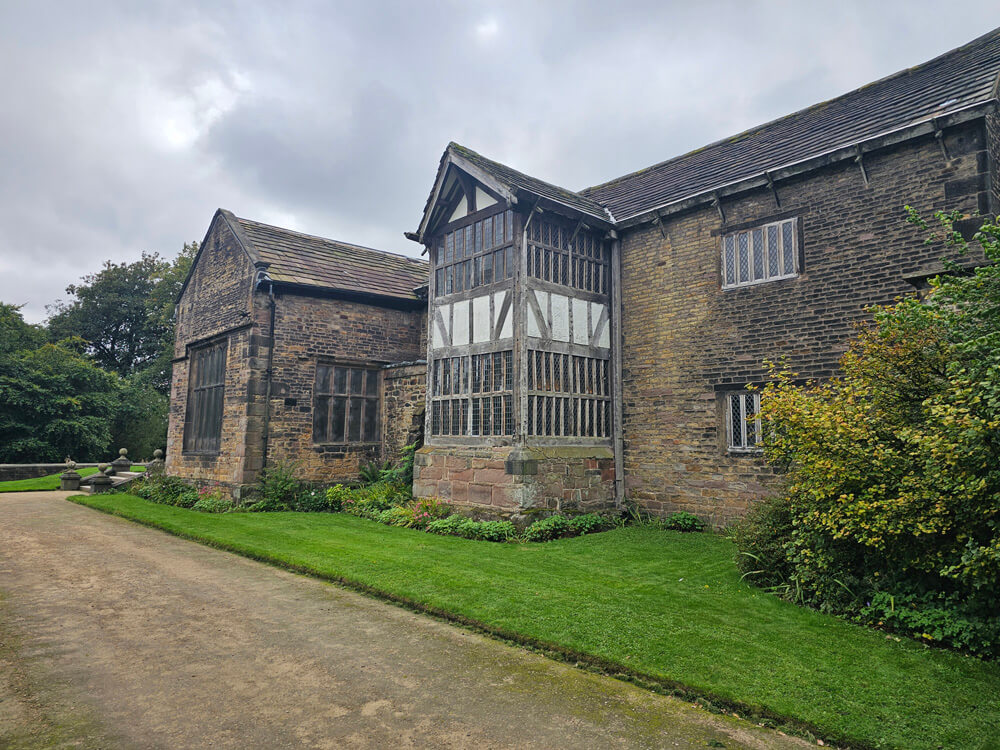
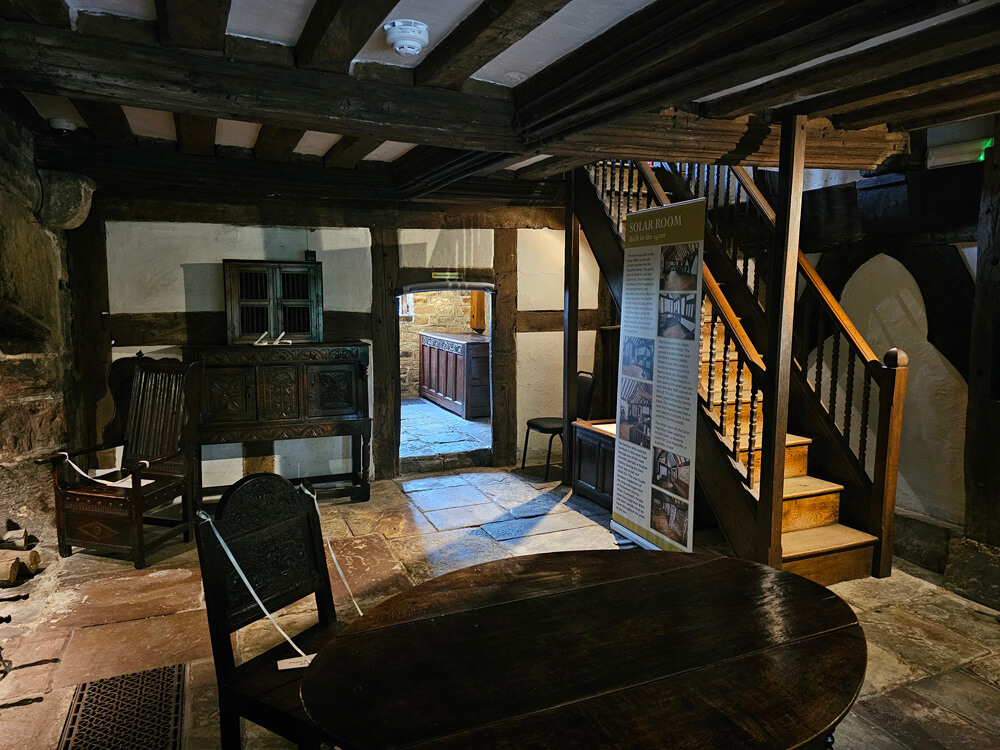
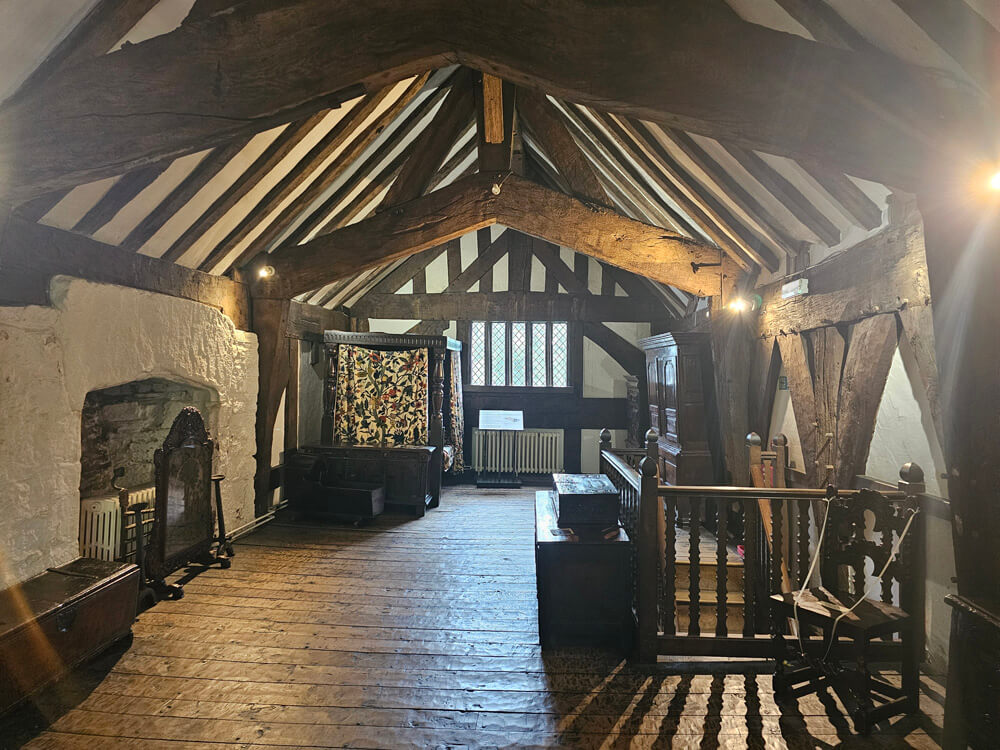
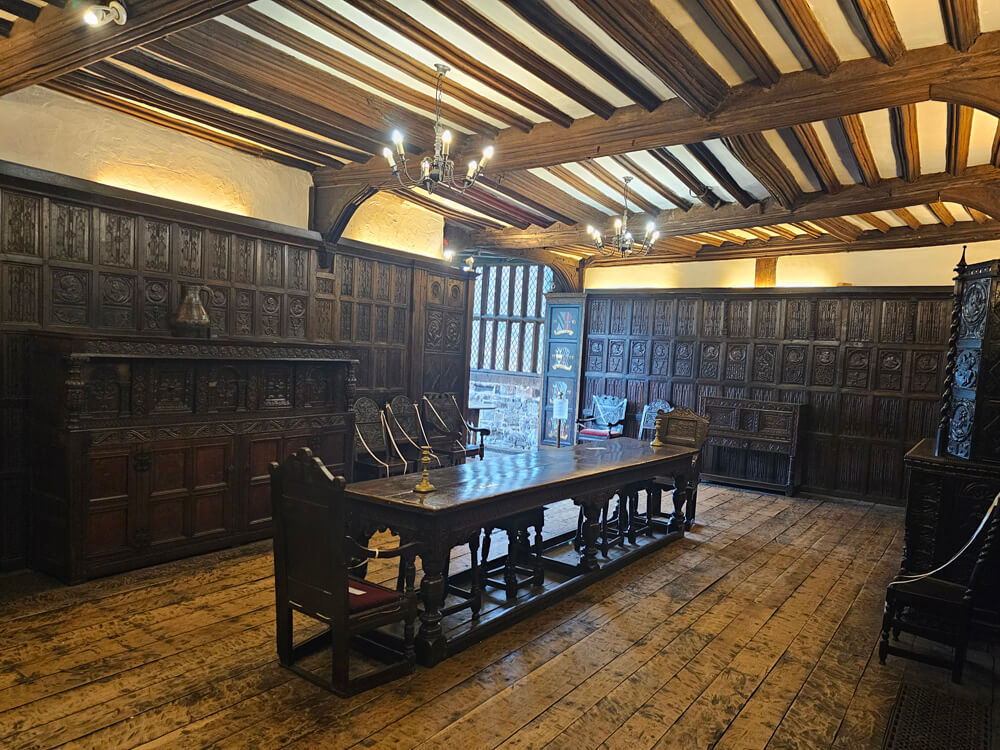
Smithills Hall is remarkable because each period of its history remains visible. The building is arranged around an open courtyard, with the medieval Great Hall forming the north range and later Tudor, Jacobean and Victorian additions extending around it.
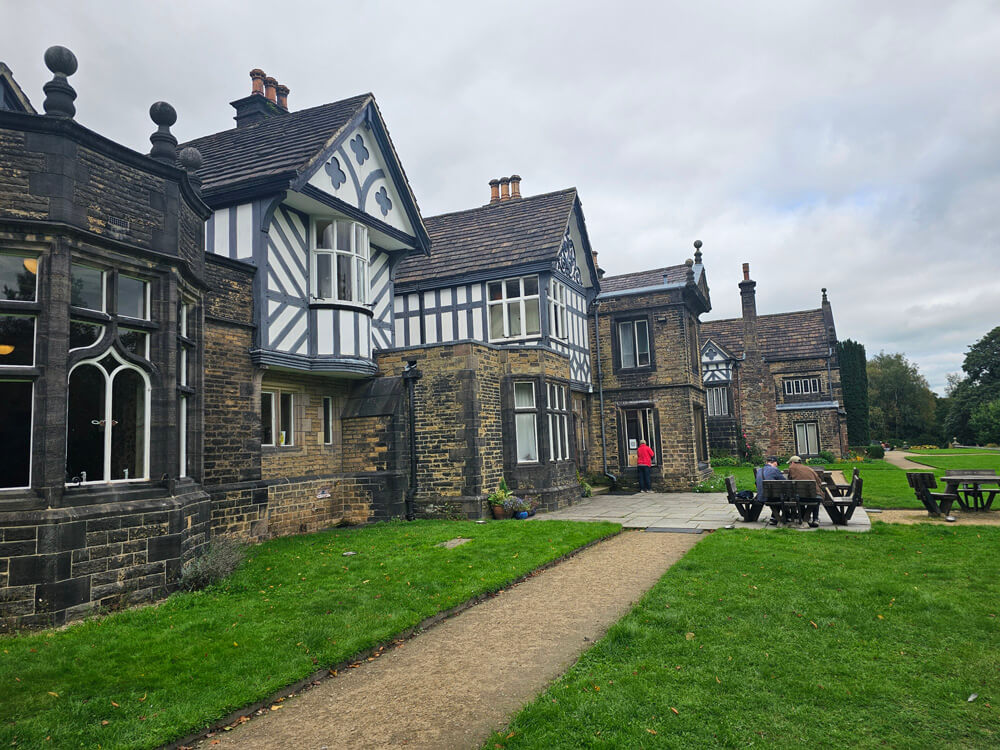
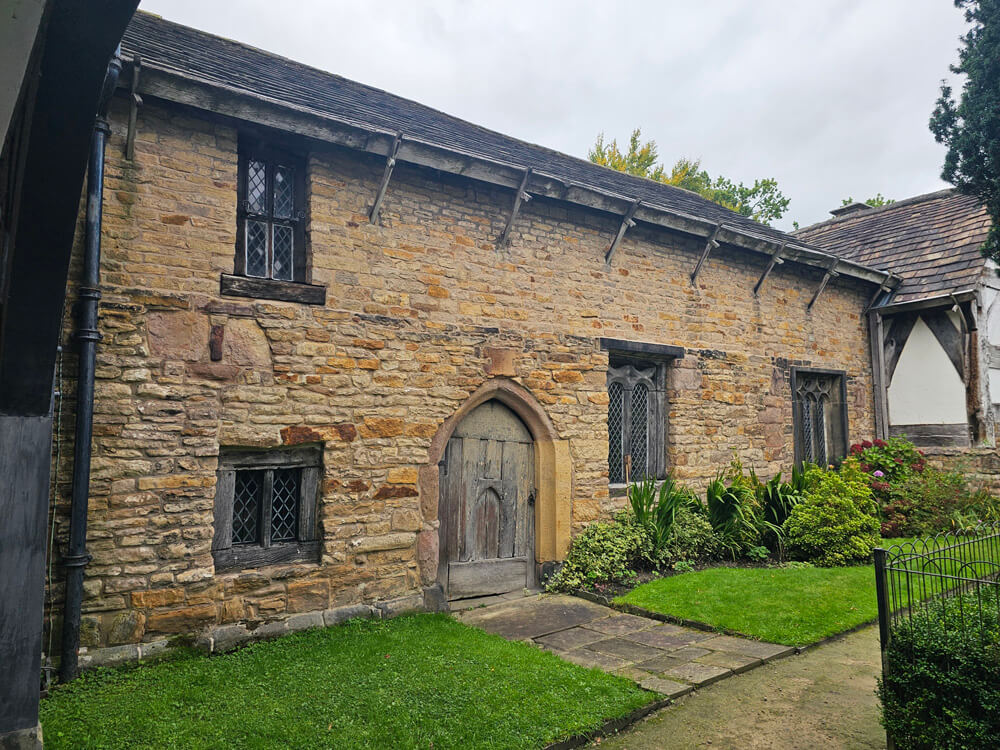
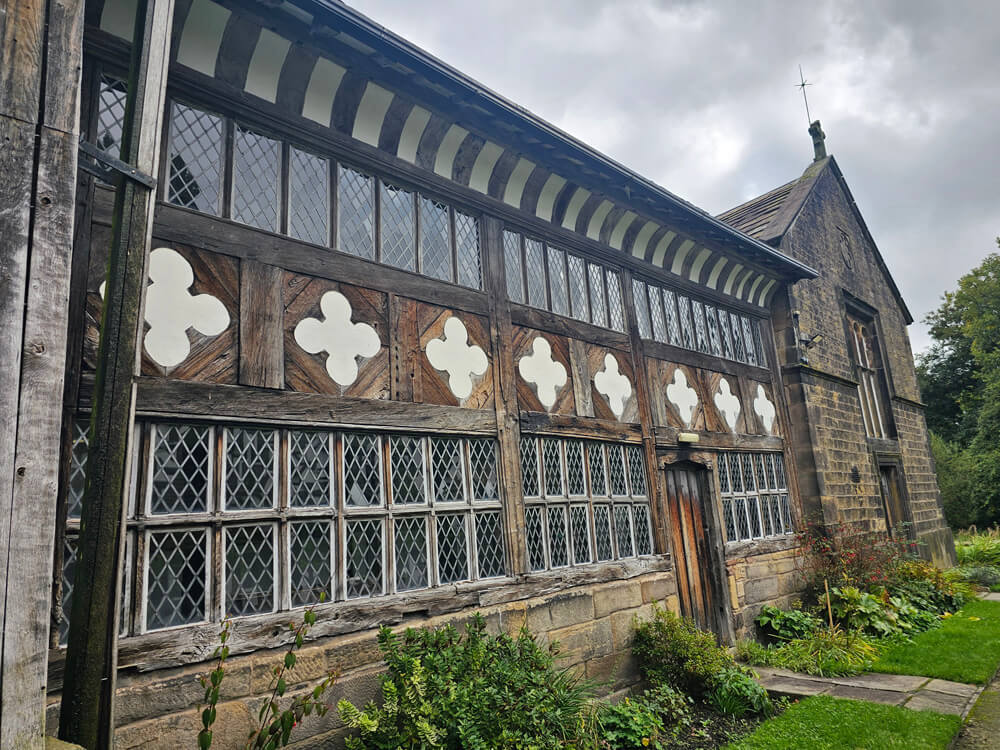
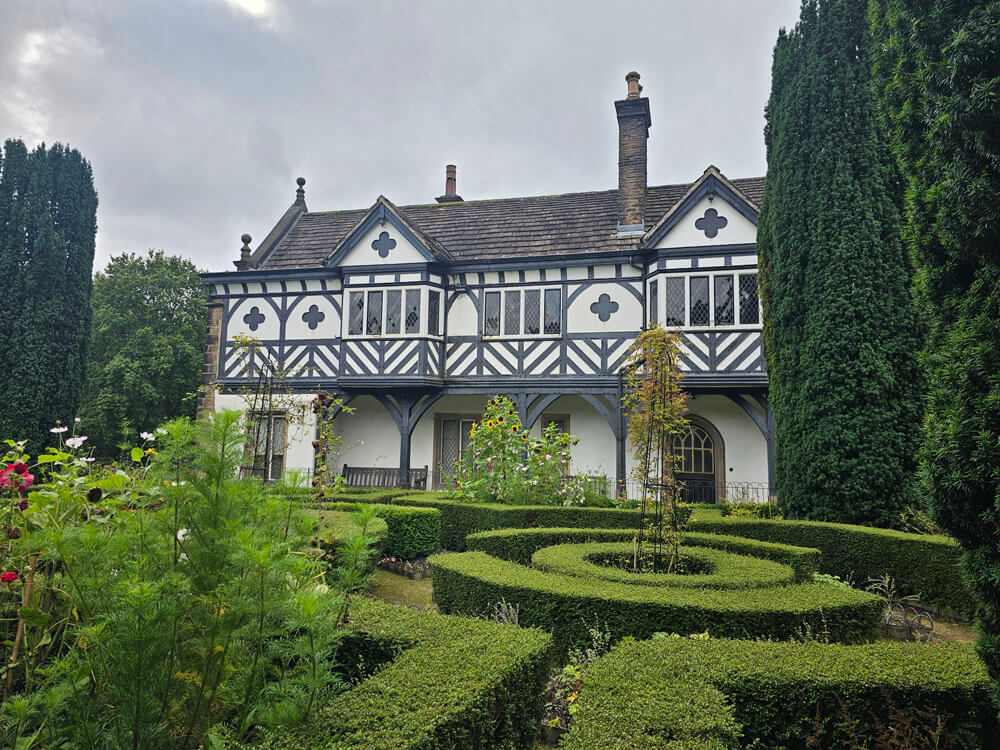
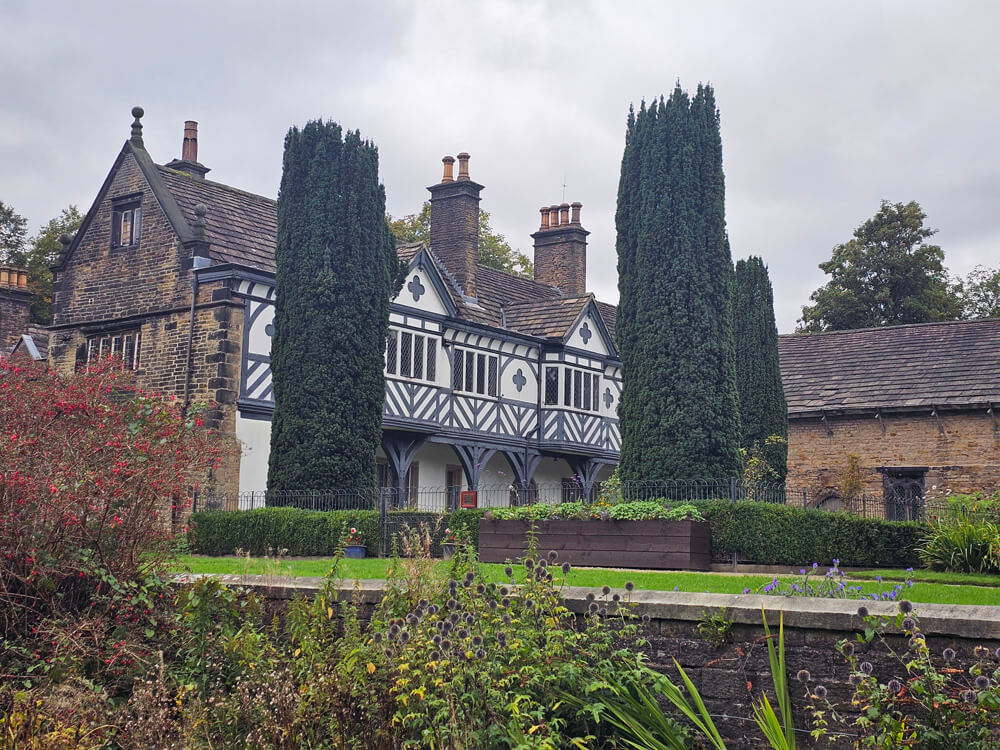
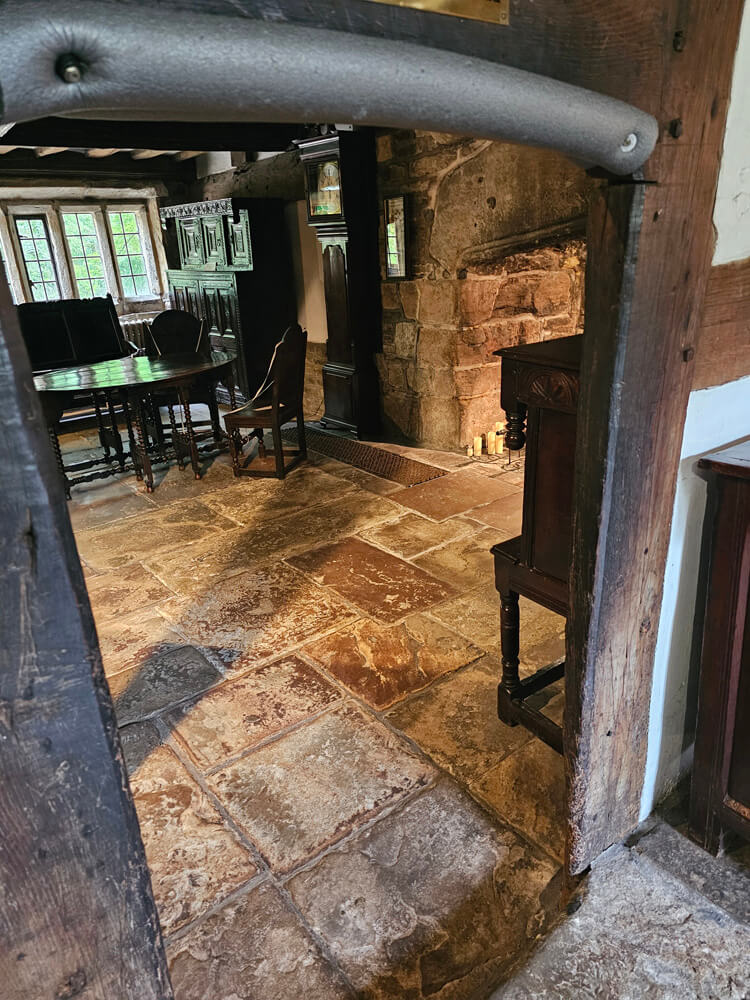
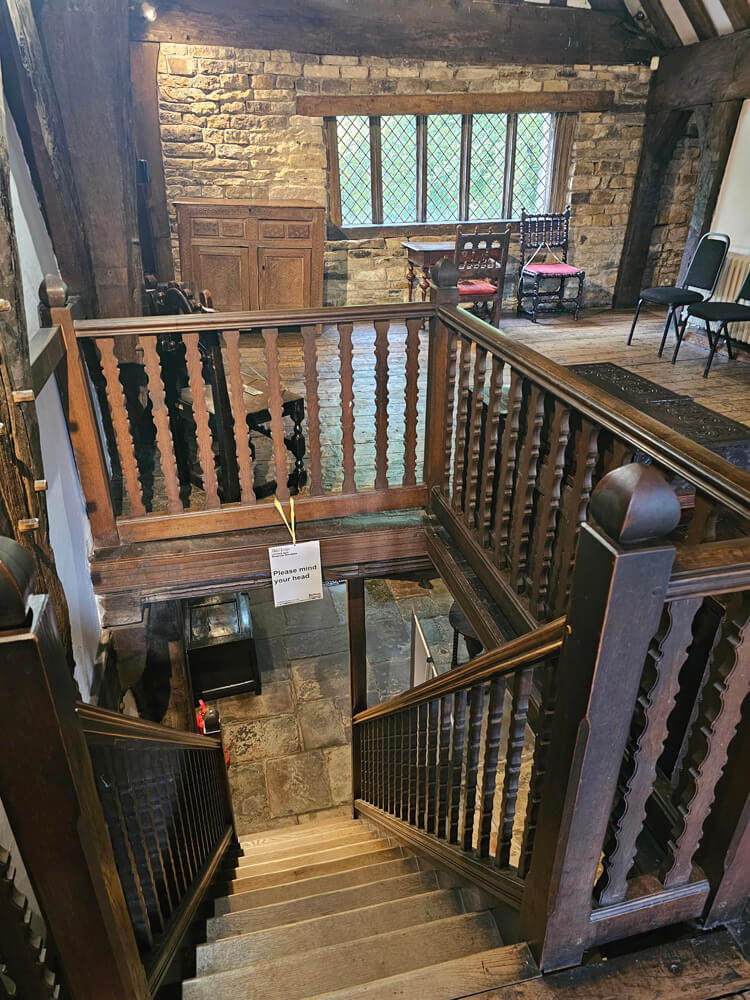
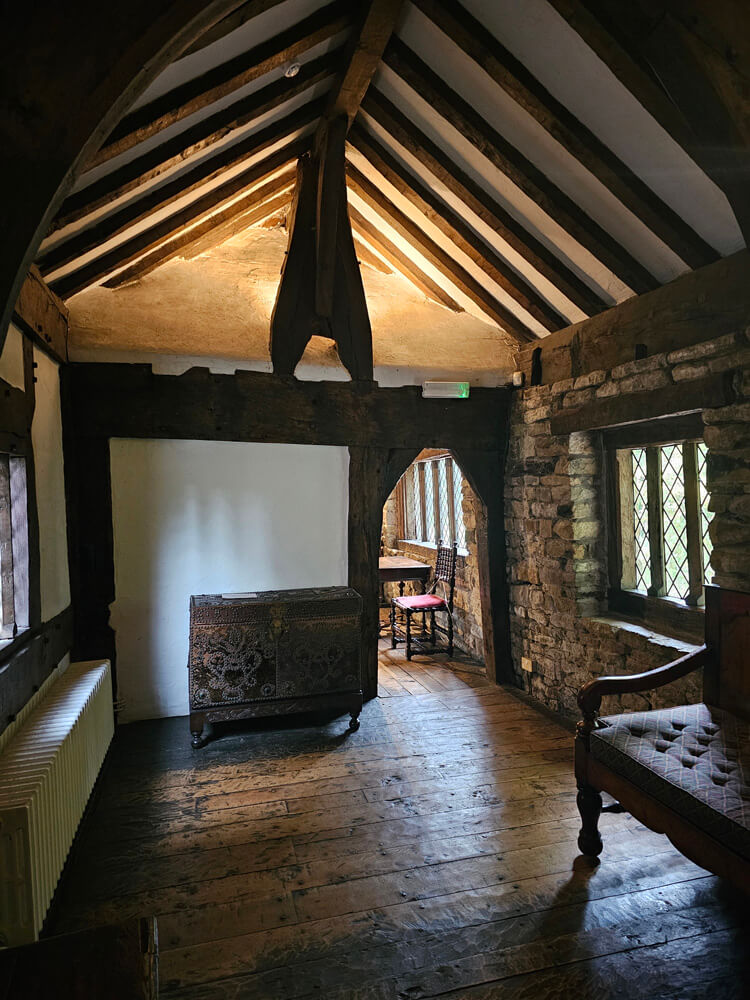
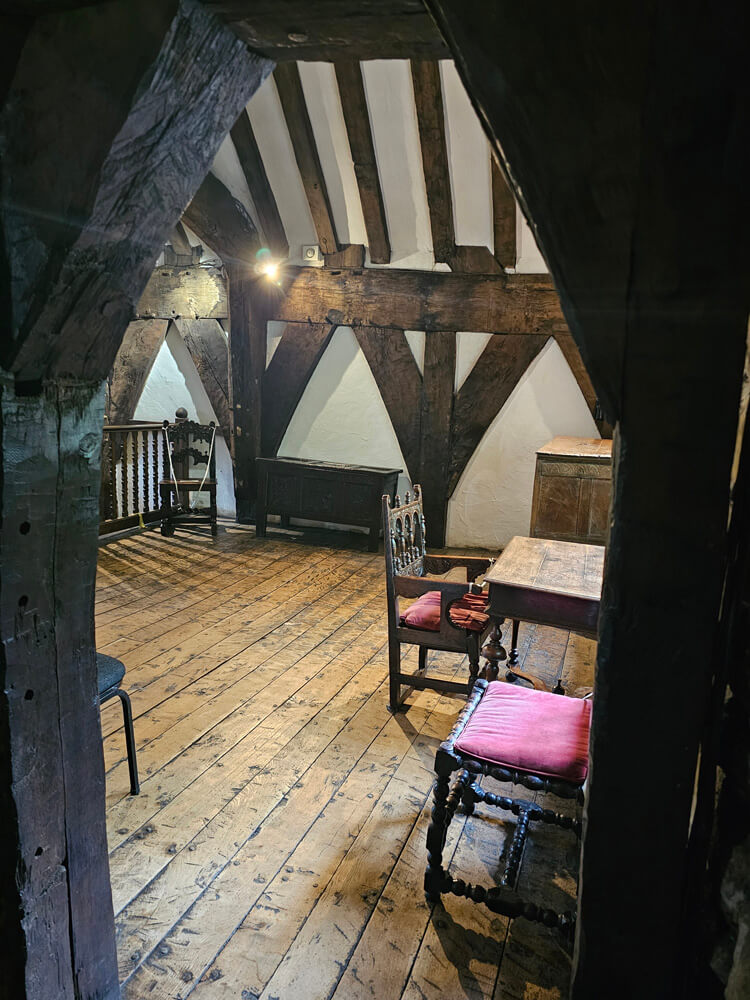
The oldest sections combine roughly coursed sandstone rubble with timber-framed walls, while later wings feature decorative black-and-white timber framing, stone mullioned windows and steep stone-flagged roofs. George Devey’s Victorian extensions blend so successfully with the older fabric that the hall appears to have grown naturally over the centuries.
The Great Hall
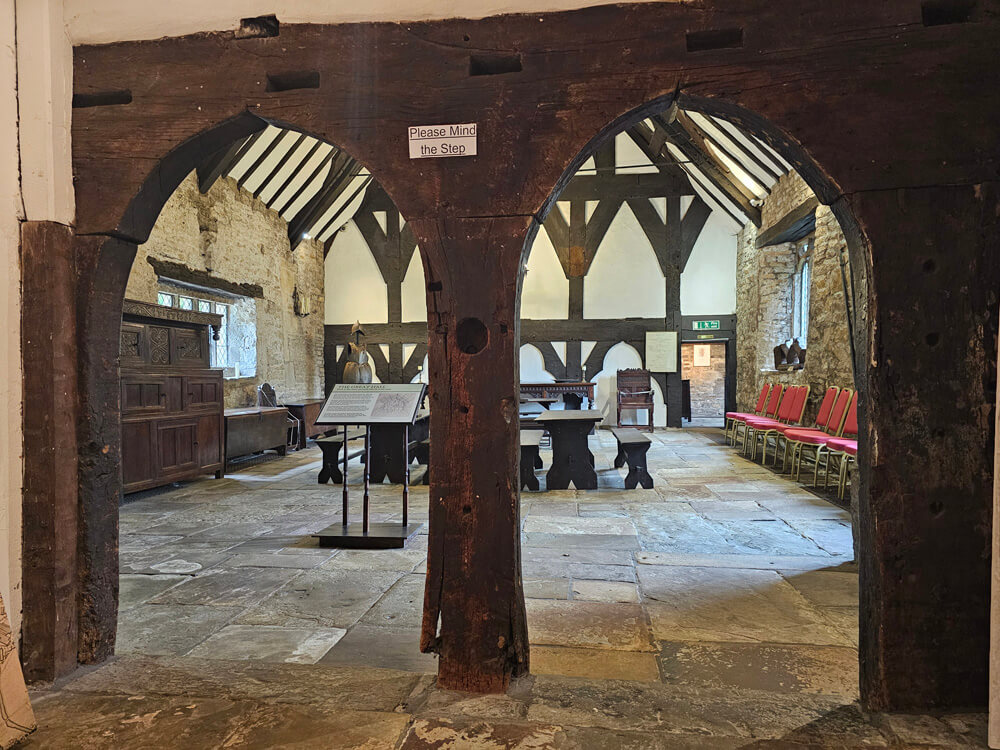
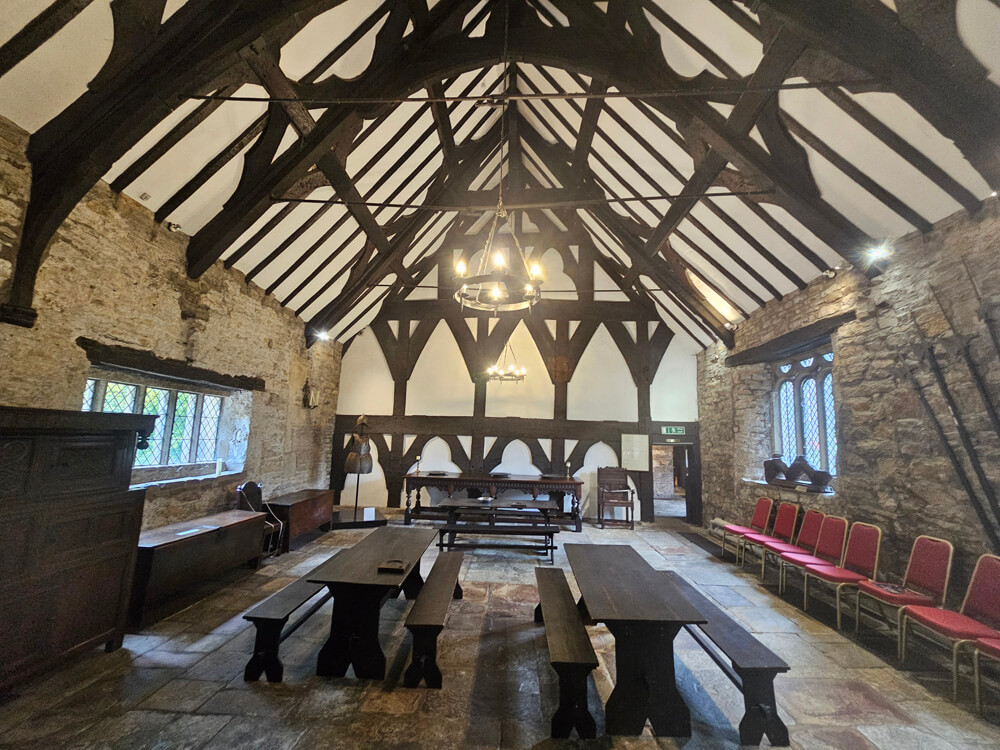
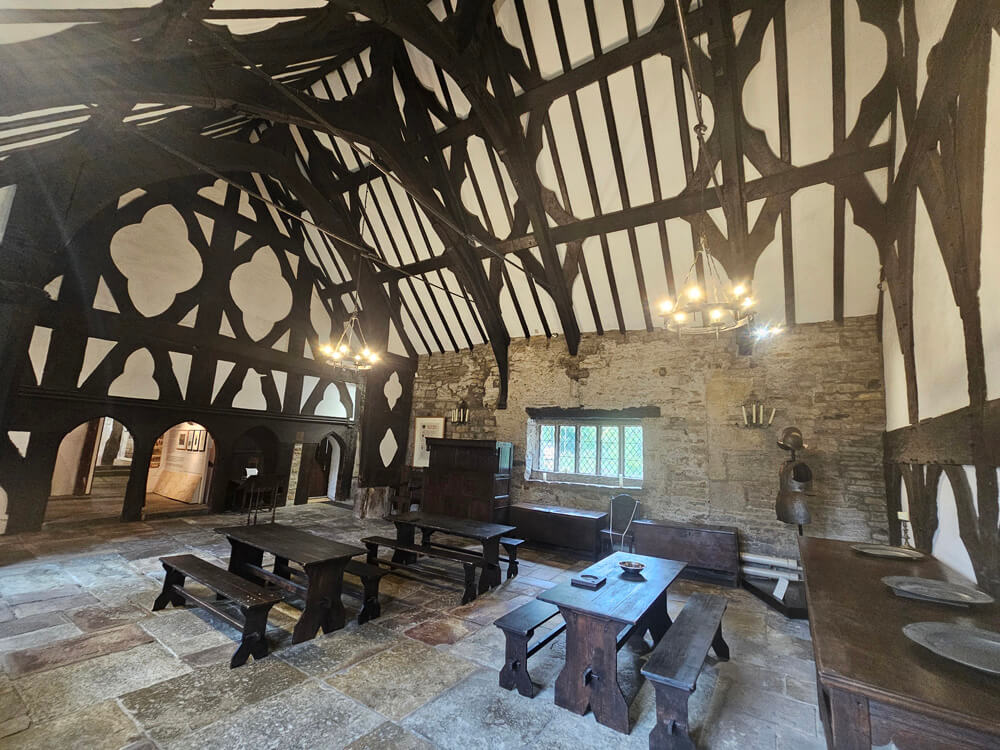
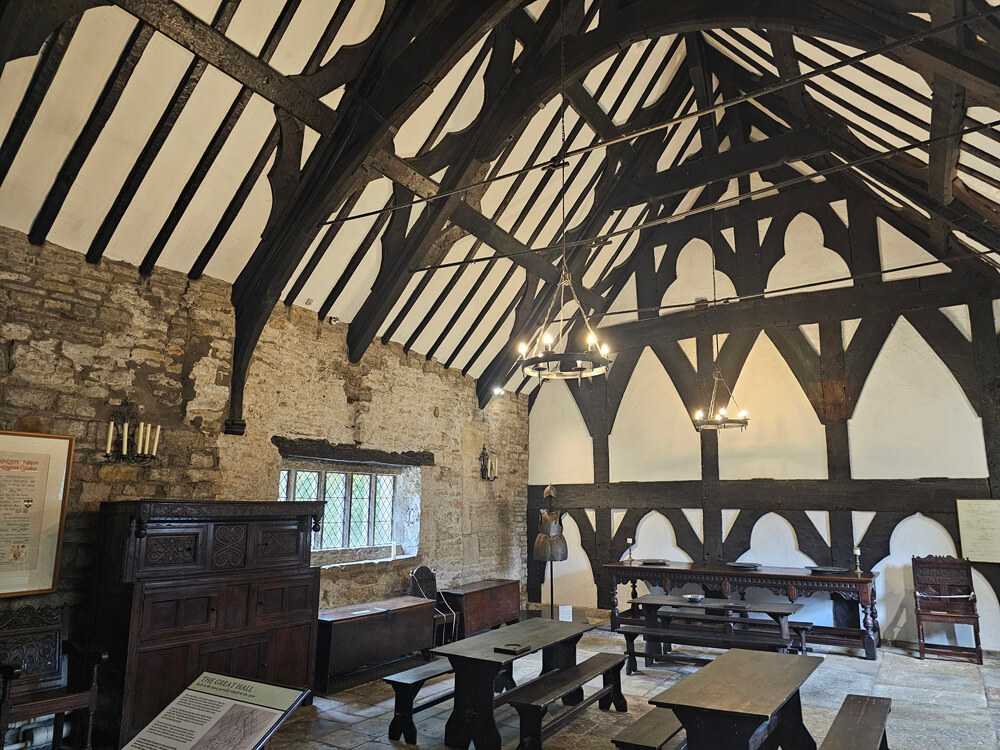
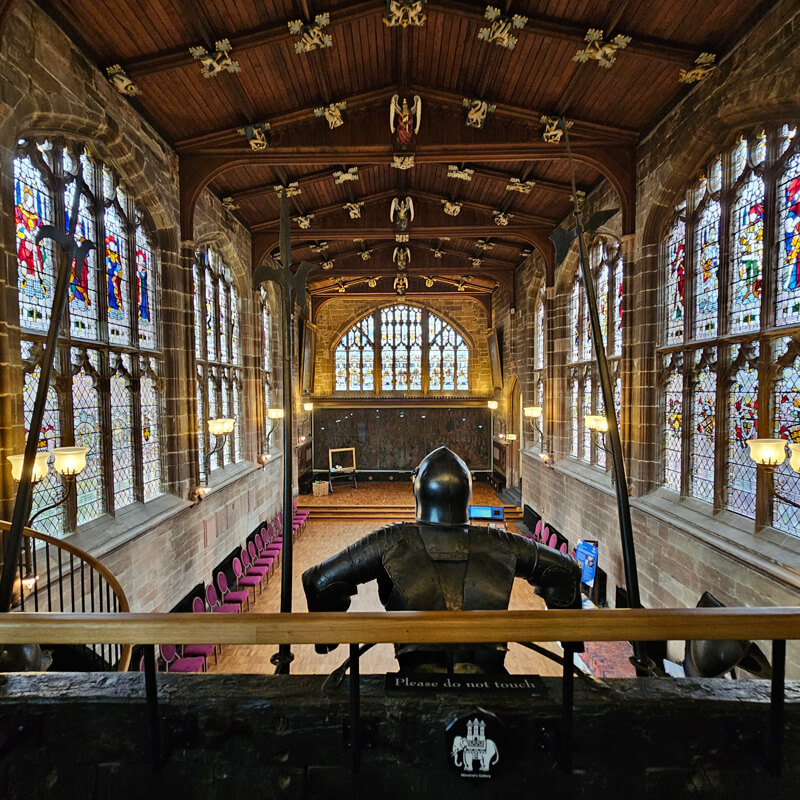
The Great Hall is the building’s greatest medieval treasure. This soaring open hall once served as the centre of domestic life, where the household gathered around a central hearth.
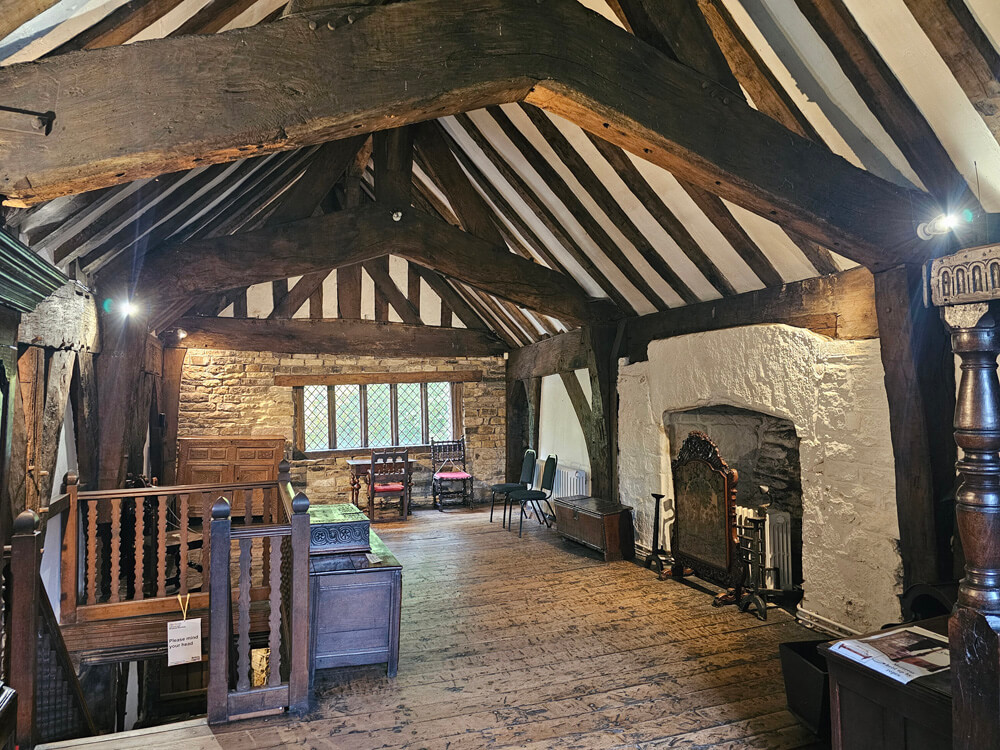
Its spectacular oak roof, supported by arch-braced and king-post trusses with carved wind braces, remains one of the finest surviving medieval roofs in Lancashire. Decorative timber screens and original doorways preserve much of the hall’s 14th-century character.
A Living Piece of Lancashire History
Surrounded by historic gardens and parkland overlooking Raveden Brook, Smithills Hall offers a rare journey through medieval, Tudor and Victorian England. Its timber-framed architecture, magnificent Great Hall, carved Tudor panelling and centuries of preserved interiors make it one of the North West’s most important historic houses and one of Bolton’s greatest architectural treasures.
Photo Gallery.
Did you enjoy this post?
I hope you found this post useful. I put a great deal of time and effort in to building, maintaining and populating the website. If you like, you could say a small thank you by buying me a coffee. You don't have to, but it would be nice :)
Buy me a coffee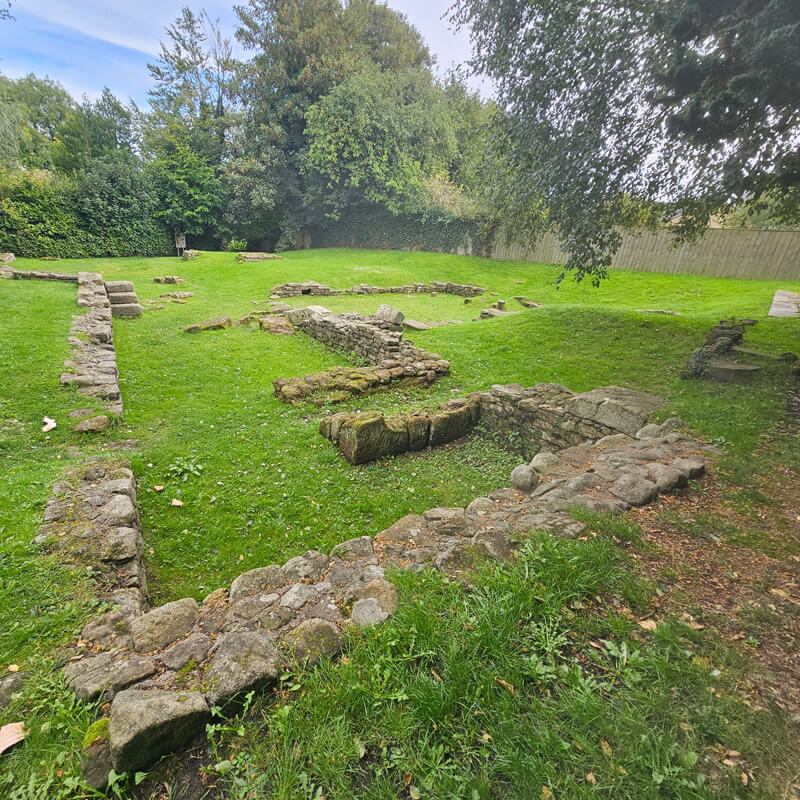
Stay up to Date
Follow me on my journey and get notified whenever a new post is published by following Kings & Castles on Facebook.
Follow MeExplore The Map
Discover the hundreds of castles, churches, monasteries, cathedrals and other historic locations that I've personally visited across England and Wales. Search by location, explore nearby sites and plan your next historical adventure.
Share: