Church of St Mary and St David, Kilpeck
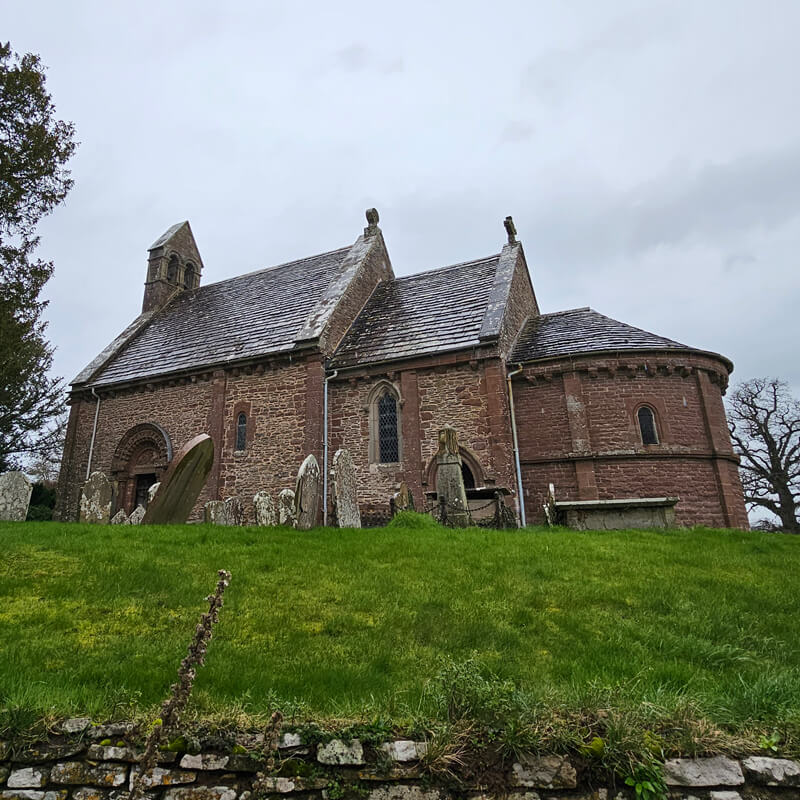
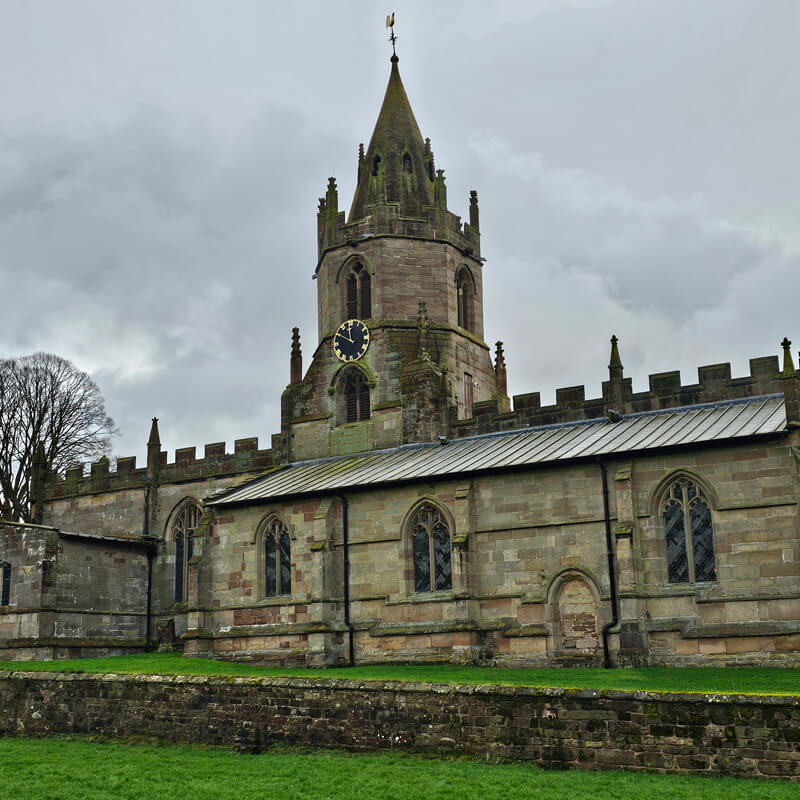
The Church of St Mary and St David, more commonly known as Kilpeck Church, is a famous Romanesque church in the village of Kilpeck in Herefordshire, about 5 miles from the border with Monmouthshire, Wales.
Historic
Highlights.
- Many original 12th-century features
- The finest collection of 12th-century Romanesque sculptures in England
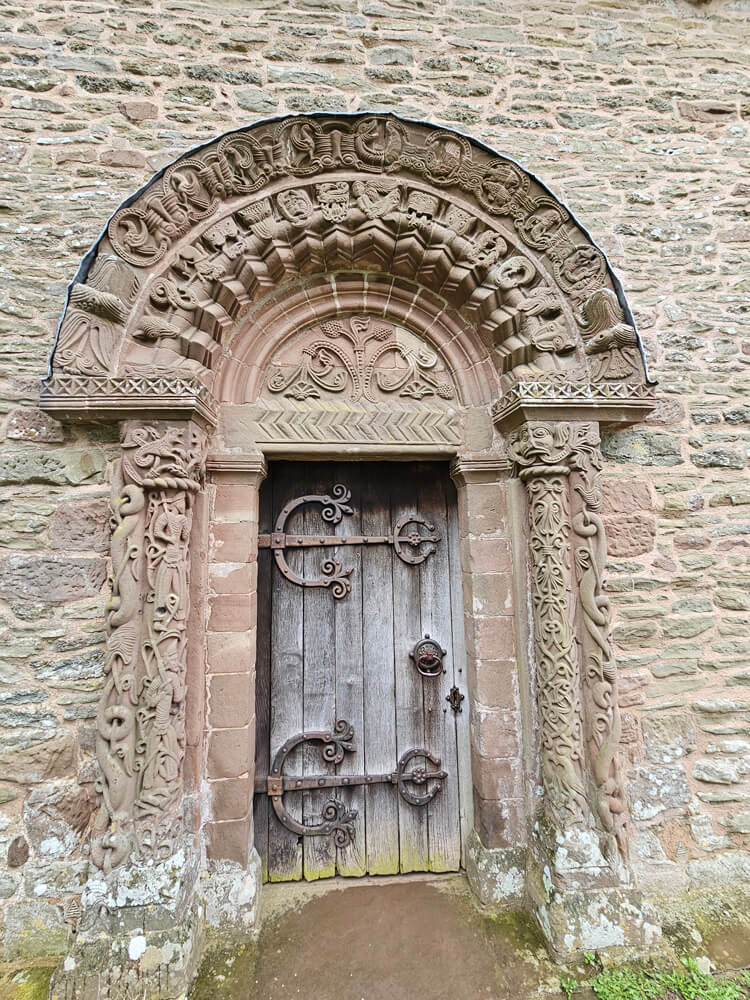
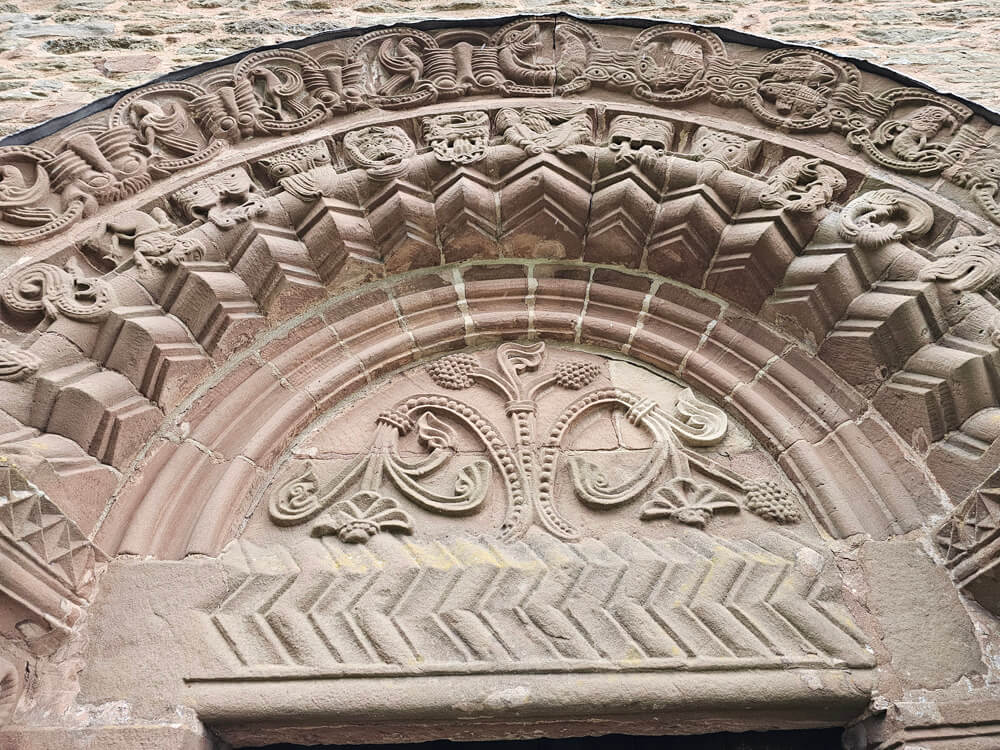
- Decorative tympanum above the south door
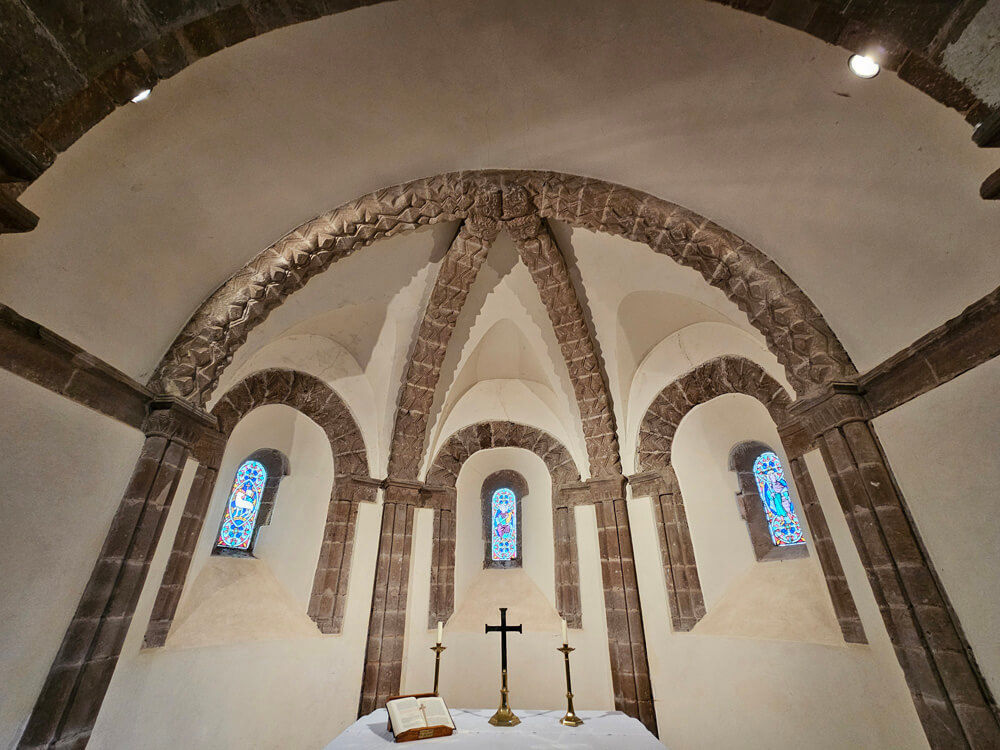
- Rare rib-vaulted semicircular apse
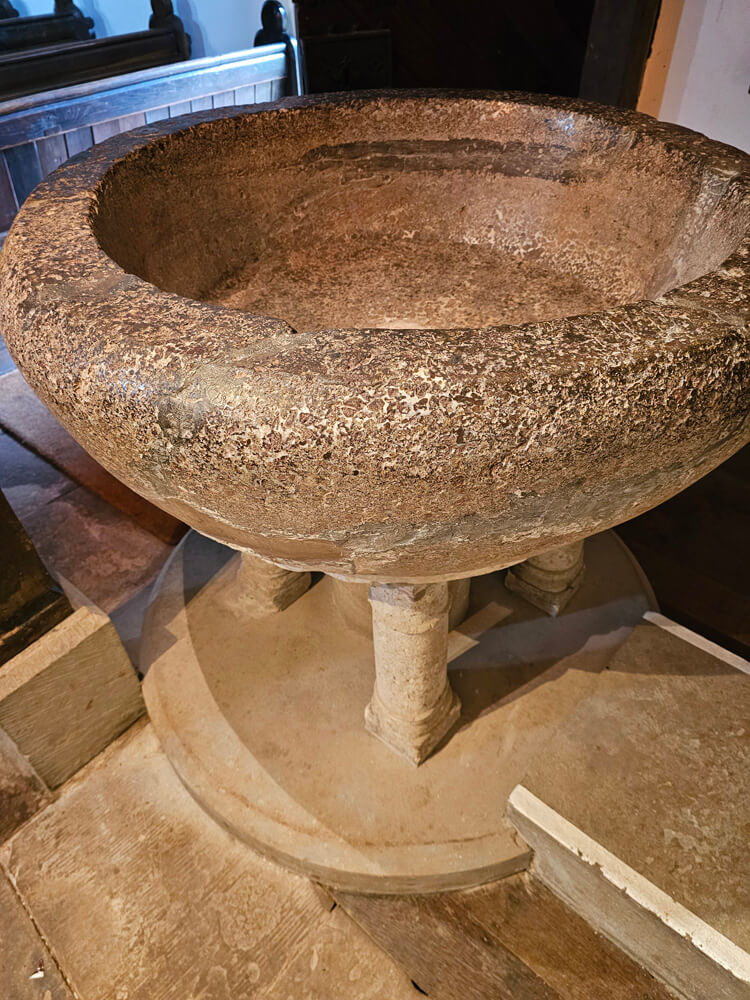
- Massive medieval font
- Extraordinary ancient stoup
Kilpeck is one of the most well-known churches amongst students of church architecture, and has been described as “one of the most perfect Norman churches in England”.
This extraordinary church is ancient, small, built of red sandstone, and set on the edge of a quaint village with beautiful Herefordshire countryside stretching away on all sides.
Although Kilpeck is a modest village tucked away in the Herefordshire countryside, its church is world famous for its 12th-century sculptures and carving, which was made by a group of masons/sculptors known as the Herefordshire School. Kilpeck church is generally considered the jewel of the Herefordshire School of Romanesque sculpture; for its completeness, its mastery and its incredible state of preservation.
It is generally believed that the current church may have replaced an earlier Saxon church at the same site, maybe as early as the 7th century, and the oval raised form of the churchyard is typical of even older Celtic foundations.
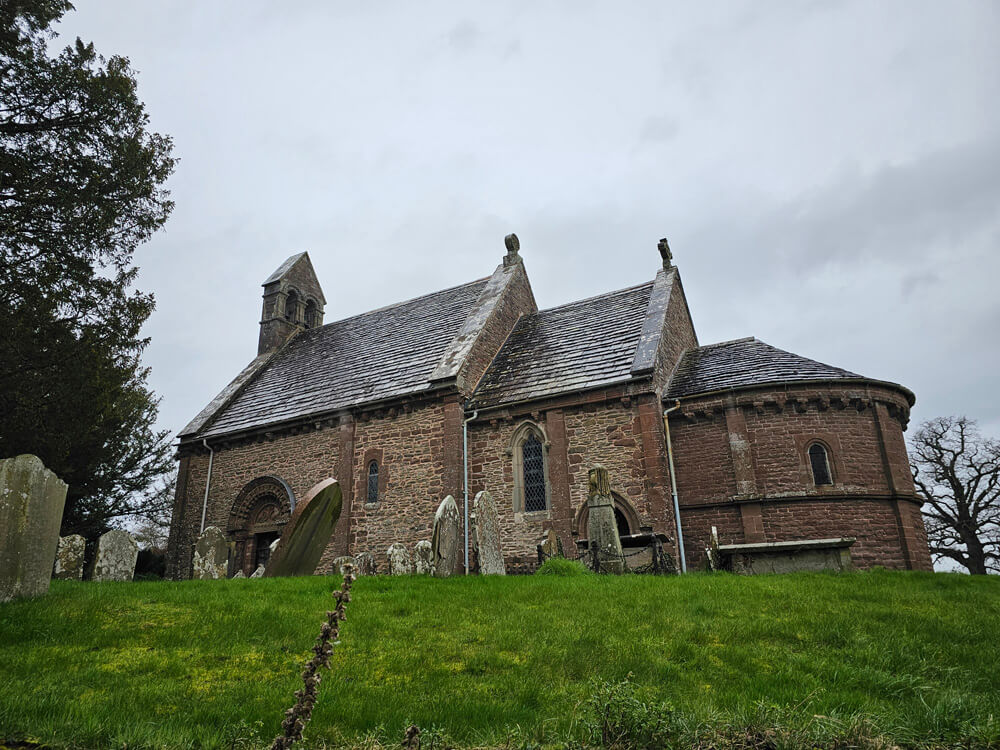
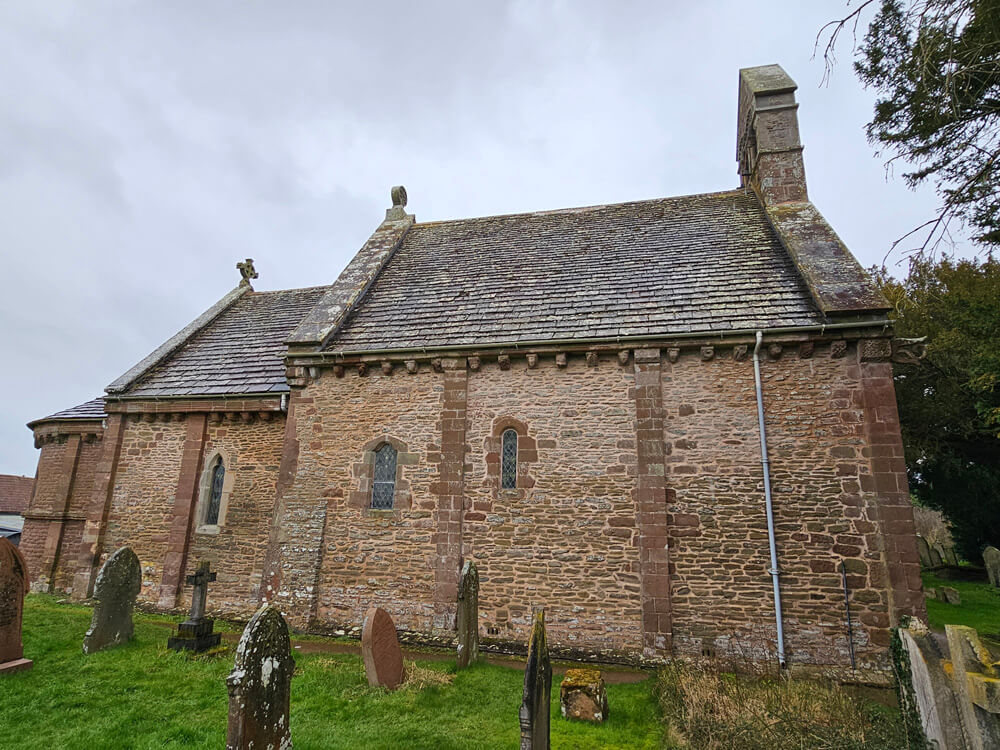
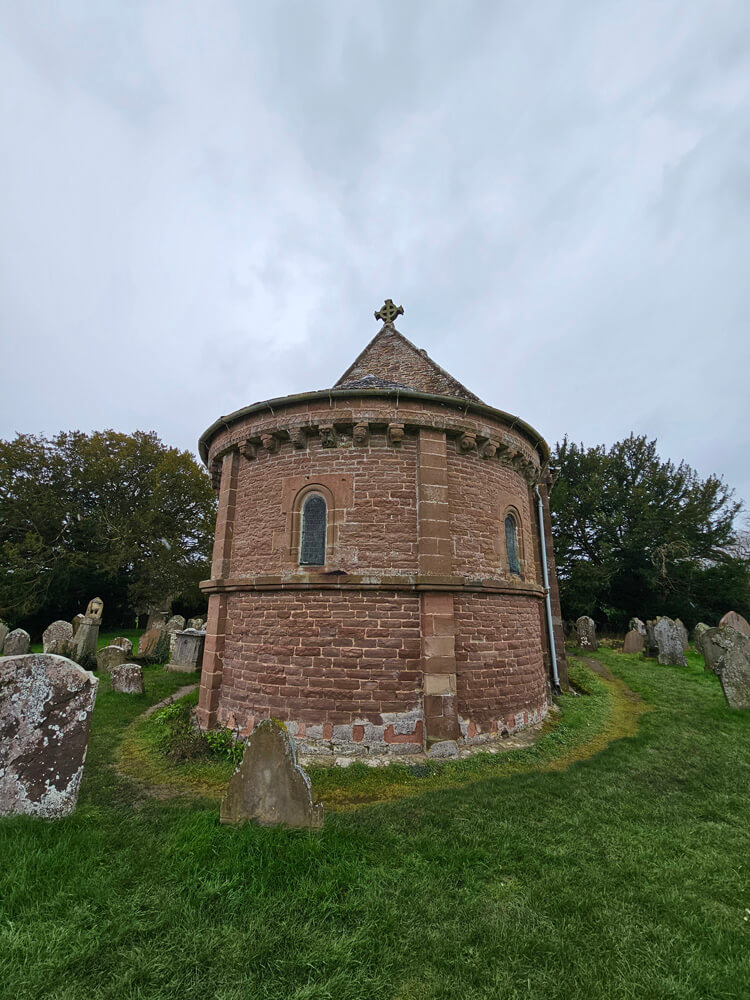
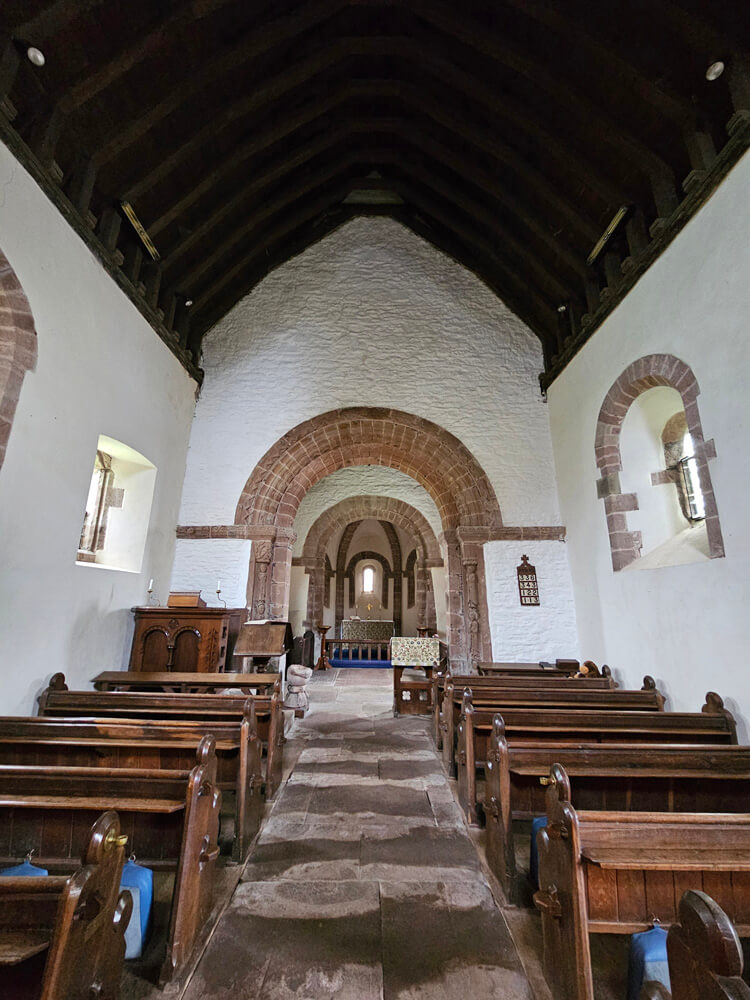
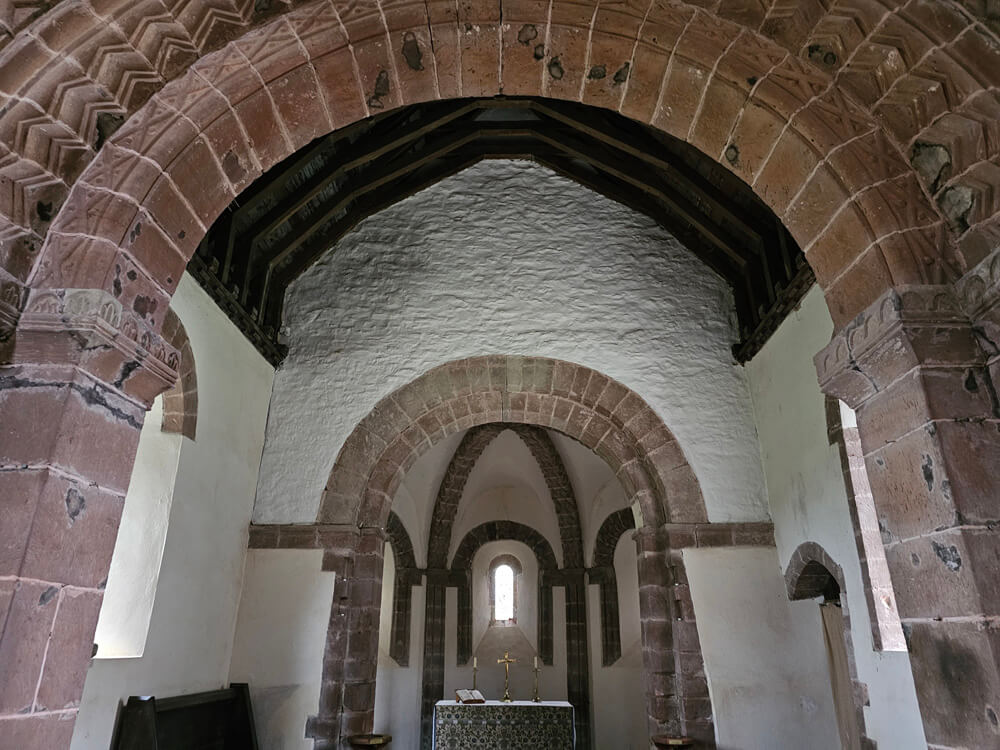
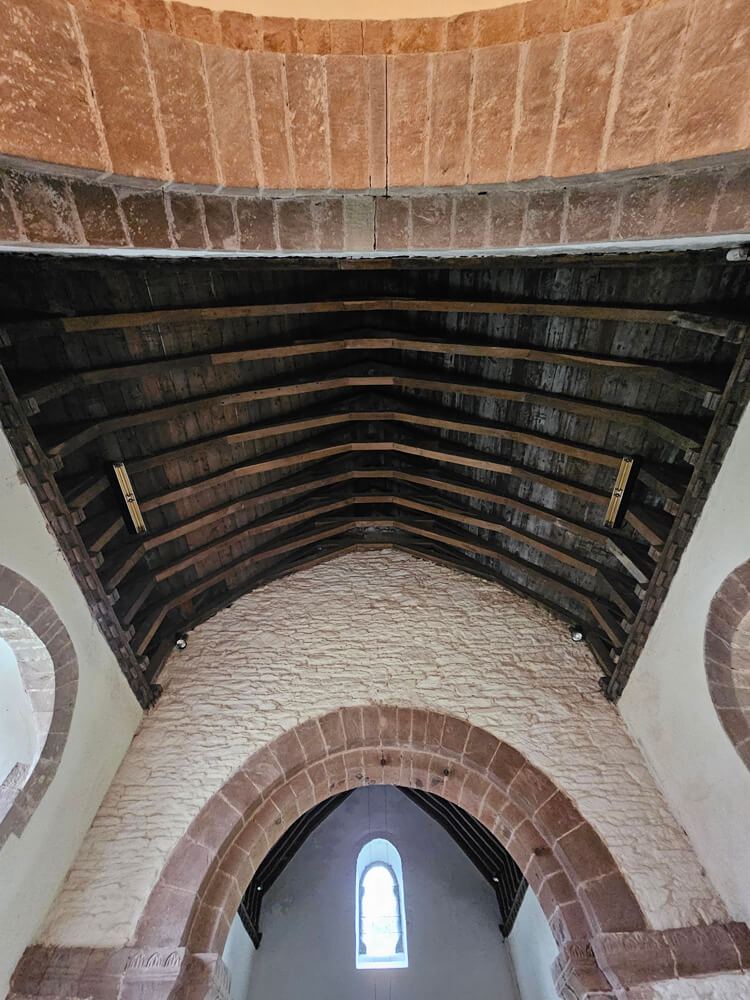
The current church was built sometime around 1134 – 1145, though it may incorporate some earlier Saxon masonry, and has survived remarkably intact and unaltered to the present day. The church is a three-cell building consisting of the nave, chancel and a rib-vaulted semicircular apse, all dating from the 12th century and still pretty much the same as when it was built, and astonishingly well preserved.
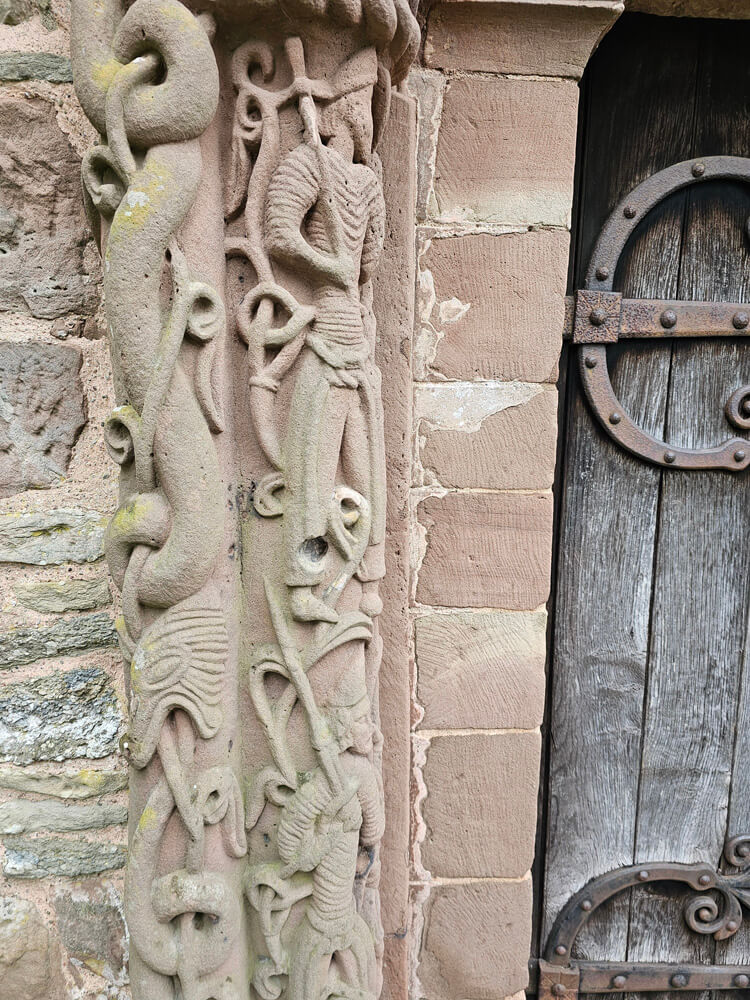
The church is also home to the finest collection of Romanesque sculptures in England. There are many elaborate carvings inside and outside of the building, including Celtic, Scandinavian, Anglo-Saxon, and of both a Christian and an unchristian pagan nature. These include dragons, warriors, monsters, animals, grotesque heads, angels, and even one of the very few surviving Sheela-na-gigs in the country.
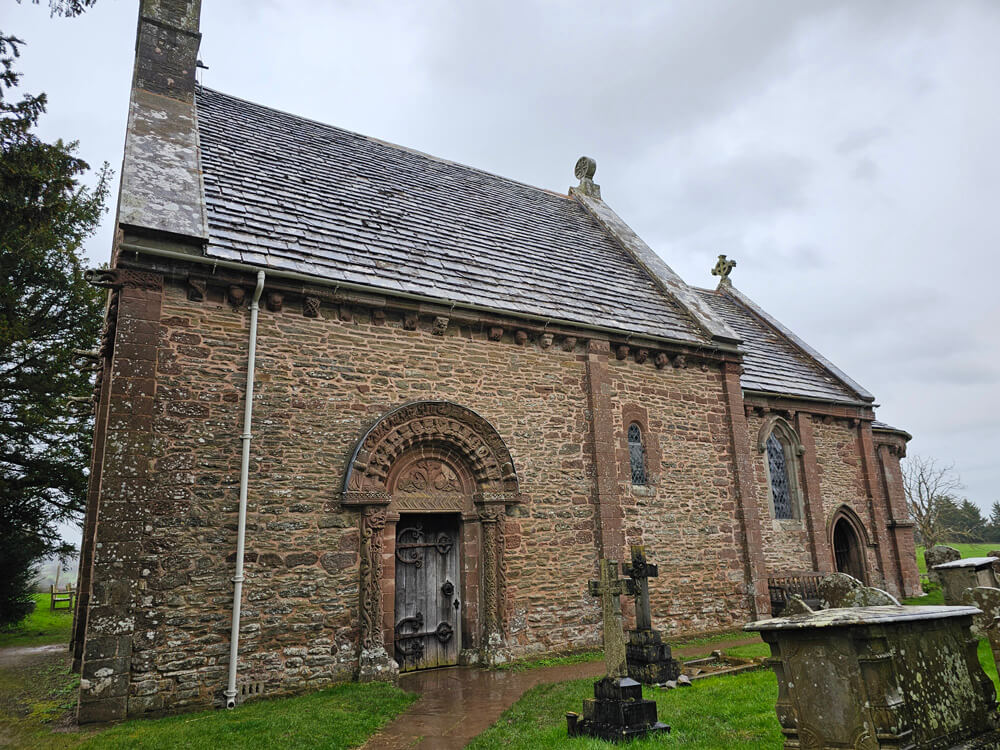
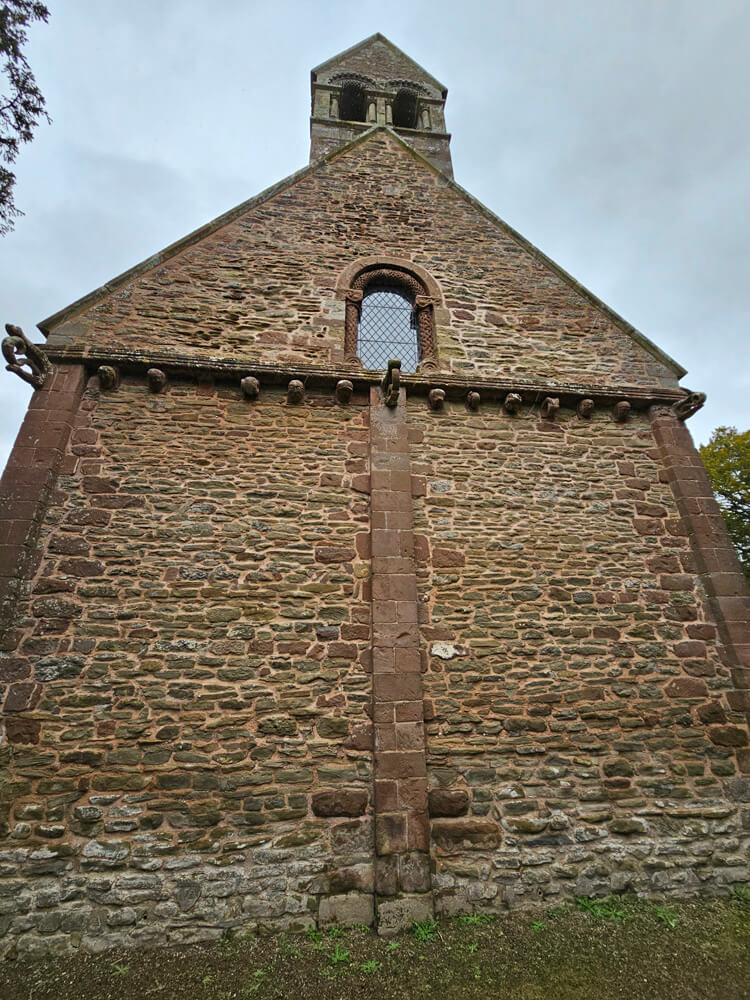
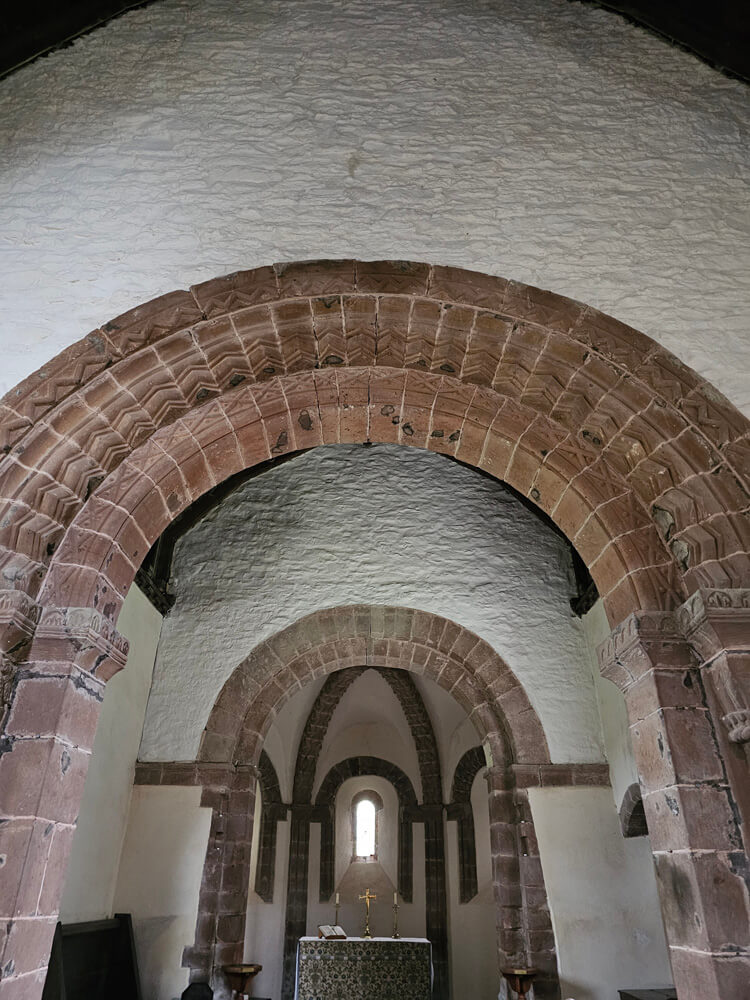
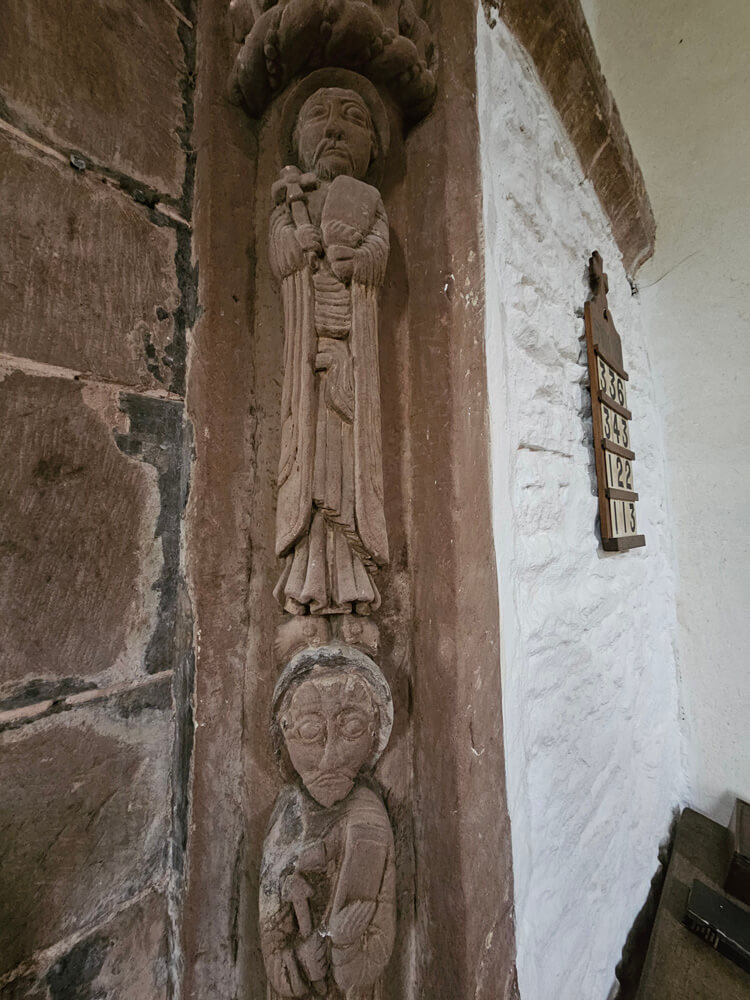
The decorative tympanum above the south door represents the Tree of Life, it is sophisticated and beautifully carved, and full of figures and foliage patterns. Also outside, the entire roofline around the church is decorated with carved corbels, which include men, animals and monsters. The west end is adorned by a series of grotesque monsters springing from some very celtic-looking ornamentation. There are many more superb carvings inside the church, particularly the chancel arch with its carvings of saints, and in the rib vaulting of the apse.
Amazingly, the semicircular apse of the church remains fully intact, including a rare stone boss set into its rib-vaulted roof. In all too many churches the apses have been removed or replaced by rectangular chancels. The domed roof was a symbol of heaven to the early Christians.
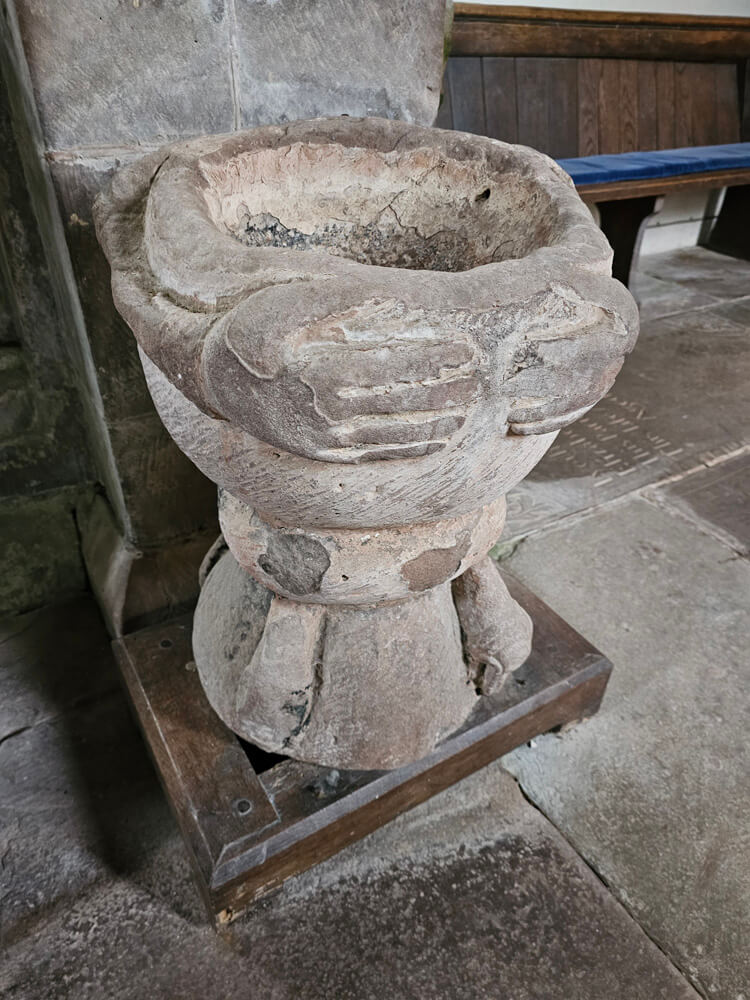
More notable features inside the church are two beautiful and original restrained Norman arches, a massive font and a holy water stoup.
The huge font is either early Norman, or possibly even earlier, and is therefore not part of the later church that we see today. Even earlier still, possibly even pre-Saxon, is the extraordinary and unmissable stoup, with two stone hands clasping the bowl. The stoup at one point would have been located outside the church and likely came from a chapel in the nearby Forest of Treville.
Photo Gallery.
Did you enjoy this post?
I hope you found this post useful. I put a great deal of time and effort in to building, maintaining and populating the website. If you like, you could say a small thank you by buying me a coffee. You don't have to, but it would be nice :)
Buy me a coffee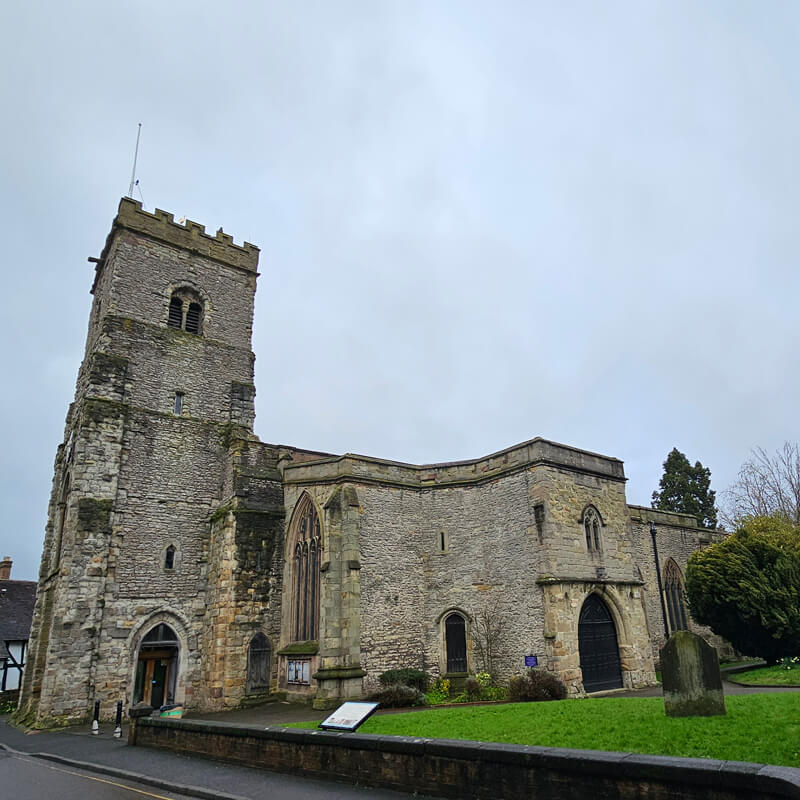
Stay up to Date
Follow me on my journey and get notified whenever a new post is published by following Kings & Castles on Facebook.
Follow MeExplore The Map
Discover the hundreds of castles, churches, monasteries, cathedrals and other historic locations that I've personally visited across England and Wales. Search by location, explore nearby sites and plan your next historical adventure.
Share: