St Mary’s Church, Swynnerton
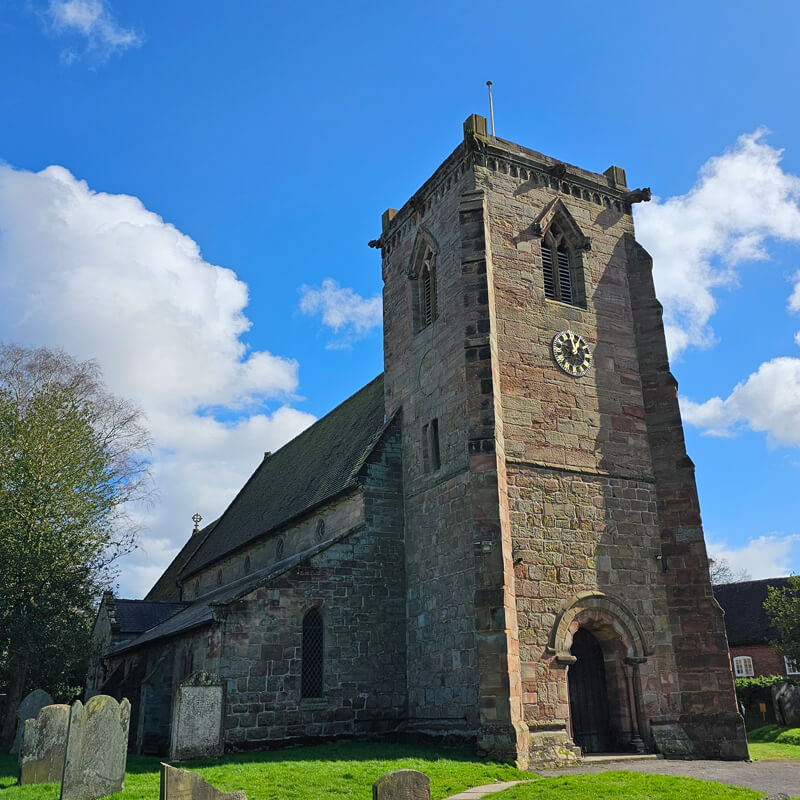
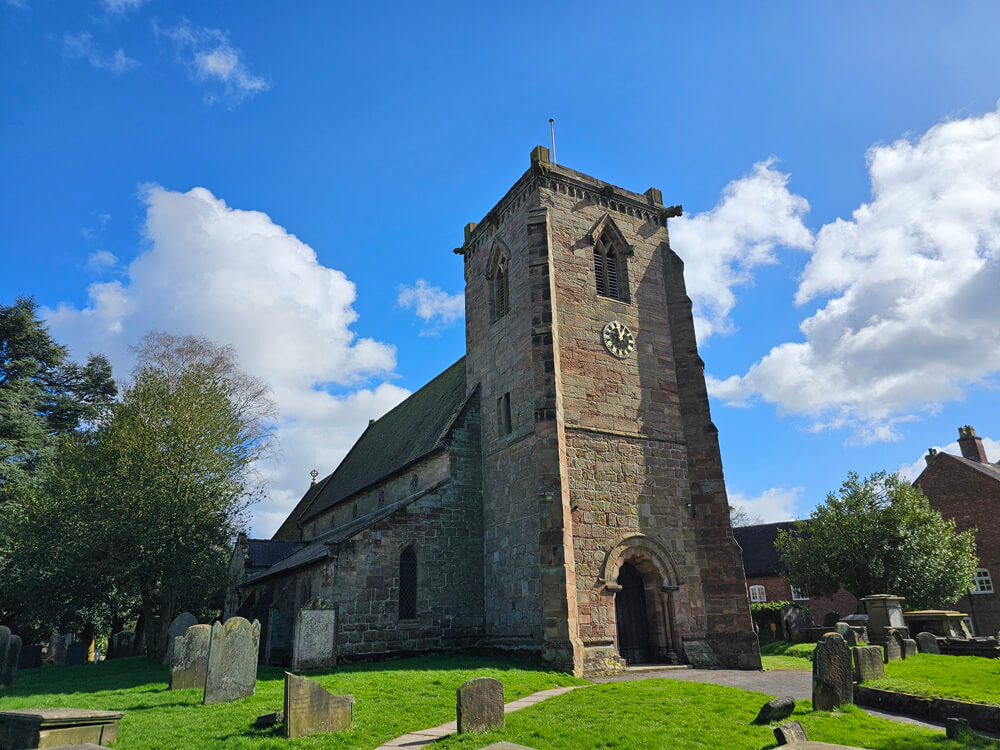
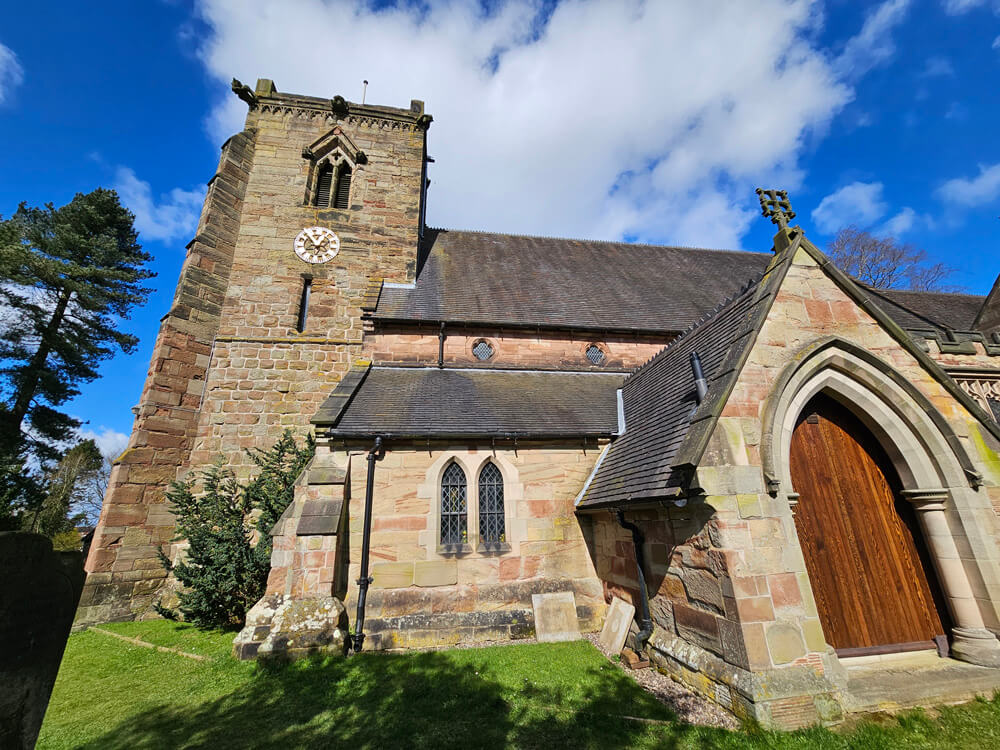
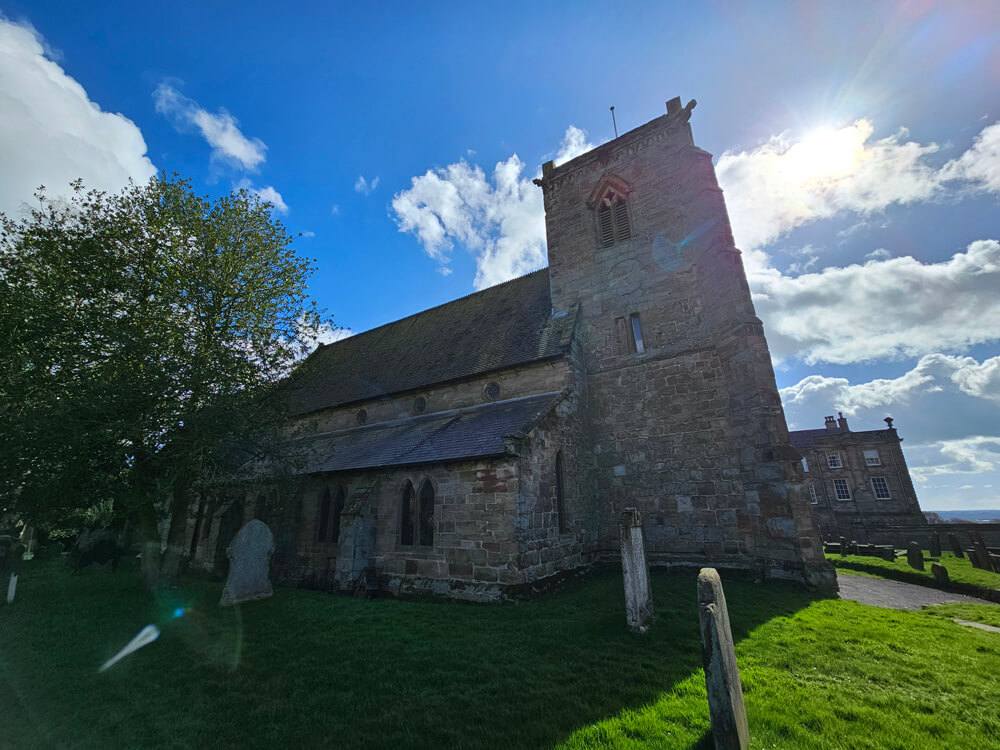
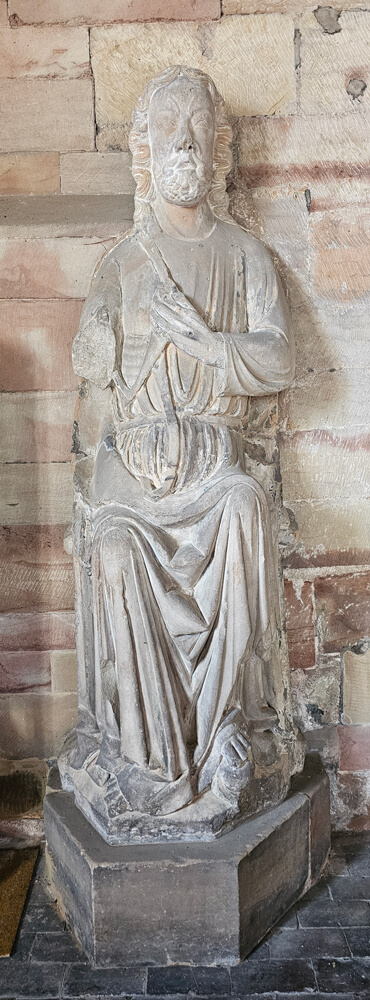
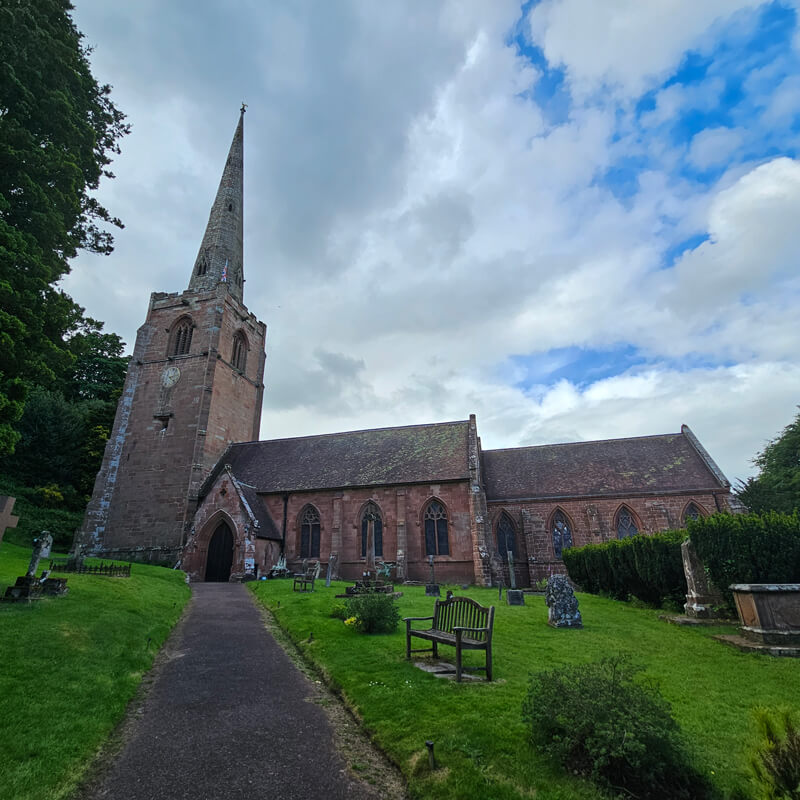
St. Mary’s Church, Swynnerton, is an interesting 12th-century church nestled in the small quiet village of Swynnerton in Staffordshire. Its most notable feature is a large 8ft tall stone statue of Christ dating to the 13th century.
Historic
Highlights.
- 8ft stone statue of Christ
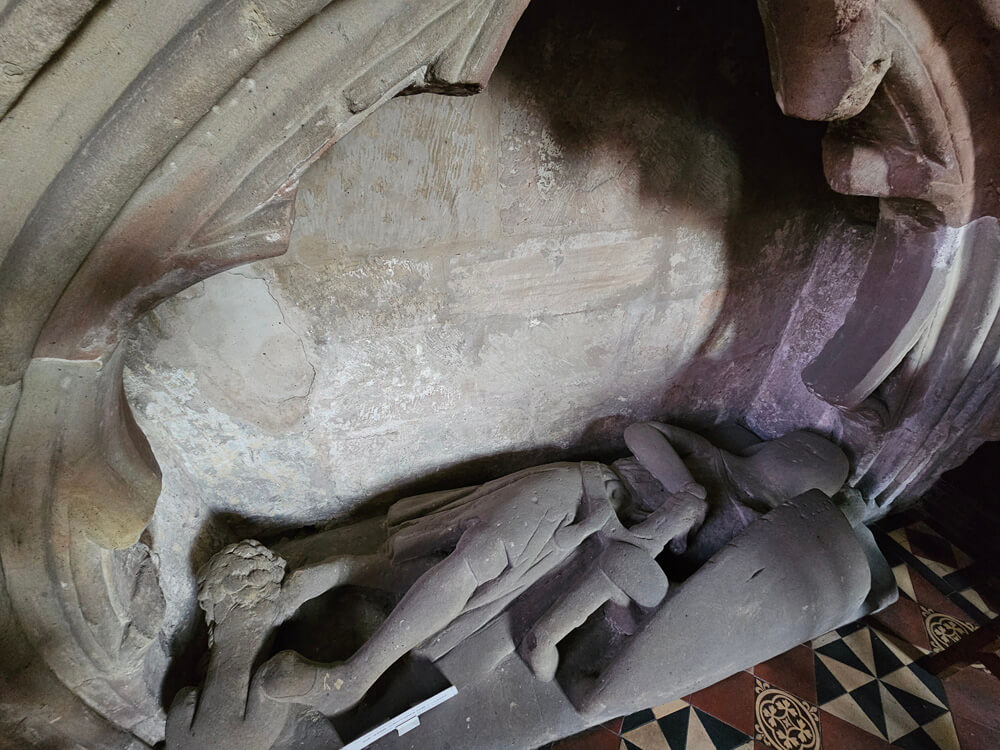
- 6ft crusader knight effigy and tomb
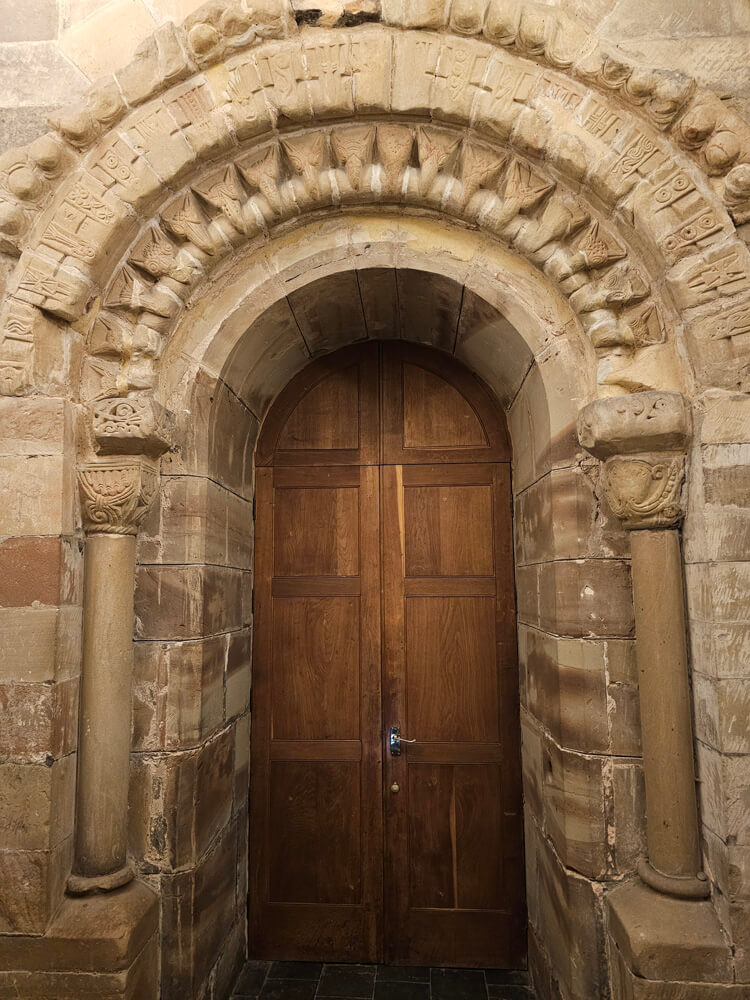
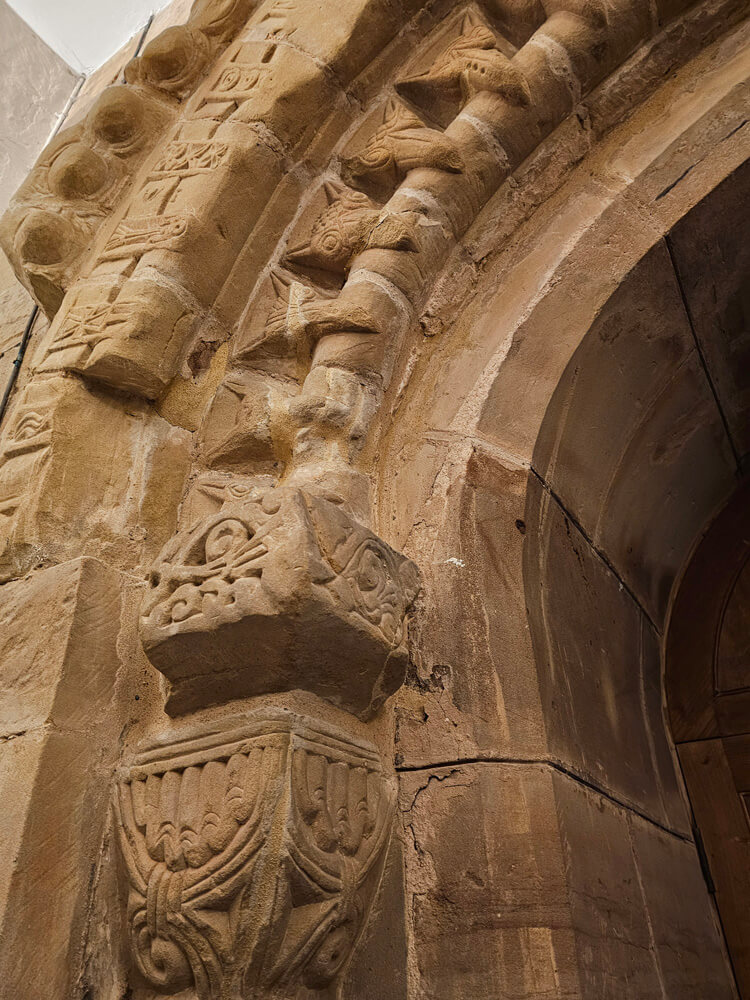
- Incredible Norman door arch
The origin of the church dates from the Norman period, though there is evidence that some of the building’s stones date back to Anglo-Saxon times when the manor house in the village was the royal residence of a Saxon prince.
In the 12th century, Sir John de Swynnerton, a local crusader knight rebuilt the Saxon Chapel at Swynnerton as a thanksgiving for his safe return from the Third Crusade (1189-1192), led by King Richard I (more popularly known as Richard the Lionheart). His tomb, which can still be seen in the chancel, was probably erected by the monks of Stone to whom the church had been given by his grandfather between 1155 and 1159. The tomb is located in a recess on south side of the chancel. The effigy shows a reclining figure of a cross-legged crusader knight measuring over 6ft, clothed in the complete armour of a crusader with a Norman shield. Beneath the effigy is a burial chamber which was accidentally opened during restoration work in 1856. In the chamber was found a completely preserved body, which appeared to be that of a young knight with a weather-beaten complexion, auburn hair and beard and two front teeth missing. After 600 years the accidental exposure caused the body to crumble.
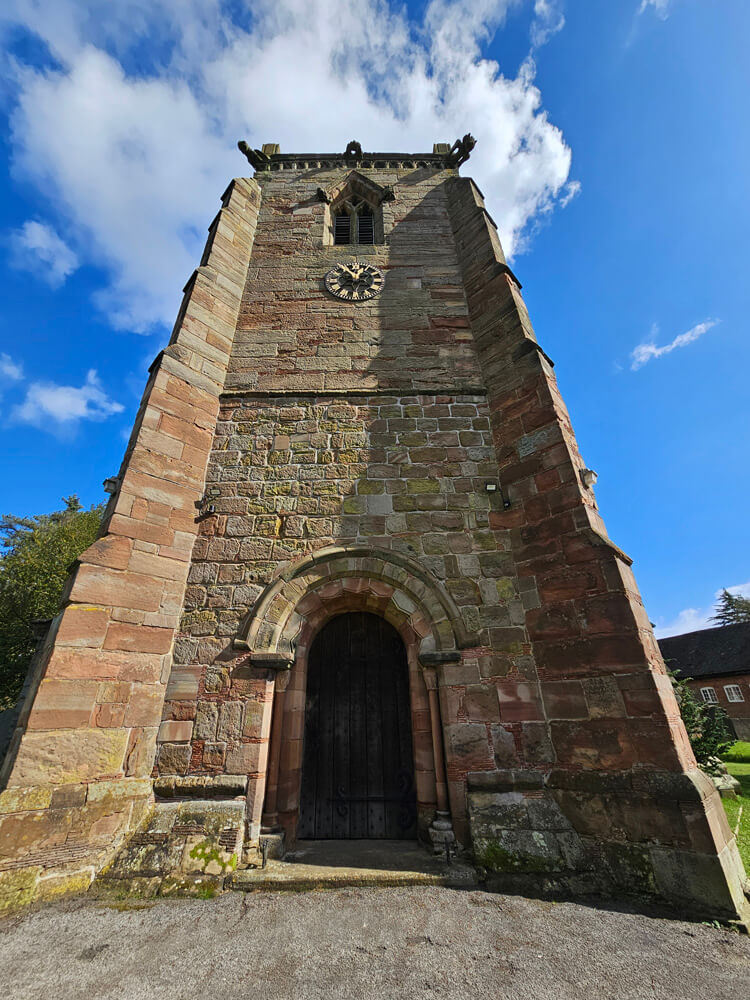
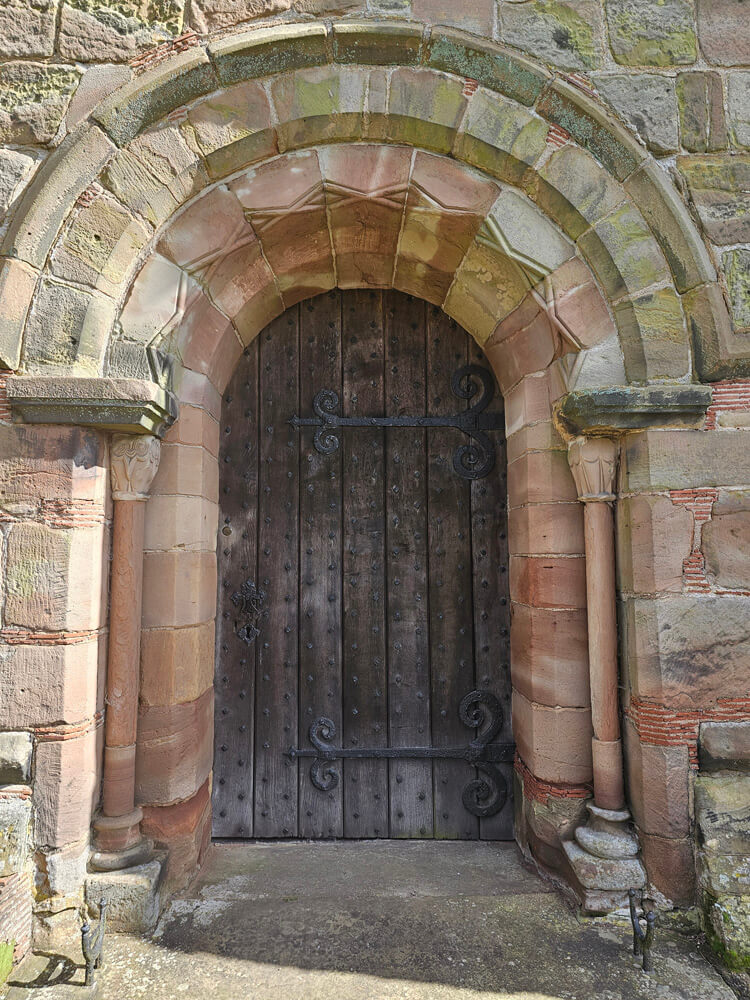
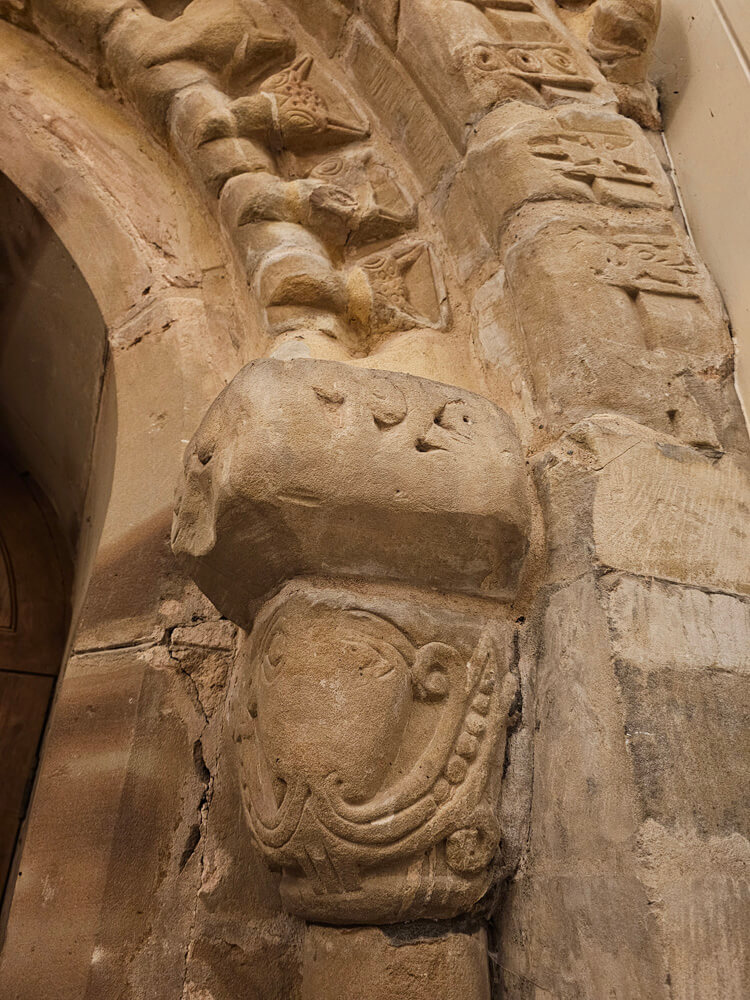
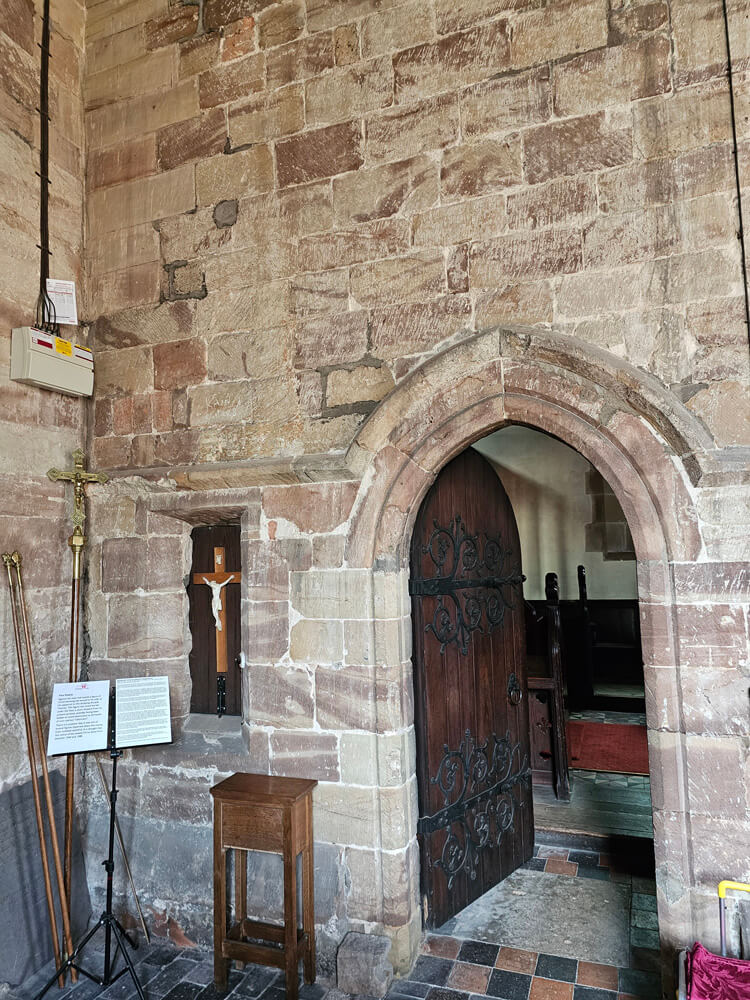
The doorway leading from the base of the tower into the nave is an incredible example of Norman craftsmanship. The Norman arch of the door shows what looks to be 16 wolves heads.
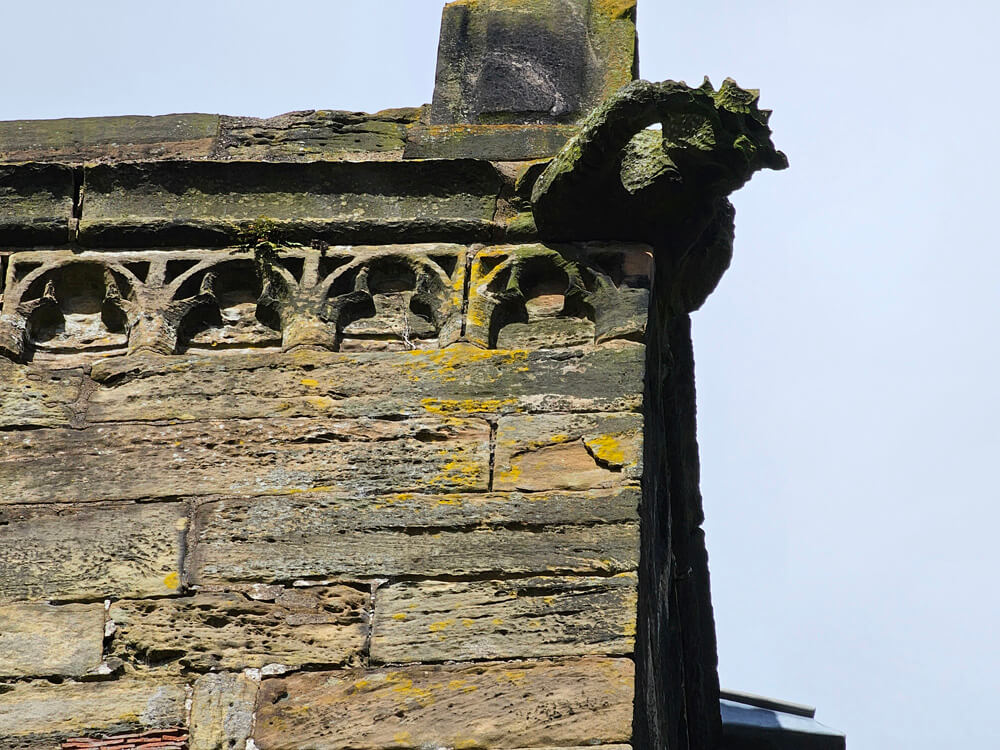
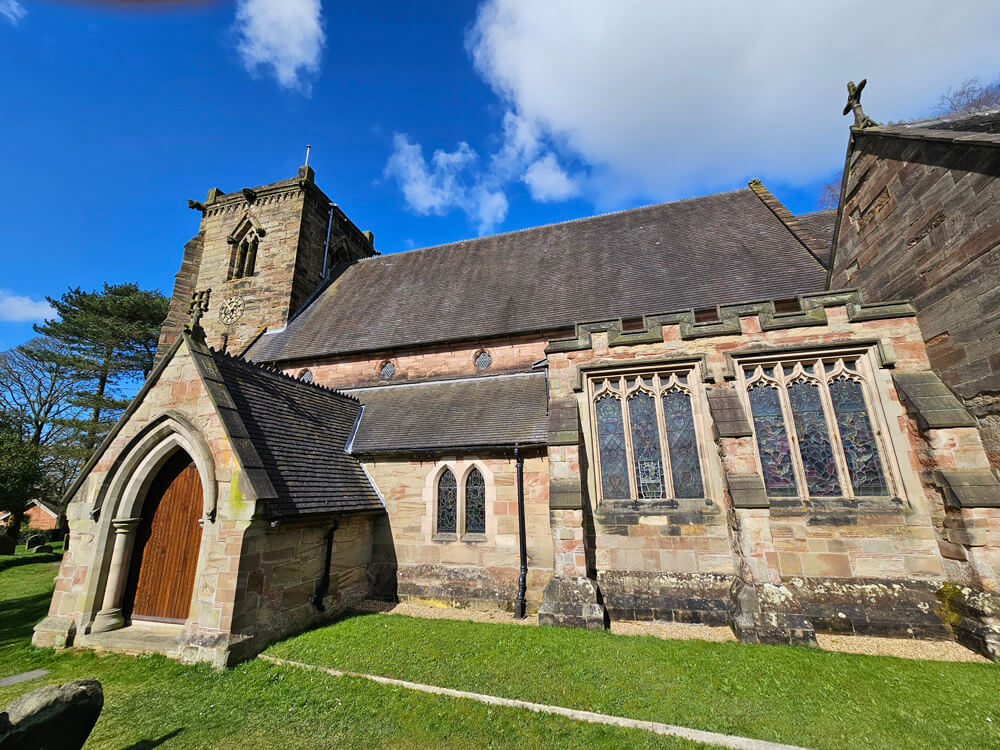
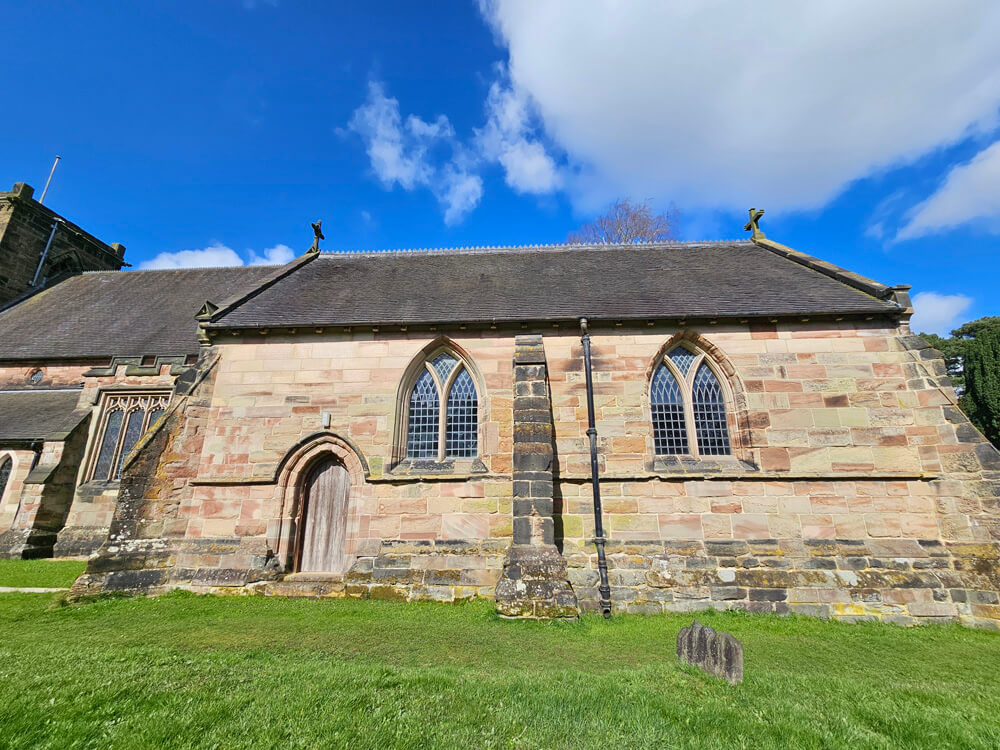
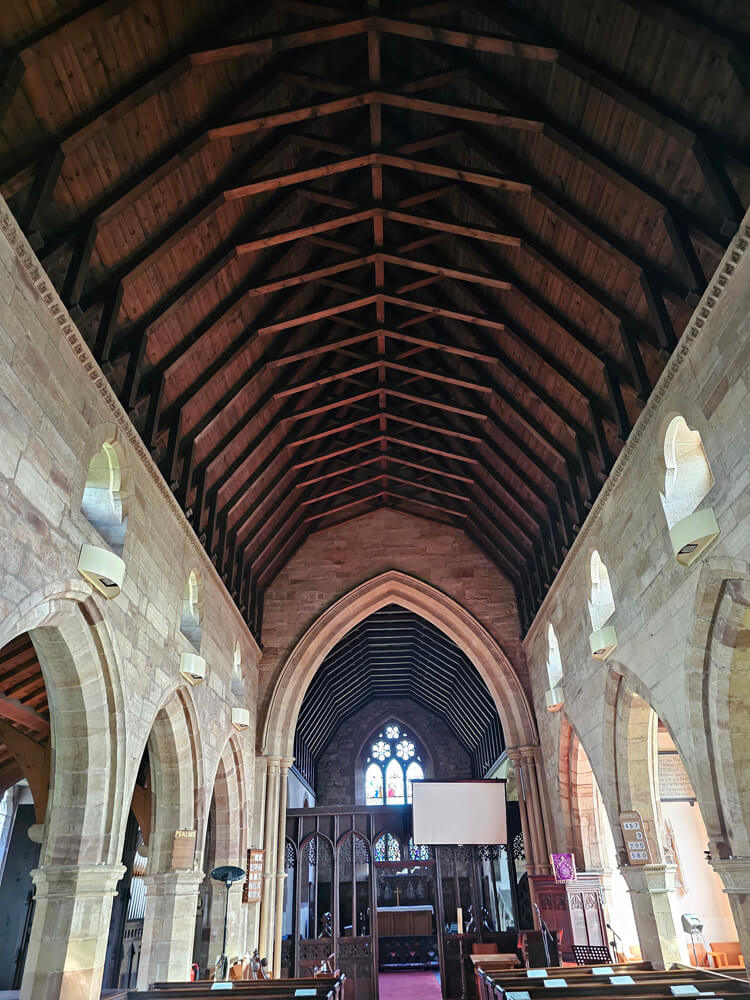
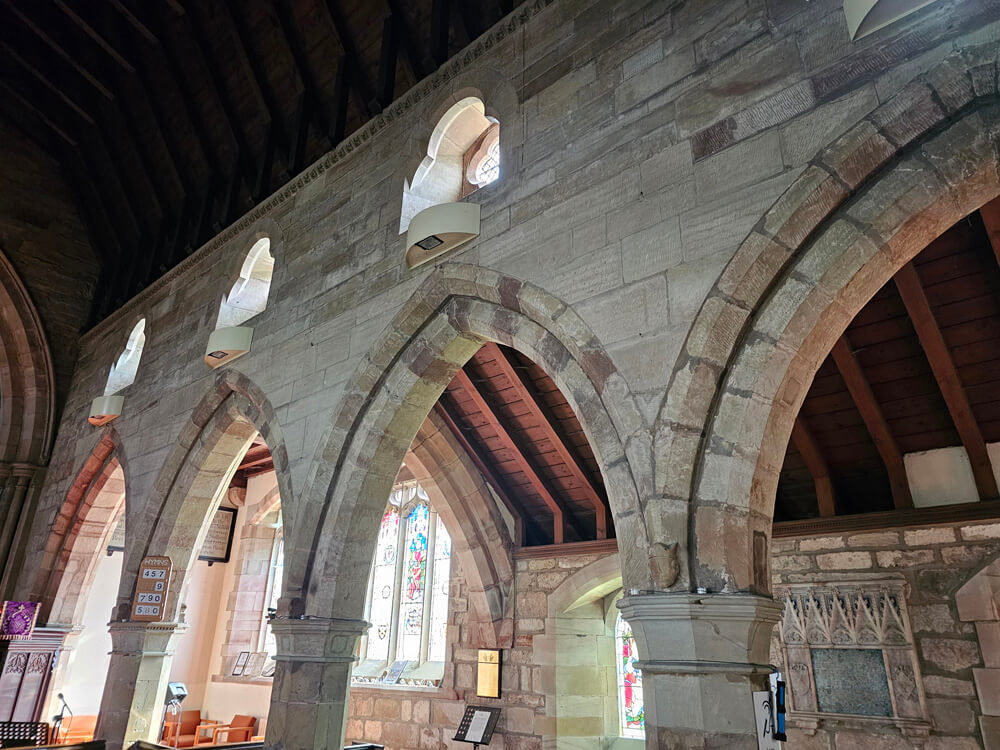
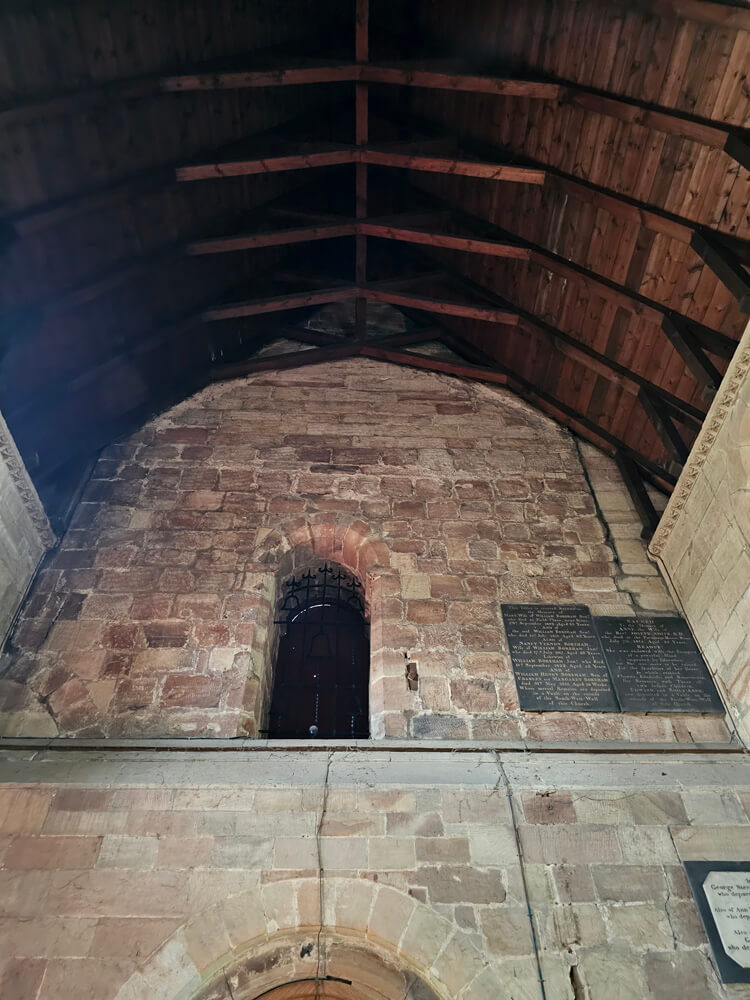
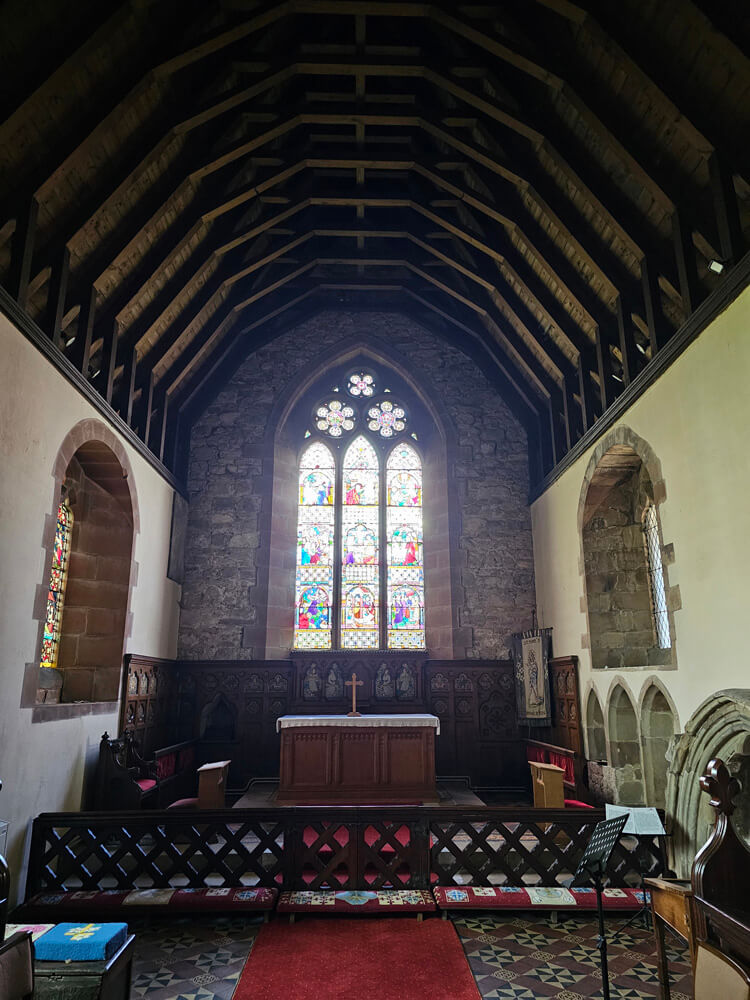
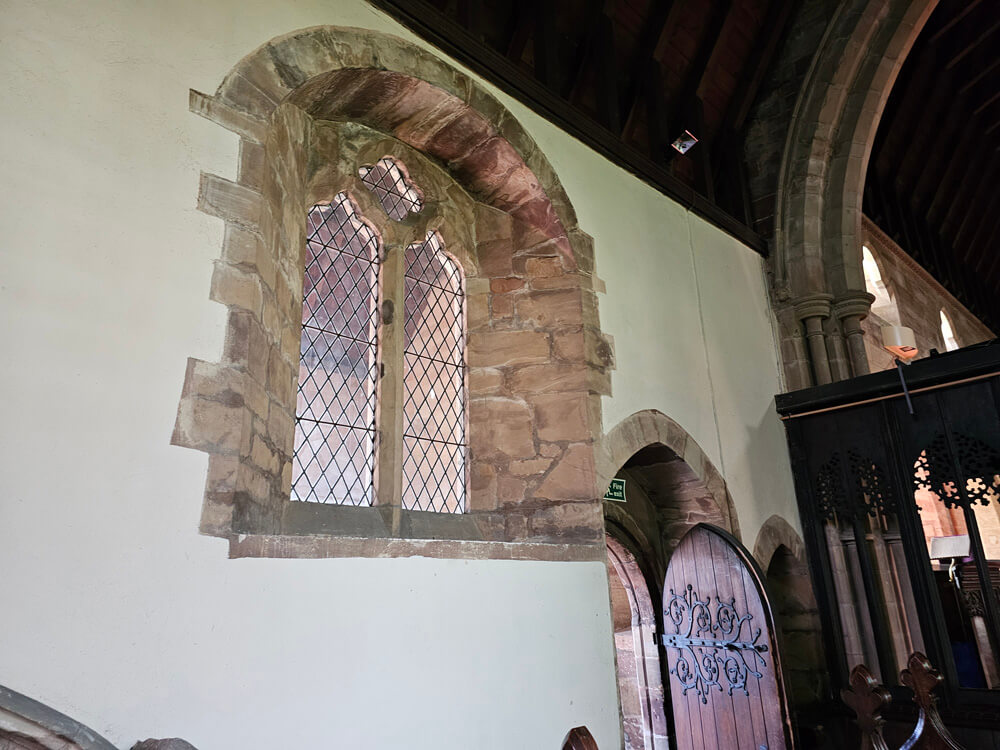
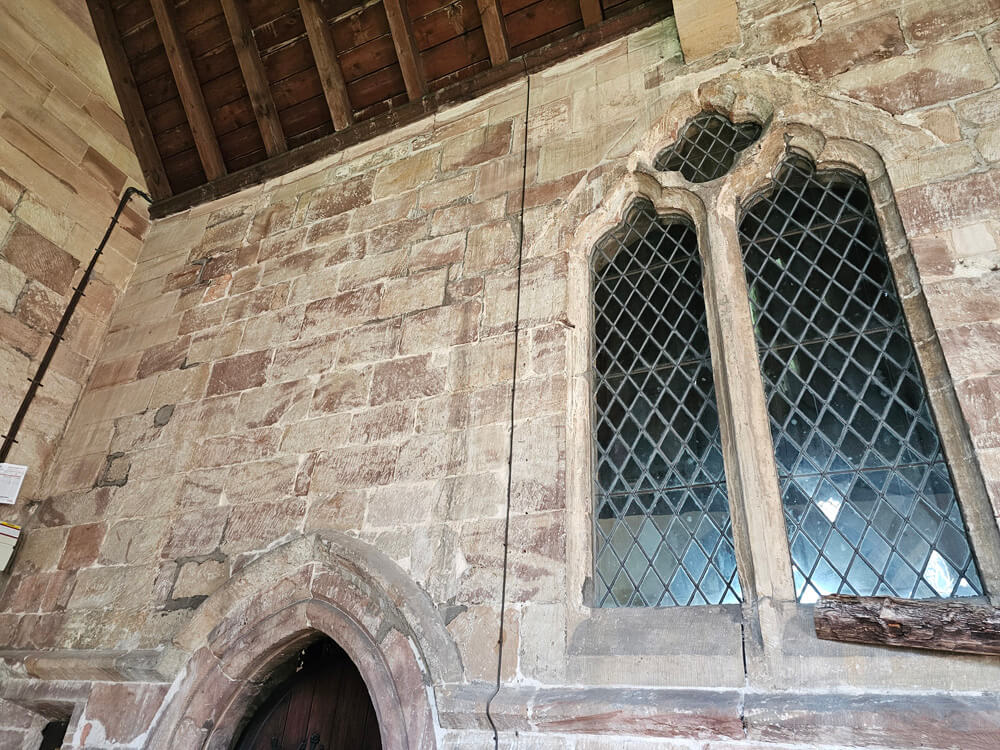
Several traces of the original 12th-century building can be seen in the present church, mainly the lower half of the tower and parts of the west wall. The upper part of the tower was added in the 15th century. The nave, chancel and south aisle were rebuilt in the 13th century, and the chapel added in the 14th century.
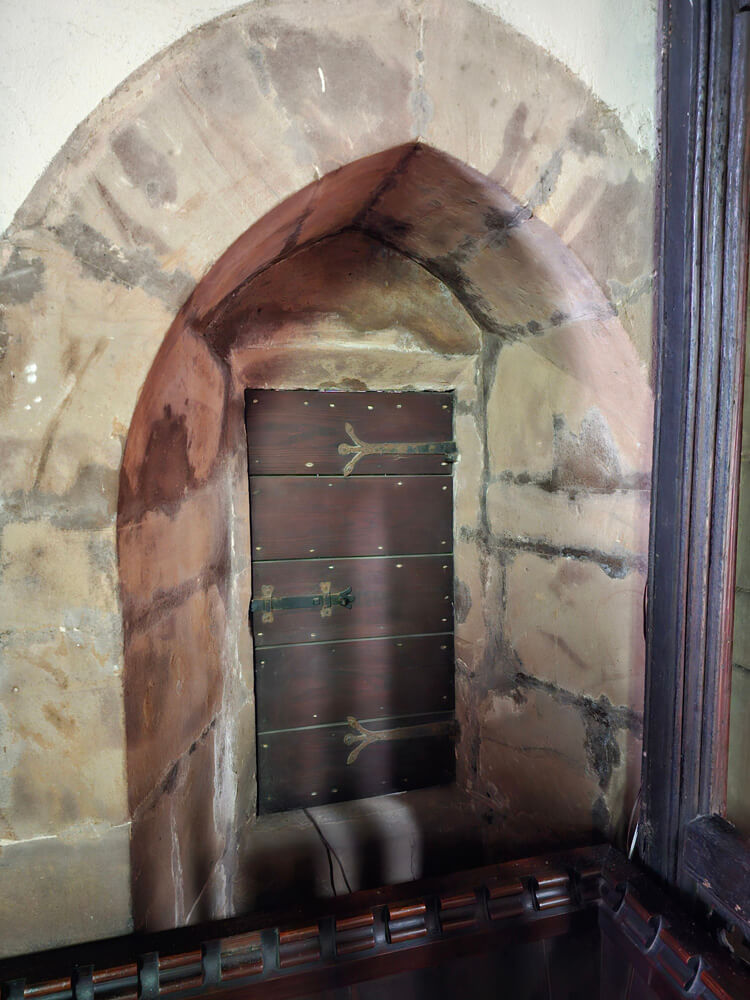
There is a medieval leper window built low into the chancel wall, which is where lepers stood to observe the Mass as they were forbidden to mix with the general population.
Beneath the chapel is a large vault that contains the remains of 16 members of the Fitzherbert family who were buried there between 1612 and 1865.
Stood against a wall inside the chapel stands a fine 8ft tall stone statue of Christ, who is seated and pointing to a wound in his side. The figure dates to the 13th century and it is beleived that it was a gift from Lichfield Cathedral. It was found buried beneath the floor of the chapel where it had likely been hidden to avoid destruction during the English Reformation.
Photo Gallery.
Did you enjoy this post?
I hope you found this post useful. I put a great deal of time and effort in to building, maintaining and populating the website. If you like, you could say a small thank you by buying me a coffee. You don't have to, but it would be nice :)
Buy me a coffee
Stay up to Date
Follow me on my journey and get notified whenever a new post is published by following Kings & Castles on Facebook.
Follow MeExplore The Map
Discover the hundreds of castles, churches, monasteries, cathedrals and other historic locations that I've personally visited across England and Wales. Search by location, explore nearby sites and plan your next historical adventure.
Share: