Wells Cathedral
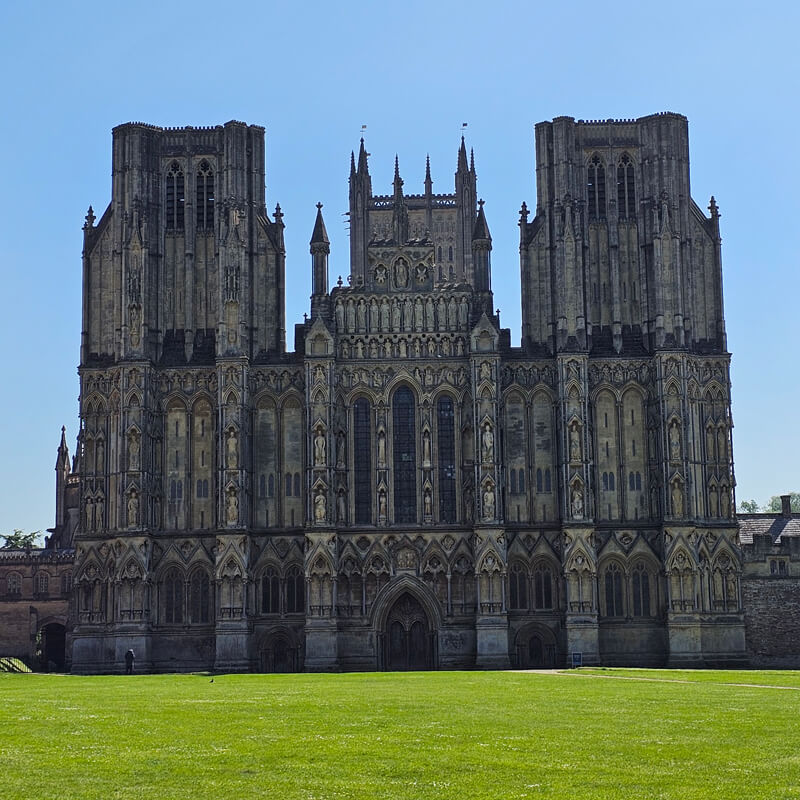
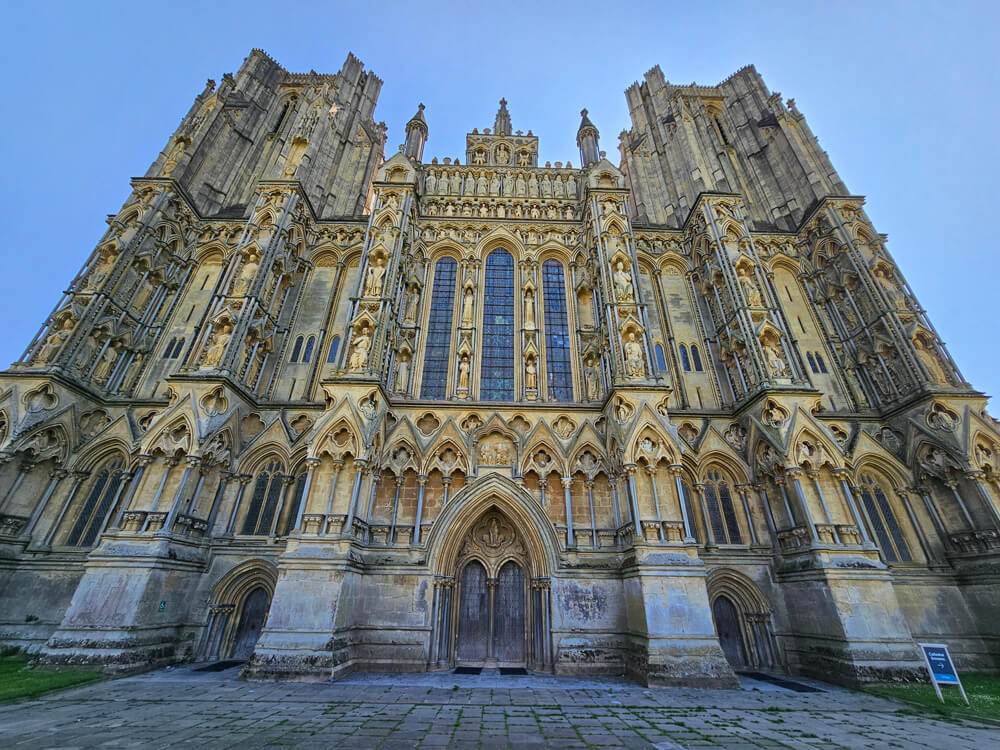
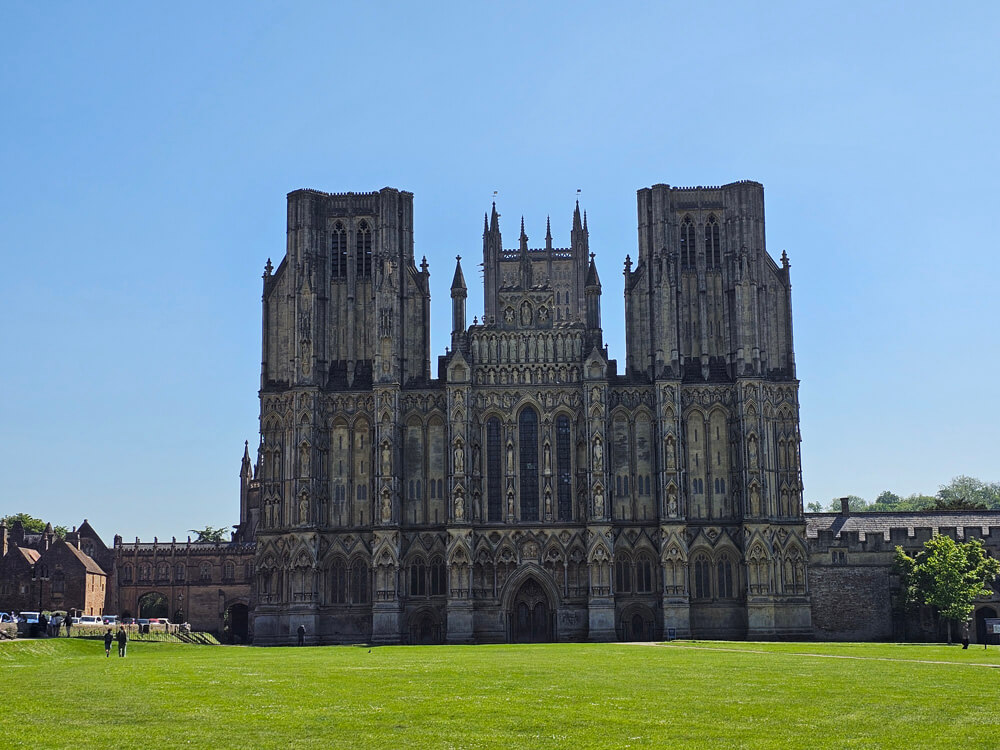
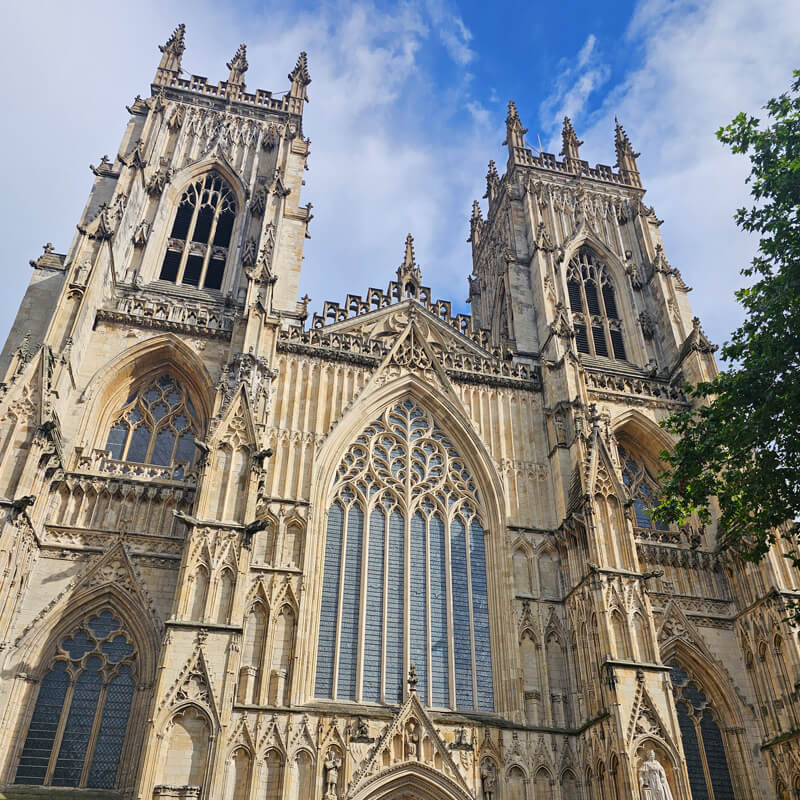
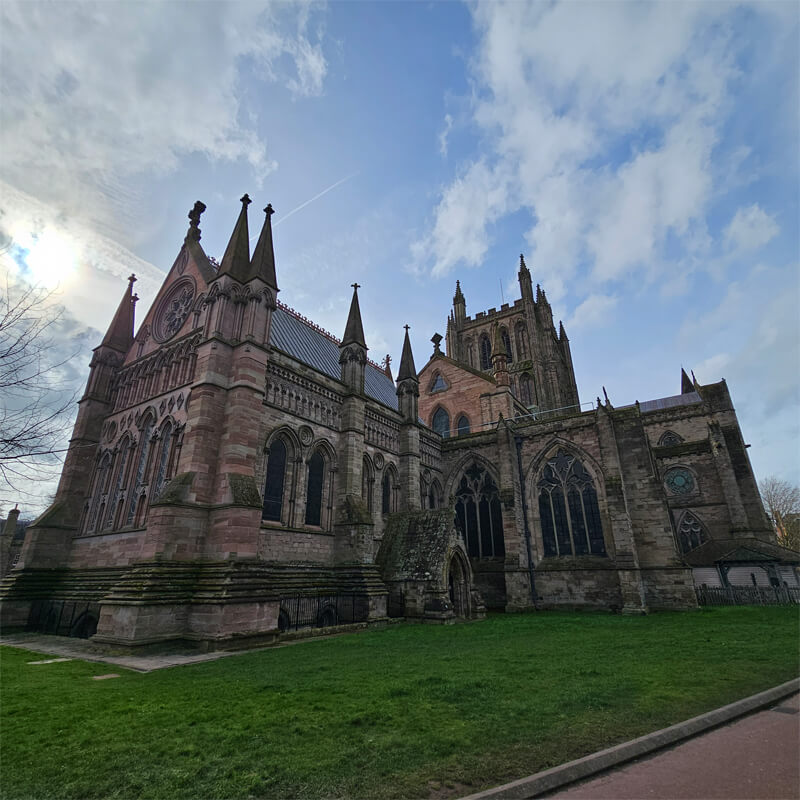
Set in the medieval heart of England’s smallest city, Wells Cathedral is an Anglican cathedral in Wells, Somerset, England, dedicated to St Andrew the Apostle. It is the seat of the Bishop of Bath and Wells. With its famous broad west front and large central tower, the cathedral has been described as “one of the most beautiful” and “most poetic” of English cathedrals.
Historic
Highlights.
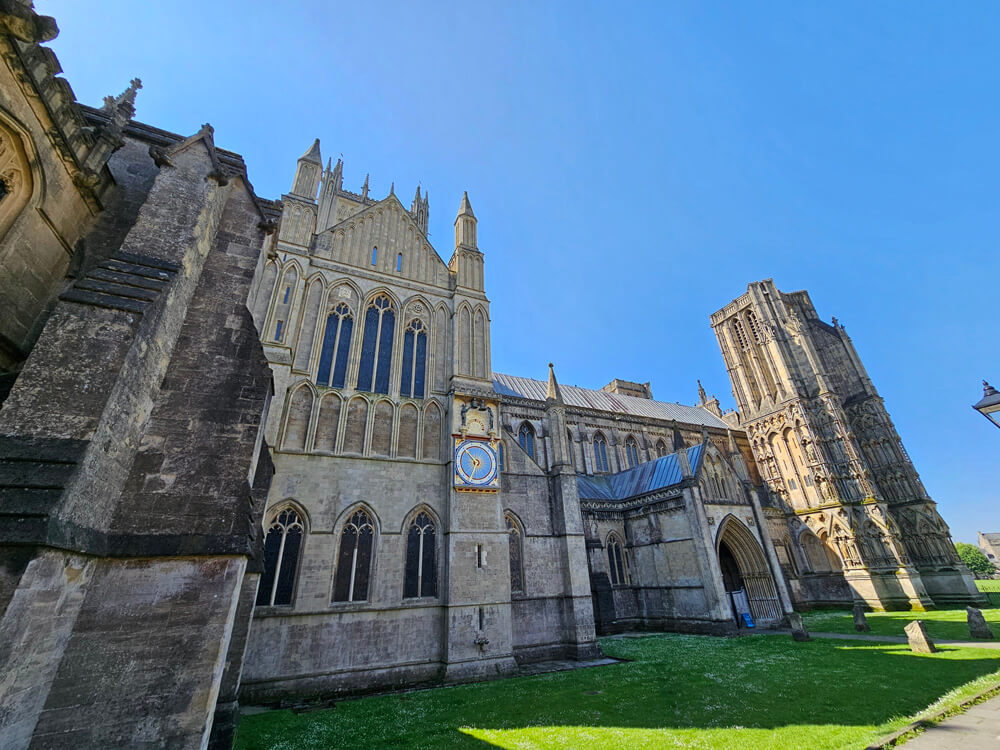
- The famous west front
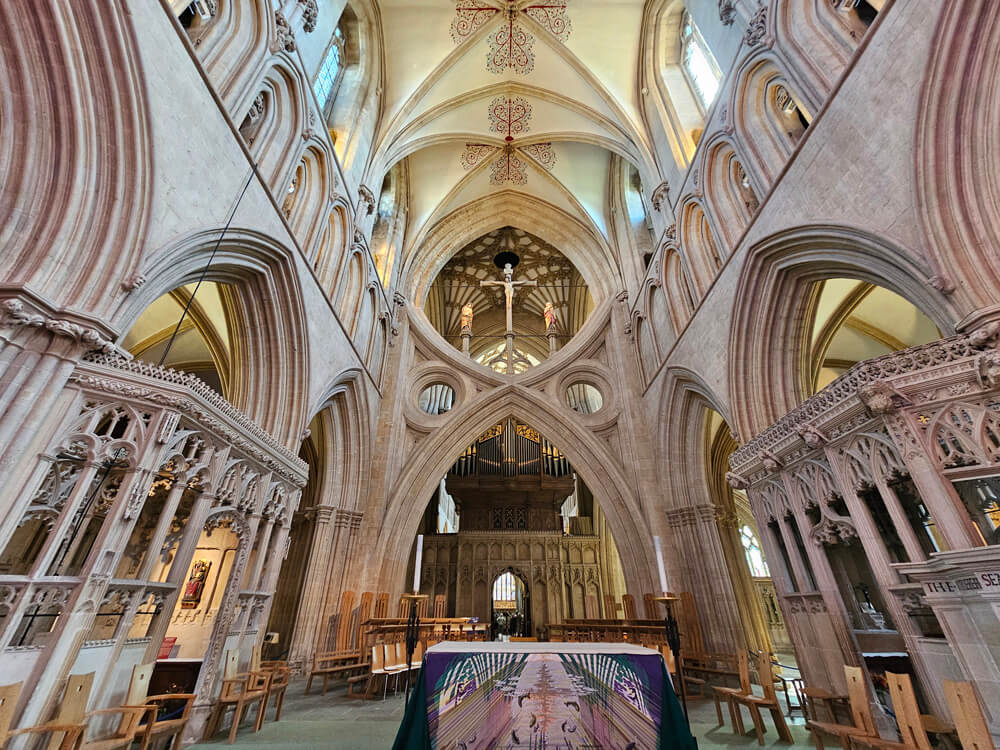
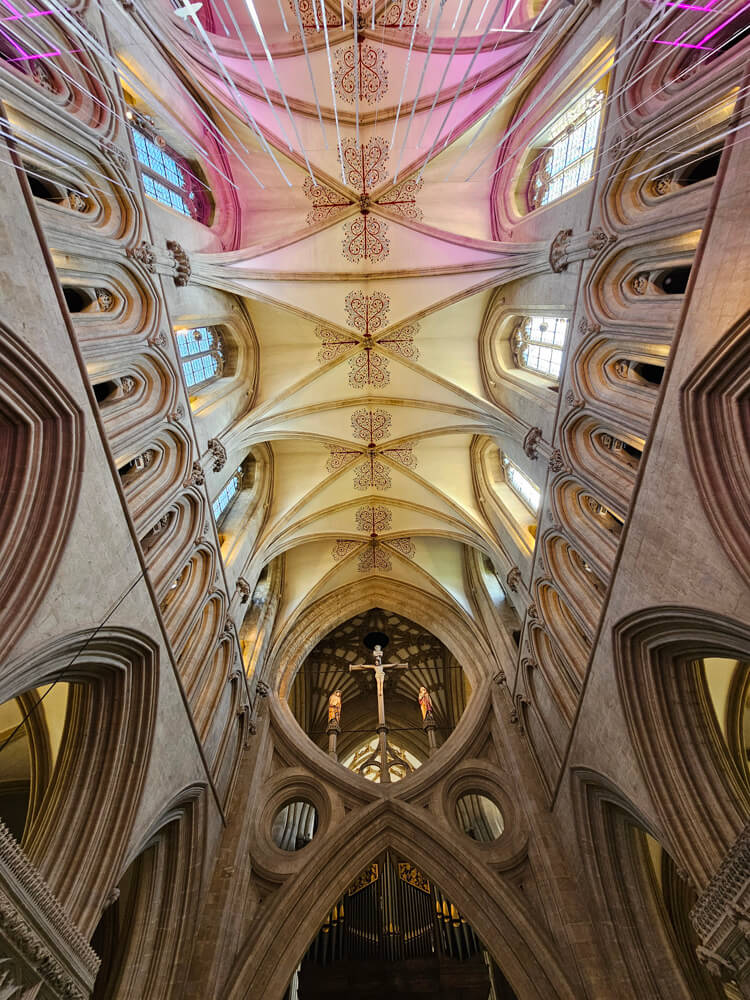
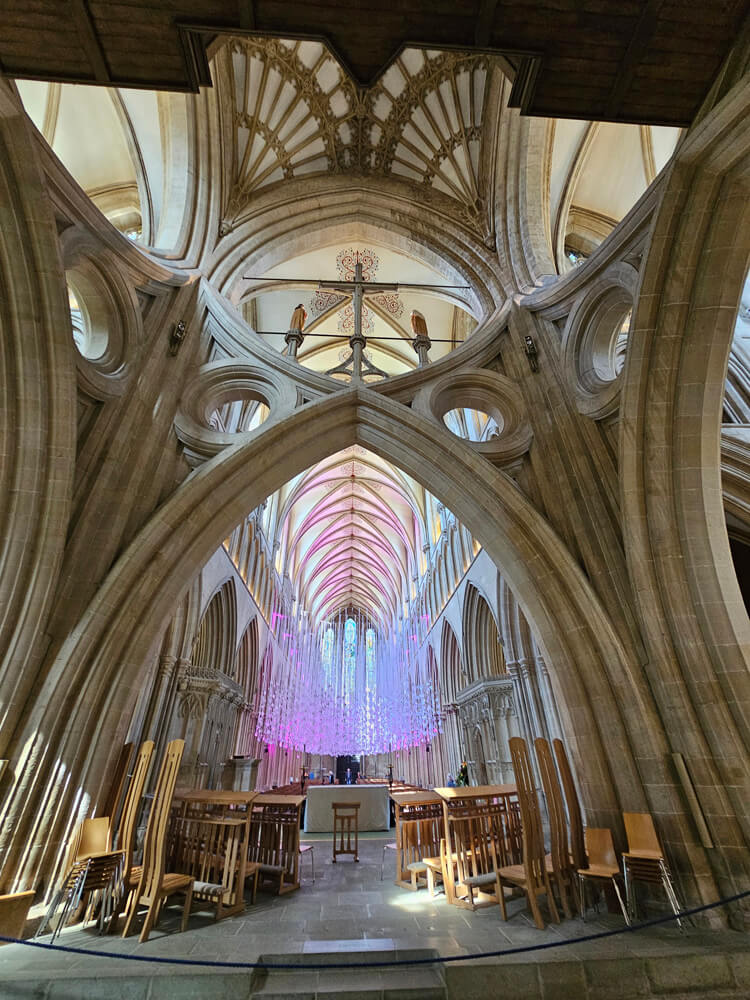
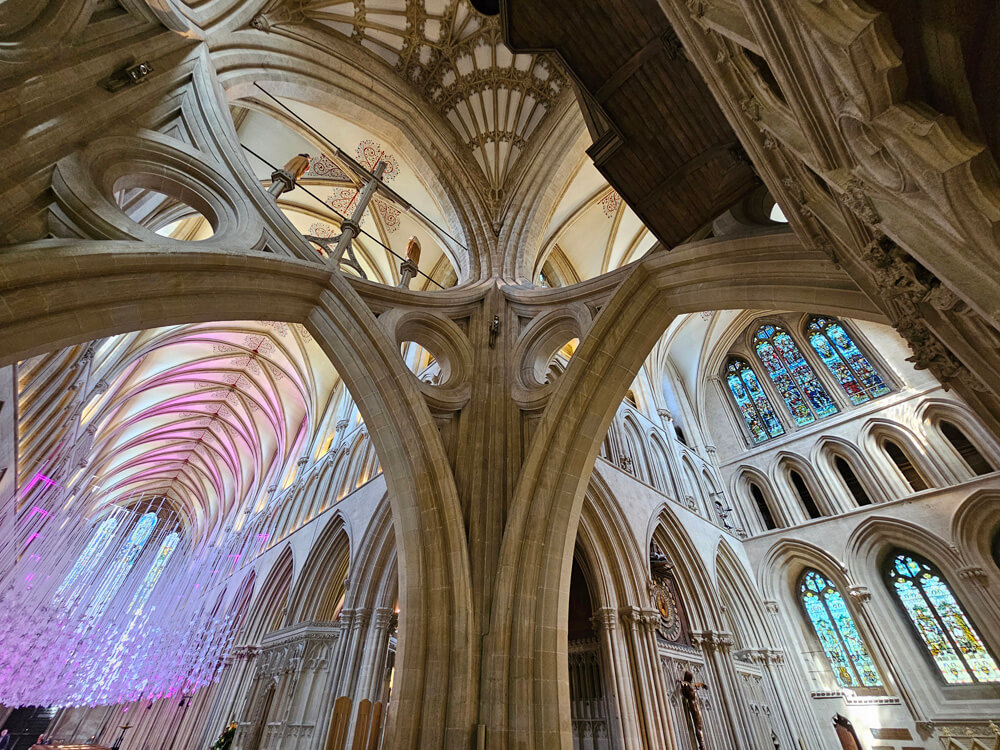
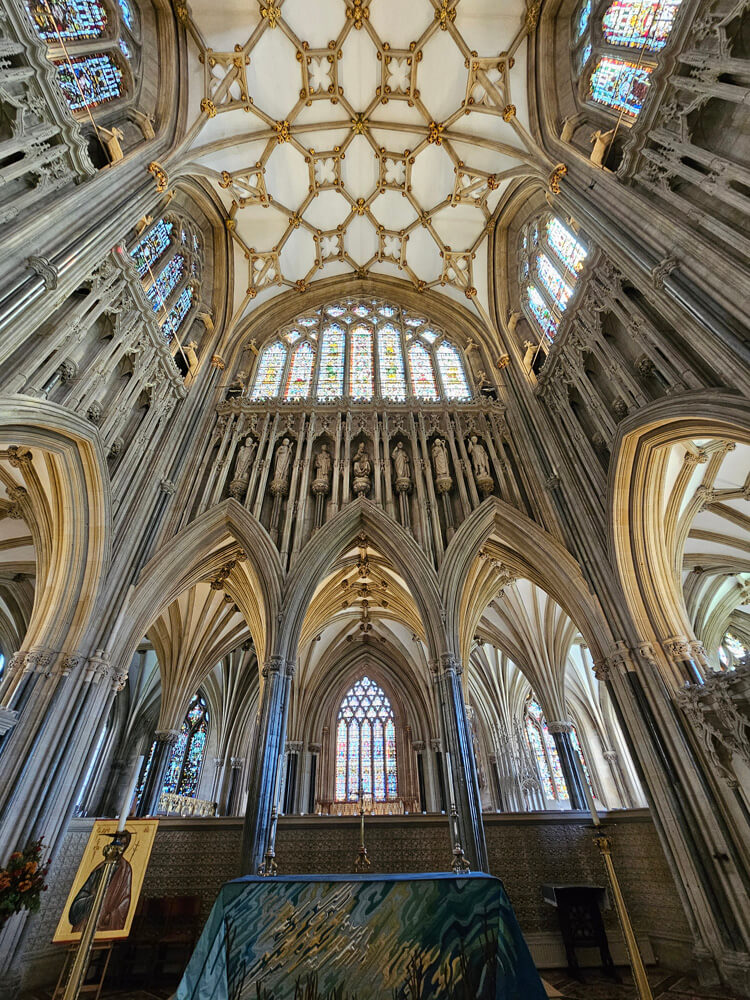
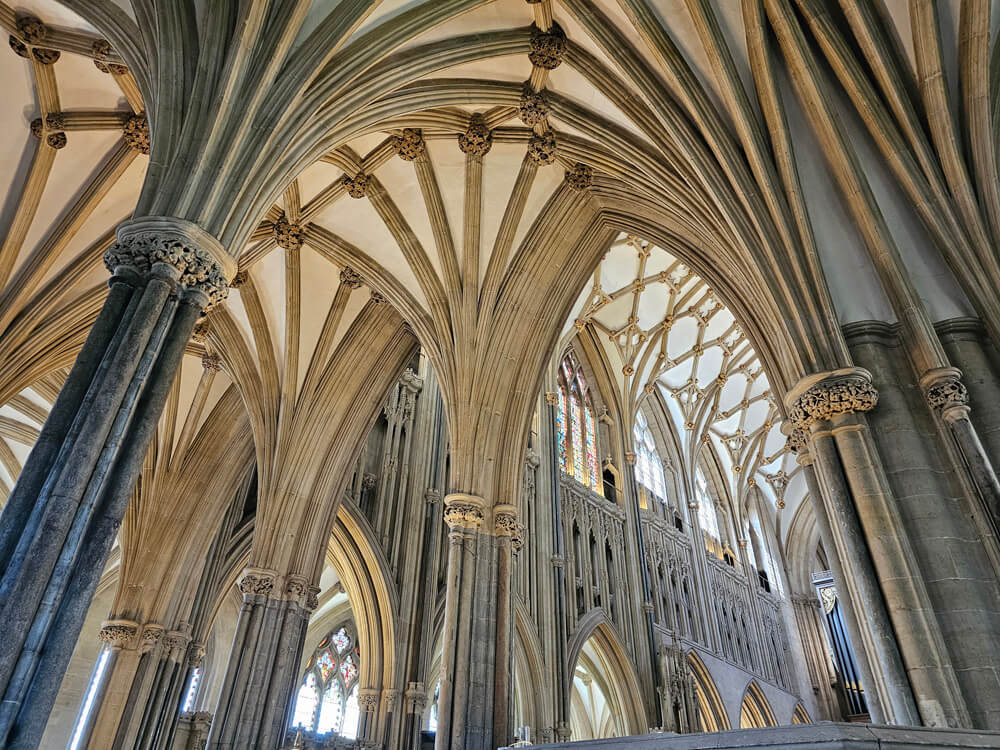
- The scissor arches
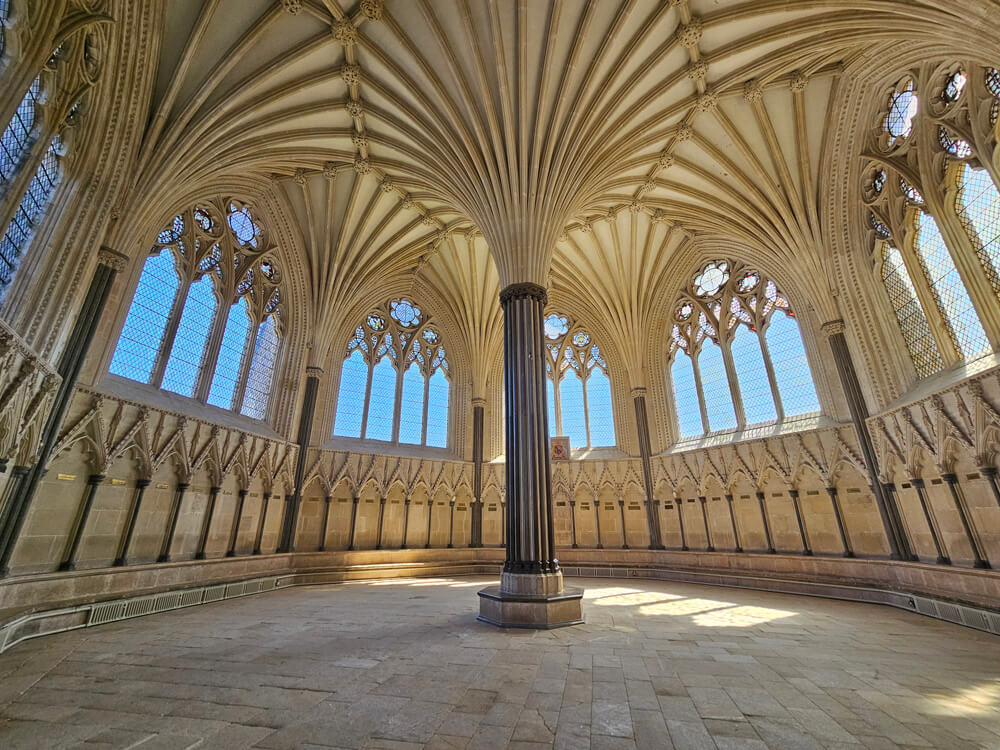
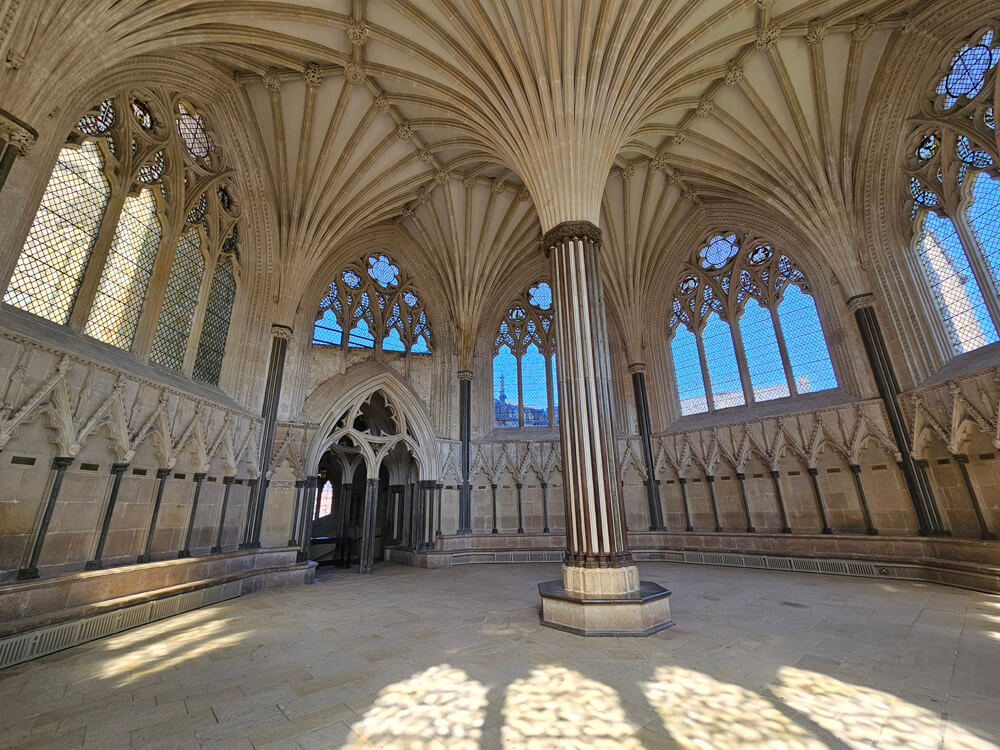
- Exquisite octagonal Chapter House
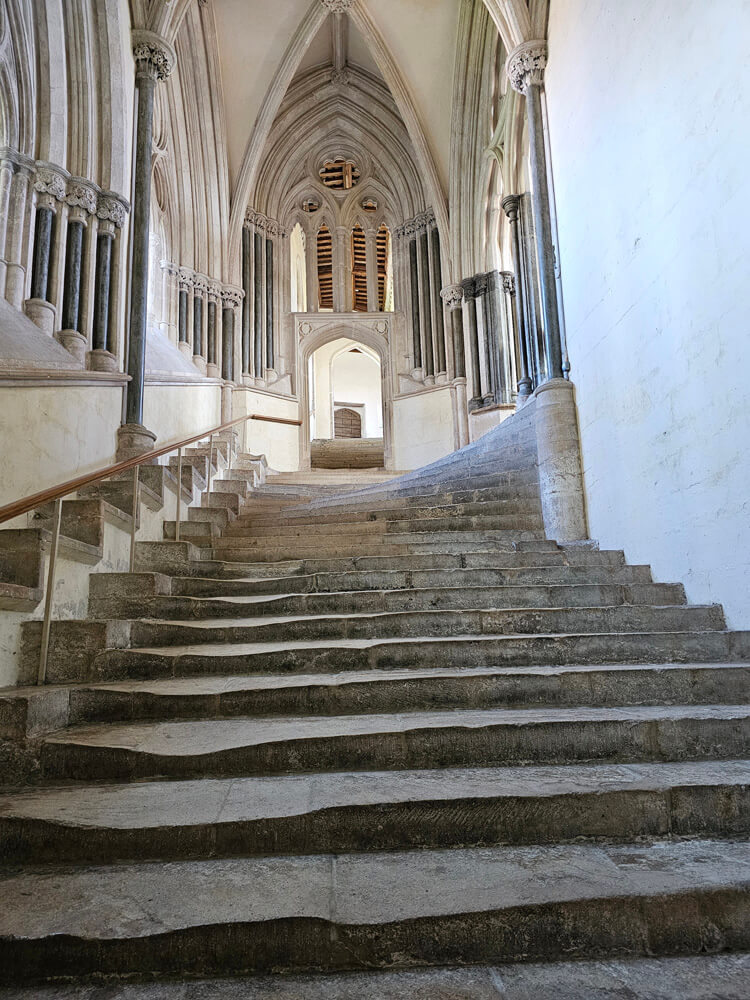
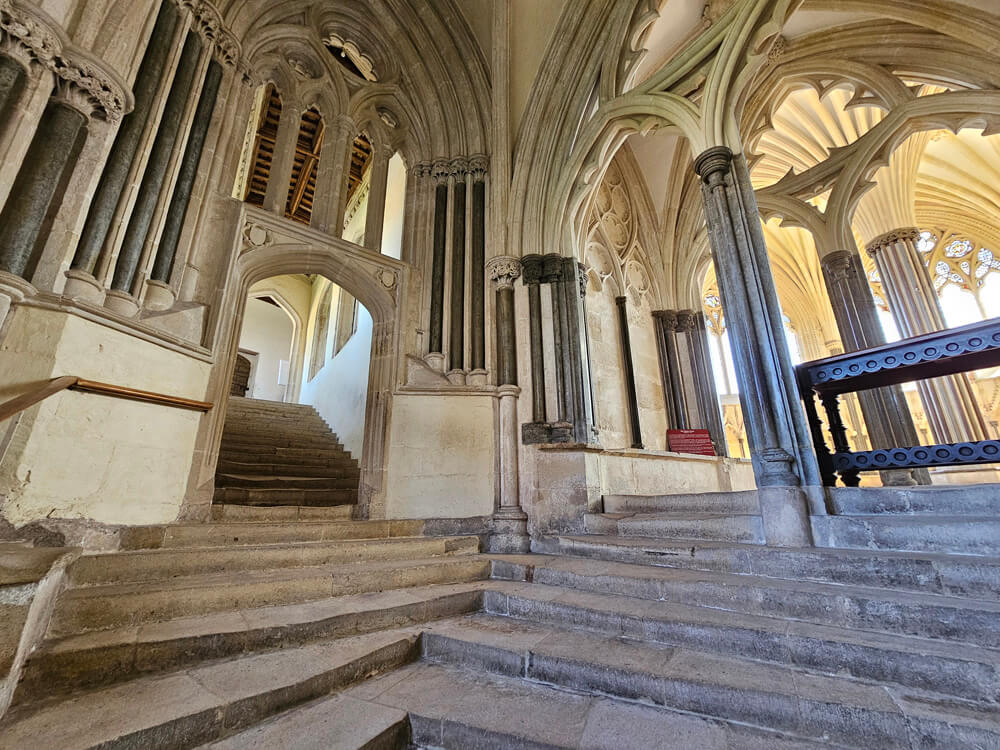
- Stairs leading to the Chapter House
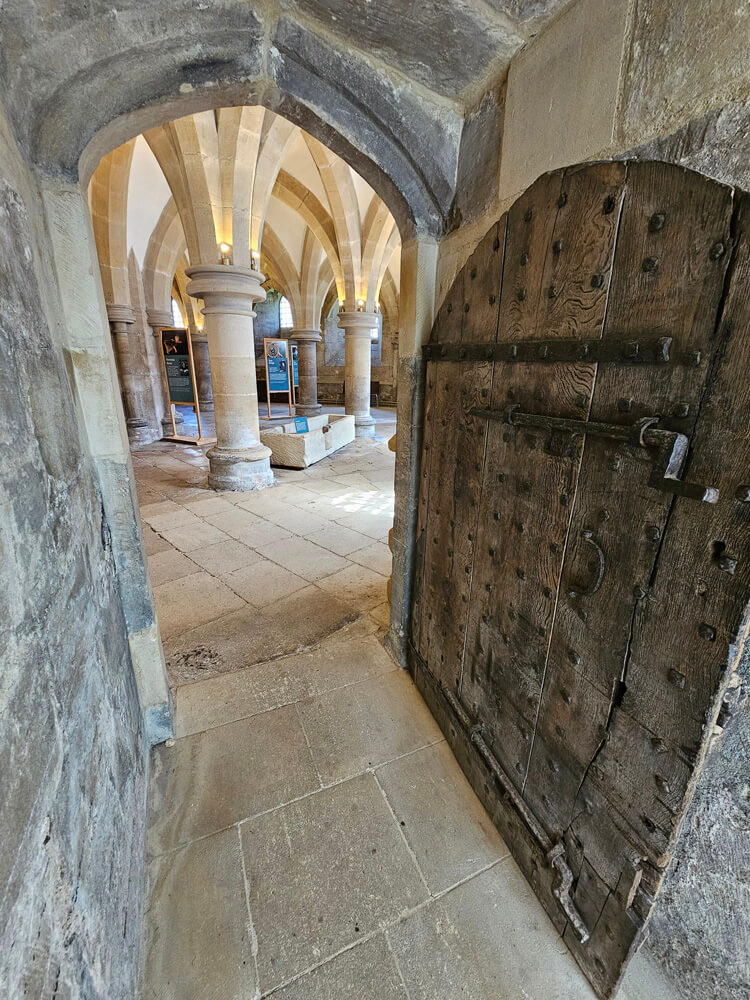
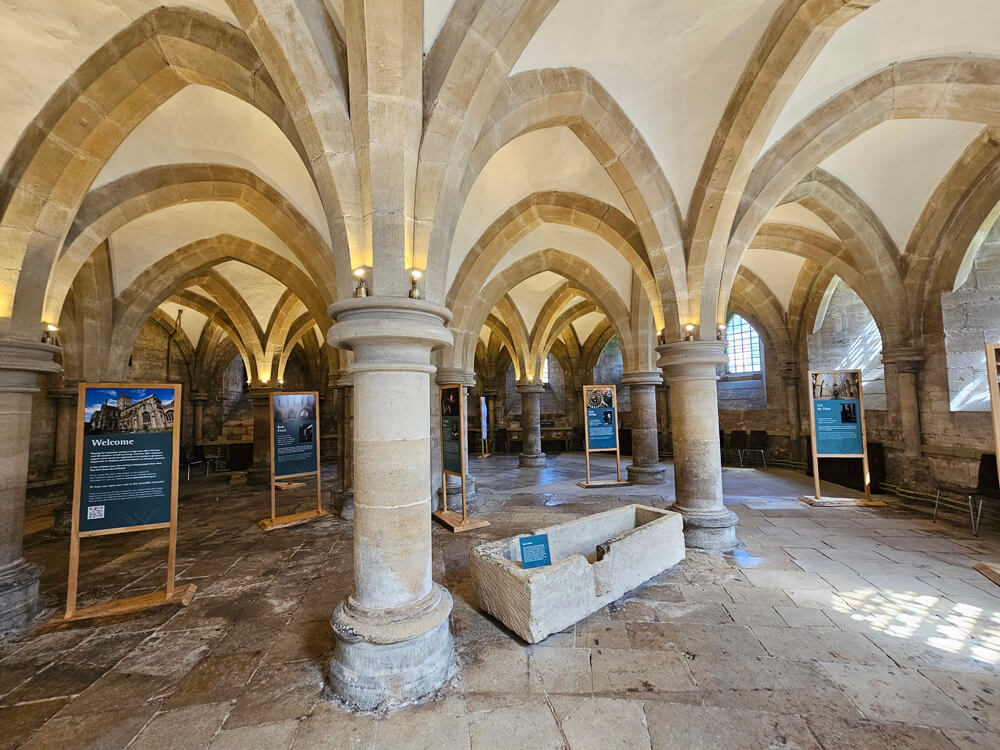
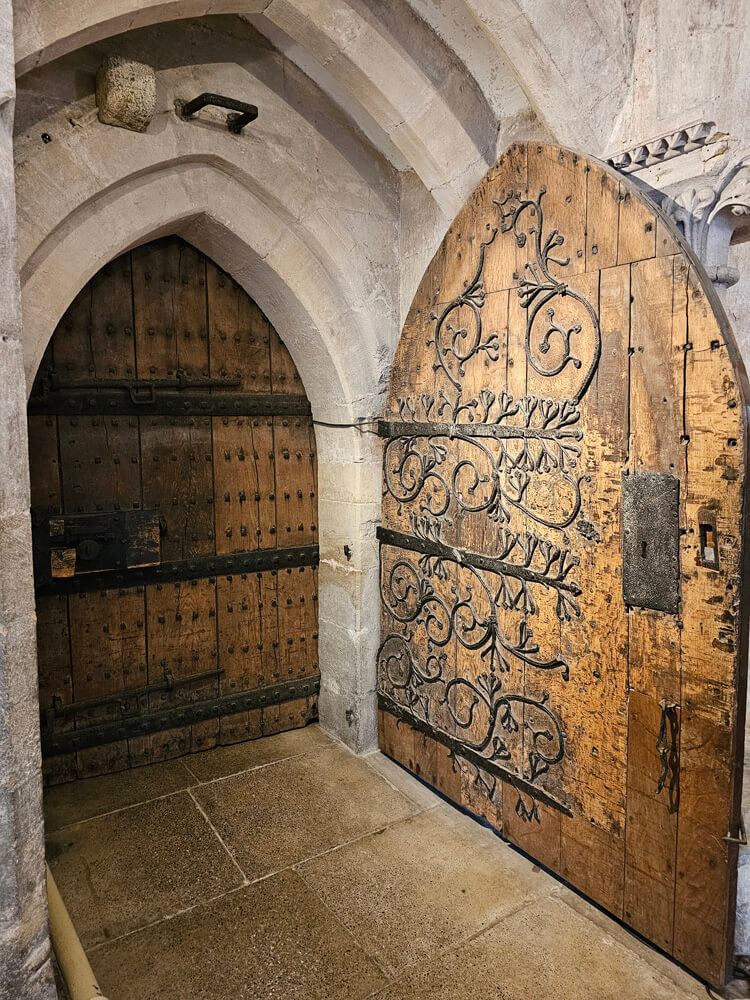
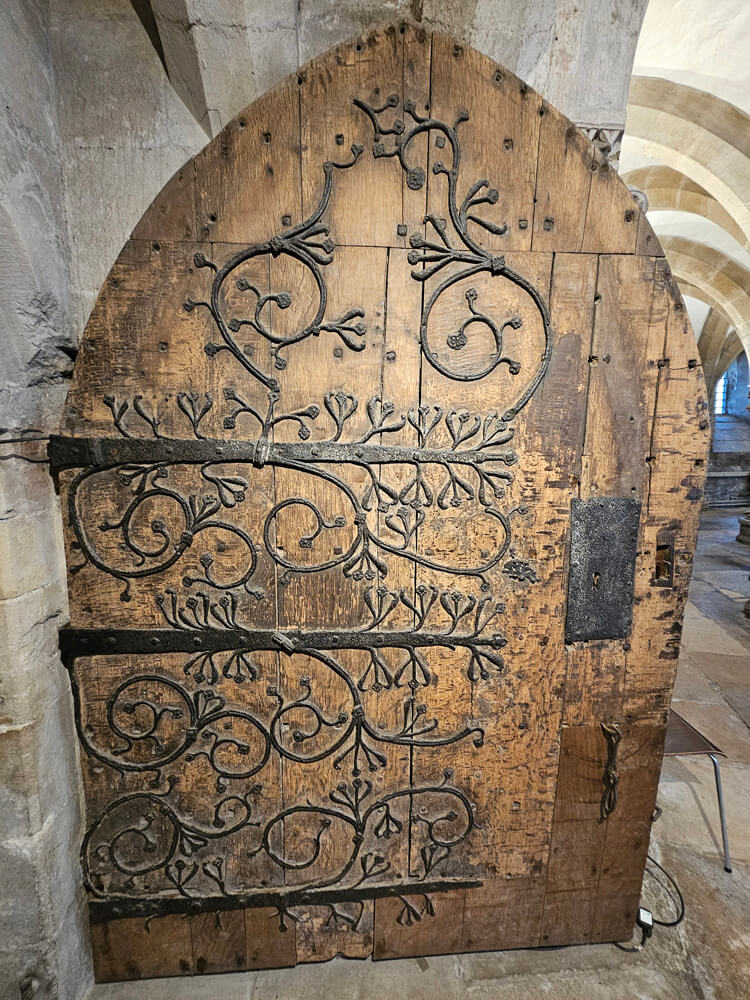
- The Undercroft and ancient door
- Early-8th century Saxon font
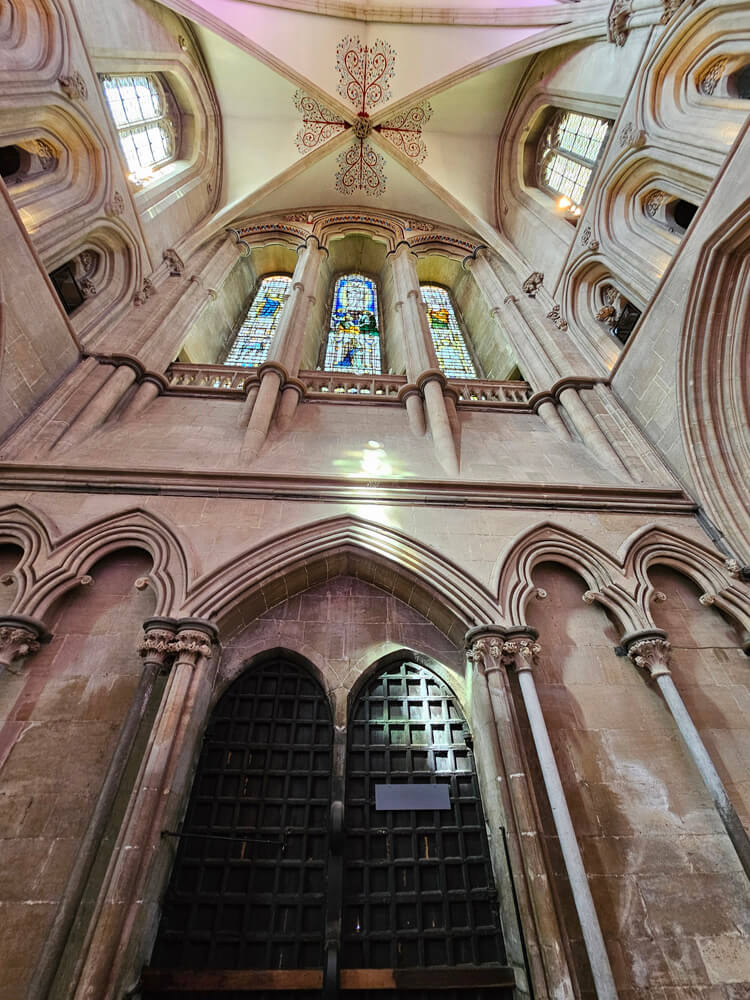
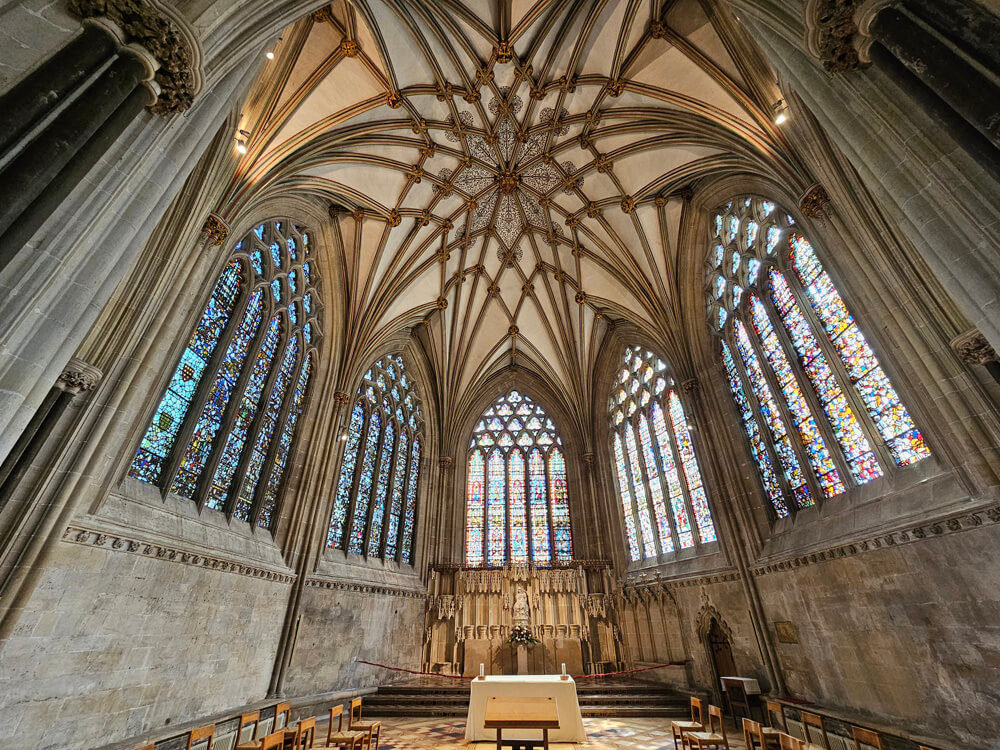
- Medieval stained glass in the Lady Chapel
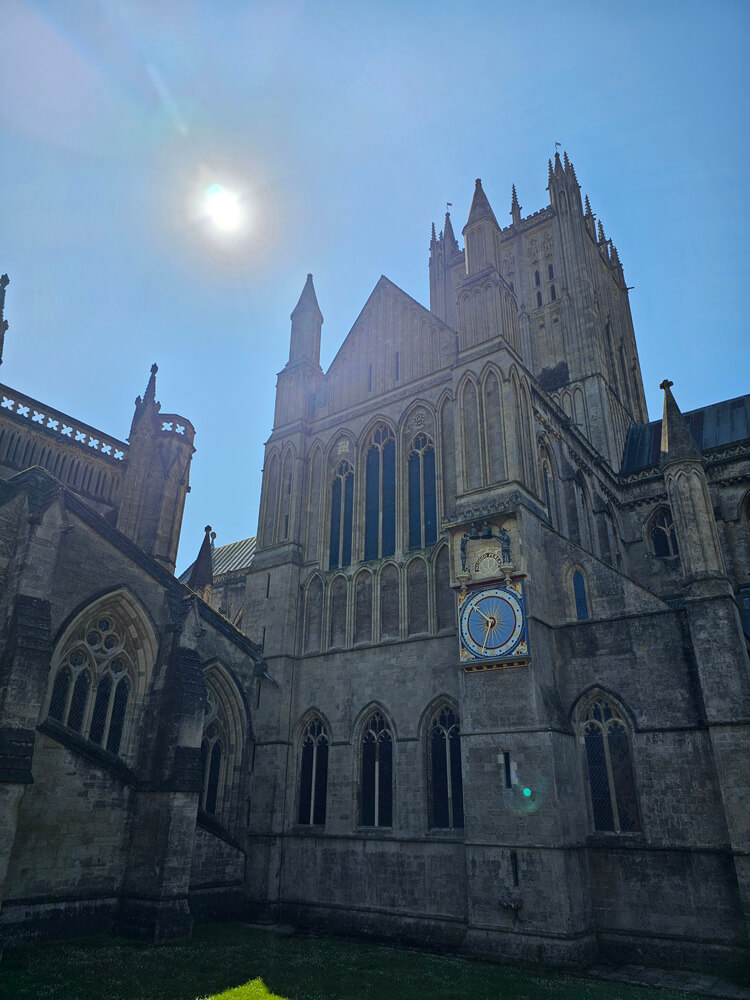
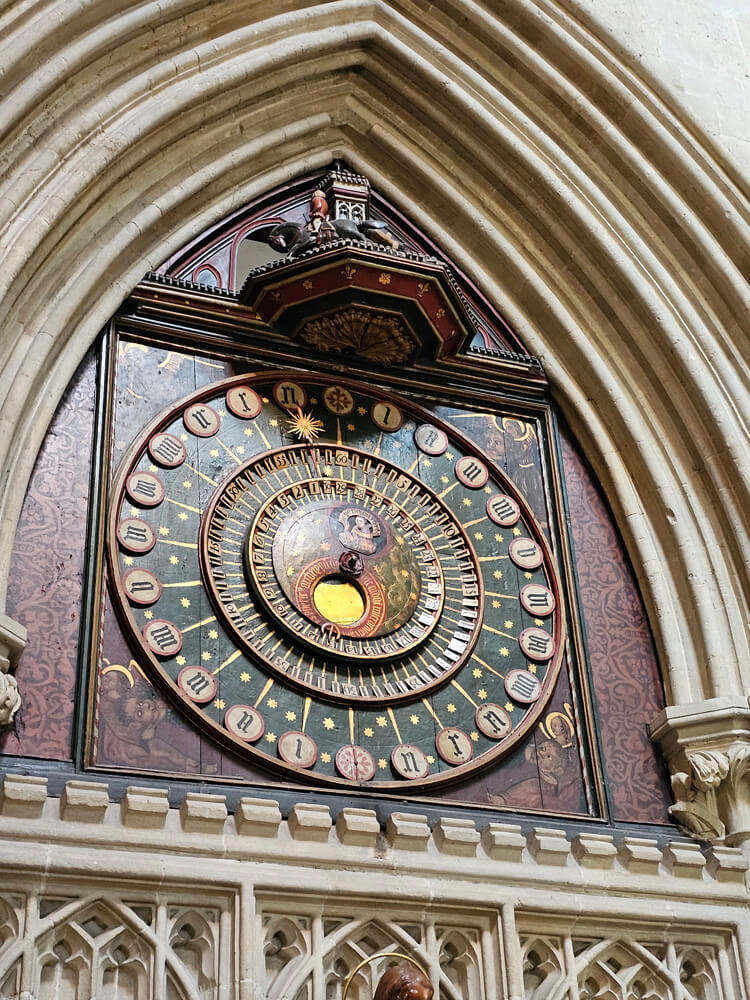
- The mechanical clock
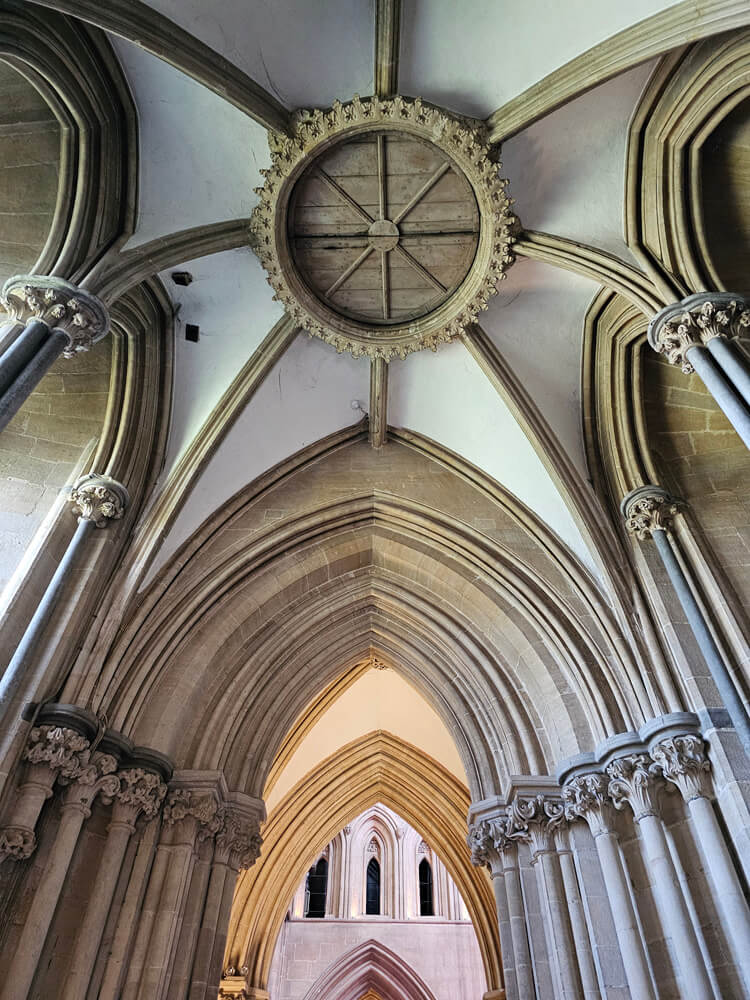
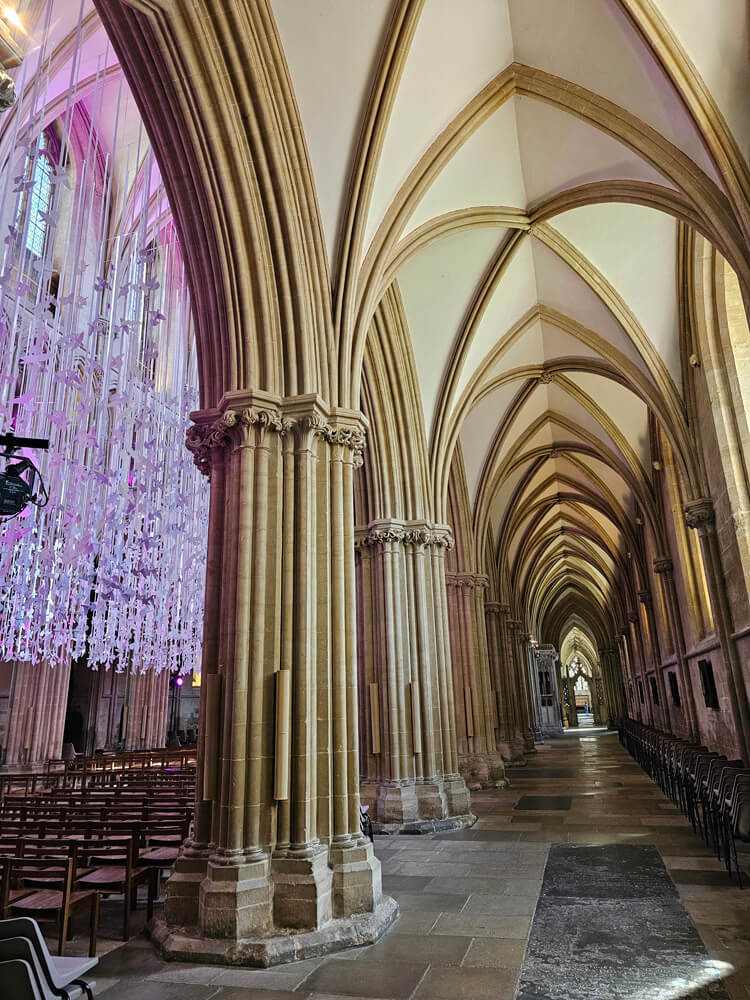
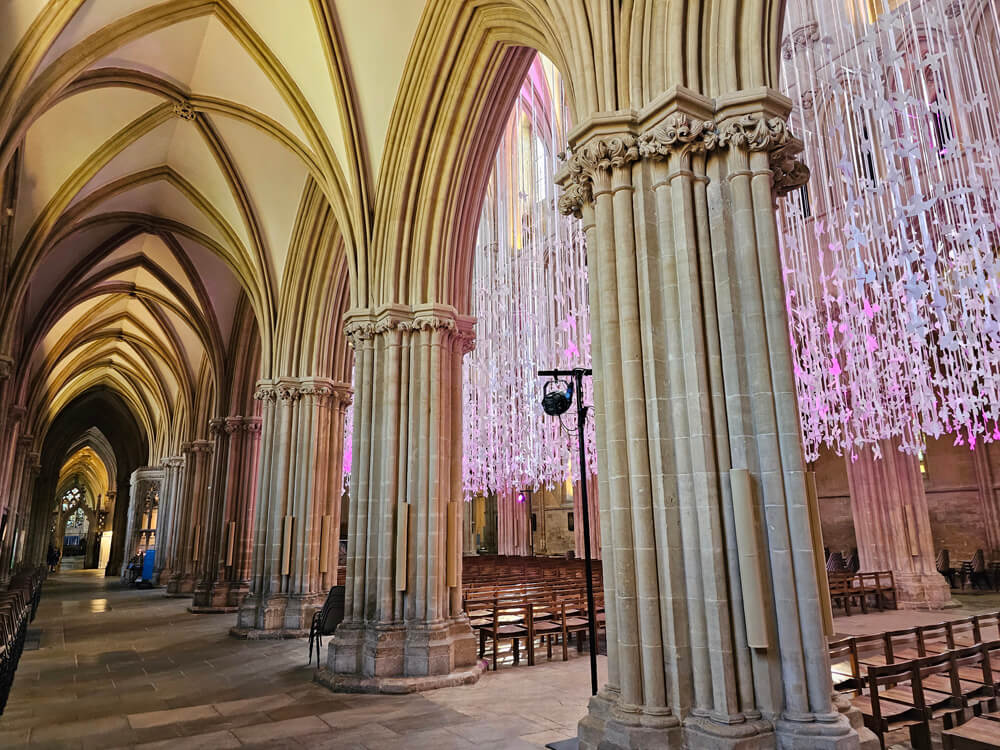
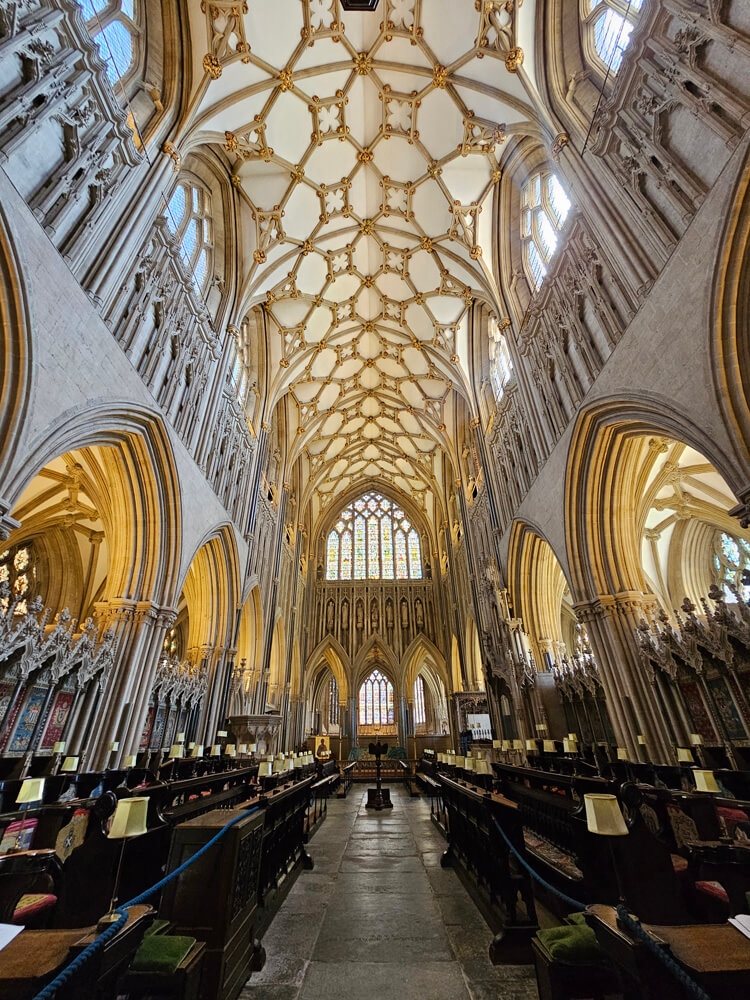
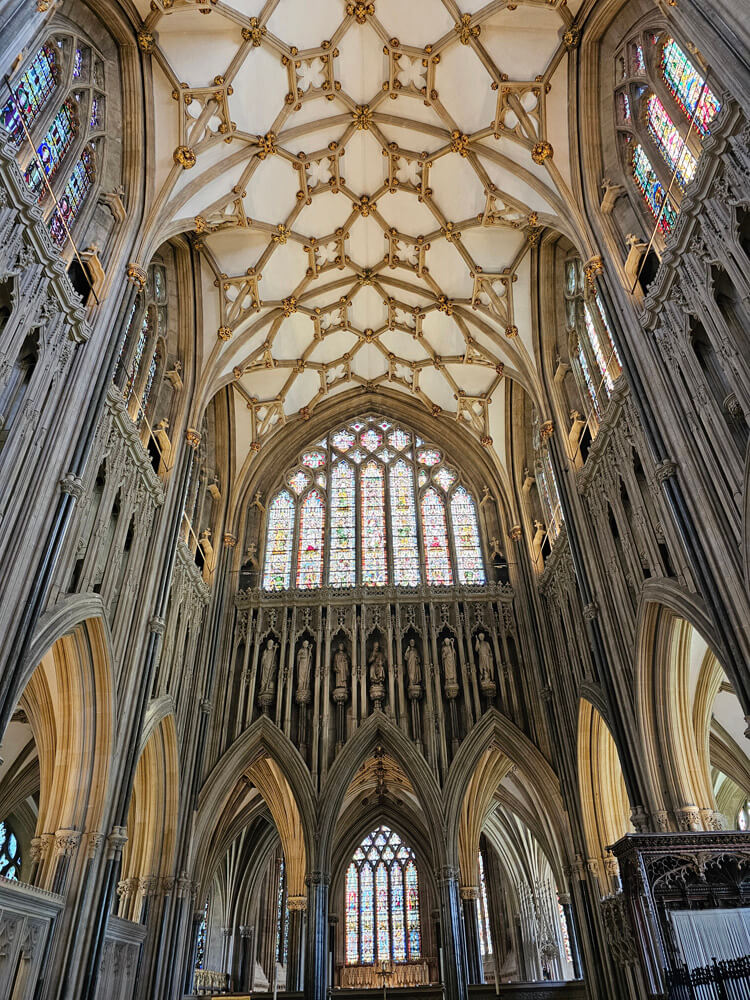
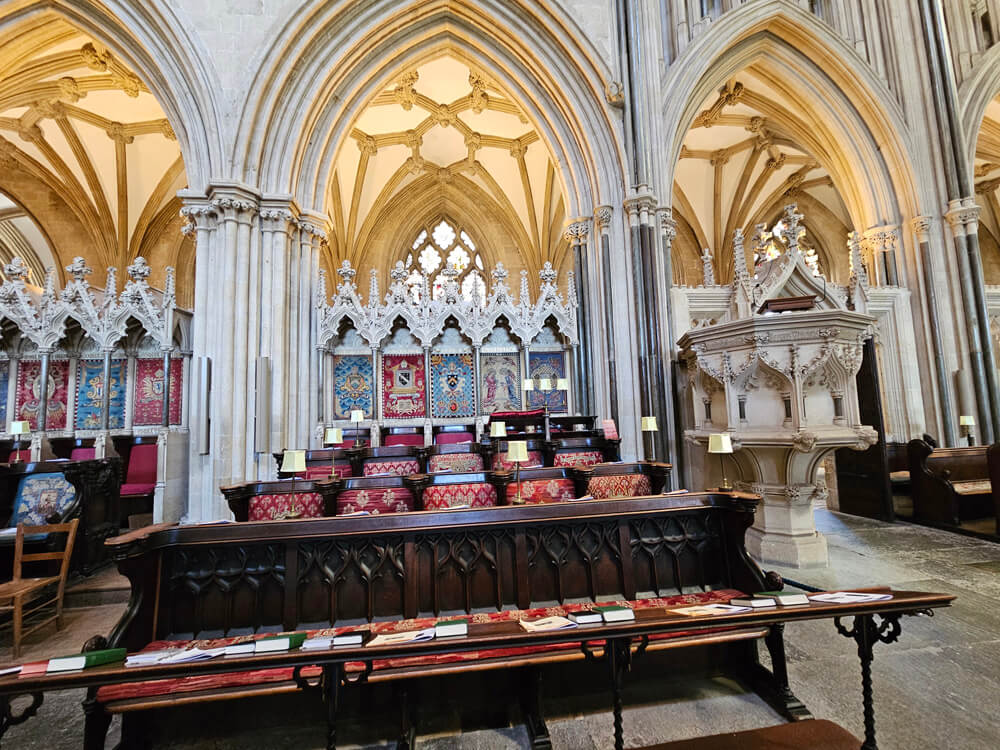
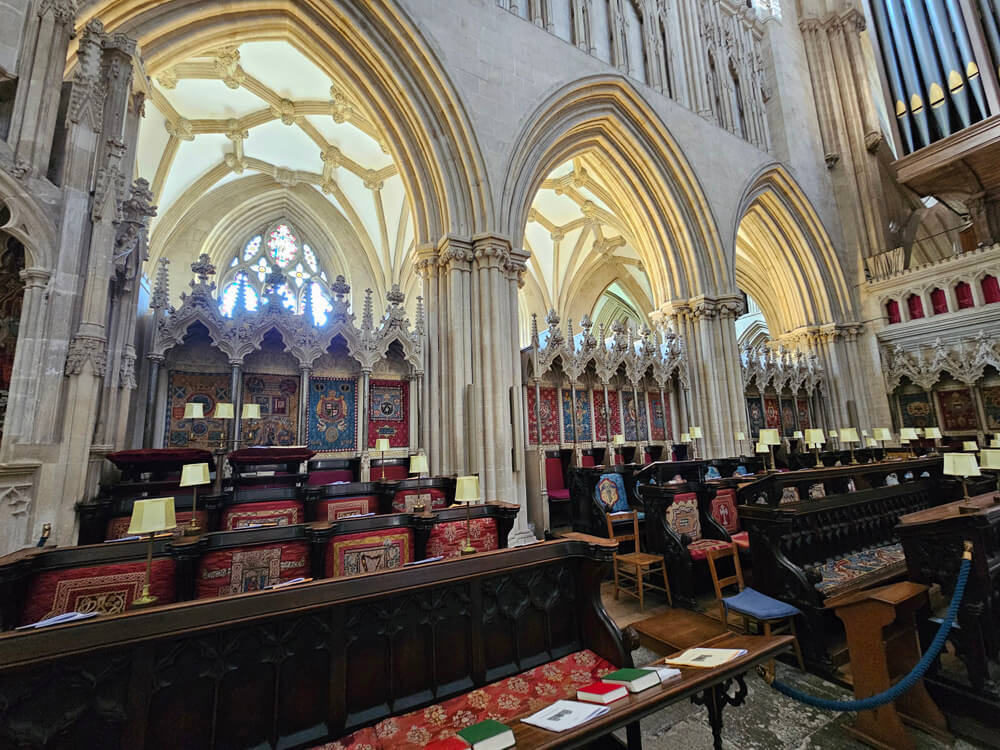
Wells is the earliest English cathedral to be built in the Gothic style. Its architectural styles include Gothic architecture, English Gothic architecture, and Perpendicular Gothic architecture.
It was built as a Roman Catholic cathedral from around 1175 / 1176 and it was consecrated in 1239. It became an Anglican cathedral when King Henry VIII split from Rome.
The cathedral was built to replace an earlier minster church that had been on the site since the early 8th-century. A minster church was built in Wells in 705 by bishop Aldhelm during the reign of King Ine of Wessex. The font in the cathedral’s south transept is from this Saxon church and is the oldest part of the present building.
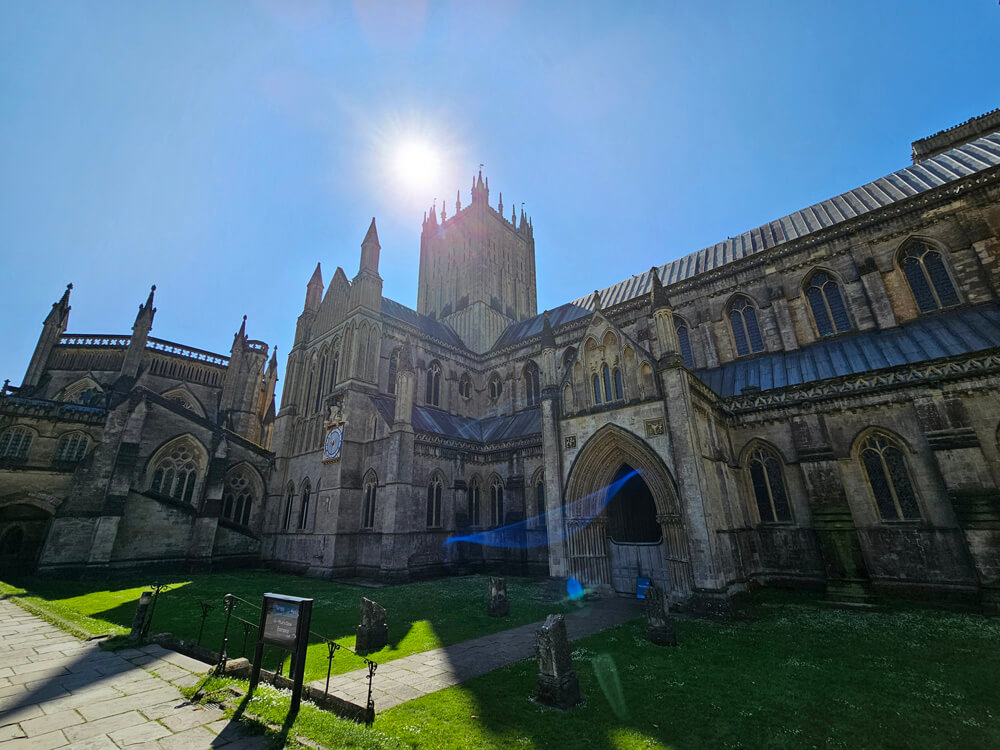
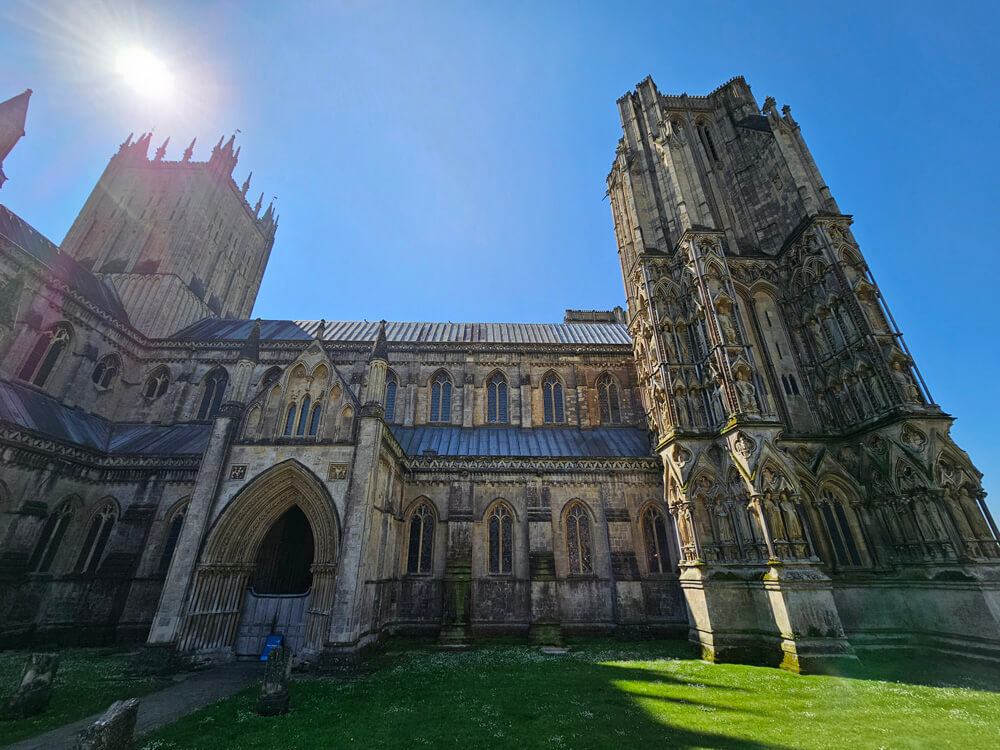
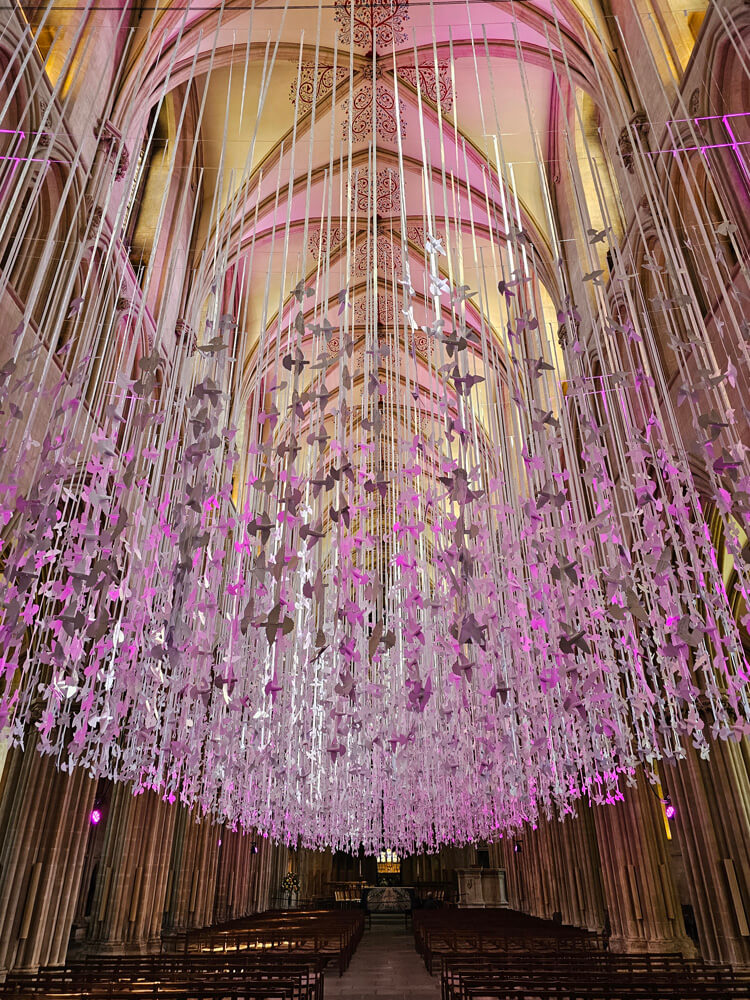
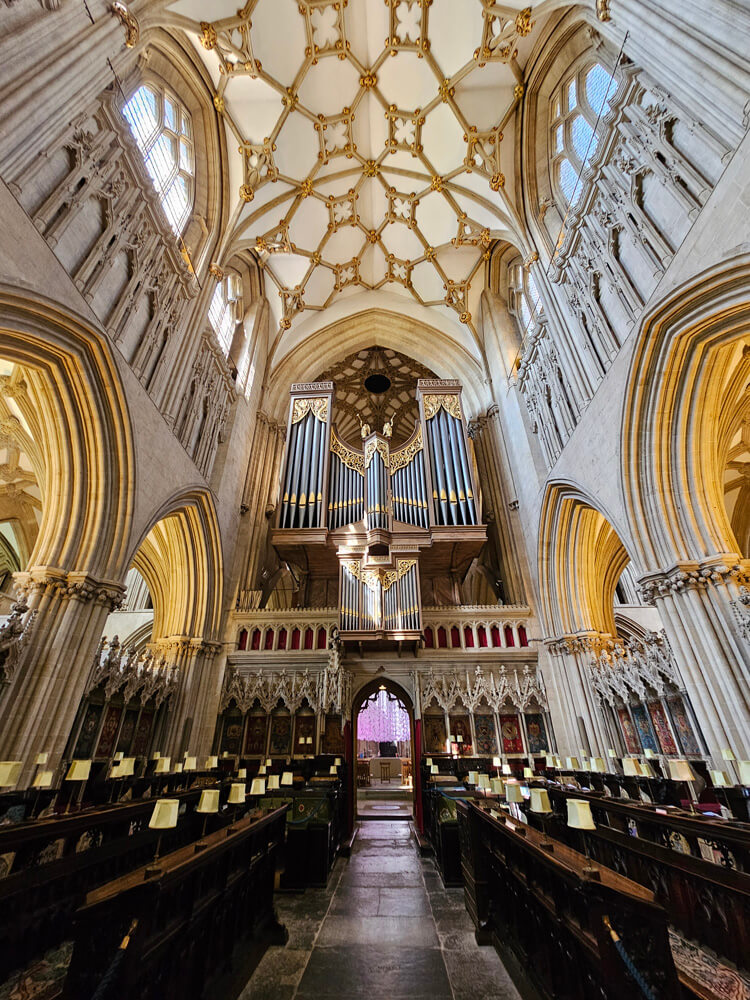
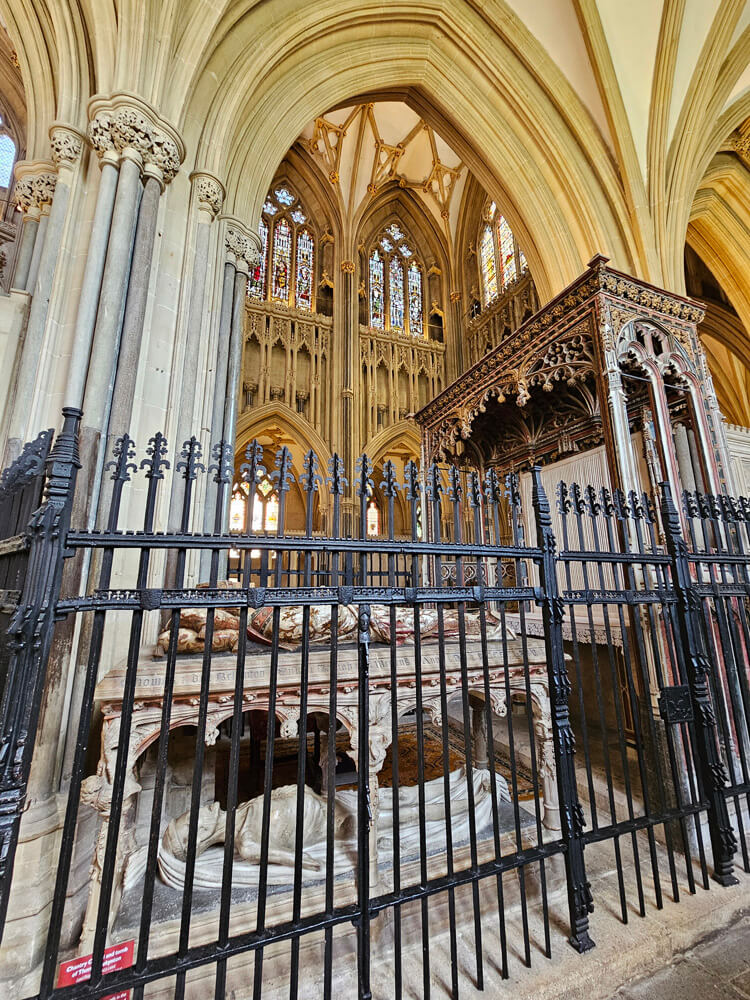
The first phase of the present cathedral building included the nave, north porch, choir, and transepts, in addition to the famous west front. The next additions were the Chapter House and the Undercroft built in the 13th century. During the 14th century, the east end of the church was almost entirely rebuilt, and the central tower completed.
Work began on the exquisite octagonal Chapter House around the year 1286. This large spacious area looks incredible with its sheer height and with its central shaft sprouting over 30 vaulting ribs. To reach the Chapter House you must ascend a very worn set of wide stone stairs which are just as equally notable as the Chapter House itself, curving like flowing water and worn down by centuries of use.
In the Undercroft, there is an original wooden door that has been dated to circa 1265. In medieval times, this entrance was the only way to the Undercroft since it was constructed to be a treasury housing the Cathedral’s treasures and valuable manuscripts. This door is the inner door which opens inwards, and includes intricate iron scrollwork with clusters of leaves, flowers and small birds. Additionally, there is an outer door which is roughly a couple of centuries younger, dated to circa 1450. Today, the outer door is kept permanently shut, but visitors can still see both doors via the Undercroft.
Wells Cathedral has several unique features that separate it from other English cathedrals including the extraordinary and famous scissor arches that support the central tower, as well as one of the largest collections of historic stained glass in the country. The Cathedral also boasts the famous Wells Clock, a 14th-century astronomical clock thought to be the second oldest mechanical clock in Europe, the fascinating octagonal Chapter House, and one of only four chained libraries in the UK. Unfortunately the chained library was closed when I visited so I didn’t get to see it.
Photo Gallery.
Did you enjoy this post?
I hope you found this post useful. I put a great deal of time and effort in to building, maintaining and populating the website. If you like, you could say a small thank you by buying me a coffee. You don't have to, but it would be nice :)
Buy me a coffee
Stay up to Date
Follow me on my journey and get notified whenever a new post is published by following Kings & Castles on Facebook.
Follow MeExplore The Map
Discover the hundreds of castles, churches, monasteries, cathedrals and other historic locations that I've personally visited across England and Wales. Search by location, explore nearby sites and plan your next historical adventure.
Share: