Denbigh Town Walls
Stretching for over 1,000 metres, Denbigh’s town walls are among the best-preserved and most complete medieval town walls in Britain. They were built towards the end of the 13th century to encircle Edward I’s new castle and new English borough at Denbigh.
The rocky outcrop that is home to Denbigh’s castle and town walls was once the site of a stronghold belonging to Welsh prince Dafydd ap Gruffudd, though the remains that stand today are the work of English king Edward I.
In the 1280s, Edward I mounted a full-scale invasion of north Wales, quickly capturing Denbigh. Edward granted the lordship of Denbigh to one of his chief commanders, Henry de Lacy, Earl of Lincoln. Edward’s plan was to build a new English borough at Denbigh with a new castle, replacing the Welsh fortifications, and strong defensive stone walls to encircle the town and castle, effectively creating a fortified walled town.
Construction on the town walls began sometime around 1282 and were substantially complete by 1294, stretching for nearly two thirds of a mile long from the north edge of the castle to its southeastern tip and protected by four mural towers. Two gatehouses, Burgess Gate and Exchequer Gate, were built as the two entrances to the town.
A second phase of building was required after a Welsh rebellion broke out in 1294 and the walls were further strengthened and extended. Extra defences along the eastern salient were added in the 14th century, including the impressive Goblin Tower. This housed a secondary well within the town’s defences, which went on to help Denbigh survive sieges in the 16th-century English Civil War.
Though the walls were built to enclose the town, Denbigh’s market was moved outside the walls in the 14th century, leaving the walls to function as an outer bailey to the castle while the town developed outside the walls.
The Walls Today
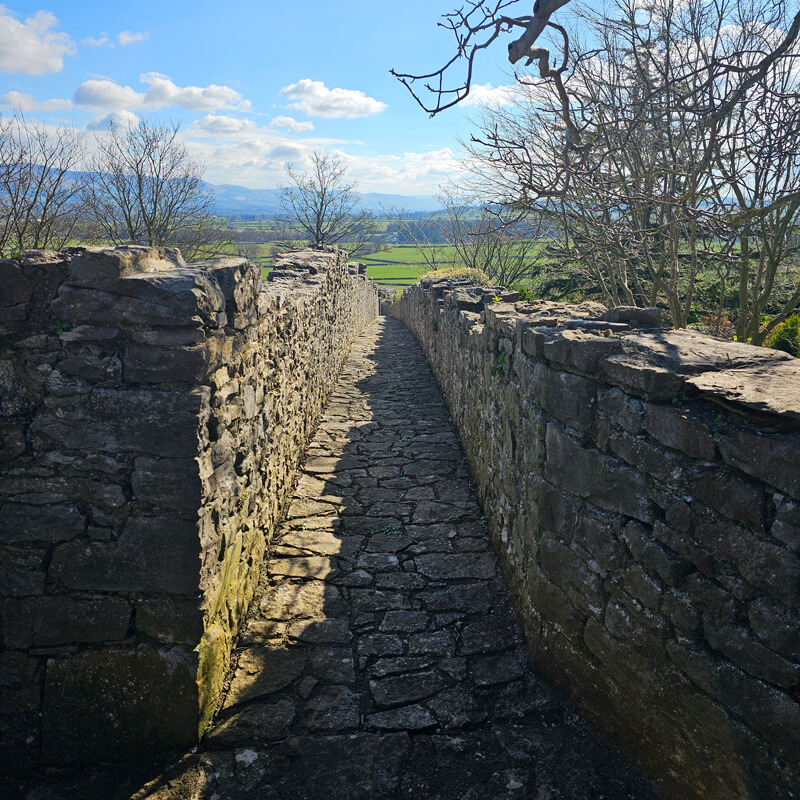
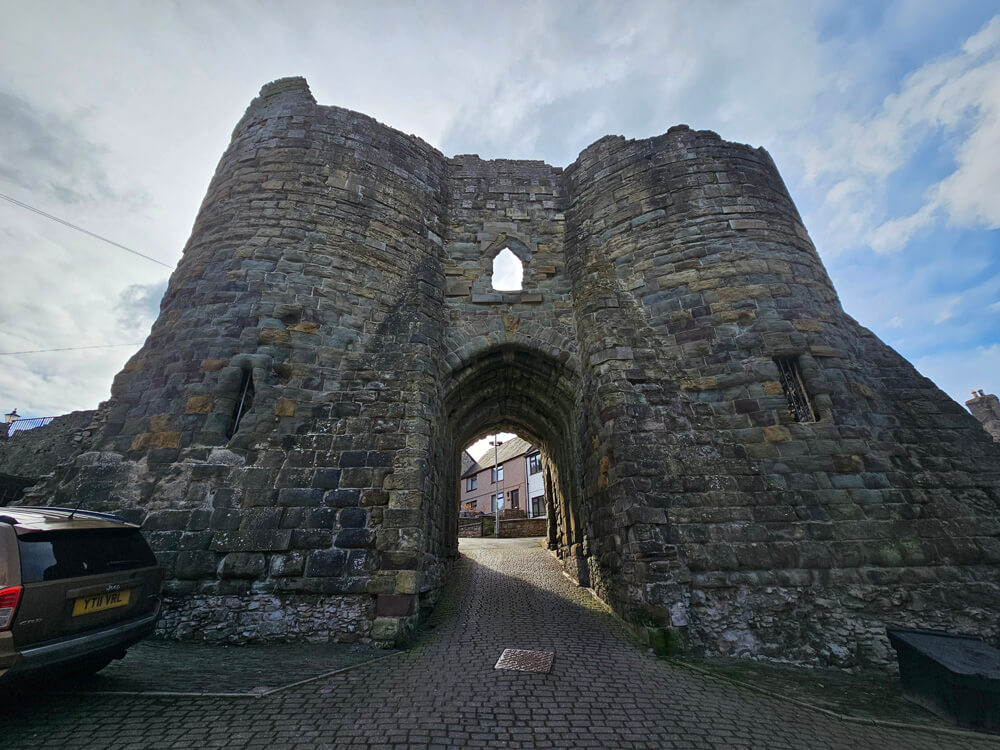
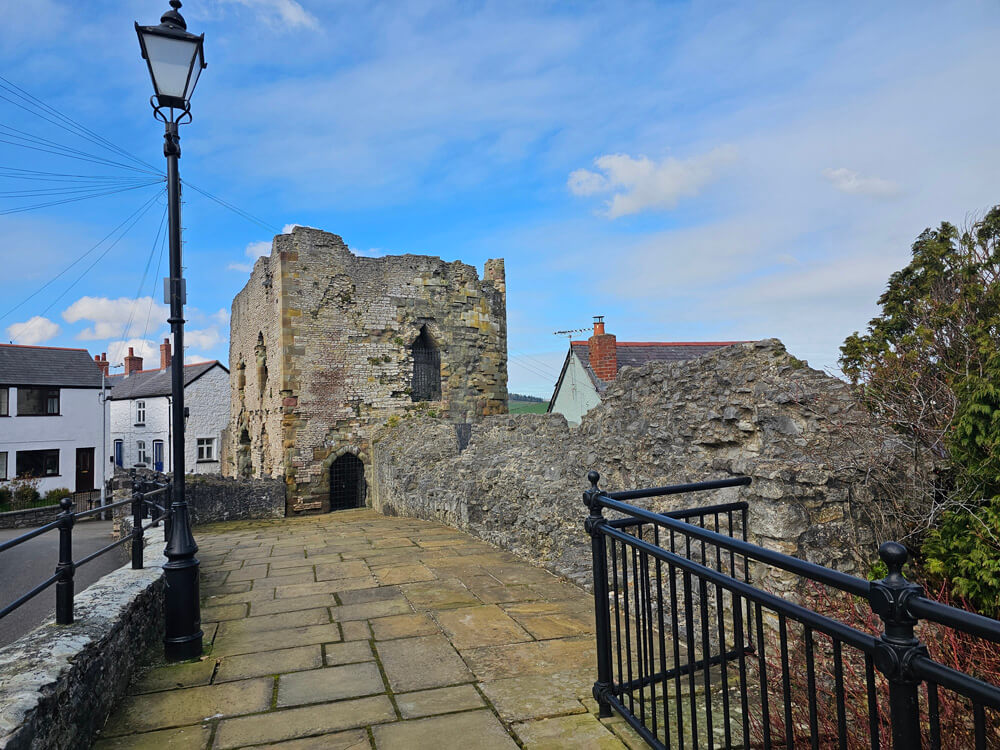
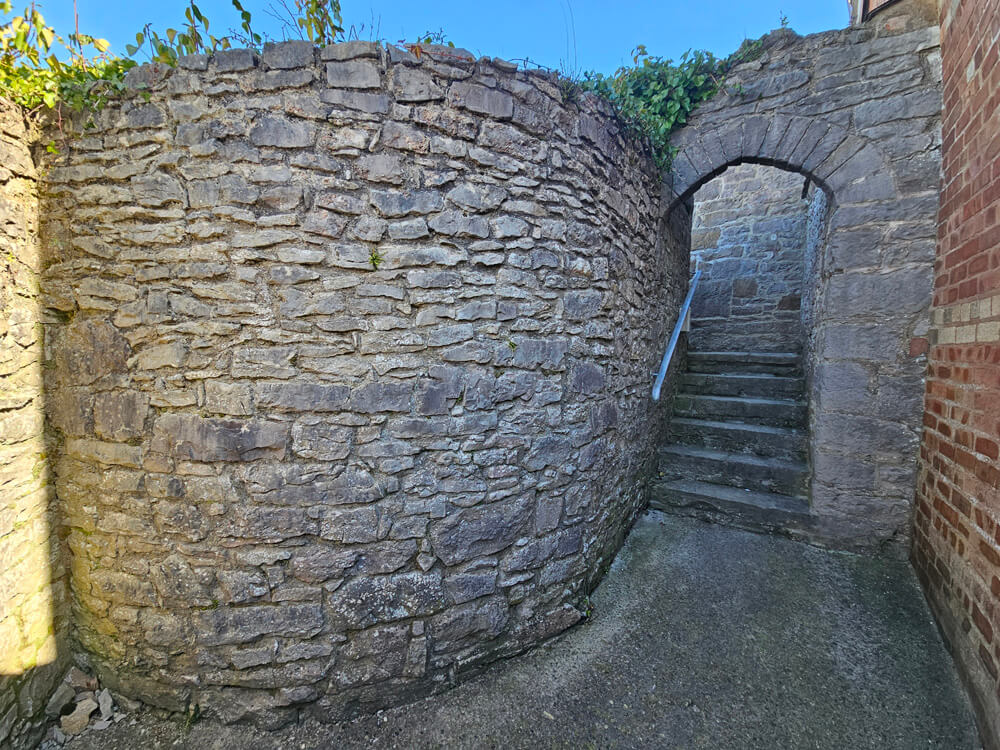
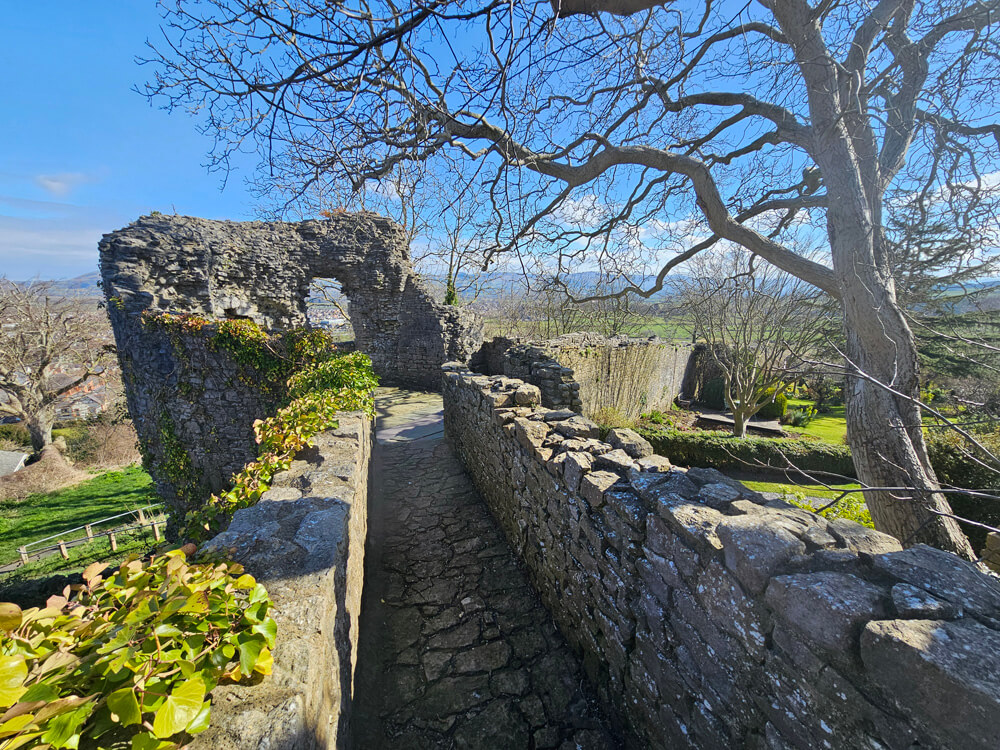
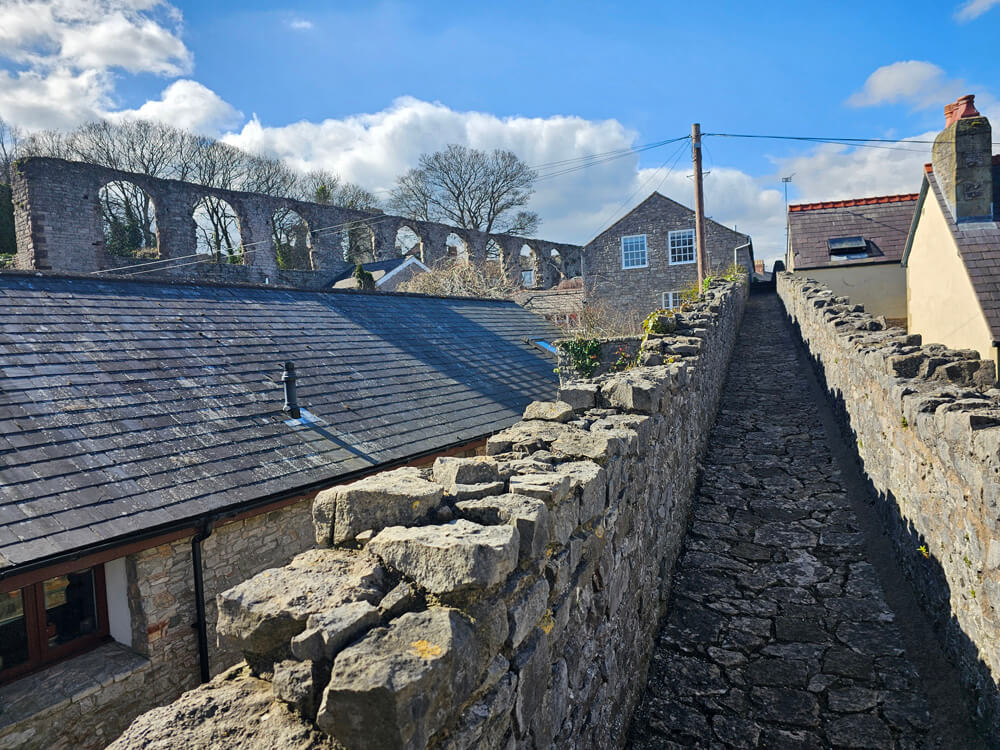
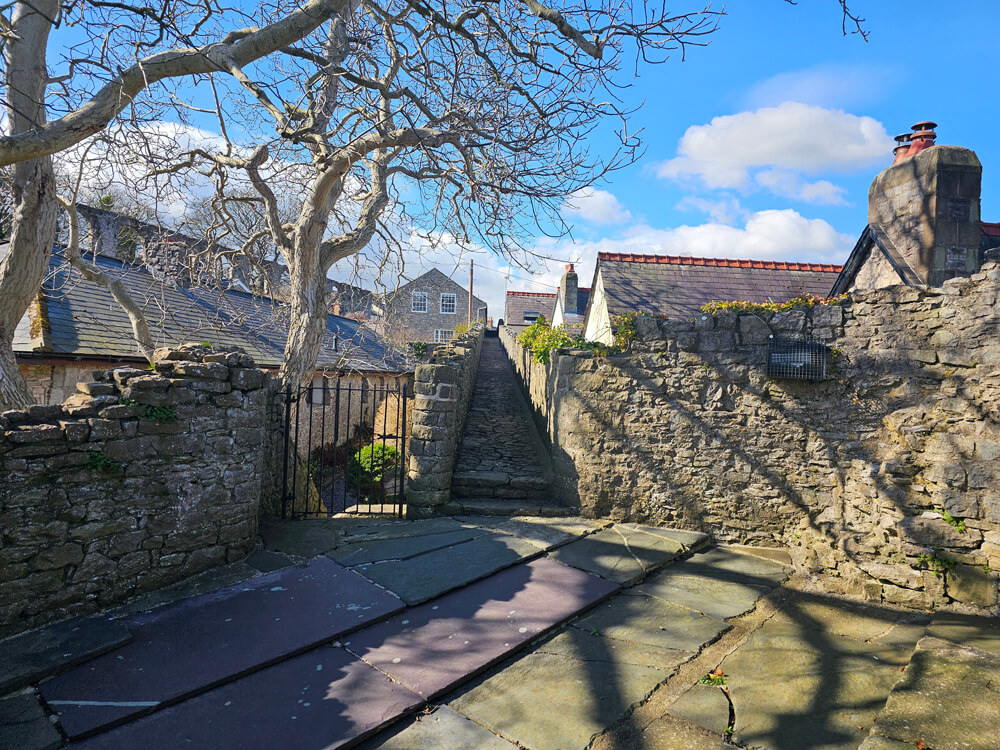
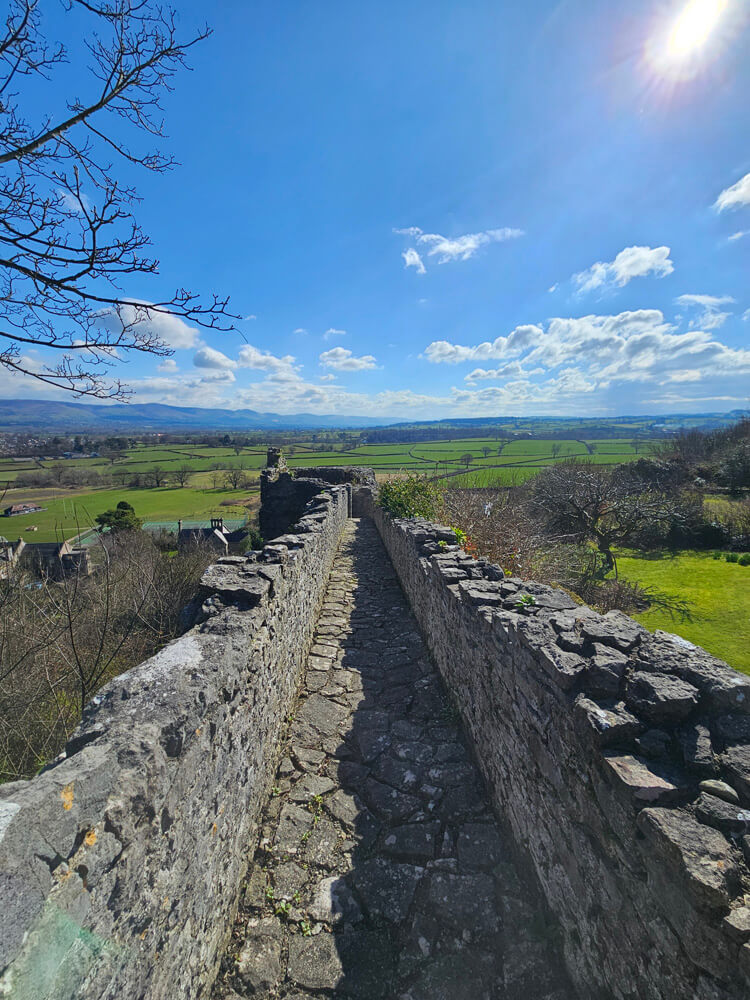
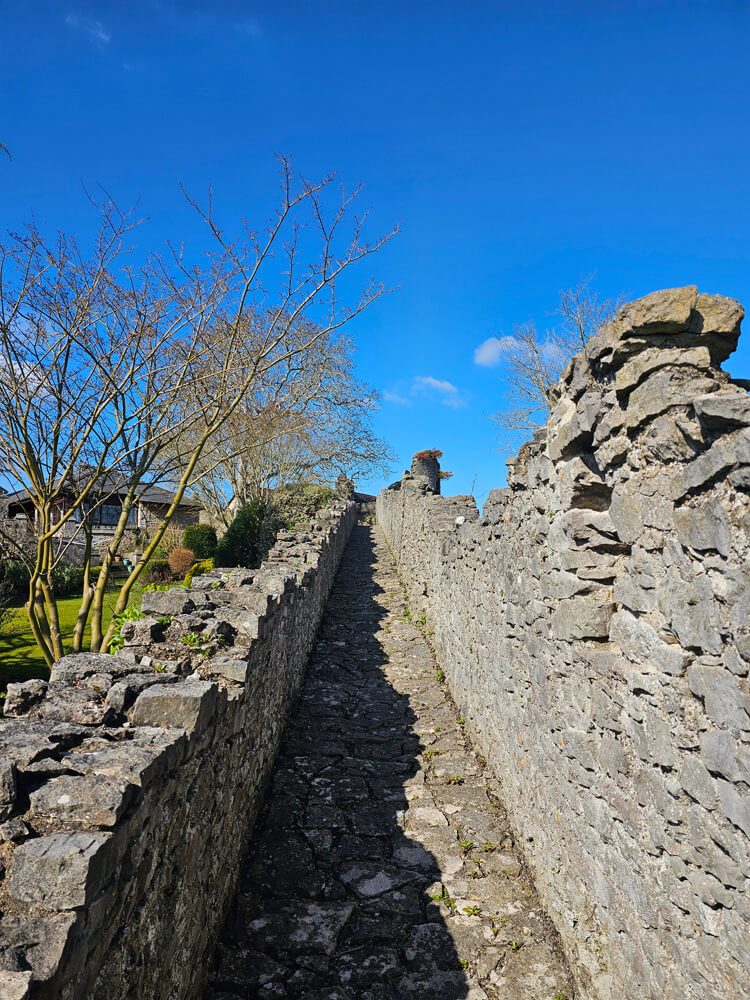
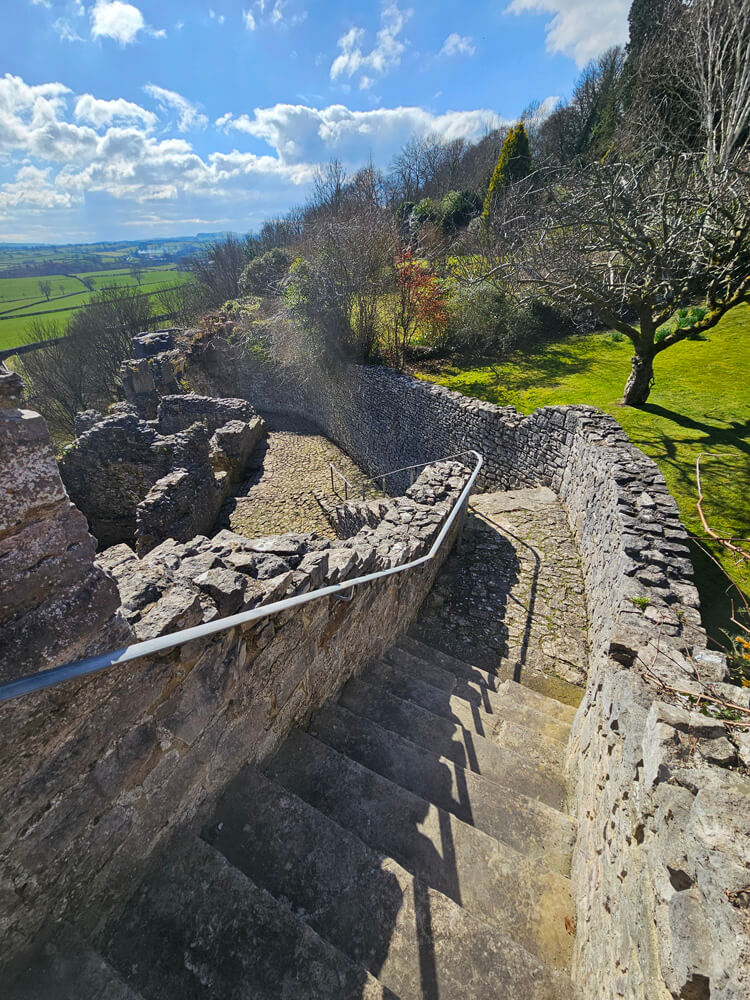
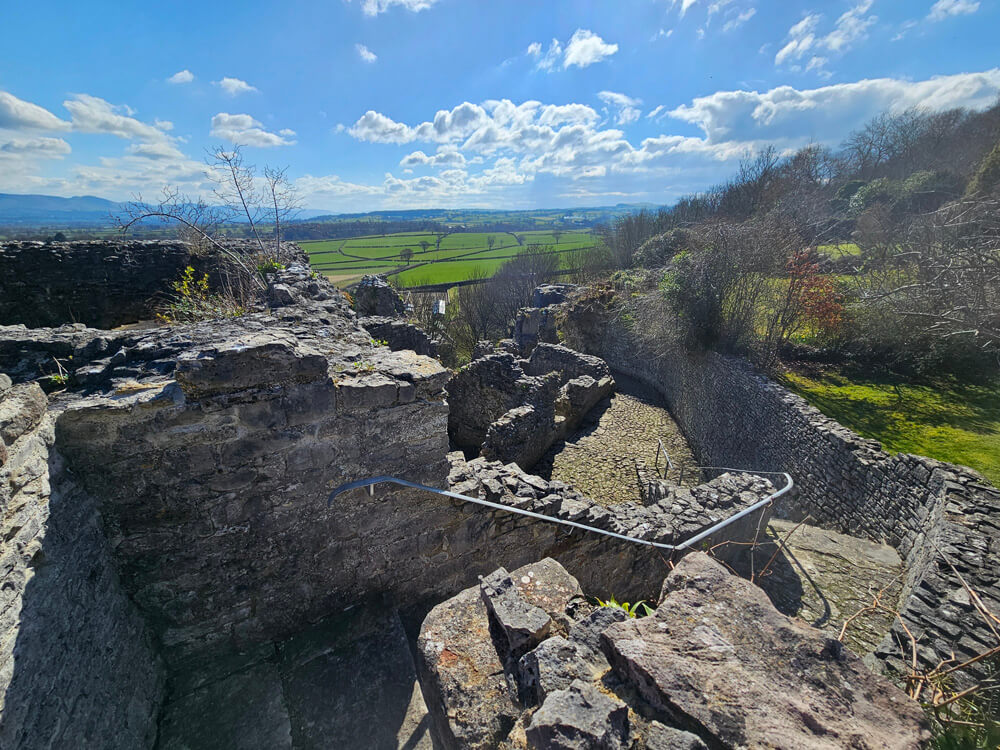
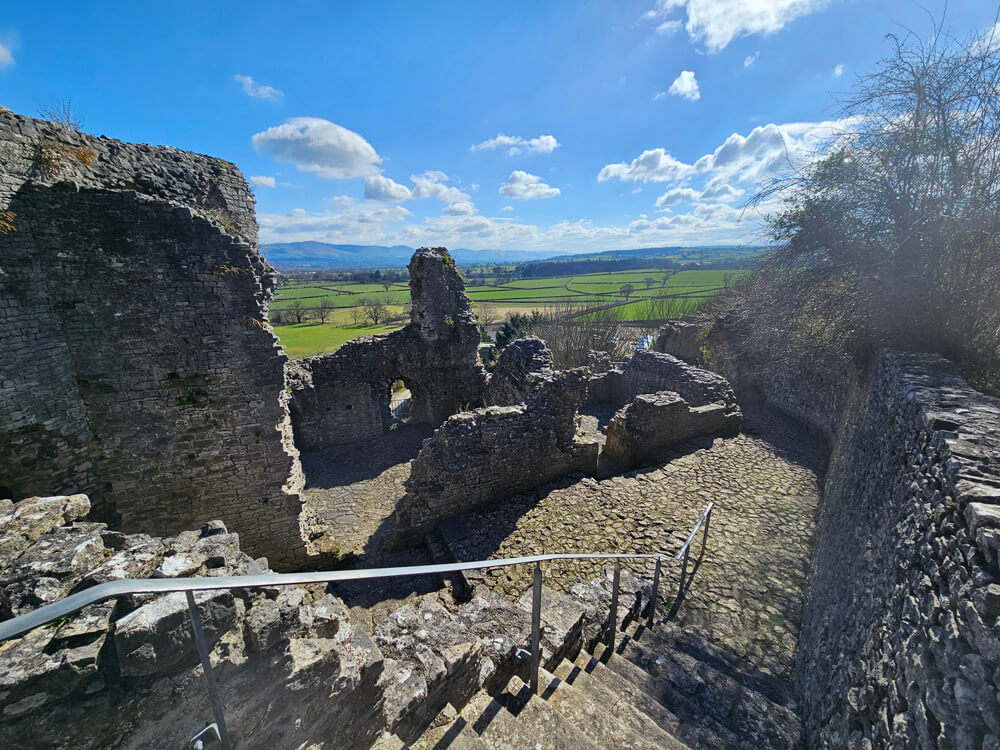
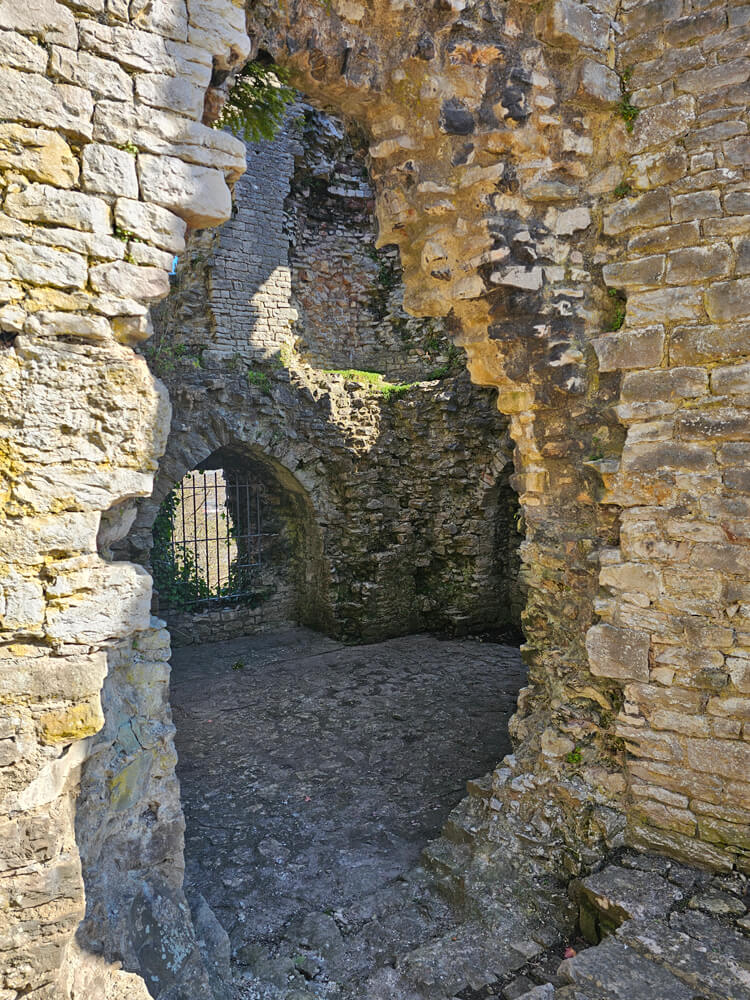
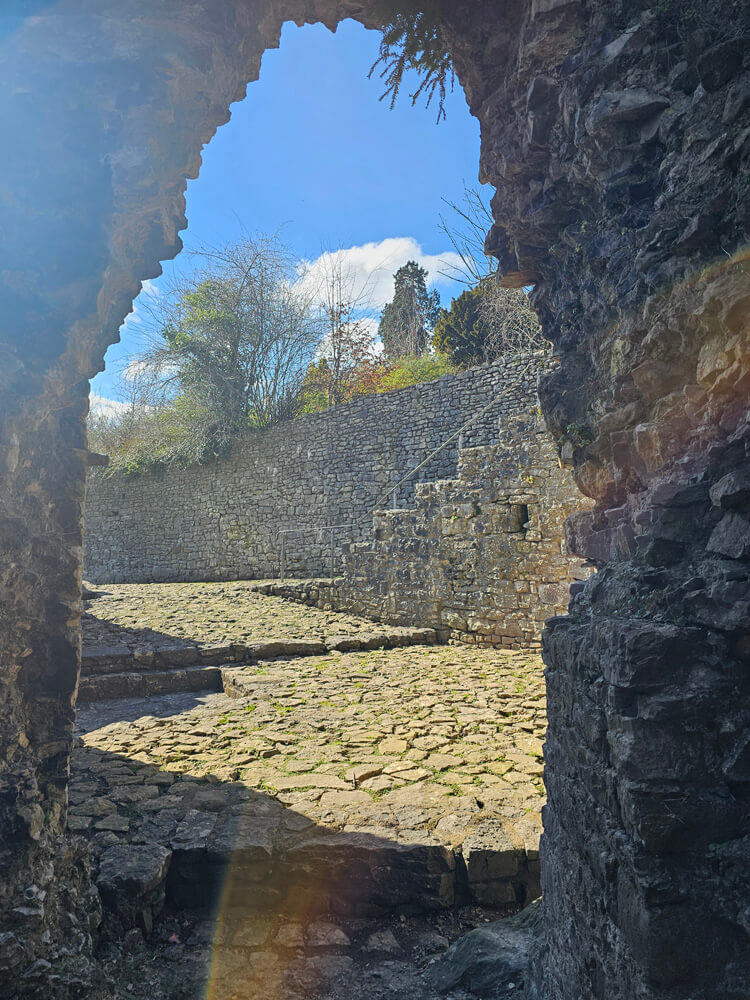
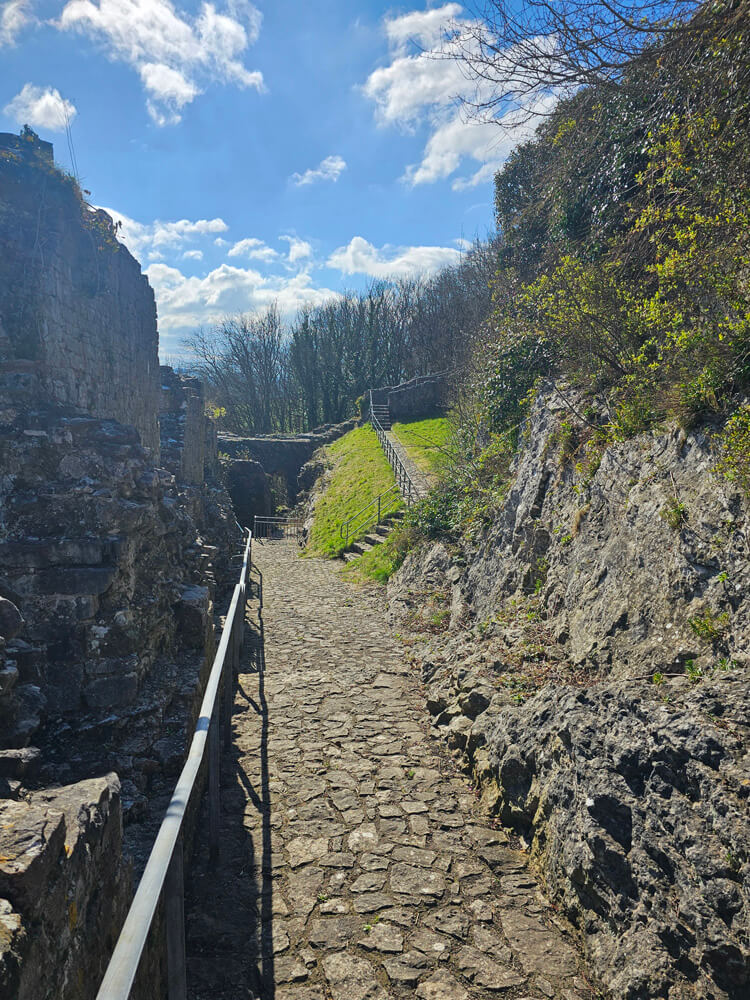
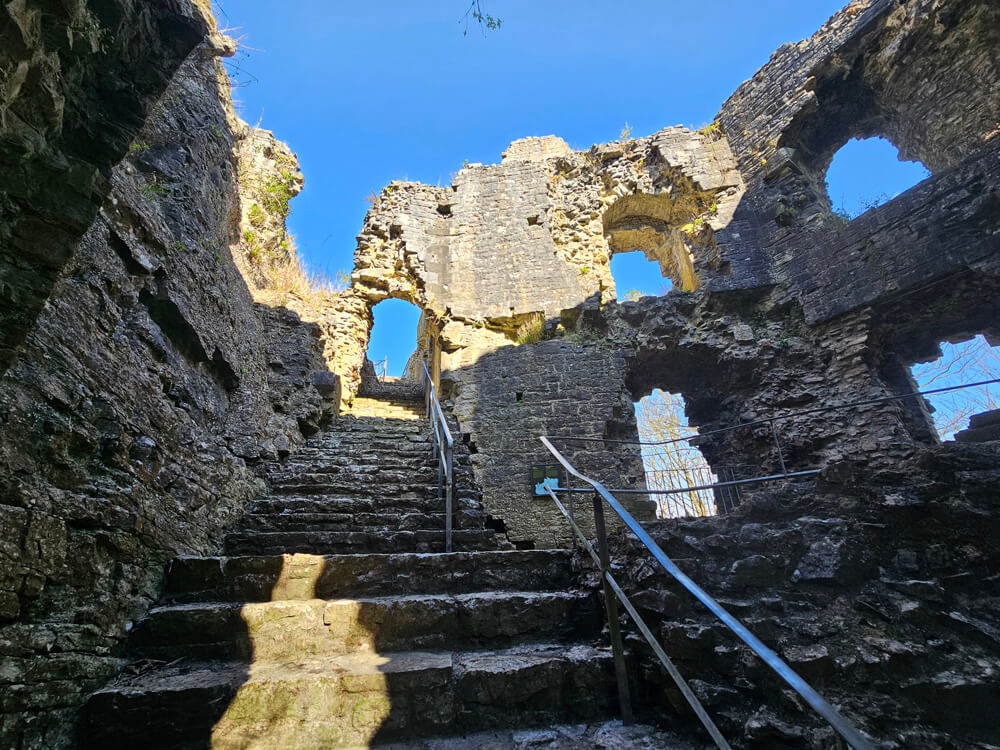
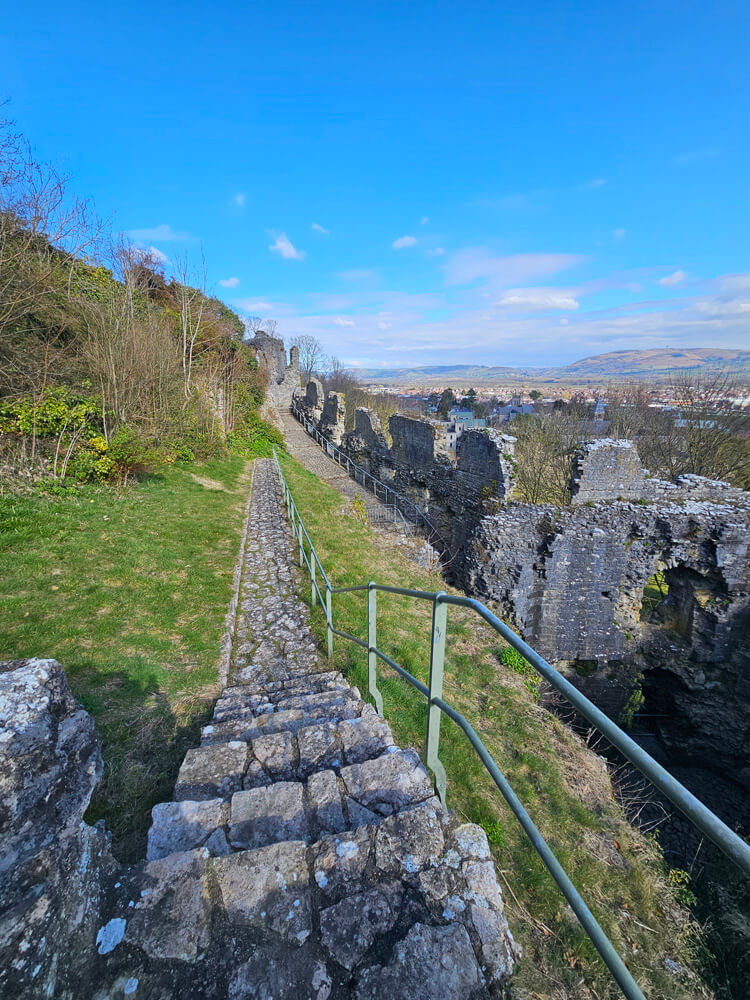
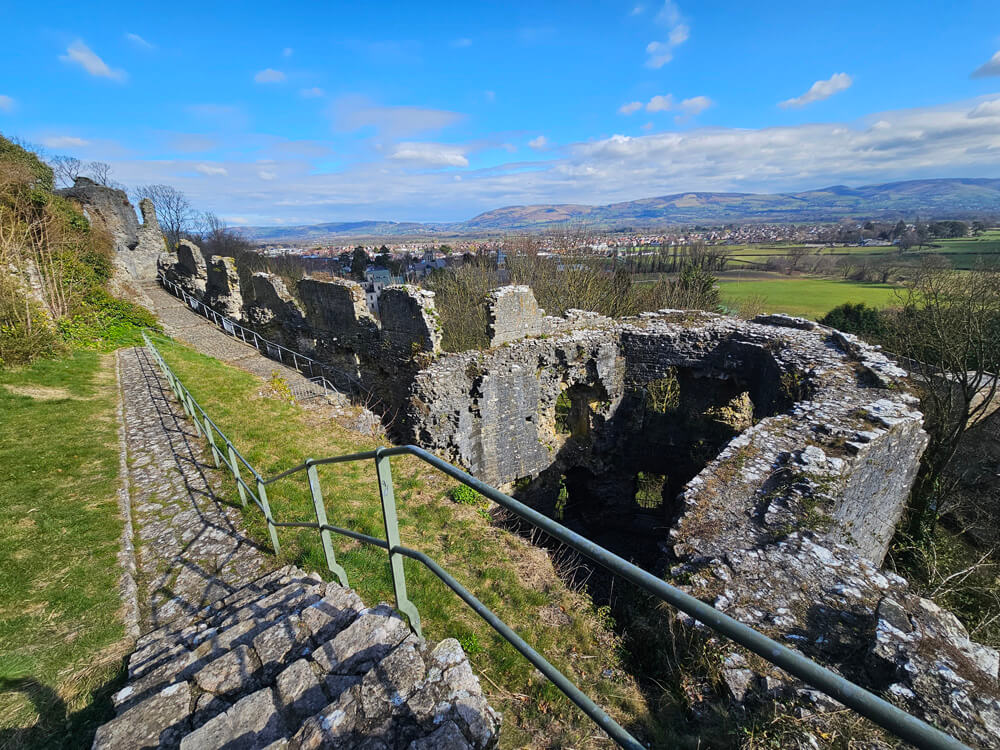
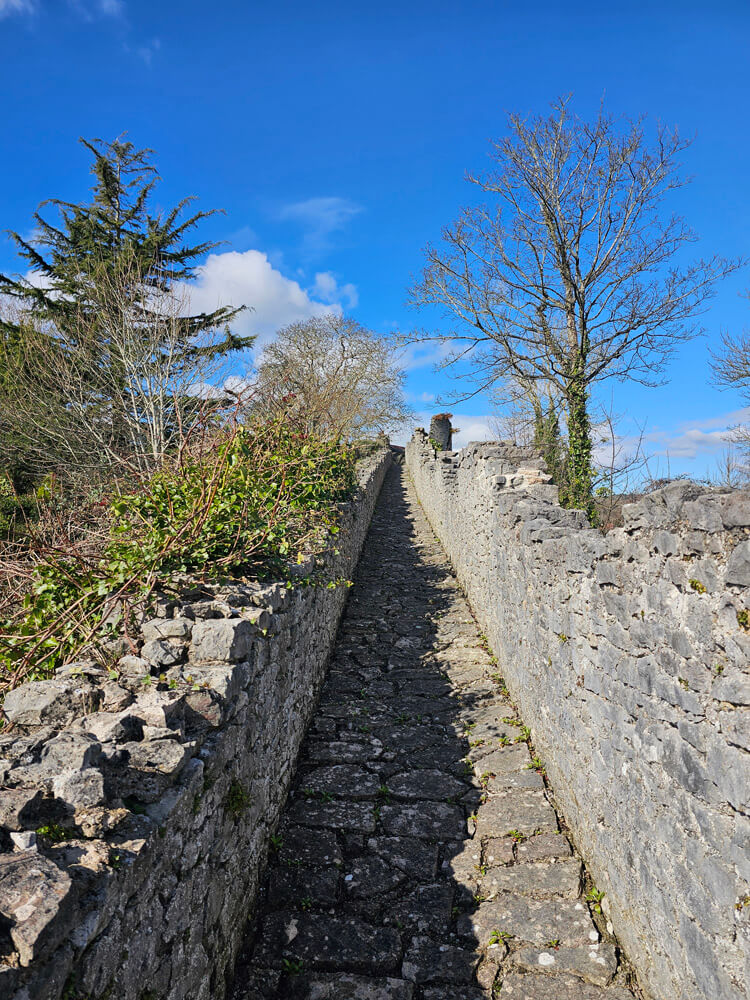
Although some sections of the walls are ruinous or non-existent, much of it still stands, several metres high in some places, along with the remains of a number of towers and one of two gatehouses. Of these, the Burgess Gate to the north is the best preserved, remaining substantially intact with a vaulted gate passage flanked by rounded towers, whereas Exchequer Gate no longer survives. The Goblin Tower, which suffered major damage in the Civil War, still stands to 15 metres in height. The best preserved section of the walls is on the east side, where the wall ran from the Countess Tower to the ruined Goblin Tower, and on the west side between the town gates.
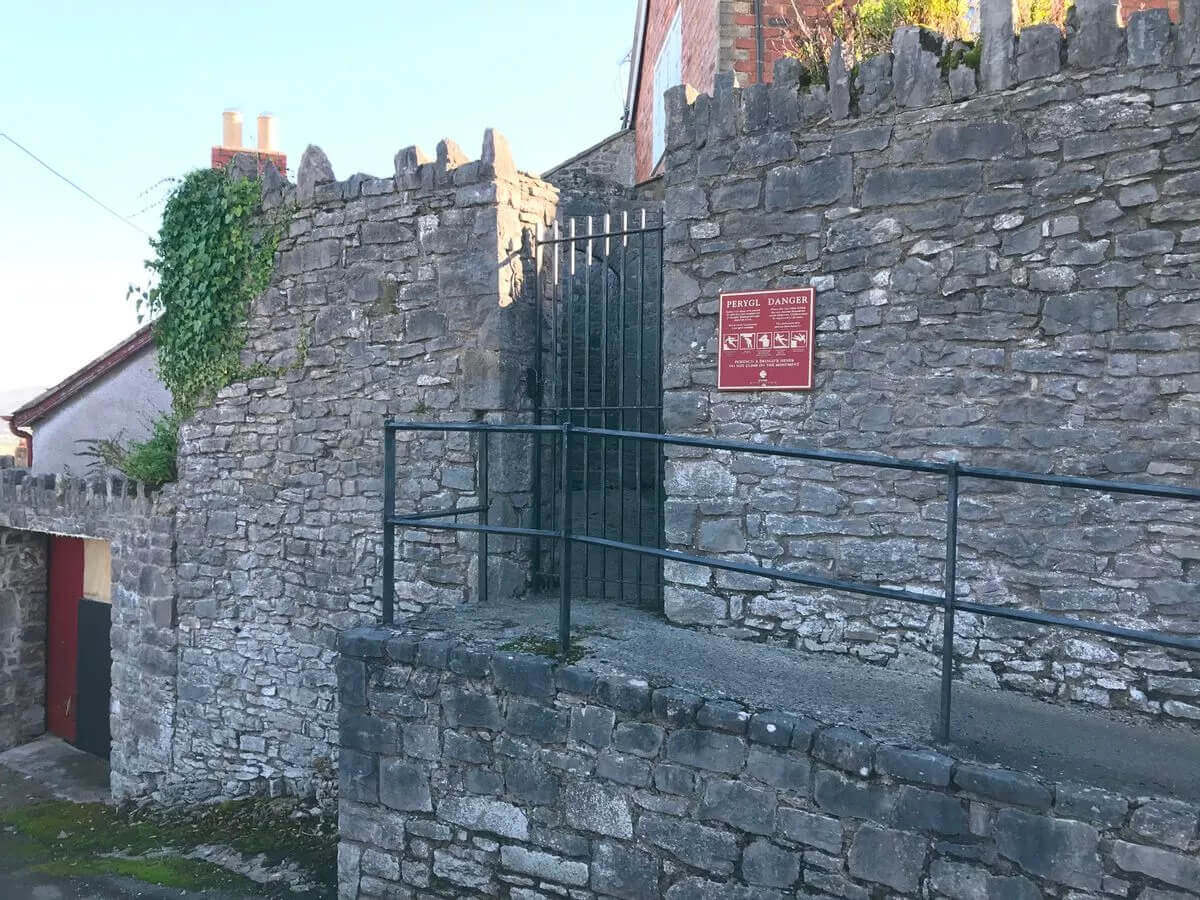
You can access the wall-walk by obtaining a key from the castle reception. A £5 deposit is required which is returned to you when you bring the key back. Access to the wall-walk is via a locked gate beside the ruins of Leicester’s Church just past Hilary’s Chapel.
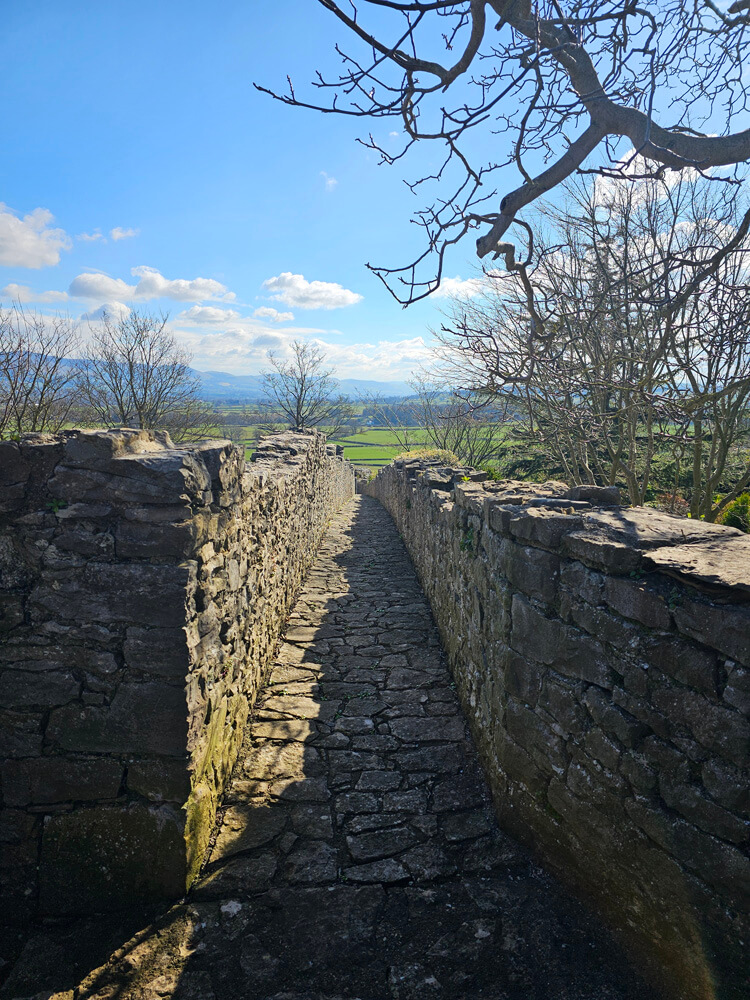
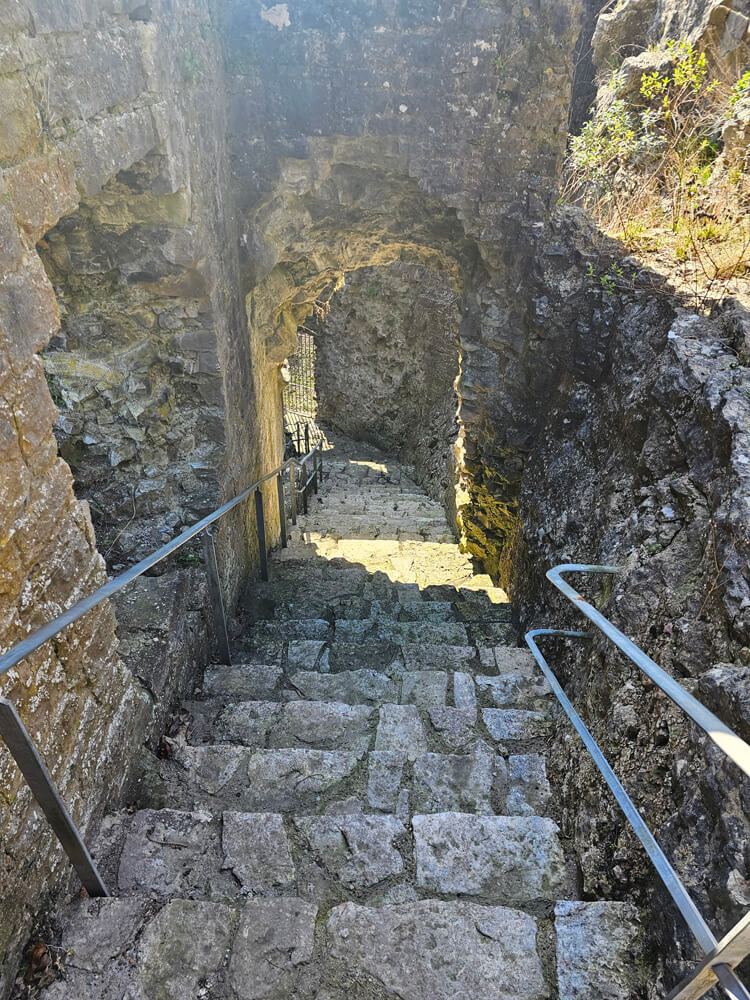
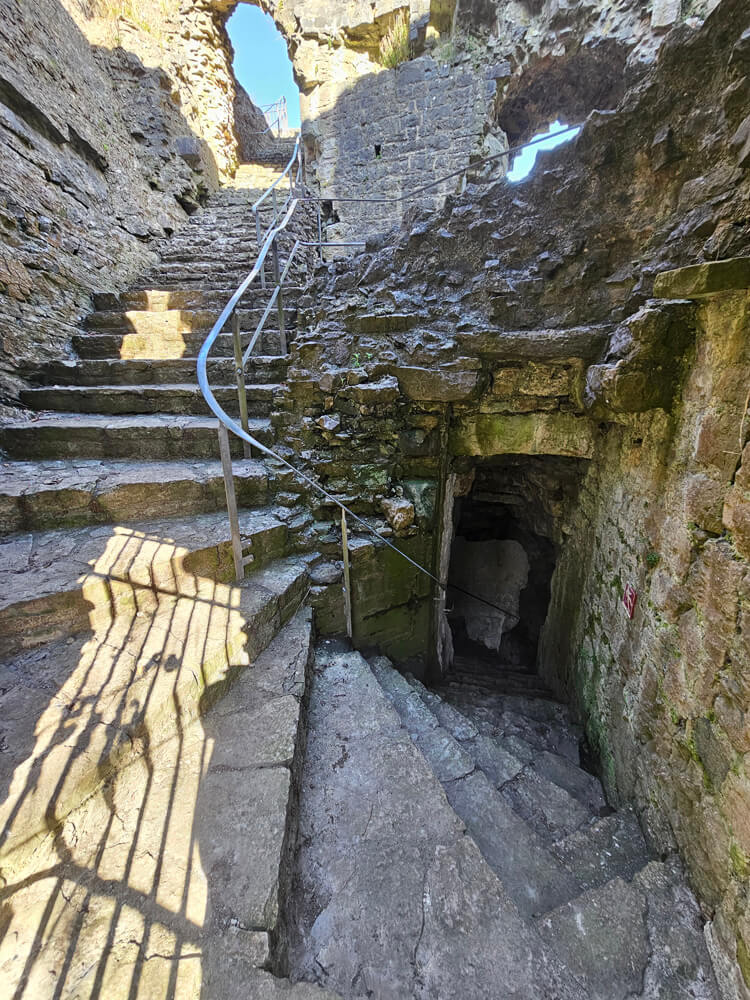
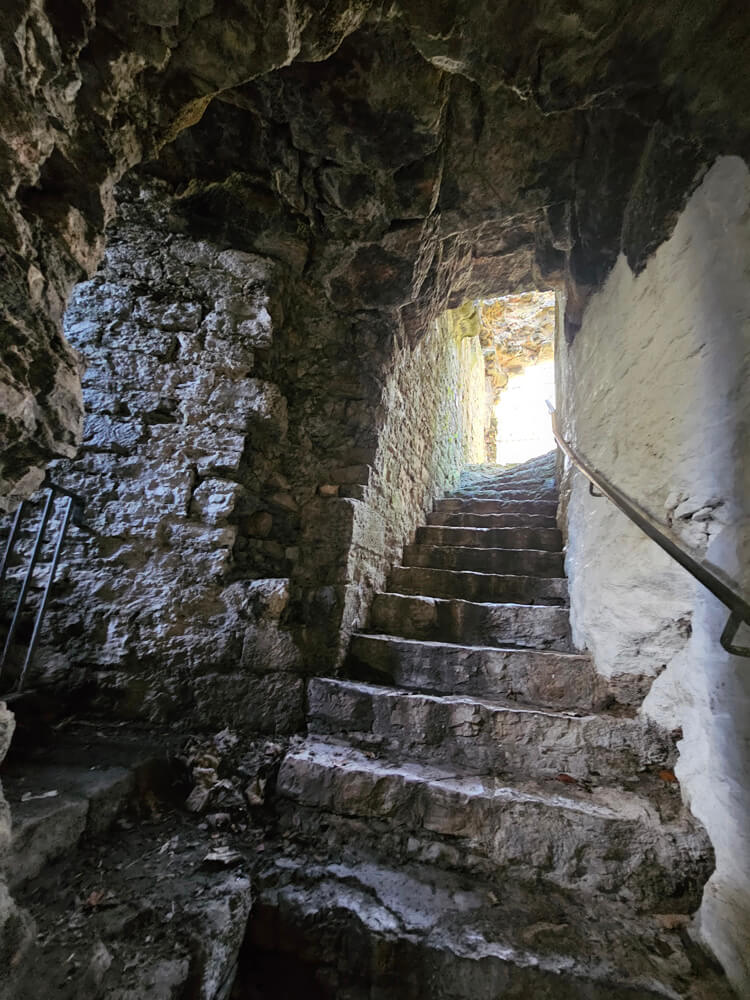
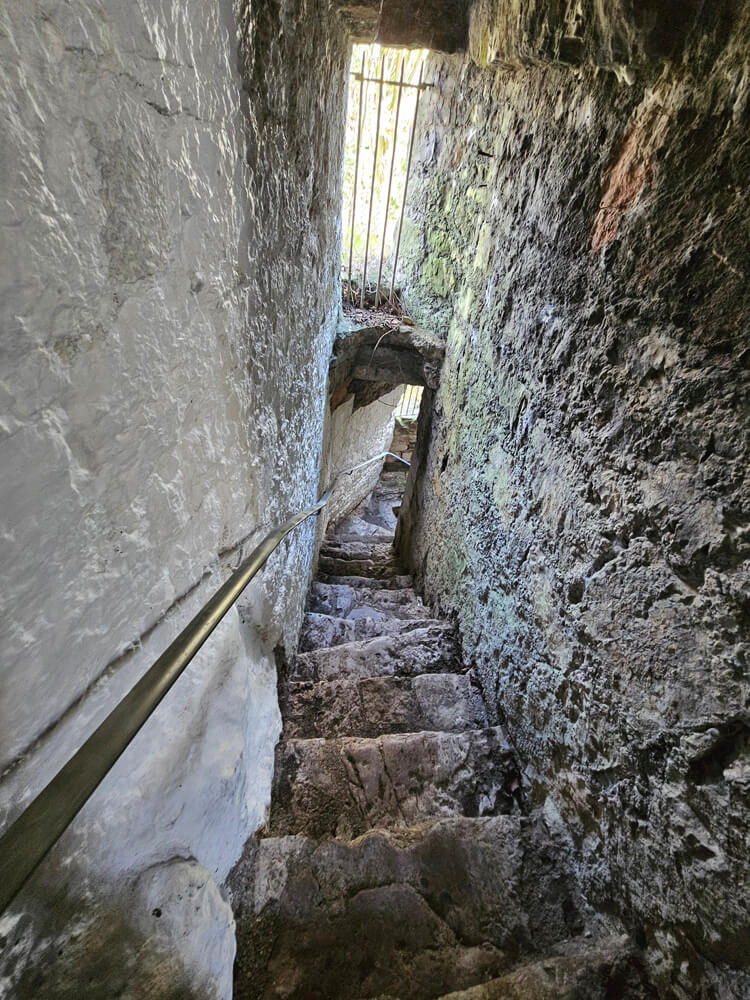
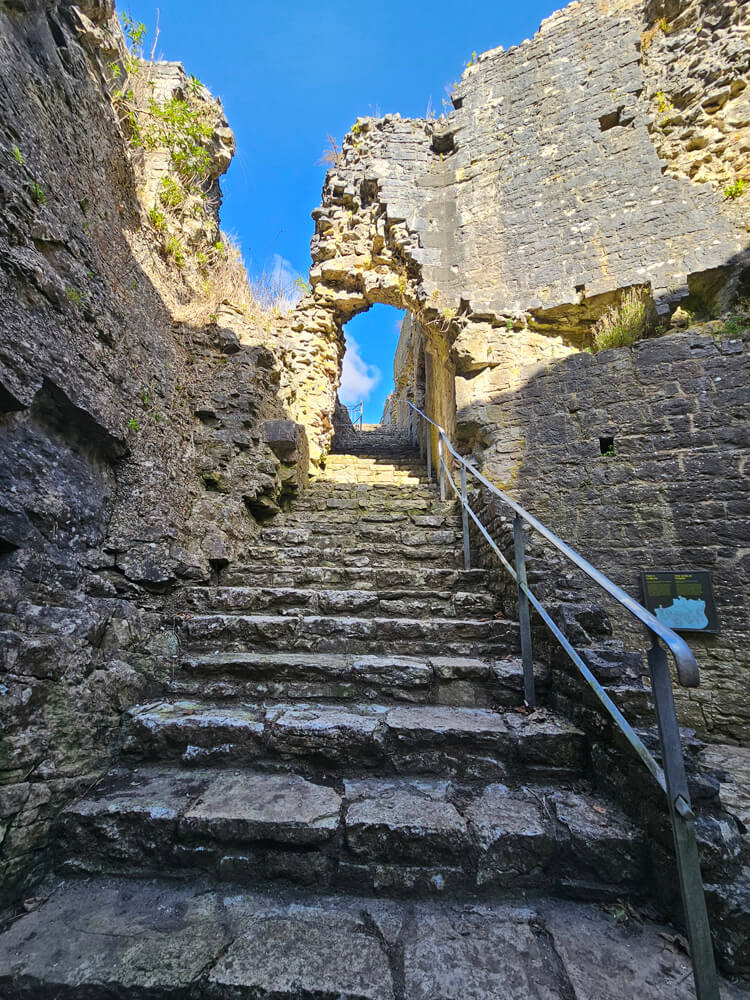
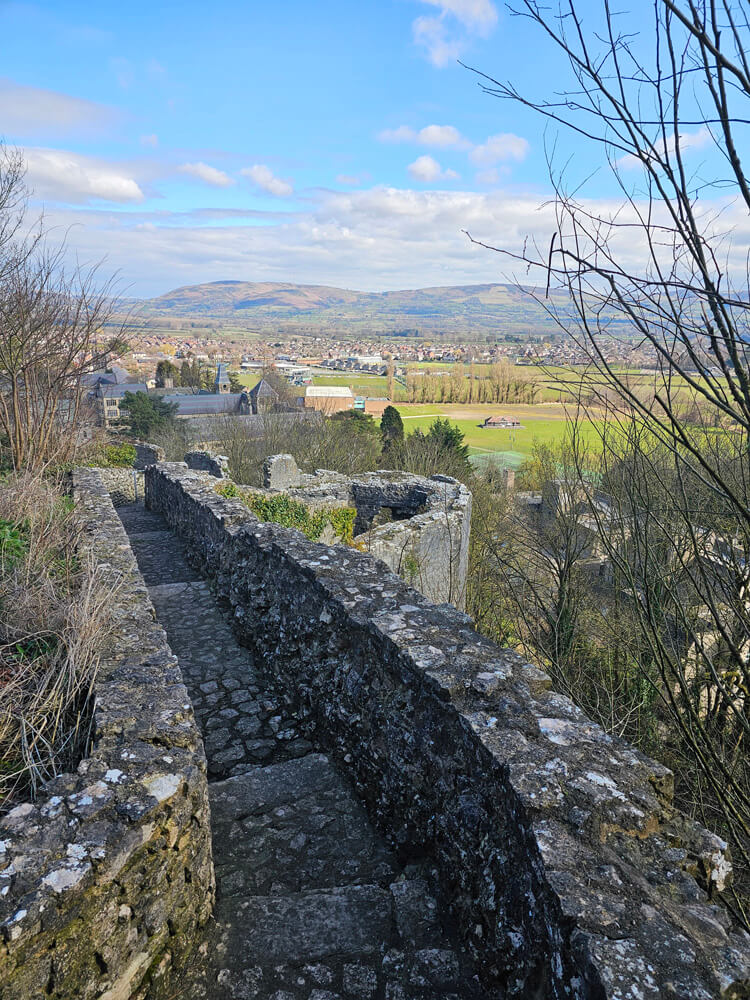
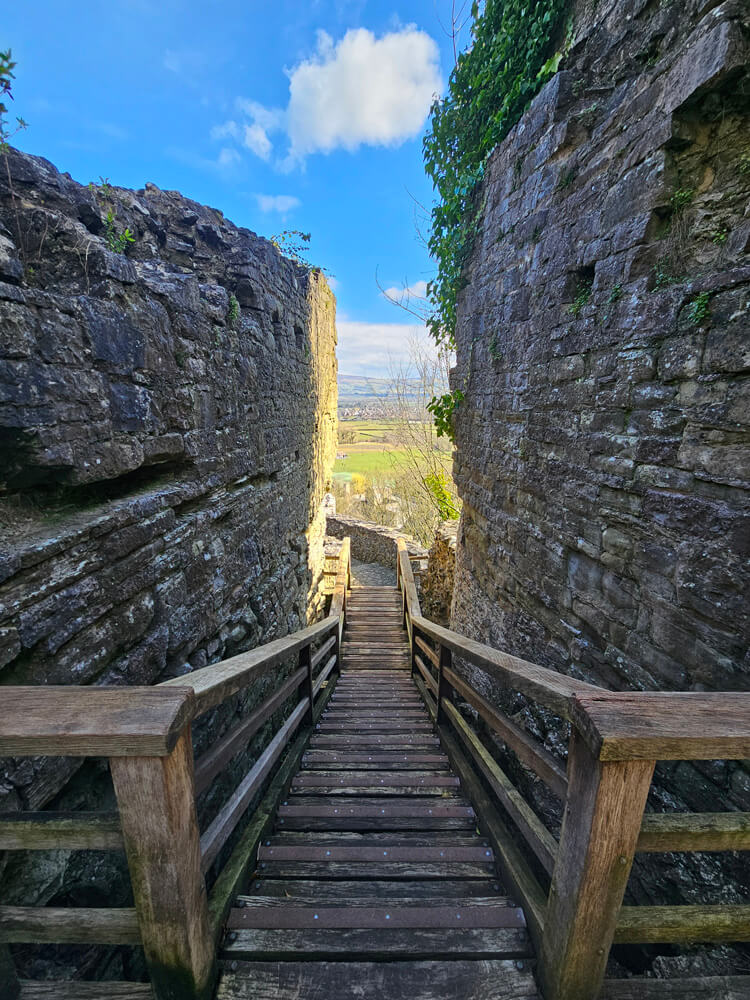
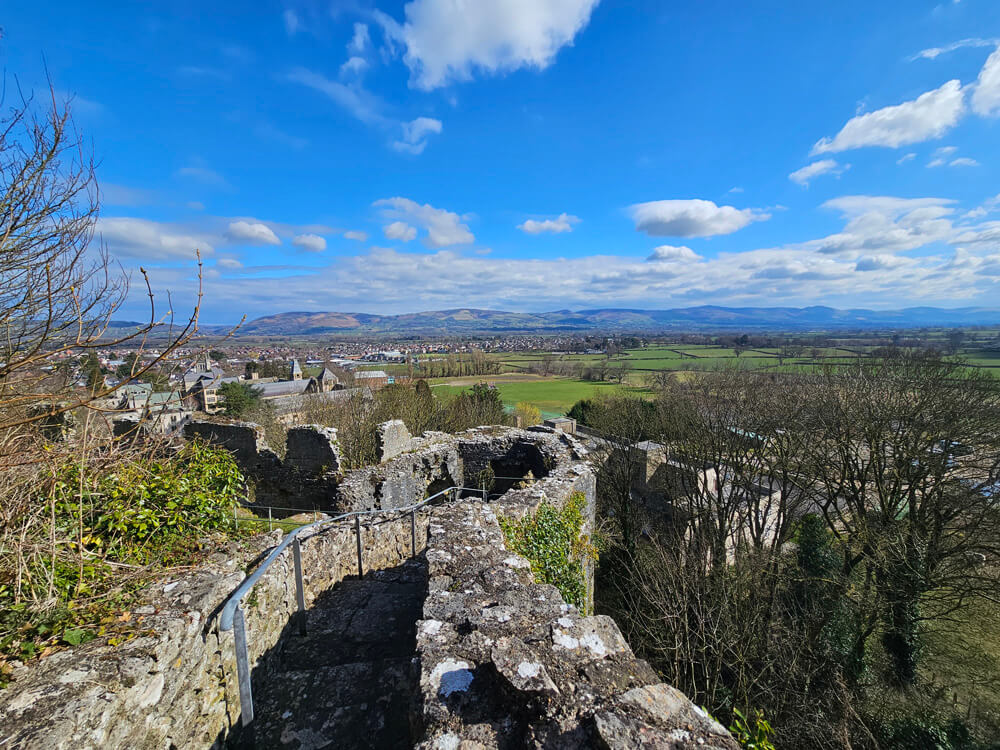
I absolutely loved the wall-walk, even more than my visit to the castle. It was a great experience as you get it all to yourself, and if you catch it on a glorious sunny day like I did then it makes it even better as the views from the walls are spectacular. It’s very deceptive too, as they go on longer than you’d expect. You can walk the walls, climb the steps inside the towers and navigate different section of walls on different levels. I don’t know what I was expecting when I got the key but it was much better than I expected it to be, a very pleasant surprise.
Photo Gallery.
Did you enjoy this post?
I hope you found this post useful. I put a great deal of time and effort in to building, maintaining and populating the website. If you like, you could say a small thank you by buying me a coffee. You don't have to, but it would be nice :)
Buy me a coffee
Stay up to Date
Follow me on my journey and get notified whenever a new post is published by following Kings & Castles on Facebook.
Follow MeExplore The Map
Discover the hundreds of castles, churches, monasteries, cathedrals and other historic locations that I've personally visited across England and Wales. Search by location, explore nearby sites and plan your next historical adventure.
Share: