The Hanoverians
The House of Hanover was a British royal house of German origin whose members were known as Hanoverians. The Hanoverians ruled for nearly 200 years, and during that time Britain built a large empire throughout the world. The House of Hanover ushered in two famous periods in English history: the Georgian era and the Victorian era, which is where we get our Georgian and Victorian architecture from.
Origins
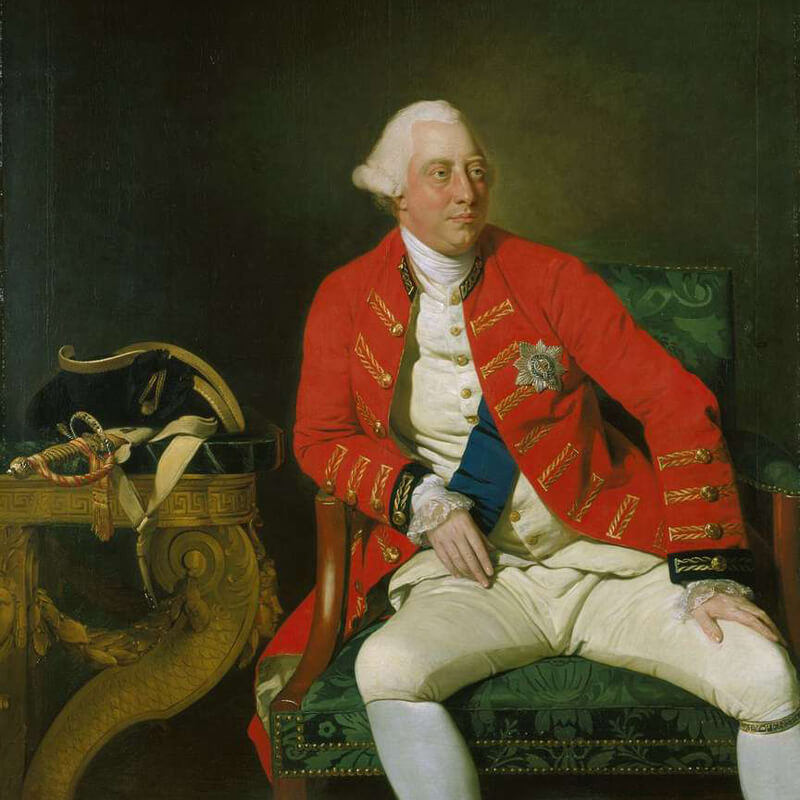
Founded by George, Duke of Brunswick-Lüneburg, the House of Hanover originated in Germany in 1635 as a cadet branch of the House of Welf. Their rise to power in Great Britain and Ireland would come through descendants of this house 79 years later in 1714 under the Act of Settlement 1701, through their cousins Queen Anne, King William III and Queen Mary II. Through the Act of Settlement 1701 and the death of Queen Anne without an heir, they were placed next in line to the throne. Between 1714 and 1901 The Hanoverians gave us six monarchs.
- George I (1714-1727)
- George II (1727-1760)
- George III (1760-1820)
- George IV (1820-1830)
- William IV (1830-1837)
- Victoria (1837-1901)
The Georgean Era
The Georgian era covers the period of the rule of the House of Hanover from 1714 to 1830, named after the Hanoverian kings George I, George II, George III and George IV. Although, the definition of the Georgian era is often extended to 1837 to include the short reign of William IV, which ended with his death in 1837.
George I
Queen Anne, the last monarch of the House of Stuart died in 1714, and she was succeeded by her second cousin George of the House of Hanover. He was crowned George I, King of Great Britain and Ireland, and was the first British monarch of the House of Hanover. The Jacobites attempted, but failed to depose George and replace him with Anne’s Catholic half-brother. During George’s reign the powers of the monarchy declined, and Britain began the transition to the modern system of government led by a prime minister that we know today. Towards the end of his reign, political power was held by Robert Walpole, who is widely regarded and accepted as Britain’s very first prime minister.
George II
George I died in 1727 and was succeeded by his son, also named George, who became George II. Born and raised in Germany, George II is the most recent British monarch born outside Great Britain. In 1745, supporters of a Catholic claimant to the British throne, a descendant of the previous ruling dynasty, the Stuarts, attempted and failed to depose George in what would be the last of the Jacobite rebellions. George II’s son, and heir to the throne died in 1751 leaving his grandson, another George, next in line to inherit the British throne.
George III
Upon the death of George II in 1760 without an heir, his grandson was crowned George III. Unlike his two predecessors, he was born in Britain, spoke English as his first language and never visited Hanover. George III is widely remembered for two things: losing the American colonies and going mad. The American War of Independence started in 1775 and came to end in 1783 under George III’s rule when they won their independence from the British Empire. The British defeat of the Irish Revolution of 1798 led to the Acts of Union of 1800. The Acts dissolved the Irish Parliament and merged it with the British Parliament, creating the United Kingdom of Great Britain and Ireland. George had serious bouts of illness from around 1788 to 1801, and became permanently deranged in 1810. He had a mental illness characterised by acute mania. He was mentally unfit to rule in the last decade of his reign and his eldest son, another George, acted as Prince Regent from 1811 until his death in 1820.
George IV
When George III died in 1820, his son who was already acting as Prince Regent was crowned George IV, King of the United Kingdom. George IV was acting Prince Regent at the time the British defeated Napoleon Bonaparte at the Battle of Waterloo in 1815. George’s rule was tarnished by scandal and financial extravagance. His ministers found his behaviour selfish, unreliable and irresponsible and he was strongly influenced by favourites. George IV reigned for 10 years until his death in 1830. His only legitimate child, a daughter, predeceased him, as did his childless younger brother Prince Frederick, so he was succeeded by another younger brother, William.
William IV
Aged 64 years old, William was crowned William IV, King of the United Kingdom becoming the last king and penultimate monarch of Britain’s House of Hanover. With two older brothers, George and Frederick, William never expected to be king. Despite his unlikely accession to the throne, his rule proved to be productive and more stable than that of his predecessors. William only ruled for seven years, however, his reign saw many reforms, the most famous of these reforms being the abolishment of slavery in nearly all of the British Empire. William IV died in 1837 without an heir and would be succeeded by his niece Victoria, bringing an end to the Georgian era and the start of the Victorian era.
The Victorian Era
Crowned at just 18 years old, Victoria, Queen of the United Kingdom reigned for a staggering 63 years and 216 days, longer than any of her predecessors. Victoria was a great queen, she restored the reputation of a monarchy tarnished by the extravagance of her royal uncles. She also shaped a new role for the Royal Family, reconnecting it with the public through civic duties. Victoria was admired by her people, she became a towering presence as a symbol of her Empire. She reigned over a stable government and an enormous expansion abroad, becoming Empress of India in 1876. The Industrial Revolution began during Victoria’s reign too. Victoria married her cousin, Prince Albert of Saxe-Coburg and Gotha in 1840, bringing the German House of Saxe-Coburg-Gotha into the British Royal Family. They were married for 21 years until Prince Albert died in 1861. Victoria was so devastated by her husband’s death that she entered a severe state of mourning and wore black for the remainder of her life. Queen Victoria died in 1901 aged 81, and was succeeded by her and Albert’s son Edward. Victoria was last monarch of the House of Hanover to rule over Britain.
Edward’s ascension in 1901 saw him crowned as Edward VII, and started the reign of the next dynasty, the House of Saxe-Coburg-Gotha. However, in 1917 during the First World War with Germany, the House of Saxe-Coburg-Gotha was renamed as the House of Windsor by King George V as it sounded too German. Since the death of Queen Victoria in 1901, the House of Windsor has been the reining dynasty to rule over the United Kingdom.
Did you enjoy this post?
I hope you found this post useful. I put a great deal of time and effort in to building, maintaining and populating the website. If you like, you could say a small thank you by buying me a coffee. You don't have to, but it would be nice :)
Buy me a coffee
Stay up to Date
Follow me on my journey and get notified whenever a new post is published by following Kings & Castles on Facebook.
Follow MeExplore The Map
Discover the hundreds of castles, churches, monasteries, cathedrals and other historic locations that I've personally visited across England and Wales. Search by location, explore nearby sites and plan your next historical adventure.
Share: