Hoghton Tower
Rising dramatically above the Lancashire countryside near Preston, Hoghton Tower is one of the county’s most remarkable historic houses. Perched on Hoghton Hill, the Grade I-listed building has been the ancestral home of the de Hoghton family for centuries and has witnessed royal visits, religious conflict, civil war and Victorian restoration.
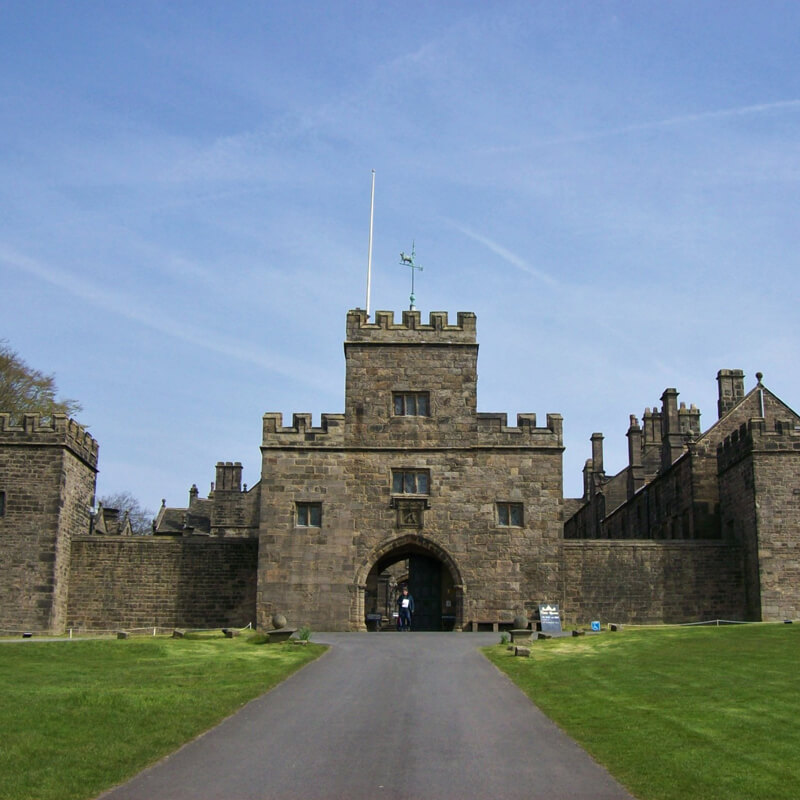
The history of the site stretches back far beyond the present building. The de Hoghton family has held land in the area since at least the 12th century, with the family name being adopted around 1150. By the 14th century, the family had established a substantial deer park around Hoghton, with a charter recording the enclosure of around 500 acres in 1337.
The house seen today was largely created in the 1560s, when Thomas de Hoghton commissioned a substantial new residence. Construction began around 1562–63 and was substantially complete by 1565. Built from local sandstone, its imposing appearance reflected both the wealth of the family and the unsettled nature of Tudor Lancashire. Earlier buildings had occupied the hilltop, but the Elizabethan house established the foundations of the Tower that survives today.
One of the most famous chapters in Hoghton Tower’s history came in 1617, when King James I visited the house. The king stayed for three days, enjoying lavish hospitality and hunting in the surrounding park. The visit became legendary, particularly the story that the king was so impressed by a loin of beef served at the banquet that he supposedly knighted it “Sir Loin”. While the story is almost certainly folklore, the royal visit itself is well documented.
The Tower’s fortunes declined during the English Civil War. In 1643, Parliamentarian forces damaged the house, leaving parts of it in poor condition. Later, Sir Charles Hoghton undertook an extensive programme of rebuilding between approximately 1692 and 1702. The magnificent Great Barn, also dating from this period, survives as another important feature of the estate.
By the 18th and early 19th centuries, the Tower had suffered periods of neglect. Following the death of Sir Henry Hoghton in 1768, parts of the house were even rented to farmers. By the middle of the 19th century, the building had become seriously run down.
Its fortunes changed dramatically in 1862, when Sir Henry Hoghton began a major restoration. The Lancaster architectural practice Paley and Austin played an important role, with the work continuing for several decades and eventually being completed around 1901. The restoration carefully preserved and revived many of the building’s historic Tudor and Stuart features.
Today, Hoghton Tower remains in the hands of the de Hoghton family. Its medieval origins, Tudor architecture, historic interiors, gardens and remarkable collection of stories make it one of Lancashire’s most important historic houses — a place where almost a thousand years of Lancashire history can still be experienced on the same hilltop.
NOTE: Unfortunately you are not allowed to take photos of the interior on your visit to Hoghton Tower.
Did you enjoy this post?
I hope you found this post useful. I put a great deal of time and effort in to building, maintaining and populating the website. If you like, you could say a small thank you by buying me a coffee. You don't have to, but it would be nice :)
Buy me a coffee
Stay up to Date
Follow me on my journey and get notified whenever a new post is published by following Kings & Castles on Facebook.
Follow MeExplore The Map
Discover the hundreds of castles, churches, monasteries, cathedrals and other historic locations that I've personally visited across England and Wales. Search by location, explore nearby sites and plan your next historical adventure.
Share: