Edward the Martyr
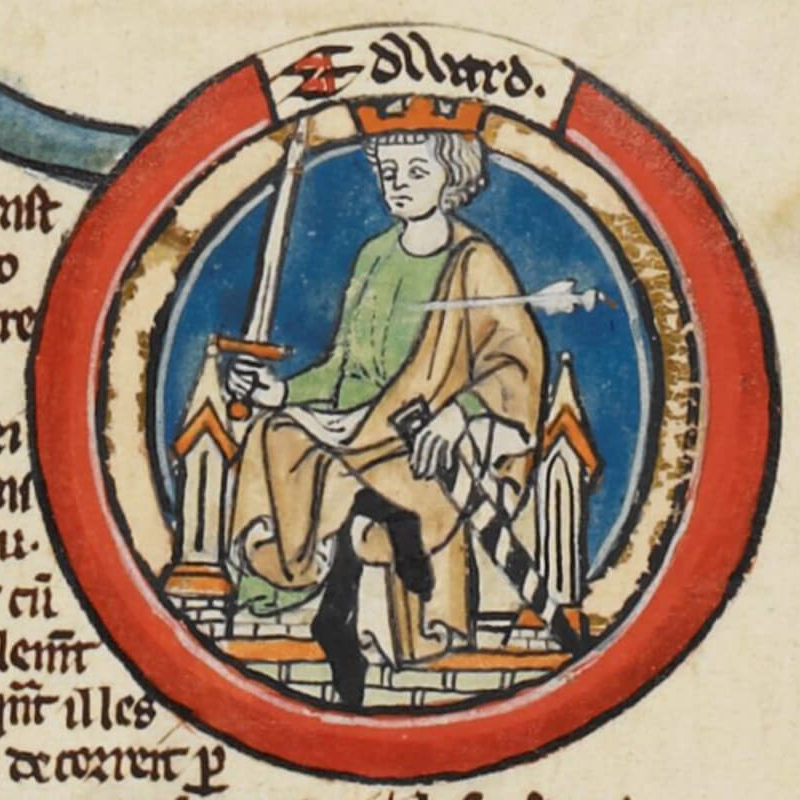
Edward the Martyr was King of the English from 975 until he was murdered in 978. He was the eldest son of King Edgar the Peaceful. On his father’s death, the succession to the throne was contested between Edward’s supporters and those of his younger half-brother, the future King Æthelred the Unready. Even today, the murder of Edward is still shrouded in mystery.
Quick
Facts.
- Born: c. 962
- Died: 978
- Reign: 975 - 978
- House: House of Wessex
- Predecessor: Edgar the Peaceful
- Successor: Æthelred the Unready
Born around 962/963, Edward was the only son of King Edgar the Peaceful and his first wife Æthelflæd.
Whilst Edward was the first-born son, he was not the acknowledged heir to the throne as his father had remarried and later settled with his new Queen Ælfthryth with whom he had another son, Æthelred the Unready. As half-brother to Edward and with a mother who was Queen, Æthelred was a valid contender to the throne.
Upon King Edgar’s death, a faction sought to win the throne for his younger son, six or seven year old Æthelred, but Edward was quickly elected king aged just 13 years old with the help of Dunstan, Archbishop of Canterbury, and Oswald, Archbishop of York.
After the power struggle and Edward’s ascension to the throne, the so-called anti-monastic reaction took place, which involved members of the royal court taking their opportunity to reclaim power lost during his father’s reign. His father, King Edgar had decided to increase the land ownership and power of the church, which angered powerful landowners. The nobility found Edward’s weak reign as king the perfect opportunity to seize control, leading to attacks on monasteries and property belonging to the church.
Some of the most powerful nobles found themselves embroiled in conflict. The dispute was escalating and civil war looked likely. Edward’s leadership wasn’t strong enough to deal with the conflict, even with the assistance of the powerful Archbishop Dunstan. As a result, Edward’s short three years in power was marred by crisis.
On 18th March 978, Edward made a fateful decision to visit his half-brother Æthelred at Corfe Castle in Dorset. He arrived accompanied only by a small group of men who were met at the gates of the castle by Ælfthryth’s (Æthelred’s mother) retainers. Edward would have been expecting a welcome and accompaniment into the castle, but unfortunately this didn’t happen.
Instead, Edward was murdered by his seven-year-old half-brother’s supporters. The assassination took place at the gates of the castle as Edward waited to be allowed entry. There is no proof, but it has been said, and was likely, that Edward’s murder was on the orders of his stepmother Ælfthryth, who intended to put her own son Æthelred on the throne.
Edward was widely mourned. Initially his body was placed in a grave near Wareham without the royal ceremony that was expected of a monarch. However, a year later his body was disinterred and taken to Shaftesbury Abbey to receive a proper ceremony. His remains were said to have been miraculously intact, a sign of his sainthood, and said to have produced miracles, giving him his status as a saint.
Edward was a devout Christian and his death was blamed on “irreligious” enemies, and in 1001 he was honoured as Saint Edward the Martyr.
Did you enjoy this post?
I hope you found this post useful. I put a great deal of time and effort in to building, maintaining and populating the website. If you like, you could say a small thank you by buying me a coffee. You don't have to, but it would be nice :)
Buy me a coffee
Stay up to Date
Follow me on my journey and get notified whenever a new post is published by following Kings & Castles on Facebook.
Follow MeExplore The Map
Discover the hundreds of castles, churches, monasteries, cathedrals and other historic locations that I've personally visited across England and Wales. Search by location, explore nearby sites and plan your next historical adventure.
Share: