Edward the Confessor
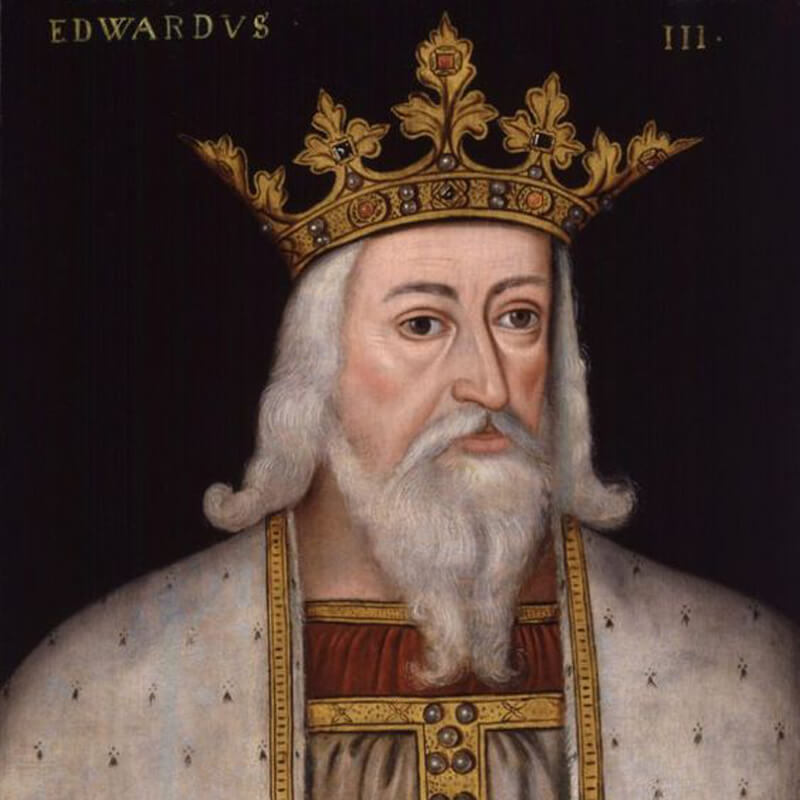
Edward the Confessor was an Anglo-Saxon English king and saint. Generally considered as the last king of the House of Wessex, he ruled as King of the English from 1042 until his death in 1066. He succeeded Cnut the Great’s son, who was also his half-brother – Harthacnut, restoring the rule of the House of Wessex after the period of Danish rule since Cnut conquered England in 1016. Edward’s death in 1066 led to a crisis of succession, culminating in the famous Battle of Hastings later that year.
Quick
Facts.
- Born: c. 1003
- Died: 1066
- Reign: 1042 - 1066
- House: House of Wessex
- Predecessor: Harthacnut
- Successor: Harold Godwinson
Edward the Confessor was born some time around 1002 – 1005. He was the surviving son of Æthelred the Unready and Emma of Normandy. Edward was given the name “the Confessor” for his extreme piety, and he was canonised in the 12th century by Pope Alexander III.
Edward’s childhood was marred by conflict from Viking raids which targeted England, and he spent much of his early life living in exile in Normandy. In 1013 Sweyn Forkbeard had seized the English throne, forcing Emma of Normandy to flee to safety in France with her sons, Edward and Alfred. When Sweyn Forkbeard died in February 1014, Edward returned from exile as his father Æthelred the Unready took the throne back until he died in 1016.
Sweyn Forkbeard’s son Cnut the Great then took the throne in 1016, forcing Edward once again back into exile in Normandy. This time his mother Emma of Normandy would stay in England and marry Cnut. Together they had two children including a son, Harthacnut. When Cnut died in 1035, his Danish son from his previous marriage, Harold Harefoot, took the throne for himself when it should have been passed to Harthacnut, but Harthacnut was busy as King of Denmark dealing with threats to his Danish kingdom.
In 1036 Edward and his brother Alfred made their way to England from exile in Normandy to visit their mother, and Harold Harefoot planned to eliminate Emma’s exiled sons with the help of the powerful Earl Godwin. Emma’s sons should have been under the protection of their Danish half-brother Harthacnut. Godwin acted on the orders of Harold Harefoot, and with a group of men loyal to Harold, he captured Alfred and had his eyes gouged out. Alfred later died from his injuries, but Edward managed to escape and fled back to Normandy.
In 1037 Harold Harefoot banished their mother Emma of Normandy, and she met with her son Harthacnut on the continent and together they planned a strategy to remove Harold from the throne. However, Harold’s rule over England was short-lived and he didn’t live long enough to see Harthacnut launch his invasion. Harold died a few weeks before the planned invasion from a mysterious illness in March 1040 and Harthacnut took the English throne.
Edward finally returned from exile for good in 1041 when he was invited by his Danish half-brother Harthacnut, to be prepared for his succession to the English throne. Harthacnut died suddenly in 1042 at a feast, believed to have been brought on suddenly by excessive drinking, and Edward peacefully ascended the throne as undisputed king with very few rivals, restoring the native royal house of Wessex, a branch now intertwined with the Danish-Norman dynasty of Emma of Normandy. As King, he wanted to deal with his mother who had practically abandoned him in his time of need and favoured his Danish sibling. He quickly deprive her of her property, an act of personal vengeance against a mother he felt had never really supported him.
Brought up in exile in Normandy, Edward lacked military ability or reputation. Much of his reign was peaceful and prosperous, with just the occasional skirmishes with the Scots and Welsh.
Edward’s leadership reflected his Norman background. One of the most tangible displays of his Norman influence was in the creation of Westminster Abbey. The building of the abbey started in 1042 and was consecrated in 1065. The building represented the first Norman Romanesque style church in England.
Edward’s introduction to court of some Norman friends caused tensions, particularly with the houses of Mercia and Wessex, which both held considerable power, especially with one of the most powerful earls, Godwin of Wessex. Edward married Godwin’s daughter Edith in 1045, but this didn’t relieve the tensions between the king and the earl, and in 1051 he outlawed Godwin and his family, even dismissing his wife Edith from court.
During this time Edward rapidly lost popularity by giving his Norman favourites high positions within his government. Edward’s continued favouritism with his Norman friends caused problems with his nobles and in 1052 Godwin and his sons returned with an army. To avoid a civil war, the king was forced to make terms. Godwin’s lands were returned to him and many of Edward’s Norman favourites were exiled. Edward formed a closer alliance with Godwin’s son Harold (Harold Godwinson), who led the army as the king’s deputy and whom Edward may have named as heir on his deathbed. When Godwin died in 1053, his son Harold became the most powerful figure in the kingdom.
In the latter half of Edward’s reign the political picture began to change and England endured 15 years of relative peace. Edward distanced himself from political duties, instead engaging in gentlemanly pursuits after attending church every morning. The Godwin family would subsequently control much of England whilst Edward withdrew.
Shortly before his death, Edward named Harold Godwinson as his successor even though he may already have promised the crown to a distant cousin in Normandy; William, Duke of Normandy (William the Conqueror). William was Edward’s cousin, a Norman, and his closest relation. According to Norman accounts, Edward sent Harold to Normandy in 1064 to confirm his promise to William. This inevitably led to conflict and chaos when Edward died and Harold took the throne. Edward died in January 1066 and was buried in the abbey he had constructed at Westminster.
Edward the Confessor was given his name because he was known for his deep piety and saintly life. The term ‘Confessor’ was used to describe someone who was believed to have lived a holy life but was not a martyr. He was the only king of England to be canonised by the pope.
England was quiet and prosperous during Edward’s reign. He lived relatively modestly at his own expense and taxation was light. Edward can also be seen as weak and indecisive, and whose failure to leave an heir and the issue of succession led to the Norman invasion of Britain and the end of Saxon rule.
Did you enjoy this post?
I hope you found this post useful. I put a great deal of time and effort in to building, maintaining and populating the website. If you like, you could say a small thank you by buying me a coffee. You don't have to, but it would be nice :)
Buy me a coffee
Stay up to Date
Follow me on my journey and get notified whenever a new post is published by following Kings & Castles on Facebook.
Follow MeExplore The Map
Discover the hundreds of castles, churches, monasteries, cathedrals and other historic locations that I've personally visited across England and Wales. Search by location, explore nearby sites and plan your next historical adventure.
Share: