St Nicholas Church, Grosmont
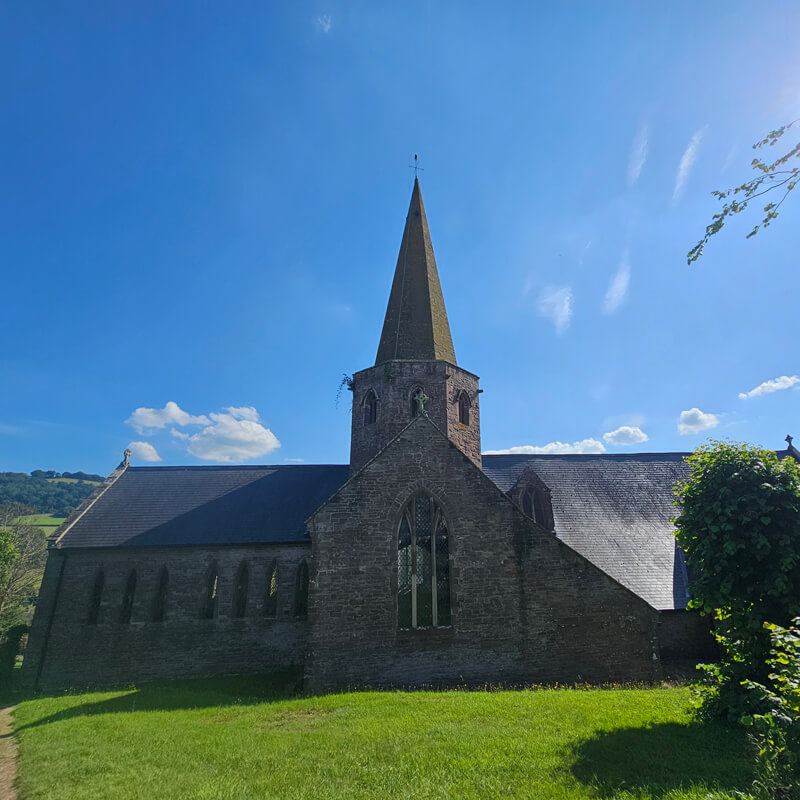
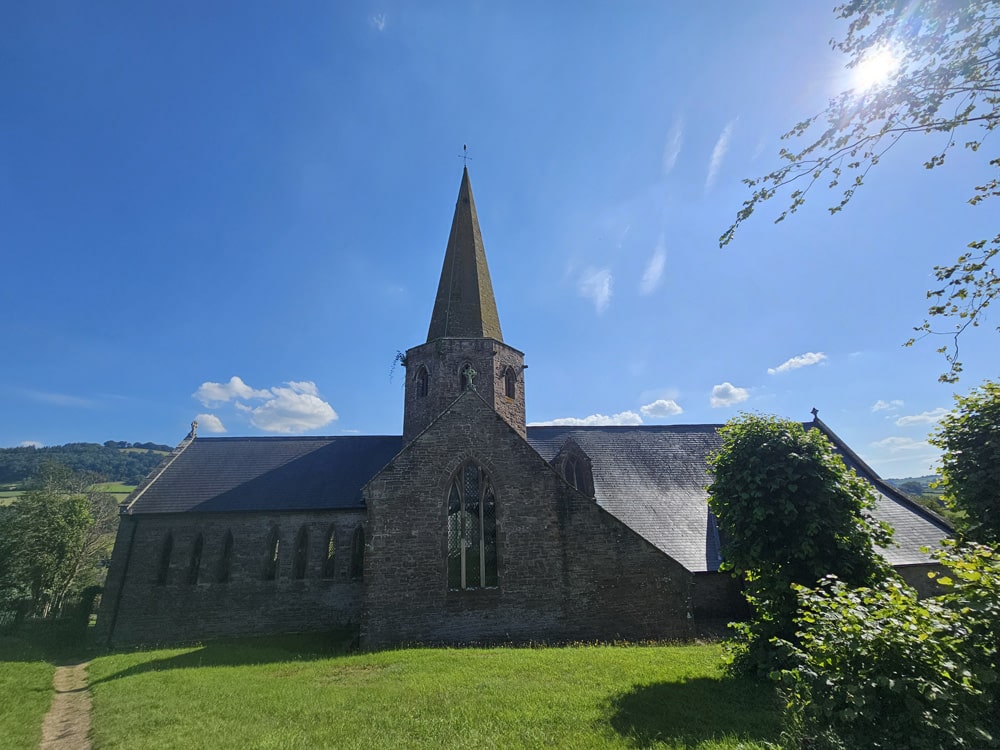
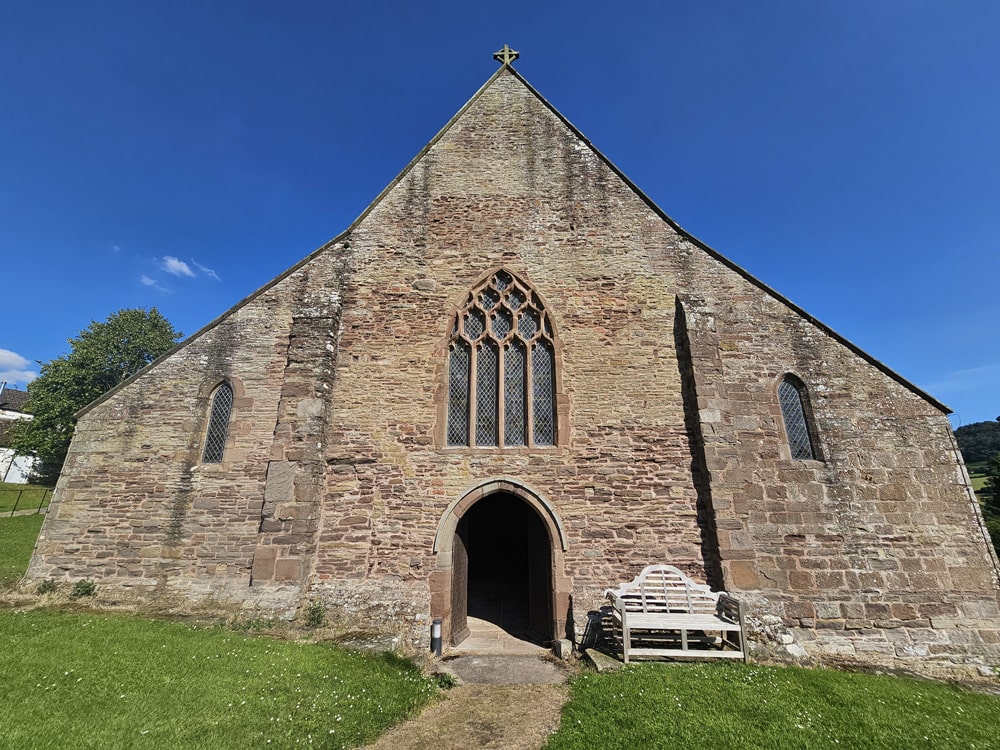
St Nicholas Church in the village of Grosmont, Monmouthshire, Wales, sits within yards of the Wales/England border. This parish church dates from the early-13th century, and its large size reflects the importance and standing of Grosmont at the time of the church’s construction.
Historic
Highlights.
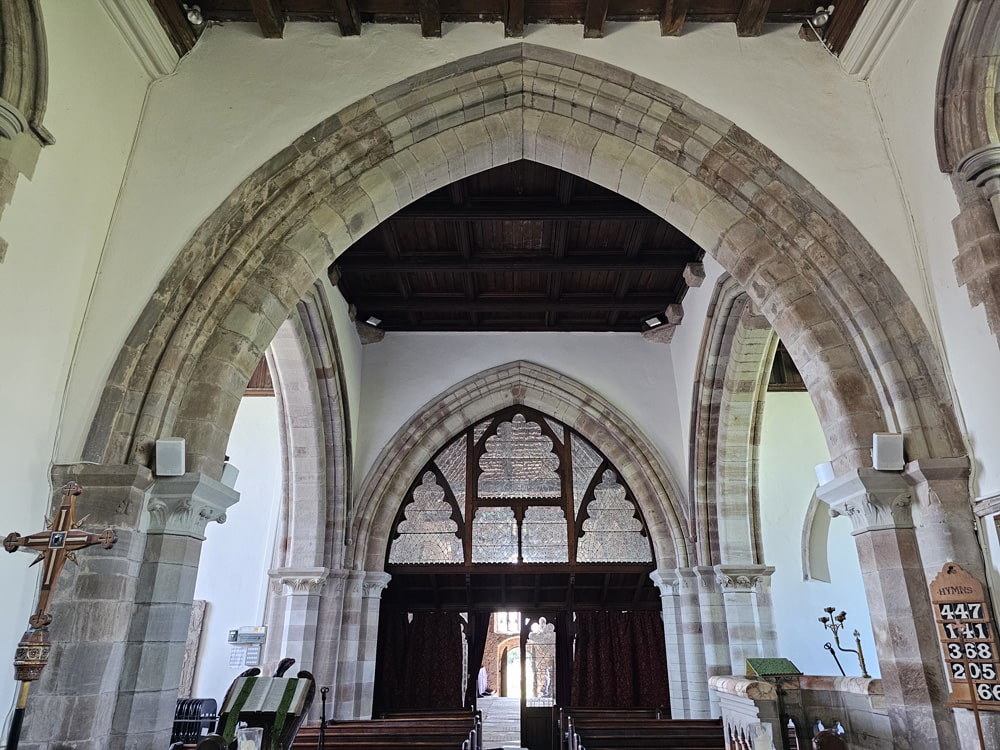
- The magnificent long aisled Norman nave
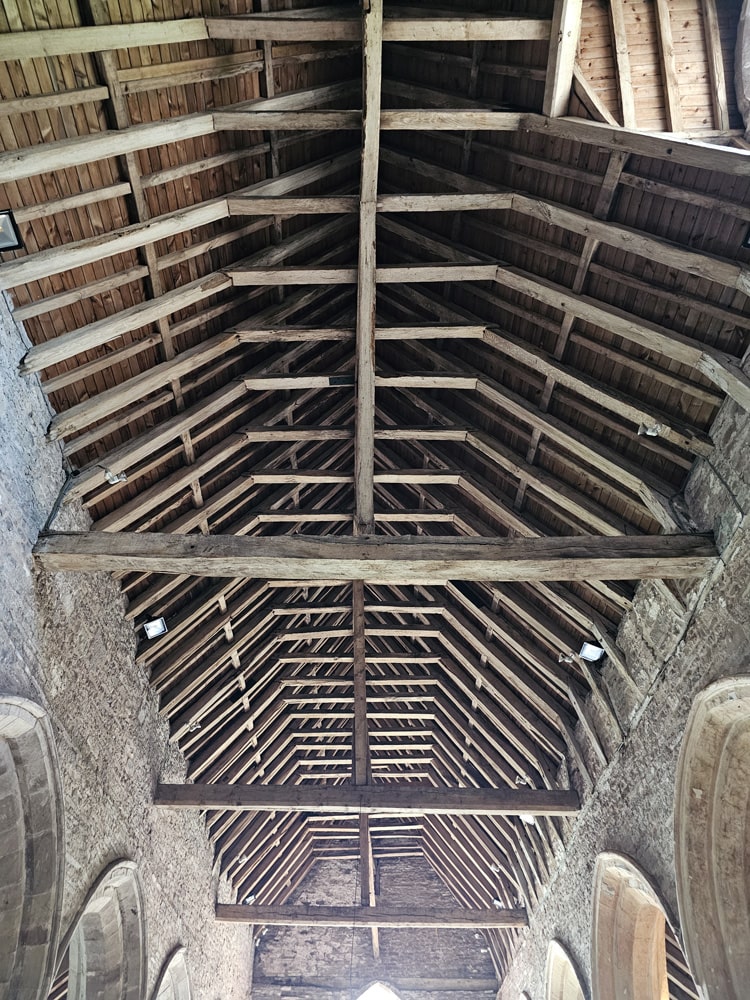
- 13th-century tie-beam crown-strut nave roof
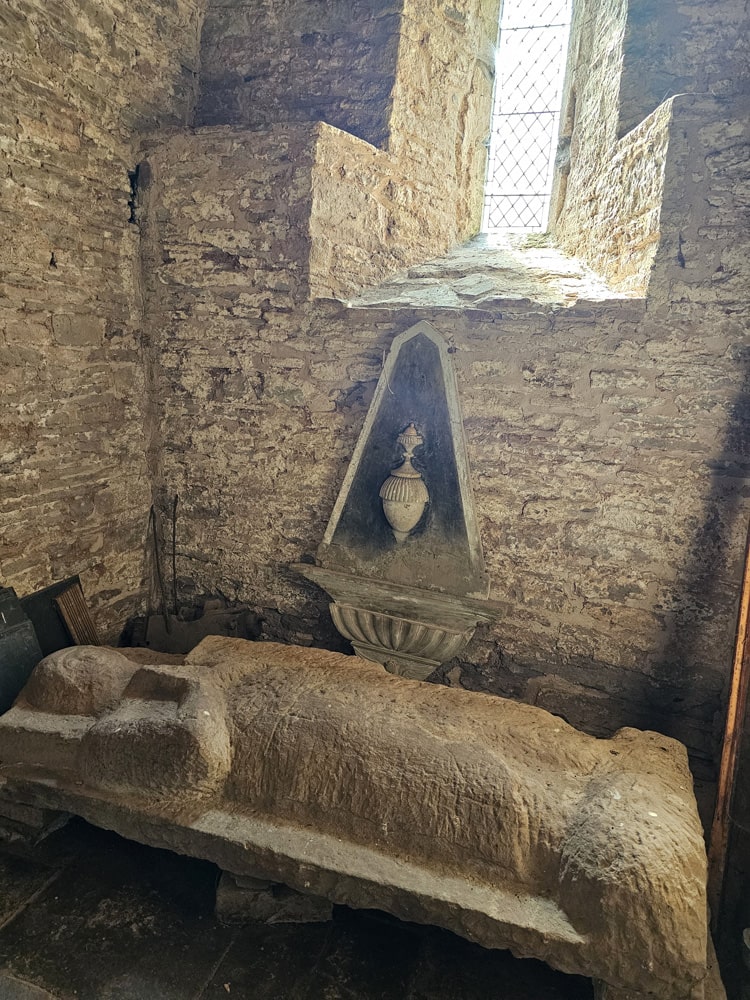
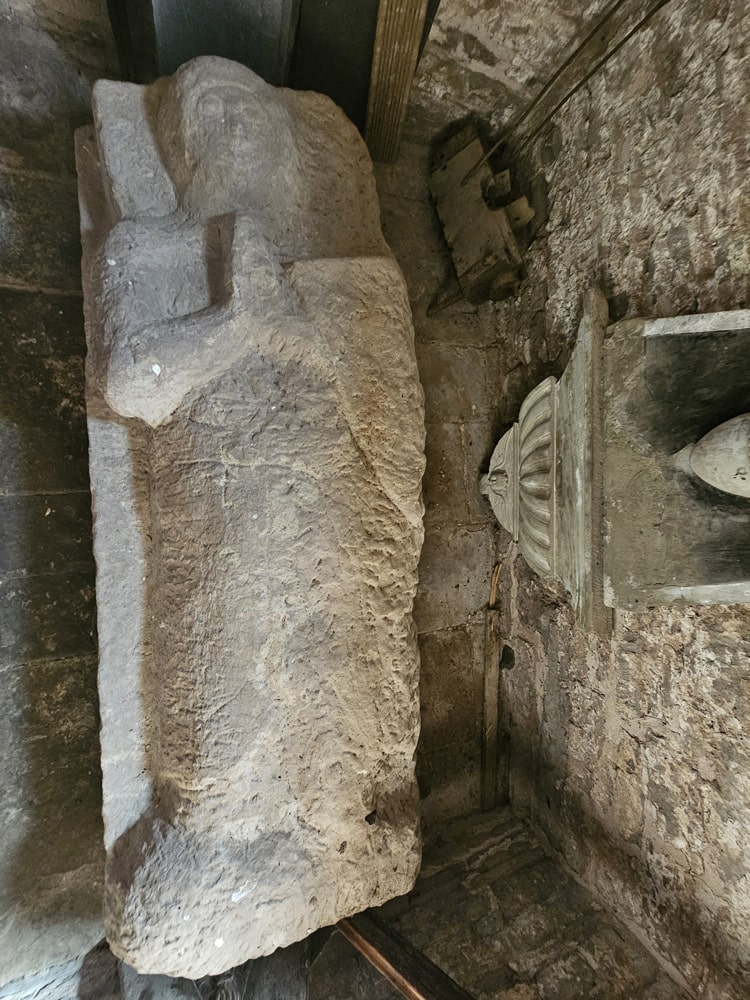
- Effigy of a 13th-century knight
This historic church stands opposite the imposing ruin of Grosmont Castle, which was built at roughly the same time, and would have served both the castle garrison and the borough.
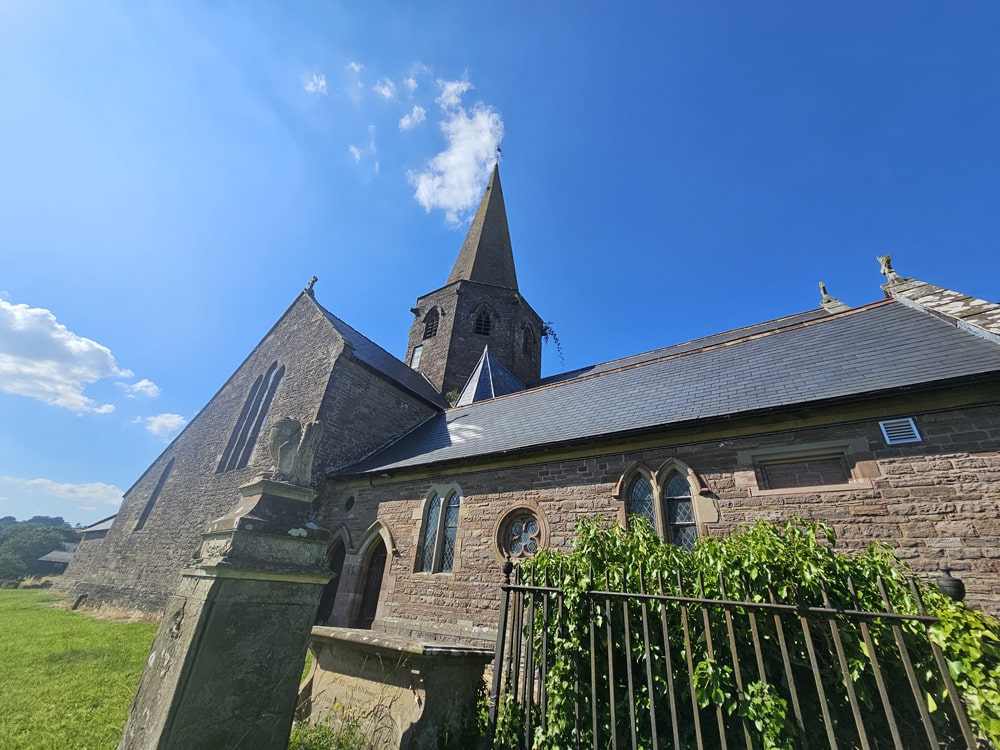
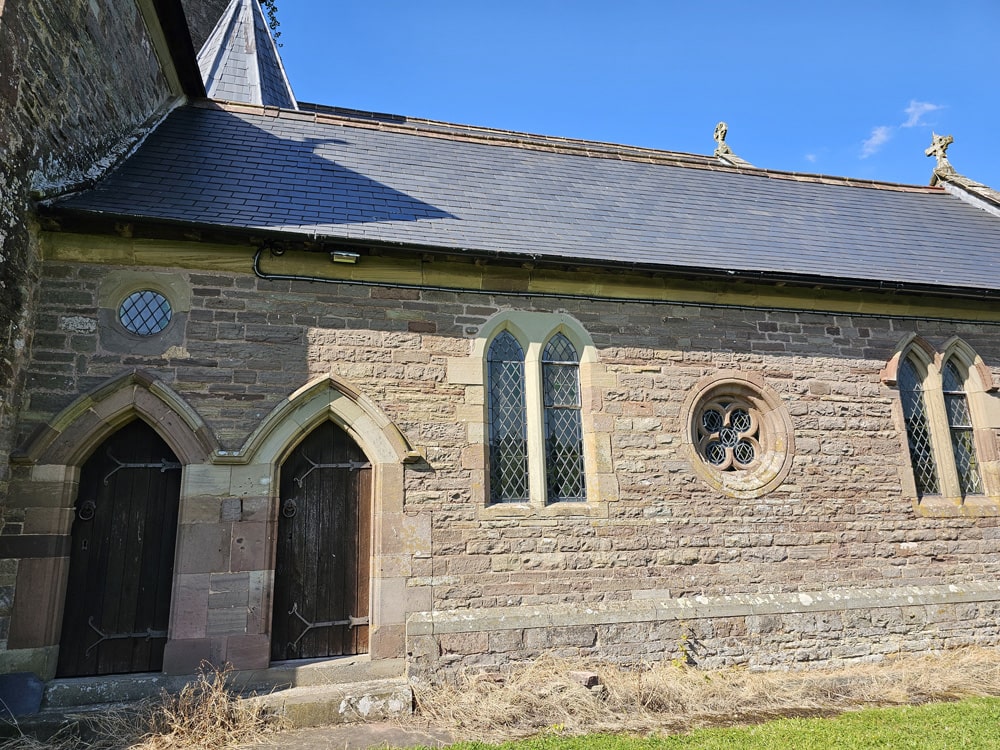
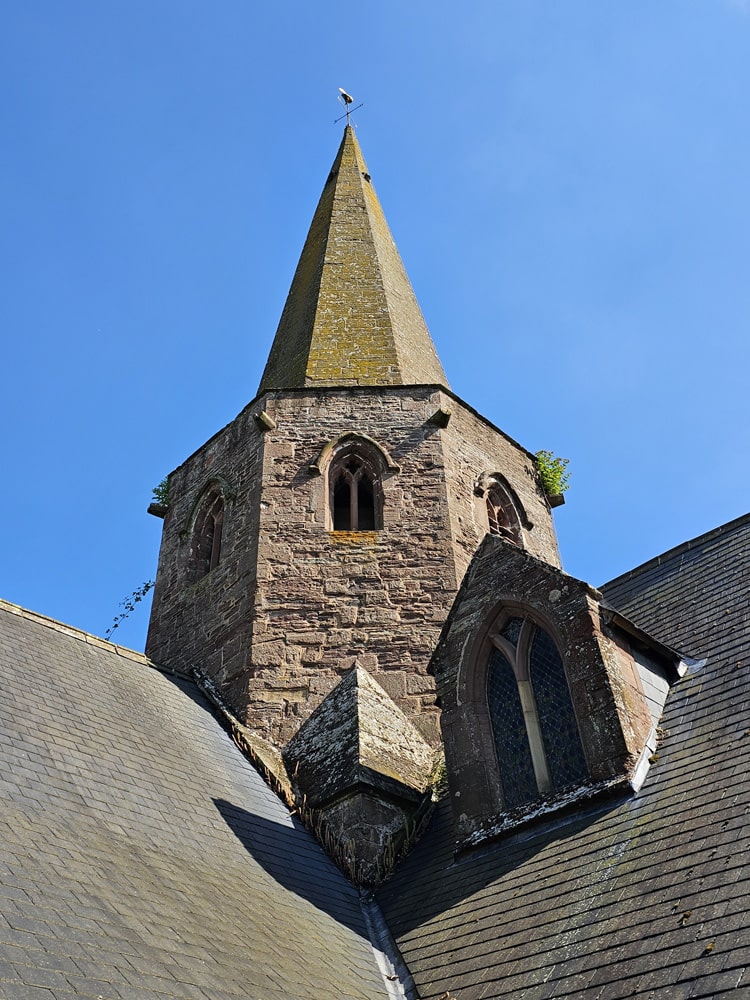
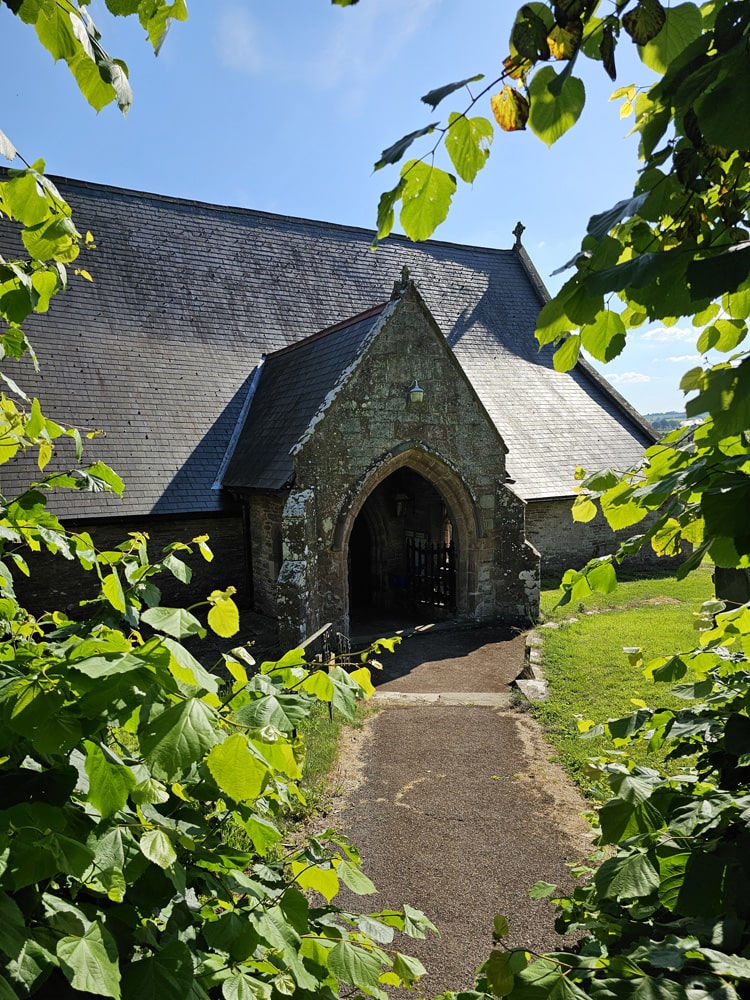
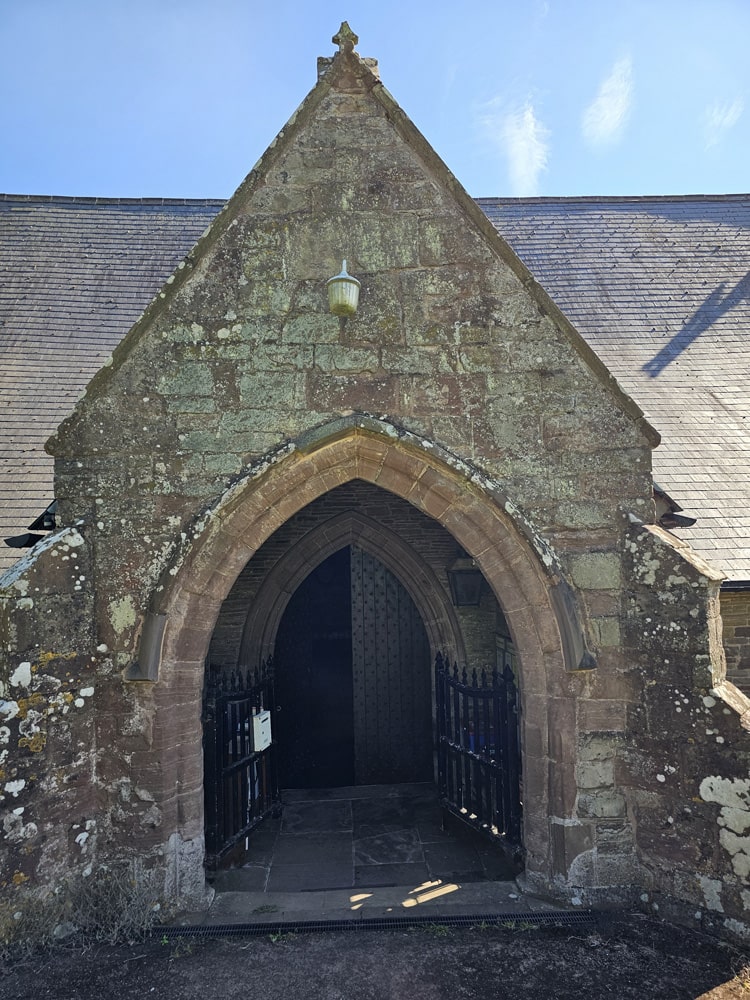
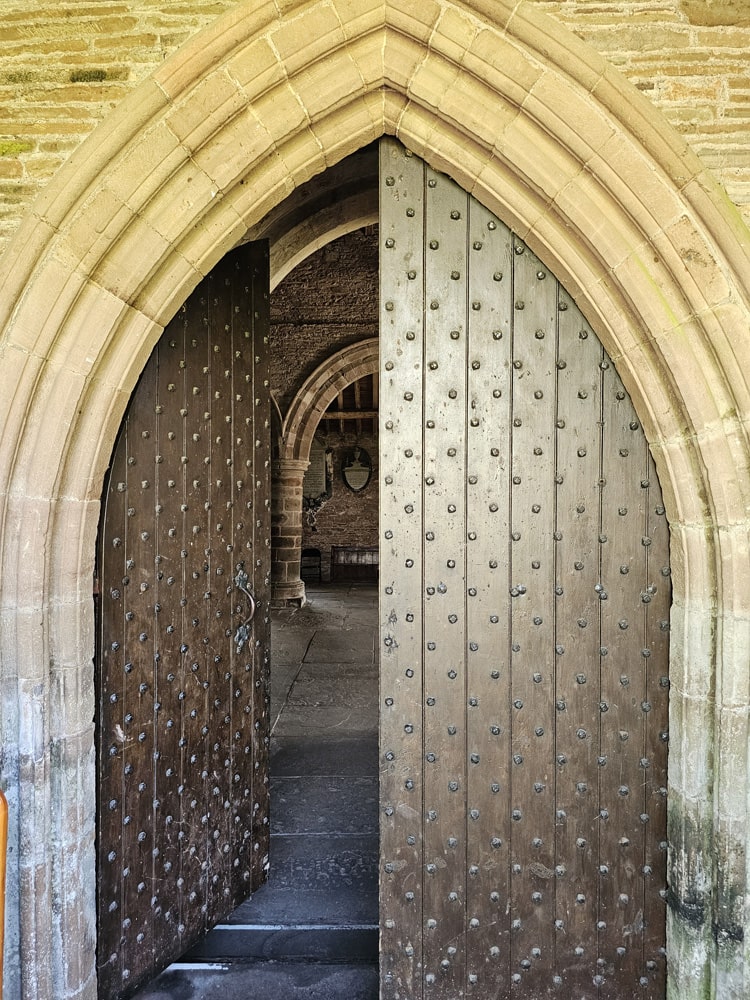
St Nicholas is built on a cruciform plan with an impressive central tower and spire. The nave dates to the early 13th century and the chancel is slightly later. The tower and its striking spire were added in the late-13th or early-14th century, and the north porch was built in the 14th century.
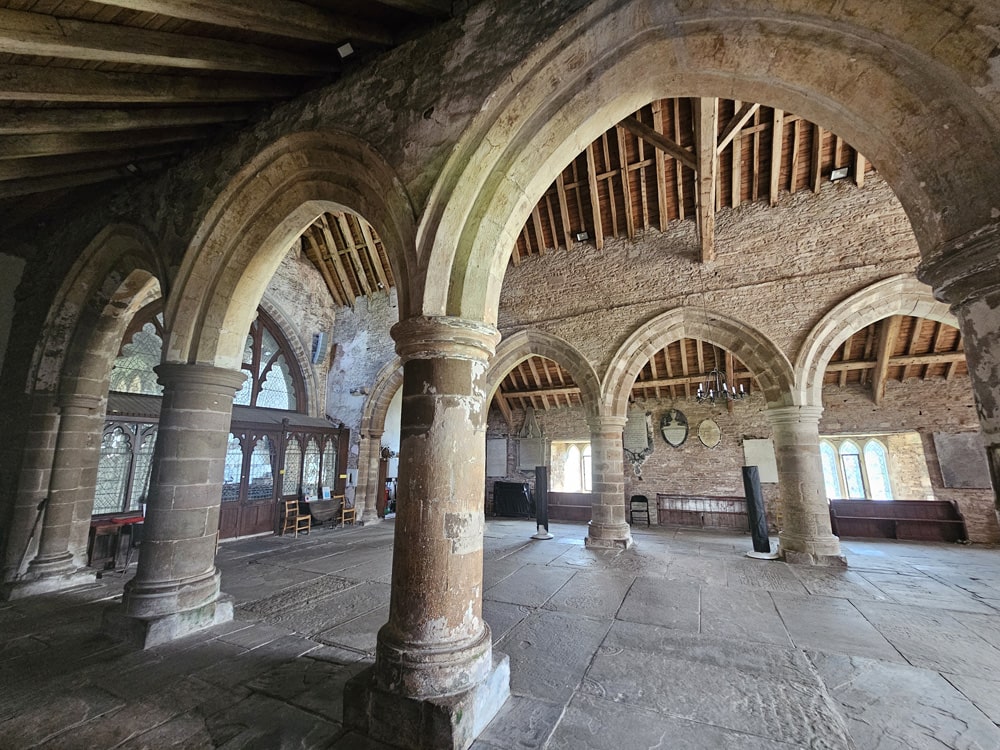
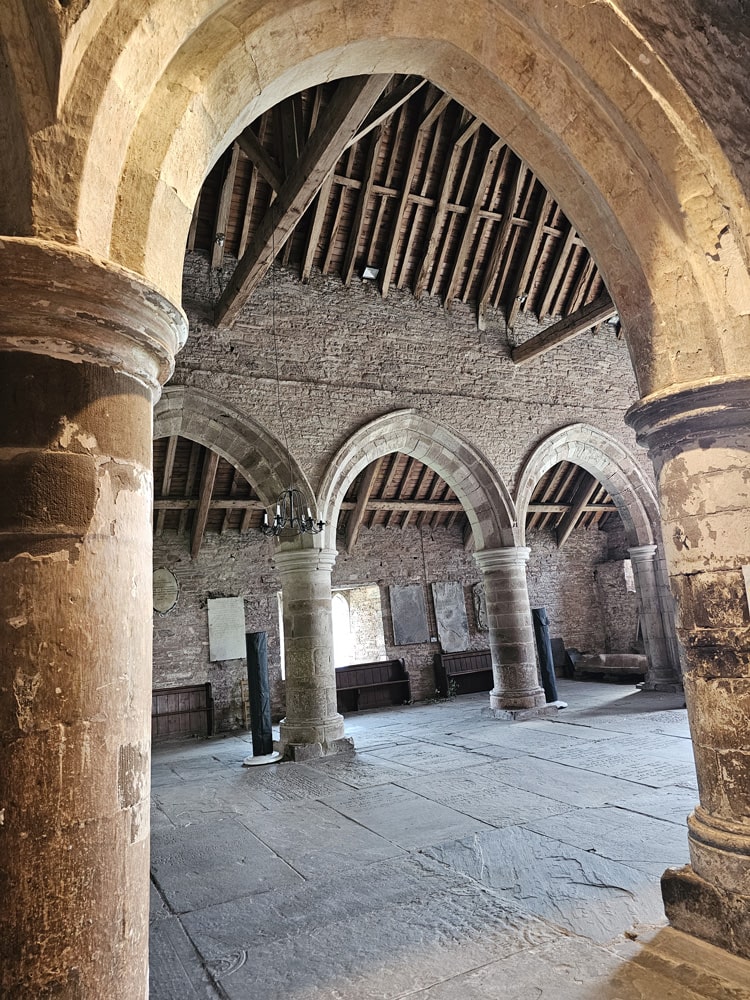
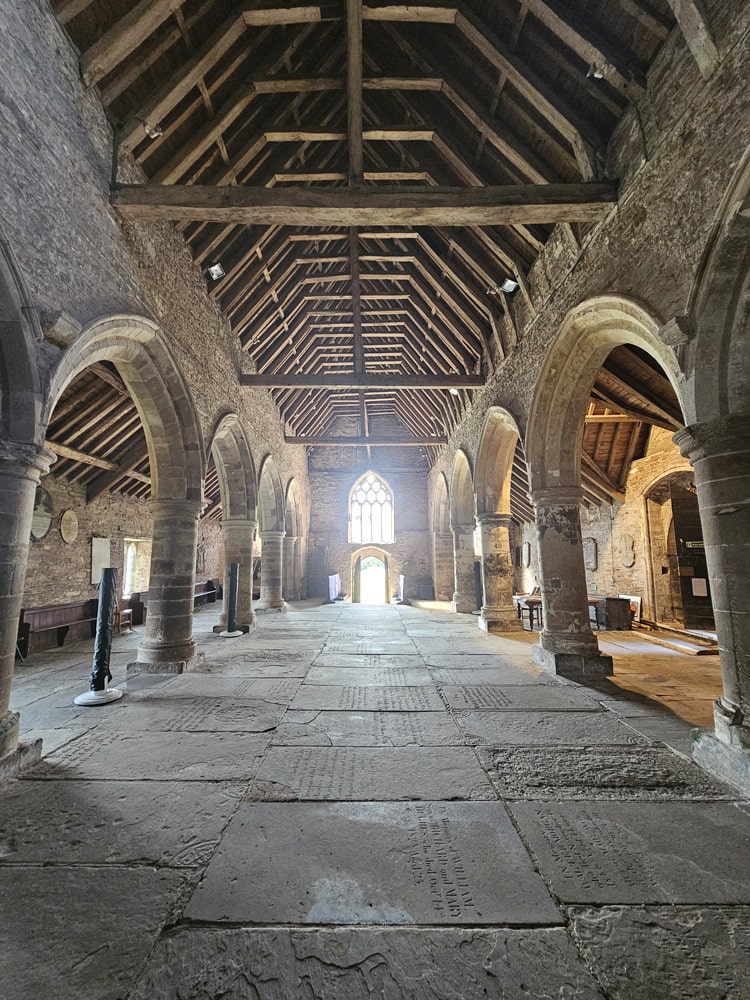
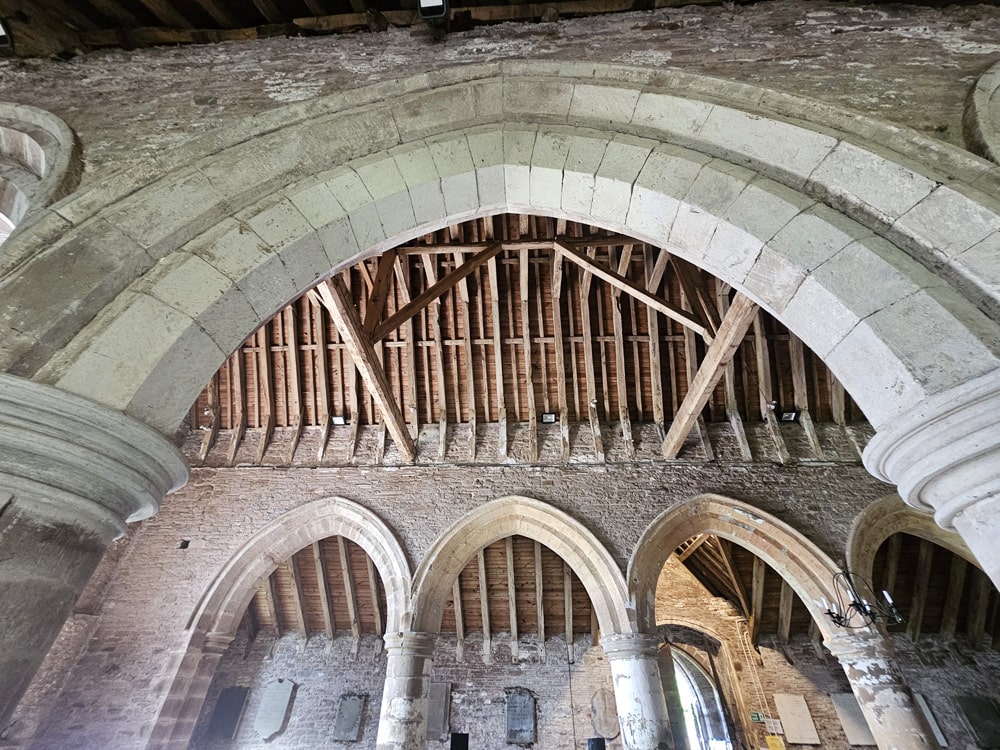
Though much of the church was rebuilt in the Victorian period, it retains much of its 13th-century character. The magnificent long aisled Norman nave was spared reconstruction and remains intact, with a spacious medieval interior that could easily be mistaken for a grand castle hall.
The tie-beam crown-strut nave roof of St Nicholas has an archaic character quite unlike any other surviving late-medieval roof in Wales. The roof has been dated to the period 1214-1244, making it the oldest scientifically datable roof in Wales, and the only known church roof in the country from before 1400. The nave remains largely unrestored, but pretty much the rest of the church is a product of the later Victorian restoration.
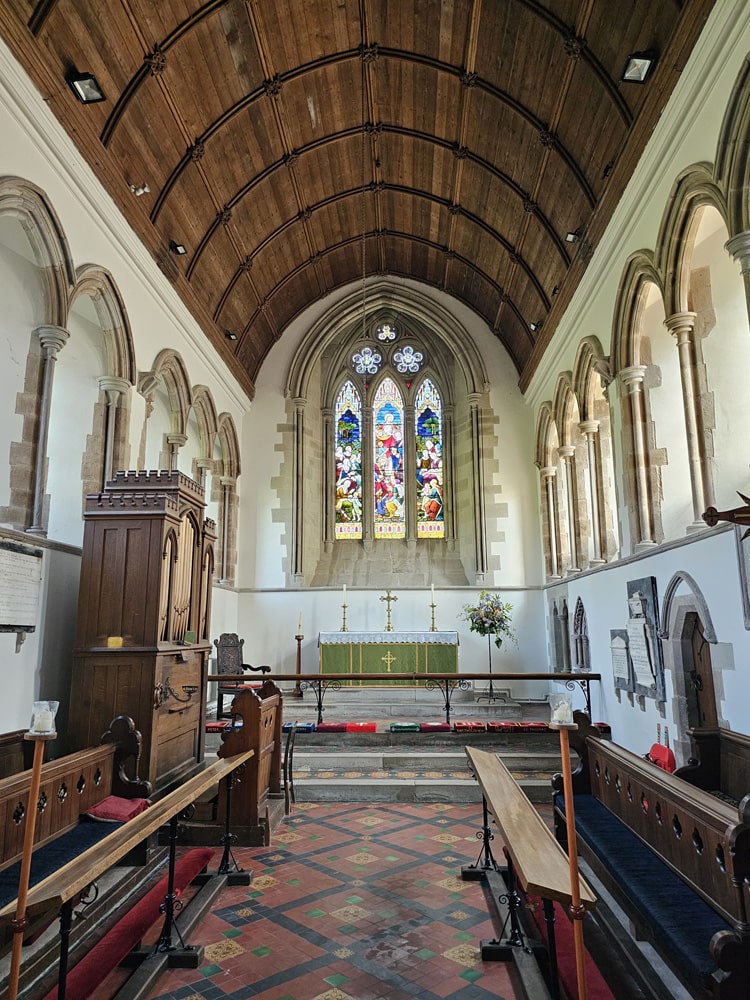
The church is really a building of two halves. The impressive medieval nave, standing empty with its massive Romanesque pillars and rounded arches, is separated by a modern screen from the more modern and comfortably furnished chancel and transepts.
Other features inside the nave include a huge effigy of a 13th-century knight, old gravestones and bits of medieval carving.
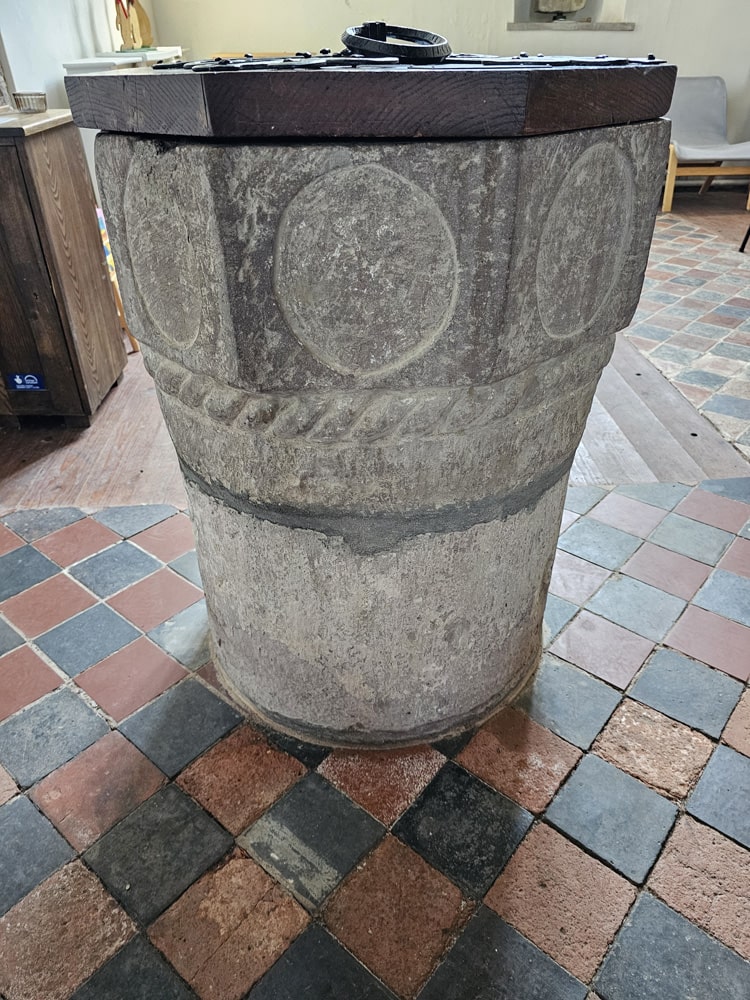
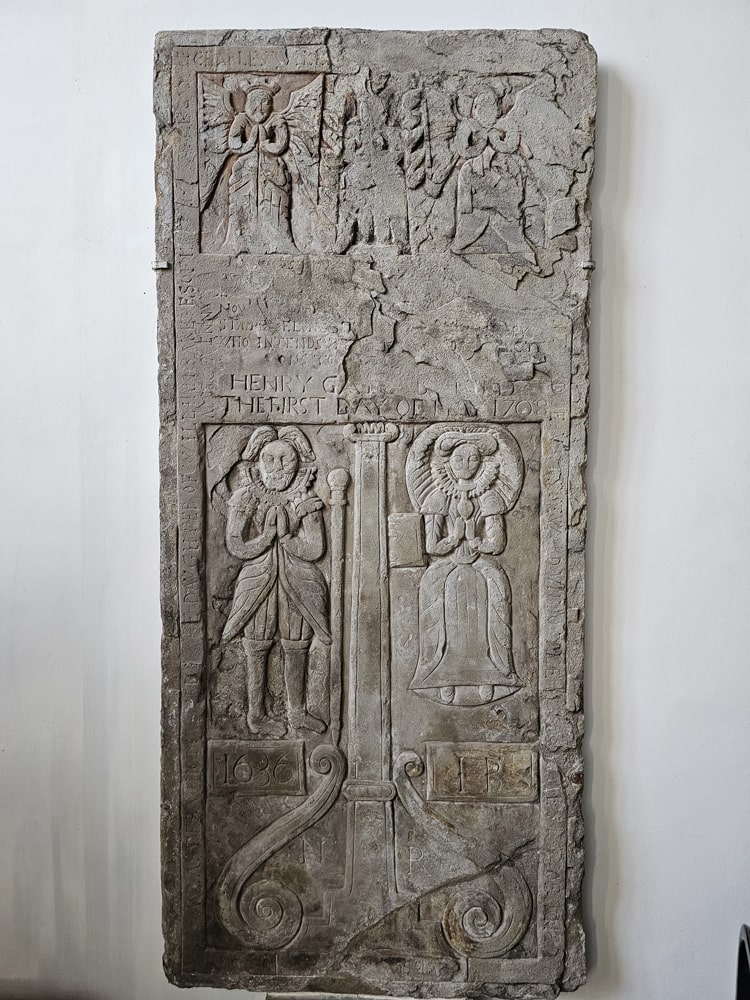
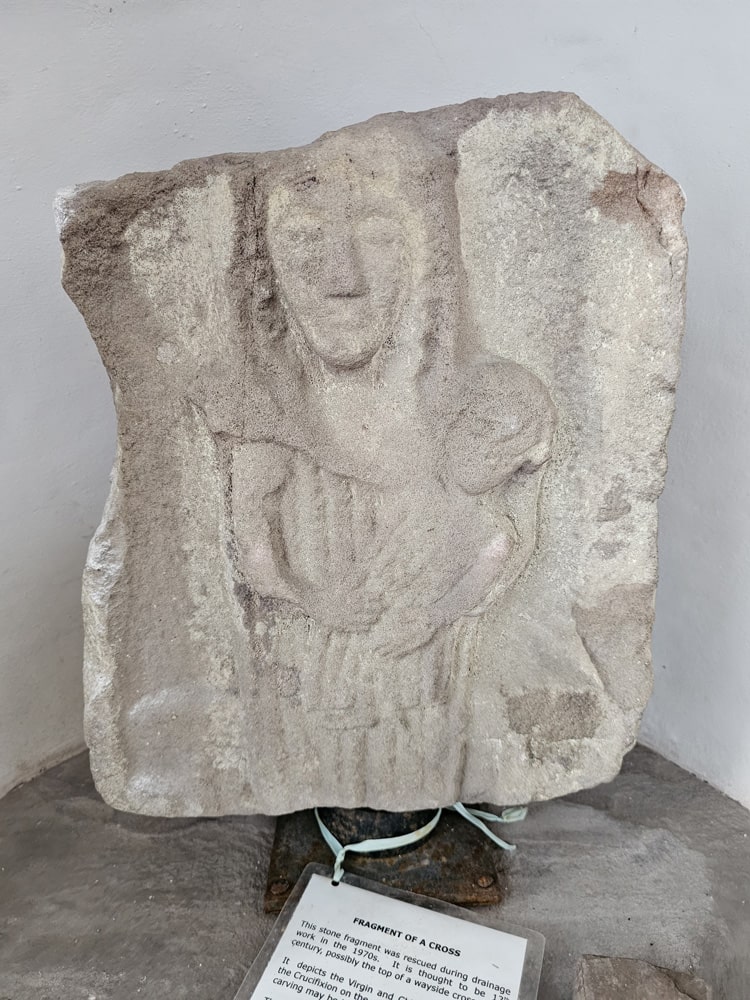
Some interesting historic features inside the more modern part of the church is a 12th-century font, the William memorial slab, and set into a niche in a wall is a fascinating relic – a section of what appears to be a 13th-century wayside cross, with worn figures depicting St Mary holding her son Jesus on one side and a Crucifixion scene on the other.
Photo Gallery.
Did you enjoy this post?
I hope you found this post useful. I put a great deal of time and effort in to building, maintaining and populating the website. If you like, you could say a small thank you by buying me a coffee. You don't have to, but it would be nice :)
Buy me a coffee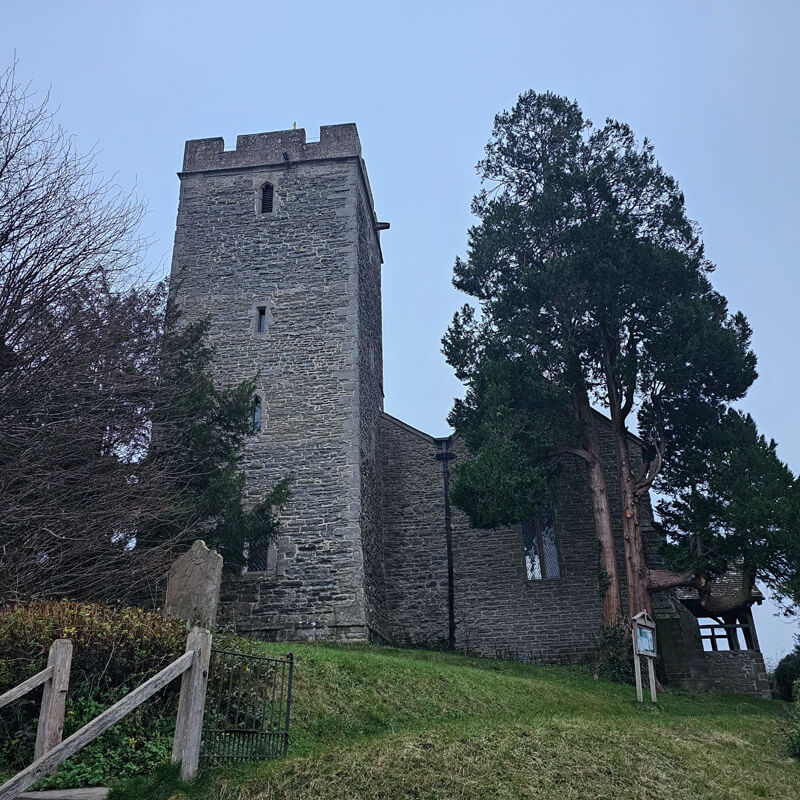
Stay up to Date
Follow me on my journey and get notified whenever a new post is published by following Kings & Castles on Facebook.
Follow MeExplore The Map
Discover the hundreds of castles, churches, monasteries, cathedrals and other historic locations that I've personally visited across England and Wales. Search by location, explore nearby sites and plan your next historical adventure.
Share: