Dolforwyn Castle
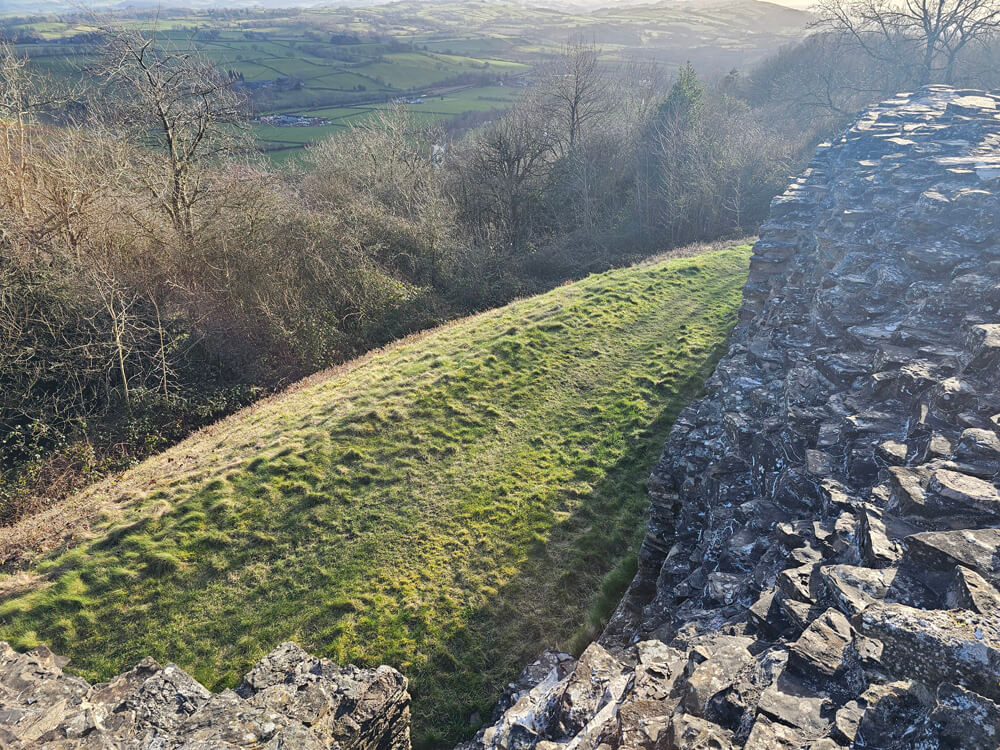
Built in the late 13th century, Dolforwyn Castle is a Welsh medieval castle above the village of Abermule, Powys, sited on a wooded hill commanding excellent views of the upper Severn Valley. It was the last castle built by a native Welsh prince, and was one of the first Welsh castles to fall to the English.
Quick
Facts.
- Location: Powys, Mid Wales
- Built: c. 1273-77
- Condition: Ruined
- Date visited: February 2025
- More info: Visit website
- Rating:
A Bit of History…
Dolforwyn Castle, known locally as Castell Dolforwyn, is a native Welsh castle and a ruined symbol of Welsh defiance. The fortification was established by Llywelyn ap Gruffudd (Llywelyn the Last), Prince of Gwynedd in the late 13th century, and is a fine example of Welsh castle design as opposed to those built by the English during their conquests of Wales.
As the Prince of Gwynedd, Llywelyn’s main land holdings lay in the Welsh county of Gwynedd. In order to assert his claim to be the most important of the Welsh princes, he felt the need to exercise his authority in the strategic area of the Severn Valley, which provided access to the heartlands of Wales. In 1257 he invaded the area, and by 1263 he had captured the districts known as Cedewain and Ceri. As a result, Henry III recognised Llywelyn as Prince of Wales under the terms of the Treaty of Montgomery of in 1267. In order to consolidate his newly conquered lands and to affirm his control, Llywelyn ap Gruffudd constructed the castle at Dolforwyn between 1273 and 1277.
Henry III died in 1272 and was succeeded by his eldest son, Edward I. King Edward saw the building of Dolforwyn Castle as a direct threat to his nearby English castle and lordship at Montgomery, so he wrote to Llywelyn forbidding him to continue with the castle’s construction. The castle was Llywelyn’s bold declaration that he was unwilling to subjugate himself to his would-be Norman overlord. This was evident in Llywelyn’s famous reply, saying that, as Prince of Wales, he did not need the king’s permission to build a castle within his own territory, and he therefore carried on regardless.
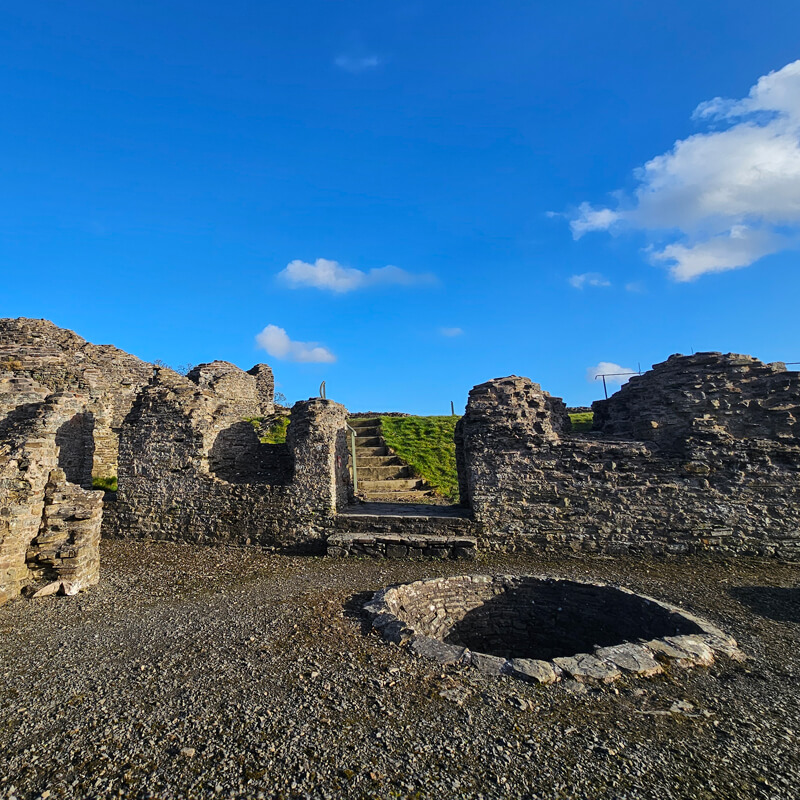
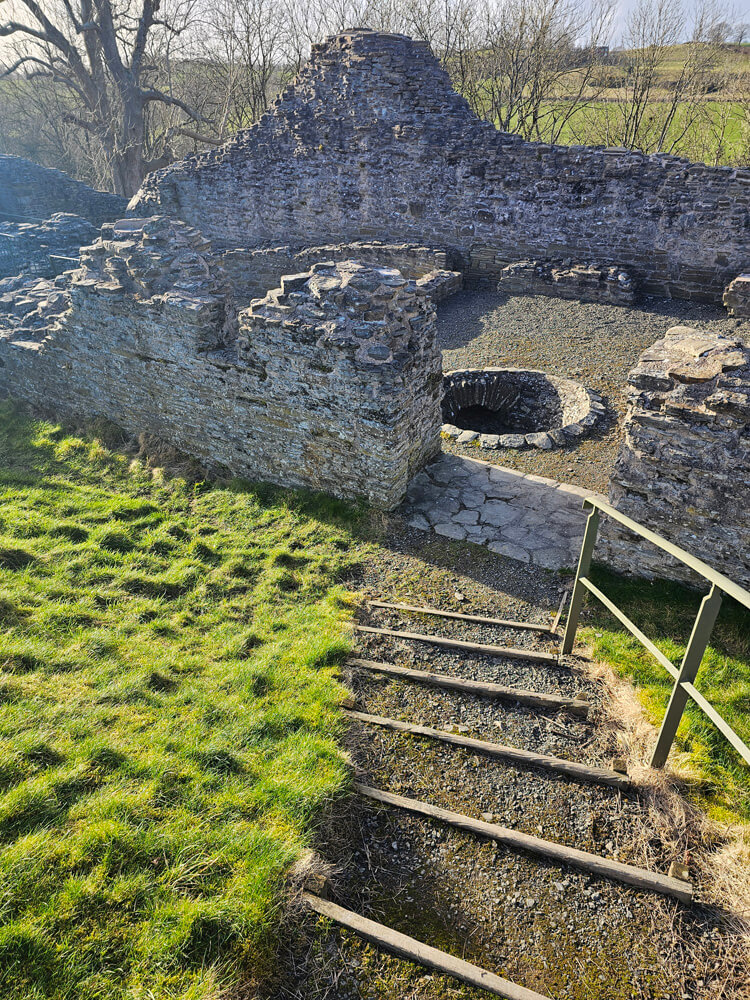
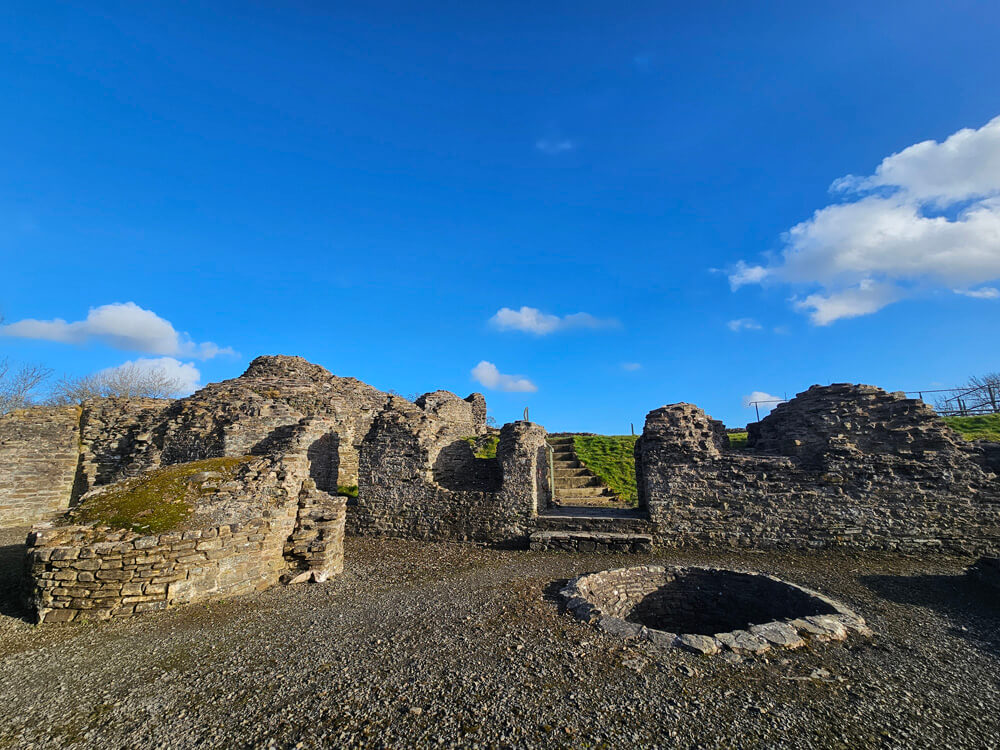
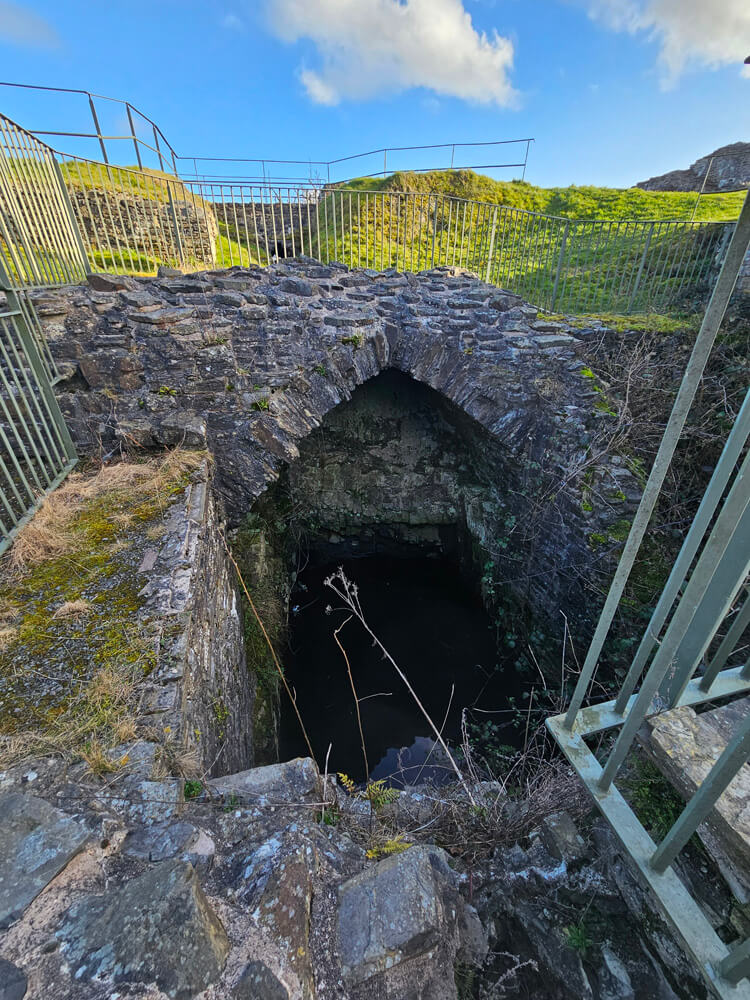
Unfortunately for Llywelyn, his defiance was to be short-lived and his hold on Dolforwyn didn’t last long. His response to the king was the last straw in a chain of events that brought the last native Prince of Wales into a state of war with Edward I. After a two-week siege Dolforwyn Castle was captured by Marcher lord Roger Mortimer in 1277, only a few years after it was completed. The Welsh were forced to give up the castle because a well hadn’t been constructed and the occupants ran out of water. Custody of Dolforwyn was then given to Roger Mortimer along with the lands of Ceri and Cedewain, and the castle design was modified; the south gate was blocked, new buildings were set up in the courtyard, and a well was dug.
Following the death of Roger Mortimer in 1282, the castle passed to his son Edmund Mortimer, then to his son, another Roger Mortimer, who lost the family estates in 1322 after an act of treason. An inventory taken at the time recites the rooms, which included an armoury in the round tower as well as domestic ranges with a pantry, buttery, kitchen, brewhouse, bakehouse, chapel, hall, a lady’s chamber and two granges for the storage of grain.
Dolforwyn Castle appears to have been occupied until the reign of Richard II (1377–99), but by 1398 it was described as being “ruinous and worth nothing.” From this date, the castle was abandoned and left to decay, almost lost from memory and attracted little interest, until comparatively recent excavations uncovered its crumbling remains.
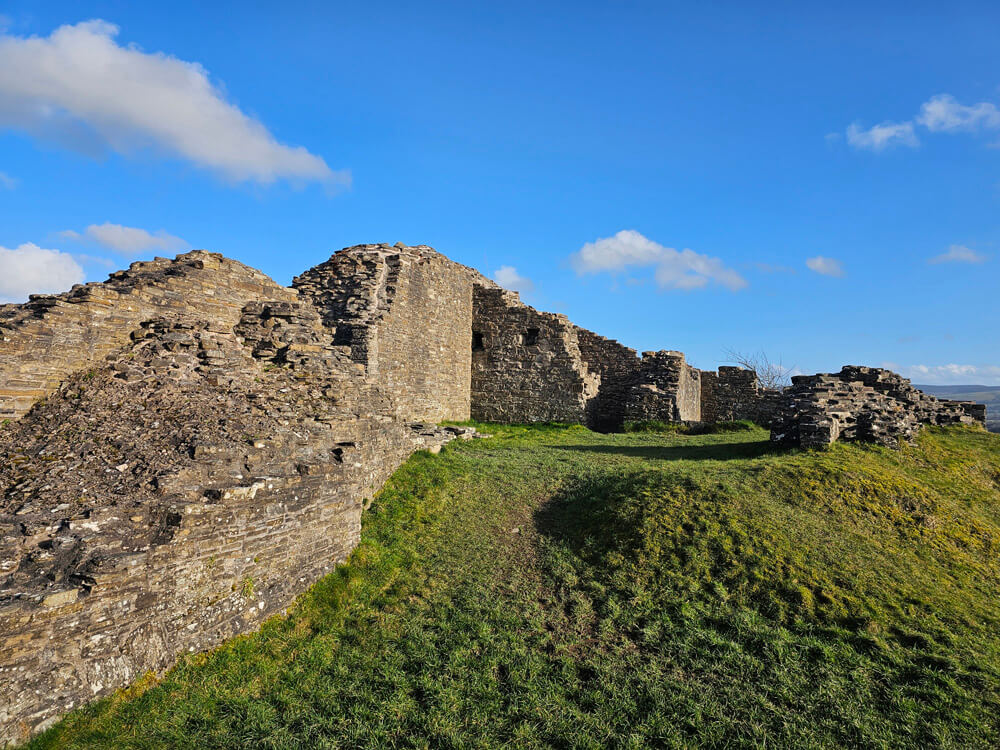
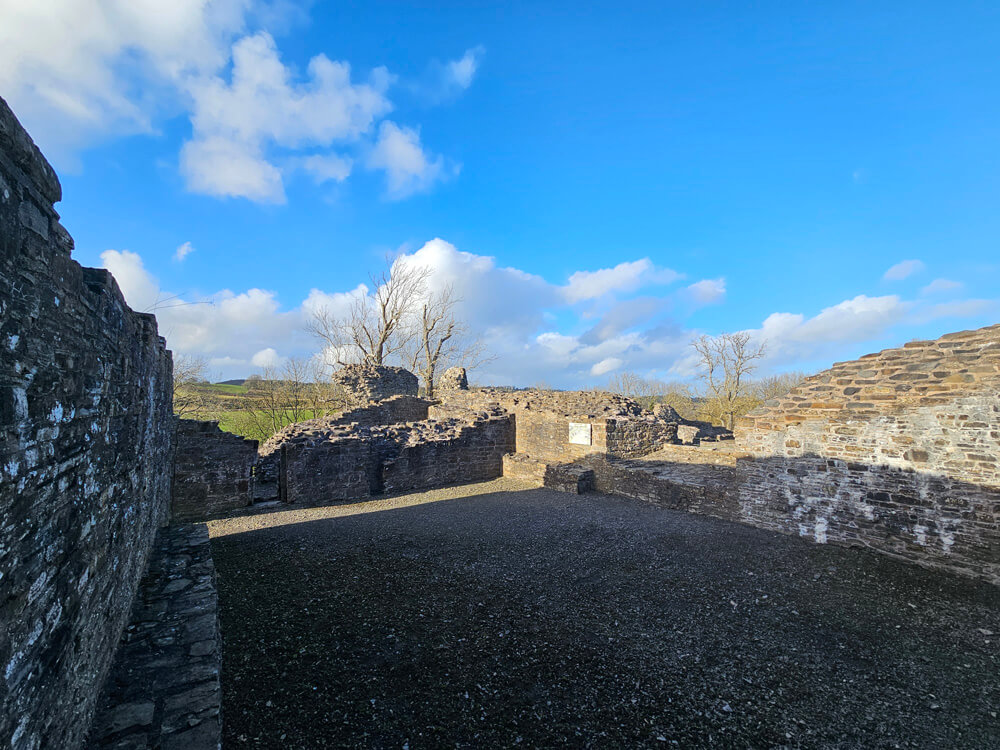
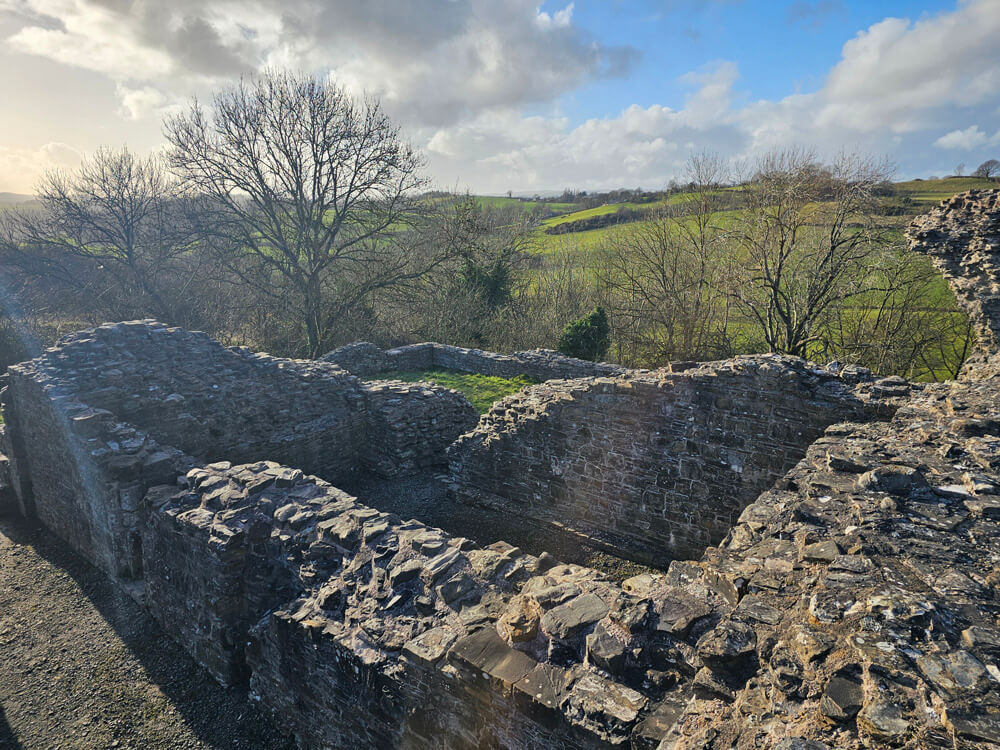
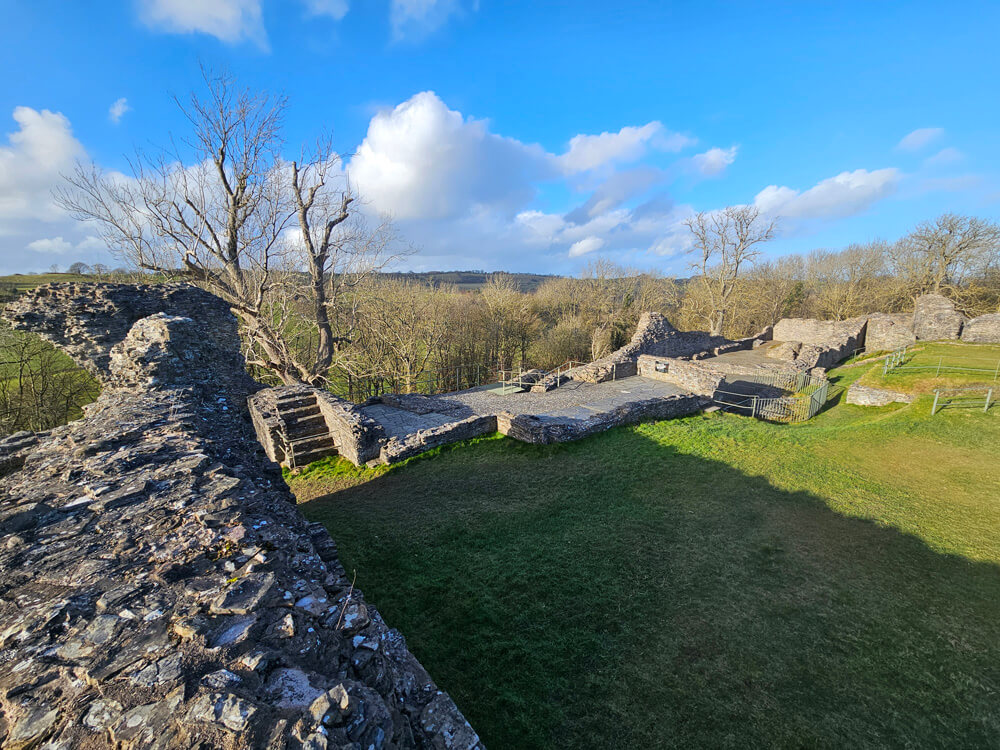
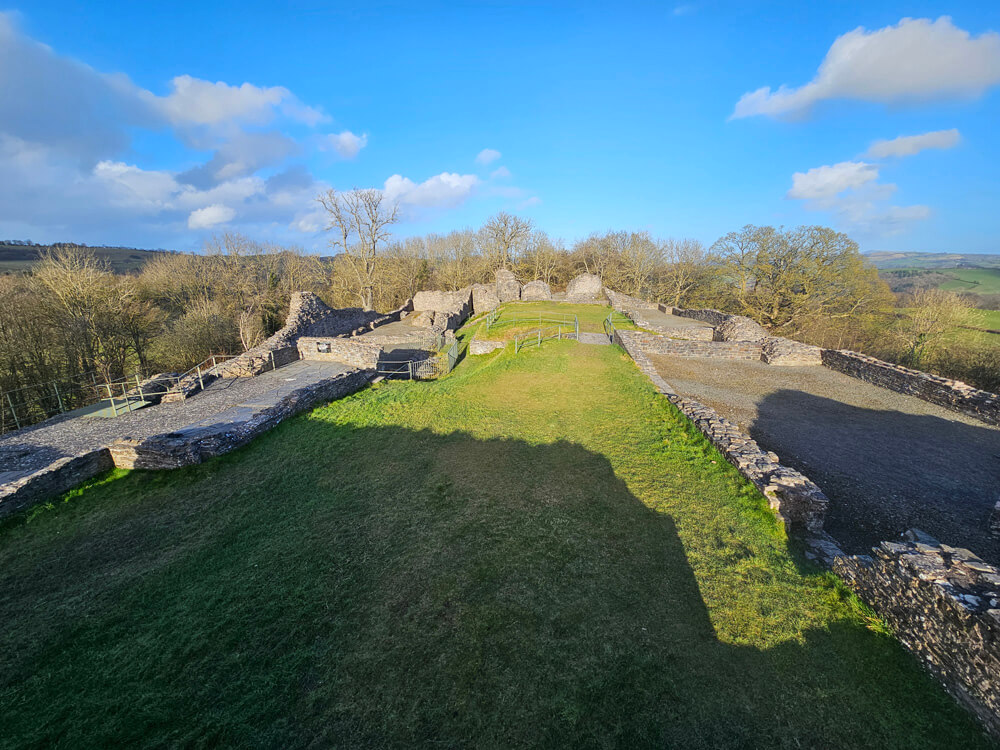
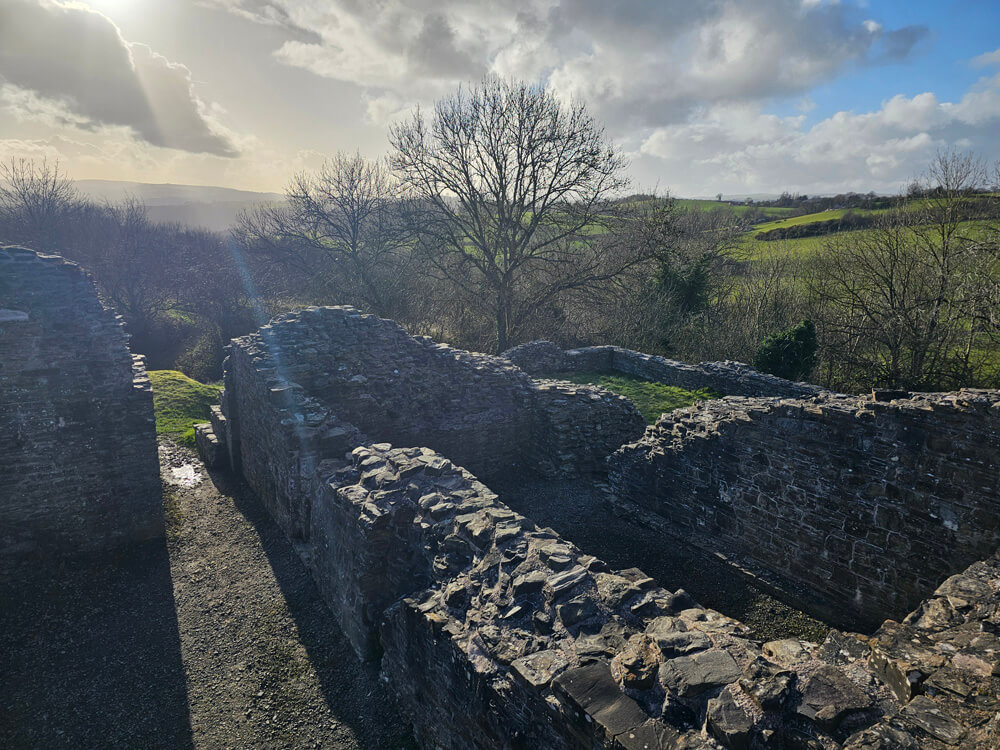
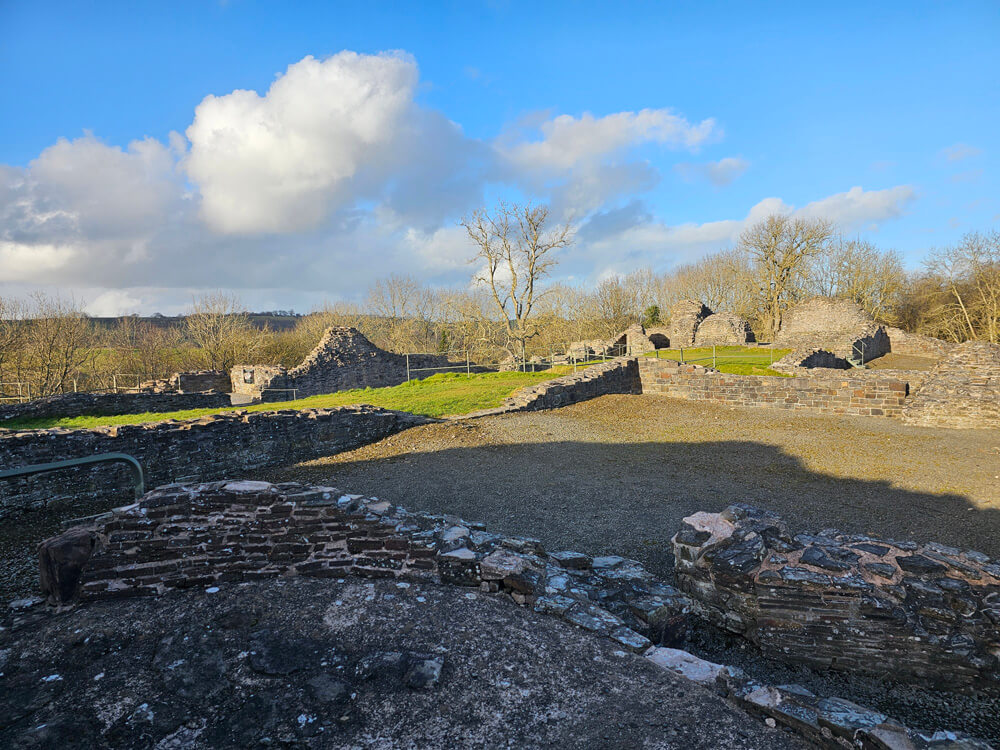
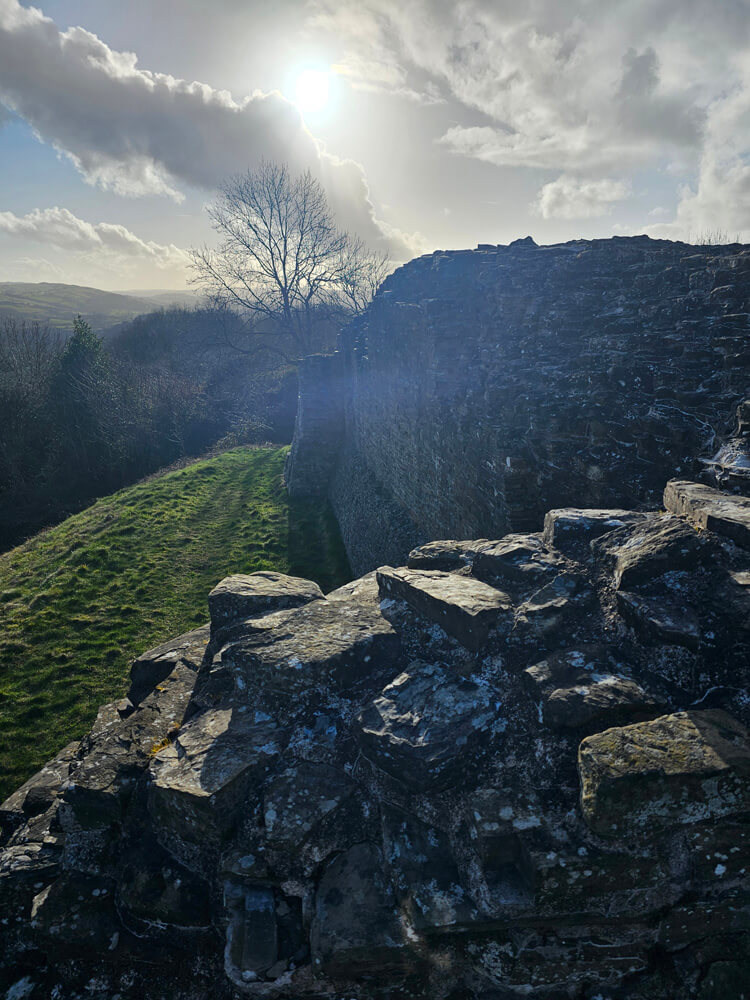
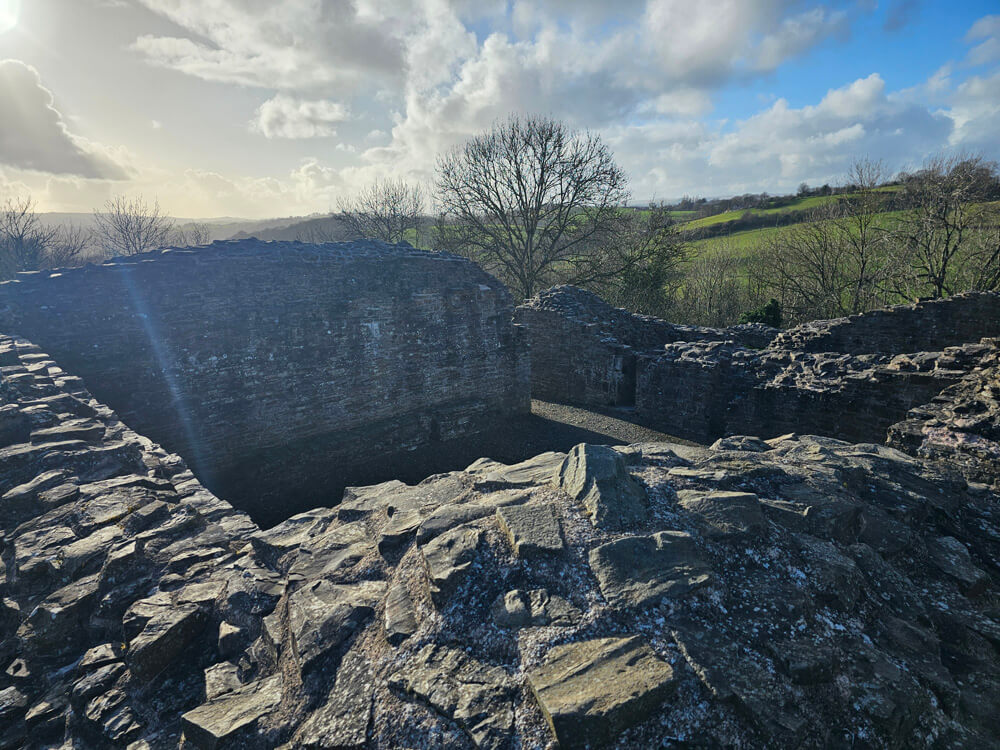
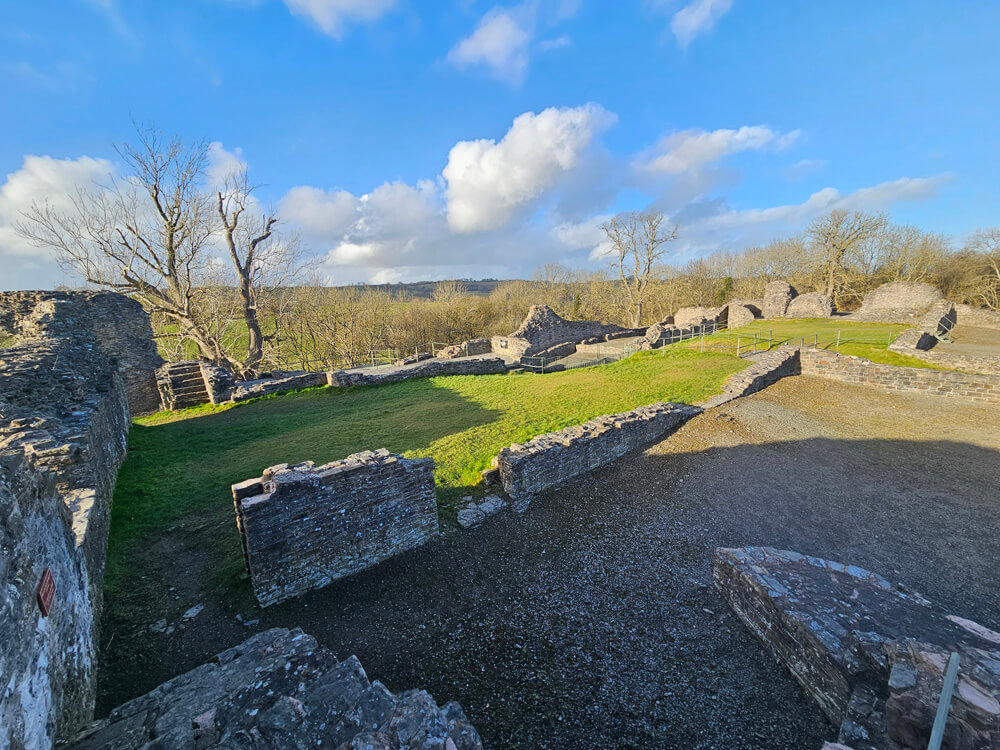
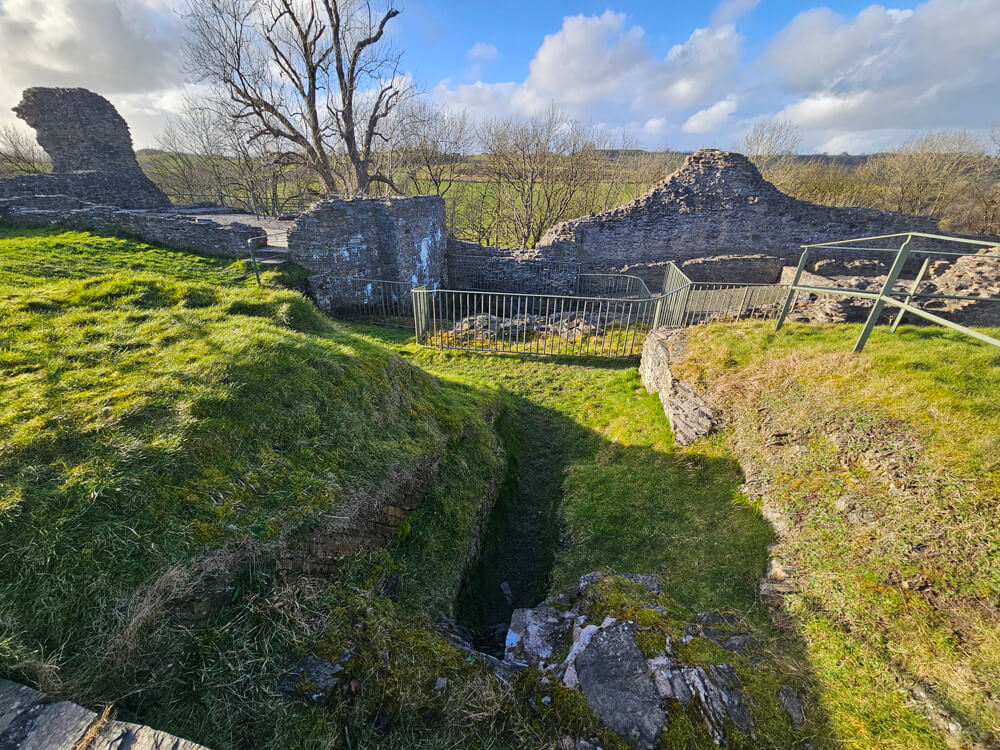
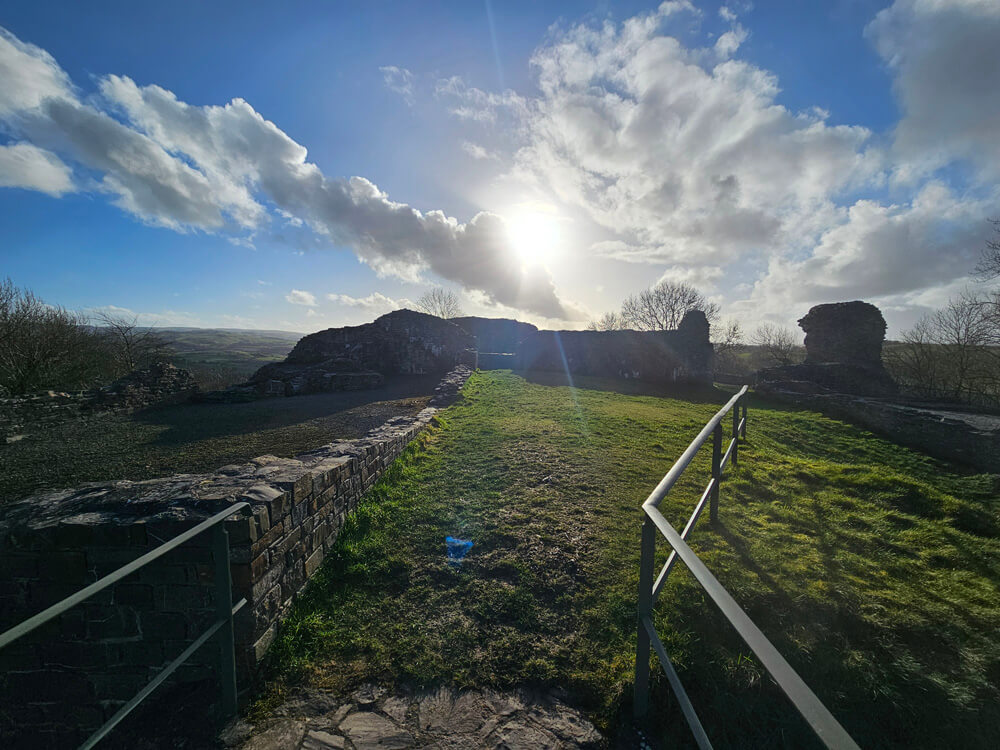
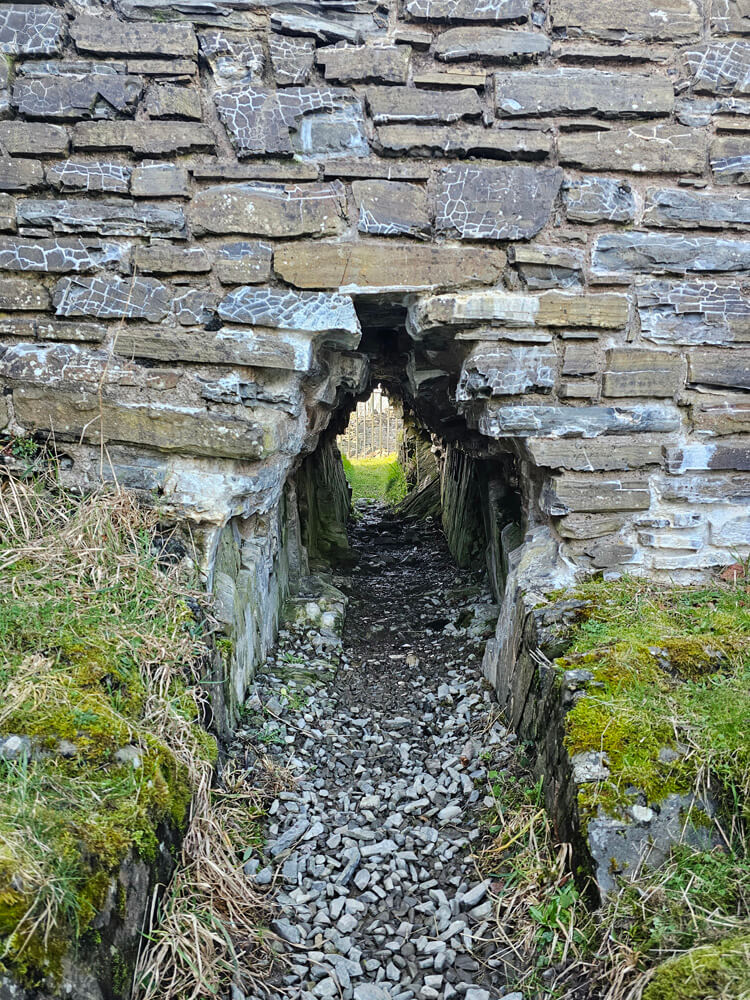
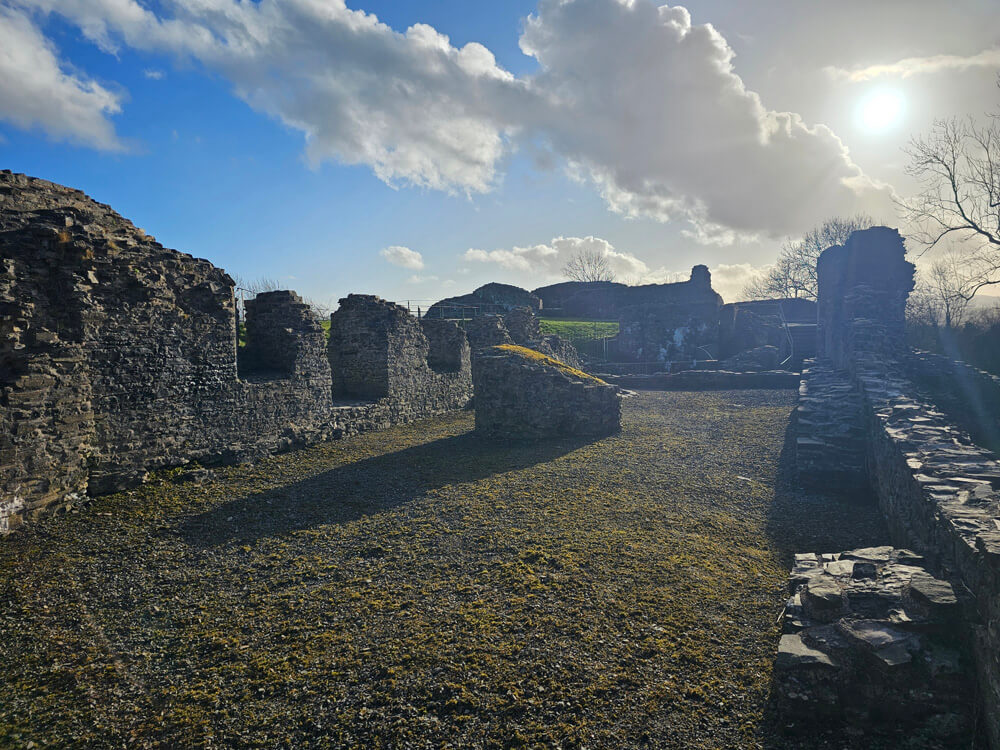
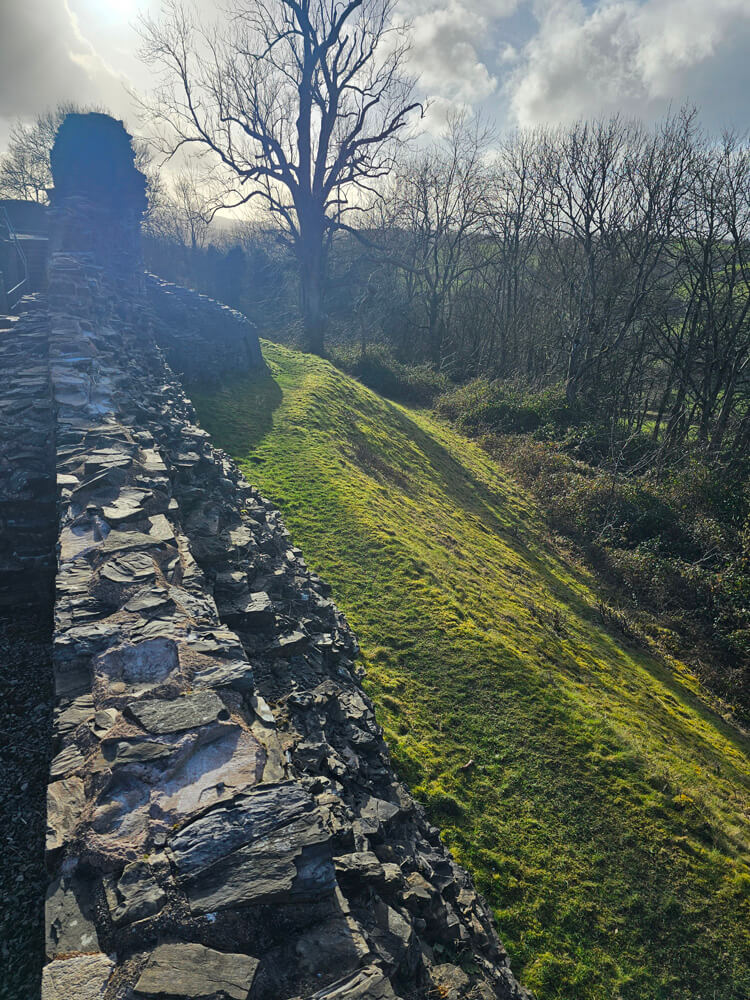
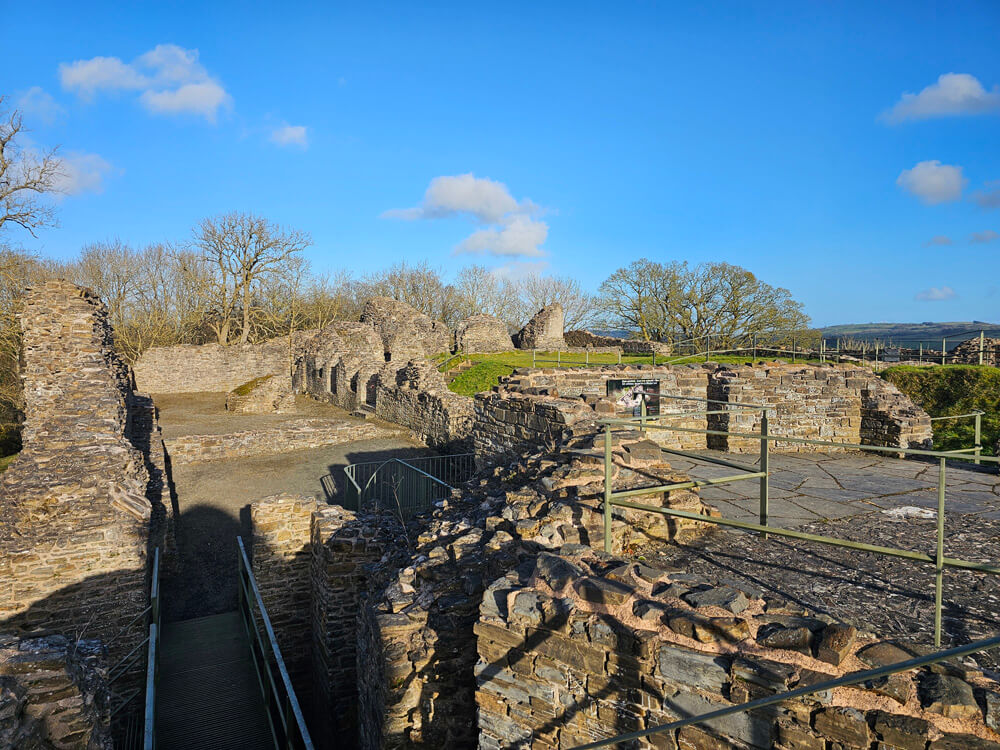
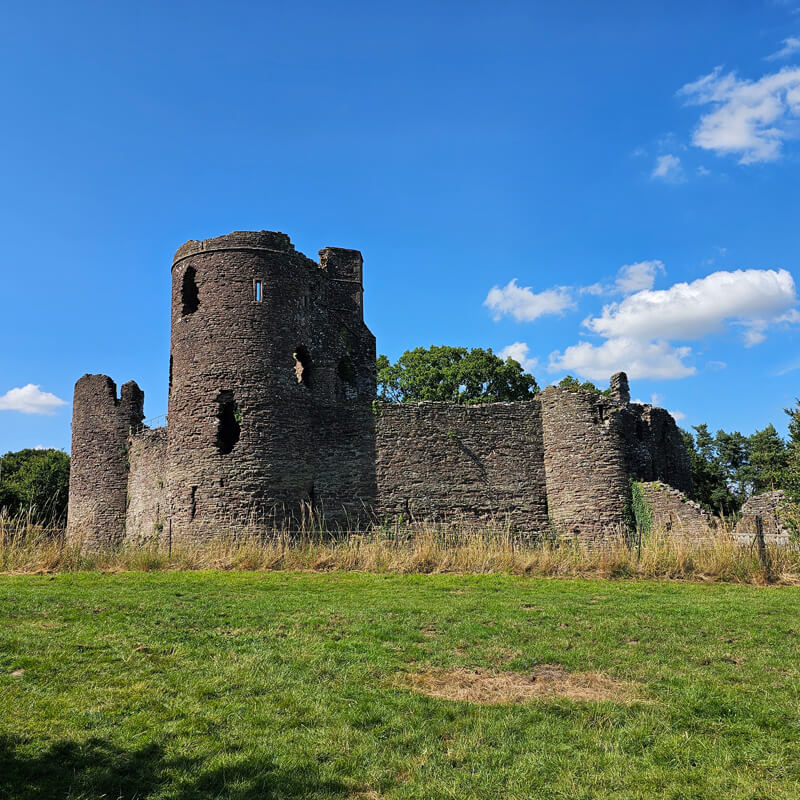
The important Welsh castle lay forgotten, buried beneath the ground until Cadw arranged for excavation of the site between 1981 and 2002, when the castle finally saw the light of day for the first time in centuries. The remains of the castle include long stretches of crumbling curtain wall along with the remains of what were once impressive towers, including the low ruins of a D-tower. The remains also include a ruinous gatehouse, inner ward, and remains of the Keep.
Llywelyn the Last
Llywelyn ap Gruffudd’s defiance and his construction of Dolforwyn Castle was a pivotal moment in the history of Welsh relations with King Edward I. Llywelyn was willing to risk everything in order to maintain control over his kingdom, but the conflict that the castle caused ultimately resulted in Llywelyn’s defeat. Most other Welsh princes had attempted to survive by bowing to the dictates of English kings, but Llywelyn chose instead to make a stand. Edward I moved his armies into Wales with the ultimate aim of conquering the entirety of Wales and to eliminate the influence of Llywelyn and his brother Dafydd ap Gruffudd.
In December 1282, nearby Montgomery Castle’s garrison formed part of the army that defeated and killed Llywelyn ap Gruffudd at the Battle of Orewin Bridge. Llywelyn’s head was sent as a gruesome gift to Edward, who put it on a spike at the Tower of London. The destruction of the army and the elimination of Llywelyn ap Gruffudd meant that the last leader capable of uniting the Welsh lords and princes was gone. Although his brother Dafydd carried on for a few more months, he too was eventually captured and then hanged, drawn and quartered, and his head was put next to his brother’s.
The defeat and death of Llywelyn ap Gruffudd, aptly named Llywelyn the Last, initiated the near total subjugation of Wales and represents one of the darkest moments in Welsh medieval history. Dolforwyn may not have been one of the biggest or grandest of Welsh castles, nor are its ruins among the best or most fascinating, but because of what the castle stood for, it is quite special.
Photo Gallery.
Did you enjoy this post?
I hope you found this post useful. I put a great deal of time and effort in to building, maintaining and populating the website. If you like, you could say a small thank you by buying me a coffee. You don't have to, but it would be nice :)
Buy me a coffee
Stay up to Date
Follow me on my journey and get notified whenever a new post is published by following Kings & Castles on Facebook.
Follow MeExplore The Map
Discover the hundreds of castles, churches, monasteries, cathedrals and other historic locations that I've personally visited across England and Wales. Search by location, explore nearby sites and plan your next historical adventure.
Share: