The Second Barons’ War
The Second Barons’ War was a civil war fought in England between 1264 and 1267. It was mainly a struggle between rebellious barons led by Simon de Montfort, Earl of Leicester, and King Henry III. The conflict was caused by disagreements over royal power, government reform and the king’s relationship with the nobility. Although the royal forces eventually won, the war had an important influence on the development of the English Parliament.
Causes of the War
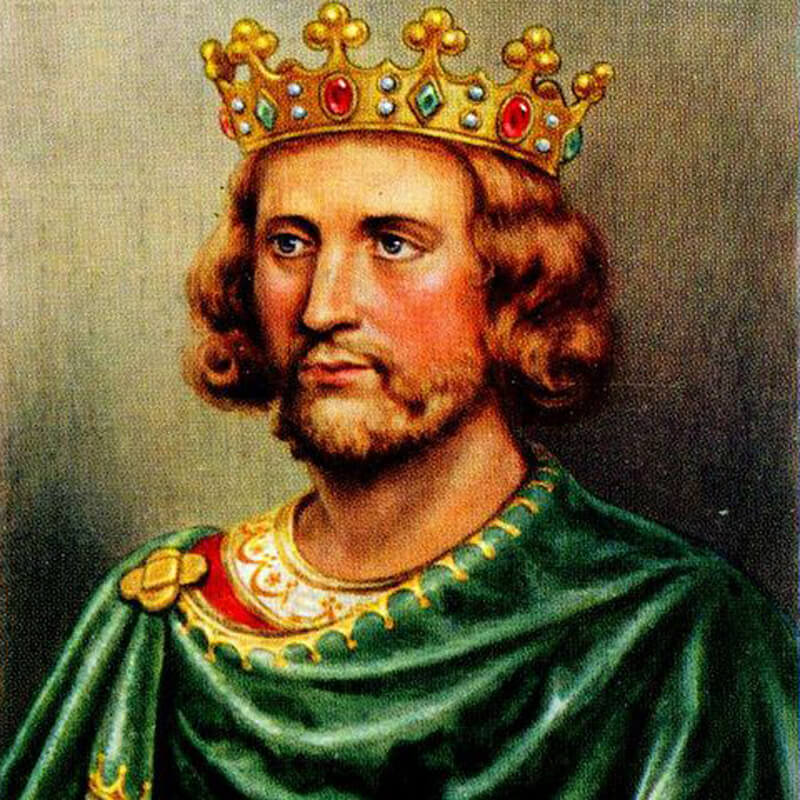
The roots of the conflict lay in Henry III‘s style of government. Henry became king in 1216 as a child and ruled for much of his reign with the advice of powerful nobles and advisers.
By the 1250s, many barons were increasingly frustrated with Henry’s financial policies and his preference for foreign advisers and relatives. They also objected to the king’s expensive military campaigns, particularly his attempts to secure territory for his son Edward in Sicily.
In 1258, a group of barons forced Henry to accept the Provisions of Oxford. These reforms attempted to limit royal authority by placing greater power in the hands of a council of barons. Simon de Montfort became one of the leading supporters of the reforms.
Henry later attempted to overturn the Provisions. In 1261, he obtained support from Pope Alexander IV, who released him from his commitments. The political dispute gradually became a military confrontation.
The Outbreak of War
By 1264, negotiations had failed and fighting began. Simon de Montfort led the baronial forces against Henry III and his supporters.
The decisive moment came at the Battle of Lewes on 14th May 1264. Montfort’s army defeated the royal forces and captured both Henry III and his son Edward.
Montfort now became the most powerful political figure in England. Although Henry remained king, Montfort effectively controlled the government.
Simon de Montfort’s Parliament
Montfort attempted to establish a new form of government. In 1265, he summoned a Parliament that included not only nobles and bishops but also representatives from towns and counties.
This assembly is often remembered as an important step in the development of the English parliamentary system. However, Montfort’s government faced opposition from royalists and struggled to maintain control of the kingdom.
Meanwhile, Prince Edward escaped captivity and began gathering supporters.
The Battle of Evesham
The conflict reached its climax at the Battle of Evesham on 4th August 1265. Edward’s royal army defeated Montfort’s forces.
Simon de Montfort was killed during the battle, and his death effectively ended the baronial government. Henry III was restored to full authority, although fighting continued in some parts of England.
The remaining rebels eventually surrendered following further military campaigns and negotiations. The conflict was effectively brought to an end by 1267, with the royal government offering terms that allowed many rebels to regain their lands.
Consequences and Legacy
The Second Barons’ War strengthened the monarchy in the short term, but it did not completely reverse the political changes created by the rebellion.
The Parliament of 1265 was particularly significant. Although it was not a modern democratic parliament, the inclusion of representatives from towns and counties helped establish a precedent for broader parliamentary representation.
The conflict also demonstrated that the king could not govern entirely without considering the interests of the nobility and other powerful groups.
Simon de Montfort became a controversial but influential historical figure. Supporters later portrayed him as a champion of reform and limits on royal power, while others regarded him as an ambitious noble who had attempted to seize control of the kingdom.
The Second Barons’ War was therefore an important stage in England’s constitutional development. It showed that disputes between the Crown and its subjects could lead to civil war, while the political experiments of Simon de Montfort helped shape the future development of the English Parliament.
Did you enjoy this post?
I hope you found this post useful. I put a great deal of time and effort in to building, maintaining and populating the website. If you like, you could say a small thank you by buying me a coffee. You don't have to, but it would be nice :)
Buy me a coffee
Stay up to Date
Follow me on my journey and get notified whenever a new post is published by following Kings & Castles on Facebook.
Follow MeExplore The Map
Discover the hundreds of castles, churches, monasteries, cathedrals and other historic locations that I've personally visited across England and Wales. Search by location, explore nearby sites and plan your next historical adventure.
Share: