Simon de Montfort, Earl of Leicester
Simon de Montfort, Earl of Leicester, was one of the most influential and controversial figures in 13th-century England. A powerful nobleman, military commander and political reformer, he is best remembered for his rebellion against King Henry III and for his role in the development of representative government.
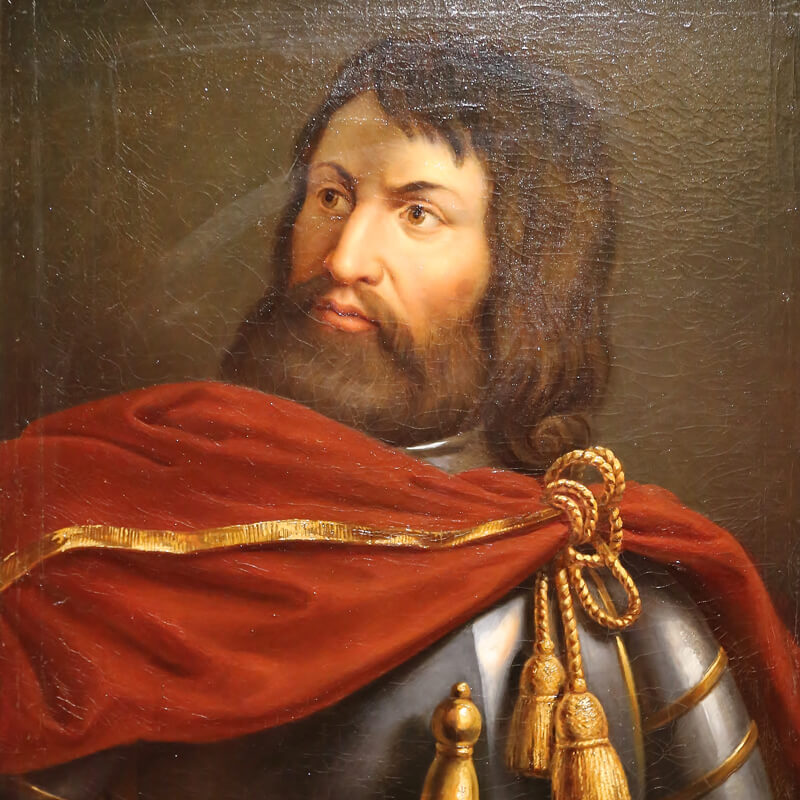
Simon was born in France around 1208, the son of Simon de Montfort, the famous leader of the Albigensian Crusade. Although French by birth, he came to England as a young man to claim the inheritance of his English grandmother. In 1238, he married Eleanor, Henry III‘s sister. The marriage angered some English nobles because Simon was a foreigner and because the king had not fully approved the match.
Simon initially enjoyed Henry III’s favour, but their relationship gradually deteriorated. Simon became increasingly critical of the king’s financial policies, his costly foreign ambitions and his reliance on foreign advisers. Simon also believed that the king should be subject to greater political accountability.
Tensions reached a crisis in 1258. England was suffering from financial difficulties, and a group of barons forced Henry III to accept the Provisions of Oxford, which attempted to reform royal government and give the nobility greater influence. Simon de Montfort became one of the leading figures behind these reforms.
However, the political settlement did not last. Henry III resisted the restrictions placed upon his authority and eventually regained the support of the papacy and powerful allies. Civil war broke out between the king’s supporters and the reforming barons in 1264, known as the Second Barons’ War.
Simon achieved a major victory at the Battle of Lewes in May 1264. Henry III and his son, the future Edward I, were captured, leaving Simon effectively in control of England. He then summoned a parliament in 1265 that included not only nobles and bishops but also representatives from counties and certain towns. This parliament has become famous because it was an important step in the development of the English representative tradition.
Despite these achievements, Simon’s government faced serious difficulties. He lacked widespread support among the nobility, and his rule was increasingly challenged by opponents of the baronial regime. Henry III’s son Edward escaped captivity in May 1265 and gathered an army.
On 4th August 1265, Simon’s forces met Edward’s army at the Battle of Evesham. Simon was heavily outnumbered and was killed during the battle. His body was mutilated after his death, reflecting the bitterness of the conflict.
Simon de Montfort’s legacy is complicated. To his medieval opponents, he was a rebel who had challenged the rightful authority of his king. To later generations, however, he became an important symbol of constitutional government and resistance to unchecked royal power. His parliament of 1265 is described as an early landmark in the history of the English Parliament. He is sometimes regarded as the founder of Parliament, or “the father of the English Parliament” because he summoned the first representative assembly, although it should not be confused with modern democracy.
Simon de Montfort was therefore much more than a medieval rebel. His career reflected a fundamental struggle over the nature of royal authority, noble privilege and political representation. Although his attempt to reform Henry III’s government ultimately failed, some of the ideas and institutions associated with his movement influenced the later development of Parliament. His dramatic life and violent death have consequently ensured his place as one of the most significant political figures of medieval England.
Did you enjoy this post?
I hope you found this post useful. I put a great deal of time and effort in to building, maintaining and populating the website. If you like, you could say a small thank you by buying me a coffee. You don't have to, but it would be nice :)
Buy me a coffee

Stay up to Date
Follow me on my journey and get notified whenever a new post is published by following Kings & Castles on Facebook.
Follow MeExplore The Map
Discover the hundreds of castles, churches, monasteries, cathedrals and other historic locations that I've personally visited across England and Wales. Search by location, explore nearby sites and plan your next historical adventure.
Share: