St Peter’s Church, Melverley
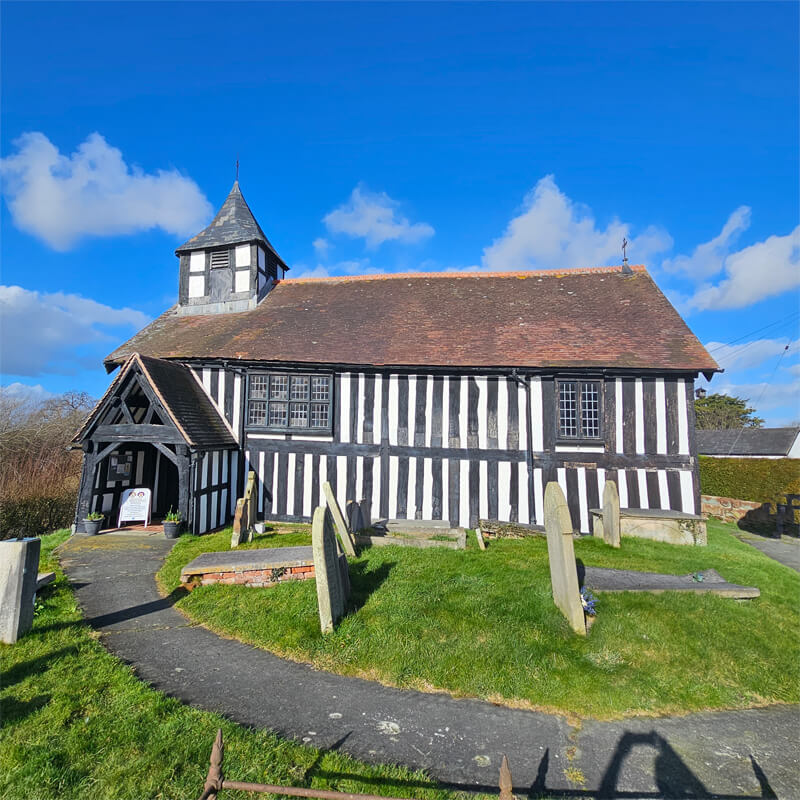
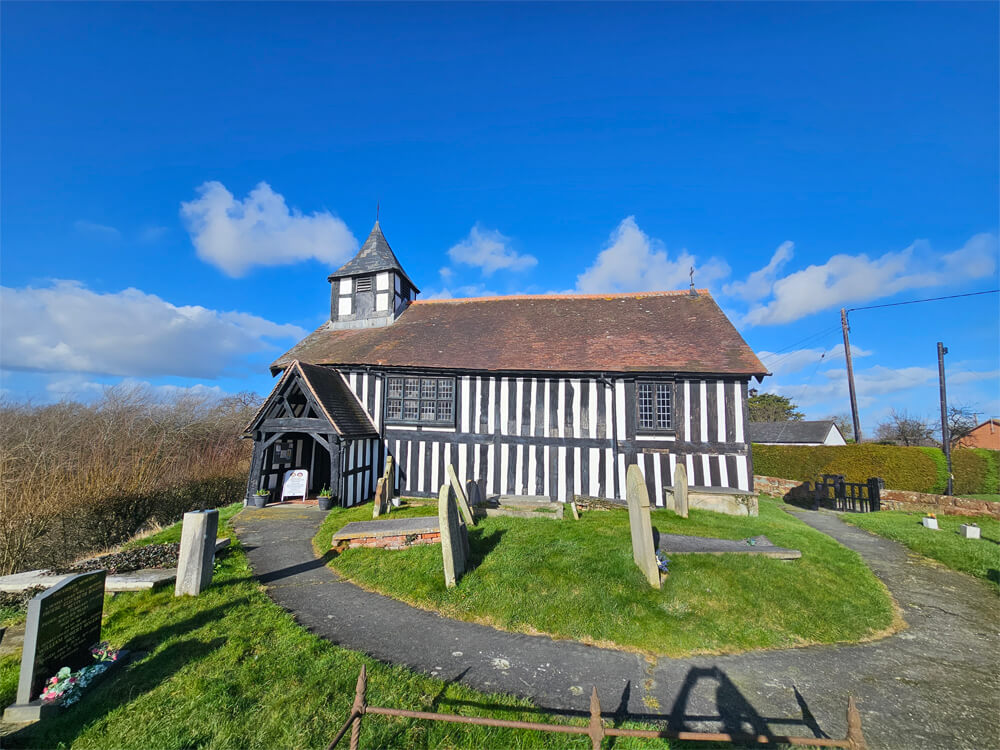
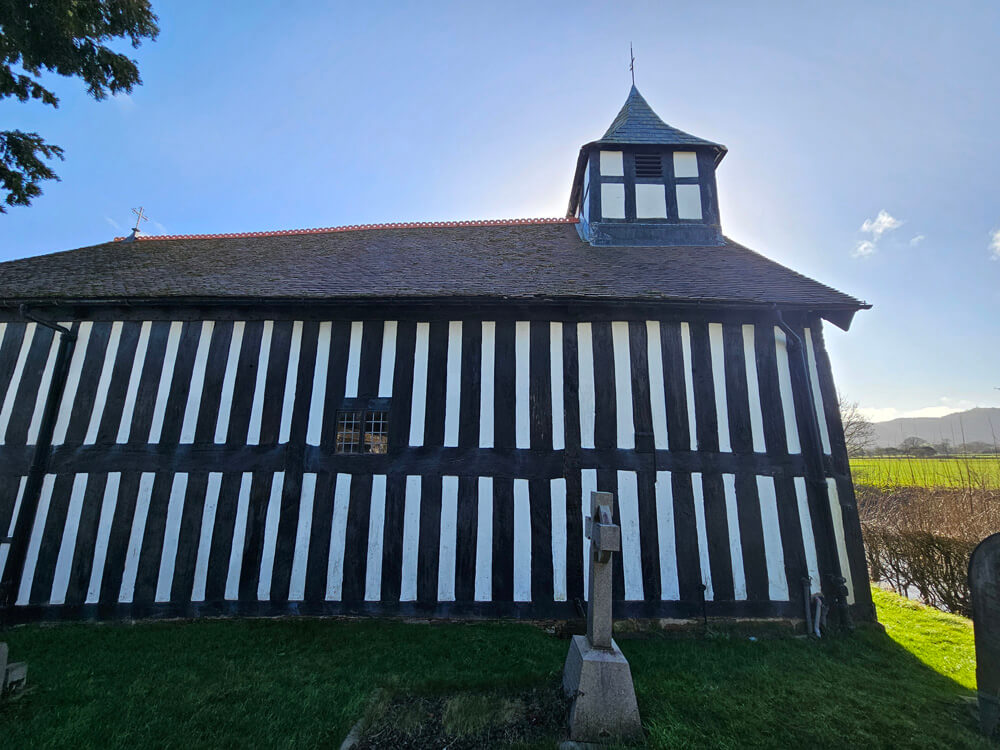
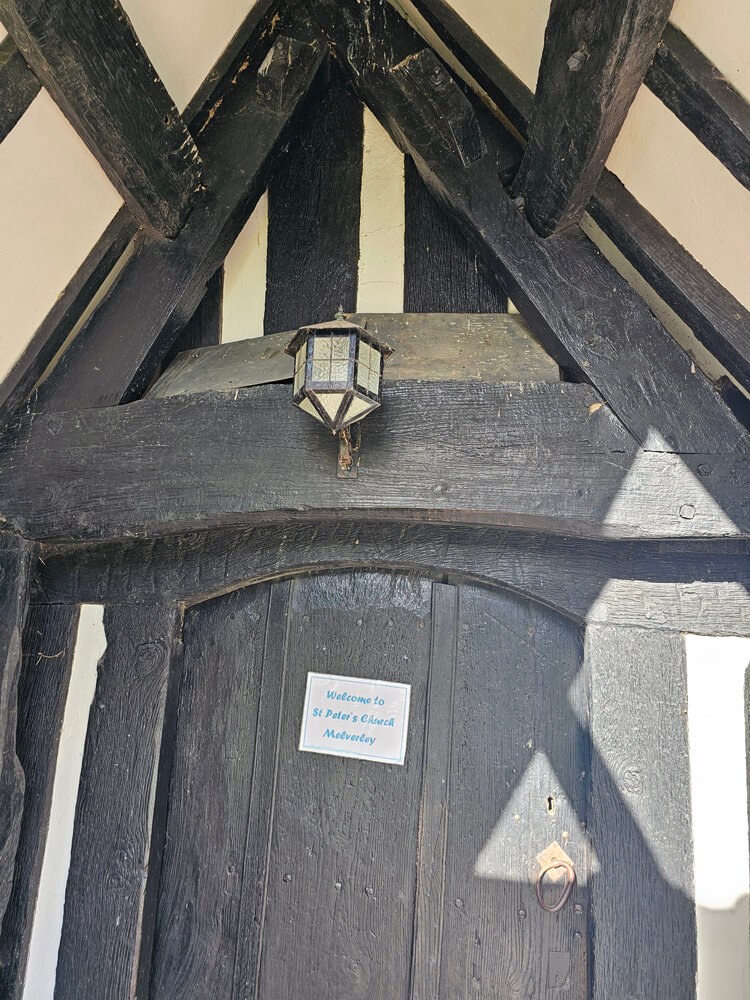
St Peter’s Church is located in the tiny village of Melverley, Shropshire, right on the Welsh border with Powys near the confluence of the River Severn and the River Vyrnwy. The site of this beautiful timber-framed black and white church has been a place of Christian worship in Melverley for about a 1000 years.
Historic
Highlights.
- A rare Early English timber church
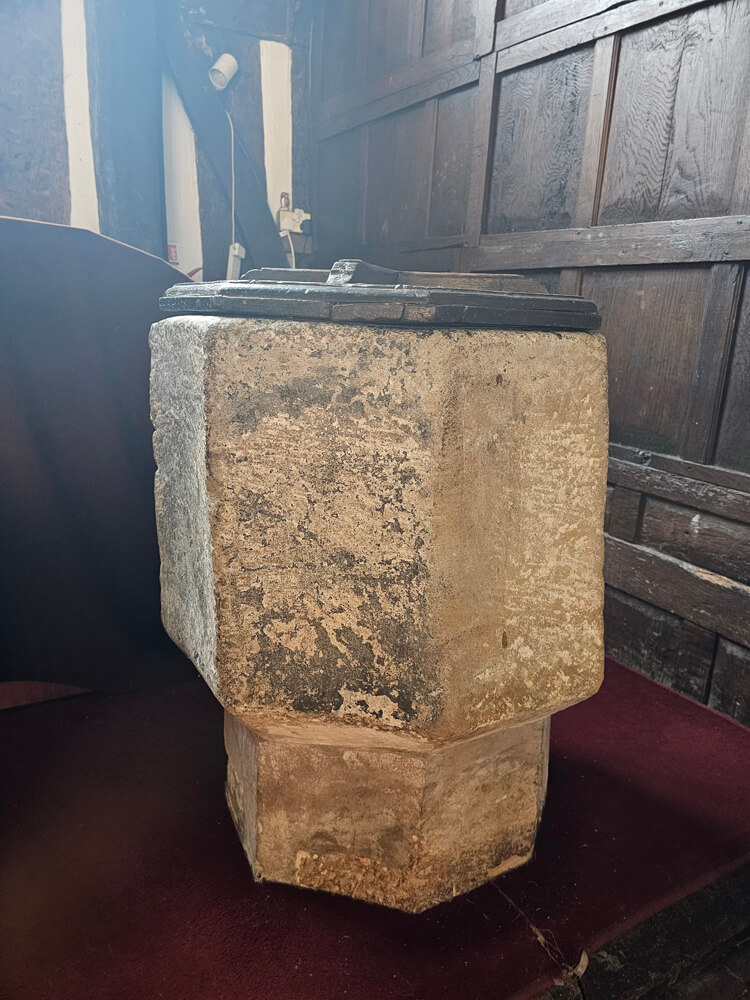
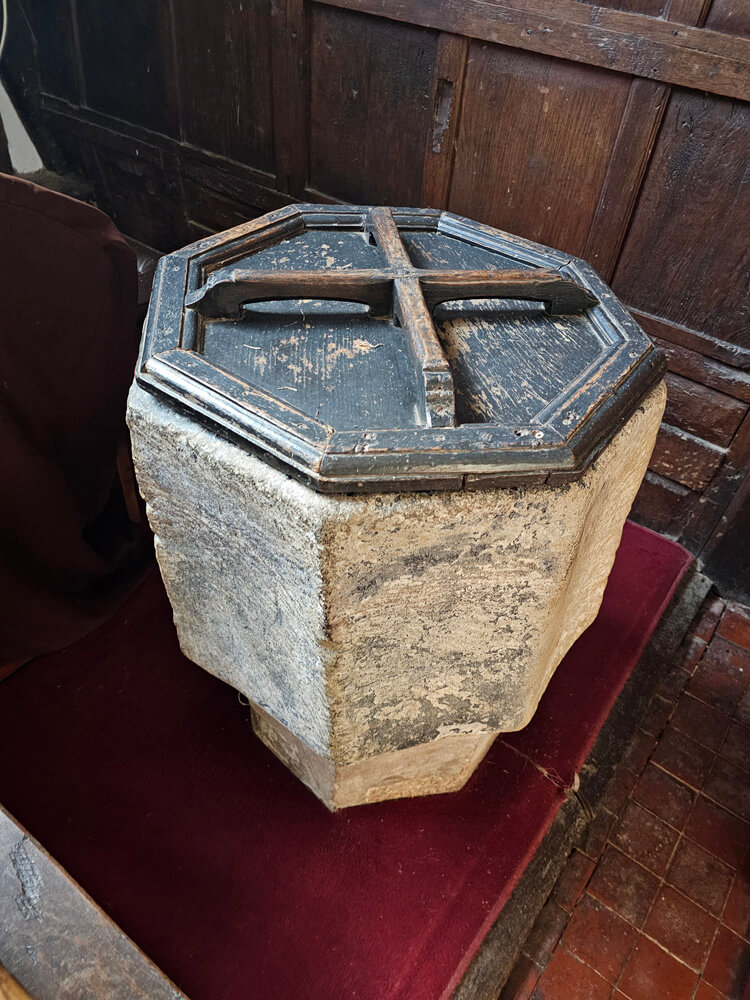
- Saxon font
- Timber viewing gallery
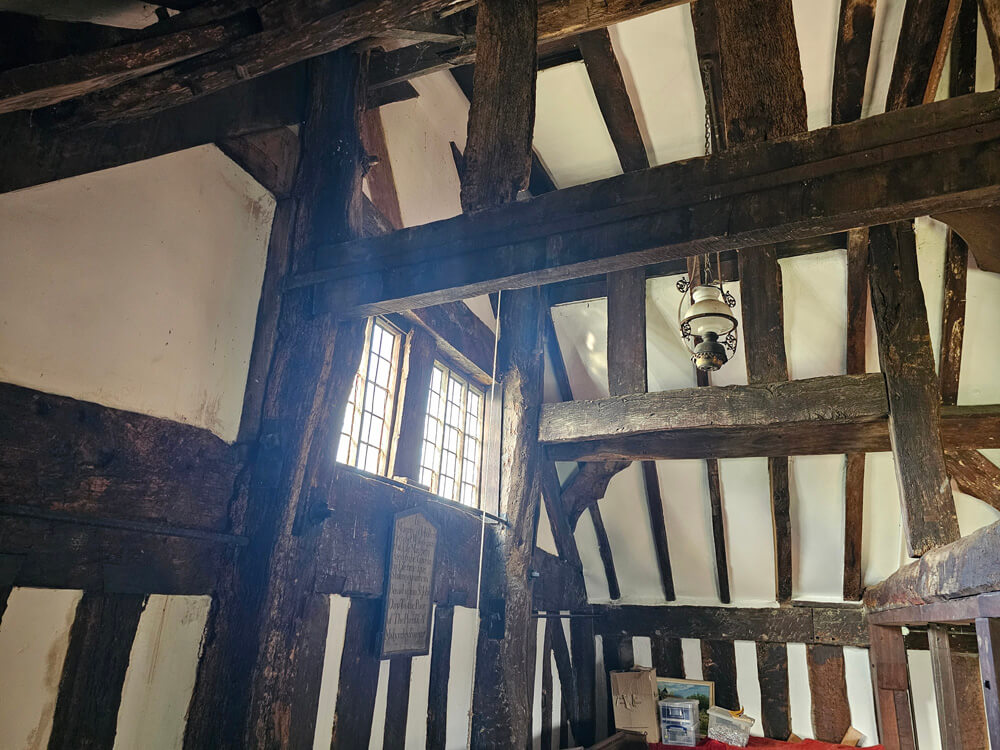
- Massive oak frames
There has been a place of worship here since late Anglo-Saxon times, but the current church was constructed in 1406 and is one of the oldest of its type in the UK.
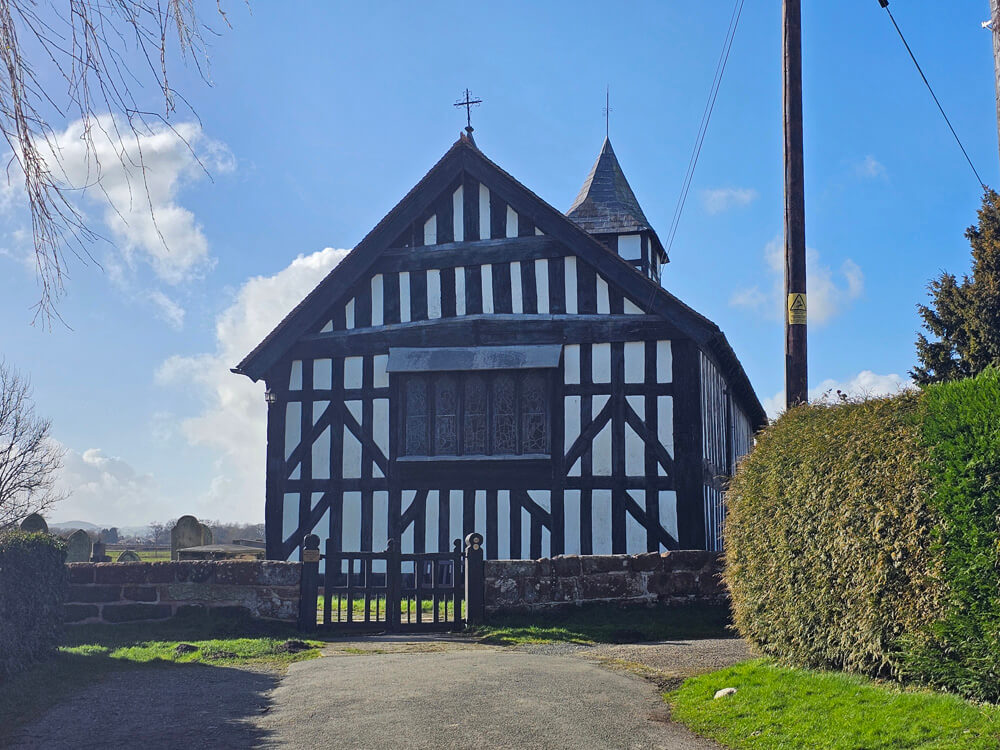
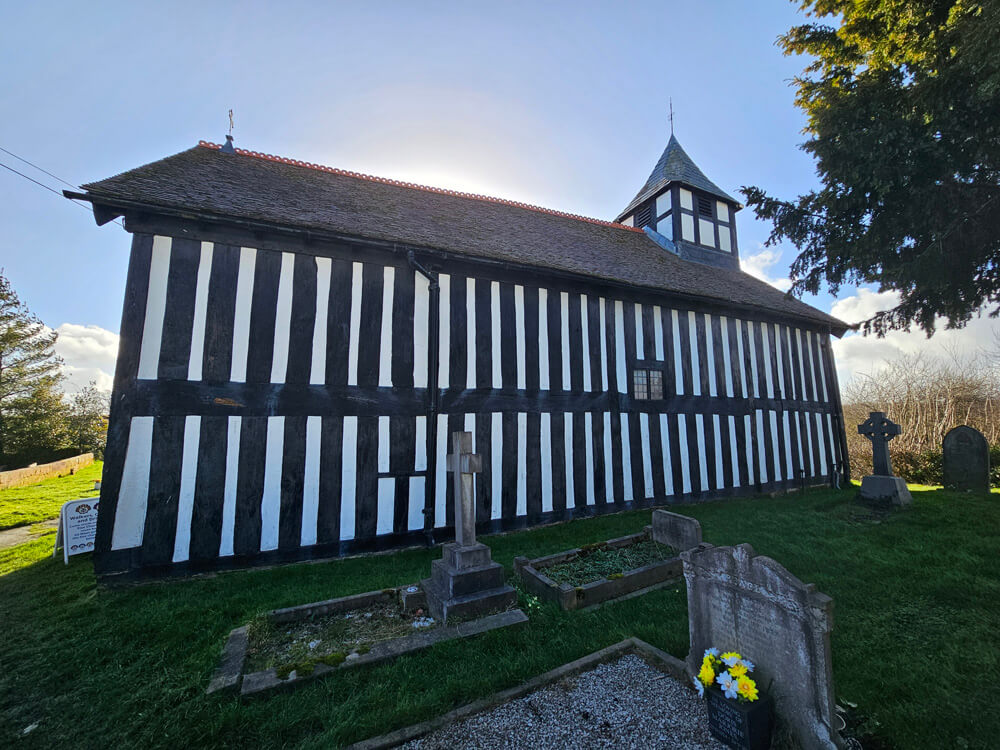
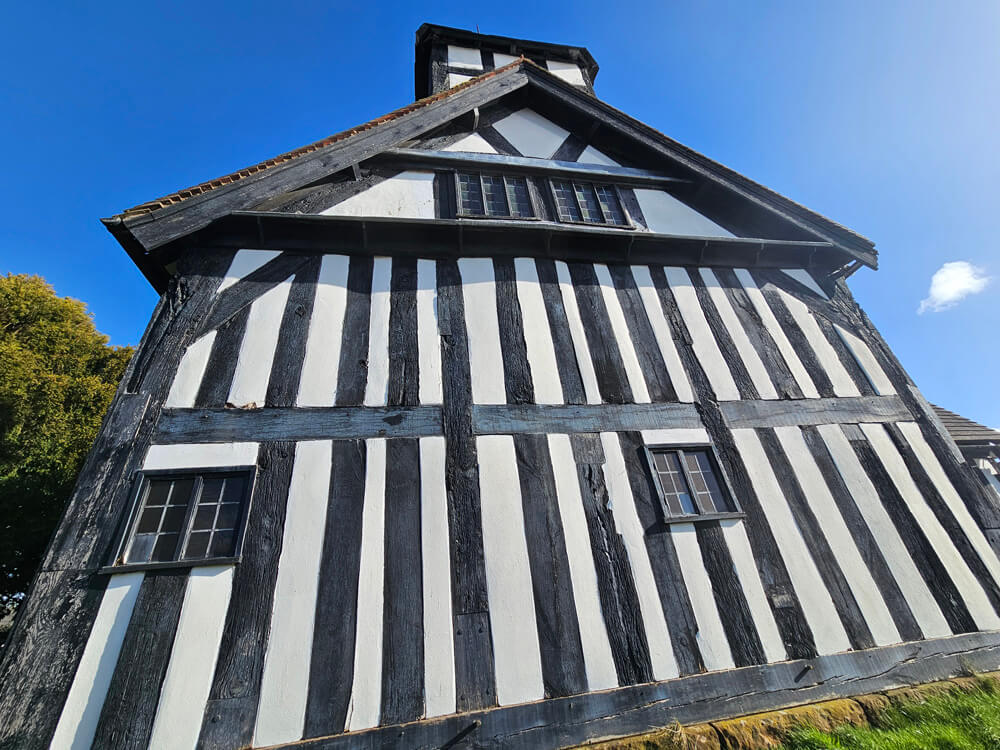
St Peter’s is a rare example of Early English churches constructed of timber, wattle and daub, making this wonderfully picturesque and rustic looking church quite special. The previous church was burnt by the Welsh chieftain Owain Glyndŵr in 1401 and was rebuilt with local Melverley oak by 1406.
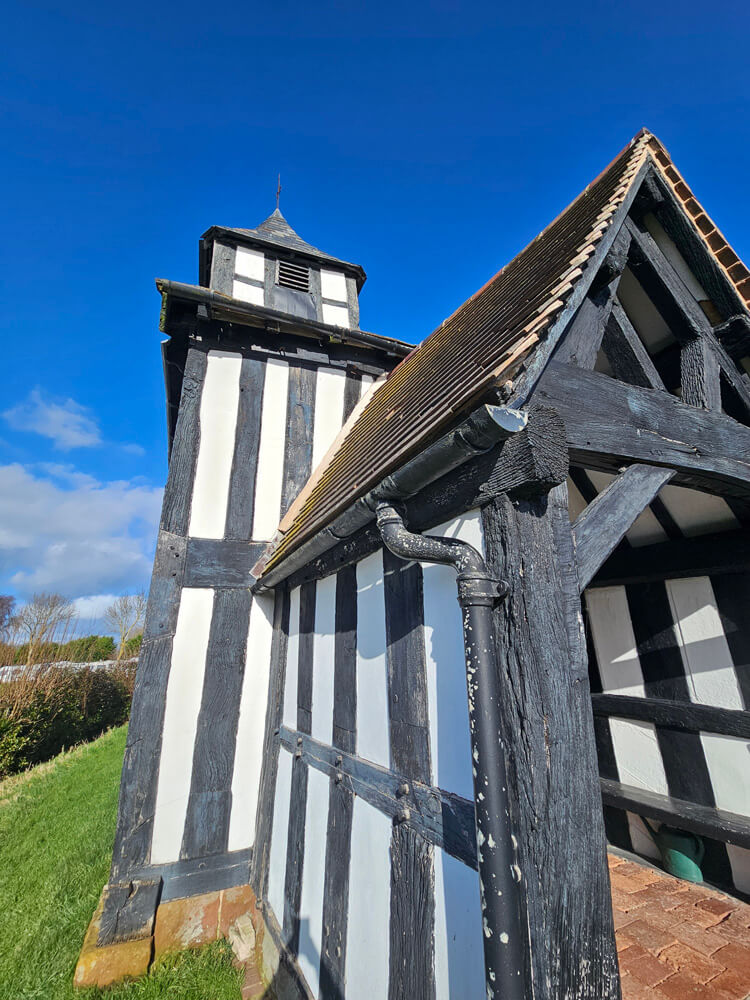
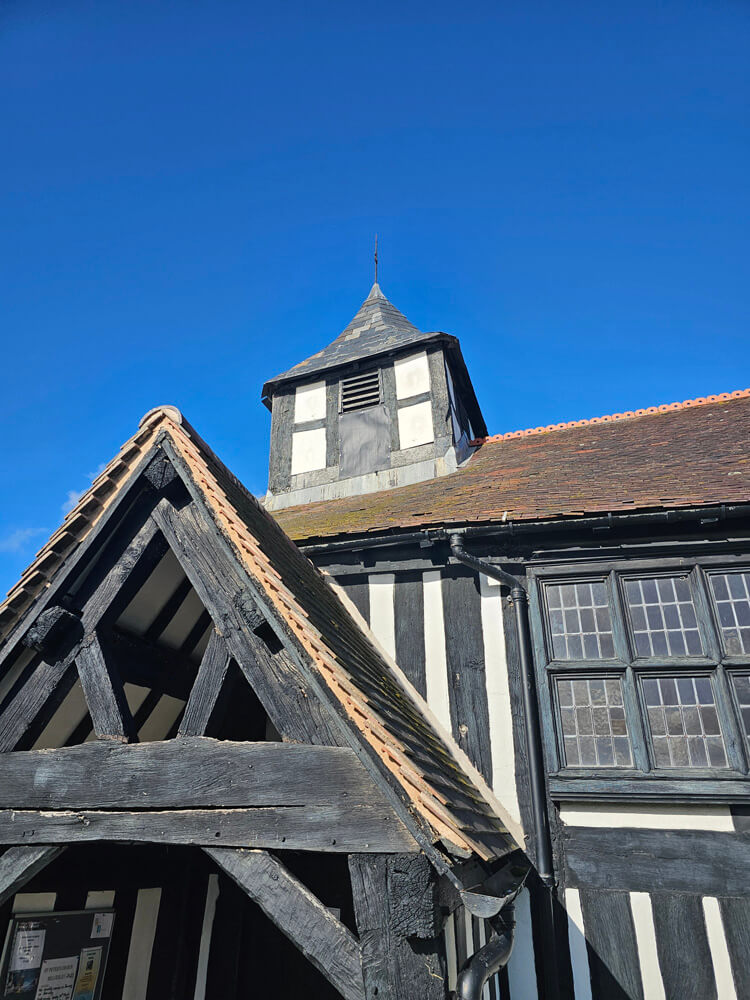
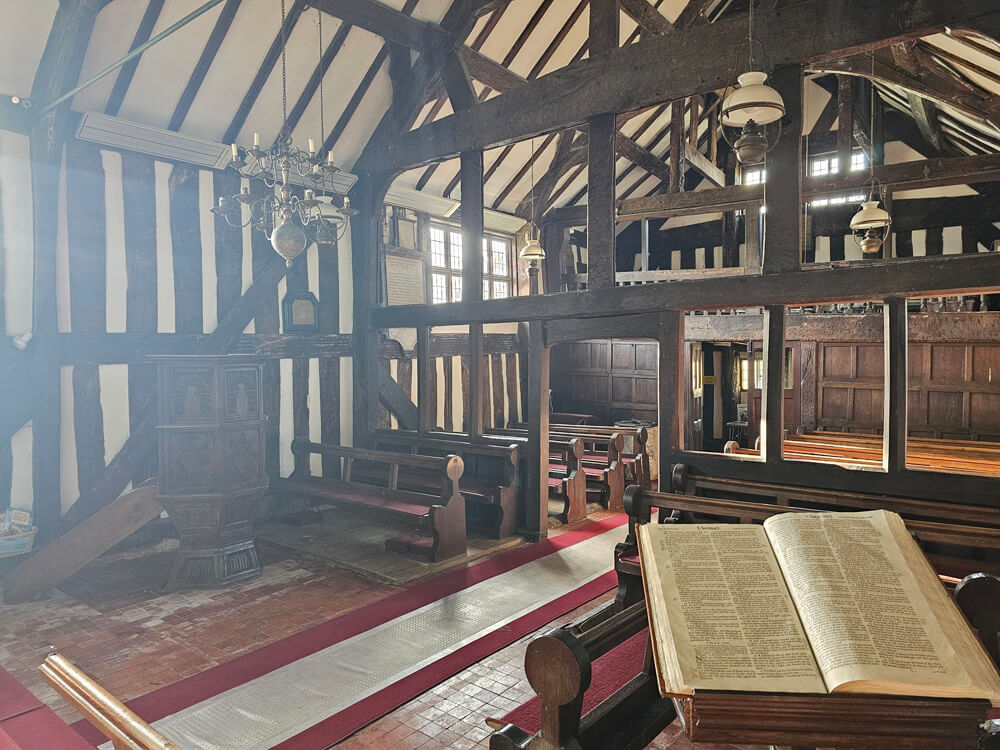
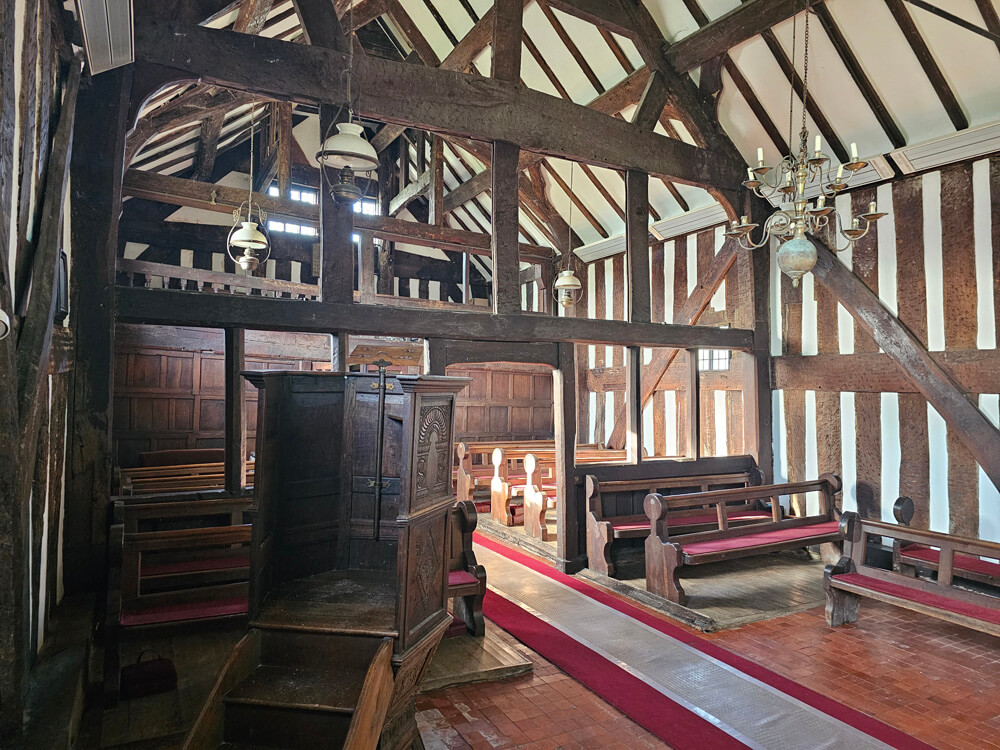
The entire structure of the church is pegged together, not a single nail being used. It is a very unusual example of this type of build and the only one in Shropshire. With the exception of the lower two thirds of the east wall behind the altar, the structure you see today is substantially as it was built.
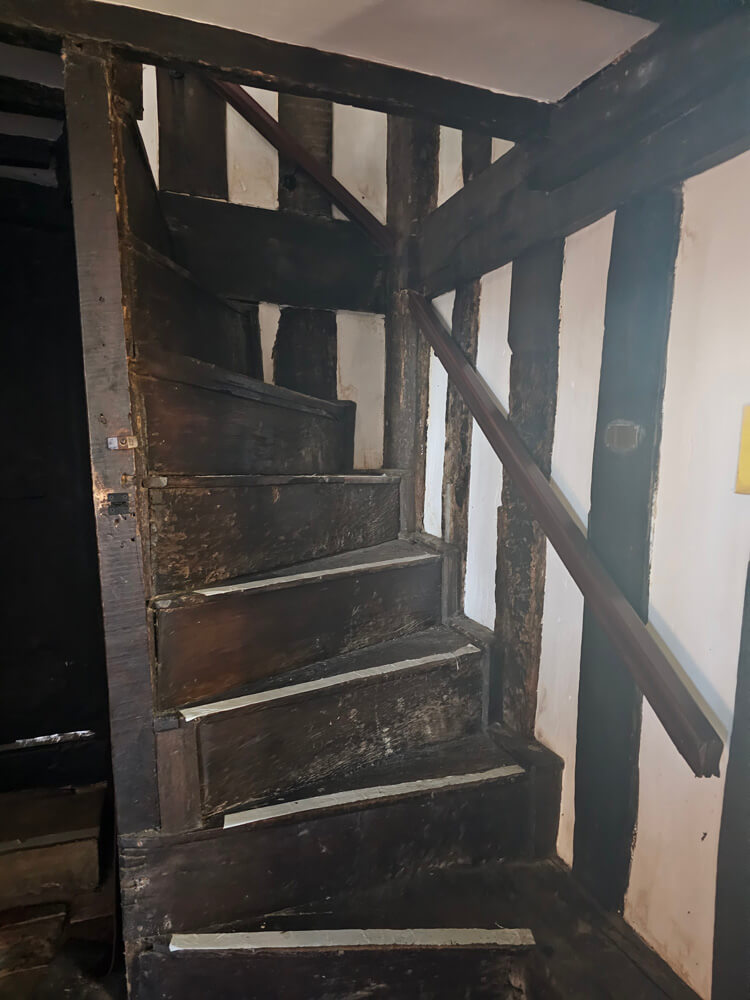
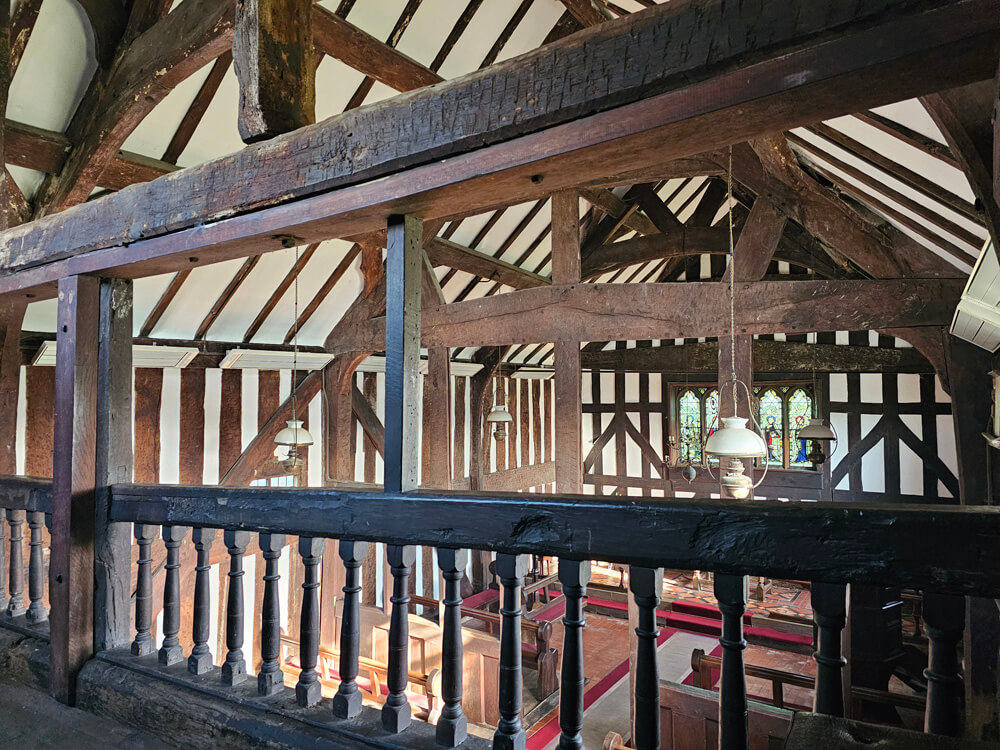
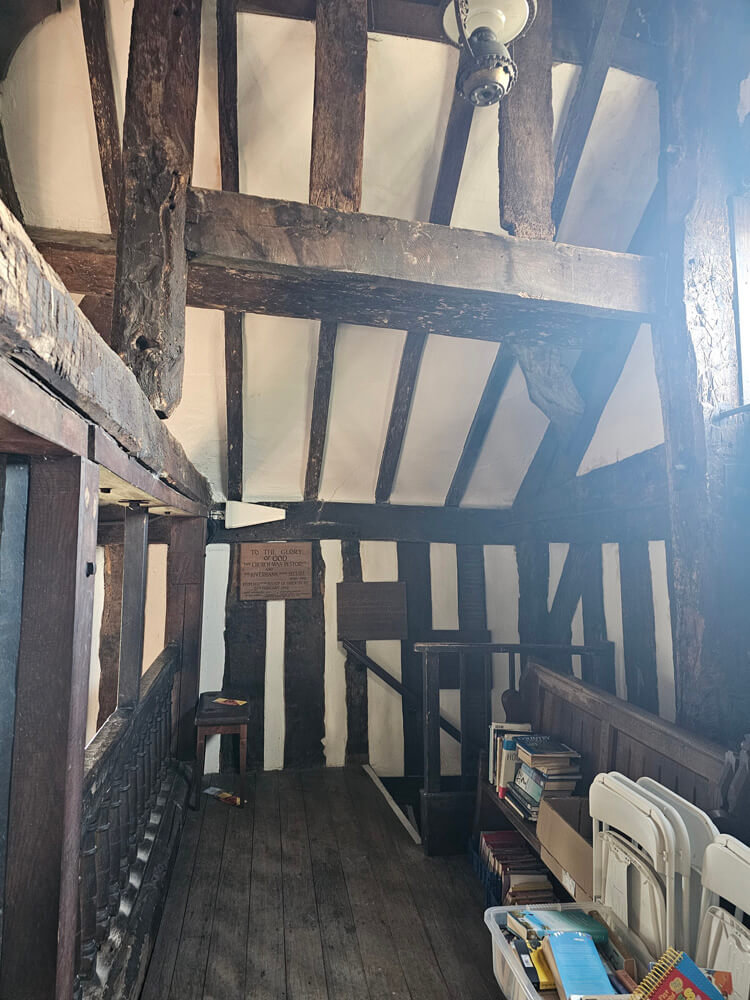
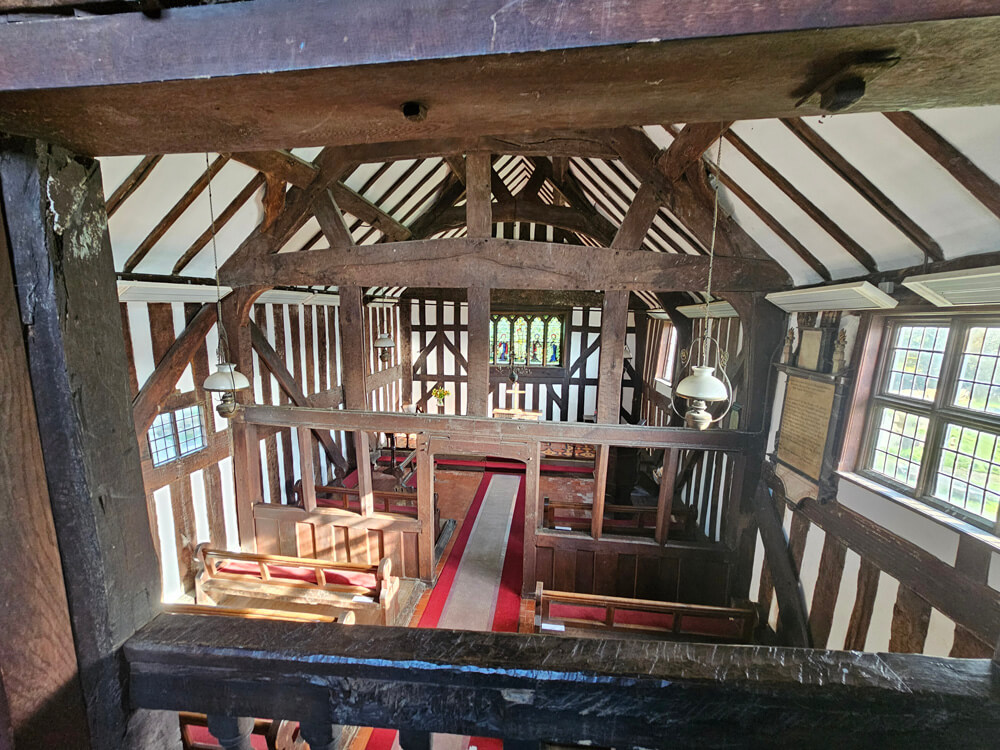
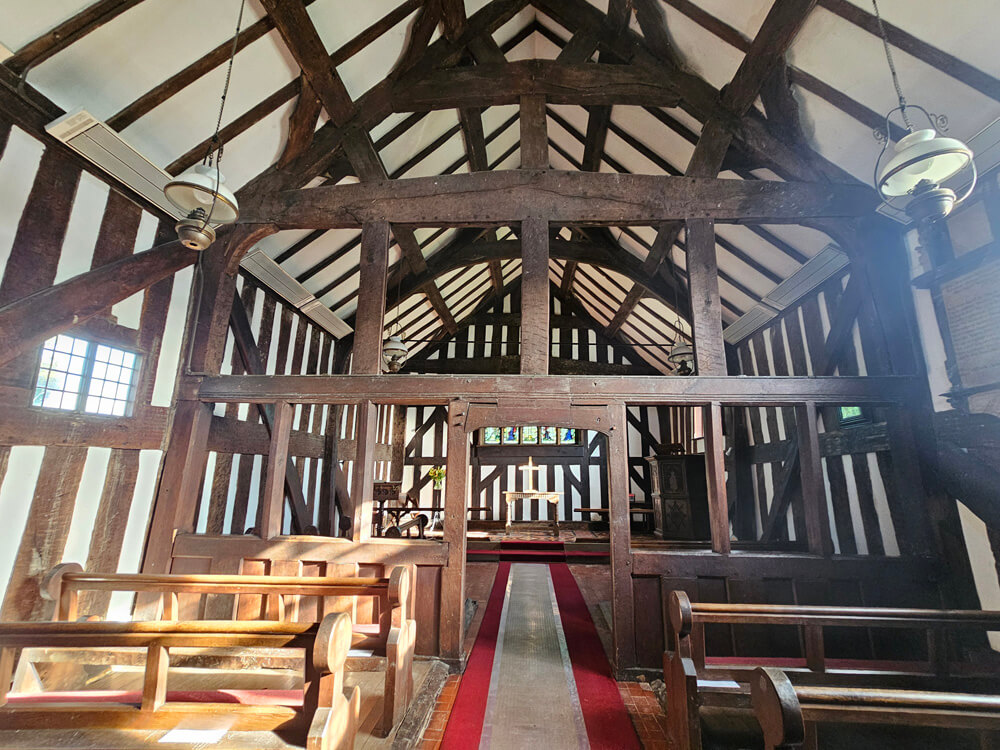
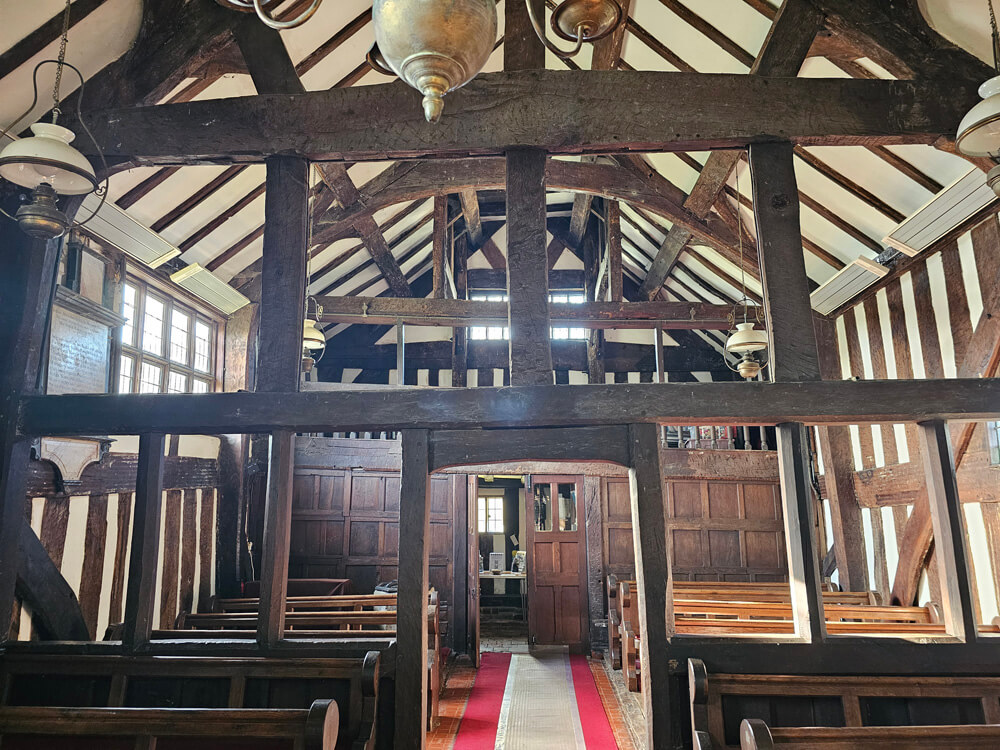
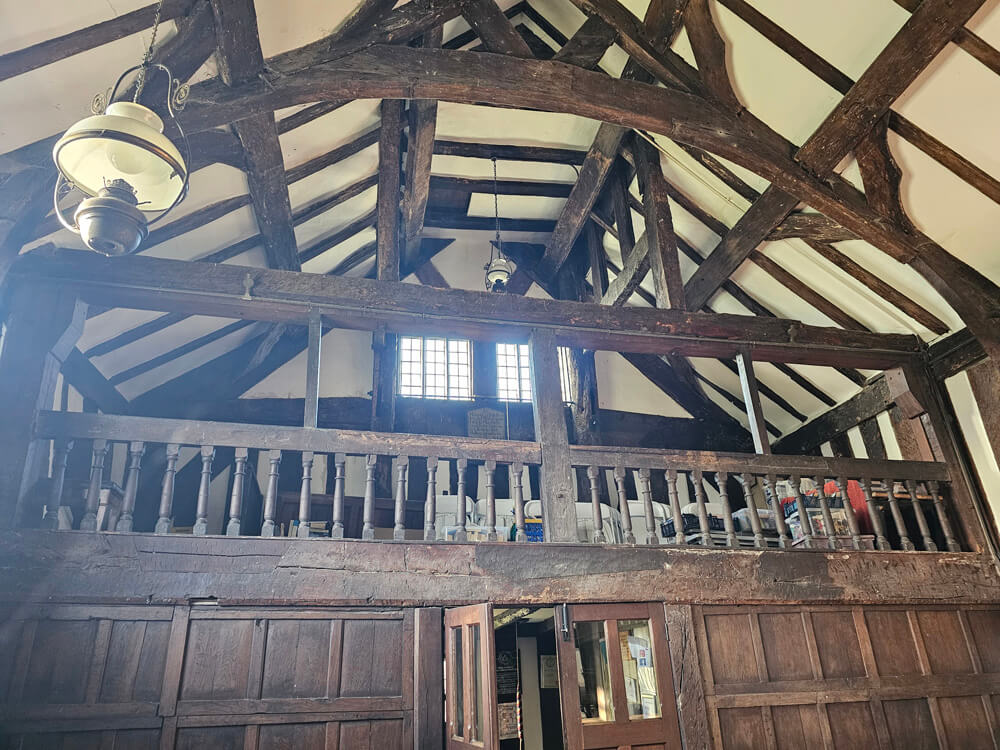
You enter the church through a porch and small vestibule, created by the erection of a wooden screen in 1588. When you enter the church you emerge into the impressive nave which is a forest of huge oak beams fixed with wooden pegs. A narrow turning staircase is used to reach the gallery above, which offers great views of the church interior. The gallery is sloping as the result of the way in which the massive piece of oak settled when originally built.
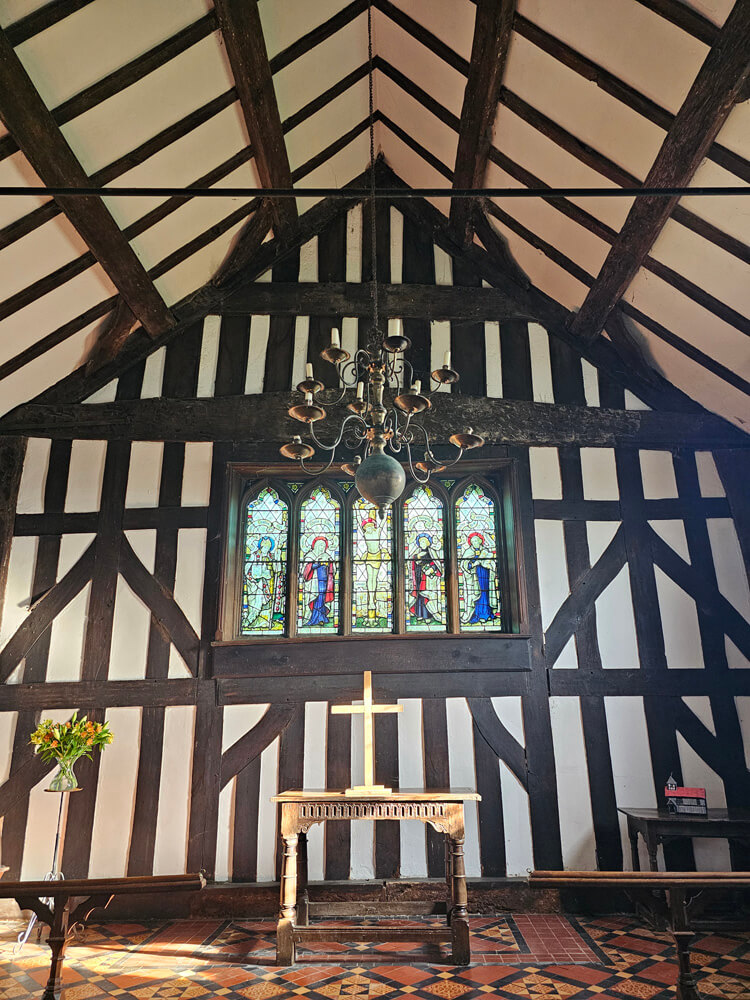
The church interior is divided into three by oak frames: one supports the gallery while the other serves as a chancel screen. Other features include the Saxon font from the original pre-1401 church, a Jacobean pulpit, an early Jacobean altar, a lectern with a chained bible dating from 1727, pews dating from the early 1700s, original terracotta tiles and Victorian patterned tiles, and a Charles Kempe window.
Photo Gallery.
Did you enjoy this post?
I hope you found this post useful. I put a great deal of time and effort in to building, maintaining and populating the website. If you like, you could say a small thank you by buying me a coffee. You don't have to, but it would be nice :)
Buy me a coffee
Stay up to Date
Follow me on my journey and get notified whenever a new post is published by following Kings & Castles on Facebook.
Follow MeExplore The Map
Discover the hundreds of castles, churches, monasteries, cathedrals and other historic locations that I've personally visited across England and Wales. Search by location, explore nearby sites and plan your next historical adventure.
Share: