All Saints Church, Pontefract
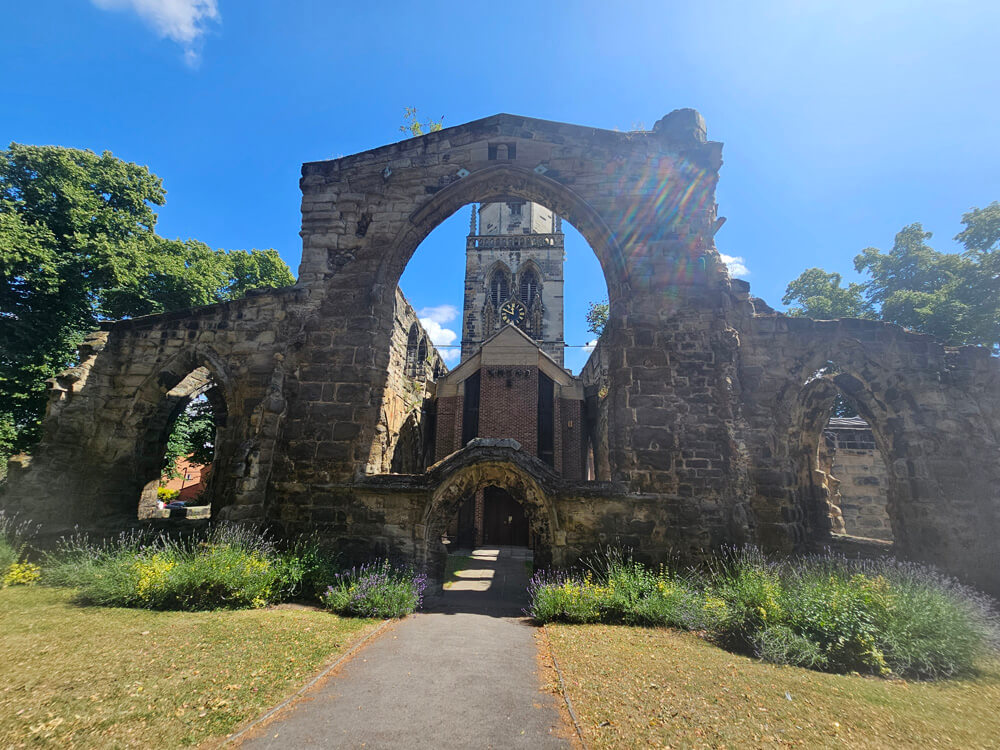
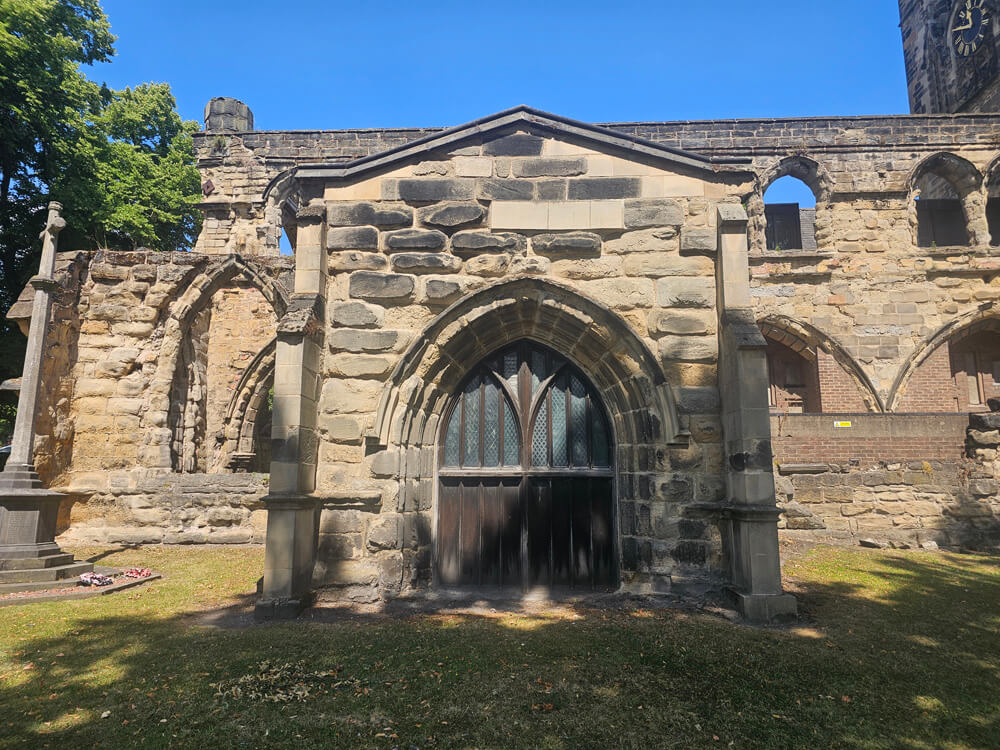
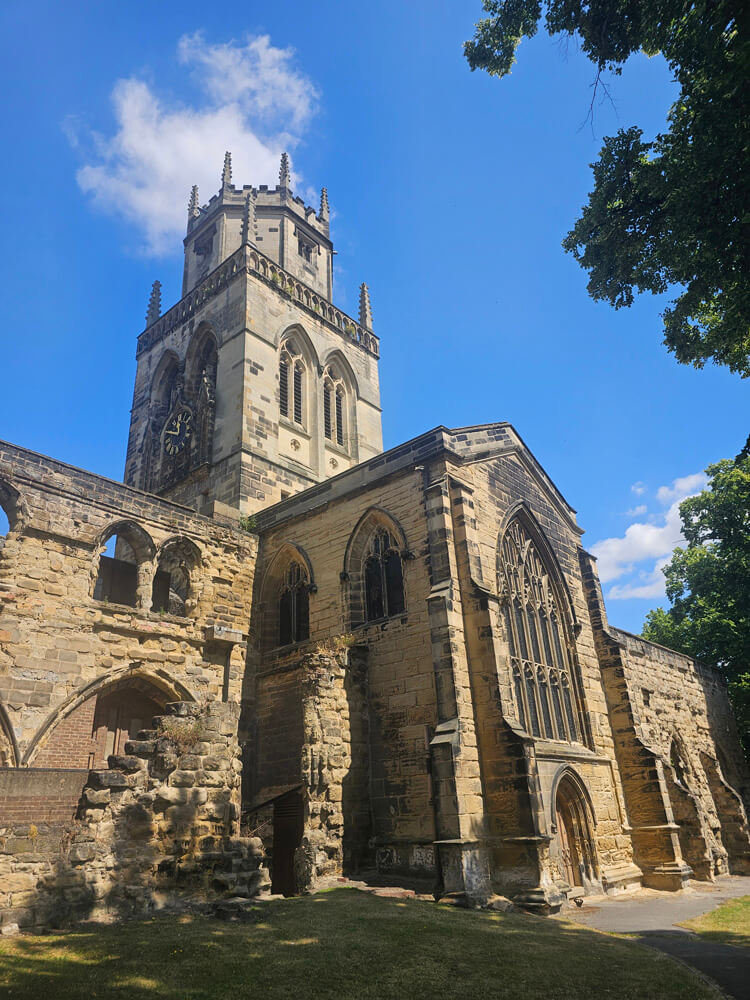
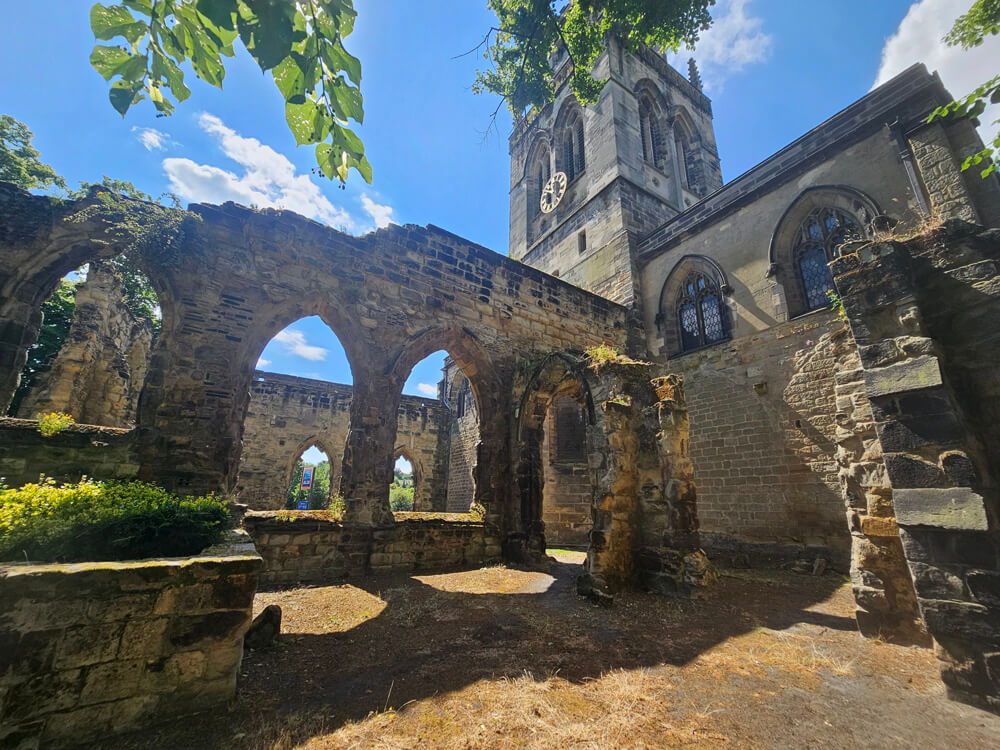
Standing beside Pontefract Castle, All Saints Church is one of the town’s most remarkable historic buildings. Although much of the medieval church now survives as a ruin, it remains a place of worship and provides a striking reminder of Pontefract’s long and turbulent history.
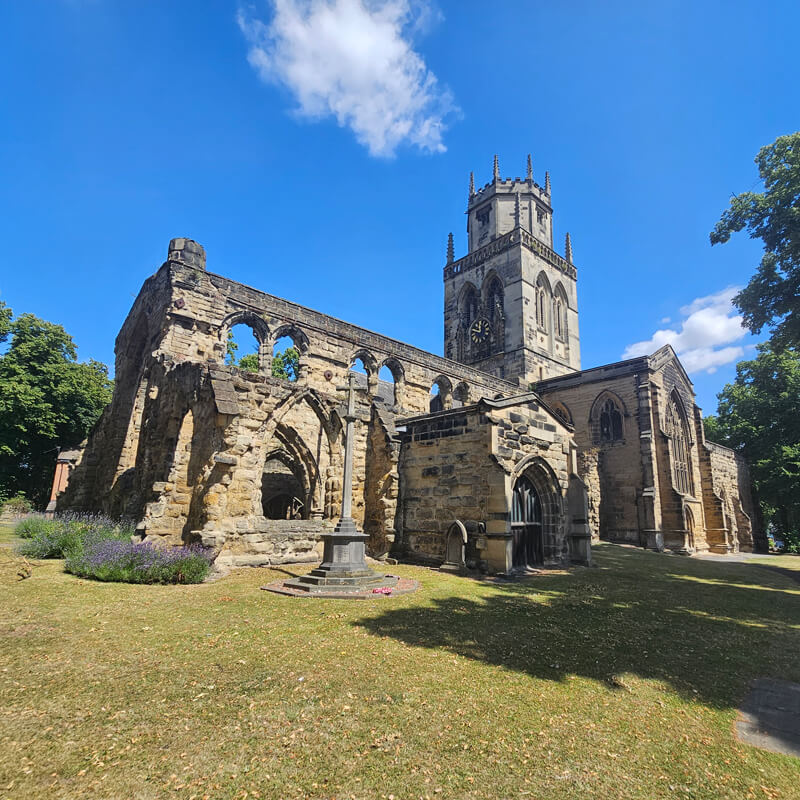
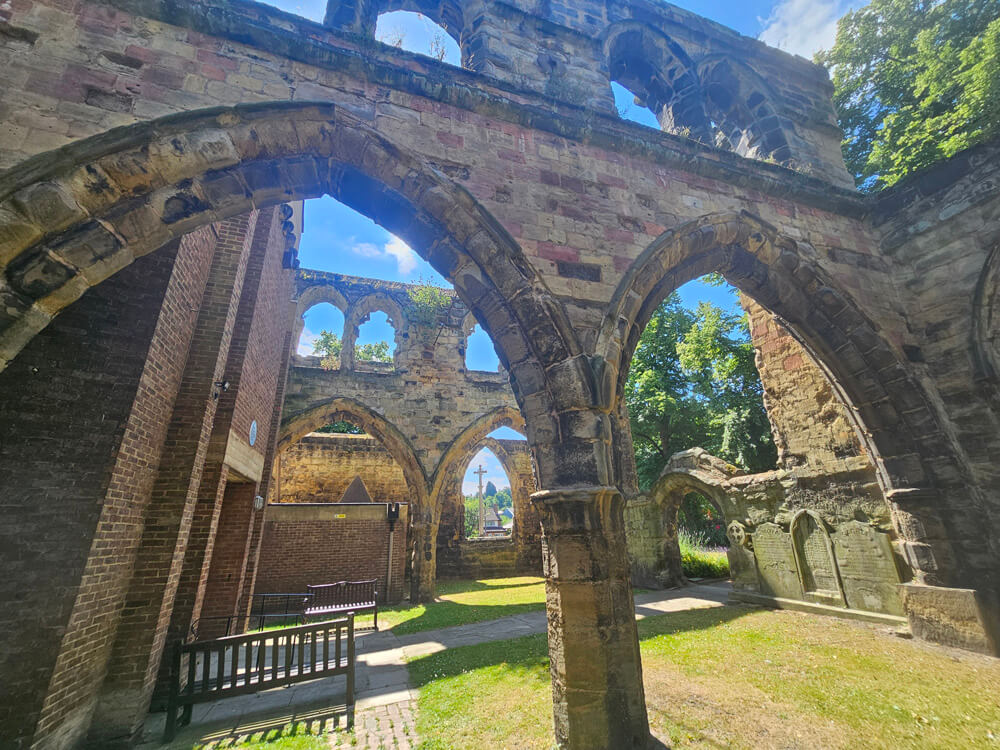
The origins of Christianity on the site may reach back to the Anglo-Saxon period. Archaeological investigations have found evidence of an earlier church and cemetery nearby, while the present building contains elements dating from the 12th or 13th centuries. Much of the surviving medieval structure, however, was developed during the 14th and 15th centuries, when All Saints became an impressive cruciform church built largely from local sandstone.
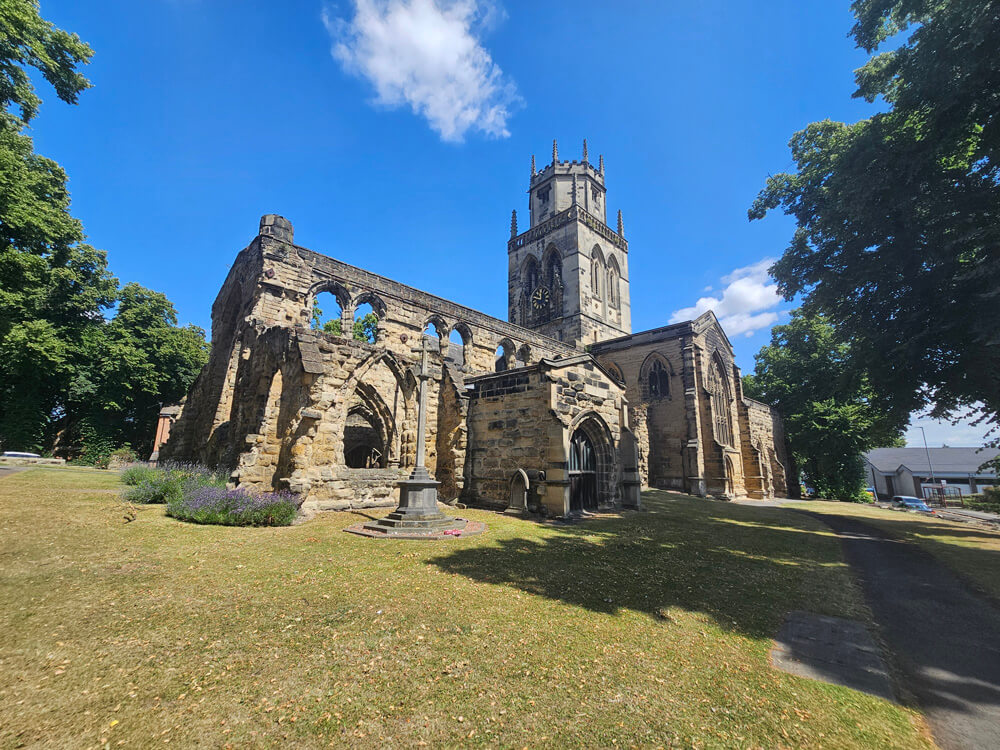
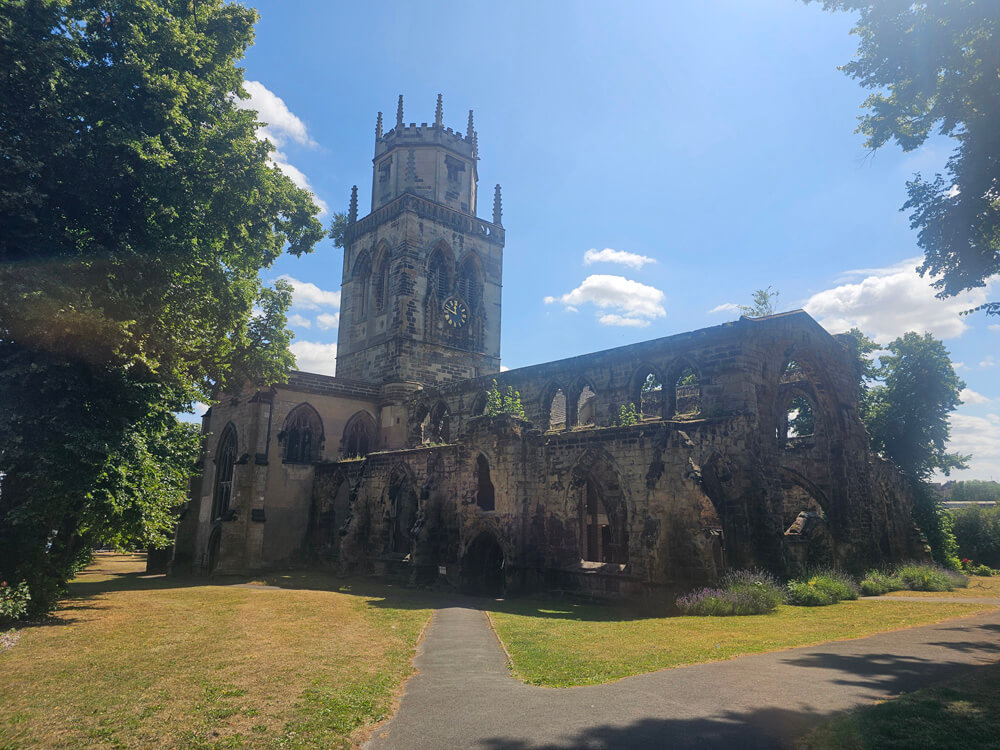
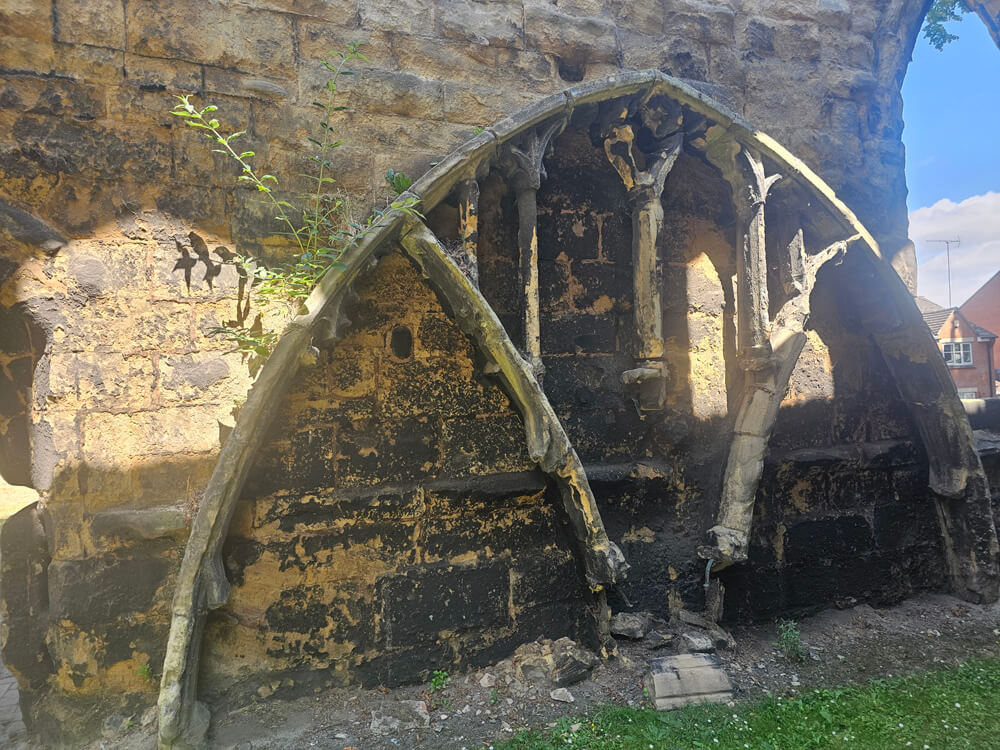
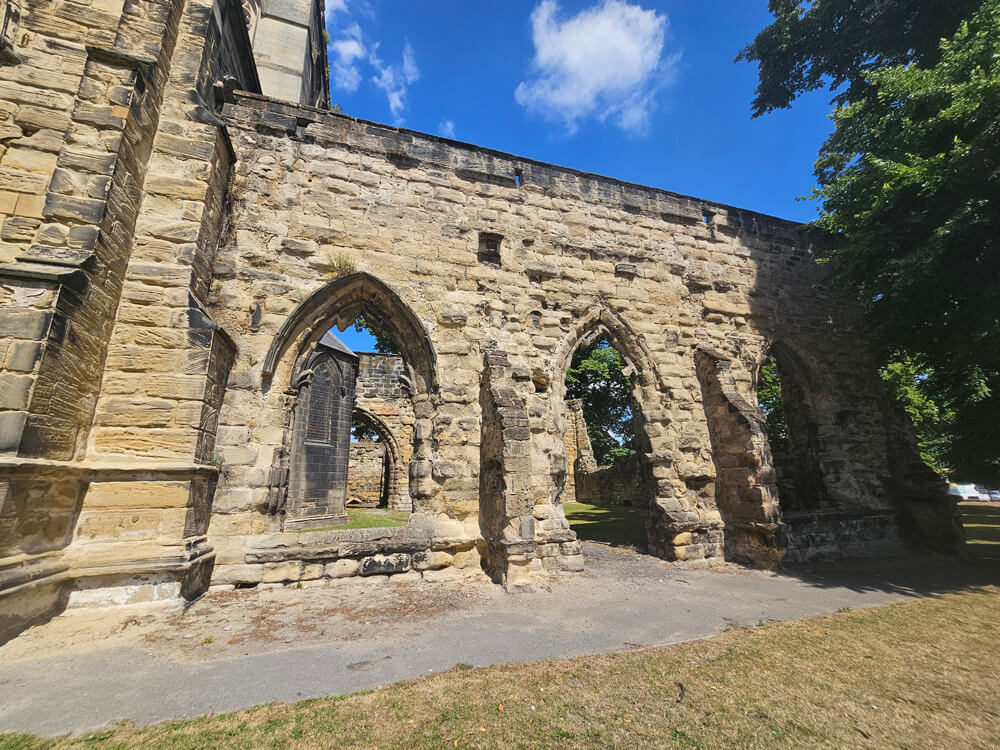
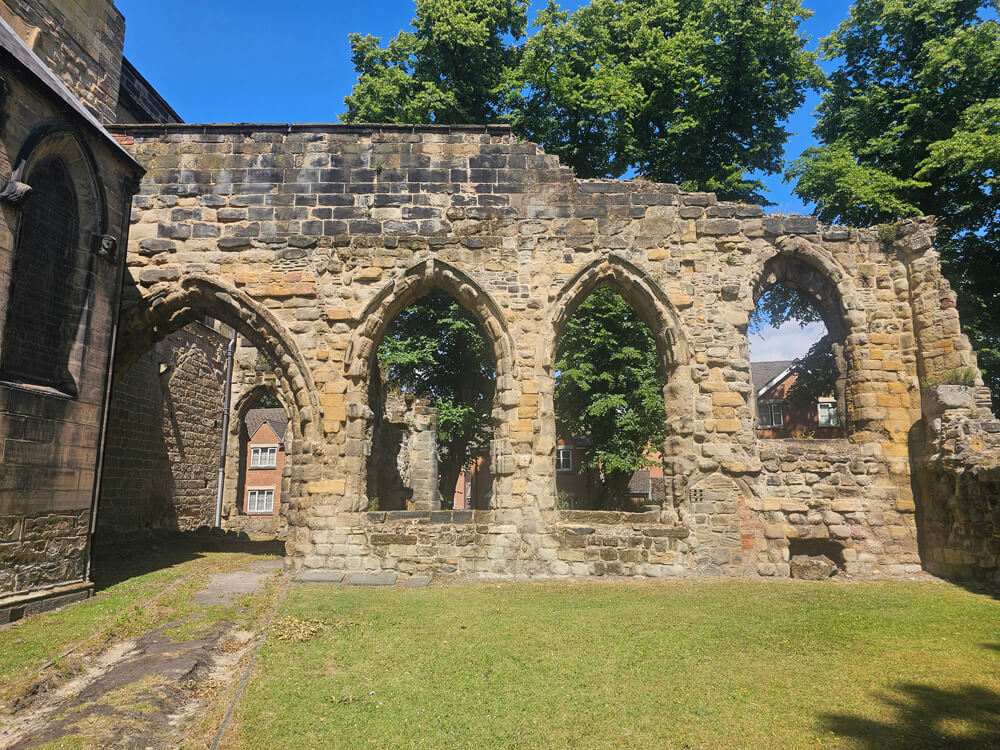
For centuries, All Saints was the principal parish church of Pontefract. Its proximity to the castle would eventually prove disastrous. During the English Civil War, Pontefract Castle was a strong Royalist centre, and the church became strategically important in the fighting. In 1644–45, All Saints was repeatedly occupied and attacked by Royalist and Parliamentarian forces. Cannon fire caused extensive damage, with historical accounts recording dozens of cannonballs striking the church in a single day. The soldiers also used parts of the ruined building for defensive positions and removed timber, lead and other materials. By 1649, the church had lost its roof and stood largely in ruins.
Following the destruction, St Giles Church became the main place of worship in Pontefract and was formally established as the town’s parish church in 1789. All Saints was subsequently restored in stages. In the 19th century, parts of the medieval building were repaired and adapted for worship. Further restoration followed in the 1960s, when architect George Pace designed a new church within the surviving medieval walls. The modern nave was completed in 1967, creating the unusual combination of a contemporary church enclosed by historic ruins.
One of All Saints’ most fascinating features is its medieval double-helix staircase, believed to date from around 1280. Two stairways spiral around a single central newel, making it an exceptionally unusual survival.
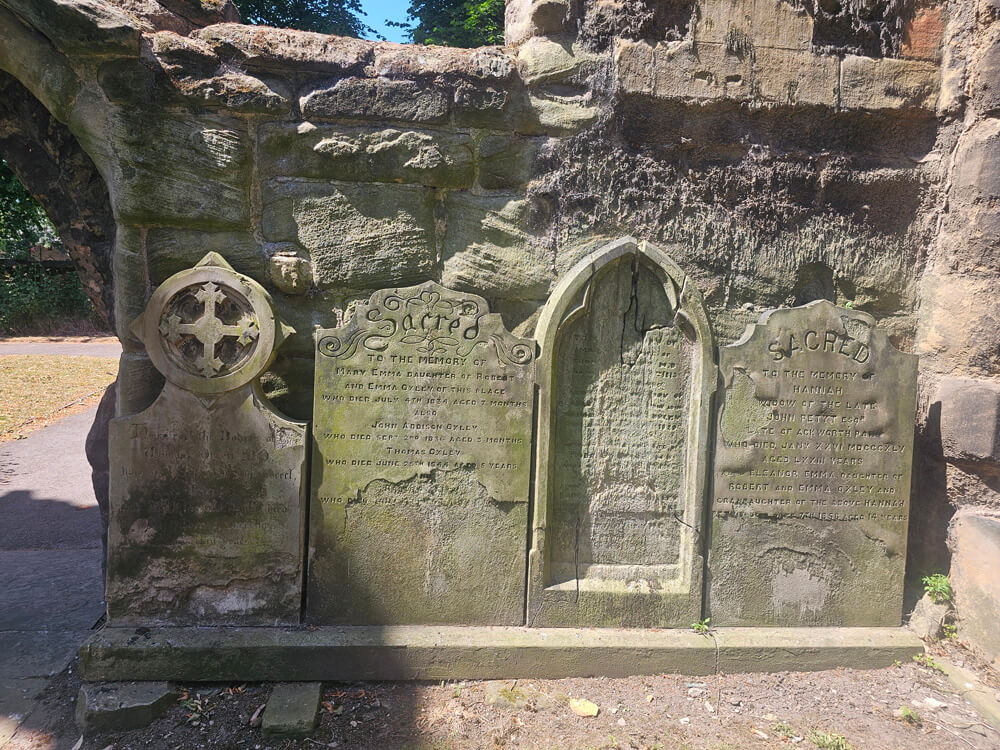
Today, All Saints continues as an active Church of England parish. Its combination of medieval architecture, Civil War scars and modern restoration makes it a unique part of Pontefract’s heritage – a church shaped as much by the town’s conflicts as by its centuries of faith and worship.
Photo Gallery.
Did you enjoy this post?
I hope you found this post useful. I put a great deal of time and effort in to building, maintaining and populating the website. If you like, you could say a small thank you by buying me a coffee. You don't have to, but it would be nice :)
Buy me a coffee
Stay up to Date
Follow me on my journey and get notified whenever a new post is published by following Kings & Castles on Facebook.
Follow MeExplore The Map
Discover the hundreds of castles, churches, monasteries, cathedrals and other historic locations that I've personally visited across England and Wales. Search by location, explore nearby sites and plan your next historical adventure.
Share: