Henry III
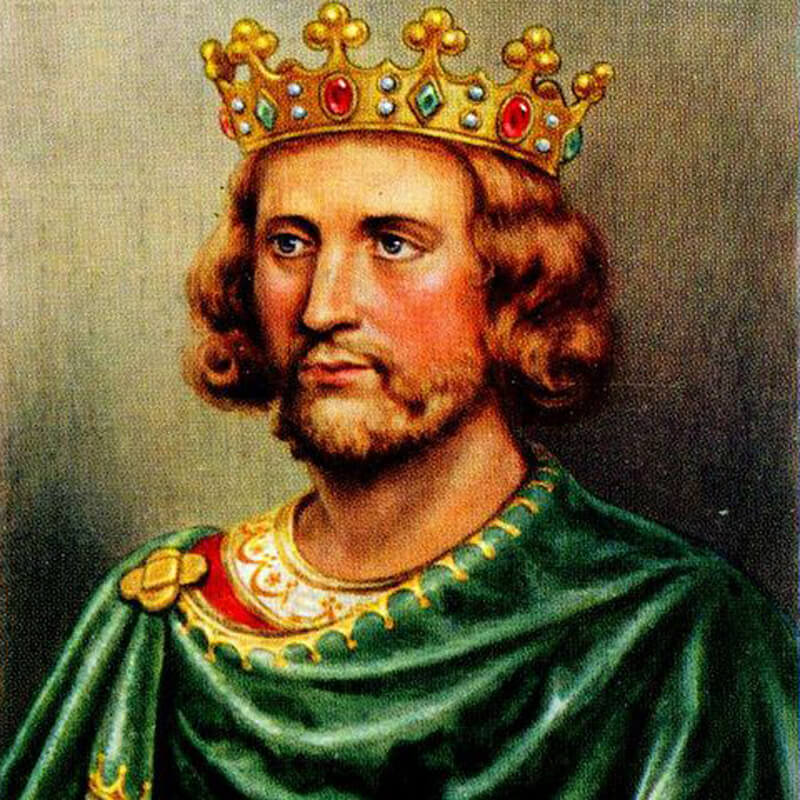
The son of King John and Isabella of Angoulême, Henry III became King of England, Lord of Ireland, and Duke of Aquitaine in 1216 when he was only nine years old, and reigned for an impressive 56 years until his death in 1272; one of the longest reigns in English history. However, Henry came to power at an extremely difficult time as England was divided by civil war. In the aftermath of the signing of the Magna Carta, Henry’s reign was defined by wars and rebellions.
Quick
Facts.
- Born: 1207
- Died: 1272
- Reign: 1216 - 1272
- House: House of Plantagenet
- Predecessor: John
- Successor: Edward I
Henry III, also known as Henry of Winchester was born in 1207 in Winchester, Hampshire, England. Henry was the elder son and heir of the unpopular King John and his second wife Isabella of Angoulême. Henry was just nine years old when his father died and he became King of England, Lord of Ireland, and Duke of Aquitaine, in the middle of the First Barons’ War.
Henry inherited not only the Kingdom of England but also the wider network of the Angevin Empire including Scotland, Wales, Poitou and Gascony. This domain had been secured by his grandfather, Henry II, who he was named after. However, what was left of the empire by this point was considerably smaller than what it once was, as Henry’s father, King John ceded control of Normandy, Brittany, Maine and Anjou to King Philip II of France.
Although Henry III is traditionally viewed as a weak and often ineffectual king, throughout his reign England experienced peace, stability, and prosperity. Henry III was extremely helpful, pious, and religious, and helped the poor people in England. However, his reign was marked by strife with his barons, led by Simon de Montfort, which resulted in the Second Barons’ War (1264–1267).
Because Henry was just a child when he became king, the country was ruled by a series of regencies until he came of age in 1227. He continued to rely on advisers who had guided him in his youth until he completely took over in 1234.
Henry’s first task as king was to bring an end to the civil war that he had inherited from his father. Henry was only nine years old, but he did have help from some powerful people, including Peter des Roches and Peter des Rivaux, and especially Sir William Marshal, Earl of Pembroke, who is often considered the greatest medieval knight of all. Sir William Marshal had served three kings already and he was made the Protector of the Kingdom – in effect, regent of England for the young Henry. Sir William Marshal defeated the rebel barons at the Battle of Lincoln in 1217.
Henry married Eleanor of Provence in 1236 and together they had five sons – Edward, who succeeded his father as Edward I, and Edmund, Earl of Lancaster, Richard, John, and Henry, who all died young. Their three daughters were Margaret, who married Alexander III of Scotland, Beatrice, who married Jean de Dreux Earl of Richmond, and Katherine who died young.
Henry did a lot to upset his barons. He was criticised for being too generous with land grants to foreigners. This was worsened after his marriage to Eleanor of Provence, when an influx of French in-laws took key positions at court, even becoming close advisors to the king and fuelling his idea that the monarch had absolute authority and need not listen to his barons. Like his father, Henry wasted a lot of money on failed military campaigns, and these necessitated such high taxes that the barons rebelled for a second time.
In 1258 a bungled deal with the Papacy threatened Henry with excommunication. This, together with Henry’s military defeats, high taxes and excessive spending brought about the main crisis of his reign. The Provisions of Oxford placed the king under the authority of a privy council selected by the barons to advise the king and oversee the entire administration. Like the earlier Magna Carta, the Provisions of Oxford demonstrated the ability of the barons to press their concerns in opposition to the monarchy. These constitutional reforms were designed to ensure that the king adhered to the rule of law and governed according to the advice of his barons. All of Henry’s disappointments exasperated the barons to such an extent that some supported the king’s brother-in-law Simon de Montfort, Earl of Leicester and made him, in effect, co-ruler with Henry.
The settlement made under the Provisions of Oxford began to break down in 1260 with quarrels between the Earl of Gloucester and Henry’s brother-in-law, the ambitious Simon de Montfort. Henry ultimately refused to abide by the reforms, sparking the Second Barons’ War. In 1264 the Second Barons’ War kicked off between the forces of a number of barons led by Simon de Montfort against the royalist forces of King Henry III.
In the same year, the rebel leader Simon de Montfort won a resounding victory at the Battle of Lewes. He captured Henry and his eldest son Prince Edward, set up a new government and made himself the most powerful man in the kingdom. The following year in 1265, Prince Edward escaped captivity and rallied the royalist forces, defeating and killing Simon de Montfort at Evesham before taking control of some aspects of the running of the kingdom from his weakened father.
Henry was restored, and although he spent much of the rest of his reign resolving the problems created by the rebellion, he still continued to be helpful, pious, and religious by continuing to help the poor people and improve life and health care in England. By 1270 the country was sufficiently settled and Prince Edward set off on crusade.
In early 1272, Henry’s health started to decline, and in November of the same year, he died at the age of 65 and was buried at Westminster Abbey, which he had largely rebuilt in the Gothic style during his reign. Because Henry was such a religious person, he was canonised two months after his death by Pope Gregory X. His eldest son and heir Prince Edward, who had in some respects been his father’s regent, became Edward I of England.
Henry III spent decades throughout his reign negotiating and withstanding direct challenges to his power. He raised taxes, made bad political decisions and angered his barons. Although Henry was extravagant and his tax demands were resented, he made many charitable donations and payments for building works, including the rebuilding of Westminster Abbey which began in 1245 and continued until his death. Rather than being a strong warrior king, instead he was pious and deeply religious, with a special devotion to St Edward the Confessor, and to some this made him look weak.
Many historians view Henry III as a weak but great king. His long and mostly successful 56-year reign was the longest in medieval English history.
Did you enjoy this post?
I hope you found this post useful. I put a great deal of time and effort in to building, maintaining and populating the website. If you like, you could say a small thank you by buying me a coffee. You don't have to, but it would be nice :)
Buy me a coffee
Stay up to Date
Follow me on my journey and get notified whenever a new post is published by following Kings & Castles on Facebook.
Follow MeExplore The Map
Discover the hundreds of castles, churches, monasteries, cathedrals and other historic locations that I've personally visited across England and Wales. Search by location, explore nearby sites and plan your next historical adventure.
Share: