Henry II
Henry II, also known as Henry FitzEmpress and Henry Curtmantle, was king of England from 1154 to 1189. He was the first of three Angevin kings of England and the first of 14 Plantagenet kings of England. He was famous for his quarrels with Thomas Becket, Archbishop of Canterbury, and with members of his own family; his wife Eleanor of Aquitaine, and his sons, including the future king Richard the Lionheart. Henry II ruled over an empire which stretched from the Scottish border to the Pyrenees, which was known as the Angevin Empire.
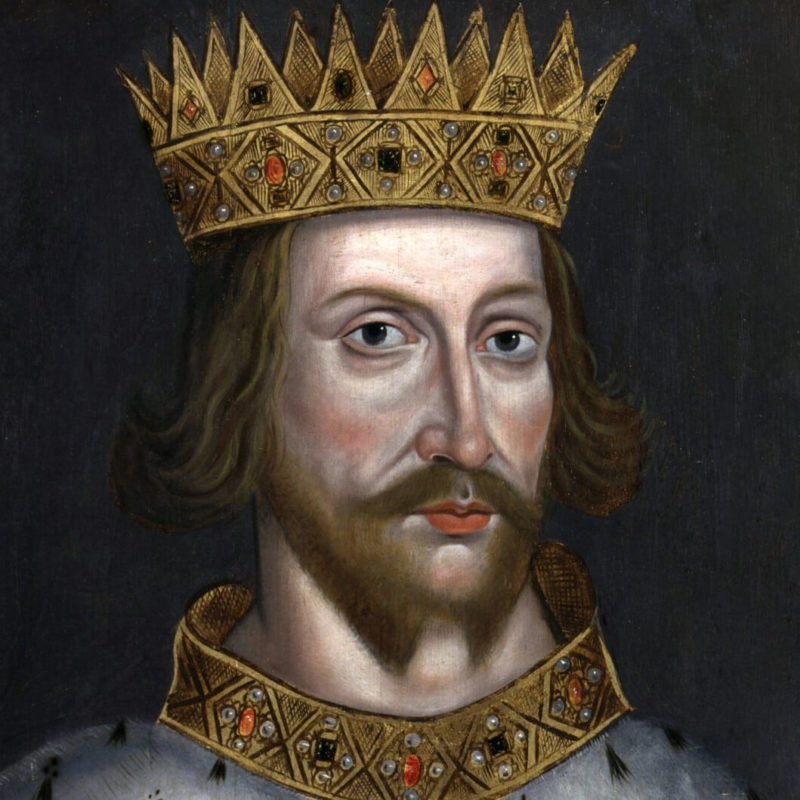
Quick
Facts.
- Born: 1133
- Died: 1189
- Reign: 1154 - 1189
- House: House of Plantagenet
- Predecessor: Stephen
- Successor: Richard the Lionheart
Henry II was born in 1133 in Le Mans, France. He was the eldest son of Empress Matilda (daughter of Henry I) and her second husband Geoffrey Plantagenet, Count of Anjou, and a great-grandson of William the Conqueror.
Henry became politically and militarily involved when he was a teenager by joining in the efforts of his mother, Matilda, to claim the English throne, at which time was held by Matilda’s cousin Stephen of Blois. Matilda and Stephen spent years trapped in a bitter civil war known as ‘The Anarchy‘, fighting for the throne of England which was disputed between the two cousins.
Henry invaded England in 1149 and again in 1153, but his second cousin, King Stephen, fought stubbornly against Henry and tried to ensure his son Eustace’s succession by having him crowned in 1152, which the church refused. The death of Stephen’s son and heir, Eustace, in 1153 helped lead to a negotiated peace under which Henry would inherit the throne after Stephen’s death. So when Stephen died in October 1154, under the Treaty of Wallingford, Henry ascended the throne as Henry II, the first of the Angevin and Plantagenet kings.
Henry was the inheritor of three dynasties. His father made him Duke of Normandy in 1150, and upon his father’s death in 1151, Henry inherited Anjou, Maine and Touraine. His marriage to Eleanor of Aquitaine brought him control of the Duchy of Aquitaine. The English conquest of Ireland began during Henry’s reign, and from 1171 he became the Lord of Ireland. As a result, by the 1170s Henry had expanded the Anglo-French domains and controlled England, substantial parts of Wales and Ireland, and most of France – an area that altogether was called the Angevin Empire. Because of Henry’s many French possessions, he spent more than half of his reign on the continent.
Henry II was intelligent, well educated, and could speak French, Latin, and English. He was one of the strongest, most energetic and imaginative rulers. England was very powerful during Henry’s reign, and experienced peace, stability, and prosperity. Henry brought many changes to England, strengthening the royal administration and making it more modern.
Henry curbed the power of the barons, but his attempt to bring the church courts under control was abandoned after the murder of Thomas Becket, Archbishop of Canterbury, in 1170. Henry attempted to change the relationship between church and monarchy, introducing his own courts and magistrates, roles traditionally played by the church, and often rejected Papal influence in order to enhance his own royal authority over the church.
Henry II and Thomas Becket were old friends who found themselves in dispute when Henry made Becket the Archbishop of Canterbury. Their dispute was over the role of the Church in England and Becket’s constant disagreements with the King’s wishes, which dominated Henry’s reign throughout the 1160s. Becket was trying to increase the power of church courts that had lost power when Henry made major changes to the legal system. Legend says that four knights heard Henry say, “Who will rid me of this turbulent priest?”, and thinking that they were acting on the king’s orders they killed Thomas Becket at Canterbury Cathedral. Henry was devastated that his knights had misinterpreted him and committed this deed in his name, so he did public penance to seek forgiveness from God and his subjects by dressing as a pilgrim, walked three miles barefoot to Becket’s tomb at Canterbury Cathedral and commanded the monks to whip him.
The biggest threat of Henry’s reign didn’t come from abroad or from the church, it came from within his own family. Henry and Eleanor of Aquitaine had eight children, two of whom would rule as king after his death. As his sons grew up his relationship with them grew more and more fractured as he struggled to find ways to satisfy their desires for land and immediate power. His sons became greedy and impatient and tensions rose over the future inheritance of the Angevin empire. Several battles ensued between Henry and his sons over many years, and his wife Eleanor would always side with their sons. She attempted to overthrow her husband in favour of her sons and for this she was locked up for 16 years.
The final few years of Henry’s reign were tormented by disputes with his sons. Henry II died of an illness and broken-hearted in 1189 at Chinon castle, Anjou, France. His eldest surviving son Richard succeeded him as king. Although he didn’t have a glorious end to his reign, Henry II was seen as a great king. His reign saw England become a global powerhouse. He improved peoples lives in England, stabilized the country, reformed the economy, and founded the English Common Law.
Did you enjoy this post?
I hope you found this post useful. I put a great deal of time and effort in to building, maintaining and populating the website. If you like, you could say a small thank you by buying me a coffee. You don't have to, but it would be nice :)
Buy me a coffee
Stay up to Date
Follow me on my journey and get notified whenever a new post is published by following Kings & Castles on Facebook.
Follow MeExplore The Map
Discover the hundreds of castles, churches, monasteries, cathedrals and other historic locations that I've personally visited across England and Wales. Search by location, explore nearby sites and plan your next historical adventure.
Share: