The Black Death
The Black Death was one of the most devastating pandemics in human history. It spread across Europe, Asia and parts of North Africa during the 14th century, killing millions of people. The pandemic reached Europe in 1347 and continued in severe waves for several years. It had a profound effect on medieval society, the economy, religion and everyday life.
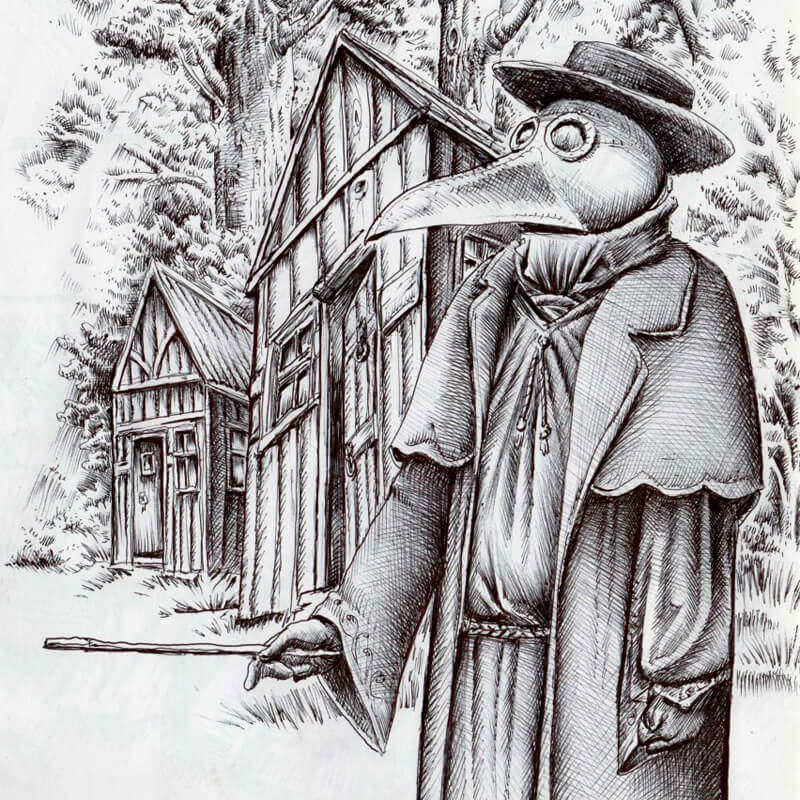
The Black Death was mainly caused by the bacterium Yersinia pestis. It was commonly spread through fleas that lived on infected rodents, particularly rats. Fleas could transmit the bacteria to humans when they fed on them. The disease could also spread between people through respiratory droplets in cases of pneumonic plague.
The disease probably originated in Central Asia before spreading westward along trade routes. In 1347, infected ships arrived in Mediterranean ports, allowing the plague to enter Europe. From there, it spread rapidly through towns, villages and trading centres. Medieval cities were particularly vulnerable because they were crowded and often had poor sanitation.
The symptoms of the plague were severe. Victims could develop fever, weakness, headaches and painful swellings called buboes, particularly around the armpits, neck and groin. Dark patches could appear on the skin, contributing to the name “Black Death”. In many cases, death occurred within days of the first symptoms. Medieval people had little understanding of the actual cause of the disease and no effective treatment for it.
The death toll was enormous. Historians estimate that tens of millions of people died in Europe, with some regions losing a third or more of their population. The exact number remains uncertain because medieval records were incomplete. The population decline was especially severe in some cities and rural communities.
The pandemic also caused major economic changes. With so many people dying, there was a shortage of workers. Labourers and peasants who survived could sometimes demand higher wages and better conditions. In England, for example, landowners struggled to maintain agricultural production. The government attempted to control wages through measures such as the Statute of Labourers of 1351, but these laws were difficult to enforce.
The Black Death also affected the social structure of medieval Europe. Traditional relationships between landlords and peasants began to change, and the scarcity of labour gave surviving workers greater bargaining power. Although the plague did not immediately destroy feudalism, it contributed to long-term changes that weakened the old system.
Religion played an important role in people’s responses to the pandemic. Many people turned to prayer and religious processions, believing that the disease was a punishment from God. Some religious groups, known as flagellants, travelled from place to place performing acts of public penance. At the same time, fear and desperation led to the persecution of minority communities, particularly Jewish populations, who were falsely accused of causing or spreading the plague.
The Black Death also left a lasting mark on culture. Art became increasingly concerned with death and mortality. Images of skeletons, graves and the Dance of Death became popular reminders that death could affect people of every social class. Literature also reflected the trauma of the period. Geoffrey Chaucer’s The Canterbury Tales, written in the decades after the plague, provides valuable insight into medieval society, although it is not simply a record of the Black Death.
The Black Death gradually declined after its initial outbreaks, but plague continued to return to Europe for centuries. The pandemic transformed medieval society and demonstrated how quickly disease could spread through interconnected populations.
Ultimately, the Black Death was more than a medical disaster. It was a major turning point in European history. Its enormous death toll changed patterns of work, wealth, population and social relationships. The consequences continued to shape European society long after the initial pandemic had ended.
Did you enjoy this post?
I hope you found this post useful. I put a great deal of time and effort in to building, maintaining and populating the website. If you like, you could say a small thank you by buying me a coffee. You don't have to, but it would be nice :)
Buy me a coffee
Stay up to Date
Follow me on my journey and get notified whenever a new post is published by following Kings & Castles on Facebook.
Follow MeExplore The Map
Discover the hundreds of castles, churches, monasteries, cathedrals and other historic locations that I've personally visited across England and Wales. Search by location, explore nearby sites and plan your next historical adventure.
Share: