Leofric, Earl of Mercia
Leofric, Earl of Mercia, was one of the most powerful noblemen in England during the reign of Edward the Confessor. As Earl of Mercia, he controlled a large and important territory in the Midlands and played a significant role in the political affairs of late Anglo-Saxon England. He is also remembered through the famous legend of his wife, Lady Godiva.
Early Life and Rise to Power
Little is known about Leofric’s early life. He came from an influential Mercian family and rose to prominence during the reign of King Cnut, who conquered England in 1016. Cnut reorganised the country into large earldoms, allowing powerful nobles to govern extensive territories on behalf of the king.
Leofric became Earl of Mercia around 1032, during the reign of Cnut’s son Harthacnut or shortly afterwards. His earldom covered much of central England and made him one of the three or four most powerful nobles in the kingdom.
Leofric and Edward the Confessor
When Edward the Confessor became king in 1042, Leofric remained an important supporter of the monarchy. He was a rival of Godwin, Earl of Wessex, whose family had become extremely powerful.
Godwin’s influence extended across much of southern England, while Leofric’s power was concentrated in Mercia and the Midlands. Their rivalry reflected a wider struggle among England’s great earls for influence over the king.
In 1051, a serious political crisis occurred when King Edward came into conflict with the Godwin family. Leofric supported Edward and helped prevent the crisis from developing into a civil war. The Godwin family was temporarily driven into exile, although they returned to England the following year.
Leofric generally maintained a cautious relationship with the king and avoided challenging Edward’s authority directly. His political influence helped preserve the balance between the monarchy and the powerful earls.
Leofric and Lady Godiva
Leofric’s name is inseparably connected with Lady Godiva, his wife. She was a wealthy and influential noblewoman who, according to later tradition, persuaded Leofric to reduce or remove a heavy tax imposed on the people of Coventry.
The most famous version of the story claims that Leofric agreed to reduce the tax only if Godiva rode naked through the streets of Coventry. She supposedly did so, covered only by her long hair, after asking the townspeople to remain indoors.
This story is famous, but historians generally regard the naked ride as a later legend rather than a historical event. The earliest surviving accounts do not mention it. Nevertheless, Godiva was a real historical figure, and records indicate that she was a major benefactor of religious institutions.
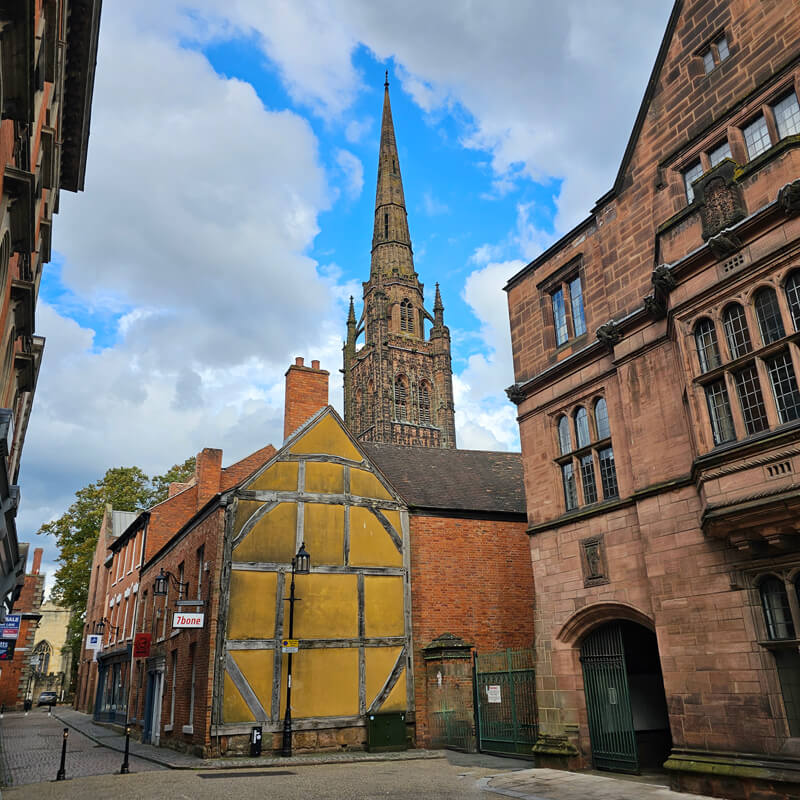
Leofric and Godiva were particularly associated with Coventry. They supported the foundation or development of Coventry’s religious community, which became an important centre of learning and worship.
Religious and Cultural Patronage
Leofric was a significant patron of the Church. He and Godiva donated land, money and valuable objects to religious institutions. Their support helped strengthen Coventry’s importance in the Midlands.
Leofric’s patronage also reflected the growing importance of monasteries and churches in Anglo-Saxon England. Religious centres were not only places of worship but also centres of education, administration and record-keeping.
Death and Legacy
Leofric died in 1057, probably at his estate at Kings Bromley in Staffordshire. He was buried at Coventry, where he had established a lasting connection with the city.
After his death, his earldom passed to Ælfgar, his son. Ælfgar continued to play an important role in English politics and later became Earl of Wessex as well as Mercia.
Leofric’s career represents the power and influence enjoyed by England’s great earls during the final decades of Anglo-Saxon rule. He was wealthy enough to challenge other nobles, yet generally loyal to the monarchy. His relationship with Edward the Confessor helped maintain political stability during a period of intense rivalry.
Today, Leofric is perhaps best known because of the legend of Lady Godiva. However, the historical Leofric was much more than the husband in a famous story. He was a powerful Mercian ruler, a supporter of the Church and an important political figure during one of the most fascinating periods in English history.
Did you enjoy this post?
I hope you found this post useful. I put a great deal of time and effort in to building, maintaining and populating the website. If you like, you could say a small thank you by buying me a coffee. You don't have to, but it would be nice :)
Buy me a coffeeMore People Profiles
View all People Profiles
Stay up to Date
Follow me on my journey and get notified whenever a new post is published by following Kings & Castles on Facebook.
Follow MeExplore The Map
Discover the hundreds of castles, churches, monasteries, cathedrals and other historic locations that I've personally visited across England and Wales. Search by location, explore nearby sites and plan your next historical adventure.
Share: