Godwin, Earl of Wessex
Godwin of Wessex was an 11th-century Anglo-Saxon nobleman who became one of the most powerful men in England under the Danish king Cnut the Great and during the reign of Edward the Confessor. Godwin was the founder of the House of Godwin and left a legacy as a Kingmaker.
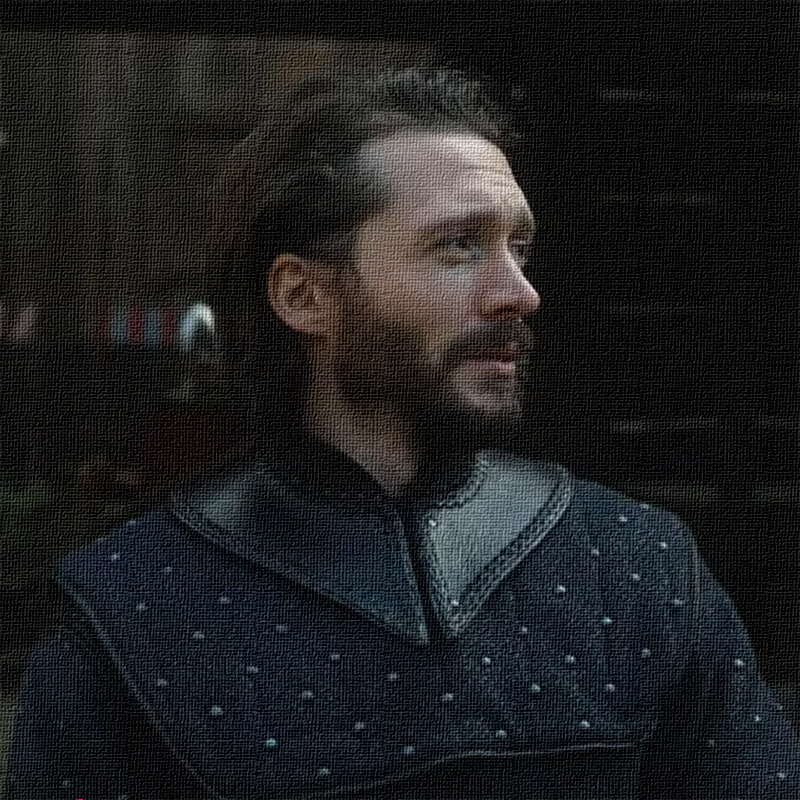
House of Godwin
Godwin, also spelled Godwine, was born around 1001 and was believed to be the son of a South Saxon (Sussex) thegn called Wulfnoth Cild. Godwin’s rapid rise to power came when the Danish king Cnut seized the English throne in 1016, and although an Anglo-Saxon, Godwin became a favourite of the Danish king and he made him the earl of Wessex around 1018 – 1020.
His position as a close advisor of King Cnut remained strong throughout Cnut’s reign, even leading him to accompany Cnut on an expedition to Denmark between 1019 and 1023 where he married Gytha Thorkelsdóttir, the sister of a Danish earl who was married to Cnut’s sister.
When Cnut died in 1035, the English throne was disputed between Harold Harefoot, Cnut’s son with his first wife Ælfgifu of Northampton, and Harthacnut, his son by his second wife Emma of Normandy, the widow of Æthelred the Unready. What made it more complicated was that Emma of Normandy also had two sons from her marriage with the previous king of England, Æthelred the Unready; Alfred Ætheling and Edward (future King Edward the Confessor) who were both living in exile in Normandy and were both Cnut’s stepsons.
The Kingmaker
A power struggle ensued between Cnut’s sons, but Harthacnut, crowned king of Denmark, was busy dealing with a Norwegian invasion of his kingdom of Denmark, so it was agreed that Harold Harefoot should act as English regent for the two half-brothers. Godwin threw the full weight of his influence behind the claim of Harold Harefoot and his determination to secure the crown for him resulted in him betraying Emma of Normandy and her sons.
In 1036 Edward and his brother Alfred Ætheling made their way to England from exile in Normandy to visit their mother, Emma of Normandy. However, they were intercepted by Godwin, who handed him to Harold Harefoot. Edward managed to escape and fled back to Normandy, but Alfred wasn’t so fortunate. Young Alfred had his eyes gouged out and later died from his injuries. Godwin’s responsibility for the murder was disputed, his reputation tainted, but he nevertheless managed to maintain his powerful position. Shortly after, with Harthacnut still dealing with threats to his kingdom in Denmark, Harold Harefoot was recognised as king, almost certainly with Godwin’s support.
Nothing was more important to Godwin than his own self-interest, so he continued to be loyal to kings who would best ensure his position of power. Therefore when Harold Harefoot died in 1040 Godwin threw his full support behind Cnut’s other son, Harthacnut, and backed his successful accession to the throne of England. Following Harthacnut’s death in 1042 Godwin switched his allegiance once again, this time moving his support to the last surviving son of Æthelred the Unready and Emma of Normandy, Edward the Confessor. Despite the crimes he had committed against Edward’s brother, Alfred Ætheling, Godwin played an important role in securing the throne for Edward.
Edward the Confessor’s reign restored the native royal house of Wessex to the throne of England, a branch now intertwined with the Danish-Norman dynasty of Emma of Normandy. Godwin further cemented his power three years later by marrying his daughter Edith to King Edward in 1045, ensuring he remained the most powerful man in England, second only to the King. Nevertheless, having spent most of the previous thirty years in exile in Normandy, Edward wanted to throw off Godwin’s influence so that he would be free to fill his court with Norman courtiers.
Godwin’s Downfall
As Edward drew advisors, nobles and priests from his, and his mother’s, Norman-French circle to develop his own power base, Godwin’s loyalty to Edward waned as he became increasingly opposed to the growing Norman influence of Edward and his court. As a test of power, Godwin was ordered to punish the men of Dover who had defied a Norman lord, but Godwin refused, choosing to champion his own countrymen against a visiting foreign power and defying his own king. As a result, only five years after his daughter’s marriage to the King, Godwin, along with his wife and sons, were exiled in 1051. Wulfnoth, the youngest of Godwin’s sons, was given as a hostage to Edward as assurance of Godwin’s good behaviour and support during their exile.
However, Godwin refused to give up his grip on power easily, and as Edward’s pro-Norman policies aroused widespread hostility, Godwin seized his opportunity and emerged from exile the next year with his sons and an army. To avoid a civil war the king was forced to make terms with Godwin, and Norman supporters of King Edward fled England. It’s likely at this point that Wulfnoth was taken away by the fleeing Normans and taken to Normandy, where he was handed over to Duke William of Normandy (William the Conqueror).
Godwin was restored to his position as Earl of Wessex and his lands were returned to him. Edward formed a closer alliance with Godwin’s son Harold (future King Harold Godwinson) and the majority of Edward’s remaining Norman favourites were exiled. Soon after his restoration to the earldom of Wessex, Godwin died in April 1053 from a sudden illness, possibly a stroke, but his legacy as a Kingmaker only continued to strengthen after his death.
The Godwinsons
Godwin had six sons and one daughter, but his eldest son Sweyn died a year before him, leaving his second son, Harold Godwinson, as the heir apparent of the Godwinson family. Following the death of their father, the Godwinsons managed to retain their hold on England. Harold Godwinson took over his father’s earldom of Wessex and powerful influence, making him overlord of roughly the southernmost third of England. His other sons went on to gain increasing positions of authority across the country. Tostig Godwinson took the earldom of Northumbria, approximating to England’s northern third. Leofwine Godwinson, together with his brother Gyrth Godwinson, controlled the entirety of East England, including the earldoms of Kent, Essex, Middlesex, Hertford, Surrey, East Anglia, Cambridgeshire, Oxfordshire, and probably Buckinghamshire. Wulfnoth however, was still in captivity in Normandy.
When Edward the Confessor died in January 1066, Harold Godwinson succeeded to the throne of England. Now the king of England in his own right, and with the support of his brothers as loyal earls, the House of Godwin looked set to found a multi-generational royal dynasty, but instead Harold’s reign was cut short by William the Conqueror after just nine months when he was overthrown and killed in the Norman Conquest of England.
Edward the Confessor may have named Harold as his heir on his deathbed, but he’d already promised the throne to his cousin, Duke William of Normandy, and Harold had swore an oath of fealty to William and promised to protect his claim to the English throne. So when Harold became King of the English in January 1066, this inevitably led to conflict and chaos when William found out that the promise made to him had been broken, and he openly declared his intention to take the English throne.
Harold was keen to unify England in the face of the grave threat from William of Normandy. But a new threat emerged in the form of his brother Tostig, who Harold had previously exiled to ensure peace and loyalty in the north. Tostig lost his earldom of Northumbria when Harold sided with Northumbrian rebels, declaring him outlawed, after he was said to have repressed the Northumbrians and murdered several members of leading Northumbrian families. Tostig plotted vengeance, leading to the fateful confrontation and enmity between the two Godwinsons.
Tostig made contact with the king of Norway, Harald Hardrada, pledged his allegiance to him and persuaded him to invade England to claim the English throne. Hardrada’s army and Tostig invaded northern England and gained some victories. Harold raced north with an English army, and on 25th September 1066, surprised his brother Tostig at Stamford Bridge and defeated them. Hardrada and Tostig were killed and the majority of their army was wiped out.
Meanwhile, William of Normandy had gathered his forces and landed on the south coast of England. Having just defeated Harald and Tostig in the north, Harold hastened southward, marching his exhausted army 240 miles south where he met William near Hastings. The two armies clashed at the Battle of Hastings on 14th October 1066, where after nine hours of fighting, Harold Godwinson was killed alongside his brothers Gyrth and Leofwine and his forces were defeated. William took the throne as King William I, bringing an end to the age of the Saxon kings and bringing with him his Norman dynasty.
The youngest brother, Wulfnoth, remained in captivity, being moved from Normandy to England after the Conquest, where he died at Winchester in 1094, still a prisoner. It is unknown if he ever fathered children.
Edith lost her eldest brother Sweyn in 1052, followed by her father in April 1053. She then lost her husband, the King, Edward the Confessor in January 1066. Four of her remaining brothers, Tostig, Harold, Gyrth and Leofwine, were all killed at the battles of Stamford Bridge and Hastings later in the same year. Her youngest brother Wulfnoth had been held prisoner almost his entire life, from childhood until his death. Edith was therefore the only senior member of the Godwin family to survive the Norman conquest, free and alive.
Edith of Wessex died at Winchester in December 1075 and was buried together with her husband, King Edward the Confessor, in Westminster Abbey; her funeral was arranged by William the Conqueror.
Did you enjoy this post?
I hope you found this post useful. I put a great deal of time and effort in to building, maintaining and populating the website. If you like, you could say a small thank you by buying me a coffee. You don't have to, but it would be nice :)
Buy me a coffeeMore People Profiles
View all People Profiles
Stay up to Date
Follow me on my journey and get notified whenever a new post is published by following Kings & Castles on Facebook.
Follow MeExplore The Map
Discover the hundreds of castles, churches, monasteries, cathedrals and other historic locations that I've personally visited across England and Wales. Search by location, explore nearby sites and plan your next historical adventure.
Share: