The Medieval City of Coventry
Coventry has a rich and fascinating history, from the enduring legend of Lady Godiva to its rise as one of the largest and most important cities in medieval England. Its prosperity was built on the wool and cloth trades, while its magnificent churches, historic guildhall and medieval streets reflect the wealth and influence the city once enjoyed.
Early History
Little is known about the earliest history of Coventry, but prior to its existence there were Celtic settlements nearby, which came to be occupied by the Romans, and later by Anglo-Saxon invaders.
The first Anglo-Saxon settlement grew up around an early-8th century Saxon nunnery founded by St Osburga, some time around AD 700. It is likely that it is from this first Anglo-Saxon settlement that Coventry got its name. Although there are various theories of the origin of the name, the most widely accepted is that it was derived from a combination of Old English words meaning ‘Cofa’s tree’; a tree marking the boundary of the settlement owned by a Saxon landowner named Cofa. Another popular theory for the settlement’s name is in relation to the nunnery/convent, which is ‘Coventre’; derived from the words ‘Coven’, meaning a ‘Convent’, and the Celtic word ‘tre’, meaning a town or settlement, which would give you the name ‘Convent Town’.
Leofric and Godiva
In the year 1016, the Danish King Cnut and his army of Danes laid waste to many towns and villages in Warwickshire in a bid to take control of England, and when they reached the settlement of Coventry they destroyed the Saxon nunnery, which was left in ruins.
Coventry owes its prominence in English history mostly to two people; Earl Leofric of Mercia and his wife, Lady Godiva (a corruption of her given name, “Godgifu”). Leofric was appointed Earl by Cnut when he became King of England, and Leofric became one of the richest and most powerful men in the country, while Godiva was already a woman of high status before their marriage. Between them, Leofric and Godiva controlled vast estates. Together, they rebuilt on the remains of the destroyed Saxon nunnery and founded a Benedictine monastery in 1043 dedicated to St Mary, which became the Priory of St Mary, and the priory church was later raised to cathedral status.
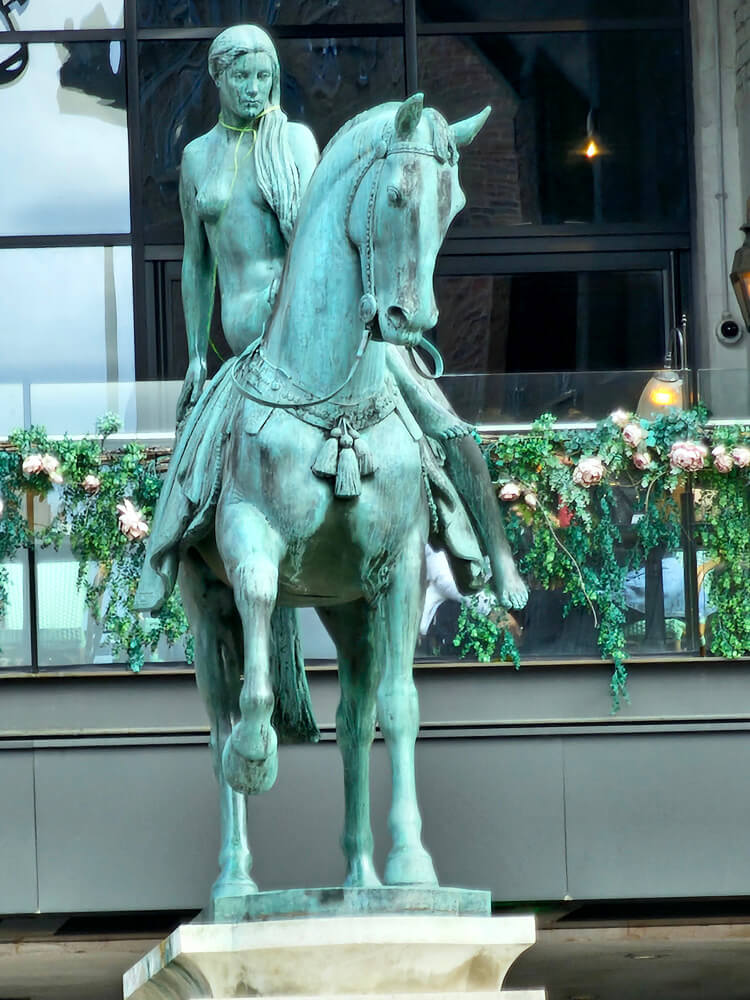
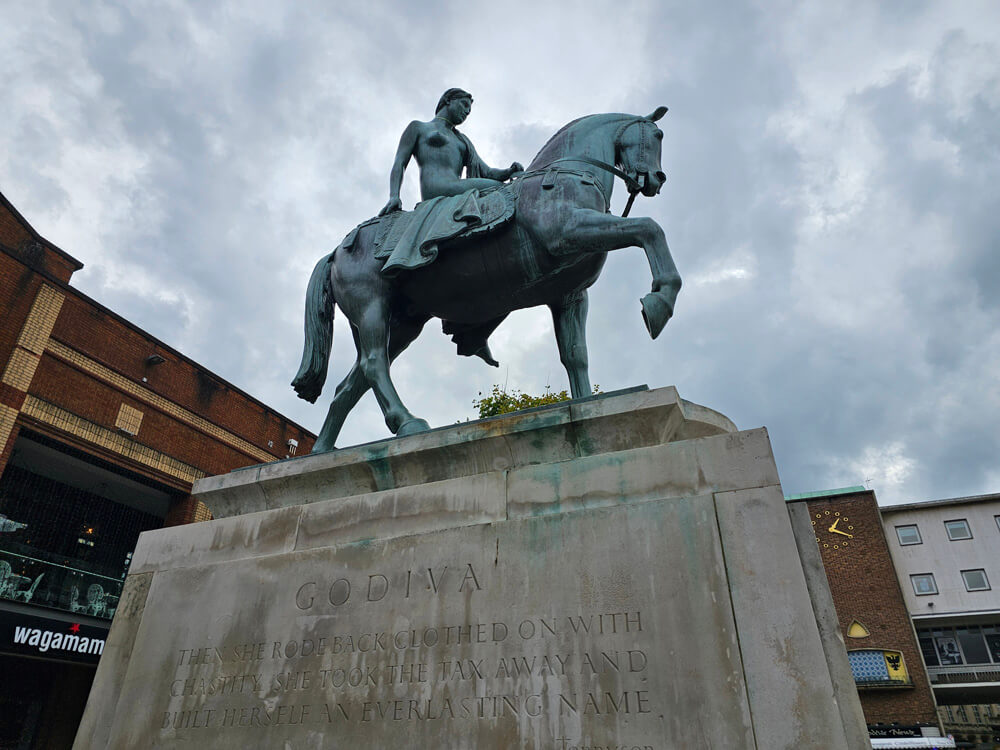
It was during this time that the legend of Lady Godiva riding naked on horseback through the streets of Coventry, to protest against unjust taxes levied on the citizens of Coventry by her husband, was alleged to have occurred. Although this story is regarded as a myth by modern historians, it has become an enduring part of Coventry’s identity. You can read more about Lady Godiva and her naked horseback ride here.
After the Norman Conquest
After the Norman Conquest of 1066 the Mercian see was moved from Chester to Coventry, at which point Coventry was just a modest sized town. As a result, St Mary’s Priory became both a monastic church and a cathedral, which gave Coventry a boost to become a major urban area over the medieval period.
The Normans built a castle in Coventry in the early 12th century but it didn’t last long. It was successfully held against King Stephen during the civil war known as ‘The Anarchy‘ in the middle of the 12th century, however, it was damaged so badly during a rebellion against Henry II that it was demolished in the late 12th century. The castle disappeared from the historical records by the 16th century and nothing of it exists today. In fact, the exact location of the castle is unknown, but it is assumed the name “Broadgate”, Coventry’s city centre, comes from the area around the castle gates.
A City of Two Halves
Merchants and tradesmen settled around the monastery and castle, a market was established at the monastery gates, and new houses were built. At this time, Coventry was a city of two halves, split into two districts; the ‘Prior’s Half’ and the ‘Earl’s Half’, administered by the Prior of St Mary’s and the Earls of Chester respectively. Two churches were built; Holy trinity for the tenants of the Prior’s half and St Michael’s for those living in the Earl’s half. From then on Coventry began to develop a more organised layout where streets and trading quarters appeared.
A Thriving City
Coventry began to flourish as a trading centre and grew in importance, especially in the wool and cloth industries. It also became a major centre of pilgrimage of religion, with the Benedictines, Carthusians, Carmelites and Franciscans all having religious houses in the city of Coventry.
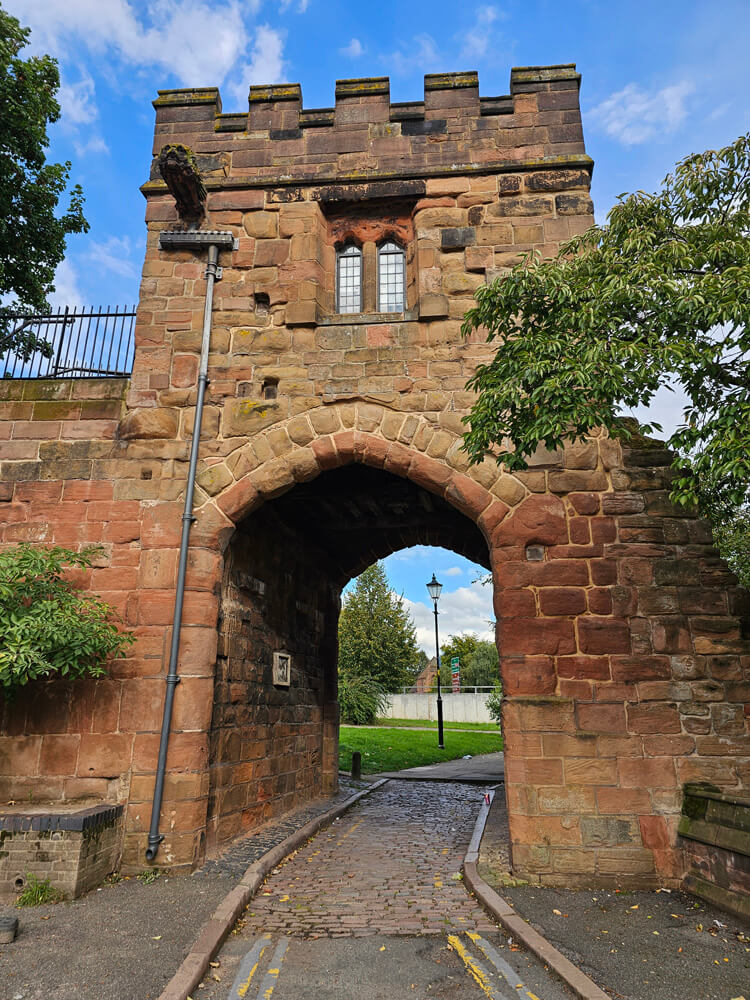
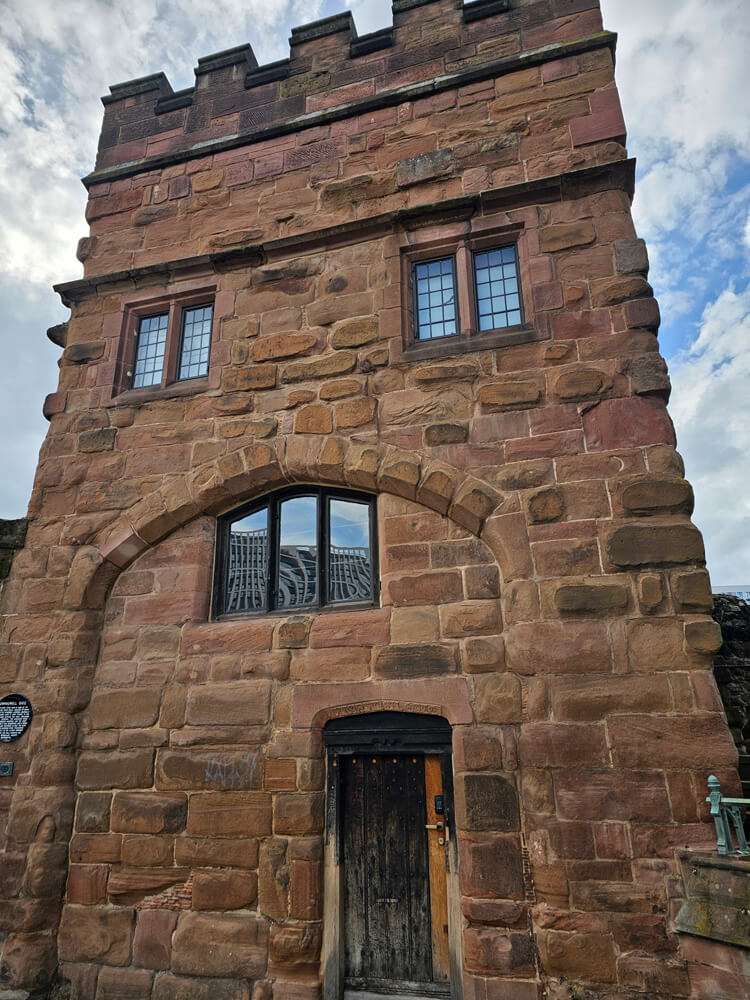
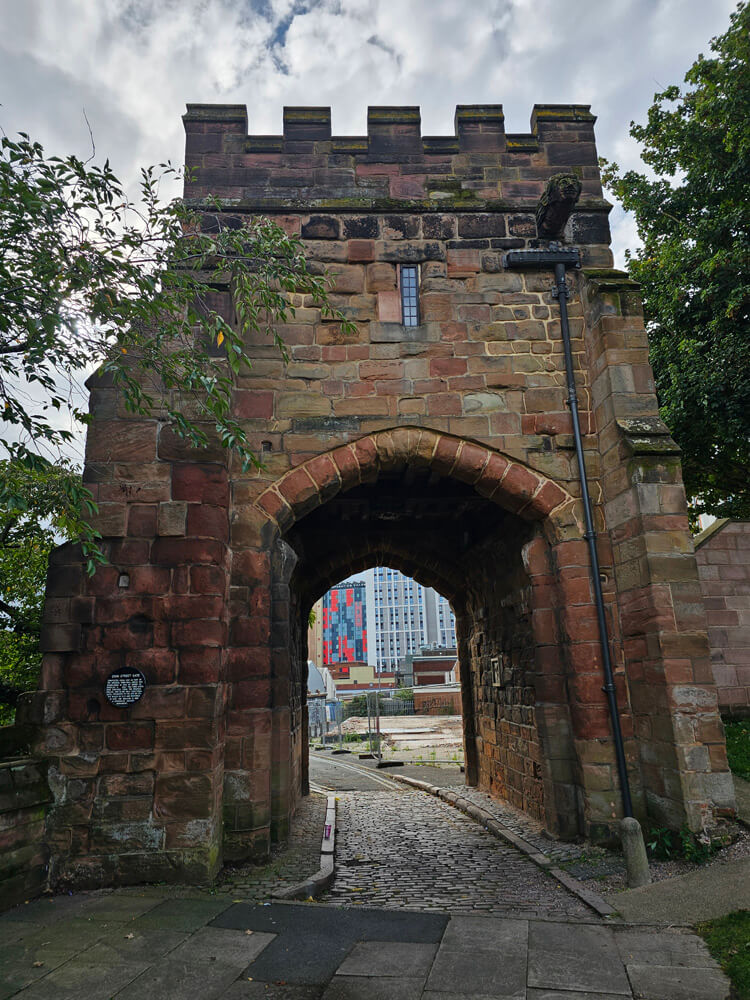
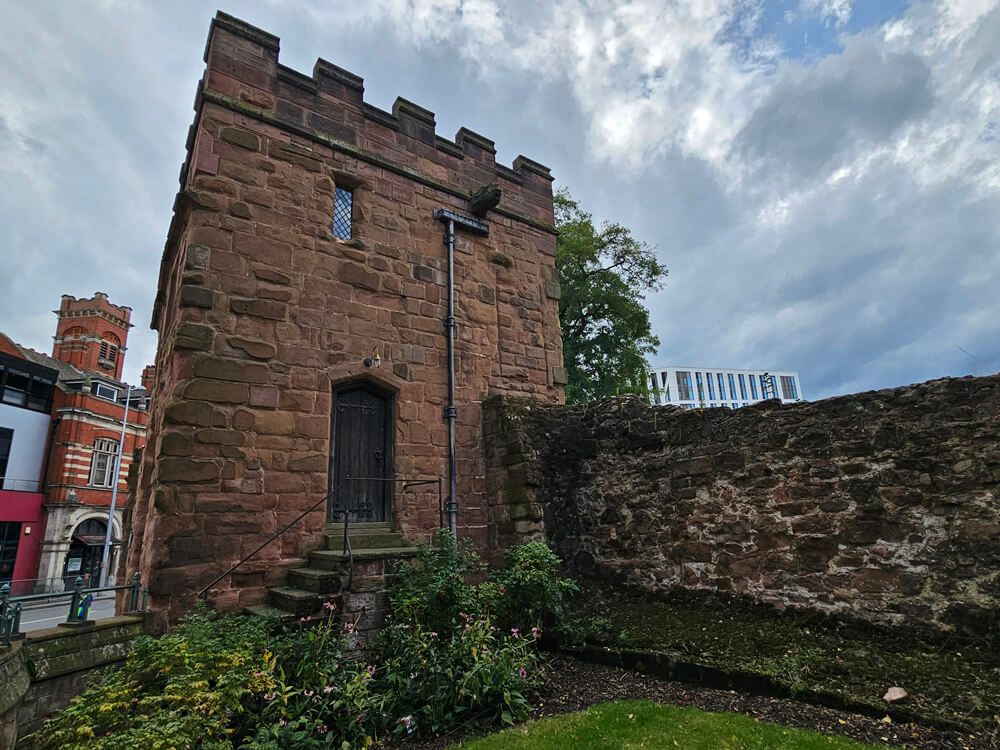
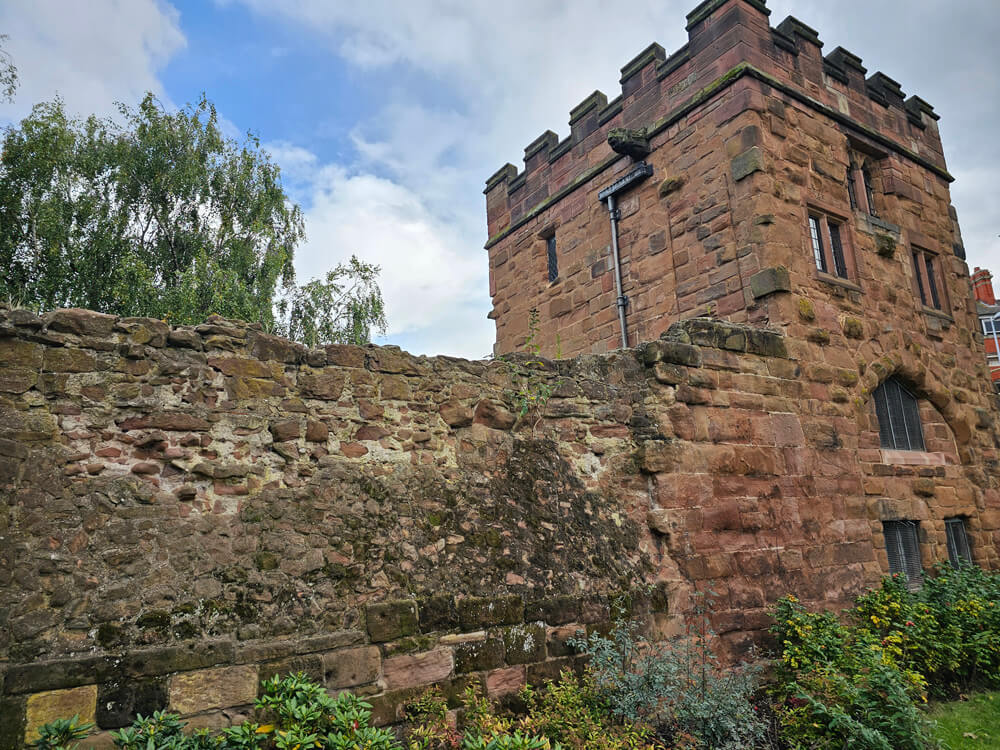
By the end of the 14th century, Coventry was at the centre of a thriving textile trade and had become the fourth most powerful city in England, after London, York and Bristol. St Mary’s Guildhall was built around 1340 on the site of the demolished castle as a meeting place for the guilds of St Mary and Holy Trinity. Reflecting the importance of the city, in around 1355, work began on a two-mile defensive city wall which took around 175 years to build. It had twenty towers and twelve gatehouses, today however, Swanswell Gate and Cook Street Gate are the only surviving gatehouses and they stand in the city centre within Lady Herbert’s Garden.
Coventry The ‘County’
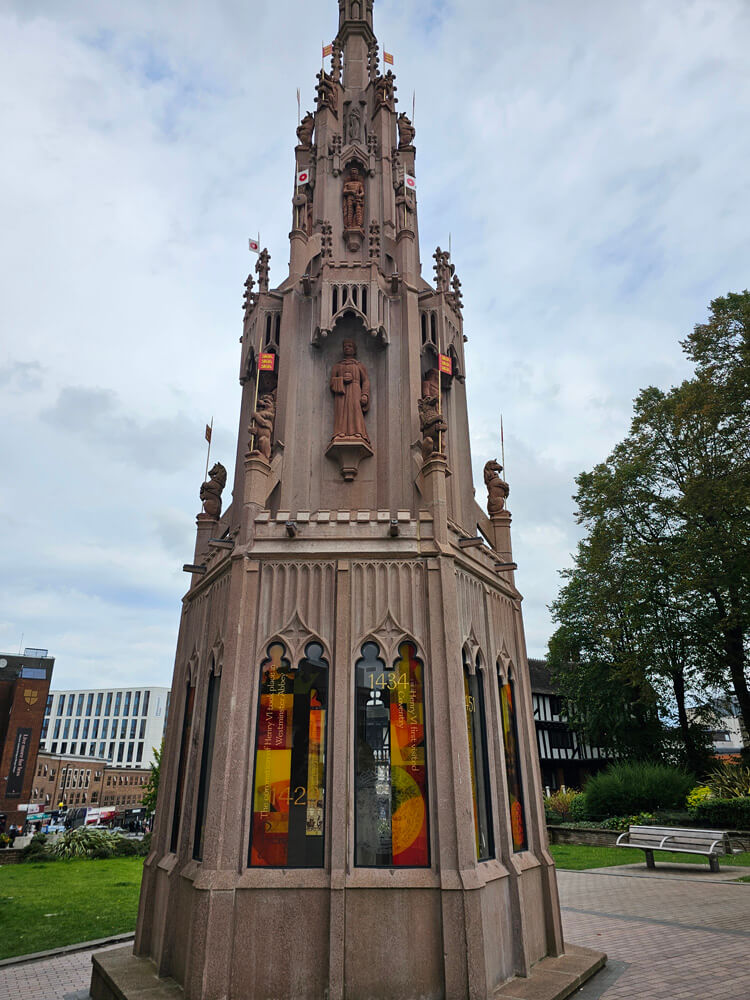
The city played an important role in the Wars of the Roses in the middle of the 15th century, when the Royal Court was moved to Coventry by King Henry VI and his wife Margaret of Anjou. Parliament was held in Coventry on several occasions, including the so-called Devil’s Parliament. For a while Coventry served as the effective seat of government, which came to an end in 1461 when Edward IV was installed on the throne.
Coventry was favoured by the king and queen, and in 1451 it was granted the status of a county, separate from Warwickshire, and for almost the next 400 years the city was the heart of the ‘County of the City of Coventry’, a territory that covered 20 surrounding villages. The Coventry Tapestry which hangs in the Great Hall of St Mary’s Guildhall most likely refers to this period, Coventry’s heyday, when it was commended by the king for being “the best governed in the kingdom”. The County lasted until 1842, when Coventry reverted back to the status of a city within the county of Warwickshire.
Coventry’s Downfall
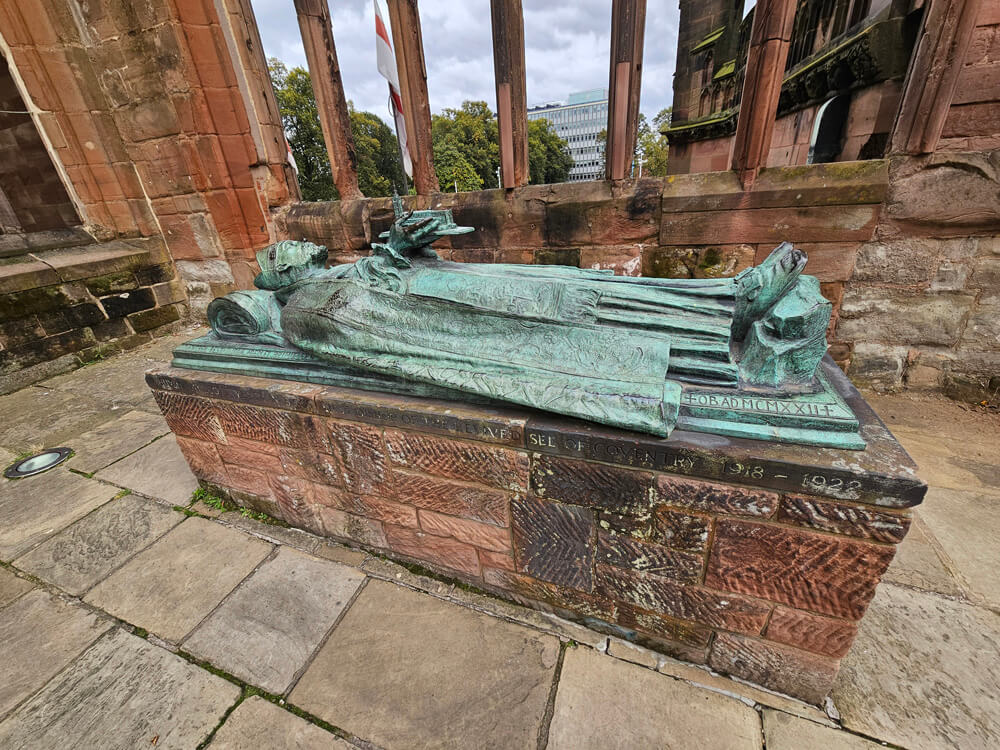
Throughout the Middle Ages Coventry had been home to several religious orders, however, Coventry became a victim of Henry VIII‘s Dissolution of the Monasteries. Between 1539 and 1542, monasteries, priories and other properties belonging to the Carmelites, Greyfriars, Benedictines and Carthusians, were either sold off or demolished. The greatest loss to the city was of Coventry’s first cathedral, St Mary’s Priory and Cathedral which was mostly demolished, leaving only ruins, making it the only English cathedral to be destroyed during the dissolution. Coventry would not have another cathedral until 1918, when the parish church of St Michael was elevated to cathedral status, but that was also destroyed, this time by enemy bombing in 1940. Coventry therefore has had the misfortune of losing its cathedral twice in its history.
The Dissolution of the Monasteries had a devastating impact on Coventry. The economic impact was enormous, and within a few years, the population of the city fell by more than fifty percent. The city’s misfortunes were made worse when the English Civil War broke out between King Charles I and Parliament in the 17th century. Coventry became a stronghold of the Parliamentarian forces and the city wall helped to guard Royalist prisoners. But because of its parliamentary support, the city fell out of favour with the Stuarts and on coming to the throne, Charles II ordered the town wall and defences to be destroyed in 1662.
Coventry’s Darkest Hour
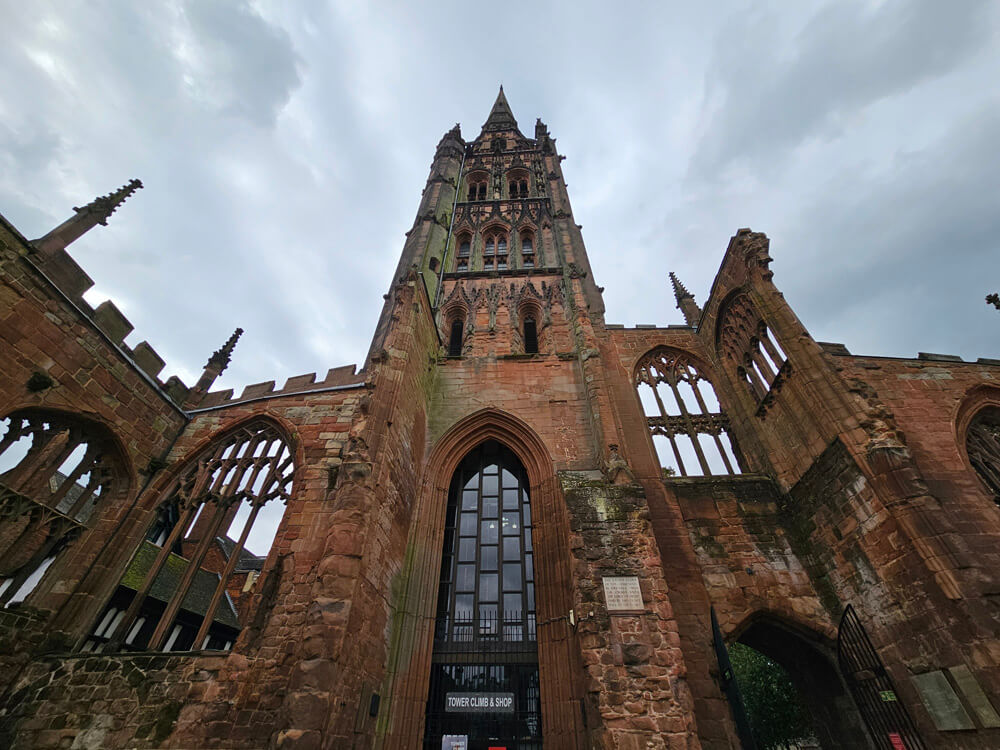
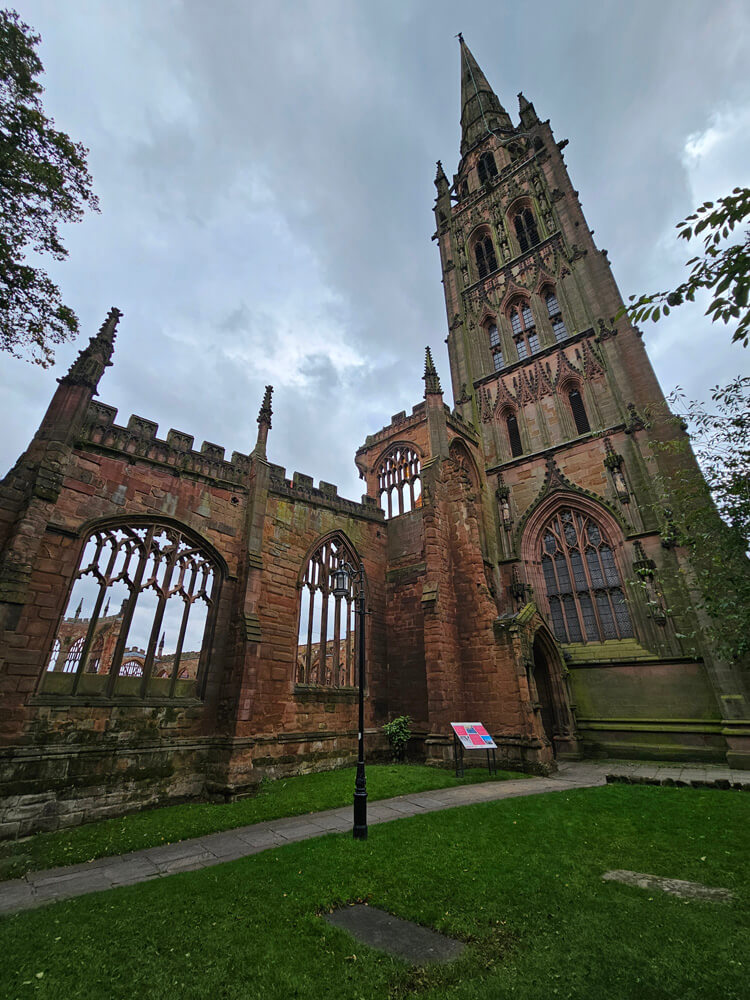
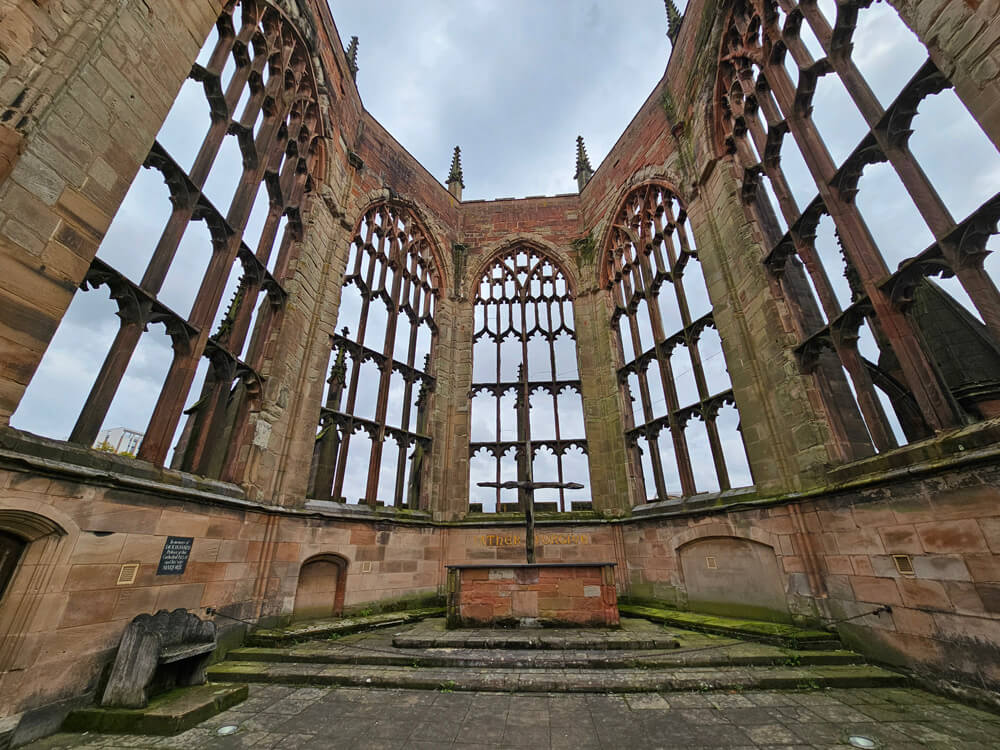
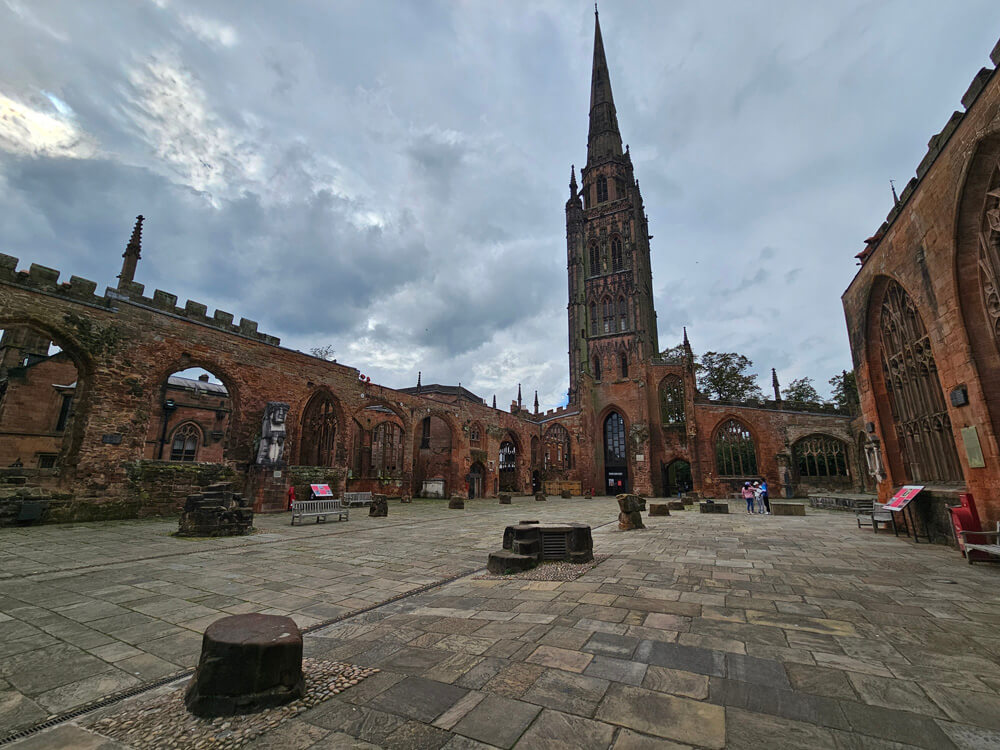
Coventry’s darkest hour came during World War II when Adolf Hitler singled out Coventry for heavy bombing raids, and on the night of 14th November 1940, the face of Coventry was changed forever. Until that night, the centre of Coventry was perhaps the best-preserved medieval city in Britain. Coventry suffered 11 hours of bombing where large areas of the city were destroyed, including Coventry’s historic cathedral, leaving only a shell and tower.
Coventry Today
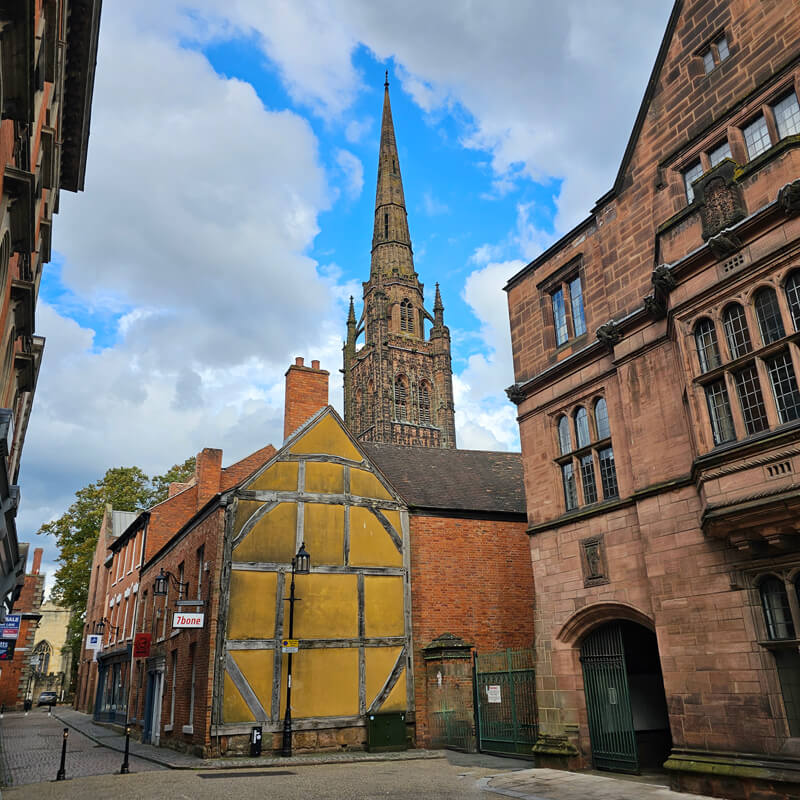
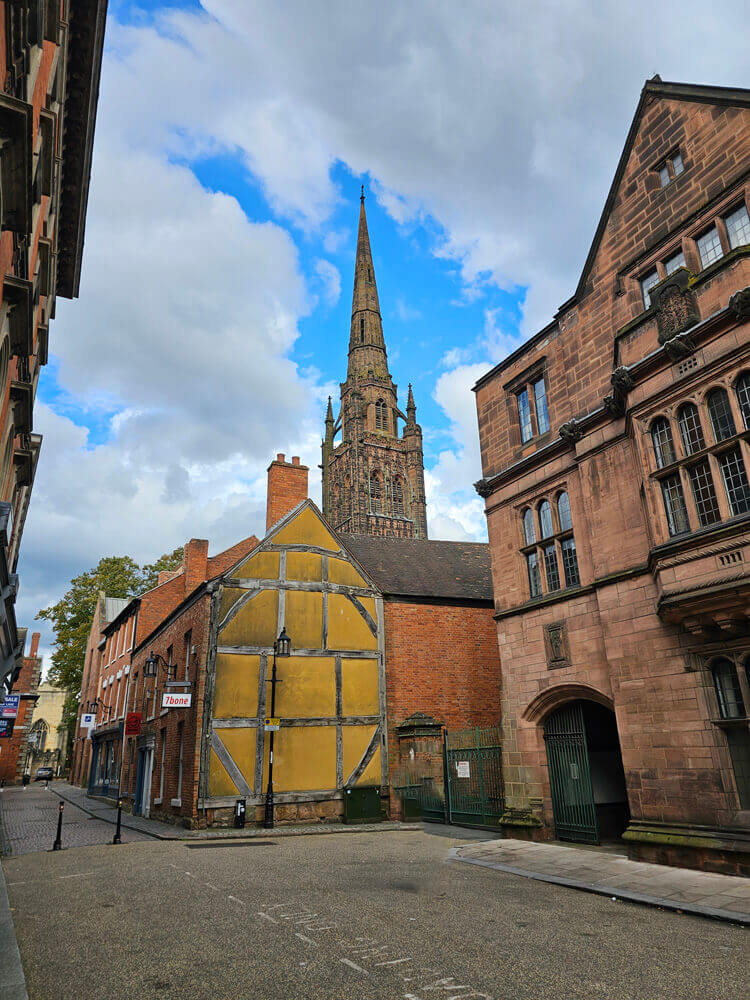
Eventually the city was rebuilt and a new cathedral was constructed beside the ruins of the old cathedral. Despite the devastating destruction, a surprising number of historic buildings survived, and today they share the city’s landscape with the modern structures. Surrounded by modern office blocks and shopping areas you will find a variety of historic sites and buildings, including many medieval timber-framed buildings, medieval Spon Street, Coventry Cathedral (old and new), St Mary’s Priory Ruins, Holy Trinity Church, St Mary’s Guildhall, Ford’s Hospital, Bond’s Hospital, Christchurch Spire, the remains of Whitefriars Friary, remains of the city walls and surviving two gates, and more.
Coventry is famous for its ‘three spires’ – Christchurch, Holy Trinity and St Michael’s. Christchurch is a slender spire and is the shortest of the three at 230 feet high. Holy Trinity stands 237 feet high and St Michael’s is the highest at 290 feet.
Coventry Cathedral
There is not one Coventry Cathedral, but two, standing side by side. The city has had three cathedrals throughout its history, the first was the 11th-century St Mary’s Priory Cathedral which was destroyed during the Dissolution of the Monasteries in the 16th century. The current site consists of the new modern cathedral, and the previous cathedral – St Michael’s. St Michael’s was a church built in the 14th-century, and was designated as a cathedral in 1918. What remains of St Michael’s is a ruined shell, tower and spire, after its bombing during the Second World War.
The Ruins of St Mary’s
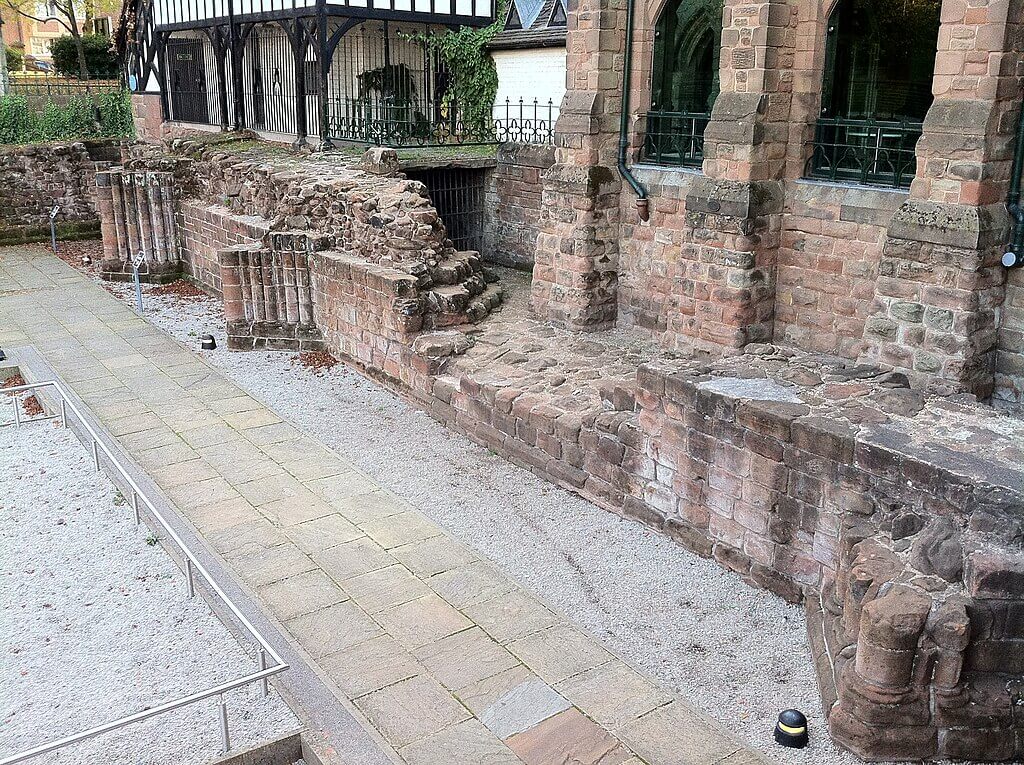
The ruins of St Mary’s is the site of Coventry’s very first cathedral. It was originally built as a Benedictine monastery in the 11th century by Leofric, Earl of Mercia and his wife Lady Godiva. It became a priory in the 12th century, and the priory church was later raised to cathedral status. Because it had joint status as both a cathedral and a monastic institution it was destroyed during the Dissolution of the Monasteries in the early 16th century, and was the only English cathedral destroyed as a result of the Protestant Reformation. Unfortunately there isn’t much left of it.
Holy Trinity Church
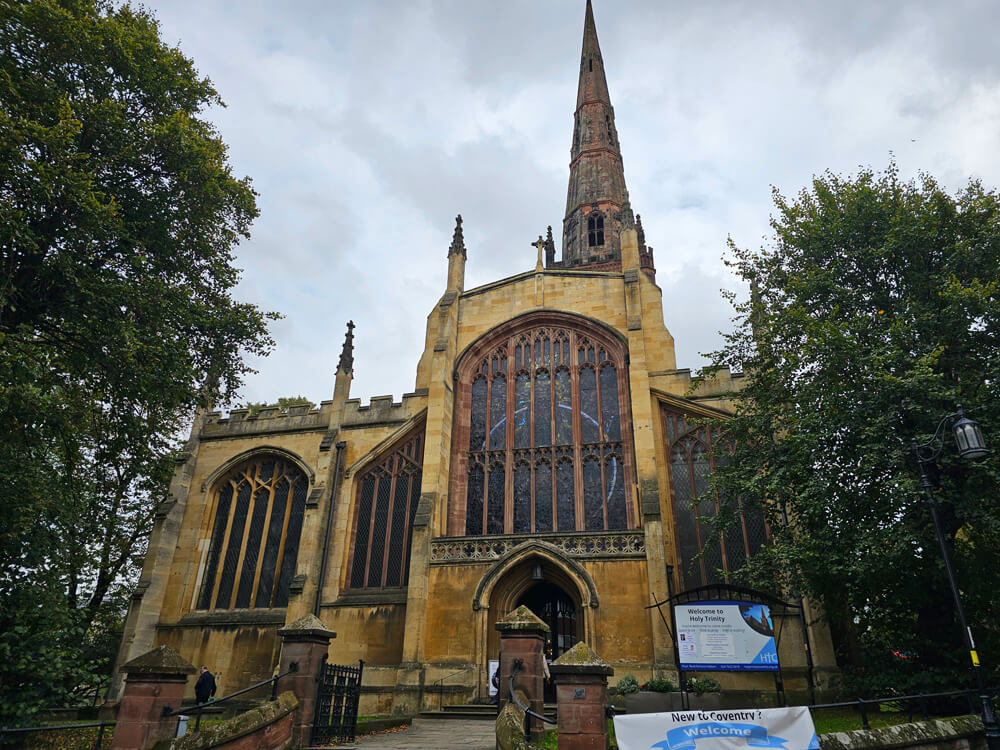
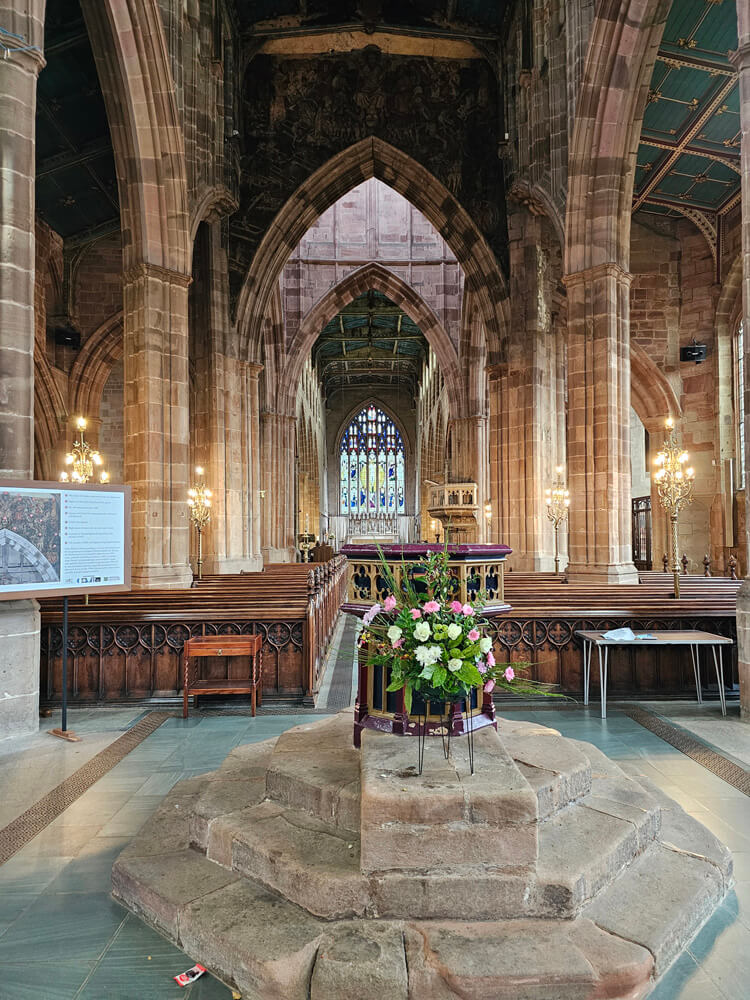
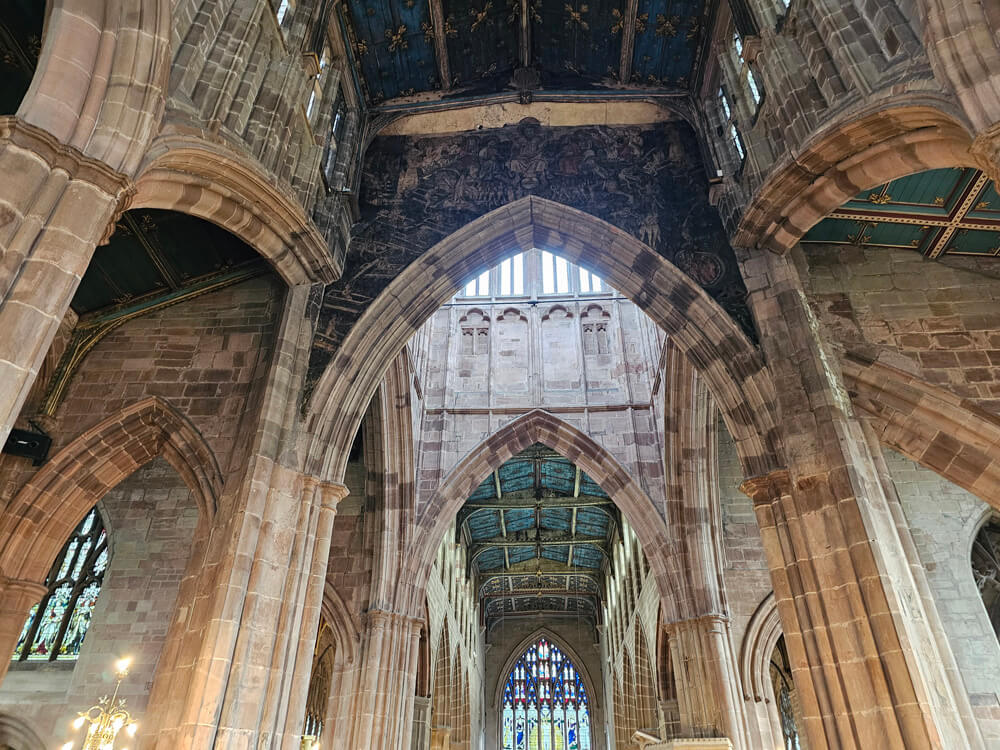
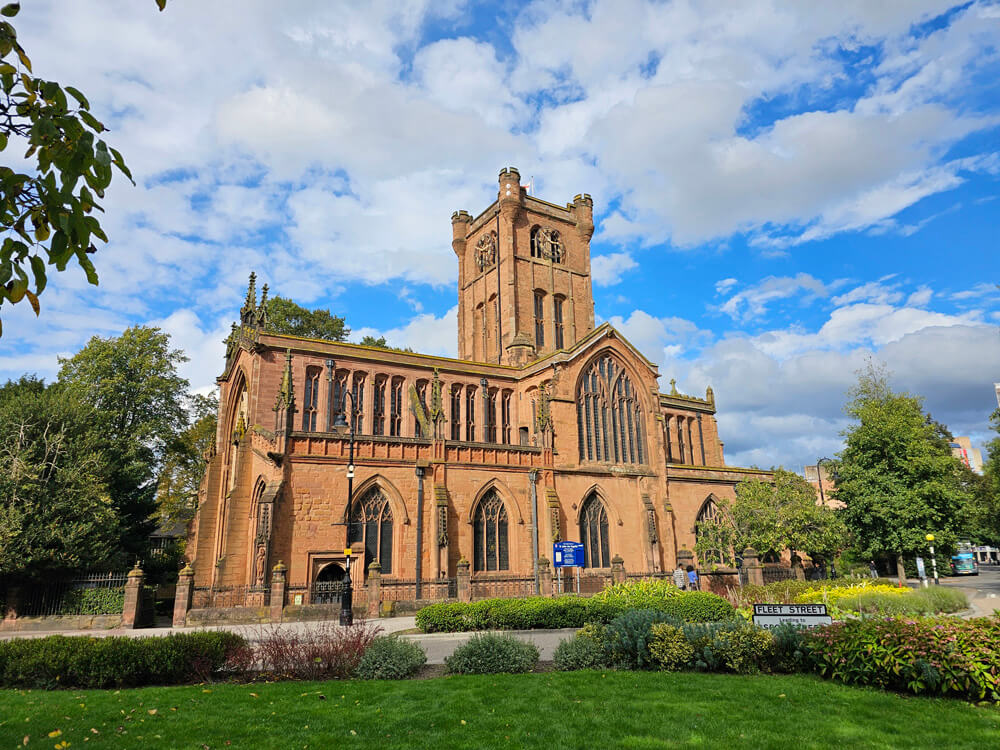
Holy Trinity is one of the largest medieval churches in England. Although it has seen some rather substantial restorations over the centuries, the church dates from the 12th century and is the only medieval church in Coventry that is still complete. From Holy Trinity’s medieval heyday in the 15th century date the pulpit, the lectern, and the impressive Doom wall-painting of the Biblical Day of Judgement, which was painted over the tower arch in the 1430s and is considered one of the finest examples of its type in Europe.
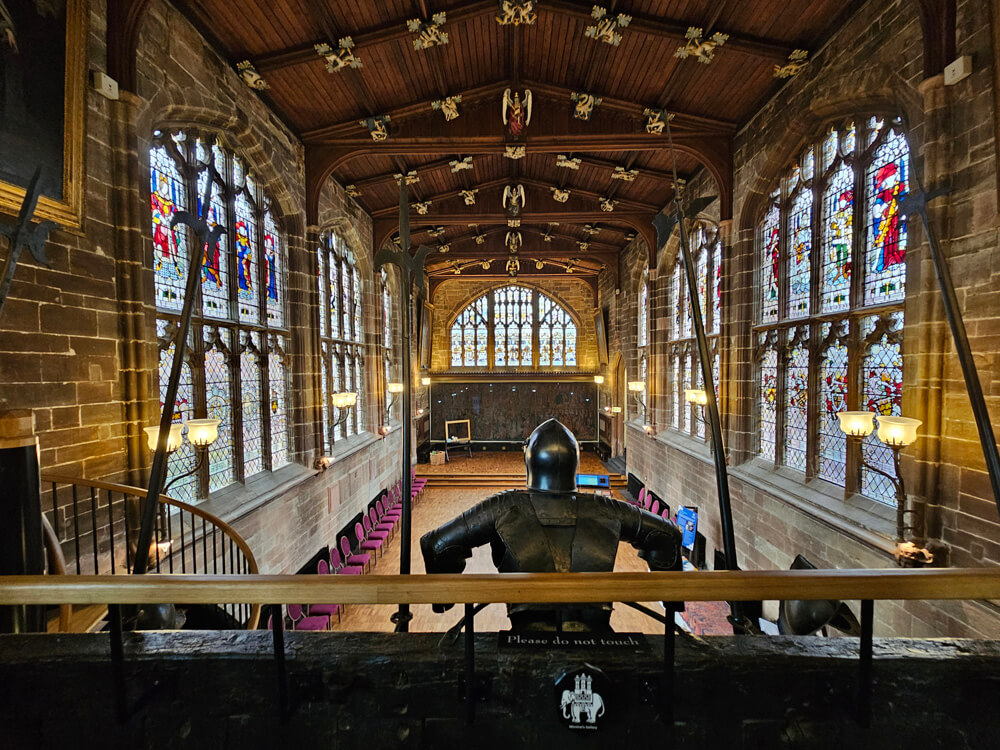
St Mary’s Guildhall
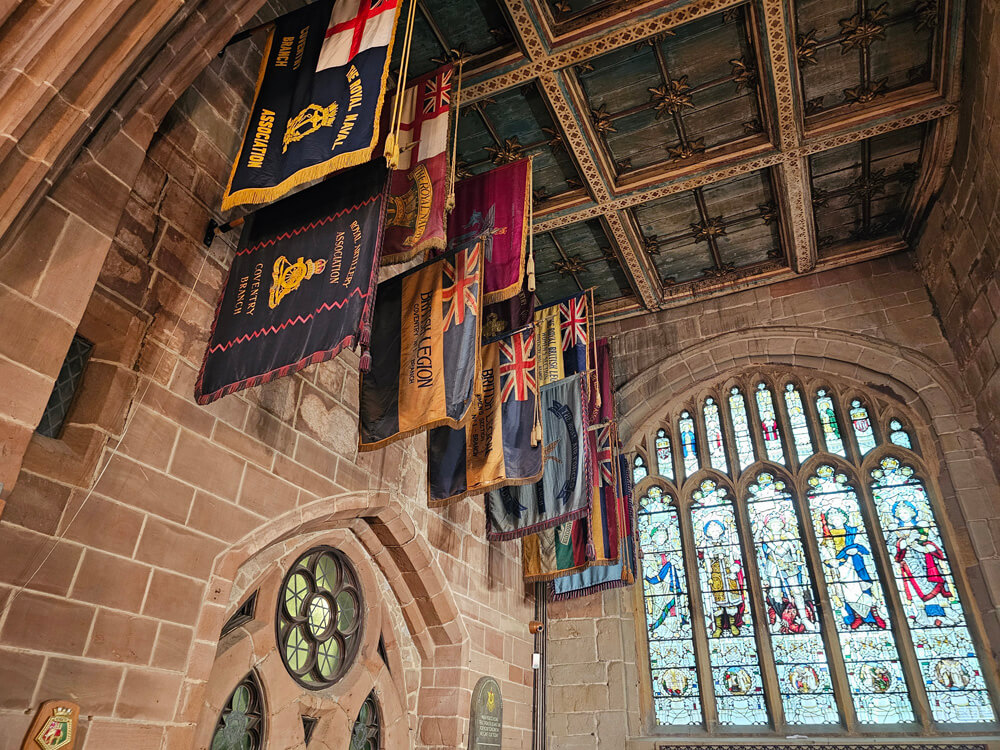
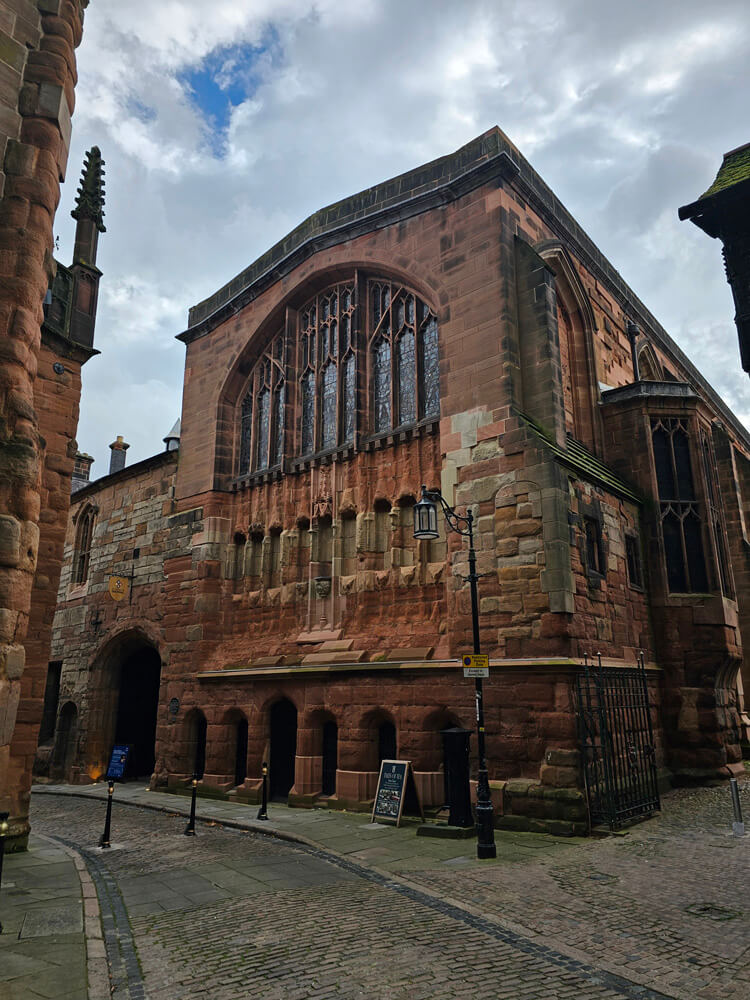
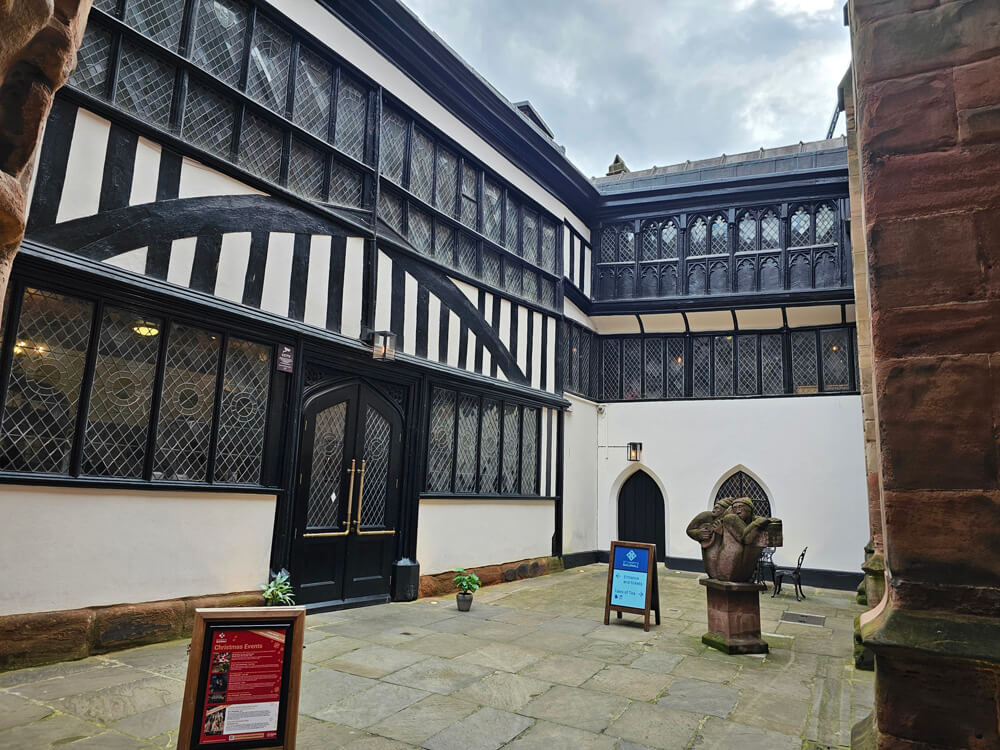
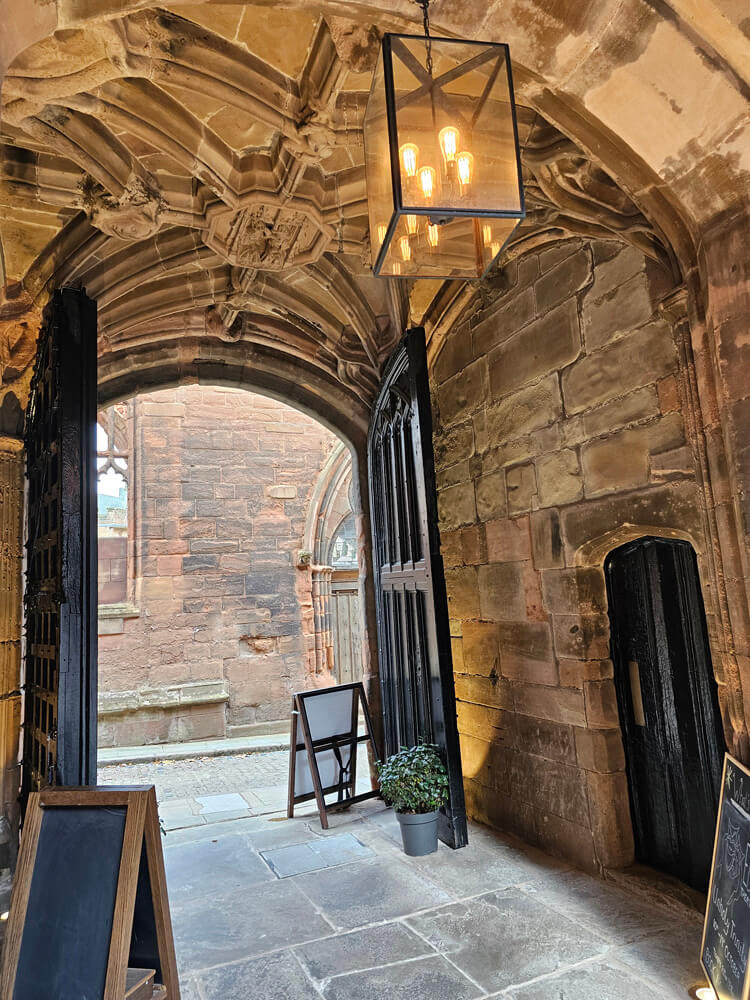
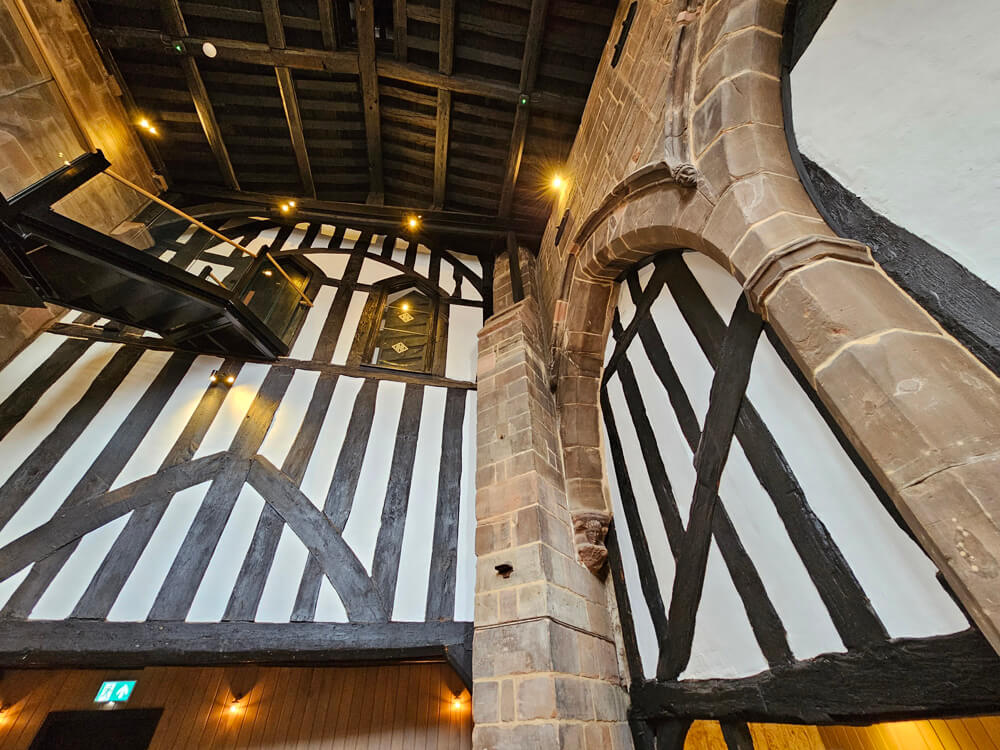
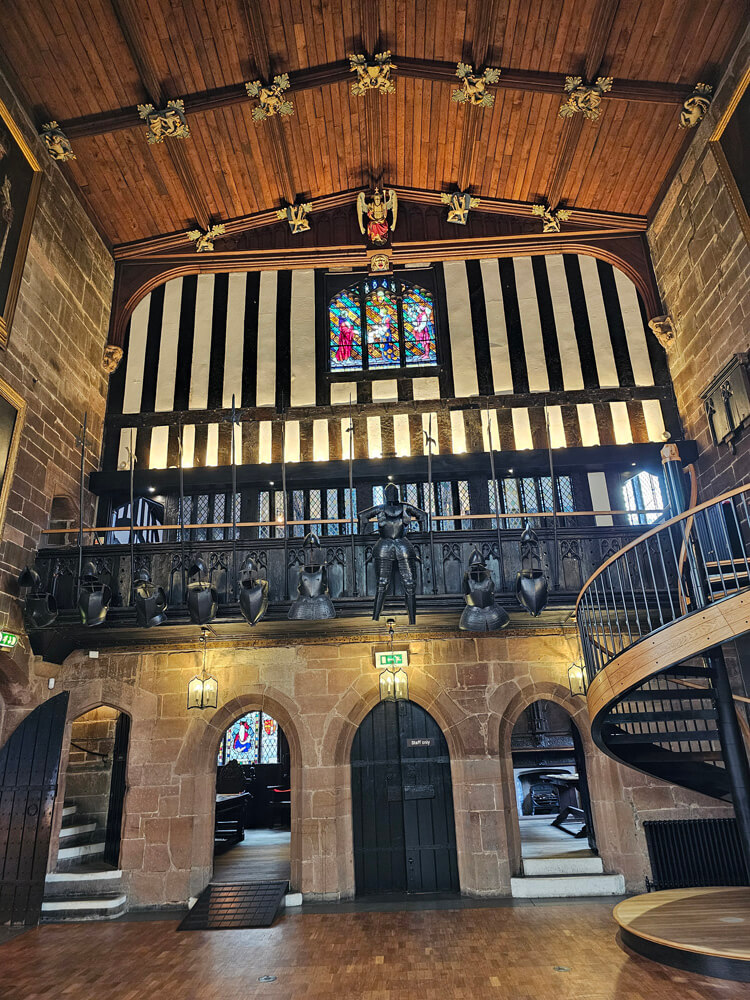
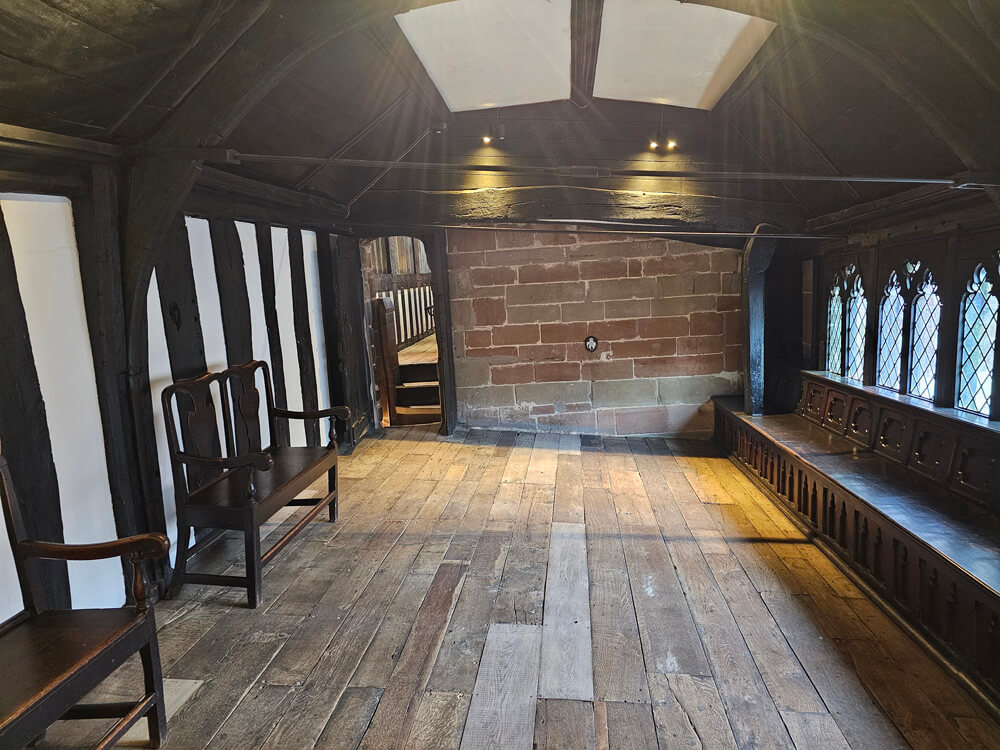
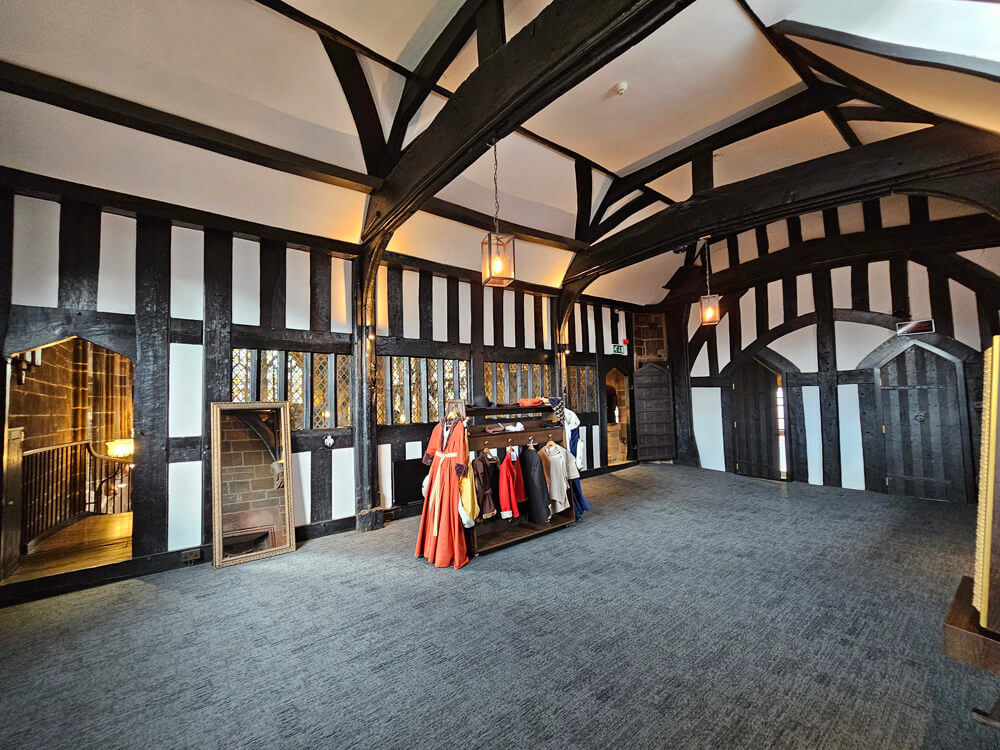
St Mary’s Guildhall is one of the best surviving medieval guildhalls in Britain, and a key part of the city’s history. The guildhall was built in the 1340s and was rebuilt and extended by 1460. The courtyard has remained unaltered for over five centuries. The guildhall features some interesting and stunning interiors, but the highlight of a visit to the guildhall is the early-16th century Coventry Tapestry, which was specially made for the guildhall and still hangs in its original position over 500 years later.
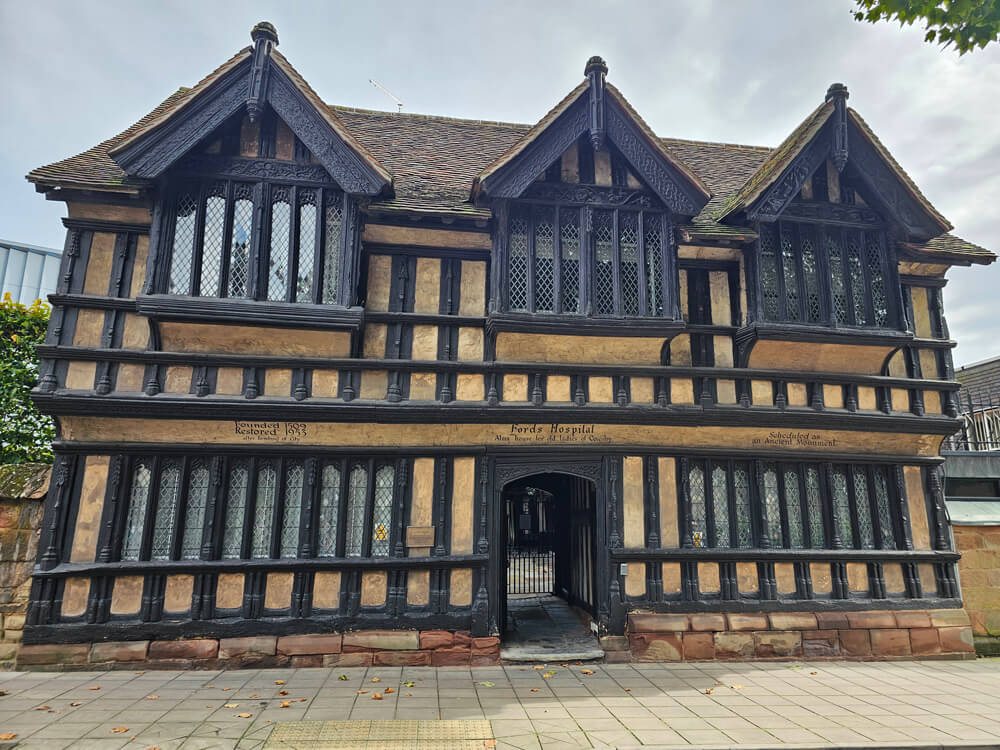
Ford’s Hospital
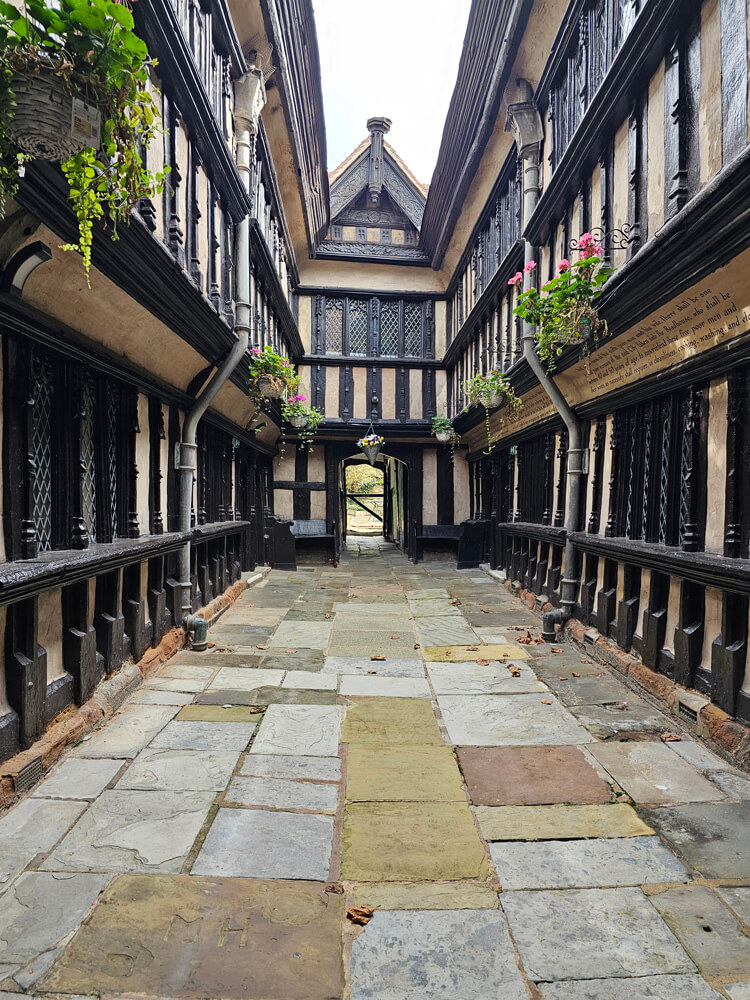
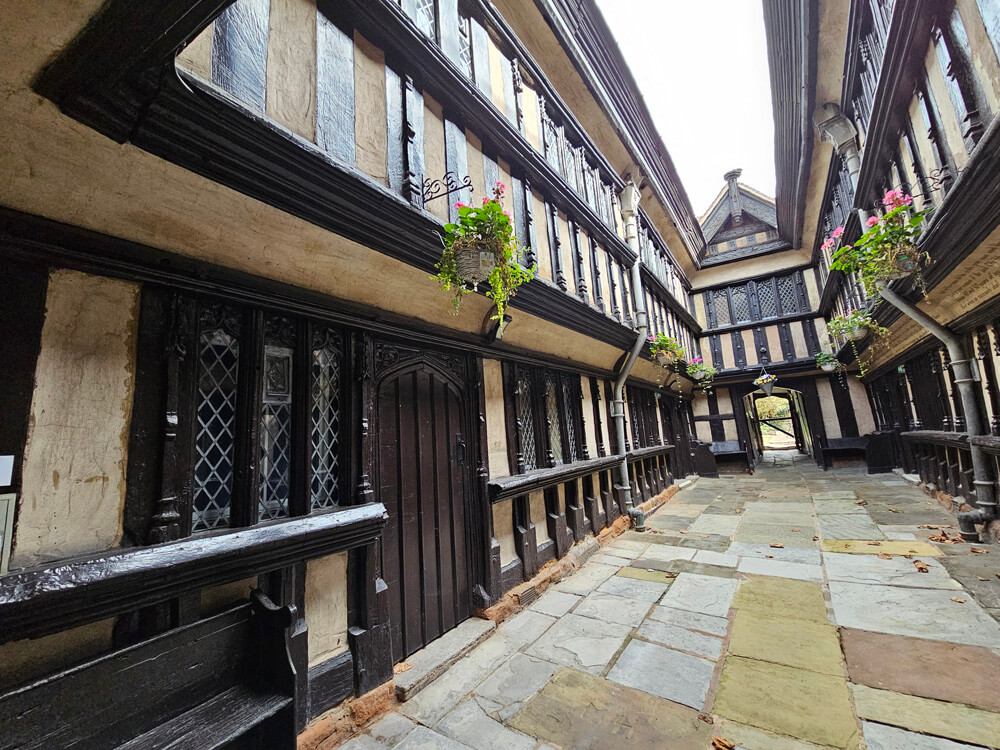
Ford’s Hospital, traditionally known as Grey Friars Hospital, is one of Coventry’s historic treasures. It is an early-16th century timber-framed almshouse founded in 1509 by William Ford, a wealthy wool merchant and former Mayor of Coventry, to provide housing for six elderly people: five men and one woman. It was further endowed in 1517 to provide shelter for six couples, and again in 1529 for five more elderly couples with a small weekly allowance.
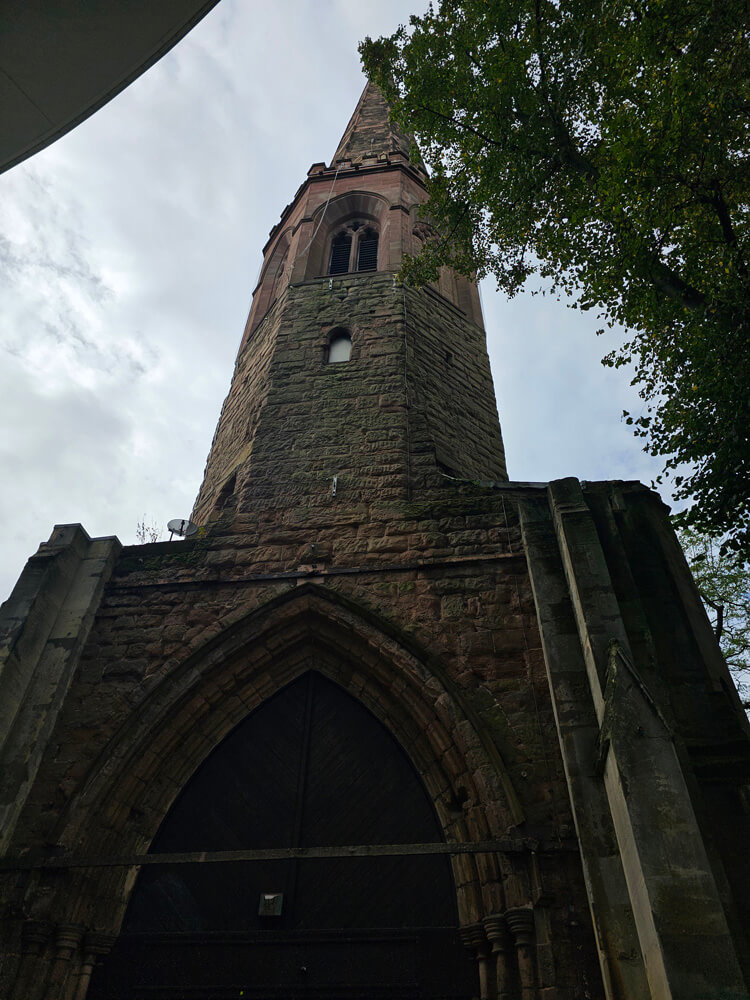
Christchurch Spire
Christchurch Spire is a historic church tower that has survived two major disasters and still forms part of Coventry’s skyline. The original church was part of an early-12th century Franciscan monastery which became another of Coventry’s victims to Henry VIII’s Dissolution of the Monasteries, but the tower and spire were saved. The base of the tower saw a number of uses, and by 1800 it was used as a pigsty and storehouse, earning it the nickname “the tallest pigsty in England”. A new church was built in the early 19th century incorporating the tower, but just over 100 years later the church was destroyed by the air raids in the Second World War, but the tower once again survived.
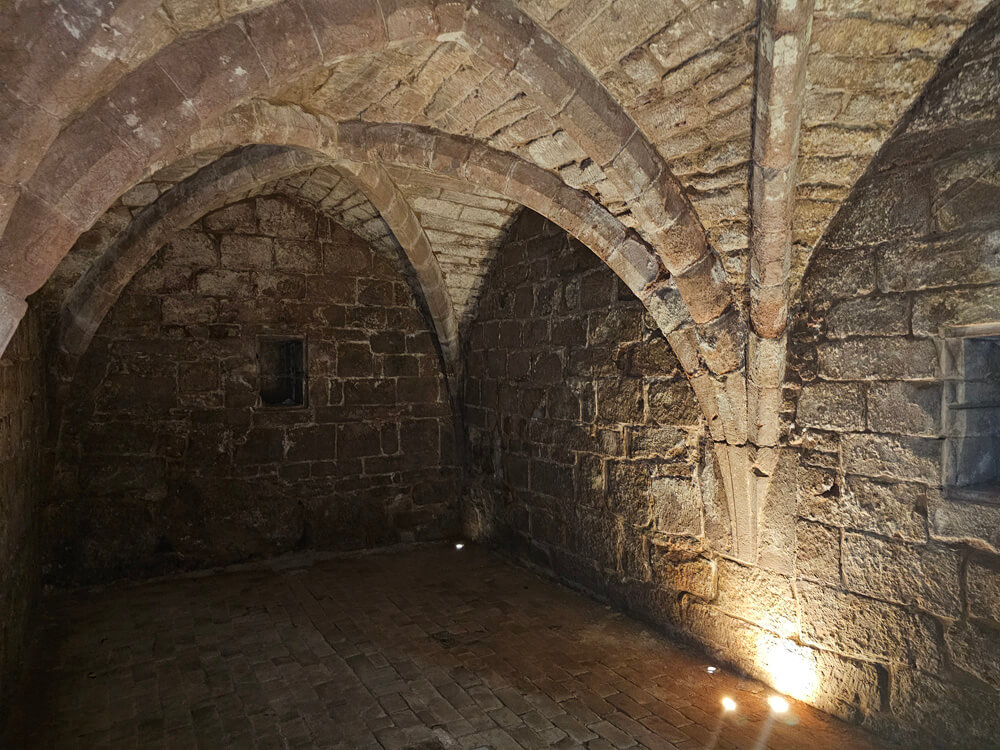
Medieval Undercroft
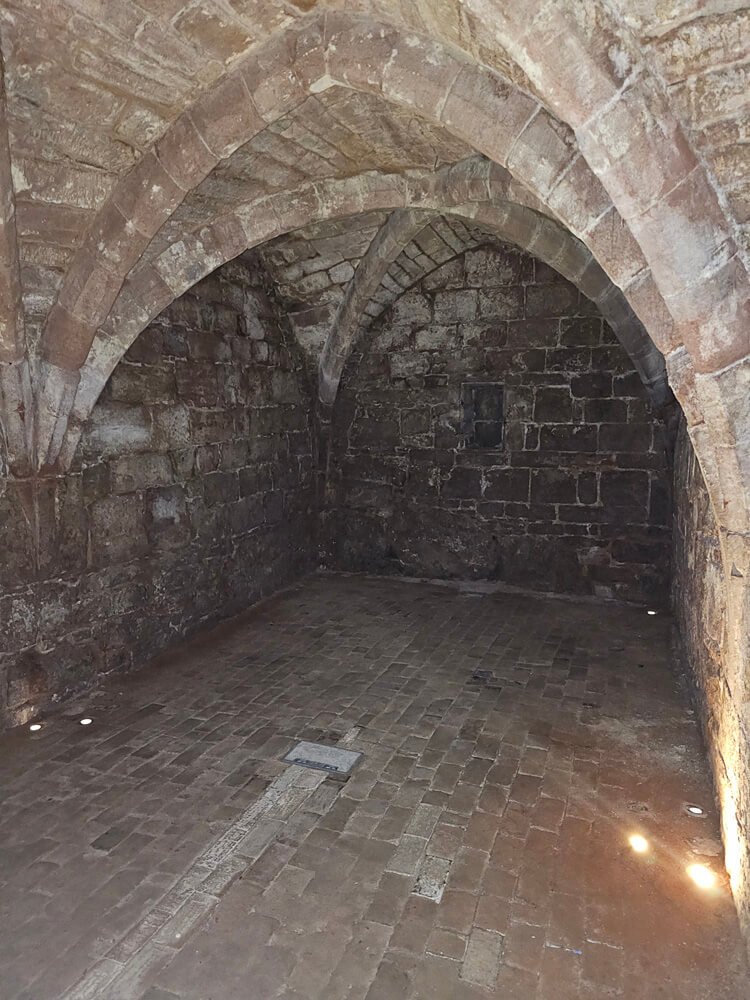
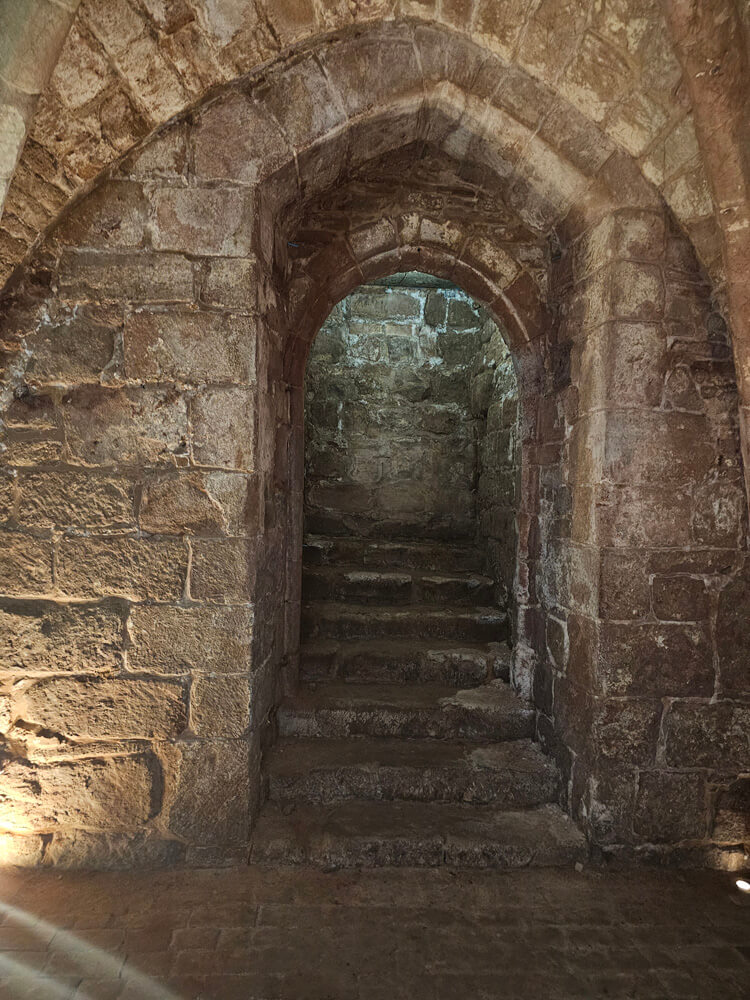
The Medieval Undercroft lies beneath the Herbert Art Gallery and Museum and can only be accessed from inside the museum. It was once part of a building called 38–39 Bayley Lane, and has been buried over hundreds of years as Coventry built itself around and over it. All that remains of the former building is the medieval undercroft; a 14th-century stone-vaulted cellar that originally belonged to a wealthy merchant. Due to it being below ground it survived the bombing during World War II, and it is thought that many more cellars could exist beneath the city centre.
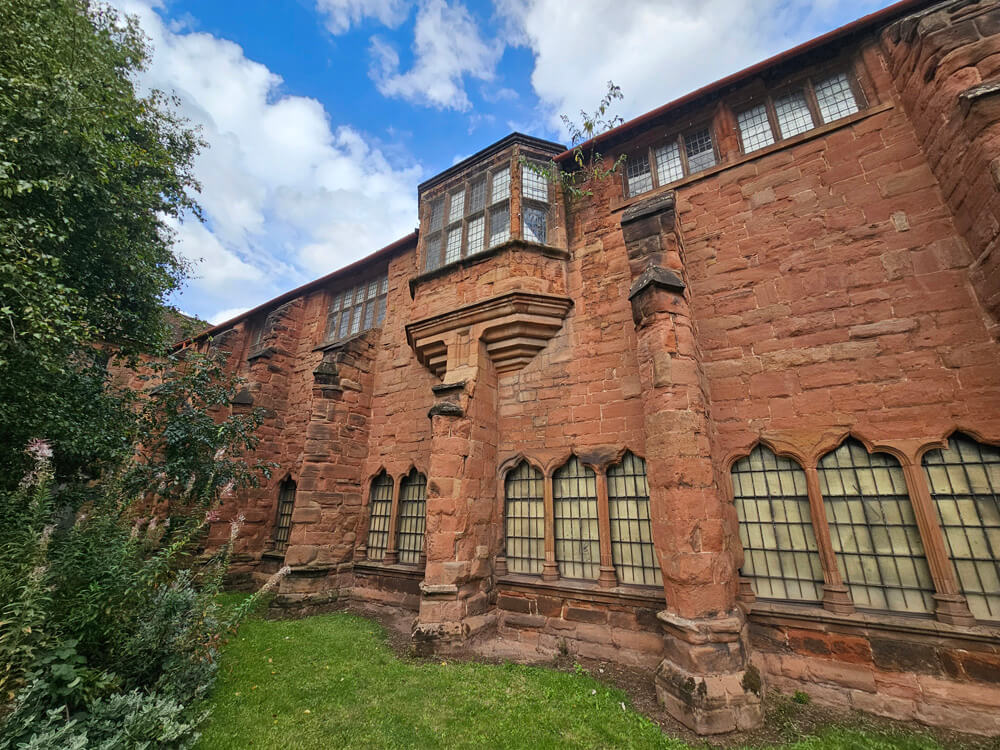
Whitefriars Friary
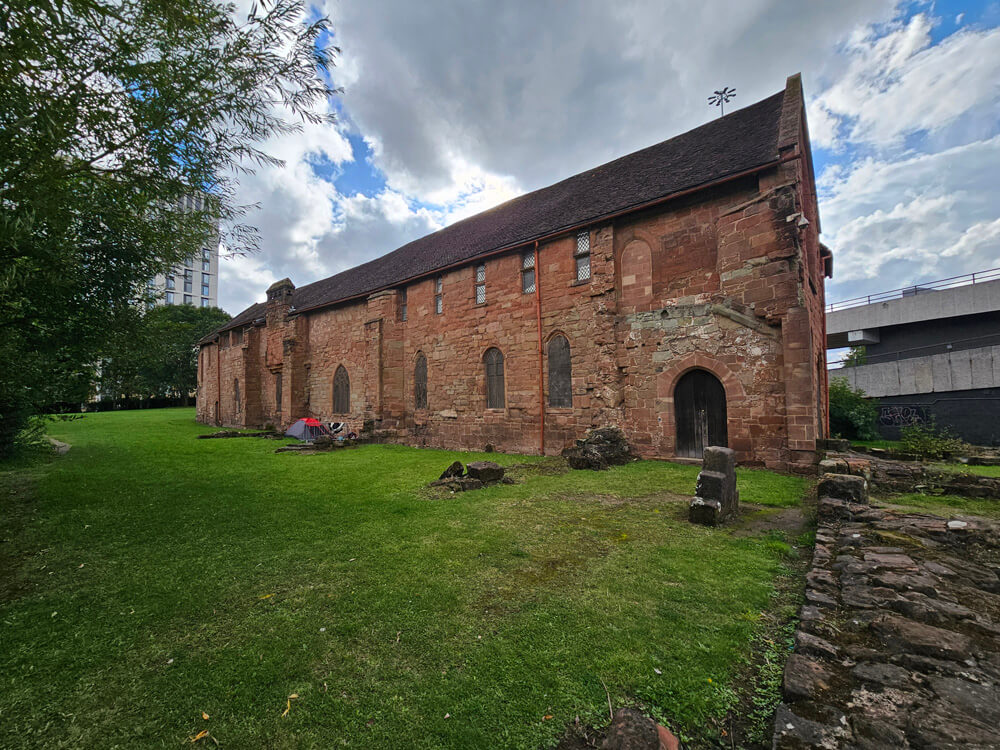
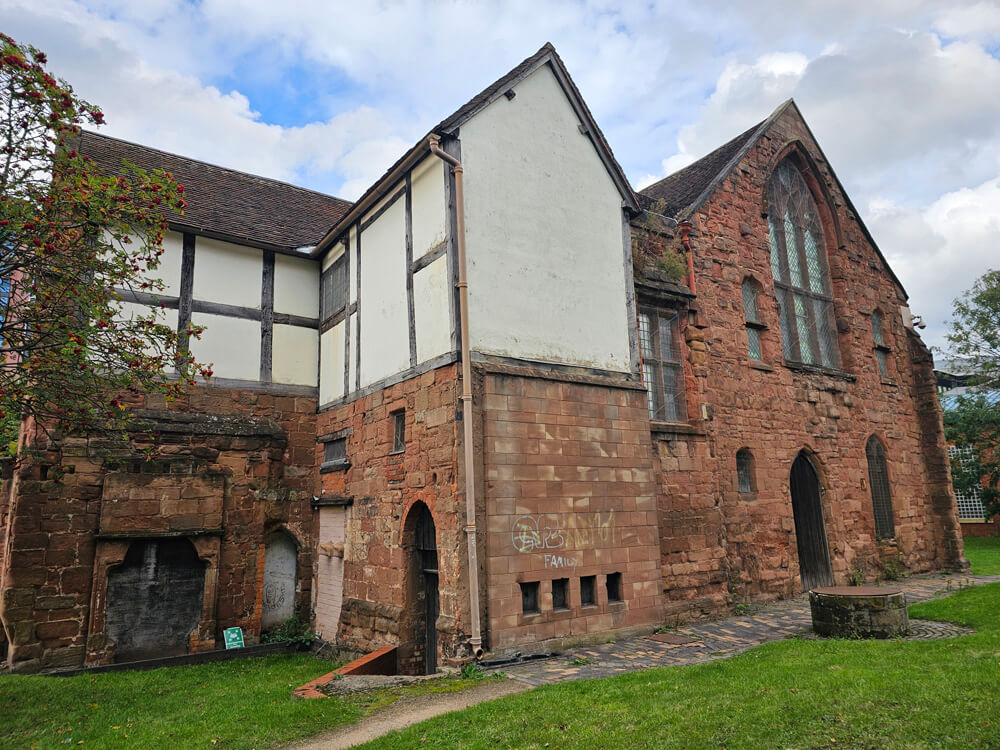
Whitefriars was originally a Carmelite friary founded in 1342. It was originally a much larger building than what can be seen today. All that remains are the eastern cloisters with a large hall above and the foundations of the friary church. It was partly demolished during the Dissolution of the Monasteries in the 16th century, and shortly after, the remaining parts of the buildings were turned into a dwelling, and the chancel of the friary church was used as a free grammar school. Queen Elizabeth I addressed the people of Coventry from the Oriel window at Whitefriars in the 16th century. Between 1801 and 1943 Whitefriars was used as a workhouse and then a refuge, today however, it is derelict and not open to the public.
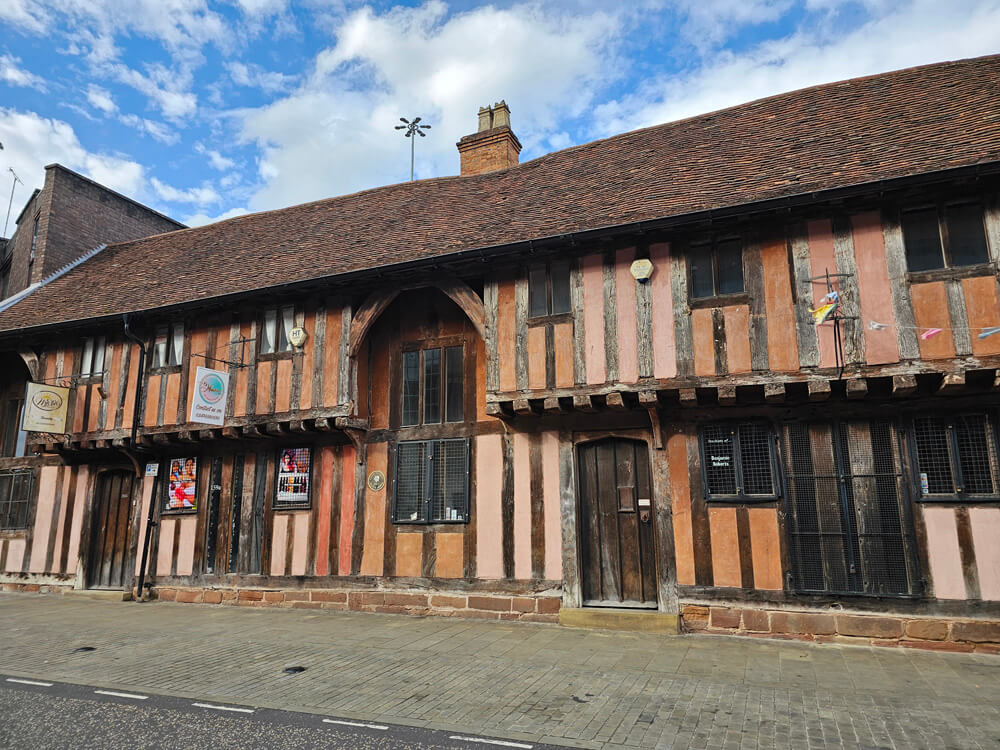
Spon Street
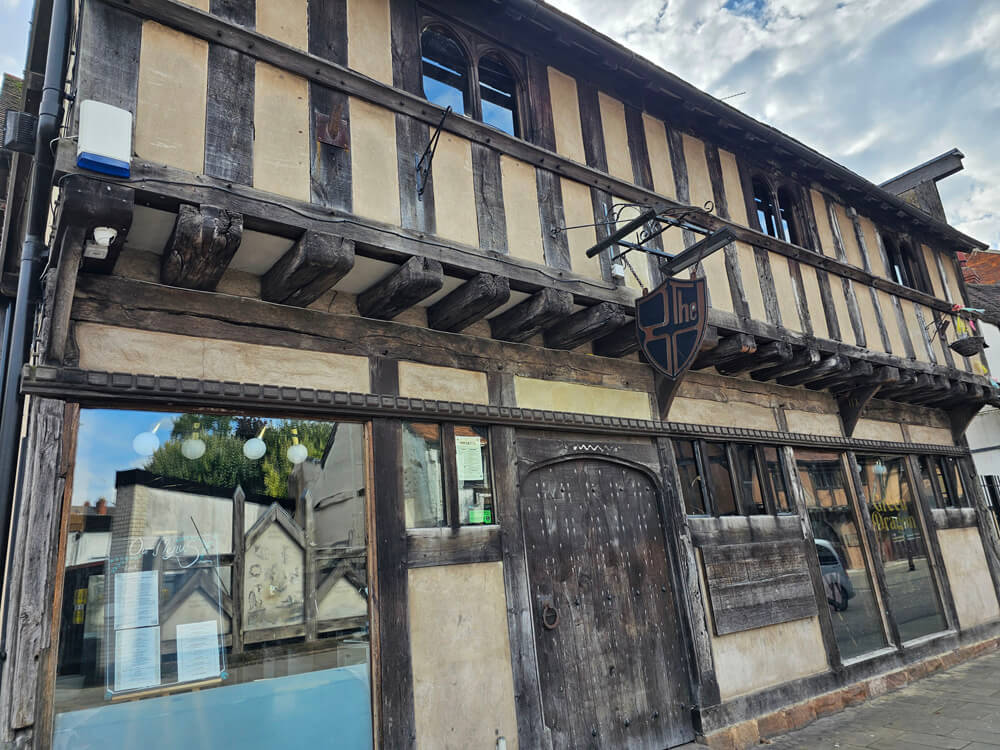
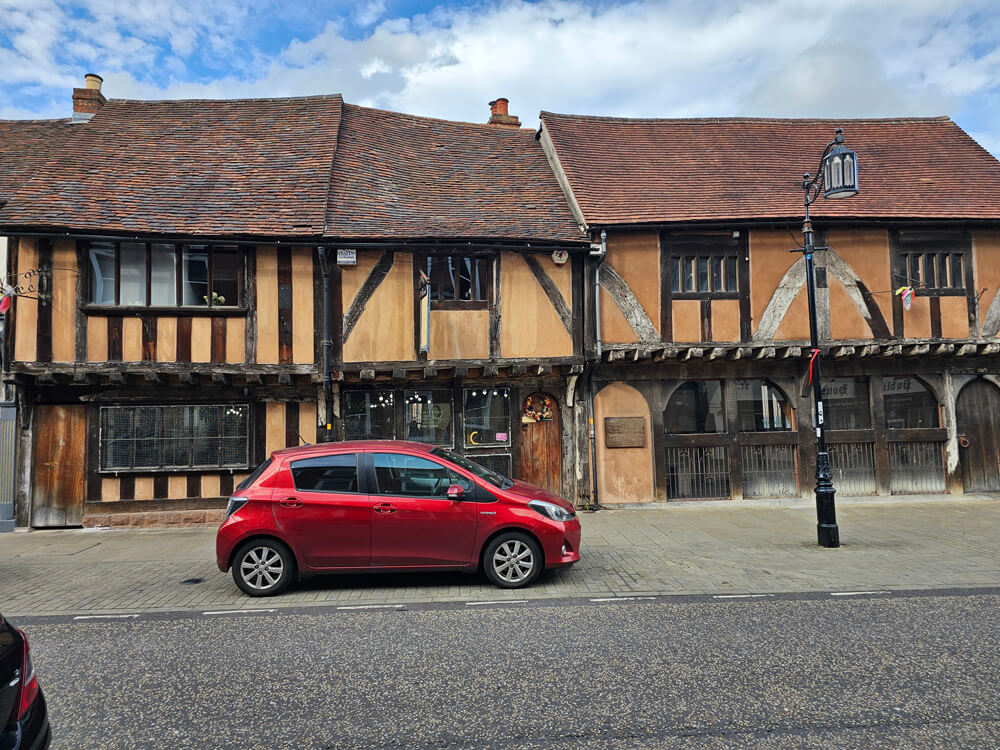
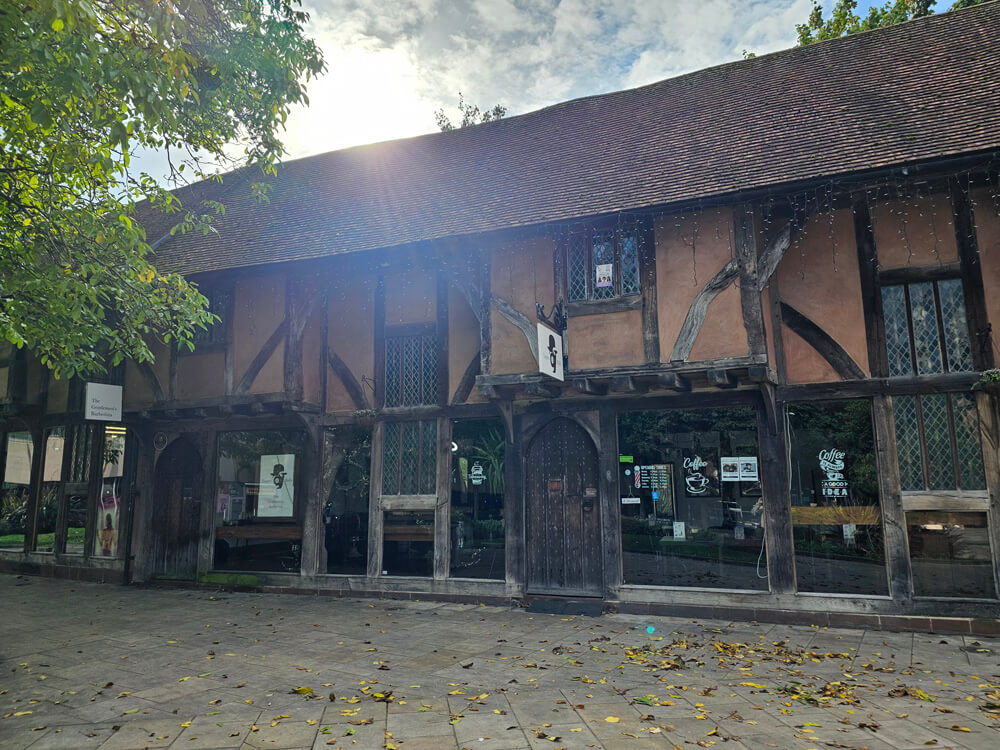
‘Medieval Spon Street’ escaped demolition in the WWII bombings and retains its high concentration of medieval and Tudor buildings. The street was once part of a route that ran from Gosford to Birmingham – a route which remained intact until the 1960s when Spon Street was cut in half due to the construction of Coventry’s Inner Ring Road. Many of the buildings are not original to the street and have been rebuilt there after being saved from demolition in other streets and a preservation order is in place to ensure their survival.
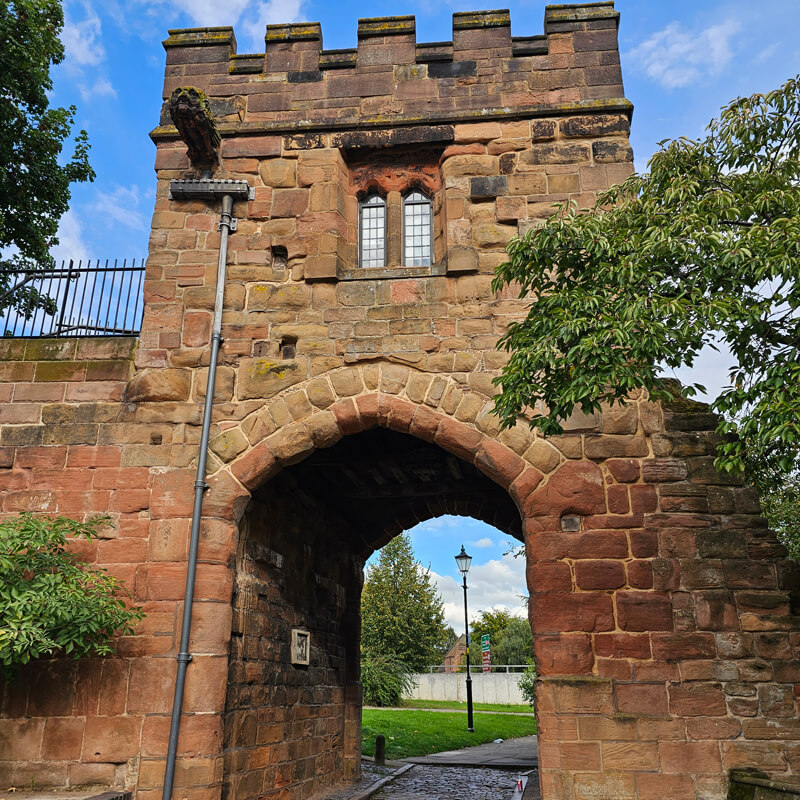
City Walls and Gates
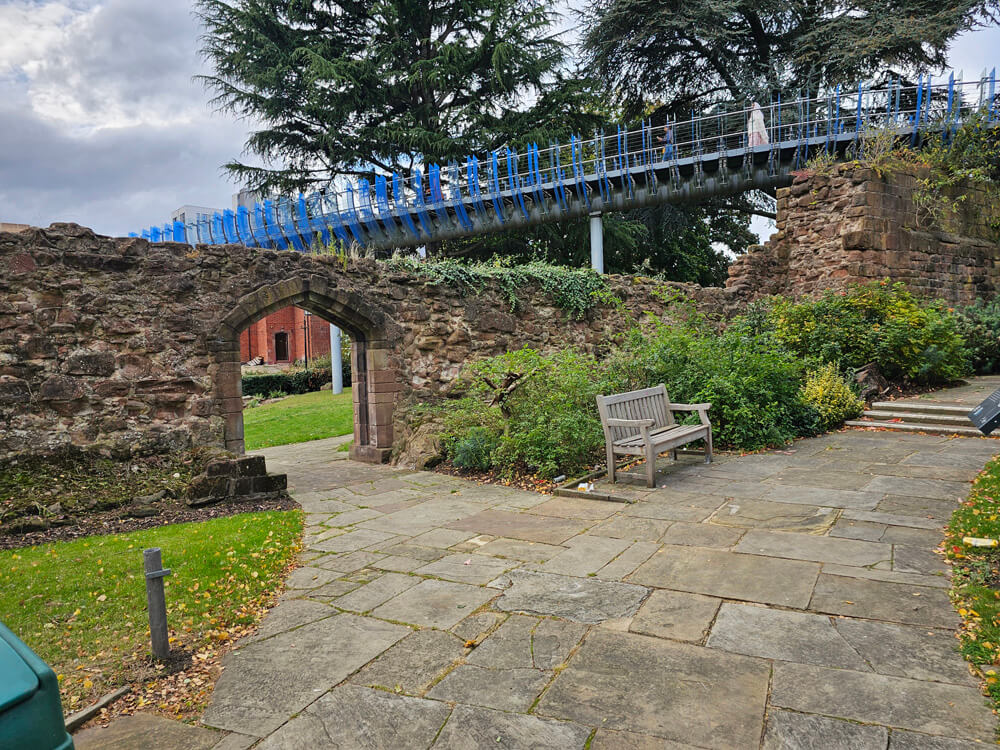
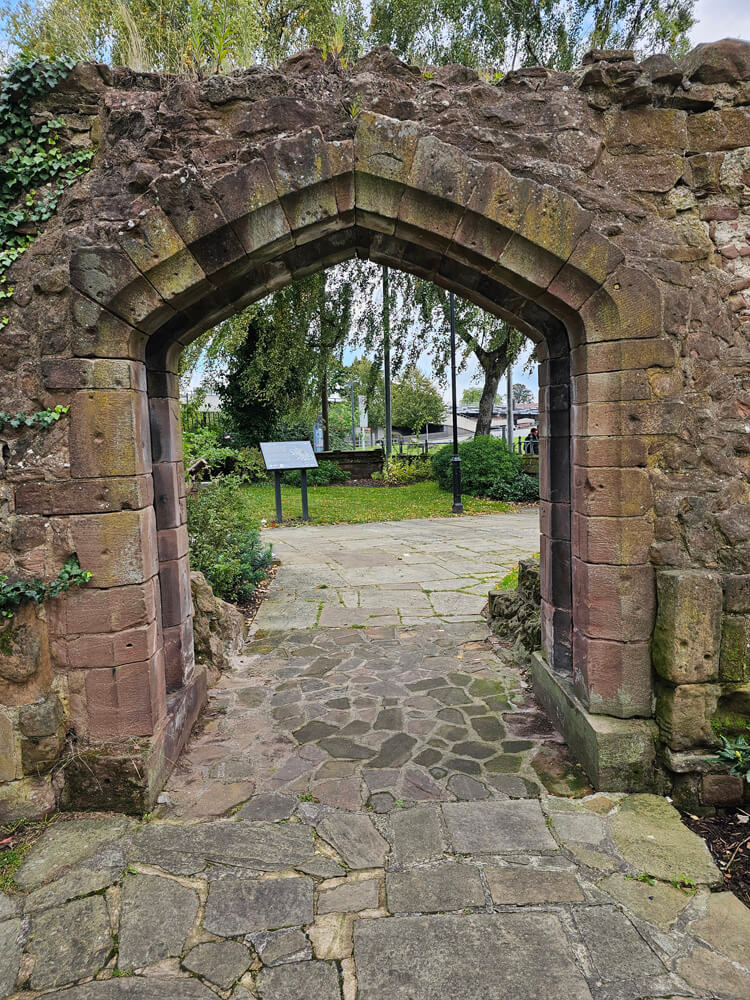
Construction began on a defensive stone wall to encircle the city in around 1355, but due to the city’s growing population, the two-mile wall wasn’t fully complete until the Tudor period. The walls featured a sequence of defensive structures including twenty towers and twelve gatehouses. However, after the English Civil War, Charles II ordered the walls to be pulled down, largely as a punishment for the city having supported the Parliamentarians during the conflict. All that survives today are the Cook Street and Swanswell gates, along with small fragments of the original walls.
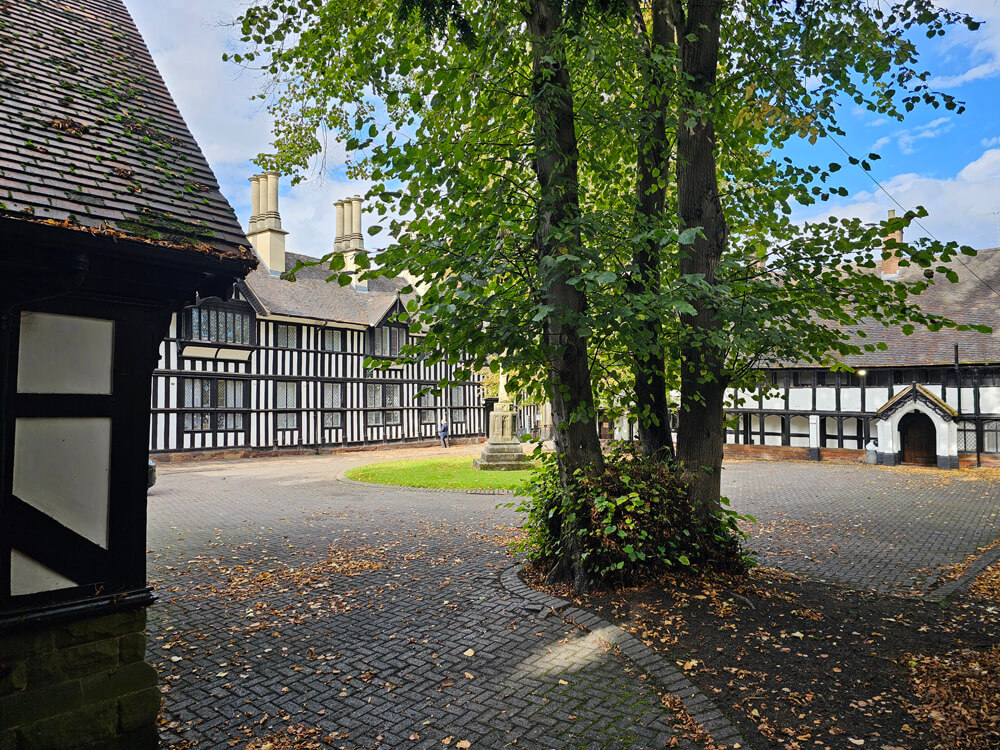
Bond’s Hospital
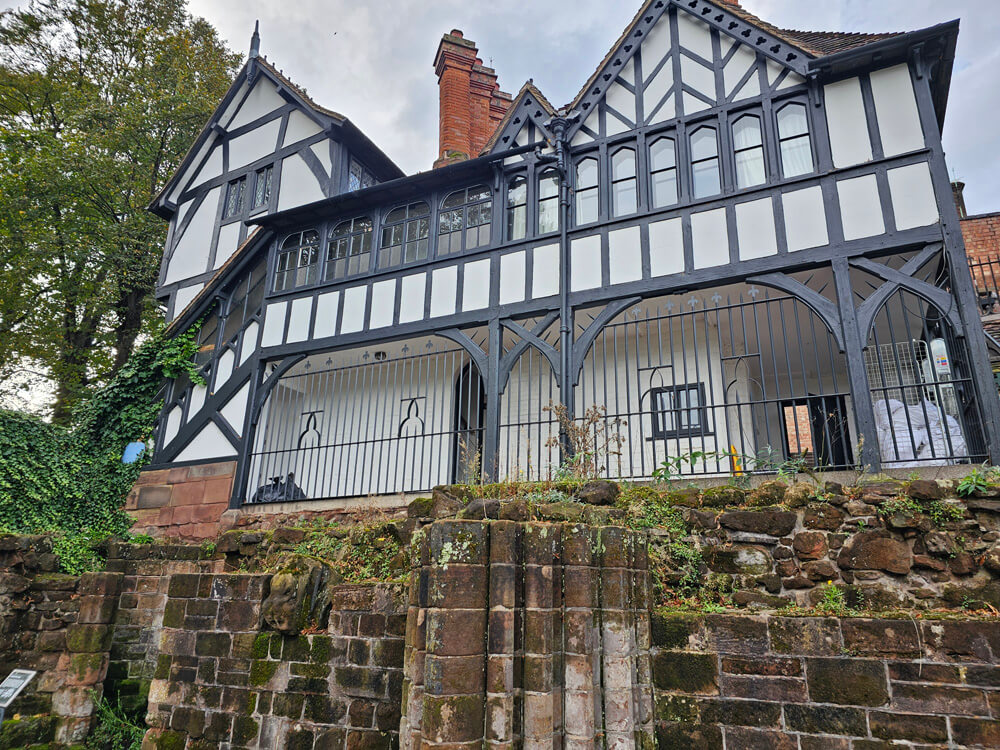
Bond’s Hospital is a picturesque group of historic timber-framed buildings on Hill Street next to St John’s Church. It was built in 1506 in a corner of the medieval city wall as an almshouse (charitable housing for the poor). The hospital was founded by Thomas Bond, a draper who became Mayor of Coventry in 1497. He left money in his will for “the sustenance of ten poor men, and of a woman who was to attend to their necessities”. Bond’s Hospital retains many of its original features and still operates as charitable housing today.
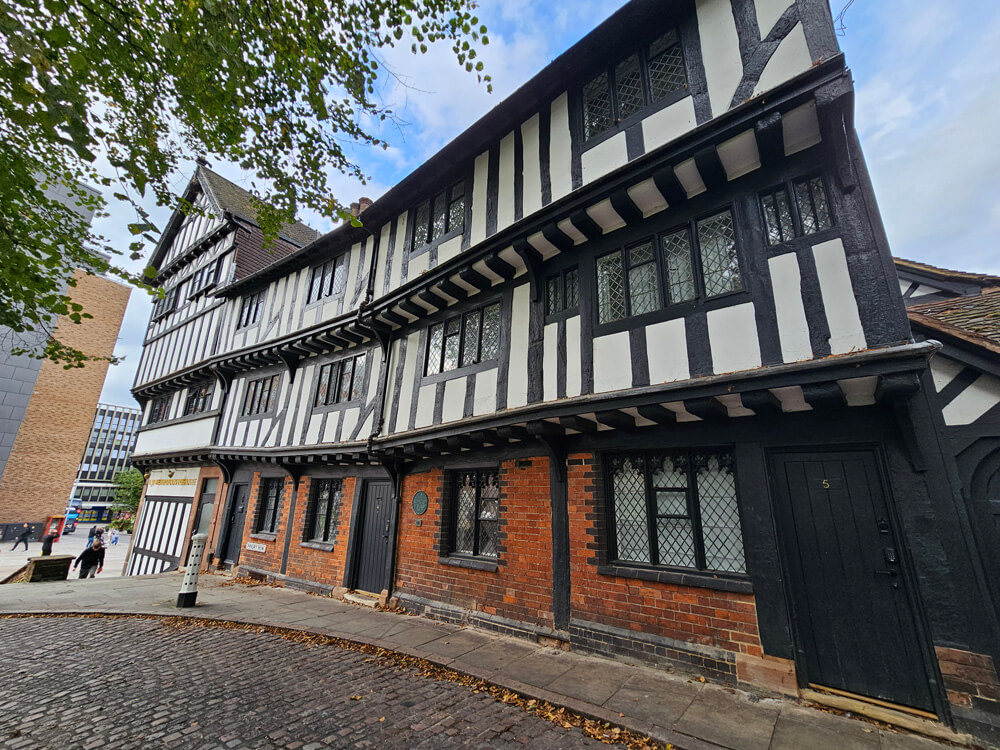
Lychgate Cottages, 3 – 6 Priory Row
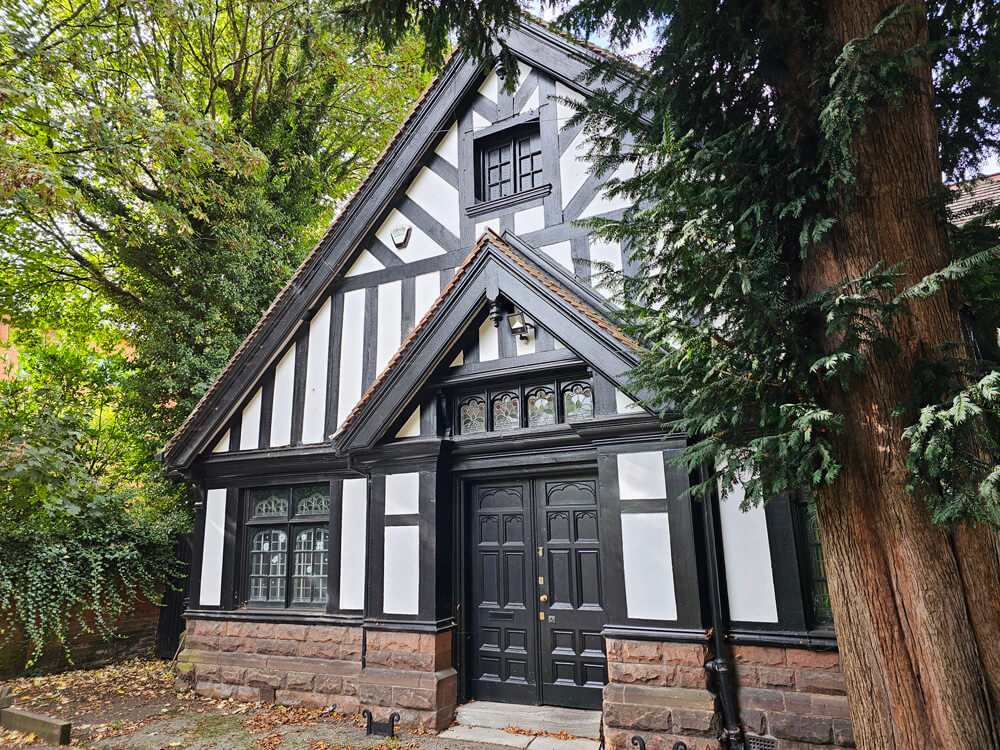
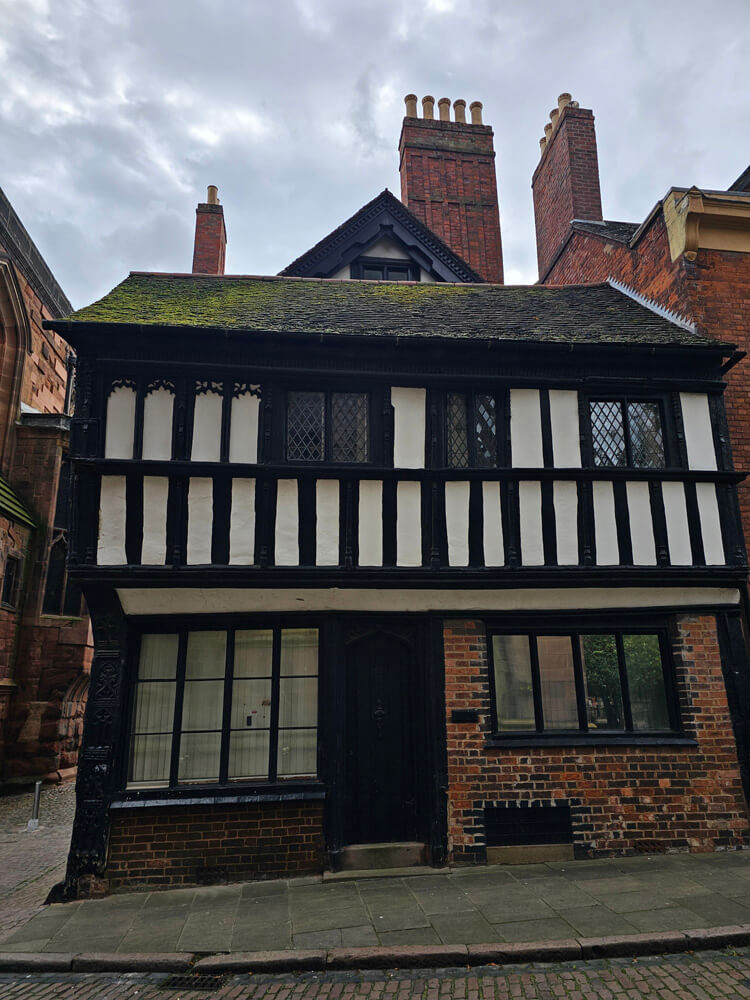
3-6 Priory Row, also known as Lychgate Cottages, are a row of timber-framed cottages and a remarkable survival of a pre-Dissolution building in the heart of Coventry, located adjacent to the entrance to Holy Trinity Church. There is some debate about the age of the buildings, but most suggest that they are original medieval buildings dating to the early 1400s that formed part of the monastic buildings of St Mary’s Priory. Others suggest that the buildings were built in the 1600s. Originally one building named “Lychgate House”, they have long since been split into three separate dwellings.
Photo Gallery.
Did you enjoy this post?
I hope you found this post useful. I put a great deal of time and effort in to building, maintaining and populating the website. If you like, you could say a small thank you by buying me a coffee. You don't have to, but it would be nice :)
Buy me a coffee
Stay up to Date
Follow me on my journey and get notified whenever a new post is published by following Kings & Castles on Facebook.
Follow MeExplore The Map
Discover the hundreds of castles, churches, monasteries, cathedrals and other historic locations that I've personally visited across England and Wales. Search by location, explore nearby sites and plan your next historical adventure.
Share: