York Minster
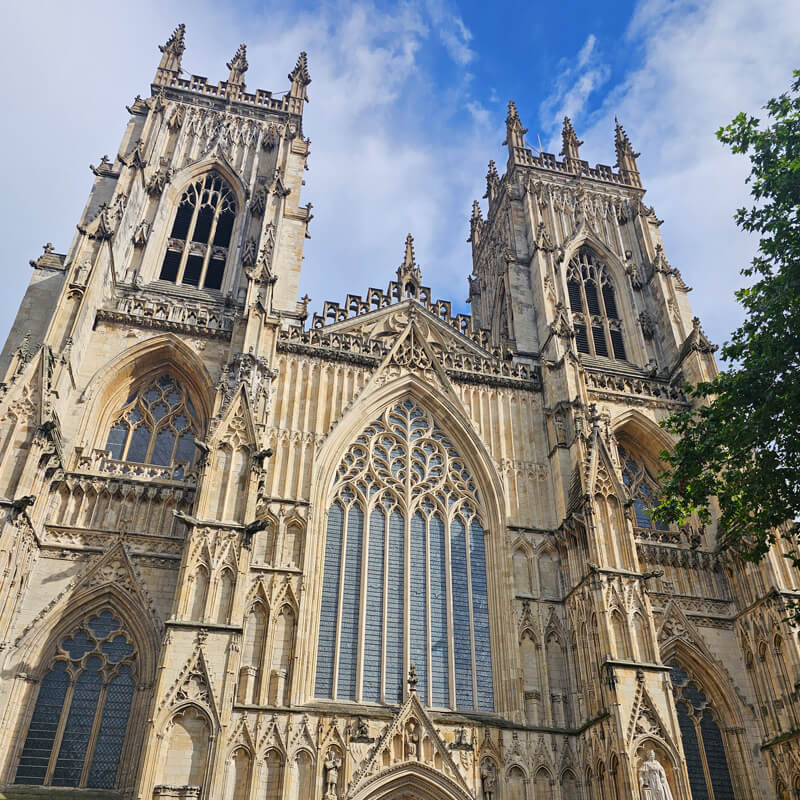
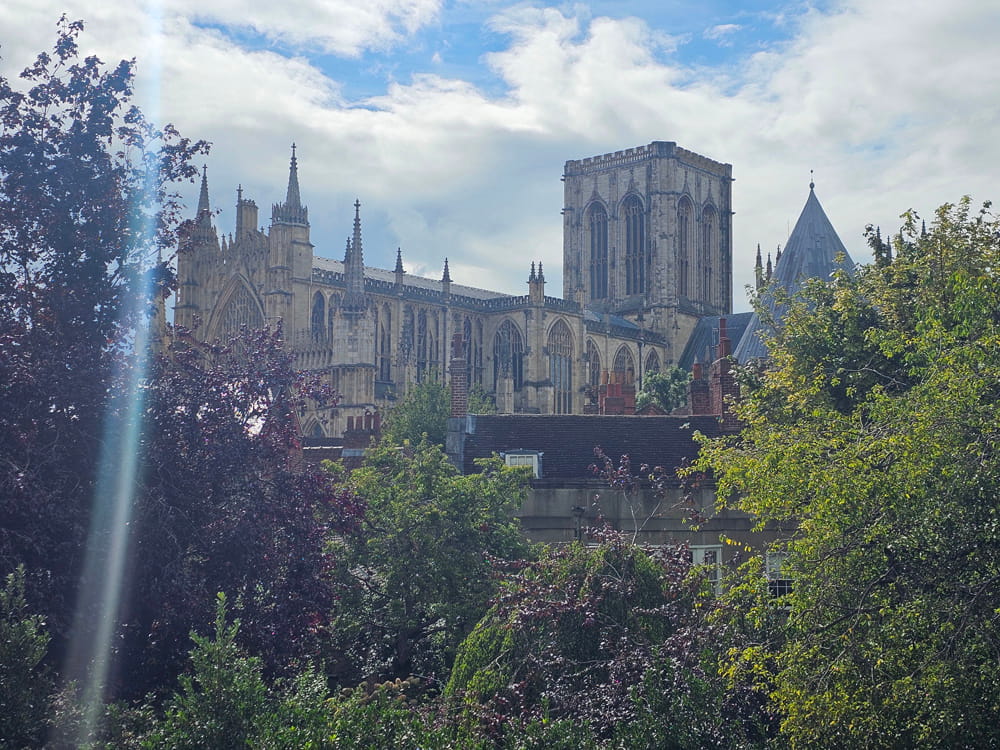
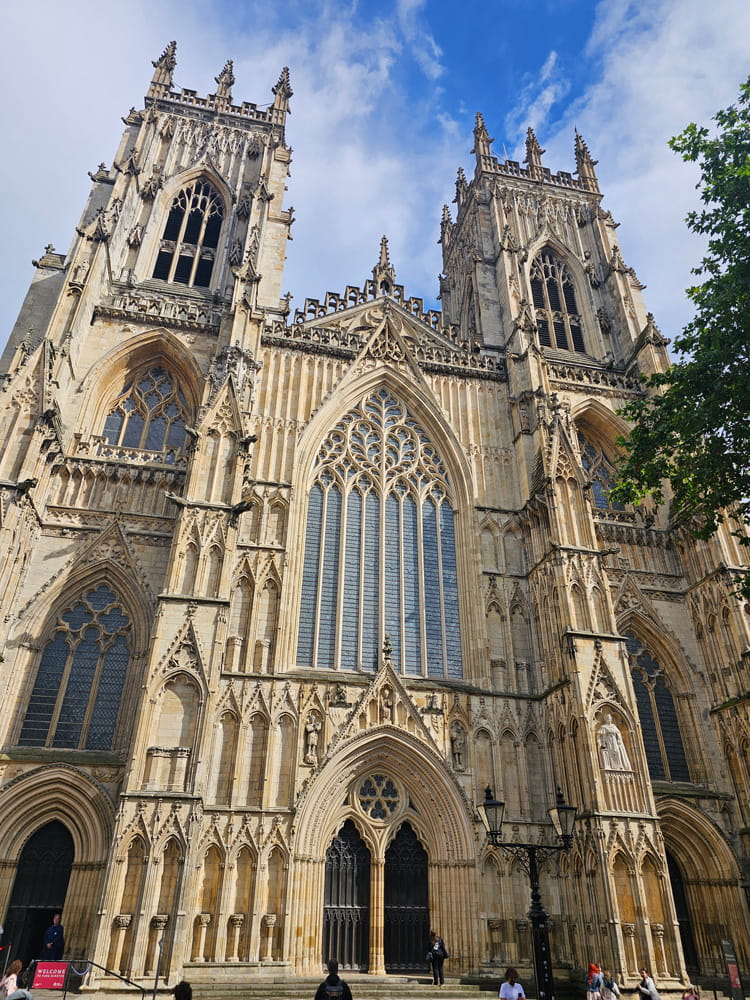
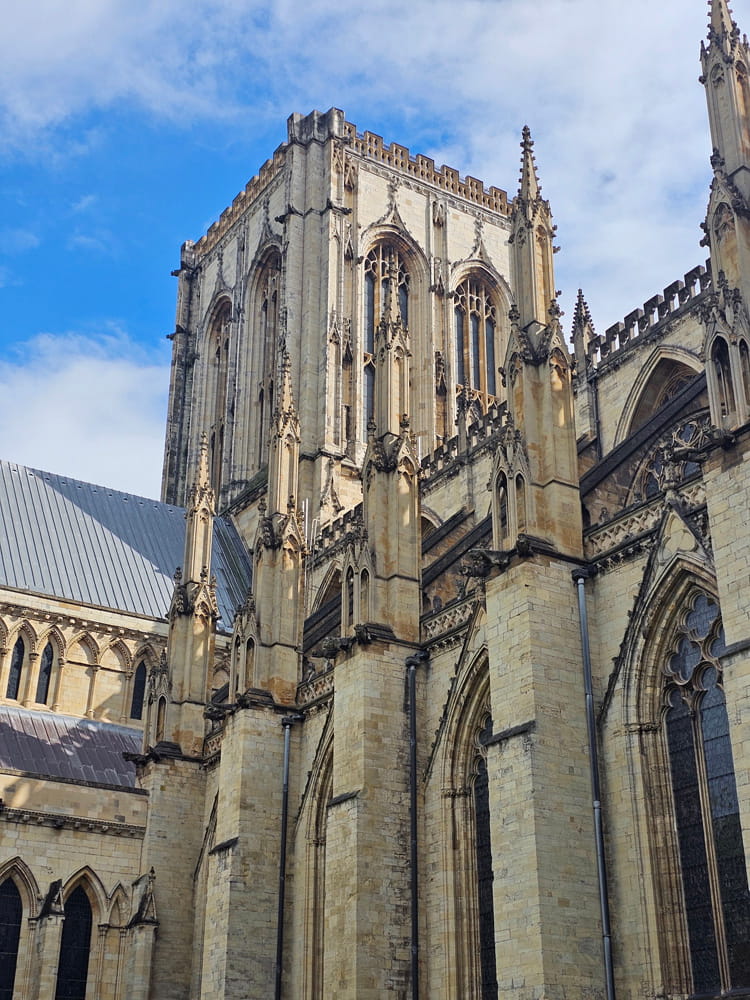
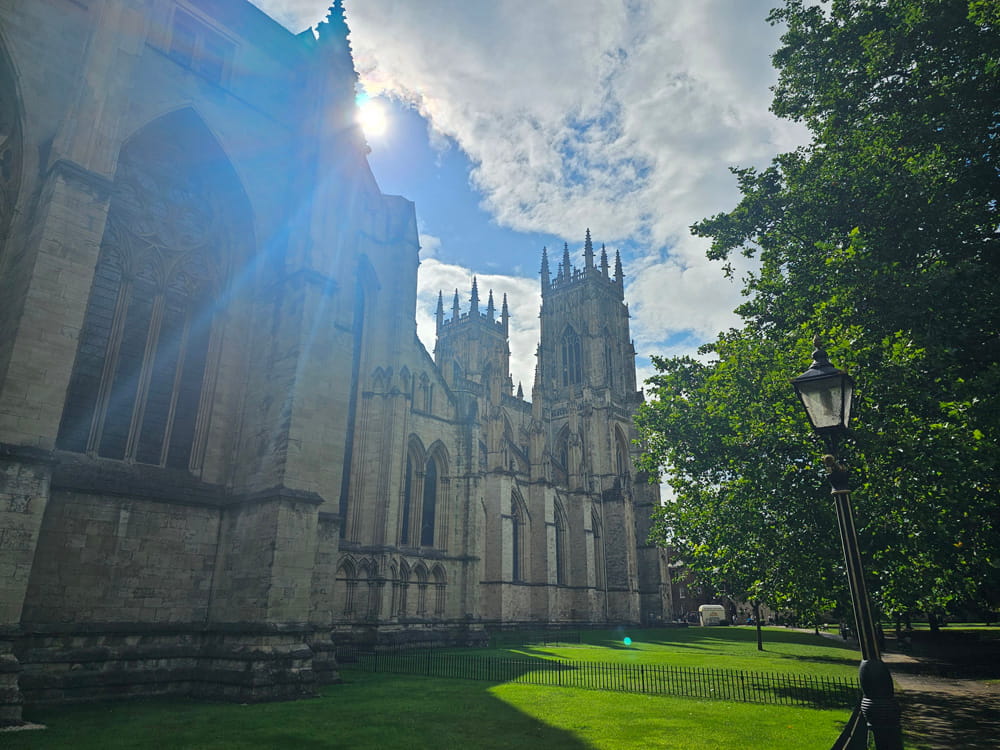
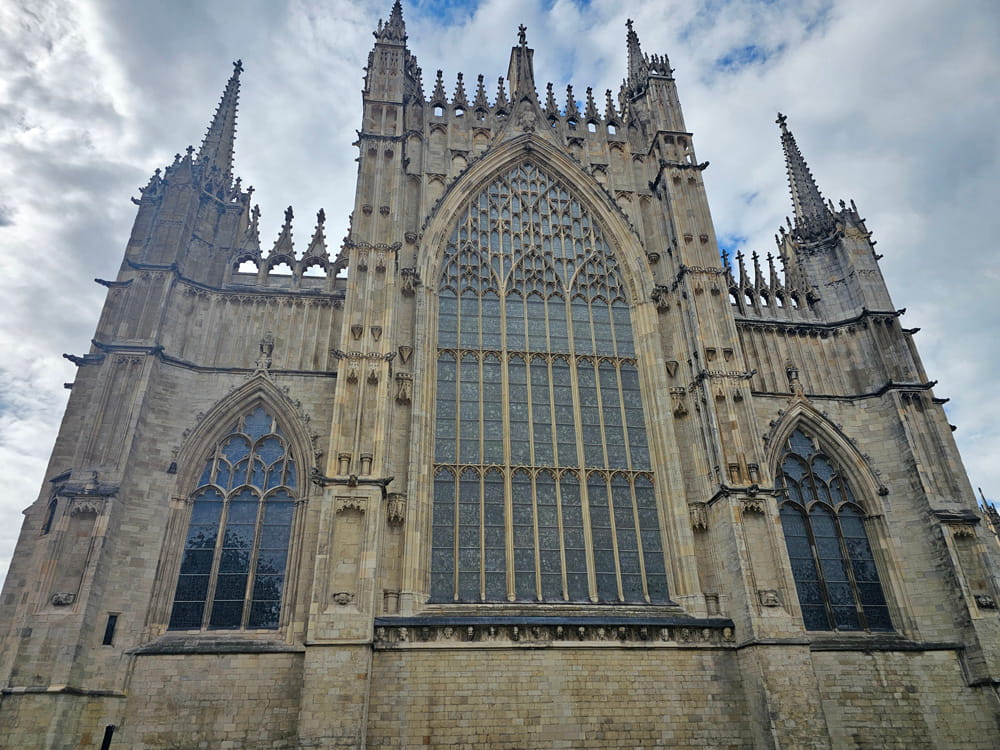
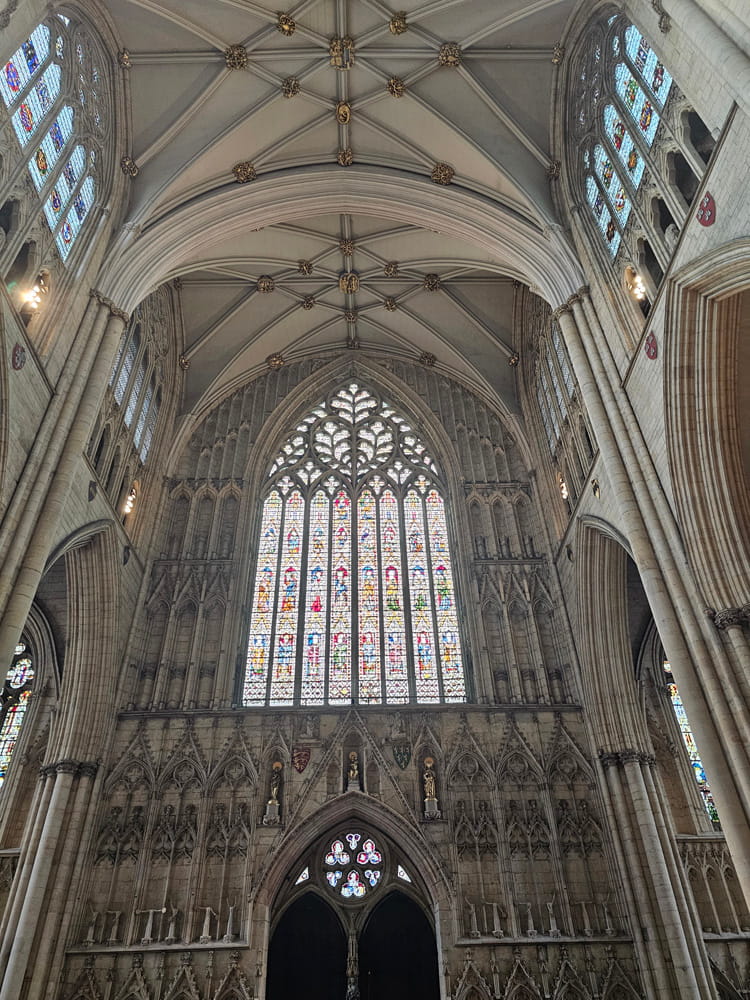
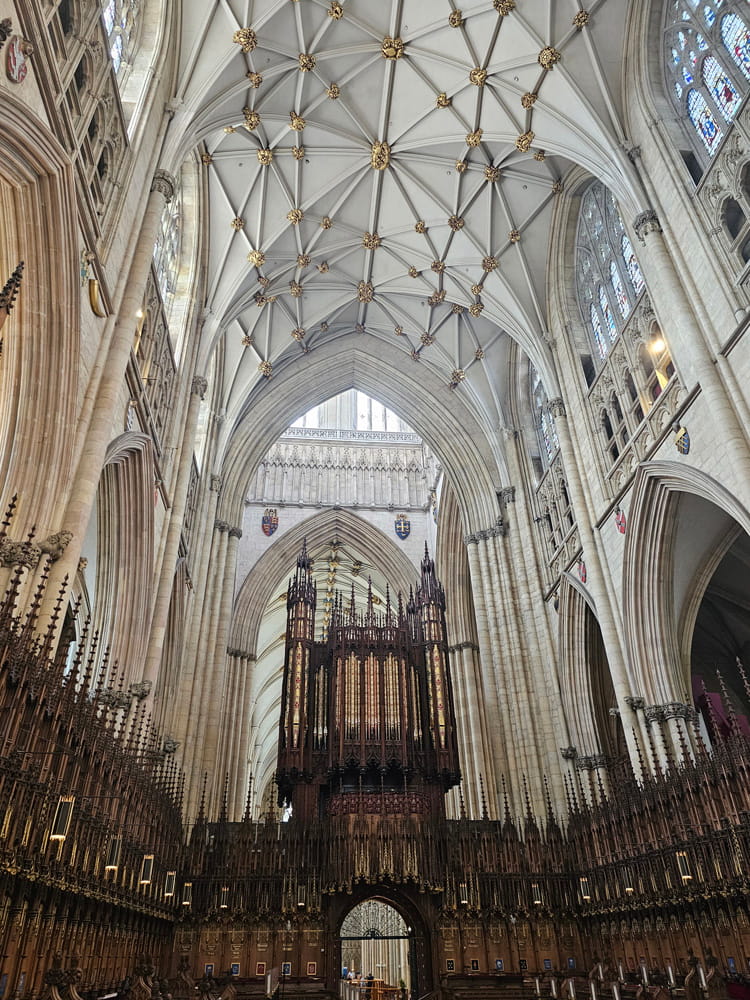
York Minster is one of Europe’s greatest Gothic cathedrals, towering above the ancient city of York with soaring stonework and magnificent stained glass. While the cathedral itself was built over 250 years during the Middle Ages, its foundations reveal an even older story. Beneath the Minster lies a remarkable crypt and undercroft, where visitors can explore nearly 2,000 years of history.
Historic
Highlights.
- The Norman crypt and Undercroft Museum
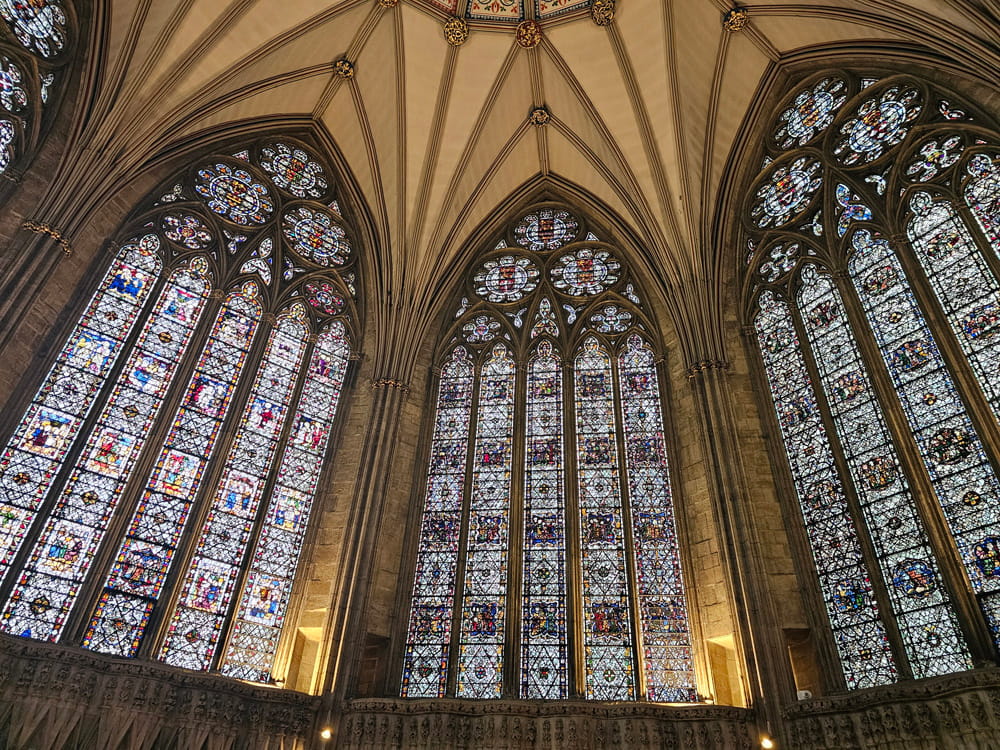
- The stunning Chapter House
- The spectacular Great East Window
From Roman Fortress to Christian Church
The Minster stands on the site of Eboracum, the Roman fortress established around AD 71. By the 4th century, York had become one of Roman Britain’s most important cities, and archaeologists have uncovered the remains of Roman roads, buildings, and military structures beneath the cathedral.
The site’s Christian history began in 627, when King Edwin of Northumbria was baptised in a wooden church built for the occasion. The temporary church was soon replaced by a stone one, establishing York as an important centre of early English Christianity.
The Norman Cathedral
After the Norman Conquest of 1066, Archbishop Thomas of Bayeux ordered the construction of a grand new cathedral in the Romanesque style. Work began in 1080, creating a building that reflected Norman power and ambition. However, as Gothic architecture became fashionable, much of the Norman cathedral was gradually replaced rather than preserved. Although much of the Norman building was replaced, parts of its foundations still survive beneath the present cathedral.
Building the Gothic Masterpiece
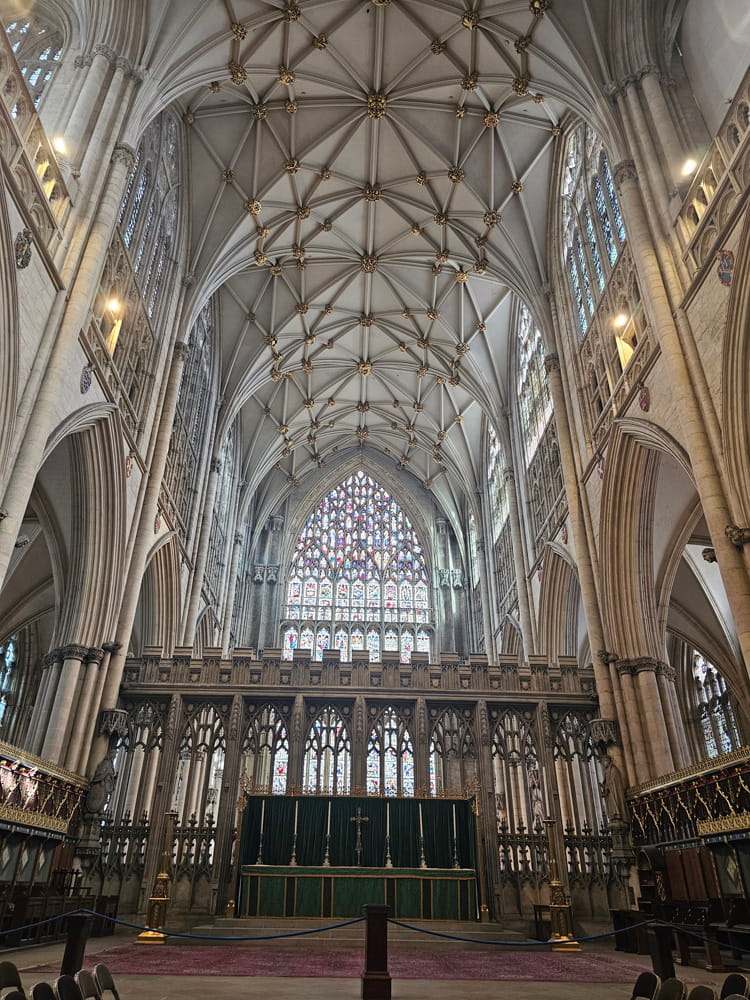
The York Minster seen today was built over approximately 250 years, from 1220 to 1472, making it one of medieval Europe’s greatest construction projects.
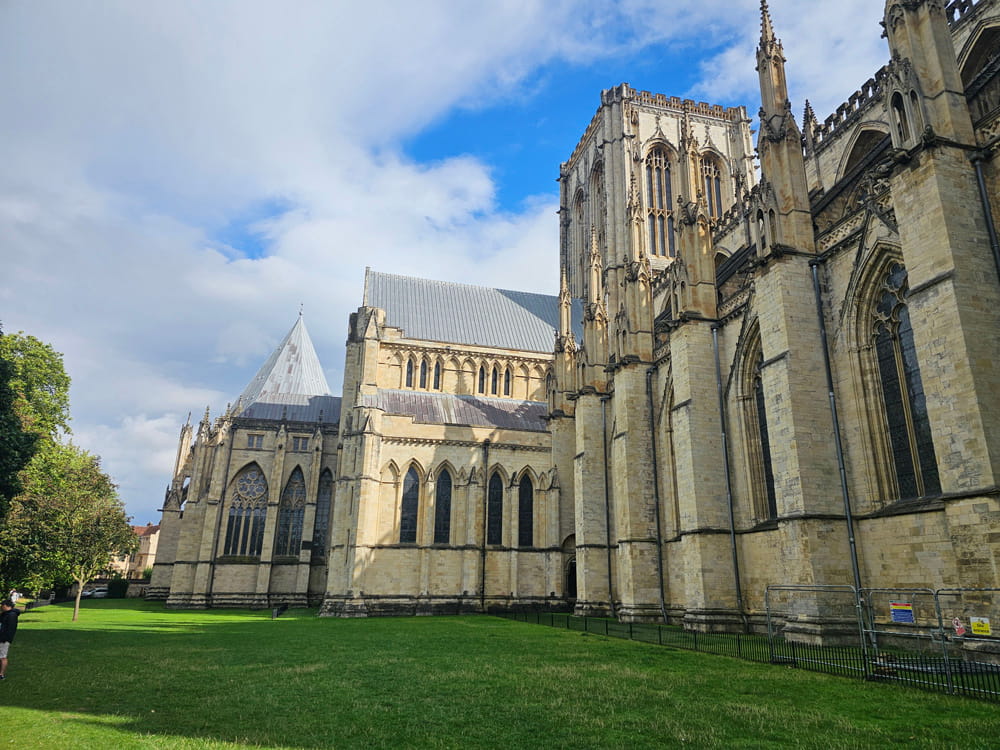
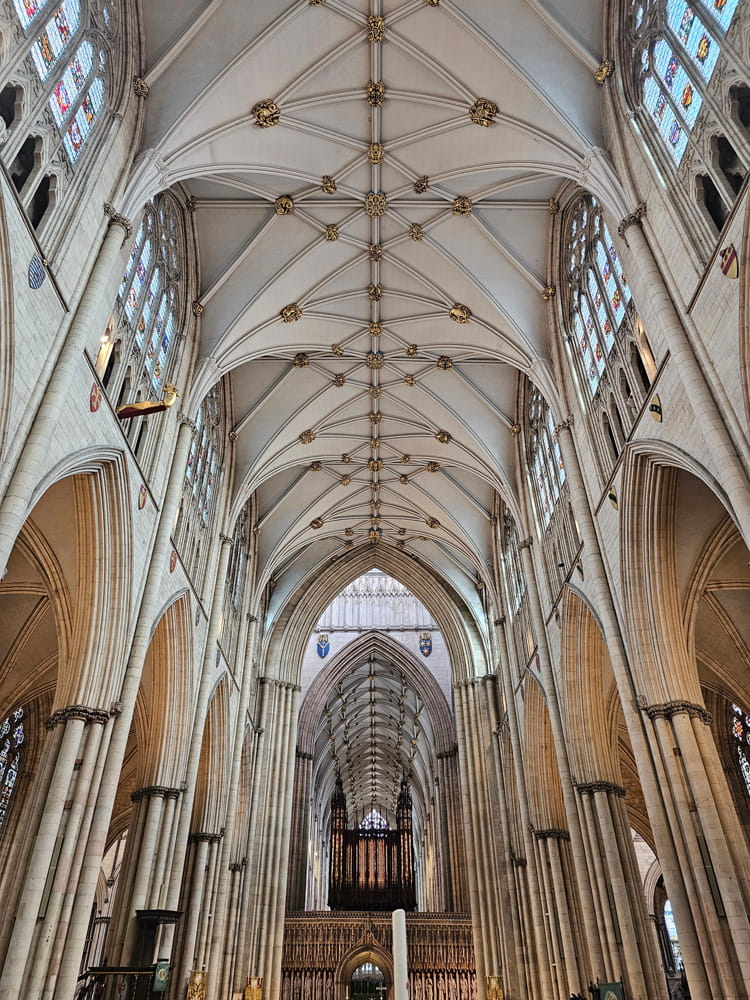
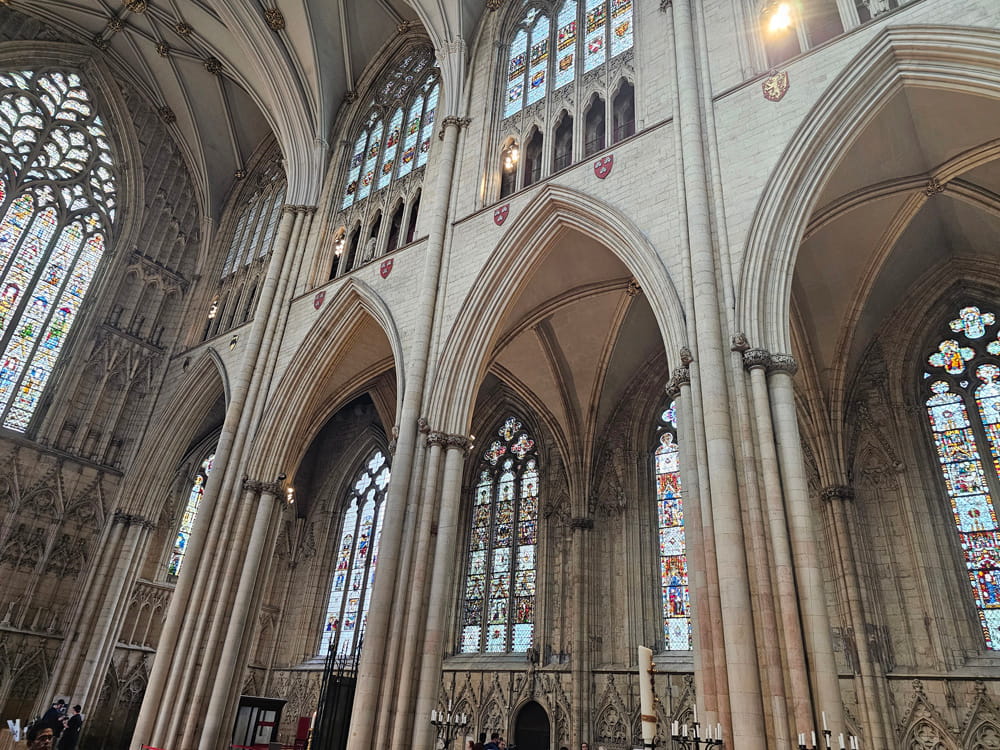
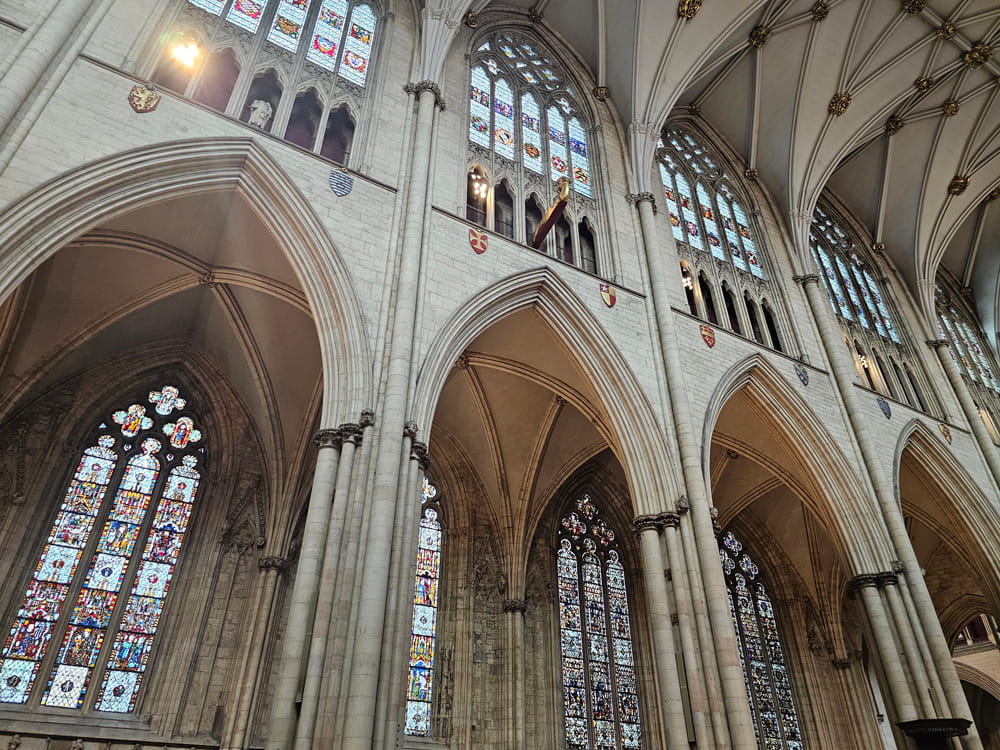
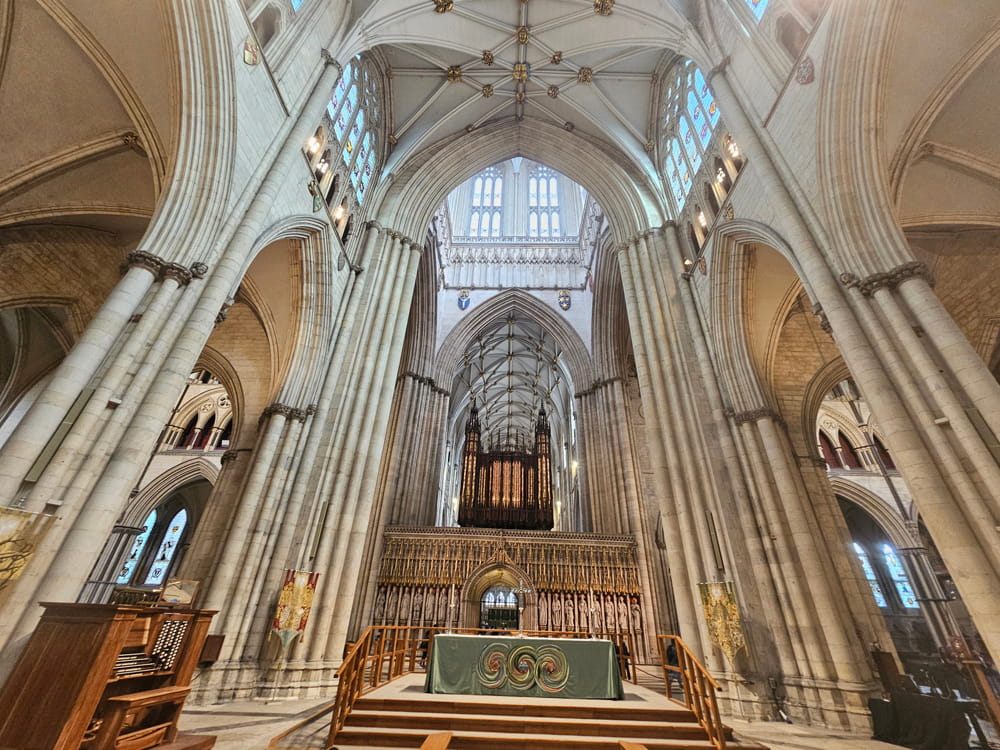
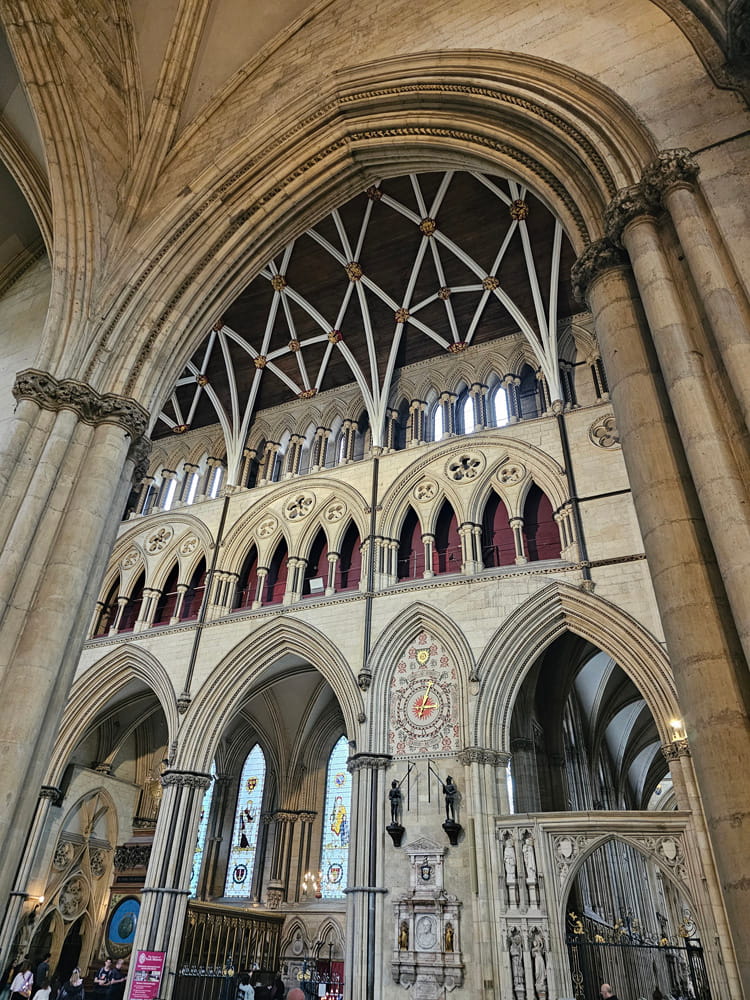
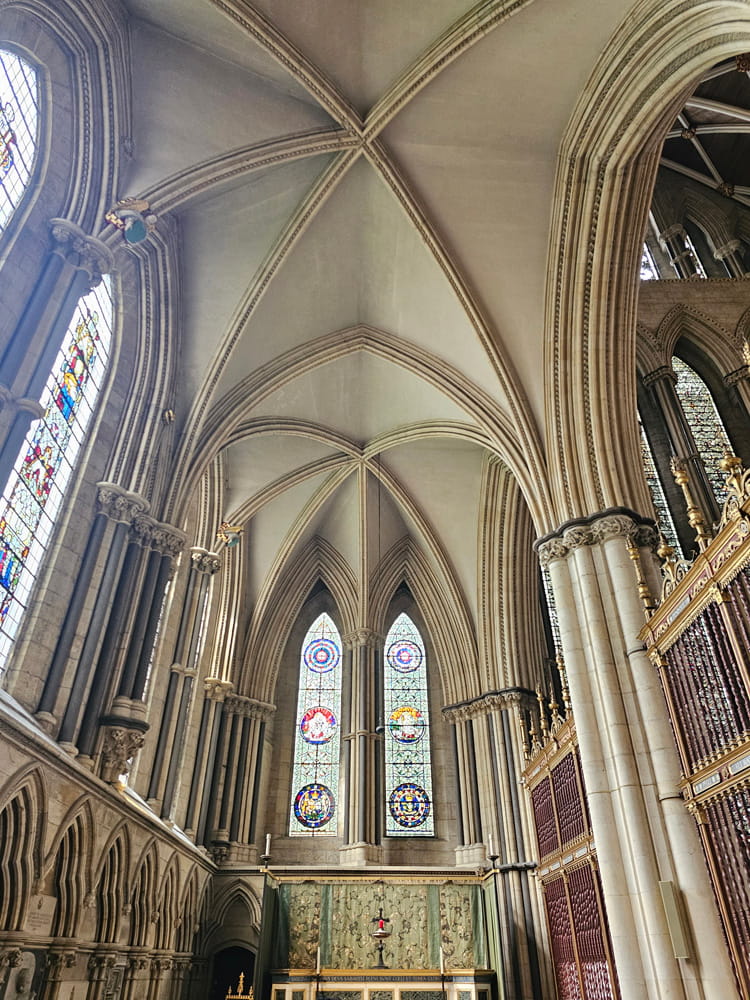
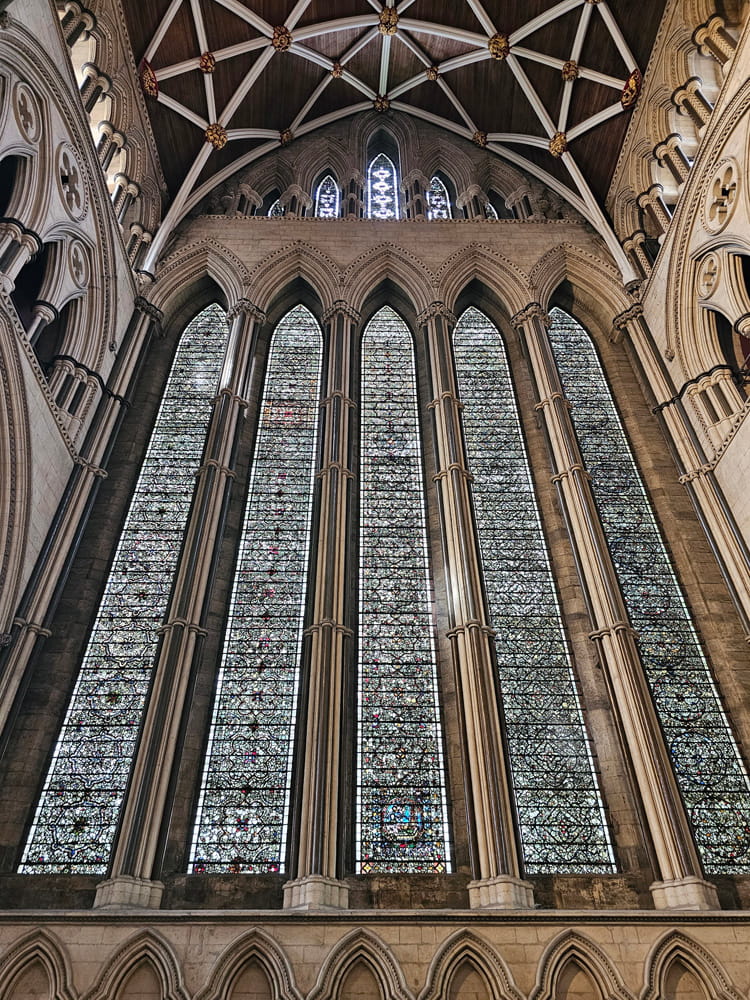
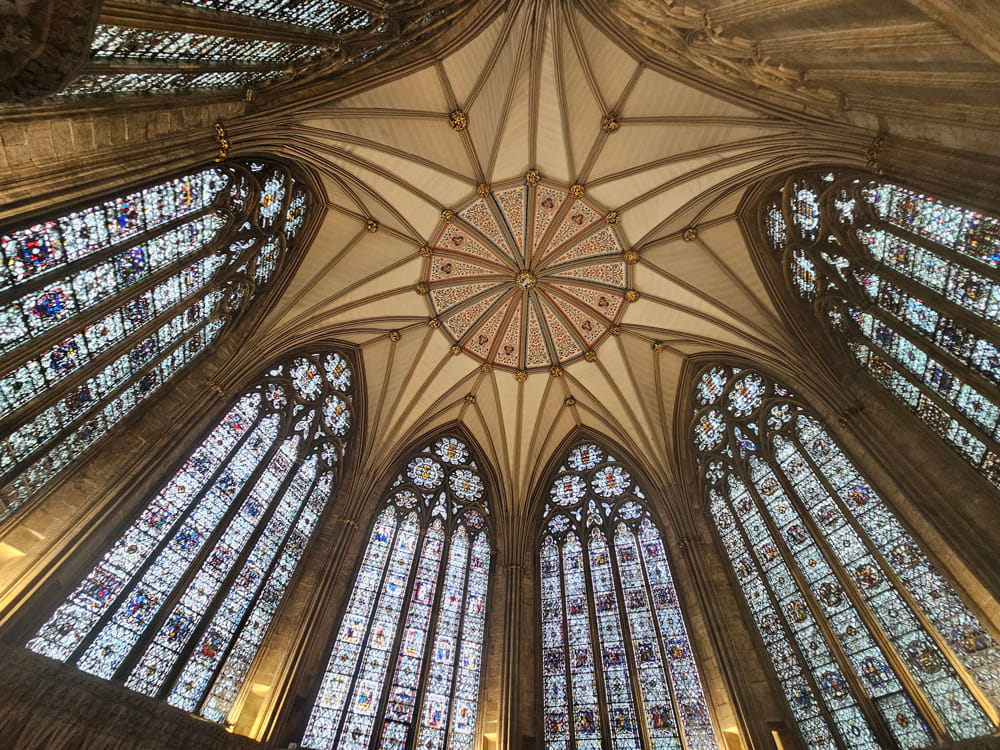
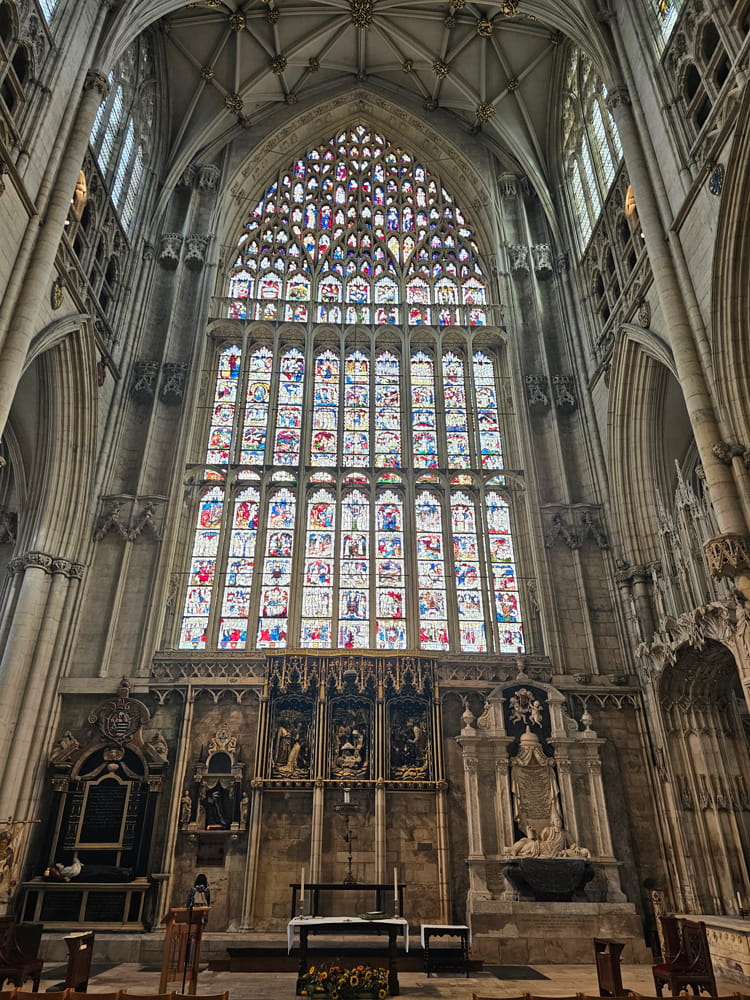
Work began with the north and south transepts, whose graceful lancet windows introduced the Early English Gothic style. The Chapter House, completed in the late 13th century, became one of England’s architectural masterpieces, remarkable for its octagonal design and the absence of a central supporting pillar. The vast nave followed in the 14th century, while the spectacular Great East Window, completed by master glazier John Thornton in 1408, became the largest expanse of medieval stained glass in Britain.
The cathedral was finally completed in 1472, creating the magnificent structure seen today.
Faith Through Turbulent Times
York Minster played a central role during some of England’s most turbulent periods. During the Wars of the Roses, York became a stronghold of the House of York, while the cathedral remained an important religious centre.
The English Reformation under Henry VIII dramatically changed its role. Although monasteries were dissolved, York Minster survived as a cathedral, becoming part of the newly established Church of England. Many medieval shrines, statues, and decorations were removed during the Reformation and later periods of religious conflict.
During the English Civil War, Parliamentary forces occupied York, and although the Minster escaped complete destruction, it suffered damage and neglect.
It also endured lightning fires in the 19th century and a devastating arson attack in 1984, which destroyed the roof above the south transept. Careful restoration preserved both the cathedral’s appearance and its historic fabric.
The Crypt and Undercroft Museum
One of York Minster’s greatest treasures lies beneath the cathedral floor. The crypt and Undercroft Museum reveal the many layers of history hidden below the Gothic building, allowing visitors to walk through nearly two millennia of York’s past.
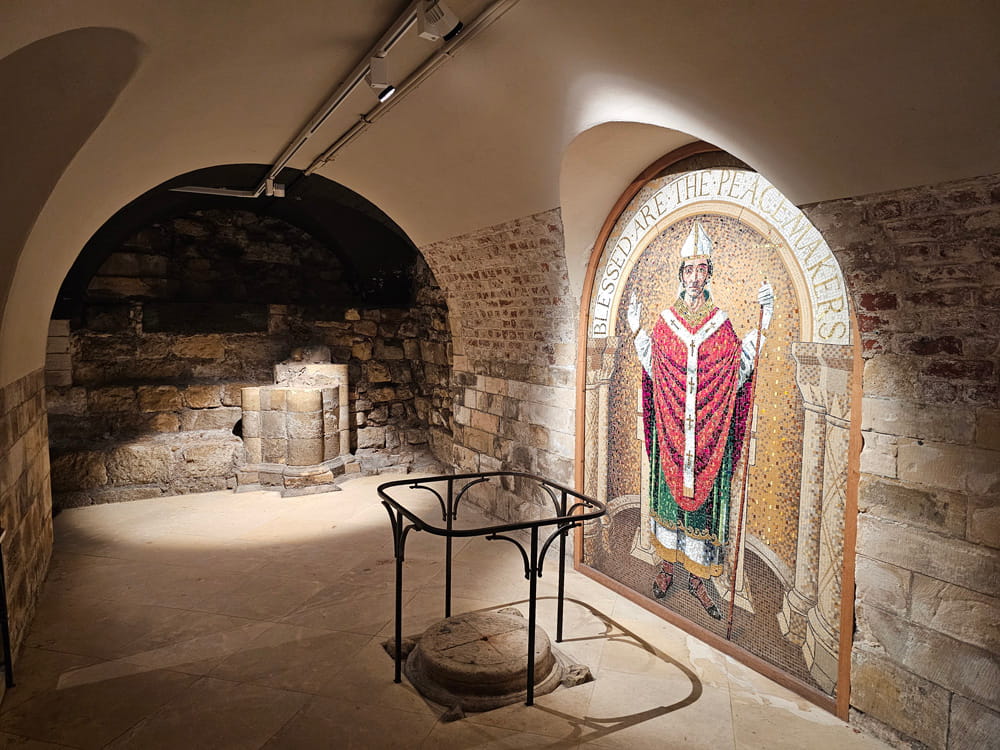
The museum incorporates the remains of the Roman fortress, where visitors can see sections of ancient walls and foundations that once formed part of Eboracum. These discoveries highlight York’s importance as a military and administrative centre of Roman Britain.
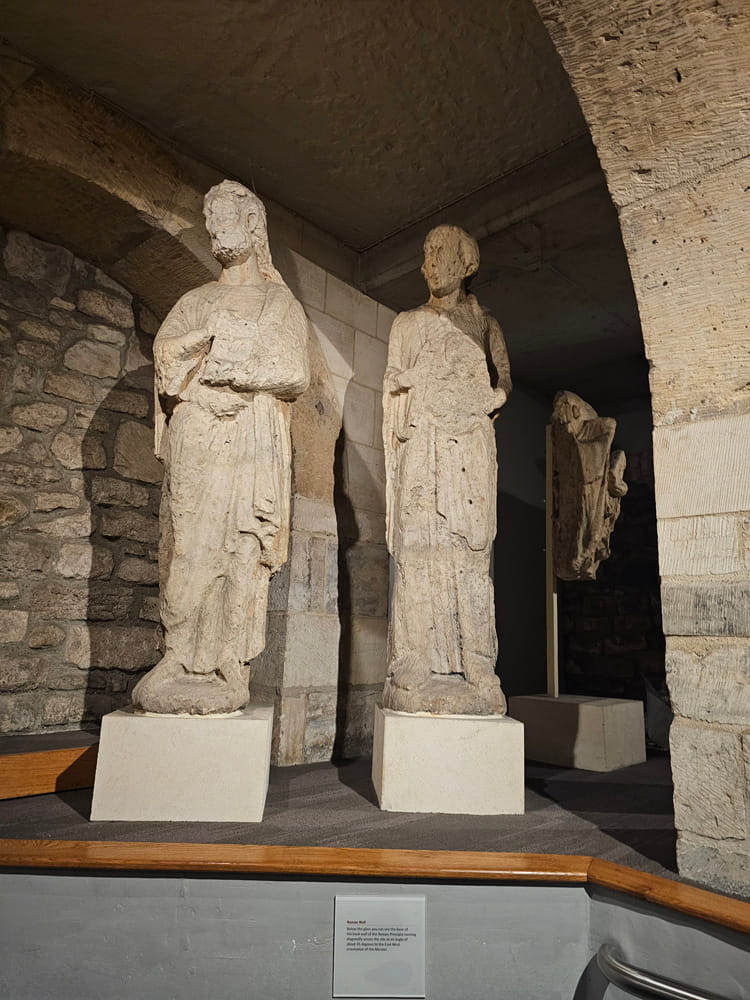
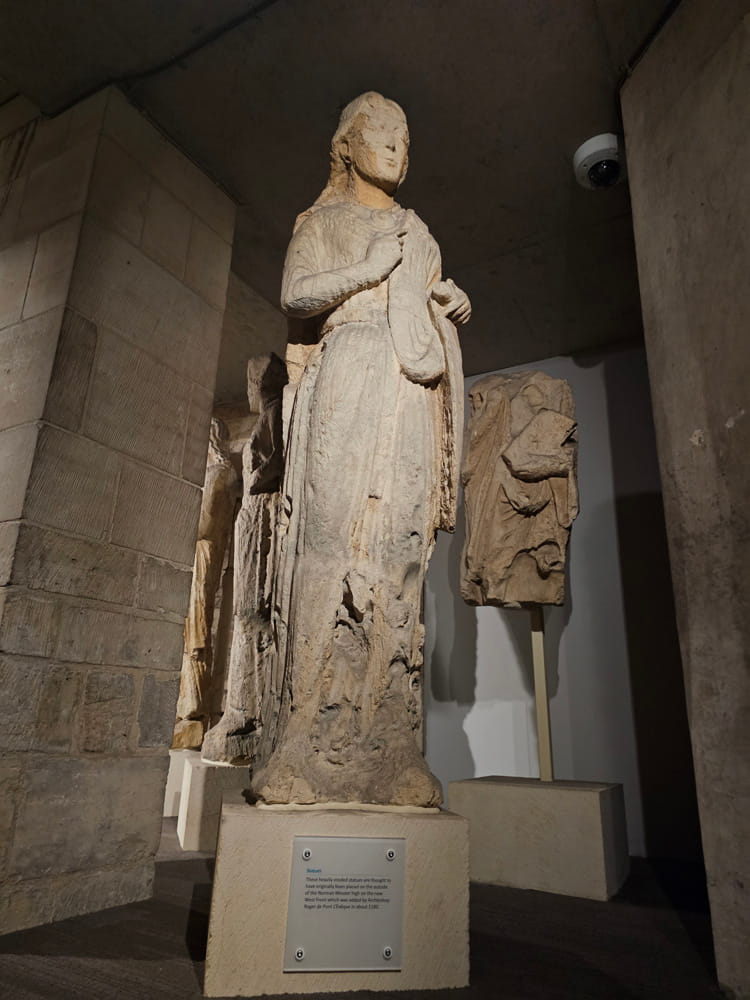
The Undercroft Museum also tells the story of the cathedral’s construction through archaeological finds, medieval carvings, and interactive displays. Visitors can examine fragments of stained glass, sculptures damaged during the Reformation, and objects uncovered during major excavations, when engineers strengthened the cathedral’s foundations.
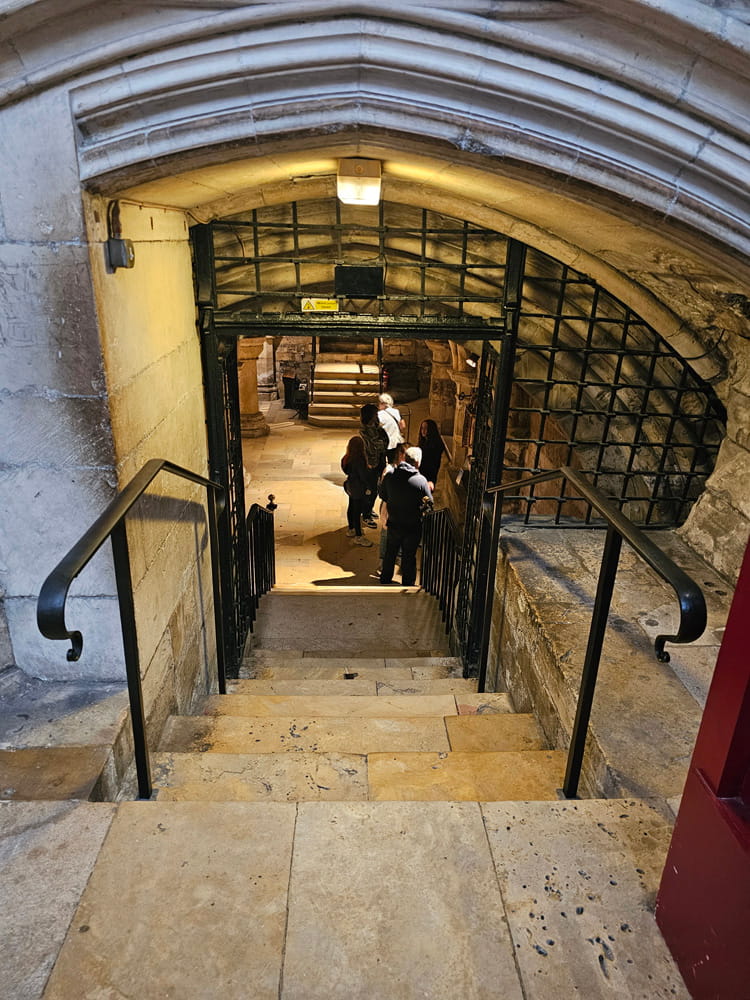
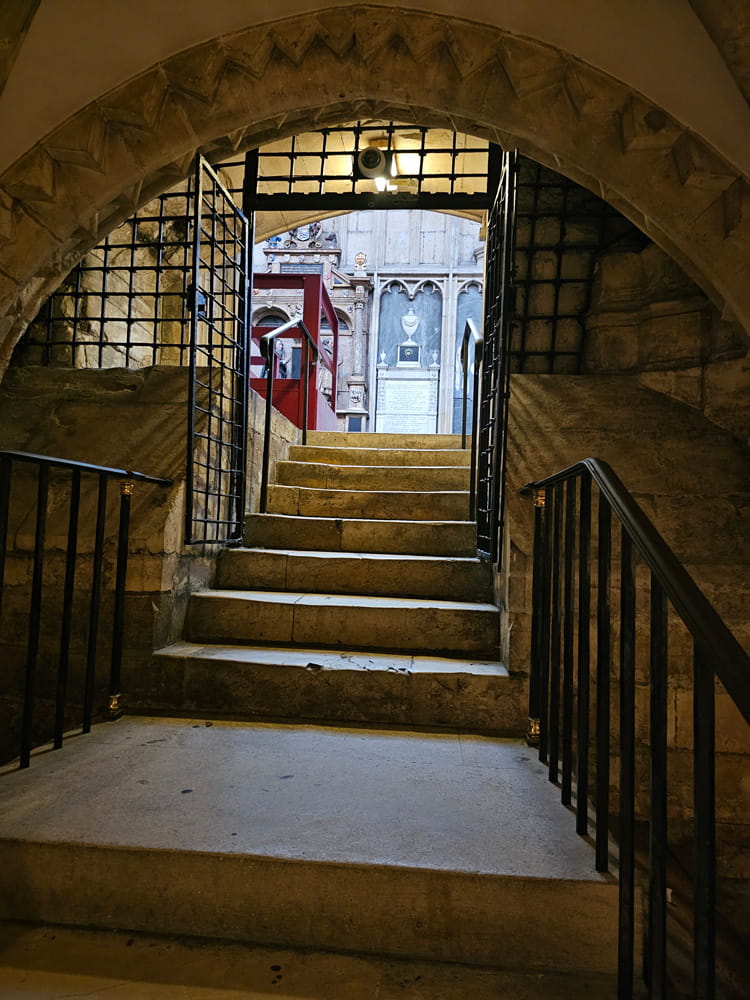
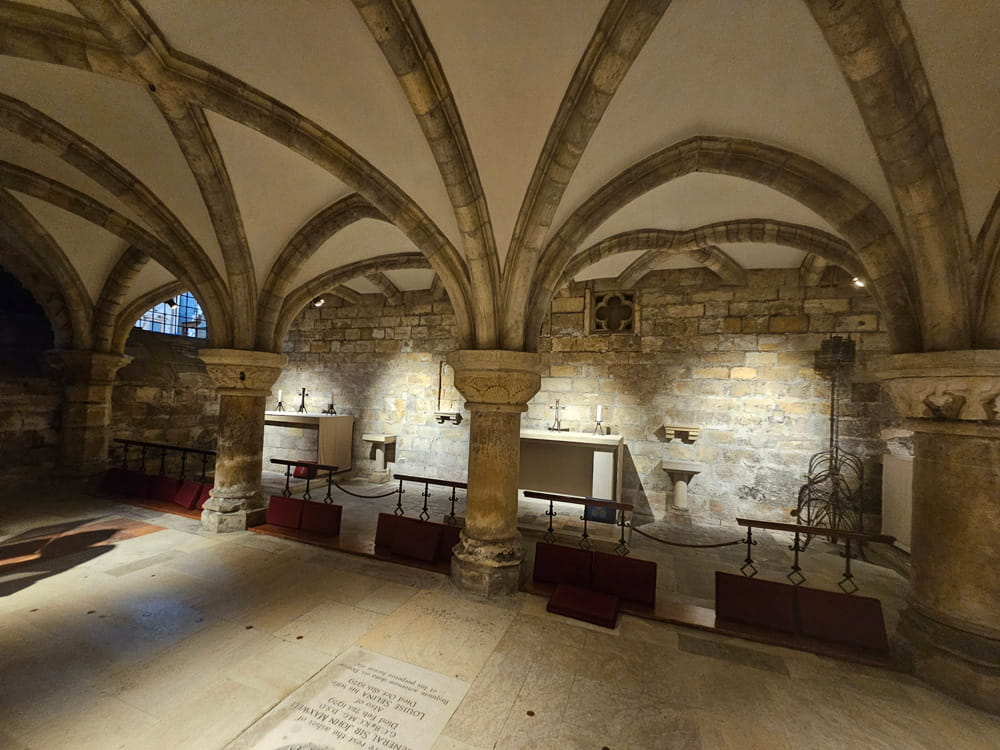
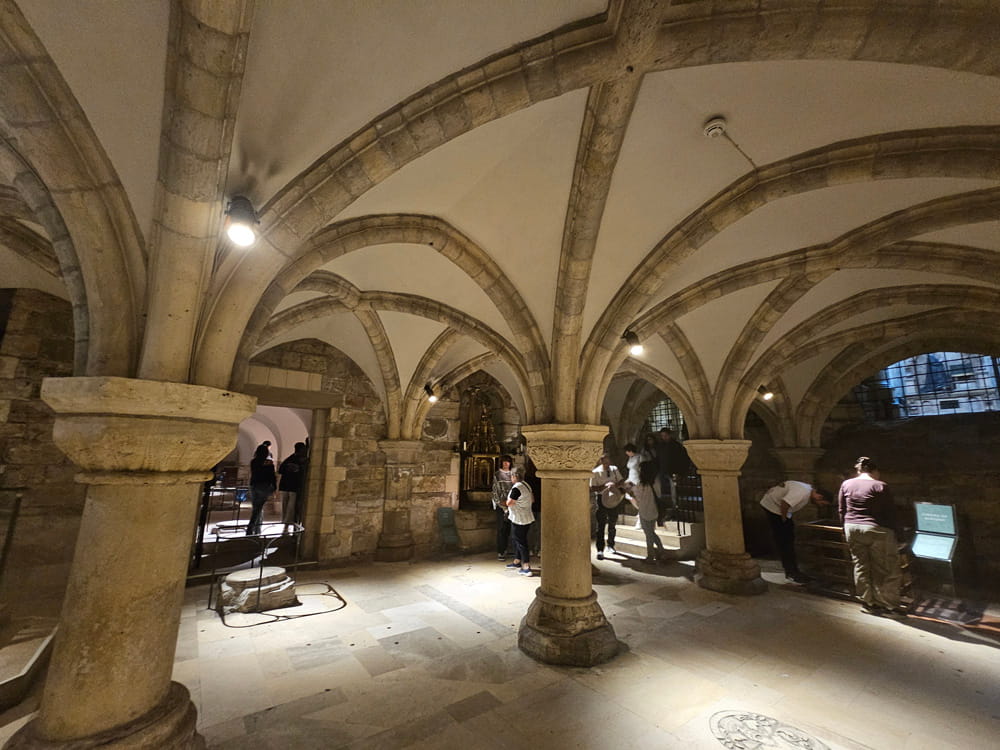
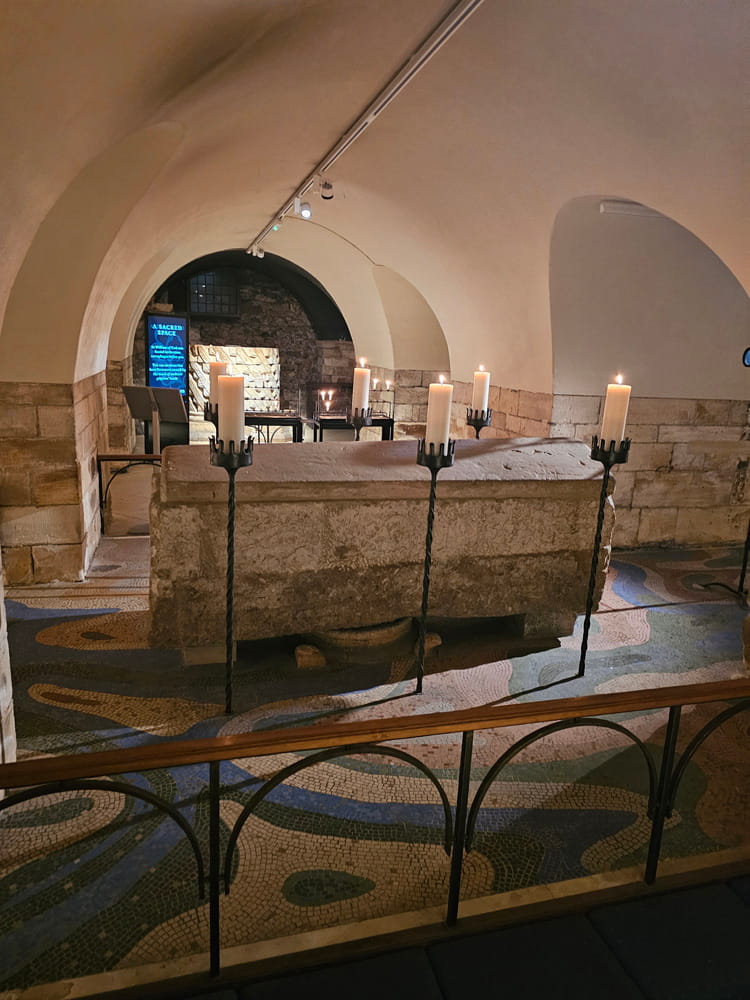
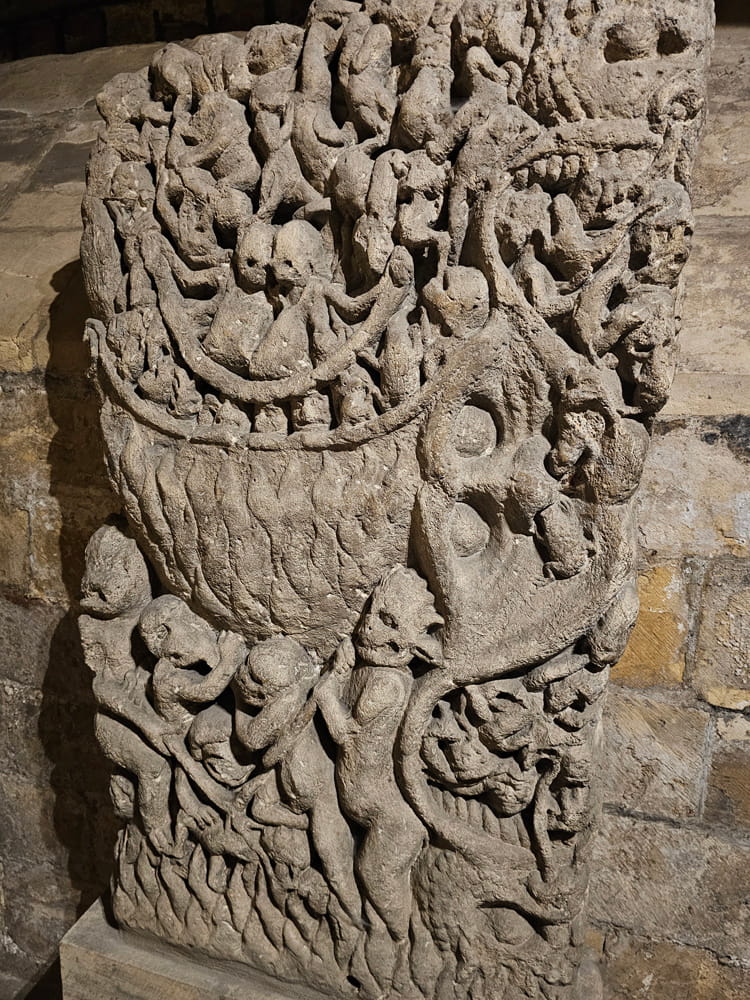
Deep under the Quire lies the Norman crypt, accessible via the south transept. This ancient space houses the oldest section of the minster. Built in the 11th century, it preserves massive stone pillars and rounded Romanesque arches that supported the earlier cathedral. Standing in this atmospheric space offers a striking contrast to the soaring Gothic architecture above. Down here you will find the tomb of St William – the patron saint of York – and the famous Doomstone, amongst many other things.
Together, the crypt and museum transform York Minster from a single medieval building into a timeline of English history, where Roman soldiers, Anglo-Saxon kings, Norman archbishops, and medieval craftsmen all leave their mark.
York Minster Today
Today, York Minster remains both a working cathedral and one of Britain’s most visited historic sites. As the seat of the Archbishop of York, the second-highest office in the Church of England after the Archbishop of Canterbury, it continues to host worship while welcoming visitors from around the world.
Whether admired for its towering Gothic architecture or explored through the fascinating crypt beneath its floor, York Minster offers a rare opportunity to experience nearly 2,000 years of history in one extraordinary place.
Photo Gallery.
Did you enjoy this post?
I hope you found this post useful. I put a great deal of time and effort in to building, maintaining and populating the website. If you like, you could say a small thank you by buying me a coffee. You don't have to, but it would be nice :)
Buy me a coffee
Stay up to Date
Follow me on my journey and get notified whenever a new post is published by following Kings & Castles on Facebook.
Follow MeExplore The Map
Discover the hundreds of castles, churches, monasteries, cathedrals and other historic locations that I've personally visited across England and Wales. Search by location, explore nearby sites and plan your next historical adventure.
Share: