Dissolution of the Monasteries
The English Reformation took place in the 16th century when the Church of England was forced by Henry VIII to break away from the authority of the pope and the Catholic Church. This resulted in the destruction of England’s Catholic religious establishments which became known to history as the Dissolution of the Monasteries.
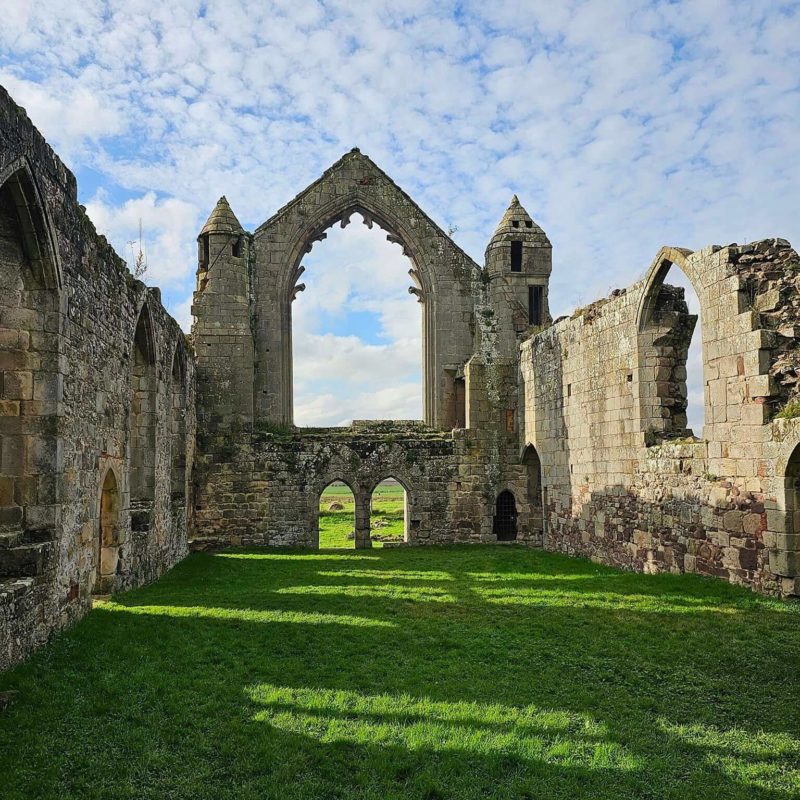
Between 1536 and 1541, on the orders of Henry VIII, every single Catholic abbey, priory, friary and convent in England was dissolved or forcibly closed and their lands and wealth confiscated. As a result, as many as 14,000 monks, nuns and friars, as well as countless monastic servants and tenants, had their lives changed forever.
This all started when Henry VIII wanted a divorce from his wife to marry another in an attempt to produce a male heir. Unfortunately, the monasteries were deeply embroiled in the political and religious consequences of Henry VIII’s marital problems and his quest for an heir.
The pope refused to annul Henry’s marriage to Catharine of Aragon so that Henry could marry Anne Boleyn. In 1534, Henry broke with the pope and the all-powerful Catholic Church and declared himself Supreme Head of the Church in England. This decision initiated the Reformation of English religion and the Act of Supremacy, which acknowledged Henry as supreme head of the Church in England, and the Treason Act made denial of the king’s authority over the church as treason, and punishable by death.
This made monasteries especially vulnerable to attack because of what they stood for. Many had close ties with the papacy and were home to monks and nuns who were loyal to traditional Catholic religion. Furthermore, the monasteries were also at risk because many of them were extremely rich, and the king was often desperately short of money.
The Dissolution of the Monasteries proceeded in stages. The lesser monasteries; those with an income of below £200 a year were dissolved first in 1536. This was followed by further dissolutions in 1538, and by 1541 every monastery in England and Wales, many with histories stretching back to the Anglo-Saxons, had been dissolved.
Many monasteries in early 16th-century England were thriving and could not have anticipated their impending extinction. Many people still entrusted the monasteries with their spiritual salvation, also turning to them for hospitality, employment, education and charity. Many monasteries were also home to shrines containing relics of Christ and saints, attracting pilgrims from across the land.
The Dissolution caused a lot of resentment, mostly directed towards King Henry and his chief minister, Thomas Cromwell, who had seen the riches that could be accrued from the suppression of religious establishments. Thomas Cromwell was a huge influence on the king and is arguably mostly to blame for the Dissolution. In December 1534 he had boasted to the Imperial ambassador to England that he would make Henry richer than all other kings in Christendom – riches which were to come from the monasteries.
A minority of monks, nuns and canons welcomed the Dissolution of their monasteries and the release from their vows. They included a small number of Evangelicals who actively embraced the reformers’ cause. However, for most monks and nuns, the arrival of Henry’s commissioners and the destruction of their monasteries was a distressing experience. The monasteries were not only their home, they were also at the centre of their belief system. They provided status, self-identity, friendship and security. There are even reports of some monks dying of grief within days of the suppression of their monasteries.
Some monasteries and their supporters tried to conceal property before Cromwell’s commissioners arrived. The gold and silver altar plate, jewels, and precious metal thread from vestments, were usually sent to the Tower, but some would end up being hidden. There were some monks and nuns who were salvaging property, hoping that it would one day be restored to their monasteries. Even religious conservatives took their pickings from the dissolved monasteries. The motive for the looting seems to have been sheer opportunism rather than any hostility towards the monks.
The dissolved monasteries then passed into the ownership of Henry VIII in his role as head of the Church.
Despite the high-minded ideals of Thomas Cromwell, few of the profits from the Dissolution found their way into the pockets of the poor. Many people, including Thomas Cromwell and his commissioners, were considerably enriched by the Dissolution. This was to be a cause for concern for Anne Boleyn, who believed that the poor should have been the ones to benefit. This would lead to Cromwell’s eventual motive for the removal of Anne Boleyn.
Today, we are left with monastic ruins, outer shells of what were once magnificent monastic buildings. They were looted for their relics, jewels, and precious metals, had their roofs stripped of their lead, and glazing and bells removed to be melted down. However, many churches that we see today were once part of prosperous monasteries. Although the abbeys and priories of medieval England were destroyed, for many, their churches were allowed to survive and continue on as a place of worship, as local parish churches, such as Tewkesbury Abbey, Leominster Priory, Breedon Priory Church, Pershore Abbey, Deerhurst Priory Church, Dore Abbey, Great Malvern Priory Church, Shrewsbury Abbey.
Did you enjoy this post?
I hope you found this post useful. I put a great deal of time and effort in to building, maintaining and populating the website. If you like, you could say a small thank you by buying me a coffee. You don't have to, but it would be nice :)
Buy me a coffee
Stay up to Date
Follow me on my journey and get notified whenever a new post is published by following Kings & Castles on Facebook.
Follow MeExplore The Map
Discover the hundreds of castles, churches, monasteries, cathedrals and other historic locations that I've personally visited across England and Wales. Search by location, explore nearby sites and plan your next historical adventure.
Share: