The Origins of English Place Names
We can trace our place names all the way back 2000 years to the time of the Celts. Our languages and place names in the British Isles come from a mixture of Celtic (Brythonic and Goidelic), Germanic Anglo-Saxon (Old English), Old Norse and Norman French. Over the centuries, different invaders influenced our language and place names in different parts of the country.
Celtic Origins
The oldest place names are of Celtic origin and are mostly found in Cornwall, Wales, Scotland and Northern Ireland. This is where you will find place names like Tre, Loch, Bryn and Aber, such as Aberystwyth, meaning the mouth “Aber” of the river “ystwyth”. The names of many of our rivers have Celtic origins too, including the various Avons around the country. The Celtic word “avon” literally means “river”. It’s similar to the Welsh “afon”, which isn’t surprising because Welsh evolved from the old Celtic languages. Celtic languages were once spoken all across the British Isles but they were reduced to a small number of mountain dwellers due to the invasion of the Romans in 43 AD and the Anglo-Saxons in the early 5th century. They were either slaughtered, fled the country or were pushed into the western parts of the country, especially Wales and Cornwall.
Roman Origins
The Romans brought Britain their Latin influences. Any place names that end in -caster, -cester, -chester, -cetter or -xeter was a Roman fort from the Latin word “castra” or “castrum”, meaning Roman fort. Examples of this include Leicester, Chester, Bicester, Cirencester, Colchester and Manchester. The Romans founded many new settlements and usually gave them their own new names, although they sometimes combined Latin and Celtic when renaming existing places.
Anglo-Saxon Origins
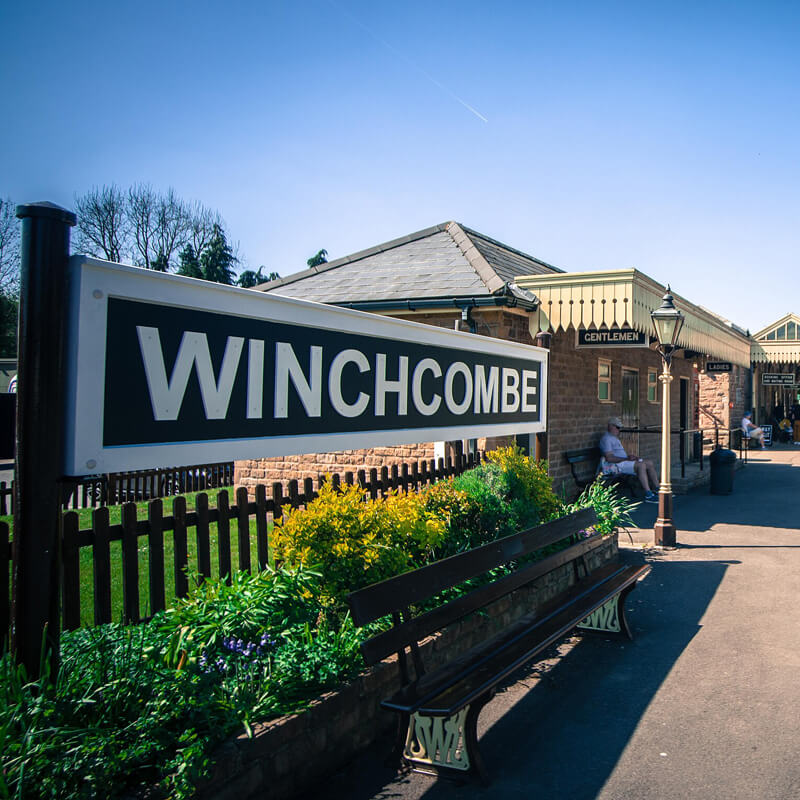
The Anglo-Saxons had the biggest influence over our place names. The Angles gave their name to East Anglia and England itself. At the time, England was referred to as ‘Anglia’ and later as ‘Engla-land’, literally meaning “the land of the Angles”. Sussex, Middlesex and Wessex were named for South, Middle and West Saxons. Any place names that end in -ham, -hurst, -ley, -bury, -ford, -port, -mere, -stead, -ton, -stow, -wick or -wich are of Anglo-Saxon origin, which dominate southern England. Words for an area of land such as a settlement, farm or village are common, and include -ham, -tun (often now -ton), and -feld (often now -field). For example, Buckingham would mean an area of land “ham” belonging “ing” to an Anglo-Saxon called Bucka “Buck”. Other place names named after people include Birmingham, which was probably founded by a man called Beorma, Dudley by a man called Dudda and Wolverhampton a woman called Wulfruna. The Saxons built fortified towns which they called “burhs” to ward off the Viking threat, and “borough”, “burgh” and “bury” all relate to the original Old English word “burh“. Places that have a river mouth are named after the Anglo-Saxon word “mutha”, which means mouth, such as Exmouth, Plymouth and Yarmouth.
Viking Origins
The Vikings swept in from Scandinavia in the 9th century and began to pillage, plunder and rename small to medium sized settlements. Places named with viking origin end with -thwaite, -thorpe, -kirk and -by. For example, Grimsby was named after an important viking called Grim, and literally means Grim’s village. Place names with viking origin are mostly found in the north and east of England which was where the Danelaw (the land settled and controlled by the Danish vikings outside of Saxon territories) was established.
Norman Origins
The Norman Conquest of 1066 left a considerable mark on the English landscape in the form of cathedrals, churches, and castles, and had a massive impact on the English language. It is well known that a very large percentage of the vocabulary of our Modern English language is of French origin. However, their impact on English place names was much less impactful. The only Norman elements in place names indicate ownership. For example, the la Zuche family owned Ashby-de-la-Zouch, and the Busards owned Leighton Buzzard. The ownership of places by bishops, priors, princes, kings or queens are reflected in names like King’s Lynn, Queenborough, Princes Risborough, Bishop’s Stortford, Abbots Leigh and Prior Norton.
Did you enjoy this post?
I hope you found this post useful. I put a great deal of time and effort in to building, maintaining and populating the website. If you like, you could say a small thank you by buying me a coffee. You don't have to, but it would be nice :)
Buy me a coffee
Stay up to Date
Follow me on my journey and get notified whenever a new post is published by following Kings & Castles on Facebook.
Follow MeExplore The Map
Discover the hundreds of castles, churches, monasteries, cathedrals and other historic locations that I've personally visited across England and Wales. Search by location, explore nearby sites and plan your next historical adventure.
Share: