St Agatha’s Church, Easby
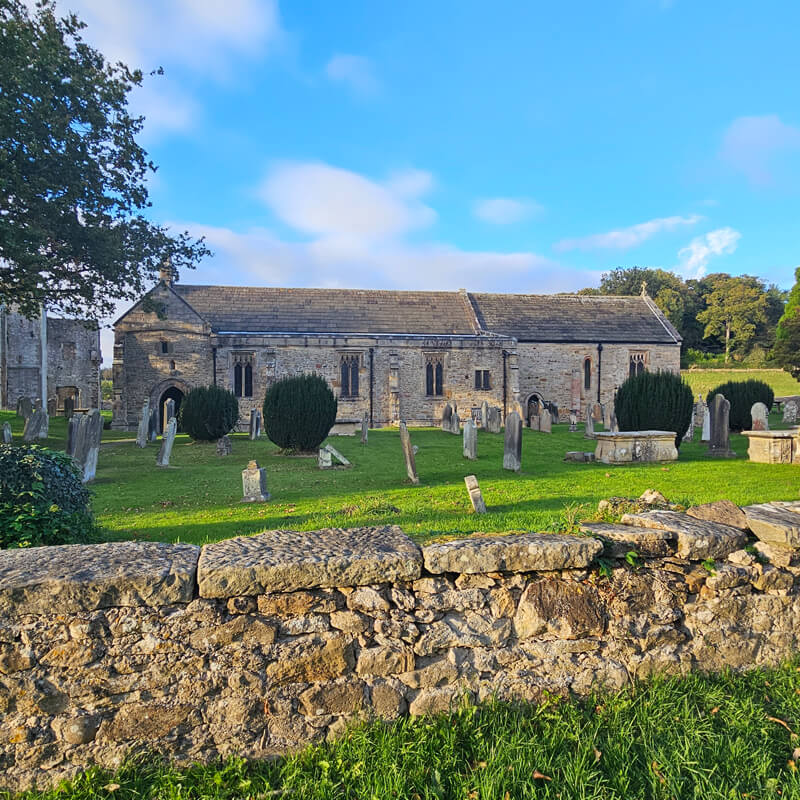
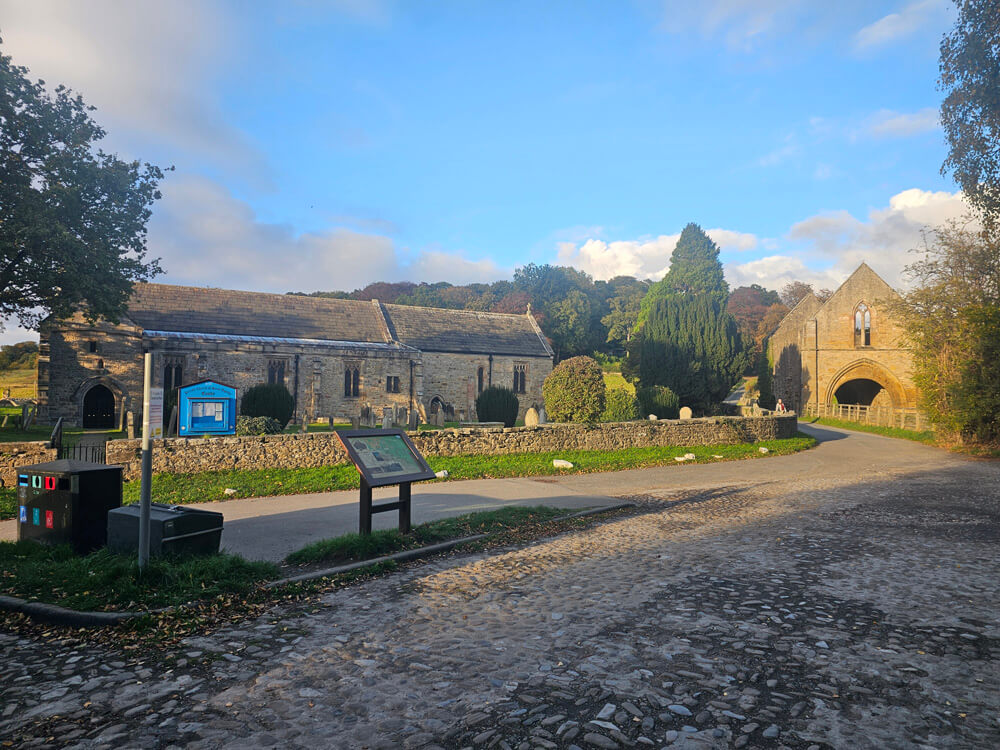
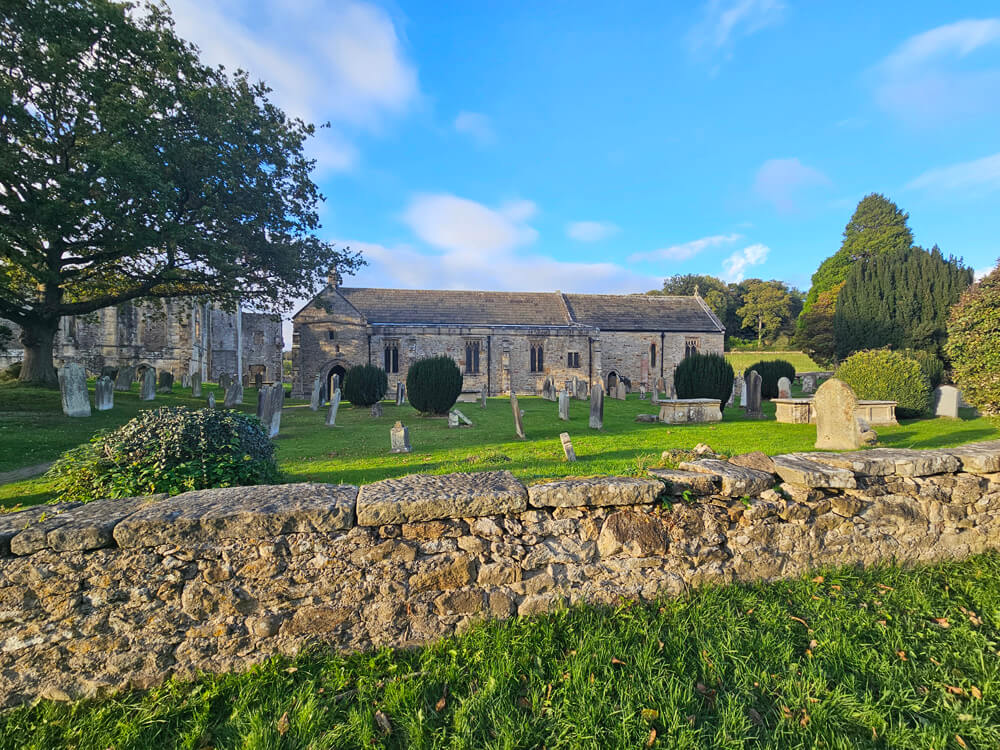
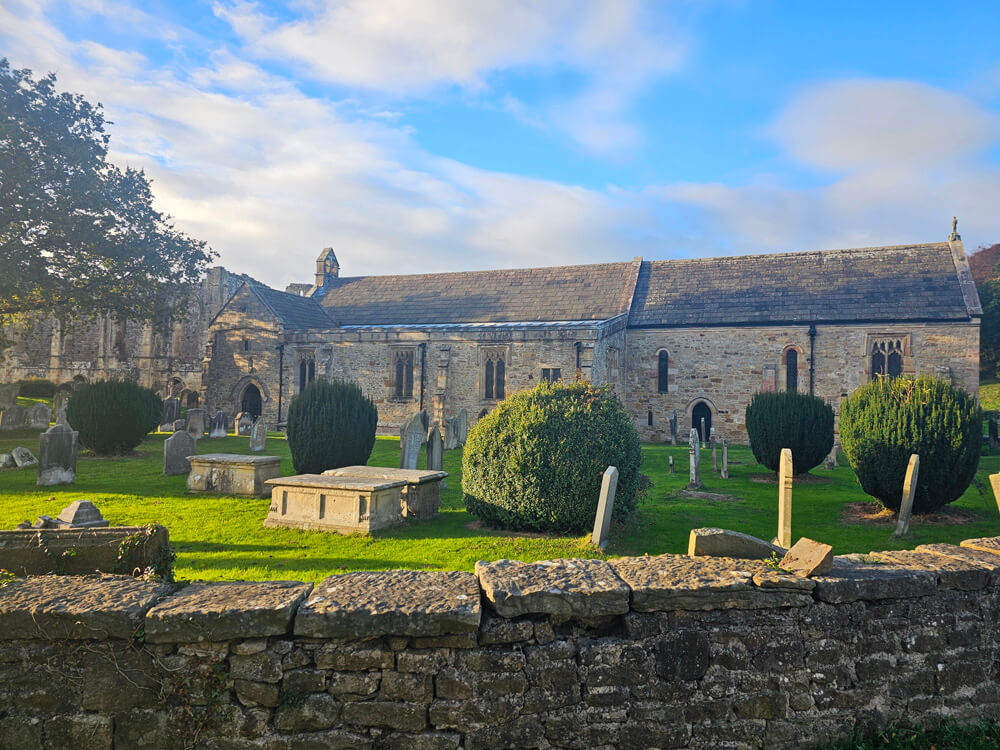
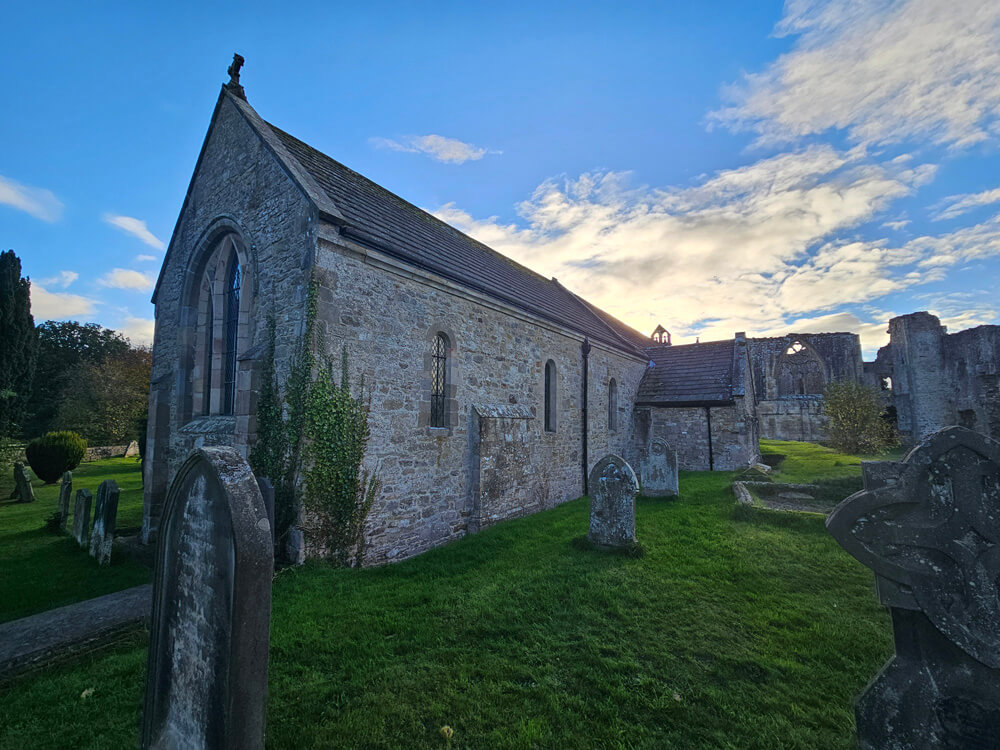
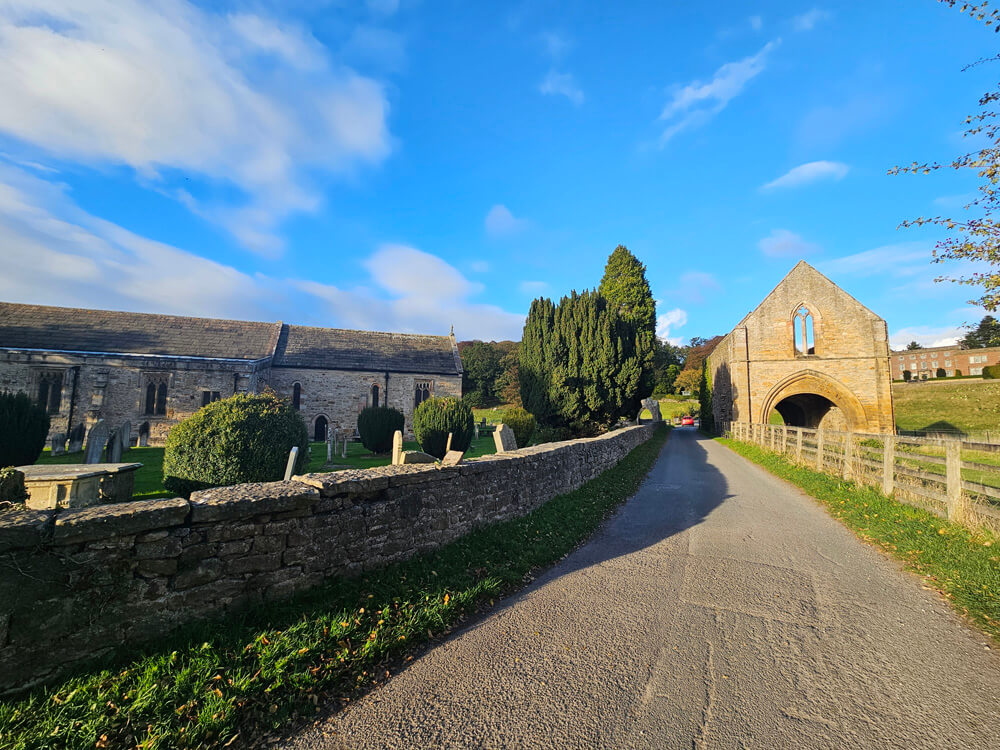
Nestled beside the ruins of Easby Abbey near Richmond in North Yorkshire, St Agatha’s Church preserves some incredible medieval treasures. Its remarkable 13th-century wall paintings, Romanesque architecture, carved stonework and two surviving medieval wooden doors offer a fascinating glimpse into medieval religious life and craftsmanship.
Historic
Highlights.
- Remarkable 13th-century wall paintings
- Two surviving medieval wooden doors
- 12th-century Norman font
The Origins of St Agatha’s Church
St Agatha’s Church stands in the peaceful Swale valley, just outside Richmond. Its origins predate the neighbouring Easby Abbey, founded around 1152–1155 by Roald, Constable of Richmond Castle. The present church developed during the 12th century, serving the local population while becoming closely associated with the nearby Premonstratensian community.
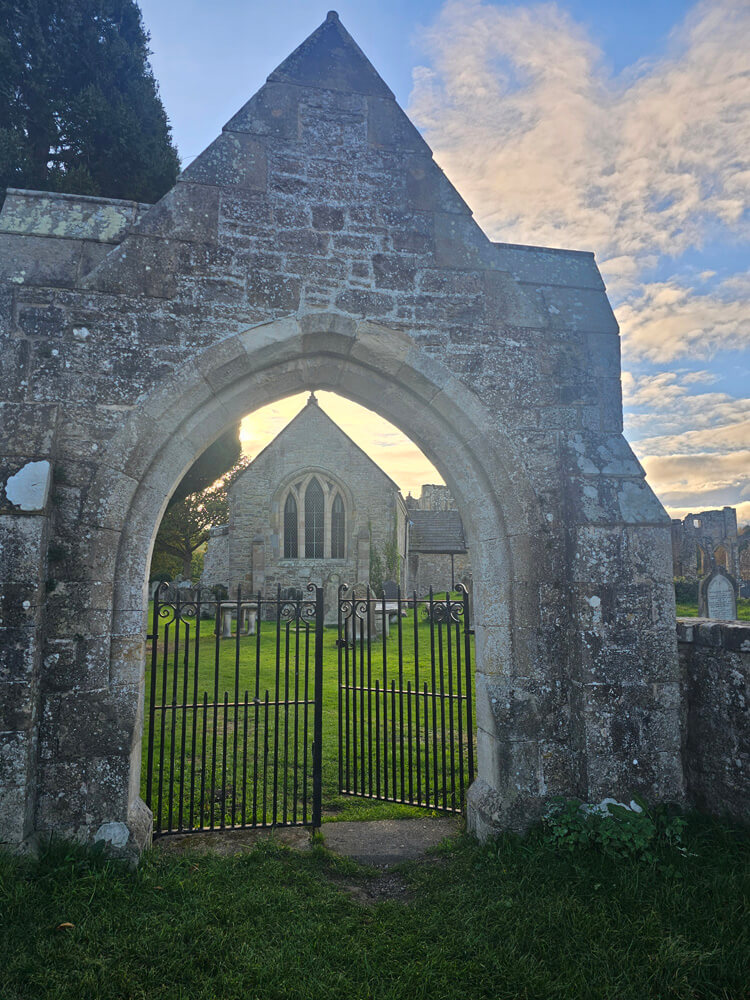
Known as the White Canons, the monks of Easby Abbey followed the Rule of St Augustine, combining communal religious life with pastoral duties. St Agatha’s occupied a position within the abbey’s wider precinct, allowing parish worship to continue alongside the religious community.
Medieval Architecture and Carved Stonework
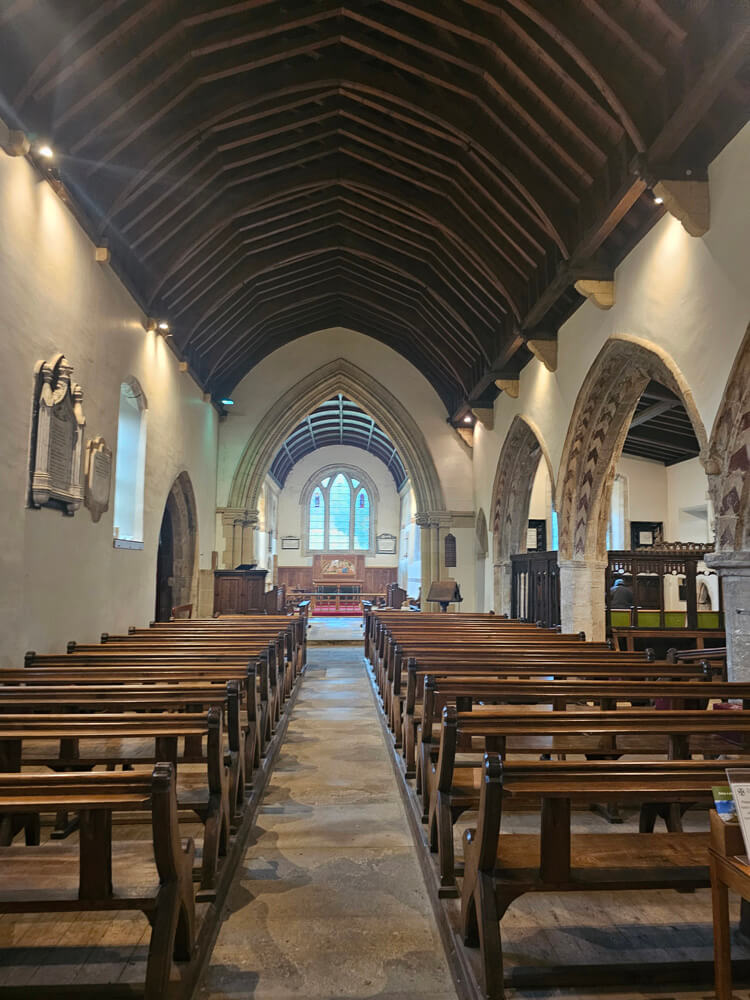
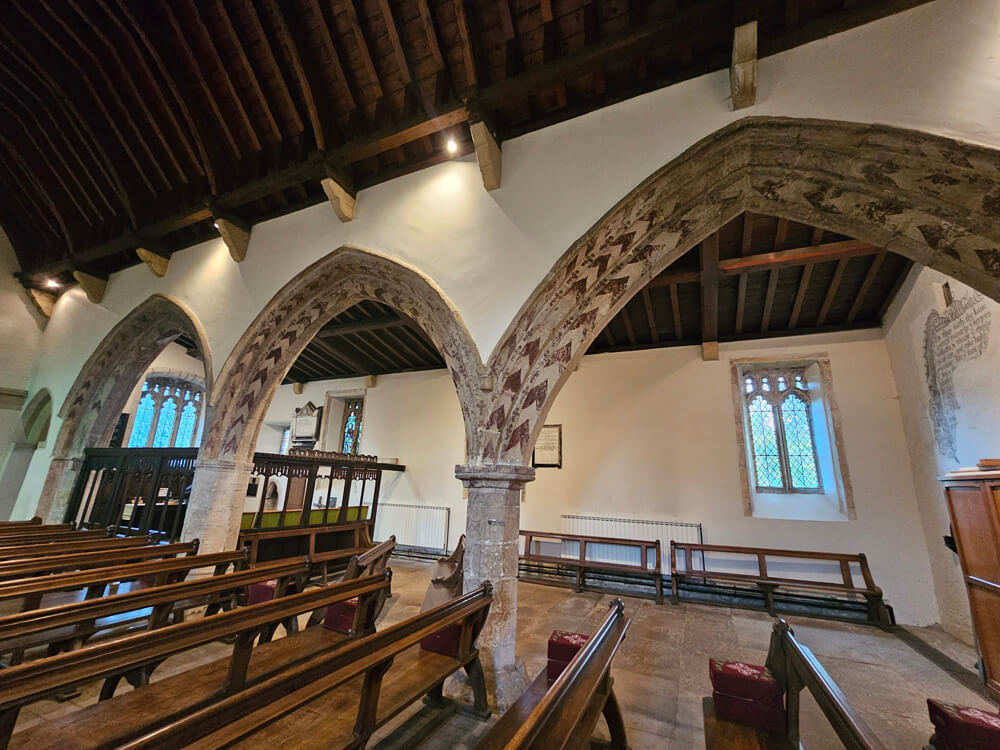
The church retains significant architectural features from several periods of the Middle Ages. The western end of the nave preserves 12th-century masonry, including distinctive Romanesque stonework. Further alterations followed around 1200 and during the 13th century as the building developed.
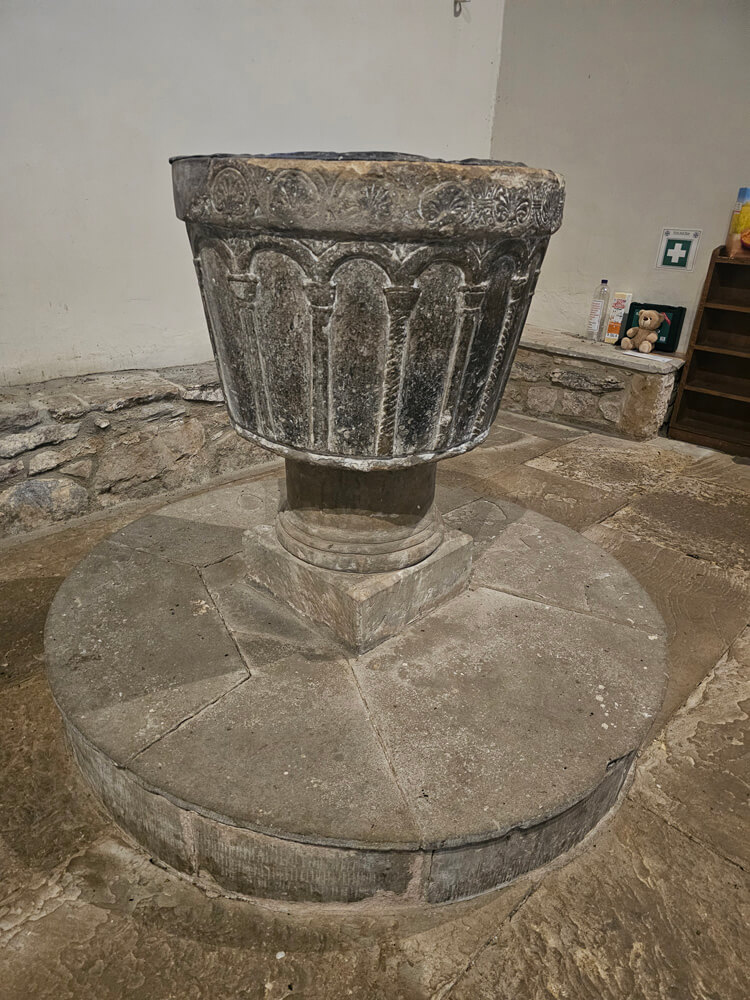
One of the church’s most striking early features is its 12th-century Norman font. Decorated with delicate blind arcading, twisted colonettes and a carved palmette frieze, it demonstrates the skill of medieval stonemasons. Although the font’s stem was added later, the elaborately carved basin survives as a remarkable reminder of the church’s early medieval history.
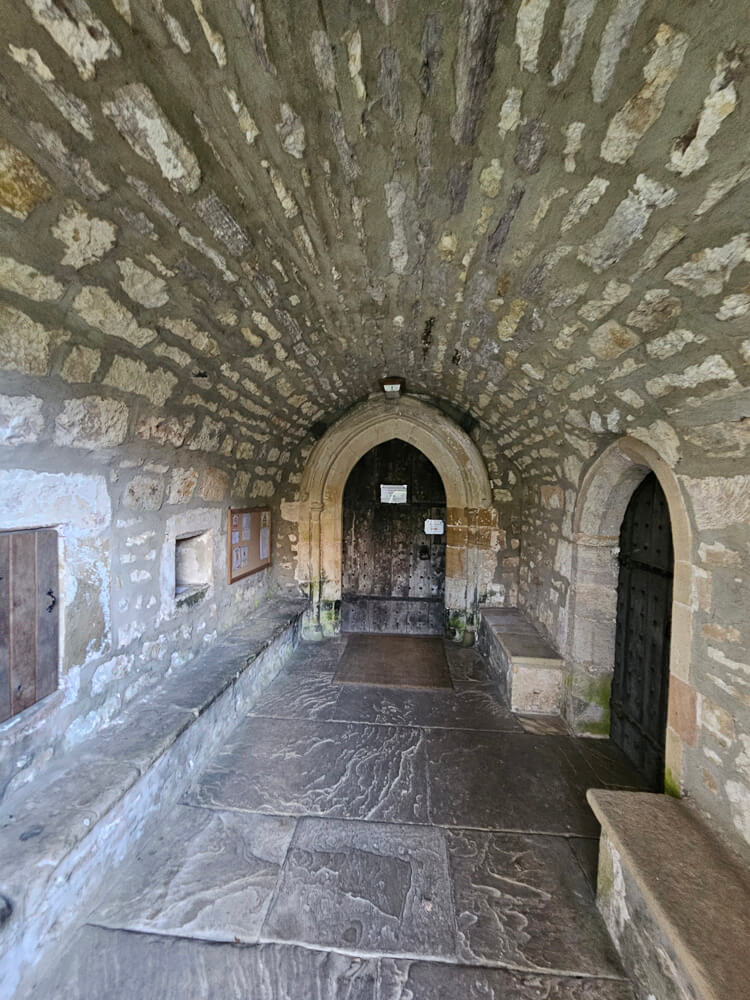
The church was expanded during the 14th century, when the south aisle and north transept were added. The south porch, dating from the late 14th century, retains its medieval doorway and barrel-vaulted ceiling.
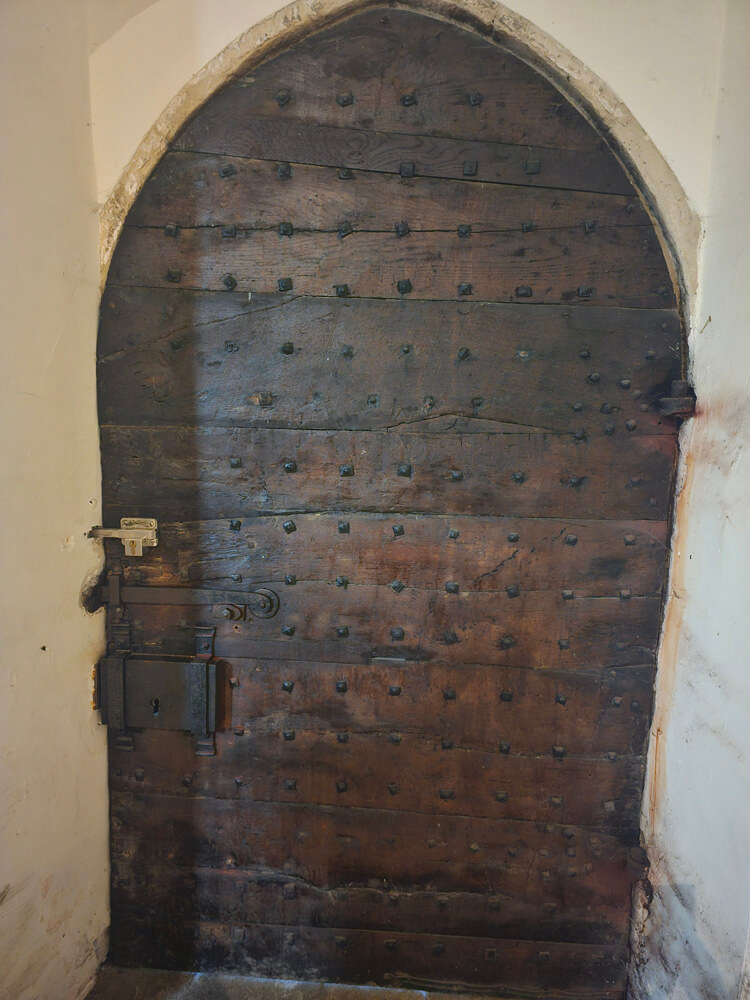
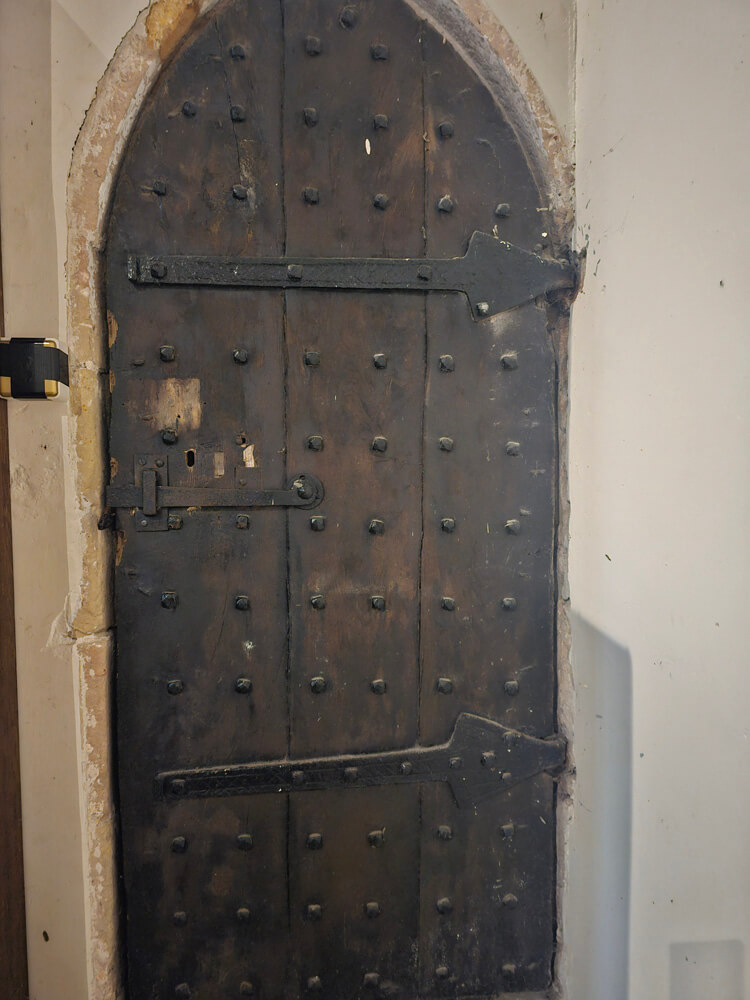
Two particularly fascinating survivals are the church’s medieval wooden doors. The south entrance retains its original door, dating to around 1200, while a second door leading to the porch staircase is recorded as dating from the 14th century, both featuring wooden panels with distinctive iron studs. Together, the doors offer a rare, tangible connection to medieval craftsmanship and the people who worshipped here centuries ago.
The Remarkable Medieval Wall Paintings
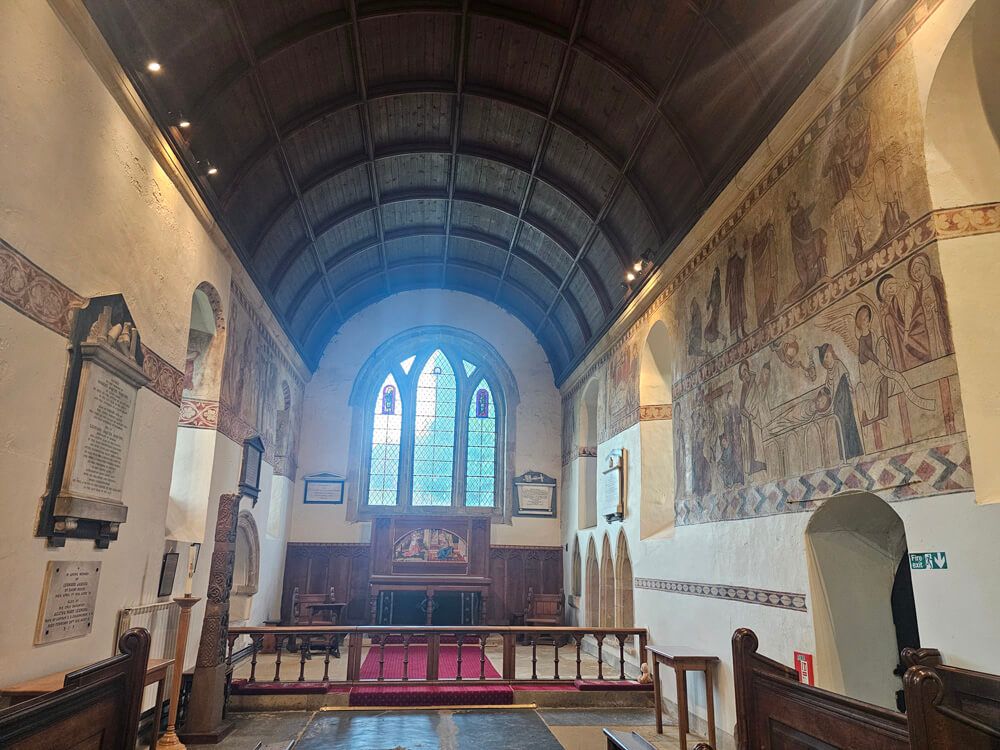
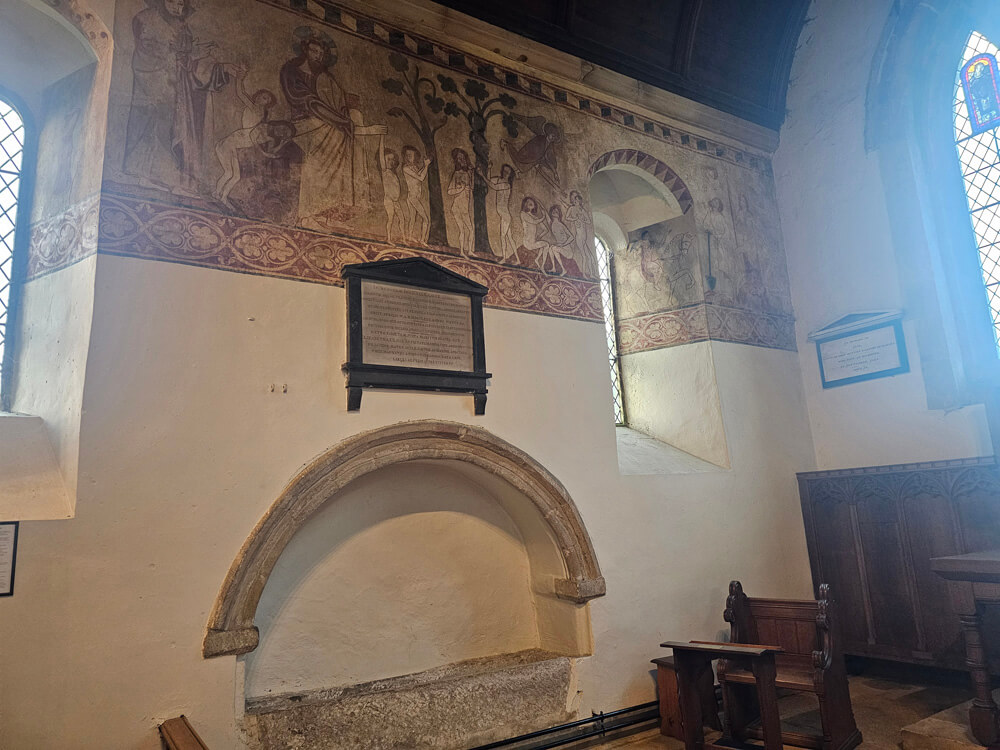
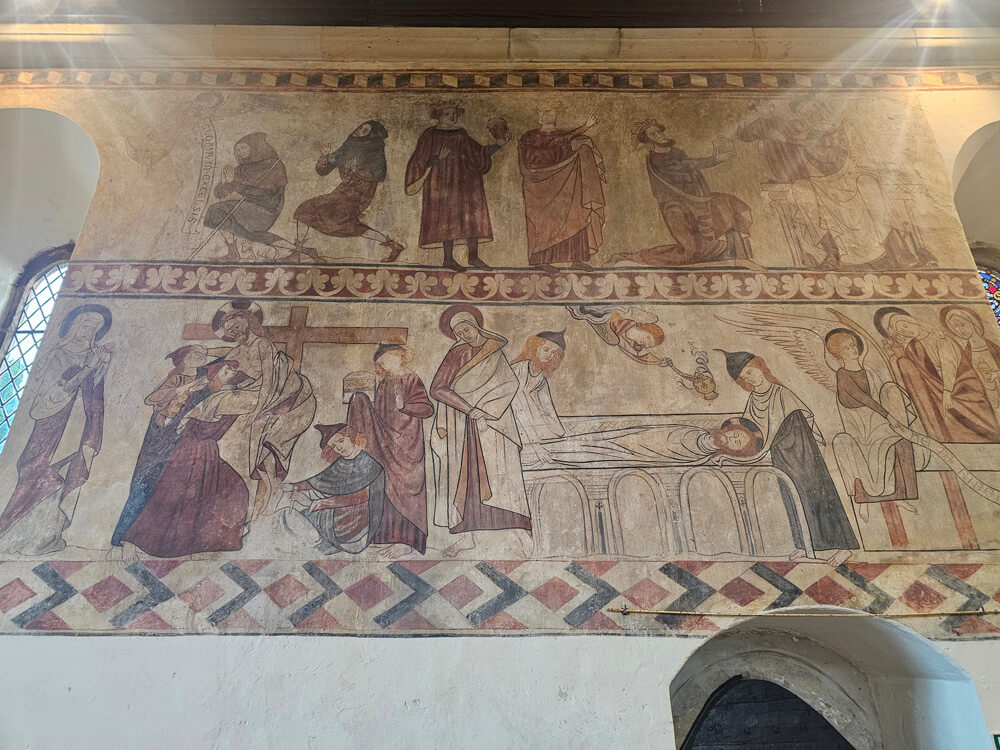
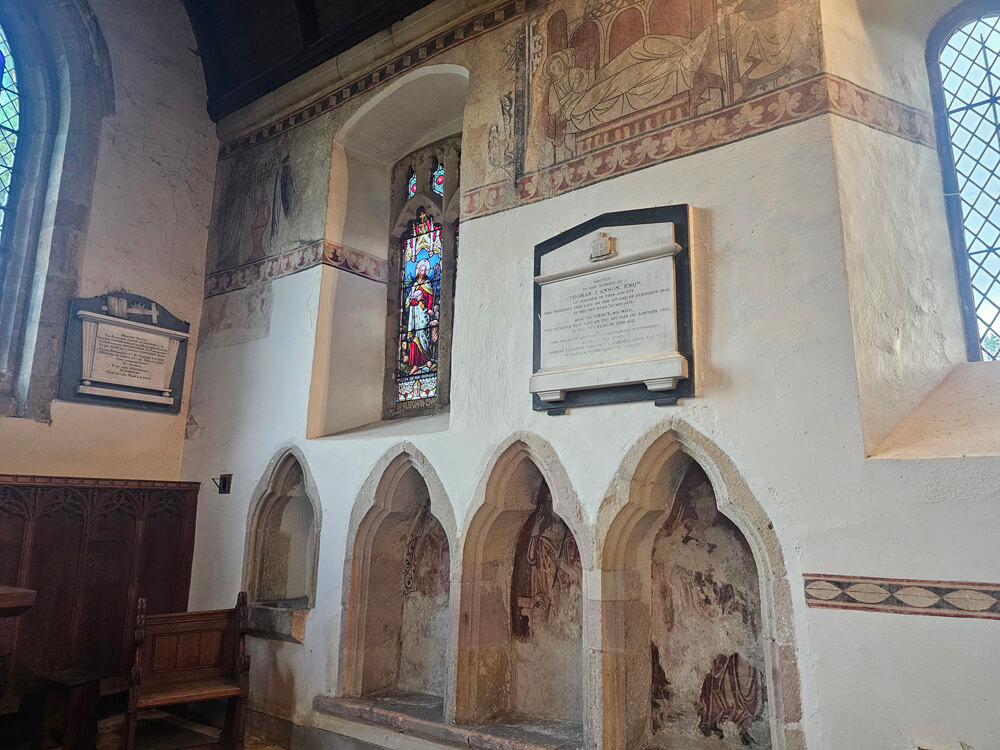
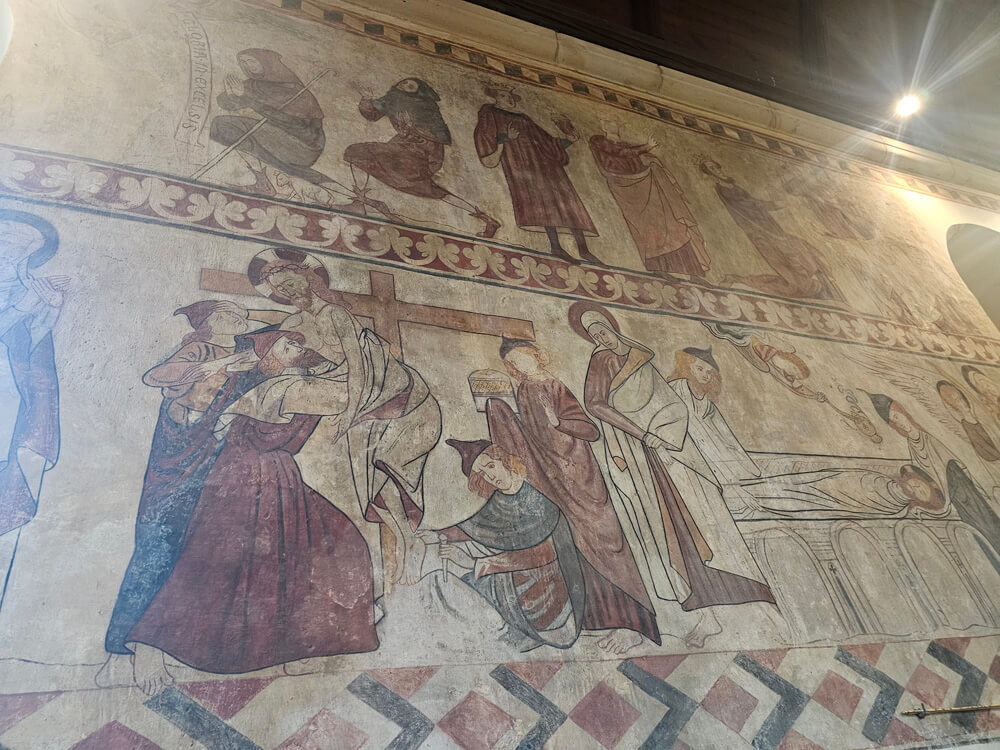
St Agatha’s is particularly celebrated for its exceptional collection of medieval wall paintings, dating largely to the 13th century. Discovered beneath later coverings during restoration work in the 19th century, they provide a remarkable glimpse into the decoration of medieval parish churches.
The paintings decorate the chancel, illustrating religious stories and scenes from everyday life. Depictions associated with the Garden of Eden appear on the north wall, while the south wall features scenes from the Nativity and Passion of Christ.
Particularly distinctive are four figures around the northern windows, representing agricultural activities associated with the medieval calendar: sowing, pruning, digging and hawking. These images connect Christian teaching with the rhythms of rural life, when the changing seasons shaped both work and worship.
The survival of these paintings is especially significant because medieval wall decoration was frequently lost through later renovations, religious changes and the effects of time.
Medieval Glass and the Easby Cross
Further treasures survive within the church. Three small panels of medieval stained glass in the east window include 12th-century figures of St John and a Premonstratensian canon, alongside a 15th-century angel.
St Agatha’s is also associated with the Easby Cross, an Anglo-Saxon carved stone cross dating from around AD 800. The original was discovered built into the church during 19th-century restoration work and is now held at the Victoria and Albert Museum in London. A plaster cast inside the church preserves its appearance, recalling a period of Christian worship centuries before the construction of the present building.
St Agatha’s Church Today
Restored by the architect Sir George Gilbert Scott in 1869, St Agatha’s remains an active place of worship and an important historic landmark.
Its medieval wall paintings, carved stonework, stained glass and surviving wooden doors make it much more than a quiet country church. Together, these features reveal centuries of religious devotion, artistic achievement and everyday life, preserving an extraordinary medieval heritage in the peaceful surroundings of the Swale valley.
Photo Gallery.
Did you enjoy this post?
I hope you found this post useful. I put a great deal of time and effort in to building, maintaining and populating the website. If you like, you could say a small thank you by buying me a coffee. You don't have to, but it would be nice :)
Buy me a coffee
Stay up to Date
Follow me on my journey and get notified whenever a new post is published by following Kings & Castles on Facebook.
Follow MeExplore The Map
Discover the hundreds of castles, churches, monasteries, cathedrals and other historic locations that I've personally visited across England and Wales. Search by location, explore nearby sites and plan your next historical adventure.
Share: