The Historic Town of Richmond
Founded in the aftermath of the Norman Conquest, Richmond grew around one of England’s earliest stone castles into a prosperous medieval market town. Its ancient churches, surviving medieval stonework and gateways, narrow passageways and medieval street layout reveal a settlement shaped by Norman lords, religious communities and centuries of trade.
The Establishment of Richmond
The history of modern Richmond began in 1071, when William the Conqueror granted extensive Yorkshire estates to his kinsman Alan Rufus, also known as Alan the Red, a Breton nobleman who had supported the Norman invasion.
Alan established Richmond Castle on high ground overlooking the River Swale, creating a powerful stronghold from which to control his new lands. The surrounding settlement developed alongside the castle, eventually taking its name from the Norman-French Richmont, meaning a strong hill.
The castle was built in stone from an early stage, making it an exceptional example of early Norman fortification. Its imposing curtain walls dominated the landscape, while the steep river valley provided a natural defensive barrier.
As the settlement expanded, Richmond became the administrative centre of the Honour of Richmond, a substantial lordship that generated wealth through landholding, agriculture and trade.
Richmond Castle and the Medieval Market Place
Richmond Castle was not simply a military fortress. It was also the seat of aristocratic government, where the lord’s officials administered estates, collected revenues and exercised authority over the surrounding countryside.
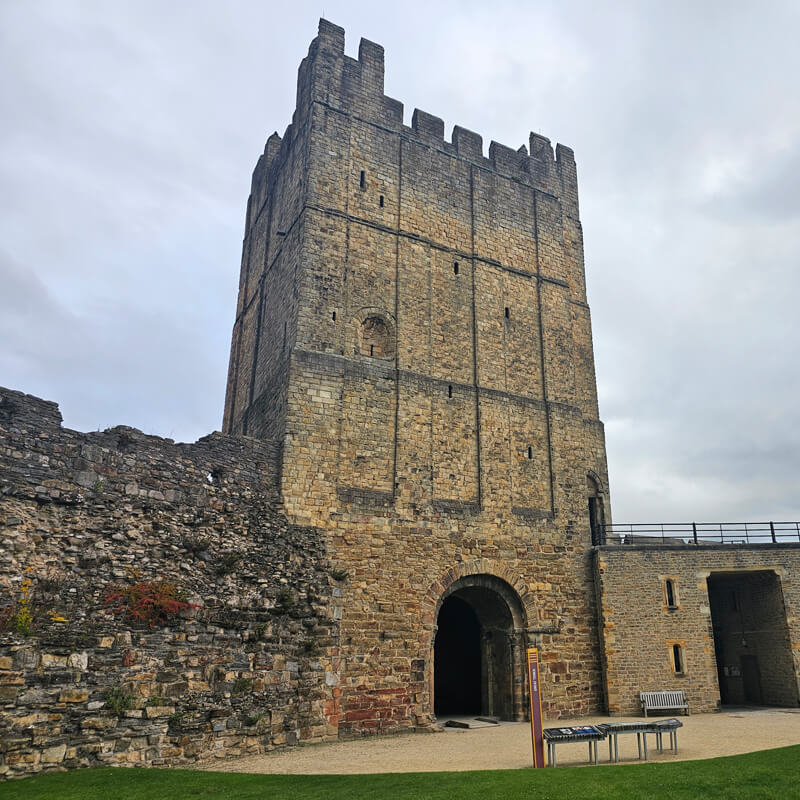
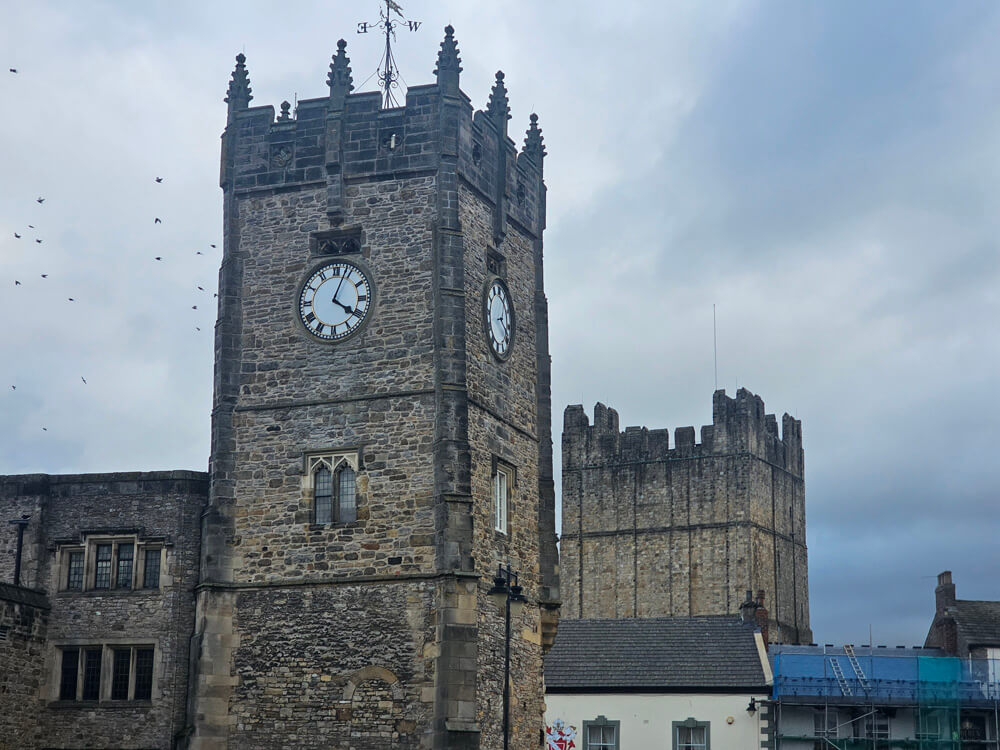
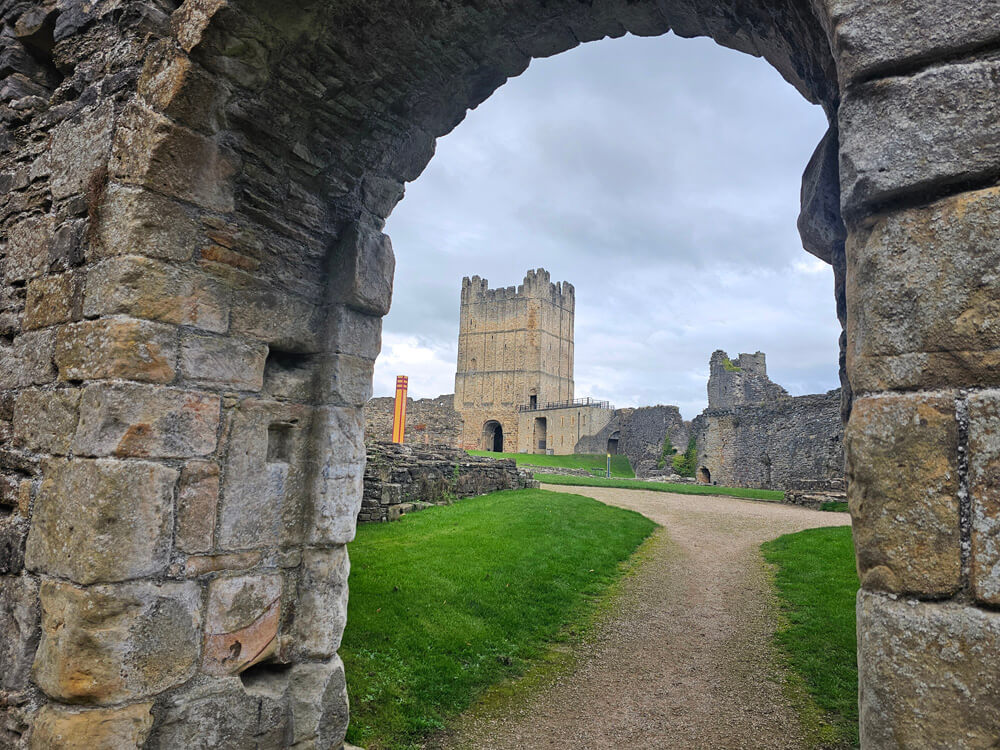
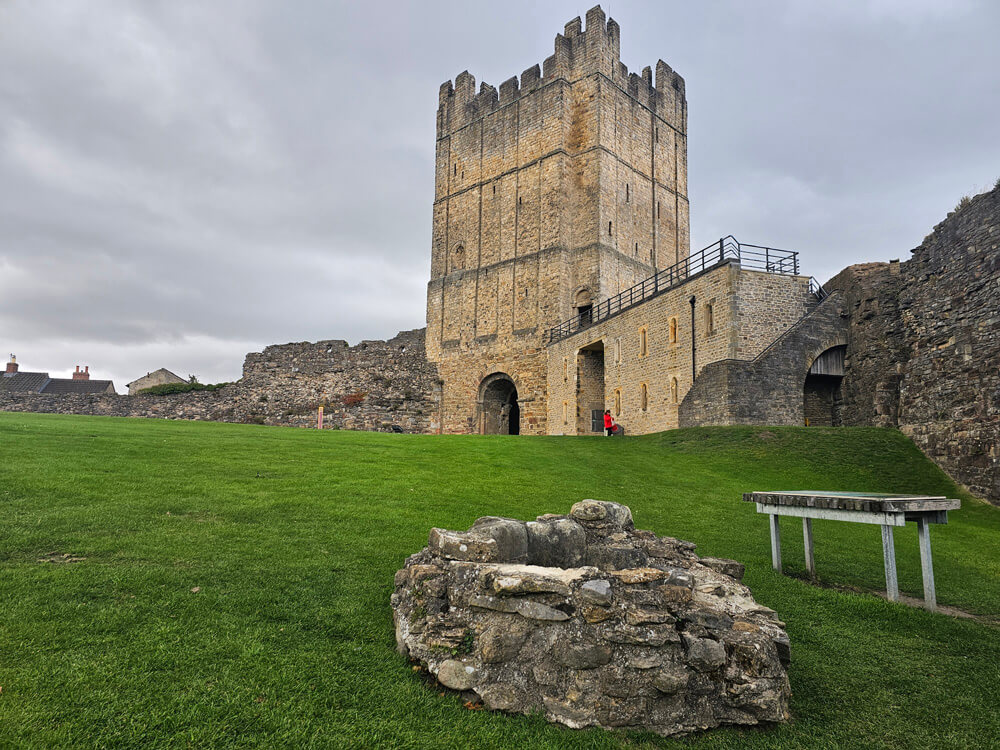
The castle’s magnificent keep was constructed during the second half of the 12th century under Conan IV, Duke of Brittany. Its towering stone walls remain one of Richmond’s defining landmarks.
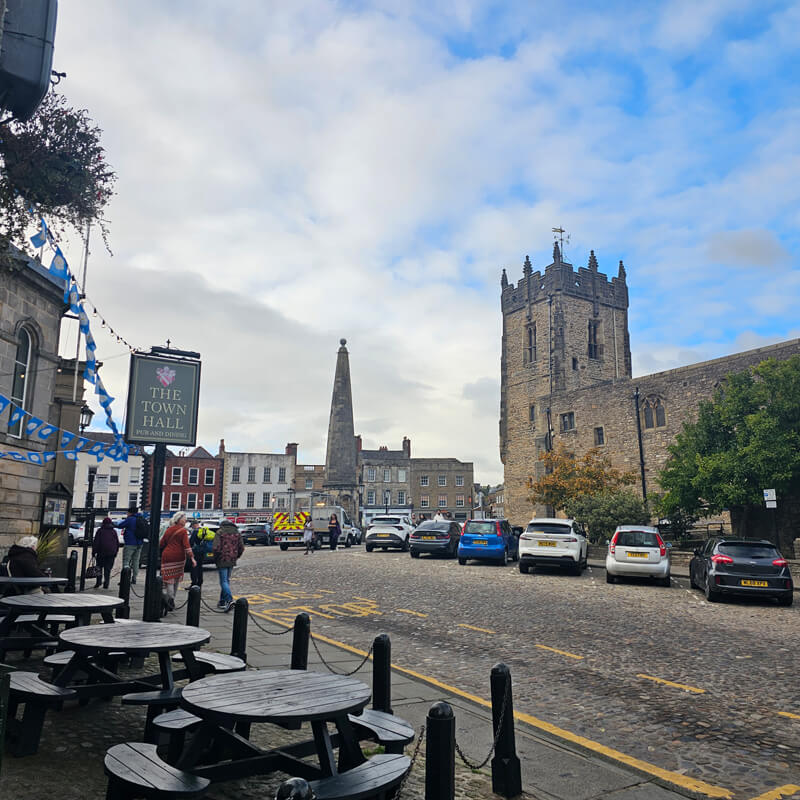
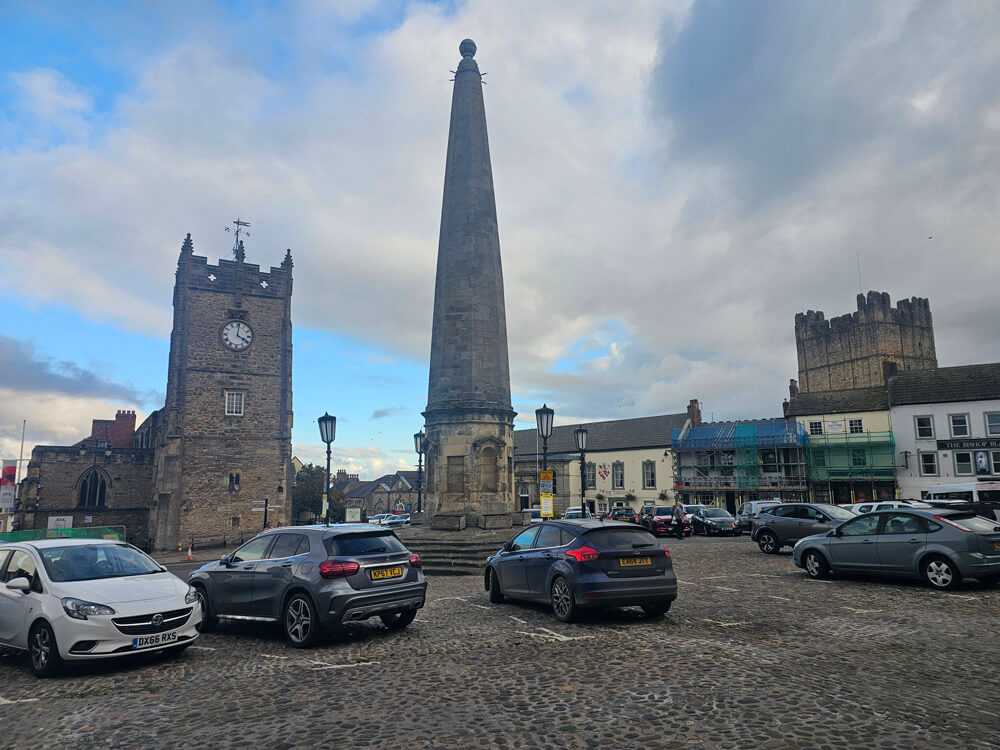
The town developed immediately outside the castle, with the Market Place occupying what had originally been the castle’s outer bailey. By the early 14th century, this space had become the centre of civilian life, bringing merchants, craftspeople and farmers together.
Markets attracted traders from across the region, selling agricultural produce, livestock, wool, leather and other goods. The broad, sloping marketplace remains at the heart of Richmond today, although many of the buildings surrounding it date from the town’s later Georgian prosperity.
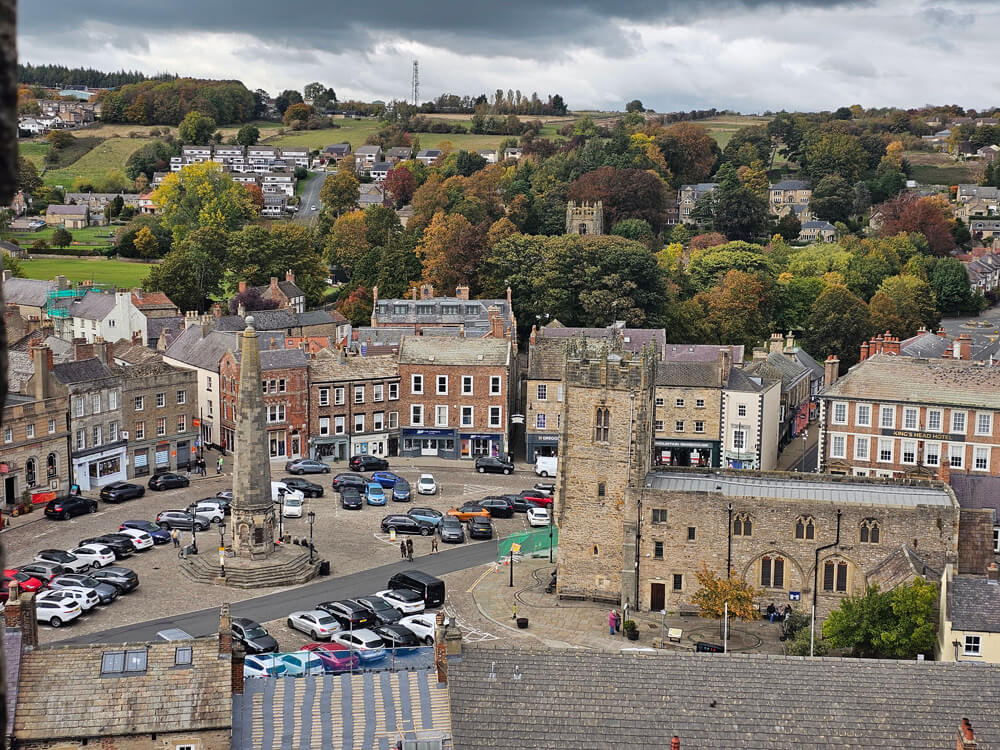
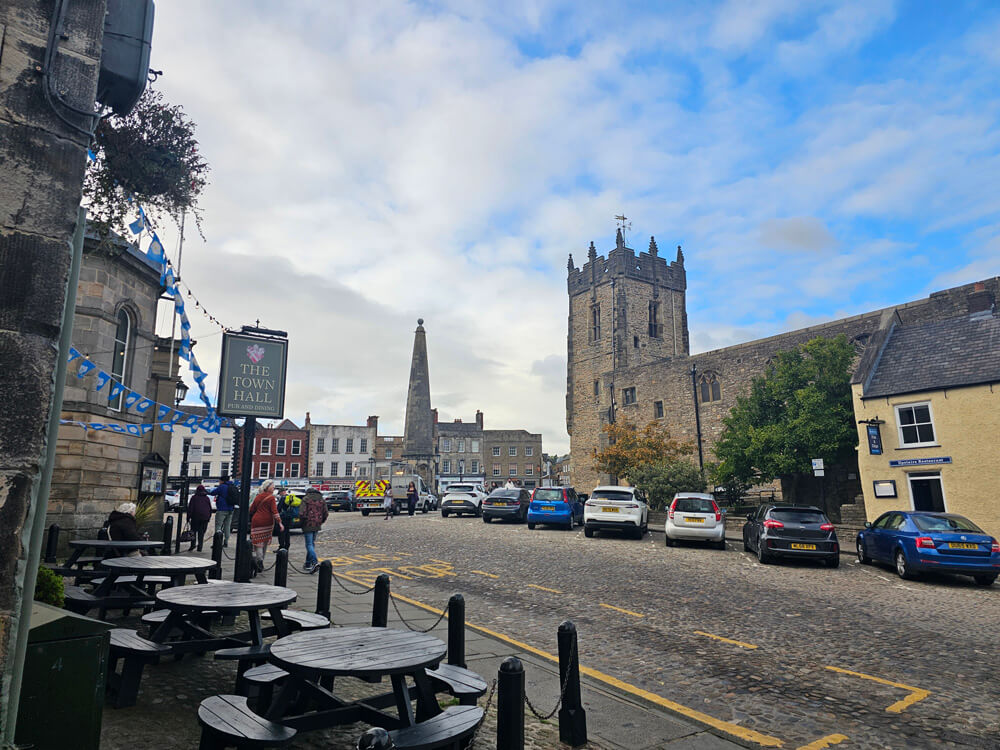
At its centre stands Holy Trinity Church, a medieval building that began as a chapel of ease in the 14th century, allowing worshippers to attend services without travelling to the principal parish church of St Mary. No longer used for worship, the former church now houses the Green Howards Museum, which tells the story of the famous Yorkshire regiment.
Also at the centre of Richmond’s historic Market Place is the obelisk – a 59ft high stone obelisk built in 1771, replacing the old medieval market cross.
Medieval Streets and Hidden Passageways
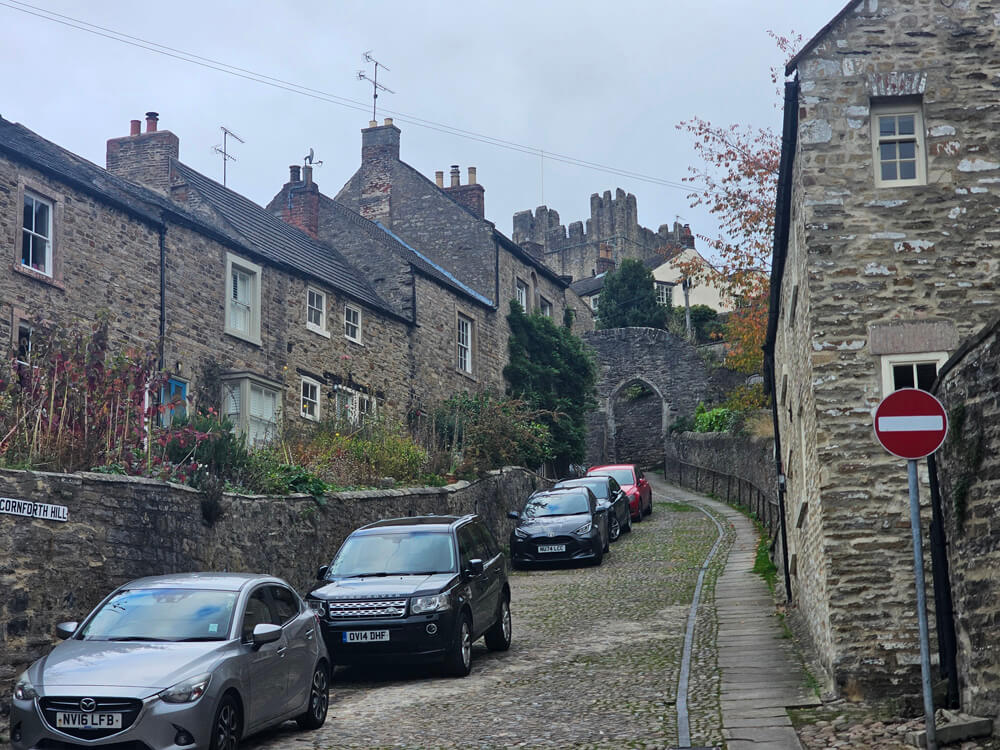
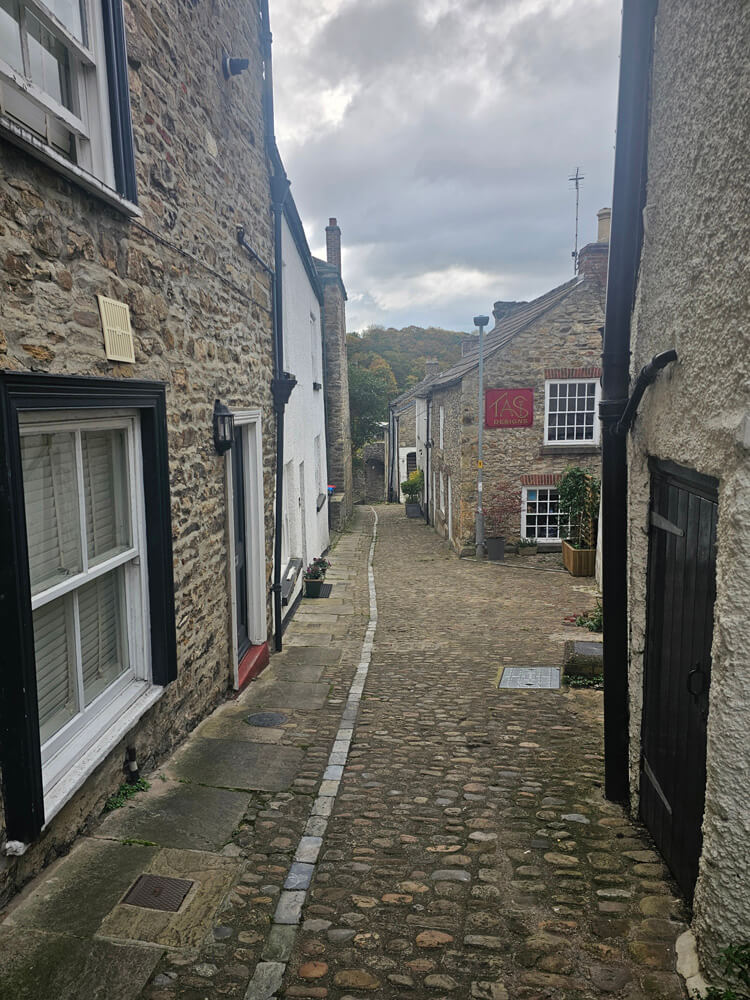
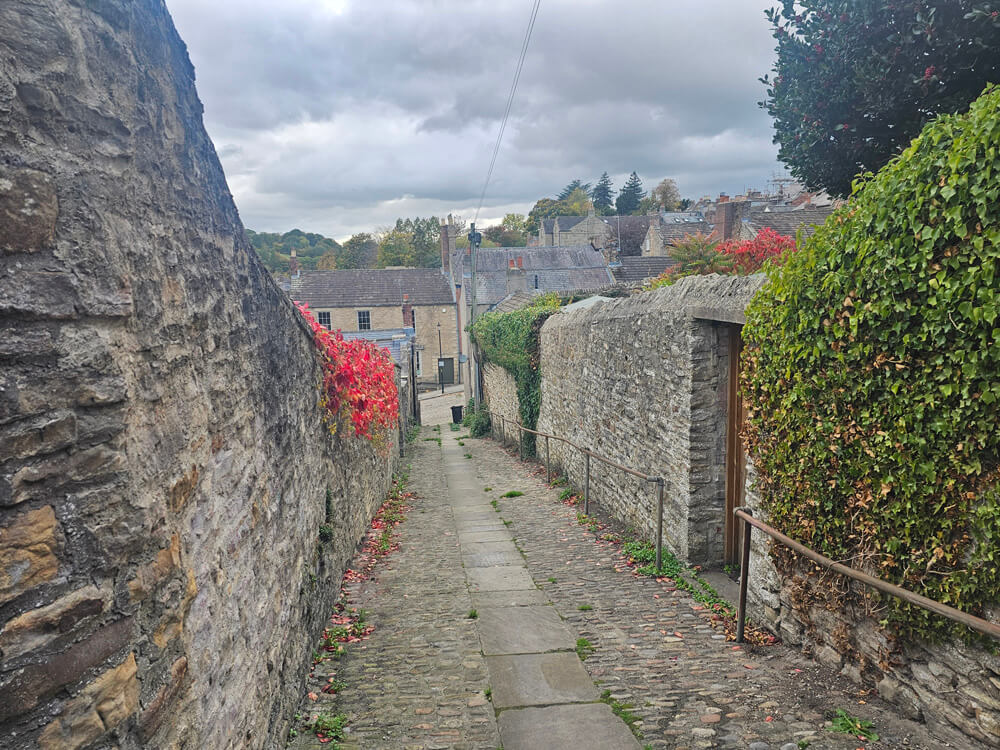
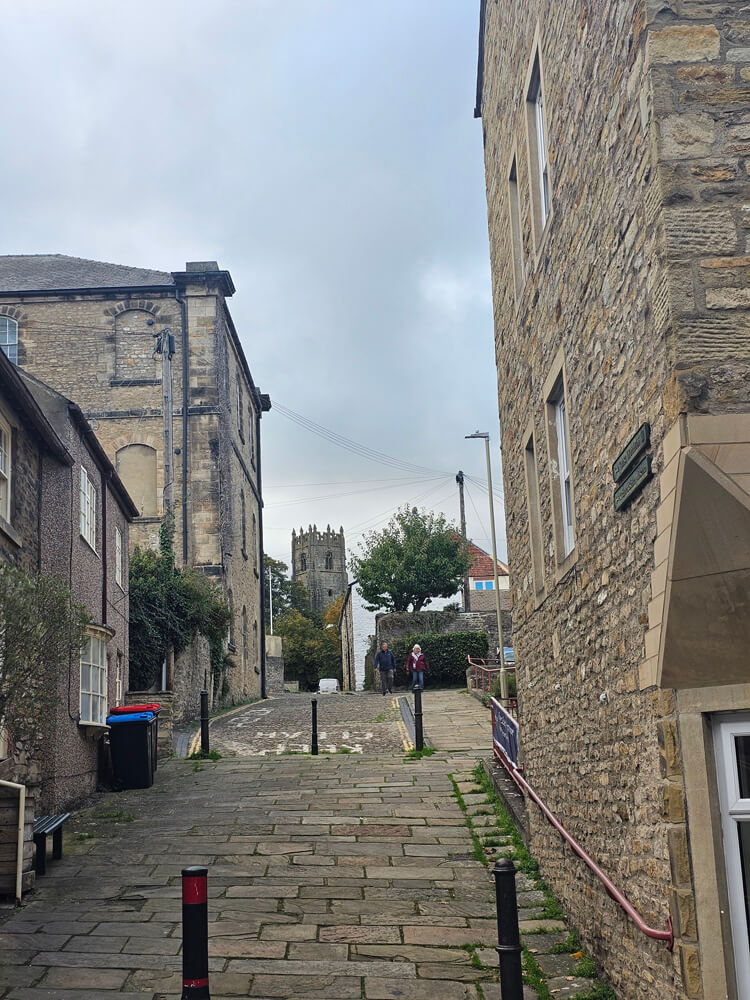
One of Richmond’s most fascinating features is how much of its medieval street pattern survives. The town’s irregular arrangement of streets, sudden changes in direction and narrow passageways reflect the contours of the hillside and the gradual development of the settlement around the castle.
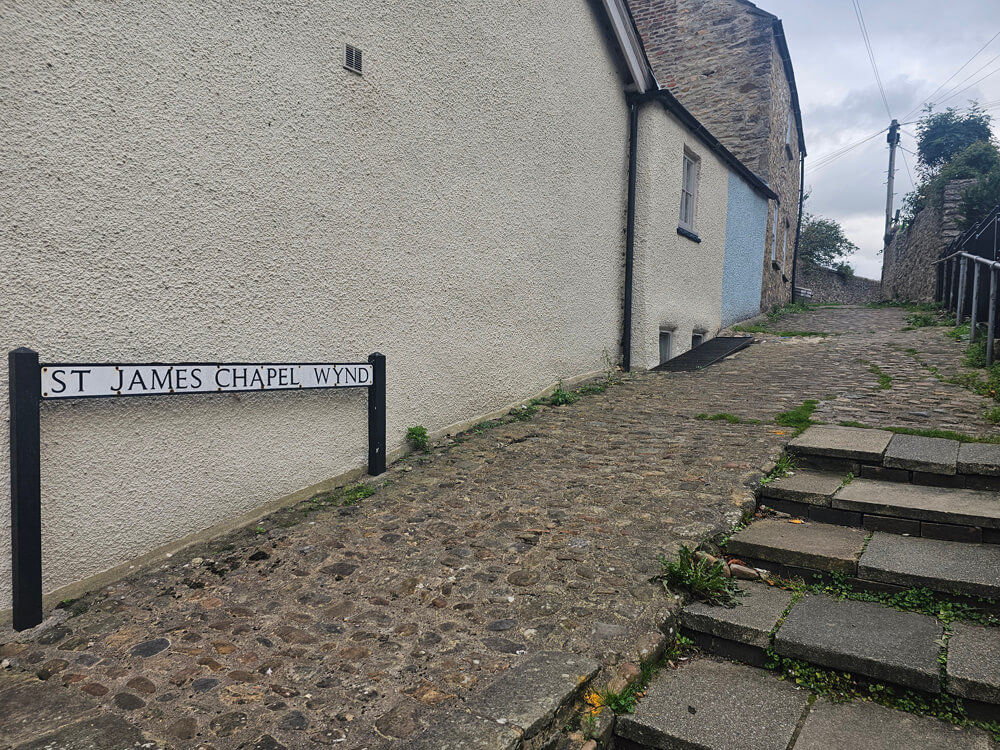
Finkle Street, whose name derives from a word meaning crooked, bends through the historic centre. Elsewhere, names such as Frenchgate, Newbiggin and Friars Wynd preserve clues to the town’s medieval geography and development.
The word gate, found in several Richmond street names, derives from the Old Norse gata, meaning street or road. Wynd describes a narrow lane, while biggin derives from a word meaning a building or settlement.
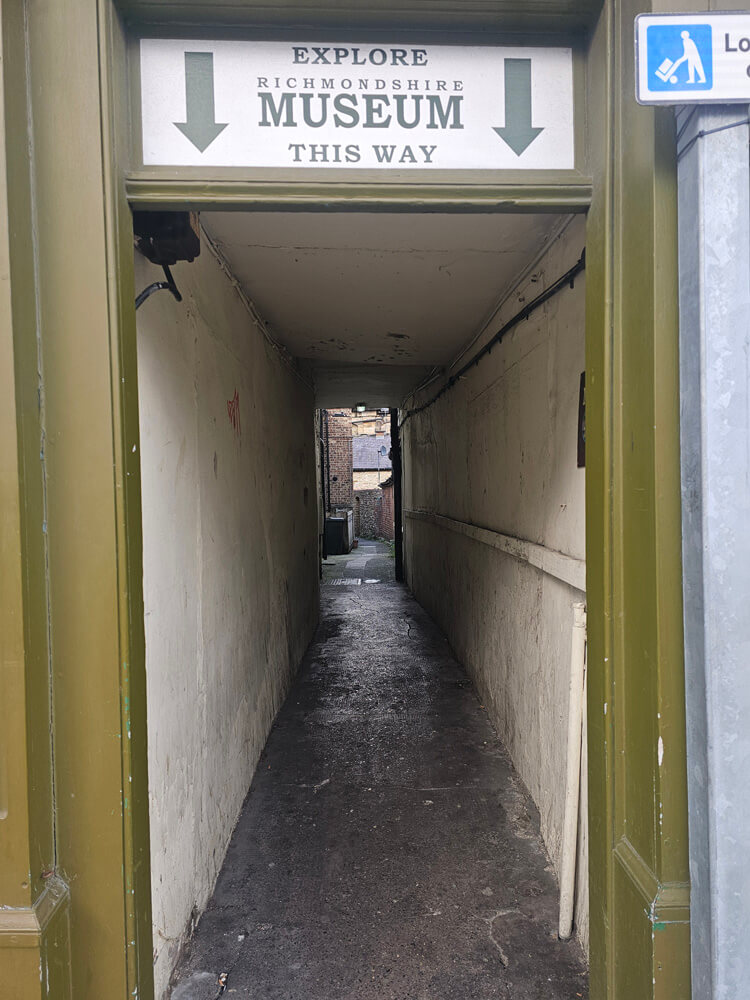
These names help evoke a town of winding routes, small workshops, crowded market streets and tightly packed properties. Many narrow passages still connect the main streets, offering glimpses into spaces that would once have been used by residents, merchants and tradespeople moving between their homes, workplaces and the marketplace.
Richmond’s Medieval Town Walls and Gates
Although Richmond Castle provided strong defences, the town itself eventually acquired its own protective walls. Construction began around 1312, probably in response to the threat of Scottish raids during the Wars of Scottish Independence.
The walls enclosed approximately 18 acres, following a circuit around the western, northern and eastern sides of the town. The castle formed the southern defensive boundary.
Three principal entrances controlled movement through the walls. These included gates at Finkle Street, Frenchgate and the area around Cornforth Hill.
Today, almost all the medieval town wall has disappeared, but its former course can still be traced through the historic street layout and property boundaries.
One of the most important survivals is The Bar, a small stone gateway that formed part of the original defences. It allowed pedestrians and horses to pass between the town and the settlement beyond its walls. Two other major gateways were removed in 1773 to accommodate wheeled traffic.
Another intriguing survival is the postern gate near Friars Wynd. This smaller entrance provided access through the town wall towards the Franciscan friary, demonstrating how the defensive system also accommodated the everyday needs of the community.
St Mary’s Church and Richmond’s Religious Life
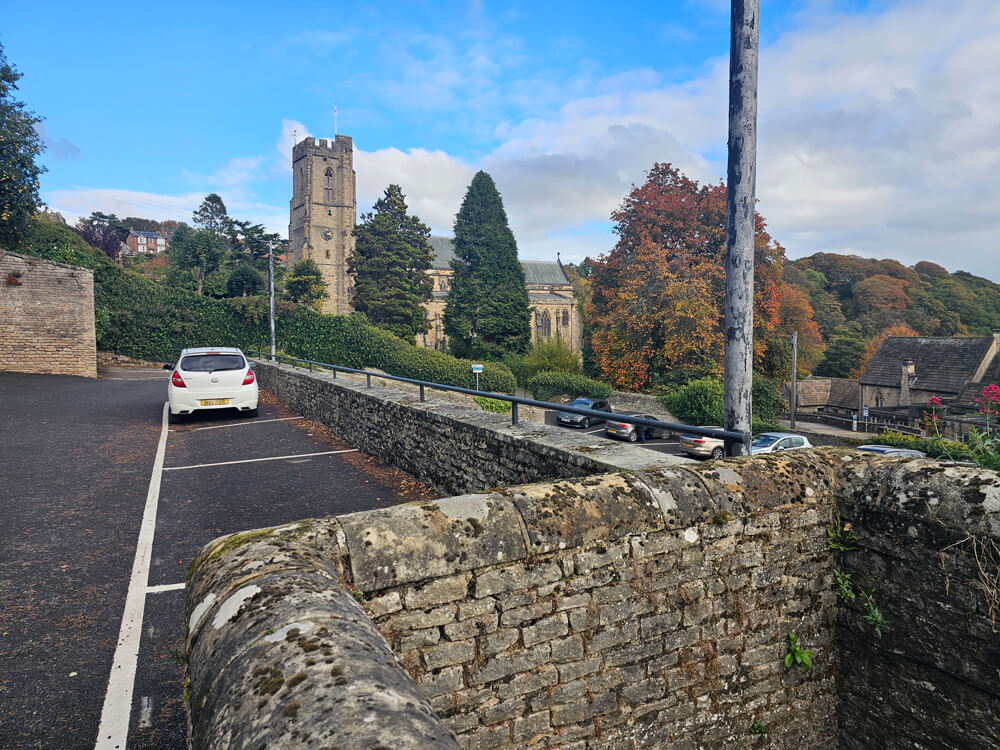
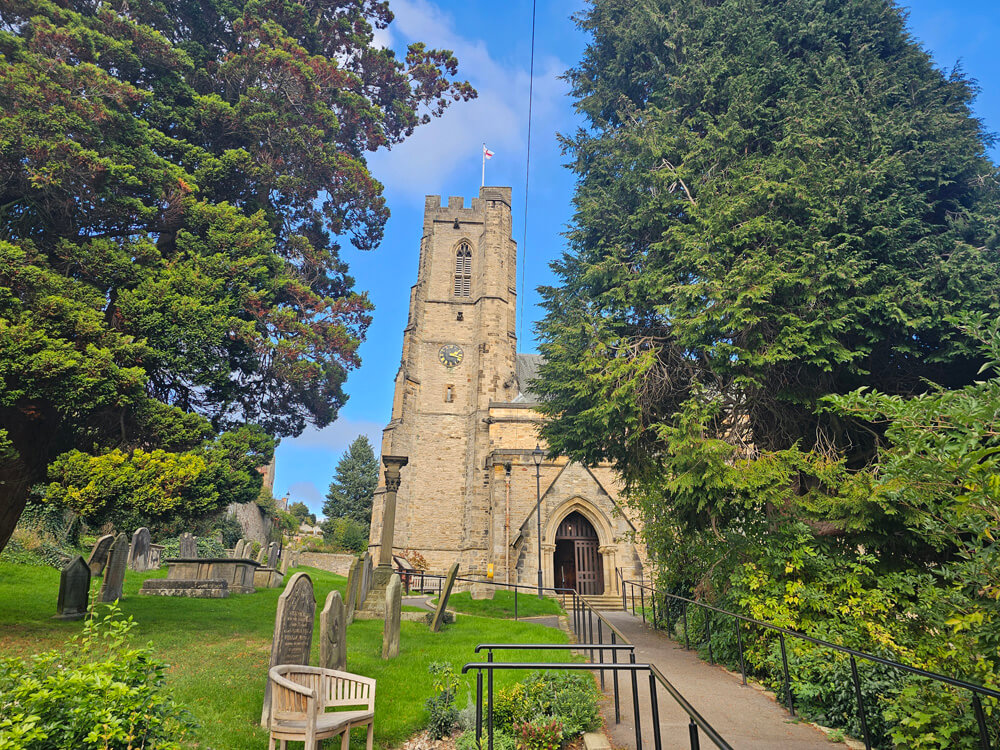
St Mary’s Church, situated away from the Market Place, has origins dating back to the 12th century. It served as Richmond’s principal parish church, providing a place of worship for the town’s inhabitants.
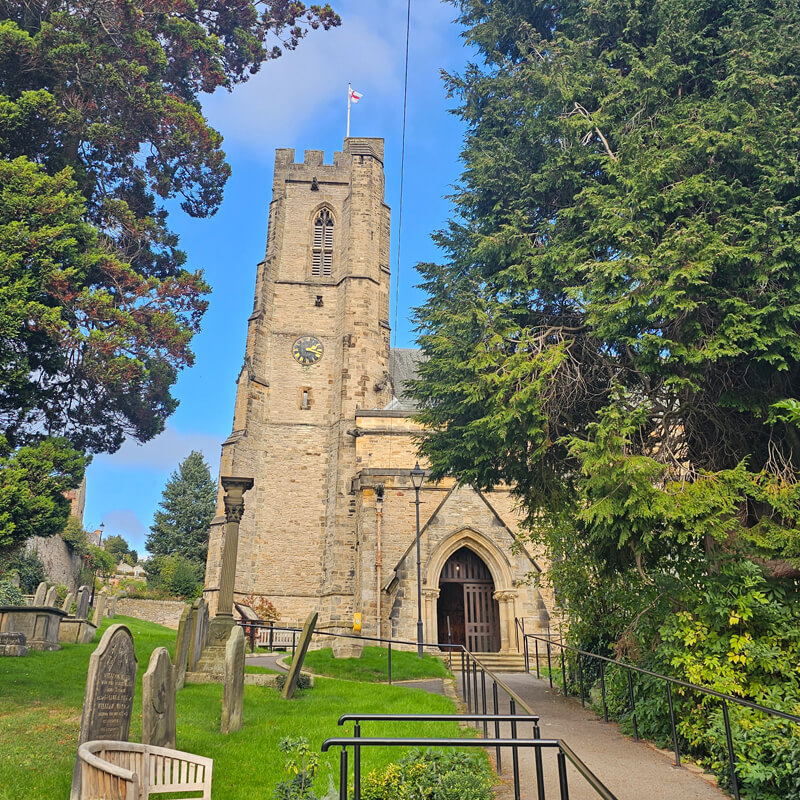
Although much of the building was reconstructed during the 19th century, surviving medieval features include two substantial stone pillars near the entrance. Its 14th-century tower is another important reminder of the church’s medieval development.
The churchyard also has a long association with education. Richmond Grammar School, re-established under Elizabeth I in the 16th century, originally occupied a site within the churchyard, continuing a tradition of learning that had medieval roots.
Together with Holy Trinity, St Mary’s reveals how religious buildings served different parts of Richmond’s growing population.
Greyfriars Tower and the Friary Gardens
To the north of the castle, the remains of Richmond’s Franciscan friary offer another glimpse into medieval religious life.
The friary was established around 1258, when Ralph Fitz Randal, Lord of Middleham, granted land to the Franciscan order. Known as Greyfriars because of their grey habits, the friars followed a tradition of preaching, poverty and service to communities.
Unlike many monastic orders, the Franciscans were closely associated with towns and urban populations. Their friary at Richmond gradually expanded through donations and patronage, acquiring substantial buildings, a church and accommodation for the religious community.
During the 14th century, the friary underwent further development. A postern gate was inserted into the town wall to provide convenient access, while additional buildings and land helped support the community.
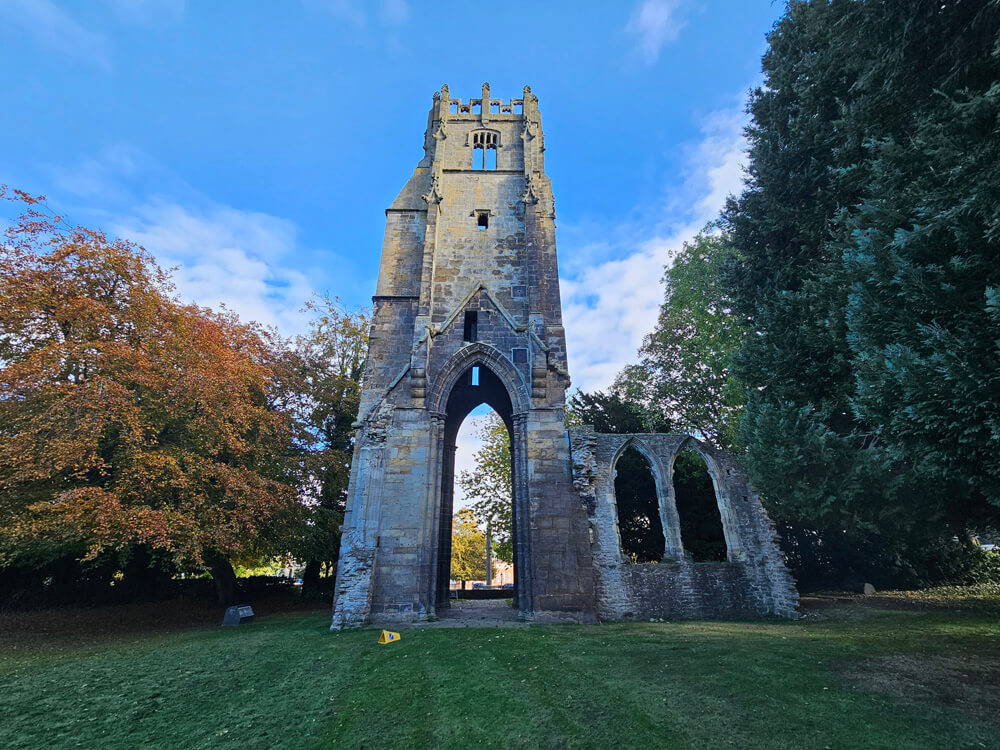
The most striking surviving structure is Greyfriars Tower, the former friary church’s bell tower, constructed in the later 15th century. Rising above the public Friary Gardens, it is a remarkable remnant of the complex that once occupied this area.
Following the Dissolution of the Monasteries in the 16th century, the friary was suppressed and its buildings were gradually dismantled. The surviving tower provides a tangible connection to Richmond’s medieval religious landscape.
Richmond Today: A Medieval Town Still Visible
Richmond’s later prosperity brought Georgian townhouses, new streets and elegant buildings, but much of its medieval framework remains intact. The castle still dominates the skyline, the Market Place occupies its historic position, and fragments of the town walls and Greyfriars Tower survive among the modern streets.
In the historic centre, later buildings frequently occupy medieval plots and preserve elements of the earlier street pattern. Although many façades were rebuilt during the 18th century, the underlying arrangement of properties often follows the medieval burgage plots established around the marketplace. These long, narrow plots traditionally extended backwards from street frontages, allowing merchants and craftspeople to conduct business at the front while using the land behind for workshops, storage and domestic purposes.
The result is a town where medieval planning survives even when the original buildings have vanished. Ancient stonework, old gateways and the winding street network together reveal a settlement that developed gradually over centuries rather than being entirely rebuilt.
Walking through Richmond today, it is possible to follow the same routes that connected the medieval market, parish churches, friary and castle. Its narrow passageways, surviving gateways and historic street layout offer a glimpse of the people who lived, traded and worshipped here centuries ago.
More than nine centuries after its establishment, Richmond remains a remarkable example of how a medieval town can preserve its historic character long after the buildings and institutions that shaped it have changed.
Richmond Castle
Richmond Castle was founded in 1071 following the Norman Conquest. One of England’s earliest stone castles, it became the centre of power for the Honour of Richmond. Its imposing keep, surviving walls and panoramic views across the town and countryside offer a fascinating glimpse into medieval military life and the power of the Norman lords who shaped Richmond’s history.
St Mary’s Church
St Mary’s Church has origins dating back to the 12th century. Although much of the building was reconstructed in later centuries, important medieval features survive, including substantial stone pillars and its historic tower. As one of the town’s principal places of worship, the church offers a glimpse into the importance of religious life within this thriving medieval market town.
Greyfriars Tower
Tucked away in the peaceful Friary Gardens, the 15th-century Greyfriars Tower is the surviving tower of a Franciscan friary that was established around 1258. The Grey Friars lived lives of poverty and devotion, preaching and serving the local community.
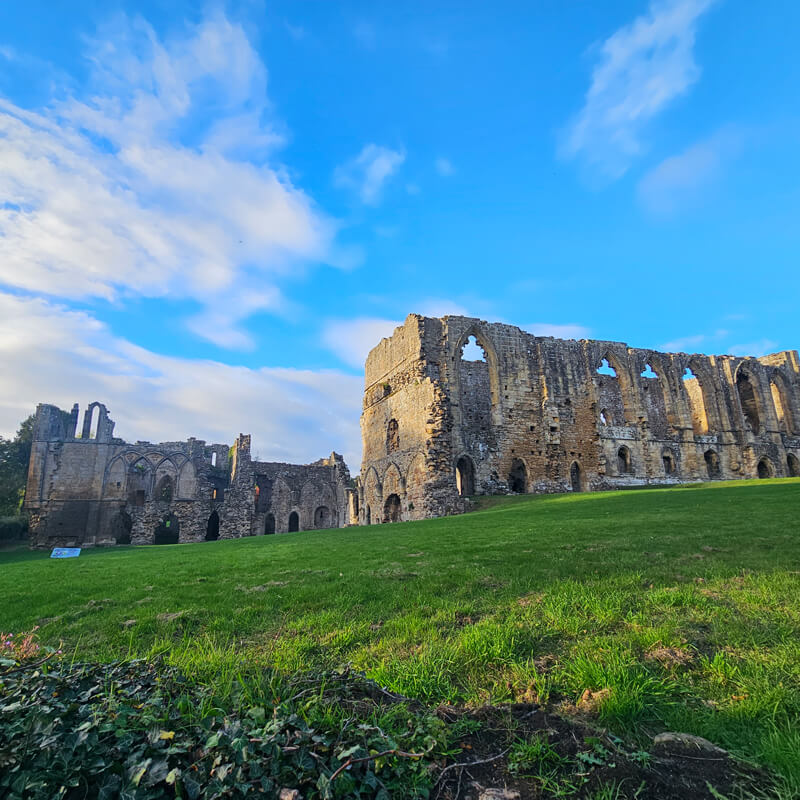
Easby Abbey
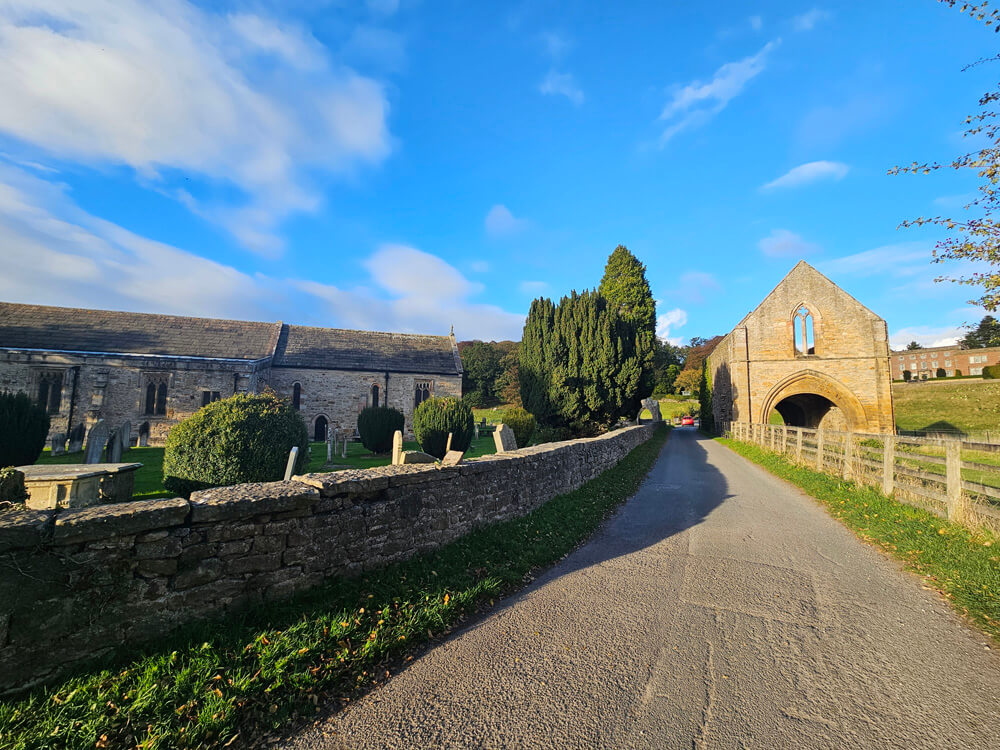
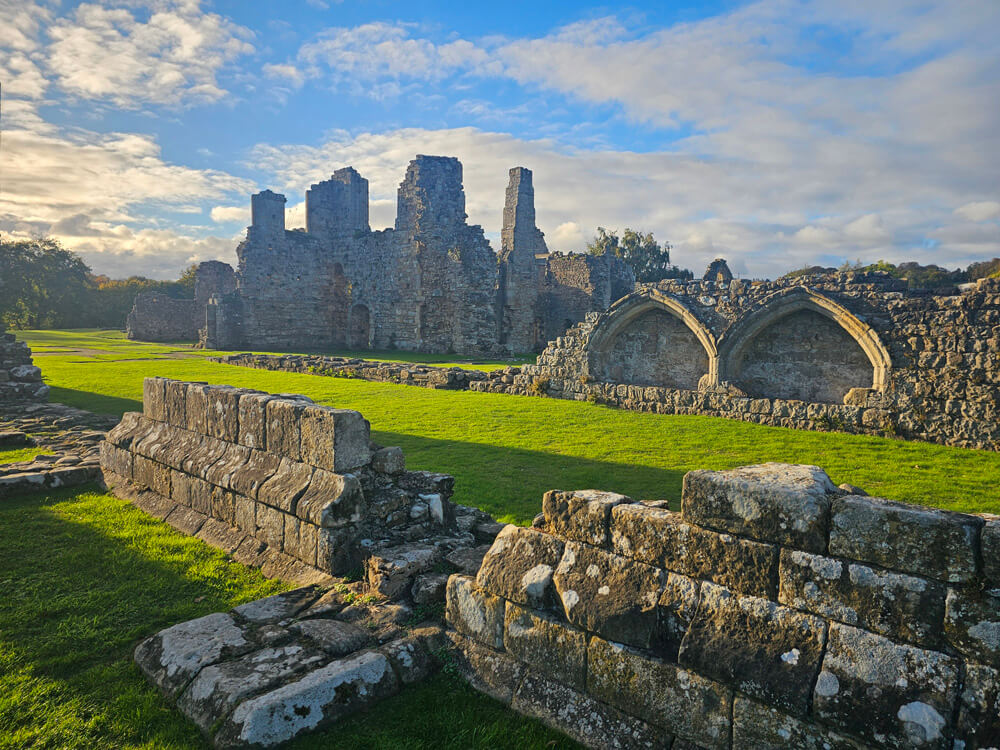
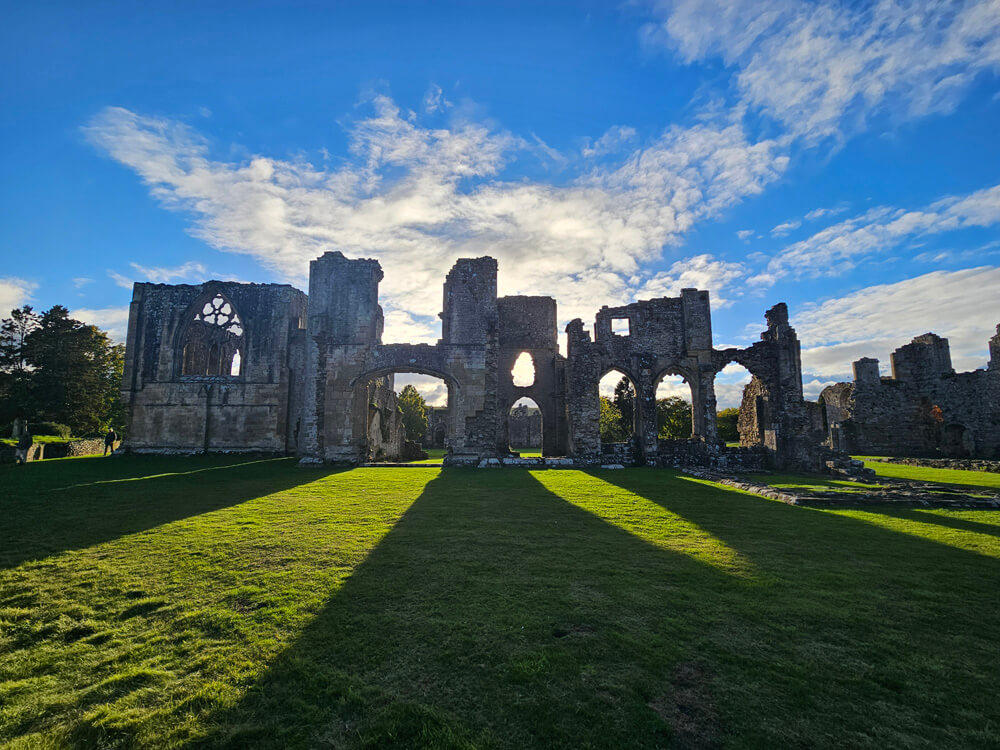
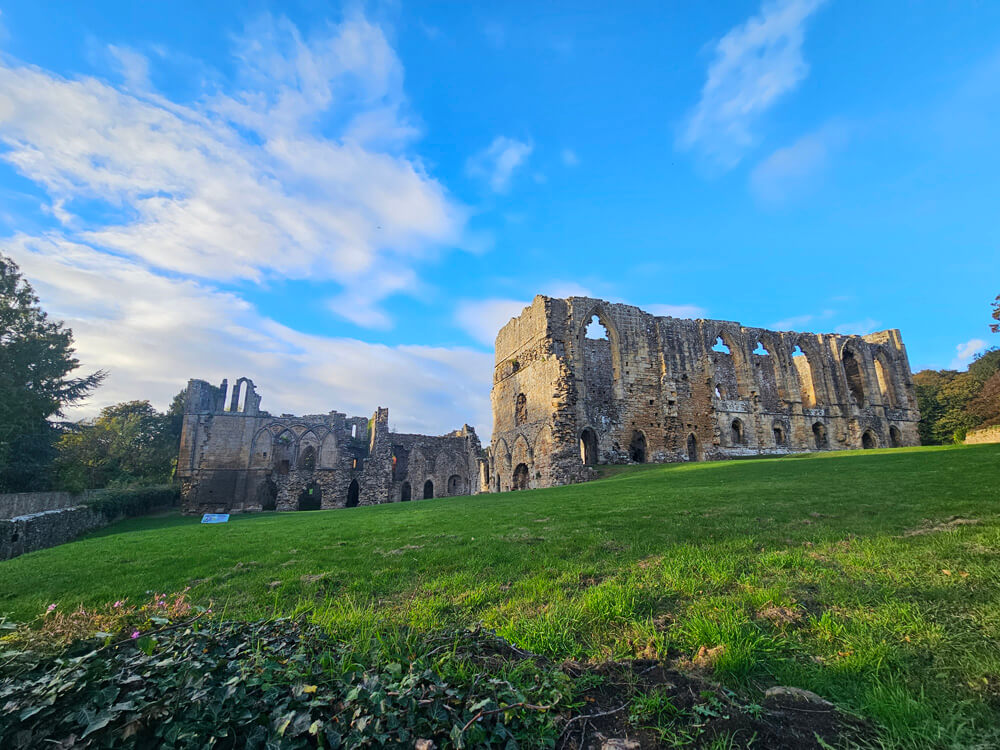
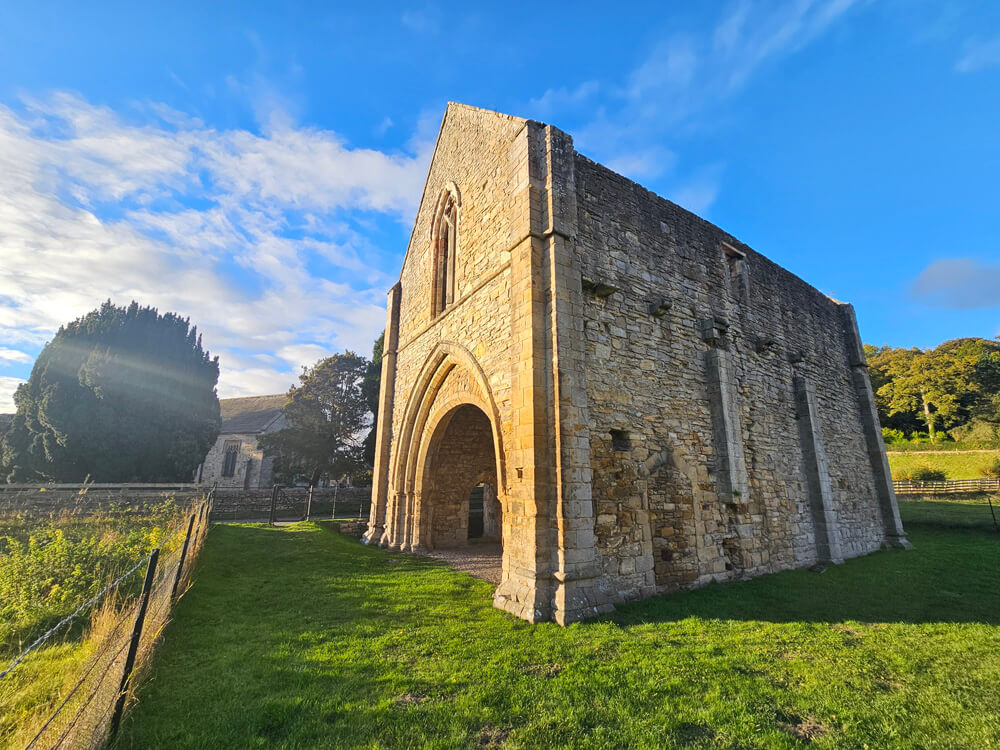
Just one mile from Richmond town centre is the glorious Easby Abbey, a medieval Premonstratensian monastery founded around 1152. Its atmospheric ruins reveal the scale of the former abbey church and monastic buildings, while the impressive medieval gatehouse offers a glimpse of the entrance to the enclosed precinct.
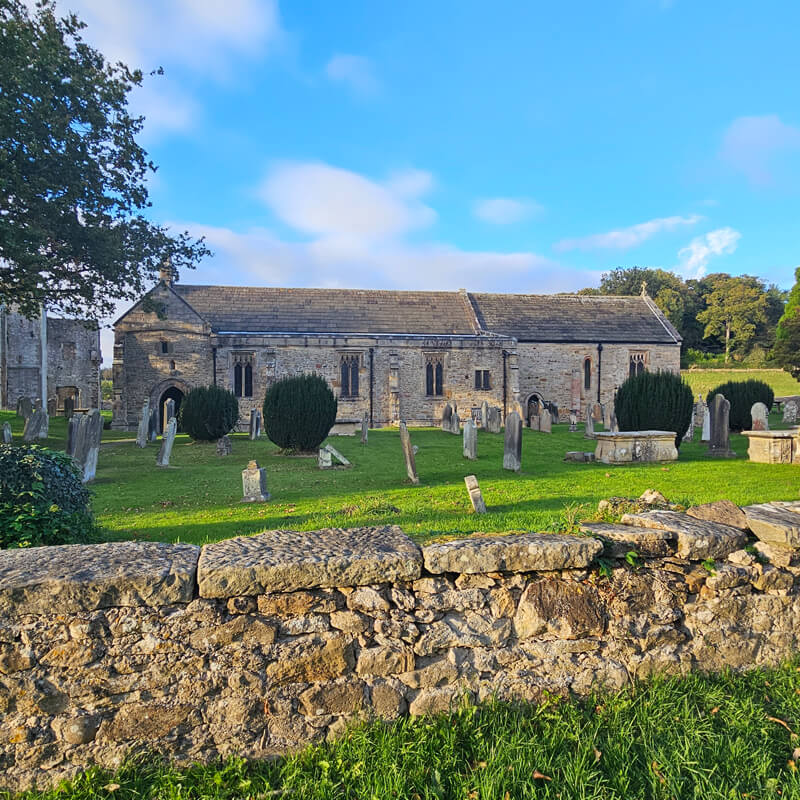
St Agatha’s Church, Easby
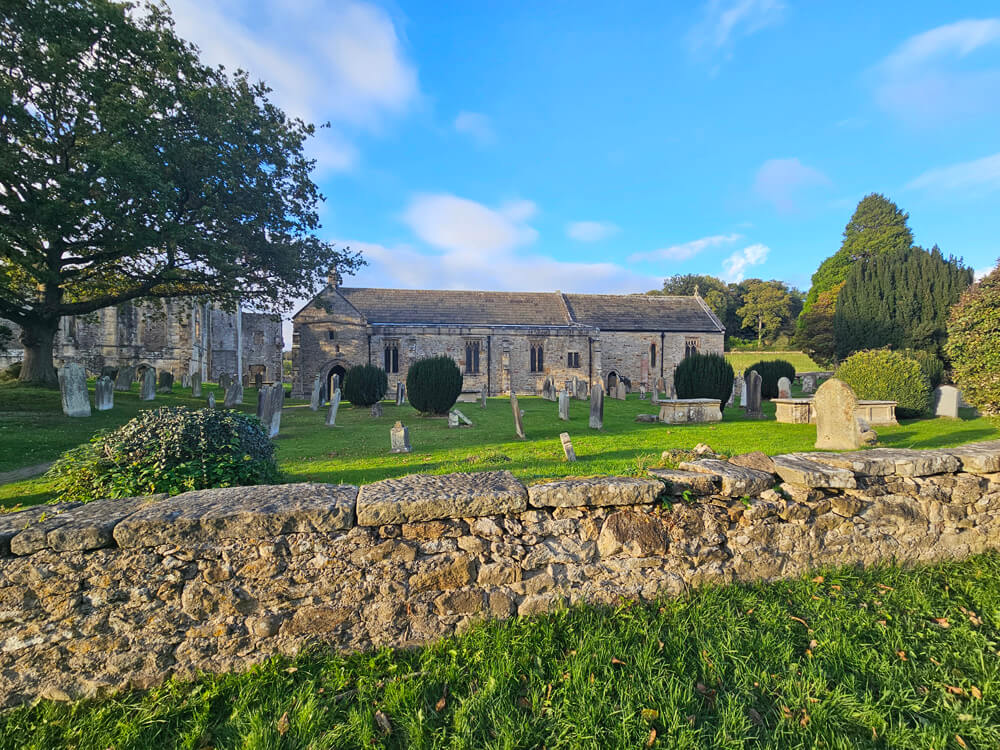
Standing within the grounds of Easby Abbey, St Agatha’s Church is a remarkable survivor of medieval religious history. Predating the monastery, it preserves exceptional wall paintings, largely dating from the 13th century, alongside Norman stonework and historic furnishings. Unlike the abbey, the church survived the Dissolution of the Monasteries and remains a place of worship.
Photo Gallery.
Did you enjoy this post?
I hope you found this post useful. I put a great deal of time and effort in to building, maintaining and populating the website. If you like, you could say a small thank you by buying me a coffee. You don't have to, but it would be nice :)
Buy me a coffee
Stay up to Date
Follow me on my journey and get notified whenever a new post is published by following Kings & Castles on Facebook.
Follow MeExplore The Map
Discover the hundreds of castles, churches, monasteries, cathedrals and other historic locations that I've personally visited across England and Wales. Search by location, explore nearby sites and plan your next historical adventure.
Share: