Henry I
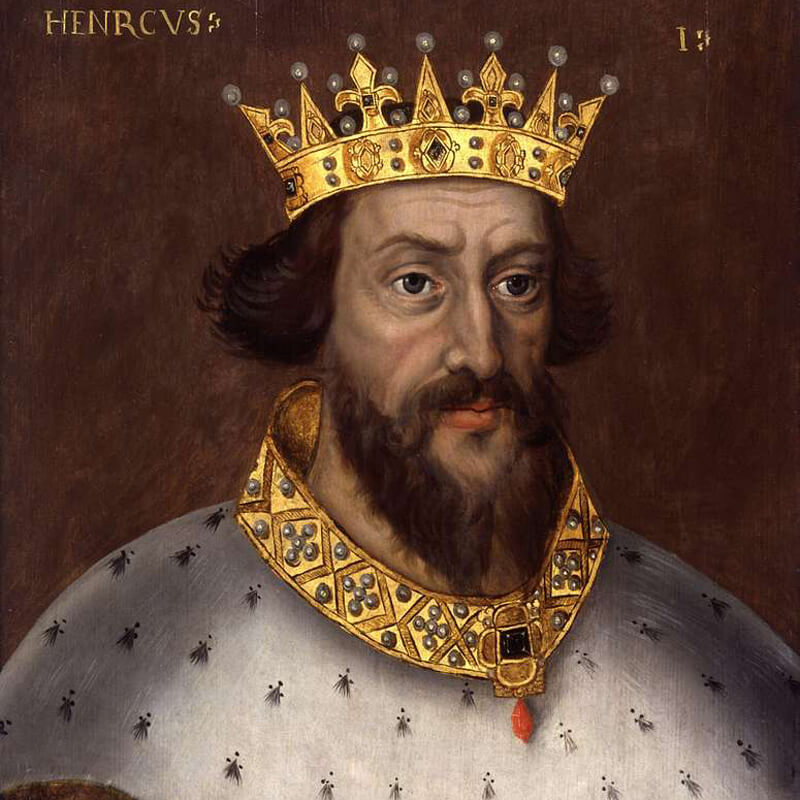
Henry I, also known as Henry Beauclerc, was King of England from 1100 until his death in 1135, and also ruled Normandy from 1106. Henry was the youngest and most able of William the Conqueror’s sons and had never expected to become king. He became the King of England after the assassination of his older brother and predecessor, William II. Henry strengthened the crown’s executive powers and modernised royal administration.
Quick
Facts.
- Born: c. 1068
- Died: 1135
- Reign: 1100 - 1135
- House: House of Normandy
- Predecessor: William II
- Successor: Stephen
Henry was born around 1068, he was well educated and was the youngest of William the Conqueror‘s four sons. Born in Selby in Yorkshire, he was the only son of William and Matilda of Flanders who was born in England. Other than this, very little is known of Henry’s early life.
Henry was an energetic, decisive and occasionally cruel ruler. He was also well educated, being the only brother who was literate and fluent in English. Because of this he earned himself the nickname Henry Beauclerc, meaning good scholar or good writer.
Henry was crowned at Westminster in August 1100, a few days after his brother, King William II, had been killed in a hunting accident. Henry embraced his new found role in an enthusiastic manner, introducing modernising reforms and centralising the administration of England and Normandy. Upon his accession to the throne in 1100, Henry issued The Charter of Liberties, a written proclamation which sought to bind the King to certain laws regarding the treatment of nobles, church officials, and individuals, which is considered a predecessor to Magna Carta.
However, Henry’s other older brother, Robert Curthose, Duke of Normandy, was away on the First Crusade and could not assert his own claim to the English throne until the following year, so Henry took advantage of Robert’s absence and rushed to be crowned king. Many barons supported Robert’s claim, so Henry moved quickly to gather his own support.
In November 1100 Henry married Edith, the daughter of Malcolm III, King of Scotland, a Scottish princess of the old Anglo-Saxon royal line, and established the foundations for peaceful relations with the Scots and support from the English. Edith adopted the Norman name of Matilda, perhaps a tribute to Henry’s mother, and became known as Matilda of Scotland.
Robert invaded England in 1101, and Henry and Robert spent the next few years battling each other to unify their two territories. Henry took the final victory in 1106 in a pitched battle at Tinchebrai in Normandy, and imprisoned Robert for the rest of his life. With the Anglo-Norman state reunified and at peace, Henry then enjoyed a long and largely peaceful reign as both King of England and Duke of Normandy.
Henry’s reign saw the creation of the Exchequer, which produced various documents for the king to know better what his assets were and who had paid him and who owed him. Even today, the finance minister of the UK government is called the Chancellor of the Exchequer.
Henry married twice. He and his wife Matilda of Scotland had two children, Matilda and William Adelin. Matilda, also known as Maud, married the Holy Roman Emperor Henry V and was referred to as Empress Matilda. William Adelin was heir apparent to the English throne, but he died in the White Ship tragedy of November 1120; a shipwreck disaster off the coast of Normandy. The death of Henry’s only legitimate male heir was a massive blow to him, he was heartbroken. His early death caused a succession crisis known in English history as ‘the Anarchy‘.
When Henry’s first wife Matilda died in 1118, Henry married his second wife, Adeliza, the daughter of Godfrey I, Count of Louvain, but the couple had no children together. Other than his two legitimate children with his first wife, he also had many illegitimate children with multiple mistresses but they would never be able to succeed the throne.
When Emperor Henry V died in 1125, Henry summoned his only remaining legitimate child Matilda back to England and had his barons swear their allegiance to her as his heir. In 1128 Matilda married Geoffrey Plantagenet, Count of Anjou, and in 1133 she bore him her first son, the future king Henry II.
Henry I died in 1135, allegedly from eating too many lampreys (a type of fish), in Lyons-la-Forêt in eastern Normandy, France. His body was brought back to England for burial at Reading Abbey, which Henry had founded. Henry I was a skilful and intelligent monarch who achieved peace and stability in England and Normandy, reuniting the Anglo-Norman state that his father had created. He made notable administrative advances on both sides of the Channel, defended his kingdom against rebellion and invasion, won his major battles, and made alliances with neighbouring princes.
When Henry died, his daughter, Matilda and his nephew, Stephen of Blois, argued over who would become the ruler of England. Stephen of Blois was the son of William the Conqueror’s daughter Adela. Not wanting a female ruler and her Angevin husband, many of Henry’s barons broke their vows and chose Stephen as Henry’s successor. Disregarding Matilda’s right of succession, Stephen crossed rapidly from Normandy, seized the English throne and had himself crowned at Westminster within the month.
Matilda’s subsequent invasion of England unleashed a bitter civil war known as ‘the Anarchy‘ which lasted for roughly the next 18 years. It ended with the death of King Stephen and the end of Norman rule in England, and Henry II’s unopposed accession in 1154 and the start of the Plantagenet kings.
Did you enjoy this post?
I hope you found this post useful. I put a great deal of time and effort in to building, maintaining and populating the website. If you like, you could say a small thank you by buying me a coffee. You don't have to, but it would be nice :)
Buy me a coffee
Stay up to Date
Follow me on my journey and get notified whenever a new post is published by following Kings & Castles on Facebook.
Follow MeExplore The Map
Discover the hundreds of castles, churches, monasteries, cathedrals and other historic locations that I've personally visited across England and Wales. Search by location, explore nearby sites and plan your next historical adventure.
Share: