Fountains Abbey
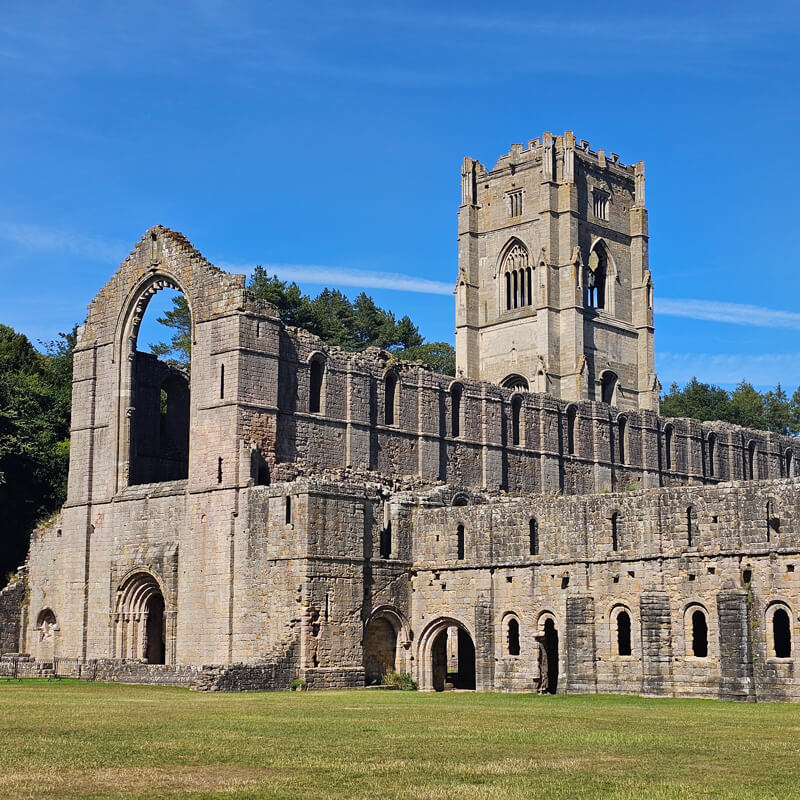
Fountains Abbey, in North Yorkshire, is one of England’s most spectacular medieval ruins. Set within the beautiful Skell Valley near Ripon, the remains of the abbey tell the story of nearly 900 years of religious, economic and social change. Once one of the largest and wealthiest monasteries in Britain, Fountains Abbey was transformed from a place of medieval worship into a celebrated landscape of ruins, gardens and parkland.
Quick
Facts.
- Location: Skell Valley, North Yorkshire, England
- Founded: 1132
- Founder: Benedictine monks from York
- Religious order: Cistercian
- Dissolved: 1539
- Condition: Substantial ruins
A Bit of History…
The abbey was founded in 1132 by thirteen Benedictine monks from St Mary’s Abbey in York. Seeking a stricter and more secluded way of life, they left York and established a small community in the remote Skell Valley. The location provided everything the monks needed, including water, timber, stone and fertile land. In 1135, the community joined the Cistercian Order, an austere monastic order that placed great emphasis on prayer, manual labour and simplicity.
Over the following centuries, Fountains Abbey grew enormously. The monks and lay brothers developed a highly successful agricultural and industrial economy. The abbey’s wealth came from activities including wool production, lead mining, cattle rearing, horse breeding and quarrying. Its lands expanded considerably, allowing the monastery to become one of the most powerful religious institutions in northern England.
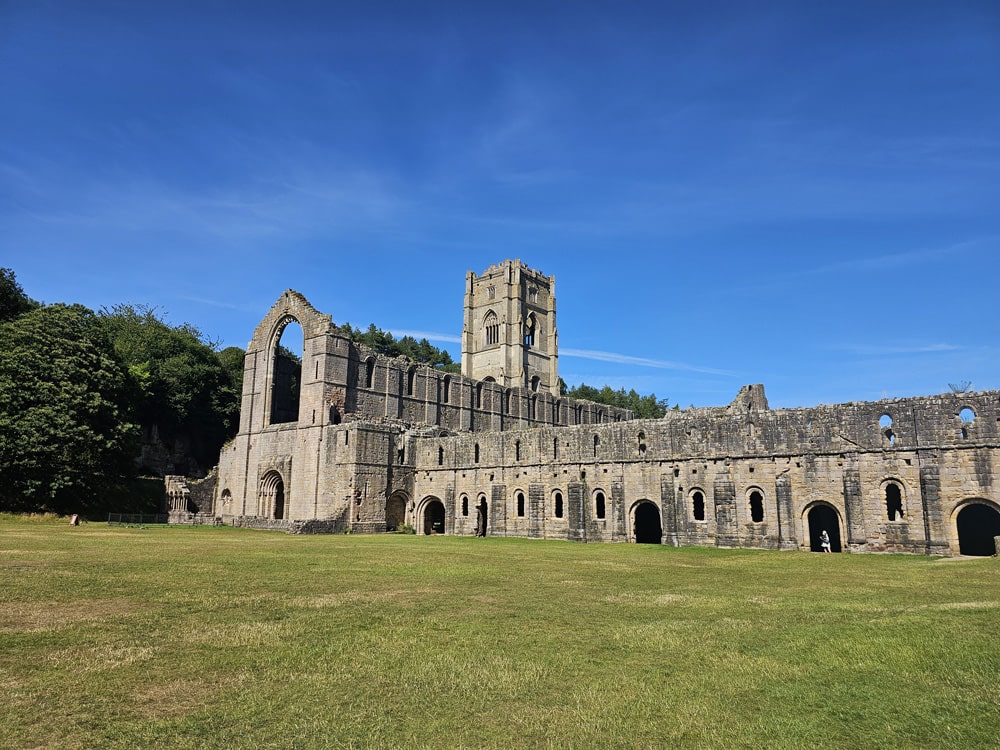
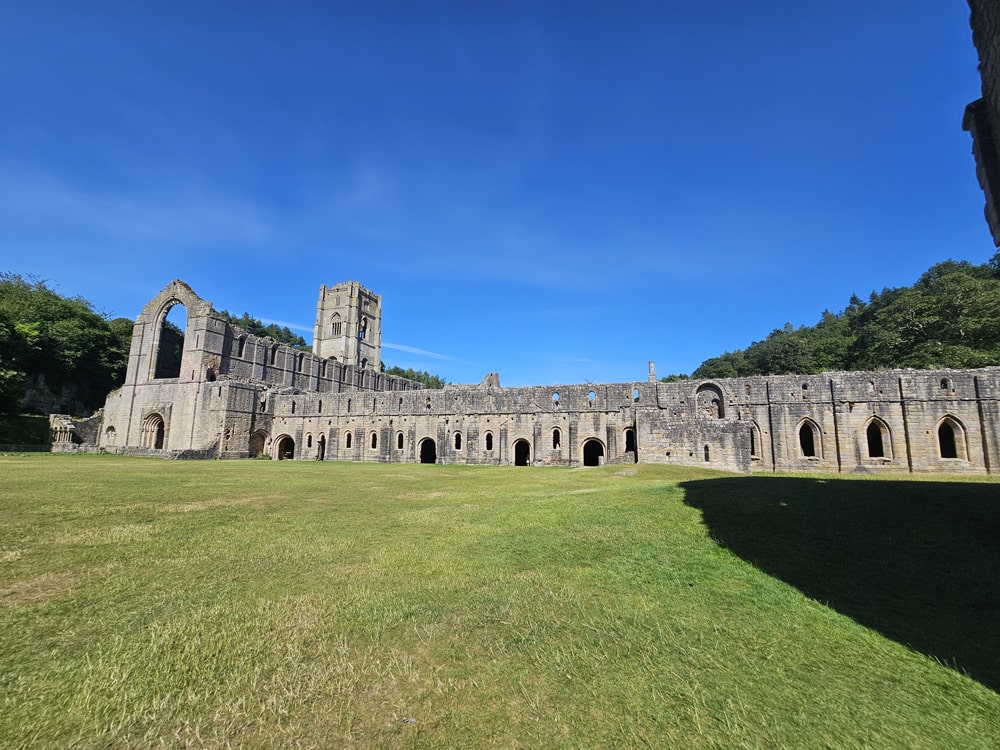
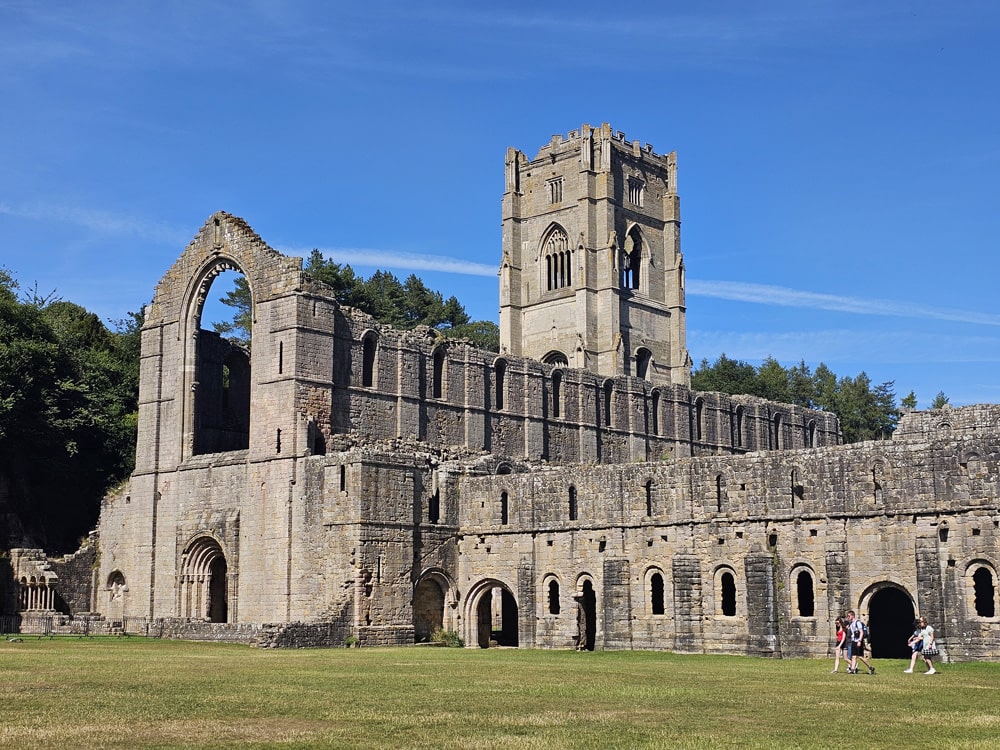
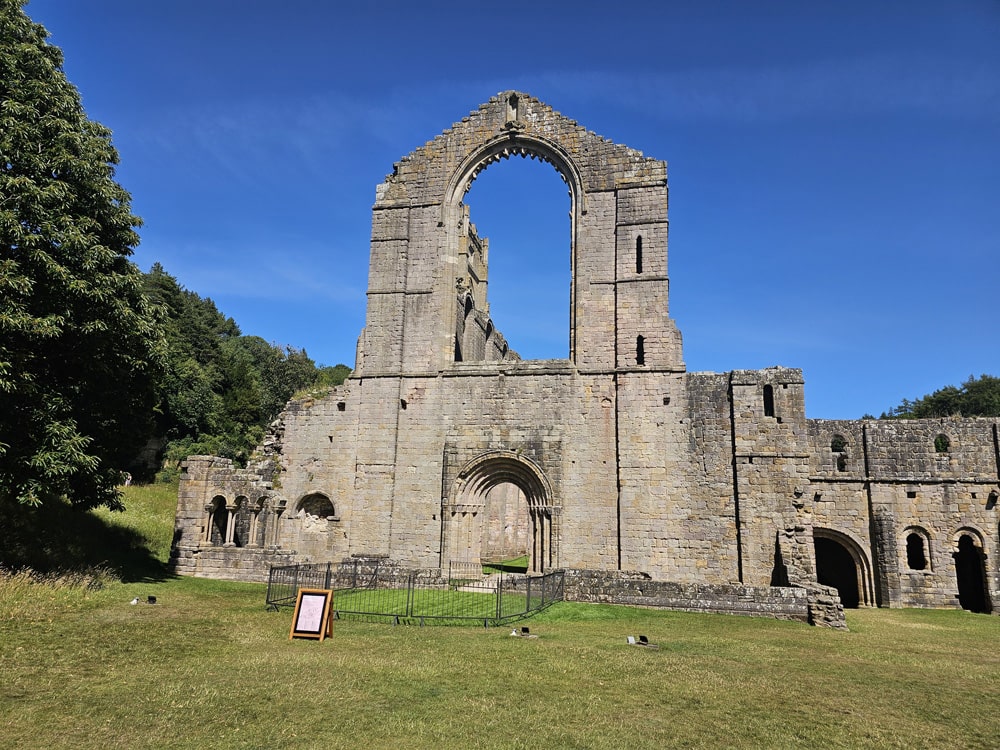
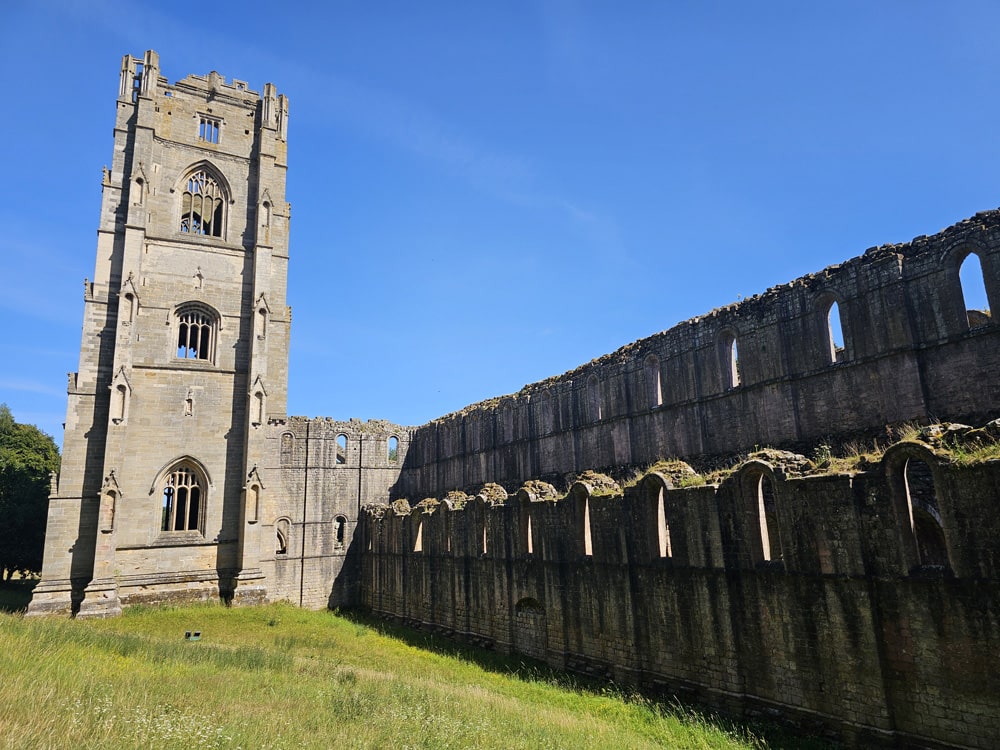
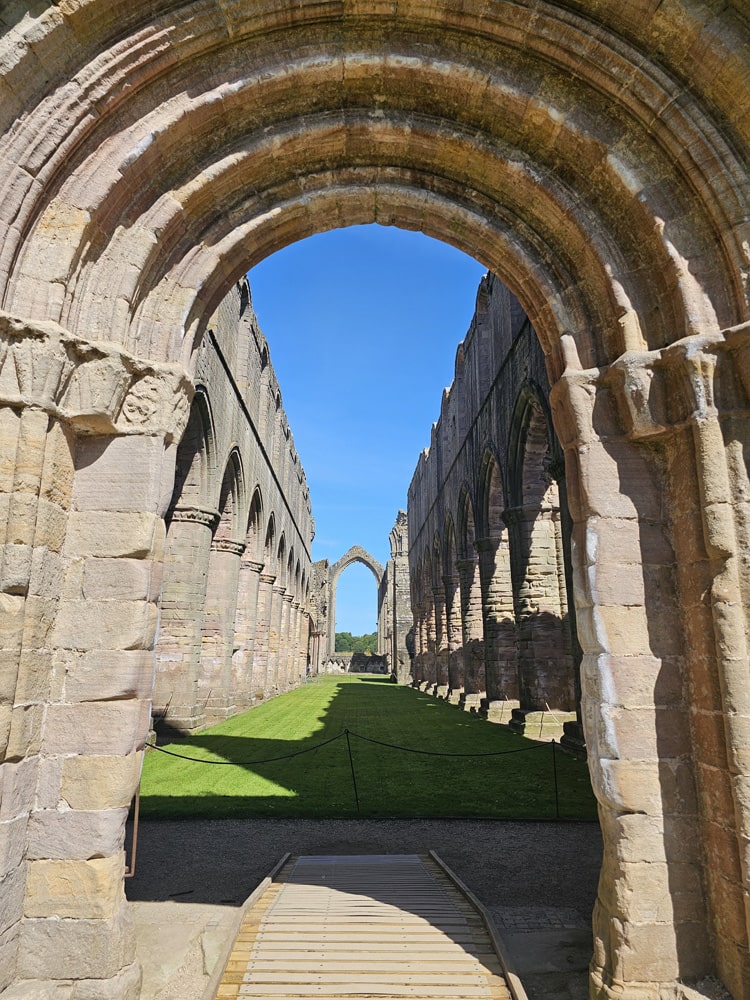
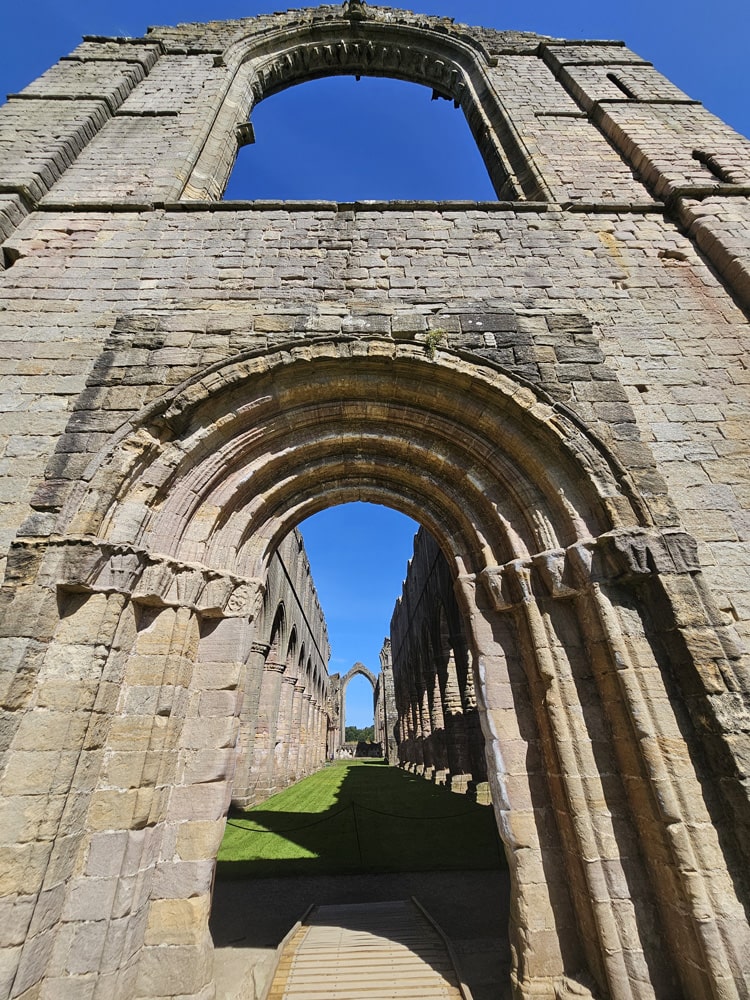
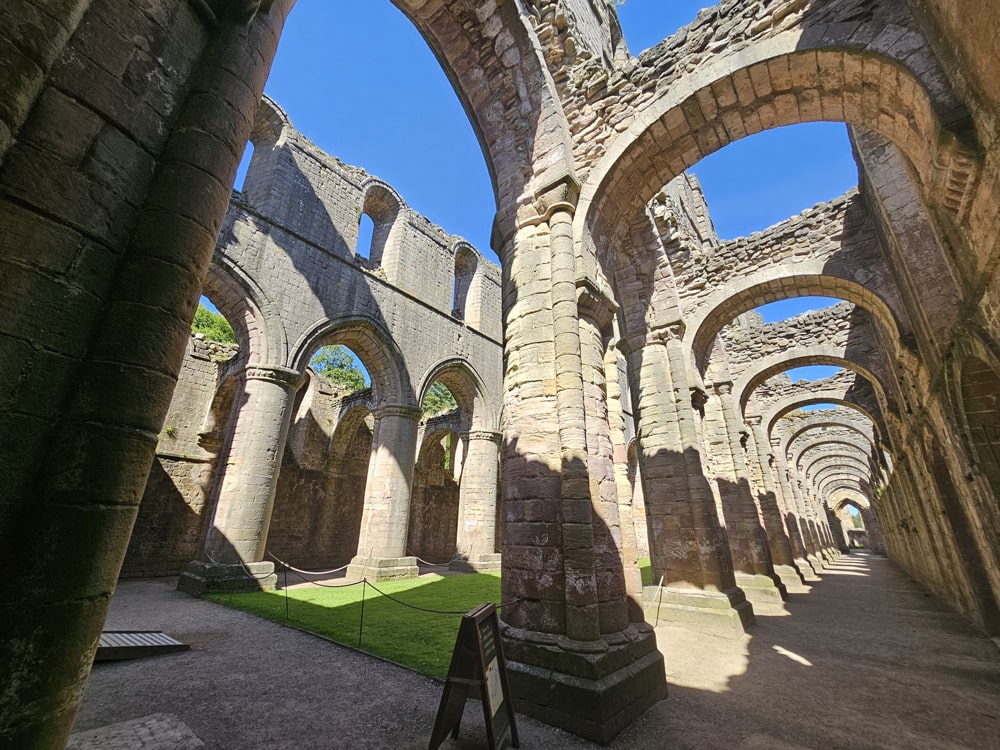
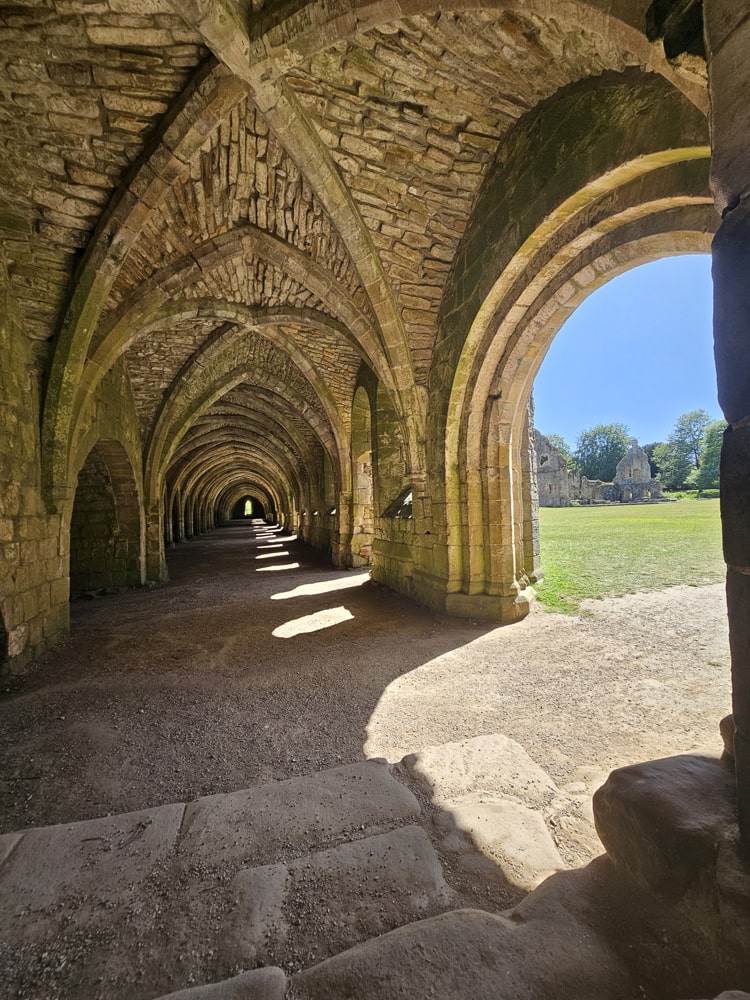
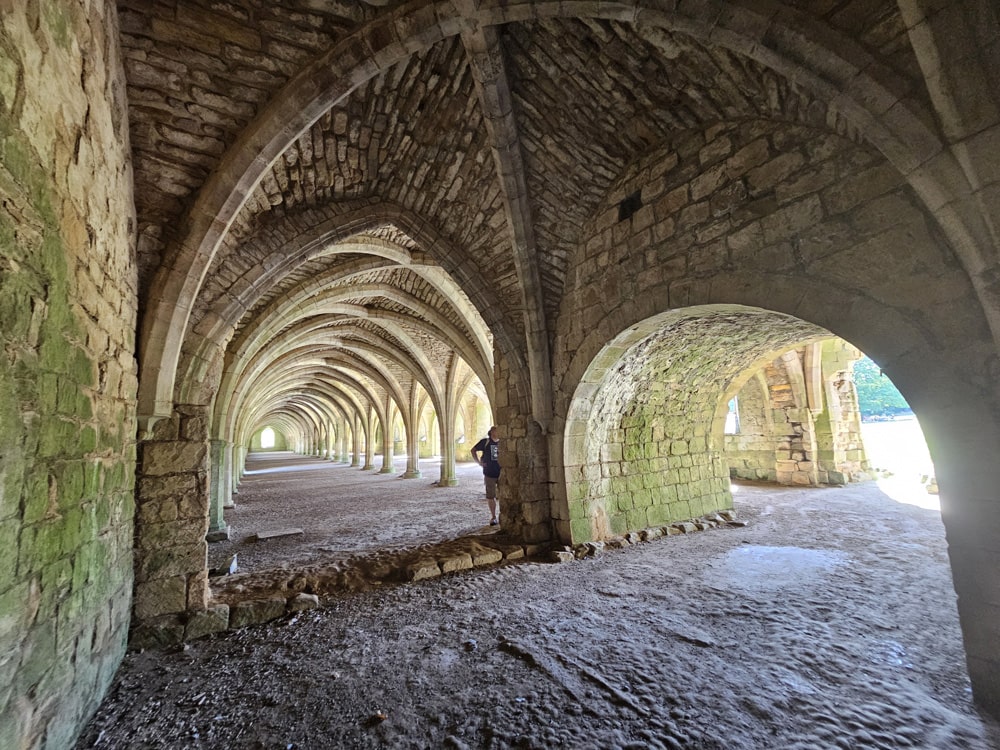
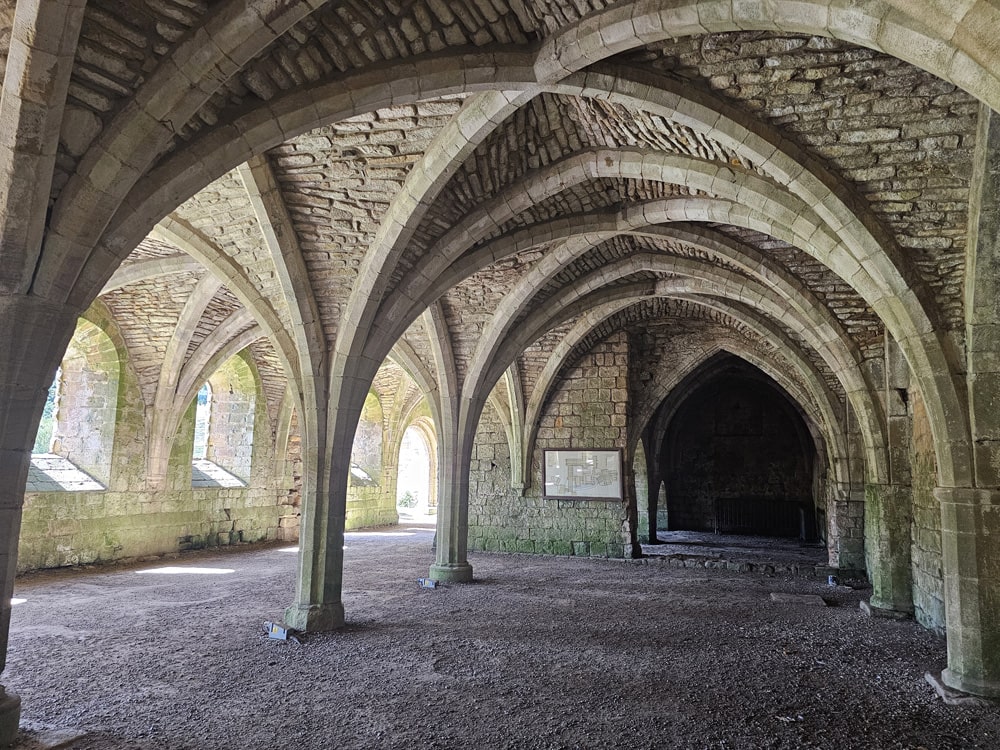
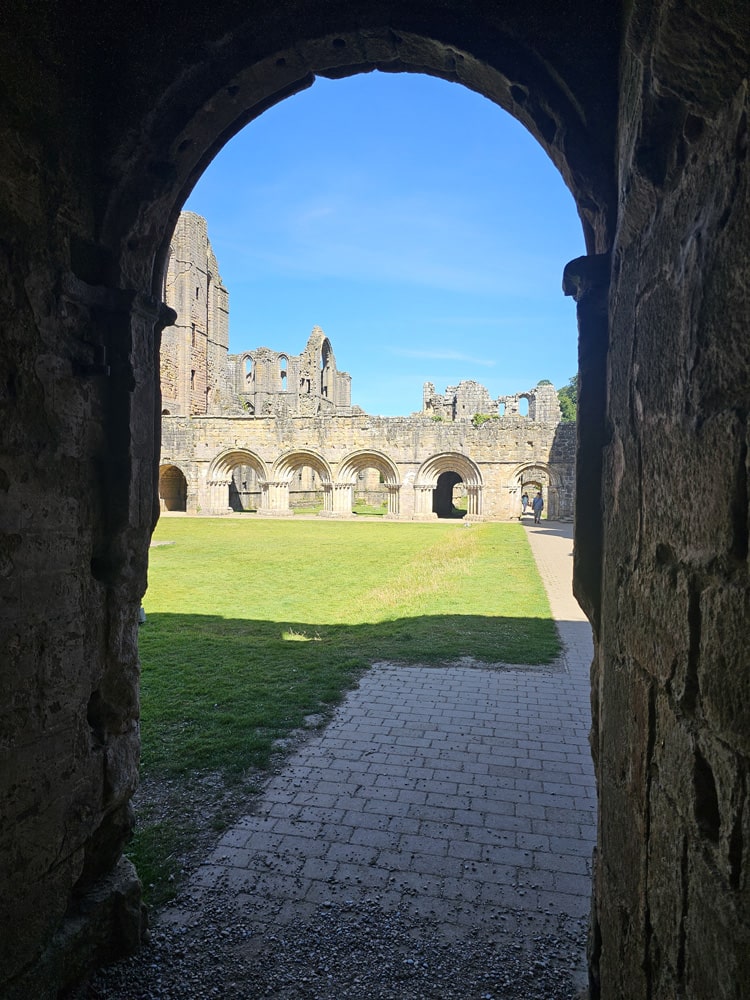
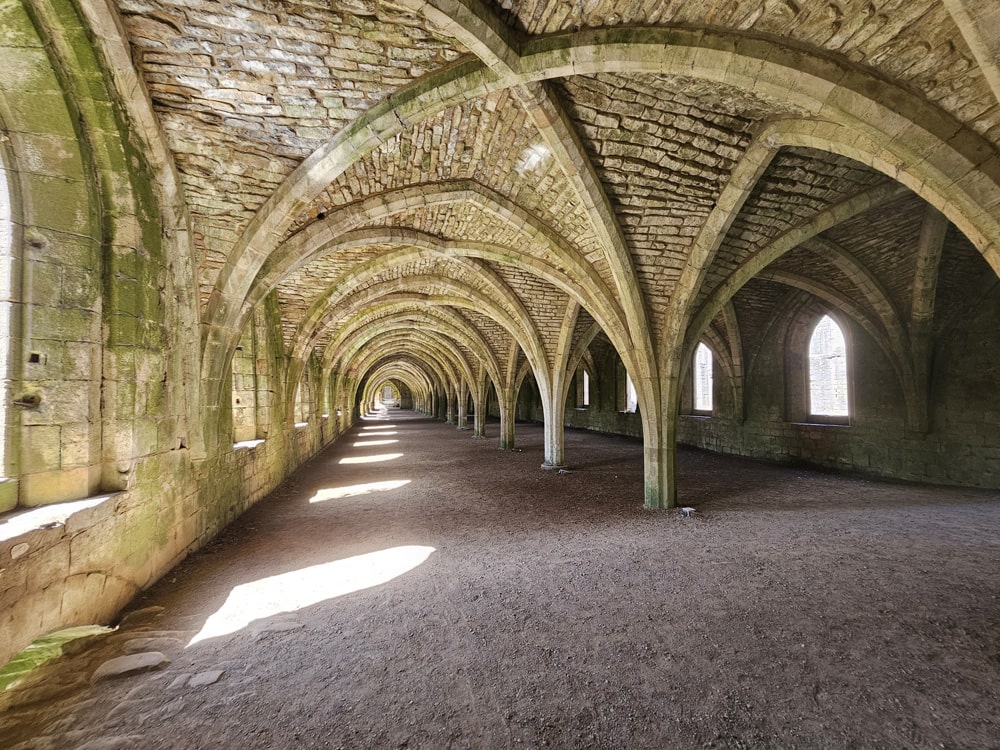
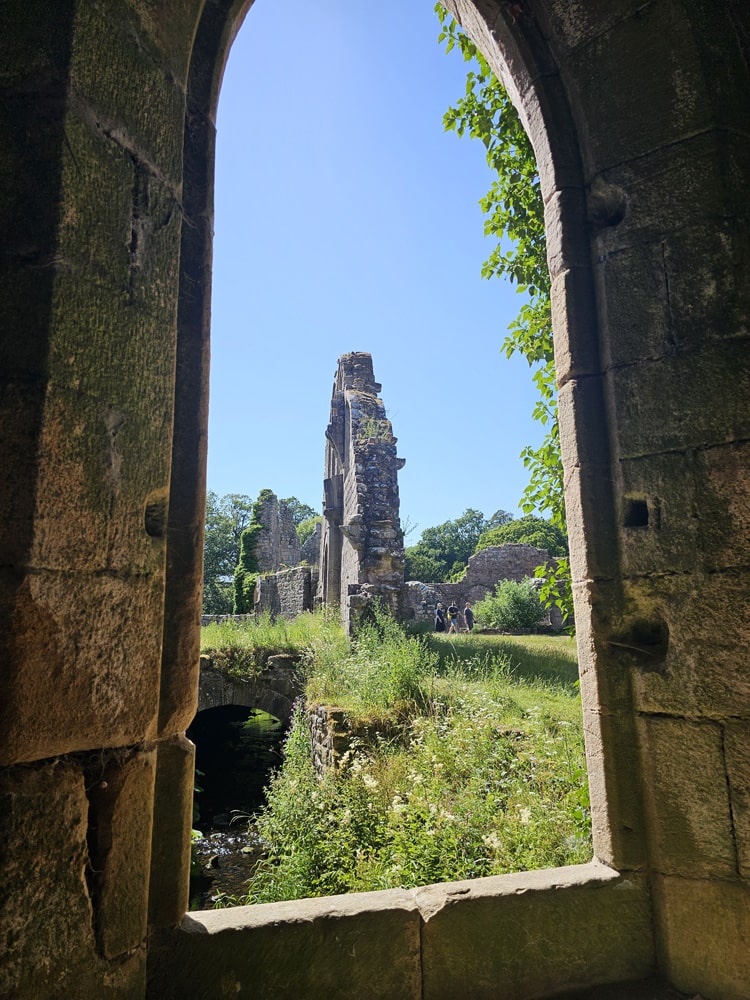
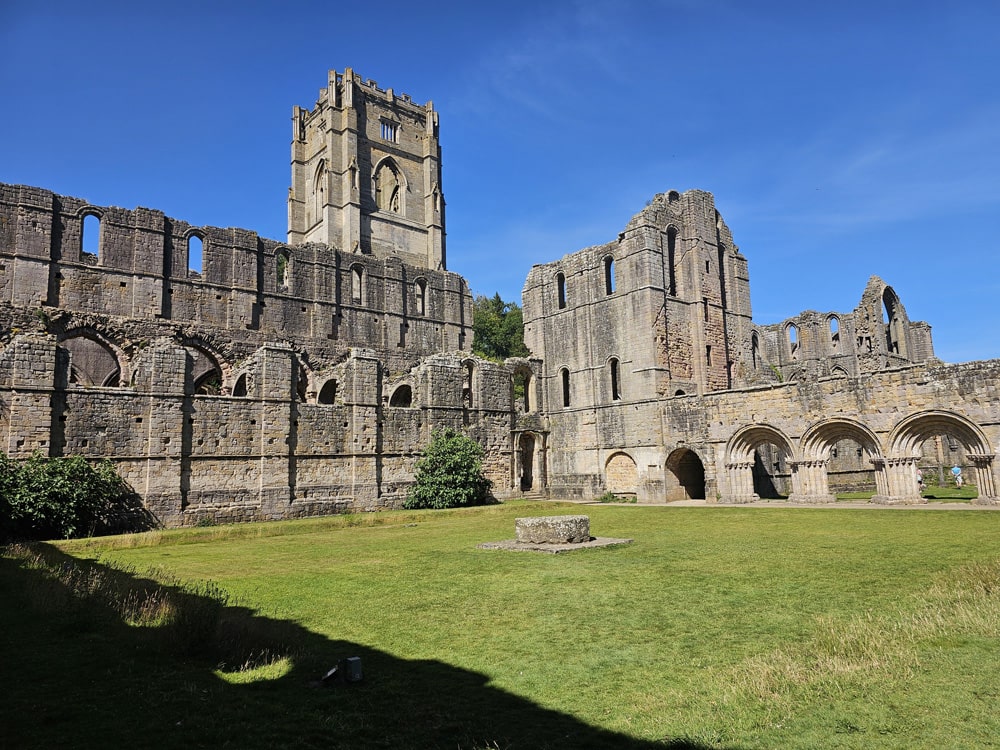
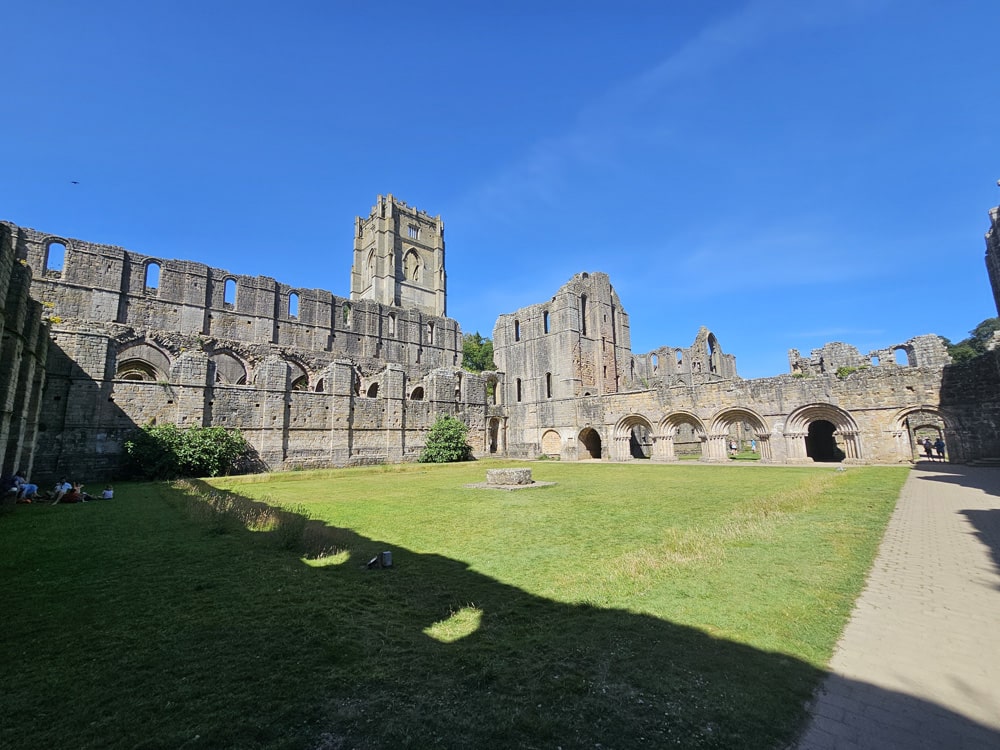
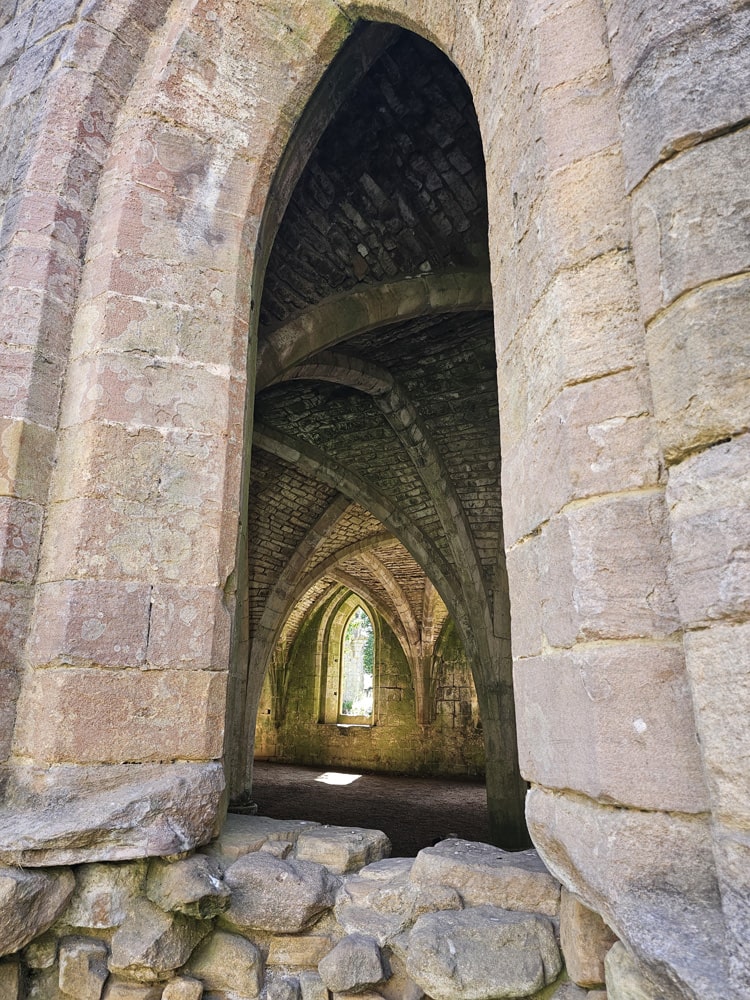
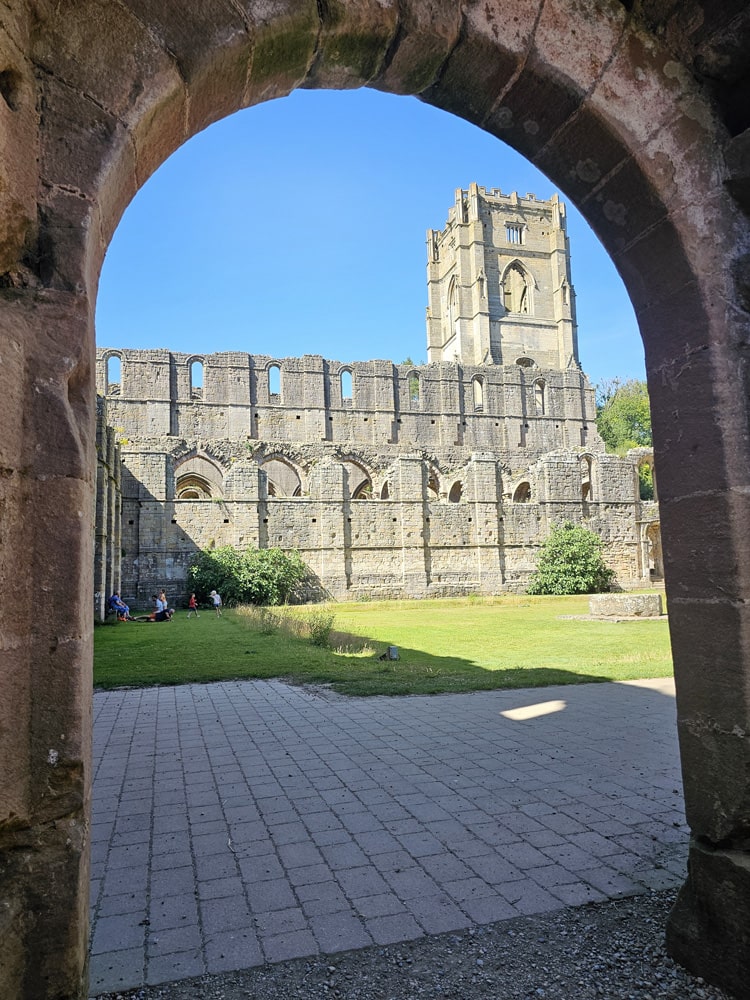
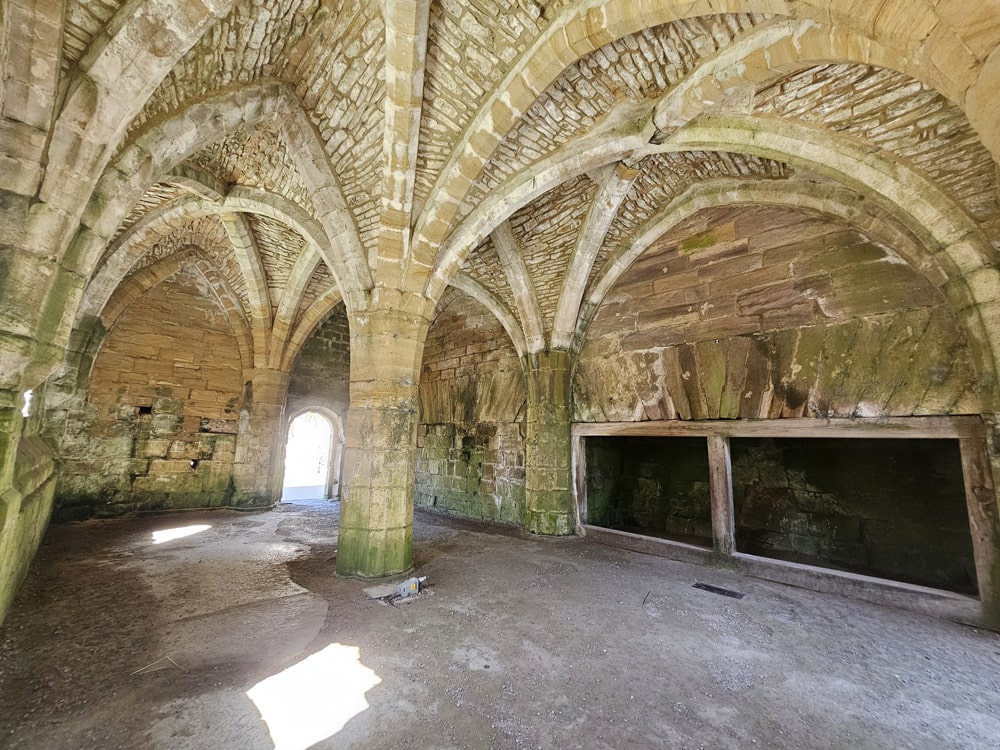
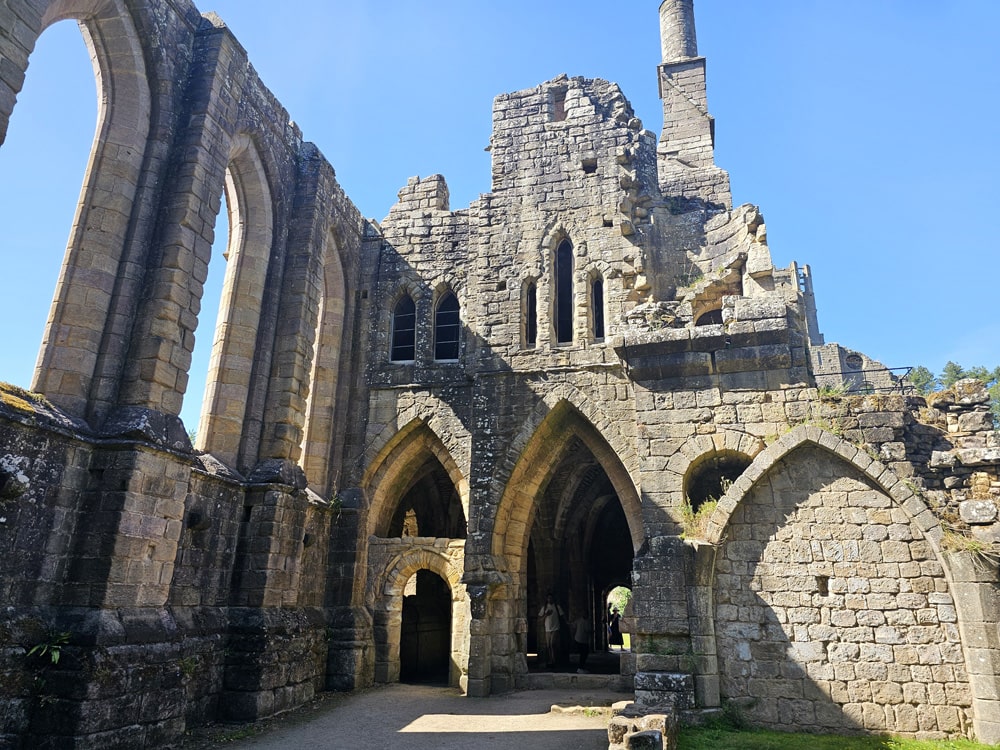
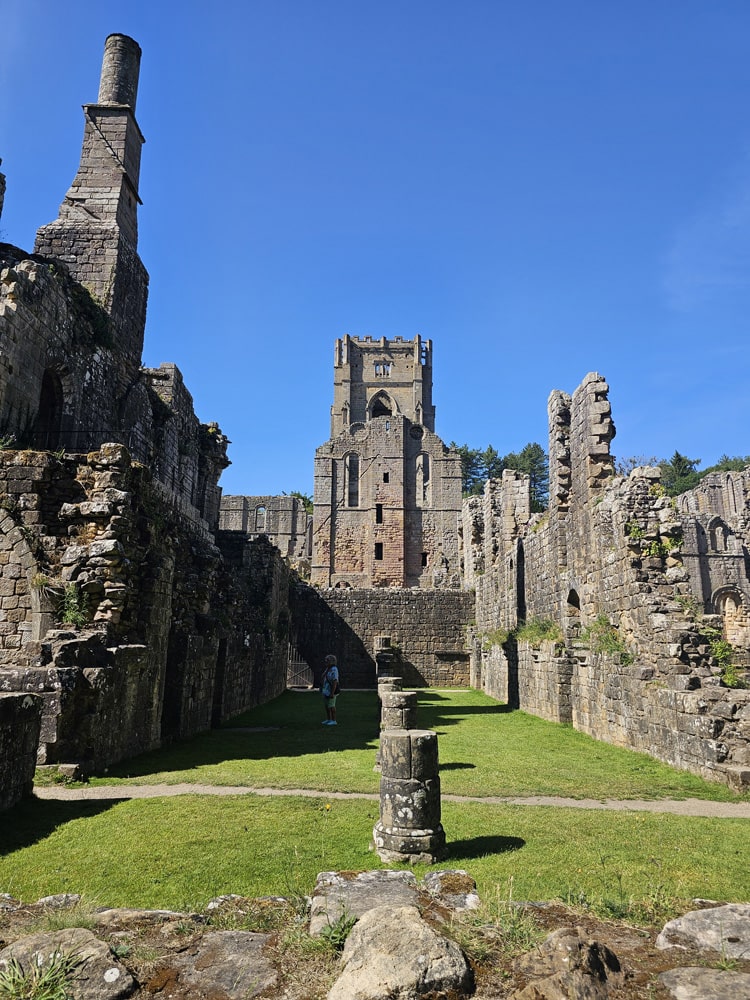
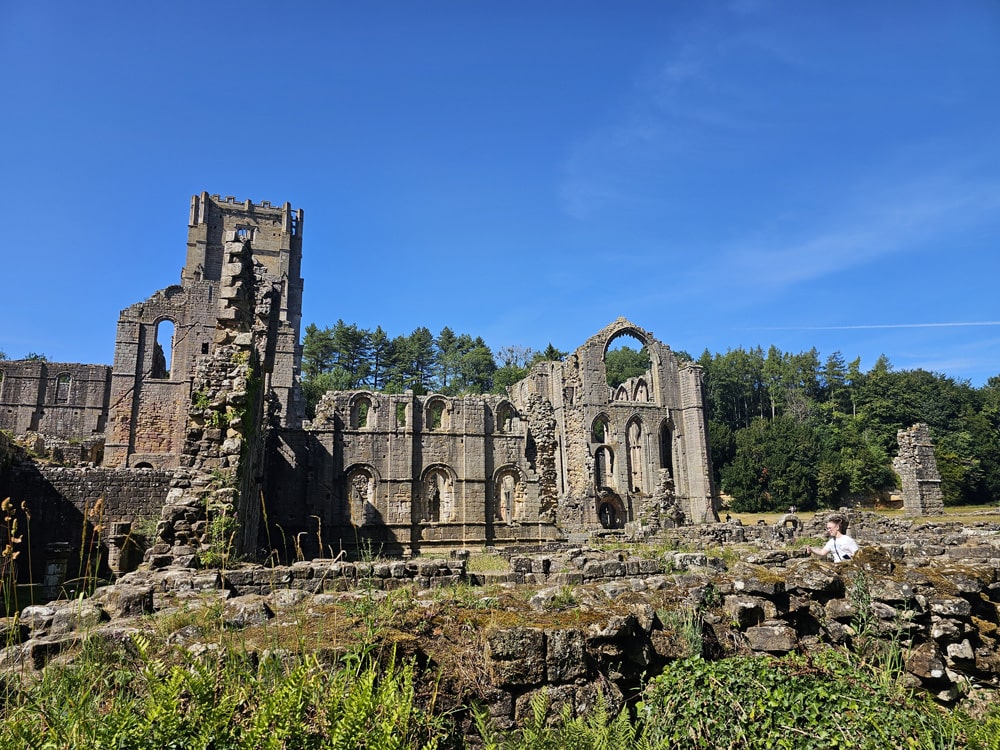
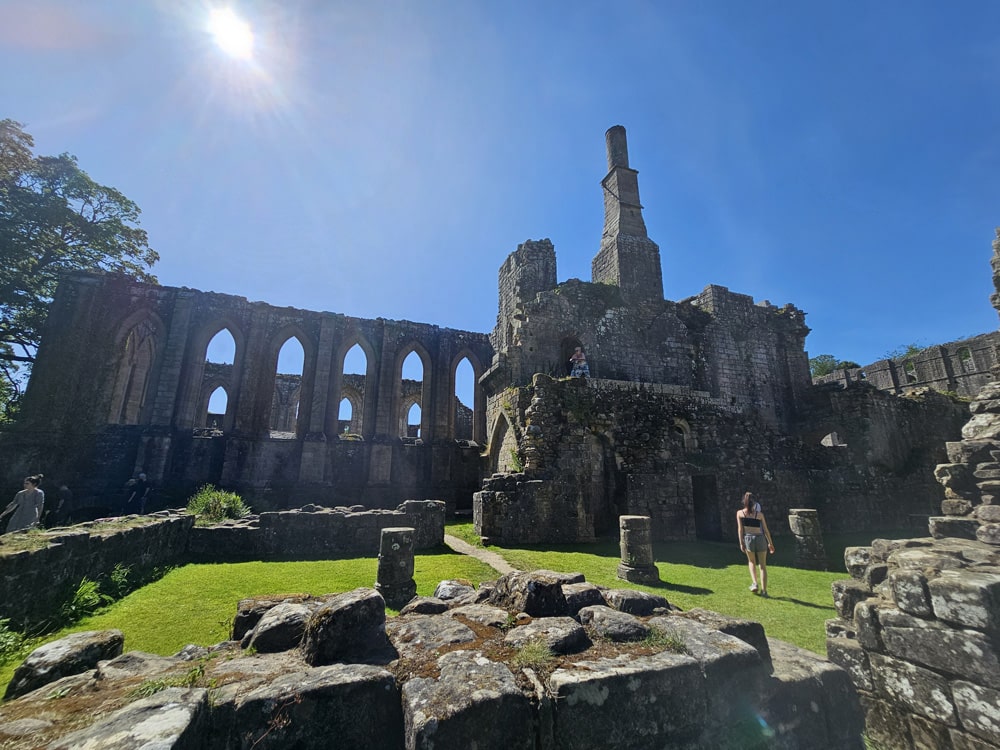
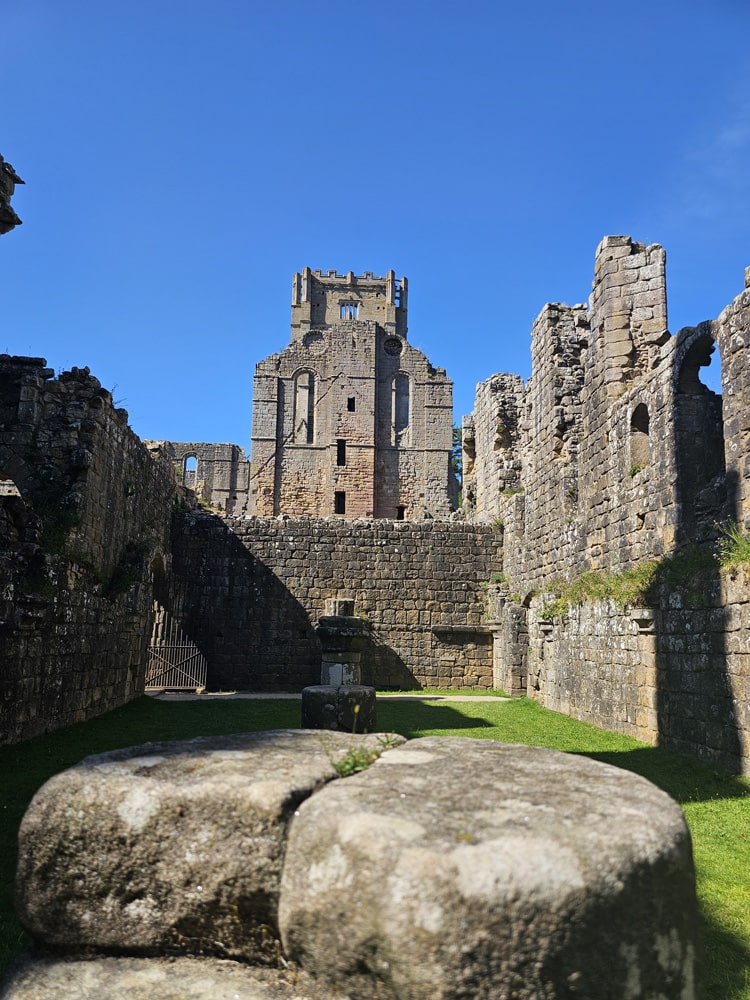
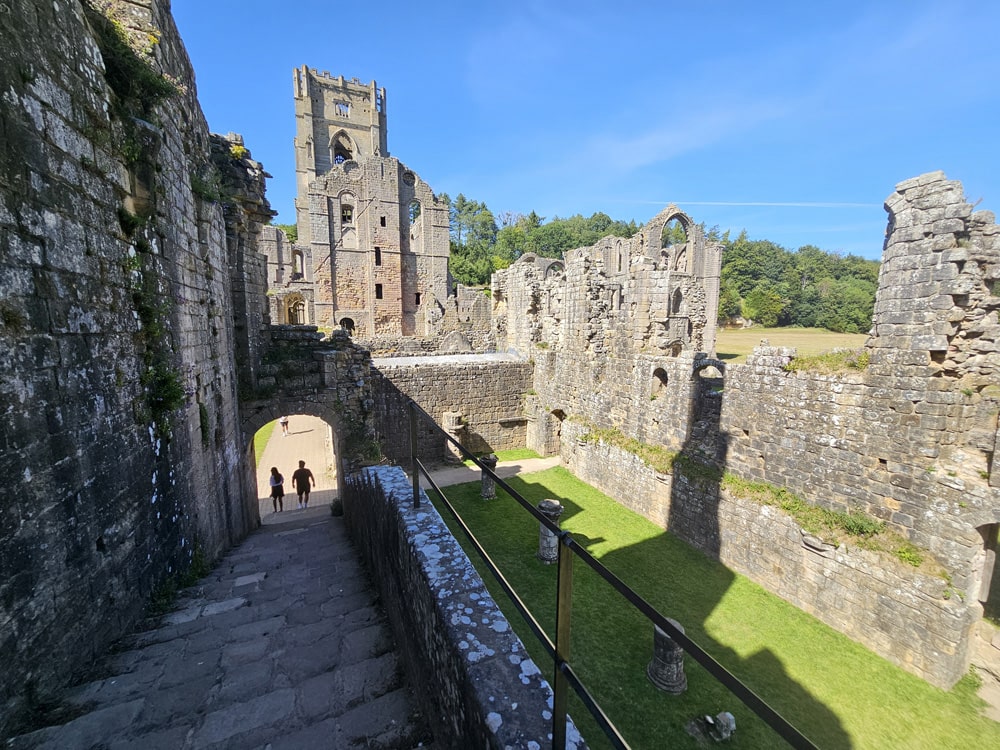
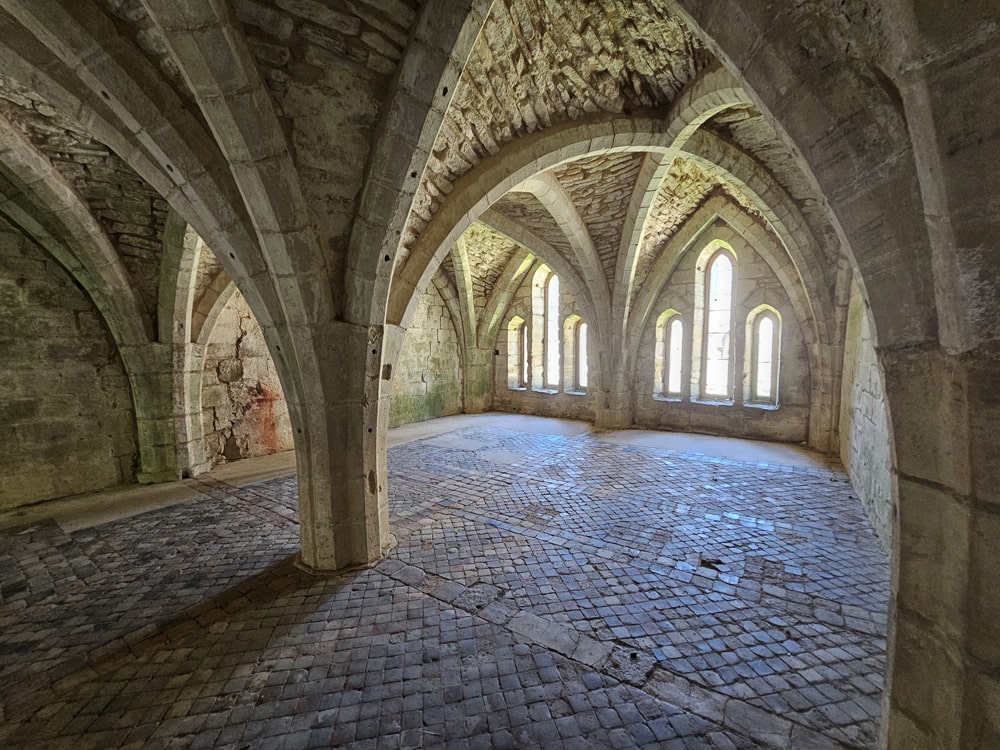
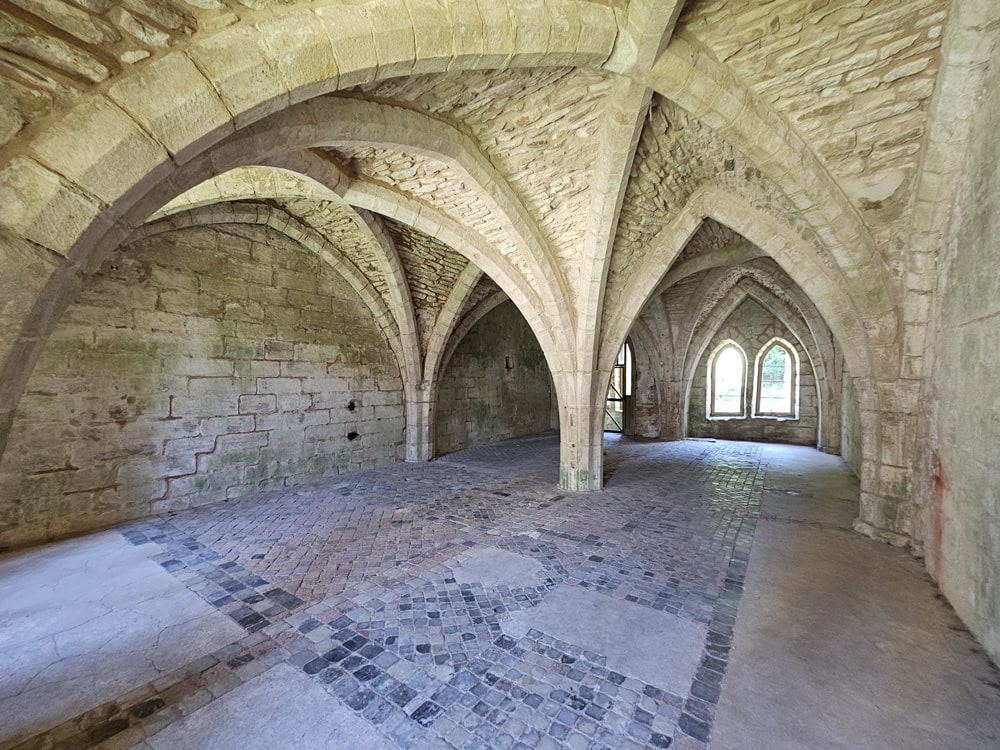
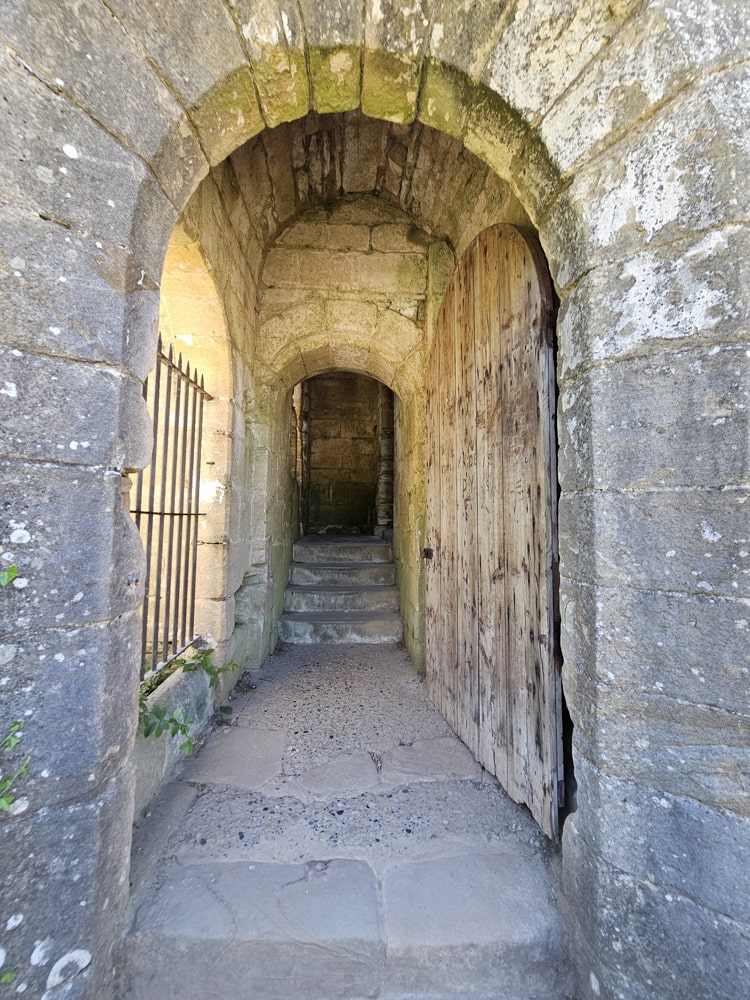
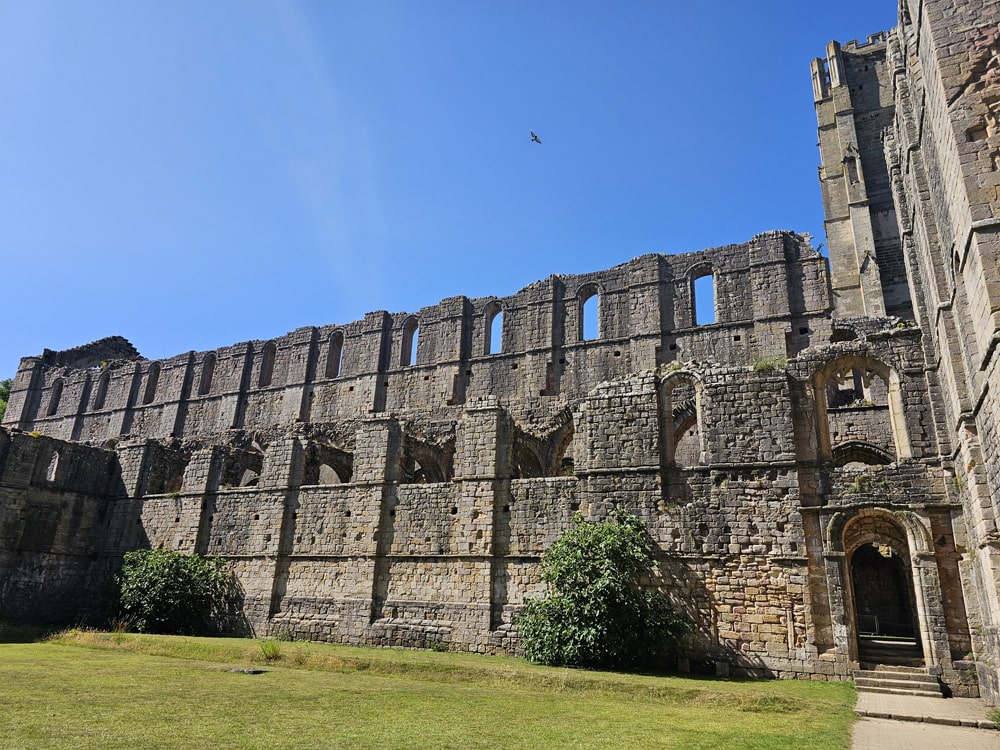
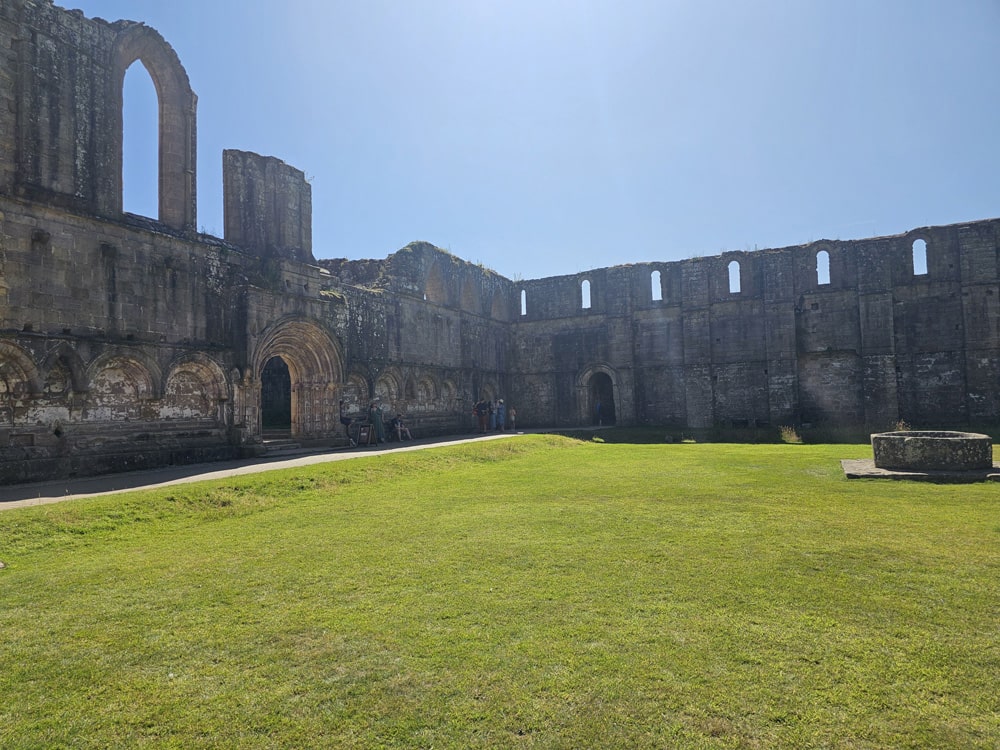
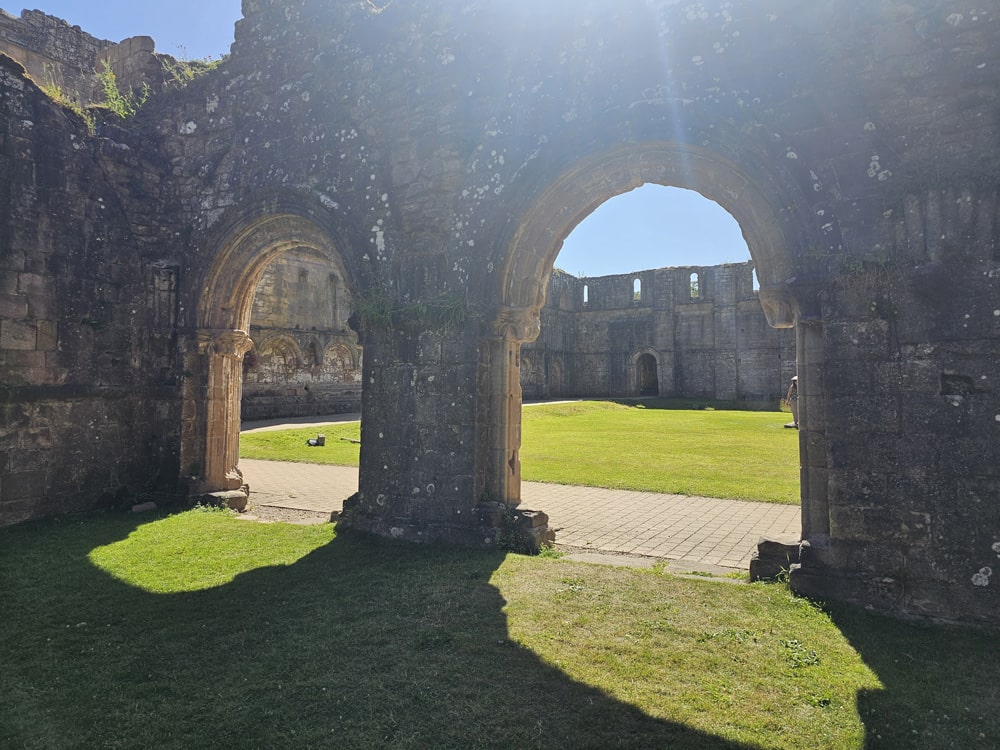
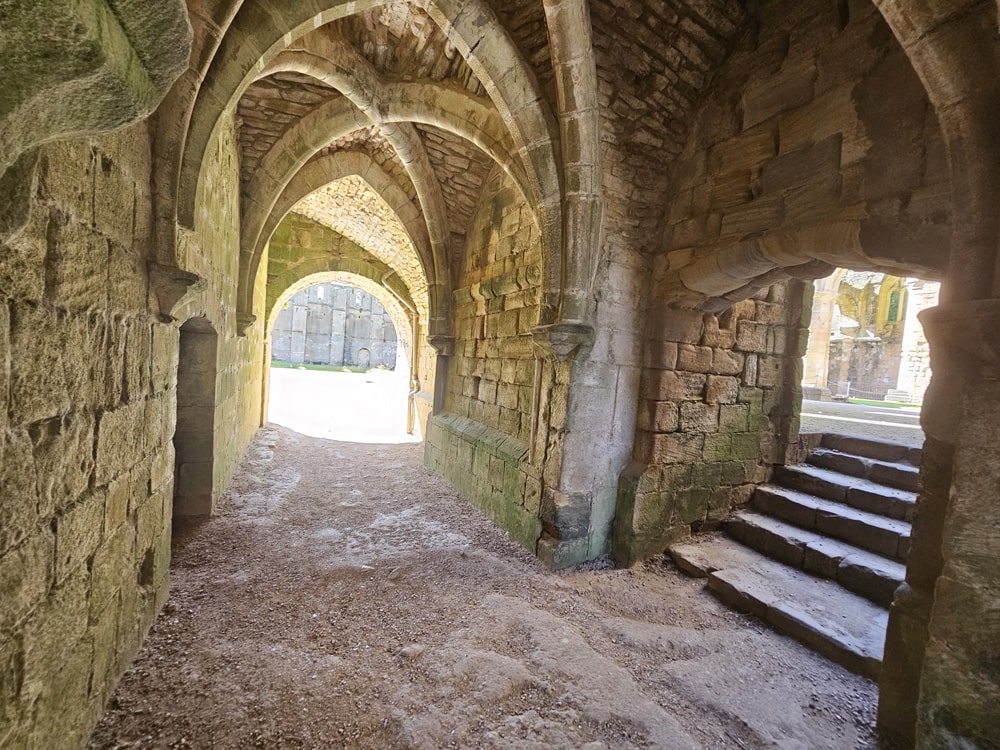
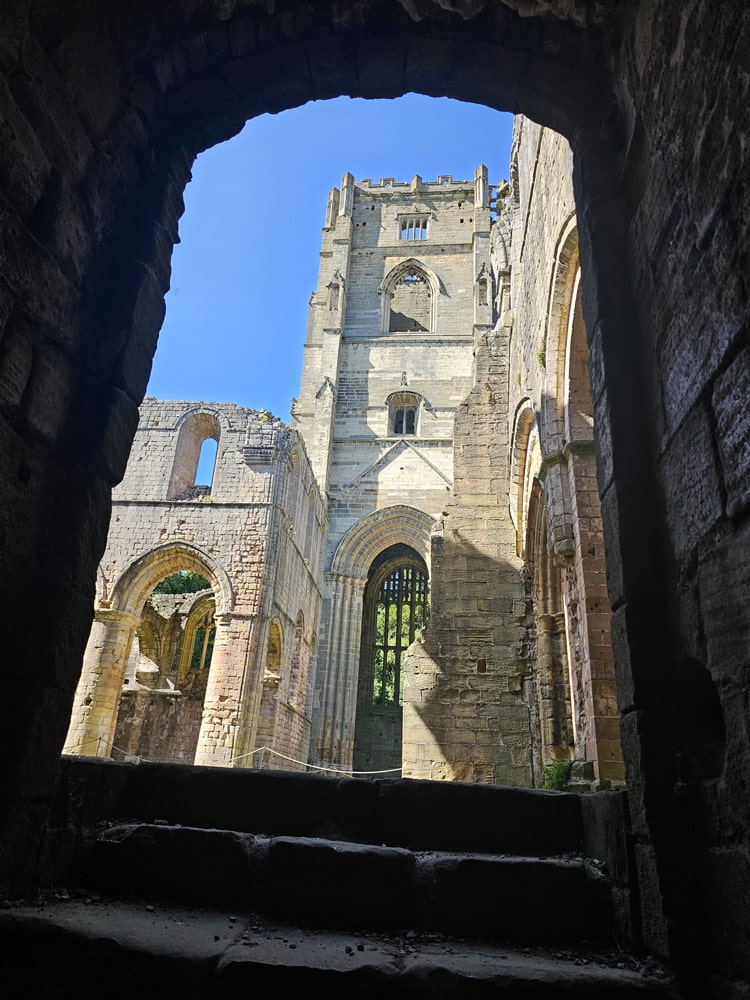
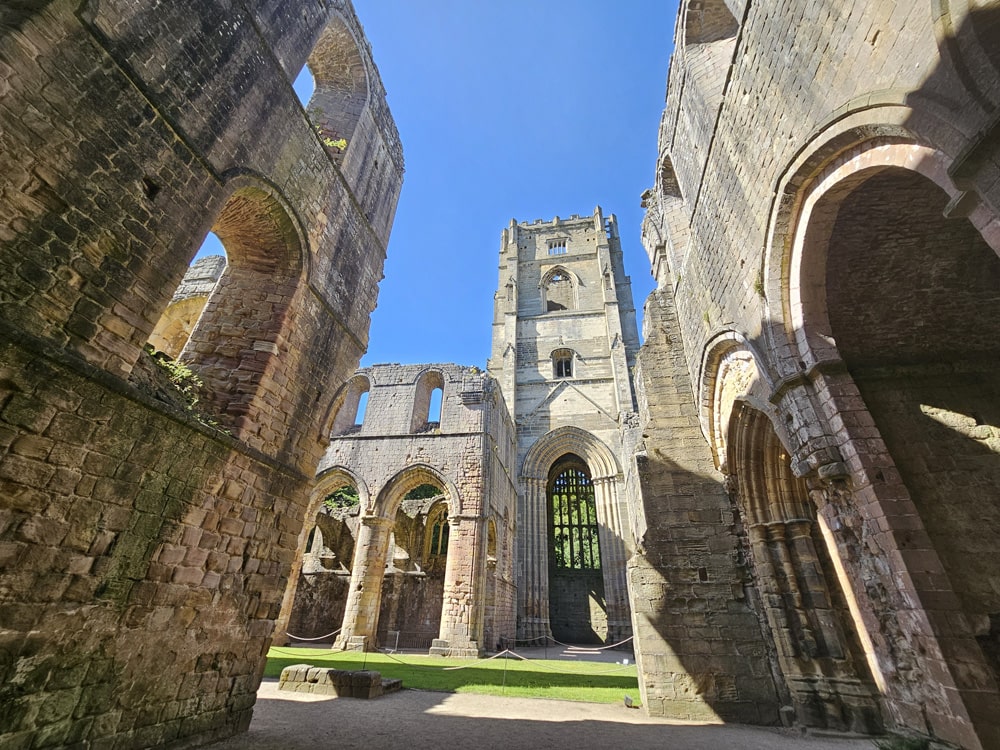
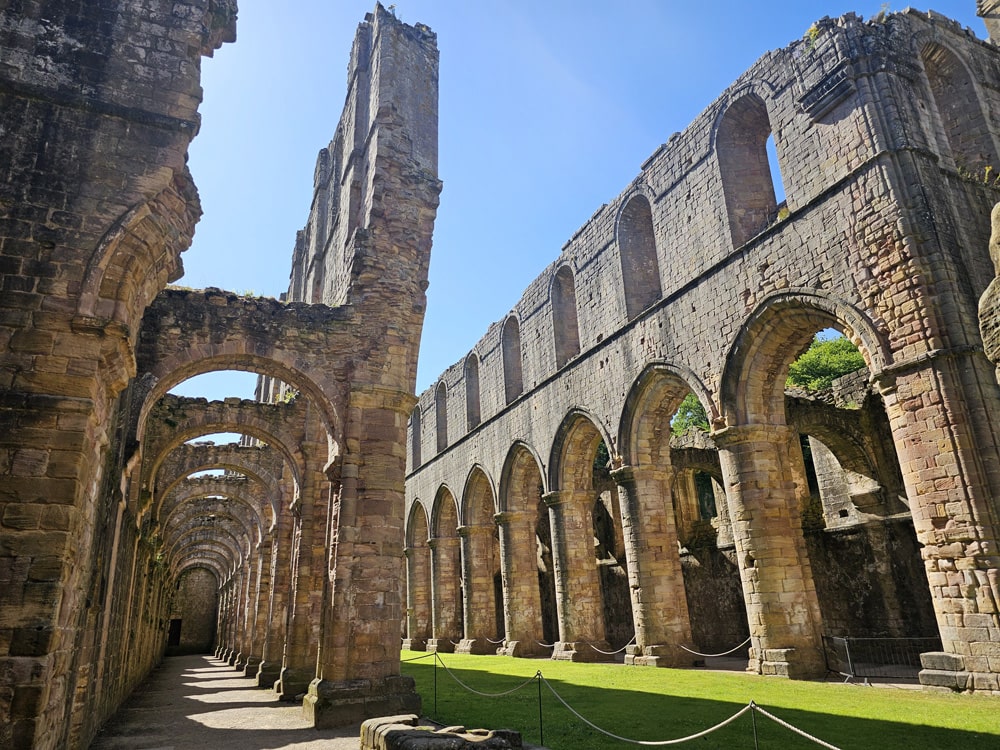
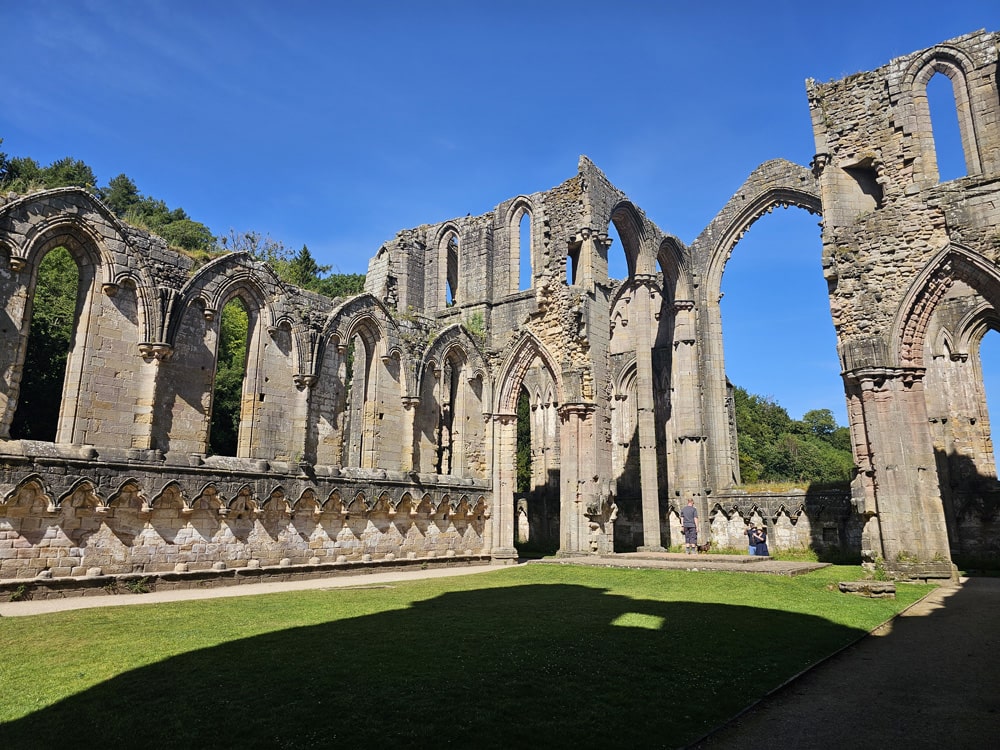
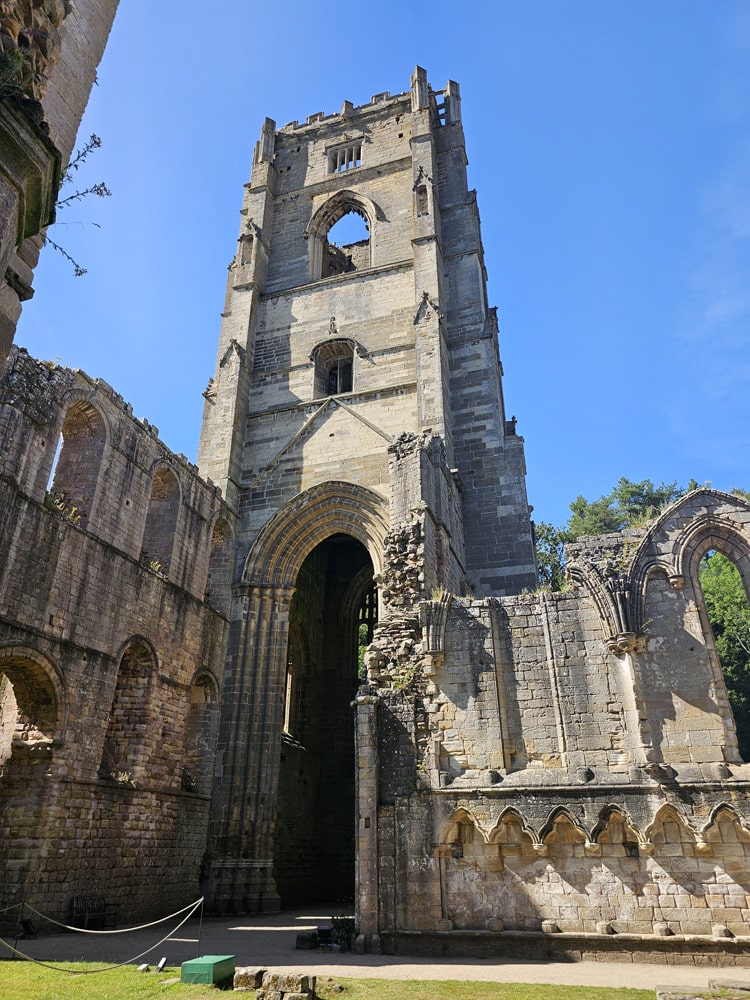
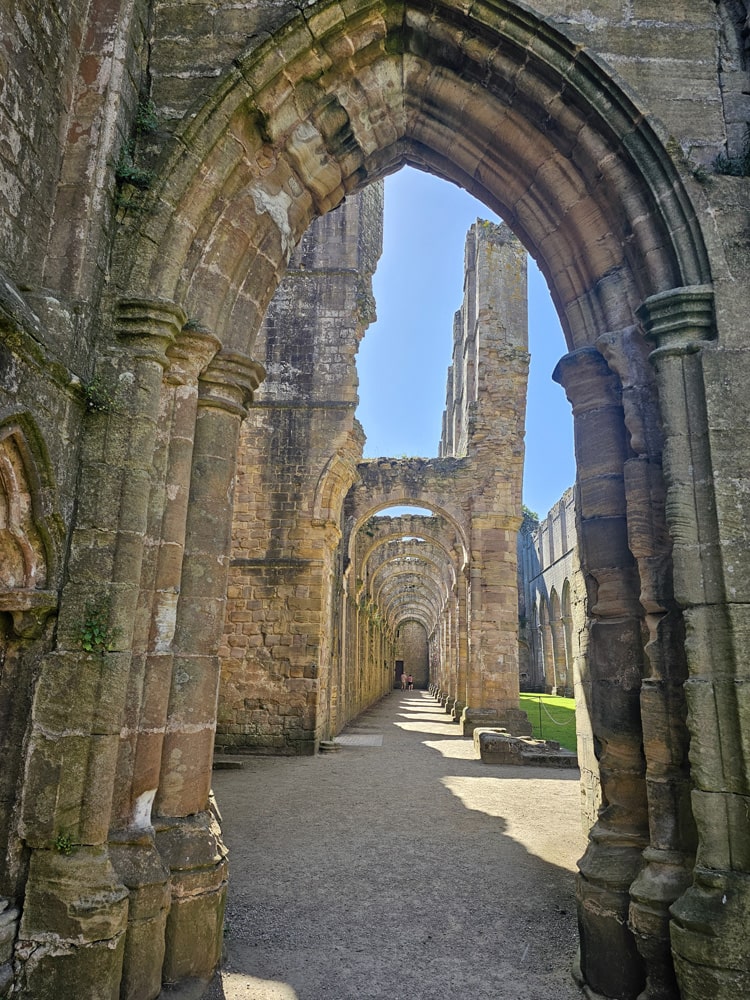
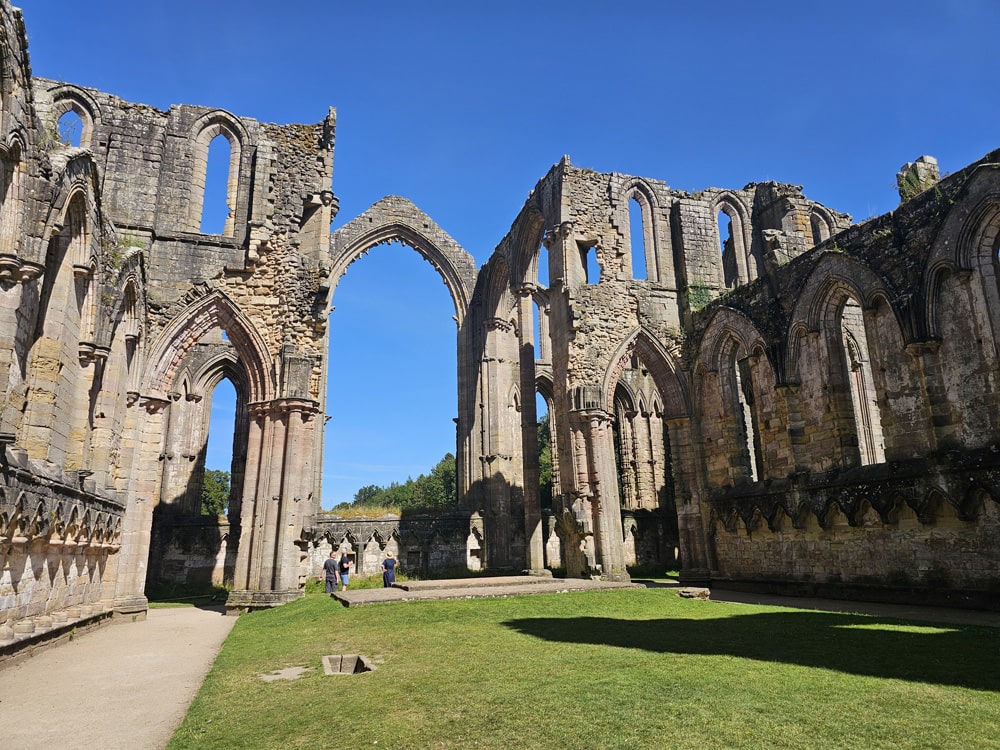
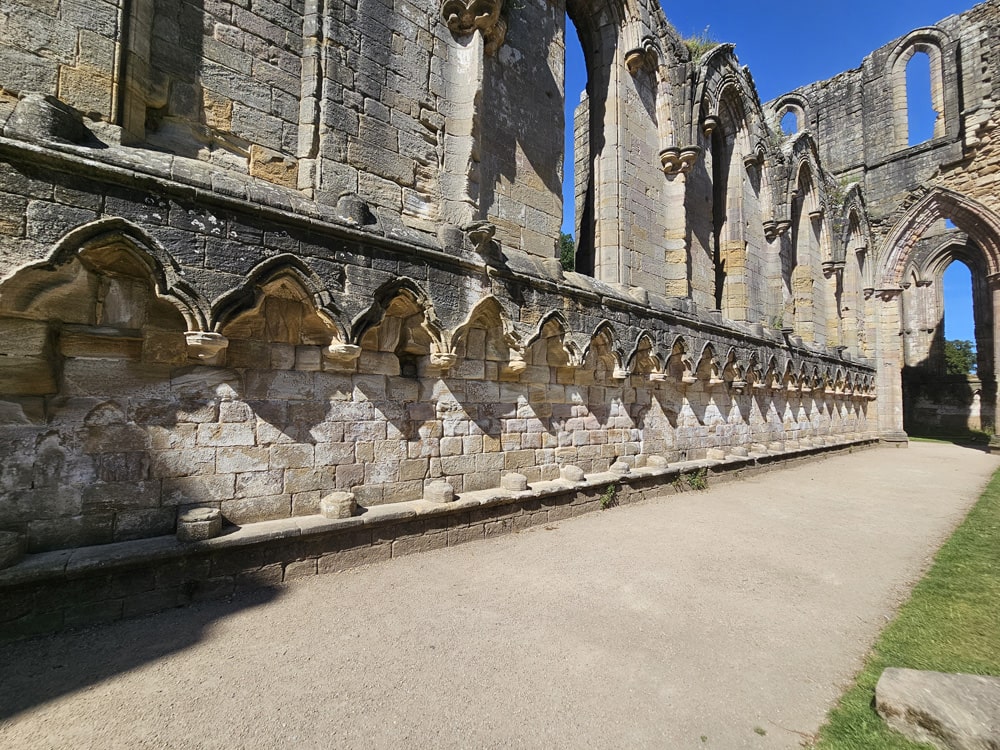
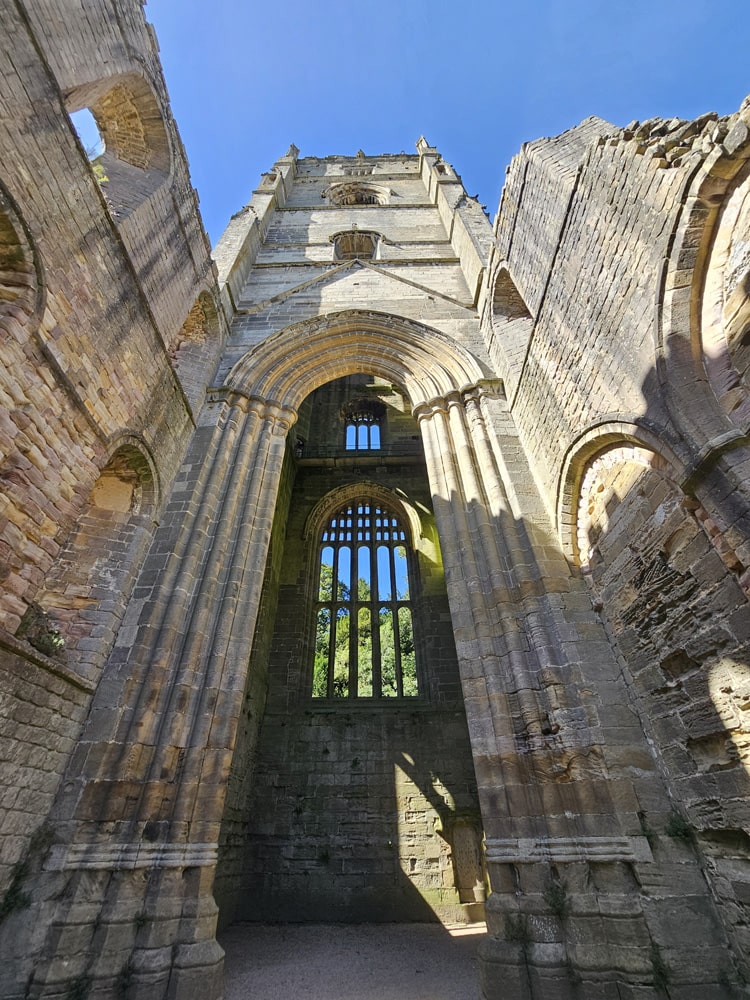
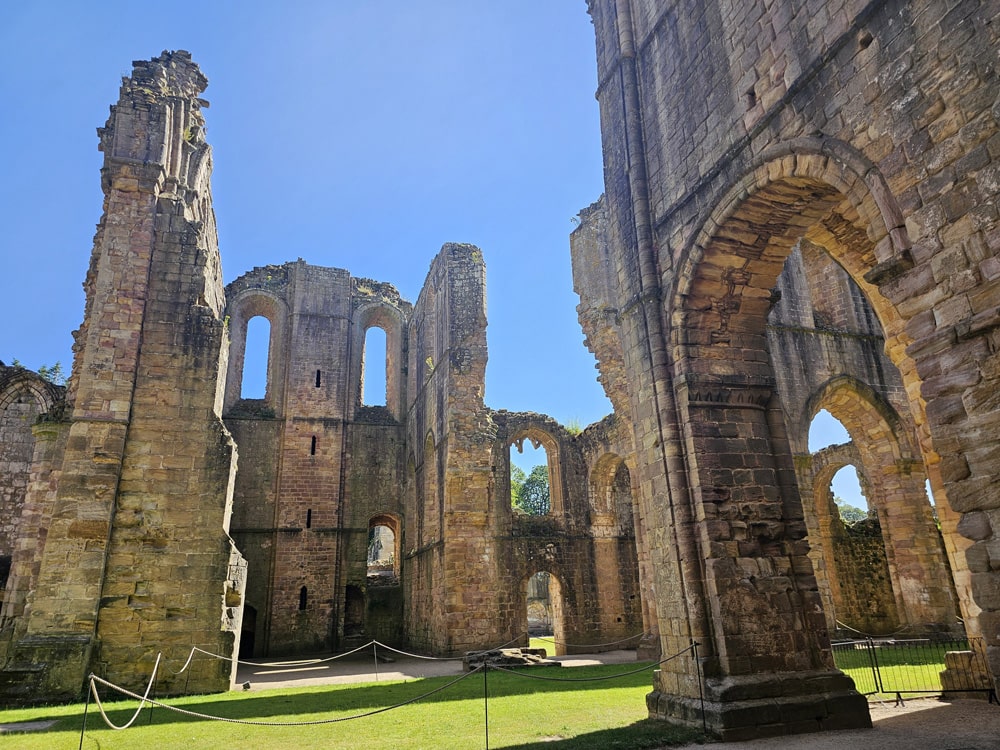
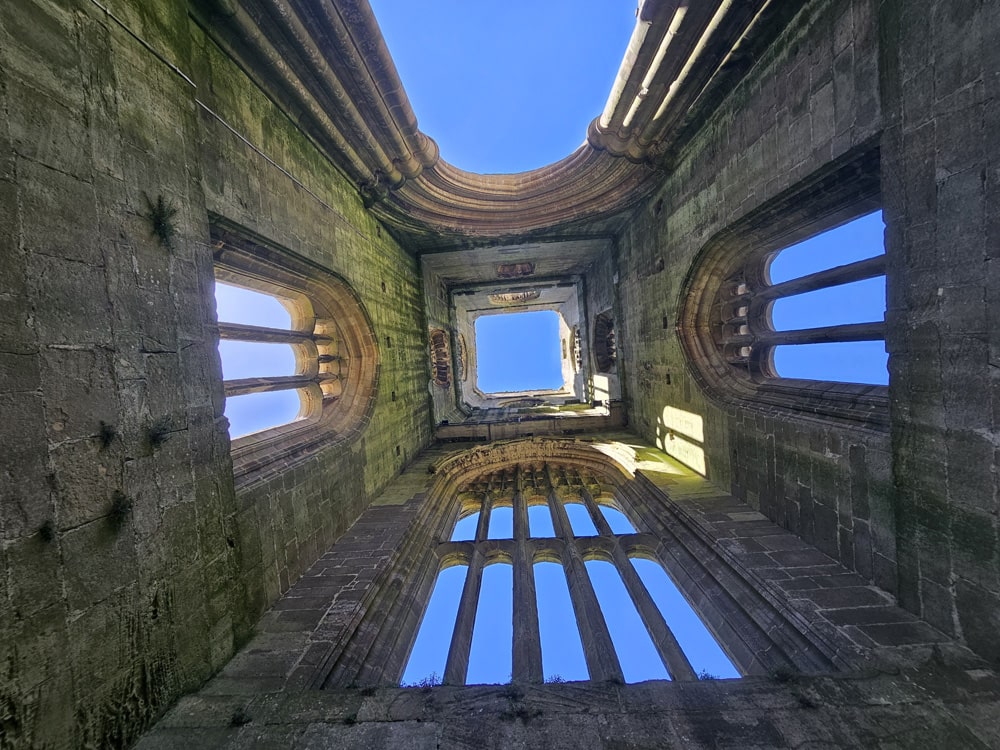
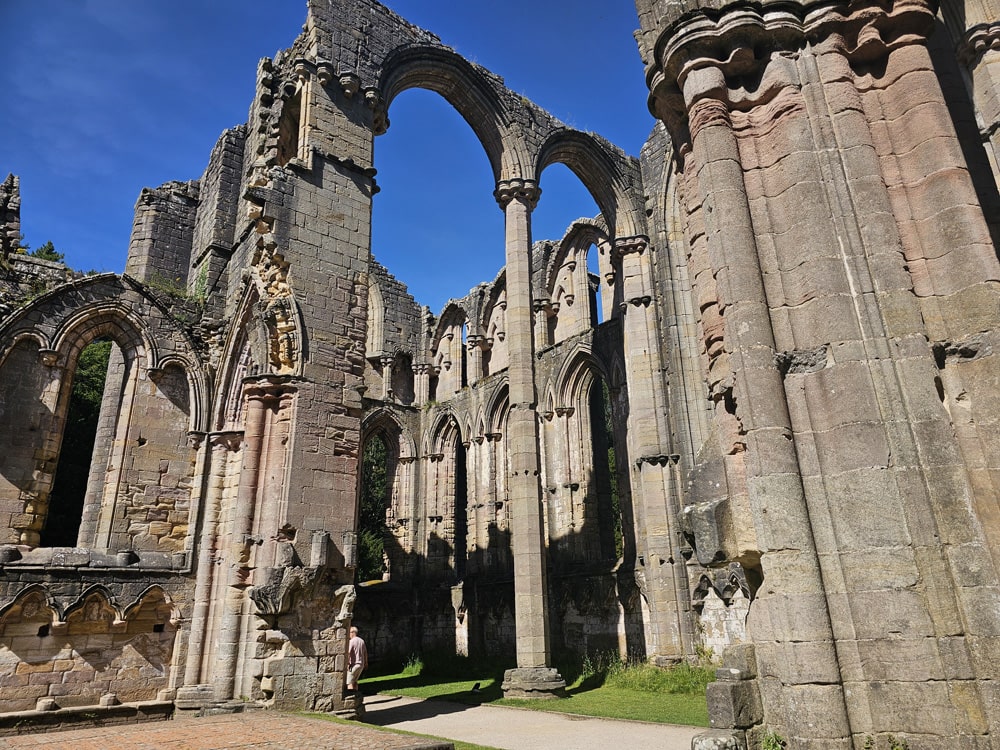
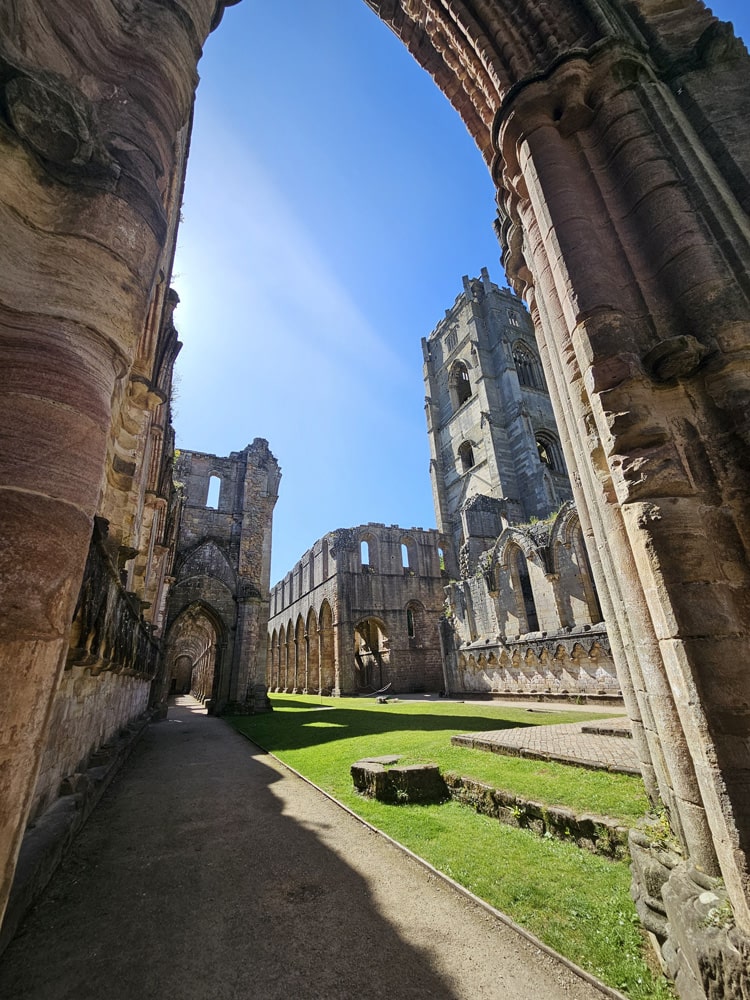
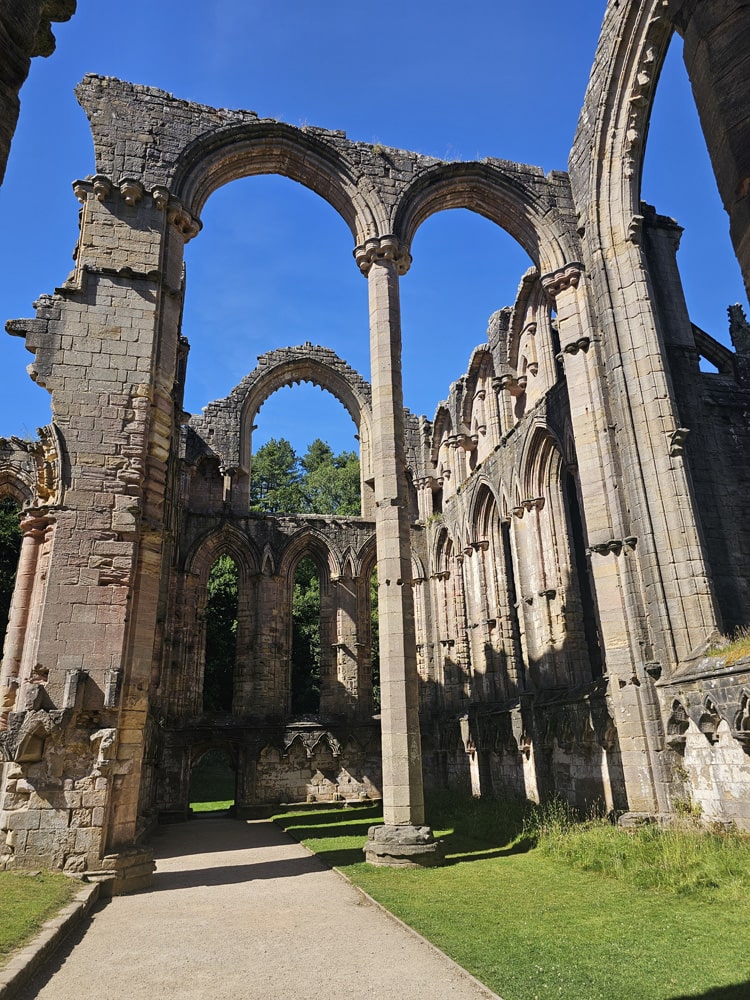
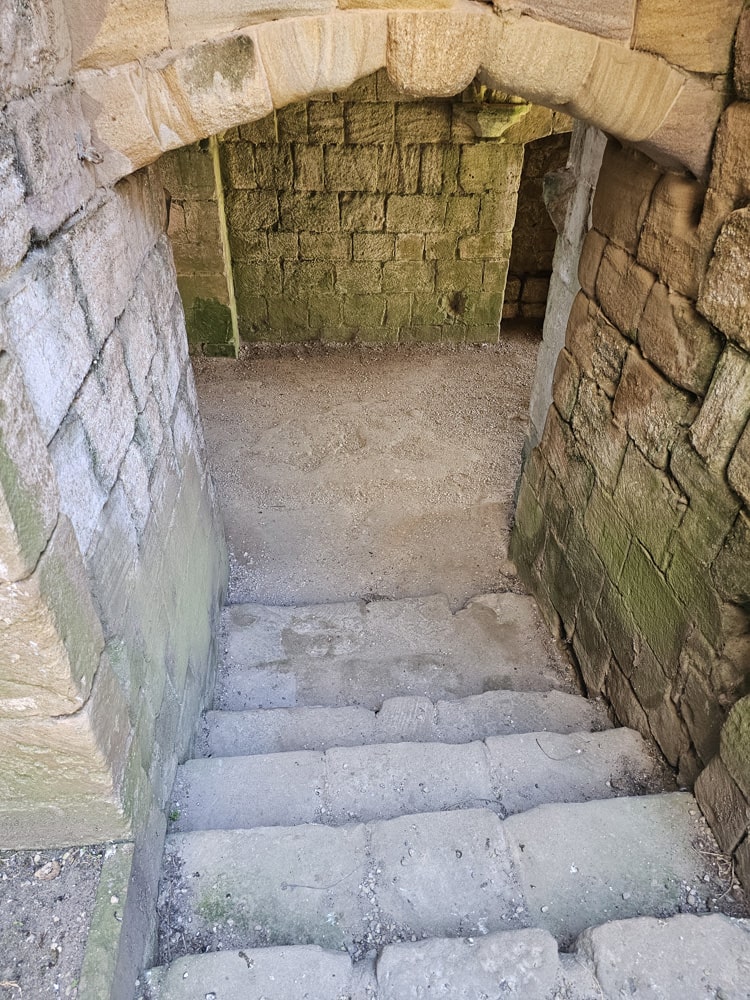
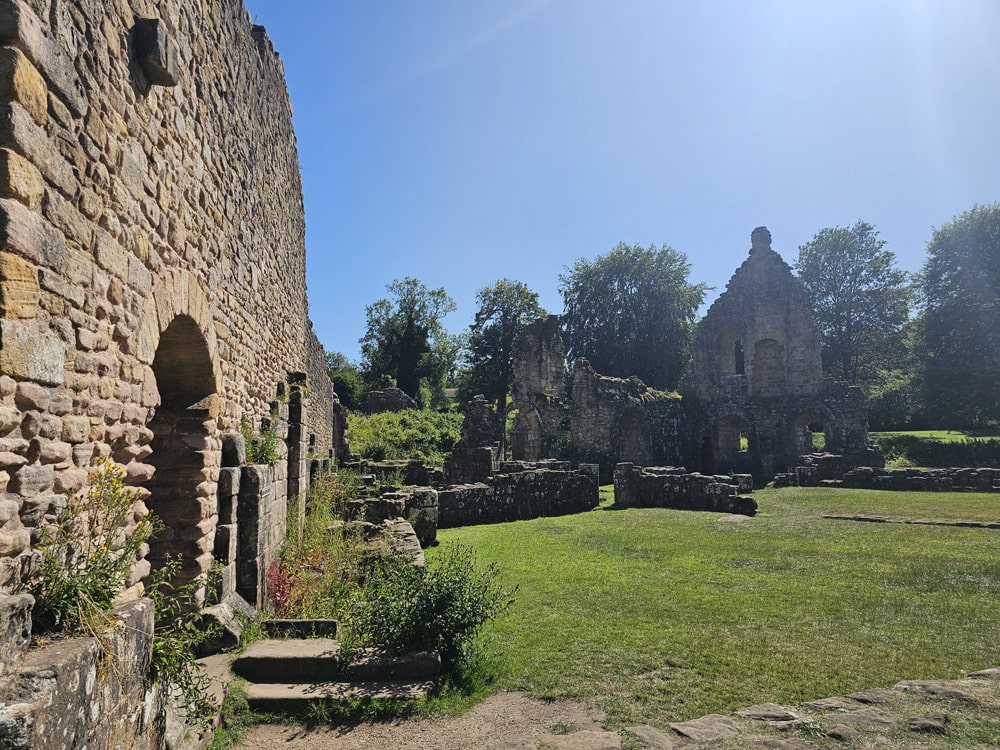
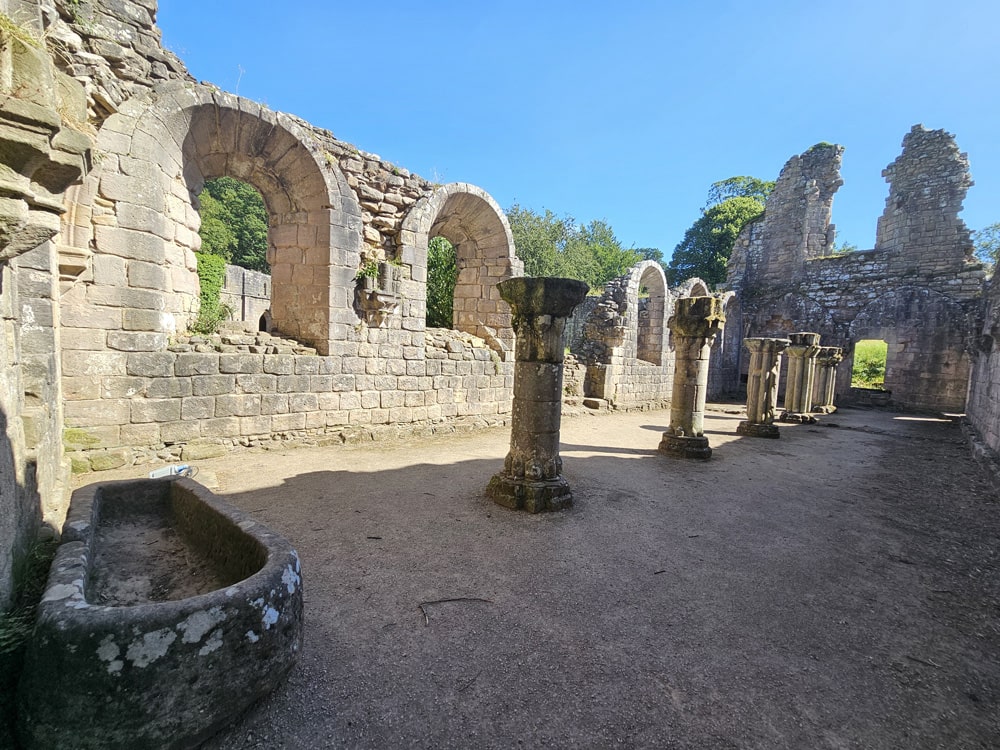
The magnificent stone buildings that visitors see today were constructed and enlarged over many generations. The abbey church, cloisters, chapter house, refectory and other buildings formed a substantial monastic complex. The surviving ruins are particularly important because they preserve so much of a medieval Cistercian monastery, including impressive vaulted spaces, towering columns and the remains of the church’s great tower.
Life at Fountains was not always prosperous. During the 14th century, poor harvests, Scottish raids and the economic difficulties of the period placed considerable pressure on the community. The arrival of the Black Death in 1348 caused further suffering. Nevertheless, the abbey remained an important institution. Its fortunes revived during the late 15th and early 16th centuries, particularly under Abbot Marmaduke Huby, whose great tower symbolised renewed confidence in the monastery.
Fountains Abbey’s religious life came to an abrupt end during the Dissolution of the Monasteries under Henry VIII. The abbey was closed in 1539, after more than four centuries as a religious community. Its buildings and approximately 500 acres of land were sold by the Crown in 1540 to Sir Richard Gresham. Valuable materials were stripped from the monastery, contributing to its gradual transformation into the ruin seen today.
The abbey gained a new role in the 18th century. The Aislabie family, owners of the neighbouring Studley Royal estate, created an elaborate water garden of lakes, canals, cascades, statues and ornamental buildings. The romantic ruins of Fountains Abbey were deliberately incorporated into this landscape, creating dramatic views and making the medieval remains an important part of the garden’s design.
The combined landscape continued to attract visitors, particularly as travel became easier during the 19th century. In the 20th century, the estate eventually passed into public care. The National Trust acquired Fountains Abbey and Studley Royal in 1983, while English Heritage became responsible for conservation of the abbey ruins under a guardianship agreement.
In 1986, Studley Royal Park, including the ruins of Fountains Abbey, was designated a UNESCO World Heritage Site. The designation recognises not simply the abbey, but the remarkable combination of medieval ruins, Georgian gardens, parkland and later buildings as a single historic landscape.
Today, Fountains Abbey stands as a remarkable reminder of Yorkshire’s medieval past. Its enormous ruins reveal the scale and wealth of a once-powerful Cistercian community, while the surrounding landscape demonstrates how attitudes towards historic ruins changed over the centuries. From a secluded monastery founded by thirteen monks in 1132 to a world-famous heritage site, Fountains Abbey has remained an extraordinary part of Yorkshire’s history.
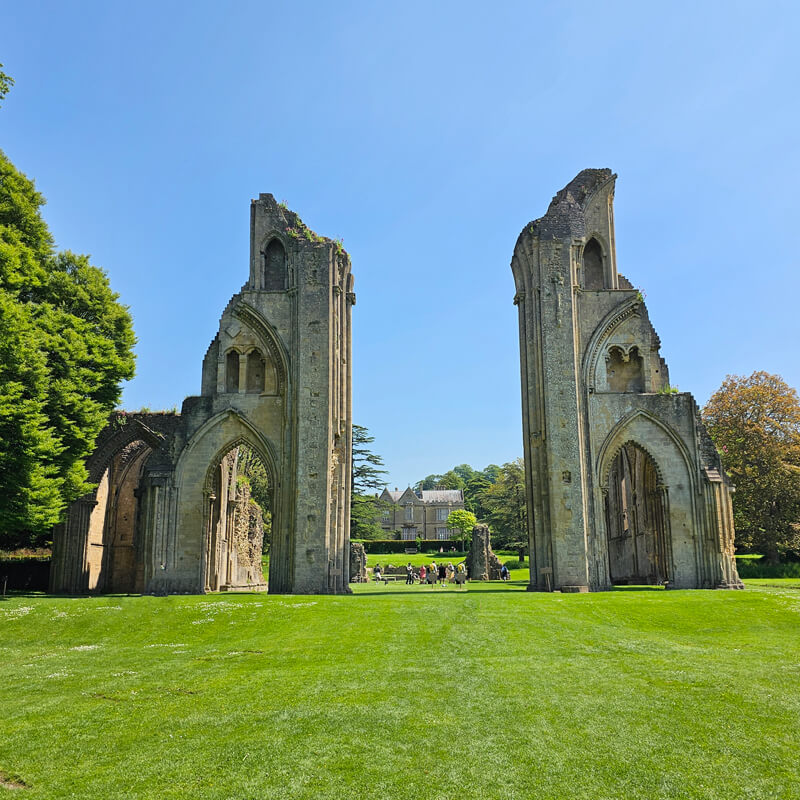
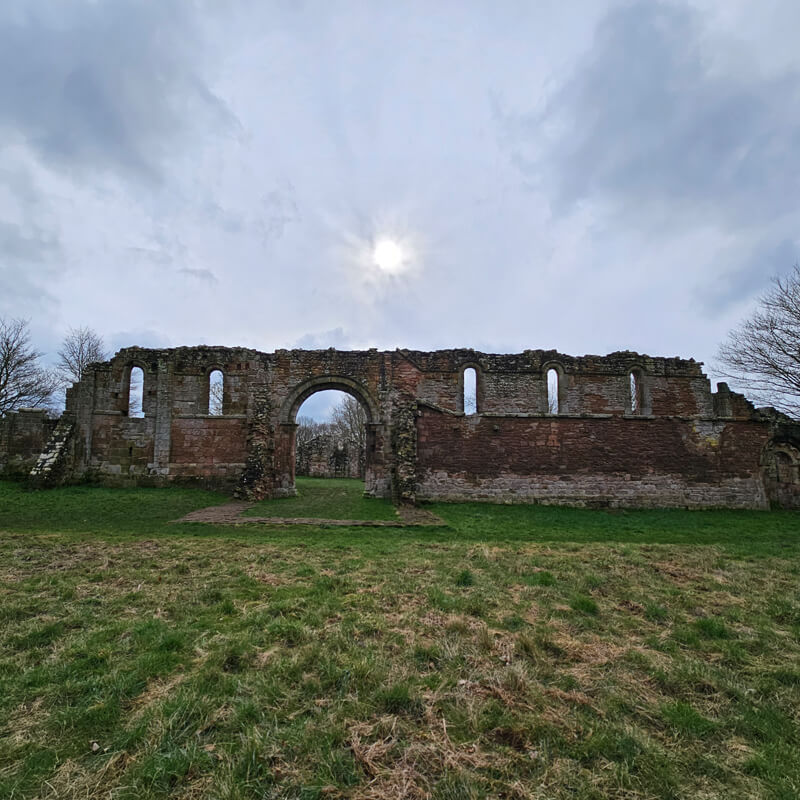
Photo Gallery.
Did you enjoy this post?
I hope you found this post useful. I put a great deal of time and effort in to building, maintaining and populating the website. If you like, you could say a small thank you by buying me a coffee. You don't have to, but it would be nice :)
Buy me a coffee
Stay up to Date
Follow me on my journey and get notified whenever a new post is published by following Kings & Castles on Facebook.
Follow MeExplore The Map
Discover the hundreds of castles, churches, monasteries, cathedrals and other historic locations that I've personally visited across England and Wales. Search by location, explore nearby sites and plan your next historical adventure.
Share: