Margaret of Anjou
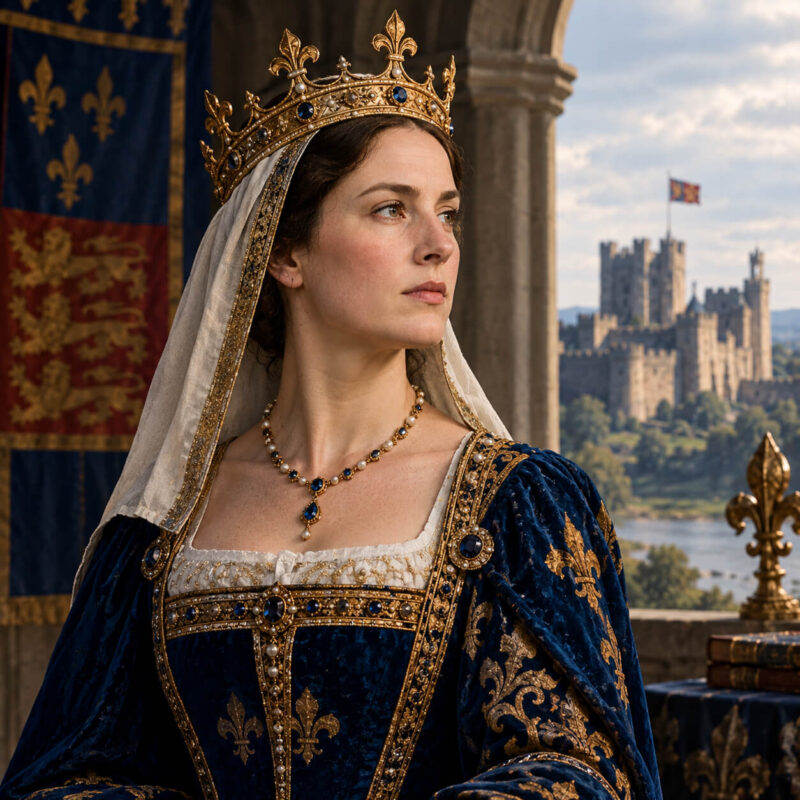
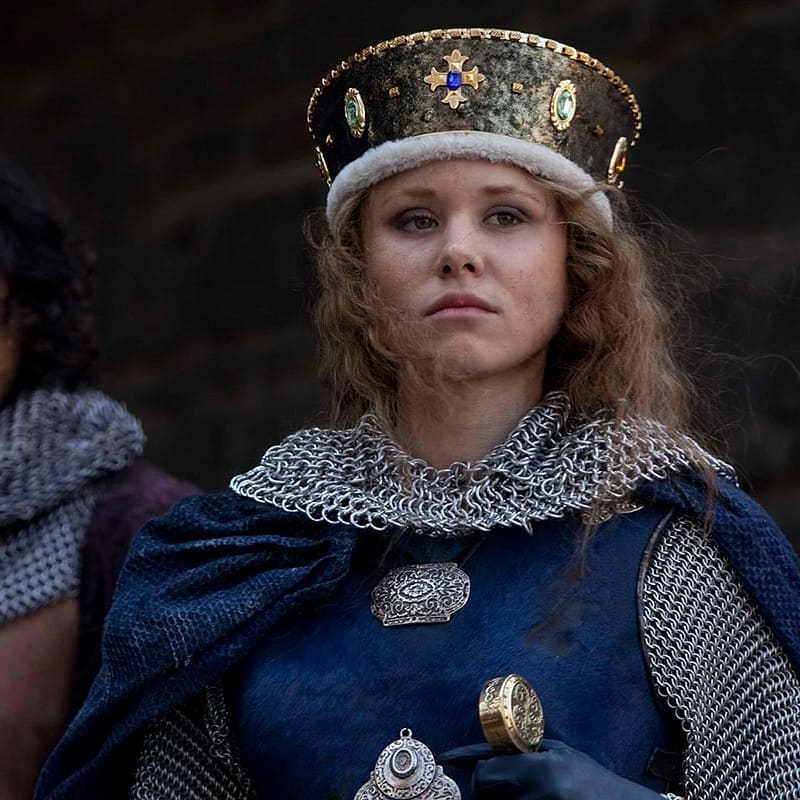
Margaret of Anjou was one of the most influential women of 15th-century England. As the wife of Henry VI, she became a central figure in the Wars of the Roses, fighting to protect her husband’s throne and her son’s inheritance. Her determination, political influence and tragic downfall made her one of the most fascinating figures of medieval British history.
A Princess Becomes Queen
Margaret of Anjou was born on 23rd March 1430, into a powerful French noble family. Her father was René of Anjou, a nobleman with extensive European connections. In 1445, aged just fifteen, Margaret travelled to England to marry King Henry VI, in a union intended to strengthen relations between England and France.
Their wedding took place at Titchfield Abbey in Hampshire, and Margaret was crowned Queen of England shortly afterwards. The marriage was politically important, but it brought her into a kingdom facing growing financial difficulties, military setbacks in France and divisions among its nobility.
Despite these challenges, Margaret established herself at the royal court. She supported religious and educational causes and helped establish Queens’ College, Cambridge, in 1448, demonstrating an interest in learning and royal patronage.
The Wars of the Roses
Margaret’s life changed dramatically in 1453 when Henry VI suffered a severe period of incapacity. With the king unable to govern effectively, rival nobles competed for influence, particularly Richard, Duke of York, who had a strong claim to the throne.
Margaret was determined to protect the interests of her only child, Prince Edward of Westminster, born in October 1453. She feared that York’s growing authority threatened her son’s inheritance and increasingly took an active role in politics.
The rivalry between the Houses of Lancaster and York developed into the Wars of the Roses, a series of dynastic conflicts over the English crown. Margaret became one of the leading figures on the Lancastrian side, working to secure military support and defend her family’s position.
In 1460, Richard, Duke of York, was killed at the Battle of Wakefield. However, this victory did not secure the throne for Margaret and her son. York’s son, Edward, defeated the Lancastrians at the Battle of Towton in 1461 and became King Edward IV. Henry VI was deposed, forcing Margaret to flee England and seek support abroad.
Fighting for Her Family
Margaret refused to abandon the Lancastrian cause. During years of exile, she sought allies and worked to restore her husband to the throne.
Her efforts eventually succeeded. In 1470, Edward IV was driven from power, and Henry VI was briefly restored as king. Margaret returned to England with her son, hoping to secure the future of the Lancastrian dynasty.
However, the restoration was short-lived. Edward IV returned with an army and defeated the Lancastrians at the Battle of Barnet in April 1471. Margaret and Prince Edward continued their efforts to resist him, but their forces were defeated at the Battle of Tewkesbury on 4th May.
Prince Edward was killed following the battle, destroying Margaret’s hopes of preserving the dynasty through her son. Henry VI died later that month while imprisoned in the Tower of London, leaving Margaret without her husband, her heir or a realistic prospect of reclaiming the throne.
Margaret’s Final Years and Legacy
Margaret was taken prisoner and remained in England for several years before being released through a ransom arrangement with King Louis XI of France in 1475. She returned to France, where she lived out her remaining years away from the political world that had defined her life.
She died on 25th August 1482, aged 52, having lost the struggle to preserve her family’s claim to the English crown.
Margaret’s reputation has long been controversial. Later accounts, particularly William Shakespeare’s history plays, portrayed her as a ruthless and domineering figure. Yet historians have increasingly examined the political circumstances she faced and the challenges confronting a queen seeking to protect her husband and child in a male-dominated world.
Margaret of Anjou was neither simply a villain nor merely a victim of circumstance. She was a determined political figure whose actions helped shape the Wars of the Roses. Her story reveals the personal cost of dynastic conflict and the remarkable influence one medieval queen could exercise over the fate of a kingdom.
Did you enjoy this post?
I hope you found this post useful. I put a great deal of time and effort in to building, maintaining and populating the website. If you like, you could say a small thank you by buying me a coffee. You don't have to, but it would be nice :)
Buy me a coffee
Stay up to Date
Follow me on my journey and get notified whenever a new post is published by following Kings & Castles on Facebook.
Follow MeExplore The Map
Discover the hundreds of castles, churches, monasteries, cathedrals and other historic locations that I've personally visited across England and Wales. Search by location, explore nearby sites and plan your next historical adventure.
Share: