Richard Neville: The “Kingmaker”
Richard Neville, 16th Earl of Warwick, better known as “the Kingmaker”, was one of the most powerful and influential nobles in 15th-century England. He played a decisive role in the Wars of the Roses, and through his wealth, political influence and military power, he helped place two different kings on the English throne.
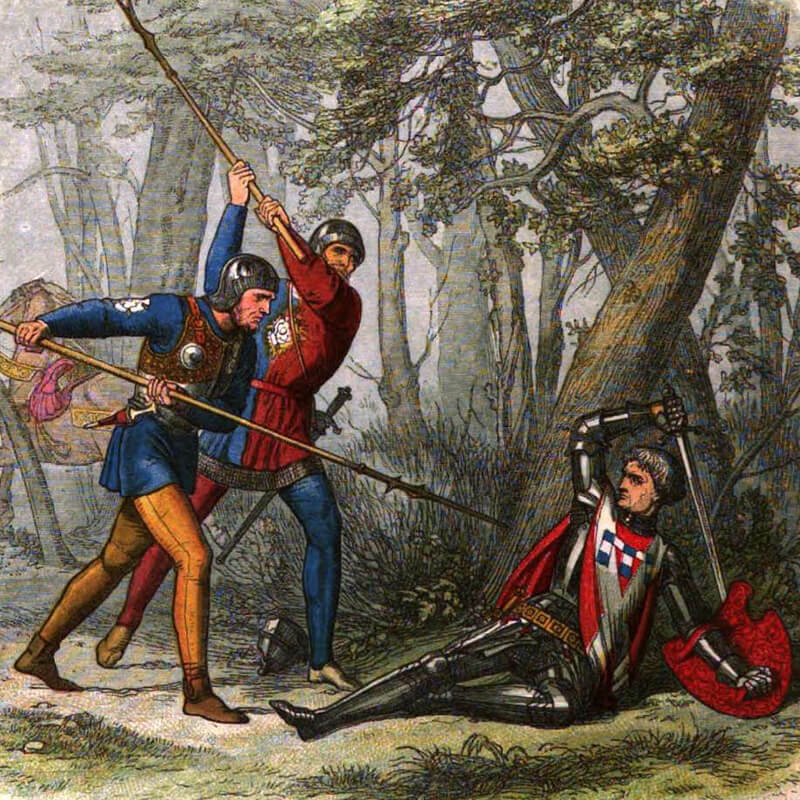
Richard Neville was born in 1428 into one of England’s wealthiest noble families. His father, Richard Neville, 5th Earl of Salisbury, was a prominent supporter of the House of York. Through marriage to Anne Beauchamp, heiress to the Warwick estates, Richard Neville acquired enormous wealth and became Earl of Warwick. His extensive lands and large network of retainers gave him considerable political and military power.
Warwick initially supported Richard, Duke of York, who challenged the authority of the Lancastrian king Henry VI. Henry’s weak leadership and periods of mental illness created political instability, while powerful nobles competed for influence. Warwick became one of the leading Yorkist figures and used his position to oppose the Lancastrian government.
Warwick’s military importance grew during the Wars of the Roses. In 1461, the Yorkist forces defeated the Lancastrians, and Edward IV, the Duke of York’s son, became king. Warwick had played a major role in Edward’s rise and initially became one of the most powerful men in the kingdom. Because of his influence in securing Edward’s crown, he earned the famous nickname “the Kingmaker”.
However, Warwick’s relationship with Edward IV soon deteriorated. Warwick expected to have substantial influence over royal policy, but Edward increasingly sought to govern independently. The situation became worse when Edward secretly married Elizabeth Woodville, a widow from a relatively minor noble family. Warwick had hoped to arrange a politically advantageous marriage for Edward, particularly with a foreign princess. The king’s secret marriage therefore damaged Warwick’s influence and created a bitter rivalry between the two men.
Warwick eventually rebelled against Edward. In 1469, he captured the king and attempted to govern through him, but the arrangement failed. Warwick later joined forces with the Lancastrians, despite having spent years fighting against them. His alliance was strengthened by the marriage of his daughter Anne Neville to Edward of Westminster, the Lancastrian Prince of Wales and son of Henry VI.
In 1470, Warwick succeeded in temporarily restoring Henry VI to the throne. This was an extraordinary reversal of fortune: the man who had helped overthrow Henry now helped bring him back. Warwick effectively became the power behind the restored Lancastrian government.
Warwick’s success, however, was short-lived. Edward IV returned to England in 1471 and quickly gathered support. The opposing armies met at the Battle of Barnet on 14th April 1471. Warwick was defeated and killed in the battle, ending his attempt to control the English monarchy.
Richard Neville’s legacy is complex. He was an ambitious nobleman who used military force, wealth and political alliances to influence the succession. His nickname, “the Kingmaker”, reflects his extraordinary ability to determine who occupied the English throne. Yet his career also demonstrates the dangers of relying on personal power in a period when loyalty between nobles and kings could change rapidly.
Warwick’s life illustrates the instability of 15th-century England. He helped Edward IV become king, rebelled against him, helped restore Henry VI, and finally died fighting against Edward. His story captures the dramatic nature of the Wars of the Roses, when the crown could depend as much on military strength and noble alliances as on hereditary right.
Did you enjoy this post?
I hope you found this post useful. I put a great deal of time and effort in to building, maintaining and populating the website. If you like, you could say a small thank you by buying me a coffee. You don't have to, but it would be nice :)
Buy me a coffeeMore People Profiles
View all People Profiles
Stay up to Date
Follow me on my journey and get notified whenever a new post is published by following Kings & Castles on Facebook.
Follow MeExplore The Map
Discover the hundreds of castles, churches, monasteries, cathedrals and other historic locations that I've personally visited across England and Wales. Search by location, explore nearby sites and plan your next historical adventure.
Share: