William of Malmesbury
William of Malmesbury was a 12th-century monk and historian whose writings preserved valuable accounts of England’s kings, monasteries and turbulent past. His work remains an important source for understanding Anglo-Saxon England, the Norman Conquest and the early Norman kings.
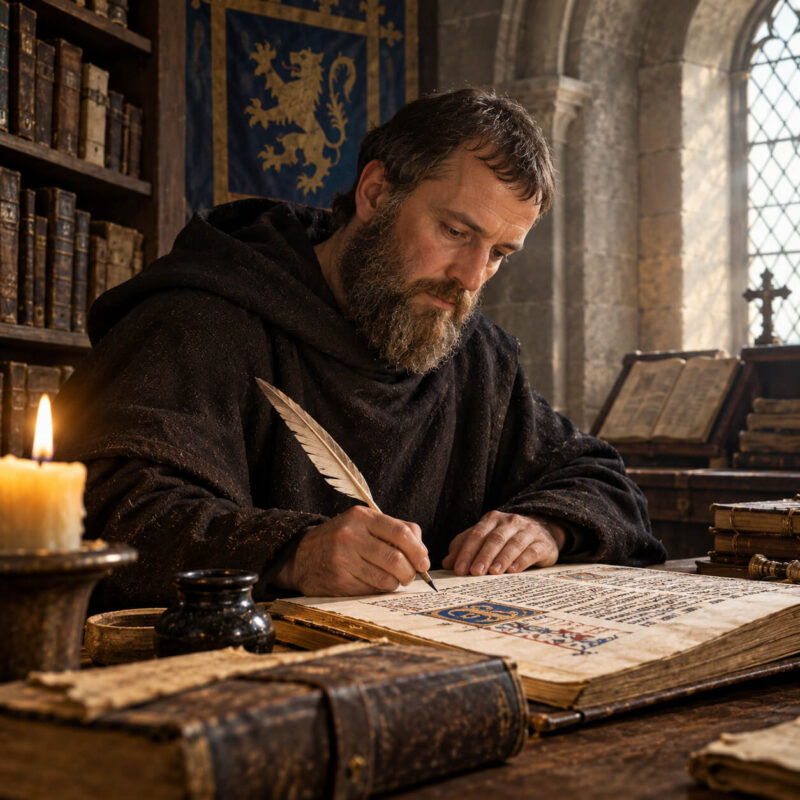
A Monk with a Passion for History
William of Malmesbury was born around 1090, probably of Anglo-Norman parentage. He became a Benedictine monk at Malmesbury Abbey in Wiltshire, where access to books, manuscripts and religious scholarship helped develop his interest in history.
Unlike many medieval chroniclers who concentrated primarily on religious matters, William sought to understand the history of England and its rulers. He studied earlier writers, gathered information from different sources and travelled to learn more about the places and people he described.
His work helped preserve knowledge of an earlier age at a time when written records were precious and historical accounts could easily be lost.
Recording the Kings of England
William’s most famous work was Gesta Regum Anglorum, meaning Deeds of the Kings of the English, completed around 1125. It traced English history from its early beginnings through the Anglo-Saxon period and into the reign of Henry I.
The work is particularly valuable for its accounts of kings such as Alfred the Great and Æthelstan. William wrote about events that had taken place centuries before his own lifetime, drawing on earlier histories, written records and local traditions.
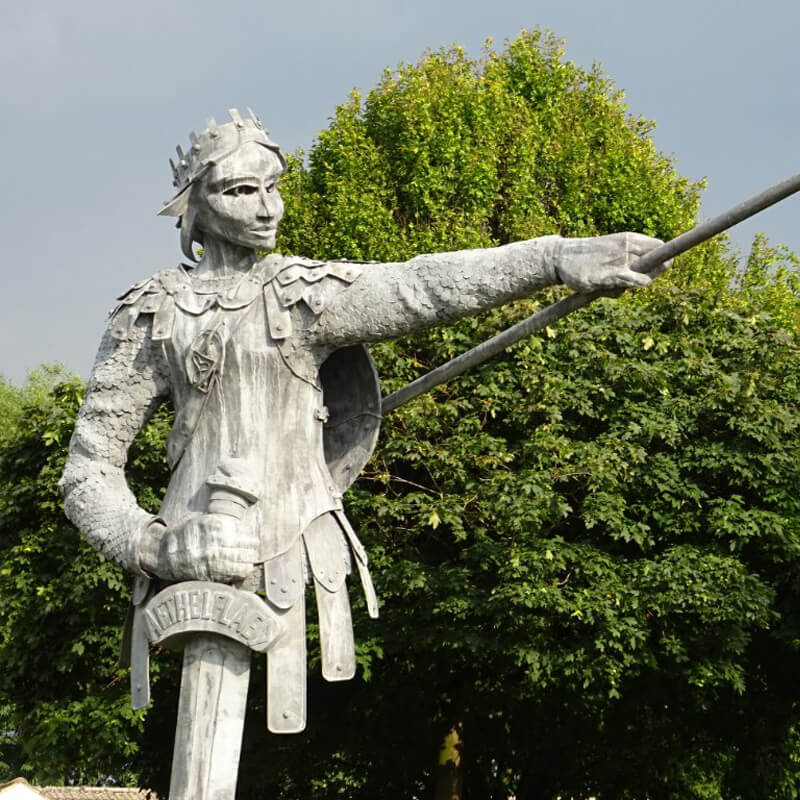
His account of Æthelstan is especially significant because Malmesbury Abbey had strong connections with the king, who was buried there. William’s writing preserves important details about Æthelstan, although historians must also consider the abbey’s interest in celebrating its royal benefactor.
William also wrote Gesta Pontificum Anglorum, a history of English bishops and religious institutions. Through this work, he recorded information about monasteries, churches and the people associated with them, making his writings valuable beyond royal history.
Witness to a Kingdom in Conflict
William did not restrict himself to the distant past. During his lifetime, England experienced another period of political upheaval following the death of Henry I in 1135.
The resulting civil war, known as the Anarchy, saw King Stephen and Empress Matilda struggle for control of the kingdom. William began writing Historia Novella, or Modern History, to record these contemporary events.
His position as a monk, his connections with important figures and his access to historical documents gave him opportunities to gather information unavailable to many other writers.
However, William was not a modern historian. His accounts sometimes included legends, moral judgements and stories that cannot be independently verified. His works must therefore be read critically, comparing his claims with other surviving evidence wherever possible.
His Lasting Legacy
William of Malmesbury died around 1143, leaving behind a remarkable collection of historical writing.
His accounts remain important to historians studying medieval Britain, particularly the Anglo-Saxon kingdoms, the Norman Conquest and the development of royal power. They also reveal how people in the 12th century understood and interpreted their own history.
William’s greatest achievement was not simply recording the deeds of kings and churchmen, but helping preserve stories, traditions and information that might otherwise have disappeared.
For anyone exploring Britain’s medieval past, his writings offer a valuable window into the people and events that shaped the kingdom — and a reminder that our understanding of history often depends on the dedication of those who chose to record it.
Did you enjoy this post?
I hope you found this post useful. I put a great deal of time and effort in to building, maintaining and populating the website. If you like, you could say a small thank you by buying me a coffee. You don't have to, but it would be nice :)
Buy me a coffee
Stay up to Date
Follow me on my journey and get notified whenever a new post is published by following Kings & Castles on Facebook.
Follow MeExplore The Map
Discover the hundreds of castles, churches, monasteries, cathedrals and other historic locations that I've personally visited across England and Wales. Search by location, explore nearby sites and plan your next historical adventure.
Share: