William Marshal, 1st Earl of Pembroke
William Marshal was an Anglo-Norman soldier and statesman who rose to be one of the most powerful Barons in England – widely regarded by historians and contemporaries alike as the greatest knight in history.
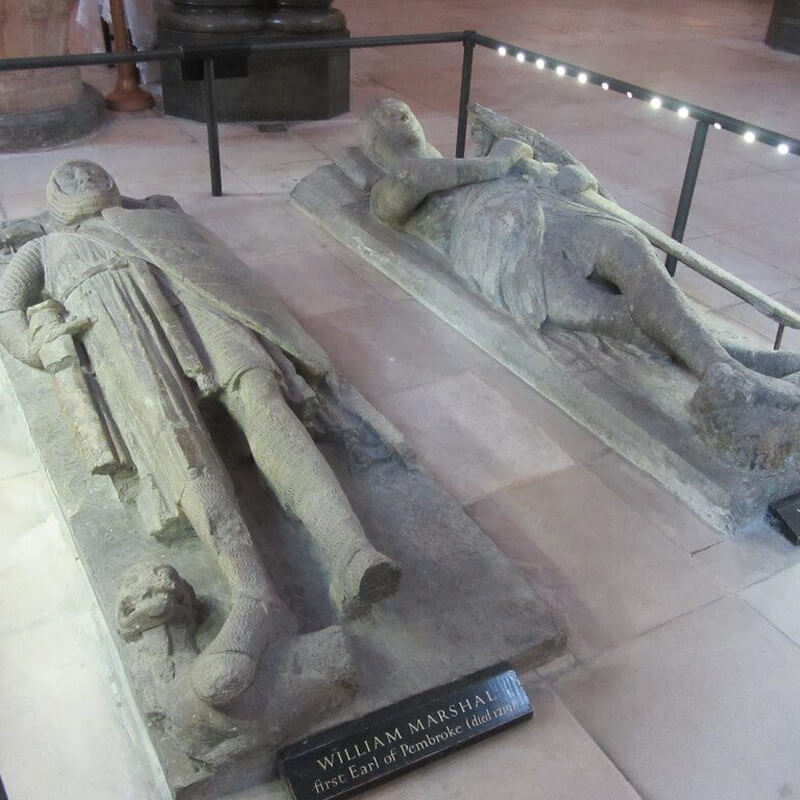
William Marshal, 1st Earl of Pembroke, born c. 1146/1147, was one of the most important knights and political figures in medieval England. Born into a relatively minor noble family, he rose through military skill, loyalty, and political ability to become a powerful earl and one of the most respected men of his age. He served as a royal adviser and as a warrior of outstanding skill and ability to four English kings: Henry II, Richard I, John, and Henry III, as well as the young Henry the Young King during his father’s reign.
Marshal first gained prominence as a knight and tournament champion. He became part of the household of Henry the Young King, heir to Henry II, and developed a reputation as an outstanding warrior. The Young King rebelled against his father and brother but died of dysentery at age 28 in 1183 while fighting a military campaign against them. After the Young King’s death, Marshal continued to build his career and eventually entered the service of King Henry II.
On the Young King’s deathbed, he asked William to fulfil a vow he had made in 1182 to take up the cross and undertake a crusade to the Holy Land, and after receiving Henry II’s blessing William left for Jerusalem in late 1183. Nothing is known of his activities during the two years he was gone.
Under Richard I, known as Richard the Lionheart, Marshal’s position became even stronger. He was trusted by the king and received important lands and responsibilities. Marshal also married Isabel de Clare, the daughter and heiress of Richard de Clare, 2nd Earl of Pembroke. Through this marriage, he gained the title and extensive estates associated with Pembroke, greatly increasing his wealth and influence.
Marshal remained loyal to King John despite the king’s troubled reign and conflicts with his barons, he was also a significant influence regarding Magna Carta. When John died in 1216 during the First Barons’ War, England faced a serious political crisis. Marshal, despite being around seventy years old, became regent for John’s young son, Henry III. He played a crucial role in defending the young king’s claim to the throne and restoring political stability.
One of Marshal’s greatest achievements came in 1217, when forces loyal to Henry III defeated the rebels and their French allies. The Treaty of Lambeth helped bring the First Barons’ War to an end. Marshal then worked to reconcile former enemies rather than seeking widespread revenge, helping to strengthen the authority of the young Henry III.
William Marshal died in 1219 aged 72 or 73 at Caversham near Reading. Just before his death, William fulfilled the promise he said he made to Henry the Young King in his youth while on crusade by taking vows as a Knight Templar, and was buried in the Temple Church in London, where his effigy can still be seen. His life was recorded in the History of William Marshal, an important medieval biography commissioned by his family. The work presents him as the ideal medieval knight: brave, loyal, generous, and honourable, although historians recognise that it also contains elements of praise and legend.
William Marshal’s importance lies not only in his military achievements but also in his political adaptability and loyalty. He survived the reigns of several kings and helped guide England through one of its most dangerous periods. His career demonstrates how a person from a comparatively modest background could rise to the highest levels of medieval society through military talent, strategic marriages, service to powerful patrons, and political skill. He is therefore often remembered as one of the greatest knights and statesmen of medieval England.
Did you enjoy this post?
I hope you found this post useful. I put a great deal of time and effort in to building, maintaining and populating the website. If you like, you could say a small thank you by buying me a coffee. You don't have to, but it would be nice :)
Buy me a coffeeMore People Profiles
View all People Profiles
Stay up to Date
Follow me on my journey and get notified whenever a new post is published by following Kings & Castles on Facebook.
Follow MeExplore The Map
Discover the hundreds of castles, churches, monasteries, cathedrals and other historic locations that I've personally visited across England and Wales. Search by location, explore nearby sites and plan your next historical adventure.
Share: