The Medieval Knight | Origins, Life & Legacy
Discover the origins of the medieval knight, from the training and duties of a mounted warrior to the armour, tournaments and ideals of chivalry that shaped medieval society. Explore how knighthood evolved and the legacy it left behind.
Introduction
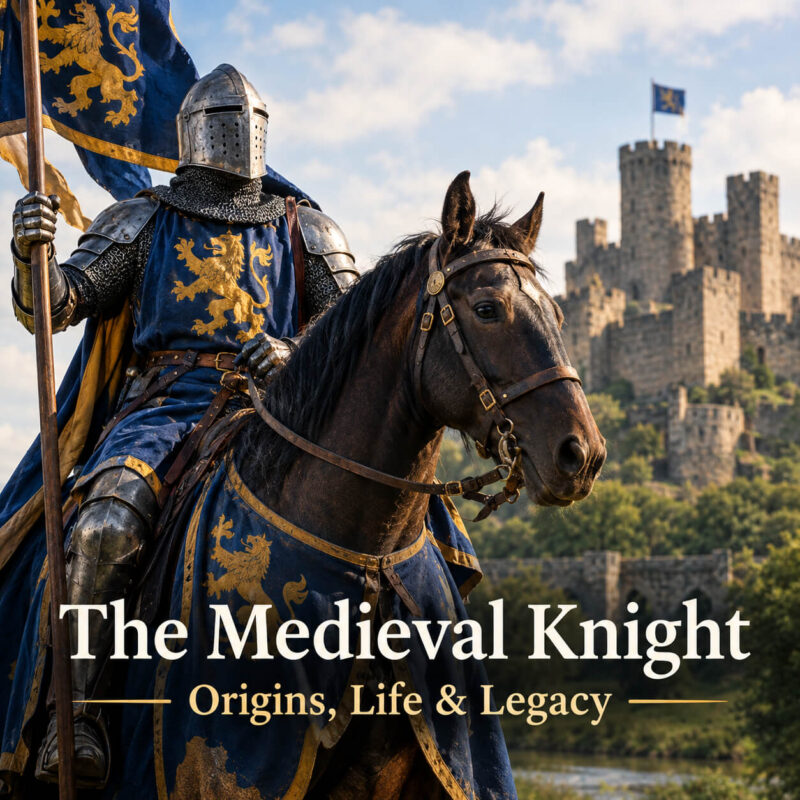
The medieval knight remains one of the most recognisable figures of the Middle Ages. Clad in armour, mounted on horseback and bearing a sword and shield, knights played an important role in medieval warfare, politics and aristocratic society. Their influence extended beyond the battlefield, shaping ideas about honour, loyalty, courage and social status.
However, knighthood was more than a life of fighting and adventure. Becoming a knight required years of training, considerable financial resources and service to a lord or monarch. Although chivalry promoted ideals of honourable conduct, the realities of medieval warfare could be considerably less romantic.
From the rise of mounted warriors to the development of prestigious chivalric orders, the story of the medieval knight reflects the changing nature of medieval society.
The Origins of Knighthood
Knighthood developed gradually during the early and central Middle Ages. Mounted warriors had existed long before the medieval period, but from around the 10th and 11th centuries, heavily equipped horsemen became increasingly important to warfare in western Europe.
In England, the Norman Conquest of 1066 helped establish a new ruling aristocracy whose military power relied heavily on mounted warriors. Norman lords controlled lands granted by the king and expected military service from those who held property under them. Castles provided strategic strongholds from which these lords could control territory and defend their interests.
Knights became closely associated with this system of landholding, loyalty and military service. They were often members of the aristocracy or men who had the wealth and connections necessary to maintain horses, weapons and armour.
By the 12th century, knighthood had developed into a recognised social and military status. Its importance continued to grow as warfare, aristocratic culture and ideas about chivalry evolved.
Becoming a Knight
Becoming a knight was a lengthy process that often began during childhood. Boys from noble or wealthy families might enter another lord’s household as pages, learning manners, horsemanship and the skills expected of someone destined for military service.
As they grew older, they could become squires, assisting experienced knights and learning to handle weapons, care for horses and prepare for battle. Training also involved hunting, physical exercise and the responsibilities associated with serving a lord.
Knighthood was commonly conferred through a ceremony known as dubbing, although its precise form varied across the medieval period. The ceremony marked a significant transition into a new social and military role.
Not every aspiring knight achieved this status. Maintaining a horse, armour, weapons and attendants was expensive, and the financial burden became increasingly significant as equipment developed. Some men who trained for knighthood remained squires or pursued other careers.
A knight’s position depended not only on his fighting ability but also on his relationships with powerful patrons. Successful military service could bring rewards, land, wealth and greater influence.
Armour, Weapons and Horses
The familiar image of a knight in a complete suit of shining plate armour belongs primarily to the later Middle Ages. Knightly equipment changed considerably over several centuries, reflecting developments in military technology and the changing demands of warfare.
Earlier medieval knights commonly wore mail armour, made from interlinked metal rings, alongside helmets and shields. As weapons became more effective, additional protection developed. By the 14th and 15th centuries, plate armour increasingly covered the body, offering substantial protection when properly fitted.
Knights carried a variety of weapons depending on their circumstances. The lance was particularly important for mounted combat, while swords, axes, maces and other weapons were used in different fighting situations.
The warhorse was equally important. A trained horse gave a knight mobility, status and a significant advantage in certain battlefield conditions. Such animals were valuable, and their care required considerable resources.
Despite their impressive appearance, knights were not invulnerable. Armour could restrict movement, horses could be injured and battles remained dangerous, unpredictable affairs. Equipment offered protection, but success depended on training, leadership, terrain and the abilities of opponents.
A Knight’s Daily Life and Duties
Although warfare was central to the identity of many knights, their lives were not spent constantly fighting.
A knight might serve a king, a powerful noble or a local lord, undertaking military duties when required. Depending on his circumstances, he could also manage land, oversee tenants, collect revenues and participate in local administration.
Some knights lived in castles or fortified residences, while others travelled between estates and courts. Their responsibilities varied according to their wealth, status and the expectations of their lord.
Religious observance was also important in medieval society. The Church influenced ideas about legitimate warfare, loyalty and the moral responsibilities of those who carried weapons. Knights might support religious institutions through donations, patronage or participation in military campaigns framed in religious terms.
For wealthier knights, courtly life offered opportunities to build alliances, gain royal favour and improve their standing. Reputation mattered greatly, particularly in an aristocratic culture where military achievements and public displays of status could influence a man’s prospects.
Chivalry, Tournaments and Warfare
Chivalry became an important part of the culture associated with knighthood. It encompassed ideals such as courage, loyalty, generosity, courtesy and the defence of the Christian faith. Its meaning changed over time, and different writers and communities placed different emphasis on these values.
In practice, the conduct of knights did not always match the ideals celebrated in literature and courtly culture. Medieval warfare could involve sieges, raids, destruction and the taking of prisoners for ransom. Loyalty to a lord or the pursuit of personal advantage could also conflict with expectations of honourable behaviour.
Tournaments provided knights with opportunities to practise military skills, demonstrate their abilities and enhance their reputations. Early tournaments could be dangerous, large-scale contests involving groups of mounted warriors. Over time, more formalised events developed, including jousting contests that became important social spectacles.
One of the most celebrated English knights was William Marshal, 1st Earl of Pembroke. Born in the 12th century, Marshal built a formidable reputation through military service and tournament success. He served several English kings and eventually became one of the most influential figures in the kingdom, illustrating how a knight’s abilities and royal connections could lead to extraordinary power.
Knighthood continued to evolve during the 14th century, when monarchs increasingly used ceremonies and institutions to reinforce the bonds between the Crown and the aristocracy.
King Edward III established the Order of the Garter in 1348. This prestigious order brought together selected knights in a brotherhood associated with royal service, honour and chivalric ideals. Its history provides a fascinating example of how knighthood developed beyond its original military role.
Edward III’s son, Edward the Black Prince, also became an enduring symbol of English martial reputation through his military career during the Hundred Years’ War. Figures such as these helped shape the later medieval image of the accomplished knight, combining battlefield achievement with aristocratic status and royal service.
The Decline and Legacy of Knighthood
Knighthood did not disappear overnight, but its traditional military role changed as the Middle Ages progressed.
Developments in infantry tactics, missile weapons and gunpowder artillery challenged the dominance of heavily armoured cavalry. Armies increasingly relied on a combination of different troop types, while monarchs developed more organised military forces.
The financial demands of maintaining knightly equipment and horses also limited access to knighthood. At the same time, the title increasingly carried social prestige beyond its practical military function.
By the end of the medieval period, the knight had become both a changing military figure and a powerful symbol of aristocratic identity. Chivalric orders, heraldry, literature and royal ceremonies helped preserve the ideals associated with knighthood, even as warfare evolved.
The legacy of the medieval knight remains visible today in heraldic traditions, historic castles, ceremonial honours and popular representations of the Middle Ages.
Conclusion
The medieval knight was far more than an armoured warrior on horseback. Knights occupied an important place in medieval military, political and social life, combining service, status and ambition within a changing society.
Their history reveals the distance that could exist between the ideals of chivalry and the realities of warfare. From the mounted warriors of the early Middle Ages to the prestigious chivalric orders of later centuries, knighthood evolved alongside the kingdoms and institutions it helped shape.
Did you enjoy this post?
I hope you found this post useful. I put a great deal of time and effort in to building, maintaining and populating the website. If you like, you could say a small thank you by buying me a coffee. You don't have to, but it would be nice :)
Buy me a coffee
Stay up to Date
Follow me on my journey and get notified whenever a new post is published by following Kings & Castles on Facebook.
Follow MeExplore The Map
Discover the hundreds of castles, churches, monasteries, cathedrals and other historic locations that I've personally visited across England and Wales. Search by location, explore nearby sites and plan your next historical adventure.
Share: