The Order of the Garter
The Order of the Garter is the oldest and most senior order of knighthood in Britain, founded during the Middle Ages by Edward III of England in 1348. It is still celebrated each year with a procession and service in the grounds of Windsor Castle.
Origins
In medieval times, King Edward III was so inspired by the tales of King Arthur and the chivalry of the Knights of the Round Table that he set up his own group of honourable knights called the Order of the Garter.
Edward III founded the Order around the time of his claim to the French throne, which was most likely created to help him pursue his claim, and saw the start of the Hundred Years’ War. The traditional year of its foundation is 1348, when it was formally proclaimed.
At the time of its foundation, the Order consisted of Edward III, together with 25 Founder Knights including his eldest son and heir Edward, the Black Prince, Prince of Wales.
Emblem and Motto
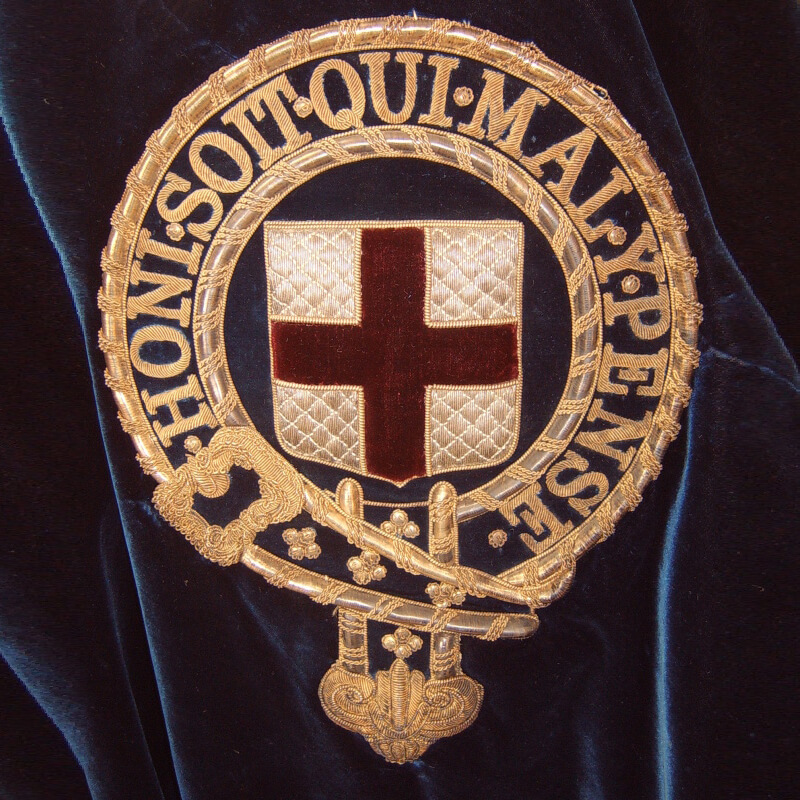
The Order is dedicated to the image and arms of Saint George, England’s patron saint. The emblem consists of the Saint George’s Cross, a blue garter, and the Order’s motto in gold script.
The motto of the Order is “Honi soit qui mal y pense”, which is from the Anglo-Norman language, a dialect of Old Norman French spoken by the medieval ruling class in England. The motto translates to something like “shamed be whoever thinks ill of it”, or “shame on he who thinks evil of it”. There are various stories and legends for the origins of this motto, but it was probably directed against anyone who opposed the King’s claims for the French throne.
The blue garter either represents the stories of the blue garter and Edward’s chivalry, or it may be a reference to the straps worn by soldiers used to fasten plates of armour in the Middle Ages, and may have been chosen because it held the meaning of a tight-knit “band” or “bond” of knightly supporters of Edward’s cause.
Legends
Because the earliest records of the Order were destroyed by fire, it’s difficult to be certain of the Order’s original purposes, the significance of its emblem, and the origin of its motto.
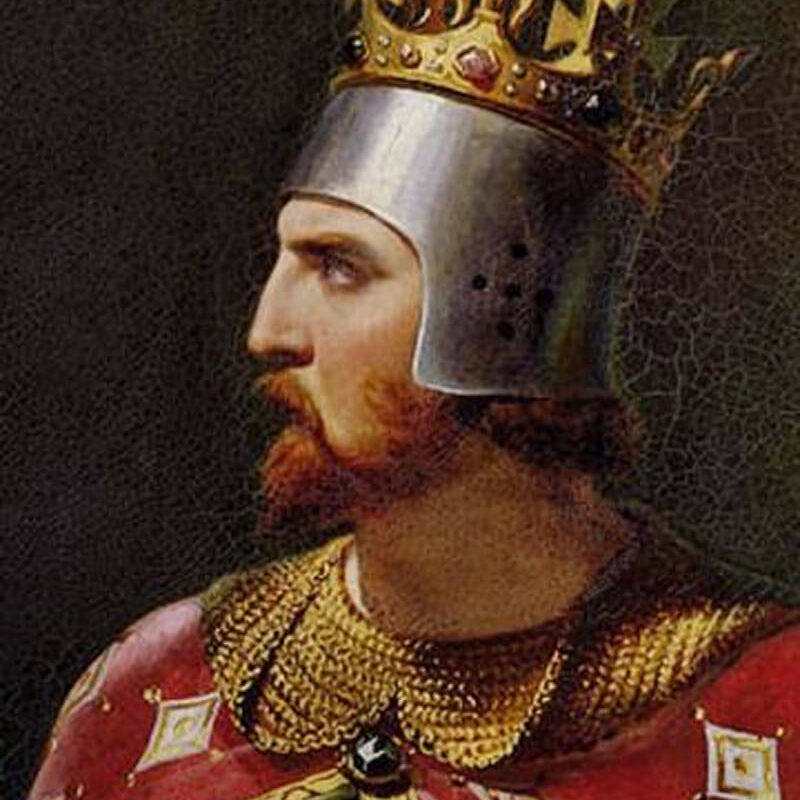
One theory is that Edward III wished to revive the Round Table of the Arthurian legend. Another legend is that King Richard I was inspired by St George in the 12th century while fighting in the Crusades to tie garters around the legs of his knights, who subsequently won the battle. King Edward supposedly recalled the event and founded the Order.
The most popular legend for the origins of the order, especially for its motto, is that it was established to commemorate an incident in which Edward III showed chivalry towards an unknown lady. It is said that the lady’s garter slipped from her leg and dropped to the floor while she was dancing at a court ball at Calais. When the surrounding courtiers mocked her, the king picked it up and returned it to her, exclaiming, “Honi soit qui mal y pense” – “Shame on him who thinks evil of it”, which became the Order’s motto.
The identity of the lady is uncertain. The most popular candidates are Joan, Fair Maid of Kent, Edward’s cousin, and Katharine Grandison, Countess of Salisbury. Another potential candidate, but less likely is Edward’s wife and queen, Philippa of Hainault.
Ladies of the Garter
Women were also associated with the Order in the Middle Ages and issued with its robes, although they were not counted as Companions. Soon after the founding of the Order, women were appointed “Ladies of the Garter”, with Queen Philippa of Hainault, Edward’s wife, being the first Lady to be appointed in 1358.
King Henry VII ceased the practice in the 15th century; his mother, Margaret Beaufort, was the last Lady of the Garter before it was revived in 1901 by King Edward VII when he appointed Queen Alexandra. The first woman to be appointed a full Companion of the Order was Lavinia, Duchess of Norfolk, in 1990.
The Order Today
Today, the Order includes The King or Queen, who is Sovereign of the Order, several senior Members of the Royal Family, and 24 knights chosen in recognition of their work, typically made in recognition of national contribution, service to the Crown, or for distinguished personal service to the Monarch.
Membership was extended in the late-18th and early-19th centuries to include Supernumerary Knights and Ladies, which includes members of the British royal family and foreign monarchs. Originally, existing knights elected new knights, but now appointment to the Order is solely at the discretion of the British monarch.
It remains one of the most distinguished and exclusive orders of knighthood in the British honours system, outranked in precedence only by the Victoria Cross and the George Cross.
Did you enjoy this post?
I hope you found this post useful. I put a great deal of time and effort in to building, maintaining and populating the website. If you like, you could say a small thank you by buying me a coffee. You don't have to, but it would be nice :)
Buy me a coffee
Stay up to Date
Follow me on my journey and get notified whenever a new post is published by following Kings & Castles on Facebook.
Follow MeExplore The Map
Discover the hundreds of castles, churches, monasteries, cathedrals and other historic locations that I've personally visited across England and Wales. Search by location, explore nearby sites and plan your next historical adventure.
Share: