The History of the Guildhall
Discover the history of the English guildhall, from its medieval origins as a centre of trade, civic government and community life to its enduring legacy as a symbol of a town’s identity and prosperity.
The Origins of the Guildhall
Guildhalls occupy an important place in the history of Britain’s towns and cities. Emerging during the medieval period, these buildings served as meeting places for guilds, associations of merchants, craftsmen and other townspeople who shared common interests and responsibilities.
Although the origins of guilds can be traced back to Anglo-Saxon England, merchant and craft guilds became increasingly influential from the twelfth century onwards. They helped regulate trade, maintain standards of workmanship, organise apprenticeships and protect the interests of their members. Many also provided charitable assistance and supported religious activities within their communities.
As towns grew wealthier, dedicated buildings became necessary to accommodate the business of these organisations. The guildhall developed into a focal point for commercial activity and civic life.
Centres of Medieval Town Life
During the Middle Ages, guildhalls often served purposes extending well beyond the activities of individual trades. In many towns, they became closely associated with local government, hosting meetings of civic officials, courts and important public gatherings.
The distinction between guilds and municipal authorities was not always clear-cut. Powerful merchants and guild members frequently held positions within town government, allowing commercial interests to influence local administration.
Guildhalls could also accommodate feasts, ceremonies and celebrations, bringing together prominent townspeople and members of the wider community. Their importance reflected the growing independence and prosperity of medieval towns, whose inhabitants increasingly sought influence over their own affairs.
The buildings themselves were often designed to convey authority and prestige. Large halls, impressive timber roofs, stonework and decorative architectural details helped demonstrate the wealth and standing of the communities that built them.
Guildhalls in the Later Middle Ages
By the 14th and 15th centuries, guildhalls had become established features of many English towns and cities. Their purposes varied, reflecting the needs of the guilds and communities that built them. Some were centres of merchant activity, while others served as meeting places for civic authorities or combined commercial, charitable and religious functions.
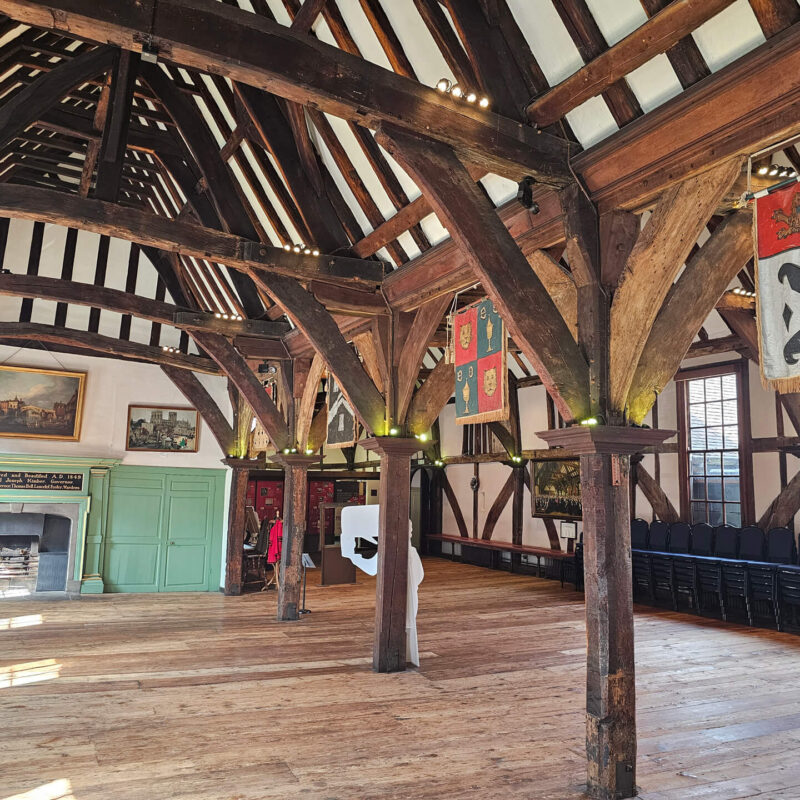
The Merchant Adventurers’ Hall in York, built during the 14th century, provides a remarkable example of a medieval merchant fraternity’s home. Its Great Hall, chapel and undercroft reflect the close relationship between trade, religious observance and charitable work in medieval society.
In Much Wenlock, The Guildhall illustrates the connection between these buildings and local government. Following the town’s charter in 1468 and the later dissolution of Wenlock Priory, the need for local civic administration became increasingly important. The Guildhall they built became a centre for public affairs, with its historic structure preserving evidence of the town’s development.
Meanwhile, St Mary’s Guildhall in Coventry demonstrates the wealth and influence that prosperous medieval trading communities could achieve. Associated with the city’s powerful merchant guilds, the building developed into an important centre for civic gatherings, feasting and the business of local government.
Together, these buildings reveal how guildhalls could serve different purposes while remaining at the heart of their communities. Their architecture and surviving interiors offer a glimpse into the commercial ambitions, civic responsibilities and social traditions of medieval England.
Decline and Changing Uses
The influence of traditional guilds gradually diminished as Britain’s economy and political structures changed. The Reformation in the 16th century brought the dissolution of many religious guilds, while changing patterns of trade and manufacturing gradually weakened the authority of some craft organisations.
Over subsequent centuries, guildhalls adapted to new circumstances. Some continued to serve as municipal buildings, while others became assembly rooms, courts, commercial premises or venues for public events. A number fell into disrepair or were replaced as towns expanded and their administrative needs changed.
Nevertheless, many historic guildhalls survived, preserving important evidence of medieval architecture, local government and community life.
The Legacy of the Guildhall
Today, historic guildhalls remain valuable reminders of Britain’s medieval past. Their walls and halls reflect a time when trade, civic responsibility, religious observance and community identity were closely connected.
Whether standing in a historic city centre or preserved within a smaller market town, each surviving guildhall tells part of the story of how local communities developed and governed themselves.
More than simply old meeting places, these buildings represent the ambitions, achievements and traditions of the people who built them. Their continued preservation ensures that this important chapter in Britain’s urban history remains visible to future generations.
Did you enjoy this post?
I hope you found this post useful. I put a great deal of time and effort in to building, maintaining and populating the website. If you like, you could say a small thank you by buying me a coffee. You don't have to, but it would be nice :)
Buy me a coffee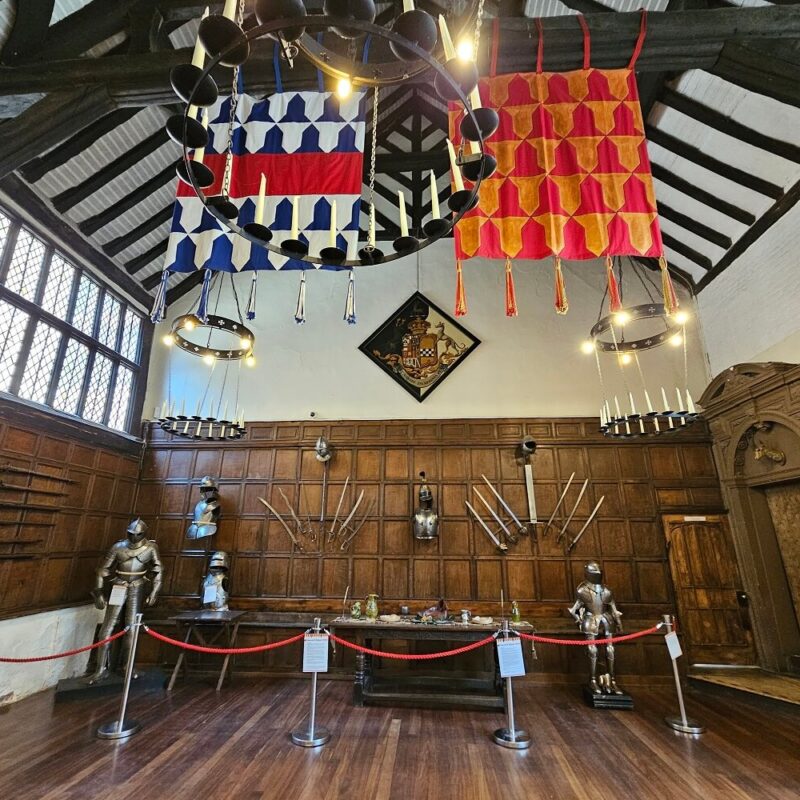

Stay up to Date
Follow me on my journey and get notified whenever a new post is published by following Kings & Castles on Facebook.
Follow MeExplore The Map
Discover the hundreds of castles, churches, monasteries, cathedrals and other historic locations that I've personally visited across England and Wales. Search by location, explore nearby sites and plan your next historical adventure.
Share: