St Mary’s Church, Warwick
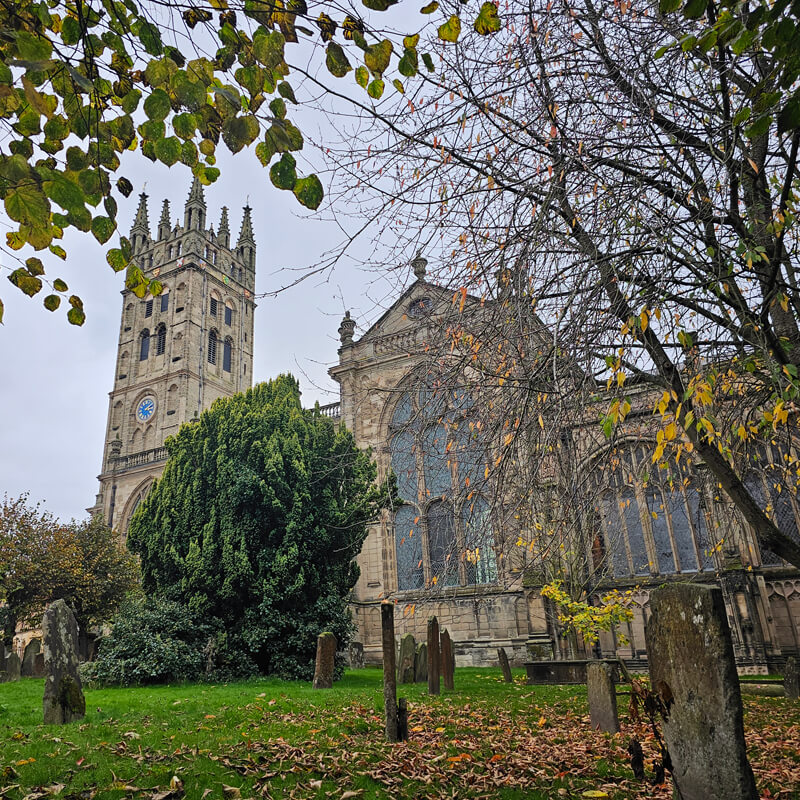
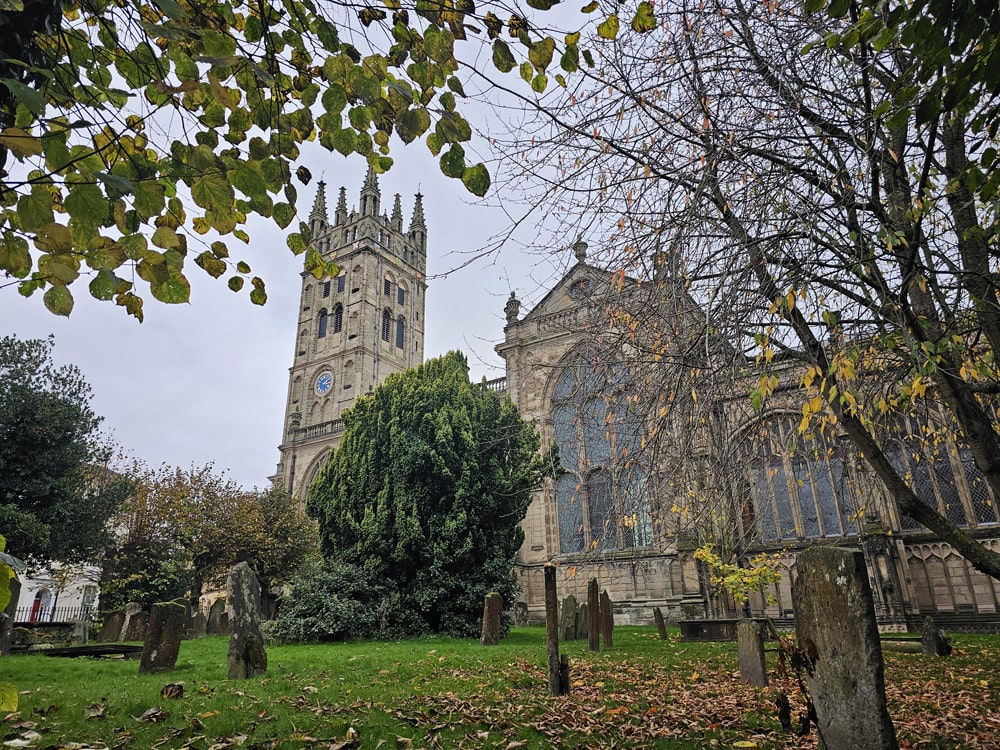
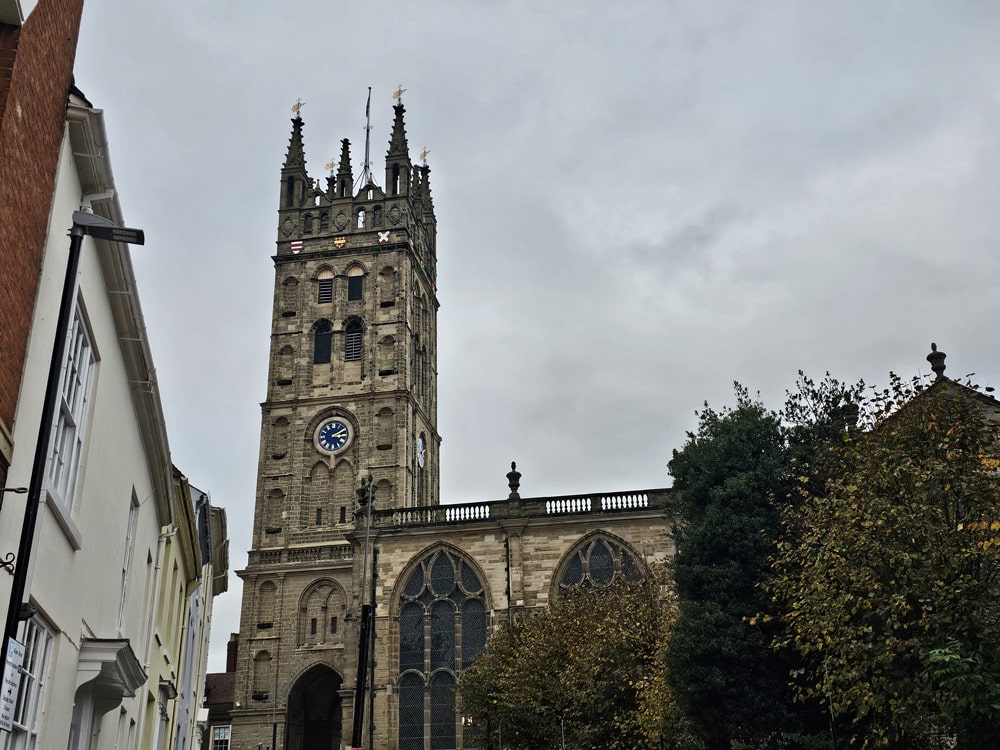
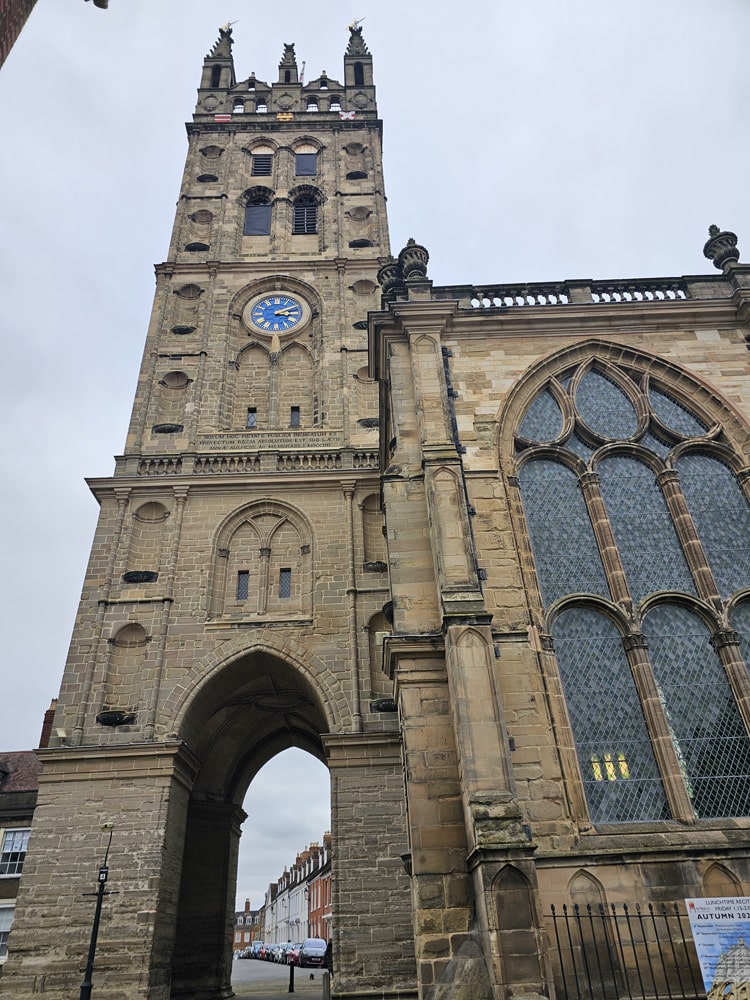
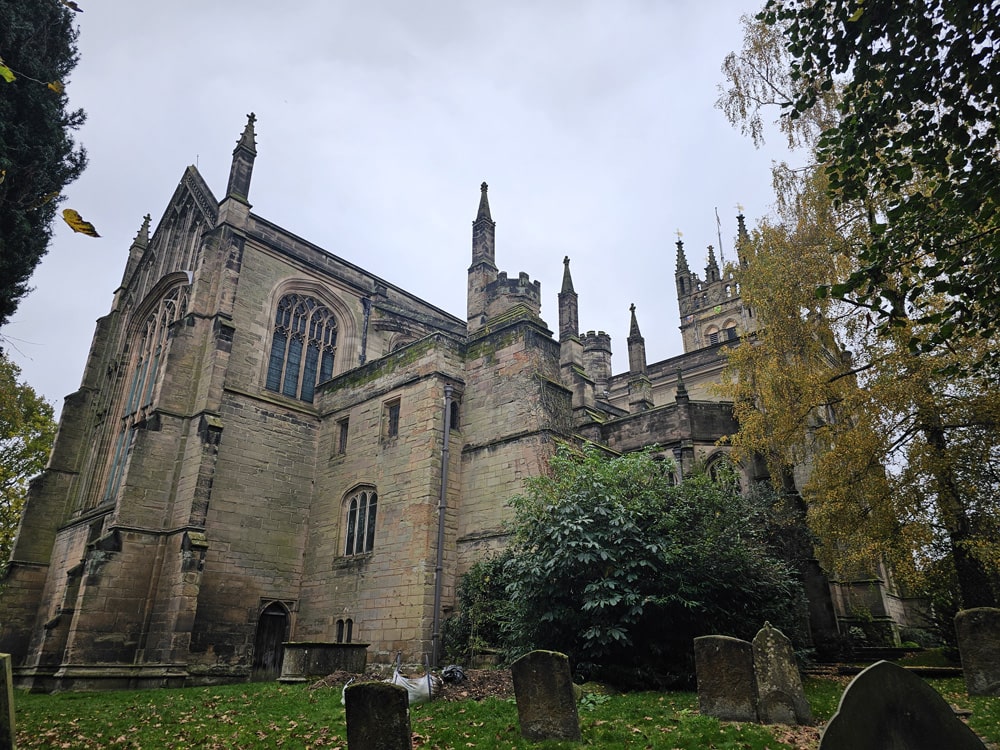
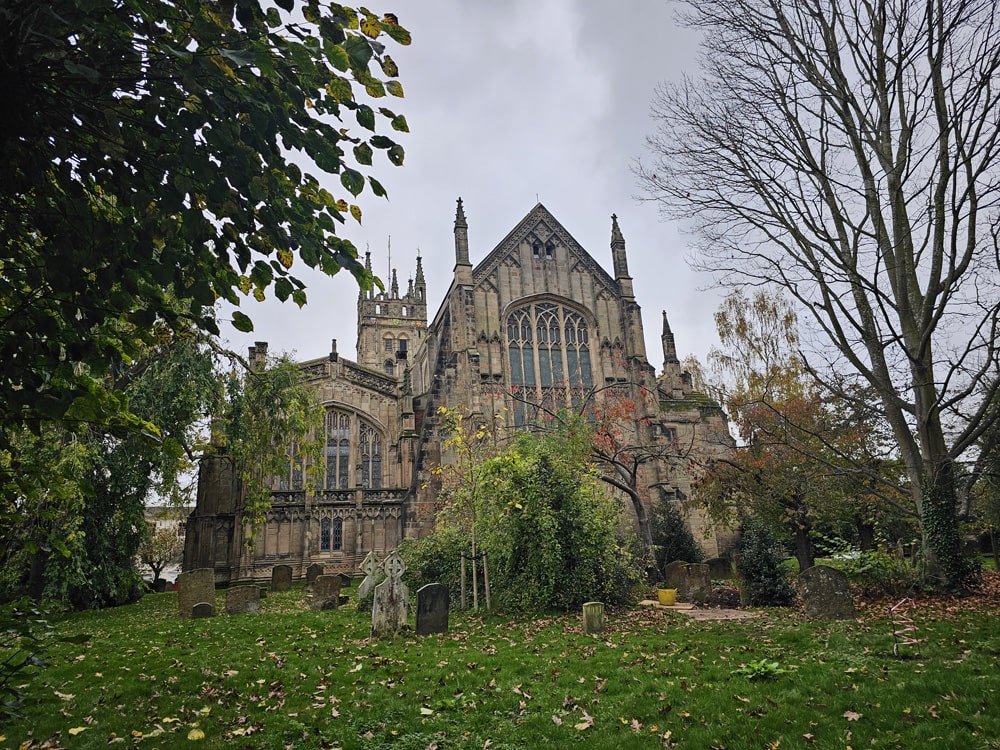
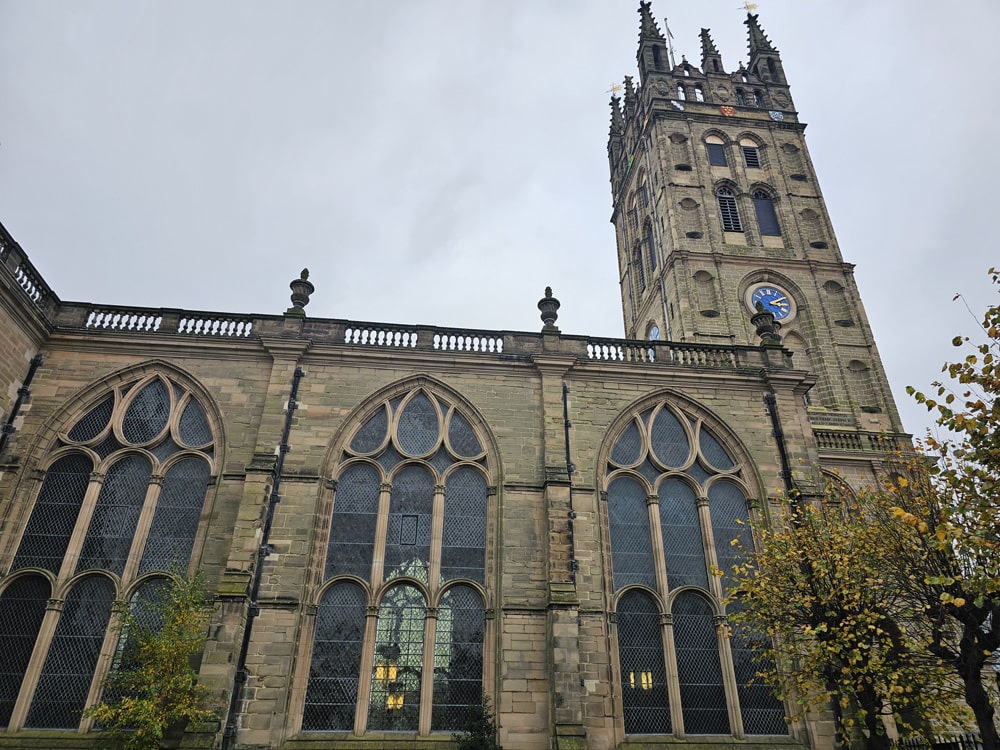
St Mary’s Church is a historic landmark in the medieval town of Warwick, the county town of Warwickshire, and its tower dominates the town’s skyline. It is one of the largest parish churches in England dating back nearly 900 years, and its 12th-century crypt is the oldest surviving structure in Warwick.
Historic
Highlights.
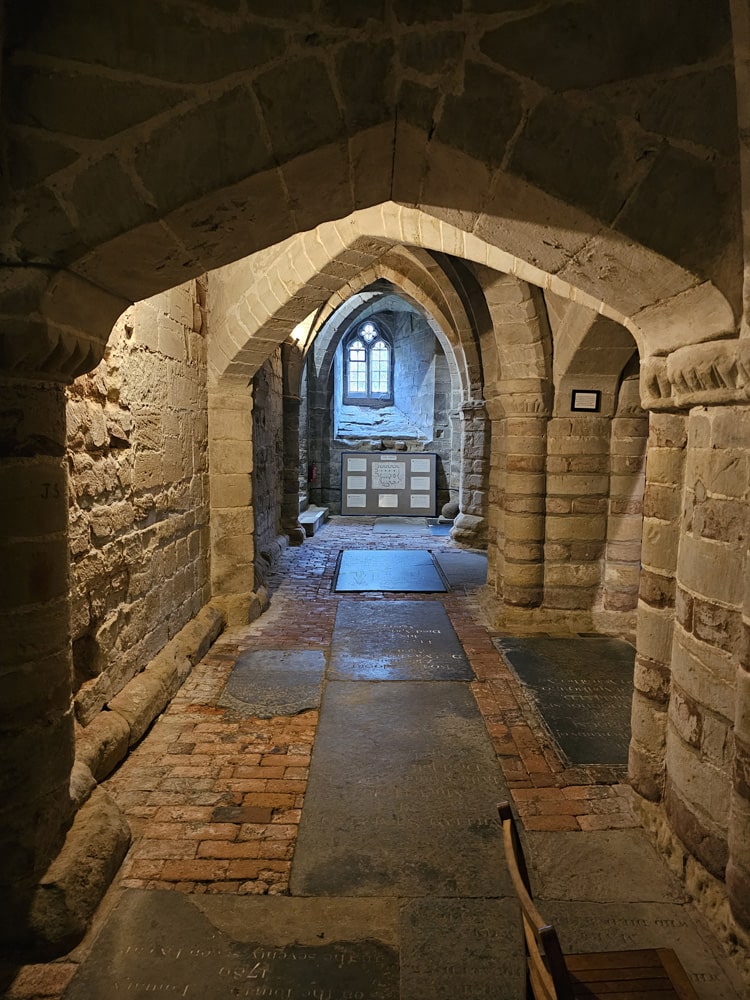
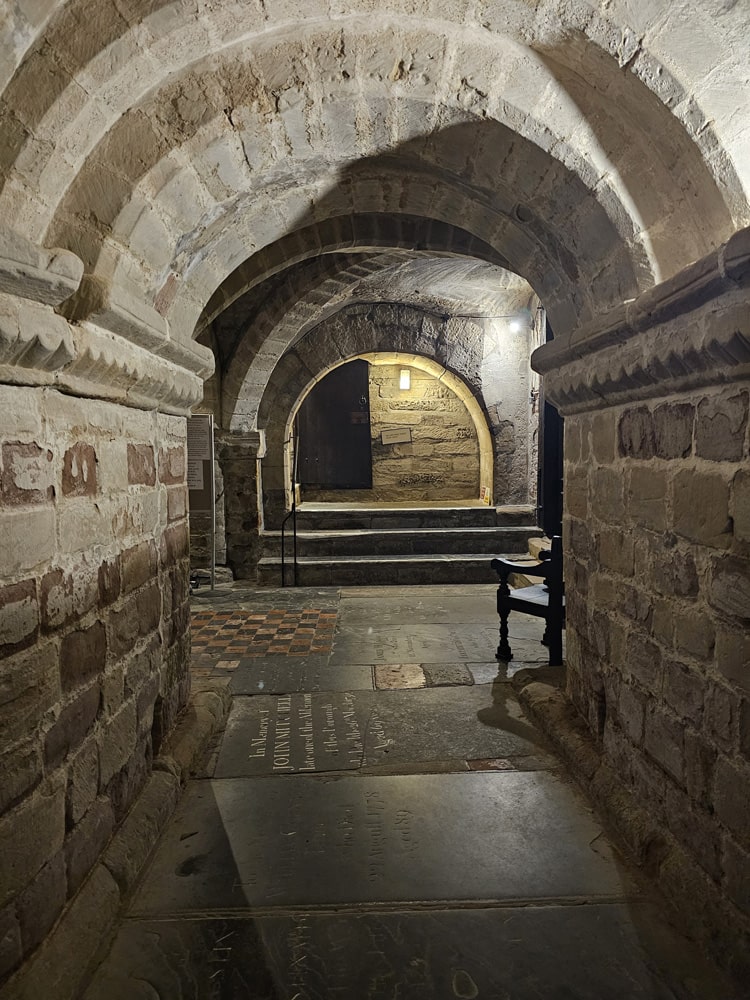
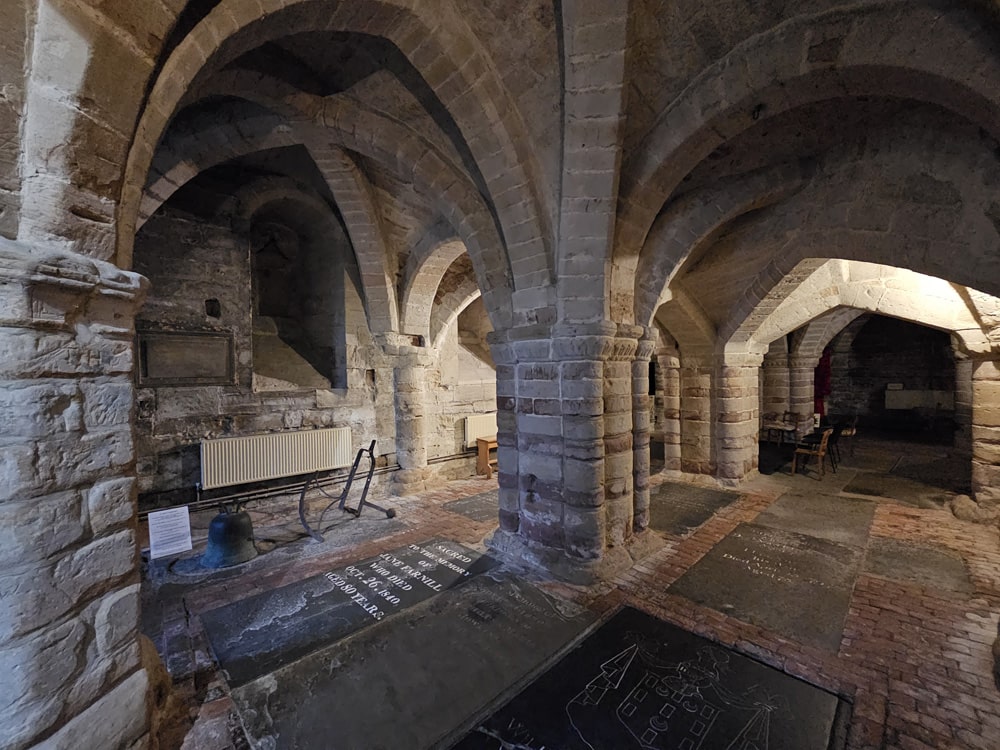
- The original 12th-century Norman crypt
- The glorious 15th-century Beauchamp Chapel
- The tiny 15th-century Dean’s Chapel
The historic church of St Mary was founded on its present site as a collegiate church in 1123 by Henry de Newburgh and his son Roger, the first and second Earls of Warwick after the Norman Conquest of England. The style of the early Norman church was Romanesque with heavy, rounded pillars.
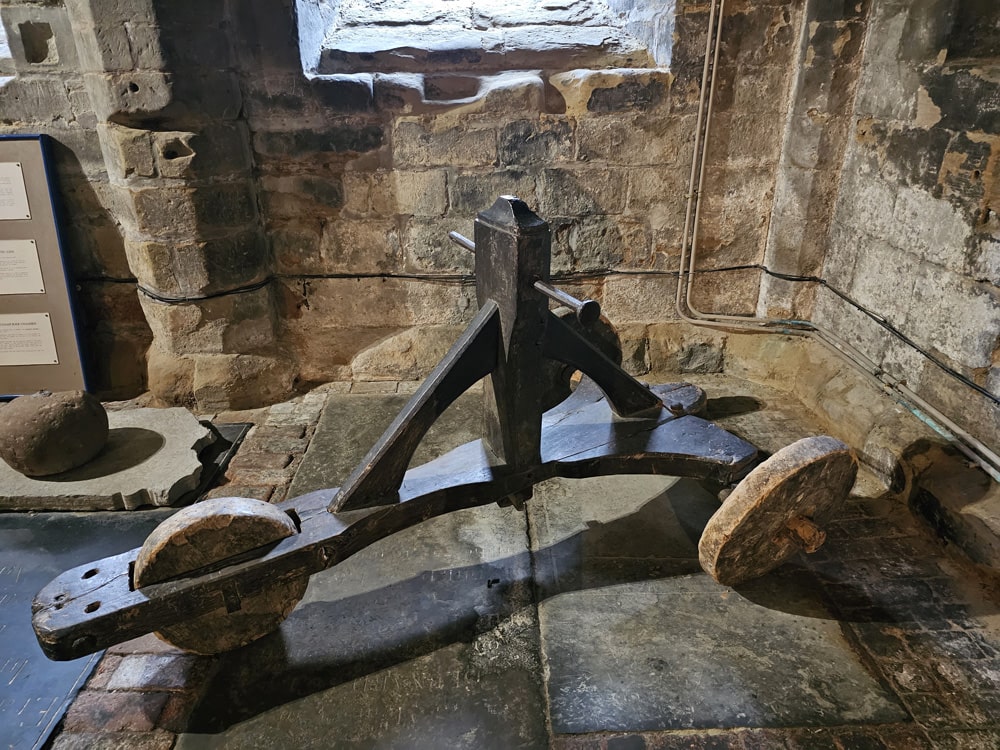
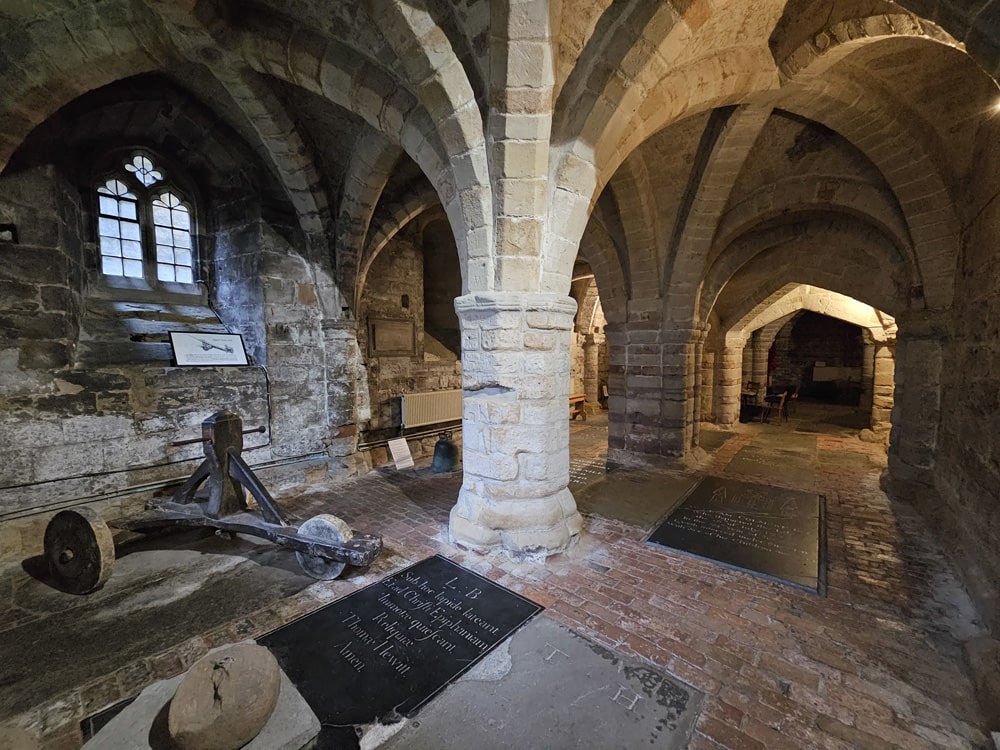
The only surviving part of that original Norman church is the 12th-century crypt built by Earl Roger in 1123, which is the oldest surviving structure in Warwick. The short thick pillars of local sandstone rest on solid rock. Above them are cushion-shaped capitals with scalloped carvings, from which spring the rounded arches of the roof. These show the strength of Norman architecture as they have supported the building above for over 850 years.
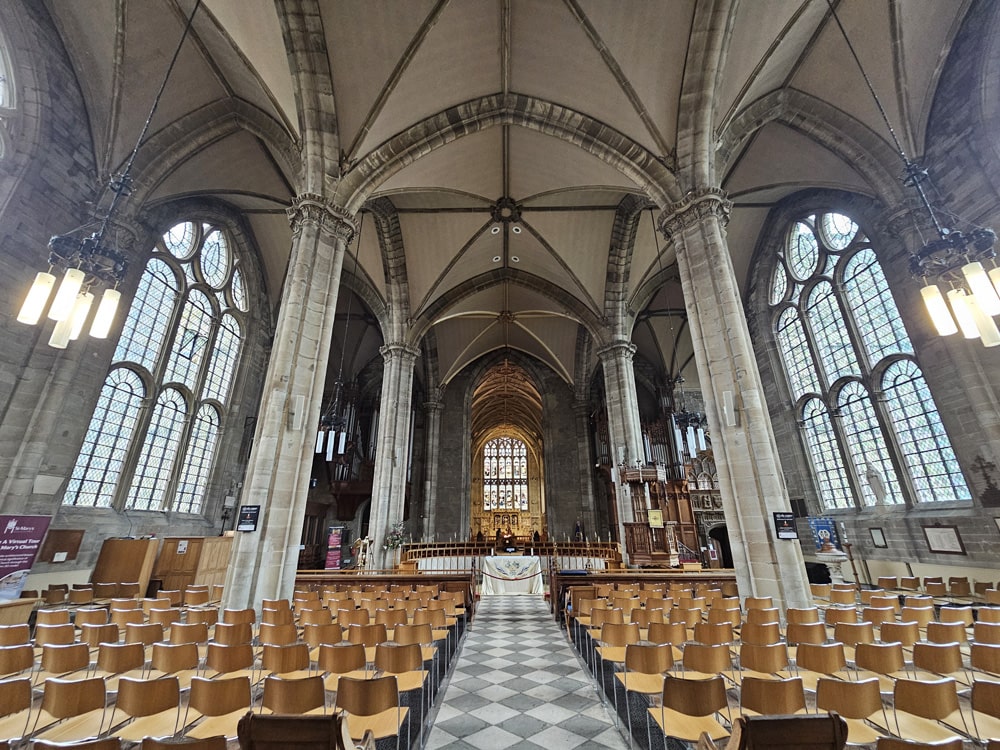
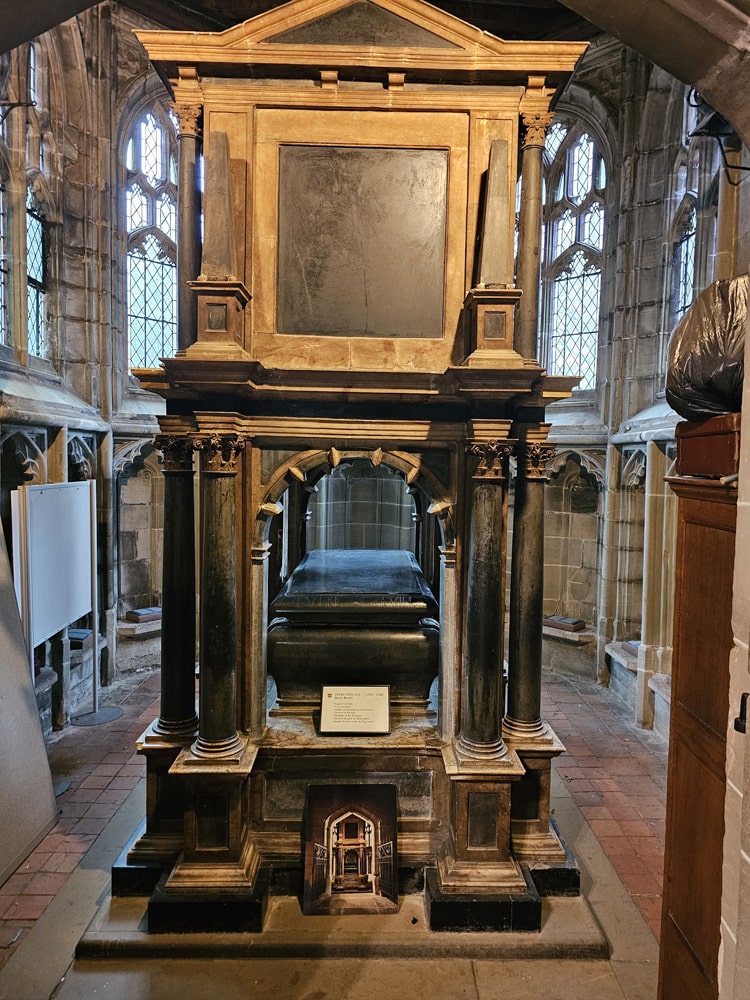
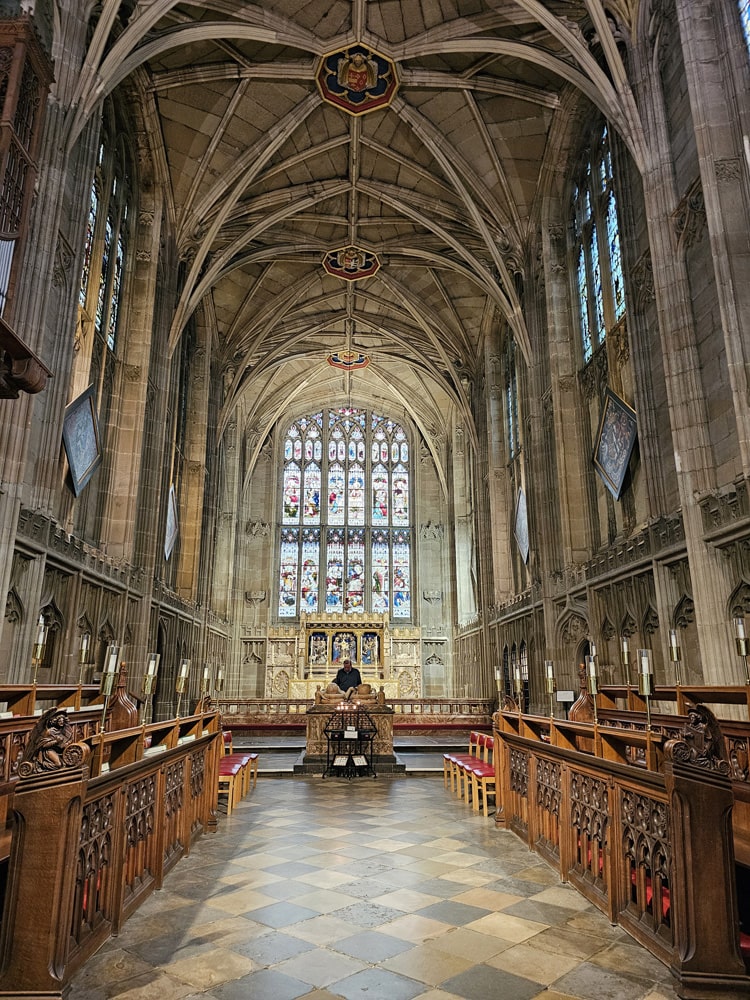
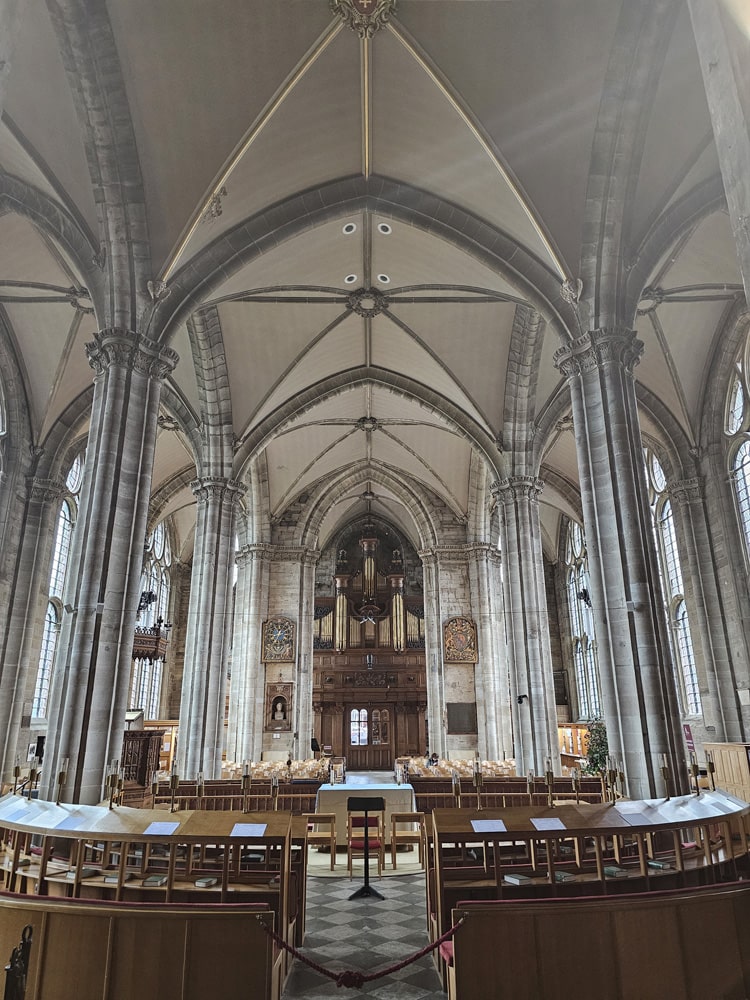
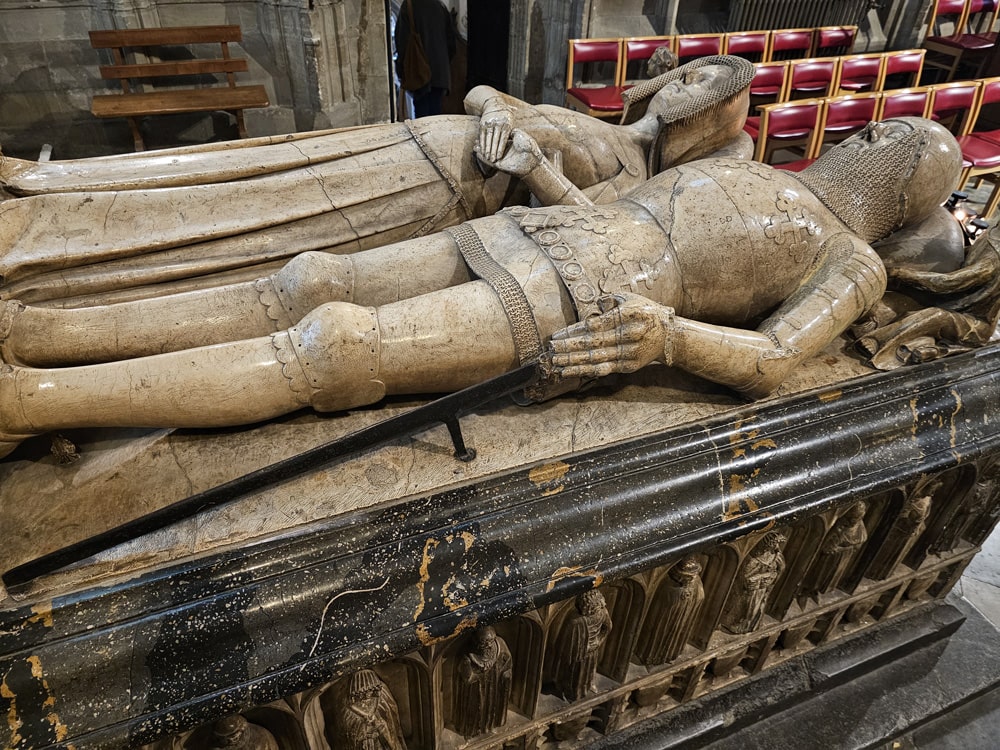
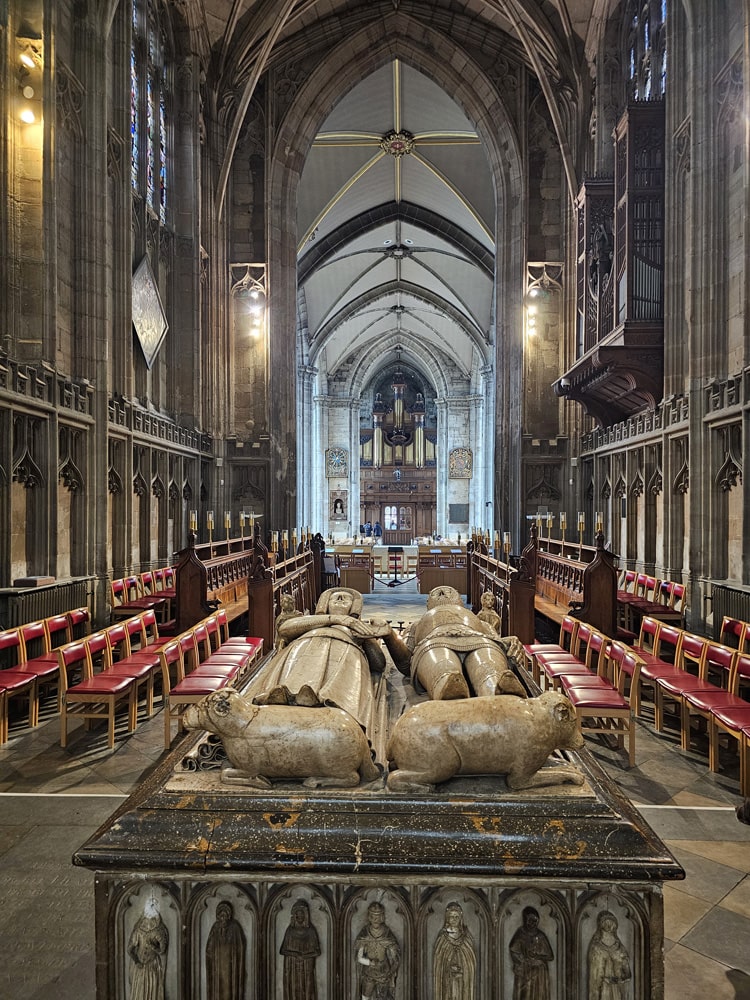
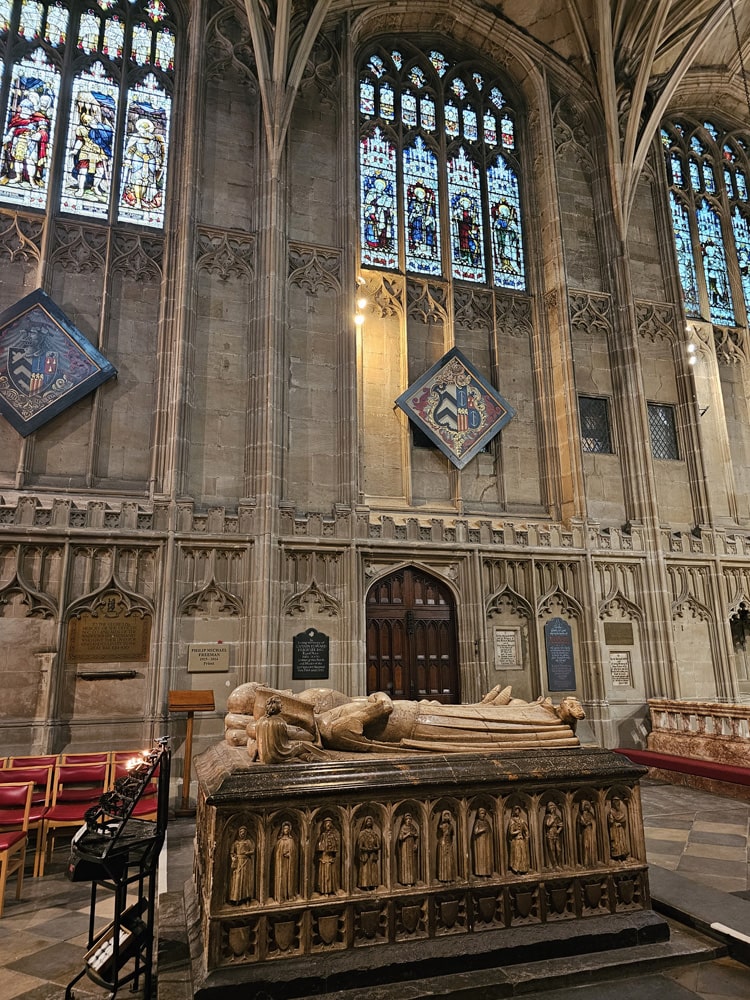
Much of the church was rebuilt in the 14th century in the Perpendicular Gothic style by Thomas Beauchamp, 11th Earl of Warwick, including the chancel, vestries, and chapter house. The alabaster tomb of Thomas Beauchamp and his wife Katherine Countess of Warwick stands in front of the high altar in the chancel. Thomas Beauchamp (1313 – 1369) was the 11th Earl of Warwick, a Knight of the Garter, Lord Marshal of England, Guardian of Edward Prince of Wales (The Black Prince), and Commander at the Battle of Crécy (1346); he died of the plague during the siege of Calais.
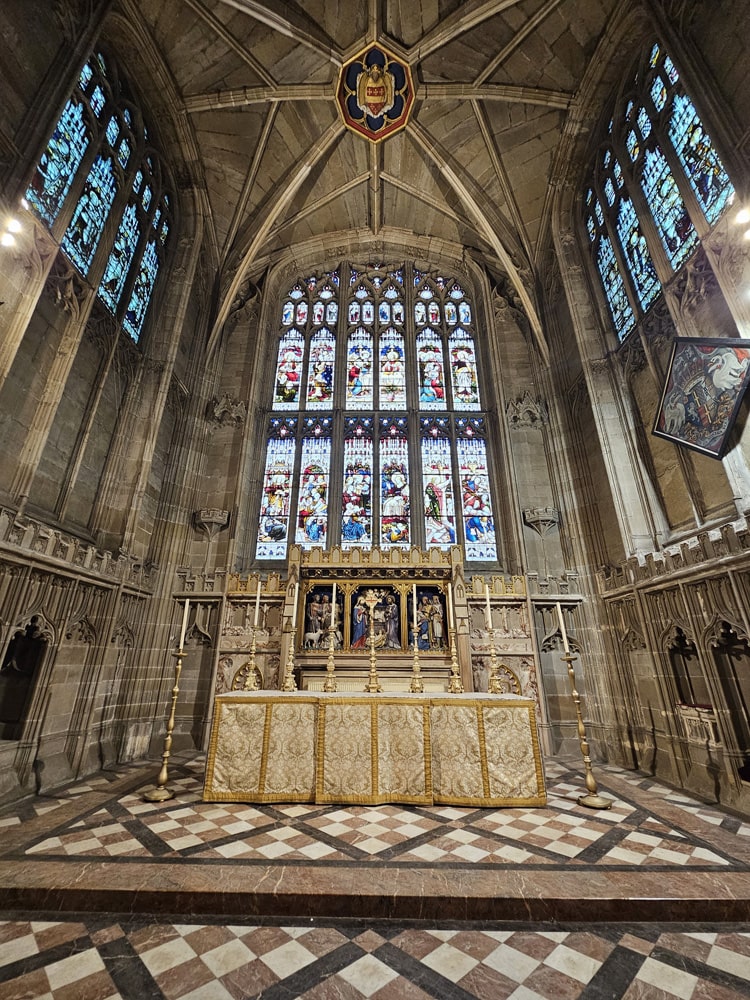
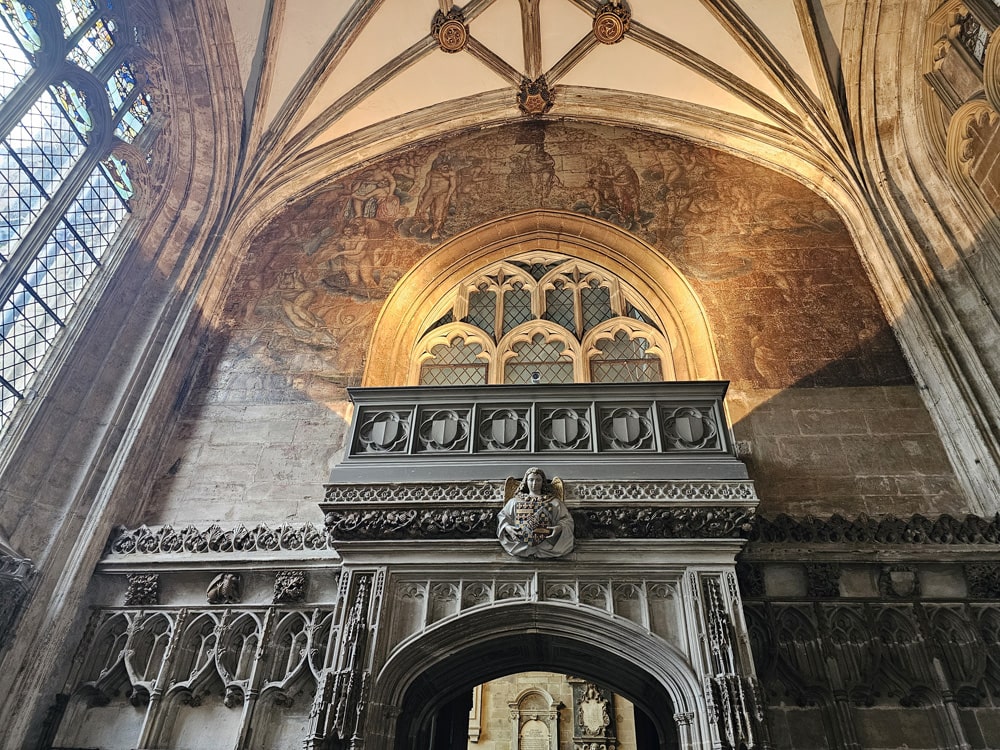
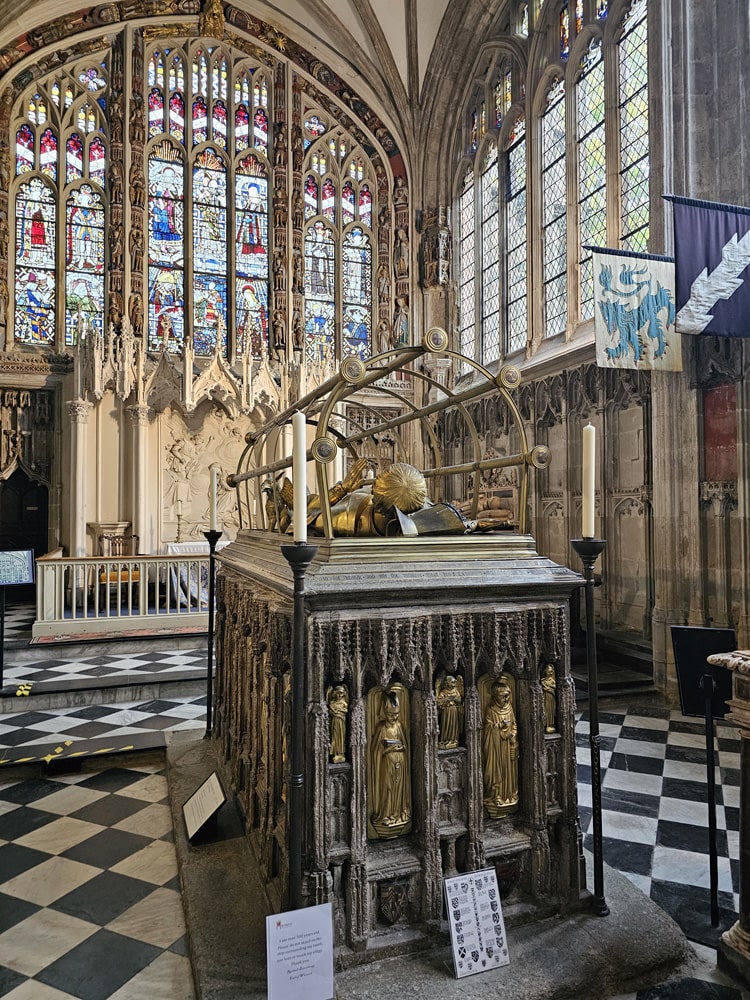
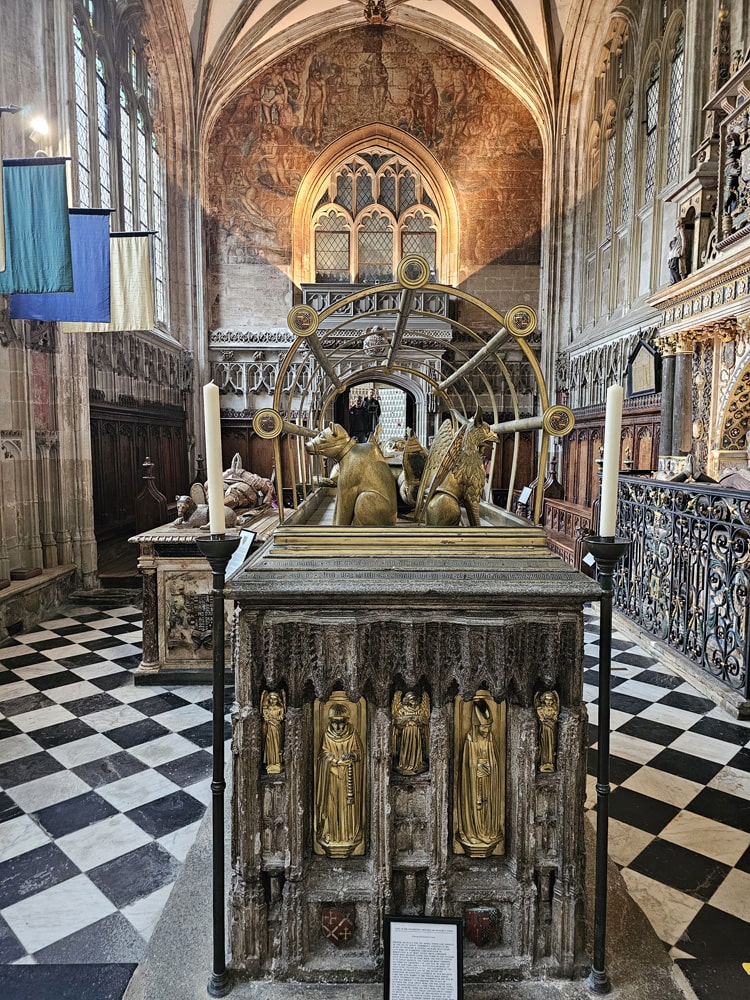
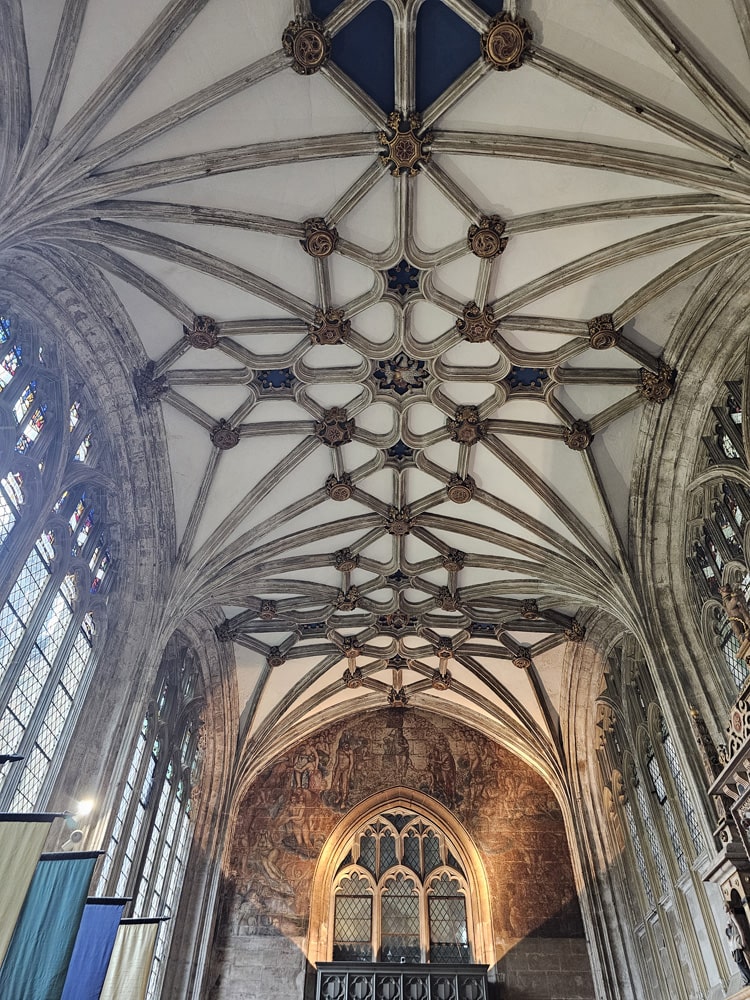
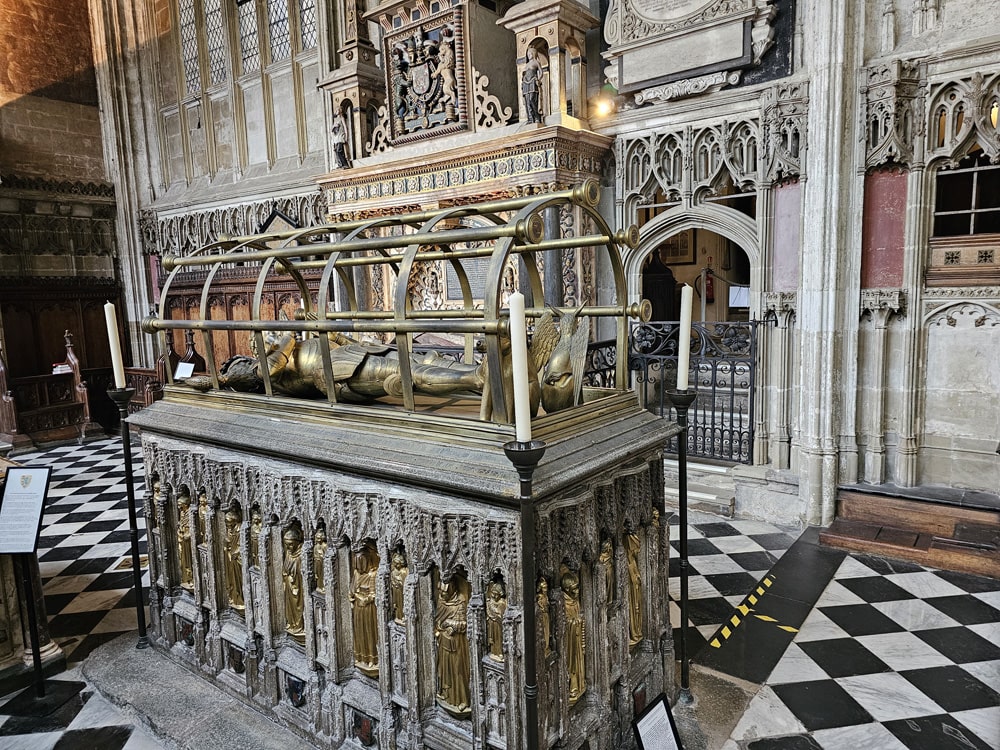
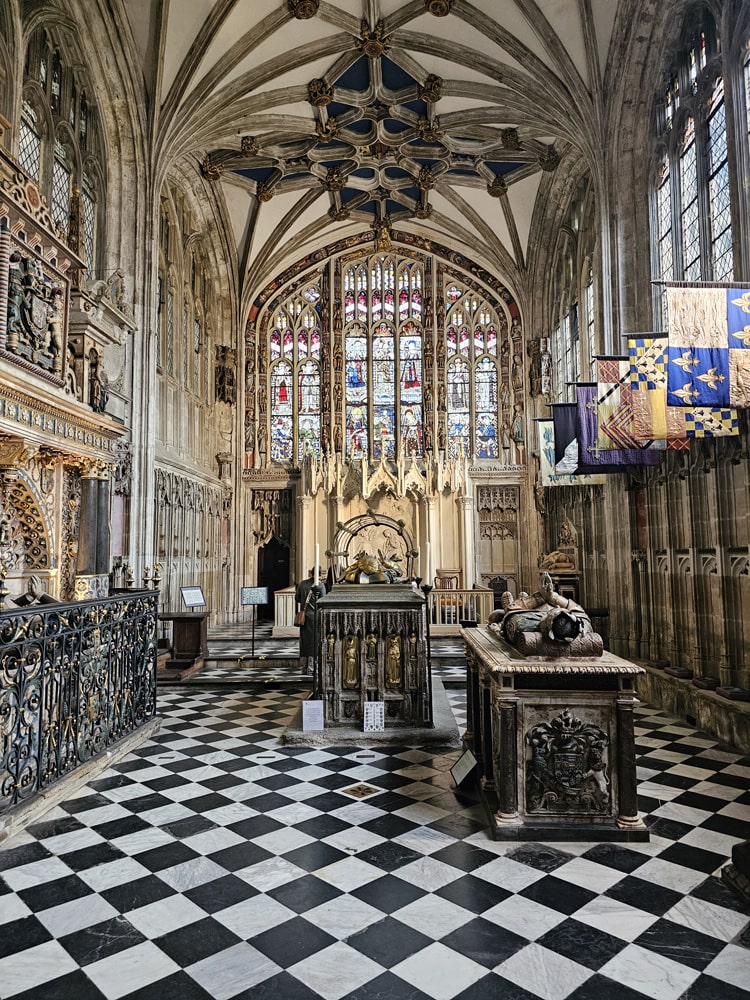
The glorious Beauchamp Chapel was built in the 15th century by the descendants of Thomas Beauchamp, to house the tomb of Richard Beauchamp, the 13th Earl of Warwick and one of the richest and most powerful people in the country. It was built specifically as the chantry chapel for Earl Richard, and was built according to his will. It is a magnificent example of the European ecclesiastical architecture of its time. The stained glass is from the 15th century and the magnificent “Last Judgement” wall painting dates from 1678.
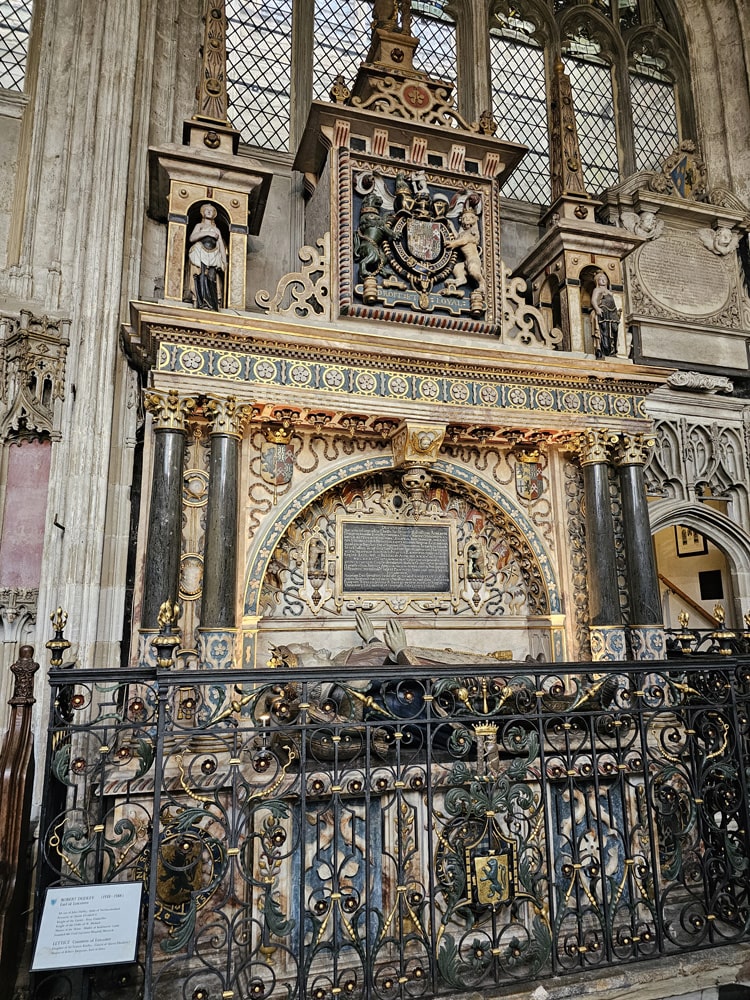
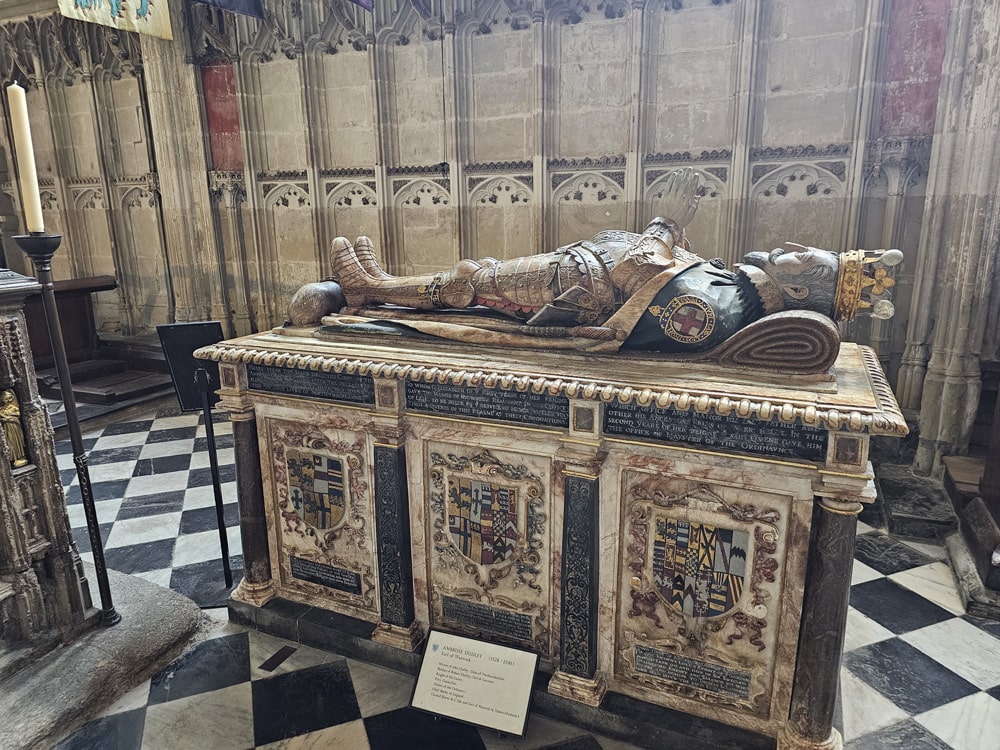
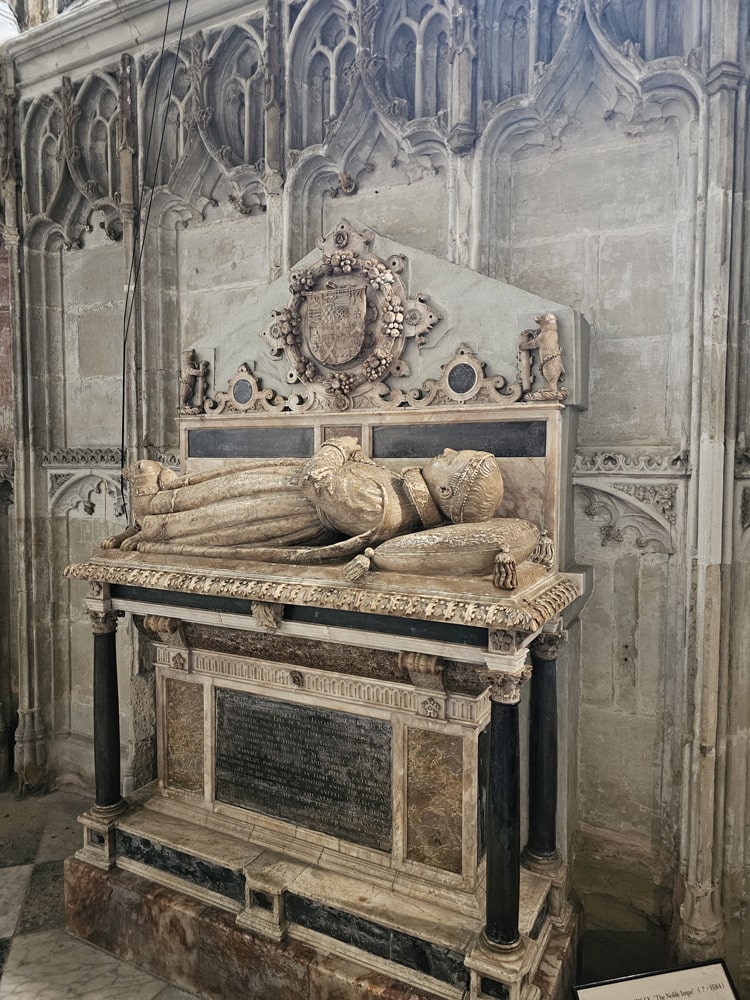
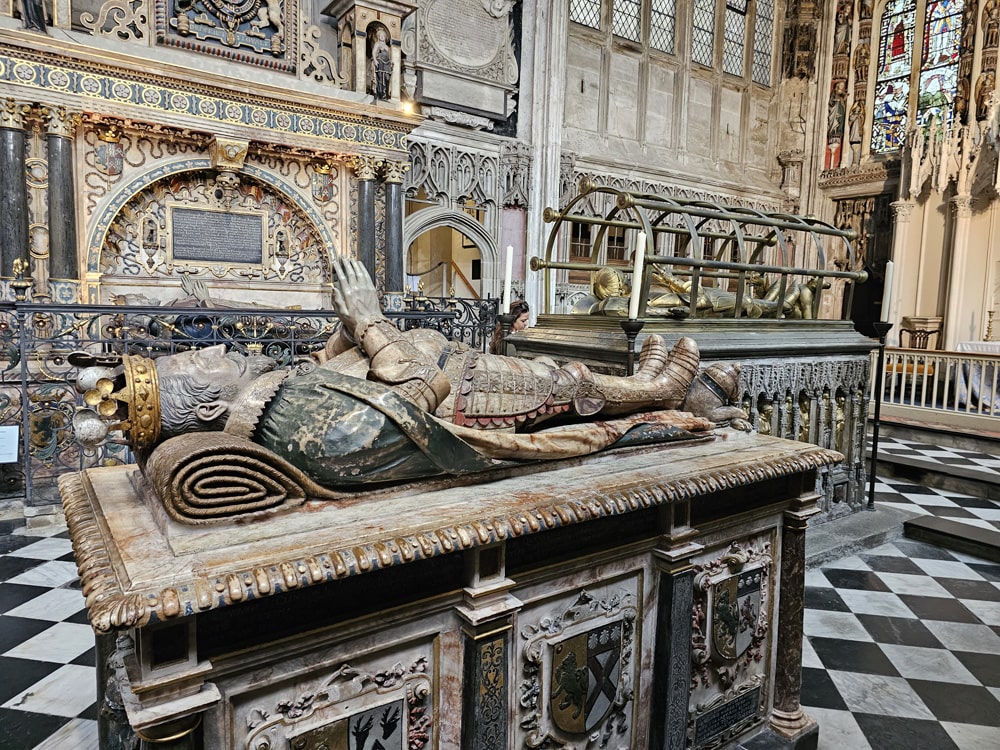
Richard Beauchamp’s tomb, set upon a chest of Purbeck marble with a canopy above, is the centrepiece of the chapel, surrounded by another three tombs for members of the Dudley family; Robert Dudley, Earl of Leicester, his brother Ambrose Dudley, Earl of Warwick, and Robert’s son, the “Noble Impe”. The tomb of Ambrose Dudley, whose effigy wears a gilded iron coronet, is recognised as amongst the finest alabaster carvings in the country. The grandest tomb of all in the chapel is that of Robert Dudley and his wife Lettice, set into the north wall of the chapel beneath a gilded canopy. Robert Dudley was a favourite of Queen Elizabeth I and was one of the most powerful men in the kingdom. The small tomb in the right hand corner of the chapel is that of the “Noble Impe”, the infant son of Robert and Lettice Dudley.
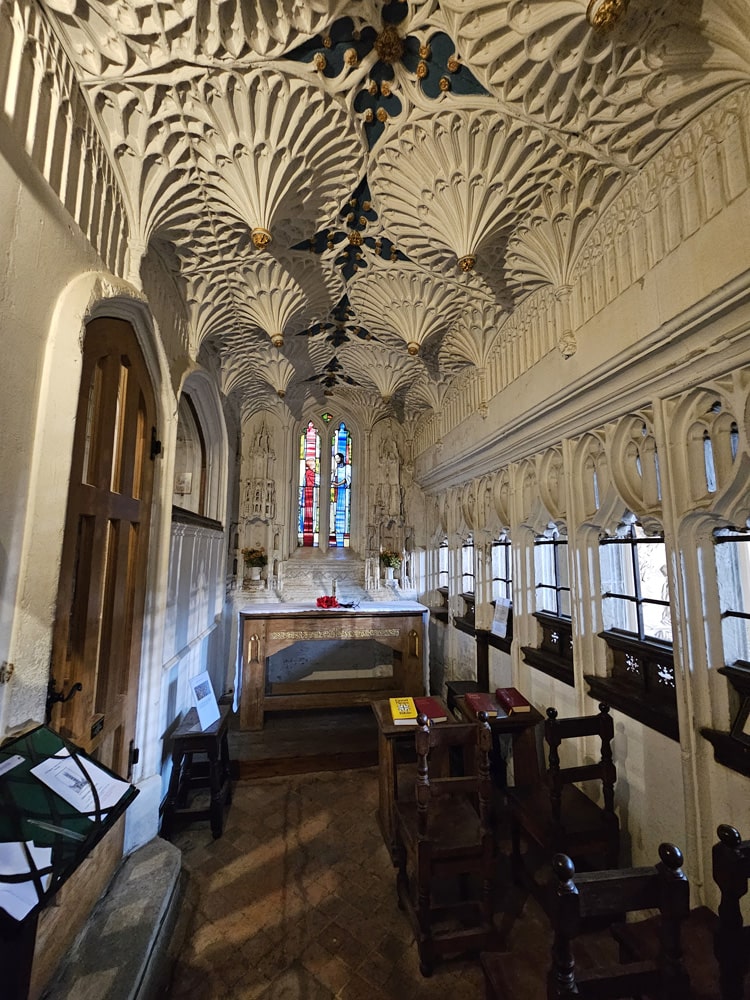
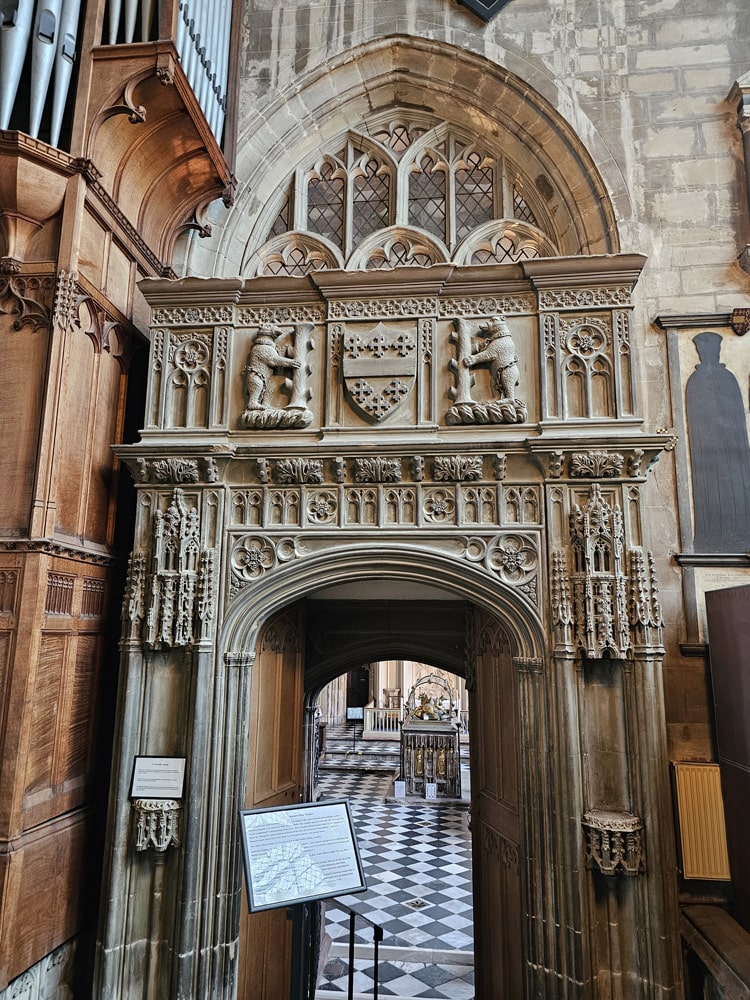
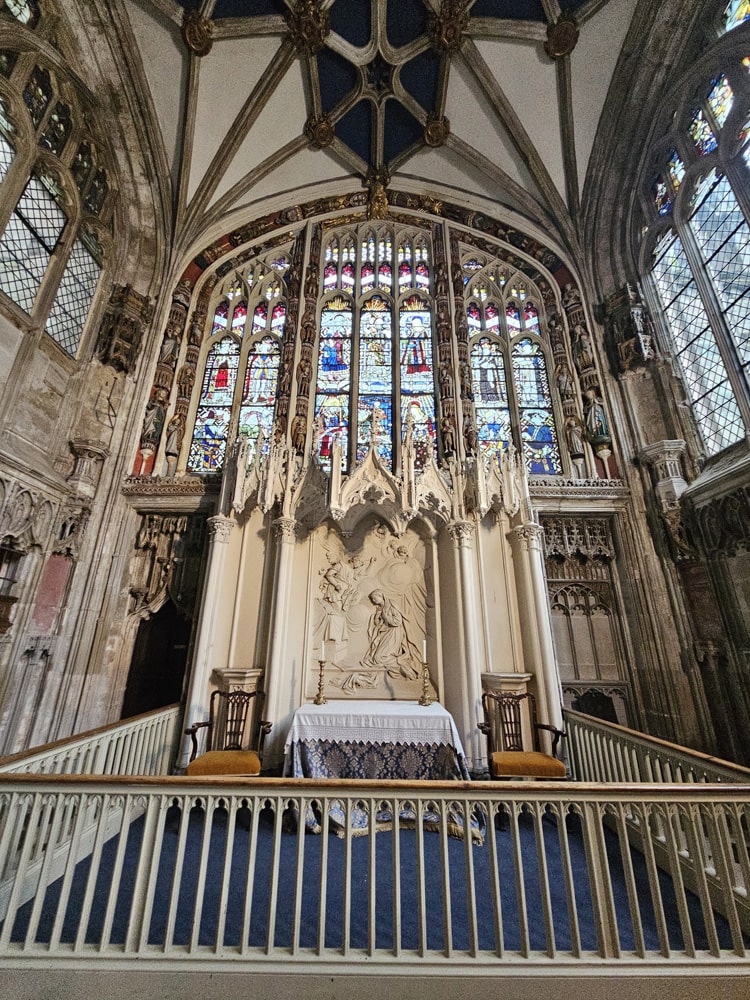
The tiny Dean’s Chapel, just beside the Beauchamp Chapel, is a 15th-century architectural delight with its miniature white-painted Gothic fan vaulting on the ceiling. You can see through the Dean’s Chapel and into the much larger and grandiose Beauchamp Chapel.
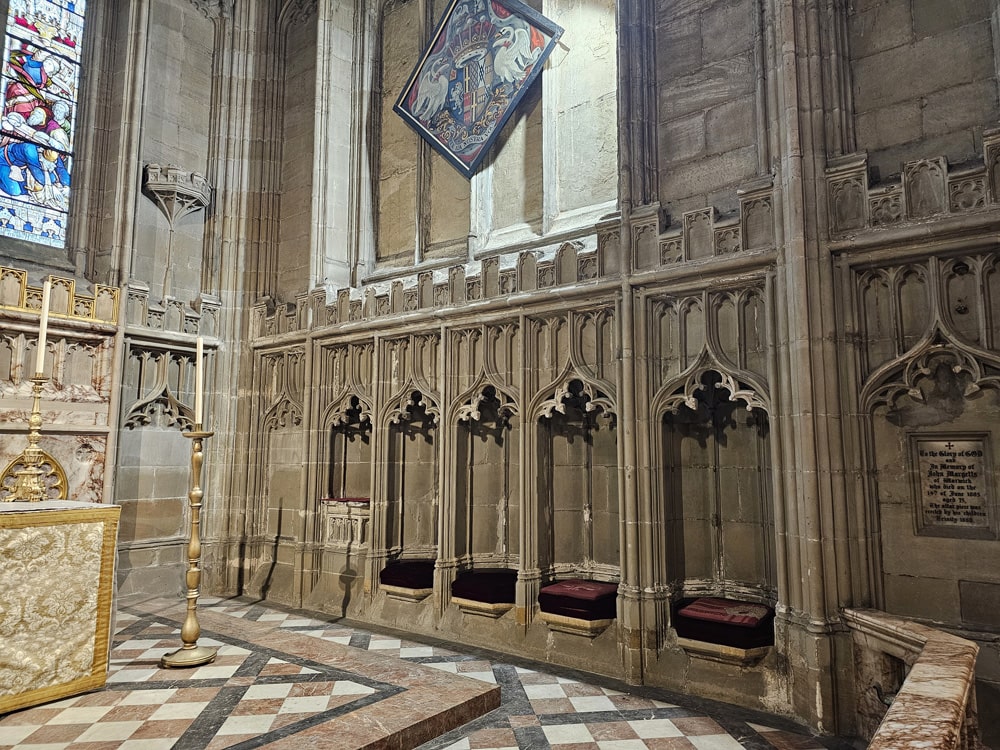
The small chapter house, with its canopied seats for the church’s canons and Dean built into its walls, is almost entirely filled by the large, plain, enigmatic tomb of Fulke Greville, 1st Baron Brooke; a prominent poet, dramatist, and statesman during the age of Shakespeare. Greville came from a line of rich wool merchants who rose to a position of prominence during the Tudor period. He was granted Warwick Castle by King James I in 1604, rebuilding much of the castle during his lifetime, before he was murdered. Greville was stabbed at his house in London by a servant who believed that he had been cheated by being left out of his master’s will. The servant then turned the knife on himself. Greville’s physicians treated his wounds by filling them with pig fat. Rather than disinfecting them, the pig fat turned rancid and infected the wounds, and he died in agony four weeks after the attack. His ghost is said to haunt the Watergate Tower in Warwick Castle.
The church, along with much of the old medieval town, was devastated by the Great Fire of Warwick in 1694. The nave and tower of the church were completely destroyed and were rebuilt by 1704.
St Mary’s is one of the highlights of a visit to Warwick and is just a five minute walk and from Warwick Castle. The highlights of the church are the crypt, the Dean’s Chapel, and the Beauchamp Chapel – all survivors of the Great Fire of Warwick.
Photo Gallery.
Did you enjoy this post?
I hope you found this post useful. I put a great deal of time and effort in to building, maintaining and populating the website. If you like, you could say a small thank you by buying me a coffee. You don't have to, but it would be nice :)
Buy me a coffeeMore Historic Churches
View all Historic Churches
Stay up to Date
Follow me on my journey and get notified whenever a new post is published by following Kings & Castles on Facebook.
Follow MeExplore The Map
Discover the hundreds of castles, churches, monasteries, cathedrals and other historic locations that I've personally visited across England and Wales. Search by location, explore nearby sites and plan your next historical adventure.
Share: