The Medieval Town of Warwick
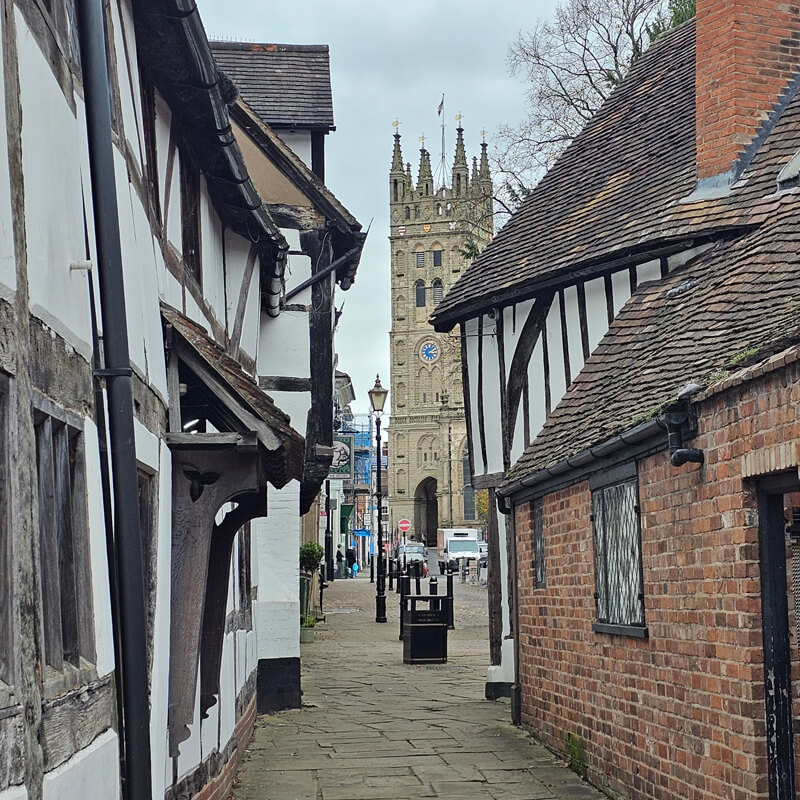
The county town of Warwickshire, Warwick has ancient origins and an array of historic buildings, most notably from the Medieval period, but the town is best known for its mighty castle.
Early History
There is evidence of human activity at Warwick as early as the Neolithic age, with a fairly sizeable settlement on Warwick’s hilltop. Discoveries from this time include more than 30 shallow pits containing early Neolithic flints and pottery, and a number of small post holes indicating building structures. These are believed to have been created sometime between 4000 and 2351 BC by early European farmers who brought agriculture to Europe. Other interesting archaeological finds include a Bronze Age arrowhead from the Bell Beaker culture, dating from about 2500 to 1700 BC, and the footings of a sizeable Roman barn from the 2nd century AD.
The Middle Ages
Warwick was continuously inhabited from the 5th or 6th century onwards, originating at a crossing on the River Avon and becoming part of the kingdom of Mercia. It is described in historical records in the year 914 as the Anglo-Saxon town of ‘Wæringwīc’. The name comes from the Old English words wæring (or just wær) and wīc, giving us ‘Wæringwīc’. The word wæring or wær is Old English for ‘dam/weir’, and the suffix wīc means ‘fortification’ or ‘farm’, which suggests that the original settlement may have been located by a natural dam/weir over the River Avon.
In the year 914 the settlement was re-founded and fortified by Æthelflæd, Lady of the Mercians, daughter of Alfred the Great and sister of Edward the Elder, becoming one of the many fortified towns built as part of a network of defensive burhs to reinforce their defences against the Danes. The shire of Warwickshire was created not long after, in the early-10th century, with Warwick as its county town. A royal mint was established at Warwick during the reign of Æthelstan (924-939) which continued until the mid-12th century.
The town expanded throughout the medieval period, especially after William the Conqueror built a wooden motte and bailey castle within the larger Anglo-Saxon burh in 1068 as part of the Norman conquest of England. By the time of the 1086 Domesday book, the town of “Warwic” quickly developed around its castle, becoming a royal borough with 225 houses. The original wooden castle was rebuilt in stone during the 12th century, developing it into a magnificent stone fortress and one of the grandest medieval castles in the land, home to the powerful Earls of Warwick throughout the Middle Ages until it was converted into a country house in the 17th century before becoming the popular tourist attraction that it is today.
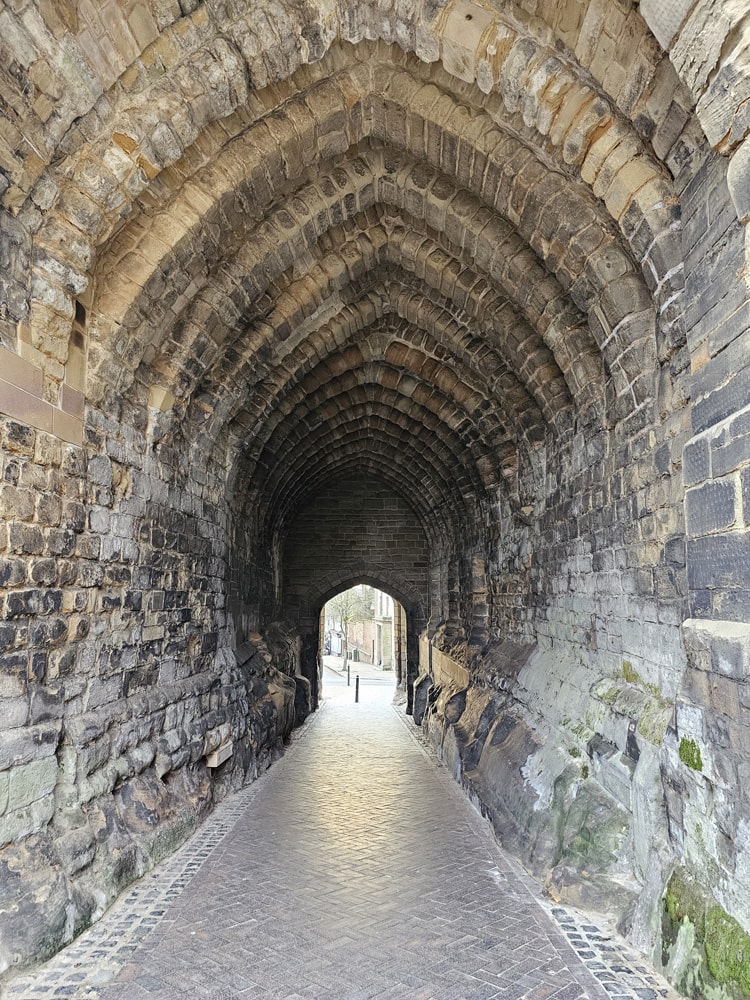
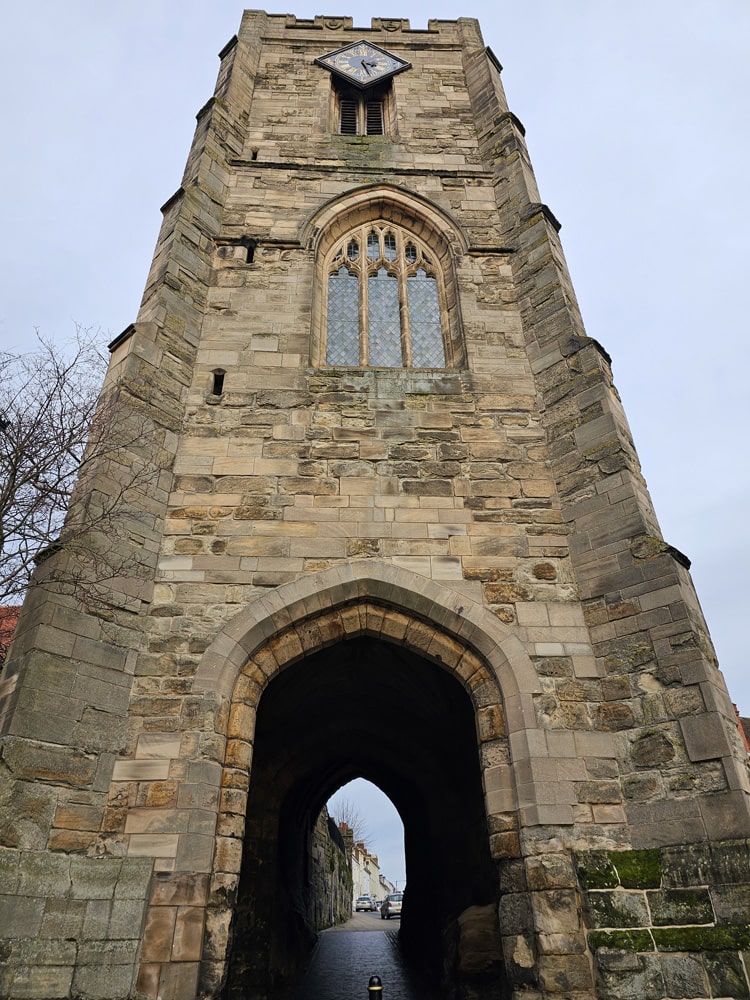
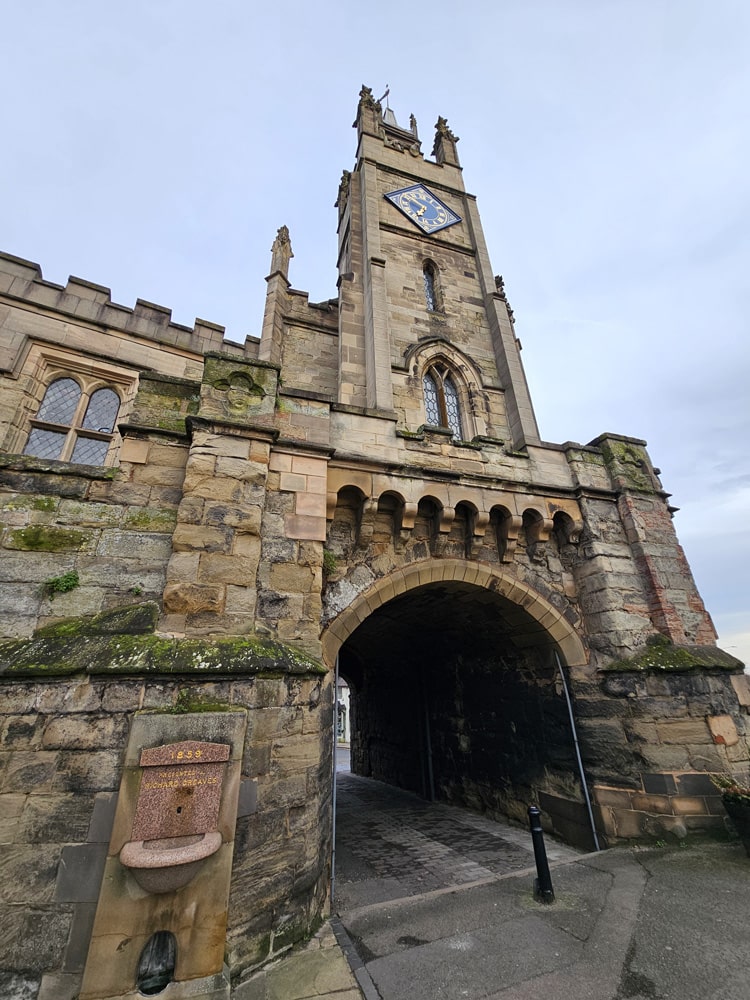
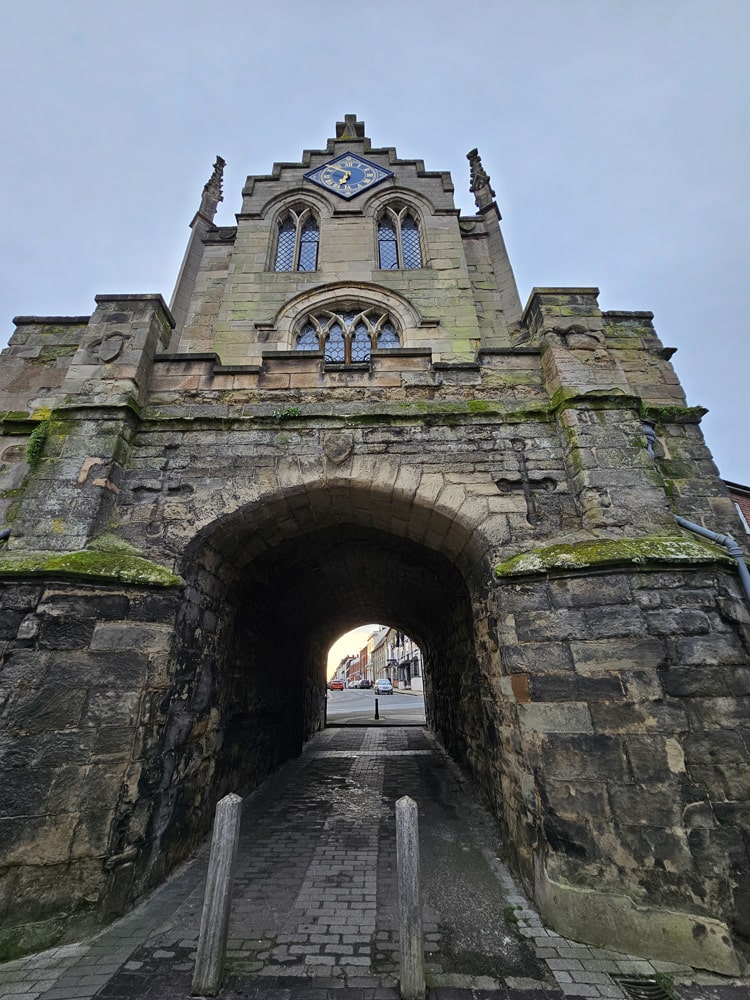
Construction of Warwick’s town walls started in the early-12th century, which included three town gates; to the north, east and west of the town. The town walls had mostly been demolished by the early-16th century, and now only fragments of the medieval walls remain, which can be found by the two surviving medieval gates; East Gate and West Gate. The third gate, North Gate, was pulled down in the Tudor period.
Warwick once had a priory, founded in the early-12th century by Henry de Beaumont, the first Earl of Warwick, but it was destroyed during the Dissolution of the Monasteries in 1536. The site of the priory is what is now Priory Park.
Warwick saw some brief action during the English Civil War when the town and castle were garrisoned for the Parliamentarian cause. In 1642 the castle underwent an unsuccessful two-week siege by the Royalists, with their efforts resulting in very little effect on both the town and castle.
The Great Fire of Warwick
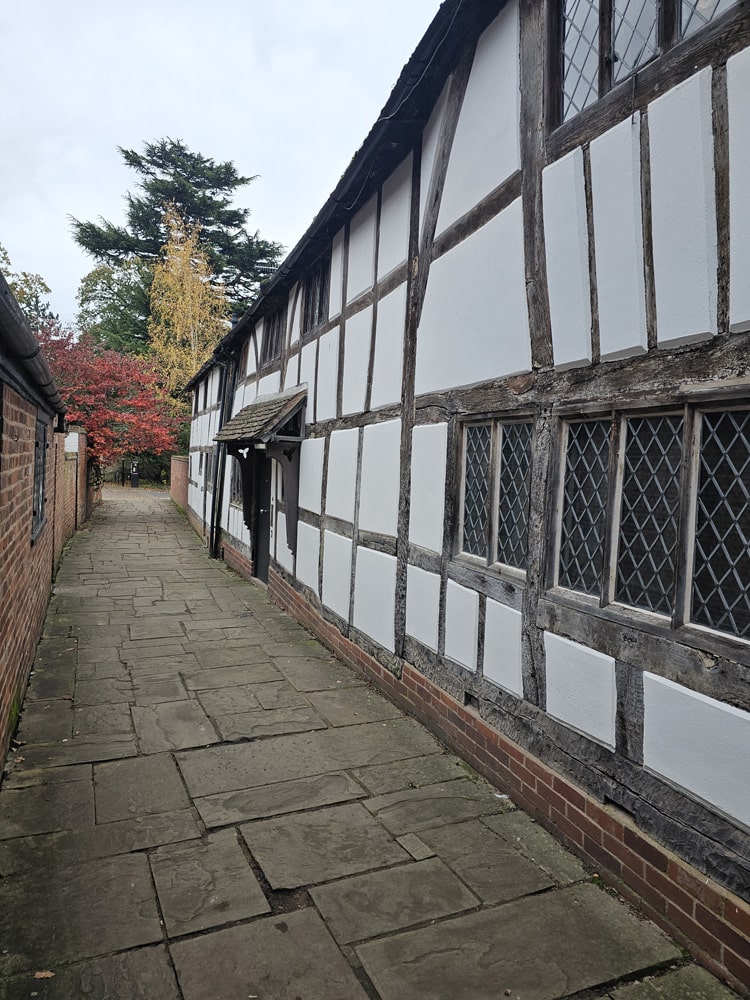
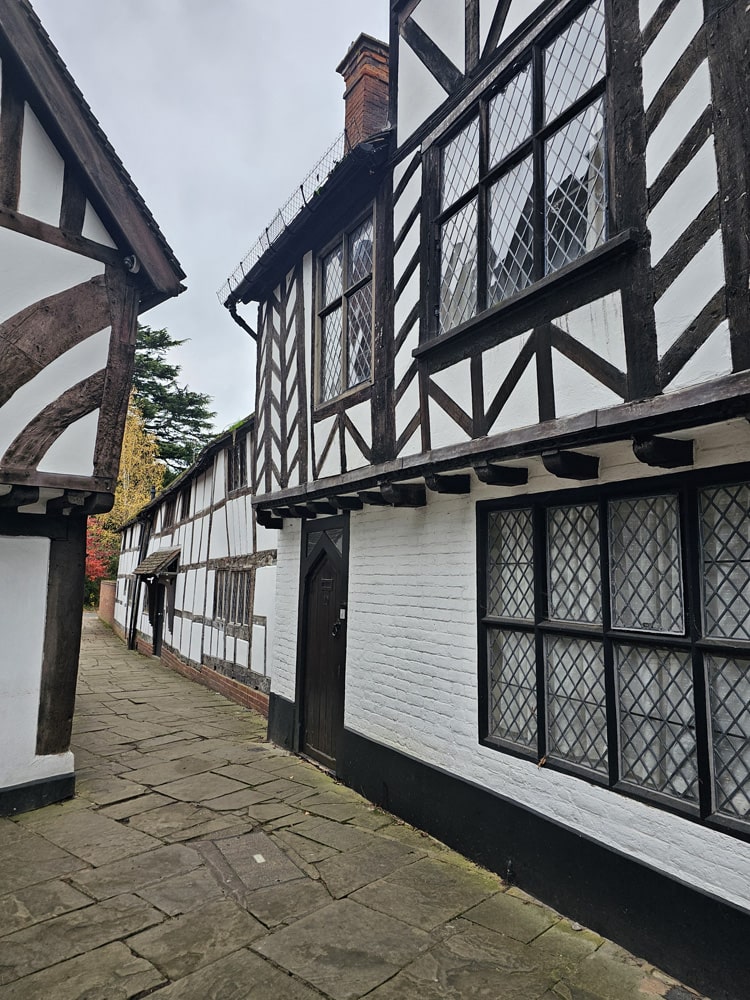
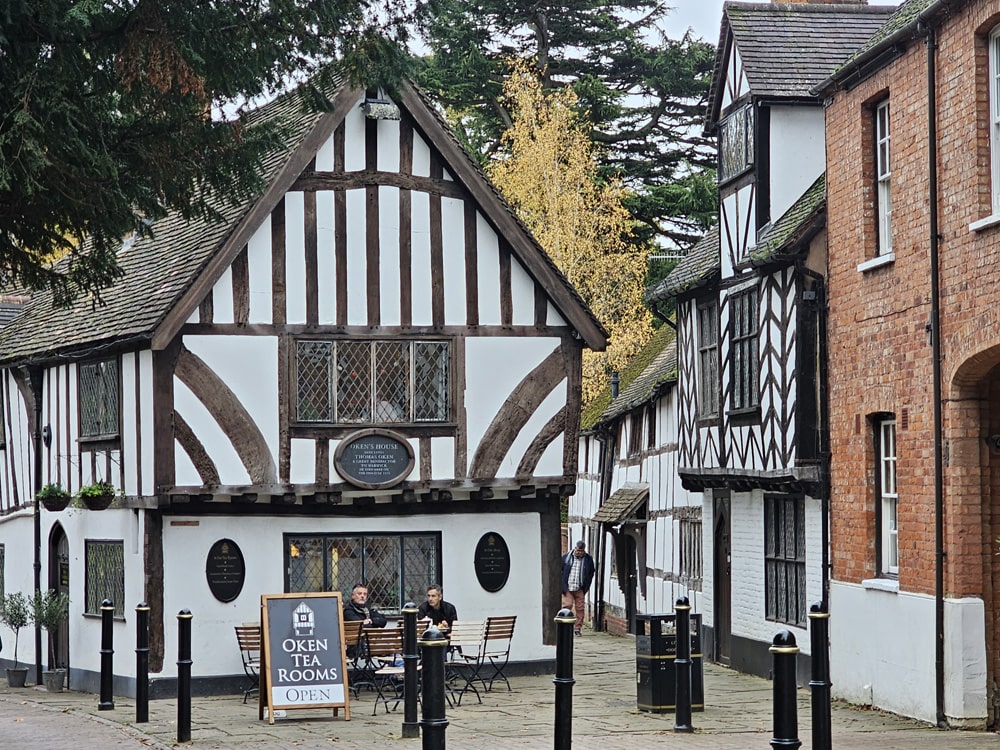
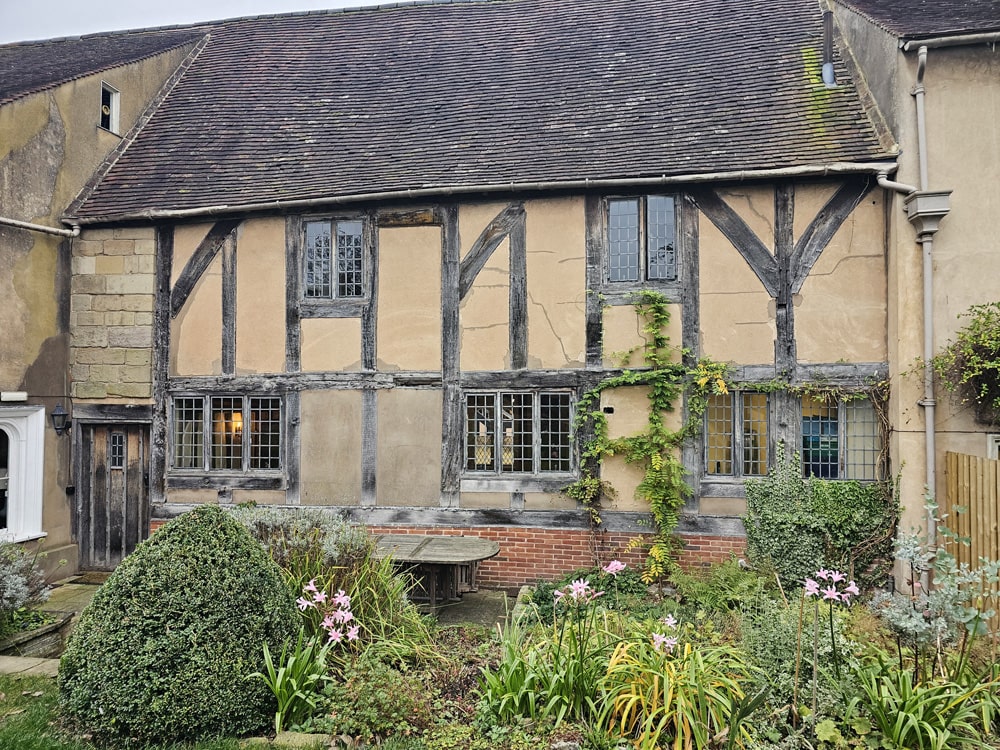
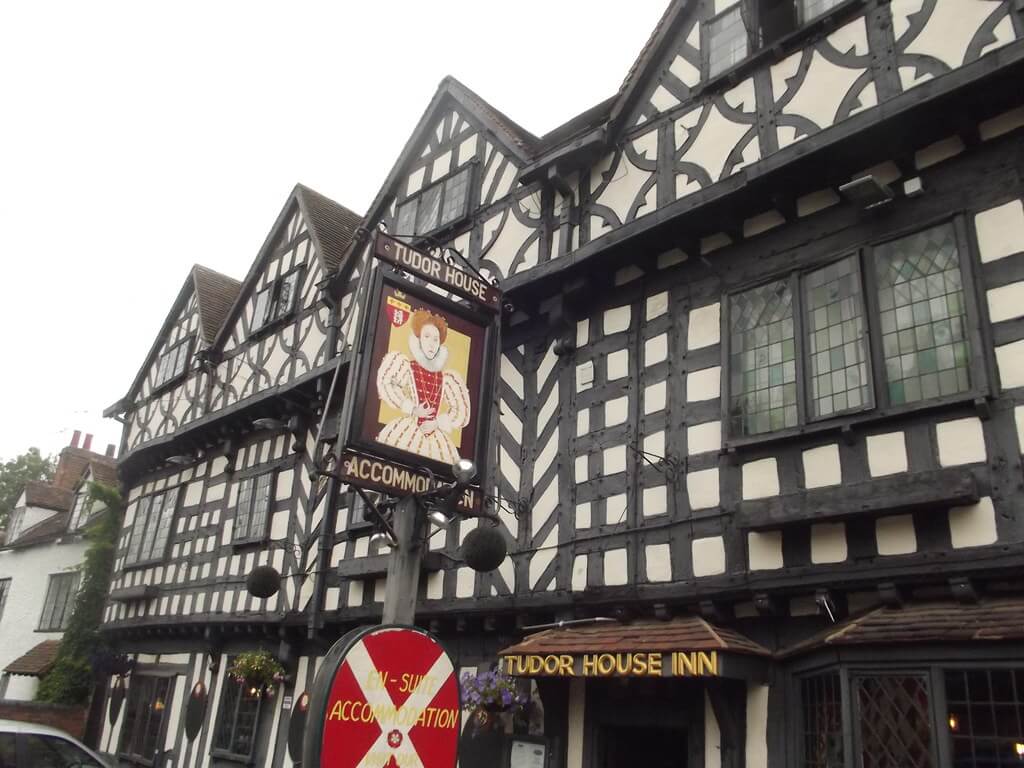
The Great Fire of Warwick in 1694 destroyed much of the medieval town, destroying hundreds of buildings and leaving hundreds of families homeless, and as a consequence thatched roofing was banned from the town. As a result of the fire, many of the buildings within the old town walls are late-17th and early-18th century structures. Relatively few medieval timber-framed buildings survived the blaze, however one of the most notable surviving examples is the Lord Leycester Hospital (a home for aged soldiers and their families) on the High Street, whose oldest parts date from the 14th century. Some half-timbered houses also survive, most notably Oken’s House, now a popular tea shop, as does the Tudor House Inn and the Market Hall.
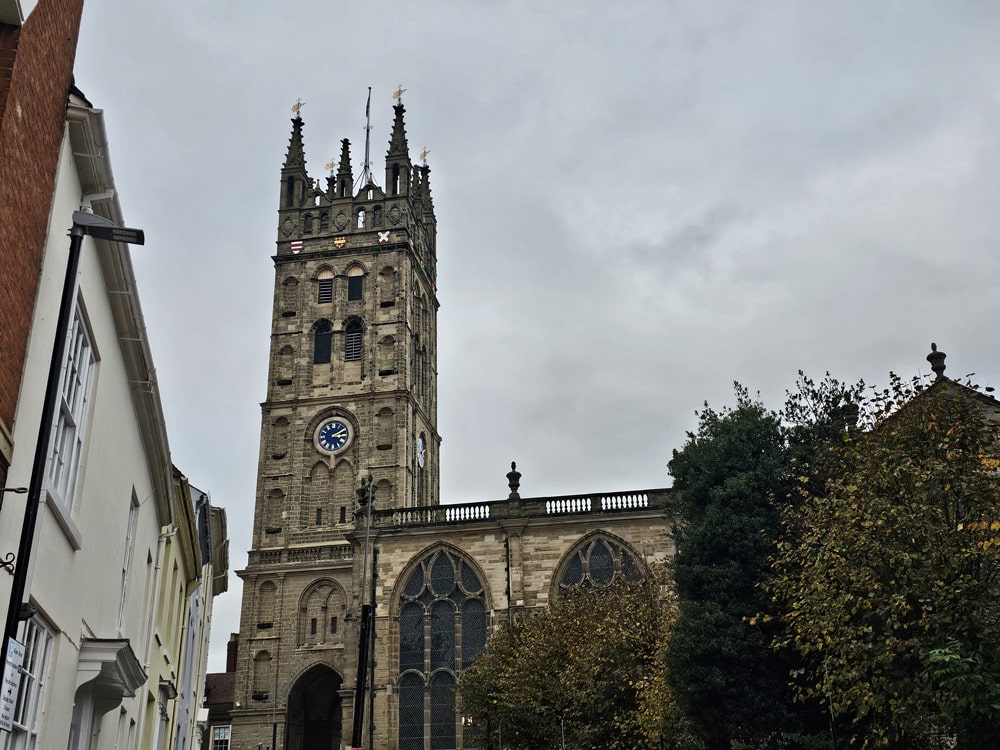
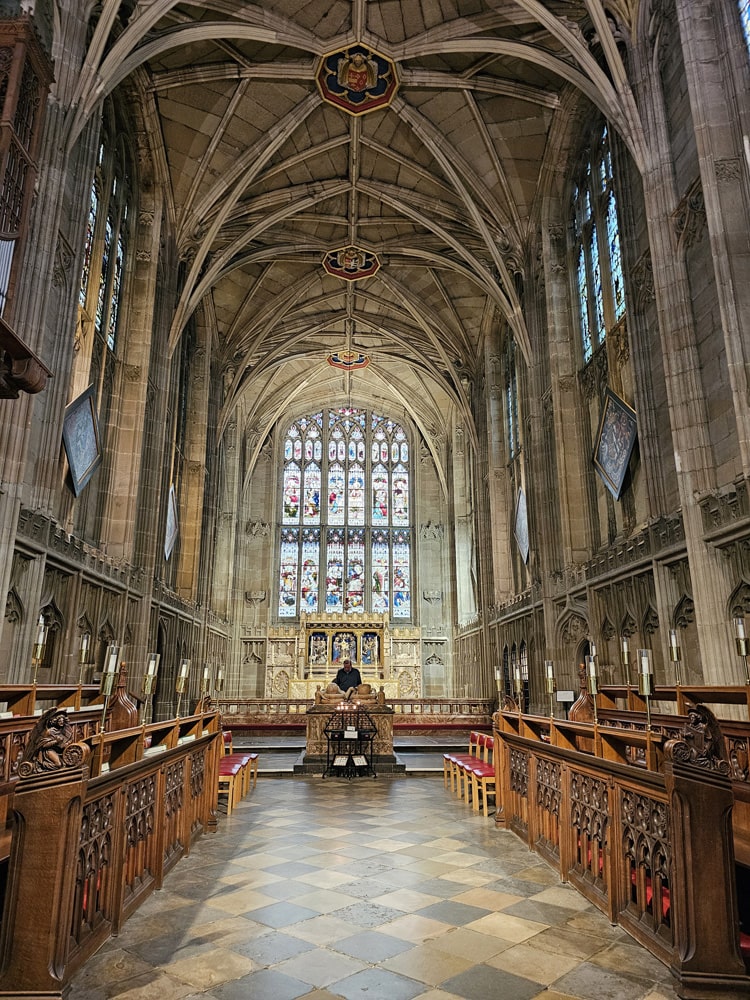
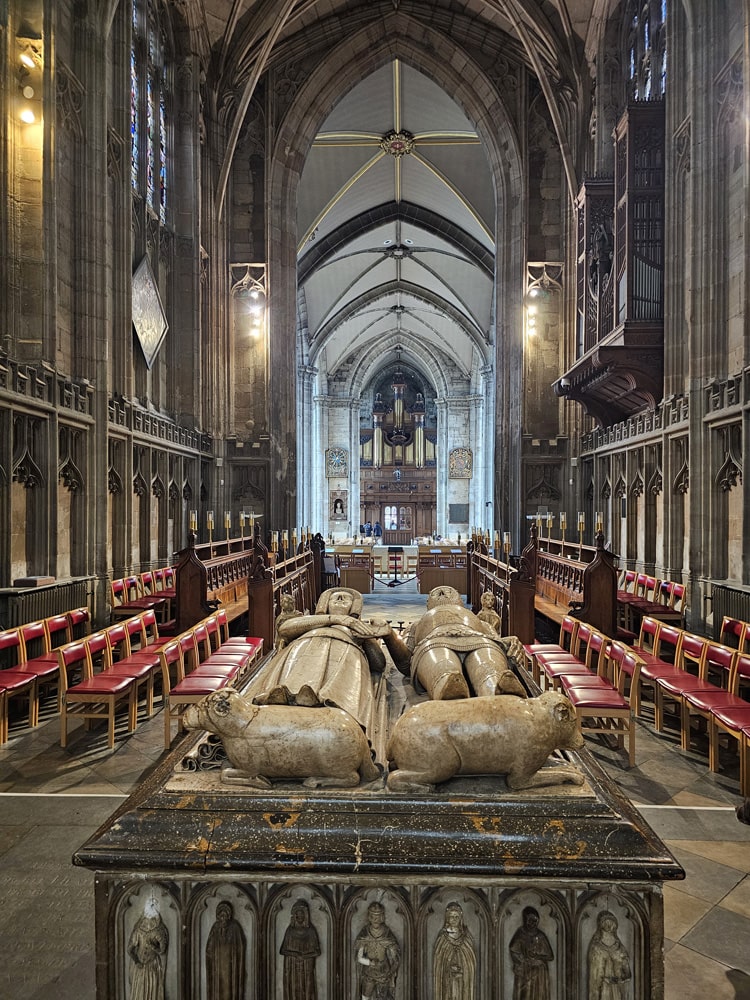
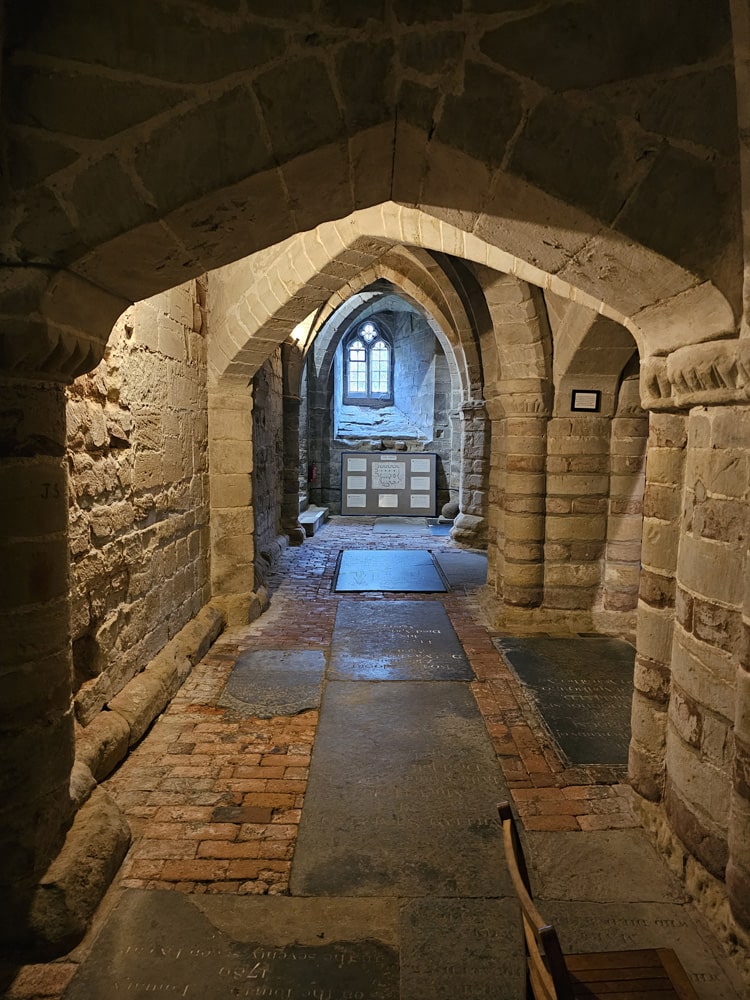
The fire also burnt down much of the medieval church of St Mary, completely destroying the nave and tower. However, the original 12th-century Norman crypt, the chancel and the Beauchamp Chapel survived, and the rebuilding of the rest of the church was completed by 1704 in a Gothic design.
Warwick Today
Today you can visit the mighty Warwick Castle, the striking St Mary’s Church, the two surviving town gates, admire the surviving beautiful half-timbered buildings, and the fascinating Lord Leycester Hospital with around 700 years of history.
Town Gates
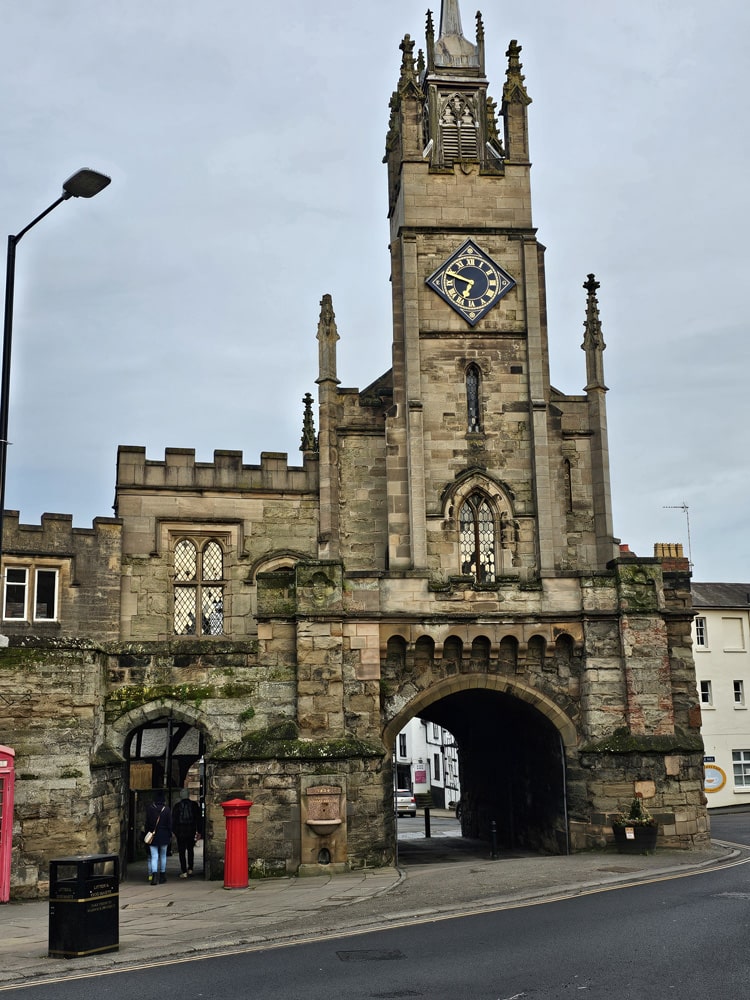
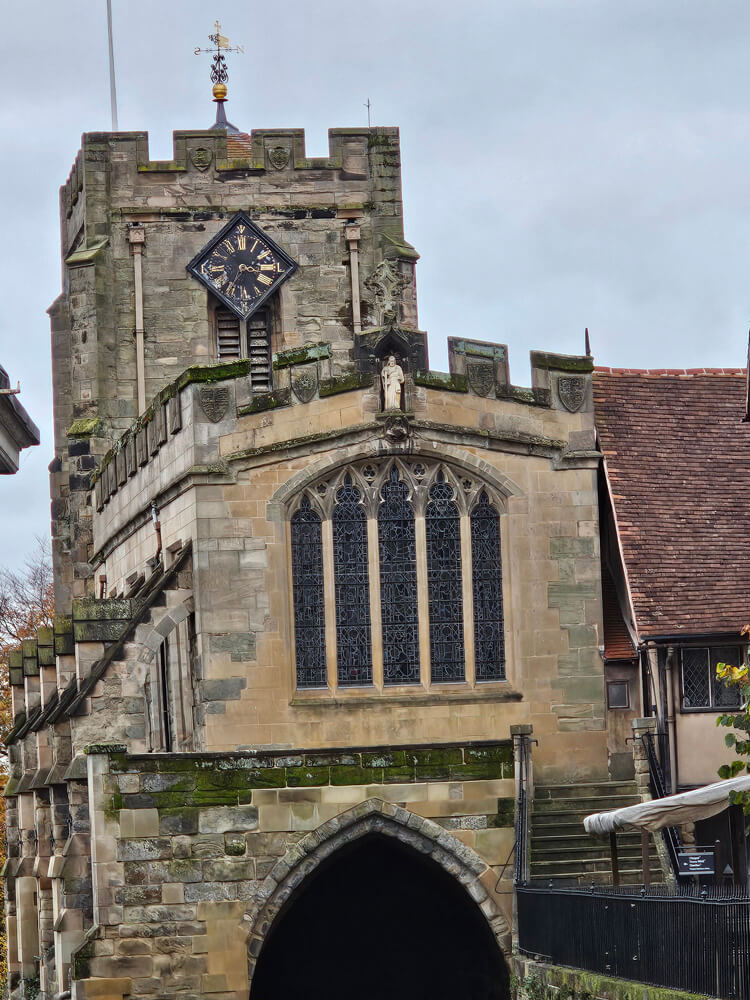
Warwick was once a fortified town with defences consisting of a town wall and three main gatehouses; to the north, east and west of the town. Today, two of the three medieval town gates survive: East Gate and West Gate. The other gate was North Gate, which was pulled down in the early Tudor period. These two gateways were probably built in the 14th century. West Gate likely incorporates stonework from an earlier 12th-century gateway and is topped by a 14th-century chapel, and East Gate is topped by a 15th-century chapel.
Warwick Castle
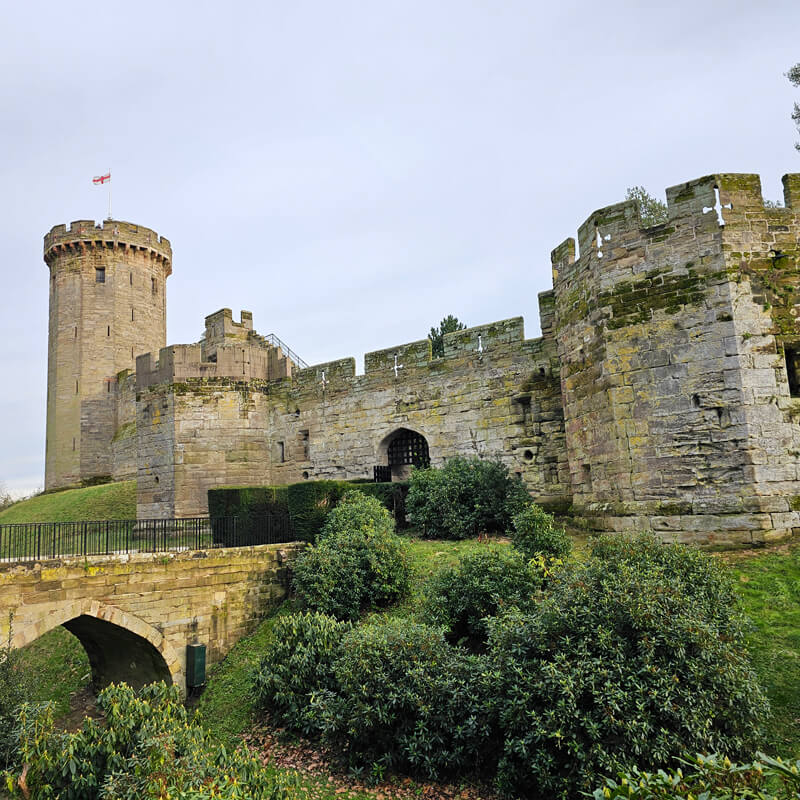
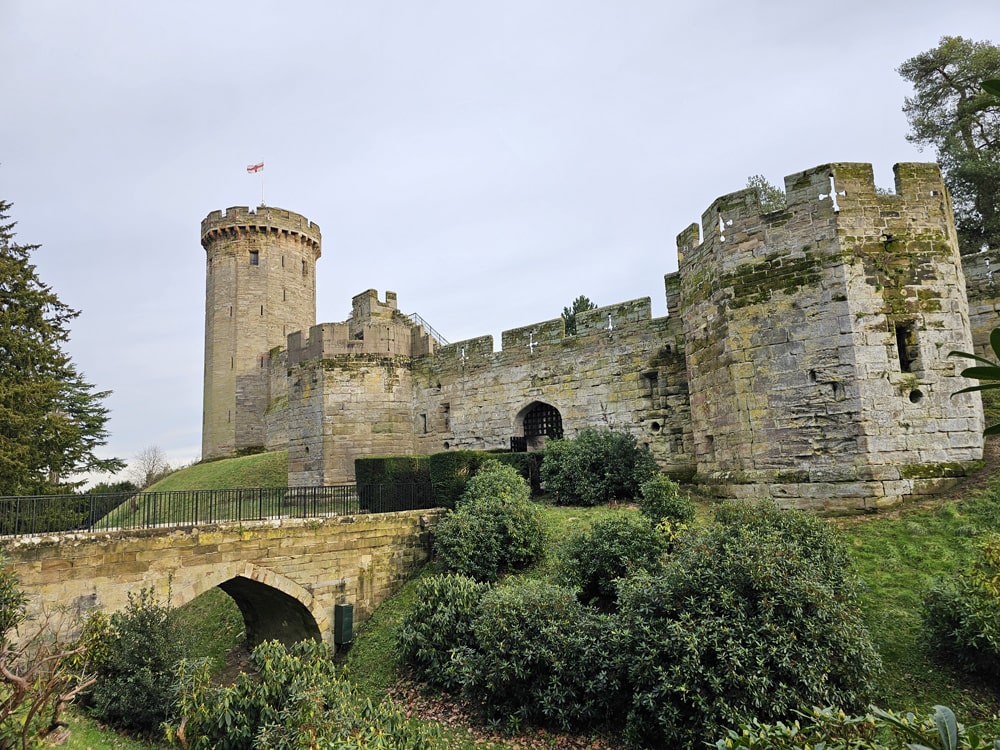
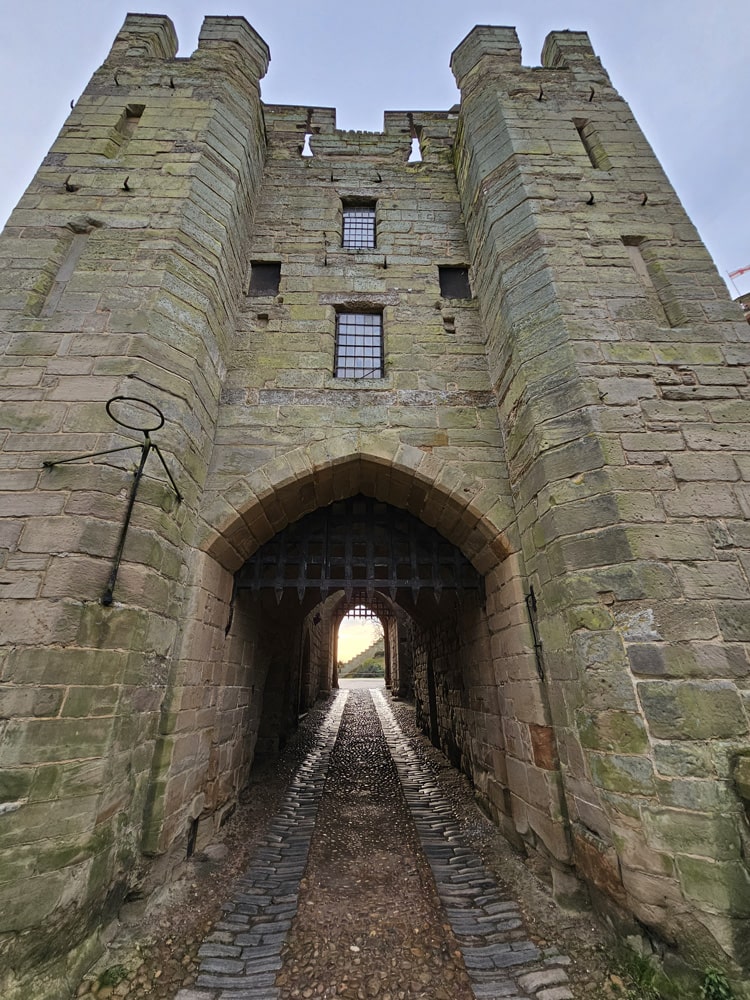
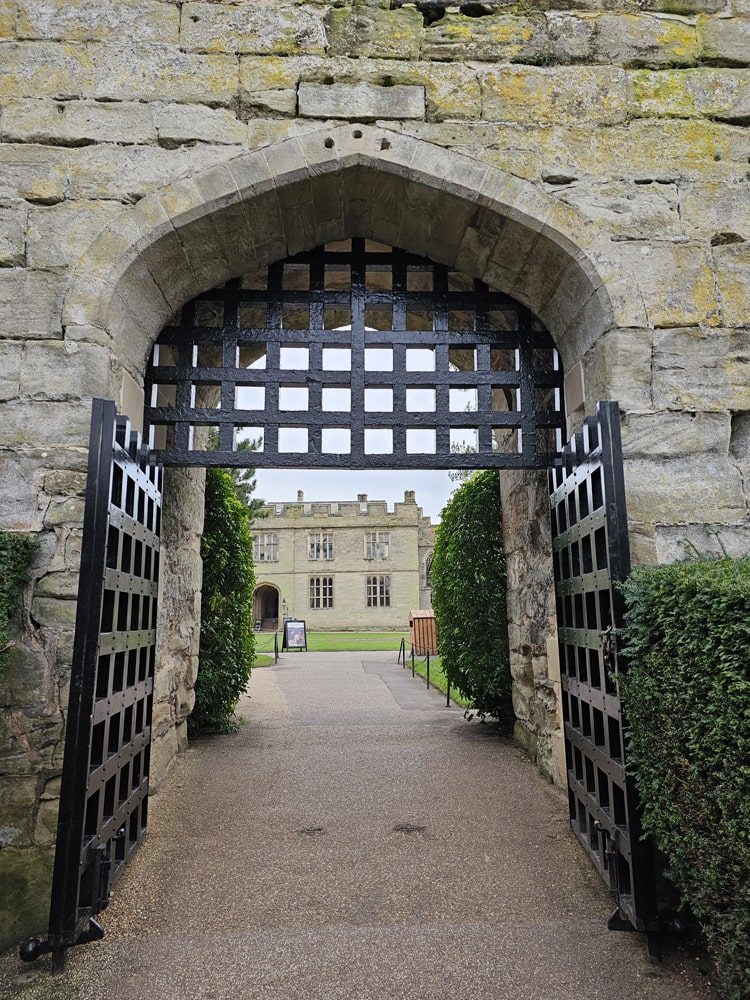
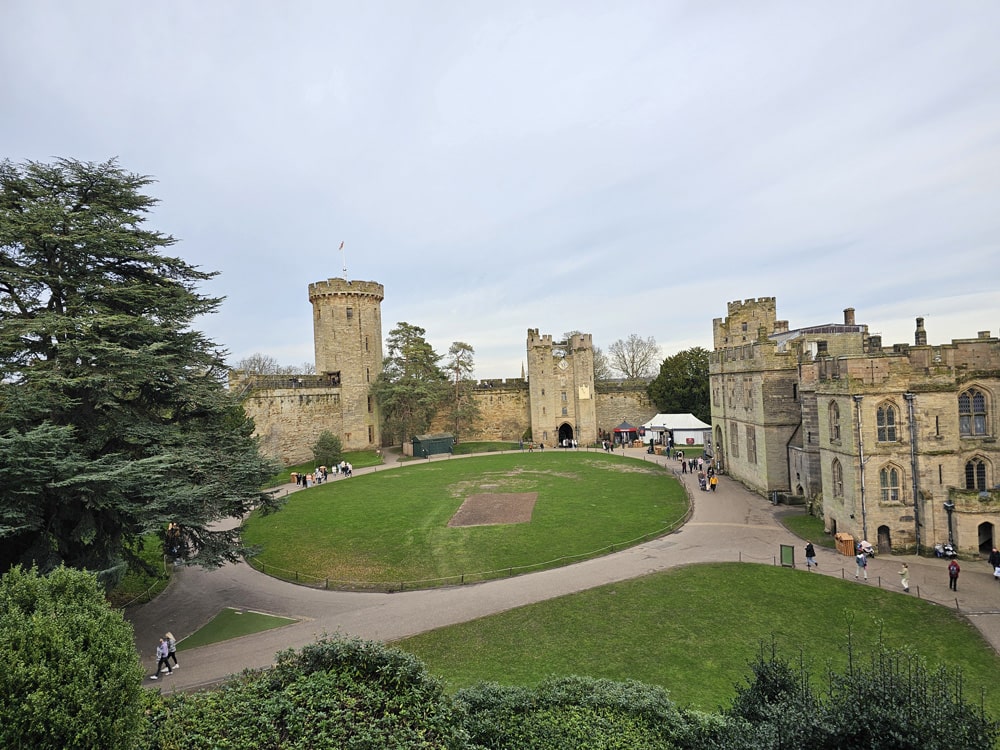
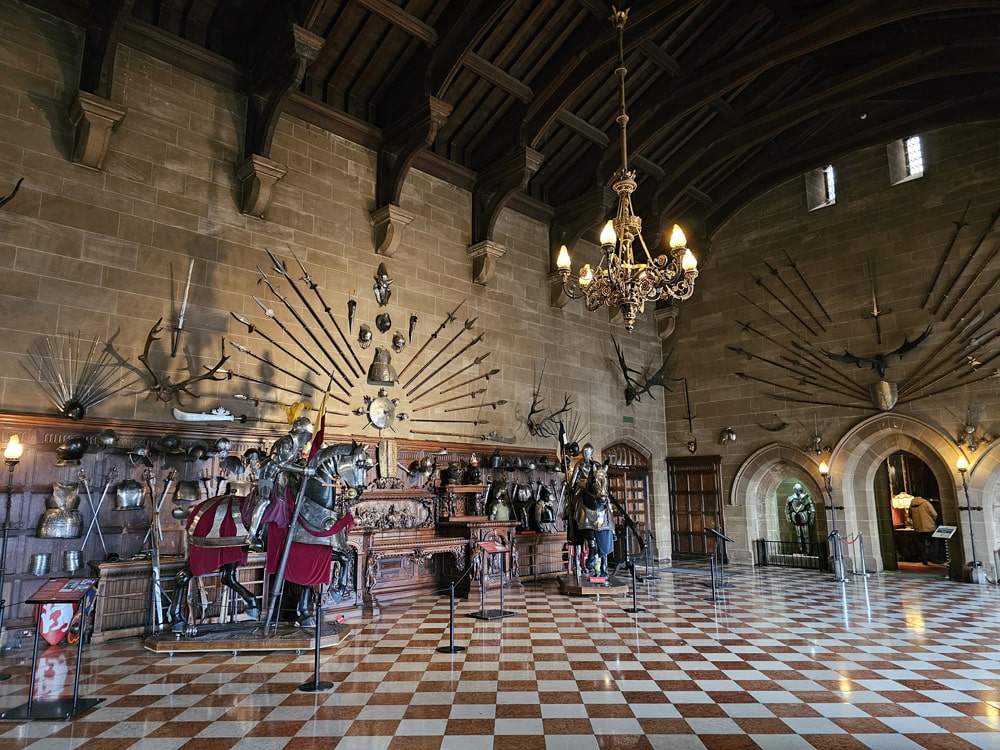
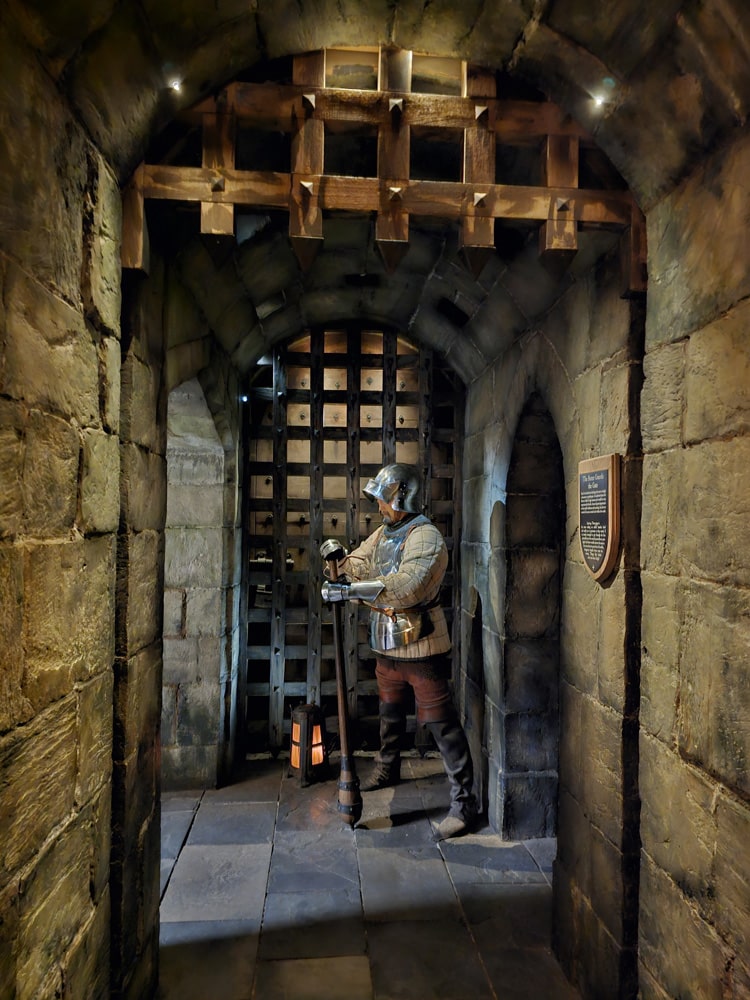
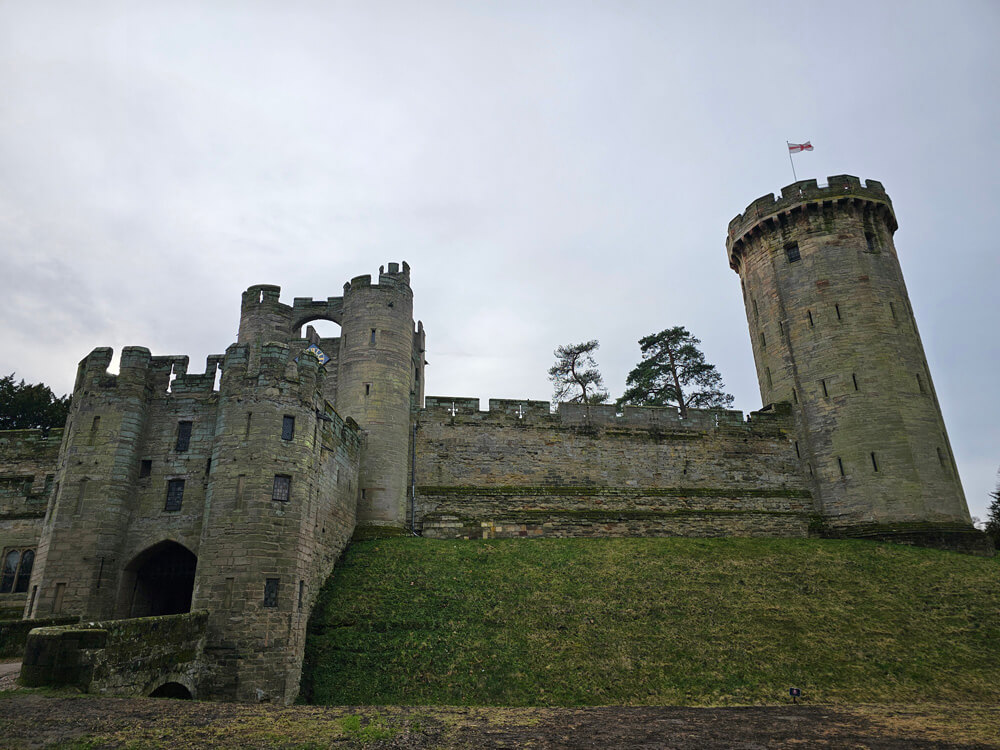
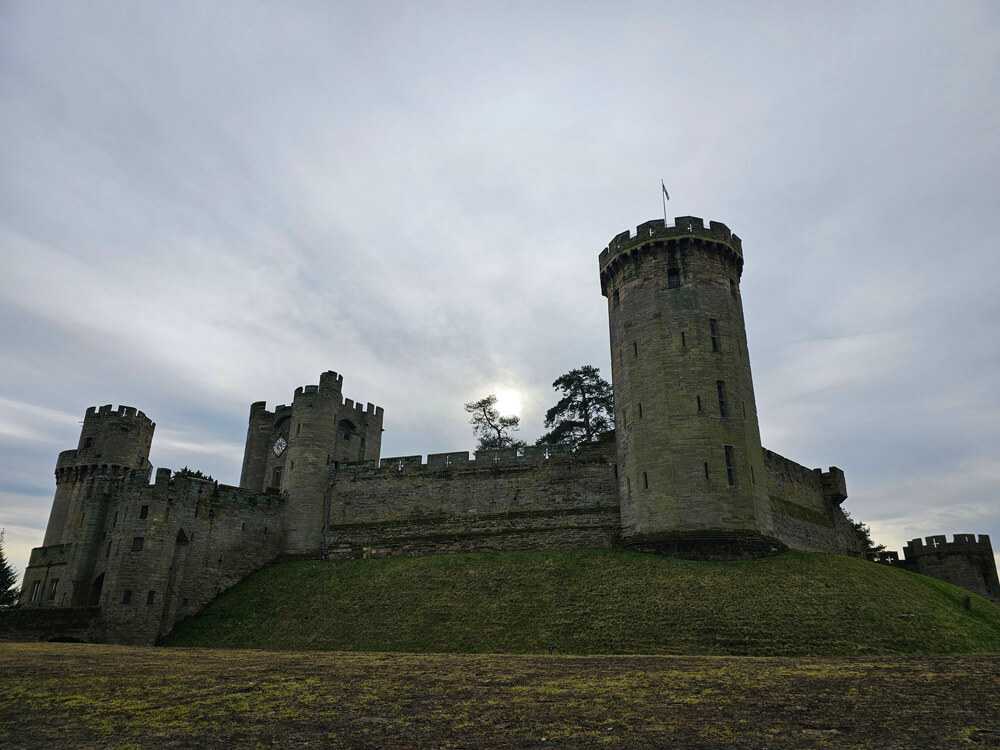
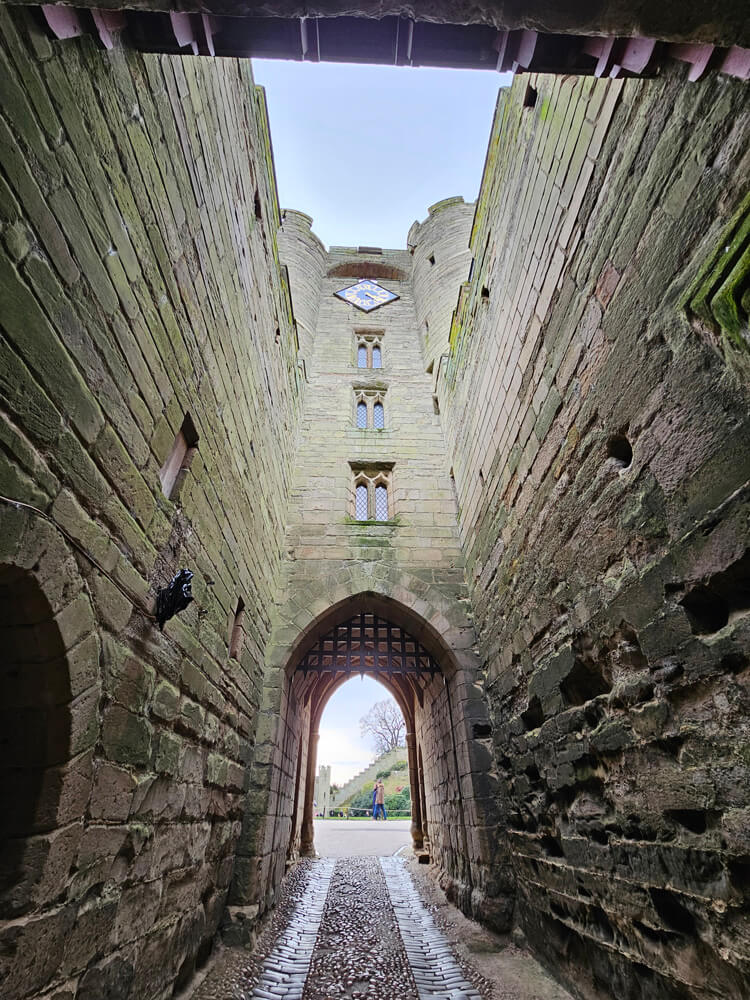
In 1068 William the Conqueror built a motte-and-bailey castle at Warwick to maintain his control of the Midlands as he advanced northwards. The original wooden castle was rebuilt in stone in the 12th century by the de Beaumont family who became the earls of Warwick. The present castle structure as it stands today dates mainly from the 14th and 15th centuries, also the work of the Beauchamp family. Towering over the courtyard is the Mound, which is the oldest surviving part of the castle, having stood since the castle was first built in the 11th century.
Historic Buildings
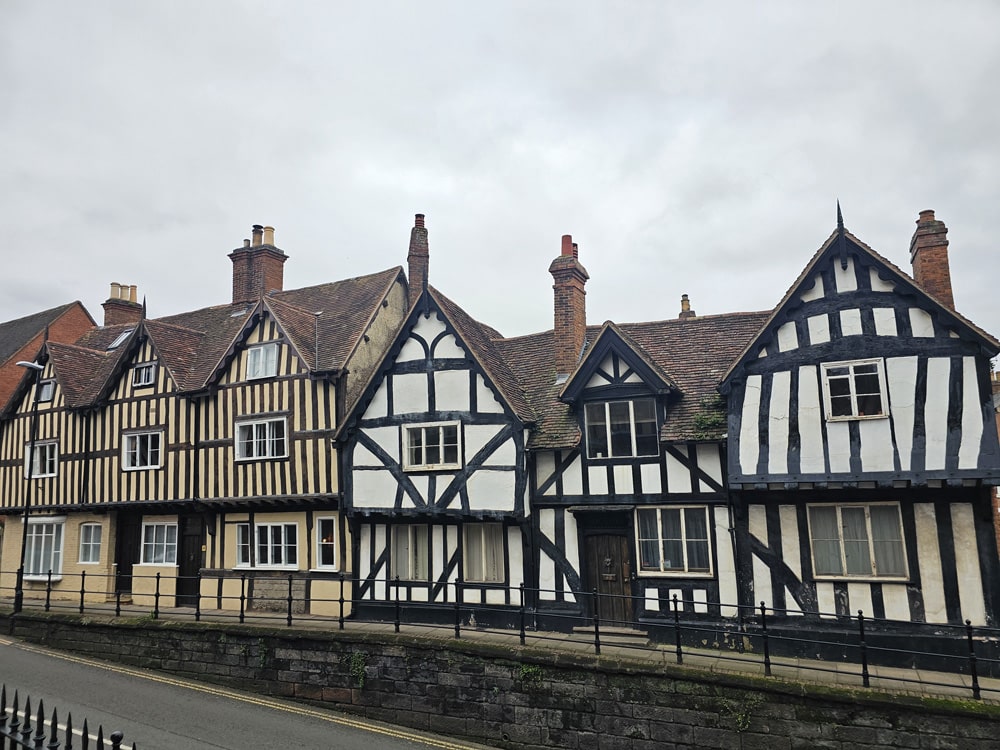
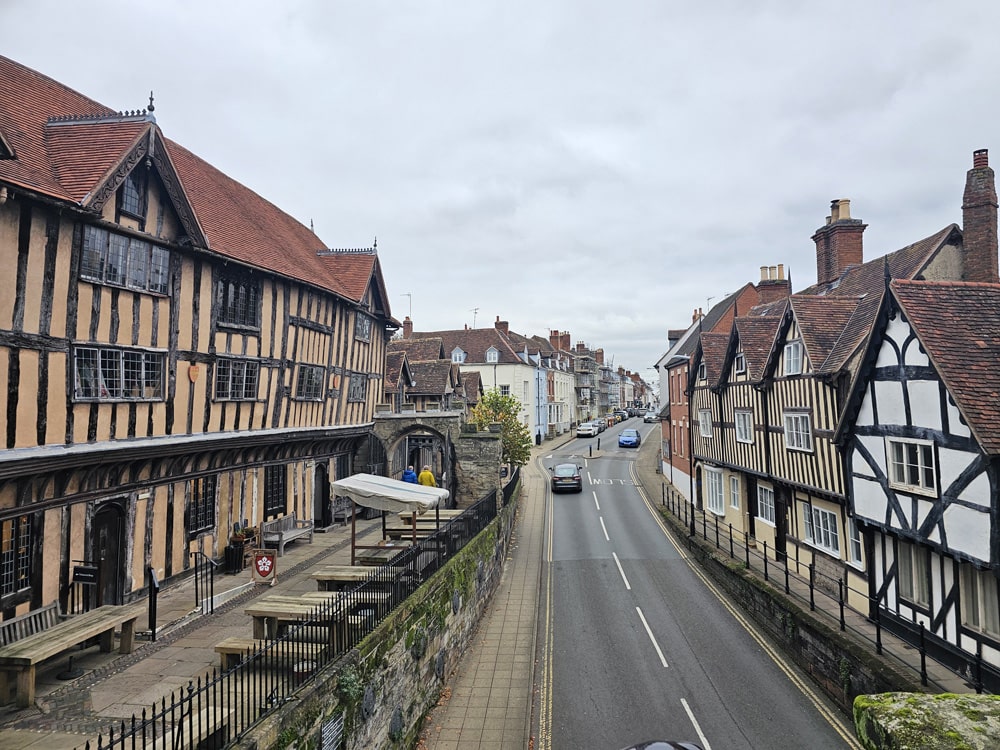
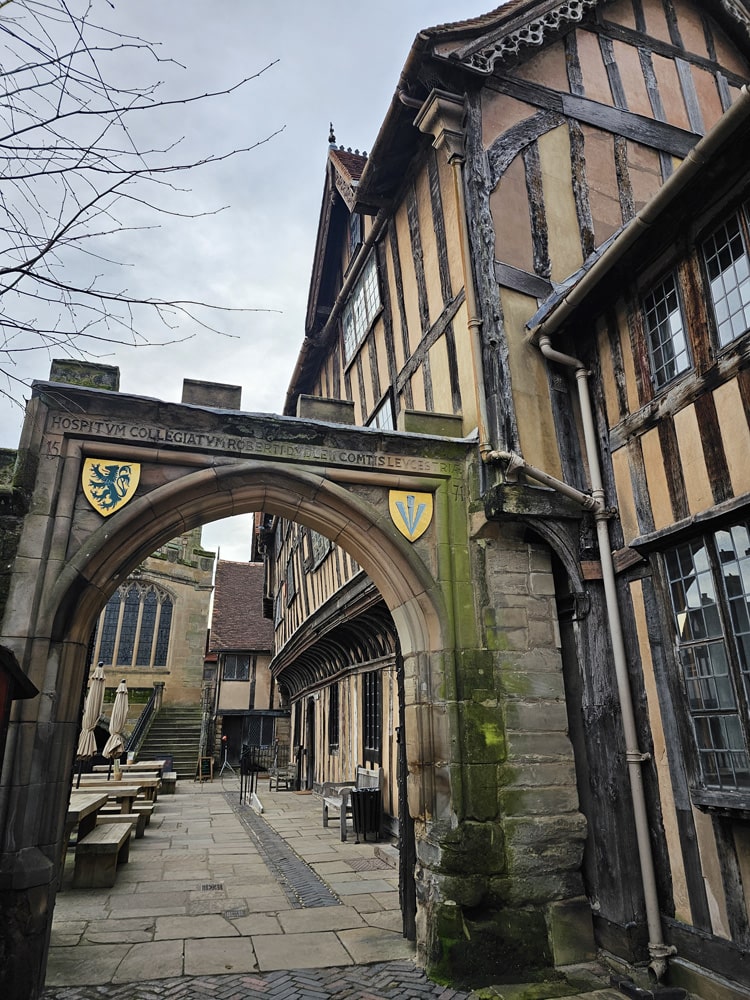
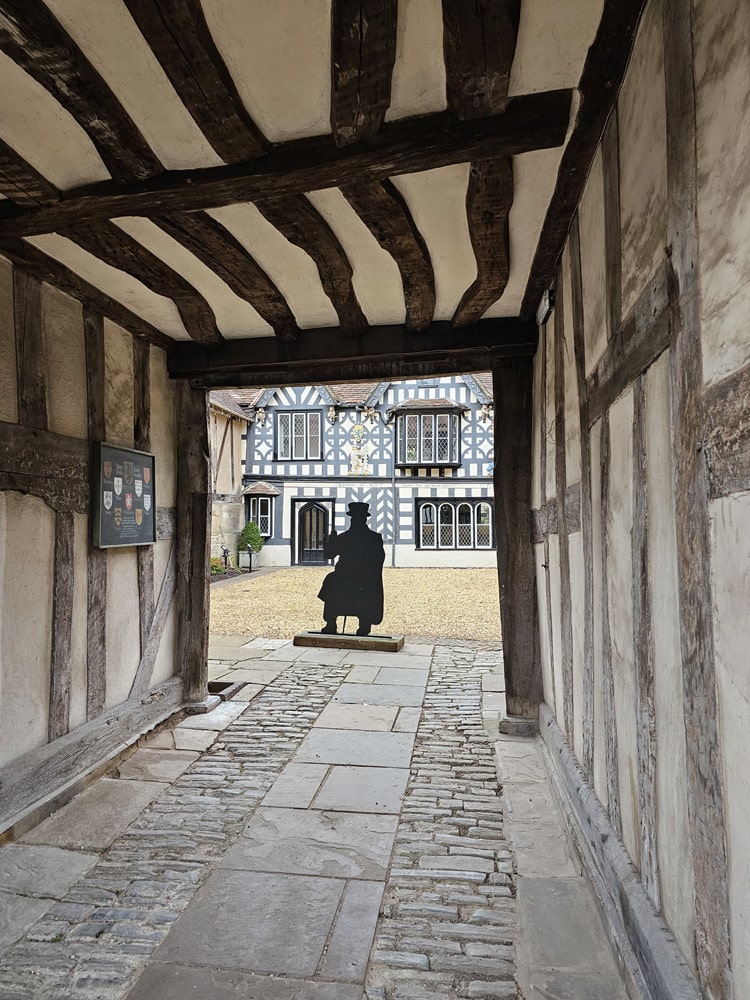
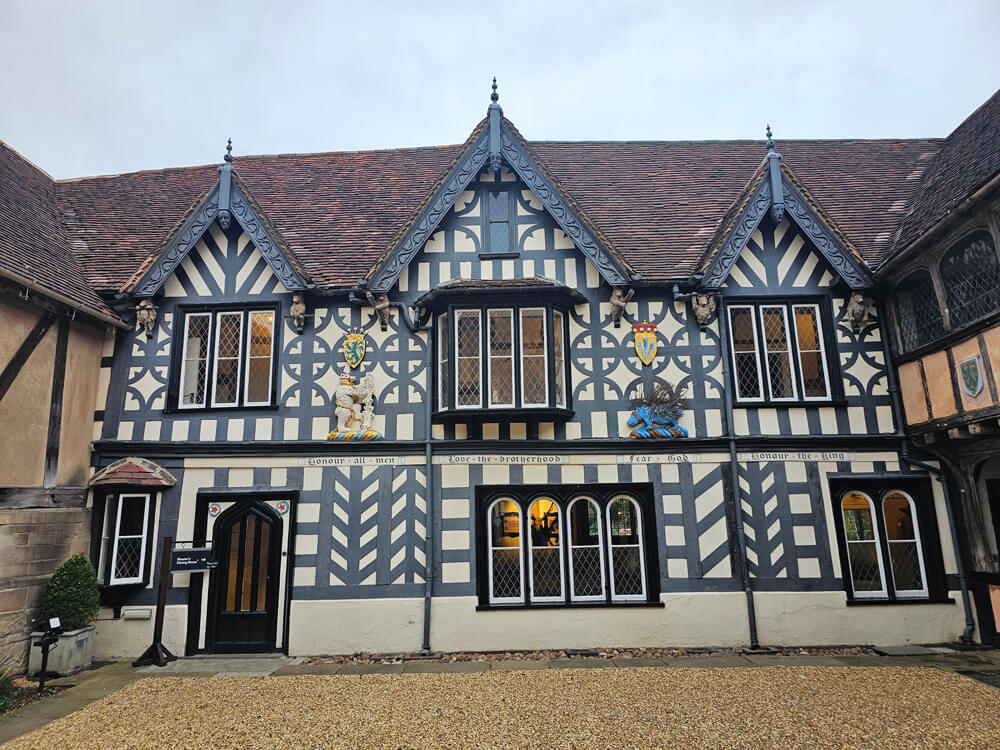
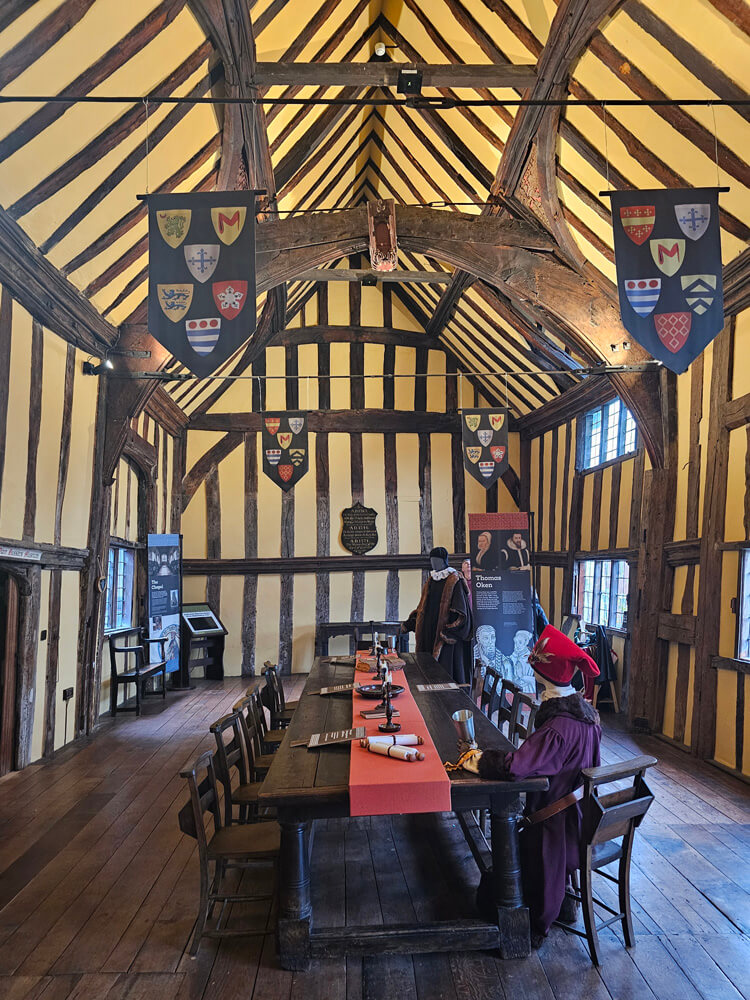
There are many historic buildings dotted about Warwick’s medieval town centre. The most beautiful of these in my opinion are the surviving medieval timber-framed buildings, including the 15th-century Tudor House Inn, 15th-century Oken’s House, and the 14th-century Lord Leycester Hospital by West Gate, with its unique chantry chapel, galleried courtyard, superb Great Hall and Guildhall.
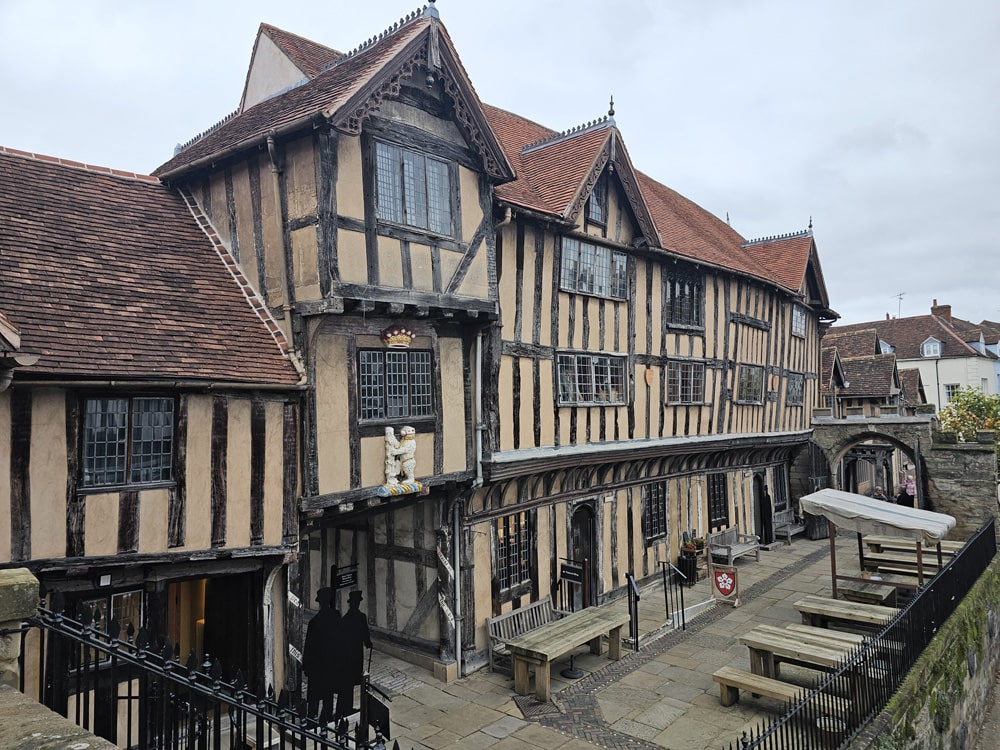
Lord Leycester Hospital
With over 900 years of history, the Lord Leycester Hospital is a collection of superb 700 year old half-timbered medieval buildings next to the medieval West Gate on the High Street. It is also linked to a historic chapel built over the West Gate that dates to the 1120s. The Hospital is some of the best preserved examples of intact medieval architecture in Europe, with several splendid buildings all dating between the 14th and 15th centuries, forming a stunning galleried courtyard.
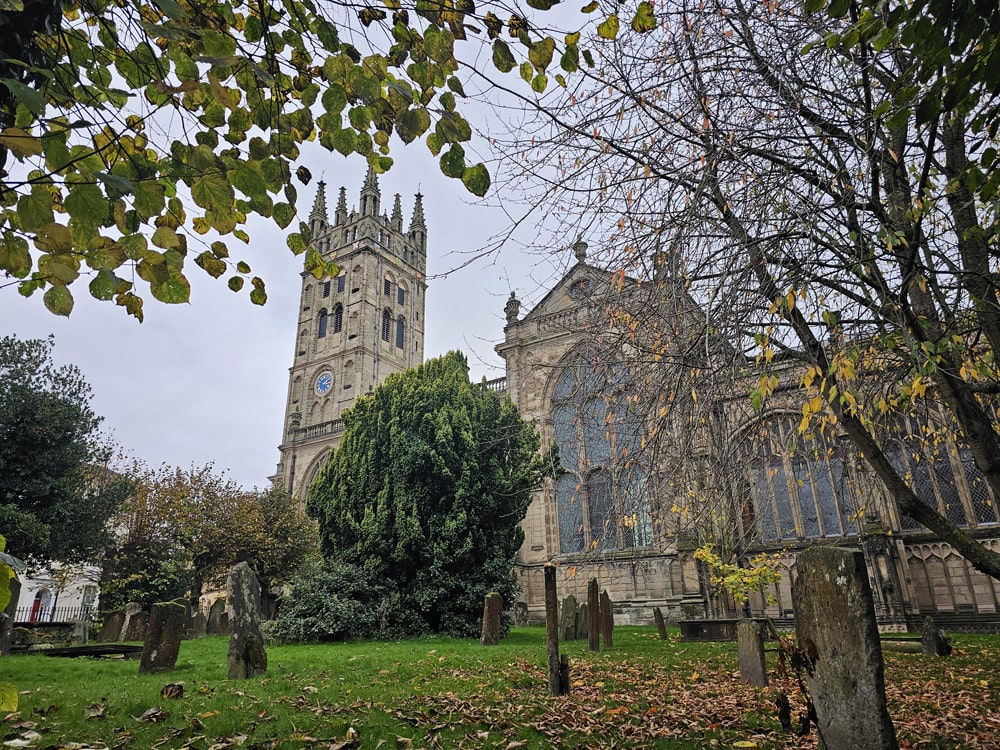
St Mary’s Church
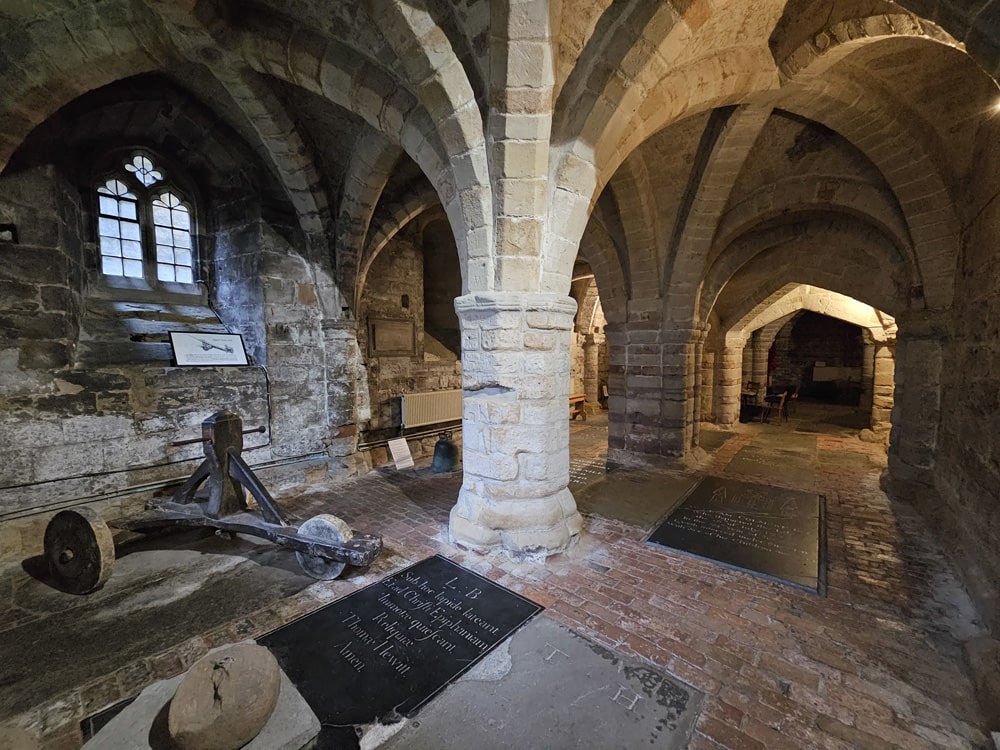
St Mary’s Church is one of the largest parish churches in England dating back nearly 900 years, and its 12th-century crypt is the oldest surviving structure in Warwick. Originally built in the 1120s, it was rebuilt in the 14th century and was badly damaged in the late 17th century in the Great Fire of Warwick, but the original 12th-century Norman crypt, the glorious 15th-century Beauchamp Chapel and the 15th-century Dean’s Chapel all survived the blaze.
Photo Gallery.
Did you enjoy this post?
I hope you found this post useful. I put a great deal of time and effort in to building, maintaining and populating the website. If you like, you could say a small thank you by buying me a coffee. You don't have to, but it would be nice :)
Buy me a coffee
Stay up to Date
Follow me on my journey and get notified whenever a new post is published by following Kings & Castles on Facebook.
Follow MeExplore The Map
Discover the hundreds of castles, churches, monasteries, cathedrals and other historic locations that I've personally visited across England and Wales. Search by location, explore nearby sites and plan your next historical adventure.
Share: