The St Brice’s Day Massacre
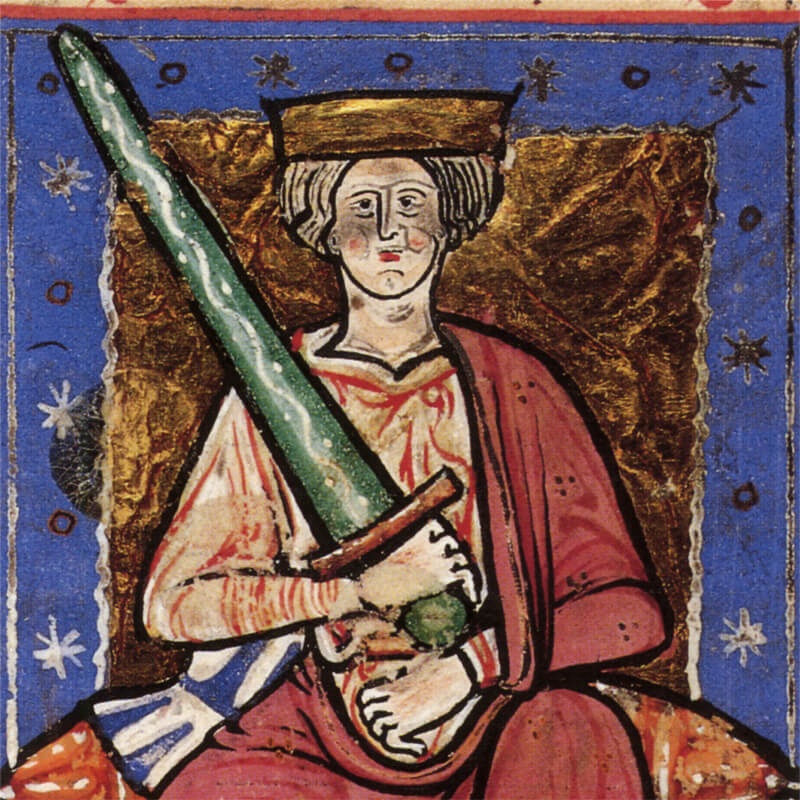
In the year 1002, English king Æthelred the Unready ordered the mass killing of all Danes in England, provoking an invasion of the Danish King Sweyn Forkbeard and his son Cnut, resulting in 30 years of Danish rule over England.
Who is St Brice and What is St Brice’s Day?
St Brice was a 5th-century Bishop of Tours whose feast day is 13th November. Brice was born in France around the year 370. He was an orphan, raised by St Martin of Tours. He was said to have been vain, ambitious, and not very pious. He succeeded St Martin as Bishop of Tours in 397 and behaved so badly that he was driven out of his diocese. After seven years of exile in Rome, he changed his ways, so significantly that he was greatly revered by the time he died in November 444. He served with such humility that on his death he was venerated as a saint.
Before the Massacre
Vikings had been living in a large area of land known as the Danelaw since the reign of Alfred the Great in the late-9th century. In the year 878, King Alfred’s army defeated the Danes led by the Danish king Guthrum at the Battle of Edington, and Wessex emerged as the dominant kingdom in England. Alfred brokered a peace treaty with the Danes and split the country in half; the northern and eastern parts of England were settled by the Danes, known as the Danelaw (consisting of the largest parts of modern-day Northumberland, Yorkshire, Lancashire, the Midlands and Anglia), and the rest of England was controlled by the Anglo-Saxons.
By the time of the reign of Æthelred the Unready, Danes had been settled in numbers in the Danelaw in England for over a hundred years, and the Saxons and Danes living in England by this point were mostly living together in relative peace.
The reign of King Æthelred the Unready was one of conflict with repeated raids from overseas Viking invaders from the 980s onwards, and there was no unified defence in England at this time. Not being an able soldier, the only way Æthelred could defend the country against increasingly rapacious Viking raids was to pay them off. However, his efforts to buy peace only made the invaders more rapacious. Many times the king paid them tribute; money levied through a tax called the Danegeld, but they always came back for more.
Paranoia and Suspicion
As the Danelaw settlements prospered, they became to be viewed as a threat to the Saxons and the king. King Æthelred wasn’t happy that the Danes ruled in many major cities in the country, even though they were within the Danelaw. He was also fed up with the raids from Danish invaders and having to pay them off with Danegeld. Additionally, there was a rumour that the Danes living within the Danelaw were planning to kill the king and his advisers and take over the kingdom. As a result, the king’s nobles urged him to find a solution to the “Viking Problem”.
The Massacre
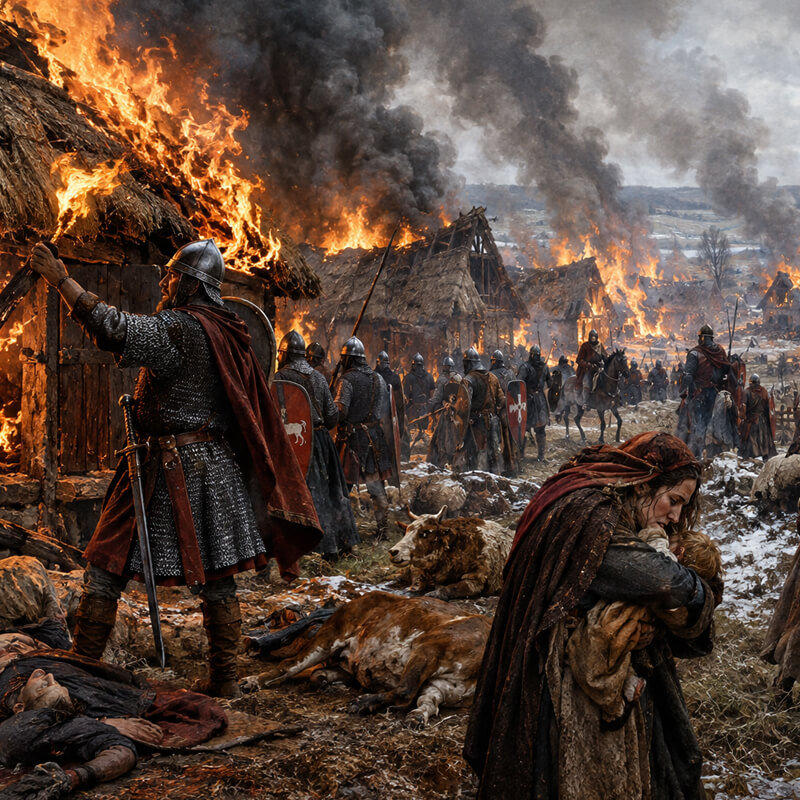
King Æthelred’s solution? A massacre. On 13th November 1002, a Saturday and, coincidentally, St Brice’s Day, Æthelred the Unready ordered the mass killing of all Danes in England, even those living peacefully amongst them. According to a 13th-century Chronicler, the English didn’t spare women or children, nor those who were in a relationship with a Dane or had a Danish parent. The mass killing didn’t eliminate “all” Danes as he had hoped, but it is believed to have resulted in significant loss of life.
The massacre resulted in widespread violence, upheaval and invasion, earning King Æthelred the nickname Æthelred the Unready (ill advised). One of the Danes that was killed in the massacre was a woman called Gunhilde, the sister of the Danish King Sweyn Forkbeard and the daughter of Harald Bluetooth.
Those who managed to escape the massacre fled back to Scandinavia to tell the Danish King what had happened. The massacre gave the Danes a reason to invade England, they wanted revenge, but for King Sweyn Forkbeard it was more personal.
The Danish Invasion
The massacre led to revenge attacks from both Denmark and Norway. Both Christian and Pagan Vikings from both kingdoms joined forces to take revenge. England hadn’t seen a Danish invasion like it for over a hundred years. King Sweyn landed in England in 1003 with a massive invading force. His attacks were on an unprecedented scale, his forces pillaging and plundering without mercy. The devastation was so severe that King Æthelred yet again paid off the Danes.
The Consequences
The consequences of the massacre was years of violence, conquering and much devastation by the Danes, and the end result was 30 years of Danish rule over England. In the year 1013 the English nobility became so disillusioned with their existing king that they acknowledged Sweyn as their new king, forcing Æthelred into exile in Normandy. Sweyn became the first Viking king of England, however, he ruled for just five weeks until his death in February 1014 and he was never officially crowned. Sweyn’s son Cnut remained in England as the leader of the Danish army.
After the death of Sweyn, Æthelred returend from exile and became king again for a short while until his death in April 1016. Æthelred was succeeded by his son Edmund Ironside. However, Edmund struggled to reunite the country and a division was arranged whereby Cnut took the north of England and Edmund the south, but Edmund’s reign was short-lived. Within weeks of the arrangement Edmund died in November 1016, he was most likely murdered.
The West Saxons then accepted Cnut as king of all England and he was crowned in 1017. Cnut proved an effective ruler and ruled England for 19 years. He brought internal peace and prosperity to the country and would later become known as Cnut the Great. King Cnut died in 1035, and his son Harold Harefoot then became king for roughly five years, followed by his other son Harthacnut for around two years. Harthacnut was the last Viking king to rule England, until the crown finally passed back to the Saxons in 1042 when Edward the Confessor was crowned.
Did you enjoy this post?
I hope you found this post useful. I put a great deal of time and effort in to building, maintaining and populating the website. If you like, you could say a small thank you by buying me a coffee. You don't have to, but it would be nice :)
Buy me a coffee
Stay up to Date
Follow me on my journey and get notified whenever a new post is published by following Kings & Castles on Facebook.
Follow MeExplore The Map
Discover the hundreds of castles, churches, monasteries, cathedrals and other historic locations that I've personally visited across England and Wales. Search by location, explore nearby sites and plan your next historical adventure.
Share: