Southwell Minster
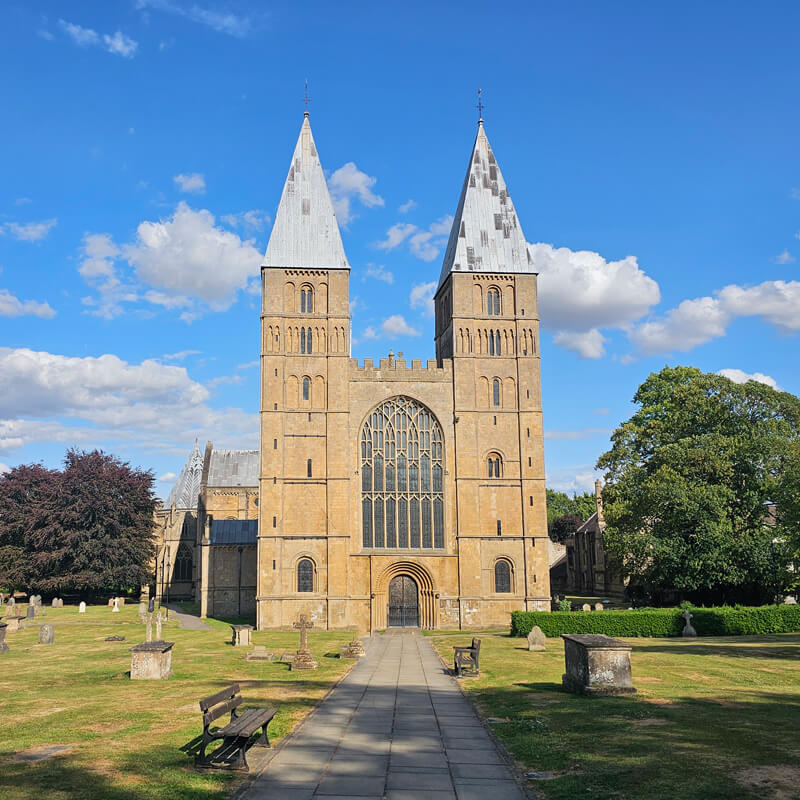
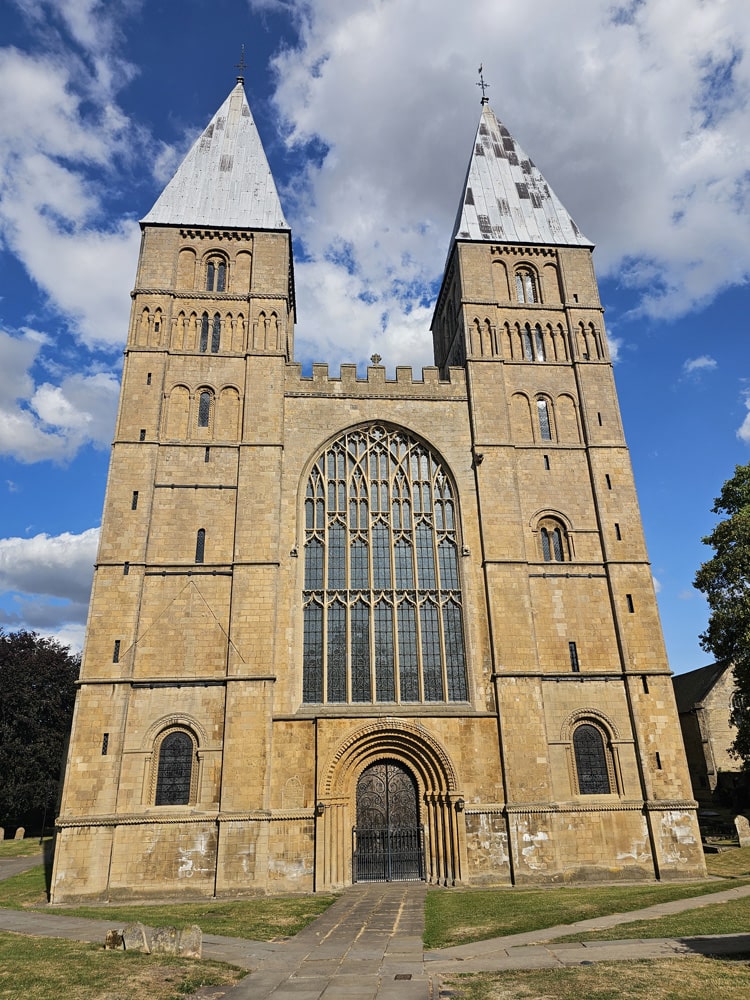
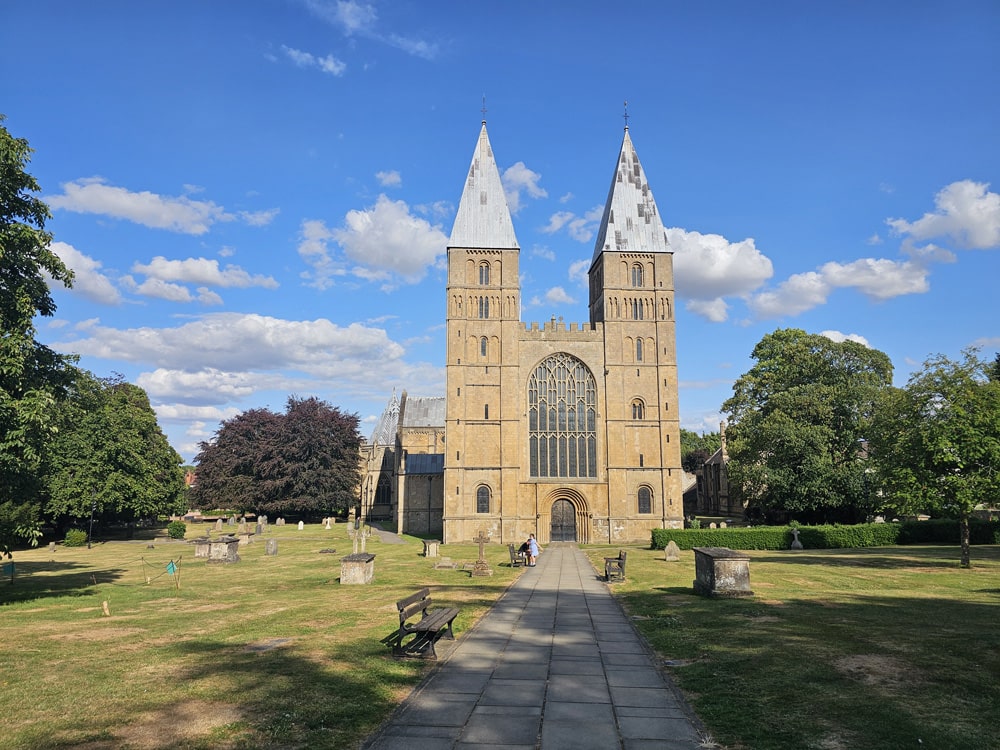
Southwell Minster, in Nottinghamshire, is one of England’s most remarkable historic churches. Its story stretches back more than 1,000 years, from an Anglo-Saxon foundation to its present role as the cathedral church of Nottinghamshire. Its mixture of Norman and Gothic architecture, together with its famous Chapter House carvings, makes it one of the country’s most distinctive medieval buildings.
Historic
Highlights.
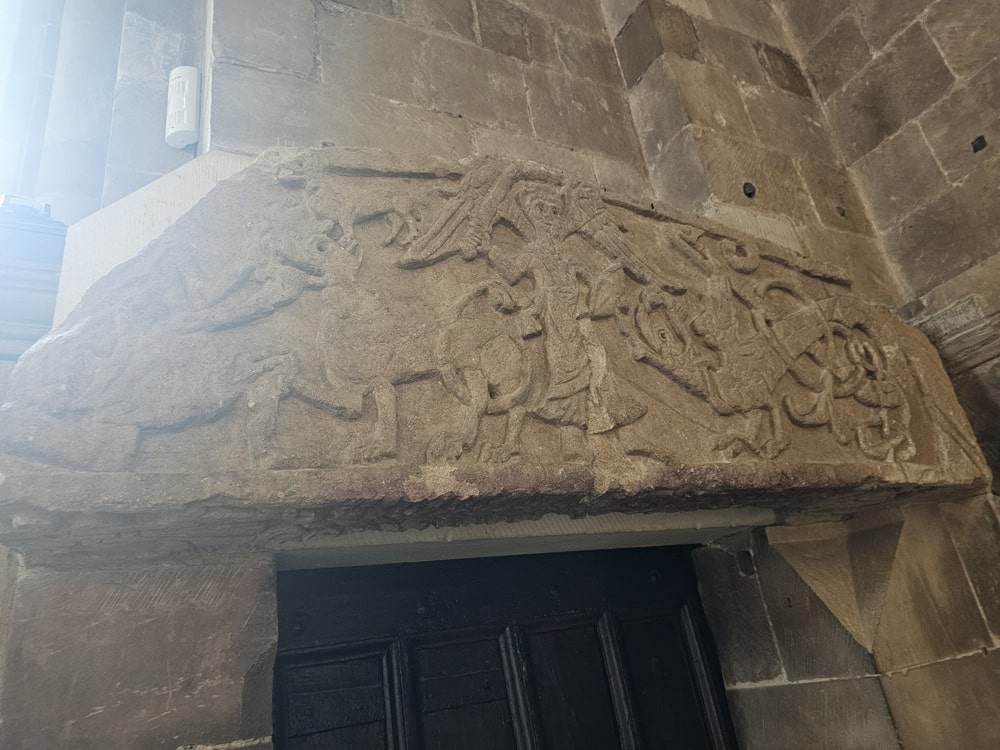
- The Southwell Tympanum – a carved stone lintel dating from the late Saxon period (9th to 11th century).
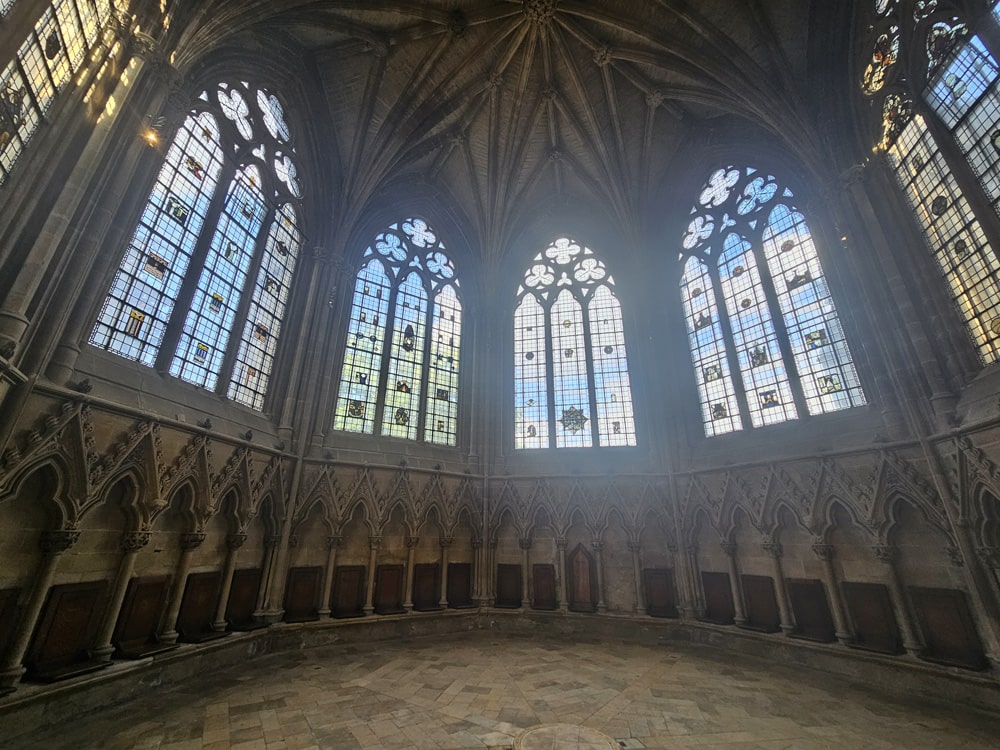
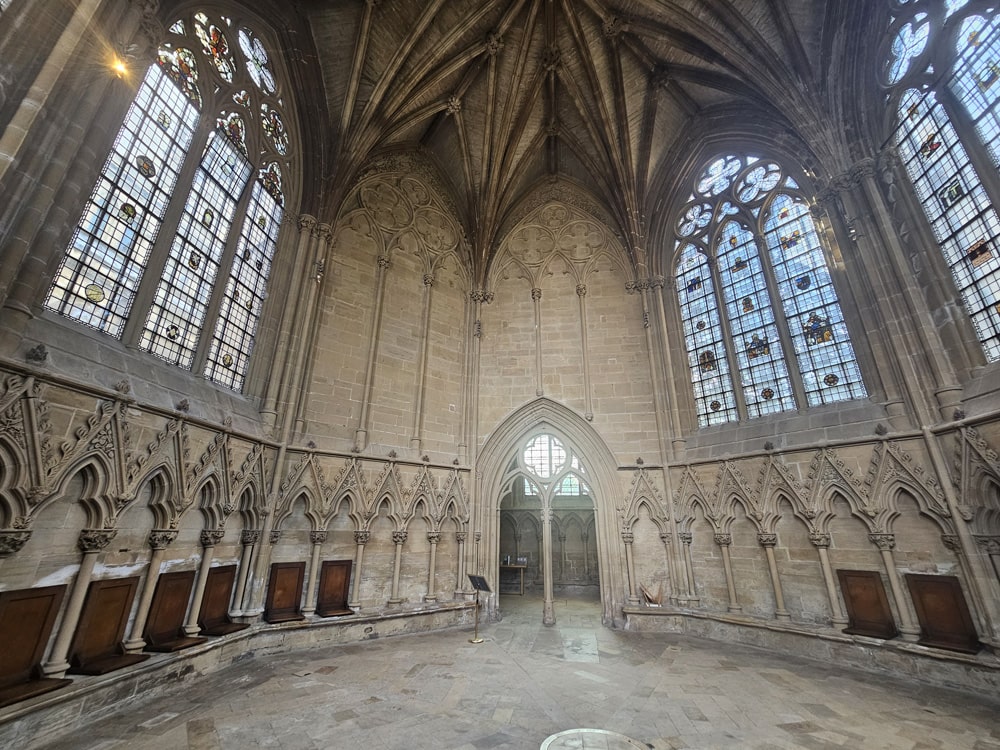
- The Leaves of Southwell – found in the late 13th-century Chapter House. Known as the finest example of naturalistic stone carvings in the UK, featuring fluid, hand-carved leaves, animals, and green men.
The History of Southwell Minster
The history of Southwell as a religious centre may reach back to the 7th century. Tradition connects the site with St Paulinus, the first Archbishop of York, who is said to have visited the area during the conversion of northern England to Christianity. The first securely established date, however, is 956, when King Eadwig granted the manor of Southwell to Oskytel, Archbishop of York. A collegiate church developed here, served by a community of secular priests rather than monks.
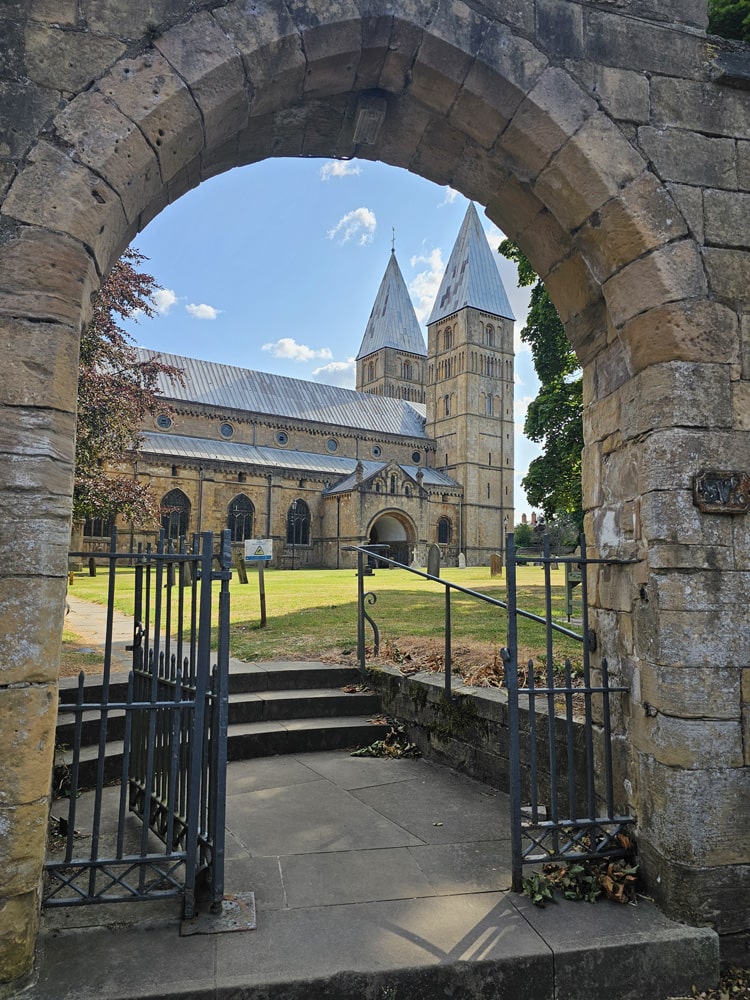
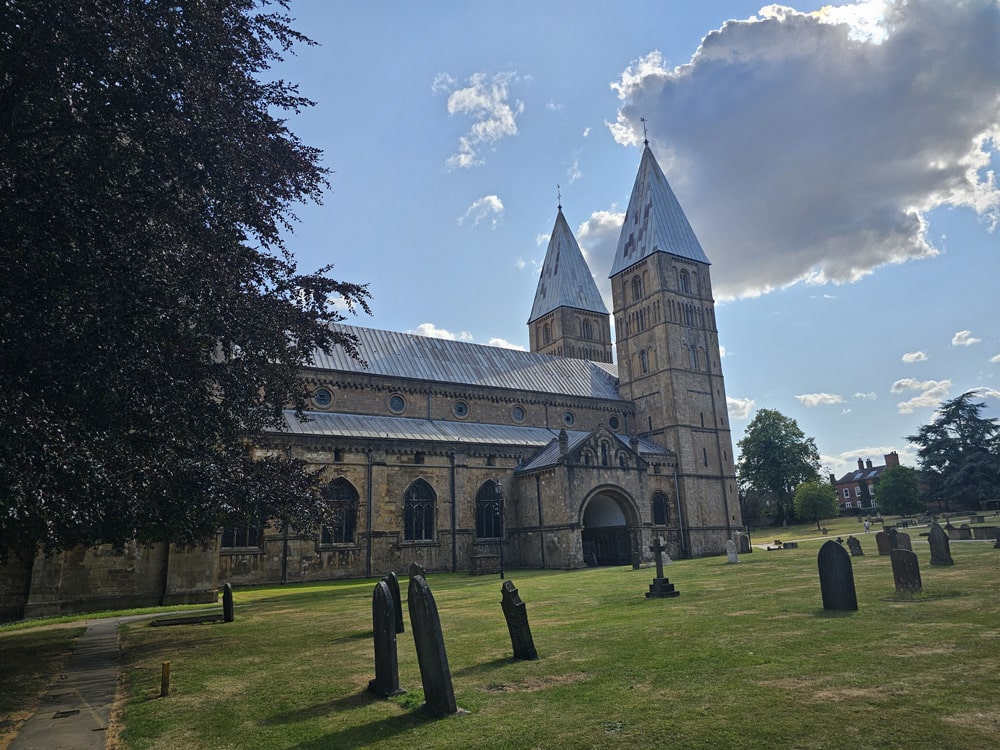
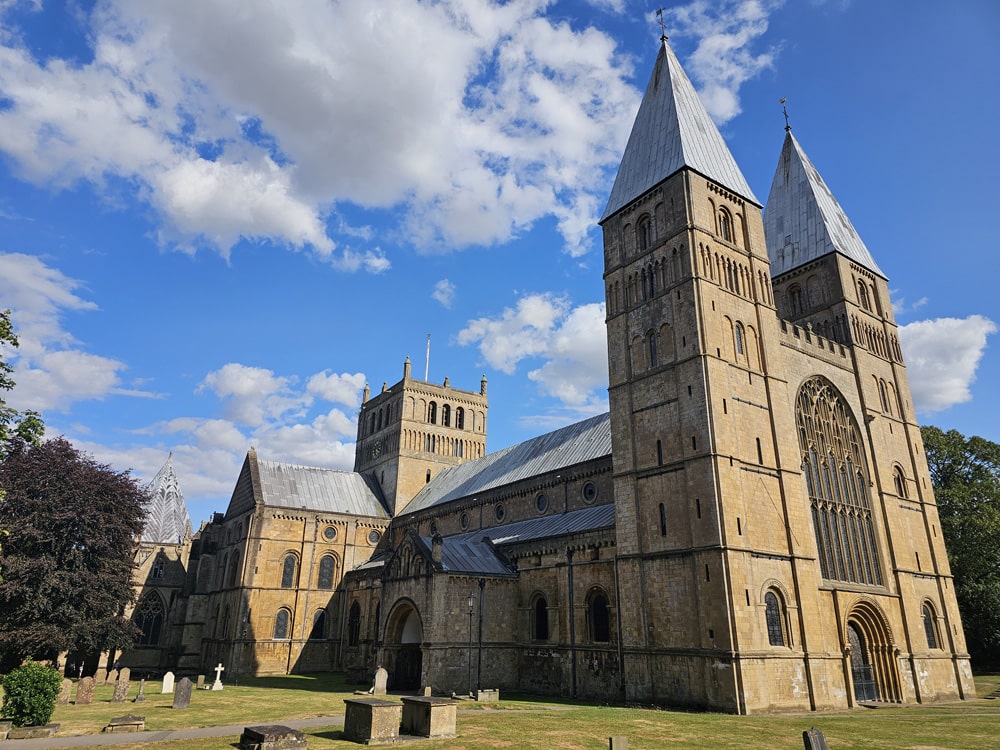
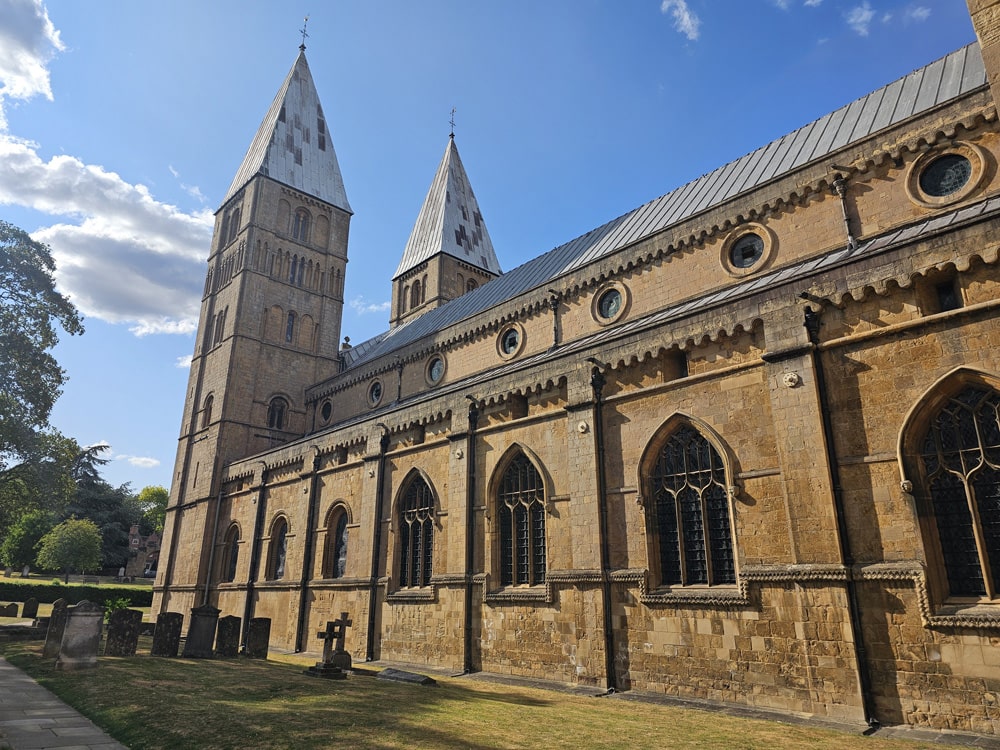
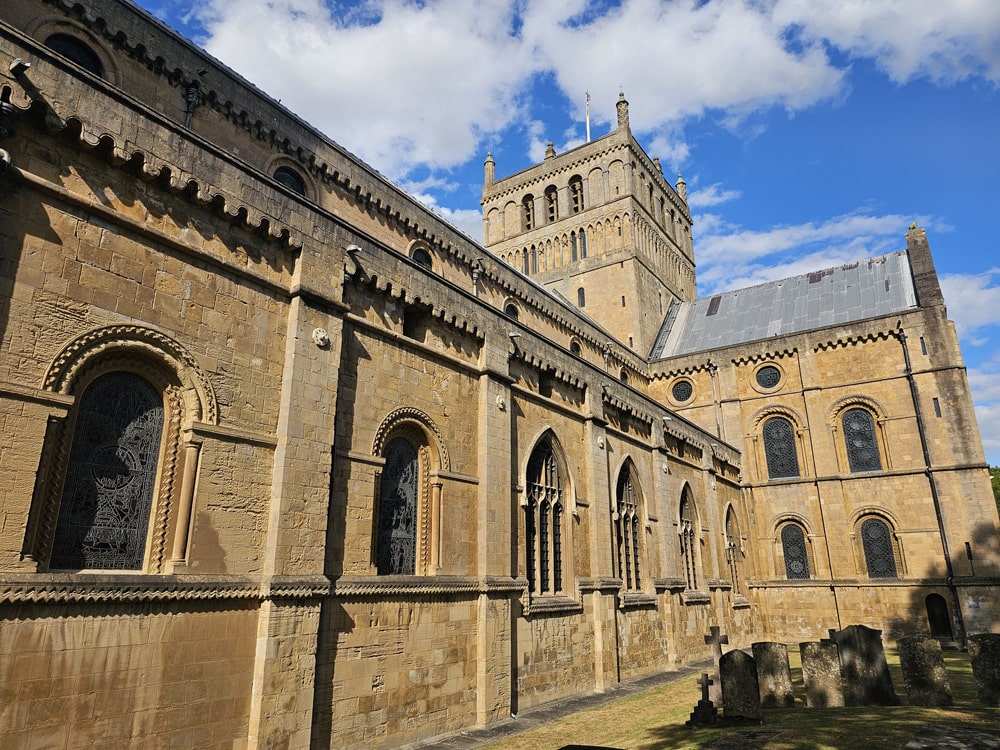
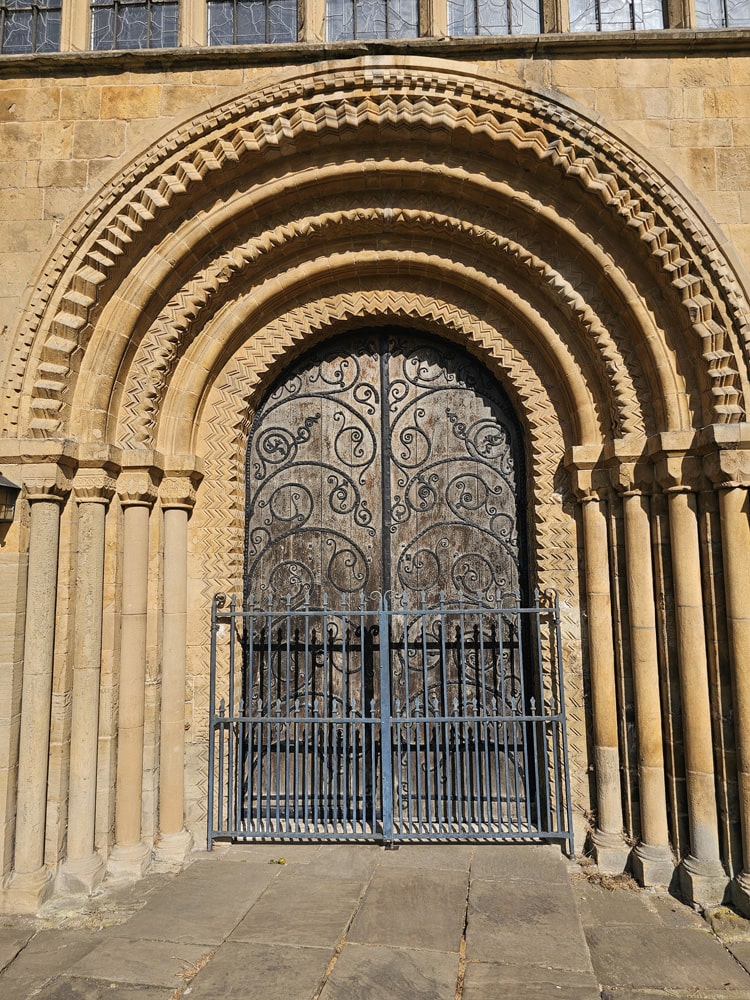
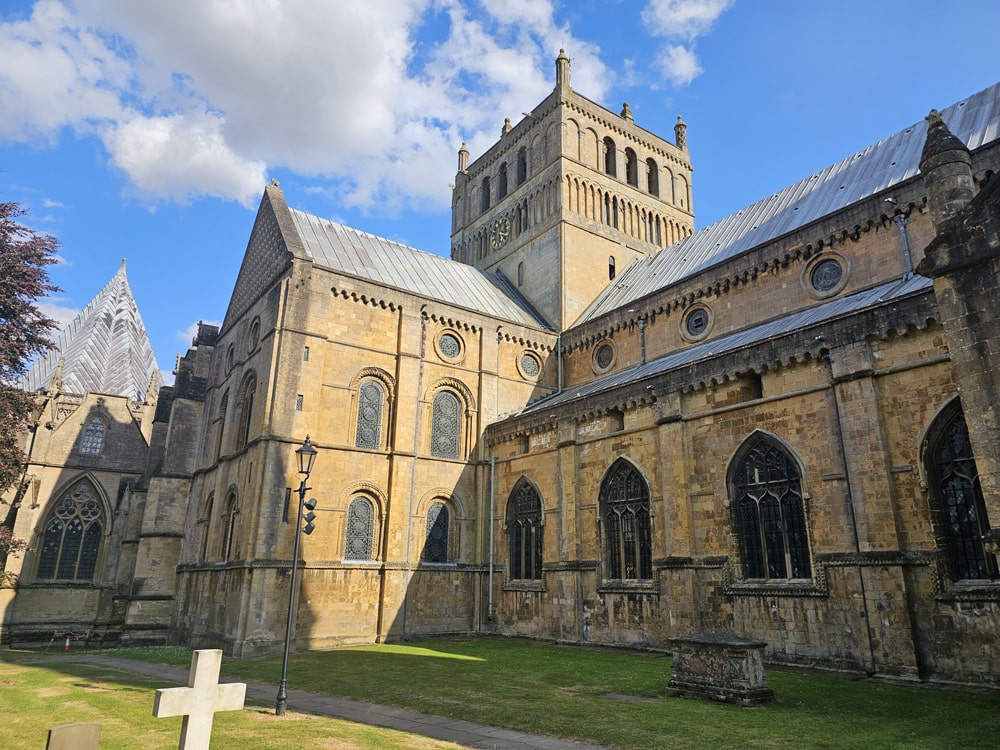
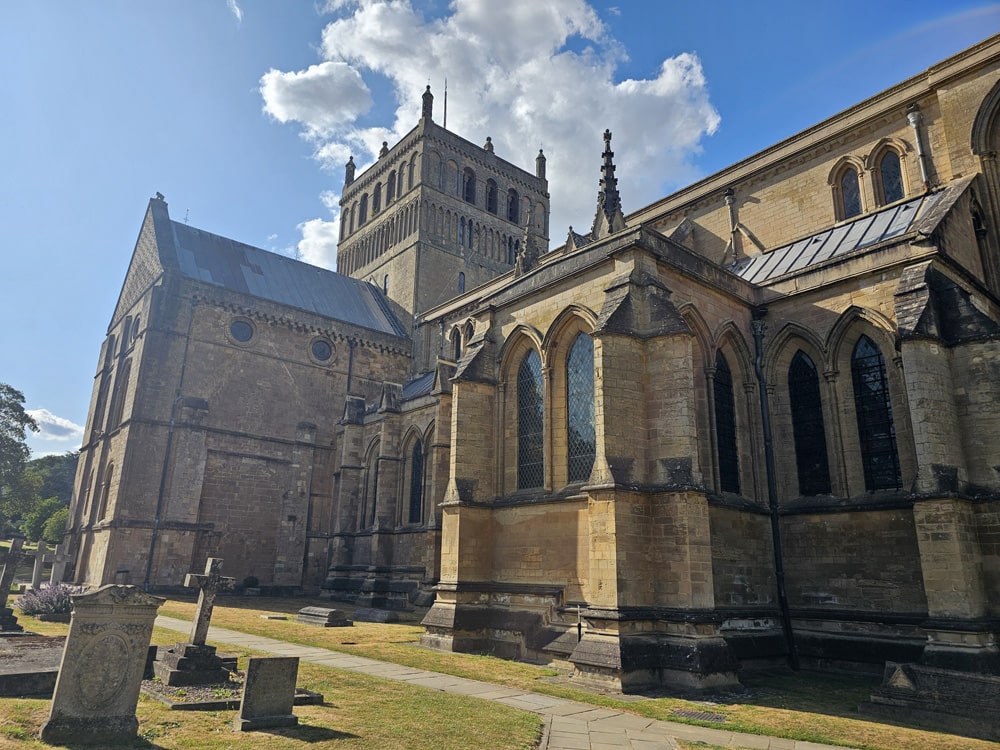
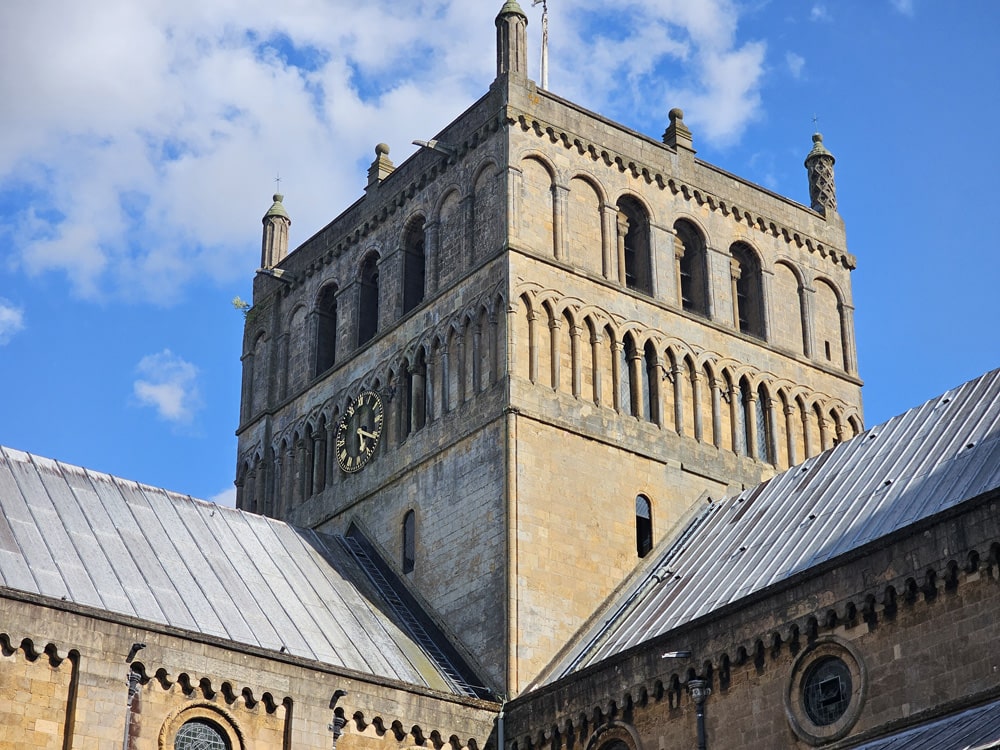
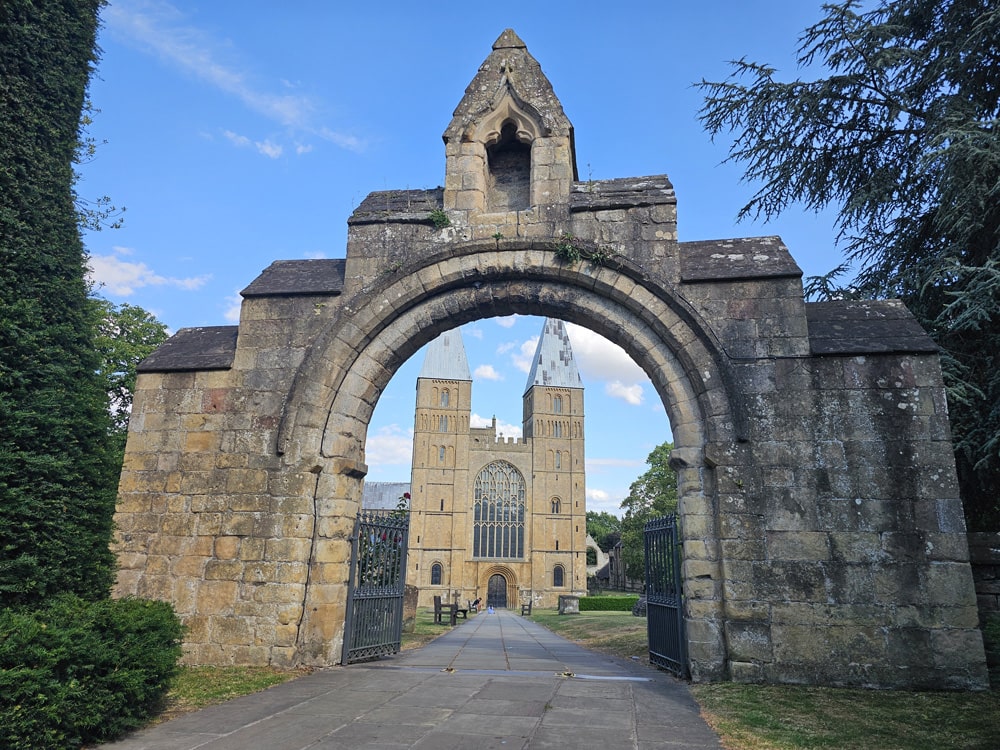
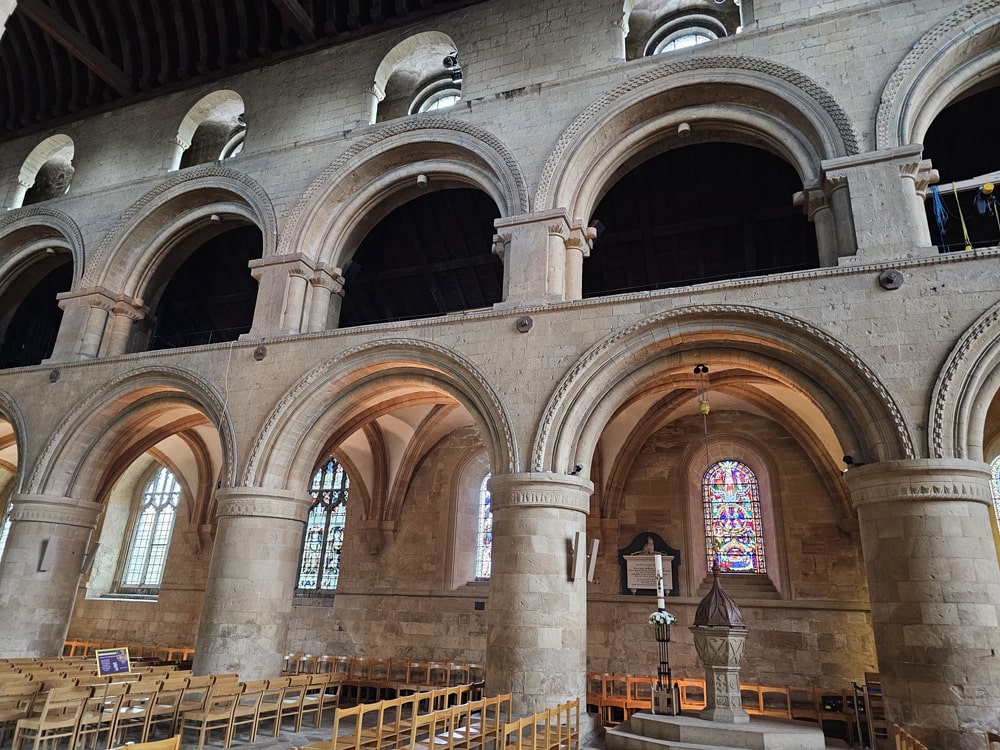
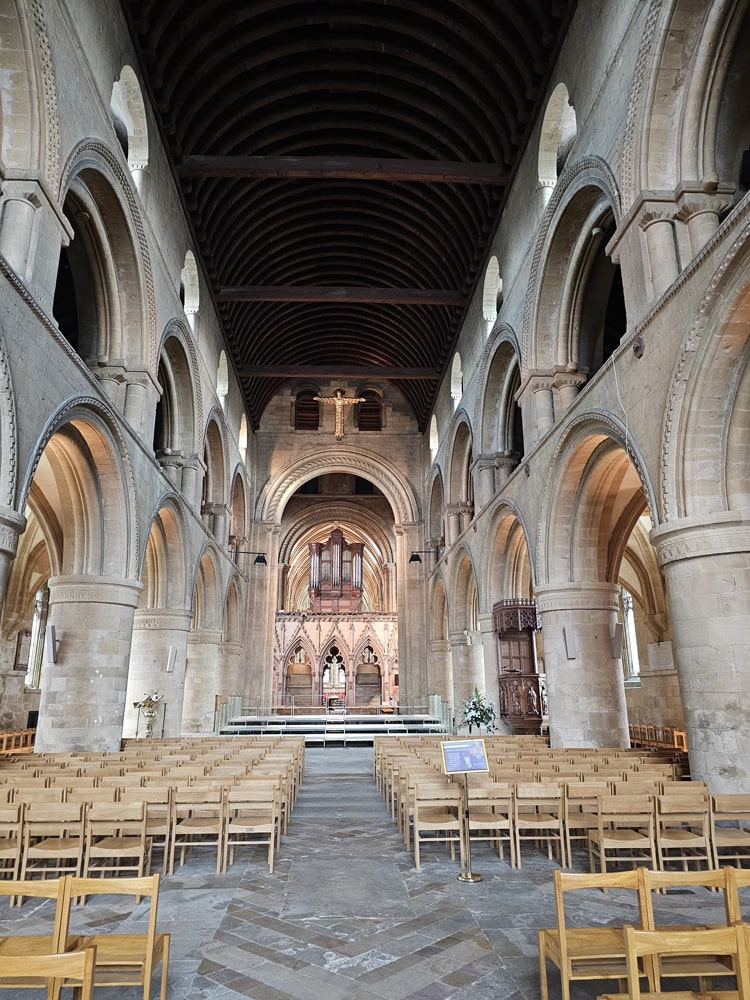
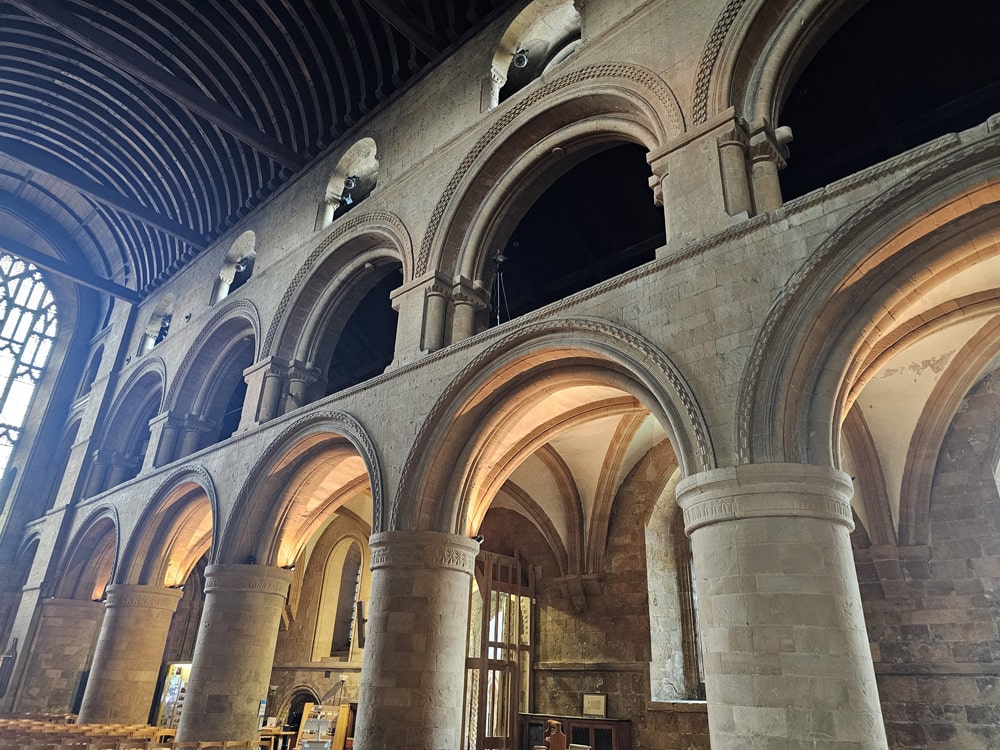
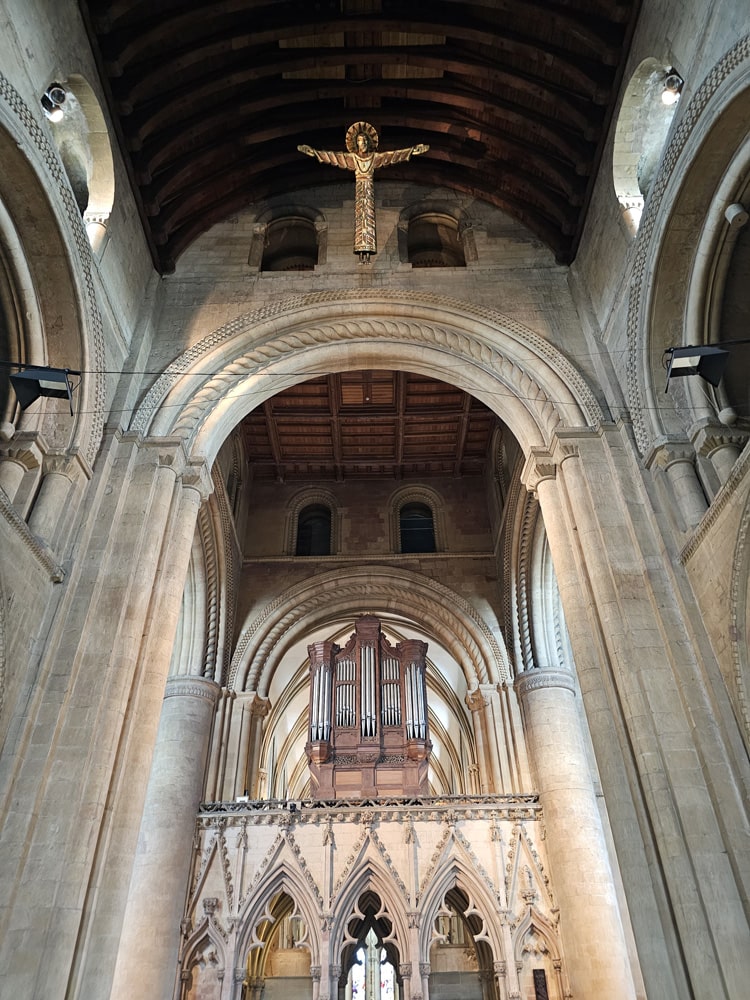
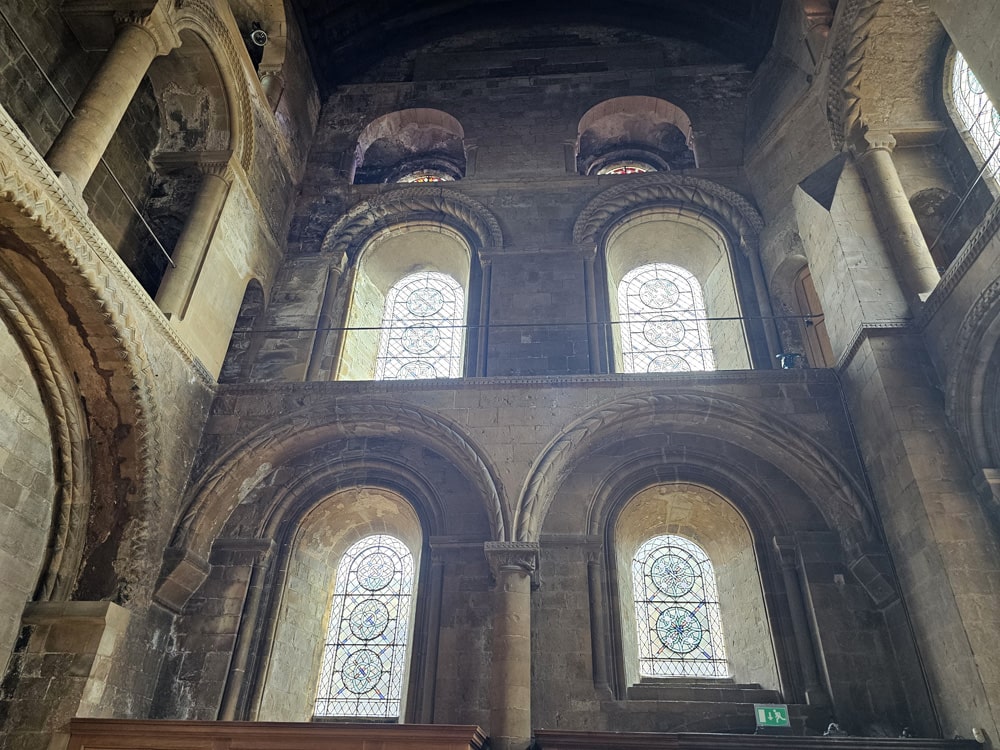
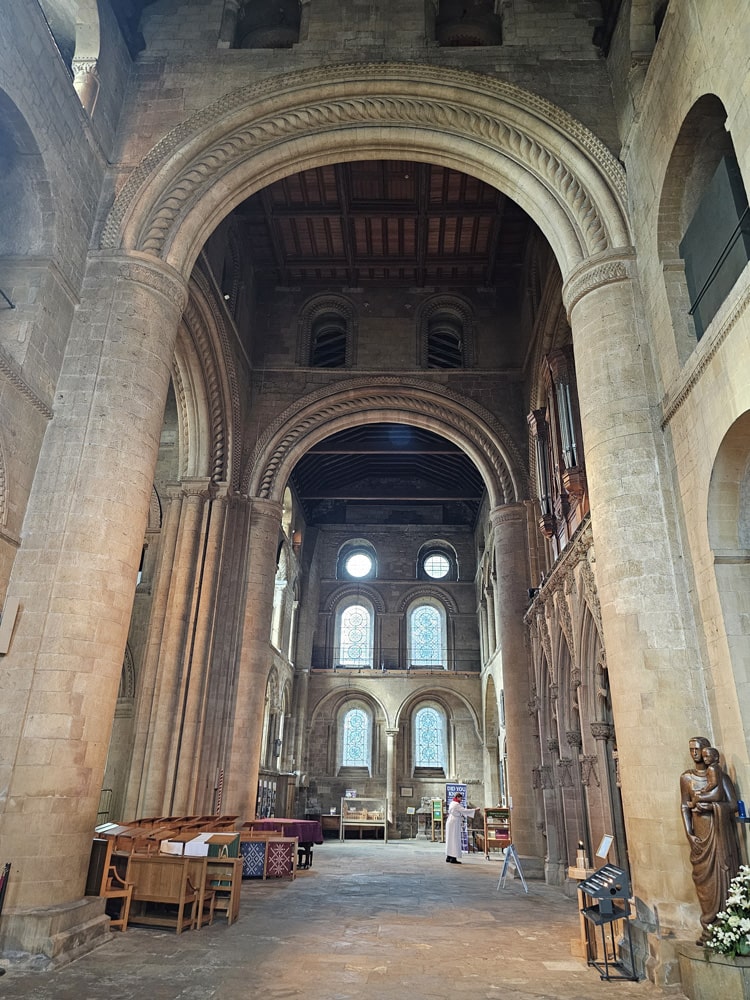
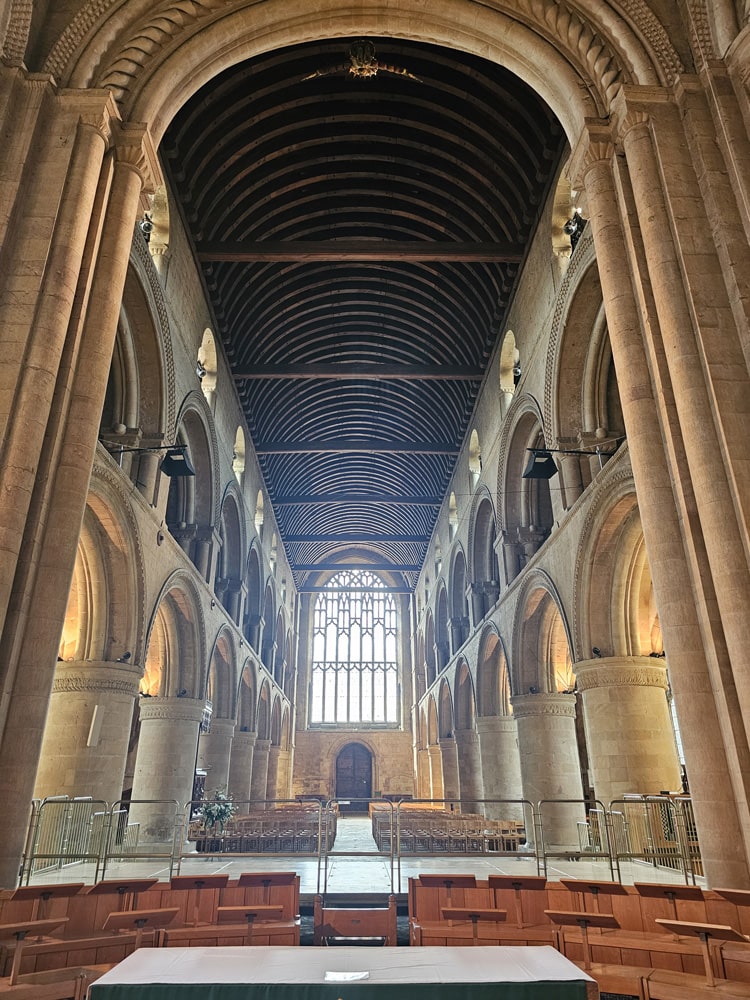
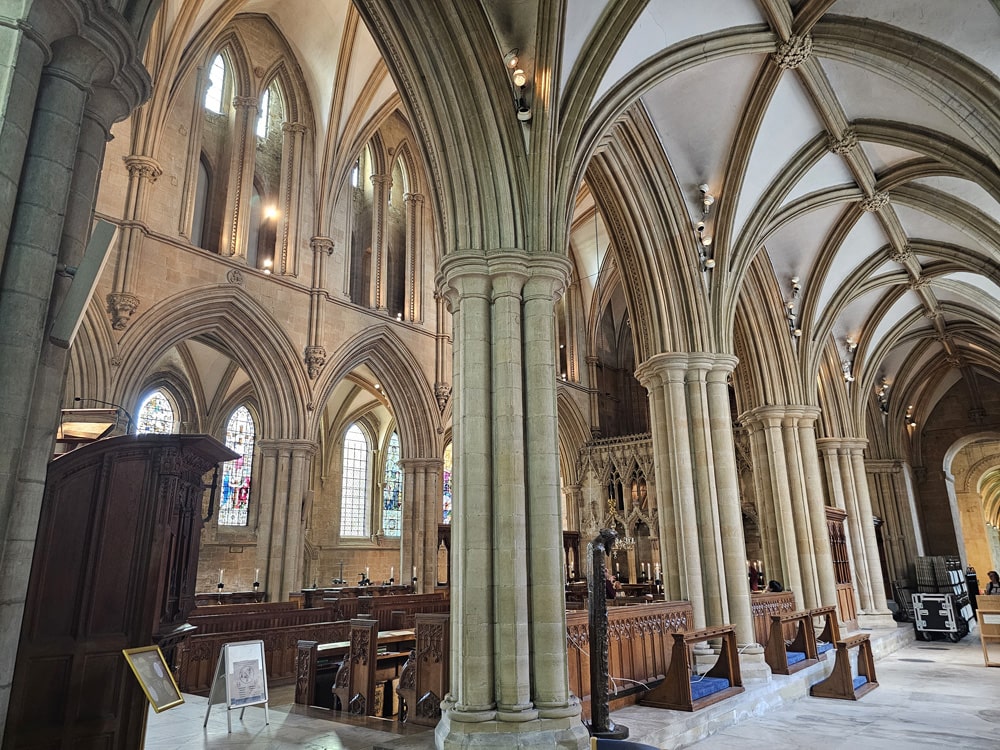
The present building began to take shape in the early 12th century. Around 1108, the Anglo-Saxon church was rebuilt in the Norman style. The nave, transepts, crossing and distinctive western towers were constructed over the following decades, creating the substantial church that still forms the heart of the Minster.
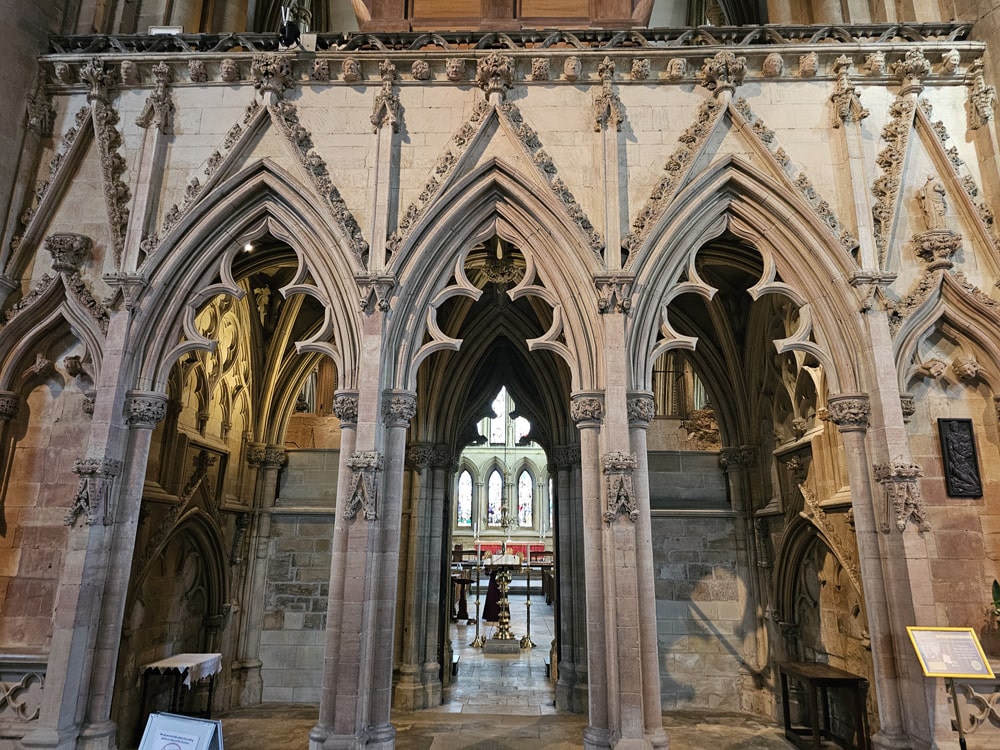
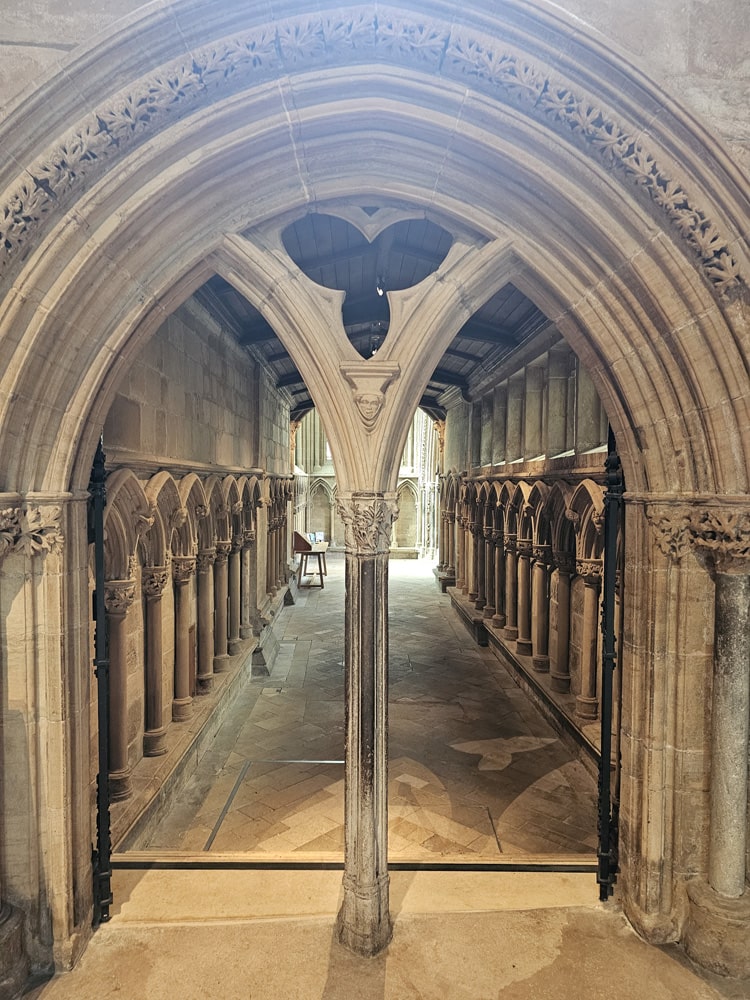
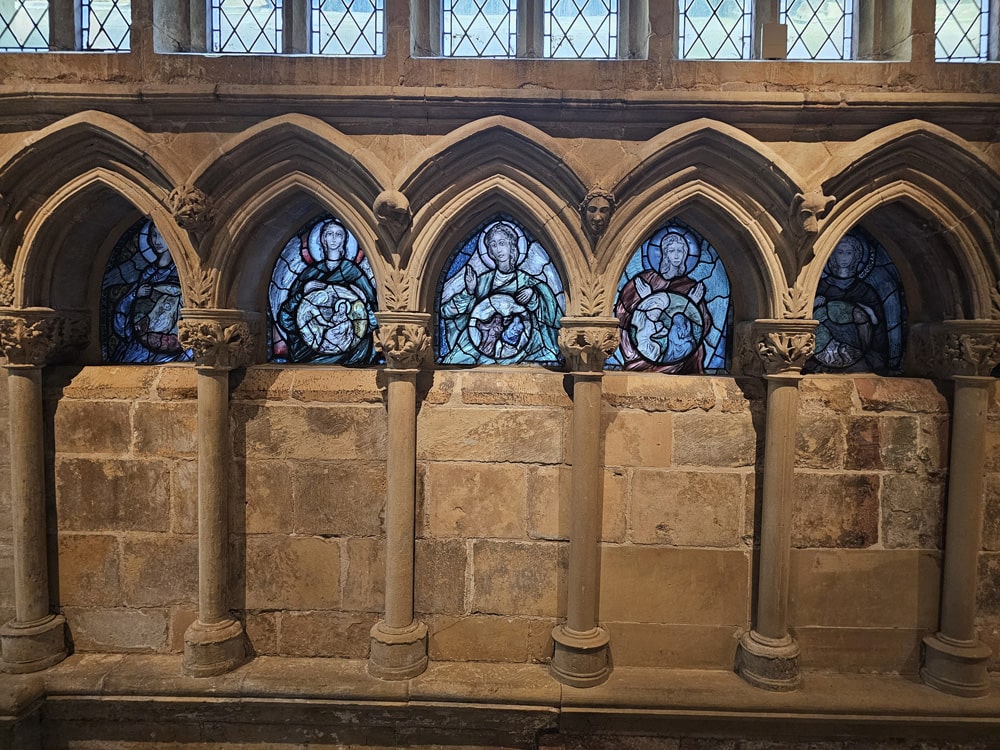
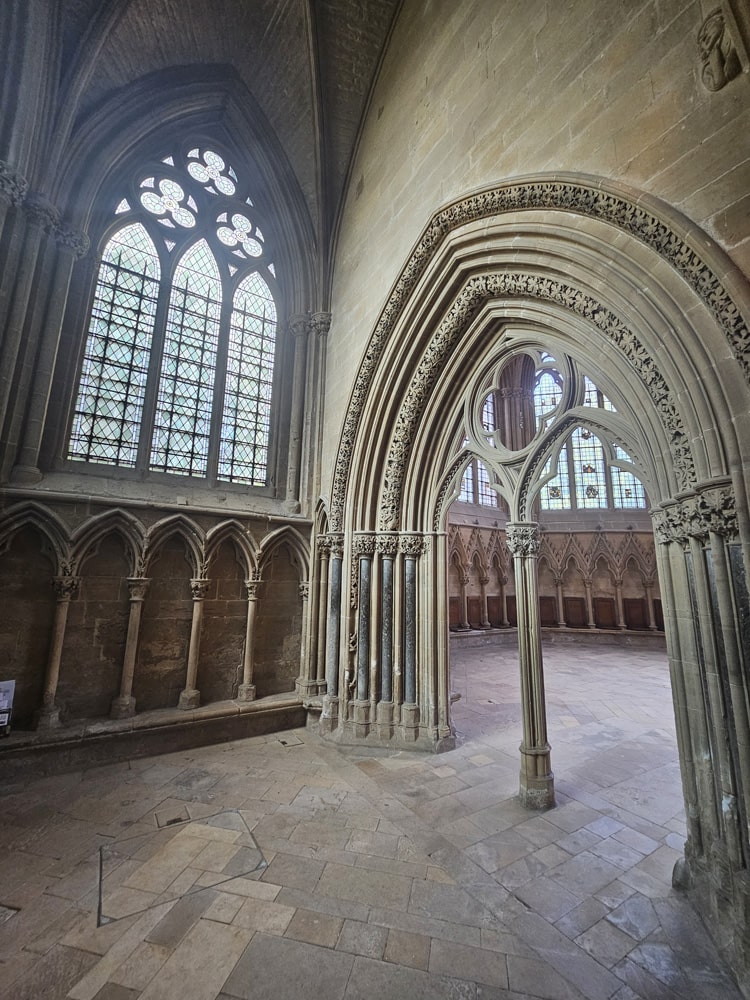
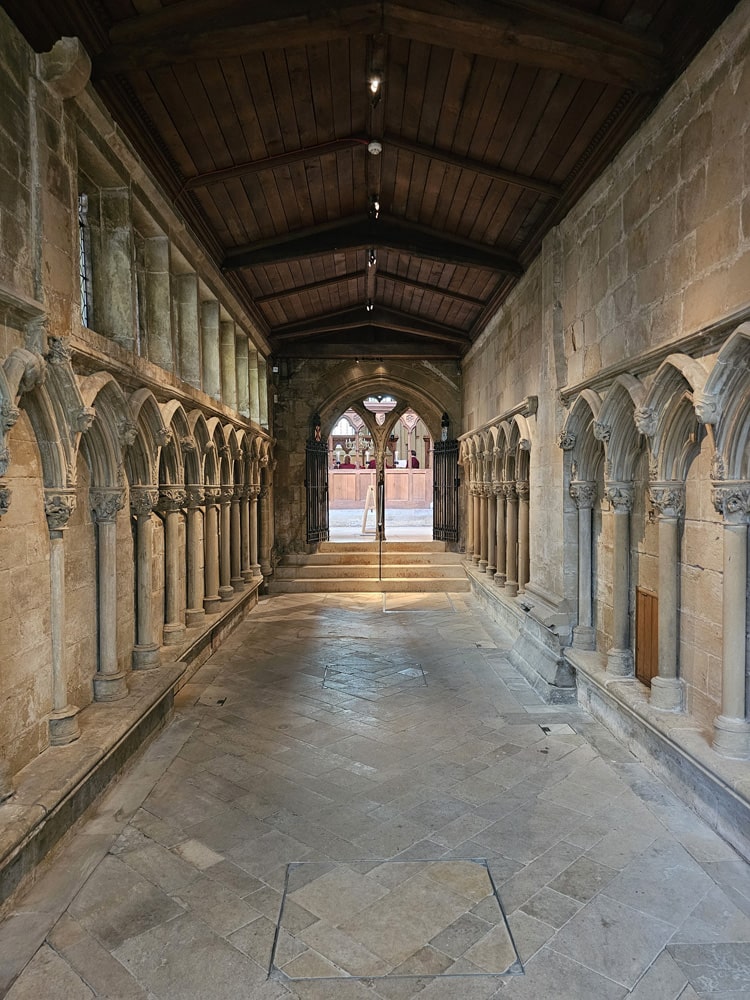
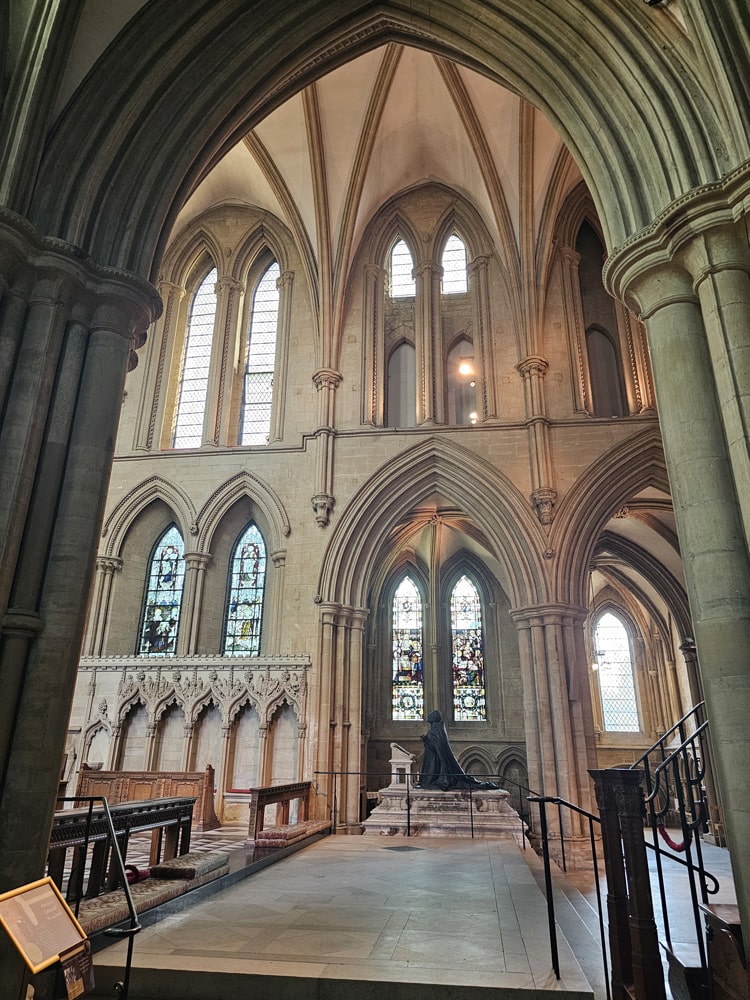
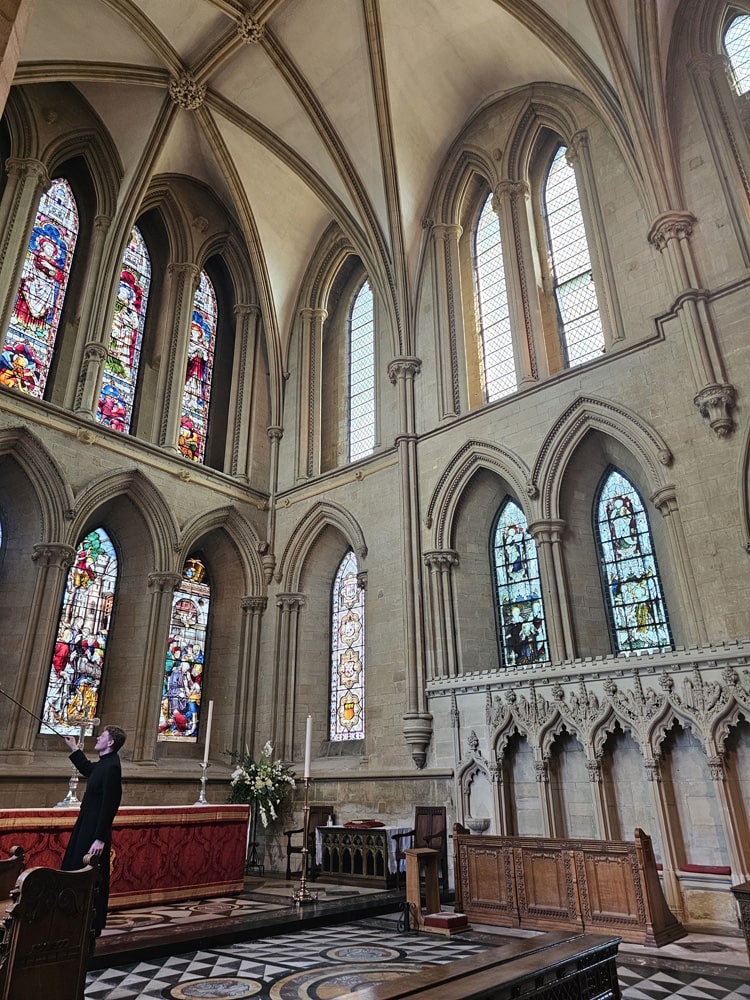
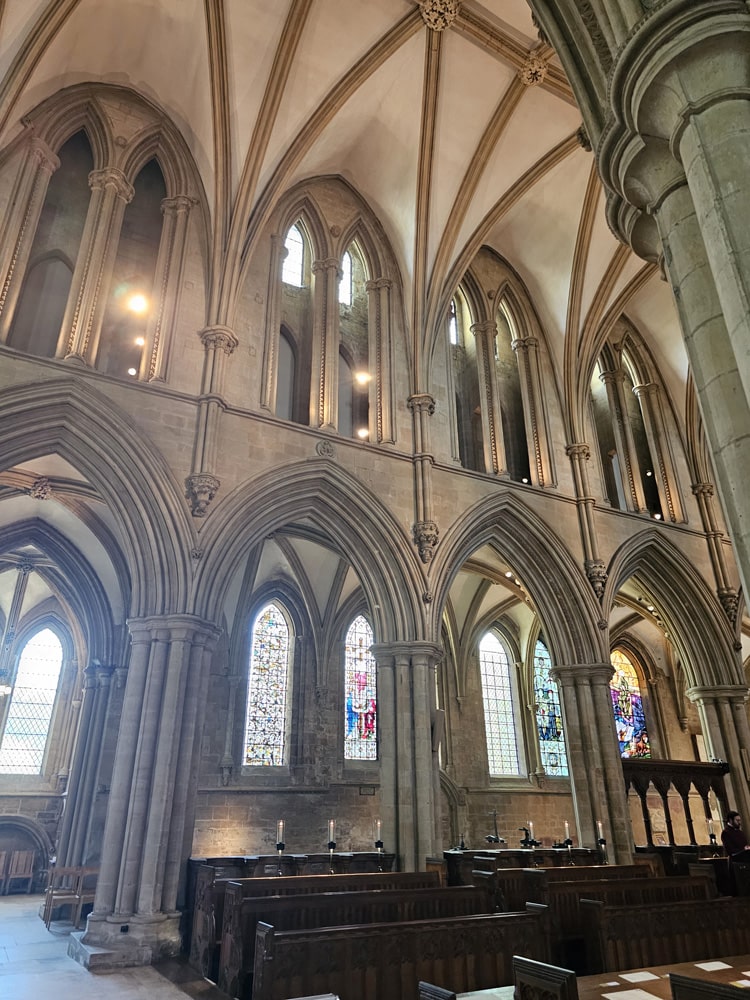
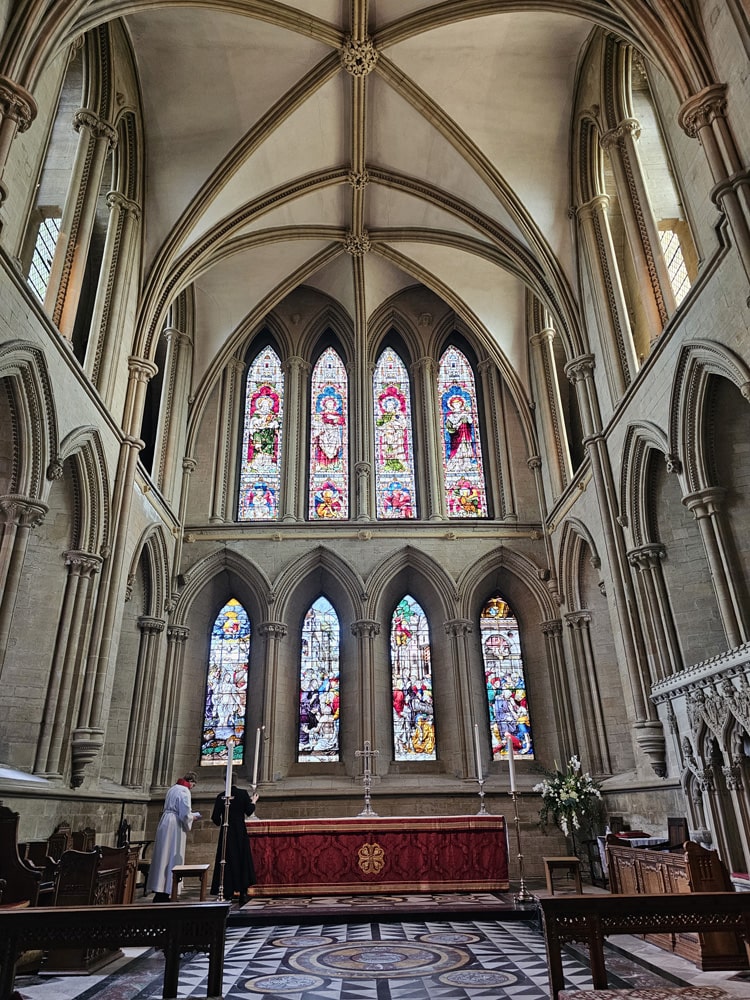
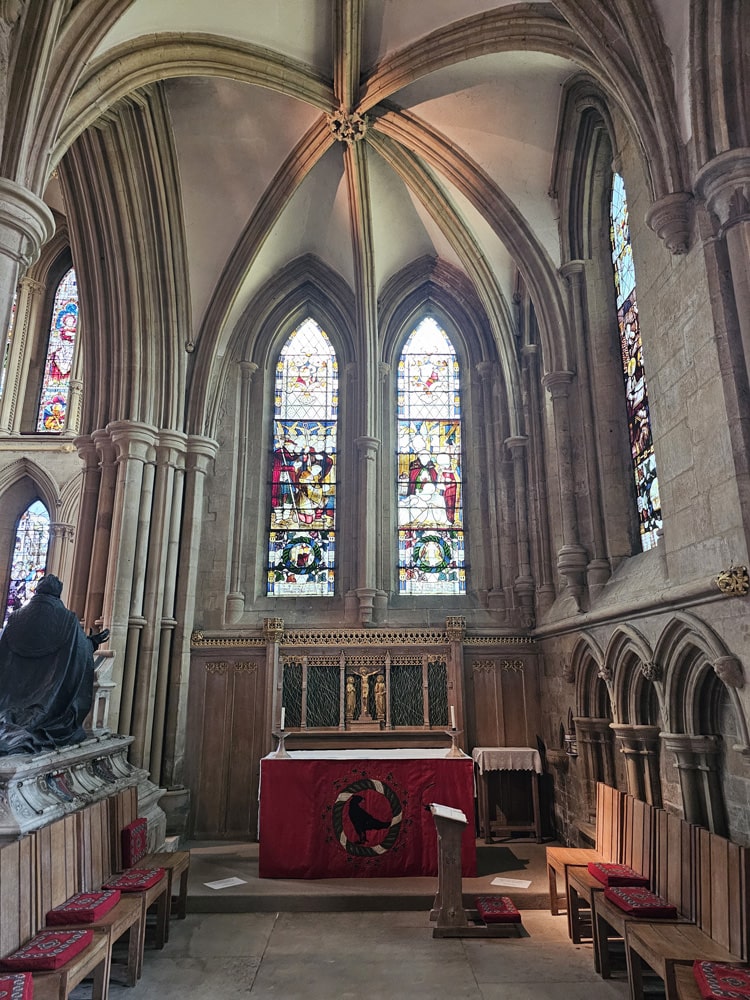
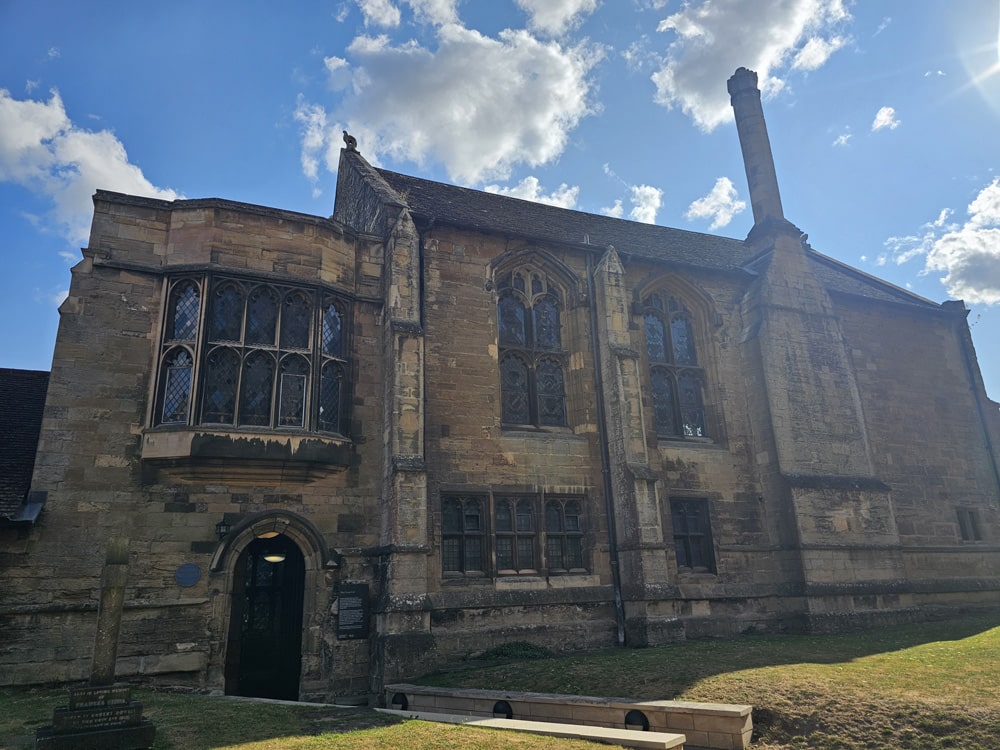
During the 13th and 14th centuries, Southwell was transformed again. The Norman choir was replaced around 1234 with a magnificent Early English Gothic choir, while the Chapter House was constructed around 1290–1300. The Chapter House is particularly famous for its extraordinary naturalistic carvings of leaves, plants, animals and the mysterious Green Men. These carvings are regarded as among the finest examples of medieval naturalistic stone carving in Britain.
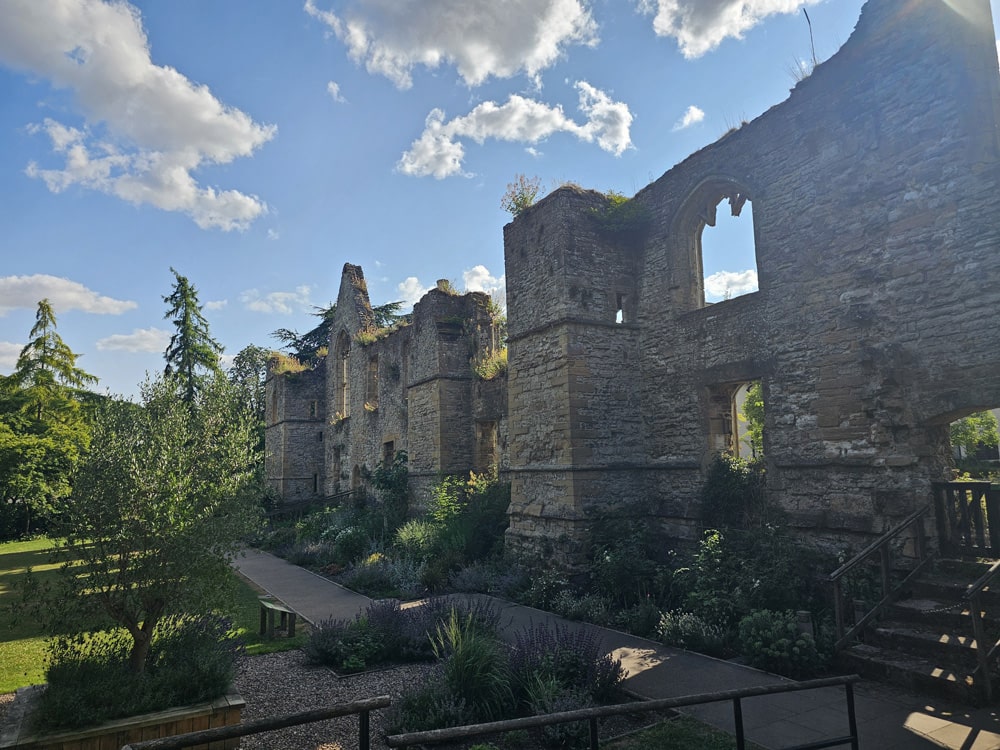
Southwell’s connection with the Archbishops of York also made it an important ecclesiastical centre. The neighbouring Archbishop’s Palace provided accommodation for visiting archbishops and hosted several English monarchs, including Richard I, King John, Henry III and Edward I. Cardinal Wolsey spent his final summer there in 1530 after falling out of favour with Henry VIII.
The Reformation brought major changes. Although the Minster’s chapter was suspended and its property and furnishings were affected by religious reforms, the church survived the Dissolution more successfully than many religious foundations. Its collegiate status was temporarily abolished in 1548, restored in 1557, and continued until the 19th century.
The building suffered serious damage during the English Civil War, when it was used by Parliamentarian forces and partially damaged. Then, in 1711, a devastating fire caused by lightning destroyed the nave roof and damaged other parts of the building. The roof was rebuilt, although at a lower pitch that altered the appearance of the interior.
During the Victorian period, Southwell Minster underwent extensive restoration under the architect Ewan Christian. The nave roof was returned to a steeper medieval pitch, while the distinctive western spires were reconstructed after having been removed earlier in the century.
In 1884, Southwell became the cathedral of the newly created Diocese of Southwell, giving the historic Minster its modern cathedral status. Today, it remains a living place of worship as well as an outstanding example of medieval architecture. From its Anglo-Saxon origins and Norman rebuilding to its famous Chapter House and Victorian restoration, Southwell Minster embodies more than a thousand years of Nottinghamshire’s religious and architectural history.
Photo Gallery.
Did you enjoy this post?
I hope you found this post useful. I put a great deal of time and effort in to building, maintaining and populating the website. If you like, you could say a small thank you by buying me a coffee. You don't have to, but it would be nice :)
Buy me a coffeeMore Cathedrals
View all Cathedrals
Stay up to Date
Follow me on my journey and get notified whenever a new post is published by following Kings & Castles on Facebook.
Follow MeExplore The Map
Discover the hundreds of castles, churches, monasteries, cathedrals and other historic locations that I've personally visited across England and Wales. Search by location, explore nearby sites and plan your next historical adventure.
Share: