Chester Cathedral
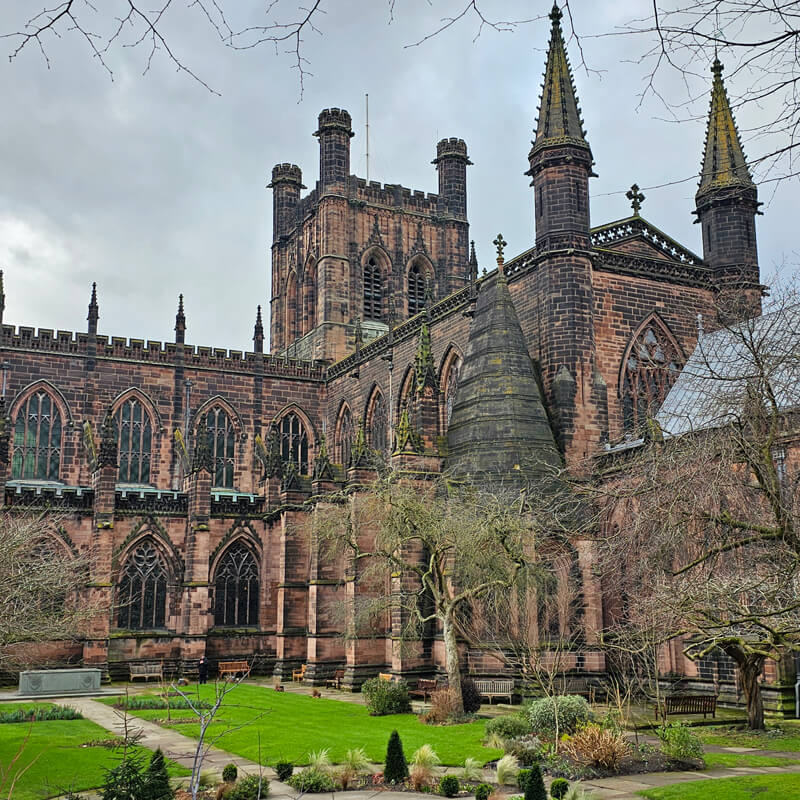
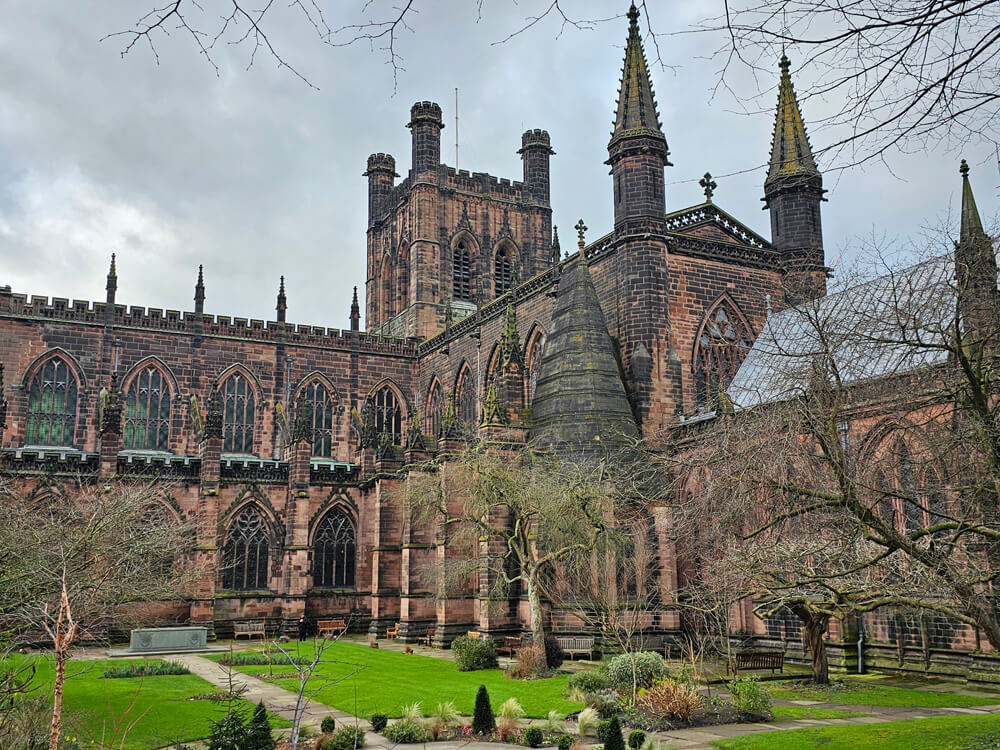
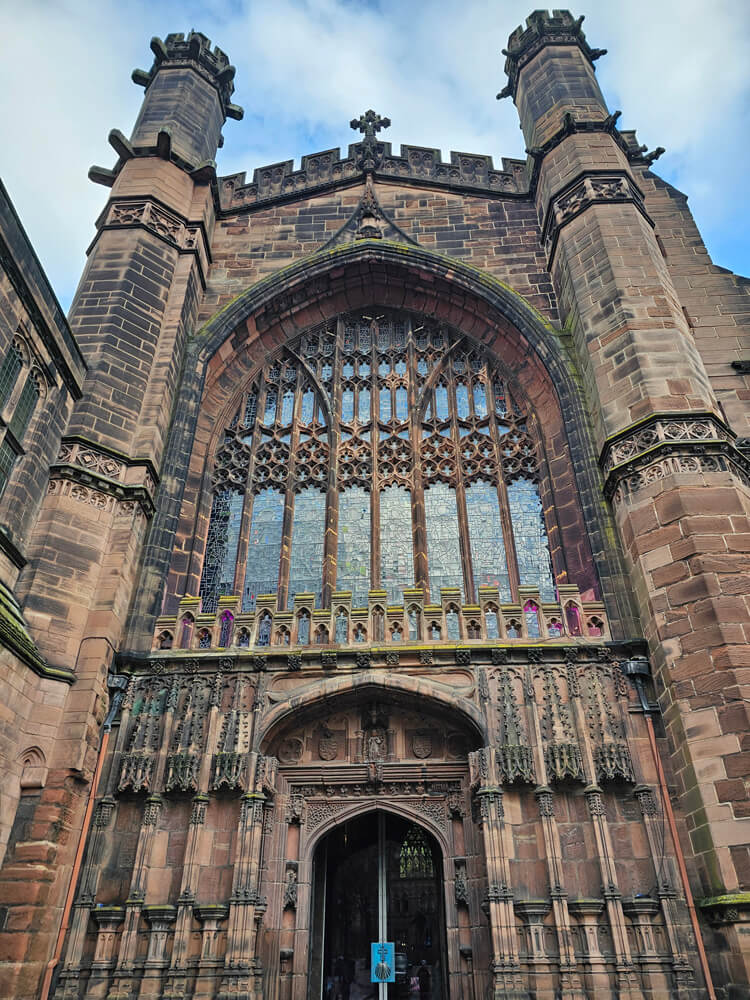
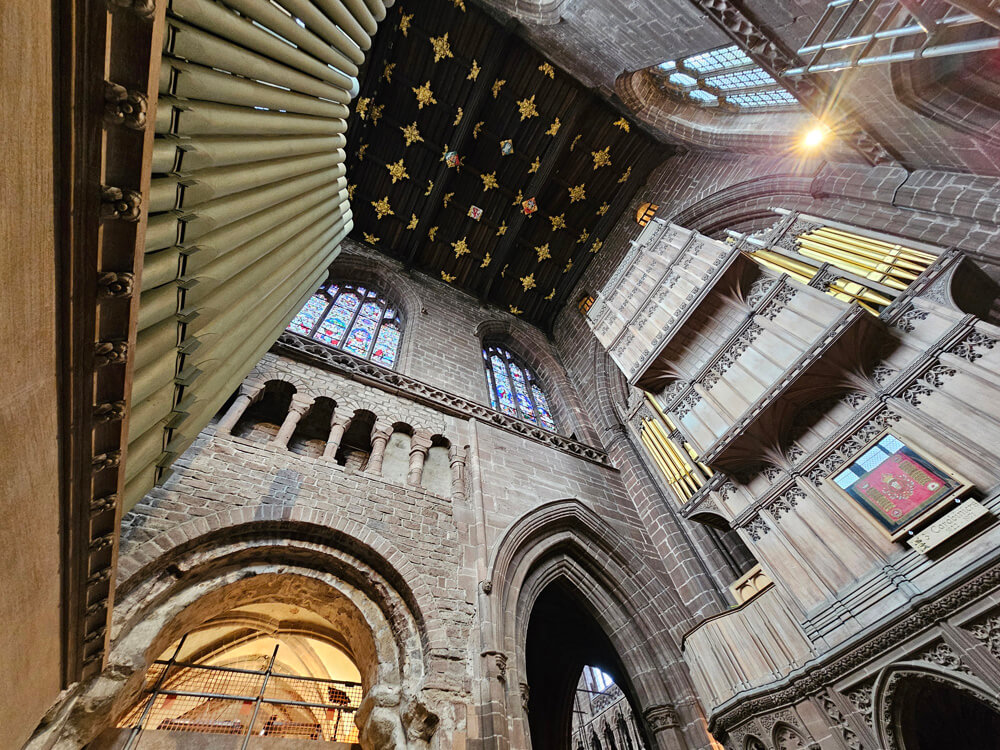
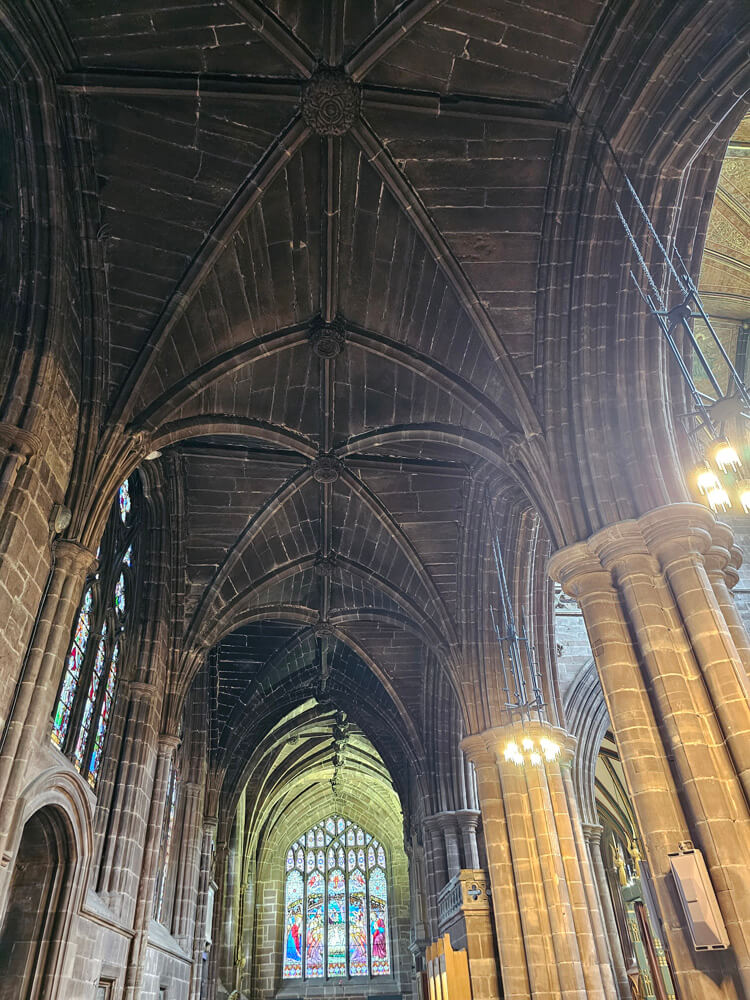
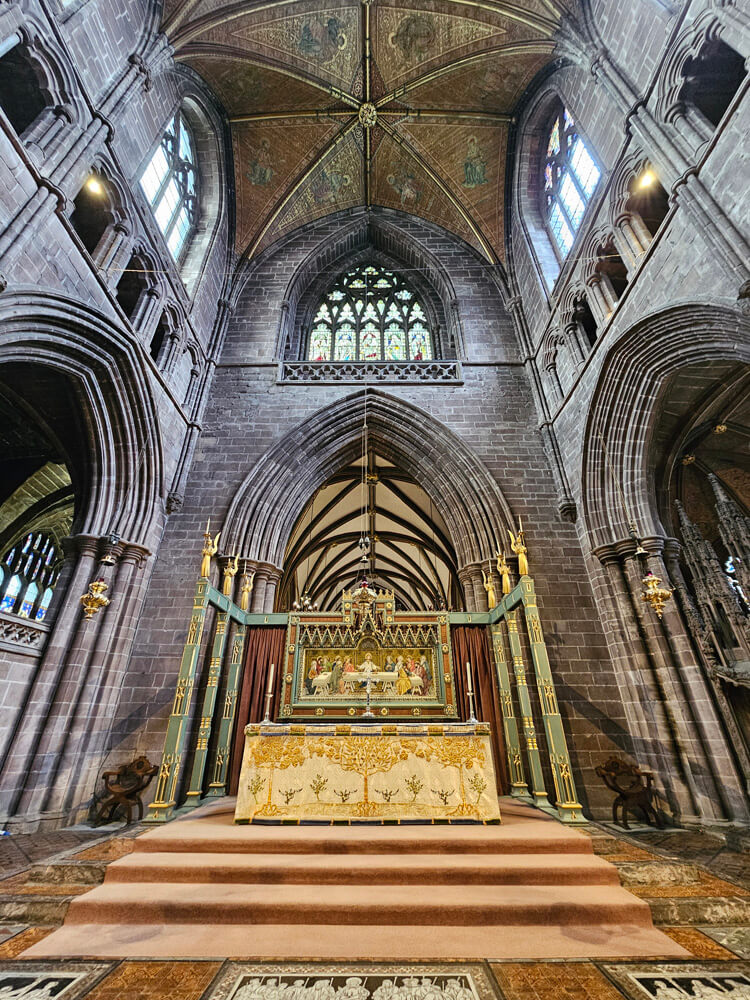
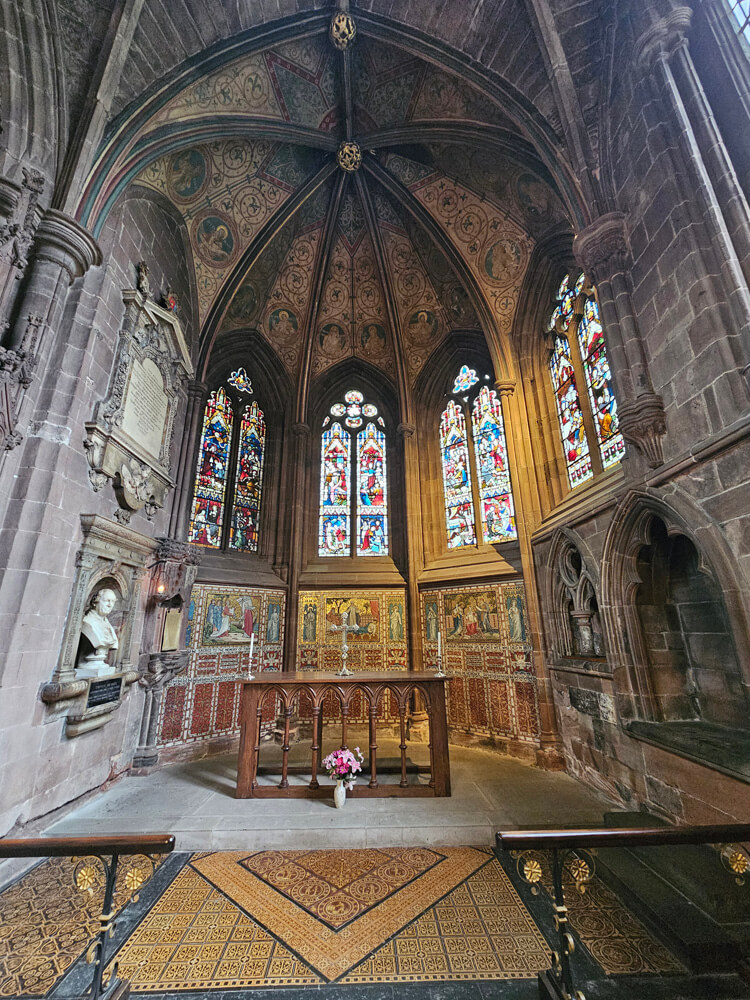
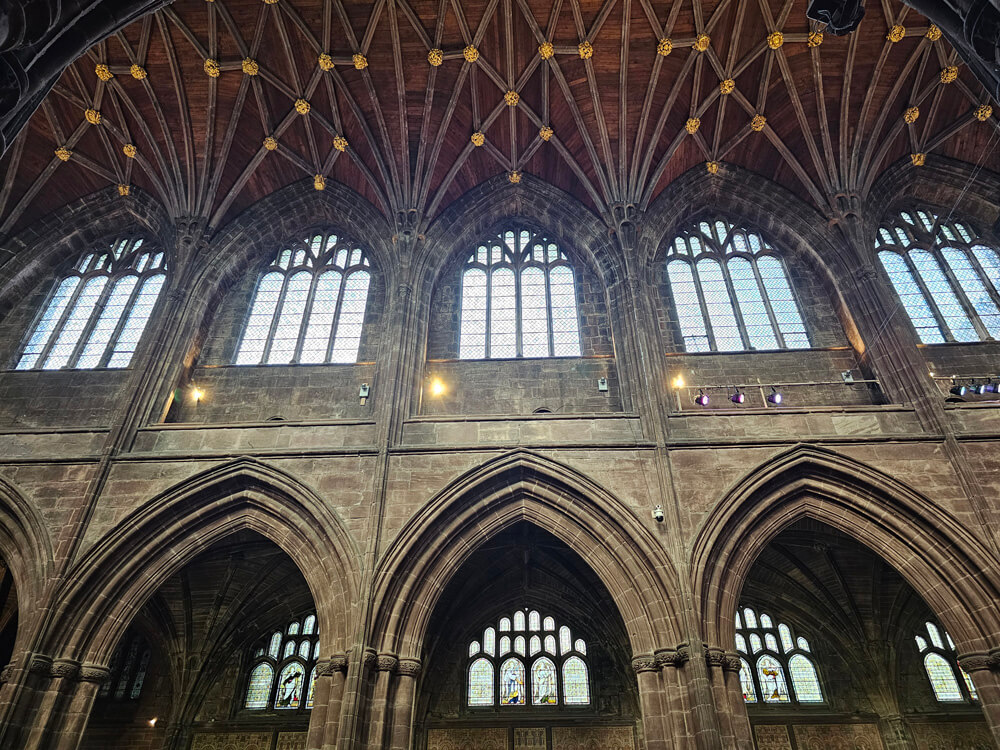
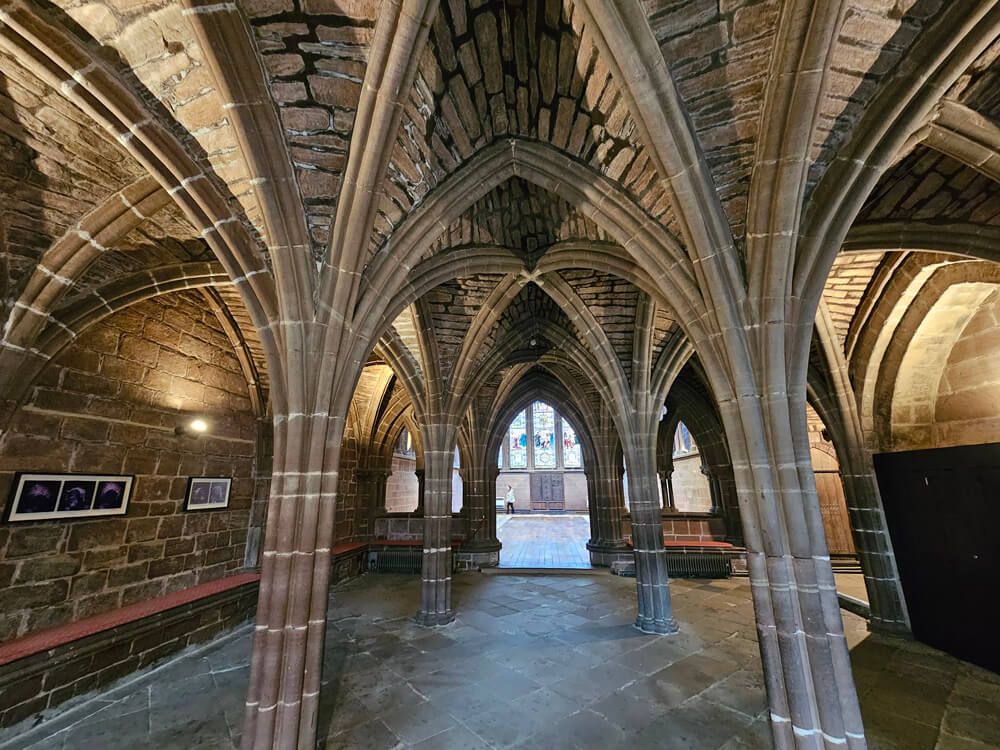
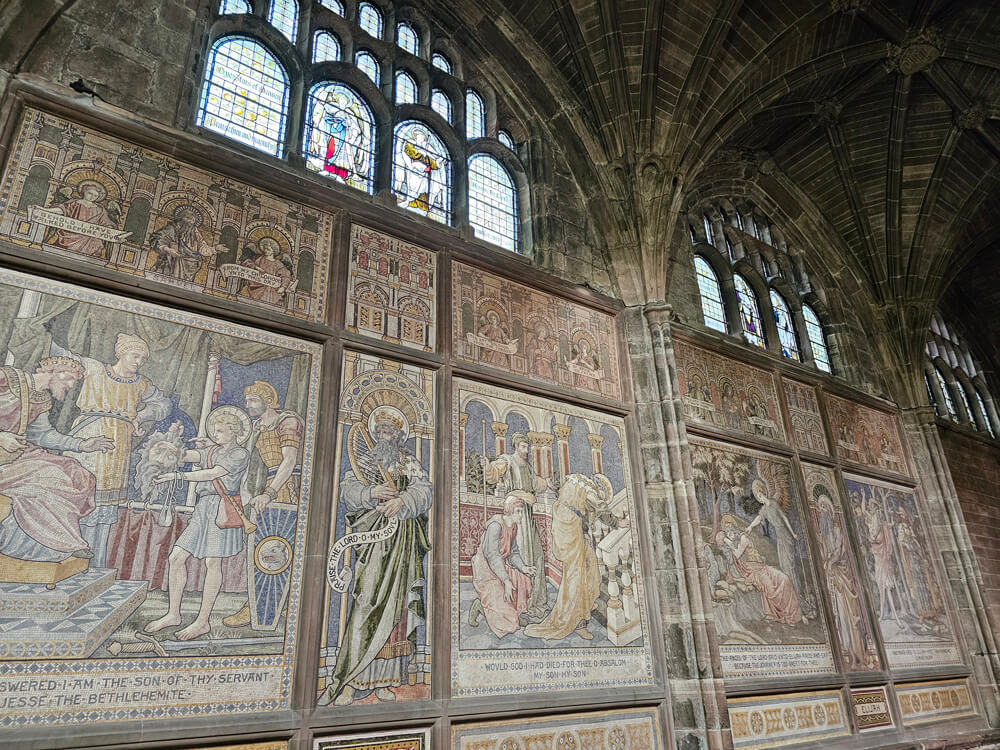
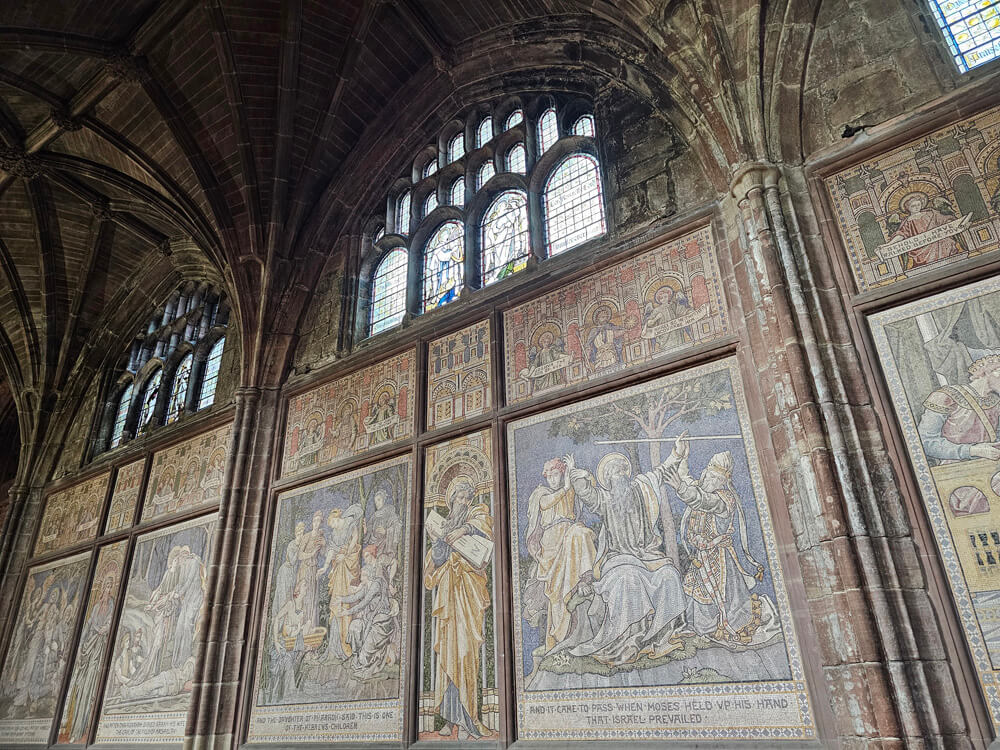
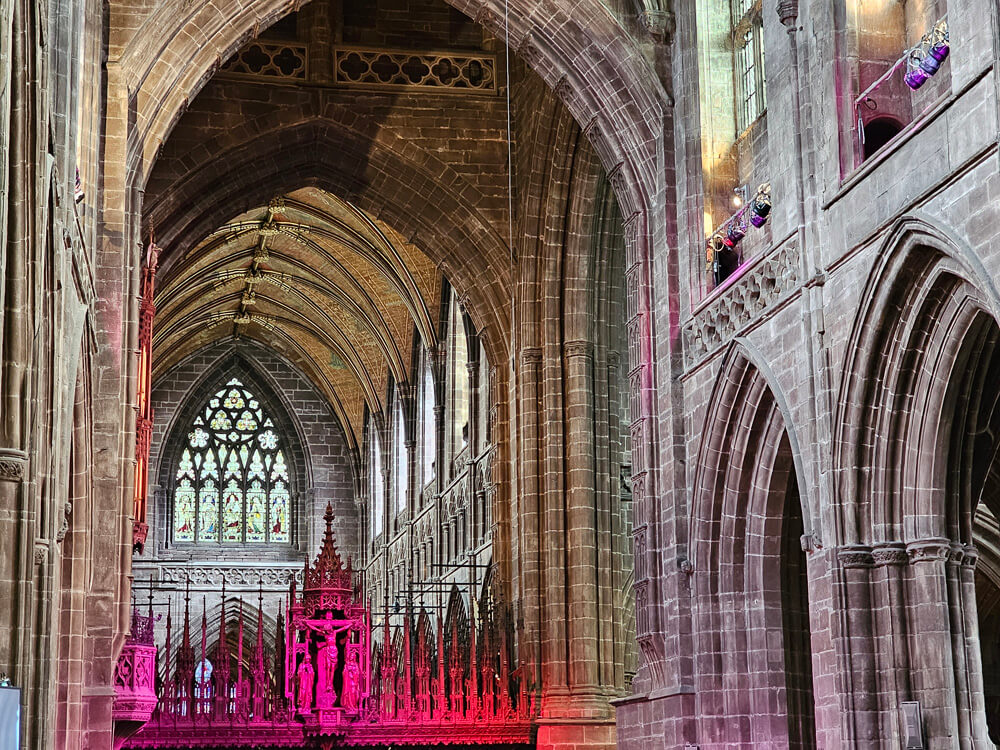
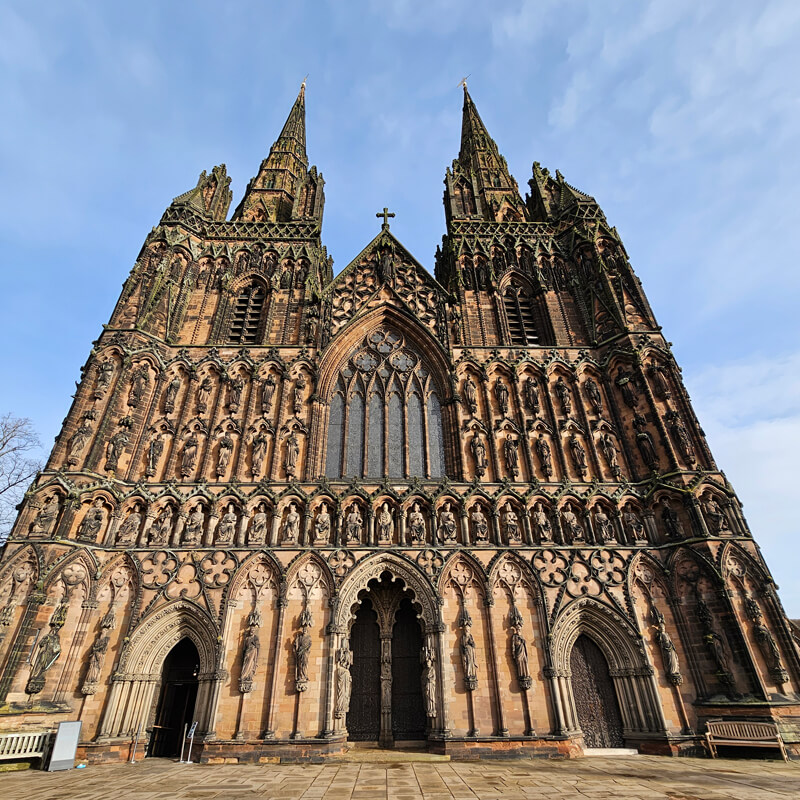
Chester Cathedral was formerly the abbey church of a Norman Benedictine monastery, and has the most complete set of monastic buildings in the country, which includes a Georgian square and series of streets, the remains of Roman barracks and the largest open green spaces within the walls. It also features all the major styles of English medieval architecture, including Gothic, Romanesque, and English Gothic architecture.
Historic
Highlights.
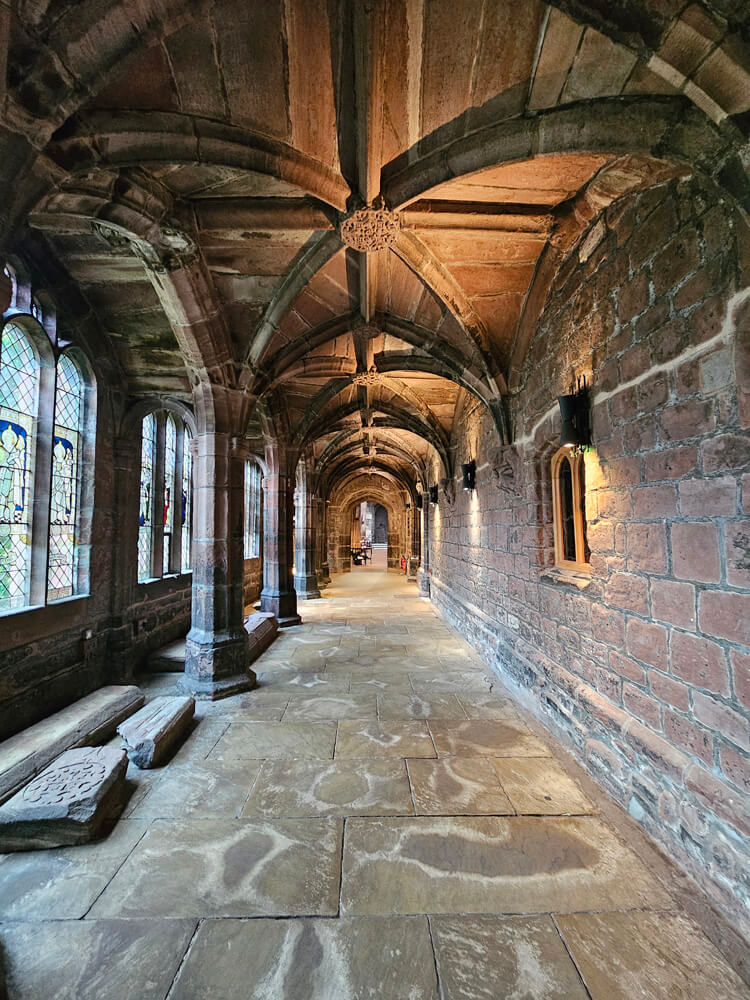
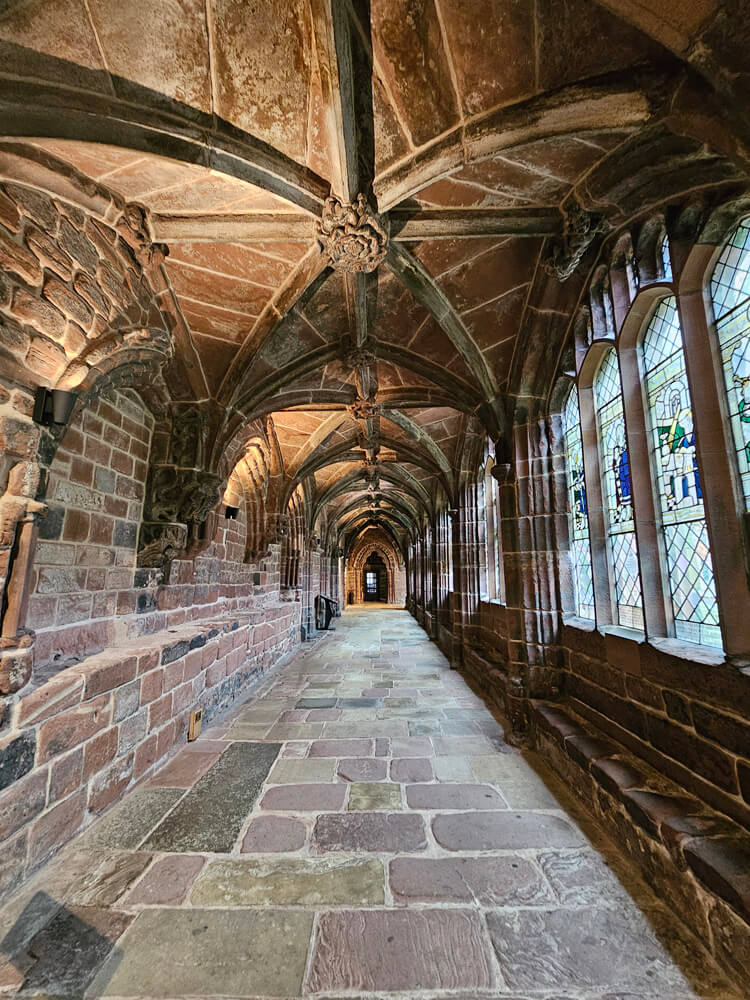
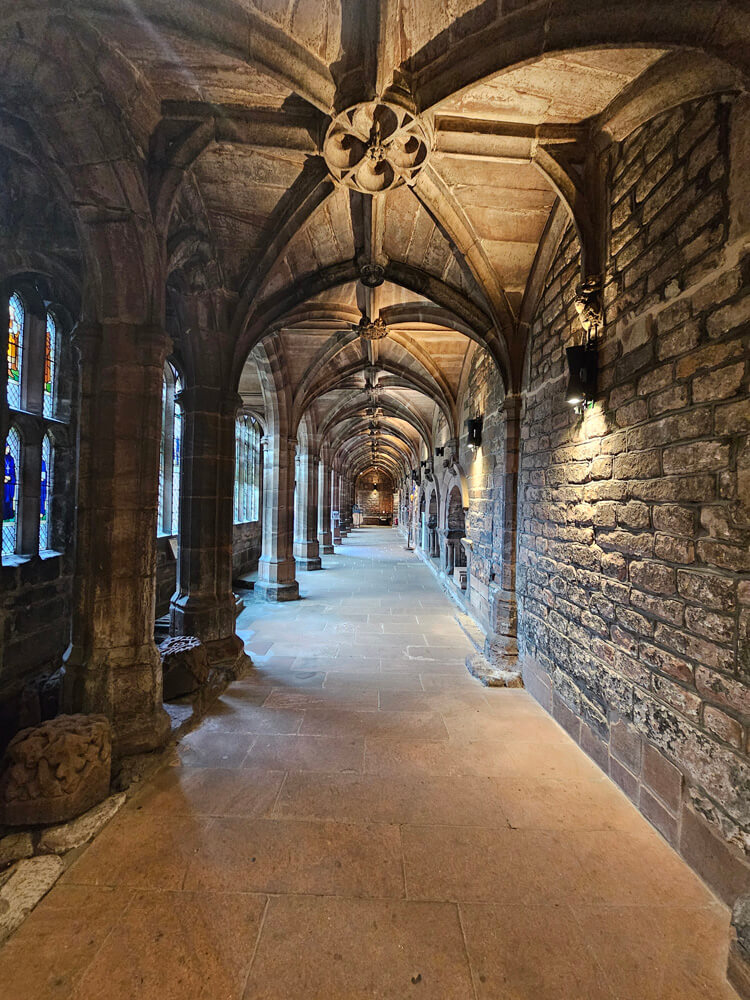
- The cloisters
- St Werburgh’s Shrine
- Medieval stone coffins and grave slabs
- Medieval misericords
Chester Cathedral started its life as a Benedictine monastery founded in the early 1090s, and is actually the city’s second cathedral. From 1075 to 1082 the cathedral of the diocese was the nearby church of St John the Baptist, after which the see was transferred to Coventry, and John the Baptist’s Church became a co-cathedral until the Dissolution of the Monasteries.
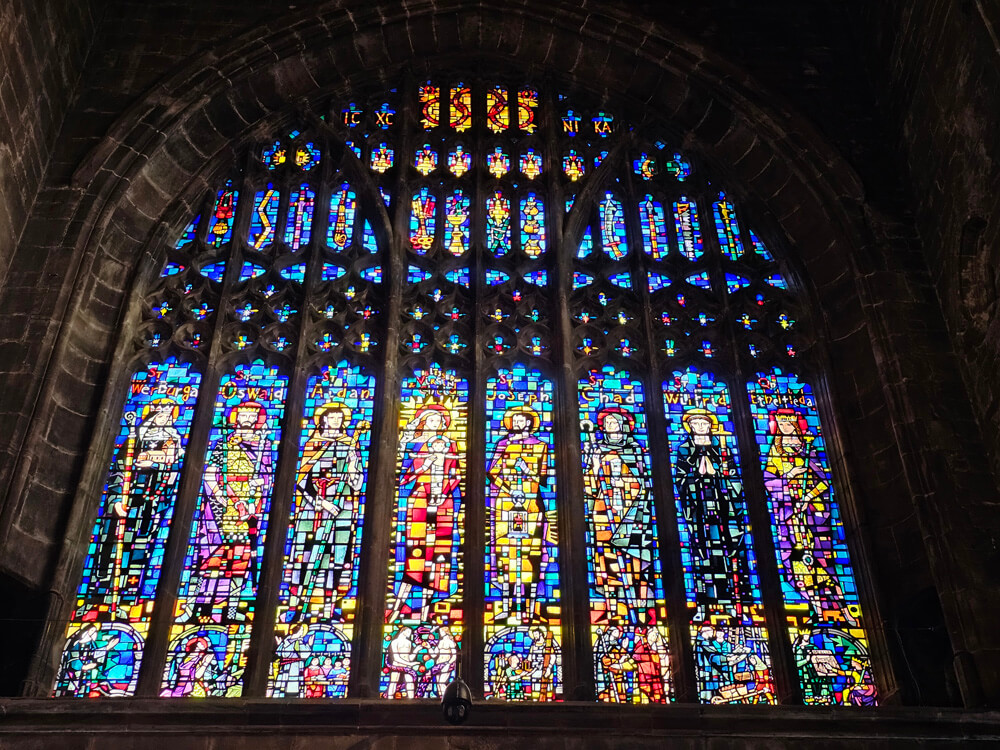
The site of Chester Cathedral was originally a church dedicated to St Peter and St Paul built in the early-10th century by Alfred the Great‘s daughter, Æthelflæd, Lady of the Mercians. The Saxon church was then rededicated to St Werburgh around 975 when it became the resting place for her bones. She was a Mercian princess and nun, and a relative of several Saxon kings. The church was restored in 1057 by Leofric, Earl of Mercia, and his wife Lady Godiva.
The Normans then rebuilt the church on a larger scale as a Benedictine monastery in the 1090s with the assistance of monks from Bec Abbey in Normandy. The earliest surviving parts of the current building date from this time. The building saw a lot of changes and rebuilding over the centuries, especially in the 13th century, and it survived for almost 500 years until the Dissolution of the Monasteries.
In 1540, St John the Baptist’s Church, which was still the co-cathedral at the time, and the Benedictine monastery were both suppressed and partly demolished by Henry VIII. However, the abbey church from the monastery was spared; its dedication was changed to Christ and the Blessed Virgin, and it was to serve as the new cathedral church of the new diocese of Chester. Chester was one of the very few monasteries to be re-founded as a cathedral by Henry VIII; others included Westminster Abbey, Oxford, and Gloucester.
The oldest parts of the current cathedral building date to the original Norman rebuilding in the 1090s, which you can see in the north transept, north tower, and parts of the cloister.
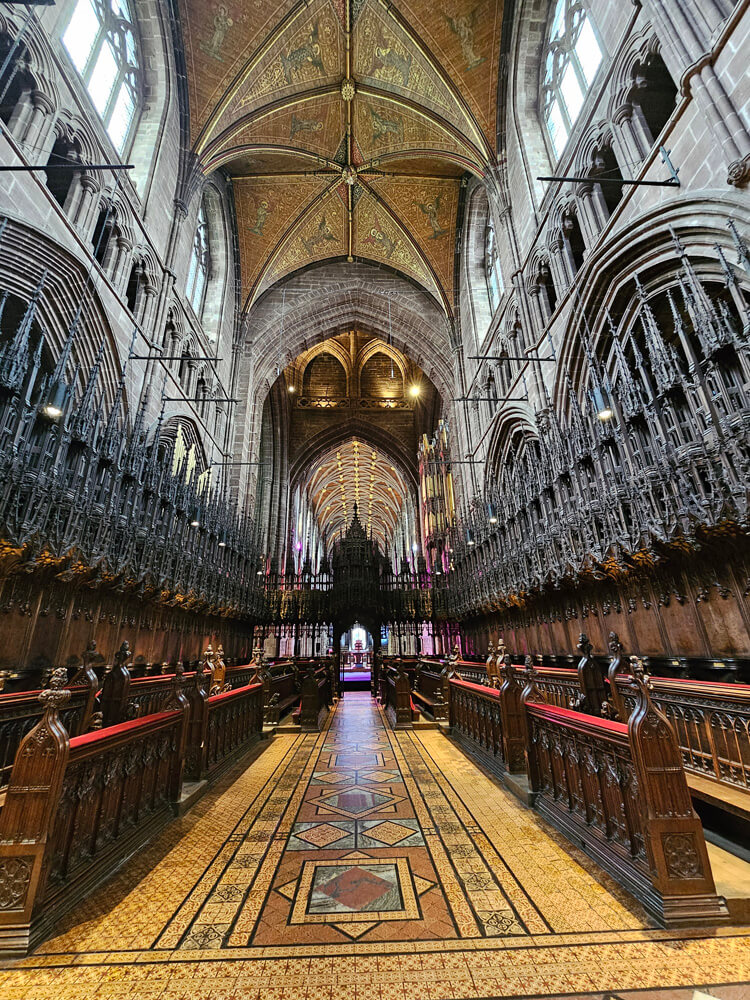
The magnificent set of carved quire stalls came to the cathedral in the 14th century. Etched onto a stone plinth in the baptistery is a Nine Men’s Morris board, which is a game of strategy dating back to the Roman era.
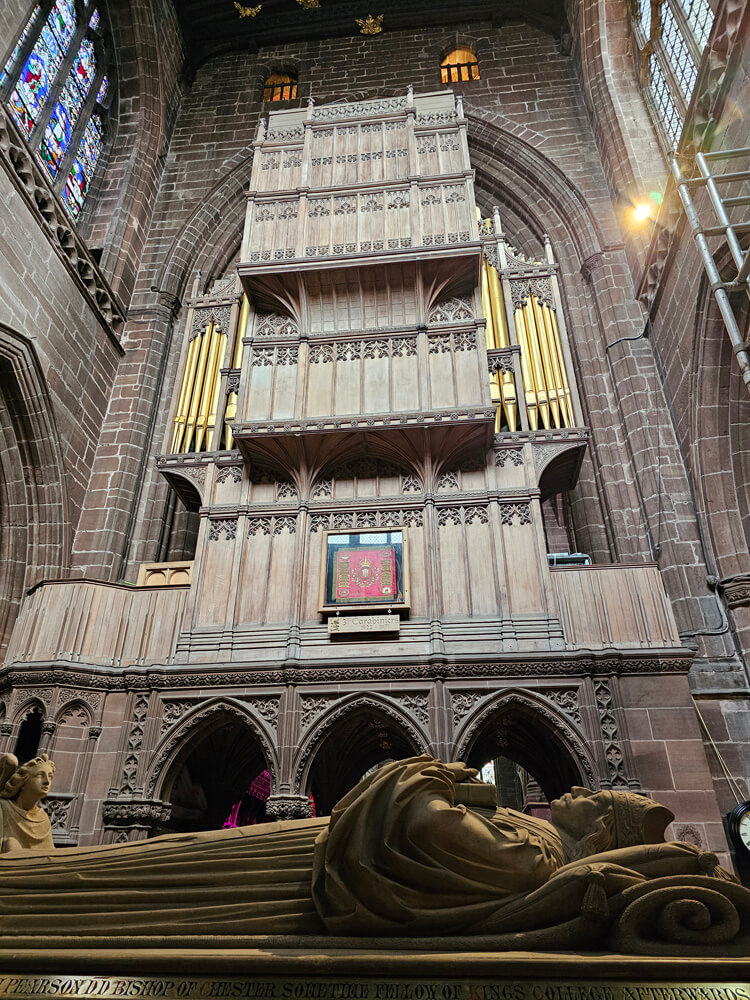
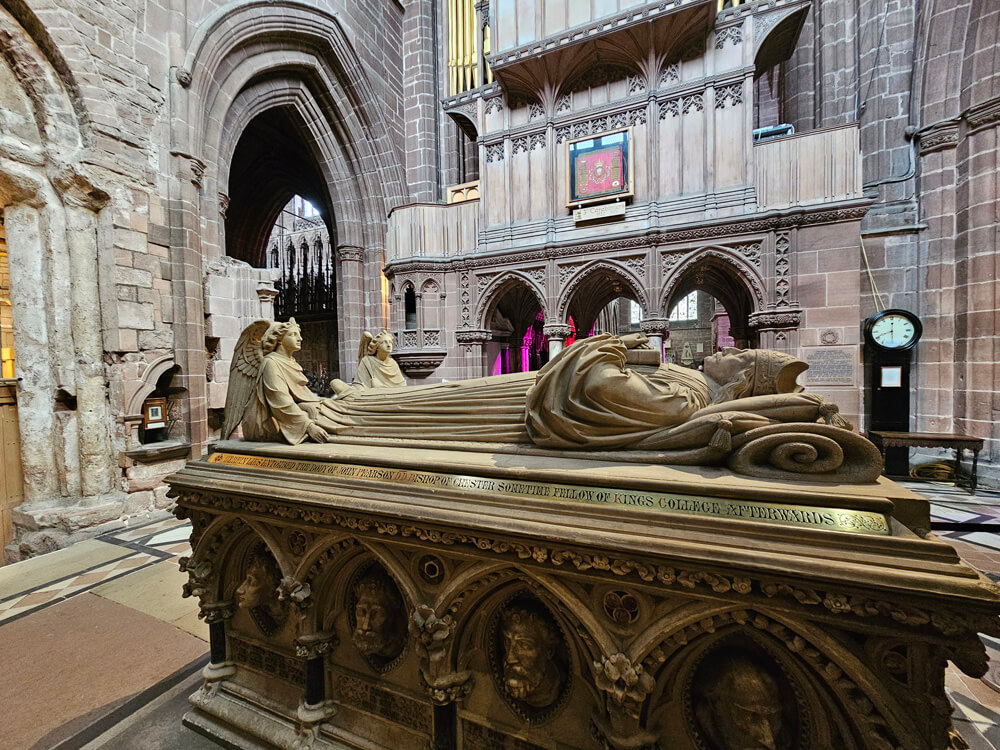
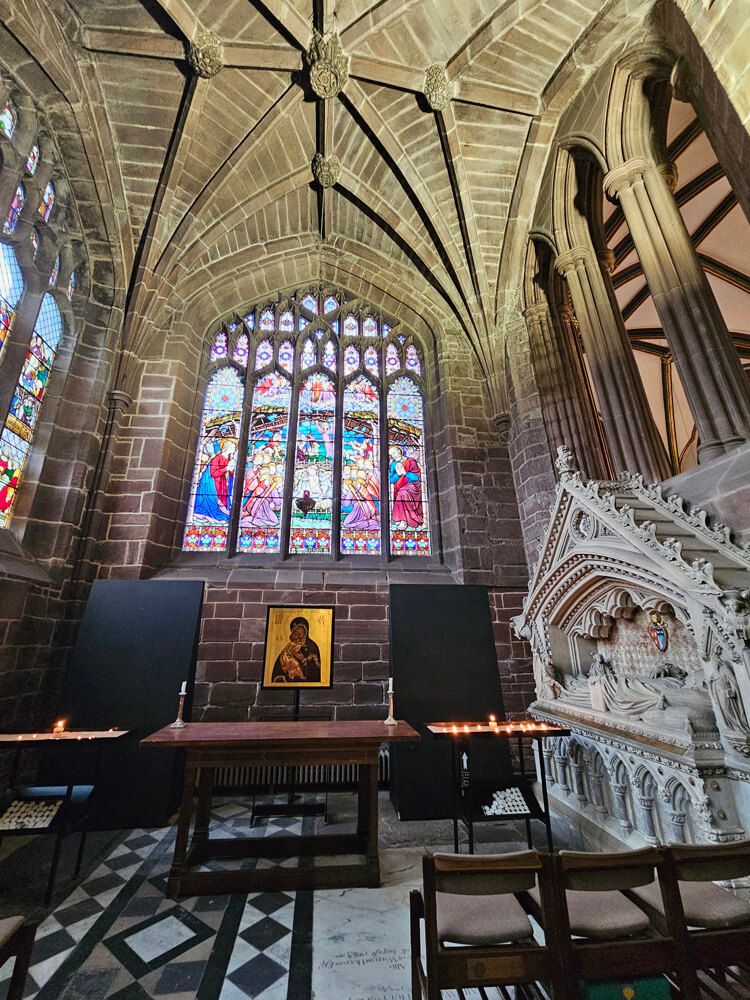
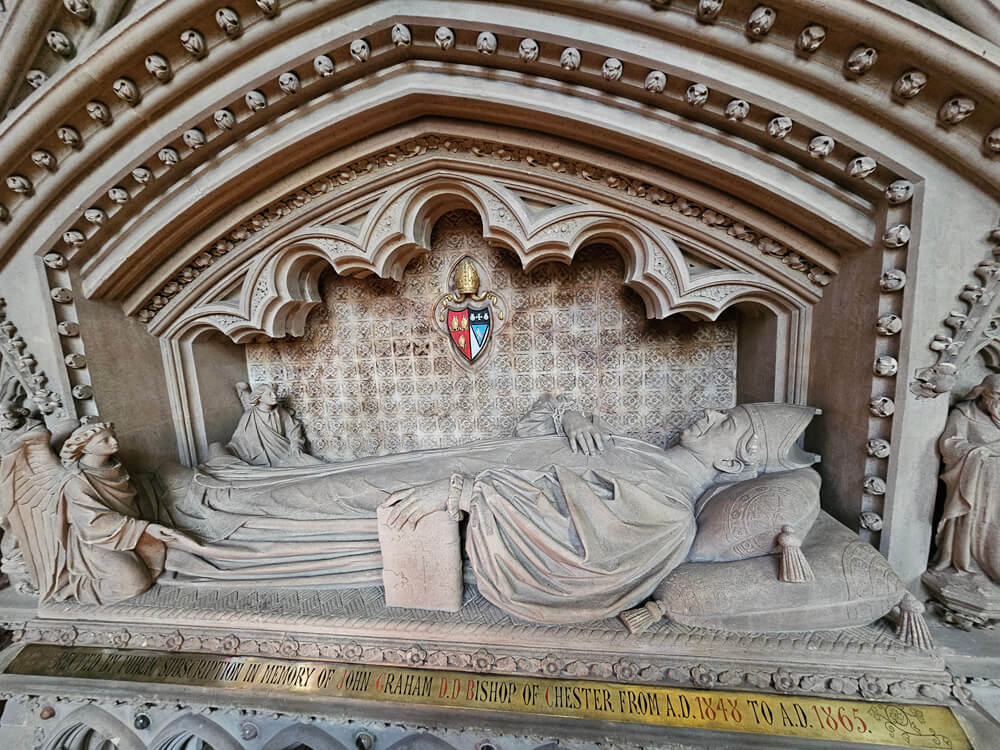
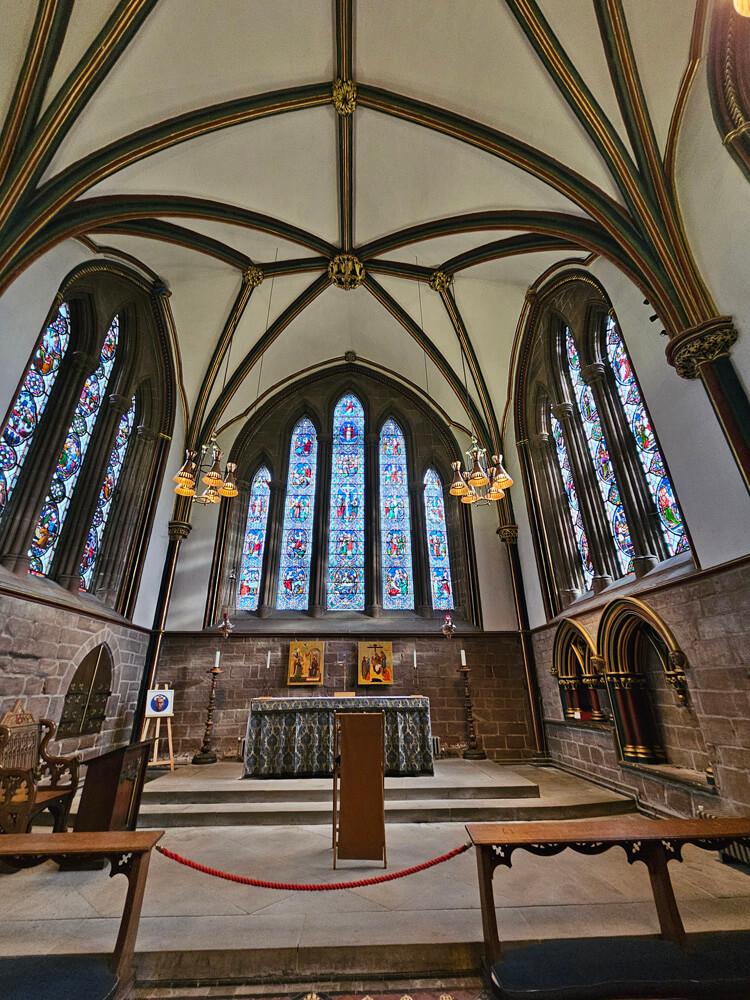
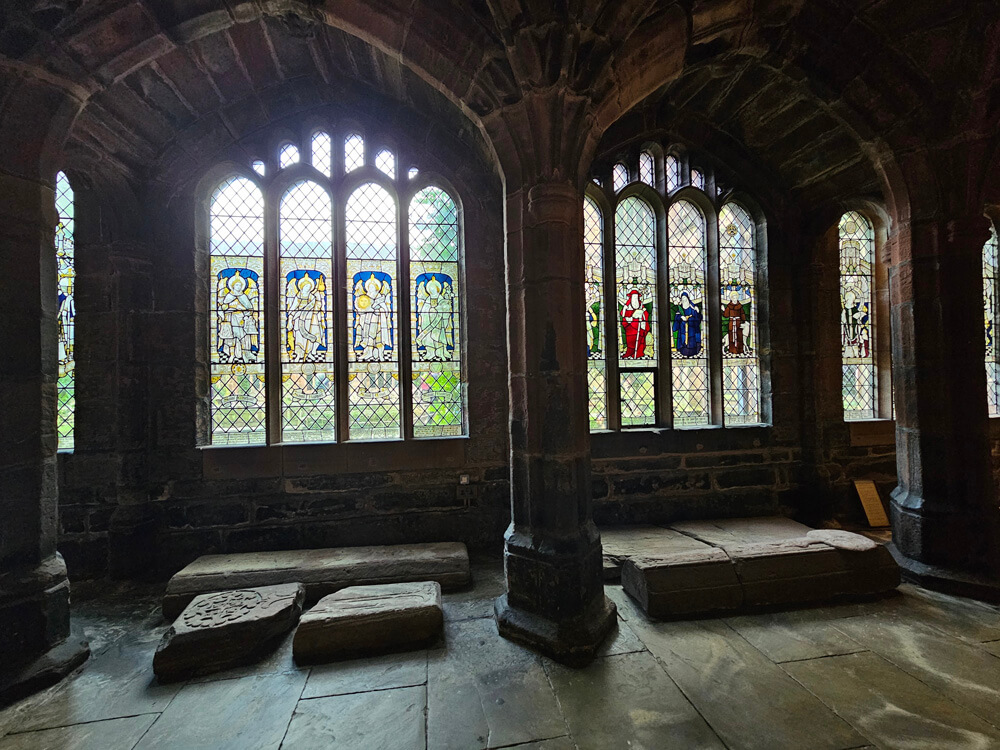
Several medieval stone coffins and grave slabs can be found in the cathedral, including those of Ranulph Higden (d 1364), who was a Benedictine monk at the abbey; Abbot Simon Ripley (1485-1493), who completed the rebuilding of the nave and central tower; Richard of Bec (d 1116), who came to England in 1092 and was named as the first Abbot of the new monastery; Hugh d’Avranche, who founded the Benedictine monastery and was buried here in 1101; and finally, the shrine of St Werburgh which is now on display in the Lady Chapel.
Photo Gallery.
Did you enjoy this post?
I hope you found this post useful. I put a great deal of time and effort in to building, maintaining and populating the website. If you like, you could say a small thank you by buying me a coffee. You don't have to, but it would be nice :)
Buy me a coffee
Stay up to Date
Follow me on my journey and get notified whenever a new post is published by following Kings & Castles on Facebook.
Follow MeExplore The Map
Discover the hundreds of castles, churches, monasteries, cathedrals and other historic locations that I've personally visited across England and Wales. Search by location, explore nearby sites and plan your next historical adventure.
Share: