Clun Castle
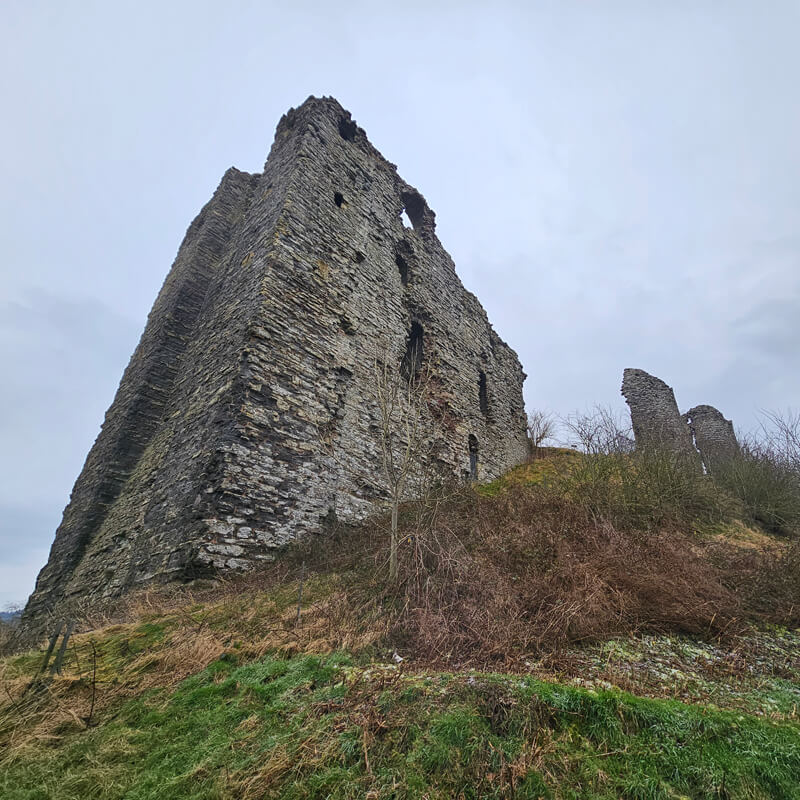
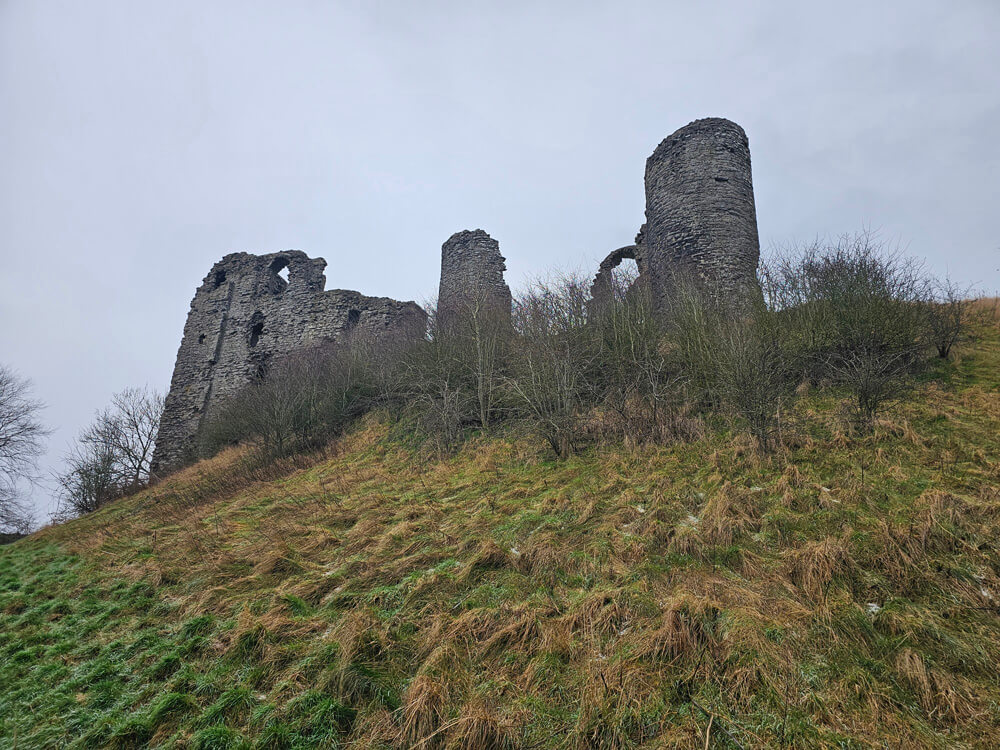
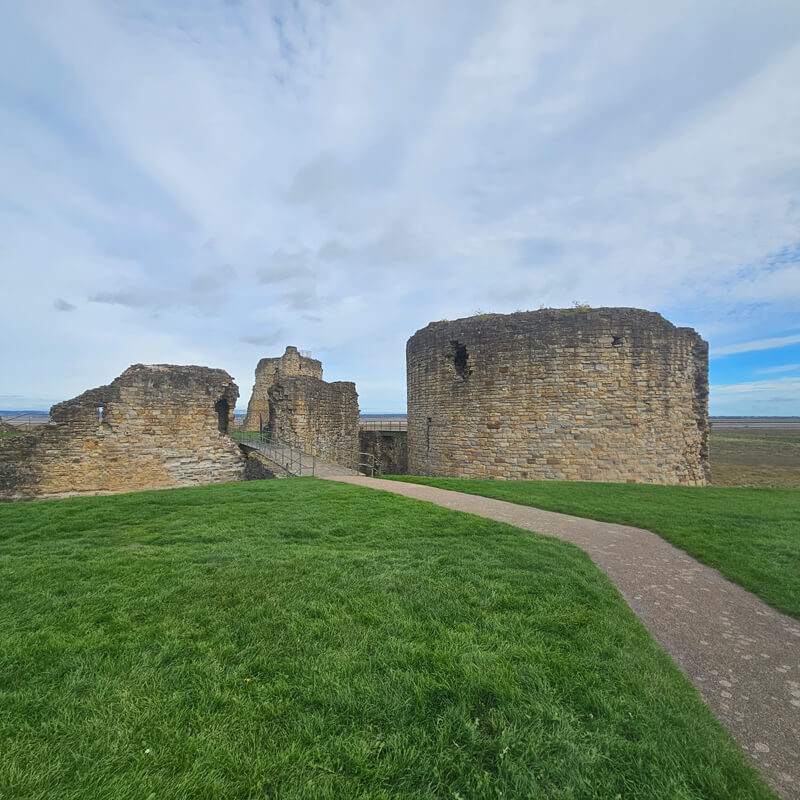
Clun Castle is a ruined medieval castle in Clun, a small, quiet, rural town in south west Shropshire. The castle was originally built as a timber motte-and-bailey fortification in the late 11th century to proclaim Norman dominance over this part of the Welsh Marches, and it was rebuilt in stone sometime in the 13th century. The castle played a key role in protecting the region from Welsh attack until it was gradually abandoned, and by the 16th century the castle was in a ruined state.
Quick
Facts.
- Location: Clun, Shropshire, England
- Established: 11th century
- Built in stone: 13th century
- Condition: Ruined
- Date visited: December 2024
- More info: Visit website
- Rating:
A Bit of History
Shortly after the Norman invasion of England, William the Conqueror granted Clun and the surrounding lands to one of his cousins, Roger de Montgomery, the most powerful lord in Shropshire, who then granted Clun to another Norman lord, Picot de Say, who was a vassal of Montgomery. Picot de Say built Clun Castle towards the end of the 11th century to protect his lands and later declared himself the Baron of Clun.
Sitting high on a rocky mound and strategically located along the River Clun, the castle was initially a timber motte-and-bailey design and went on to become an important Marcher lord castle in the 12th century, with an extensive castle-guard system.
In 1155, the barony of Clun, along with the castle, passed to the powerful FitzAlan family via the marriage of William FitzAlan of Oswestry to Isabella de Say, and it was owned by the FitzAlan family for the next 400 years. The castle and the settlement of Clun prospered in the 13th century thanks to the management of the FitzAlan family, but suffered a number of attacks from across the Welsh border.
The original castle was burnt down in 1196 by Rhys ap Gruffudd, the prince of south Wales. In 1215, John FitzAlan joined the rebellion against King John, who sent troops to attack the castle in retaliation, and the castle withstood a later siege in 1233 by Llywelyn ap Gruffudd of Wales, the last prince of Gwynedd.
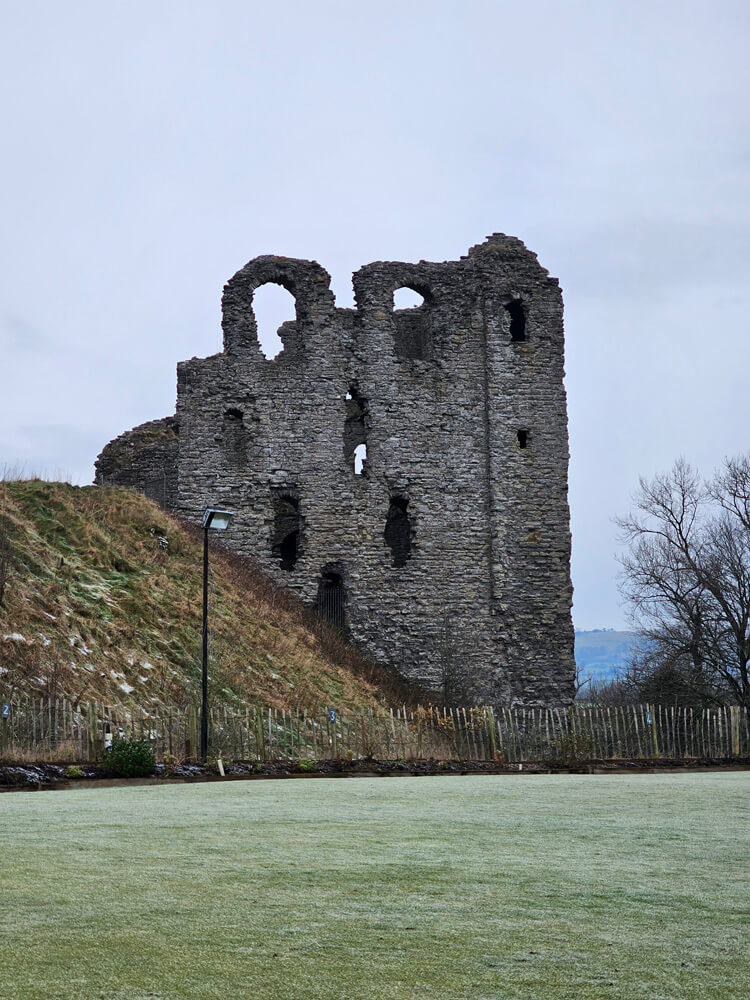
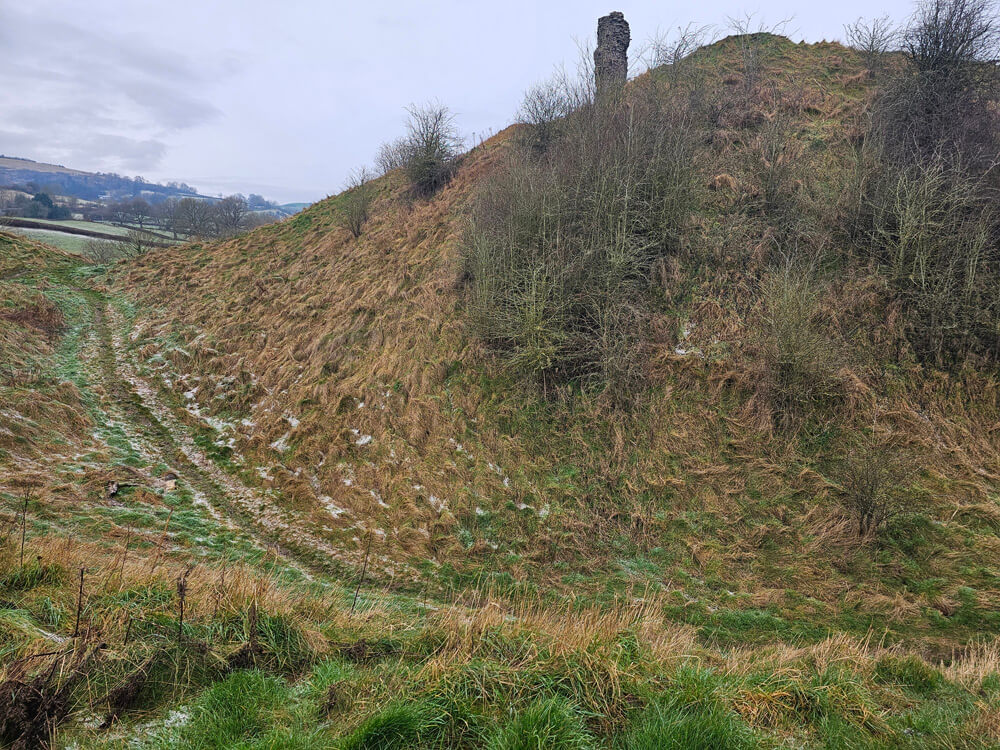
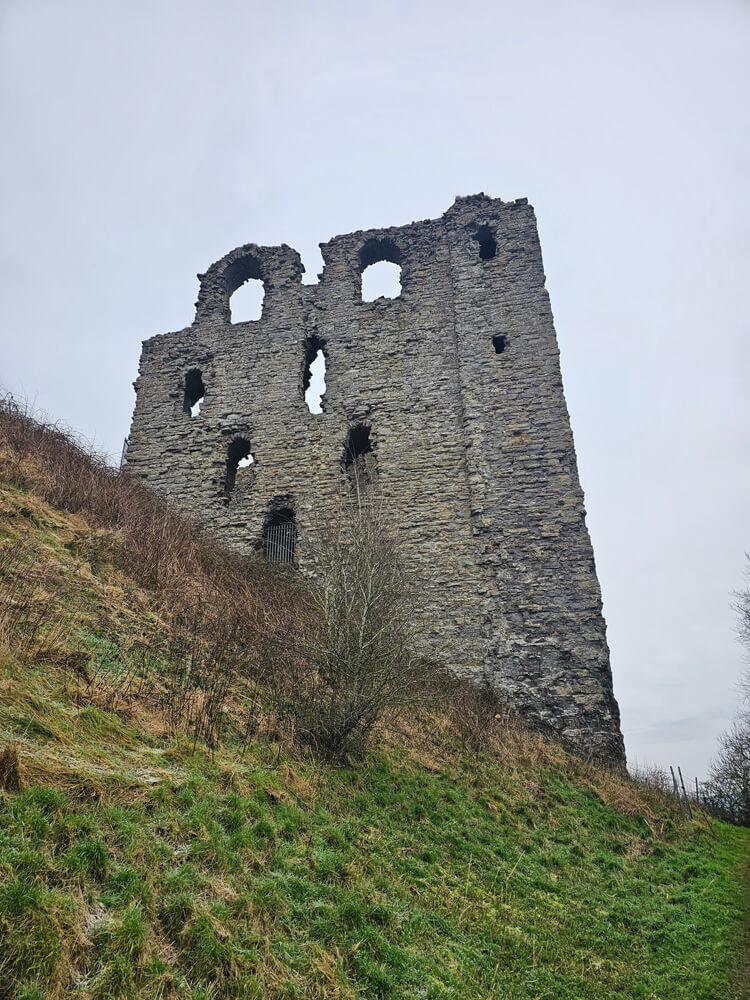
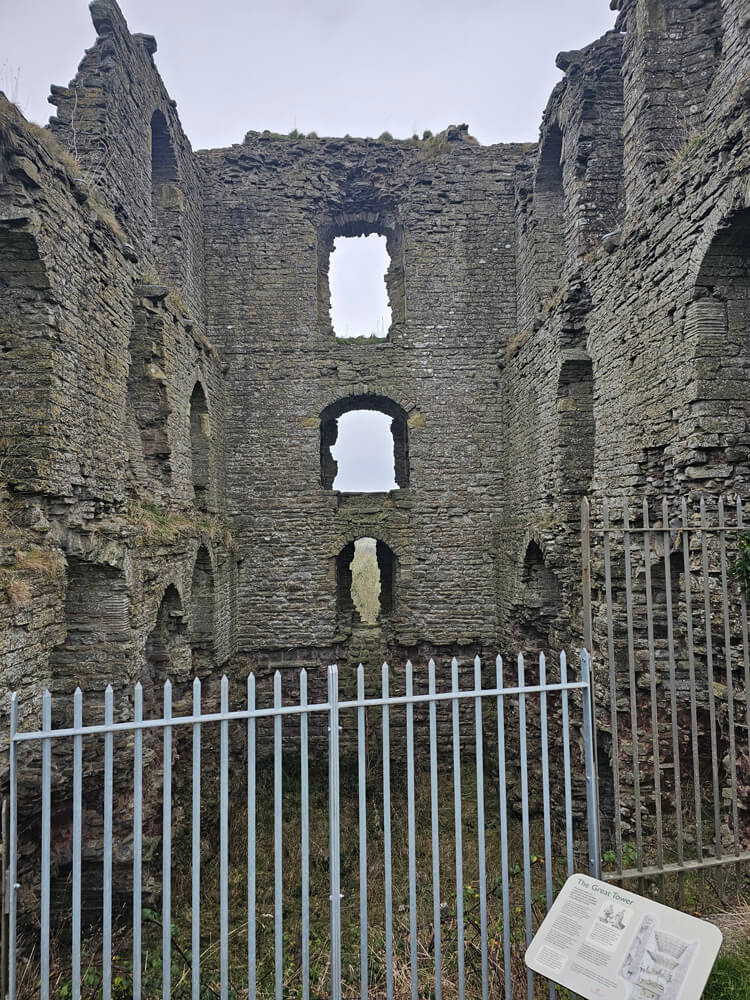
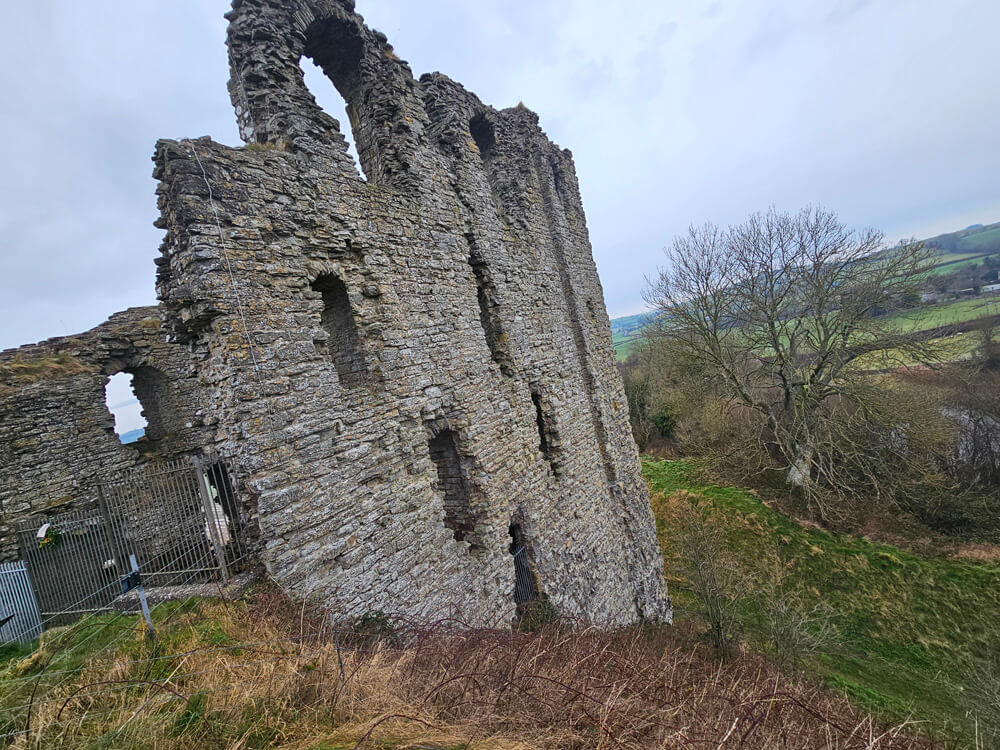
The castle was rebuilt in stone sometime in the 13th century, at which time the great tower was also built, unusually, set on the side of its mound. The great tower, certainly built for show rather than defence, was an impressive purpose-built apartment block designed to display the importance and wealth of the FitzAlan family. The castle and settlement continued to prosper until the early 15th century, when followers of the self-styled Prince of Wales, Owain Glyndŵr devastated the surrounding area.
In 1292, Richard FitzAlan succeeded to the title of Earl of Arundel and inherited large estates in Sussex. Eventually, the FitzAlans made the more luxurious Arundel Castle in West Sussex their main residence, and by the mid-14th century Clun Castle had been downgraded to the status of a country retreat, used largely as a hunting lodge.
Nevertheless, Clun remained an important administrative centre, and the FitzAlans continued to draw a great deal of money from their marcher estates, and the castle seems to have been kept in reasonable condition throughout the 14th century. However, over the years it was used less and less, and in the early 15th century the family lost interest in the property and it fell into disrepair. Around the same time, Owain Glyndŵr devastated the area around Clun, helping to bring an end to its prosperity.
By 1539 Clun Castle was reported to be in a ‘ruinous’ state, and it was abandoned by the time of the English Civil War, although it was still slighted by Parliament in 1646 to prevent any possible use as a fortress.
The castle remained in ruins until renovation work in the 1890s when the site was purchased by the Duke of Norfolk, a descendant of the original FitzAlan family, who carried out repairs to the castle, stabilising its condition. Today the castle is classed as a Grade I listed building and as a Scheduled Monument. It is still owned by the Duke of Norfolk, who also holds the title of Baron Clun, and is managed by English Heritage, who took the ruins into guardianship in 1991.
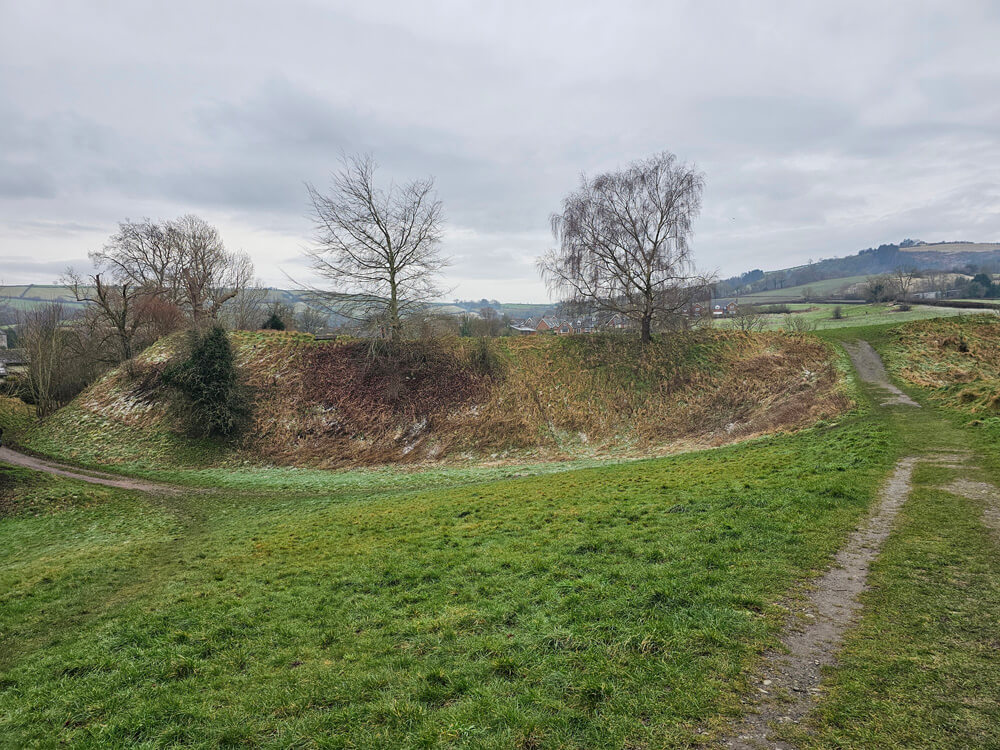
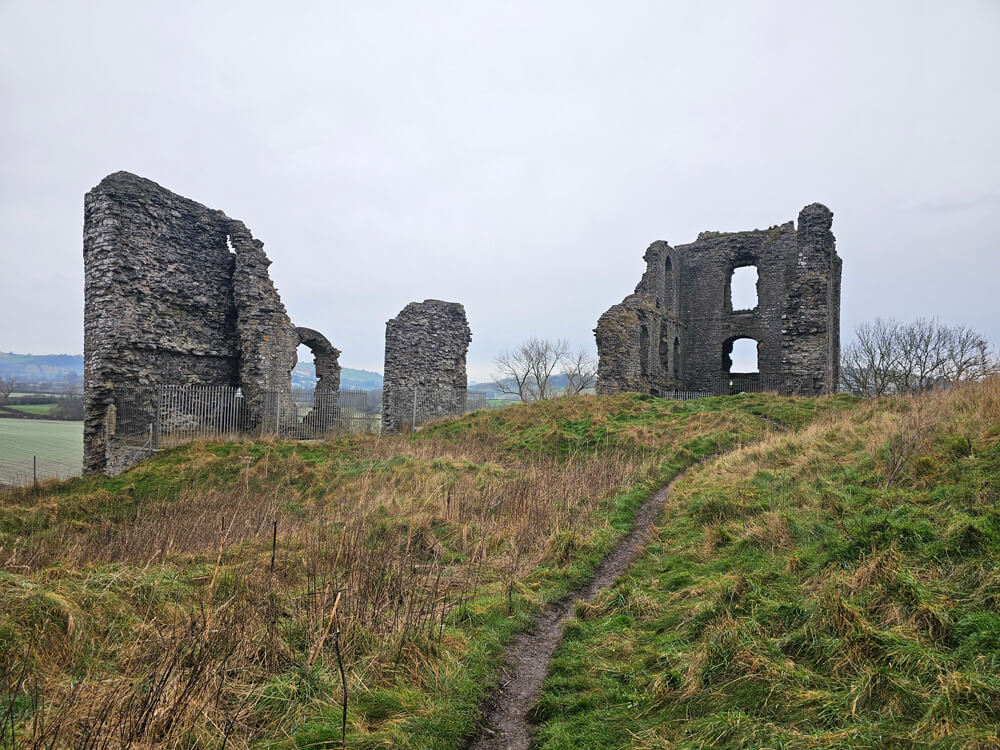
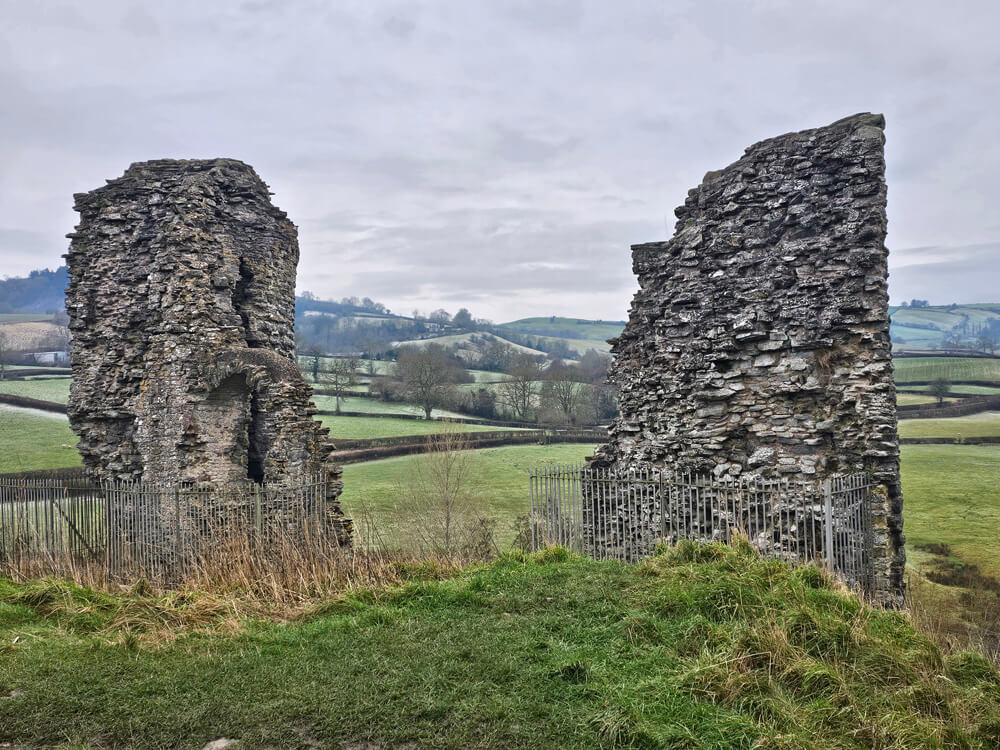
The site is open to the public free of charge. The earthworks of the castle remain mostly intact, along with the Great Tower and parts of the towers around the motte, and the remnants of the formal gardens.
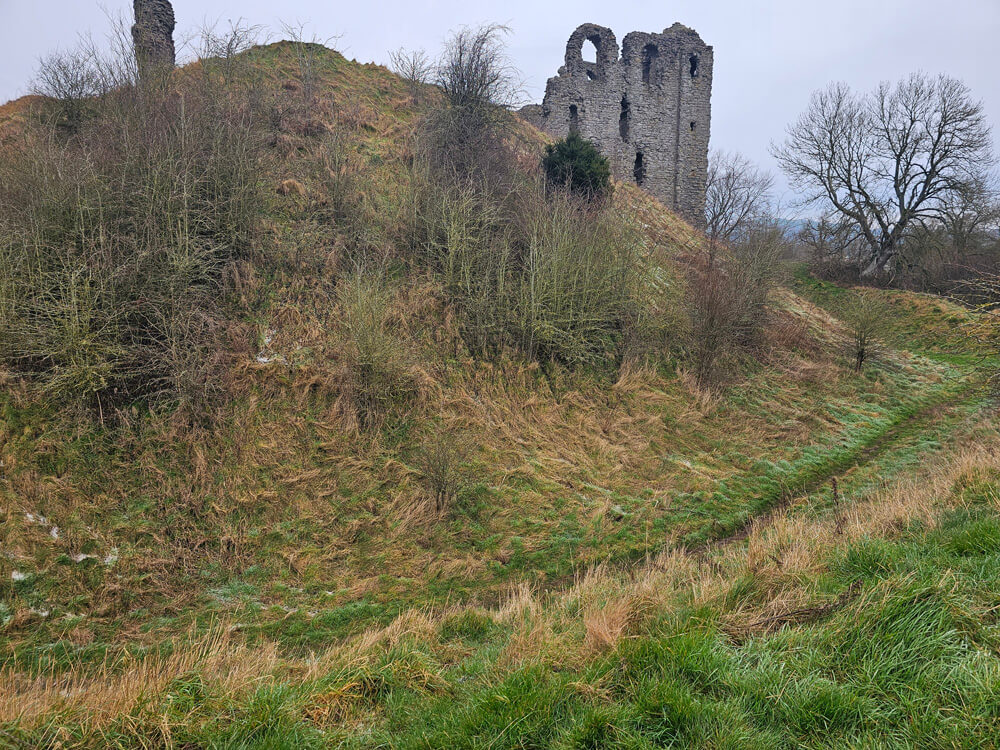
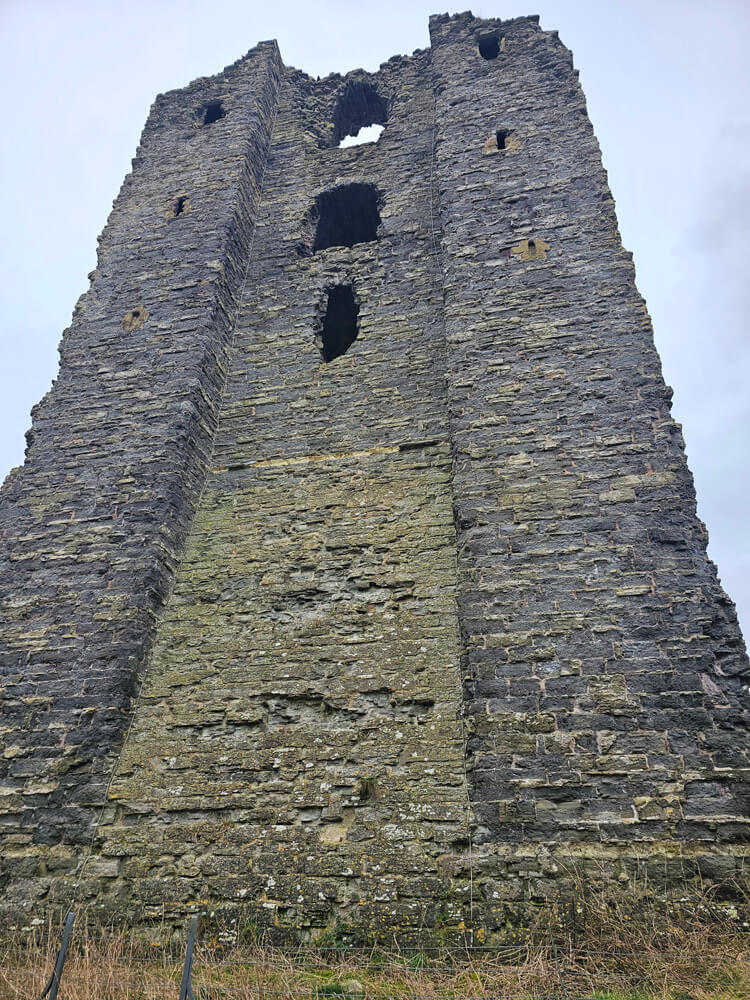
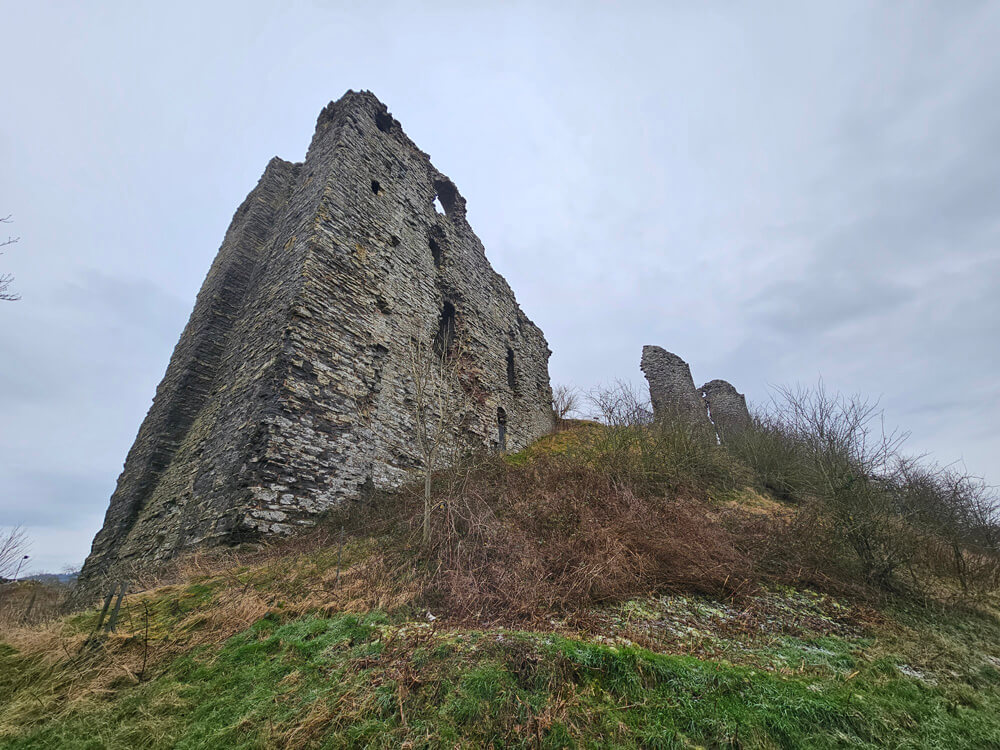
Very little in terms of the castle’s structure is visible above ground, but it is enveloped by stunning countryside. The earthworks are large and extensive, the ruins of the 80-foot 13th-century tower are massive, which was strangely built into the slope of the mound rather than on top of the motte. It would have had a communal hall on the first floor with luxury accommodation above, and it was from here that the barony of Clun was administered.
Clun didn’t follow the classic single motte-and-bailey layout, the tower formed part of one walled fortification, connected to a second on an adjoining mound, which would have housed the garrison, stores, stables, amongst other things. The site also once included a walled castle farm, which was where the modern bowling green is now. And finally, across the river lay the castle’s pleasure gardens.
Photo Gallery.
Did you enjoy this post?
I hope you found this post useful. I put a great deal of time and effort in to building, maintaining and populating the website. If you like, you could say a small thank you by buying me a coffee. You don't have to, but it would be nice :)
Buy me a coffee
Stay up to Date
Follow me on my journey and get notified whenever a new post is published by following Kings & Castles on Facebook.
Follow MeExplore The Map
Discover the hundreds of castles, churches, monasteries, cathedrals and other historic locations that I've personally visited across England and Wales. Search by location, explore nearby sites and plan your next historical adventure.
Share: