St Mary’s Church, Richmond
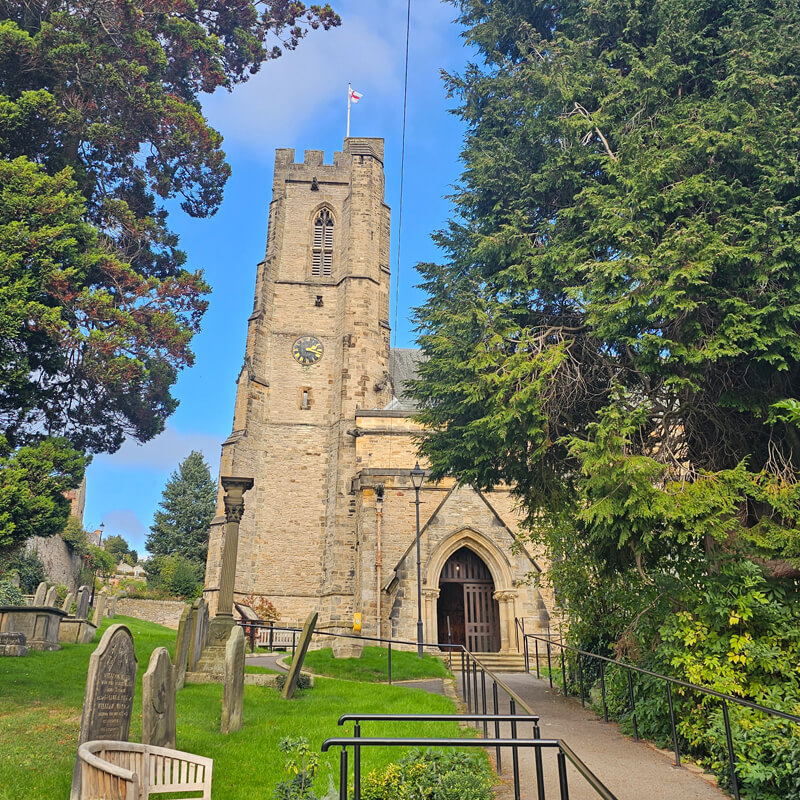
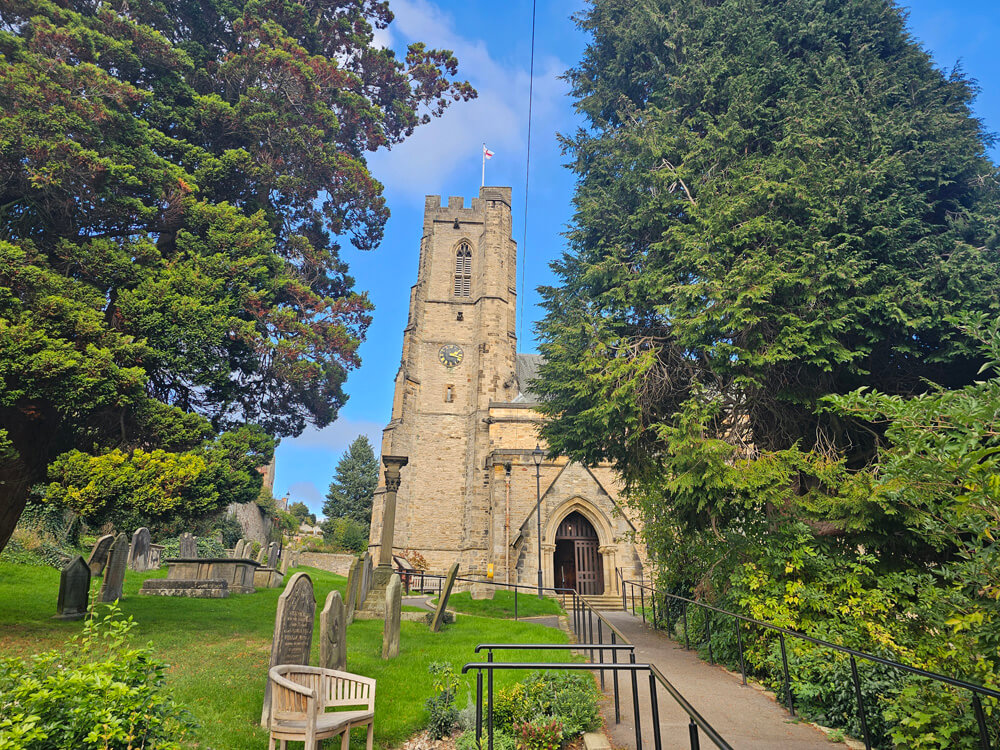
Standing just beyond Richmond’s historic Market Place in North Yorkshire, St Mary’s Church has served the local community for almost nine centuries. It features Norman architectural remains, a magnificent 14th-century tower and medieval choir stalls rescued from nearby Easby Abbey.
Historic
Highlights.
- 14th-century tower
- Collection of medieval choir stalls
- Finely carved marble font
The Origins of St Mary’s Church
The earliest documentary reference to St Mary’s Church dates from 1137, although the surviving architecture suggests that construction began in the late 12th century. Built to serve Richmond’s growing medieval population, the church became an important centre of religious life in the town.
Remnants of its Norman origins can still be seen at the western end of the nave, where distinctive stone pillars and arcading survive. During the 13th century, the church was enlarged, reflecting the continued growth and prosperity of the settlement.
Medieval Expansion and the Tower
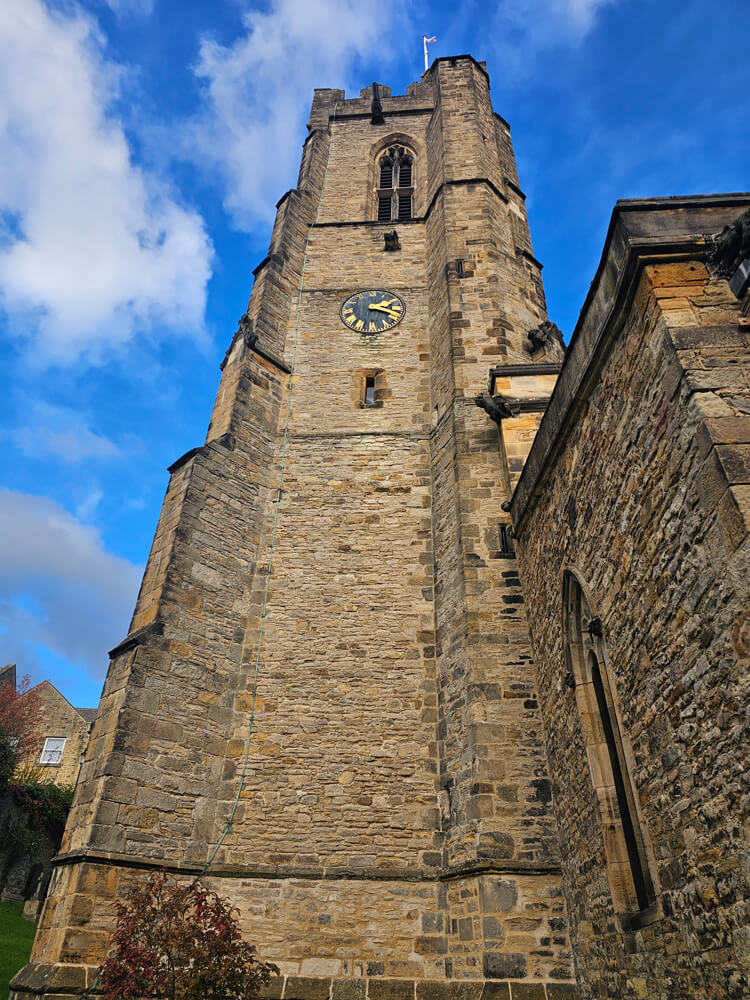
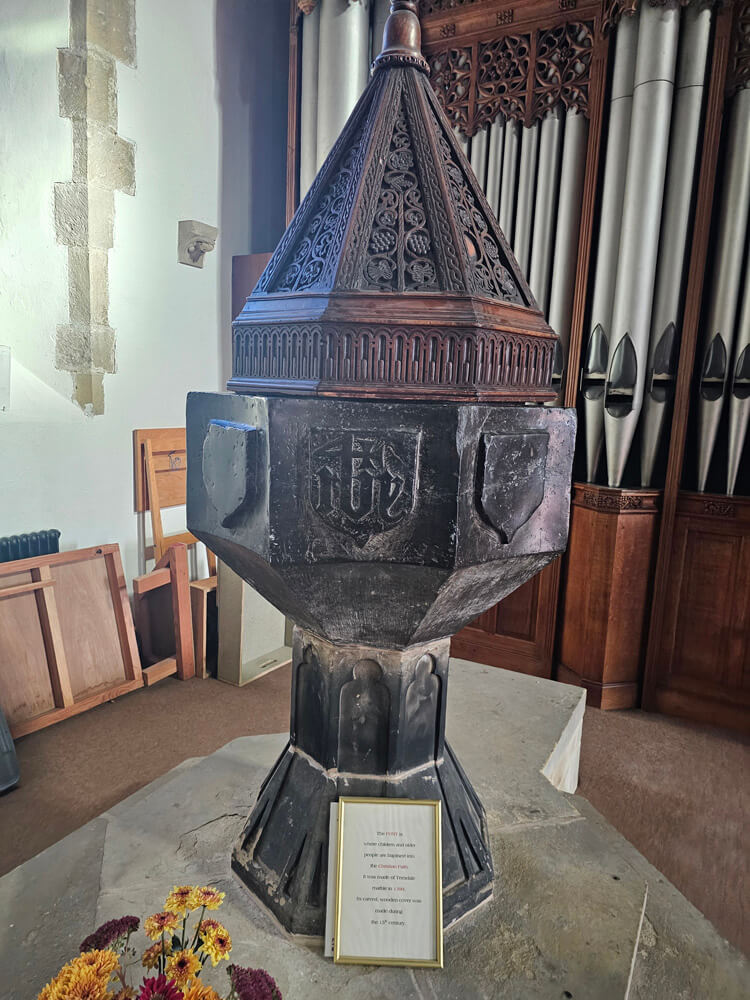
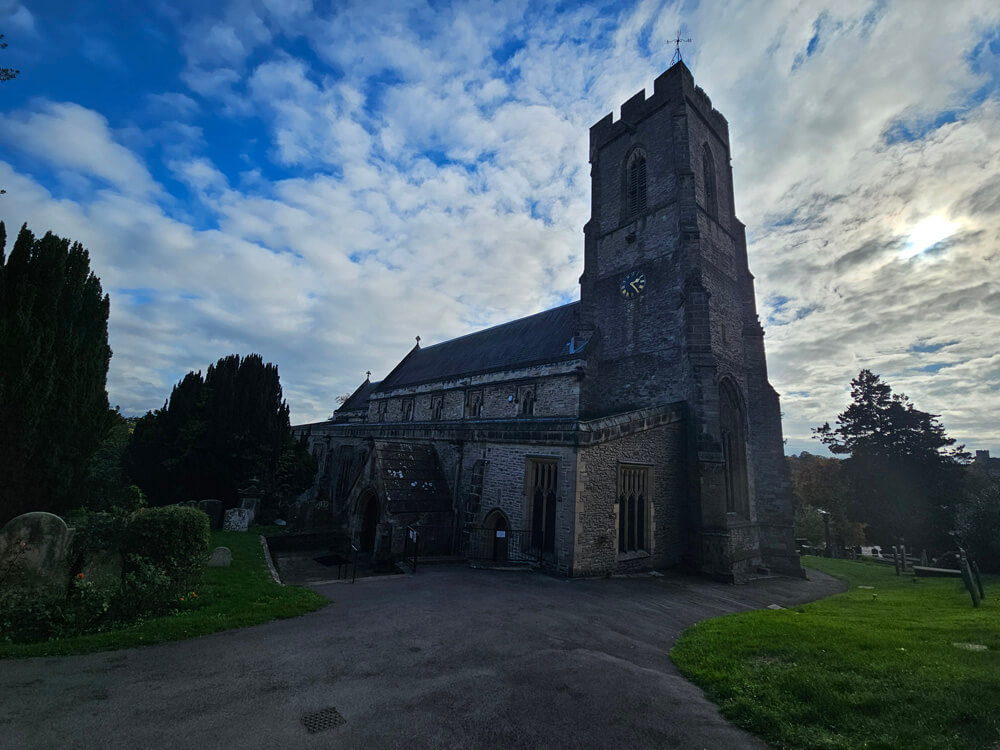
St Mary’s underwent further development during the later Middle Ages. The north porch dates from the 14th century, while the church’s impressive tower was begun in 1399 under the patronage of the Earl of Westmorland. The church’s finely carved marble font is also dated to 1399, and its carved wooden cover dates to the 15th century.
The tower remains one of the building’s most striking features, reflecting the wealth and ambition of medieval Richmond. Although the church stood outside the town walls when they were constructed during the 14th century, it remained the principal parish church for the town’s inhabitants.
The Choir Stalls from Easby Abbey
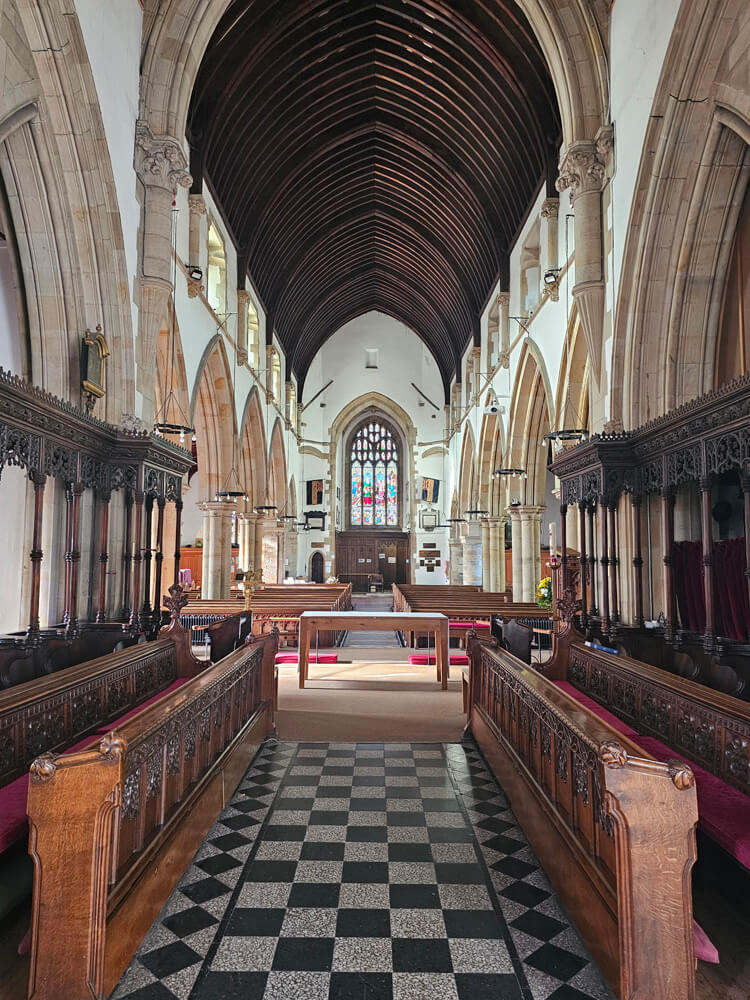
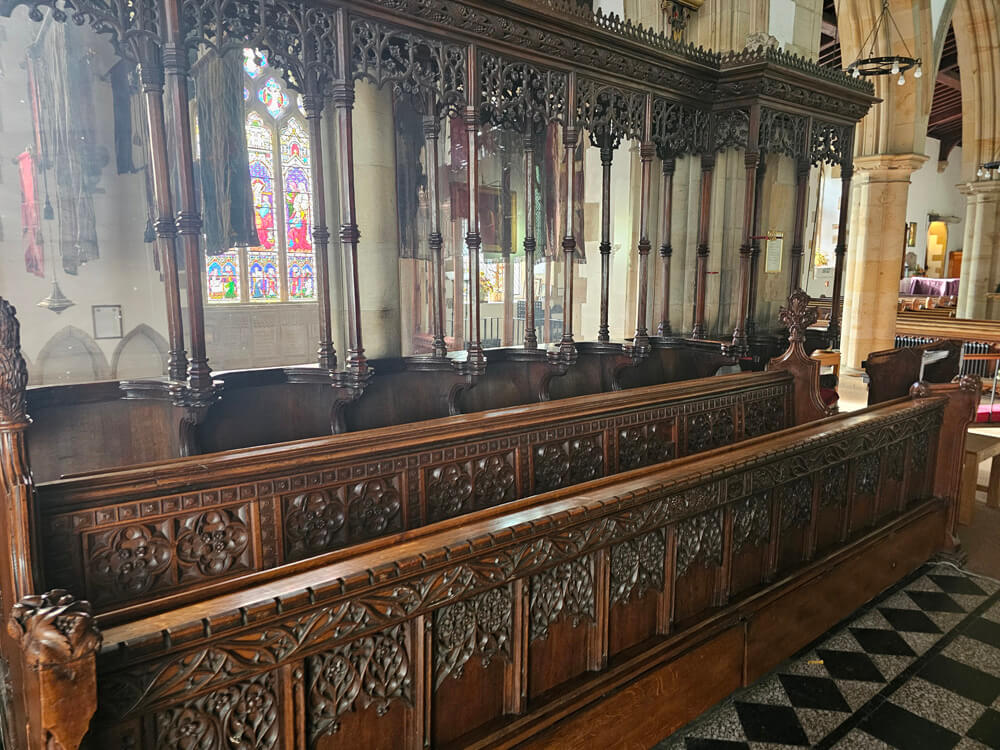
One of St Mary’s most remarkable historical features is its collection of medieval choir stalls, brought from nearby Easby Abbey following the Dissolution of the Monasteries in the 16th century.
The stalls date from the early 16th century and include intricately carved misericords — small hinged seats designed to provide some support for monks required to stand during lengthy services. Their carvings depict a variety of figures, animals and foliage, including a scene of pigs playing bagpipes.
These surviving carvings offer a tangible connection to the religious life of the nearby Augustinian abbey before its dissolution under Henry VIII.
Restoration and St Mary’s Today
Following the Reformation, many medieval churches lost important furnishings and decorative features. St Mary’s also suffered from the deterioration of its fabric, and by the mid-19th century substantial restoration was required.
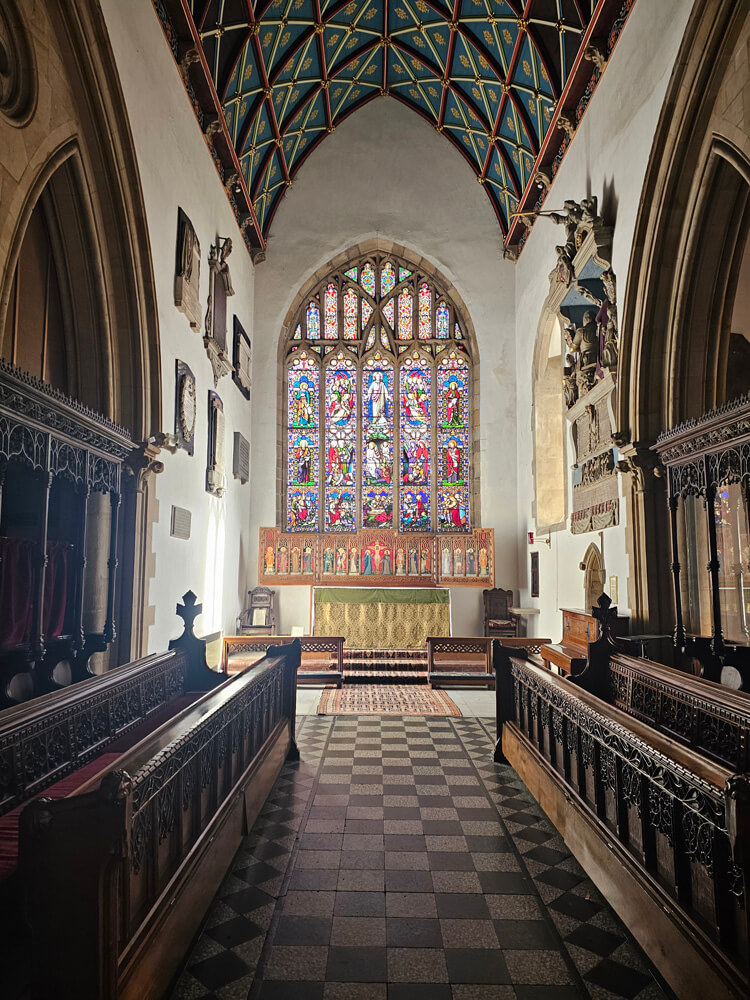
Between 1858 and 1862, the renowned architect Sir George Gilbert Scott undertook an extensive rebuilding and restoration programme, giving the church much of its present appearance while retaining important medieval features.
Today, St Mary’s remains an active parish church and a valuable part of Richmond’s heritage. Its Norman remains, medieval tower and carved choir stalls reveal the changing fortunes of a church that has stood at the heart of local life for centuries.
Photo Gallery.
Did you enjoy this post?
I hope you found this post useful. I put a great deal of time and effort in to building, maintaining and populating the website. If you like, you could say a small thank you by buying me a coffee. You don't have to, but it would be nice :)
Buy me a coffee
Stay up to Date
Follow me on my journey and get notified whenever a new post is published by following Kings & Castles on Facebook.
Follow MeExplore The Map
Discover the hundreds of castles, churches, monasteries, cathedrals and other historic locations that I've personally visited across England and Wales. Search by location, explore nearby sites and plan your next historical adventure.
Share: