The Crusades
The Crusades were a series of religiously inspired military campaigns fought mainly between Christian forces from Western Europe and Muslim powers in the eastern Mediterranean. They began in the late-11th century and continued, in different forms, for several centuries. Although the Crusades are often associated with the struggle for Jerusalem and the Holy Land, crusading also took place in Europe and other regions.
The Origins of the Crusades
One of the main causes of the First Crusade was the changing political situation in the Byzantine Empire. In the 11th century, the Seljuk Turks captured large areas of Anatolia and defeated the Byzantine army at the Battle of Manzikert in 1071. The Byzantine emperor appealed to the Christian West for military assistance.
In 1095, Pope Urban II responded by calling for a military expedition to aid the Byzantine Empire and recover Jerusalem and other holy places from Muslim rule. At the Council of Clermont, he encouraged European Christians to take the cross. Participants were promised spiritual rewards, including remission of sins.
The appeal attracted nobles, knights, soldiers and ordinary people. Religious devotion was an important motivation, but crusaders also had political, social and economic reasons for participating. Some sought land, wealth, adventure or prestige, while others believed they were fulfilling a sacred duty.
The First Crusade
The First Crusade began in 1096. Large armies travelled overland and by sea towards the eastern Mediterranean. After difficult fighting, crusaders captured Jerusalem in 1099.
The conquest was accompanied by a massacre of many inhabitants of the city, including Muslims and Jews. The crusaders established several states in the eastern Mediterranean, including the Kingdom of Jerusalem. These territories became known collectively as the Crusader States.
The success of the First Crusade encouraged further expeditions. However, the Crusader States were surrounded by powerful Muslim rulers and were dependent on military and financial support from Europe.
The Second and Third Crusades
The Second Crusade began after the Muslim capture of the County of Edessa in 1144. It was led by European rulers including Louis VII of France and Conrad III of Germany, but the campaign ended unsuccessfully.
A major turning point came with the rise of Saladin, the Muslim ruler who united Egypt and Syria. In 1187, he defeated the crusader army at the Battle of Hattin and subsequently captured Jerusalem.
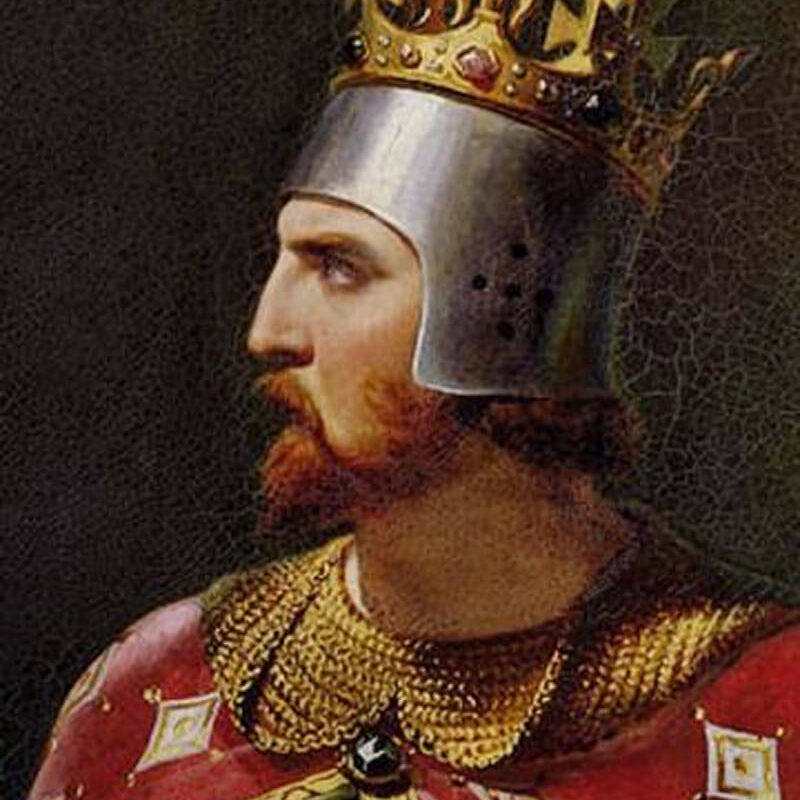
The loss of Jerusalem led to the Third Crusade (1189–1192). Important European rulers included Richard I of England, known as Richard the Lionheart, Philip II of France, and Frederick Barbarossa of the Holy Roman Empire.
Richard achieved several military victories and negotiated an agreement with Saladin. Although Richard failed to recapture Jerusalem, Christian pilgrims were allowed access to the city. The crusaders retained control of important coastal territories.
The Fourth Crusade
The Fourth Crusade took an unexpected and controversial direction. Instead of reaching the Holy Land, crusaders attacked Constantinople, the capital of the Byzantine Empire, in 1204.
The city was captured and brutally plundered. The crusaders established the Latin Empire in Constantinople, seriously weakening the Byzantine Empire. The attack created a deep and lasting division between Western and Eastern Christianity.
Later Crusades
Later expeditions achieved little lasting success. Crusaders continued to launch campaigns against Muslim powers, but the Crusader States gradually lost territory.
In 1291, the Muslim Mamluks captured Acre, the last major Crusader stronghold in the Holy Land. This event effectively ended the major period of crusader rule in the eastern Mediterranean.
Crusading did not disappear, however. European rulers and religious authorities continued to promote campaigns against Muslim states, heretics and non-Christian peoples. Crusades were fought in places such as Spain, the Baltic region and southern France.
Impact of the Crusades
The Crusades had significant consequences for Europe and the wider Mediterranean world. They increased contact between Western Europe, the Byzantine Empire and Muslim societies. Trade expanded, particularly between European merchants and eastern Mediterranean ports.
The Crusades also contributed to cultural exchanges. Europeans encountered new goods, technologies, ideas and knowledge, although many of these contacts existed before the Crusades and should not be attributed entirely to them.
Politically, the Crusades sometimes strengthened European monarchies while weakening some nobles who spent large amounts of money on military expeditions. The Byzantine Empire, meanwhile, suffered enormous damage from the Fourth Crusade.
For Muslims and Christians alike, the Crusades left a complicated historical legacy. They involved genuine religious devotion but also political ambition, violence, rivalry and economic interests. Modern historians therefore avoid viewing the Crusades simply as a straightforward religious war between two united sides.
Conclusion
The Crusades were among the most important and controversial events of the medieval period. Beginning with the First Crusade in 1096 and continuing through later campaigns, they reshaped relations between Christian Europe, the Muslim world and the Byzantine Empire.
Although the crusaders achieved temporary control of Jerusalem and established states in the Holy Land, their long-term presence there was unsuccessful. The Crusades ultimately left a legacy of military conflict, religious devotion, cultural contact and political change that continued to influence relations between Europe and the eastern Mediterranean for centuries.
Did you enjoy this post?
I hope you found this post useful. I put a great deal of time and effort in to building, maintaining and populating the website. If you like, you could say a small thank you by buying me a coffee. You don't have to, but it would be nice :)
Buy me a coffee
Stay up to Date
Follow me on my journey and get notified whenever a new post is published by following Kings & Castles on Facebook.
Follow MeExplore The Map
Discover the hundreds of castles, churches, monasteries, cathedrals and other historic locations that I've personally visited across England and Wales. Search by location, explore nearby sites and plan your next historical adventure.
Share: