Religious Buildings of Medieval Britain
Here we’ll reveal the differences between the various religious buildings of medieval Britain, such as monasteries, abbeys, priories, friaries, convents, cathedrals, minsters, churches, and chapels.
The Confusion
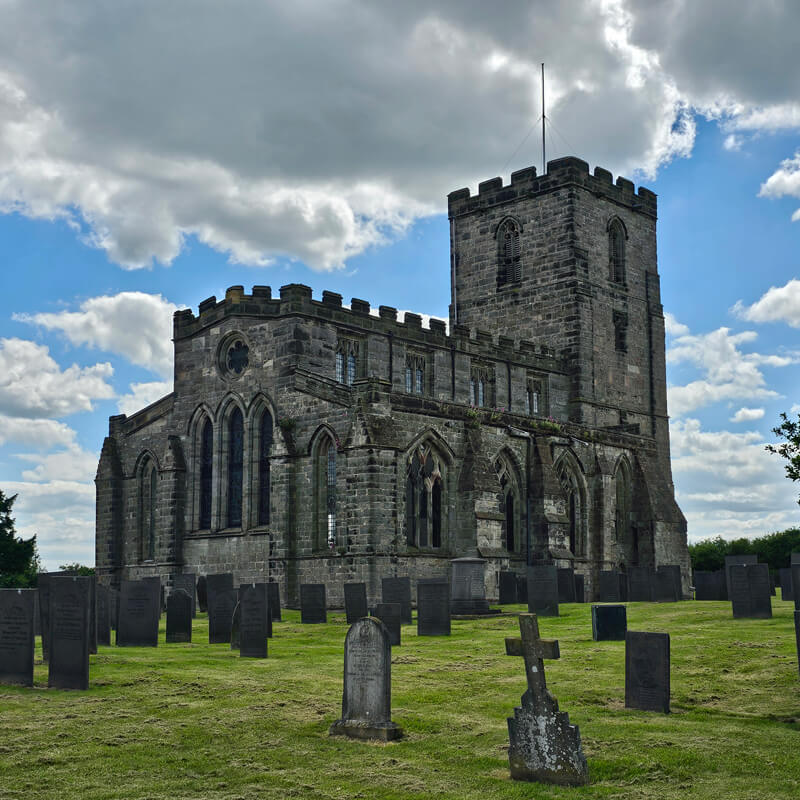
A monastery can be either a priory, abbey or friary. Abbeys and priories are housed by male monks, a convent is housed by female nuns, and a friary is housed by friars that can be male or female, but more commonly male. A priory is governed by a prior and an abbey is governed by an abbot. An abbey church and a priory church are a monastic church that was once part of a monastery. A cathedral is a church that contains the seat of a bishop, and therefore serves as the central church of a diocese. A collegiate church is similar to a cathedral, but without a bishop. A minster is a church founded during Anglo-Saxon times, and is an honorary title given to particular churches where a cathedral, monastery, collegiate church or parish church had originated with an Anglo-Saxon foundation.
It’s all very confusing isn’t it? Lets’ break it down…
Monastery
The word ‘monasterium’ essentially means ‘community’ and is where the word ‘monastery’ comes from. A monastery is usually the largest of the religious establishments. A monastery comprises of a complex of monastic buildings that serve the needs of a self-contained religious community of monks, canons or nuns etc. They include rooms like cloisters, library, chapter house, kitchen, refectory, infirmary, and a place reserved for prayer which may be a chapel or church. Some monasteries have Anglo-Saxon roots, but most were either founded or re-founded after the Norman conquest of 1066. The three main types of monastery are an abbey, priory and friary.
Monastery vs Convent
Both monasteries and convents are communities of monastics and historically the term is largely interchangeable. The only real difference is that monasteries are typically housed by male monks, while female nuns live within convents.
Abbey vs Priory
A priory and an abbey are two different types of monastery, the only real difference is whether they are governed by a prior or an abbot. An abbey is a monastery that is the seat of an abbot, which is the monastic equivalent of a bishop. A priory is a monastery headed by a prior, who is subordinate to an abbot, similar to priests being subordinate to a bishop. This also meant that abbeys ranked as more important than priories, and priories were often dependent on an abbey. Examples of abbeys and priories are Glastonbury Abbey, Haughmond Abbey, and Wenlock Priory.
Friary
A friary is another type of monastery, but with a couple of differences. Where an abbey or priory would house monks, a friary housed friars. Like monks, friars took the usual vows associated with religious orders, but unlike monks, friars travelled around the country and preached to those who would not normally be reached by other means. They also invited the general public to worship in their monastic churches, whereas monks lived more isolated lifestyles within their monasteries. Examples of a friary are Blackfriars Friary and Whitefriars Friary.
Abbey Church vs Priory Church
Abbey churches and priory churches are monastic churches that were once the religious centre of a monastery that served the communities of monks, canons or nuns that lived in those monasteries. They tend to be much larger and grander than a normal church, and would also have been richer. When Henry VIII ordered the dissolution of the monasteries in the 16th century, all the monasteries in England were dissolved and many of them were destroyed, including their churches. However, some monastic churches were spared and went on to serve their communities as parish churches. Examples of surviving monastic churches that were once part of a monastery but are now either redundant or active parish churches are Tewkesbury Abbey, Shrewsbury Abbey, Pershore Abbey, Dore Abbey, Breedon priory, and Great Malvern Priory.
Cathedral
A cathedral is a church that contains the cathedra (Latin for ‘seat’) of a bishop, and therefore serves as the central church of a diocese. The cathedral is more important in the hierarchy than the church because it is from the cathedral that the bishop governs the area under his or her administrative authority. This is why cathedrals are more elaborate and much larger in size than ordinary churches. The primary purpose of a cathedral is to be a place of Christian worship, but it is also often the oldest religious building in continuous use in its surrounding area. The bishop usually resides on the cathedral premises. Examples of a cathedral are Wells Cathedral, Hereford Cathedral, Worcester Cathedral, and Lichfield Cathedral.
Minster
Minster is an honorary title given to particular churches in England, most notably York Minster, Southwell Minster and Westminster Abbey. Minsters were founded during Anglo-Saxon times in Britain and were the churches attached to a monastery, but only their most important churches were called ‘minsters’. Historical records show evidence of its use from as early as the 7th century. Originally, minsters would have been communities of monks, but they could also be communities of priests or clergy living together who had devoted their life to Christian worship. Minsters began to decline in importance with the introduction of parishes and parish churches from the 11th century onwards. The term continued as a title of dignity in later medieval England, for instance where a cathedral, monastery, collegiate church or parish church had originated with an Anglo-Saxon foundation.
Collegiate Church
A collegiate church is a church where the daily office of worship is maintained by a college of canons, a non-monastic community of clergy. Collegiate churches were formed on the model of cathedral churches, but without a bishop. In its governance and religious observance, a collegiate church is similar in some respects to a cathedral. The collegiate canons have rights and duties similar to the capitulars of a cathedral, but a collegiate church is not the seat of a bishop and has no diocesan responsibilities. An example of a collegiate church is St Bartholomew’s Church in Tong, Shropshire.
Church vs Chapel
In the most simple terms, a church is a community, while a chapel is a place. Most churches have a chapel, whilst a chapel cannot have a church. While a church is a building for Christian worship that relies on congregants and a pastor or priest to give sermons, a chapel is a small space set aside for prayer by individuals and can operate without a group of people; it’s all about the physical and personal space. In the classic sense, a chapel is usually smaller than a church, sometimes just a room, and can be within a church itself. Chapels that aren’t within a church tend to be small, simple buildings, either a single-cell or a two-cell building, comprising a chancel and nave. The earliest Christian places of worship are now often referred to as chapels. Examples of a chapel are Odda’s Chapel and Yatton Chapel.
Did you enjoy this post?
I hope you found this post useful. I put a great deal of time and effort in to building, maintaining and populating the website. If you like, you could say a small thank you by buying me a coffee. You don't have to, but it would be nice :)
Buy me a coffee

Stay up to Date
Follow me on my journey and get notified whenever a new post is published by following Kings & Castles on Facebook.
Follow MeExplore The Map
Discover the hundreds of castles, churches, monasteries, cathedrals and other historic locations that I've personally visited across England and Wales. Search by location, explore nearby sites and plan your next historical adventure.
Share: