Saxons and Danes
In AD 410, after centuries of ruling Britain, the Romans occupying Britain had to leave for Rome due to escalating military threats from Germanic tribes in their homeland, and they were never to return. This caused a power vacuum. A few decades later, three Germanic tribes ceased this opportunity and invaded England from northern Germany. Then in the year 793, the Vikings did exactly that same.
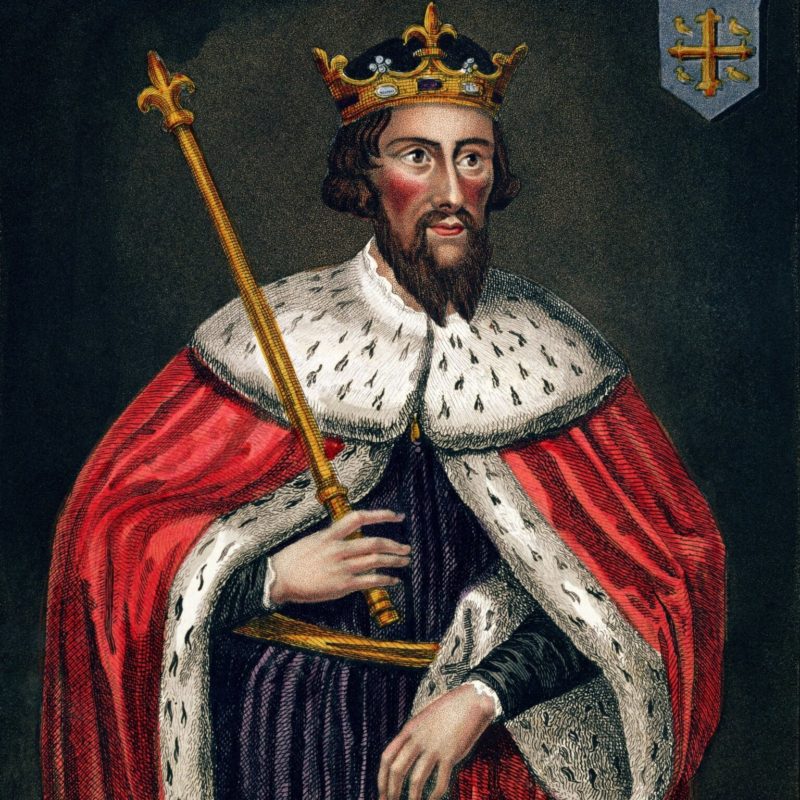
The dynasties we’ll be concentrating on here are the House of Wessex (Saxons) and the House of Denmark (Danes) as they are the most prominent from this time period and had the most significant impact on England. This period takes us from the 800s to 1066 when the final ruler from the house of Wessex died and made way for the Normans.
The Anglo-Saxon Invasion
In the early 5th century when the Romans left Britain to return home, they left the native Britons alone to defend themselves against the Scots and the Picts. These indigenous Britons were Celtic Christians, Romano-British, Romanised Celts. After the Romans departure, three Germanic tribes from modern-day Germany and Denmark invaded England, they were the Angles, the Saxons and the Jutes. They settled throughout England pushing the native Britons in to the western pockets of the country, such as Wales, Cornwall and Strathclyde. Over time they established 7 kingdoms each ruled by it’s own king. The most notable of these kingdoms were Wessex, Mercia, East Anglia and Northumbria.
The House of Wessex
The dynasty that ruled Wessex, the House of Wessex, eventually ruled all of England. Alfred the Great‘s grandson, Æthelstan, would become the first king of a united kingdom of England. The house of Wessex was founded by it’s first king of Wessex, Cerdic, in the early 6th century. In the first few centuries the Anglo-Saxon kingdoms were either fighting amongst themselves over territory, or they were fighting against either the native Britons, the Picts (tribes from modern day Scotland) or the Scots (tribes from modern day Ireland). But then in the year 793 a new enemy arrived to challenge the Anglo-Saxons and their rule… Enter, the Vikings!
The Viking Invasion
A group of Viking raiders attacked a monastery on the island of Lindisfarne just off the coast of Northumberland. This was the first recorded Viking raid and the first time they had seen a Viking and news of the incident spread quickly. The Vikings were very happy about their discovery of this rich and fertile land, so further raids were carried out across more areas of the country and more frequently. Gradually, the Viking raiders began to stay, and settled in winter camps in land they had taken, mainly in the north and east of England.
The Anglo-Saxons referred to the Vikings by several names, such as Danes, Norsemen, Northmen, pagans or heathens. The Vikings were fiercely pagan and the Anglo-Saxons were fiercely Christian. However, the early Anglo-Saxons that initially invaded England were also pagan, it wasn’t until some time in the 600’s that they converted to Christianity. The Vikings would also slowly start to convert to Christianity some time in the 9th century, but this would cause many conflicts over many years between pagan Vikings and Christian Vikings.
The Vikings were warrior tribes that came from Scandinavia. Throughout the Viking Age they grandually consolidated their many small kingdoms into three larger kingdoms: Denmark, Norway and Sweden. The Vikings from Denmark; the Danes, would become the most troublesome and the most prominent. Denmark would become the most powerful of these kingdoms and would one day become the ruling house of England.
The Anglo-Saxons and the Vikings would fight each other for almost the next 300 years. The funny thing is, this was basically a generational fight between essentially the same tribes of people arriving in the British Isles in different centuries. The Anglo-Saxons remaining on the continent during their invasion of England in the 5th century eventually evolved into the Danish Vikings some 400 years later.
The Great Heathen Army
In the year 865 there was a massive Danish Viking invasion which the Anglo-Saxons called the Great Heathen Army. Previous invasions were for looting, but this one led to semi-permanent settlement. This invasion was in response to the death of legendary Viking warrior Ragnar Lothbrok at the hands of King Ælla of Northumbria (he threw him in a pit of poisonous snakes). The army was a coalition of Danish Viking warriors led by the sons of Ragnar and its sole purpose was revenge and complete domination of England. They took over Northumbria, East Anglia, parts of Mercia and made York their capital, which they called Jorvik. They continued to press southwards and to the west and gained more territory in parts of Mercia. Finally, in 870 the Danes attacked the only remaining independent Anglo-Saxon kingdom, Wessex, whose forces were commanded by King Æthelred and his younger brother Alfred, who would later become known as Alfred the Great.
In 871, the Dane Guthrum came to England as leader of the Great Summer Army, which joined forces with part of the Great Heathen Army. Æthelred, King of Wessex died, probably from battle wounds, leaving the throne to his younger brother Alfred.
Alfred the Great
Alfred was forced to pay off the Danes, but he scored a decisive victory over them seven years later at the Battle of Edington. In 878 Alfred defeated Guthrum and his army and had him christened. They both signed a treaty which split the country in half, Guthrum would control lands in the north and the east of England, which became known as the Danelaw, and Alfred would control the rest; Wessex and English parts of Mercia. Guthrum would later crown himself King of East Anglia.
Alfred is often referred to as the greatest king in English history, for his valiant defence of his kingdom against a stronger enemy, for securing peace with the Vikings and for starting the process of the unification of the Anglo-Saxon kingdoms and paving the way for a united kingdom of England. It wouldn’t be until the English Reformation in the 16th century that Alfred was given the epithet “the Great”, and he remains the only English monarch to this day to be referred to as “the Great”.
The First King of England
Fast forward several decades, Alfred the Great’s son, Edward the Elder, had conquered the Danish territories in east Mercia and East Anglia with the assistance of his sister Æthelflæd and her husband Æthelred, Lord of the Mercians. Edward’s son, grandson of Alfred the Great, Æthelstan, became King of the Anglo-Saxons after the death of his father in 924. Early in his rule he took York from the Danes and forced the submission of the northern kings of Northumbria and the King of Scotland. In doing this, he united the English kingdoms and pushed the boundaries of the kingdom to the furthest extent they had yet reached, and was crowned as the first King of the English in 927. Æthelstan was a distinguished and courageous soldier, established firm boundaries and ruled effectively until his death in 939.
St Brice’s Day Massacre
Fast forward a few more decades, several kings have come and gone, and now Æthelred the Unready sits on the English throne. He was a useless king, he struggled to command respect from many of his subjects and made many mistakes. In the year 1002 he ordered the mass killing of all Danes in England, and one of the Danes that was killed was Gunhilde, the sister of the Danish King Sweyn Forkbeard. This is known to history as the St Brice’s Day Massacre. This gave the Danes a reason to invade England, they wanted revenge, but for King Sweyn it was more personal. England had not seen a Danish invasion like it for over a hundred years. After years of conquering and much devastation, the English nobility became so disillusioned with their existing king, Æthelred the Unready, that they acknowledged Sweyn as king in 1013, becoming the first English monarch from the house of Denmark. However, he ruled for just 5 weeks until his death in February 1014 and he was never crowned.
King Cnut
After the death of Sweyn, Æthelred the Unready became king again for a short while until his death in April 1016. His son Edmund Ironside then ascended the throne. Sweyn’s son Cnut (also spelled Canute) remained in England as the leader of the Danish army. Betrayed by ealdorman Edric, Edmund struggled to reunite the country. Finally, a division was arranged whereby Cnut took the north of England and Edmund the south, but Edmund’s reign was short-lived, and within weeks of the arrangement he died in November 1016, most likely murdered.
The West Saxons then accepted Cnut as king of all of England and he was crowned in 1017. Cnut proved an effective ruler and ruled England for 19 years, he brought internal peace and prosperity to the country and would later become known as Cnut the Great.
King Cnut died in 1035 and his son Harold Harefoot then became king for about 5 years, followed by his other son Harthacanute for around 2 years. Harthacanute would be the last king to rule England from the house of Denmark.
Edward the Confessor
Edward the Confessor, the last surviving son of Æthelred the Unready and Emma of Normandy, became king in 1042, restoring the crown of England to the native house of Wessex, a branch now intertwined with the Danish-Norman dynasty of Emma of Normandy, who ruled until his death in 1066. England was fairly peaceful and prosperous during Edward’s reign. He was considered by many as a good and successful king, talented and resourceful. However, some considered him to be a bad king, weak and indecisive. Edward had no children and throughout his reign he refused to clarify the succession of the crown. This failure to leave or nominate an heir led to the Norman invasion of Britain and the end of Saxon rule.
The Last Saxon King
Harold Godwinson would be the last crowned Anglo-Saxon English king. He was a member of a prominent Anglo-Saxon family. He became a powerful earl after the death of his father, Godwin, Earl of Wessex. Harold was married to the sister of Edward the Confessor making him his brother-in-law. Therefore, Harold was chosen to succeed Edward on the same day he died in January 1066. His very short reign of about 9 months was fiercely contested by two other rival claimants to the throne: Harald Hardrada, King of Norway, and William, Duke of Normandy. In late September Harold successfully defeated a Norwegian invasion led by Harald Hardrada at the Battle of Stamford Bridge. He then had to march his army back south to meet William, Duke of Normandy, at Hastings two weeks later as he was now facing a Norman invasion. Harold Godwinson was not so fortunate this time and was defeated in battle at the hands of the Normans, thus bringing an end to the rule of Saxons and Danes in England and the start of the Norman dynasty.
Here is the list of Saxon and Danish kings in chronological order from this time period.
- Egbert (802–839)
- Aethelwulf (839–856/858)
- Aethelbald (855/856–860)
- Aethelberht (860–865/866)
- Aethelred I (865/866–871)
- Alfred the Great (871–899)
- Edward the Elder (899–924)
- Æthelstan (925–939)
- Edmund I (939–946)
- Eadred (946–955)
- Eadwig (955–959)
- Edgar (959–975)
- Edward the Martyr (975–978)
- Æthelred the Unready (978–1013)
- Sweyn Forkbeard (1013–14)
- Æthelred the Unready (1014–16)
- Edmund Ironside (1016)
- Cnut the Great (1016–35)
- Harold Harefoot (1035–40)
- Harthacanute (1040–42)
- Edward the Confessor (1042–66)
- Harold Godwinson (1066)
Did you enjoy this post?
I hope you found this post useful. I put a great deal of time and effort in to building, maintaining and populating the website. If you like, you could say a small thank you by buying me a coffee. You don't have to, but it would be nice :)
Buy me a coffee
Stay up to Date
Follow me on my journey and get notified whenever a new post is published by following Kings & Castles on Facebook.
Follow MeExplore The Map
Discover the hundreds of castles, churches, monasteries, cathedrals and other historic locations that I've personally visited across England and Wales. Search by location, explore nearby sites and plan your next historical adventure.
Share: