Conwy Walled Town
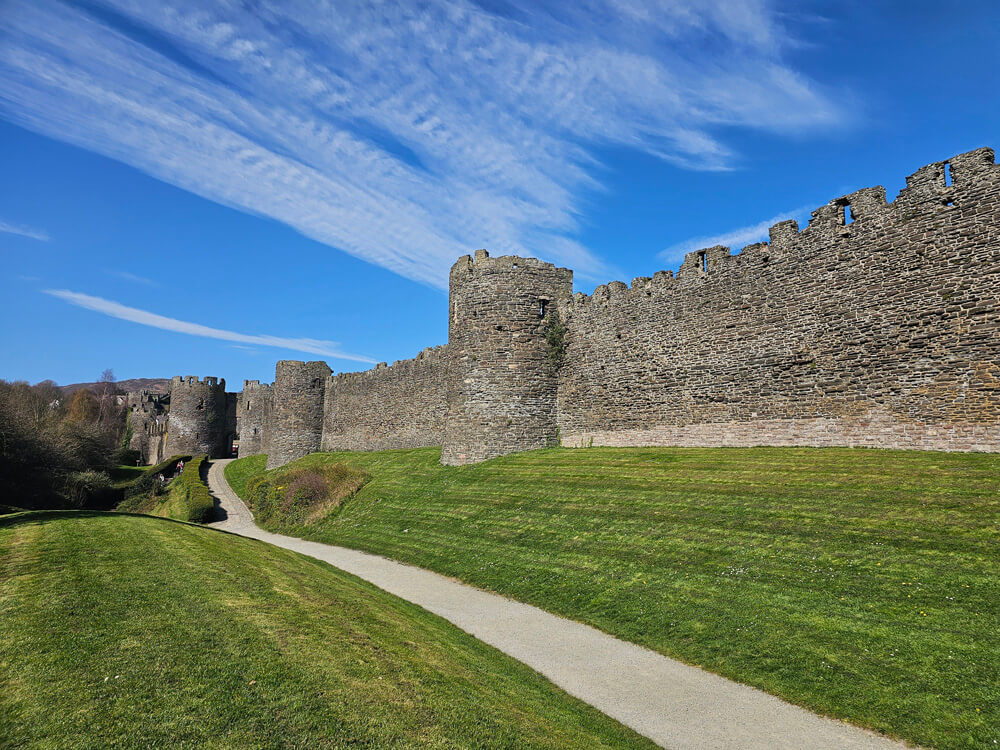
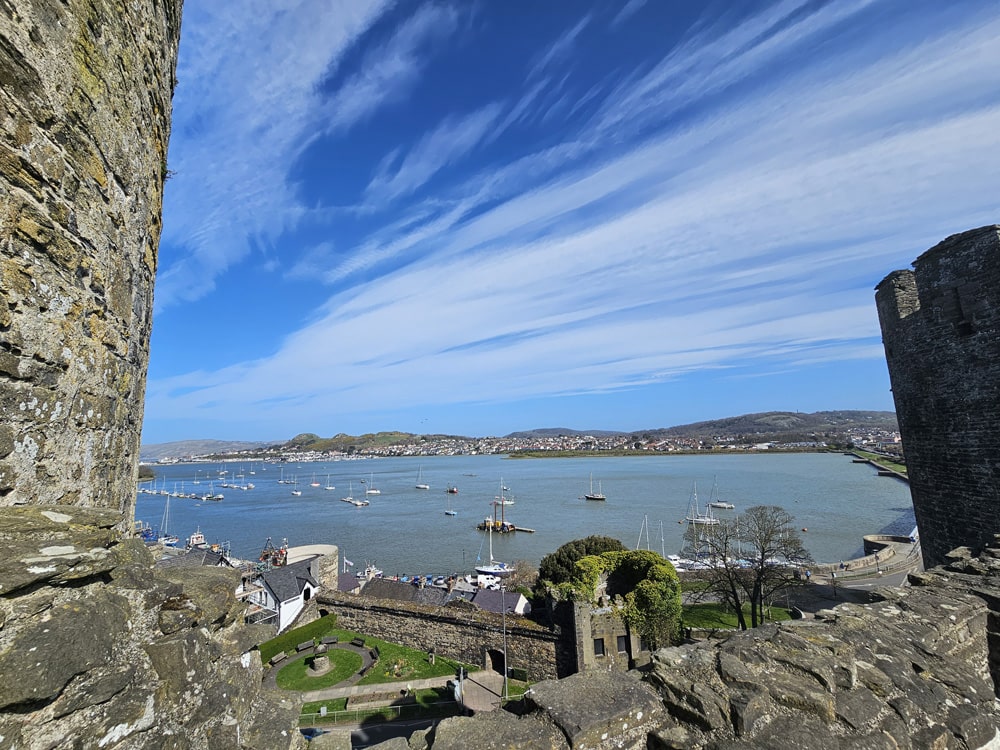
Conwy in North Wales is one of Britain’s best-preserved medieval towns. It is a walled town rich in history, with well-preserved ancient walls, some of the most intact in Europe, which enclose a town of narrow cobbled streets, with lots of nooks and crannies full of historic buildings, and at its centre is the mighty 13th-century Conwy Castle.
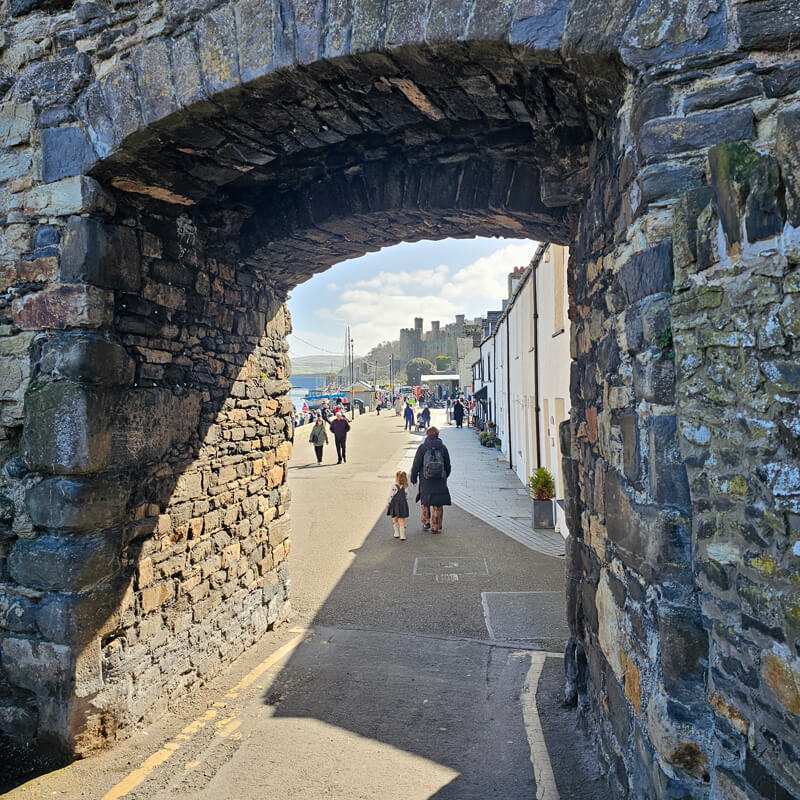
The History of Conwy
Conwy was founded by English king Edward I in 1283 as one of a chain of fortified towns when he invaded North Wales towards the end of the 13th century. After defeating the native Welsh princes he was determined to permanently colonise North Wales with English people.
Before Edward’s invasion the area was known as Aberconwy, the site of a grand Cistercian monastery called Aberconwy Abbey built by Cistercian monks on land given to them by Welsh prince Llywelyn the Great. Following Edward’s English conquest of Wales in 1282, the monks were forced to move. Edward then built Conwy Castle and the associated walled town, and the area became known as Conwy.
Edward’s plan for Conwy was to build a new castle here as part of his ‘Iron Ring‘, a ring of castles surrounding North Wales meant to subdue the rebellious Welsh population. At the same time as the building of the castle the town walls were constructed, built as a single entity, creating a fortified walled town and North Wales’ largest medieval borough.
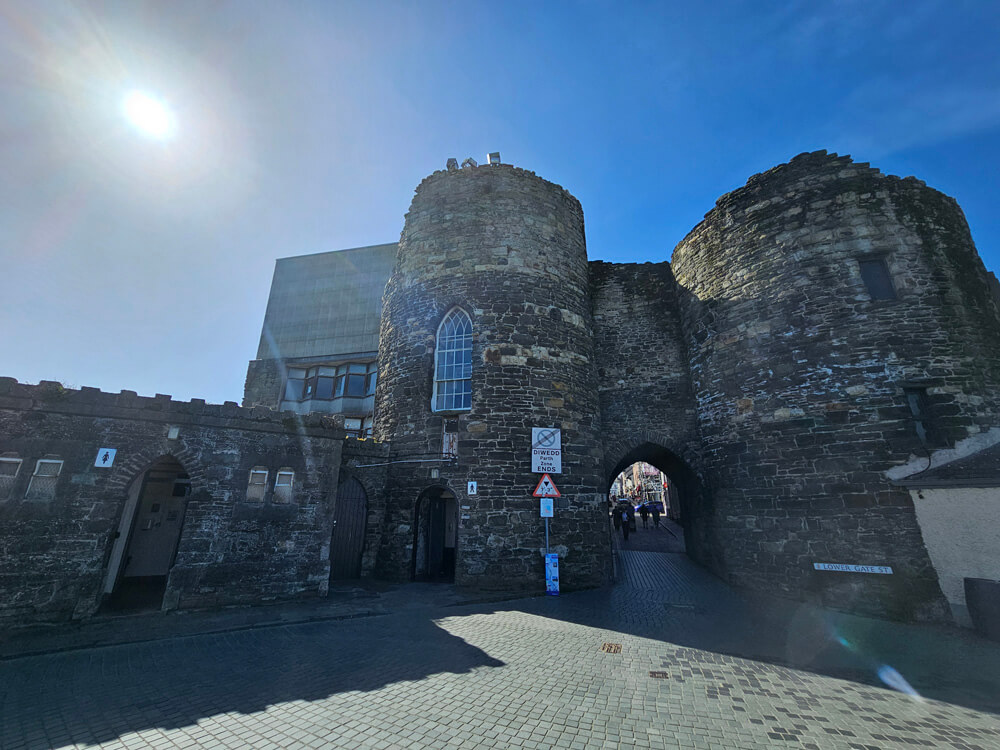
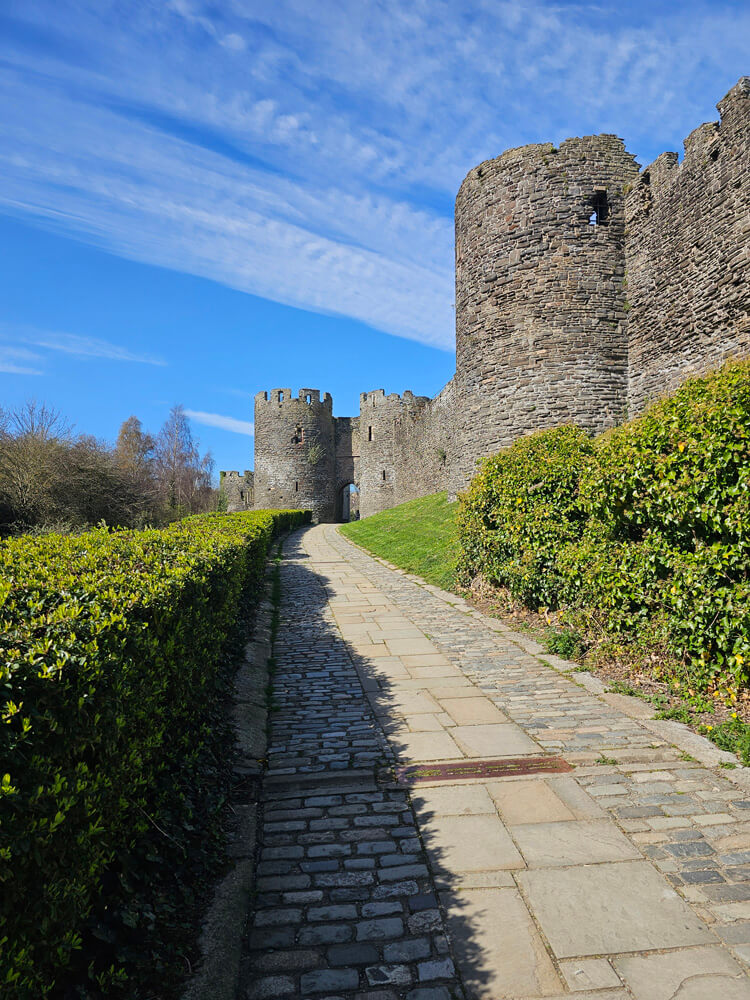
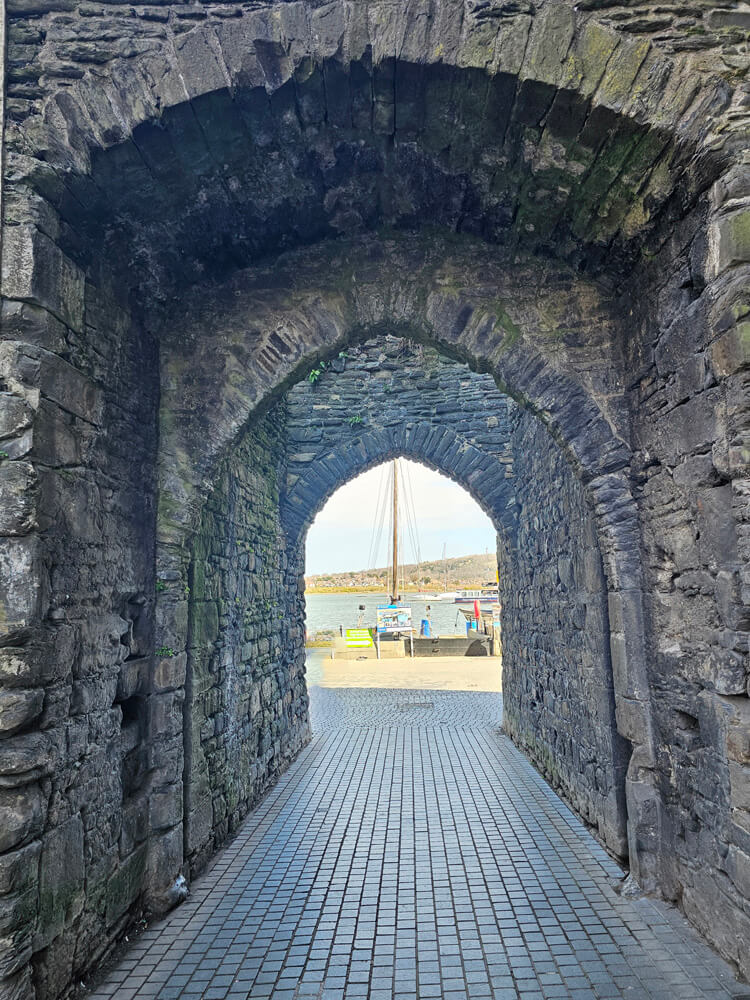
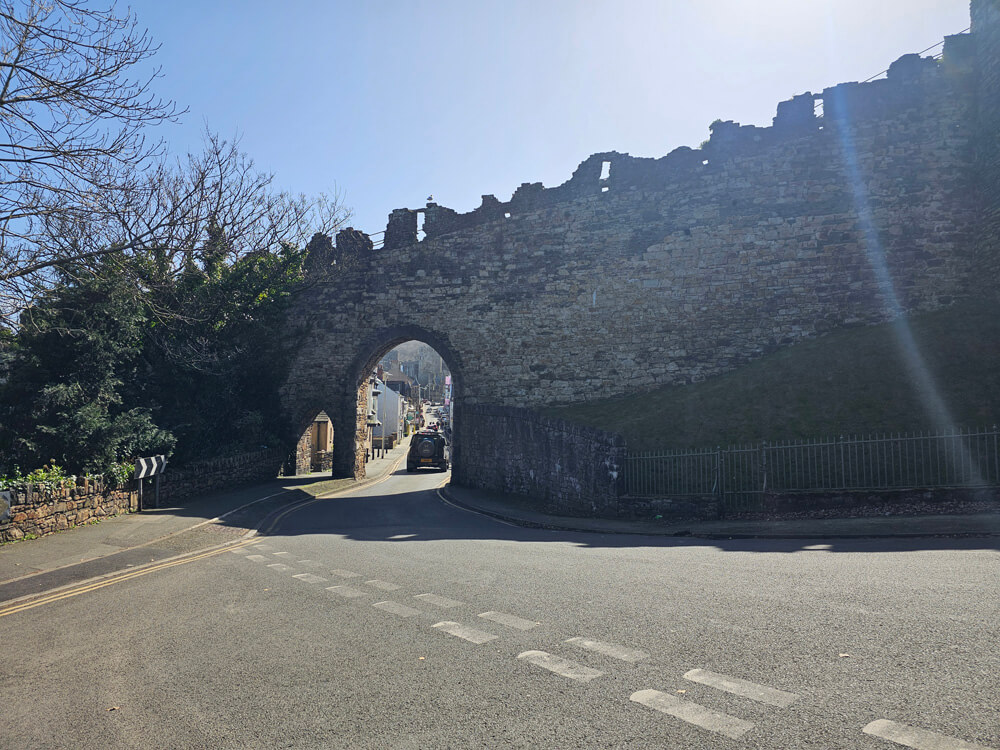
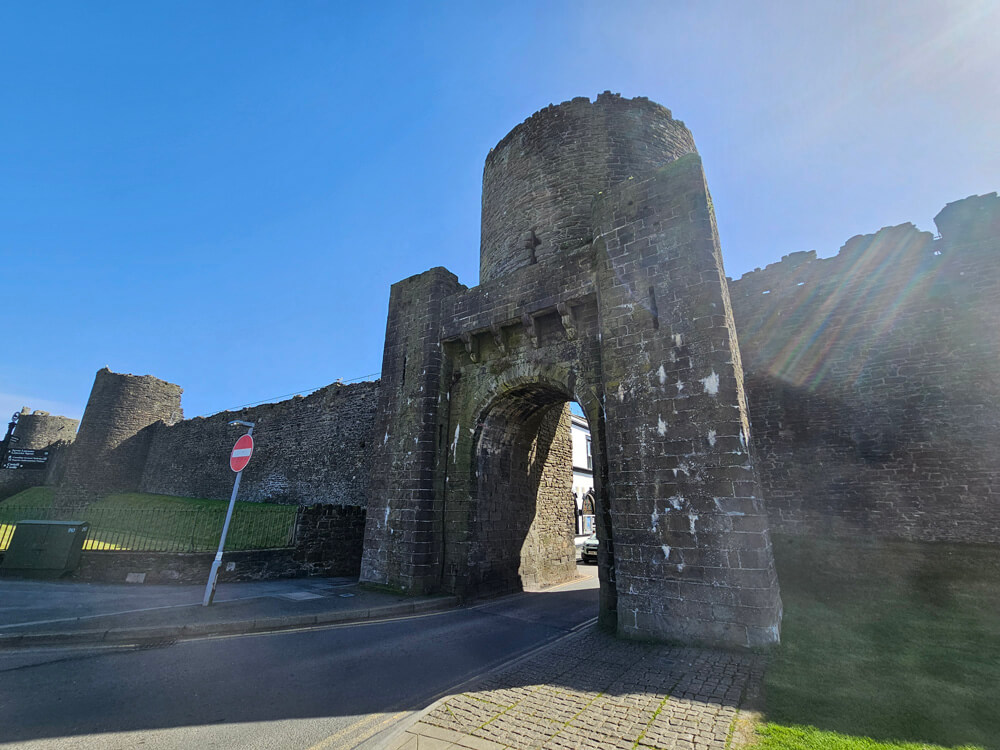
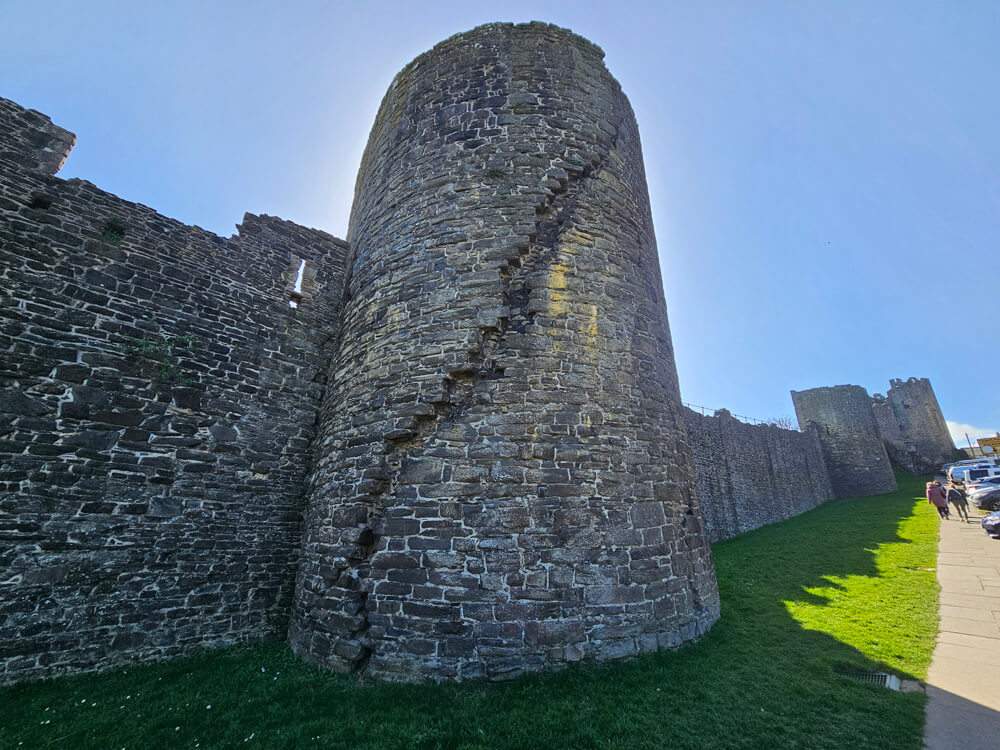
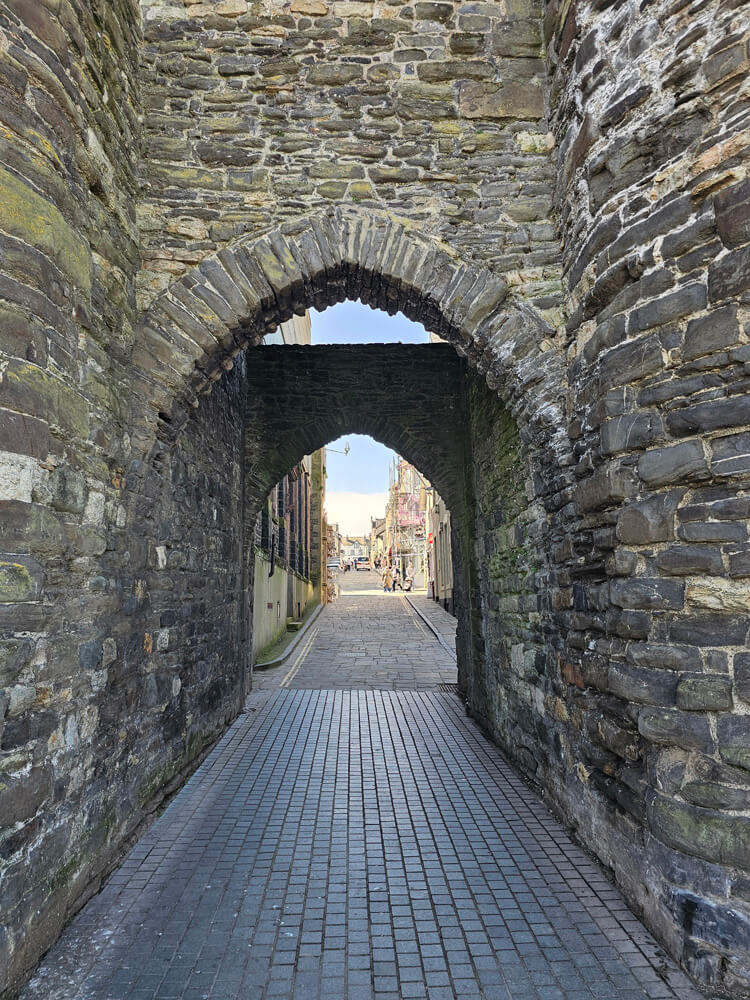
The defensible stone wall built around the town, with its many towers and three gateways was intended to protect the English colony planted at Conwy and to keep the native Welsh population out. The town was built on a grid plan, which still retains its medieval layout today, with the castle on the riverbank in the south-east corner. Edward’s new town was populated by English settlers, particularly from nearby Cheshire and Lancashire.
In 1400 the Welsh leader Owain Glyndŵr rose in rebellion against English rule. Two of Owain’s cousins infiltrated and took control of Conwy Castle in 1401, and despite the town’s defensive walls, the town was occupied for two months.
The ascension of the Tudor dynasty to the English throne heralded a change in the way Wales was administered. The Tudors were Welsh in origin, and their rule eased hostilities between the Welsh and English. Therefore, during the Tudor period the military importance of Conwy’s defences declined and more Welsh families settled inside the town walls. Among them were the rich merchant Robert Wynn and his family, who between 1576 and 1585 built his great town house, Plas Mawr, one of the finest surviving Elizabethan town houses in Britain.
Originally a symbol of English domination of Wales, in time the Welsh managed to reclaim the town, replacing English oppression with its own medieval character.
Conwy Today
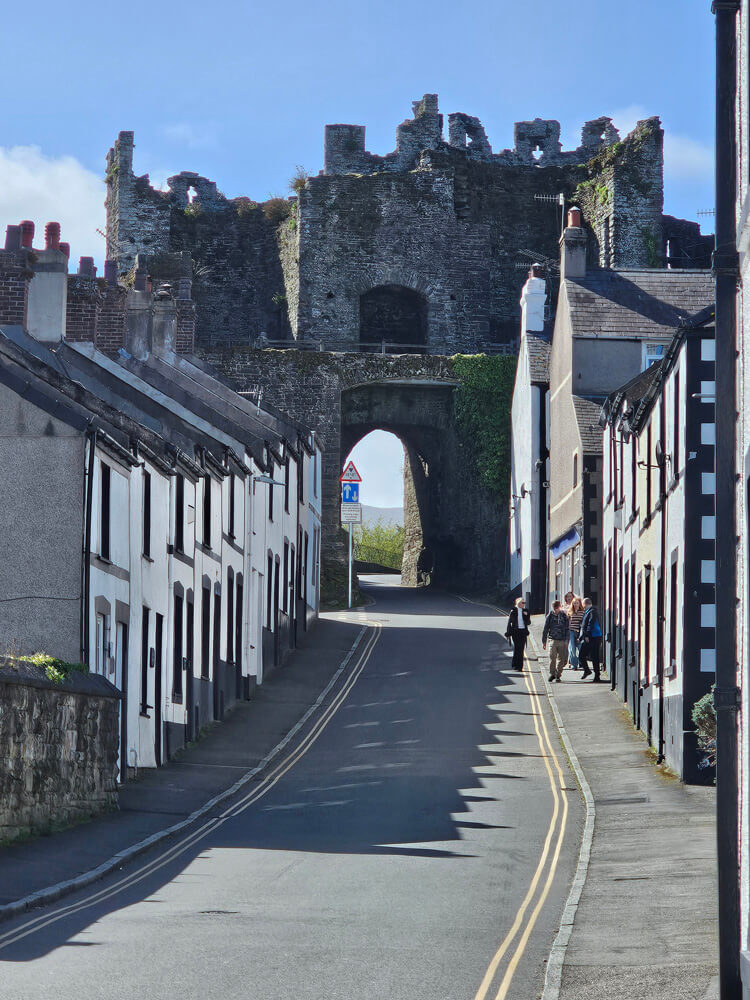
Conwy is a small town with narrow one way streets, lots of shops and a quaint harbour, all protected by its unbroken ring of medieval town walls. History truly is all around you at Conwy, not only can you see it, you can feel it, it’s incredible.
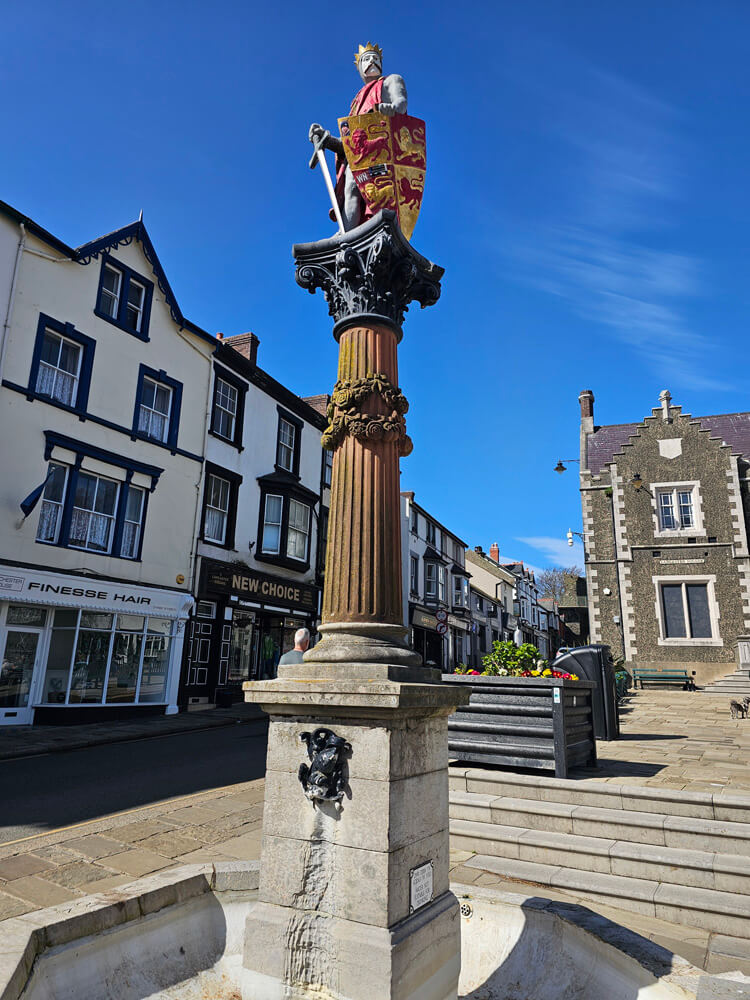
In the town square stands a statue of Llywelyn ap Iowerth, also known as Llywelyn the Great (d. 1240), who was the King of Gwynedd and one of Wales’ most heroic and popular medieval leaders before Edward I came along and ruined everything. The statue is painted according to Llywelyn’s supposed heraldic colours, and forms part of a small fountain that serves as the centrepiece for the town square.
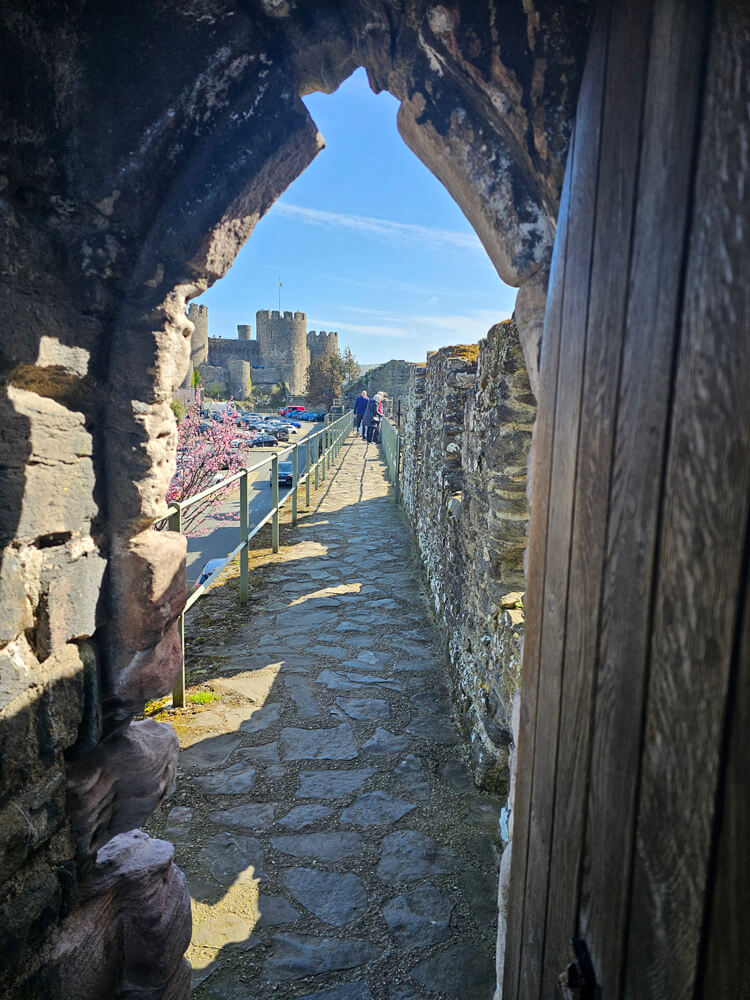
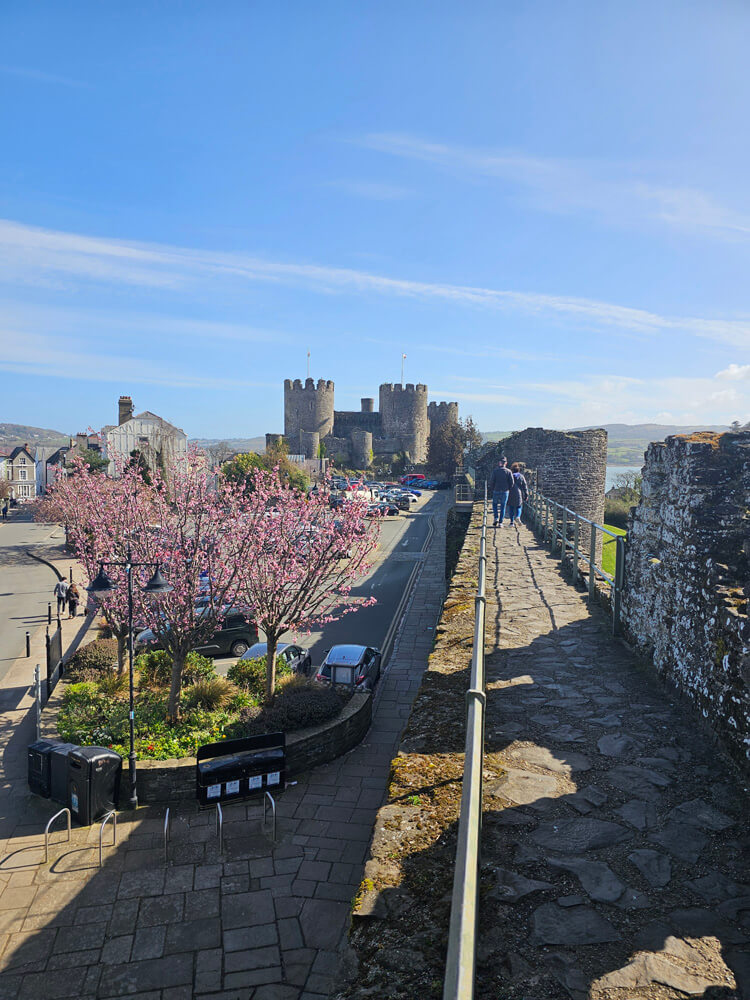
A Conwy ‘must-do’ is a walk along the town walls, before venturing into the streets below and visiting places like Plas Mawr (the UK’s best-preserved Elizabethan town house), Quay House (the smallest house in Great Britain), Aberconway House (one of the oldest dateable houses in Wales), and of course the magnificent Conwy Castle.
Conwy Castle and town walls are part of ‘The Castles and Town Walls of King Edward in Gwynedd’, which is a UNESCO-designated World Heritage Site that includes the castles of Beaumaris and Harlech, and the castles and town walls of Caernarfon and Conwy.
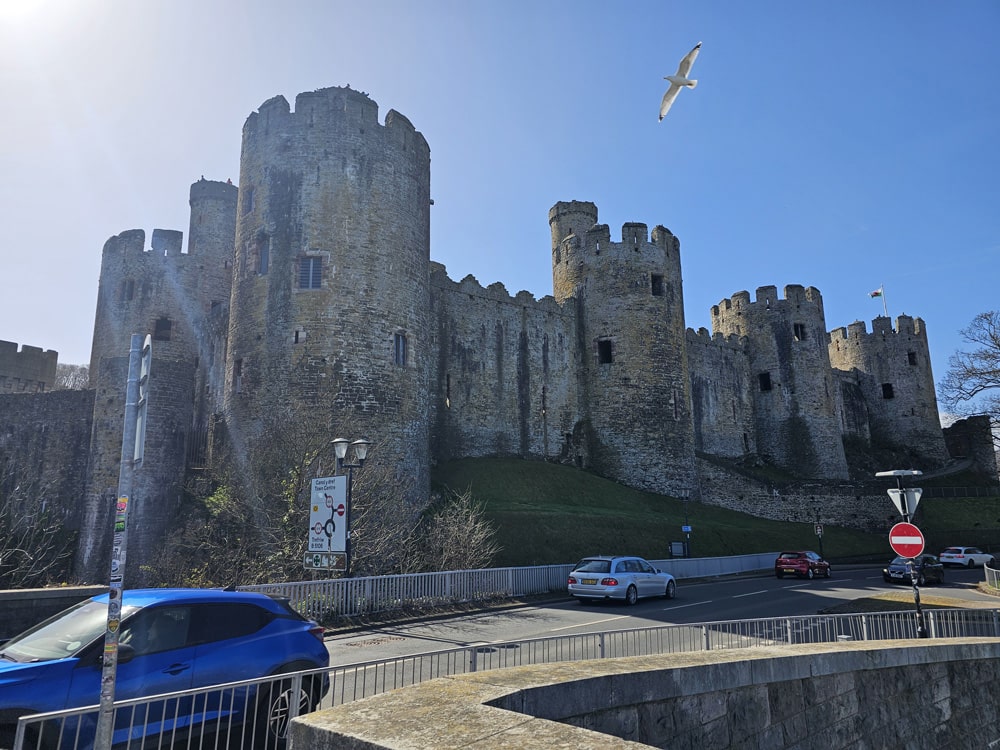
Conwy Castle
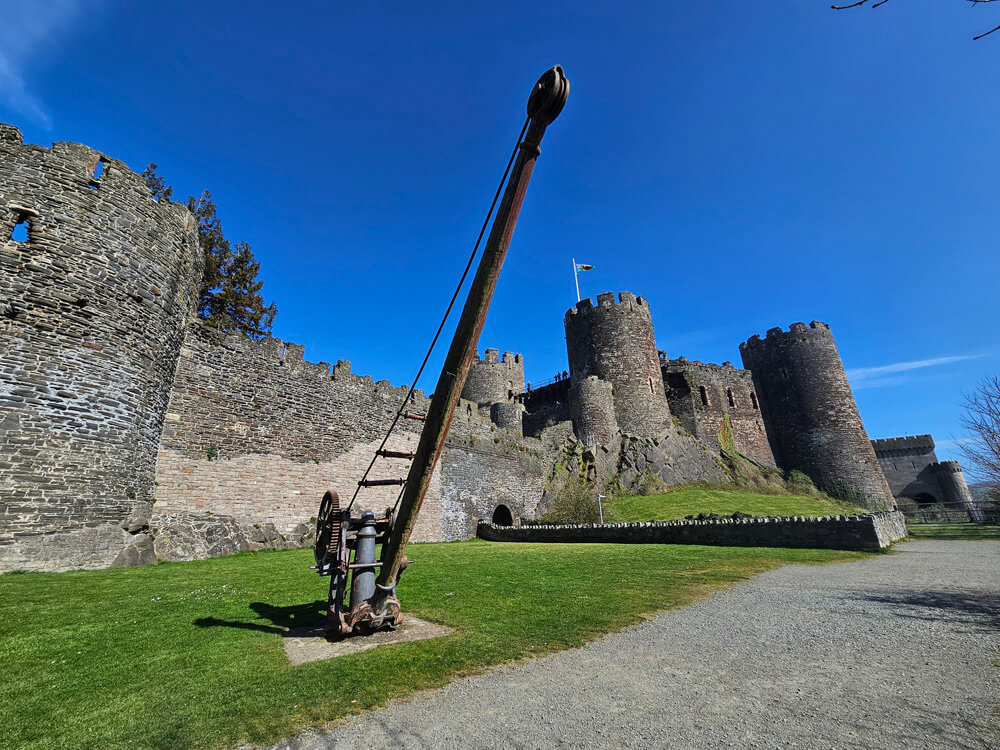
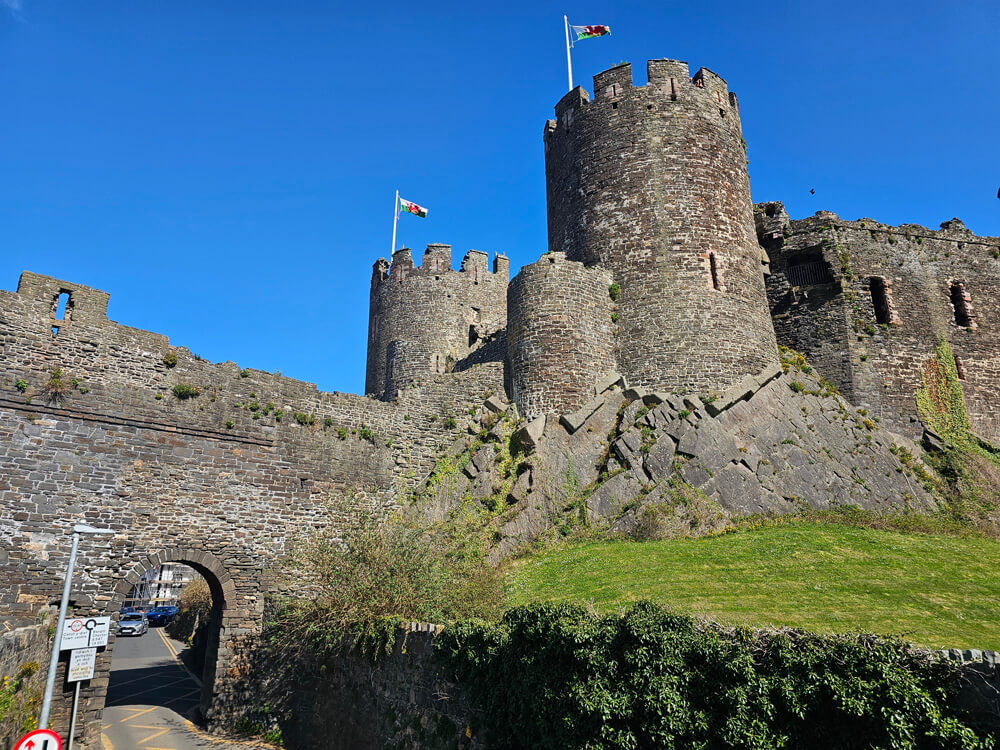
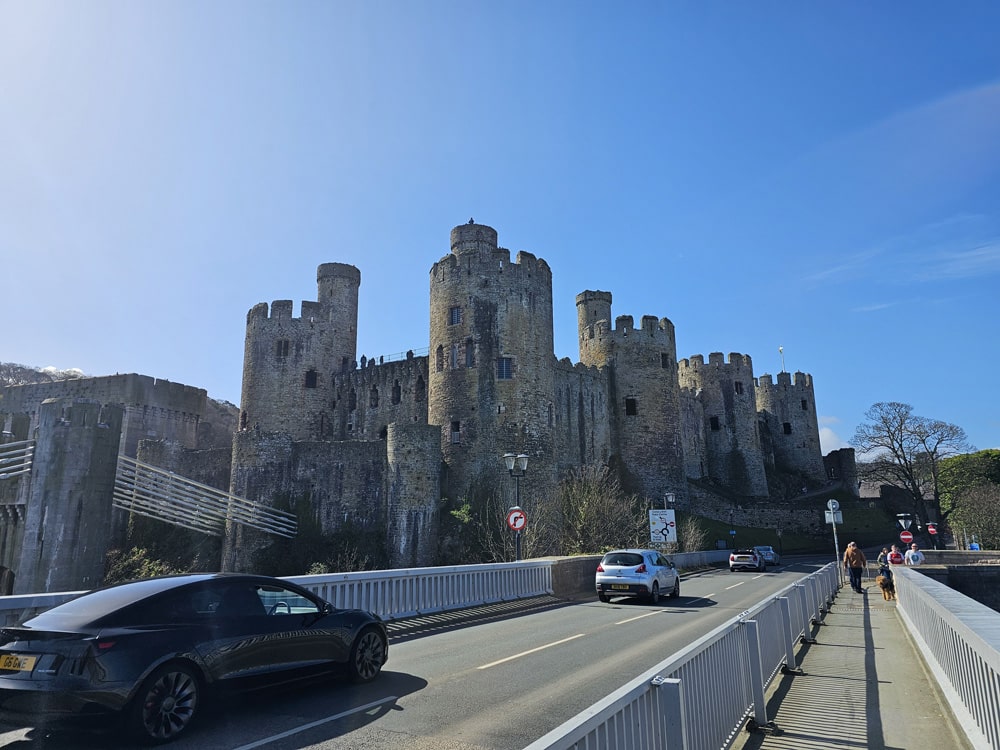
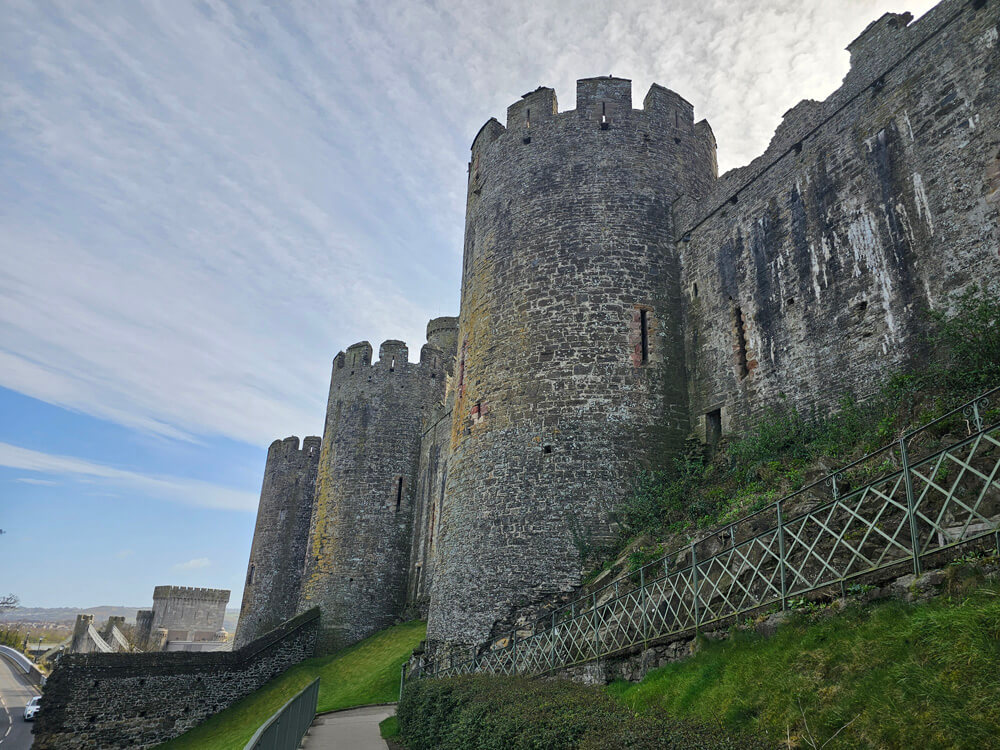
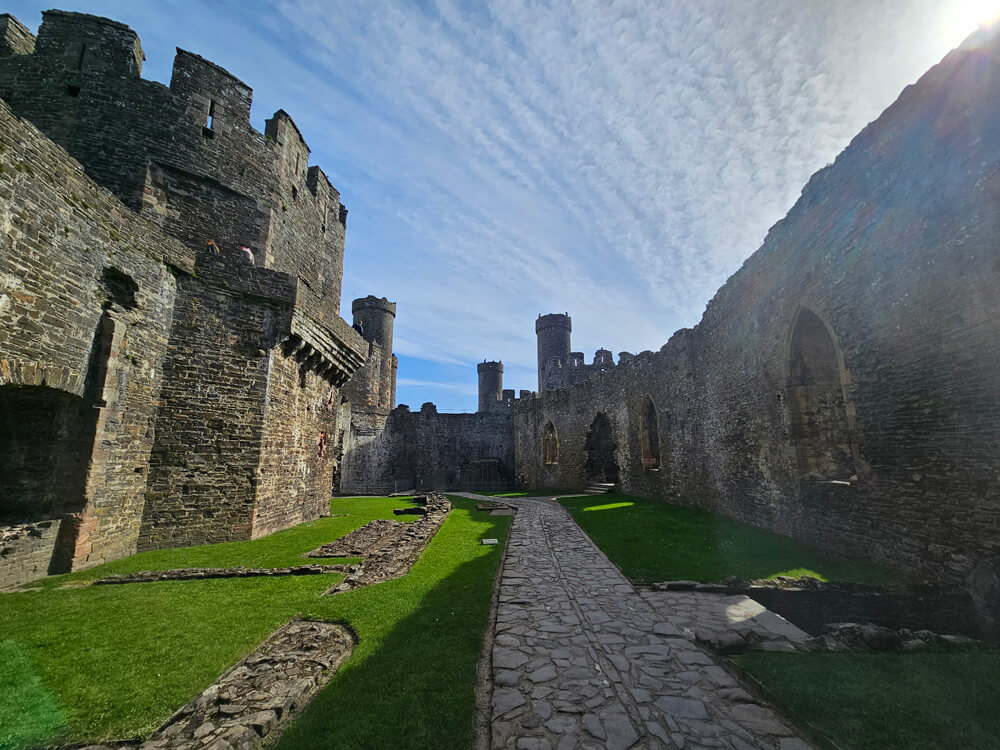
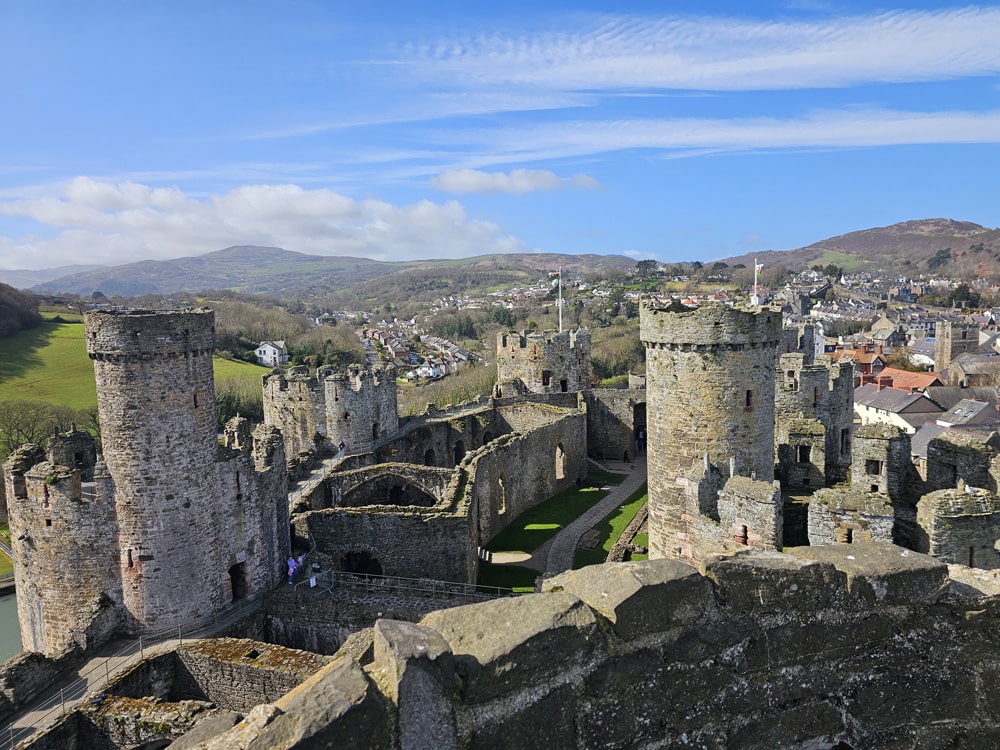
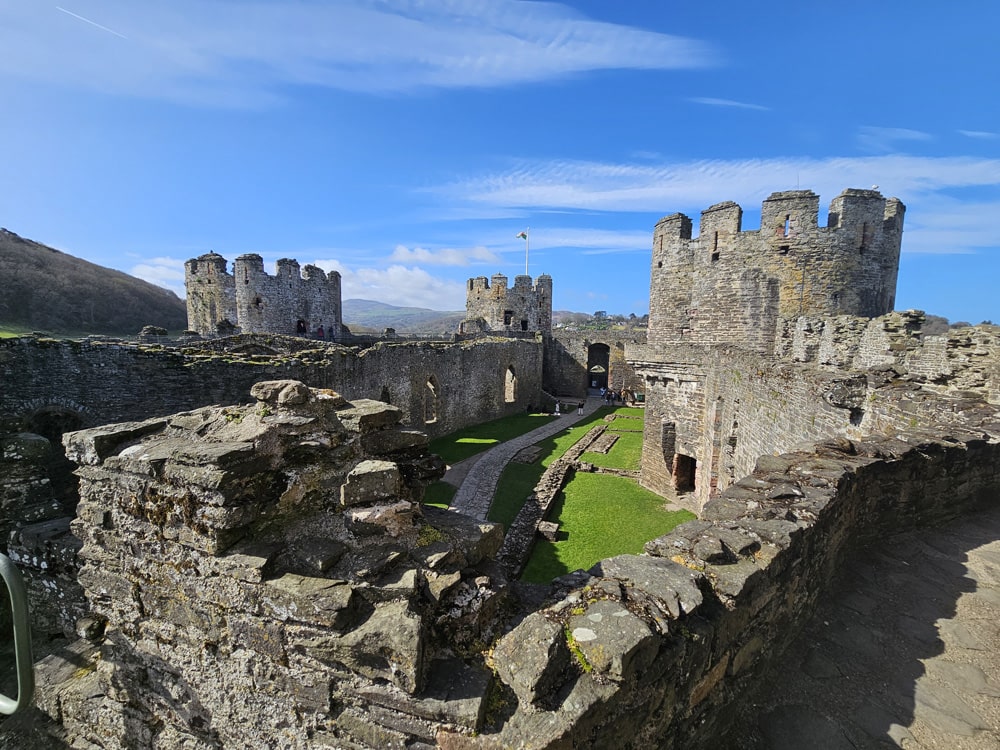
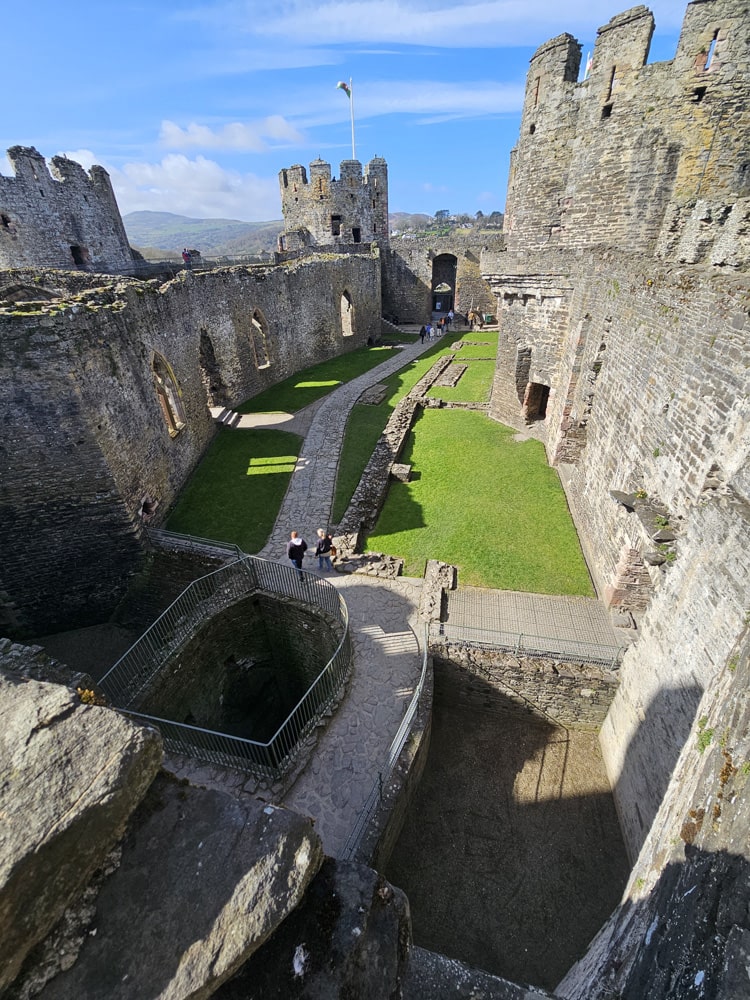
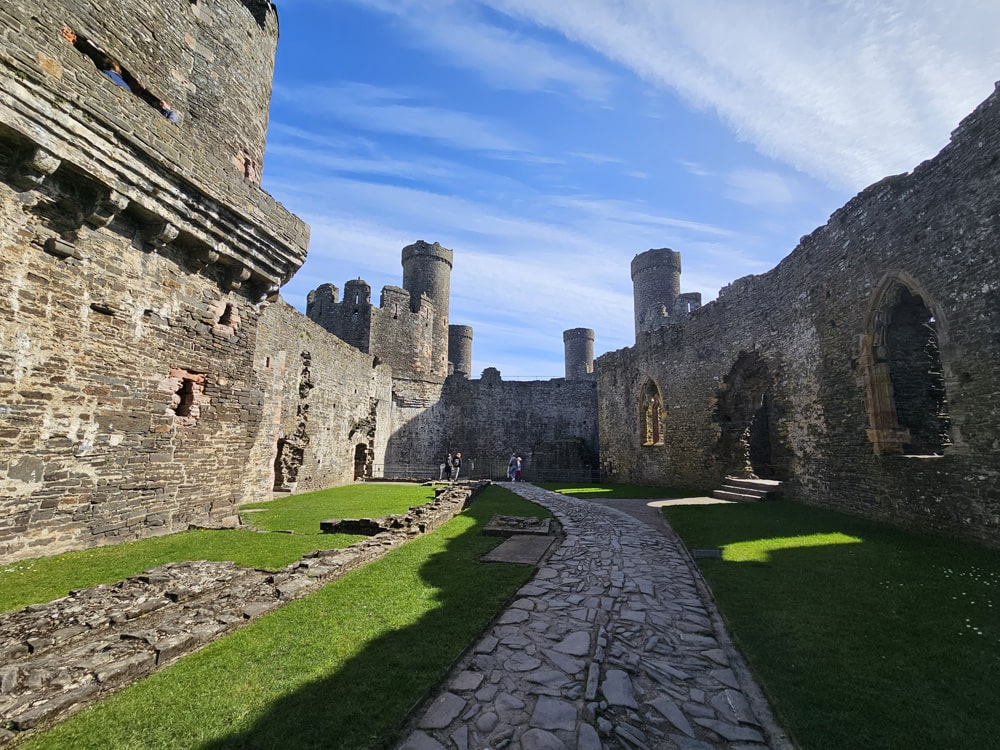
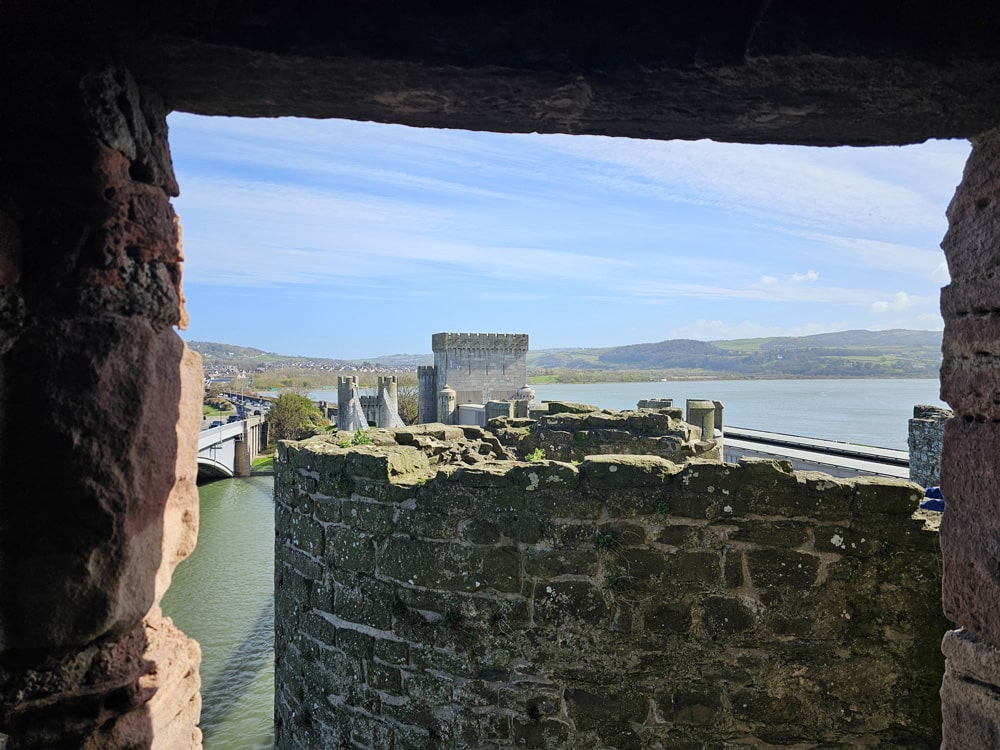
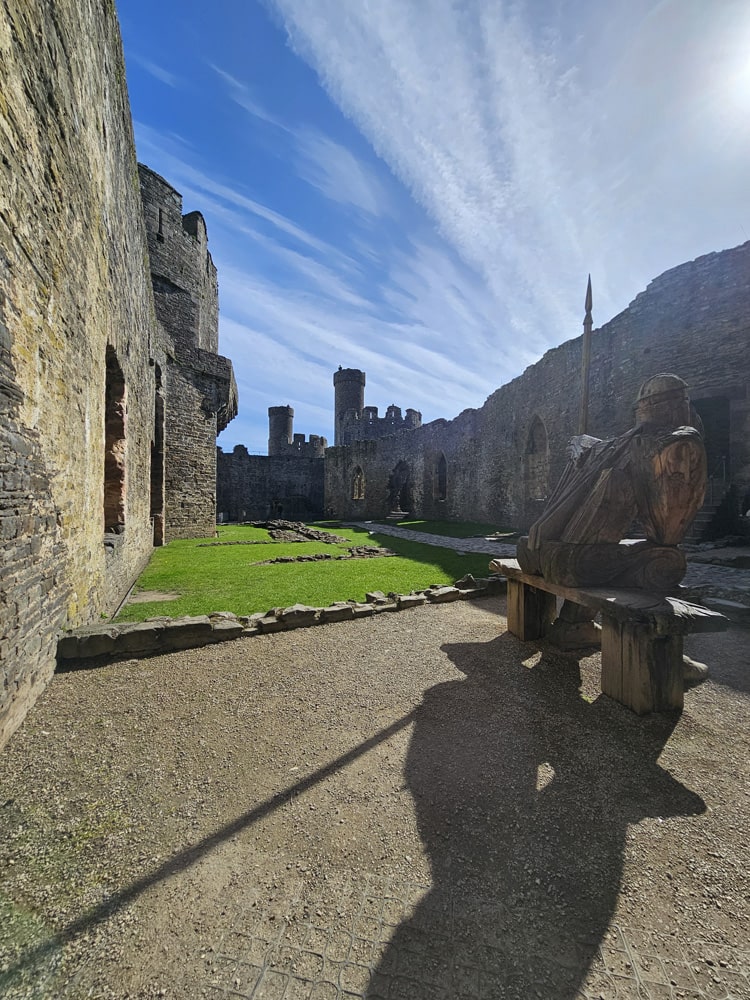
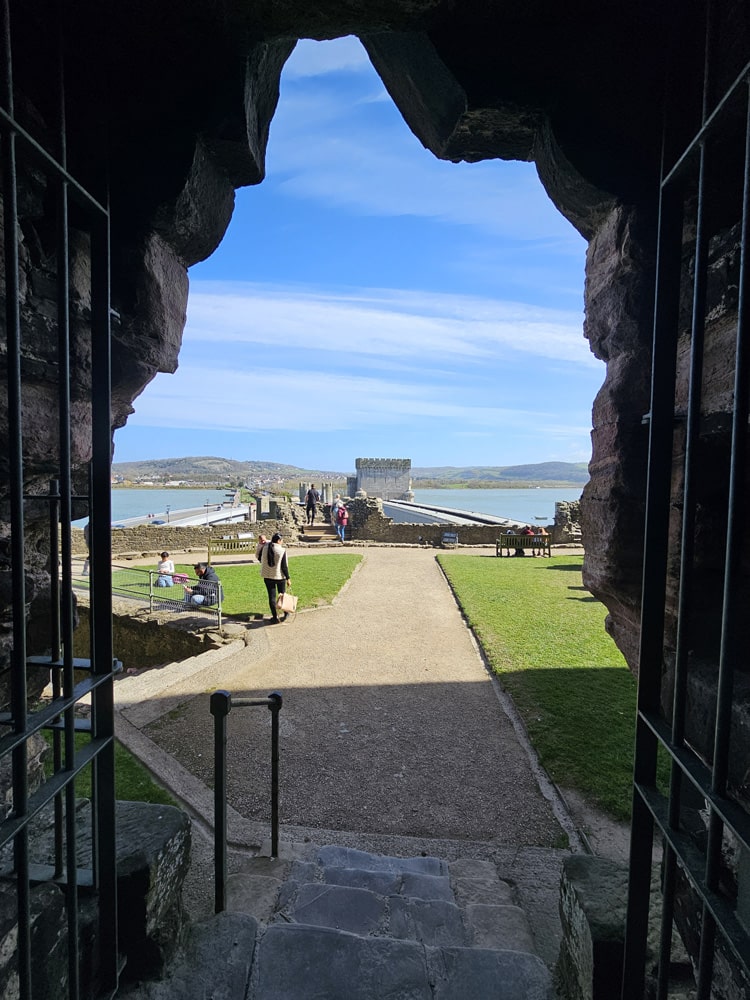
Conwy Castle is a magnificent medieval fortress that still towers over the town after 700 years. Built in the late 13th century as one of a string of Edward I’s castles along the Welsh coast, it was intended to dominate and intimidate. It was built at the same time as the walled town and both are part of a UNESCO World Heritage Site which also includes Beaumaris, Caernarfon and Harlech castles.
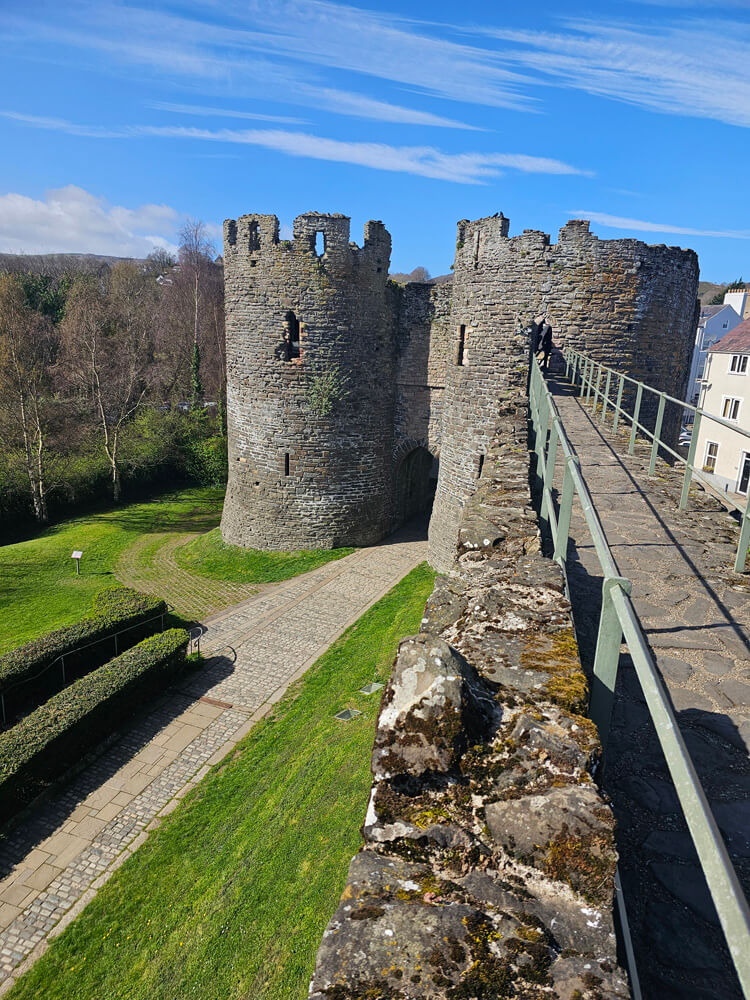
Conwy Town Walls
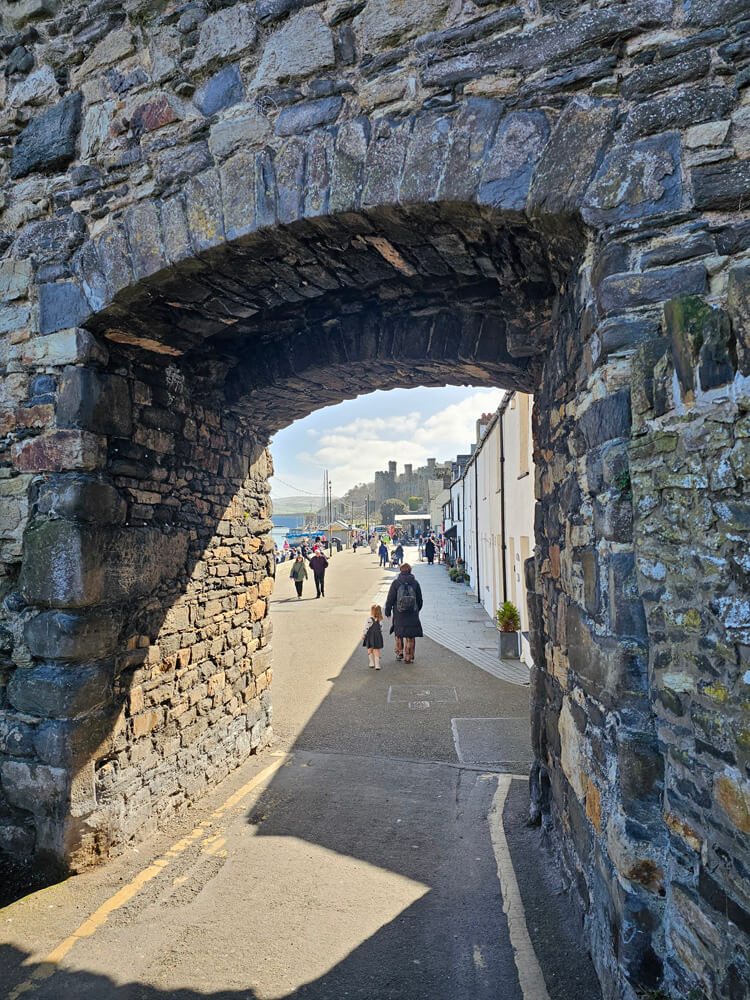
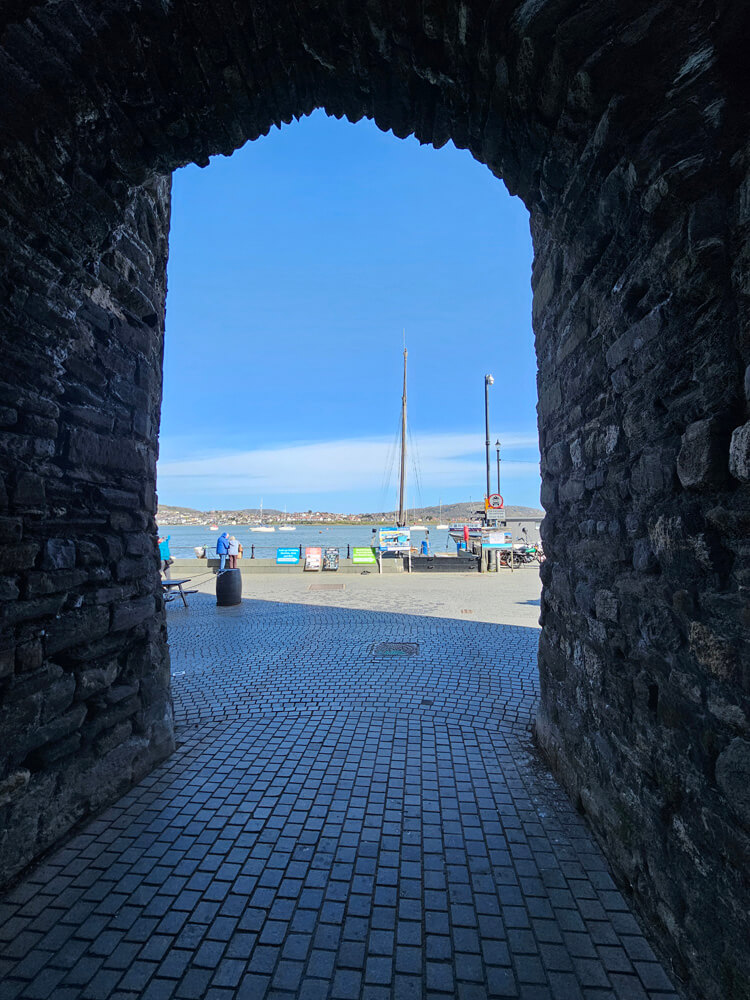
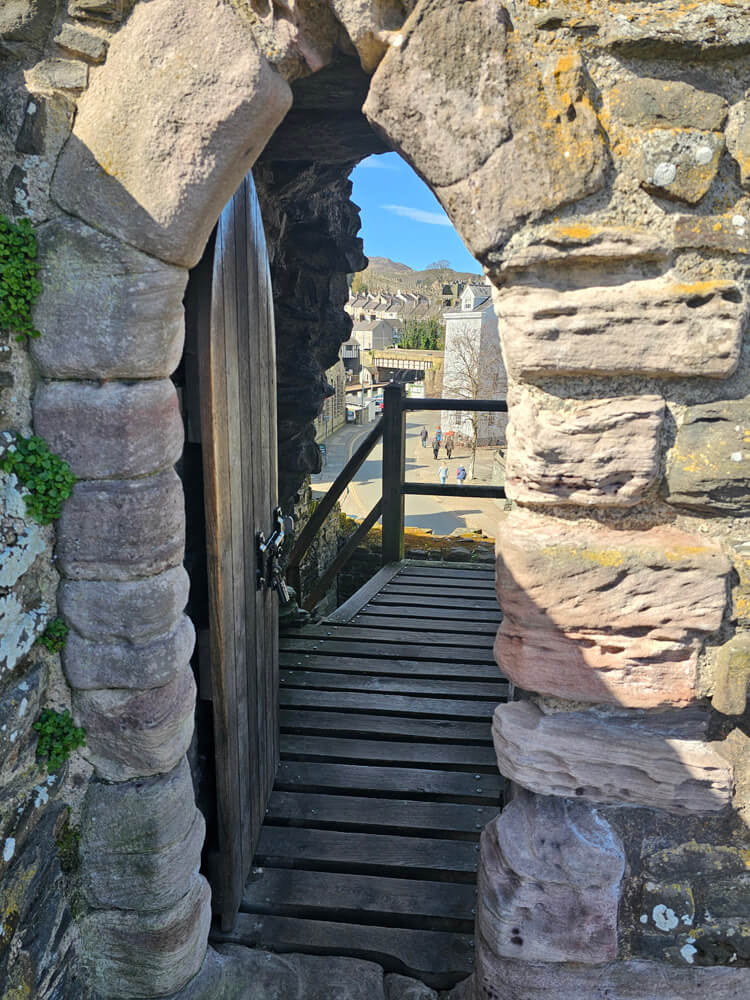
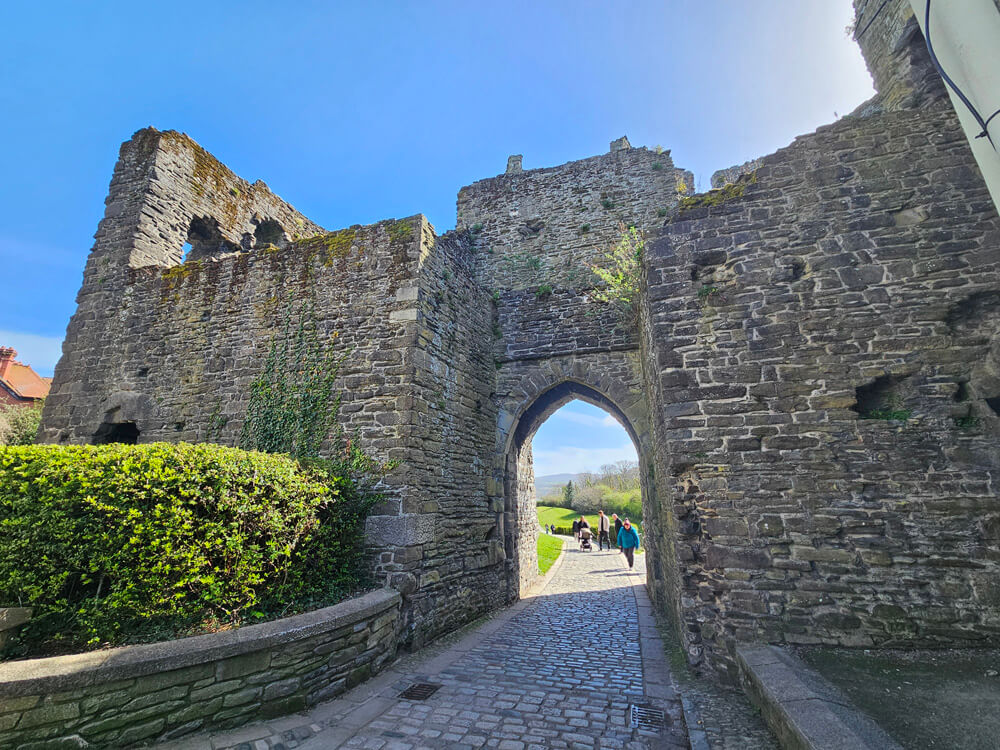
Built at the end of the 13th century and remaining mostly intact, Conwy’s town walls are some of the oldest structures in the town. The three-quarter-mile ring of town walls still completely enclose the original township of narrow streets. Protected by no less than 21 towers and three gateways they are, like the castle, amongst the finest of their kind in Europe.
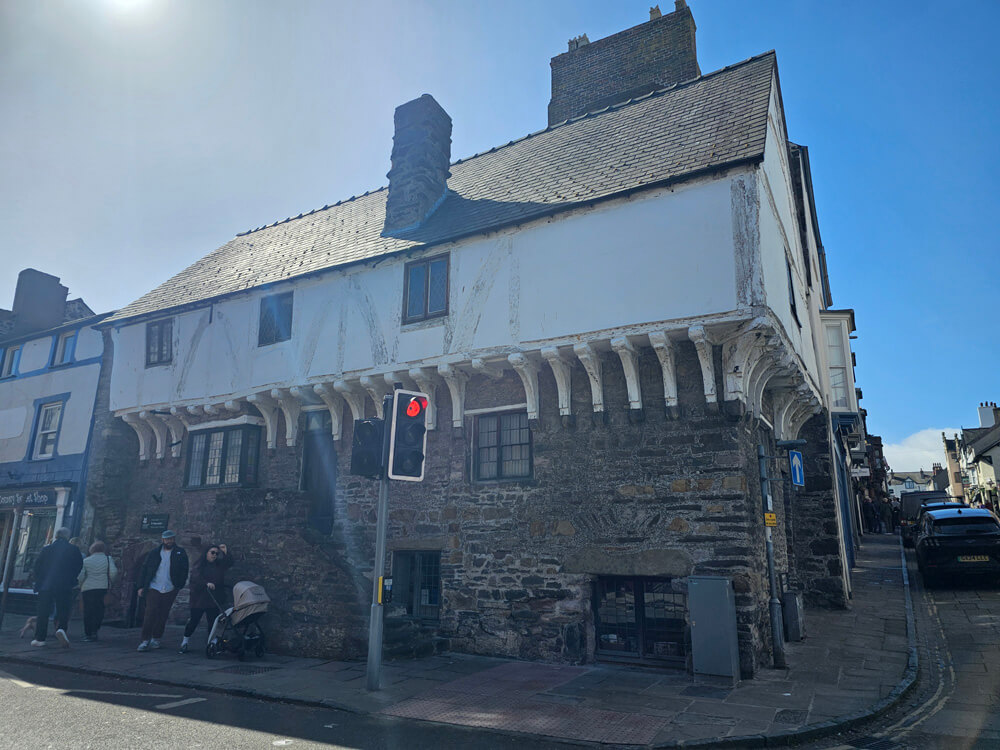
Aberconwy House
Aberconway House is a well preserved late medieval merchant’s house and one of the oldest dateable houses in Wales. Constructed in the 15th century it is the town’s oldest house and the only medieval merchant’s house in Conwy to have survived the turbulent history of the walled town over nearly six centuries. Over the years it has been a coffee house, temperance hotel, bakery and antique shop.
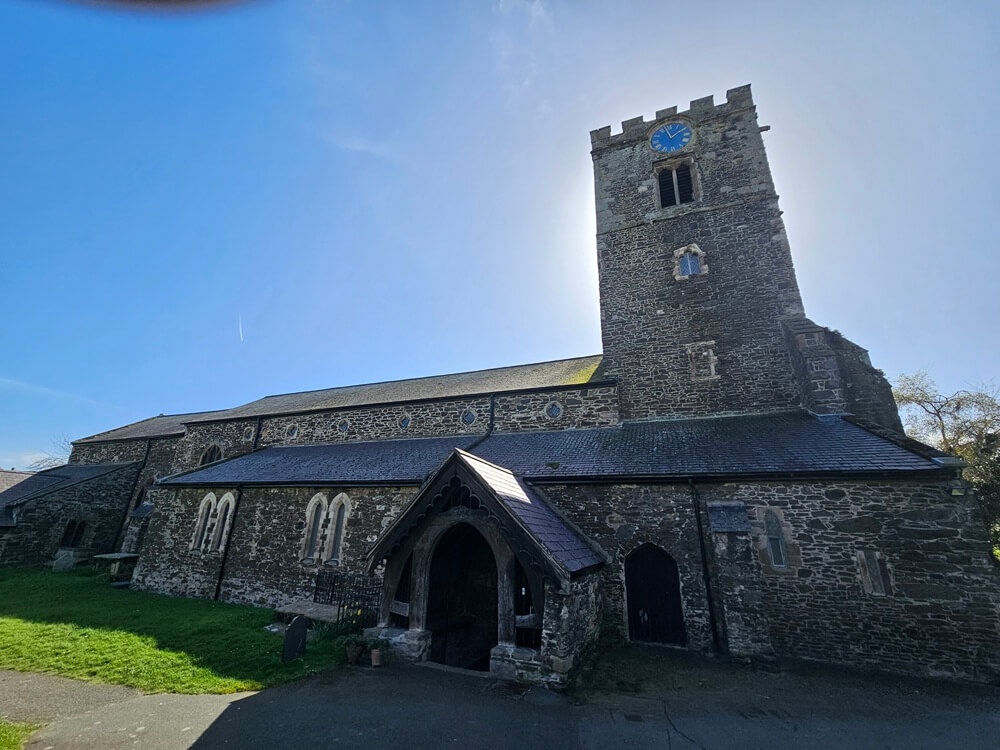
Aberconwy Abbey
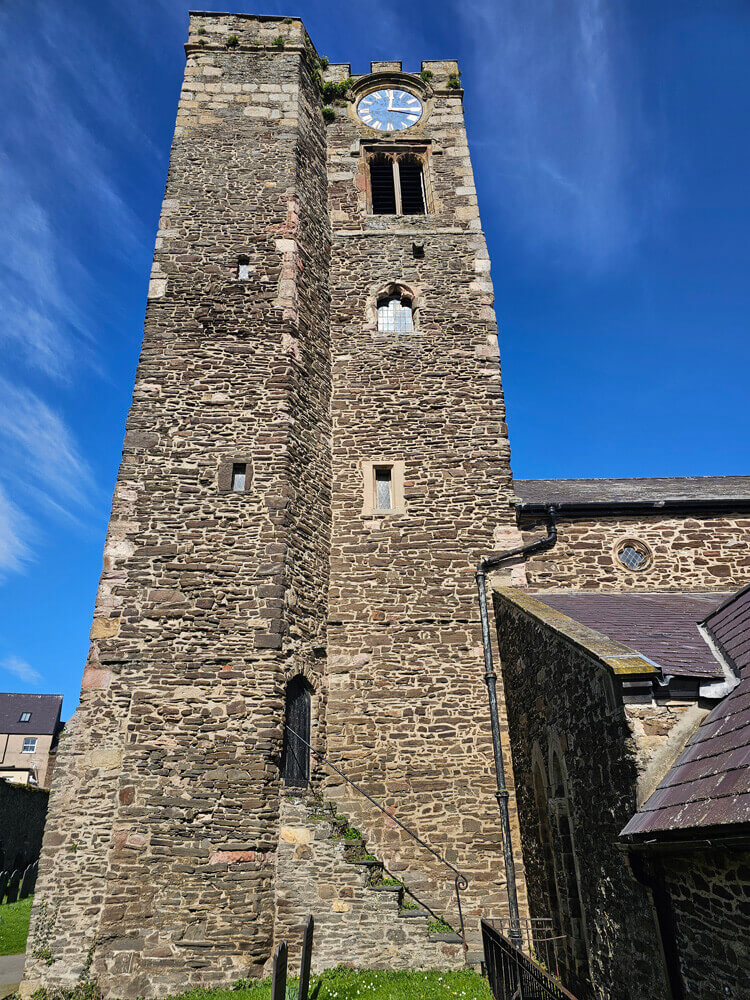
Within the walled town of Conwy at St Mary and All Saint’s Church lie the remains of the once great Aberconwy Abbey. It was a Cistercian monastery founded in 1186 by Cistercian monks on land given to them by Welsh prince Llywelyn the Great. Following the English victory over Gwynedd in 1283, the monks were forced to move and Conwy became a military base for Edward I’s army. Now the parish church of St Mary & All Saint’s, it retains some parts of the original abbey church in the east and west walls.
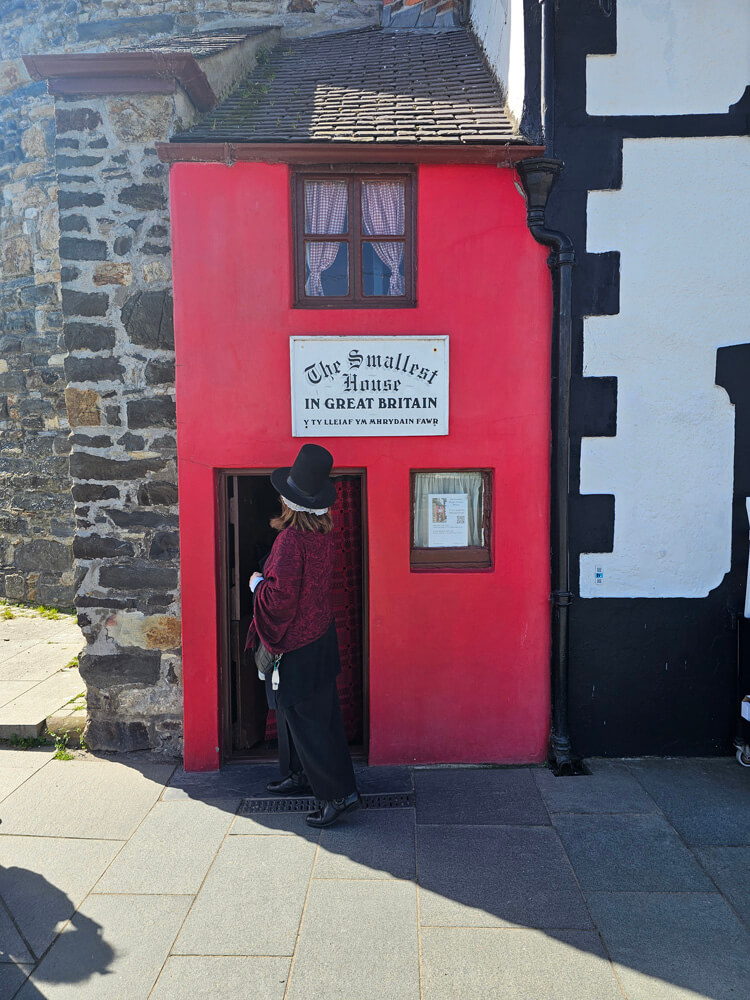
Quay House
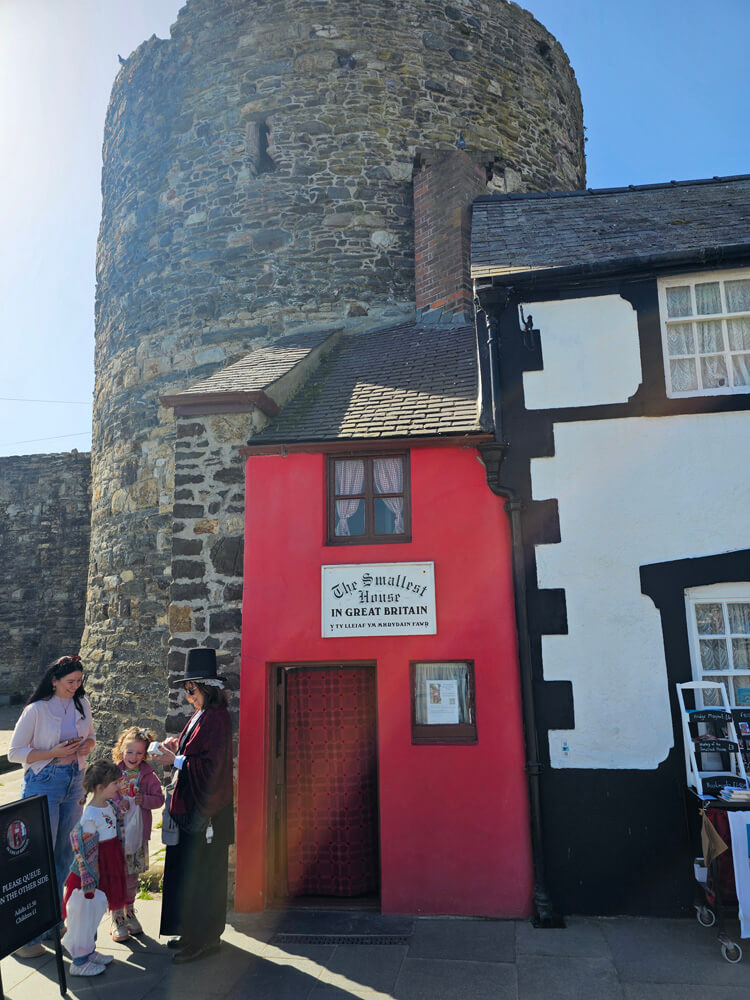
Quay House, more famously known as ‘The Smallest House in Great Britain’, was built in the 16th century and remained in use until 1900. The tiny red-painted two-storey building is just 1.8m wide, 2.5m deep and 3.1m high. It was built as a fisherman’s cottage against a tower of the town wall in a small gap between two rows of quay houses, which can be found nestled at the end of a terrace of houses on Conwy’s quayside.
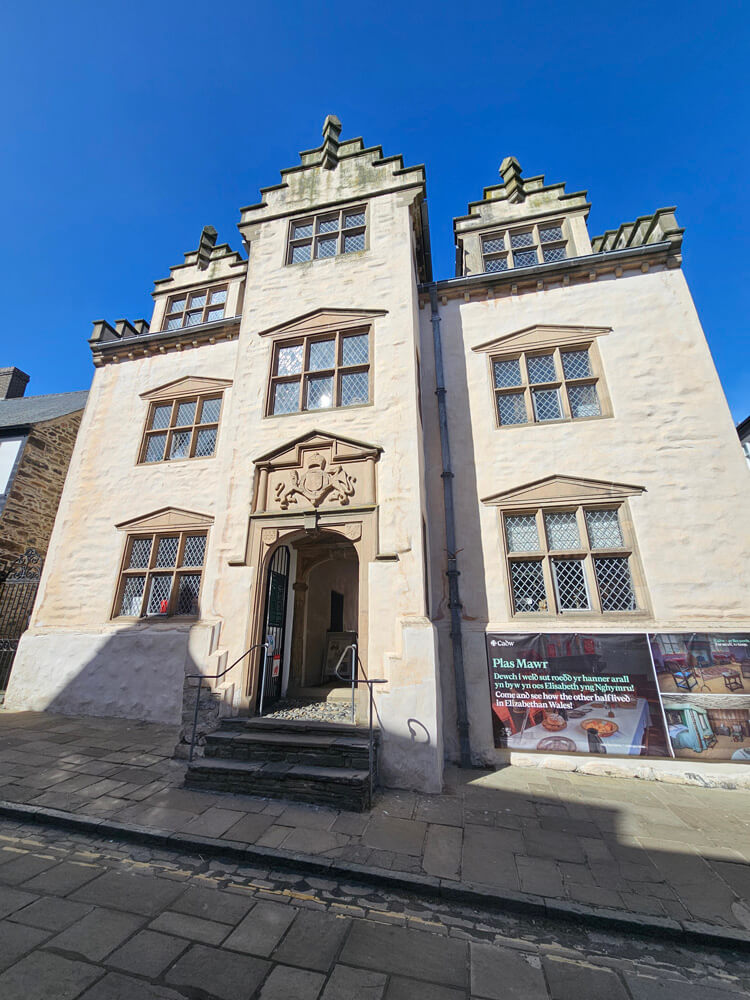
Plas Mawr
Plas Mawr, meaning ‘Great Hall’ or ‘Large House’, is one of the finest surviving Elizabethan town houses in Britain. Robert Wynn, a merchant, built the house between 1576 and 1585 and has been preserved in its original condition. Over the centuries it became a courthouse, a school and art gallery. The Tudor-era mansion has 17 rooms to explore, all decorated to their original taste.
Photo Gallery.
Did you enjoy this post?
I hope you found this post useful. I put a great deal of time and effort in to building, maintaining and populating the website. If you like, you could say a small thank you by buying me a coffee. You don't have to, but it would be nice :)
Buy me a coffee
Stay up to Date
Follow me on my journey and get notified whenever a new post is published by following Kings & Castles on Facebook.
Follow MeExplore The Map
Discover the hundreds of castles, churches, monasteries, cathedrals and other historic locations that I've personally visited across England and Wales. Search by location, explore nearby sites and plan your next historical adventure.
Share: