Holy Trinity Church, Coventry
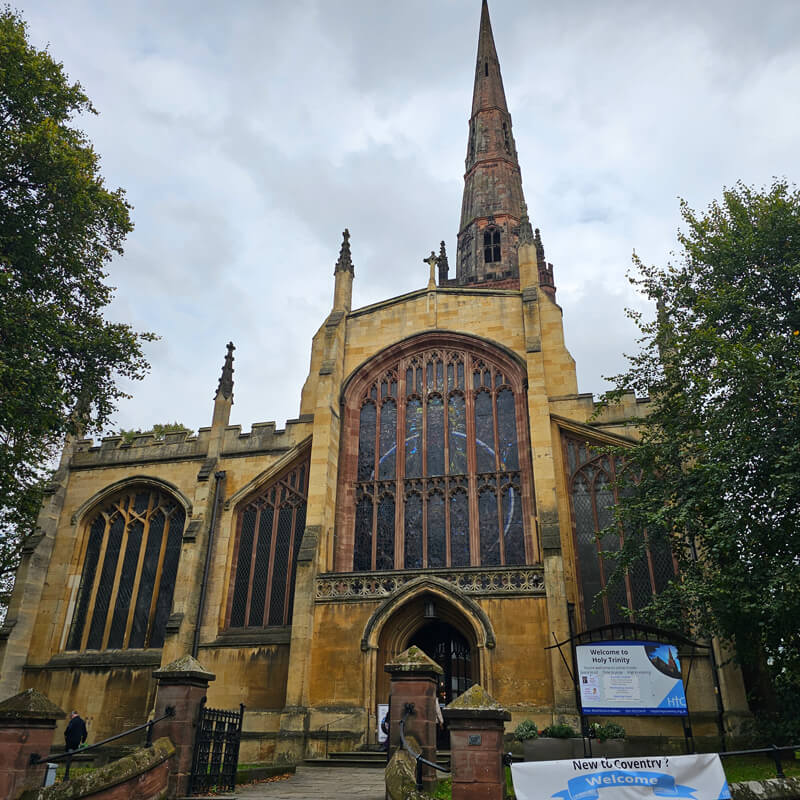
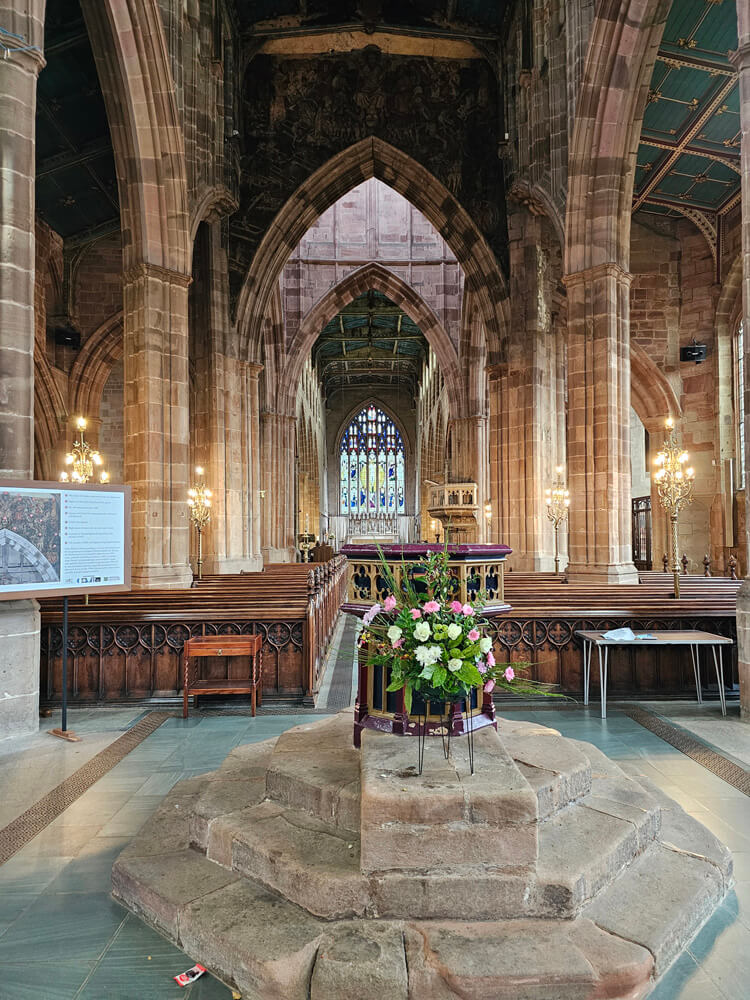
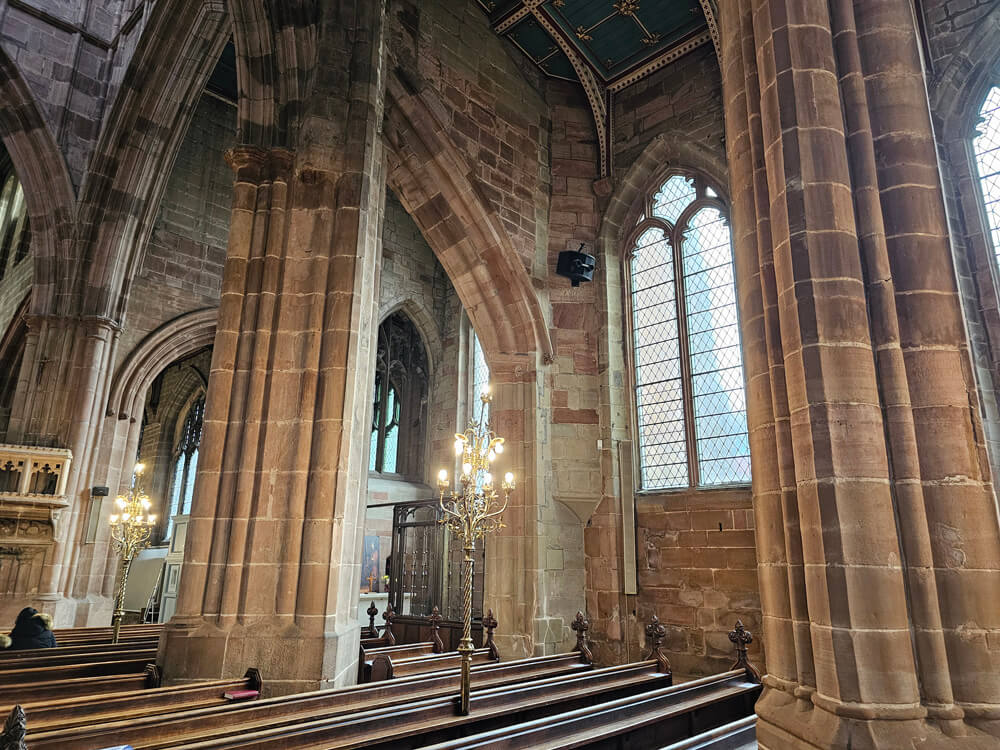
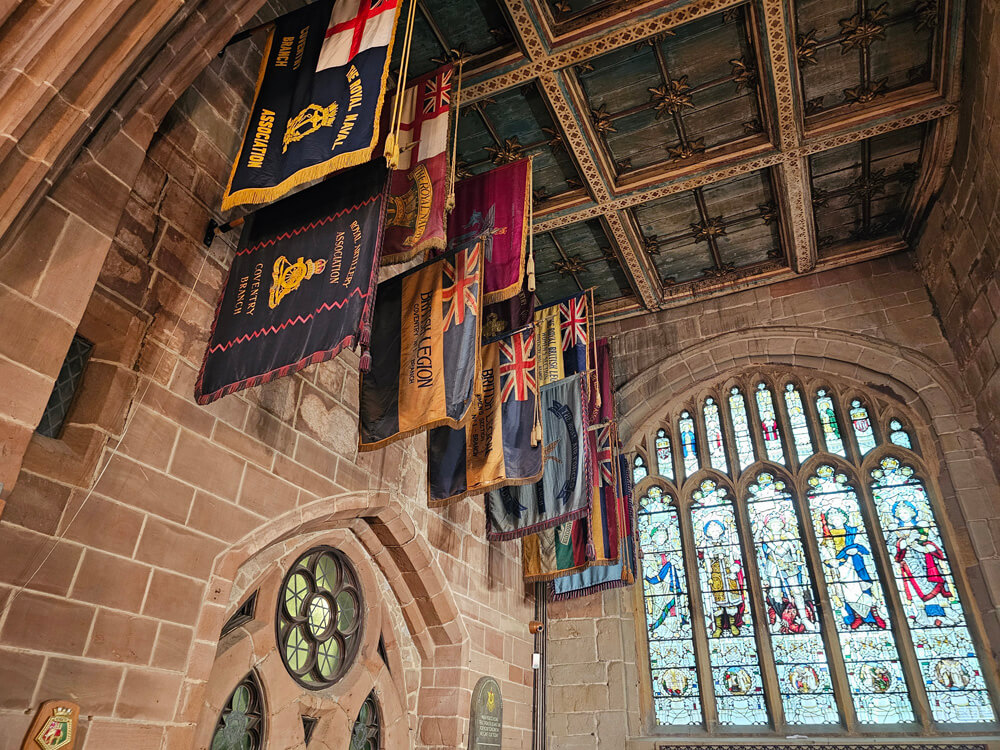
Just a few steps from Coventry’s medieval cathedral stands the historic church of Holy Trinity. Although it has seen some rather substantial restorations over the centuries, the church dates from the 12th century and is the only complete medieval church in Coventry.
Historic
Highlights.
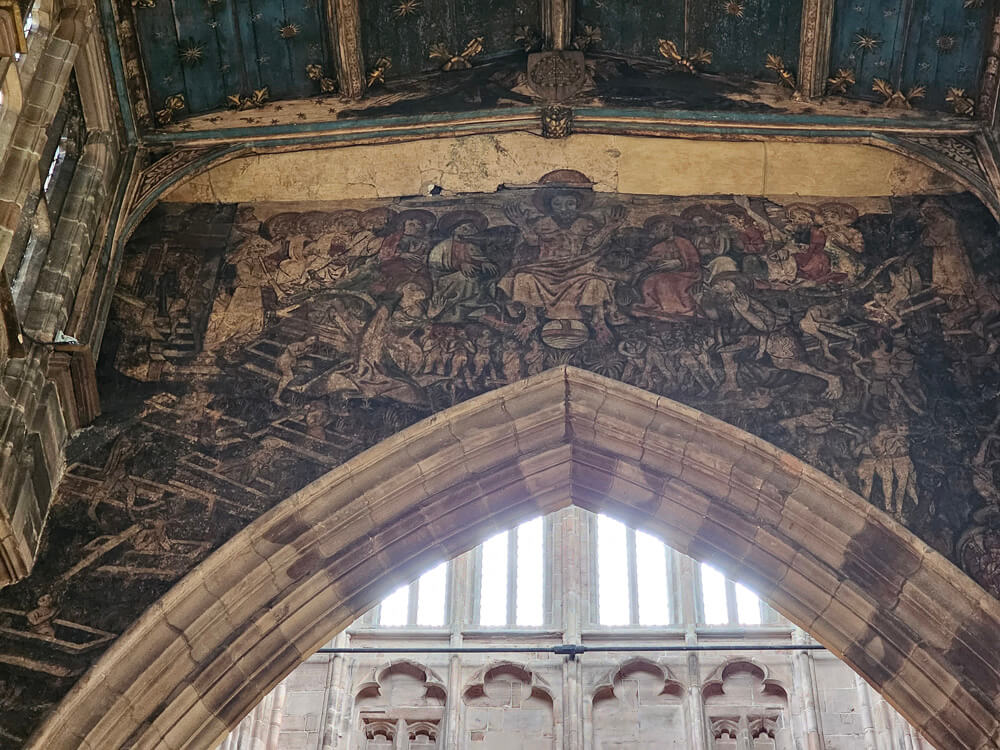
- One of the finest examples of a ‘Doom Painting’ in Europe
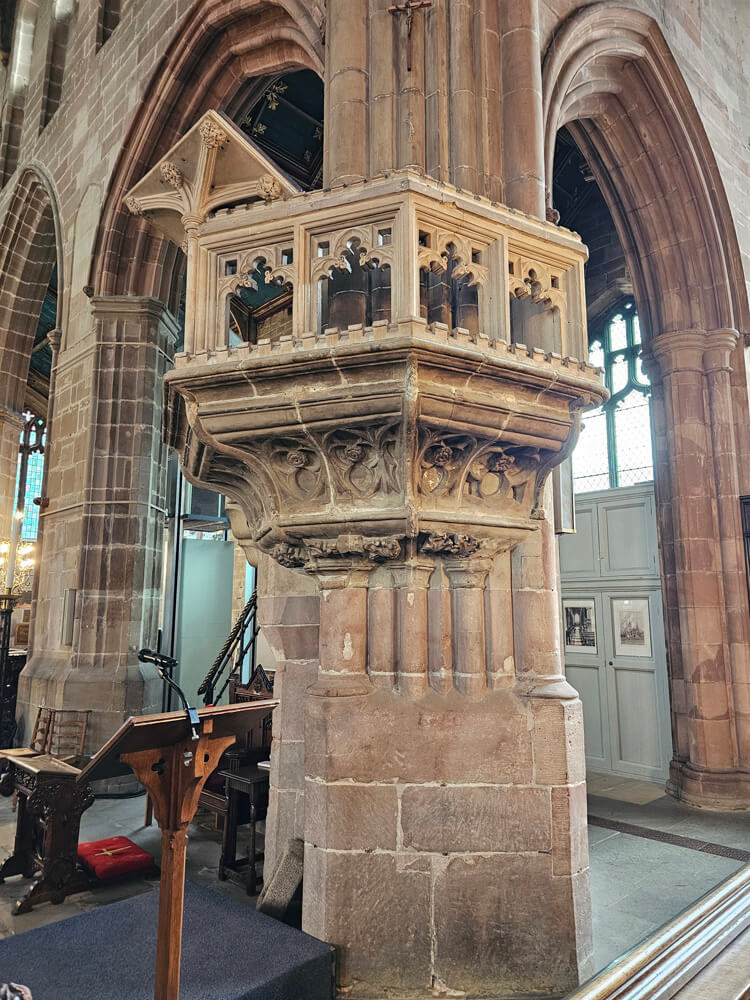
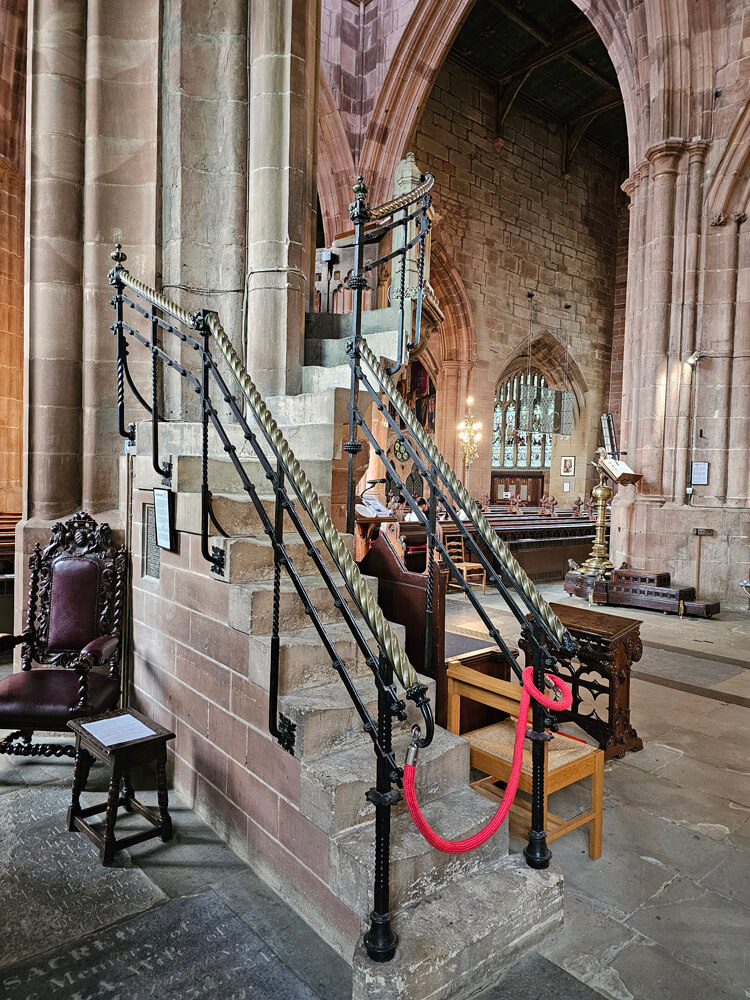
- 15th-century pulpit, which is one of the highest in the country
- 15th century lectern
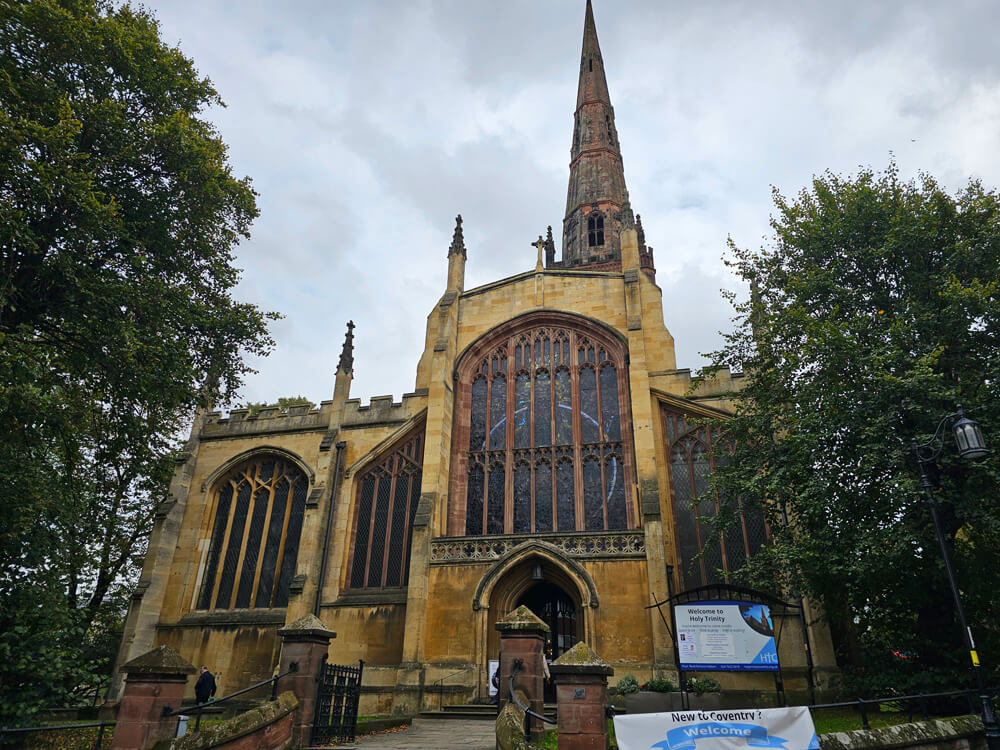
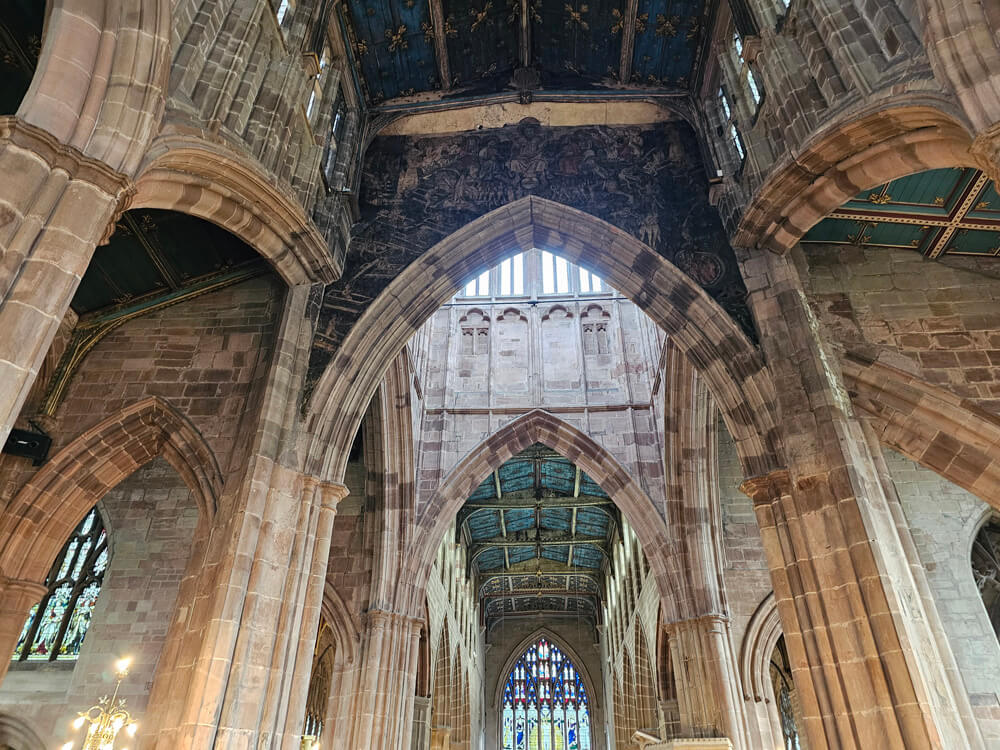
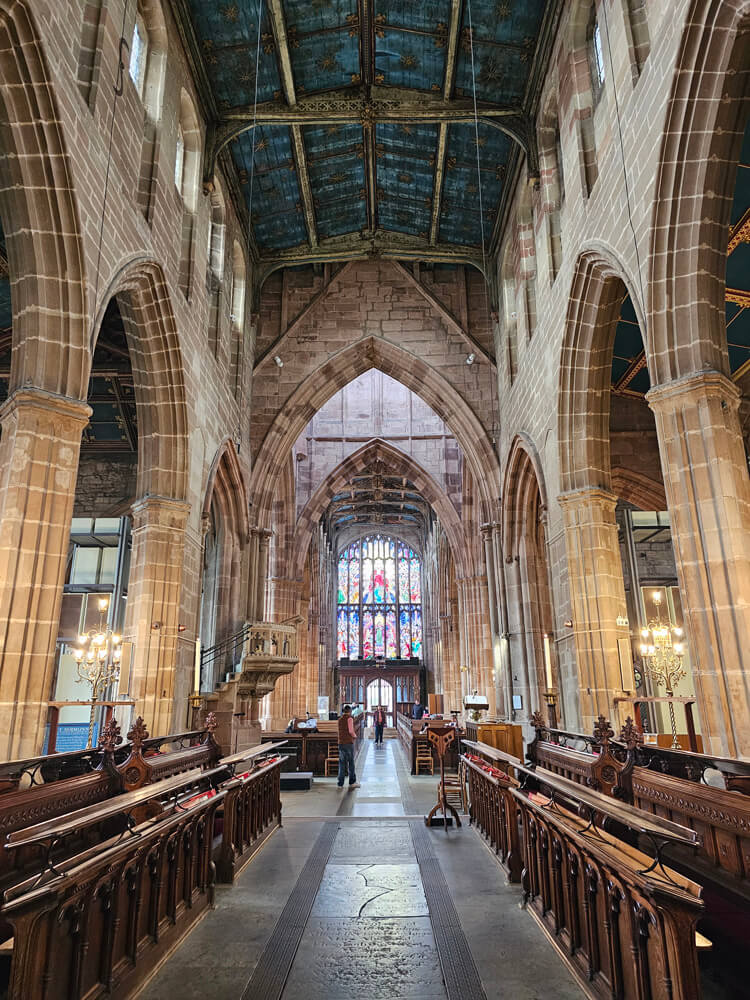
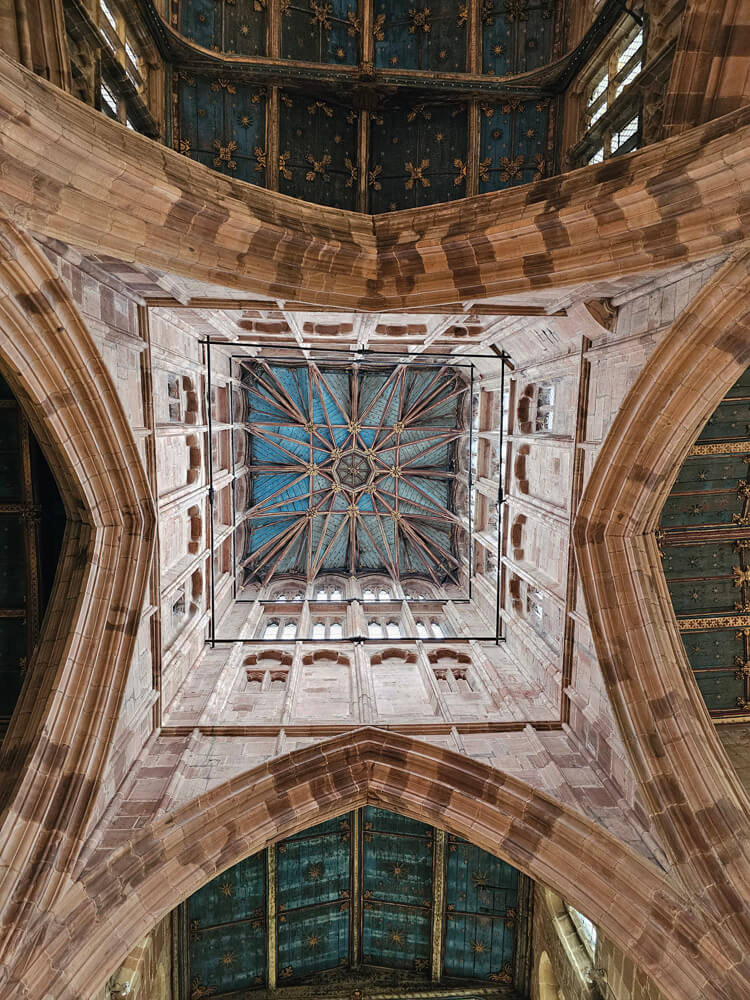
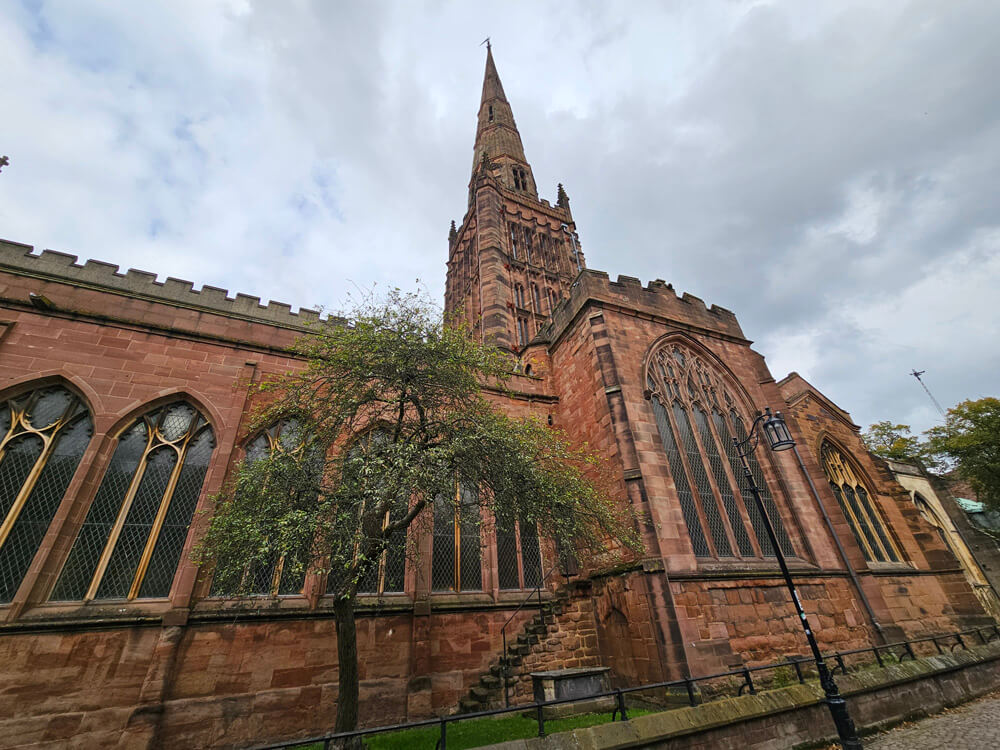
Holy Trinity is a beautiful medieval church in the centre of Coventry and is one of the largest medieval parish churches in England. It has one of the tallest non-cathedral spires in the UK and contains one of the finest examples of a ‘Doom Painting’ in Europe.
Holy Trinity has changed greatly through its 900-year history; practically destroyed by fire in 1257, it has been rebuilt, extended and redecorated as religious styles and theologies have passed through Coventry.
Though the first record of Holy Trinity dates to the early 12th century, the story of the building goes back a century earlier, when Earl Leofric of Mercia and his wife Lady Godiva founded a Benedictine priory dedicated to St Mary on the site of an even earlier 8th century Saxon nunnery.
The existence of Holy Trinity was first recorded in 1113 when it replaced a much older chapel built on the site by monks from St Mary’s Priory, which was built for the tenants of the priory lands. In 1257 that first church burned down, sparing only the north porch which was incorporated into a new 13th-century church.
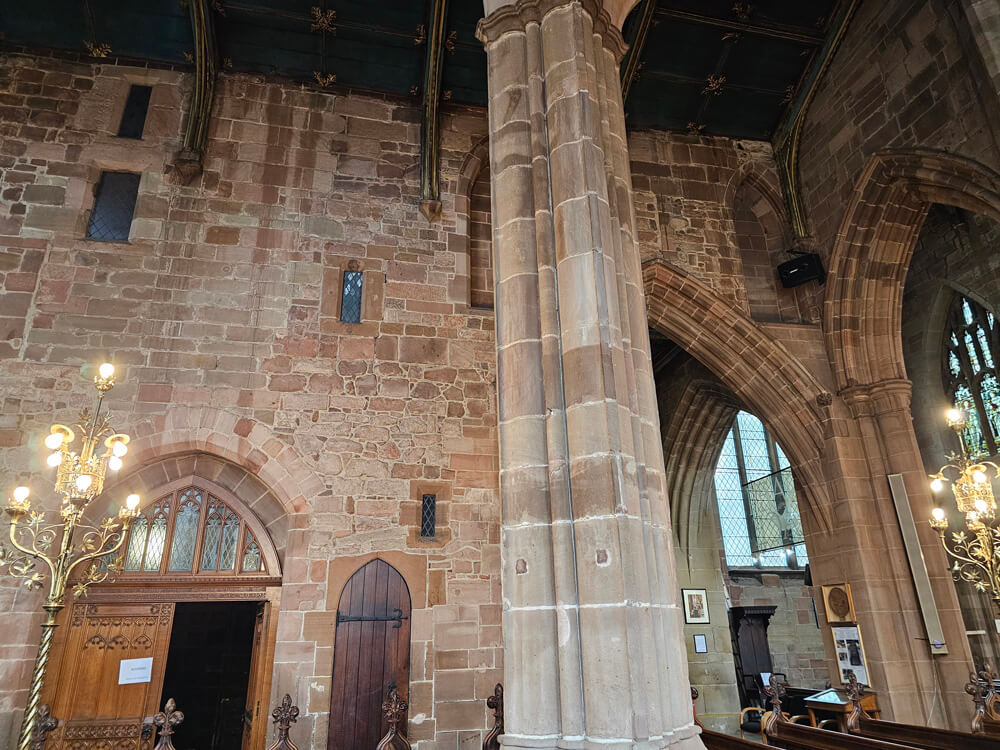
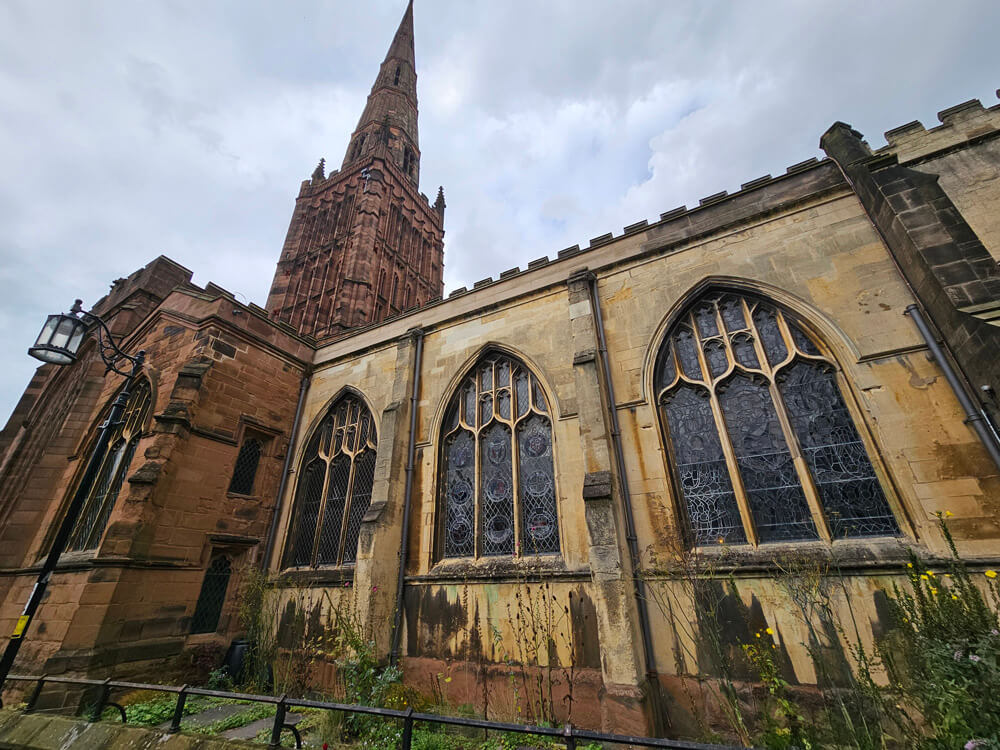
The present church building was built between the 1200s and 1400s out of red sandstone and would have originally more closely resembled the appearance of the nearby medieval St Michael’s Tower of Coventry Cathedral. However, several major restorations have seen much of the original brickwork replaced with a paler coloured sandstone.
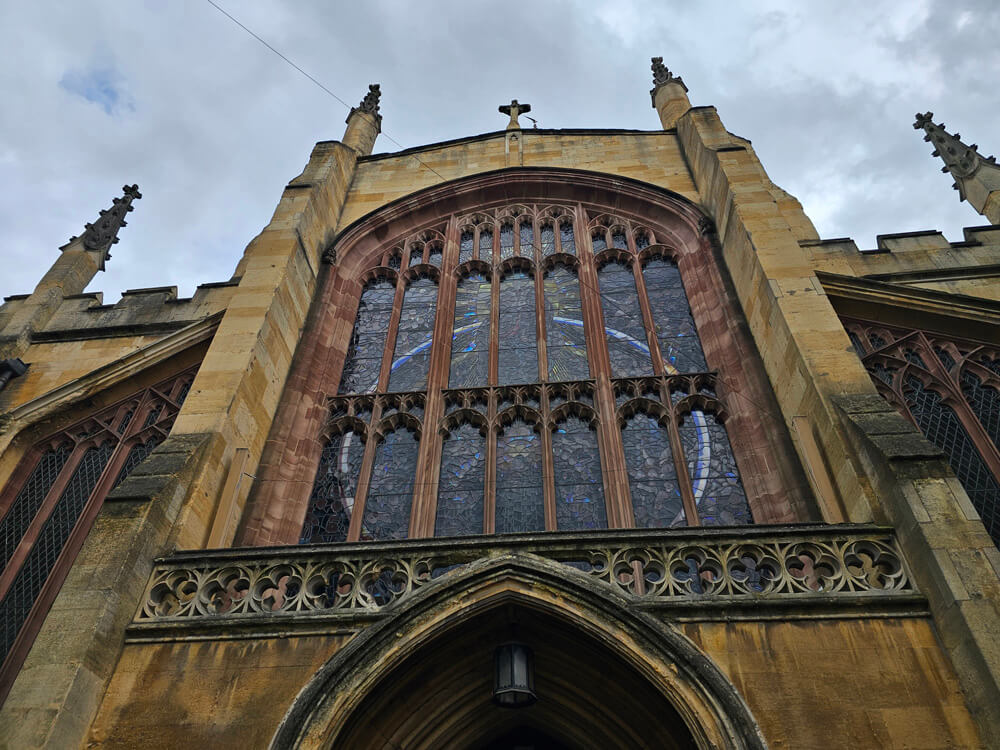
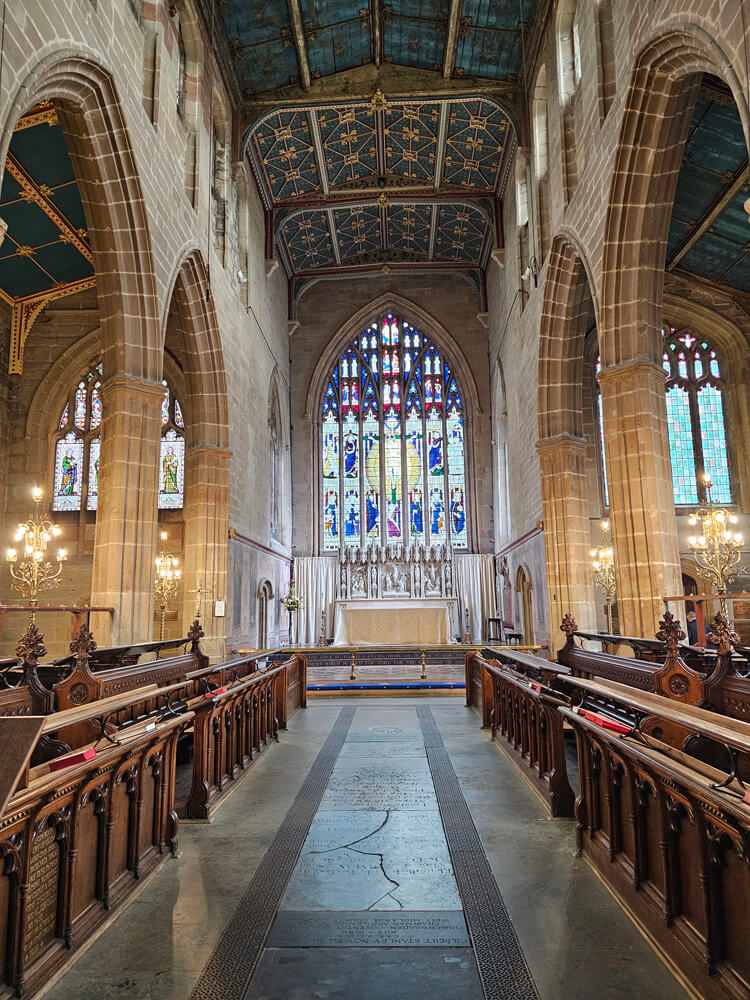
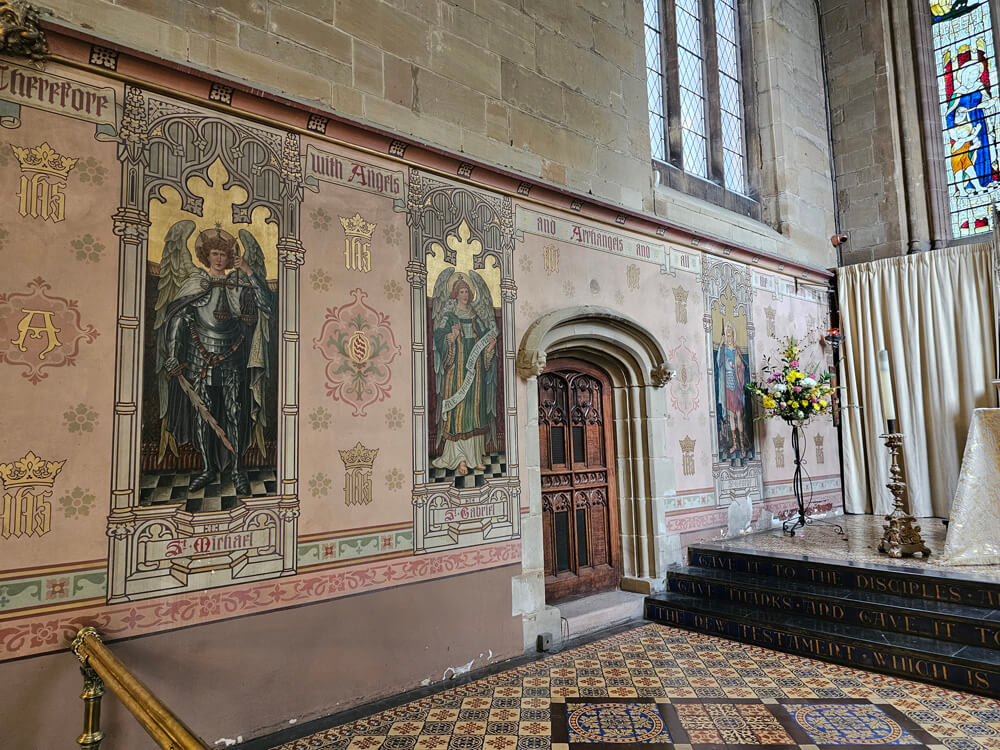
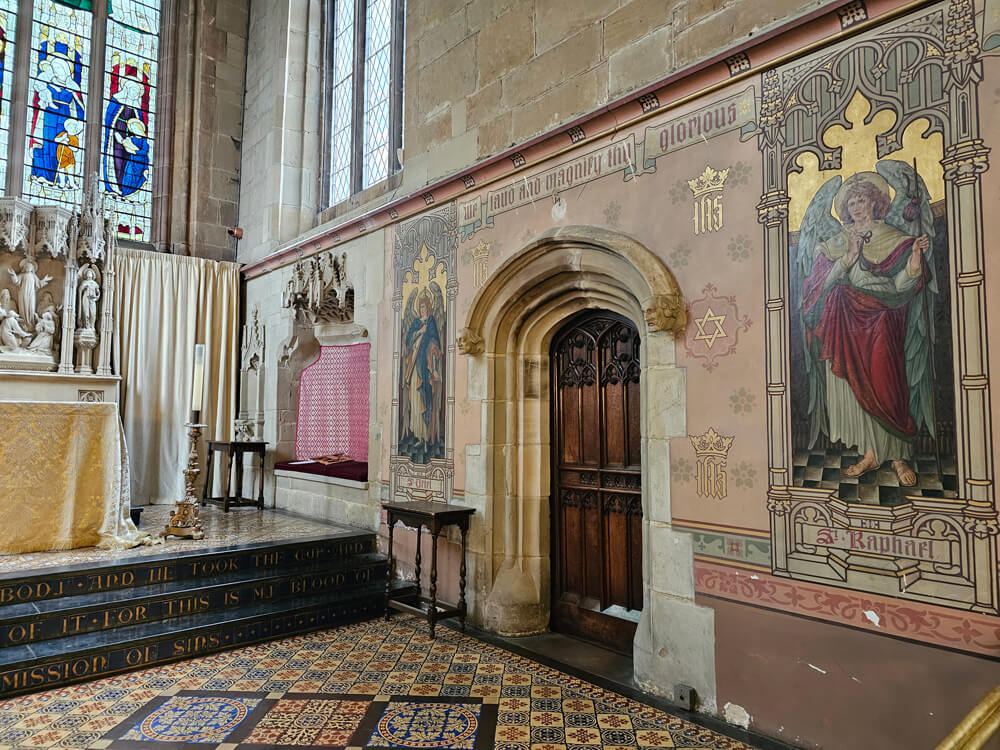
The church was restored in 1665–1668, with the current spire erected in 1667 to replace an older one that collapsed in 1665 during a storm. The east end was rebuilt in 1786, the tower was re-cased in 1826 and the west front was rebuilt in 1843. The inside of the church was heavily restored by the prolific English Gothic Revival architect George Gilbert Scott in 1854.
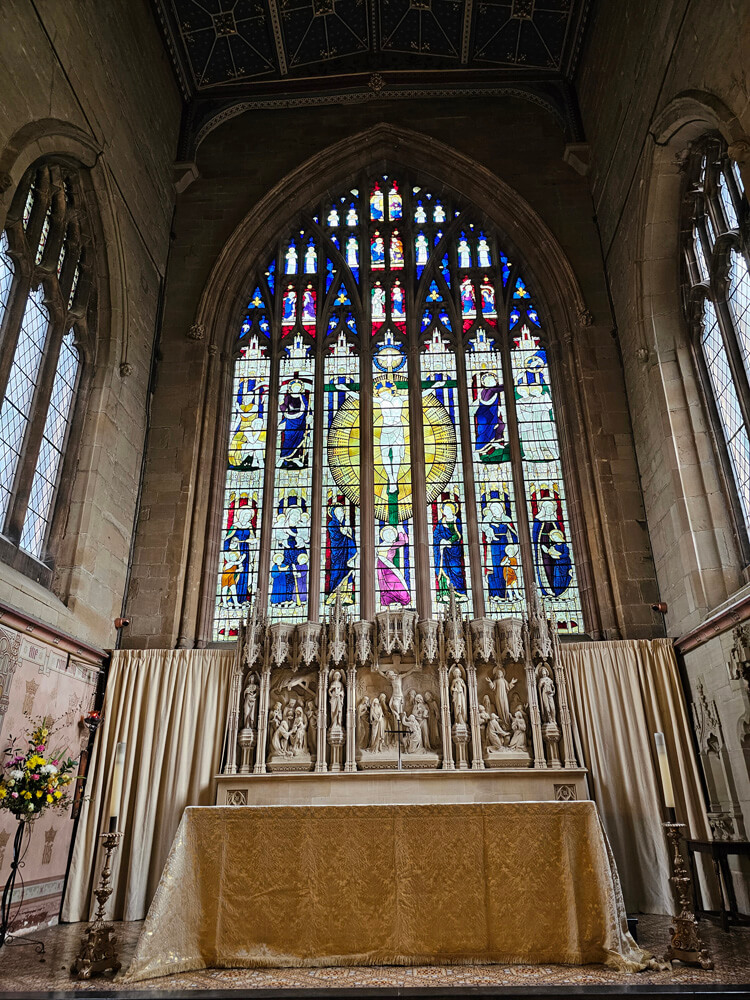
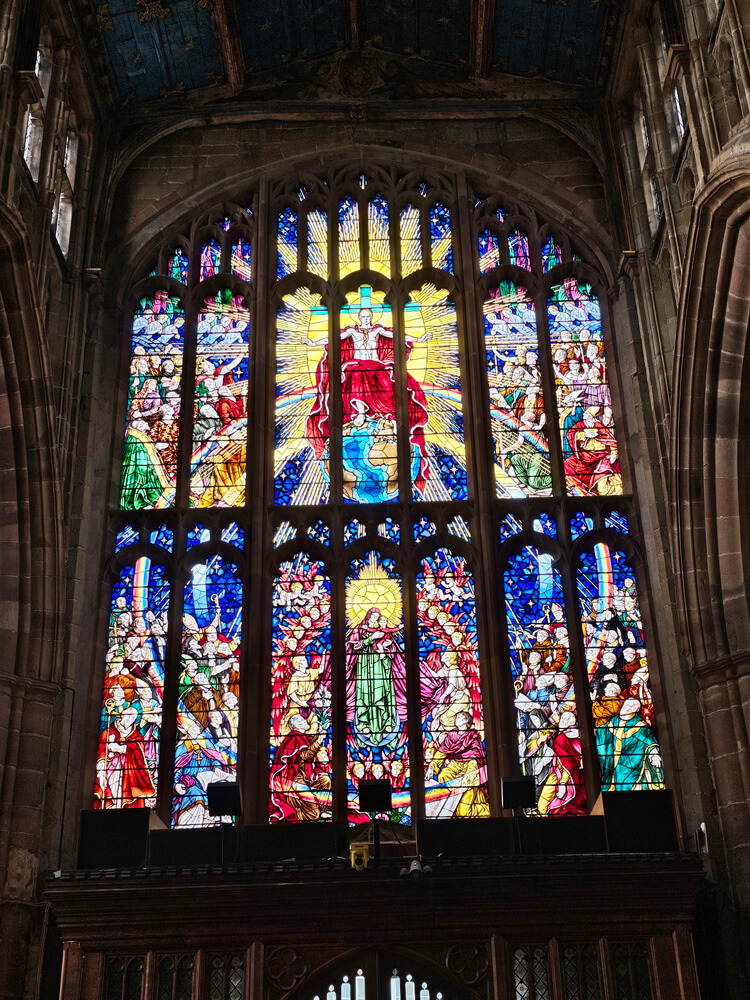
Holy Trinity was one of the few buildings of stature that escaped destruction during the bombing raids of the Second World War, though the great east and west windows lost most of their historic original stained glass, which were blown out and replaced in the 1950s.
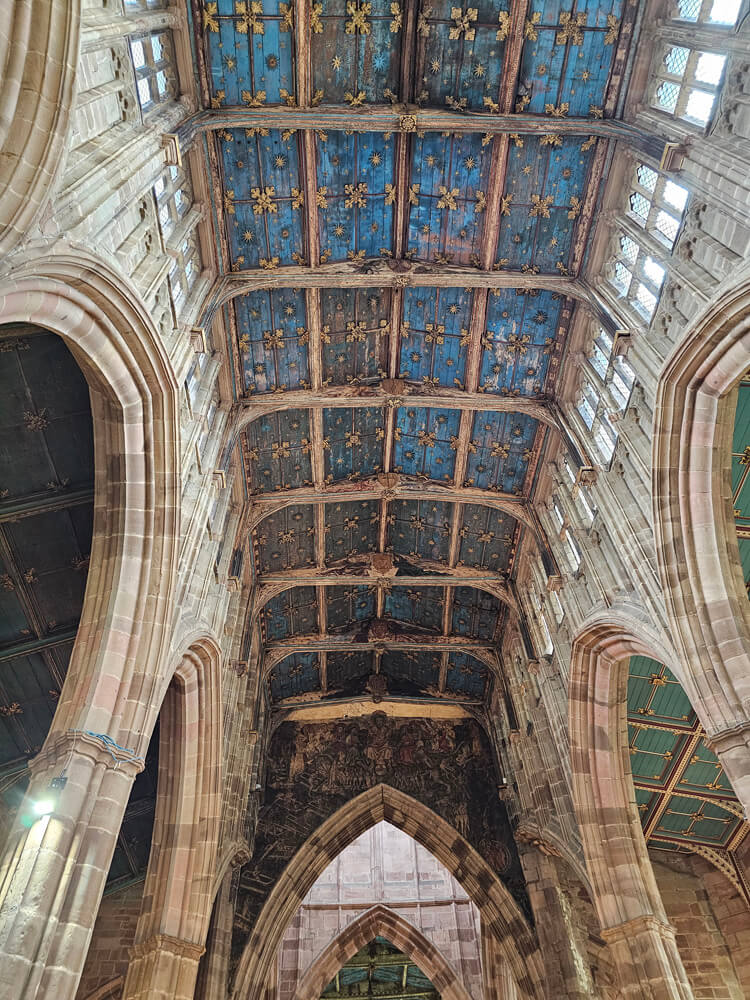
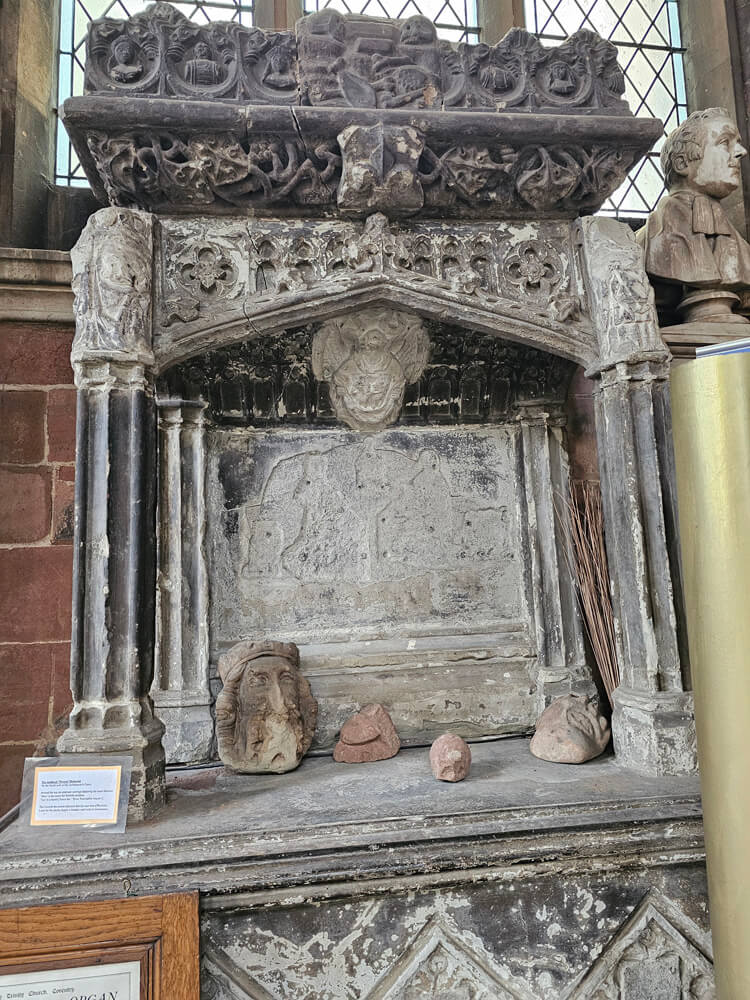
Although the church has seen much internal and external Victorian restoration, many medieval features still survive. From Holy Trinity’s medieval heyday in the 15th century date the pulpit, which was built around 1470 and is one of the highest in the country, the lectern, and the impressive Doom wall-painting of the Biblical Day of Judgement, which was painted over the tower arch in the 1430s and is considered one of the finest examples of its type in Europe.
Photo Gallery.
Did you enjoy this post?
I hope you found this post useful. I put a great deal of time and effort in to building, maintaining and populating the website. If you like, you could say a small thank you by buying me a coffee. You don't have to, but it would be nice :)
Buy me a coffee
Stay up to Date
Follow me on my journey and get notified whenever a new post is published by following Kings & Castles on Facebook.
Follow MeExplore The Map
Discover the hundreds of castles, churches, monasteries, cathedrals and other historic locations that I've personally visited across England and Wales. Search by location, explore nearby sites and plan your next historical adventure.
Share: