York Museum Gardens
Beneath the lawns and flower beds of York Museum Gardens lies nearly 2,000 years of history. The gardens contain some of the city’s most important medieval and Roman landmarks, including the ruins of St Mary’s Abbey, the remains of St Leonard’s Hospital, the Roman Multangular Tower, and the beautifully preserved medieval Hospitium.
From Roman Fortress to Public Gardens
The site was originally part of the Roman fortress of Eboracum, established around AD 71. Roman soldiers built stone walls and towers here to defend one of Britain’s most important military bases. After the Romans departed, the area continued to evolve, eventually becoming home to one of medieval England’s richest monasteries.
The Museum Gardens themselves were created in the 1830s by the Yorkshire Philosophical Society. Designed as a landscaped setting for the newly built Yorkshire Museum, they cover an area of 10 acres of the former grounds of St Mary’s Abbey and, carefully preserve many of the ancient ruins that remain visible today.
St Mary’s Abbey
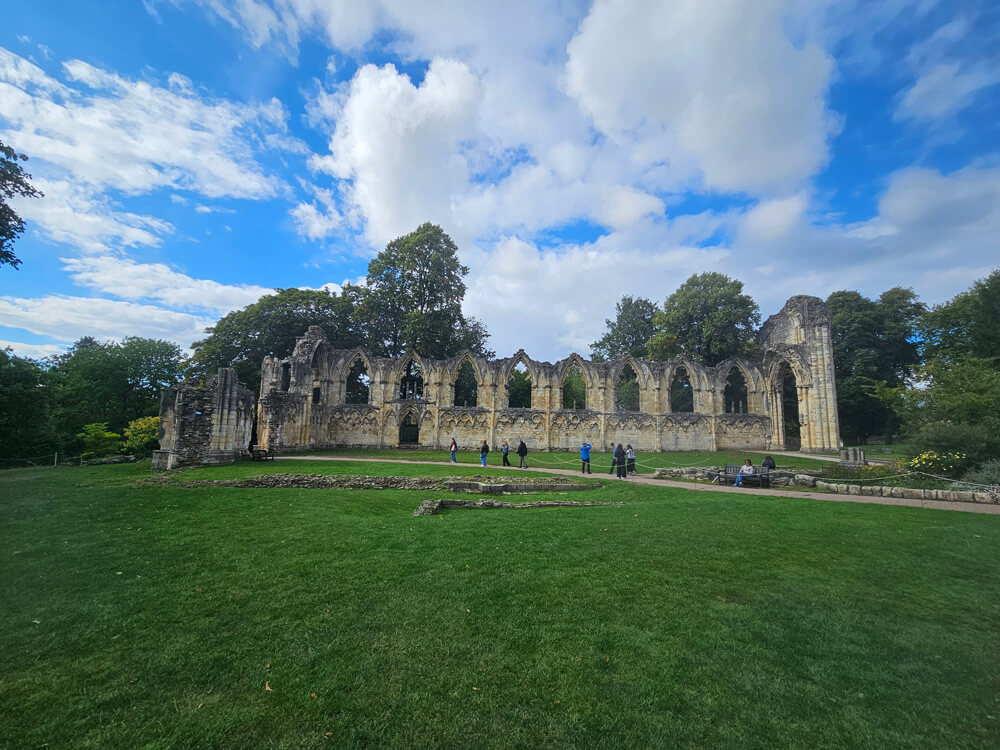
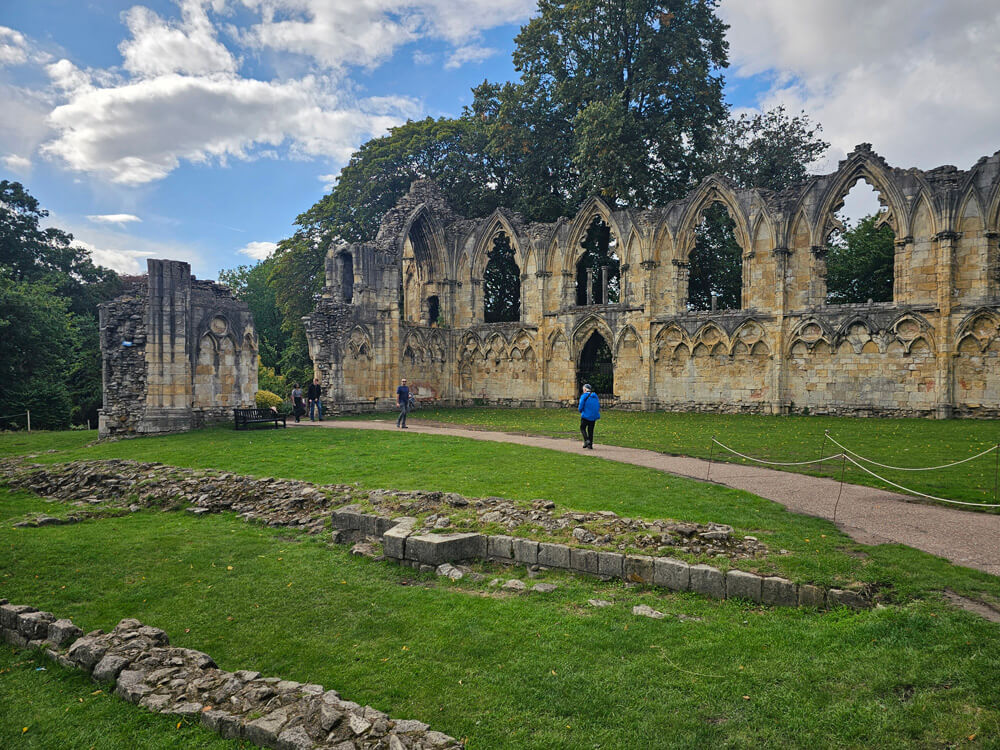
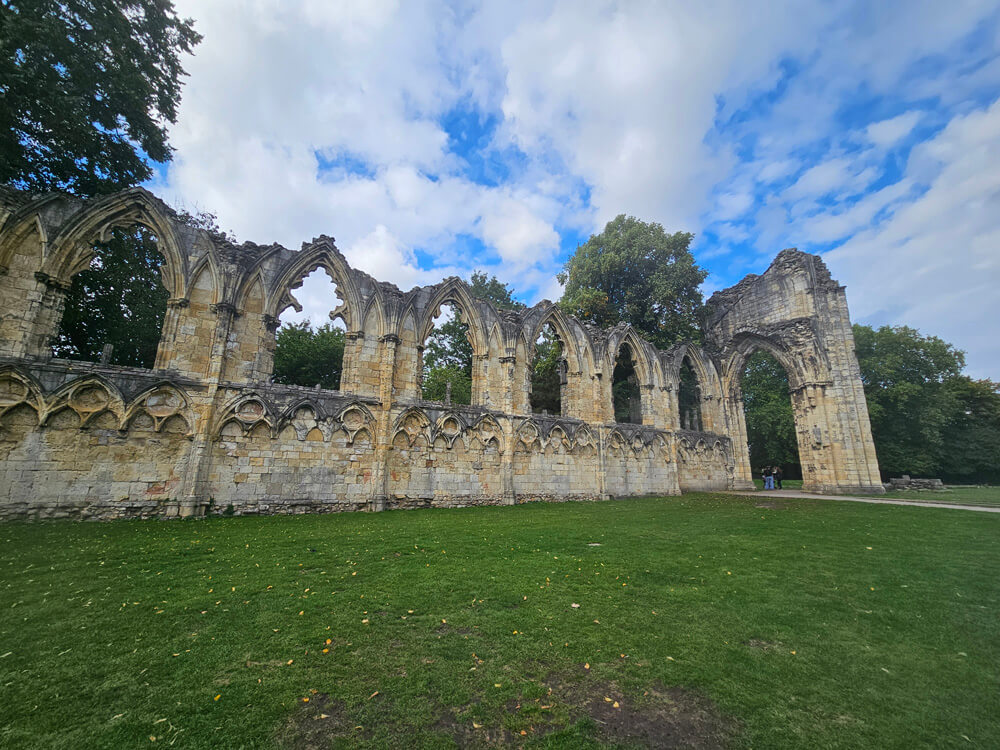
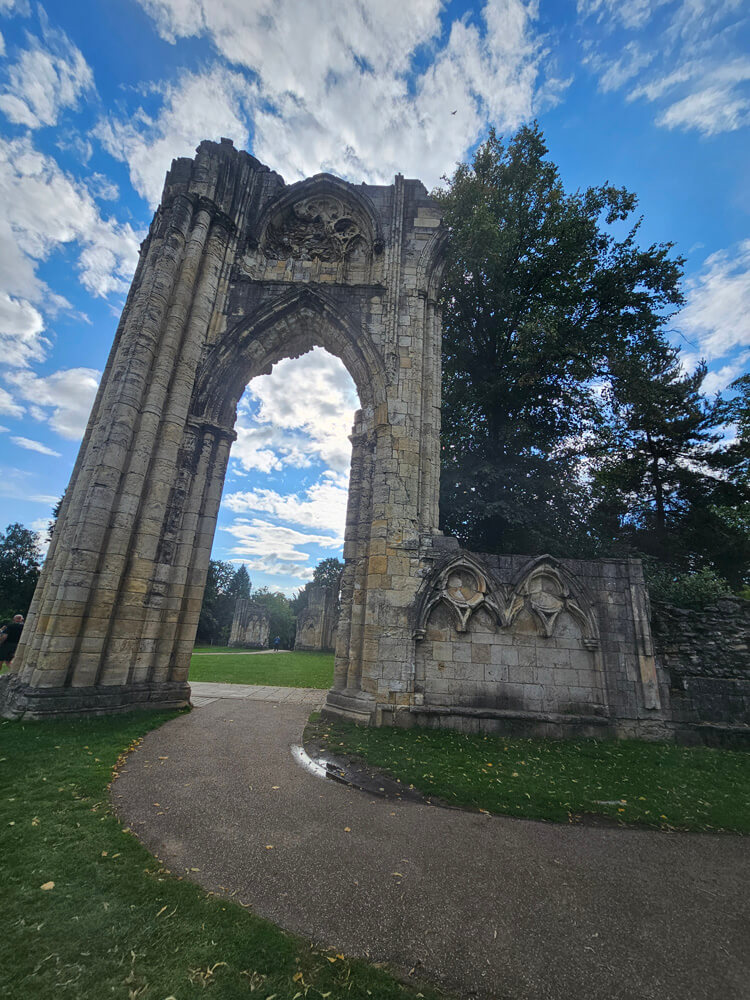
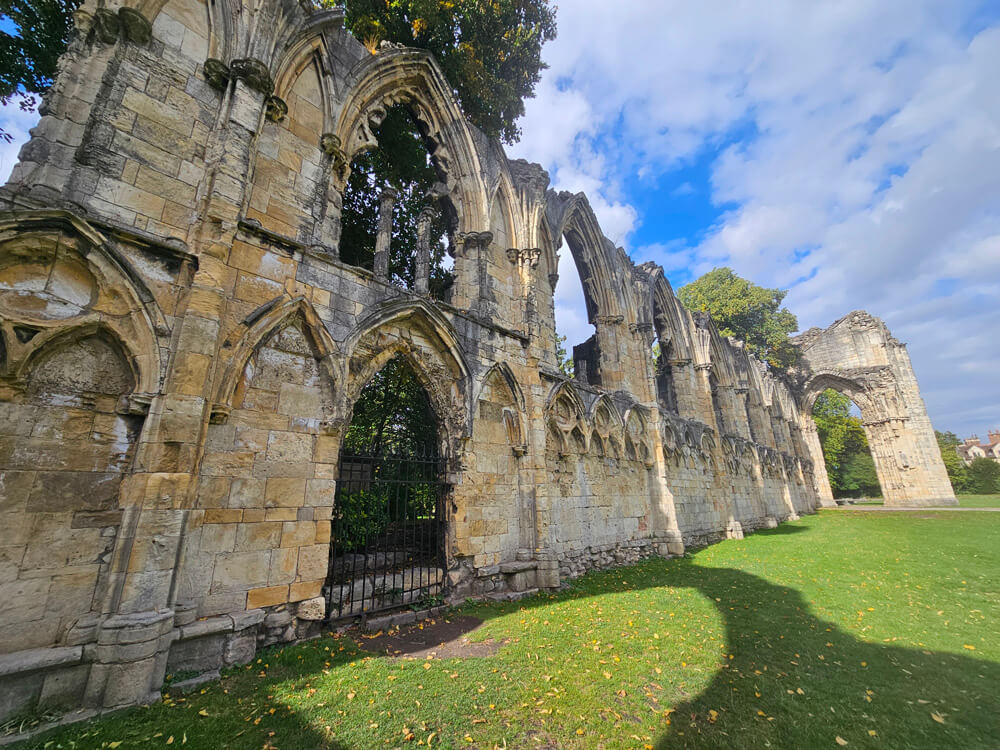
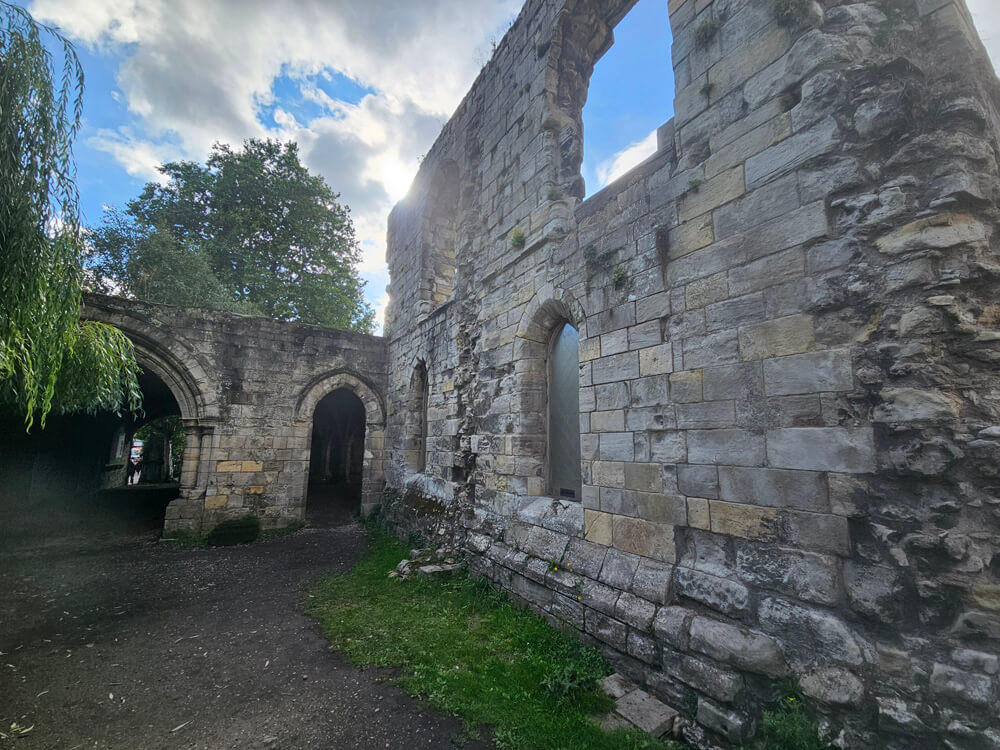
The spectacular ruins of St Mary’s Abbey are the gardens’ most famous feature. Founded in 1088 after the Norman Conquest, the Benedictine abbey became one of the wealthiest monasteries in northern England.
The church was rebuilt on a grand scale during the 13th century, creating an impressive Gothic structure with soaring windows and elegant stone arches. Wealthy patrons donated land and money, allowing the abbey to grow into a vast religious complex surrounded by walls, workshops and gardens.
Its prosperity ended abruptly in 1539 when Henry VIII dissolved the monasteries. The abbey was closed, its valuable possessions seized, and much of the stone was reused in later buildings. Today, the surviving arches and walls remain among York’s most striking medieval ruins.
St Leonard’s Hospital
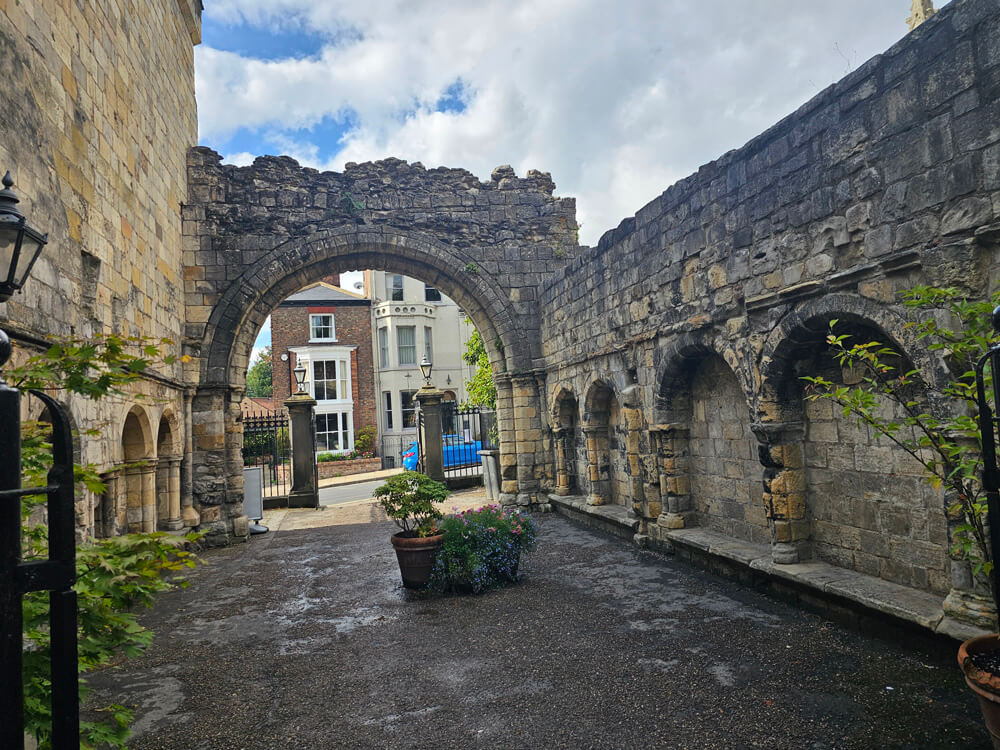
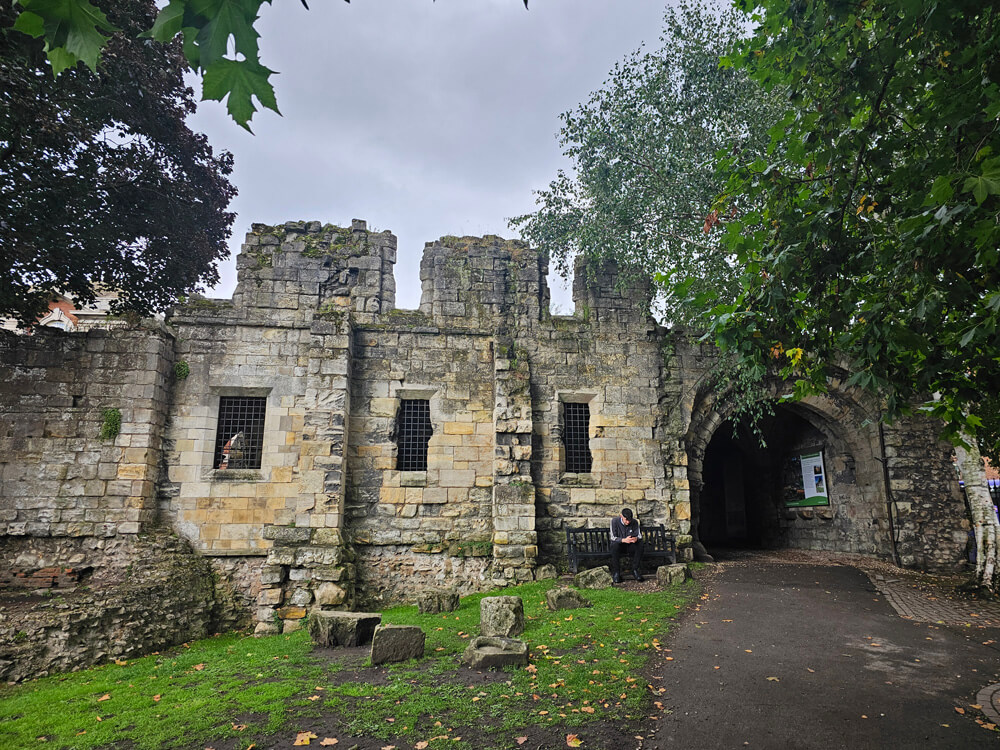
Hidden among the gardens are the remains of St Leonard’s Hospital, once one of the largest hospitals in medieval England.
Founded soon after the Norman Conquest, the hospital cared for hundreds of poor people, elderly residents, travellers and the sick. Unlike modern hospitals, it combined medical care with charity, providing food, shelter and spiritual support.
The hospital was erected on the site of the former Saxon hospital St Peters – founded by King Æthelstan – which was severely damaged in a fire in around 1100. It was refounded as St Leonard’s by King Stephen, and was closely associated with York Minster, sharing the same grounds because it was so large.
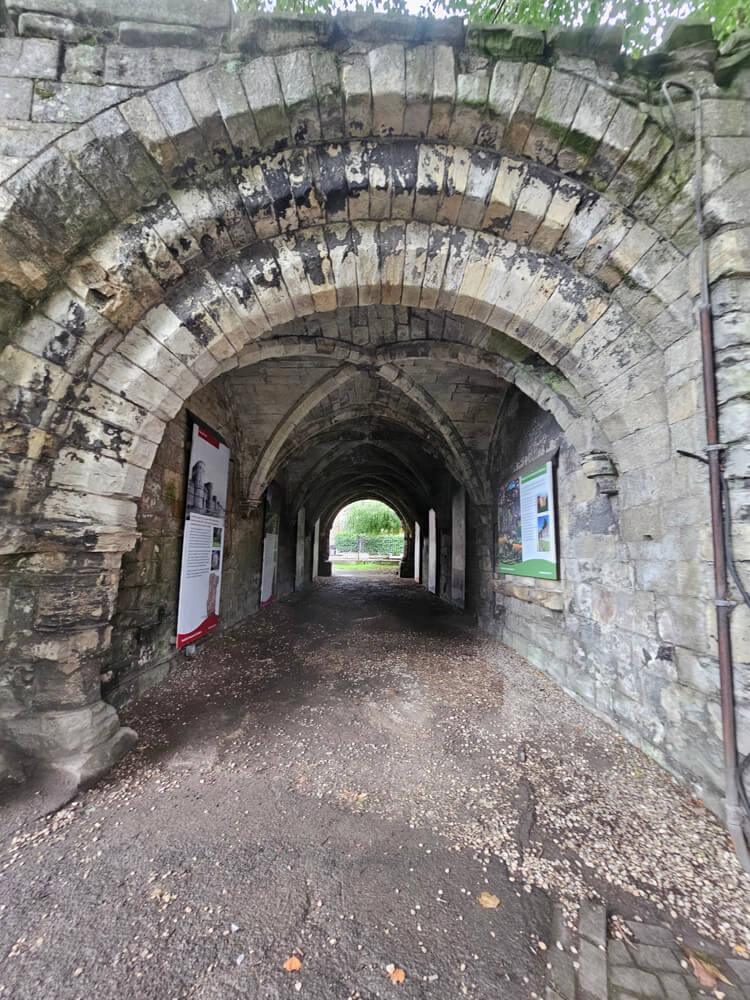
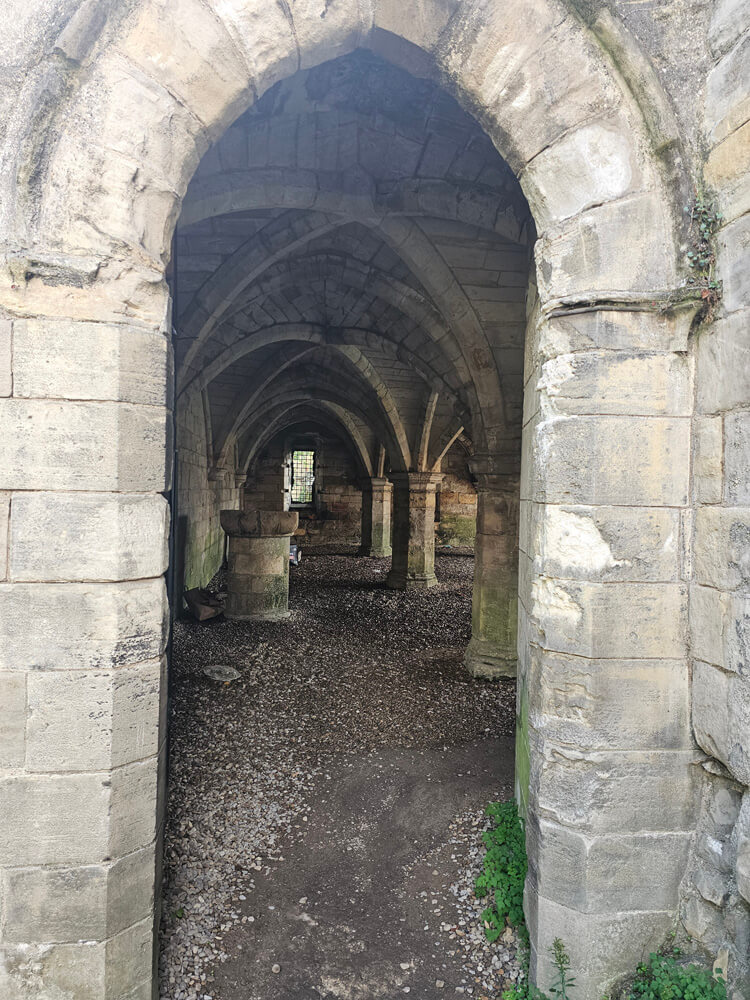
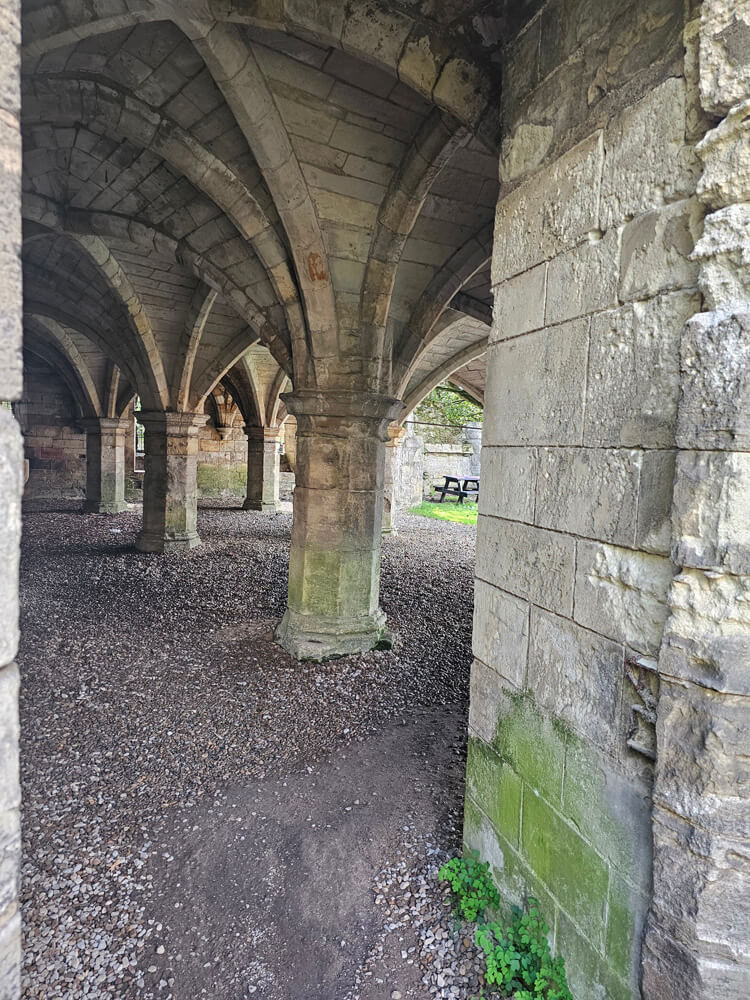
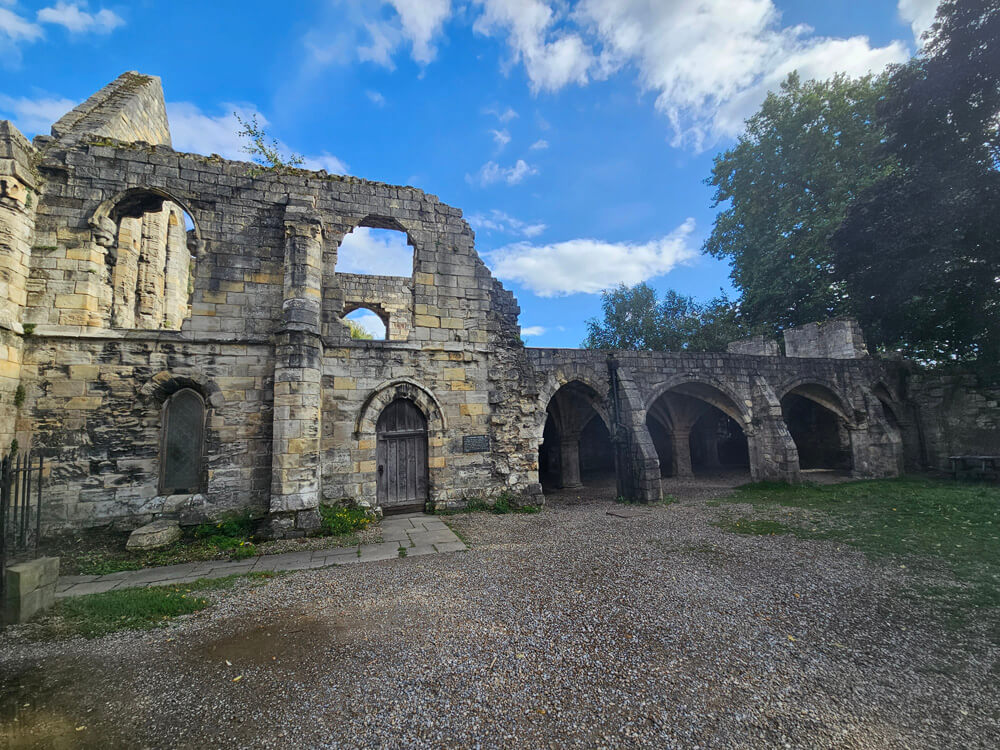
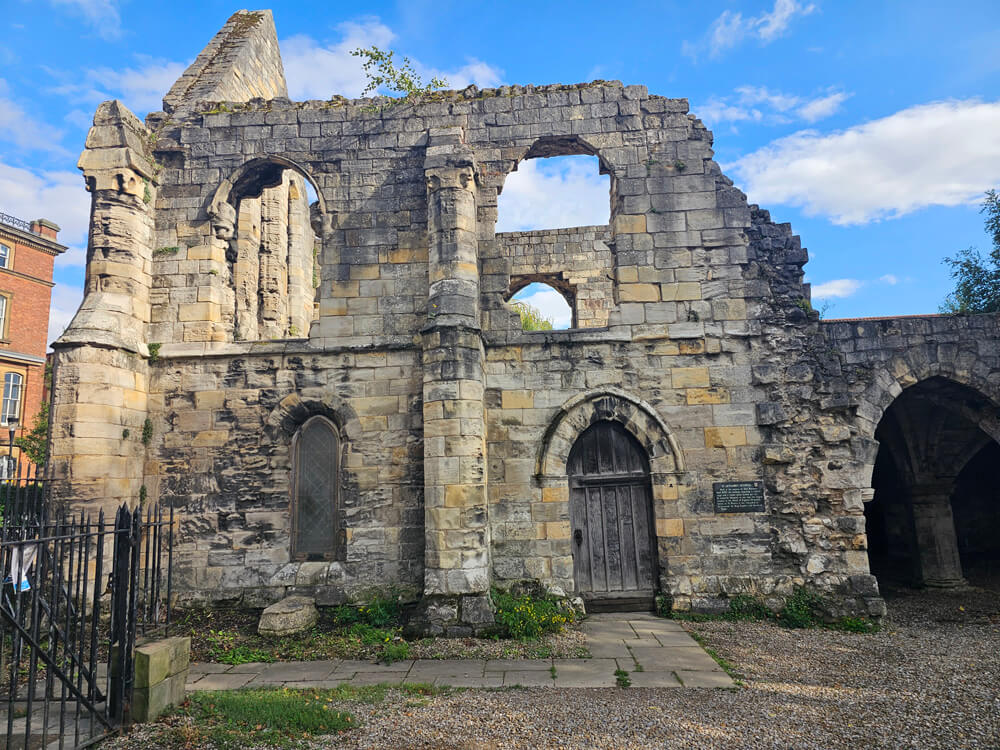
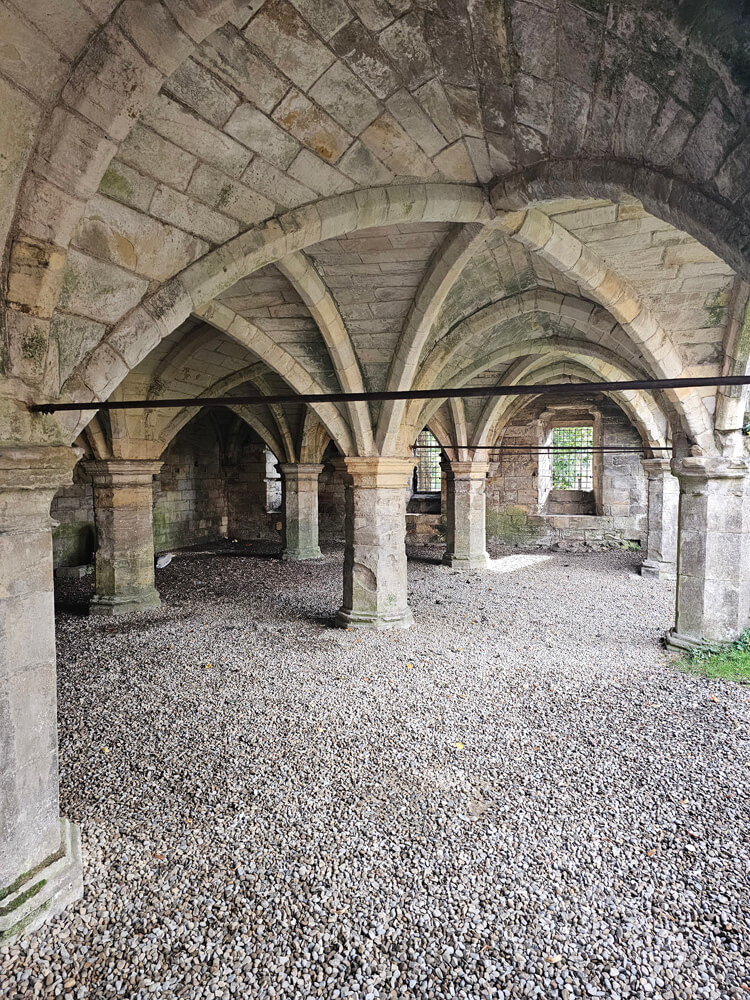
The surviving ruins include sections of the hospital’s infirmary, chapel and vaulted undercroft, revealing the impressive scale of an institution that served York’s population for centuries before also falling victim to the Dissolution in 1540.
The Multangular Tower
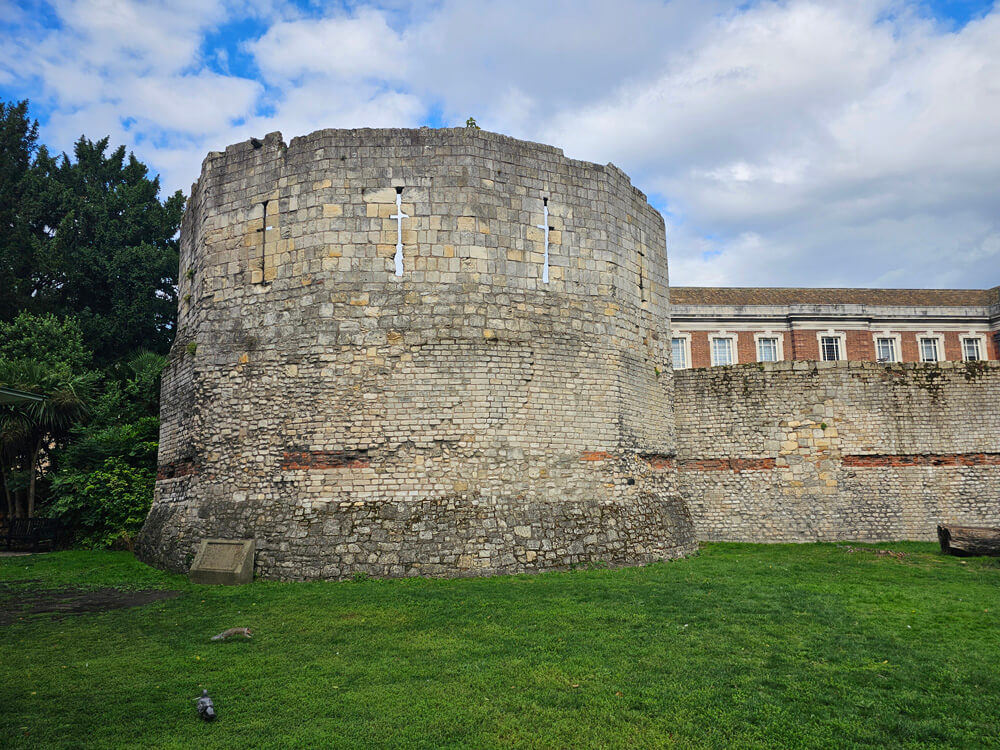
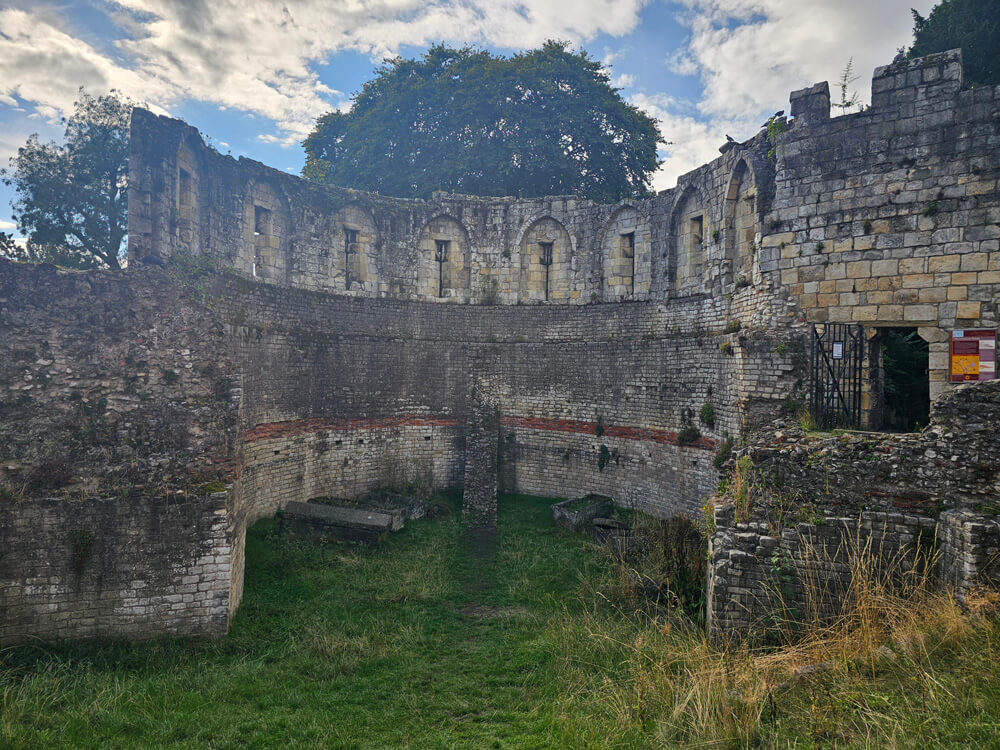
The Multangular Tower is the oldest structure in the gardens, dating from the late Roman period, around the 3rd century AD.
Its distinctive sixteen-sided design made it one of the strongest defensive towers in Roman Britain. Built into York’s fortress walls, it overlooked the River Ouse and helped protect the city’s western approach.
The tower later became incorporated into medieval defences, creating a remarkable monument that combines Roman engineering with later additions.
The Hospitium
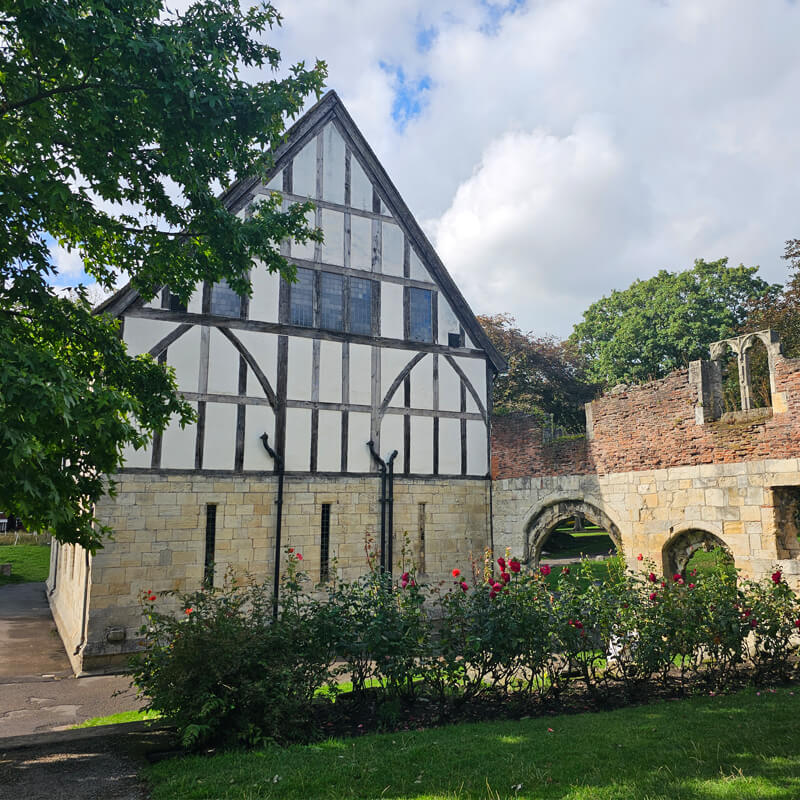
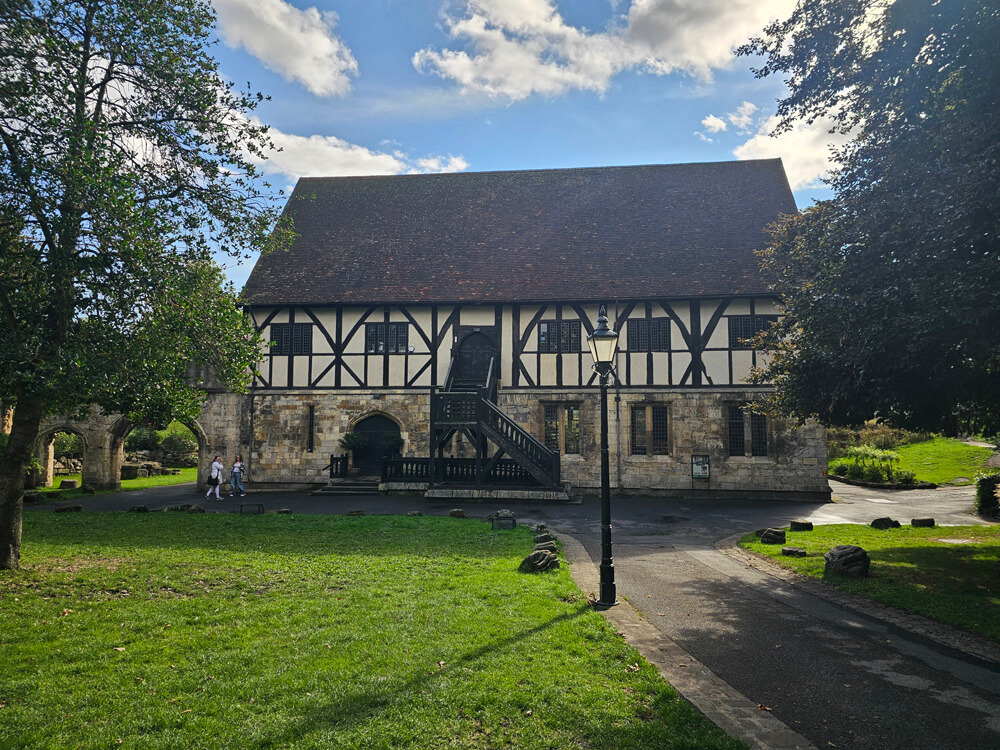
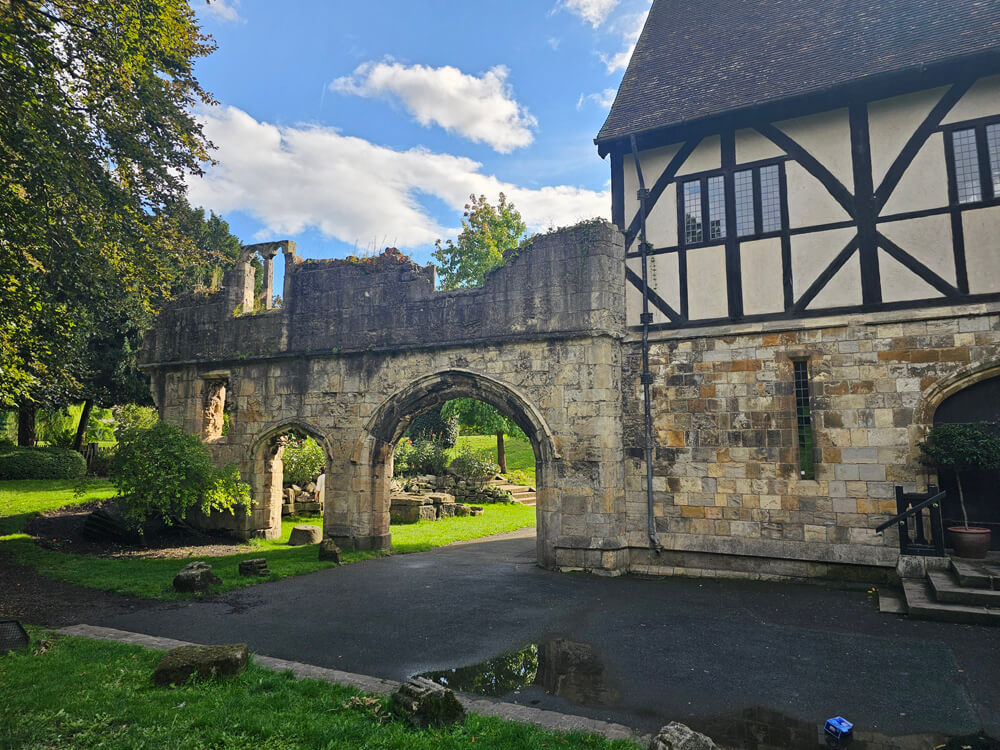
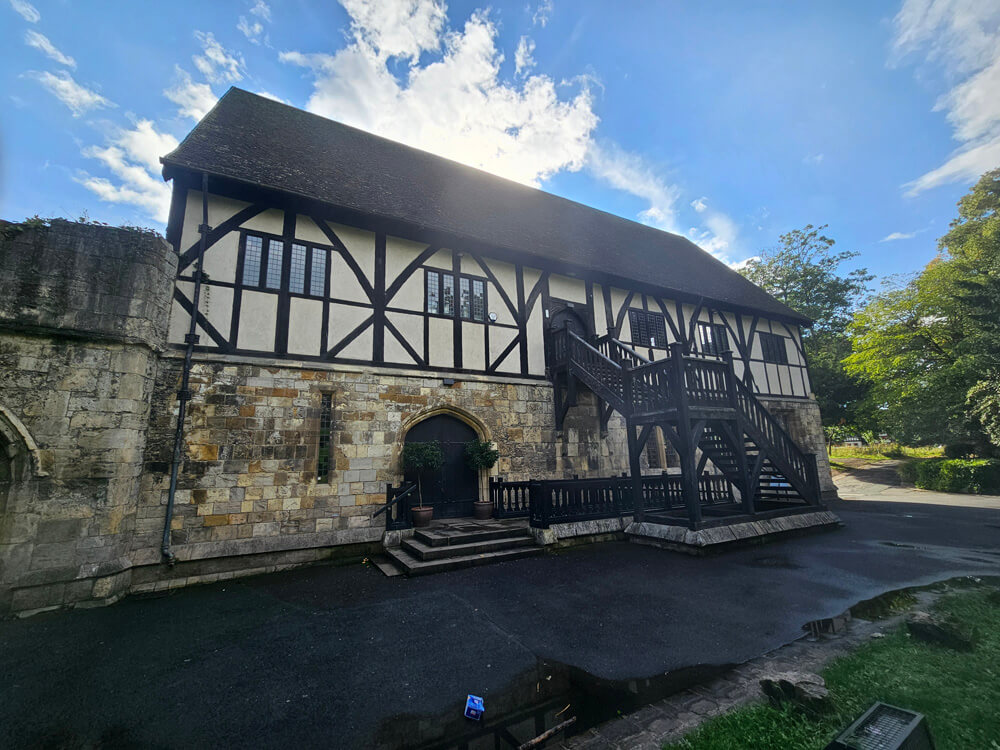
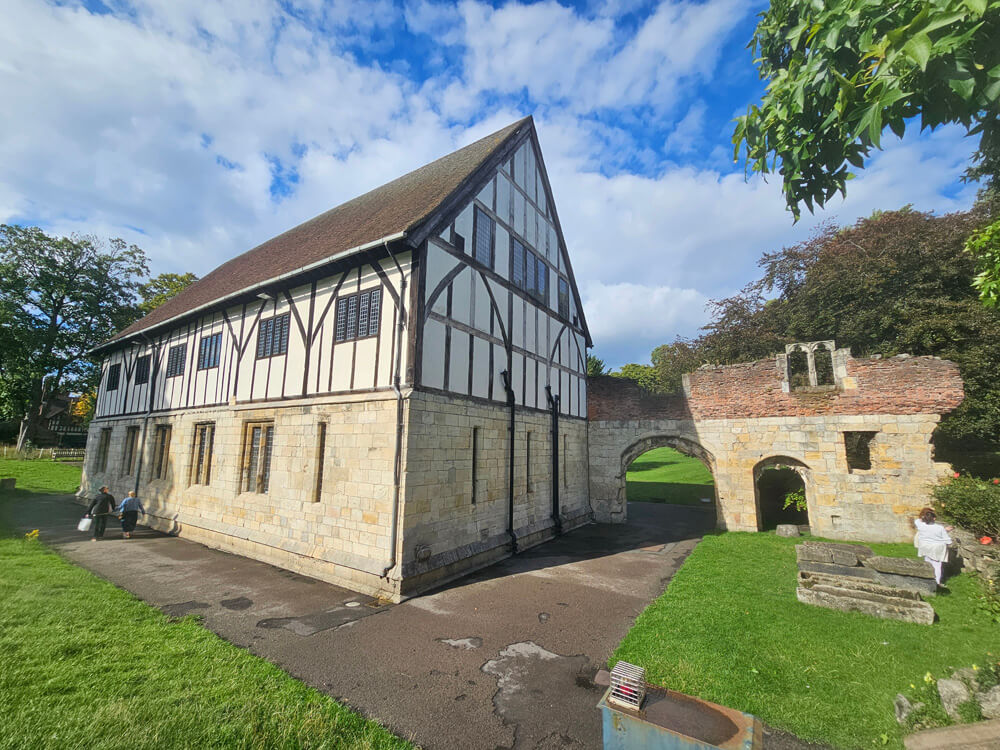
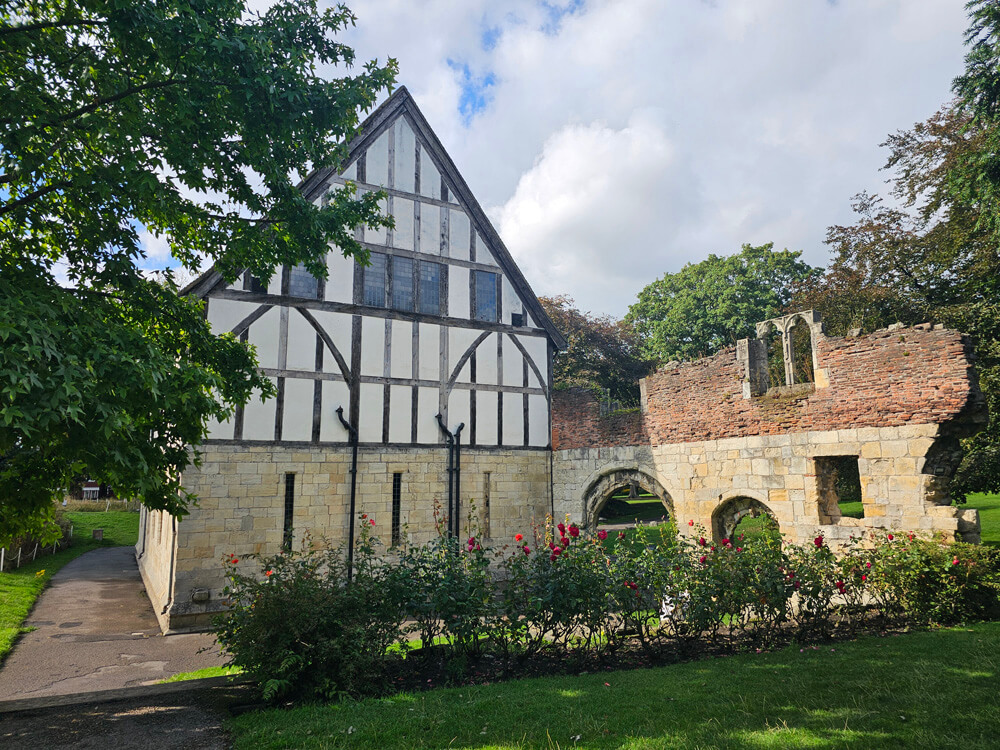
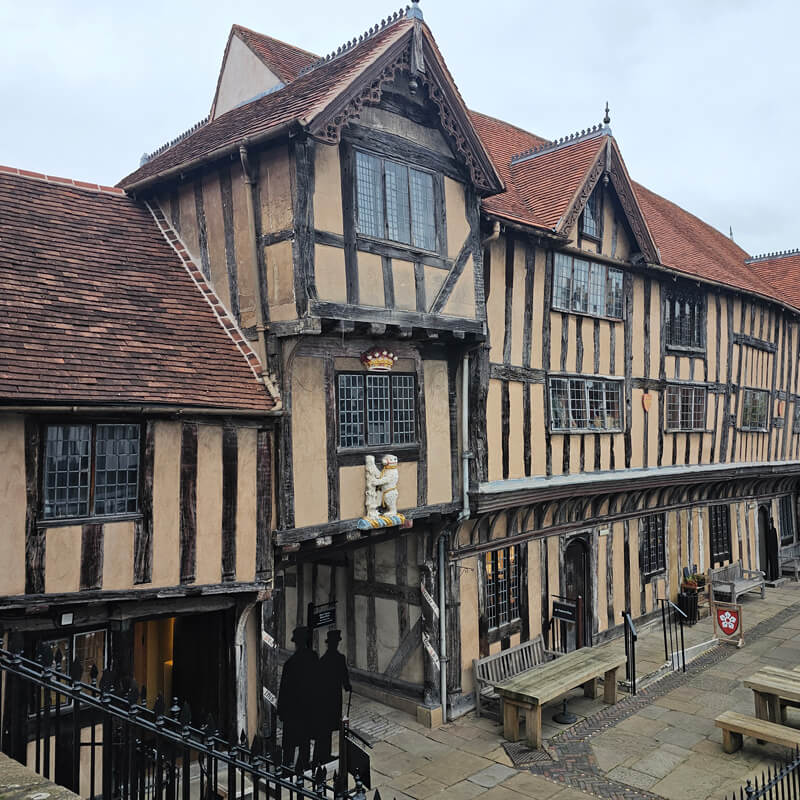
The Hospitium offers one of the best-preserved glimpses of everyday life within St Mary’s Abbey.
Originally built during the 14th century, it served as a guesthouse where important visitors, pilgrims and wealthy benefactors could stay while visiting the monastery. Unlike the abbey church itself, much of the building survived because it continued to be used after the Dissolution of the Monasteries.
Its impressive timber roof, stone walls and medieval windows make it one of York’s finest surviving monastic buildings. Today it hosts weddings, events and exhibitions, giving the building a new role while preserving its historic character.
A Living Historic Landscape
York Museum Gardens brings together layers of history found in few other places in Britain. Roman military architecture, medieval religious ruins and Victorian landscaping exist side by side within a single public park.
Visitors can walk among ancient walls, explore monastic ruins and admire Roman engineering while enjoying one of York’s most tranquil settings. Together, St Mary’s Abbey, St Leonard’s Hospital, the Multangular Tower and the Hospitium tell the story of a site that has served soldiers, monks, patients, pilgrims and modern visitors across nearly two millennia.
Photo Gallery.
Did you enjoy this post?
I hope you found this post useful. I put a great deal of time and effort in to building, maintaining and populating the website. If you like, you could say a small thank you by buying me a coffee. You don't have to, but it would be nice :)
Buy me a coffee
Stay up to Date
Follow me on my journey and get notified whenever a new post is published by following Kings & Castles on Facebook.
Follow MeExplore The Map
Discover the hundreds of castles, churches, monasteries, cathedrals and other historic locations that I've personally visited across England and Wales. Search by location, explore nearby sites and plan your next historical adventure.
Share: