The Medieval Town of Denbigh
Denbigh is a true medieval town and one of the most historic towns in Wales. Established in the 11th century, it is packed with medieval survivals, including a castle, chapel, friary, and some of the best-preserved and most complete medieval town walls in Britain.
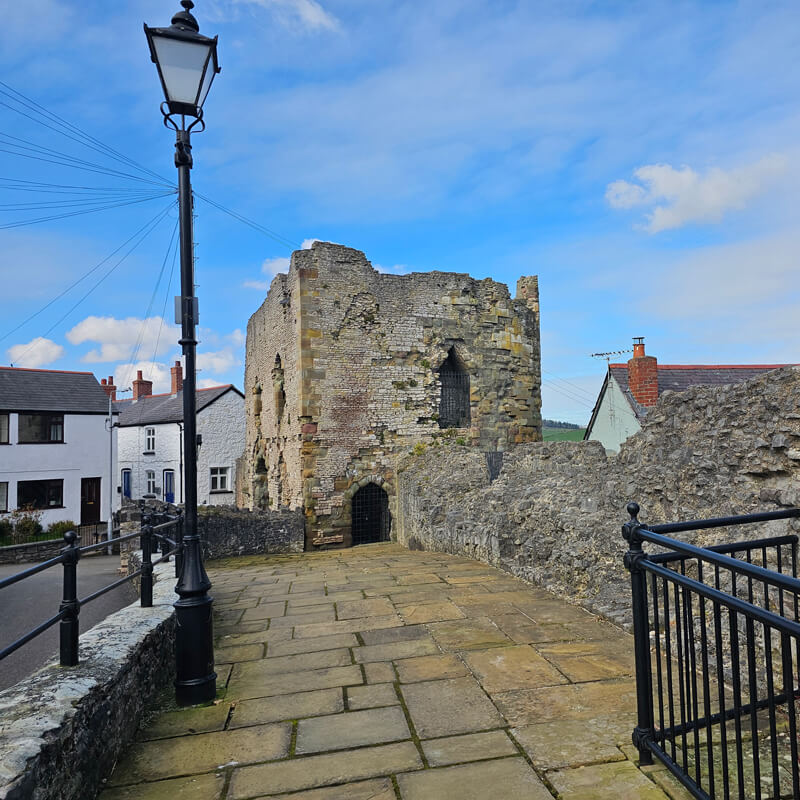
The History of Denbigh
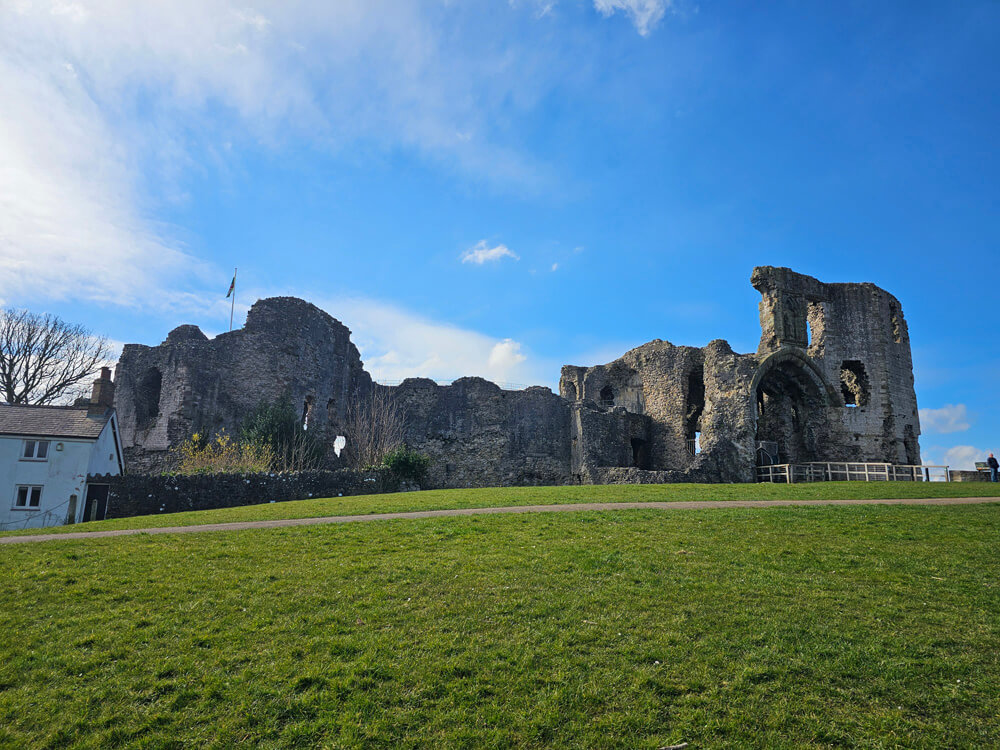
Denbigh is a historic market town in Denbighshire in north-west Wales, situated just west of the River Clwyd, about 10 miles south of Rhyl. It was the original county town of the historic county of Denbighshire created in 1536. Its Welsh name, Dinbych, means ‘little fortress’, and it seems there has been a fortress atop the hill since at least the Iron Age, where the remains of historic Denbigh Castle now dominate the skyline.
The border town was originally established in the 11th century, and for the next 200 years it grew steadily in importance, becoming a royal residence of Welsh Princes and a focal point for consolidation of Welsh power in the region.
In the 1270s it was held by Dafydd ap Gruffudd, the last native prince of Gwynedd and brother of the Prince of Wales, Llywelyn ap Gruffudd (Llywelyn the Last). The treacherous Dafydd sided with Edward I and the English against his brother Llywelyn, but in 1282 he rebelled against the English king.
Provoked and angered by Dafydd’s treachery, Edward I mounted a full-scale invasion of north Wales in 1282. Edward’s conquest marked a significant turning point in Denbigh’s history, as he conquered the town and it fell under English rule. Edward created a new English borough and granted the lordship of Denbigh to one of his chief commanders, Henry de Lacy, Earl of Lincoln. From that time, the medieval town developed as the building of the new castle was completed, protected by the castle and contained within defensive town walls.
These fortifications became symbols of English dominance, and by the start of the 14th century Edward’s fortified walled town was complete with a formidable castle, a chapel (St Hilary’s), and town walls stretching nearly two thirds of a mile long, filled with English settlers while the oppressed and resentful Welsh were kept outside the walls.
In the 15th and 16th centuries Denbigh was one of the most important towns in Wales. During the Wars of the Roses (1455–1485), Denbigh was held by the powerful Mortimer family for the Yorkist cause until it was taken by Jasper Tudor, half-brother of Henry VI and uncle of future king Henry VII, for the Lancastrian cause. Jasper later lost Denbigh and attempted to retake it, but he failed to do so, and instead set the walled town of Denbigh alight.
The town subsequently moved to a site immediately outside the town walls, to the hilltop around the present market place and later extended in a grid pattern. The old depopulated town within the walls began to serve as a vast outer bailey of the castle.
In 1536 the new county of Denbighshire was created under the Laws in Wales Act 1535, and Denbigh was declared to be its county town, becoming one of the four administrative capitals of Wales, a powerful indication of its importance. In 1563 Queen Elizabeth I’s favourite, Robert Dudley, Earl of Leicester was granted the castle and Lordship of Denbigh, essentially putting him in charge of North Wales at the time. He was responsible for commissioning the Shire Hall, which now houses the Town Library, and Leicester’s Church, which is now a ruinous unfinished project.
The next major event in the town’s history was in 1643 when Denbigh became a refuge for a Royalist garrison during the English Civil War. King Charles I stayed at Denbigh for three days in 1645 following his defeat at the battles of Naseby and Rowton Heath. Surrendering to Parliament in 1646, the castle and town walls eventually fell into ruin.
Today, Denbigh retains many of its medieval structures, including Denbigh Castle, St Hilary’s chapel, Denbigh Friary, Leicester’s Church, Burgess Gate, and some of the best-preserved and most complete medieval town walls in Britain.
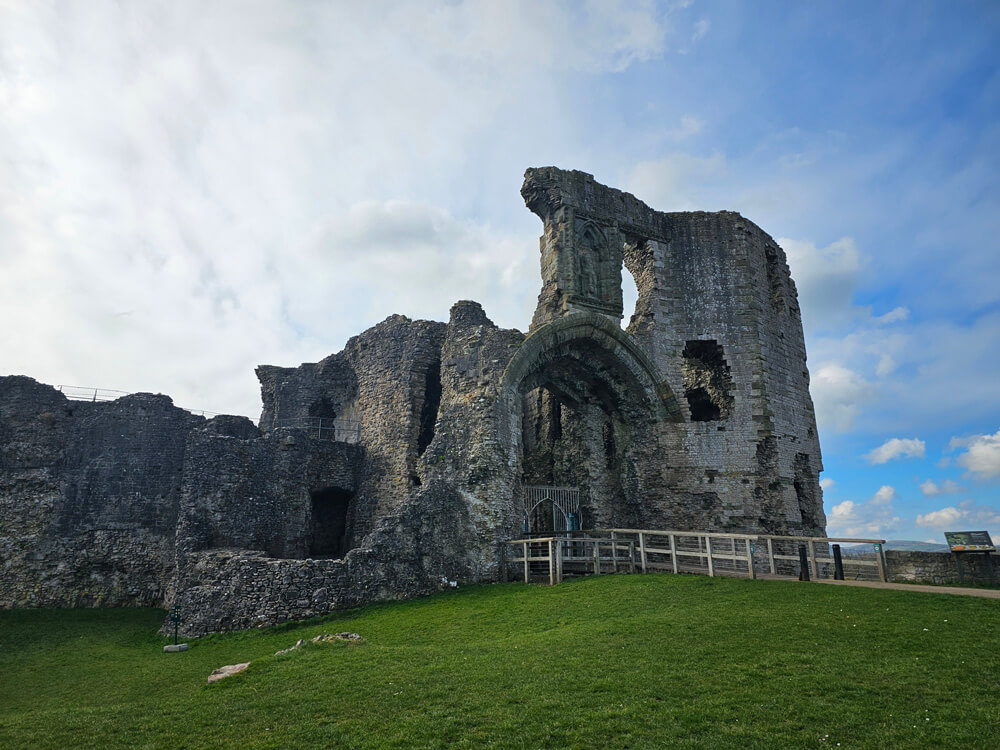
Denbigh Castle
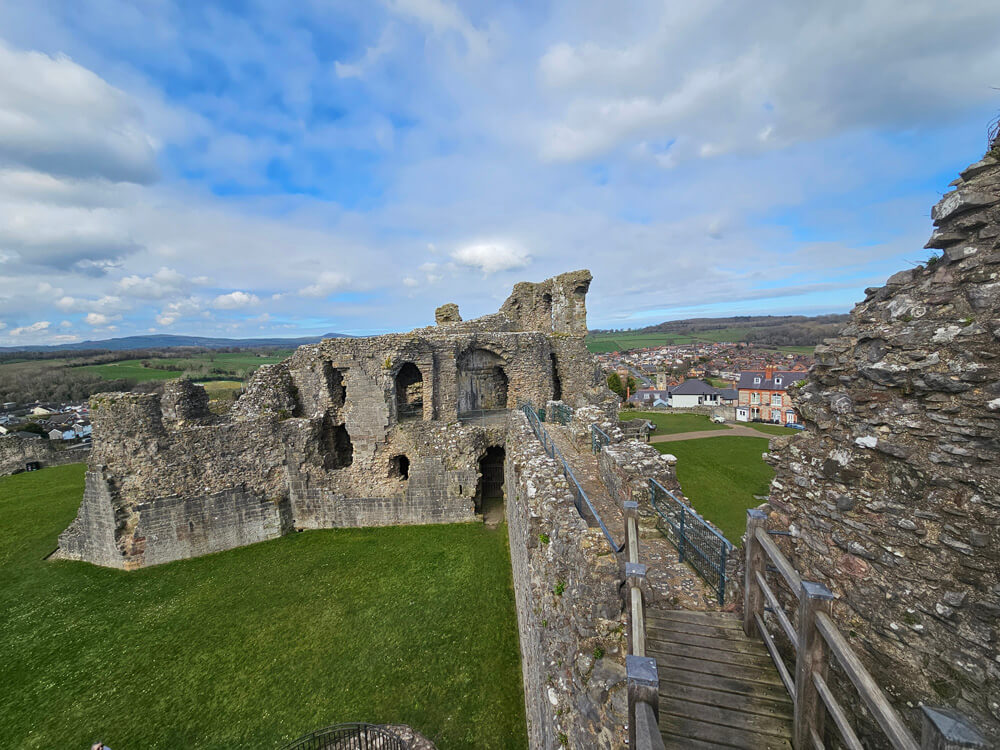
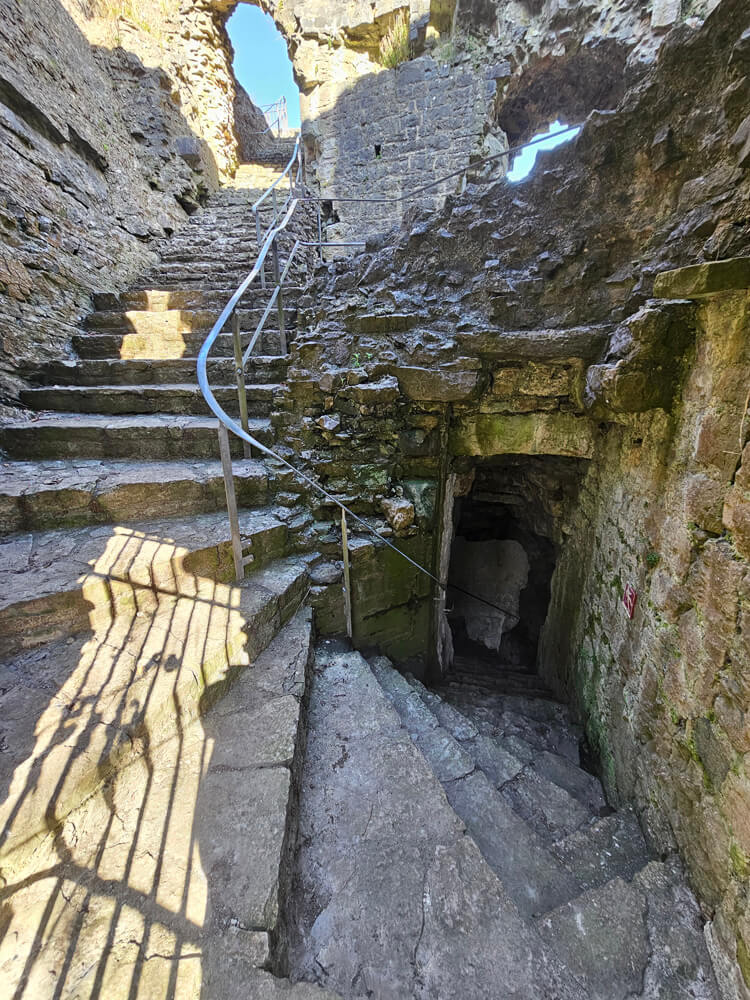
Built at the end of the 13th century, Denbigh Castle remains an impressive sight with lots still to explore. Entering over the drawbridge and through the triple-towered gatehouse, the vast remains of the curtain wall can be explored as well as a number of the castle’s intriguing features, including its 50ft-deep well and postern gate. You can also climb to the top of the wall and walk around a large section of the parapets.
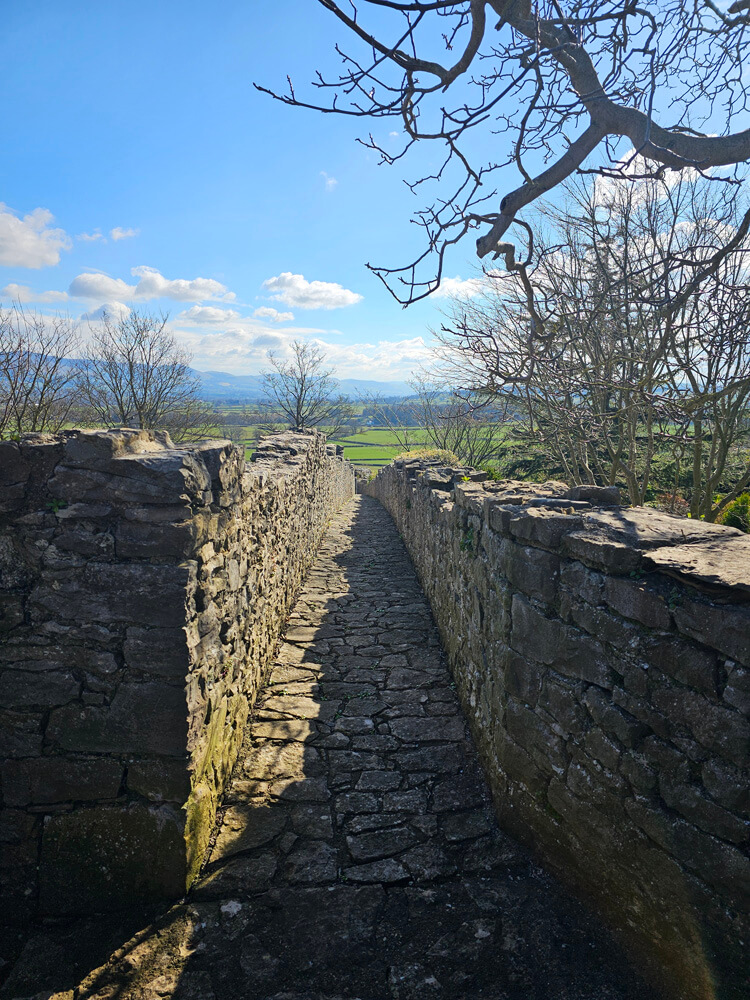
Denbigh Town Walls
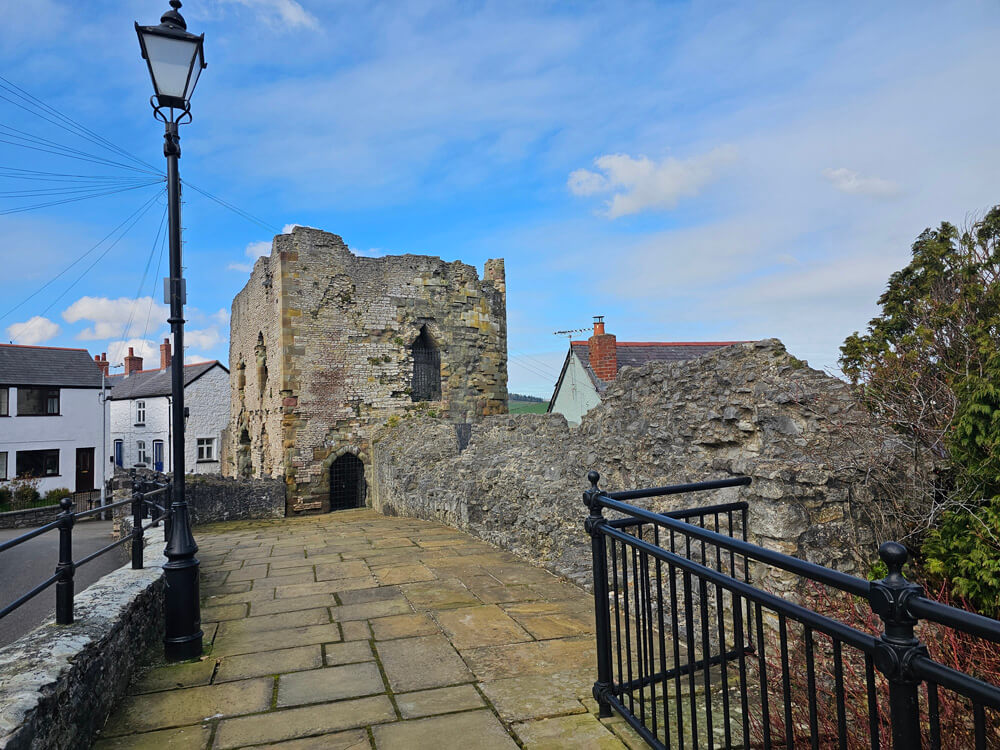
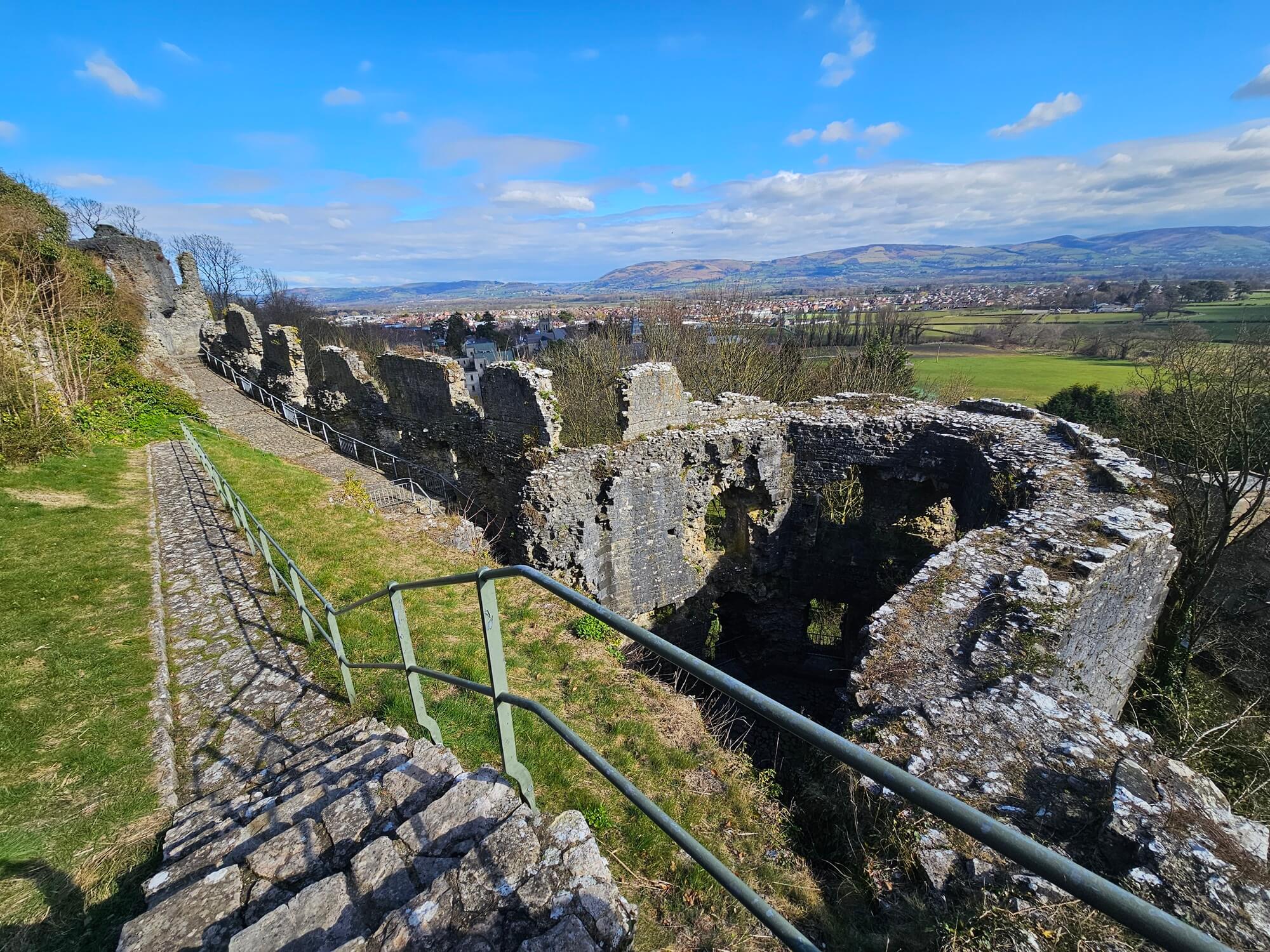
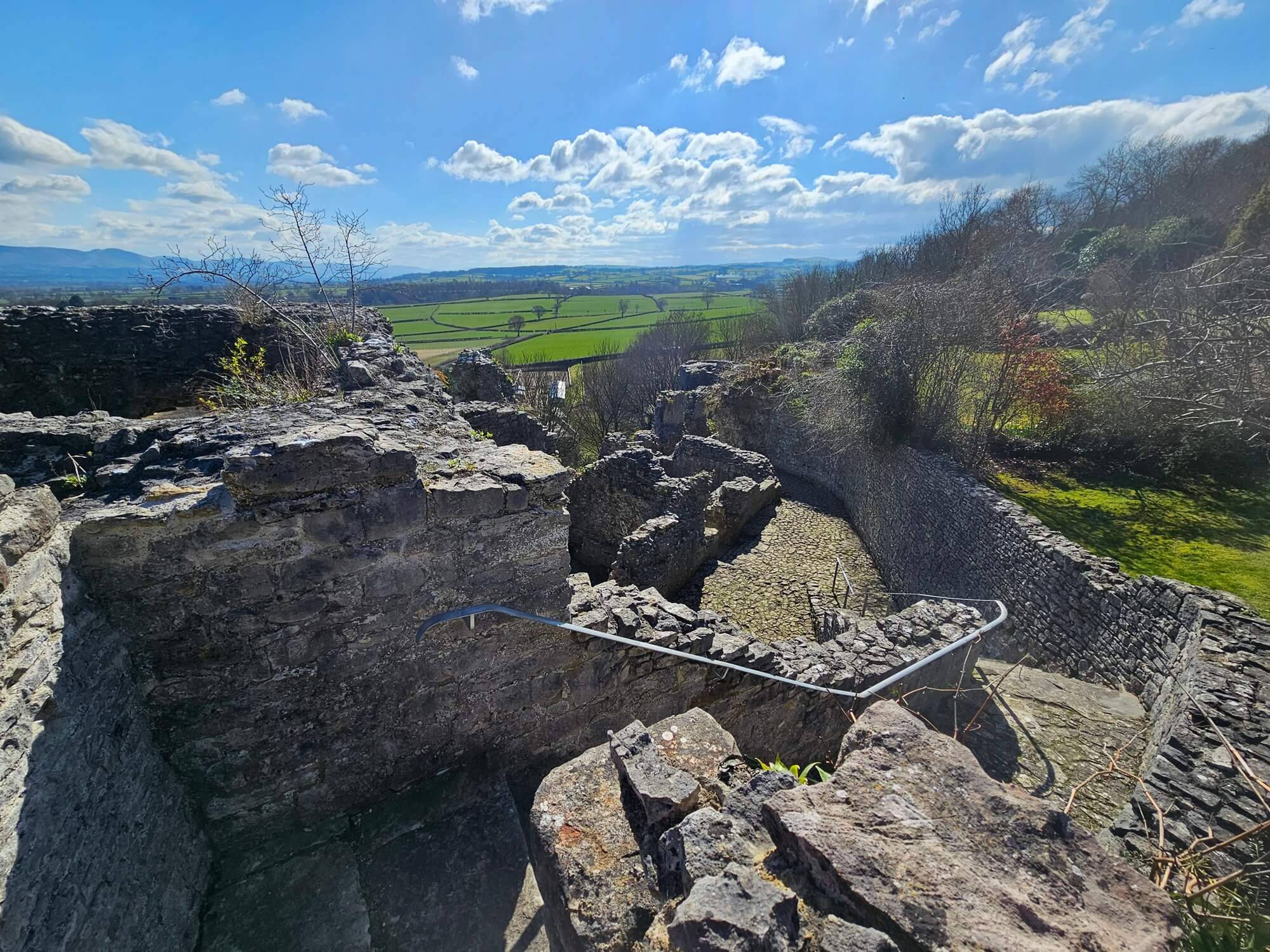
Long sections of Denbigh’s defensive town walls still remain, almost two thirds of a mile long which start and finish at the castle. They were built towards the end of the 13th century to encircle Edward I’s new castle and new English borough. Access to the wall-walk is via a locked gate beside the ruins of Leicester’s Church just past Hilary’s Chapel. A key can be obtained at the castle’s reception.
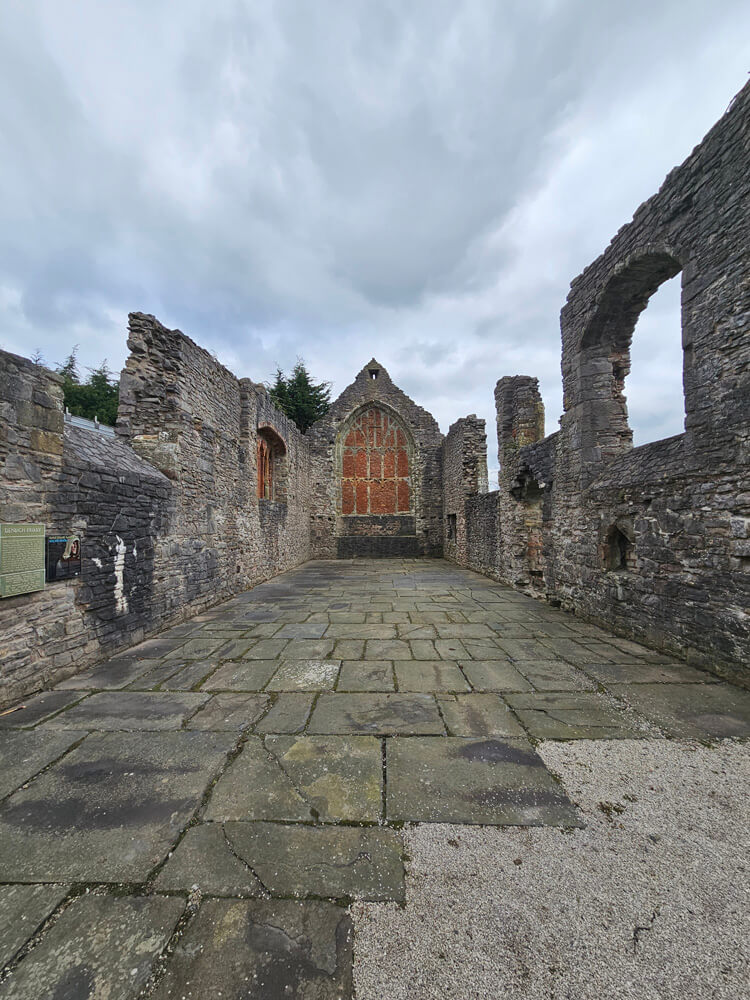
Denbigh Friary
Denbigh Friary is a ruined monastic religious house located approximately 1 mile east of Denbigh. Founded by Carmelites, also known as White Friars, in the late 13th century, it was the only Carmelite house in Wales. The friary was suppressed under the orders of Henry VIII in 1538 during the Dissolution of the Monasteries. Part of the monastic church, built around 1300, is all that remains.
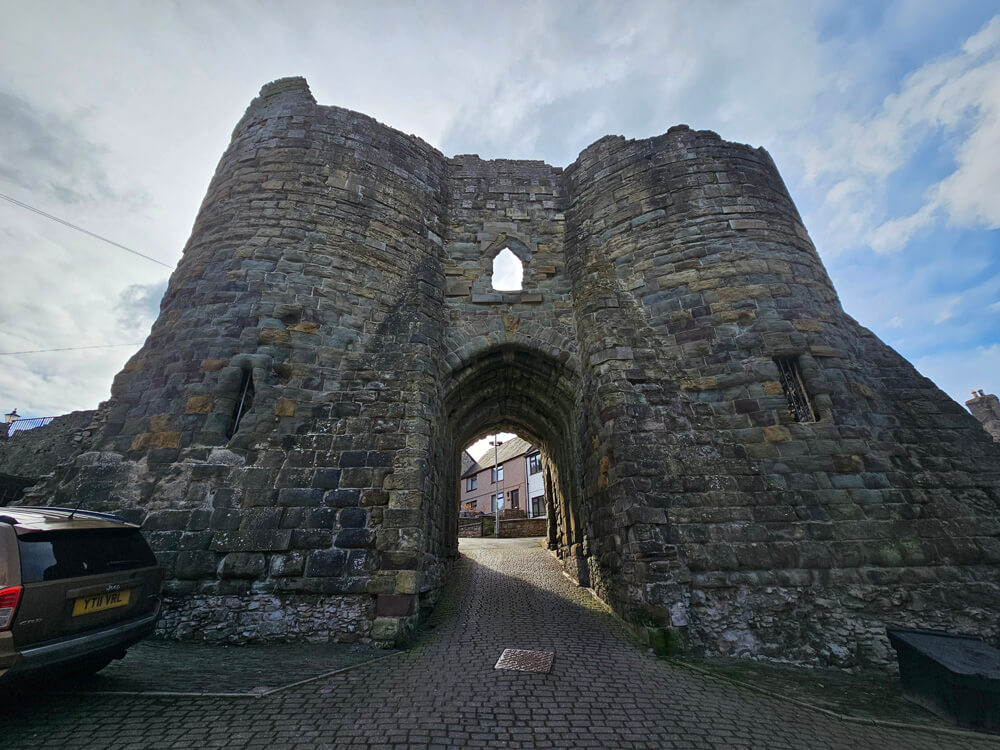
Burgess Gate
Burgess Gate was built as part of the outer defences of Denbigh Castle between 1282 and 1294. Located at the northern section of the medieval town walls, it was one of the two principal entrances into the walled town. The gatehouse is still largely intact and consists of a vaulted gate passage flanked by rounded towers. The ground floor has single chambers either side of the gate passage which was once fitted with a portcullis.
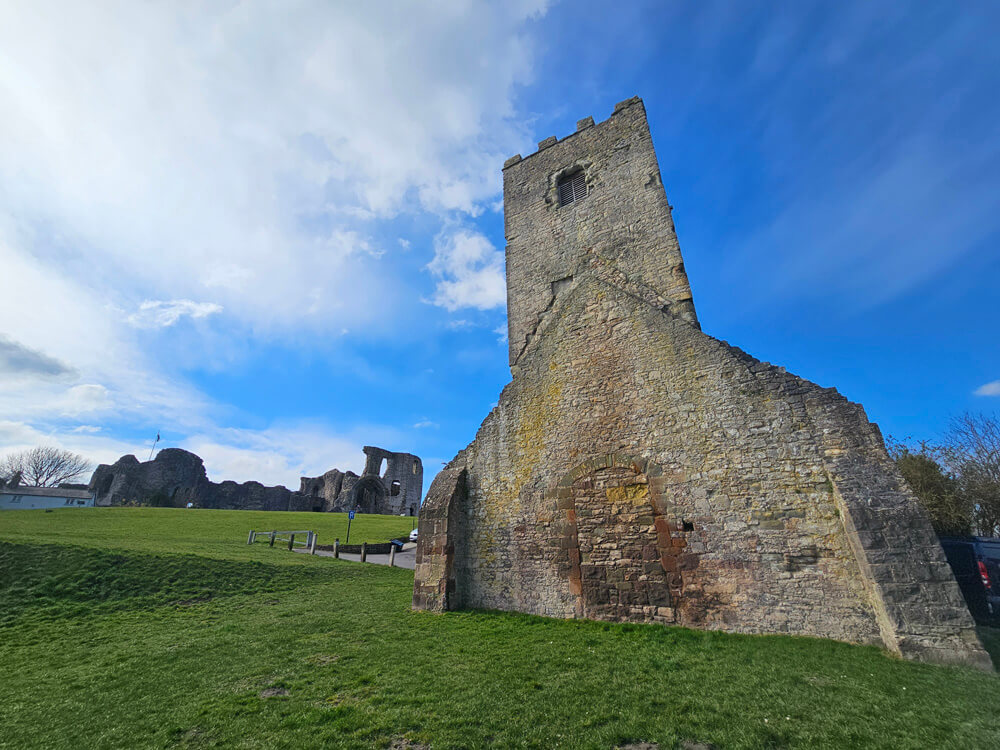
St Hilary’s Chapel
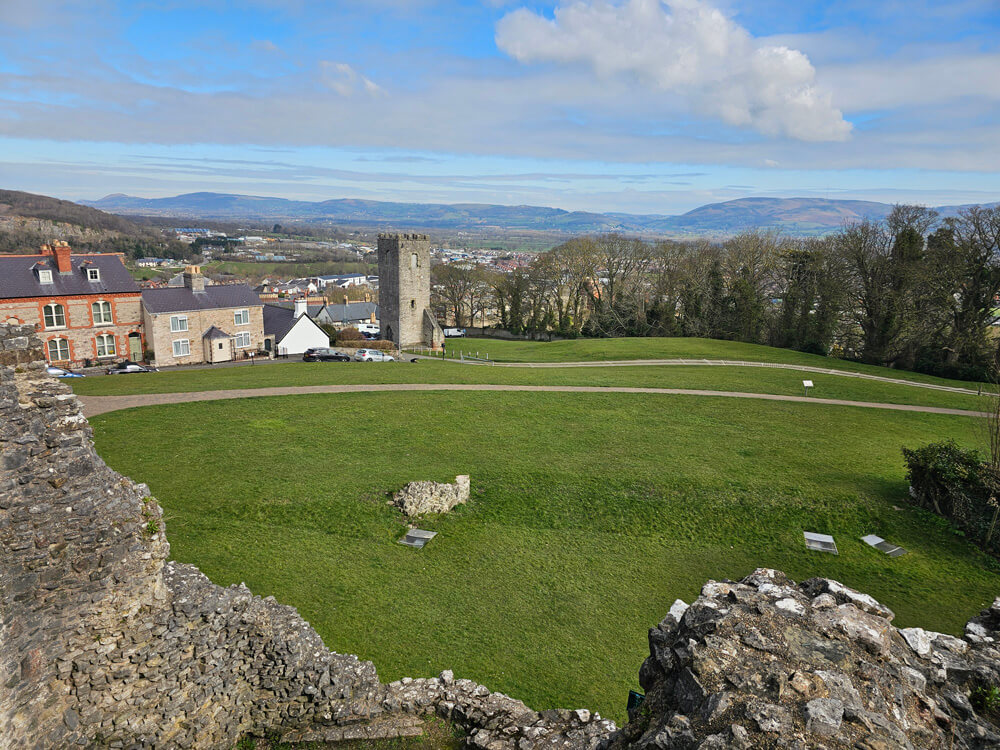
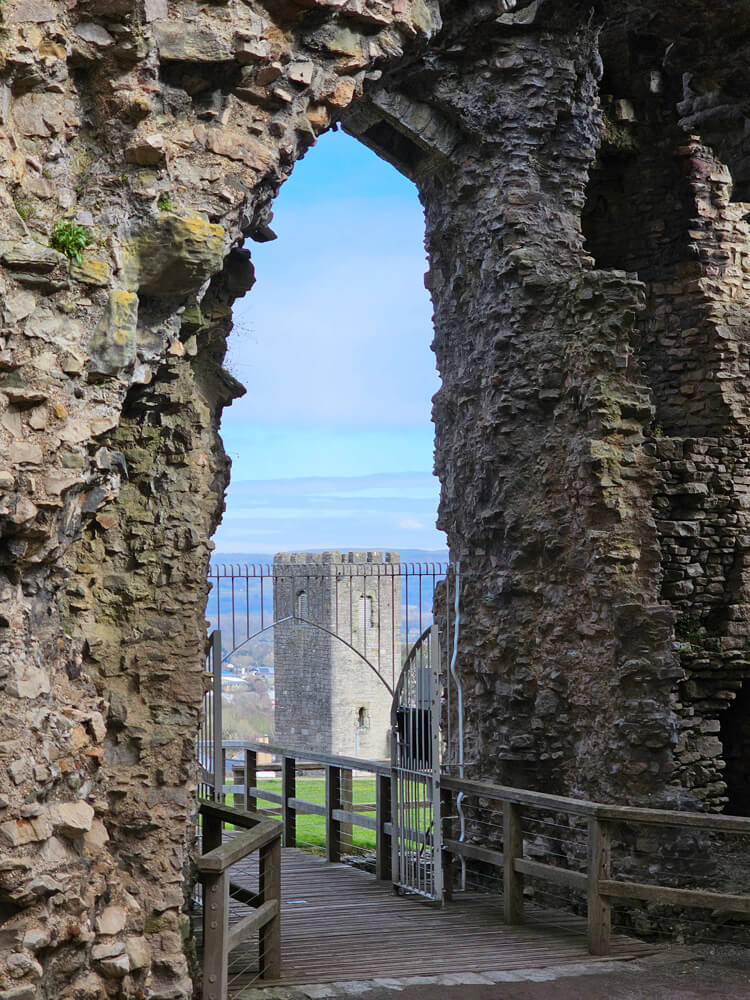
St Hilary’s Chapel was built around 1300 to bring spiritual comfort inside the town walls and complete the self-contained English borough. St Hilary’s was a chapel-of-ease, meaning a chapel easier to get to than the main church, convenient in times of trouble. The town soon outgrew its walls and by 1334 St Hilary’s was known as ‘the chapel inside the walls’. By the 19th century it was too small for the growing town and it was abandoned in favour of a new church. All but the tower was demolished in 1923.
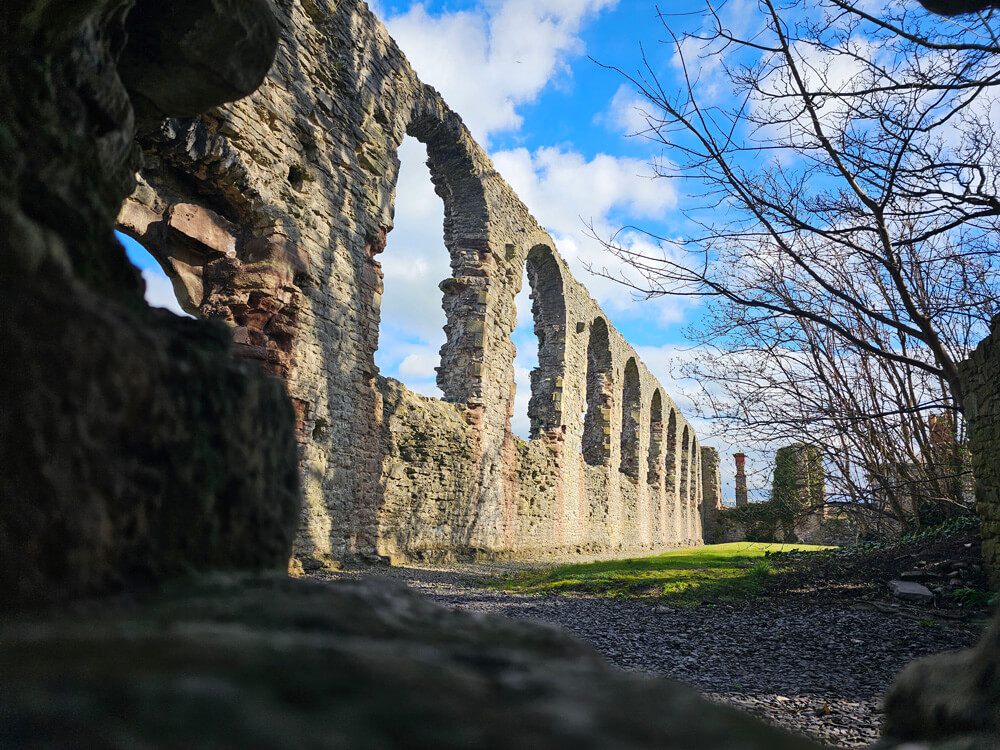
Leicester’s Church
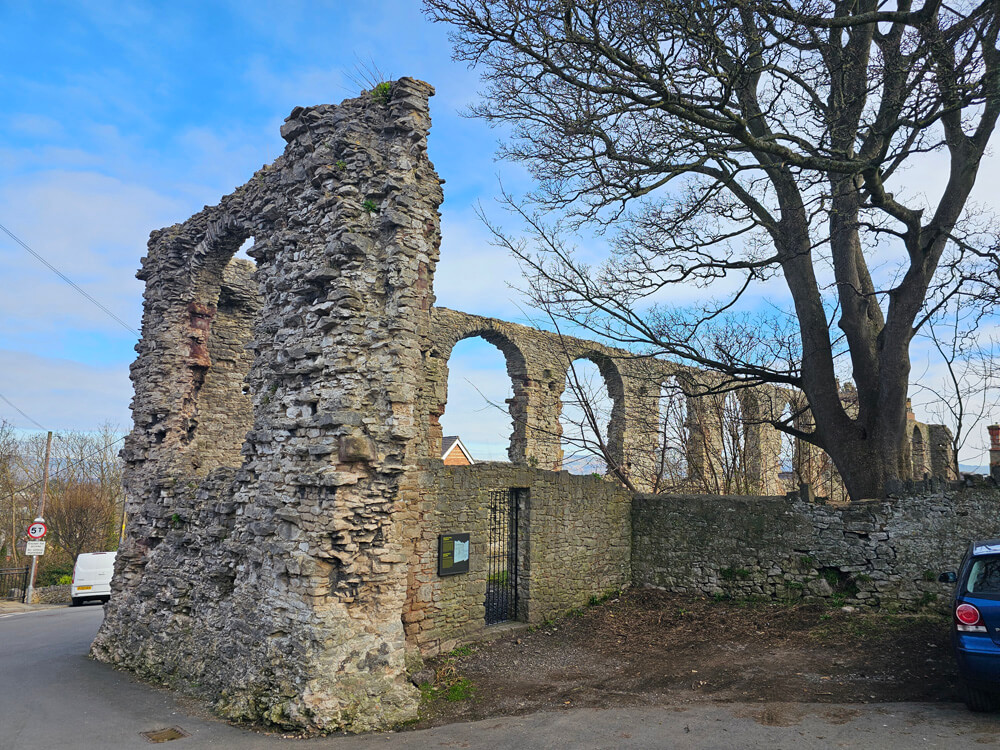
Leicester’s Church, originally known as St David’s Church, is the ruins of a late-16th century church that was never completed. Work began in 1578 by Robert Dudley, Earl of Leicester and Queen Elizabeth I’s favourite, intended to be a large Cathedral Church and the grandest of the period. Work only progressed as far as window height due to lack of finances in 1584, and when Dudley died in 1588 the project was abandoned completely, leaving his ambitious project forever unfinished.
Photo Gallery.
Did you enjoy this post?
I hope you found this post useful. I put a great deal of time and effort in to building, maintaining and populating the website. If you like, you could say a small thank you by buying me a coffee. You don't have to, but it would be nice :)
Buy me a coffee
Stay up to Date
Follow me on my journey and get notified whenever a new post is published by following Kings & Castles on Facebook.
Follow MeExplore The Map
Discover the hundreds of castles, churches, monasteries, cathedrals and other historic locations that I've personally visited across England and Wales. Search by location, explore nearby sites and plan your next historical adventure.
Share: