The Historic Town of Monmouth
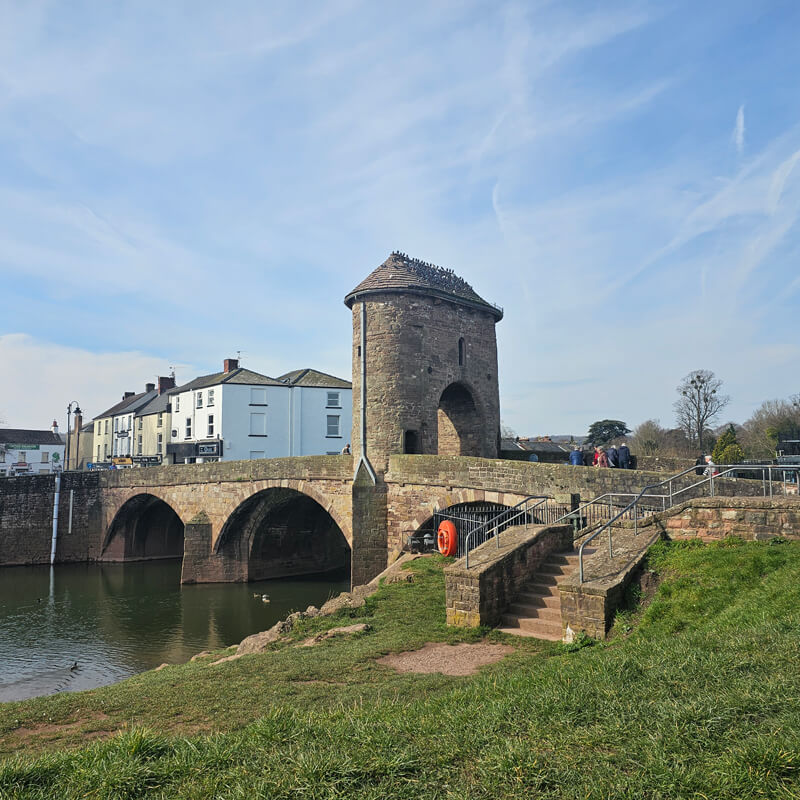
The historic market town of Monmouth is the county town of Monmouthshire in south-east Wales, situated where the River Monnow joins the River Wye, just a few miles from the Wales–England border. It is well known for its iconic 13th-century gatehouse bridge, and has close connections to King Henry V and Geoffrey of Monmouth.
Etymology
The name Monmouth is an English contraction of ‘Monnow-mouth’. The town is located where the River Monnow meets the River Wye, so the mouth of the Monnow – Monnow mouth – Monmouth. The Welsh name for the river is Mynwy, and was later anglicised as Monnow. The town was originally known in Welsh as Abermynwy (mouth of the Monnow), and was later replaced by Trefynwy (town of the Monnow).
Roman Monmouth
The Romans built many forts in Monmouthshire, including those at Gobannium (Abergavenny), Burrium (Usk), Venta Silurum (Caerwent) and Blestium (Monmouth), all established in the 1st century AD. Monmouth was the site of a small Roman fort called Blestium, one of a network of military bases established on the frontiers of the Roman occupation. This was connected by road to the larger Roman towns at Glevum (Gloucester) and Isca Augusta (Caerleon).
Archaeological evidence has shown that Monmouth had one of the earliest Roman garrisons in South Wales and a wealth of artefacts including Roman coins, pottery, glass and armour have been discovered in the area. There is also evidence of a Celtic settlement, largely destroyed during the Norman occupation and the development of the modern town plan.
Medieval Monmouth
Following the Norman conquest of England in 1066, Monmouth was identified as being of strategic importance, owing to its location on the Welsh-English border. The Earldom of Hereford was given to William FitzOsbern, a cousin of William the Conqueror and one of his most trusted barons, and Monmouth was recorded in the 1086 Domesday Book as part of Herefordshire.
William FitzOsbern was responsible for defending the area against the Welsh, and he began work on Monmouth Castle around 1066/1067, at which time would have been a simple earth and timber ringwork castle, around which the town developed. The development of the town was further encouraged by the establishment of a Benedictine priory towards the end of the 11th century.
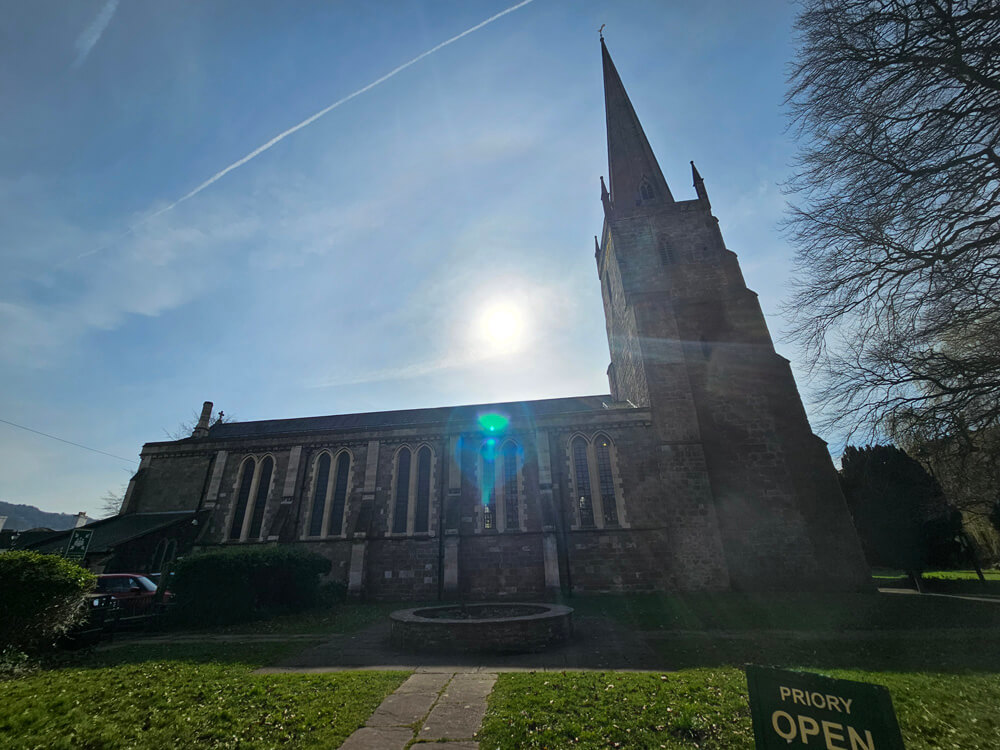
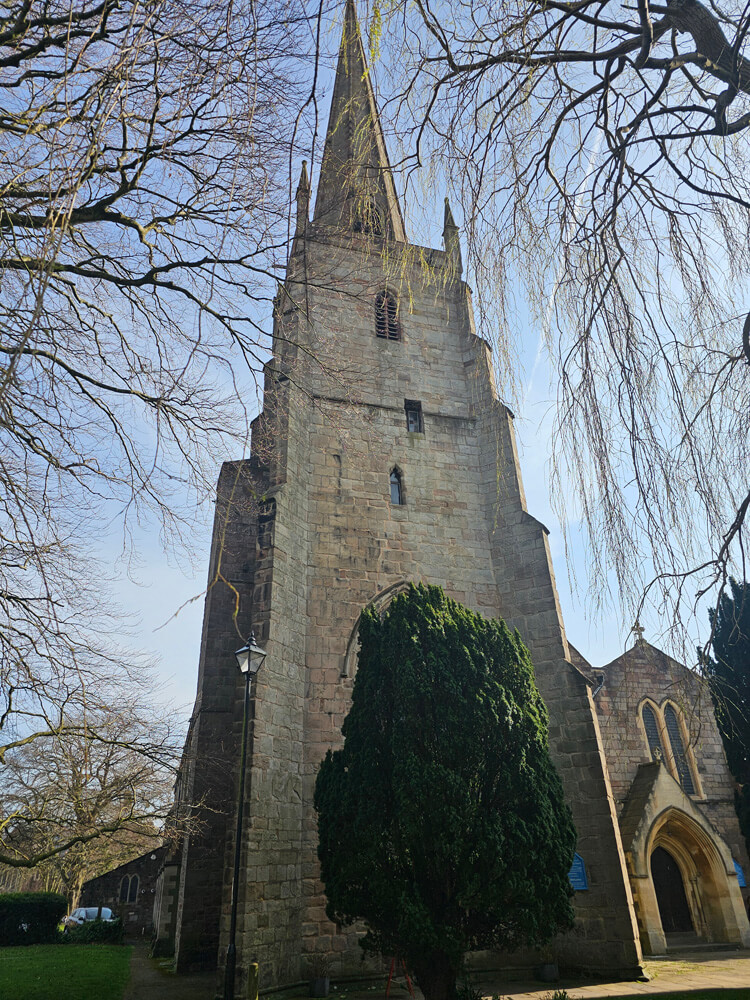
Monmouth Priory may have once been the residence of the monk Geoffrey of Monmouth, who was born in Monmouth at the end of the 11th century and is best known for writing the chronicle Historia Regum Britanniae (History of the Kings of Britain). The monks held extensive lands and buildings and the priory dominated the life of the community. In the 14th century, when the Black Death caused great upheaval, the local people flocked to the church for help, and the priory church itself became a primary source of infection and the monks were greatly reduced in number.
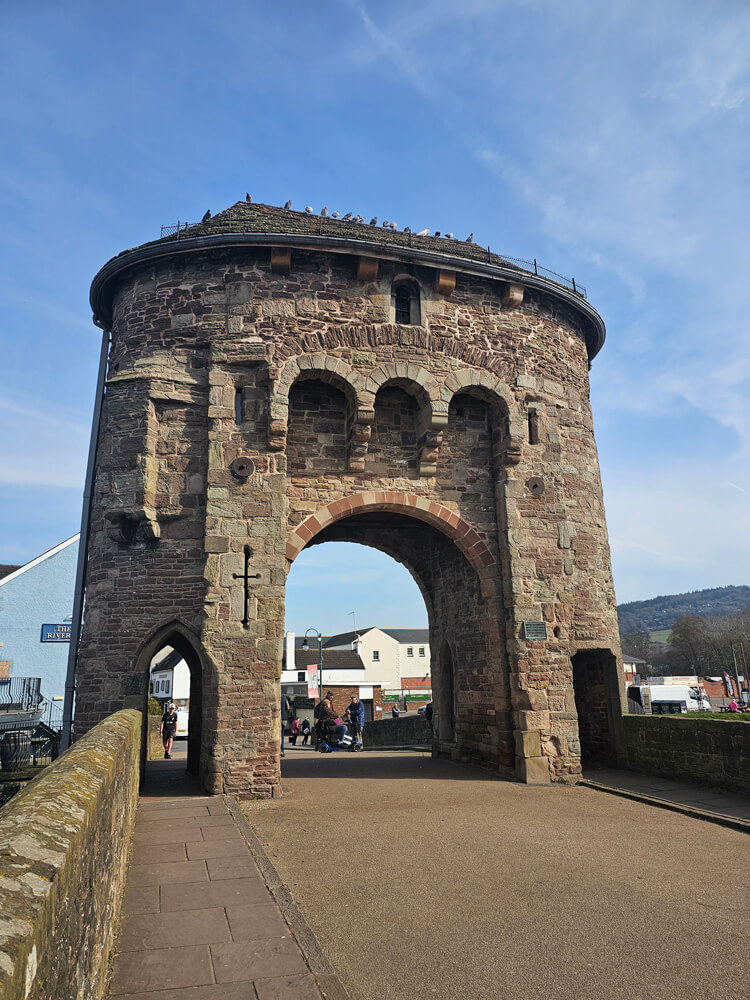
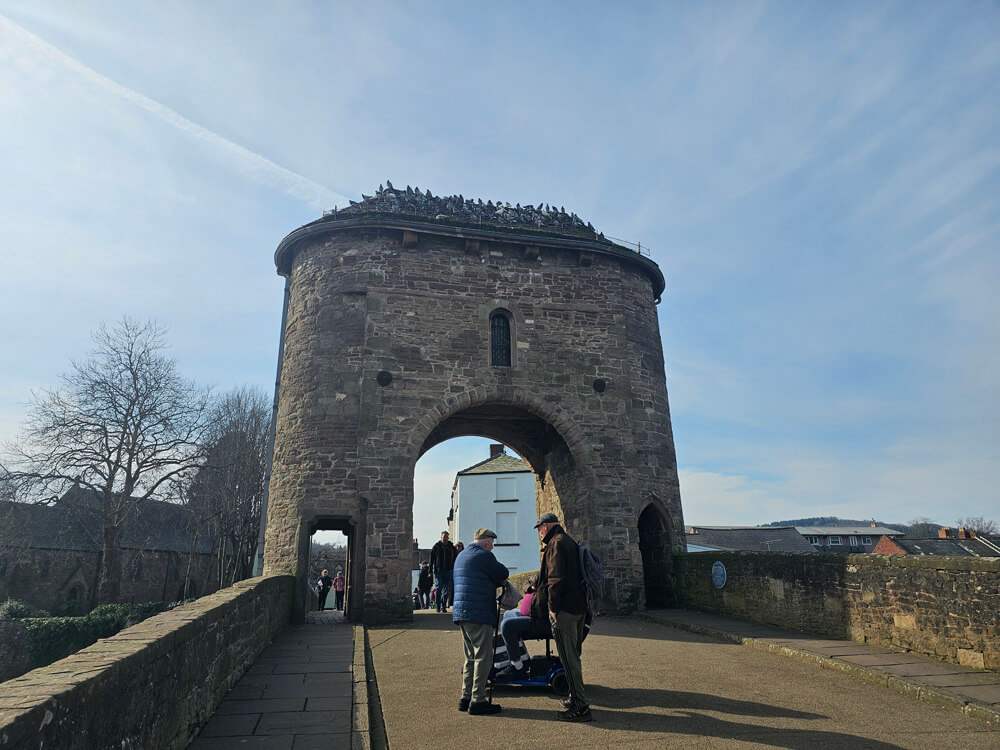
Monmouth Castle was rebuilt, enlarged and upgraded in stone between the 12th and 14th centuries. As the castle grew, so did the town that developed around it. The town was enclosed by defensive stone walls, bridges began to be constructed across the town’s rivers, and there were several town gates which provided access points to the town: Wye Bridge Gate, East Gate (Dixton Gate), West Gate, Monk’s Gate, and Monnow Bridge Gate. Today however, only the 13th-century Monnow Bridge Gatehouse survives intact, making it the only remaining medieval fortified river bridge in Great Britain with its gate tower standing on the bridge.
Monmouth was granted its first royal charter in 1256 and it became important as the market for a rich agricultural region, with potteries, tanneries and other workshops.
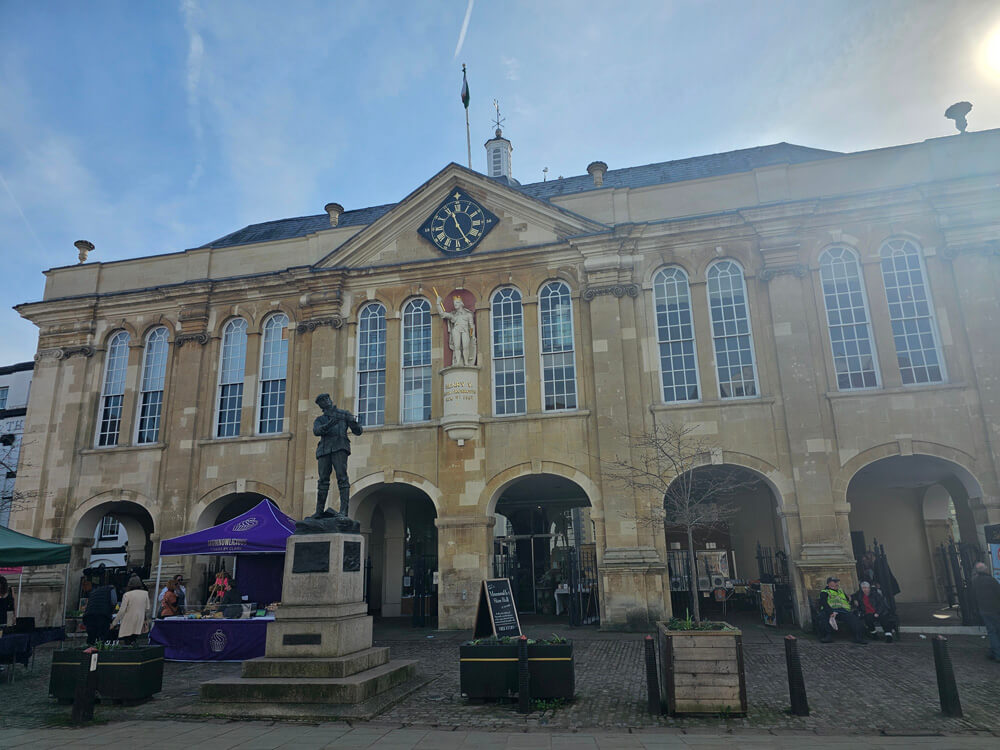
Monmouth was a favourite residence of Henry Bolingbroke, and the castle became a royal residence when he became King Henry IV of England in 1399. Sometime in 1386 or 1387 Henry’s first wife gave birth to a son at Monmouth Castle, a son that would later take the throne as King Henry V, famous for winning the Battle of Agincourt in France. Monmouth’s links with Henry V are commemorated in the naming of the main town square, Agincourt Square, in honour of his victory at the Battle of Agincourt in 1415, and in the statue of Henry on the front of the Shire Hall.
Post-medieval Monmouth
The accession of the Tudor dynasty to the English throne in 1485 heralded a change in the way Wales was administered. The Tudors were of Welsh origin, and their rule eased hostilities between the Welsh and English. As a result, in 1536 Henry VIII imposed the Laws in Wales Acts 1535–1542, abolishing the powers of the Marcher Lords and integrating the administration of England and Wales. Monmouth became the county town of the newly formed shire of Monmouth, covering the area west of Gloucestershire and Herefordshire.
Monmouth Piory was dissolved in 1536 as a result of Henry VIII’s dissolution of the monasteries, and today the current building incorporates the remains of the monastic buildings attached to St Mary’s Priory Church.
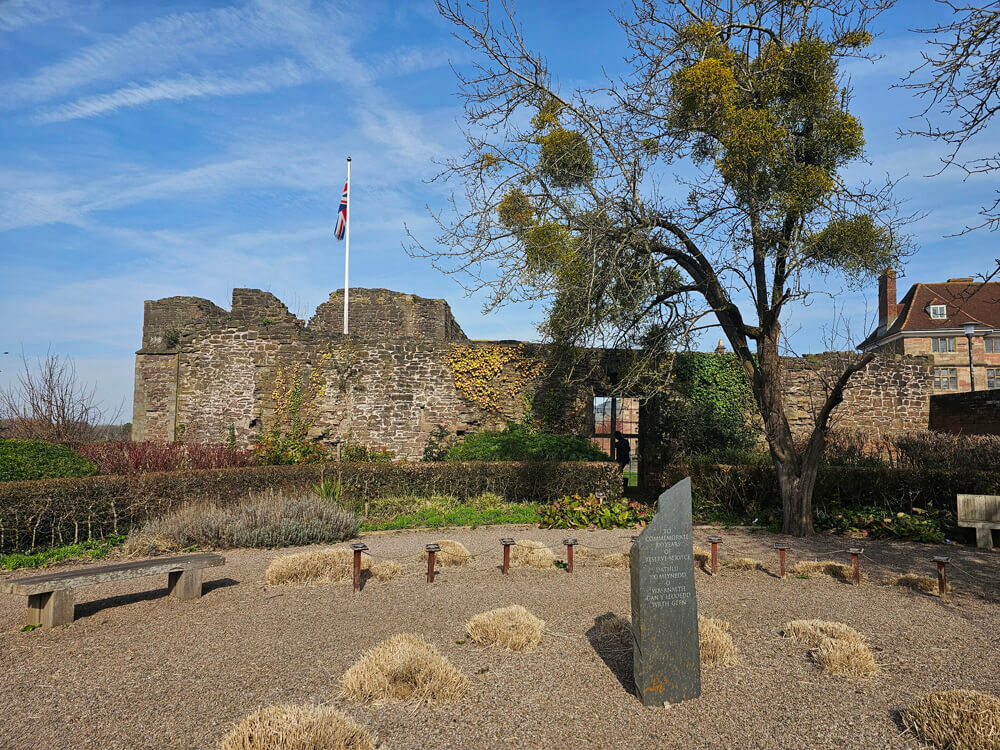
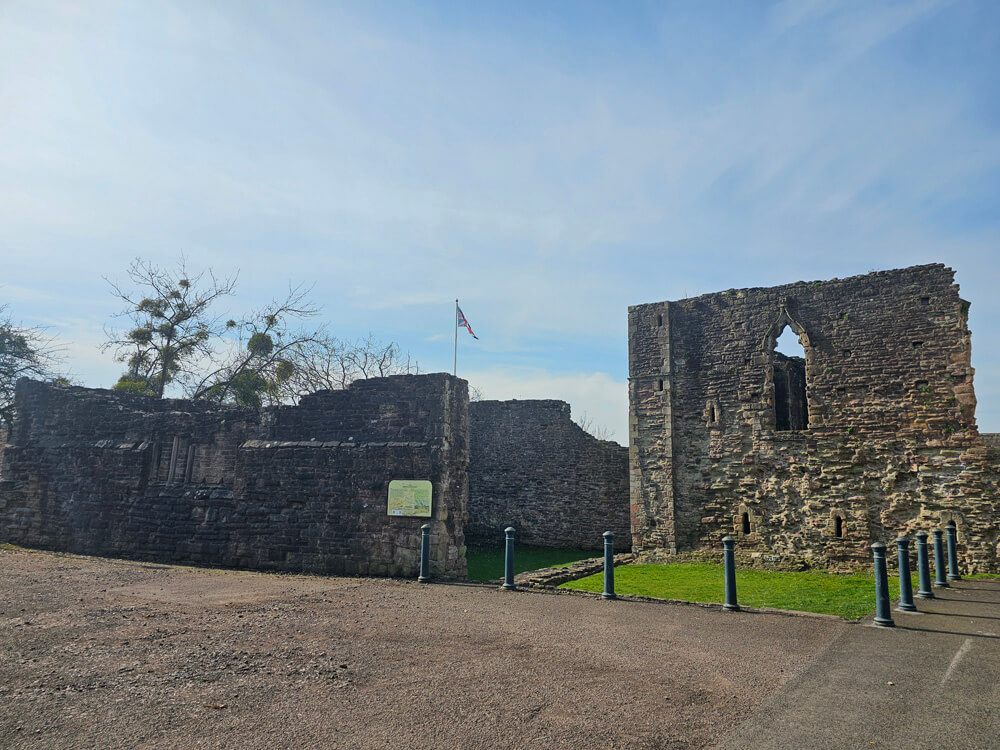
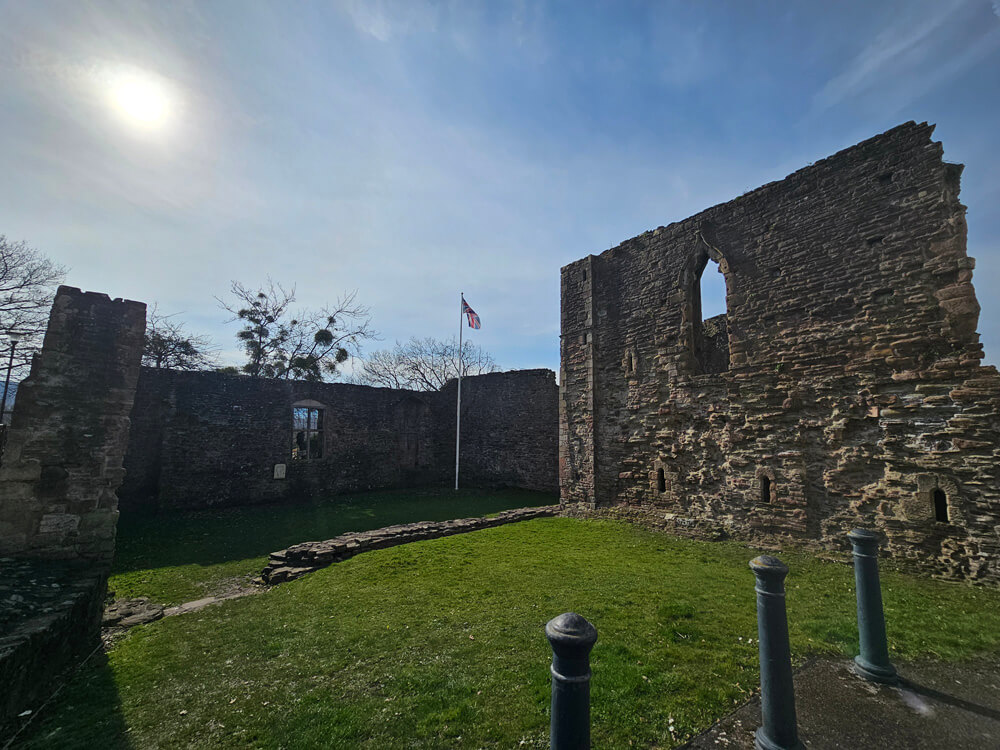
Monmouth Castle met its end when it was captured by Parliamentary troops during the 17th-century English Civil War, and in 1647 it was destroyed on the orders of Oliver Cromwell so that it could no longer be used for military purposes. In 1673 a residence known as Great Castle House was built where the castle’s round tower once stood, which was later used for the Assize Courts until they relocated to the new Shire Hall in 1725. Then in 1875 the house became the headquarters of the Monmouthshire Royal Engineers, where there is now a regimental museum tracing the history of the regiment from its inception in 1539 and records the early defences of Monmouth and its castle. The ruins of Monmouth Castle can be found tucked away down a lane off Monmouth’s main shopping street.
Monmouth Castle
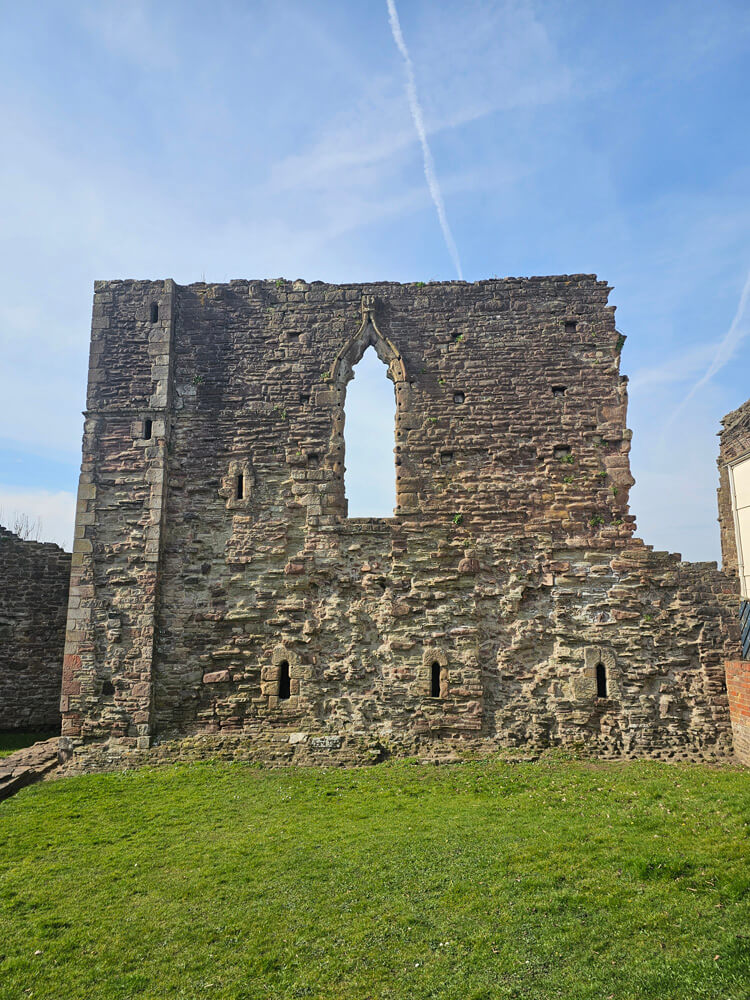
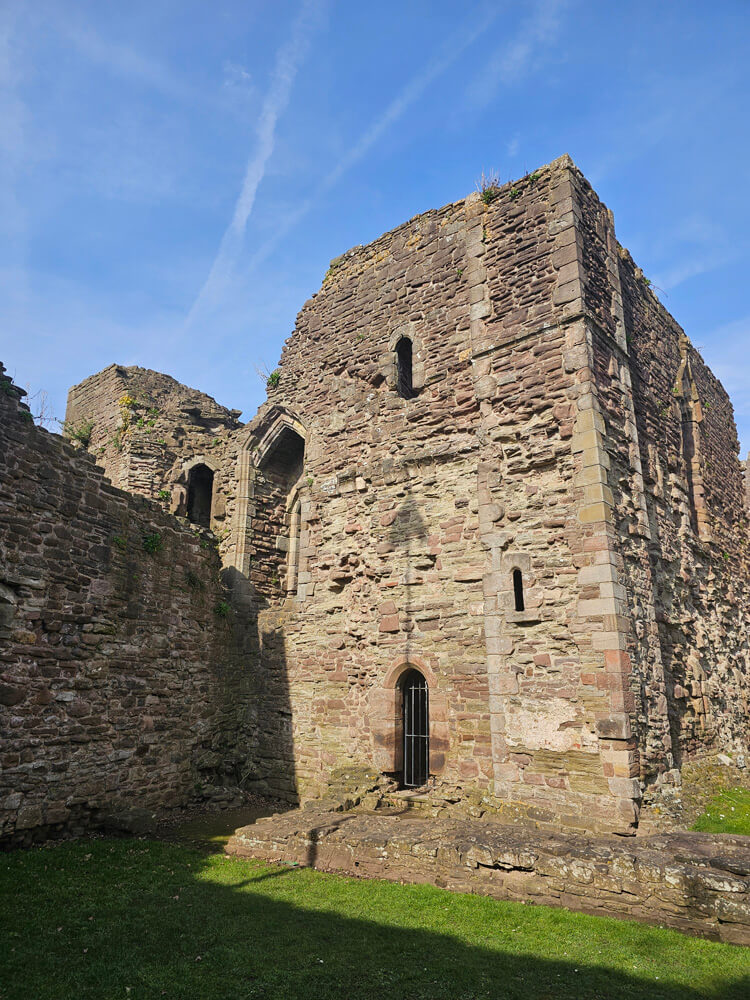
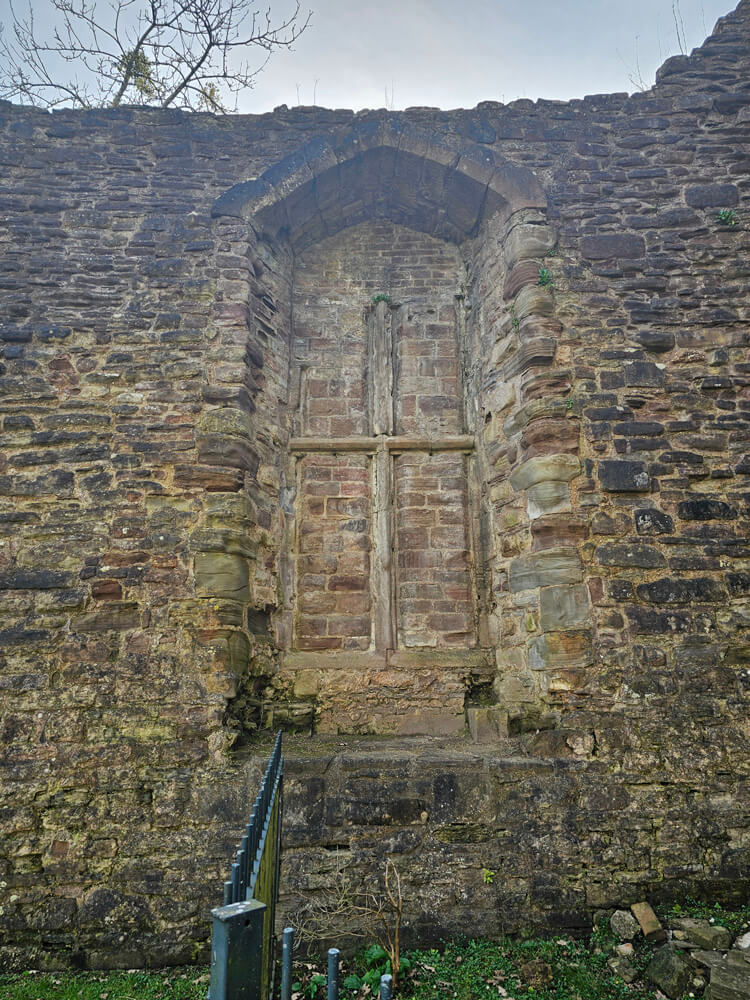
Close to the Monmouth’s town centre, only fragments of Monmouth Castle, including the 12th-century Great Tower, the 13th-century Hall, and short sections of the castle walls survive, which stand on the edge of a steep slope down to the river Monnow, on the west side of what was the castle ward. The oldest surviving part of this once important border castle is the ruins of the Great Tower, which was likely built between 1120 and 1130 and was where King Henry V was born.
Monnow Bridge
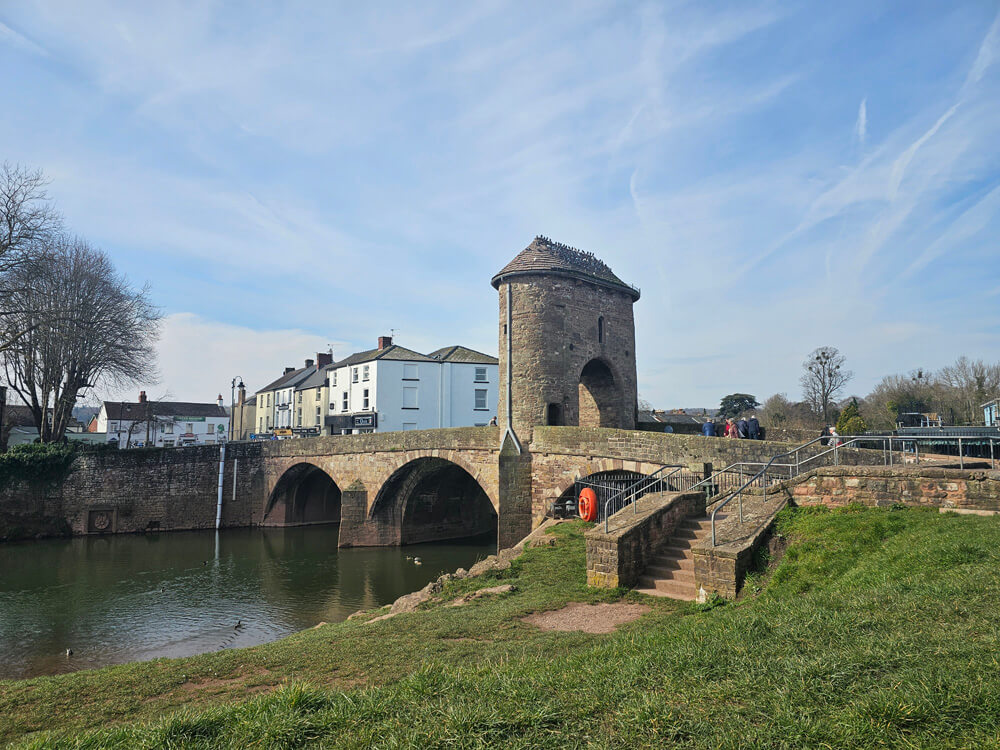
Built in the late 1200s to replace an earlier Norman timber bridge, Monnow Bridge is the only remaining medieval fortified river bridge in Great Britain with its gate tower still standing in place. The gatehouse atop the bridge, known as Monnow Gate, was built shortly after at the end of the 13th century. Originally built with a portcullis used for defence, over the years it developed into a gaol, a munitions store, a lodge, and a toll gate to collect tolls from those going to the market.
Photo Gallery.
Did you enjoy this post?
I hope you found this post useful. I put a great deal of time and effort in to building, maintaining and populating the website. If you like, you could say a small thank you by buying me a coffee. You don't have to, but it would be nice :)
Buy me a coffee
Stay up to Date
Follow me on my journey and get notified whenever a new post is published by following Kings & Castles on Facebook.
Follow MeExplore The Map
Discover the hundreds of castles, churches, monasteries, cathedrals and other historic locations that I've personally visited across England and Wales. Search by location, explore nearby sites and plan your next historical adventure.
Share: